Identification
- Summary
Tolazamide is a sulfonylurea used in the treatment of non insulin dependent diabetes mellitus.
- Brand Names
- Tolinase
- Generic Name
- Tolazamide
- DrugBank Accession Number
- DB00839
- Background
A sulphonylurea hypoglycemic agent with actions and uses similar to those of chlorpropamide.
- Type
- Small Molecule
- Groups
- Approved, Investigational
- Structure
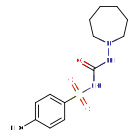
Structure for Tolazamide (DB00839)
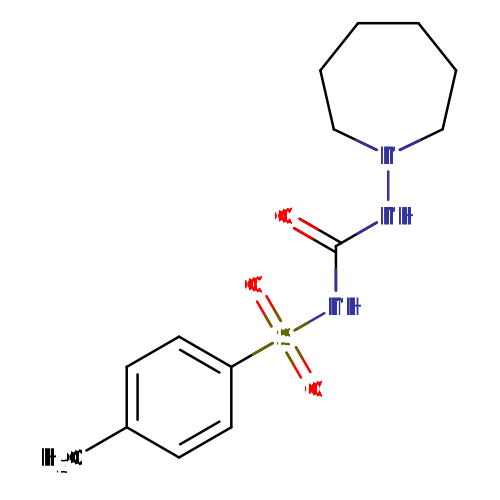
- Weight
- Average: 311.4
Monoisotopic: 311.130362243 - Chemical Formula
- C14H21N3O3S
- Synonyms
- 1-(Hexahydro-1-azepinyl)-3-p-tolylsulfonylurea
- 1-(Hexahydro-1H-azepin-1-yl)-3-(p-tolylsulfonyl)urea
- 4-(p-Tolylsulfonyl)-1,1-hexamethylenesemicarbazide
- N-(p-Toluenesulfonyl)-N'-hexamethyleniminourea
- Tolazamid
- Tolazamida
- Tolazamide
- Tolazamidum
- External IDs
- AI3-50826
- BRN 1323565
- CCRIS 591
- EINECS 214-588-3
- HSDB 3192
- NCI-C03327
- NSC-70762
- U 17835
- U-17835

Pharmacology
- Indication
For use as an adjunct to diet to lower the blood glucose in patients with non-insulin dependent diabetes mellitus (Type II) whose hyperglycemia cannot be satisfactorily controlled by diet alone.
 Reduce drug development failure ratesBuild, train, & validate machine-learning modelswith evidence-based and structured datasets.Build, train, & validate predictive machine-learning models with structured datasets.
- Associated Conditions
Indication Type Indication Combined Product Details Approval Level Age Group Patient Characteristics Dose Form Management of Type 2 diabetes mellitus •••••••••••• - Contraindications & Blackbox Warnings
 Prevent Adverse Drug Events TodayTap into our Clinical API for life-saving information on contraindications & blackbox warnings, population restrictions, harmful risks, & more.Avoid life-threatening adverse drug events with our Clinical API
- Pharmacodynamics
Tolazamide is an oral blood glucose lowering drug of the sulfonylurea class. Tolazamide appears to lower the blood glucose acutely by stimulating the release of insulin from the pancreas, an effect dependent upon functioning beta cells in the pancreatic islets. The mechanism by which tolazamide lowers blood glucose during long-term administration has not been clearly established. With chronic administration in Type II diabetic patients, the blood glucose lowering effect persists despite a gradual decline in the insulin secretory response to the drug. Extrapancreatic effects may be involved in the mechanism of action of oral sulfonylurea hypoglycemic drugs. Some patients who are initially responsive to oral hypoglycemic drugs, including tolazamide, may become unresponsive or poorly responsive over time. Alternatively, tolazamide may be effective in some patients who have become unresponsive to one or more other sulfonylurea drugs. In addition to its blood glucose lowering actions, tolazamide produces a mild diuresis by enhancement of renal free water clearance.
- Mechanism of action
Sulfonylureas likely bind to ATP-sensitive potassium-channel receptors on the pancreatic cell surface, reducing potassium conductance and causing depolarization of the membrane. Depolarization stimulates calcium ion influx through voltage-sensitive calcium channels, raising intracellular concentrations of calcium ions, which induces the secretion, or exocytosis, of insulin.
Target Actions Organism ASulfonylurea receptor 1, Kir6.2 blockerHumans - Absorption
Rapidly and well absorbed from the gastrointestinal tract.
- Volume of distribution
Not Available
- Protein binding
Not Available
- Metabolism
Tolazamide is metabolized to five major metabolites ranging in hypoglycemic activity from 0 to 70%.
- Route of elimination
Tolazamide is metabolized to five major metabolites ranging in hypoglycemic activity from 0% to 70%. They are excreted principally in the urine.
- Half-life
The average biological half-life of the drug is 7 hours.
- Clearance
Not Available
- Adverse Effects
 Improve decision support & research outcomesWith structured adverse effects data, including: blackbox warnings, adverse reactions, warning & precautions, & incidence rates. View sample adverse effects data in our new Data Library!Improve decision support & research outcomes with our structured adverse effects data.
- Toxicity
Overdosage of sulfonylureas can produce hypoglycemia. Severe hypoglycemic reactions with coma, seizure, or other neurological impairment occur infrequently, but constitute medical emergencies requiring immediate hospitalization.
- Pathways
- Not Available
- Pharmacogenomic Effects/ADRs
- Not Available
Interactions
- Drug Interactions
- This information should not be interpreted without the help of a healthcare provider. If you believe you are experiencing an interaction, contact a healthcare provider immediately. The absence of an interaction does not necessarily mean no interactions exist.
Drug Interaction Integrate drug-drug
interactions in your softwareAbacavir Tolazamide may decrease the excretion rate of Abacavir which could result in a higher serum level. Abatacept The metabolism of Tolazamide can be increased when combined with Abatacept. Abrocitinib The metabolism of Abrocitinib can be decreased when combined with Tolazamide. Acarbose The risk or severity of hypoglycemia can be increased when Acarbose is combined with Tolazamide. Acebutolol The therapeutic efficacy of Tolazamide can be increased when used in combination with Acebutolol. - Food Interactions
- Avoid excessive or chronic alcohol consumption. Ingesting alcohol may increase the risk of hypoglycemia.
- Take with food. Taking tolazamide with breakfast may help reduce the risk of hypoglycemia.
Products
 Drug product information from 10+ global regionsOur datasets provide approved product information including:dosage, form, labeller, route of administration, and marketing period.Access drug product information from over 10 global regions.
- International/Other Brands
- Desumide (Hua Shin) / Diabewas / Esulin (Chung Mei) / Norglycin (Pfizer) / Tolanase (Upjohn)
- Brand Name Prescription Products
Name Dosage Strength Route Labeller Marketing Start Marketing End Region Image Tolazamide Tablet 500 mg/1 Oral Mutual Pharmaceutical Company, Inc 2007-03-30 Not applicable US 
Tolazamide Tablet 250 mg/1 Oral Mutual Pharmaceutical Company, Inc 2007-03-30 Not applicable US Tolazamide Tablet 100 mg/1 Oral Mutual Pharmaceutical Company, Inc 2007-03-30 Not applicable US Tolinase Tablet 500 mg/1 Oral UNSPECIFIED 2006-04-11 Not applicable US Tolinase Tablet 250 mg/1 Oral UNSPECIFIED 2006-04-11 Not applicable US - Generic Prescription Products
Name Dosage Strength Route Labeller Marketing Start Marketing End Region Image Tolazamide Tablet 250 mg/1 Oral Mylan Pharmaceuticals Inc. 2013-01-18 2020-03-31 US Tolazamide Tablet 250 mg/1 Oral PD-Rx Pharmaceuticals, Inc. 2010-01-05 2019-09-11 US Tolazamide Tablet 250 mg/1 Oral Amerincan Health Packaging 2012-02-13 2015-05-31 US Tolazamide Tablet 500 mg/1 Oral Mylan Pharmaceuticals Inc. 2013-01-18 2020-03-31 US Tolazamide Tablet 250 mg/1 Oral Physicians Total Care, Inc. 1995-02-02 2012-06-30 US
Categories
- ATC Codes
- A10BB05 — Tolazamide
- A10BB — Sulfonylureas
- A10B — BLOOD GLUCOSE LOWERING DRUGS, EXCL. INSULINS
- A10 — DRUGS USED IN DIABETES
- A — ALIMENTARY TRACT AND METABOLISM
- Drug Categories
- Alimentary Tract and Metabolism
- Amides
- Benzene Derivatives
- Benzenesulfonamides
- Blood Glucose Lowering Agents
- Cytochrome P-450 CYP2C9 Substrates
- Cytochrome P-450 Substrates
- Drugs that are Mainly Renally Excreted
- Drugs Used in Diabetes
- Genito Urinary System and Sex Hormones
- Gynecological Antiinfectives and Antiseptics
- Hypoglycemia-Associated Agents
- Insulin Secretagogues
- Oral Hypoglycemics
- Sulfonamides
- Sulfones
- Sulfonylureas
- Sulfur Compounds
- Chemical TaxonomyProvided by Classyfire
- Description
- This compound belongs to the class of organic compounds known as benzenesulfonamides. These are organic compounds containing a sulfonamide group that is S-linked to a benzene ring.
- Kingdom
- Organic compounds
- Super Class
- Benzenoids
- Class
- Benzene and substituted derivatives
- Sub Class
- Benzenesulfonamides
- Direct Parent
- Benzenesulfonamides
- Alternative Parents
- Tosyl compounds / Benzenesulfonyl compounds / Sulfonylureas / Azepanes / Organosulfonic acids and derivatives / Aminosulfonyl compounds / Hydrazones / Azacyclic compounds / Organopnictogen compounds / Organooxygen compounds show 2 more
- Substituents
- Aminosulfonyl compound / Aromatic heteromonocyclic compound / Azacycle / Azepane / Benzenesulfonamide / Benzenesulfonyl group / Hydrazone / Hydrocarbon derivative / Organic nitrogen compound / Organic oxide show 12 more
- Molecular Framework
- Aromatic heteromonocyclic compounds
- External Descriptors
- N-sulfonylurea (CHEBI:9613)
- Affected organisms
- Humans and other mammals
Chemical Identifiers
- UNII
- 9LT1BRO48Q
- CAS number
- 1156-19-0
- InChI Key
- OUDSBRTVNLOZBN-UHFFFAOYSA-N
- InChI
- InChI=1S/C14H21N3O3S/c1-12-6-8-13(9-7-12)21(19,20)16-14(18)15-17-10-4-2-3-5-11-17/h6-9H,2-5,10-11H2,1H3,(H2,15,16,18)
- IUPAC Name
- 1-(azepan-1-yl)-3-(4-methylbenzenesulfonyl)urea
- SMILES
- CC1=CC=C(C=C1)S(=O)(=O)NC(=O)NN1CCCCCC1
References
- General References
- Tal A: Oral hypoglycemic agents in the treatment of type II diabetes. Am Fam Physician. 1993 Nov 1;48(6):1089-95. [Article]
- Granberry MC, Fonseca VA: Cardiovascular risk factors associated with insulin resistance: effects of oral antidiabetic agents. Am J Cardiovasc Drugs. 2005;5(3):201-9. [Article]
- DailyMed: TOLINASE (tolazamide) tablets [Link]
- External Links
- Human Metabolome Database
- HMDB0014977
- KEGG Drug
- D00379
- PubChem Compound
- 5503
- PubChem Substance
- 46505642
- ChemSpider
- 5302
- BindingDB
- 50240099
- 10633
- ChEBI
- 9613
- ChEMBL
- CHEMBL817
- ZINC
- ZINC000000057512
- Therapeutic Targets Database
- DAP000919
- PharmGKB
- PA164774902
- RxList
- RxList Drug Page
- Drugs.com
- Drugs.com Drug Page
- Wikipedia
- Tolazamide
Clinical Trials
- Clinical Trials
Phase Status Purpose Conditions Count 2 Completed Treatment Impaired Glucose Tolerance / Type 2 Diabetes Mellitus 1 Not Available Completed Not Available Type 2 Diabetes Mellitus 3
Pharmacoeconomics
- Manufacturers
- Barr laboratories inc
- Duramed pharmaceuticals inc sub barr laboratories inc
- Interpharm inc
- Ivax pharmaceuticals inc sub teva pharmaceuticals usa
- Mutual pharmaceutical co inc
- Mylan pharmaceuticals inc
- Par pharmaceutical inc
- Sandoz inc
- Superpharm corp
- Usl pharma inc
- Watson laboratories inc
- Pharmacia and upjohn co
- Packagers
- Apotheca Inc.
- Central Texas Community Health Centers
- Dispensing Solutions
- Ivax Pharmaceuticals
- Kaiser Foundation Hospital
- Major Pharmaceuticals
- Murfreesboro Pharmaceutical Nursing Supply
- Mutual Pharmaceutical Co.
- Mylan
- PCA LLC
- PD-Rx Pharmaceuticals Inc.
- Pharmaceutical Utilization Management Program VA Inc.
- Pharmedix
- Physicians Total Care Inc.
- Dosage Forms
Form Route Strength Tablet Oral 100 mg/1 Tablet Oral 250 mg/1 Tablet Oral 500 mg/1 - Prices
Unit description Cost Unit Tolazamide 500 mg tablet 1.41USD tablet Tolinase 250 mg tablet 1.23USD tablet Tolazamide 250 mg tablet 0.79USD tablet Tolazamide 100 mg tablet 0.41USD tablet DrugBank does not sell nor buy drugs. Pricing information is supplied for informational purposes only.- Patents
- Not Available
Properties
- State
- Solid
- Experimental Properties
Property Value Source melting point (°C) 170-173 °C PhysProp water solubility 65.4 mg/L (at 30 °C) YALKOWSKY,SH & DANNENFELSER,RM (1992) logP 2.69 SANGSTER (1993) logS -3.68 ADME Research, USCD - Predicted Properties
Property Value Source Water Solubility 0.308 mg/mL ALOGPS logP 1.4 ALOGPS logP 1.91 Chemaxon logS -3 ALOGPS pKa (Strongest Acidic) 4.07 Chemaxon pKa (Strongest Basic) 1.61 Chemaxon Physiological Charge -1 Chemaxon Hydrogen Acceptor Count 4 Chemaxon Hydrogen Donor Count 2 Chemaxon Polar Surface Area 78.51 Å2 Chemaxon Rotatable Bond Count 2 Chemaxon Refractivity 81.34 m3·mol-1 Chemaxon Polarizability 32.82 Å3 Chemaxon Number of Rings 2 Chemaxon Bioavailability 1 Chemaxon Rule of Five Yes Chemaxon Ghose Filter Yes Chemaxon Veber's Rule No Chemaxon MDDR-like Rule No Chemaxon - Predicted ADMET Features
Property Value Probability Human Intestinal Absorption + 0.9749 Blood Brain Barrier + 0.8467 Caco-2 permeable - 0.6444 P-glycoprotein substrate Substrate 0.7039 P-glycoprotein inhibitor I Non-inhibitor 0.8125 P-glycoprotein inhibitor II Non-inhibitor 0.9824 Renal organic cation transporter Non-inhibitor 0.8497 CYP450 2C9 substrate Substrate 0.622 CYP450 2D6 substrate Non-substrate 0.8816 CYP450 3A4 substrate Non-substrate 0.7268 CYP450 1A2 substrate Non-inhibitor 0.9274 CYP450 2C9 inhibitor Non-inhibitor 0.9071 CYP450 2D6 inhibitor Non-inhibitor 0.9268 CYP450 2C19 inhibitor Non-inhibitor 0.9104 CYP450 3A4 inhibitor Non-inhibitor 0.84 CYP450 inhibitory promiscuity Low CYP Inhibitory Promiscuity 0.962 Ames test Non AMES toxic 0.9133 Carcinogenicity Non-carcinogens 0.8461 Biodegradation Not ready biodegradable 0.7221 Rat acute toxicity 1.8259 LD50, mol/kg Not applicable hERG inhibition (predictor I) Weak inhibitor 0.8064 hERG inhibition (predictor II) Non-inhibitor 0.8047
Spectra
- Mass Spec (NIST)
- Not Available
- Spectra
- Chromatographic Properties
Collision Cross Sections (CCS)
Adduct CCS Value (Å2) Source type Source [M-H]- 181.6095776 predictedDarkChem Lite v0.1.0 [M-H]- 177.5293901 predictedDarkChem Lite v0.1.0 [M-H]- 188.5330776 predictedDarkChem Lite v0.1.0 [M-H]- 168.91322 predictedDeepCCS 1.0 (2019) [M+H]+ 182.8526776 predictedDarkChem Lite v0.1.0 [M+H]+ 177.7627339 predictedDarkChem Lite v0.1.0 [M+H]+ 189.1580776 predictedDarkChem Lite v0.1.0 [M+H]+ 171.30885 predictedDeepCCS 1.0 (2019) [M+Na]+ 182.0320776 predictedDarkChem Lite v0.1.0 [M+Na]+ 181.0448776 predictedDarkChem Lite v0.1.0 [M+Na]+ 188.4193776 predictedDarkChem Lite v0.1.0 [M+Na]+ 177.34247 predictedDeepCCS 1.0 (2019)
Targets

- Kind
- Protein group
- Organism
- Humans
- Pharmacological action
- Yes
- Actions
- Blocker
- General Function
- Sulfonylurea receptor activity
- Specific Function
- Subunit of the beta-cell ATP-sensitive potassium channel (KATP). Regulator of ATP-sensitive K(+) channels and insulin release.
Components:
| Name | UniProt ID |
|---|---|
| ATP-binding cassette sub-family C member 8 | Q09428 |
| ATP-sensitive inward rectifier potassium channel 11 | Q14654 |
References
- Szabo C, Salzman AL: Inhibition of ATP-activated potassium channels exerts pressor effects and improves survival in a rat model of severe hemorrhagic shock. Shock. 1996 Jun;5(6):391-4. [Article]
- Asano K, Cortes P, Garvin JL, Riser BL, Rodriguez-Barbero A, Szamosfalvi B, Yee J: Characterization of the rat mesangial cell type 2 sulfonylurea receptor. Kidney Int. 1999 Jun;55(6):2289-98. [Article]
Enzymes
- Kind
- Protein
- Organism
- Humans
- Pharmacological action
- Unknown
- Actions
- Substrate
- General Function
- Steroid hydroxylase activity
- Specific Function
- Cytochromes P450 are a group of heme-thiolate monooxygenases. In liver microsomes, this enzyme is involved in an NADPH-dependent electron transport pathway. It oxidizes a variety of structurally un...
- Gene Name
- CYP2C9
- Uniprot ID
- P11712
- Uniprot Name
- Cytochrome P450 2C9
- Molecular Weight
- 55627.365 Da
References
- May M, Schindler C: Clinically and pharmacologically relevant interactions of antidiabetic drugs. Ther Adv Endocrinol Metab. 2016 Apr;7(2):69-83. doi: 10.1177/2042018816638050. Epub 2016 Mar 31. [Article]

Drug created at June 13, 2005 13:24 / Updated at February 02, 2024 22:45