Identification
- Summary
Clofazimine is a riminophenazine antimycobacterial used to treat leprosy.
- Generic Name
- Clofazimine
- DrugBank Accession Number
- DB00845
- Background
Clofazimine is a highly lipophilic antimicrobial riminophenazine dye used in combination with other agents, such as dapsone, for the treatment of leprosy. It was originally described in 1957 and was the prototypical riminophenazine dye - a bright-red dye that, in its clinical use, results in long-lasting discoloration of the skin and bodily fluids.2 Although it carries in vitro activity against other mycobacterium, such as Mycobacterium tuberculosis, it is generally considered an ineffective treatment in comparison to classic tuberculosis treatments such as rifampicin and isoniazid.2
- Type
- Small Molecule
- Groups
- Approved, Investigational
- Structure
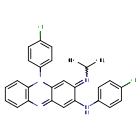
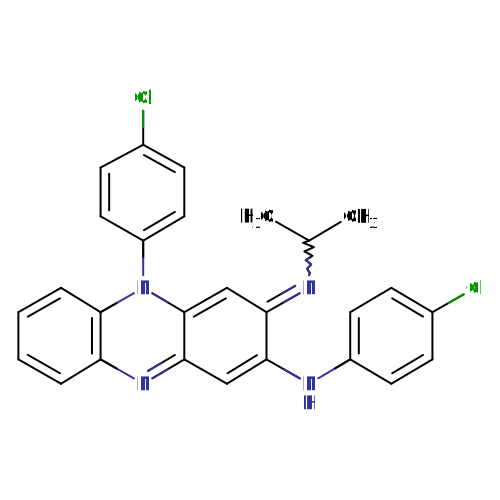
Structure for Clofazimine (DB00845)
- Weight
- Average: 473.396
Monoisotopic: 472.122152138 - Chemical Formula
- C27H22Cl2N4
- Synonyms
- Clofazimin
- Clofazimina
- Clofazimine
- Clofaziminum
- Riminophenazine
- External IDs
- B 663
- G 30320
- G-30320
- NSC 141046
- NSC-141046

Pharmacology
- Indication
Clofazimine is indicated for the treatment of lepromatous leprosy, including dapsone-resistant lepromatous leprosy and lepromatous leprosy complicated by erythema nodosum leprosum.5 To prevent the development of drug resistance, it should be used only in combination with other antimycobacterial leprosy treatments.
 Reduce drug development failure ratesBuild, train, & validate machine-learning modelswith evidence-based and structured datasets.Build, train, & validate predictive machine-learning models with structured datasets.
- Associated Conditions
Indication Type Indication Combined Product Details Approval Level Age Group Patient Characteristics Dose Form Used in combination to treat Leprosy, lepromatous •••••••••••• ••••••• - Contraindications & Blackbox Warnings
 Prevent Adverse Drug Events TodayTap into our Clinical API for life-saving information on contraindications & blackbox warnings, population restrictions, harmful risks, & more.Avoid life-threatening adverse drug events with our Clinical API
- Pharmacodynamics
Clofazimine exerts a slow bactericidal effect on Mycobacterium leprae (Hansen's bacillus) due primarily to its action on the bacterial outer membrane, though there is some evidence that activity on the bacterial respiratory chain and ion transporters may play a role.2 It also exerts anti-inflammatory properties due to the suppression of T-lymphocyte activity. Clofazimine has a relatively long duration of action owing to its long residence time in the body, but is still administered daily.
Approximately 75-100% of patients receiving clofazimine will experience an orange-pink to brownish-black discoloration of the skin, conjunctivae, and bodily fluids.5 Skin discoloration may take several months or years to reverse following the cessation of therapy. Clofazimine has also been implicated in abdominal obstruction, in some cases fatal, due to the deposition of drug and formation of crystals in the intestinal mucosa - complaints of abdominal pain and nausea/vomiting should be investigated promptly, and the doses of clofazimine should be lowered or discontinued if it is found to be the culprit.5
Its use should be avoided in patients with hepatic dysfunction.5
- Mechanism of action
Although the precise mechanism(s) of action of clofazimine have not been elucidated, its antimicrobial activity appears to be membrane-directed. It was previously thought that, due to its lipophilicity, clofazimine participated in the generation of intracellular reactive oxygen species (ROS) via redox cycling, specifically H2O2 and superoxide, which then exerted an antimicrobial effect.2 A more recent and compelling theory involves clofazimine interacting with bacterial membrane phospholipids to generate antimicrobial lysophospholipids - bactericidal efficacy may, then, arise from the combined membrane-destabilizing effects of both clofazimine and lysophospholipids, which interfere with K+ uptake and, ultimately, ATP production.2,5
The anti-inflammatory activity of clofazimine is the result of its inhibition of T-lymphocyte activation and proliferation.5 Several mechanisms have been proposed, including direct antagonism of T-cell Kv 1.3 potassium channels and indirect action by promoting the release of E-series prostaglandins and reactive oxygen species from bystander neutrophils and monocytes.
Target Actions Organism UPeroxisome proliferator-activated receptor gamma modulatorHumans UPotassium voltage-gated channel subfamily A member 3 antagonistHumans - Absorption
Absorption varies from 45 to 62% following oral administration in leprosy patients.5 Co-administration of a 200mg dose of clofazimine with food resulted in a Cmax of 0.41 mg/L with a Tmax of 8 h; administered in a fasting state, the corresponding Cmax was 30% lower while the time to Cmax was 12 h.4
- Volume of distribution
Clofazimine is highly lipophilic and therefore deposits primarily in fatty tissues and cells of the reticuloendothelial system, where it is taken up by macrophages and further distributed throughout the body. Crystalized deposits have been found in the mesenteric lymph nodes, adrenals, subcutaneous fat, liver, bile, gall bladder, spleen, small intestine, muscles, bones, and skin.5
- Protein binding
Clofazimine is bound primarily to beta-lipoproteins (and, to a lesser extent, alpha-lipoproteins) in the serum. This binding was saturable at concentrations of ~10 µg/mL. Binding to gamma-globulin and albumin is negligible.5
- Metabolism
Three metabolites have been identified in the urine following repeated oral doses of clofazimine.5 It is unclear whether these metabolites are pharmacologically active. Metabolite I may be the result of the hydrolytic dehalogenation of clofazimine and metabolite II presumably is formed by a hydrolytic deamination reaction followed by glucuronidation.4
- Route of elimination
Part of an ingested dose of clofazimine is found in the feces, which may represent excretion in the bile, and a small amount is also eliminated in the sputum, sebum, and sweat.5 Excretion of unchanged drug and metabolites in a 24-hour urine collection was negligible.
- Half-life
The mean elimination half-life is approximately 25 days.5
- Clearance
Not Available
- Adverse Effects
 Improve decision support & research outcomesWith structured adverse effects data, including: blackbox warnings, adverse reactions, warning & precautions, & incidence rates. View sample adverse effects data in our new Data Library!Improve decision support & research outcomes with our structured adverse effects data.
- Toxicity
The reported oral LD50 of clofazimine in rats and mice is 8400 mg/kg and >5000 mg/kg, respectively.6
No specific data are available regarding the treatment of clofazimine overdosage.5 In cases of overdose consider gastrointestinal decontamination via gastric lavage or induced vomiting. Employ symptomatic and supportive measures as clinically indicated.
- Pathways
- Not Available
- Pharmacogenomic Effects/ADRs
- Not Available
Interactions
- Drug Interactions
- This information should not be interpreted without the help of a healthcare provider. If you believe you are experiencing an interaction, contact a healthcare provider immediately. The absence of an interaction does not necessarily mean no interactions exist.
Drug Interaction Integrate drug-drug
interactions in your softwareAbemaciclib The serum concentration of Abemaciclib can be increased when it is combined with Clofazimine. Acalabrutinib The serum concentration of Acalabrutinib can be increased when it is combined with Clofazimine. Acenocoumarol The serum concentration of Acenocoumarol can be increased when it is combined with Clofazimine. Acrivastine The risk or severity of QTc prolongation can be increased when Clofazimine is combined with Acrivastine. Adenosine The risk or severity of QTc prolongation can be increased when Clofazimine is combined with Adenosine. - Food Interactions
- Take with food. Prescribing information for clofazimine recommends its administration with a meal.
Products
 Drug product information from 10+ global regionsOur datasets provide approved product information including:dosage, form, labeller, route of administration, and marketing period.Access drug product information from over 10 global regions.
- International/Other Brands
- Clofozine (AstraZeneca) / Hansepran (Abbott) / Lamcoin (Pond's Chemical) / Lampren (Novartis) / Lamprène (Novartis)
- Brand Name Prescription Products
Name Dosage Strength Route Labeller Marketing Start Marketing End Region Image Lamprene Capsule, gelatin coated 50 mg/1 Oral Novartis Pharmaceuticals Corporation 1986-12-15 2009-12-15 US 
Categories
- ATC Codes
- J04BA01 — Clofazimine
- J04BA — Drugs for treatment of lepra
- J04B — DRUGS FOR TREATMENT OF LEPRA
- J04 — ANTIMYCOBACTERIALS
- J — ANTIINFECTIVES FOR SYSTEMIC USE
- Drug Categories
- Anti-Bacterial Agents
- Anti-Infective Agents
- Anti-Inflammatory Agents
- Antiinfectives for Systemic Use
- Antimycobacterials
- BCRP/ABCG2 Inhibitors
- Cytochrome P-450 CYP2C8 Inhibitors
- Cytochrome P-450 CYP2C8 Inhibitors (strength unknown)
- Cytochrome P-450 CYP2D6 Inhibitors
- Cytochrome P-450 CYP2D6 Inhibitors (strength unknown)
- Cytochrome P-450 CYP3A Inhibitors
- Cytochrome P-450 CYP3A4 Inhibitors
- Cytochrome P-450 CYP3A4 Inhibitors (strength unknown)
- Cytochrome P-450 CYP3A5 Inhibitors
- Cytochrome P-450 CYP3A5 Inhibitors (strength unknown)
- Cytochrome P-450 Enzyme Inhibitors
- Drugs causing inadvertant photosensitivity
- Drugs for Treatment of Lepra
- Heterocyclic Compounds, Fused-Ring
- Leprostatic Agents
- P-glycoprotein inhibitors
- P-glycoprotein substrates
- Phenazines
- Photosensitizing Agents
- Potential QTc-Prolonging Agents
- QTc Prolonging Agents
- Chemical TaxonomyProvided by Classyfire
- Description
- This compound belongs to the class of organic compounds known as phenazines and derivatives. These are polycyclic aromatic compounds containing a phenazine moiety, which is a linear tricyclic system that consists of a two benzene rings joined by a pyrazine ring.
- Kingdom
- Organic compounds
- Super Class
- Organoheterocyclic compounds
- Class
- Diazanaphthalenes
- Sub Class
- Benzodiazines
- Direct Parent
- Phenazines and derivatives
- Alternative Parents
- Aniline and substituted anilines / Chlorobenzenes / Pyrazines / Aryl chlorides / Secondary ketimines / Heteroaromatic compounds / Secondary amines / Azacyclic compounds / Organopnictogen compounds / Organochlorides show 1 more
- Substituents
- Amine / Aniline or substituted anilines / Aromatic heteropolycyclic compound / Aryl chloride / Aryl halide / Azacycle / Benzenoid / Chlorobenzene / Halobenzene / Heteroaromatic compound show 11 more
- Molecular Framework
- Aromatic heteropolycyclic compounds
- External Descriptors
- phenazines, monochlorobenzenes (CHEBI:3749)
- Affected organisms
- Mycobacteria
- Mycobacterium leprae
Chemical Identifiers
- UNII
- D959AE5USF
- CAS number
- 2030-63-9
- InChI Key
- WDQPAMHFFCXSNU-BGABXYSRSA-N
- InChI
- InChI=1S/C27H22Cl2N4/c1-17(2)30-24-16-27-25(15-23(24)31-20-11-7-18(28)8-12-20)32-22-5-3-4-6-26(22)33(27)21-13-9-19(29)10-14-21/h3-17,31H,1-2H3/b30-24+
- IUPAC Name
- N,5-bis(4-chlorophenyl)-3-[(propan-2-yl)imino]-3,5-dihydrophenazin-2-amine
- SMILES
- CC(C)N=C1C=C2N(C3=CC=C(Cl)C=C3)C3=C(C=CC=C3)N=C2C=C1NC1=CC=C(Cl)C=C1
References
- General References
- Kumar H, Chattopadhyay S, Das N, Shree S, Patel D, Mohapatra J, Gurjar A, Kushwaha S, Singh AK, Dubey S, Lata K, Kushwaha R, Mohammed R, Dastidar KG, Yadav N, Vishwakarma AL, Gayen JR, Bandyopadhyay S, Chatterjee A, Jain MR, Tripathi AK, Trivedi AK, Chattopadhyay N, Ramachandran R, Sanyal S: Leprosy drug clofazimine activates peroxisome proliferator-activated receptor-gamma and synergizes with imatinib to inhibit chronic myeloid leukemia cells. Haematologica. 2020 Apr;105(4):971-986. doi: 10.3324/haematol.2018.194910. Epub 2019 Aug 1. [Article]
- Cholo MC, Steel HC, Fourie PB, Germishuizen WA, Anderson R: Clofazimine: current status and future prospects. J Antimicrob Chemother. 2012 Feb;67(2):290-8. doi: 10.1093/jac/dkr444. Epub 2011 Oct 20. [Article]
- Te Brake LH, Russel FG, van den Heuvel JJ, de Knegt GJ, de Steenwinkel JE, Burger DM, Aarnoutse RE, Koenderink JB: Inhibitory potential of tuberculosis drugs on ATP-binding cassette drug transporters. Tuberculosis (Edinb). 2016 Jan;96:150-7. doi: 10.1016/j.tube.2015.08.004. Epub 2015 Oct 9. [Article]
- Feng PC, Fenselau CC, Jacobson RR: Metabolism of clofazimine in leprosy patients. Drug Metab Dispos. 1981 Nov-Dec;9(6):521-4. [Article]
- FDA Approved Drug Products: Lamprene (clofazimine) oral capsules [Link]
- CaymanChem: Clofazimine MSDS [Link]
- External Links
- KEGG Drug
- D00278
- KEGG Compound
- C06915
- PubChem Compound
- 2794
- PubChem Substance
- 46508174
- ChemSpider
- 2692
- BindingDB
- 50378783
- 2592
- ChEBI
- 3749
- ChEMBL
- CHEMBL1292
- ZINC
- ZINC000100037101
- Therapeutic Targets Database
- DAP000789
- PharmGKB
- PA164748759
- RxList
- RxList Drug Page
- Drugs.com
- Drugs.com Drug Page
- Wikipedia
- Clofazimine
Clinical Trials
- Clinical Trials
Phase Status Purpose Conditions Count 4 Completed Prevention Borderline Lepromatous Leprosy / Lepromatous Leprosy 1 4 Completed Treatment Hansen's Disease 1 4 Recruiting Treatment Multidrug Resistant Tuberculosis 1 4 Withdrawn Treatment Crohn's Disease (CD) 1 3 Active Not Recruiting Treatment Bacterial Infections / Gram Positive Bacterial Infections / Multidrug Resistant Tuberculosis / Mycobacterial Infections / Pulmonary Tuberculoses / Tuberculosis (TB) 1
Pharmacoeconomics
- Manufacturers
- Novartis pharmaceuticals corp
- Packagers
- Ciba Geigy Ltd.
- Novartis AG
- Physicians Total Care Inc.
- Professional Co.
- R.P. Scherer GmbH and Co. KG
- Dosage Forms
Form Route Strength Capsule Oral Capsule, gelatin coated Oral 50 mg/1 Capsule Oral 100 mg Capsule Oral 50 mg - Prices
Unit description Cost Unit Clofazimine powder 187.2USD g DrugBank does not sell nor buy drugs. Pricing information is supplied for informational purposes only.- Patents
- Not Available
Properties
- State
- Solid
- Experimental Properties
Property Value Source melting point (°C) 210-212 °C PhysProp water solubility 0.225 mg/L (virtually insoluble) Not Available logP 7.66 QUIGLEY,JM ET AL. (1990) pKa 8.51 QUIGLEY,JM ET AL. (1990) - Predicted Properties
Property Value Source Water Solubility 0.00151 mg/mL ALOGPS logP 7.39 ALOGPS logP 7.3 Chemaxon logS -5.5 ALOGPS pKa (Strongest Acidic) 16.15 Chemaxon pKa (Strongest Basic) 6.63 Chemaxon Physiological Charge 0 Chemaxon Hydrogen Acceptor Count 4 Chemaxon Hydrogen Donor Count 1 Chemaxon Polar Surface Area 39.99 Å2 Chemaxon Rotatable Bond Count 4 Chemaxon Refractivity 142.55 m3·mol-1 Chemaxon Polarizability 51.52 Å3 Chemaxon Number of Rings 5 Chemaxon Bioavailability 1 Chemaxon Rule of Five No Chemaxon Ghose Filter No Chemaxon Veber's Rule Yes Chemaxon MDDR-like Rule No Chemaxon - Predicted ADMET Features
Property Value Probability Human Intestinal Absorption + 0.9881 Blood Brain Barrier + 0.7616 Caco-2 permeable + 0.6769 P-glycoprotein substrate Non-substrate 0.5905 P-glycoprotein inhibitor I Inhibitor 0.642 P-glycoprotein inhibitor II Inhibitor 0.8387 Renal organic cation transporter Non-inhibitor 0.6719 CYP450 2C9 substrate Non-substrate 0.7897 CYP450 2D6 substrate Non-substrate 0.9116 CYP450 3A4 substrate Substrate 0.6032 CYP450 1A2 substrate Non-inhibitor 0.9045 CYP450 2C9 inhibitor Non-inhibitor 0.9071 CYP450 2D6 inhibitor Inhibitor 0.8932 CYP450 2C19 inhibitor Non-inhibitor 0.9025 CYP450 3A4 inhibitor Non-inhibitor 0.8309 CYP450 inhibitory promiscuity High CYP Inhibitory Promiscuity 0.9292 Ames test AMES toxic 0.649 Carcinogenicity Non-carcinogens 0.7244 Biodegradation Not ready biodegradable 1.0 Rat acute toxicity 1.7821 LD50, mol/kg Not applicable hERG inhibition (predictor I) Weak inhibitor 0.9805 hERG inhibition (predictor II) Inhibitor 0.5826
Spectra
- Mass Spec (NIST)
- Not Available
- Spectra
- Chromatographic Properties
Collision Cross Sections (CCS)
Not Available
Targets

- Kind
- Protein
- Organism
- Humans
- Pharmacological action
- Unknown
- Actions
- Modulator
- General Function
- Zinc ion binding
- Specific Function
- Nuclear receptor that binds peroxisome proliferators such as hypolipidemic drugs and fatty acids. Once activated by a ligand, the nuclear receptor binds to DNA specific PPAR response elements (PPRE...
- Gene Name
- PPARG
- Uniprot ID
- P37231
- Uniprot Name
- Peroxisome proliferator-activated receptor gamma
- Molecular Weight
- 57619.58 Da
References
- Kumar H, Chattopadhyay S, Das N, Shree S, Patel D, Mohapatra J, Gurjar A, Kushwaha S, Singh AK, Dubey S, Lata K, Kushwaha R, Mohammed R, Dastidar KG, Yadav N, Vishwakarma AL, Gayen JR, Bandyopadhyay S, Chatterjee A, Jain MR, Tripathi AK, Trivedi AK, Chattopadhyay N, Ramachandran R, Sanyal S: Leprosy drug clofazimine activates peroxisome proliferator-activated receptor-gamma and synergizes with imatinib to inhibit chronic myeloid leukemia cells. Haematologica. 2020 Apr;105(4):971-986. doi: 10.3324/haematol.2018.194910. Epub 2019 Aug 1. [Article]
- Kind
- Protein
- Organism
- Humans
- Pharmacological action
- Unknown
- Actions
- Antagonist
- General Function
- Voltage-gated ion channel activity
- Specific Function
- Mediates the voltage-dependent potassium ion permeability of excitable membranes. Assuming opened or closed conformations in response to the voltage difference across the membrane, the protein form...
- Gene Name
- KCNA3
- Uniprot ID
- P22001
- Uniprot Name
- Potassium voltage-gated channel subfamily A member 3
- Molecular Weight
- 63841.09 Da
References
- Cholo MC, Steel HC, Fourie PB, Germishuizen WA, Anderson R: Clofazimine: current status and future prospects. J Antimicrob Chemother. 2012 Feb;67(2):290-8. doi: 10.1093/jac/dkr444. Epub 2011 Oct 20. [Article]
Enzymes
- Kind
- Protein
- Organism
- Humans
- Pharmacological action
- Unknown
- Actions
- Inhibitor
- General Function
- Vitamin d3 25-hydroxylase activity
- Specific Function
- Cytochromes P450 are a group of heme-thiolate monooxygenases. In liver microsomes, this enzyme is involved in an NADPH-dependent electron transport pathway. It performs a variety of oxidation react...
- Gene Name
- CYP3A4
- Uniprot ID
- P08684
- Uniprot Name
- Cytochrome P450 3A4
- Molecular Weight
- 57342.67 Da
References
- Horita Y, Doi N: Comparative study of the effects of antituberculosis drugs and antiretroviral drugs on cytochrome P450 3A4 and P-glycoprotein. Antimicrob Agents Chemother. 2014 Jun;58(6):3168-76. doi: 10.1128/AAC.02278-13. Epub 2014 Mar 24. [Article]
- Sangana R, Gu H, Chun DY, Einolf HJ: Evaluation of Clinical Drug Interaction Potential of Clofazimine Using Static and Dynamic Modeling Approaches. Drug Metab Dispos. 2018 Jan;46(1):26-32. doi: 10.1124/dmd.117.077834. Epub 2017 Oct 16. [Article]
- Kind
- Protein
- Organism
- Humans
- Pharmacological action
- Unknown
- Actions
- Inhibitor
- Curator comments
- Based on in vitro findings.
- General Function
- Oxygen binding
- Specific Function
- Cytochromes P450 are a group of heme-thiolate monooxygenases. In liver microsomes, this enzyme is involved in an NADPH-dependent electron transport pathway. It oxidizes a variety of structurally un...
- Gene Name
- CYP3A5
- Uniprot ID
- P20815
- Uniprot Name
- Cytochrome P450 3A5
- Molecular Weight
- 57108.065 Da
References
- FDA Approved Drug Products: Lamprene (clofazimine) oral capsules [Link]
- Kind
- Protein
- Organism
- Humans
- Pharmacological action
- Unknown
- Actions
- Inhibitor
- Curator comments
- Based on in vitro findings.
- General Function
- Steroid hydroxylase activity
- Specific Function
- Cytochromes P450 are a group of heme-thiolate monooxygenases. In liver microsomes, this enzyme is involved in an NADPH-dependent electron transport pathway. It oxidizes a variety of structurally un...
- Gene Name
- CYP2C8
- Uniprot ID
- P10632
- Uniprot Name
- Cytochrome P450 2C8
- Molecular Weight
- 55824.275 Da
References
- FDA Approved Drug Products: Lamprene (clofazimine) oral capsules [Link]
- Kind
- Protein
- Organism
- Humans
- Pharmacological action
- Unknown
- Actions
- Inhibitor
- Curator comments
- Based on in vitro findings.
- General Function
- Steroid hydroxylase activity
- Specific Function
- Responsible for the metabolism of many drugs and environmental chemicals that it oxidizes. It is involved in the metabolism of drugs such as antiarrhythmics, adrenoceptor antagonists, and tricyclic...
- Gene Name
- CYP2D6
- Uniprot ID
- P10635
- Uniprot Name
- Cytochrome P450 2D6
- Molecular Weight
- 55768.94 Da
References
- FDA Approved Drug Products: Lamprene (clofazimine) oral capsules [Link]
Carriers
- Kind
- Protein
- Organism
- Humans
- Pharmacological action
- Unknown
- Actions
- Binder
- Curator comments
- Binding is negligible.
- General Function
- Toxic substance binding
- Specific Function
- Serum albumin, the main protein of plasma, has a good binding capacity for water, Ca(2+), Na(+), K(+), fatty acids, hormones, bilirubin and drugs. Its main function is the regulation of the colloid...
- Gene Name
- ALB
- Uniprot ID
- P02768
- Uniprot Name
- Serum albumin
- Molecular Weight
- 69365.94 Da
References
- FDA Approved Drug Products: Lamprene (clofazimine) oral capsules [Link]
Transporters
- Kind
- Protein
- Organism
- Humans
- Pharmacological action
- Unknown
- Actions
- SubstrateInhibitor
- Curator comments
- P-gp inhibition has been observed in human lung cancer cells and erythroleukemia cells, but no effect was observed in human P-gp-expressing MDCK cells.
- General Function
- Xenobiotic-transporting atpase activity
- Specific Function
- Energy-dependent efflux pump responsible for decreased drug accumulation in multidrug-resistant cells.
- Gene Name
- ABCB1
- Uniprot ID
- P08183
- Uniprot Name
- Multidrug resistance protein 1
- Molecular Weight
- 141477.255 Da
References
- Horita Y, Doi N: Comparative study of the effects of antituberculosis drugs and antiretroviral drugs on cytochrome P450 3A4 and P-glycoprotein. Antimicrob Agents Chemother. 2014 Jun;58(6):3168-76. doi: 10.1128/AAC.02278-13. Epub 2014 Mar 24. [Article]
- Te Brake LH, Russel FG, van den Heuvel JJ, de Knegt GJ, de Steenwinkel JE, Burger DM, Aarnoutse RE, Koenderink JB: Inhibitory potential of tuberculosis drugs on ATP-binding cassette drug transporters. Tuberculosis (Edinb). 2016 Jan;96:150-7. doi: 10.1016/j.tube.2015.08.004. Epub 2015 Oct 9. [Article]
- Kind
- Protein
- Organism
- Humans
- Pharmacological action
- Unknown
- Actions
- Inhibitor
- General Function
- Xenobiotic-transporting atpase activity
- Specific Function
- High-capacity urate exporter functioning in both renal and extrarenal urate excretion. Plays a role in porphyrin homeostasis as it is able to mediates the export of protoporhyrin IX (PPIX) both fro...
- Gene Name
- ABCG2
- Uniprot ID
- Q9UNQ0
- Uniprot Name
- ATP-binding cassette sub-family G member 2
- Molecular Weight
- 72313.47 Da
References
- Te Brake LH, Russel FG, van den Heuvel JJ, de Knegt GJ, de Steenwinkel JE, Burger DM, Aarnoutse RE, Koenderink JB: Inhibitory potential of tuberculosis drugs on ATP-binding cassette drug transporters. Tuberculosis (Edinb). 2016 Jan;96:150-7. doi: 10.1016/j.tube.2015.08.004. Epub 2015 Oct 9. [Article]
- Kind
- Protein
- Organism
- Humans
- Pharmacological action
- Unknown
- Actions
- Inhibitor
- General Function
- Transporter activity
- Specific Function
- Mediates export of organic anions and drugs from the cytoplasm. Mediates ATP-dependent transport of glutathione and glutathione conjugates, leukotriene C4, estradiol-17-beta-o-glucuronide, methotre...
- Gene Name
- ABCC1
- Uniprot ID
- P33527
- Uniprot Name
- Multidrug resistance-associated protein 1
- Molecular Weight
- 171589.5 Da
References
- Te Brake LH, Russel FG, van den Heuvel JJ, de Knegt GJ, de Steenwinkel JE, Burger DM, Aarnoutse RE, Koenderink JB: Inhibitory potential of tuberculosis drugs on ATP-binding cassette drug transporters. Tuberculosis (Edinb). 2016 Jan;96:150-7. doi: 10.1016/j.tube.2015.08.004. Epub 2015 Oct 9. [Article]

Drug created at June 13, 2005 13:24 / Updated at February 02, 2024 22:45