Identification
- Summary
Aminolevulinic acid is a porphyrin precursor used to treat actinic keratosis of the face, scalp, and upper extremities, as well as to visualize a glioma.
- Brand Names
- Ameluz, Gliolan, Levulan
- Generic Name
- Aminolevulinic acid
- DrugBank Accession Number
- DB00855
- Background
A compound produced from succinyl-CoA and glycine as an intermediate in heme synthesis. It is used as a photochemotherapy for actinic keratosis. [PubChem]
- Type
- Small Molecule
- Groups
- Approved
- Structure
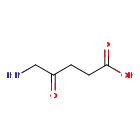
Structure for Aminolevulinic acid (DB00855)

- Weight
- Average: 131.1299
Monoisotopic: 131.058243159 - Chemical Formula
- C5H9NO3
- Synonyms
- 5-ALA
- 5-Aminolevulinic acid
- ácido 5-aminolevulínico
- Aminolevulinic acid
- dALA
- δ-ALA
- δ-aminolevulinic acid
- External IDs
- EINECS 226-679-5
- NSC 18509

Pharmacology
- Indication
As a topical gel, aminolevulinic acid (ALA) is indicated for lesion-directed and field-directed treatment of actinic keratoses (AKs) of mild-to-moderate severity on the face and scalp in combination with photodynamic therapy (PDT) using BF-RhodoLED® lamp, a narrowband, red light illumination source.5 As a topical solution, ALA can also be used for the same indication mentioned previously in addition to AKs of the upper extremities, but in conjunction with blue light illumination using the BLU-U Blue Light Photodynamic Therapy Illuminator.6 Finally, ALA is also available as an oral solution to be used as an adjunct for the visualization of glioma during surgery.7
 Reduce drug development failure ratesBuild, train, & validate machine-learning modelswith evidence-based and structured datasets.Build, train, & validate predictive machine-learning models with structured datasets.
- Associated Conditions
Indication Type Indication Combined Product Details Approval Level Age Group Patient Characteristics Dose Form Treatment of Actinic cheilitis ••• ••••• Adjunct therapy in treatment of Actinic keratoses of the face •••••••••••• •••••••• Adjunct therapy in treatment of Actinic keratoses of the face •••••••••••• ••• Adjunct therapy in treatment of Actinic keratoses of the scalp •••••••••••• •••••••• Adjunct therapy in treatment of Actinic keratoses of the scalp •••••••••••• ••• - Contraindications & Blackbox Warnings
 Prevent Adverse Drug Events TodayTap into our Clinical API for life-saving information on contraindications & blackbox warnings, population restrictions, harmful risks, & more.Avoid life-threatening adverse drug events with our Clinical API
- Pharmacodynamics
The metabolism of aminolevulinic acid (ALA) is the first step in the biochemical pathway resulting in heme synthesis. Aminolevulinic acid is not a photosensitizer, but rather a metabolic precursor of protoporphyrin IX (PpIX), which is a photosensitizer. The synthesis of ALA is normally tightly controlled by feedback inhibition of the enzyme, ALA synthetase, presumably by intracellular heme levels. ALA, when provided to the cell, bypasses this control point and results in the accumulation of PpIX, which is converted into heme by ferrochelatase through the addition of iron to the PpIX nucleus.
- Mechanism of action
According to the presumed mechanism of action, photosensitization following application of aminolevulinic acid (ALA) topical solution occurs through the metabolic conversion of ALA to protoporphyrin IX (PpIX), which accumulates in the skin to which aminolevulinic acid has been applied. When exposed to light of appropriate wavelength and energy, the accumulated PpIX produces a photodynamic reaction, a cytotoxic process dependent upon the simultaneous presence of light and oxygen. The absorption of light results in an excited state of the porphyrin molecule, and subsequent spin transfer from PpIX to molecular oxygen generates singlet oxygen, which can further react to form superoxide and hydroxyl radicals. Photosensitization of actinic (solar) keratosis lesions using aminolevulinic acid, plus illumination with the BLU-UTM Blue Light Photodynamic Therapy Illuminator (BLU-U), is the basis for aminolevulinic acid photodynamic therapy (PDT).
Target Actions Organism ADelta-aminolevulinic acid dehydratase inducerHumans - Absorption
Oral bioavailability is 50-60%.
Topical gel
Pharmacokinetics (PK) of aminolevulinic acid (ALA) and PpIX was evaluated in a trial of 12 adult subjects with mild to moderate AK with at least 10 AK lesions on the face or forehead. A single dose of one entire tube of ALA (2 grams) was applied under occlusion for 3 hours followed by photodynamic therapy (PDT) to a total area of 20 cm2. The mean ± SD baseline plasma ALA and PpIX concentrations were 20.16 ± 16.53 ng/mL and 3.27 ± 2.40 ng/mL, respectively. In most subjects, an up to 2.5-fold increase of ALA plasma concentrations was observed during the first 3 hours after ALA application. The mean ± SD area under the concentration time curve (AUC0-t) and maximum concentration (Cmax) for baseline corrected ALA (n=12) were 142.83 ± 75.50 ng.h/mL and 27.19 ± 20.02 ng/mL, respectively. The median Tmax (time at which Cmax occurred) was 3 hours.
Topical solution
Two human pharmacokinetic (PK) studies were conducted in subjects with minimally to moderately thick actinic keratoses on the upper extremities, having at least 6 lesions on one upper extremity and at least 12 lesions on the other upper extremity. A single dose comprising of two topical applications of ALA topical solution (each containing 354 mg ALA HCl) were directly applied to the lesions and occluded for 3 hours prior to light treatment.
The first PK study was conducted in 29 subjects and PK parameters of ALA were assessed. The baseline corrected mean ± SD of the maximum concentration (Cmax) of ALA was 249.9 ± 694.5 ng/mL and the median Tmax was 2 hours post dose. The mean ± SD exposure to ALA, as expressed by area under the concentration time curve (AUCt) was 669.9 ± 1610 ng·hr/mL. The mean ± SD elimination half-life (t1/2) of ALA was 5.7 ± 3.9 hours.
A second PK study was conducted in 14 subjects and PK parameters of ALA and PpIX were measured. The baseline corrected PpIX concentrations were negative in at least 50% of samples in 50% (7/14) subjects and AUC could not be estimated reliably. The baseline-corrected mean ± SD of Cmax for ALA and PpIX was 95.6 ± 120.6 ng/mL and 0.95 ± 0.71 ng/mL, respectively. The median Tmax of ALA and PpIX was 2 hours post dose and 12 hours post dose, respectively. The mean AUCt of ALA was 261.1 ± 229.3 ng·hr/mL. The mean ± SD t1/2 of ALA was 8.5 ± 6.7 hours.
Oral solution
In 12 healthy subjects, the absolute bioavailability of ALA following the recommended dose of ALA solution was 100.0% + 1.1 with a range of 78.5% to 131.2%. Maximum ALA plasma concentrations were reached with a median of 0.8 hour (range 0.5 – 1.0 hour).
- Volume of distribution
In healthy volunteers, the administration of aminolevulinic acid resulted in a volume of distribution of 9.3 ± 2.8 L intravenously and 14.5 ± 2.5 orally.[11961050]
- Protein binding
In in vitro experiments using aminolevulinic acid (ALA) concentrations up to approximately 25% of the maximal concentration that occurs in plasma following the recommended dose of ALA solution, the mean protein binding of ALA was 12%.7
- Metabolism
Exogenous aminolevulinic acid (ALA) is metabolized to PpIX, but the fraction of administered ALA that is metabolized to PpIX is unknown. The average plasma AUC of PpIX is less than 6% of that of ALA.7
- Route of elimination
In 12 healthy subjects, excretion of parent aminolevulinic acid (ALA) in urine in the 12 hours following administration of the recommended dose of ALA solution was 34 + 8% (mean + std dev) with a range of 27% to 57%.7
- Half-life
The mean ± SD elimination half-life (t1/2) of aminolevulinic acid was 5.7 ± 3.9 hours for the topical solution formulation and the mean half-life was 0.9 ± 1.2 hours for the oral solution formulation.6,7 In another pharmacokinetic studies with 6 healthy volunteers using a 128 mg dose, the mean half-life was 0.70 ± 0.18 h after the oral dose and 0.83 ± 0.05 h after the intravenous dose.8
- Clearance
Not Available
- Adverse Effects
 Improve decision support & research outcomesWith structured adverse effects data, including: blackbox warnings, adverse reactions, warning & precautions, & incidence rates. View sample adverse effects data in our new Data Library!Improve decision support & research outcomes with our structured adverse effects data.
- Toxicity
There are no available human data on aminolevulinic acid (ALA) in pregnant women to inform a drug-associated risk of adverse developmental outcomes. In animal reproduction studies, no adverse developmental effects were observed with oral ALA HCl administration to pregnant rabbits during organogenesis at doses 3 times the maximum recommended human oral dose.7
No carcinogenicity testing has been carried out using ALA. No evidence of mutagenic effects was seen in four studies conducted with ALA to evaluate this potential. In the Salmonella-Escherichia coli/mammalian microsome reverse mutation assay (Ames mutagenicity assay), no increases in the number of revertants were observed with any of the tester strains. In the Salmonella-Escherichia coli/mammalian microsome reverse mutation assay in the presence of solar light radiation (Ames mutagenicity assay with light), ALA did not cause an increase in the number of revertants per plate of any of the tester strains in the presence or absence of simulated solar light. In the L5178Y TK± mouse lymphoma forward mutation assay, ALA was evaluated as negative with and without metabolic activation under the study conditions. PpIX formation was not demonstrated in any of these in vitro studies. In the in vivo mouse micronucleus assay, ALA was considered negative under the study exposure conditions. In contrast, at least one report in the literature has noted genotoxic effects in cultured rat hepatocytes after ALA exposure with PpIX formation. Other studies have documented oxidative DNA damage in vivo and in vitro as a result of ALA exposure.6
No assessment of effects of ALA HCl on fertility has been performed in laboratory animals. It is unknown what effects systemic exposure to ALA HCl might have on fertility or reproductive function.6
- Pathways
Pathway Category Glycine and Serine Metabolism Metabolic Porphyrin Metabolism Metabolic Non-Ketotic Hyperglycinemia Disease Sarcosinemia Disease Acute Intermittent Porphyria Disease Porphyria Variegata (PV) Disease Dihydropyrimidine Dehydrogenase Deficiency (DHPD) Disease Dimethylglycine Dehydrogenase Deficiency Disease Hereditary Coproporphyria (HCP) Disease Congenital Erythropoietic Porphyria (CEP) or Gunther Disease Disease Dimethylglycine Dehydrogenase Deficiency Disease Hyperglycinemia, Non-Ketotic Disease 3-Phosphoglycerate Dehydrogenase Deficiency Disease - Pharmacogenomic Effects/ADRs
- Not Available
Interactions
- Drug Interactions
- This information should not be interpreted without the help of a healthcare provider. If you believe you are experiencing an interaction, contact a healthcare provider immediately. The absence of an interaction does not necessarily mean no interactions exist.
Drug Interaction Integrate drug-drug
interactions in your softwareAmbroxol The risk or severity of methemoglobinemia can be increased when Aminolevulinic acid is combined with Ambroxol. Articaine The risk or severity of methemoglobinemia can be increased when Aminolevulinic acid is combined with Articaine. Benzocaine The risk or severity of methemoglobinemia can be increased when Aminolevulinic acid is combined with Benzocaine. Benzyl alcohol The risk or severity of methemoglobinemia can be increased when Aminolevulinic acid is combined with Benzyl alcohol. Bupivacaine The risk or severity of methemoglobinemia can be increased when Aminolevulinic acid is combined with Bupivacaine. - Food Interactions
- No interactions found.
Products
 Drug product information from 10+ global regionsOur datasets provide approved product information including:dosage, form, labeller, route of administration, and marketing period.Access drug product information from over 10 global regions.
- Product Ingredients
Ingredient UNII CAS InChI Key Aminolevulinic acid hydrochloride V35KBM8JGR 5451-09-2 ZLHFONARZHCSET-UHFFFAOYSA-N - International/Other Brands
- Levulan (DUSA Pharmaceuticals, Inc.)
- Brand Name Prescription Products
Name Dosage Strength Route Labeller Marketing Start Marketing End Region Image Ameluz Gel 100 mg/1g Topical Biofrontera Inc. 2016-08-26 Not applicable US 
Ameluz Gel 78 mg/g Cutaneous Biofrontera Bioscience Gmb H 2016-09-08 Not applicable EU 
Gleolan Powder, for solution 1500 mg/1 Oral Medexus Pharma, Inc. 2018-04-14 Not applicable US Gleolan Powder, for solution 1.5 g / vial Oral Medexus Inc 2021-02-22 Not applicable Canada 
Gleolan Powder, for solution 1500 mg/1 Oral Nx Development Corp 2018-03-14 Not applicable US
Categories
- ATC Codes
- L01XD04 — Aminolevulinic acid
- Drug Categories
- Amino Acids
- Amino Acids, Peptides, and Proteins
- Antineoplastic Agents
- Antineoplastic and Immunomodulating Agents
- Dermatologicals
- Enkephalins
- Keto Acids
- Levulinic Acids
- Misc. Skin and Mucous Membrane Agents
- Nerve Tissue Proteins
- Neuropeptides
- Opioid Peptides
- Optical Imaging Agent
- Peptides
- Photosensitizing Agents
- Photosensitizing Agents for Phototherapy
- Porphyrin Precursor
- Proteins
- Radiation-Sensitizing Agents
- Roentgenography
- Sensitizers Used in Photodynamic/radiation Therapy
- Chemical TaxonomyProvided by Classyfire
- Description
- This compound belongs to the class of organic compounds known as delta amino acids and derivatives. These are compounds containing a carboxylic acid group and an amino group at the C5 carbon atom.
- Kingdom
- Organic compounds
- Super Class
- Organic acids and derivatives
- Class
- Carboxylic acids and derivatives
- Sub Class
- Amino acids, peptides, and analogues
- Direct Parent
- Delta amino acids and derivatives
- Alternative Parents
- Gamma-keto acids and derivatives / Short-chain keto acids and derivatives / Alpha-amino ketones / Amino acids / Monocarboxylic acids and derivatives / Carboxylic acids / Organopnictogen compounds / Organic oxides / Monoalkylamines / Hydrocarbon derivatives
- Substituents
- Aliphatic acyclic compound / Alpha-aminoketone / Amine / Amino acid / Carbonyl group / Carboxylic acid / Delta amino acid or derivatives / Gamma-keto acid / Hydrocarbon derivative / Keto acid
- Molecular Framework
- Aliphatic acyclic compounds
- External Descriptors
- delta-amino acid, 4-oxo monocarboxylic acid (CHEBI:17549) / Amino fatty acids (LMFA01100055)
- Affected organisms
- Humans and other mammals
Chemical Identifiers
- UNII
- 88755TAZ87
- CAS number
- 106-60-5
- InChI Key
- ZGXJTSGNIOSYLO-UHFFFAOYSA-N
- InChI
- InChI=1S/C5H9NO3/c6-3-4(7)1-2-5(8)9/h1-3,6H2,(H,8,9)
- IUPAC Name
- 5-amino-4-oxopentanoic acid
- SMILES
- NCC(=O)CCC(O)=O
References
- Synthesis Reference
Takashi Ebata, Hiroshi Kawakami, Katsuya Matsumoto, Koshi Koseki, Hajime Matsushita, "Method of preparing an acid additional salt of delta-aminolevulinic acid." U.S. Patent US5284973, issued July, 1974.
US5284973- General References
- Stummer W, Pichlmeier U, Meinel T, Wiestler OD, Zanella F, Reulen HJ: Fluorescence-guided surgery with 5-aminolevulinic acid for resection of malignant glioma: a randomised controlled multicentre phase III trial. Lancet Oncol. 2006 May;7(5):392-401. [Article]
- Kennedy JC, Marcus SL, Pottier RH: Photodynamic therapy (PDT) and photodiagnosis (PD) using endogenous photosensitization induced by 5-aminolevulinic acid (ALA): mechanisms and clinical results. J Clin Laser Med Surg. 1996 Oct;14(5):289-304. [Article]
- Dalton JT, Yates CR, Yin D, Straughn A, Marcus SL, Golub AL, Meyer MC: Clinical pharmacokinetics of 5-aminolevulinic acid in healthy volunteers and patients at high risk for recurrent bladder cancer. J Pharmacol Exp Ther. 2002 May;301(2):507-12. doi: 10.1124/jpet.301.2.507. [Article]
- FDA Approved Drug Products: AMELUZ (aminolevulinic acid hydrochloride) topical gel, 10% (October 2023) [Link]
- FDA Approved Drug Products: AMELUZ (aminolevulinic acid hydrochloride) gel, 10%, for topical use [Link]
- FDA Approved Drug Products: LEVULAN KERASTICK (aminolevulinic acid HCl) for topical solution, 20% [Link]
- FDA Approved Drug Products: GLEOLAN [aminolevulinic acid hydrochloride (ALA HCl)] for oral solution [Link]
- FDA Approved Drug Products: LEVULAN®KERASTICK™ (aminolevulinic acid HCl) for Topical Solution, 20% [Link]
- External Links
- Human Metabolome Database
- HMDB0001149
- KEGG Compound
- C00430
- PubChem Compound
- 137
- PubChem Substance
- 46506856
- ChemSpider
- 134
- BindingDB
- 50240386
- 155002
- ChEBI
- 356416
- ChEMBL
- CHEMBL601
- ZINC
- ZINC000003782550
- Therapeutic Targets Database
- DAP000314
- PharmGKB
- PA10015
- PDBe Ligand
- FVT
- RxList
- RxList Drug Page
- Drugs.com
- Drugs.com Drug Page
- Wikipedia
- Aminolevulinic_acid
- PDB Entries
- 6h7u / 6hzp
- FDA label
- Download (195 KB)
- MSDS
- Download (72.5 KB)
Clinical Trials
- Clinical Trials
Phase Status Purpose Conditions Count 4 Completed Treatment Actinic Cheilitis 1 4 Completed Treatment Actinic Keratosis (AK) 2 4 Completed Treatment Actinic Keratosis (AK) / Natural Daylight Photodynamic Therapy 1 4 Completed Treatment Hutchinson's Melanotic Freckle 1 4 Completed Treatment Multiple Actinic Keratoses 1
Pharmacoeconomics
- Manufacturers
- Dusa pharmaceuticals inc
- Packagers
- Dusa Pharmaceuticals
- Dosage Forms
Form Route Strength Patch Topical 8 MG Plaster 8 mg Gel Cutaneous 78 mg/g Gel Topical 100 mg/1g Powder, for solution Oral 1.5 g / vial Powder, for solution Oral 1500 mg/1 Powder, for solution Oral 30 mg/ml Kit; powder, for solution Topical 354 mg/1.5mL Powder, for solution Topical 20 % - Prices
Unit description Cost Unit Levulan kerastick 170.25USD each DrugBank does not sell nor buy drugs. Pricing information is supplied for informational purposes only.- Patents
Patent Number Pediatric Extension Approved Expires (estimated) Region US5422093 No 1995-06-06 2009-07-28 US US5954703 No 1999-09-21 2017-10-31 US US6709446 No 2004-03-23 2018-05-01 US US7723910 No 2010-05-25 2019-06-17 US US8216289 No 2012-07-10 2018-05-01 US US8758418 No 2014-06-24 2018-05-01 US US6559183 No 2003-05-06 2019-11-12 US US10357567 No 2019-07-23 2038-01-12 US US11077192 No 2021-08-03 2038-01-12 US US11135293 No 2021-10-05 2038-01-12 US US11235169 No 2020-10-15 2040-10-15 US US11540981 No 2008-02-07 2028-02-07 US US11571478 No 2018-01-12 2038-01-12 US US11690914 No 2018-01-12 2038-01-12 US
Properties
- State
- Solid
- Experimental Properties
Property Value Source melting point (°C) 156-158 °C Not Available water solubility Very soluble Not Available logP -1.5 Not Available - Predicted Properties
Property Value Source Water Solubility 173.0 mg/mL ALOGPS logP -2.8 ALOGPS logP -3.3 Chemaxon logS 0.12 ALOGPS pKa (Strongest Acidic) 4.05 Chemaxon pKa (Strongest Basic) 7.84 Chemaxon Physiological Charge 0 Chemaxon Hydrogen Acceptor Count 4 Chemaxon Hydrogen Donor Count 2 Chemaxon Polar Surface Area 80.39 Å2 Chemaxon Rotatable Bond Count 4 Chemaxon Refractivity 30.45 m3·mol-1 Chemaxon Polarizability 12.55 Å3 Chemaxon Number of Rings 0 Chemaxon Bioavailability 1 Chemaxon Rule of Five Yes Chemaxon Ghose Filter No Chemaxon Veber's Rule No Chemaxon MDDR-like Rule No Chemaxon - Predicted ADMET Features
Property Value Probability Human Intestinal Absorption + 0.9162 Blood Brain Barrier + 0.7482 Caco-2 permeable - 0.7802 P-glycoprotein substrate Non-substrate 0.6653 P-glycoprotein inhibitor I Non-inhibitor 0.9515 P-glycoprotein inhibitor II Non-inhibitor 0.7522 Renal organic cation transporter Non-inhibitor 0.9017 CYP450 2C9 substrate Non-substrate 0.8819 CYP450 2D6 substrate Non-substrate 0.8314 CYP450 3A4 substrate Non-substrate 0.7939 CYP450 1A2 substrate Non-inhibitor 0.9219 CYP450 2C9 inhibitor Non-inhibitor 0.9561 CYP450 2D6 inhibitor Non-inhibitor 0.9608 CYP450 2C19 inhibitor Non-inhibitor 0.9406 CYP450 3A4 inhibitor Non-inhibitor 0.9187 CYP450 inhibitory promiscuity Low CYP Inhibitory Promiscuity 0.9784 Ames test Non AMES toxic 0.8884 Carcinogenicity Non-carcinogens 0.8377 Biodegradation Ready biodegradable 0.9445 Rat acute toxicity 1.1726 LD50, mol/kg Not applicable hERG inhibition (predictor I) Weak inhibitor 0.9186 hERG inhibition (predictor II) Non-inhibitor 0.8944
Spectra
- Mass Spec (NIST)
- Not Available
- Spectra
- Chromatographic Properties
Collision Cross Sections (CCS)
Adduct CCS Value (Å2) Source type Source [M-H]- 126.8395 predictedDarkChem Lite v0.1.0 [M-H]- 126.8794 predictedDarkChem Lite v0.1.0 [M-H]- 124.17047 predictedDeepCCS 1.0 (2019) [M+H]+ 127.9837 predictedDarkChem Lite v0.1.0 [M+H]+ 127.6611 predictedDarkChem Lite v0.1.0 [M+H]+ 126.991 predictedDeepCCS 1.0 (2019) [M+Na]+ 126.8661 predictedDarkChem Lite v0.1.0 [M+Na]+ 126.9513 predictedDarkChem Lite v0.1.0 [M+Na]+ 135.49904 predictedDeepCCS 1.0 (2019)
Targets

- Kind
- Protein
- Organism
- Humans
- Pharmacological action
- Yes
- Actions
- Inducer
- General Function
- Zinc ion binding
- Specific Function
- Catalyzes an early step in the biosynthesis of tetrapyrroles. Binds two molecules of 5-aminolevulinate per subunit, each at a distinct site, and catalyzes their condensation to form porphobilinogen.
- Gene Name
- ALAD
- Uniprot ID
- P13716
- Uniprot Name
- Delta-aminolevulinic acid dehydratase
- Molecular Weight
- 36294.485 Da
References
- Sakai T: Biomarkers of lead exposure. Ind Health. 2000 Apr;38(2):127-42. [Article]
- Vajpayee P, Tripathi RD, Rai UN, Ali MB, Singh SN: Chromium (VI) accumulation reduces chlorophyll biosynthesis, nitrate reductase activity and protein content in Nymphaea alba L. Chemosphere. 2000 Oct;41(7):1075-82. [Article]
- Tomas-Zapico C, Martinez-Fraga J, Rodriguez-Colunga MJ, Tolivia D, Hardeland R, Coto-Montes A: Melatonin protects against delta-aminolevulinic acid-induced oxidative damage in male Syrian hamster Harderian glands. Int J Biochem Cell Biol. 2002 May;34(5):544-53. [Article]
- Frere F, Schubert WD, Stauffer F, Frankenberg N, Neier R, Jahn D, Heinz DW: Structure of porphobilinogen synthase from Pseudomonas aeruginosa in complex with 5-fluorolevulinic acid suggests a double Schiff base mechanism. J Mol Biol. 2002 Jul 5;320(2):237-47. [Article]
- Flora SJ, Kannan GM, Pant BP, Jaiswal DK: Combined administration of oxalic acid, succimer and its analogue for the reversal of gallium arsenide-induced oxidative stress in rats. Arch Toxicol. 2002 Jun;76(5-6):269-76. Epub 2002 Apr 23. [Article]
- Akagi R, Yasui Y, Harper P, Sassa S: A novel mutation of delta-aminolaevulinate dehydratase in a healthy child with 12% erythrocyte enzyme activity. Br J Haematol. 1999 Sep;106(4):931-7. [Article]
- Chen X, Ji ZL, Chen YZ: TTD: Therapeutic Target Database. Nucleic Acids Res. 2002 Jan 1;30(1):412-5. [Article]
Transporters
- Kind
- Protein
- Organism
- Humans
- Pharmacological action
- Unknown
- Actions
- Inhibitor
- General Function
- Proton-dependent oligopeptide secondary active transmembrane transporter activity
- Specific Function
- Proton-coupled intake of oligopeptides of 2 to 4 amino acids with a preference for dipeptides. May constitute a major route for the absorption of protein digestion end-products.
- Gene Name
- SLC15A1
- Uniprot ID
- P46059
- Uniprot Name
- Solute carrier family 15 member 1
- Molecular Weight
- 78805.265 Da
References
- Terada T, Sawada K, Irie M, Saito H, Hashimoto Y, Inui K: Structural requirements for determining the substrate affinity of peptide transporters PEPT1 and PEPT2. Pflugers Arch. 2000 Sep;440(5):679-84. [Article]
- Doring F, Walter J, Will J, Focking M, Boll M, Amasheh S, Clauss W, Daniel H: Delta-aminolevulinic acid transport by intestinal and renal peptide transporters and its physiological and clinical implications. J Clin Invest. 1998 Jun 15;101(12):2761-7. [Article]
- Sala-Rabanal M, Loo DD, Hirayama BA, Turk E, Wright EM: Molecular interactions between dipeptides, drugs and the human intestinal H+ -oligopeptide cotransporter hPEPT1. J Physiol. 2006 Jul 1;574(Pt 1):149-66. Epub 2006 Apr 20. [Article]
- Kind
- Protein
- Organism
- Humans
- Pharmacological action
- Unknown
- Actions
- Inhibitor
- General Function
- Peptide:proton symporter activity
- Specific Function
- Proton-coupled intake of oligopeptides of 2 to 4 amino acids with a preference for dipeptides.
- Gene Name
- SLC15A2
- Uniprot ID
- Q16348
- Uniprot Name
- Solute carrier family 15 member 2
- Molecular Weight
- 81782.77 Da
References
- Doring F, Walter J, Will J, Focking M, Boll M, Amasheh S, Clauss W, Daniel H: Delta-aminolevulinic acid transport by intestinal and renal peptide transporters and its physiological and clinical implications. J Clin Invest. 1998 Jun 15;101(12):2761-7. [Article]
- Terada T, Sawada K, Irie M, Saito H, Hashimoto Y, Inui K: Structural requirements for determining the substrate affinity of peptide transporters PEPT1 and PEPT2. Pflugers Arch. 2000 Sep;440(5):679-84. [Article]

Drug created at June 13, 2005 13:24 / Updated at April 24, 2024 14:30