Identification
- Summary
Didanosine is a reverse transcriptase inhibitor used to treat HIV.
- Generic Name
- Didanosine
- DrugBank Accession Number
- DB00900
- Background
A dideoxynucleoside compound in which the 3'-hydroxy group on the sugar moiety has been replaced by a hydrogen. This modification prevents the formation of phosphodiester linkages which are needed for the completion of nucleic acid chains. Didanosine is a potent inhibitor of HIV replication, acting as a chain-terminator of viral DNA by binding to reverse transcriptase; ddI is then metabolized to dideoxyadenosine triphosphate, its putative active metabolite.
- Type
- Small Molecule
- Groups
- Approved
- Structure

Structure for Didanosine (DB00900)
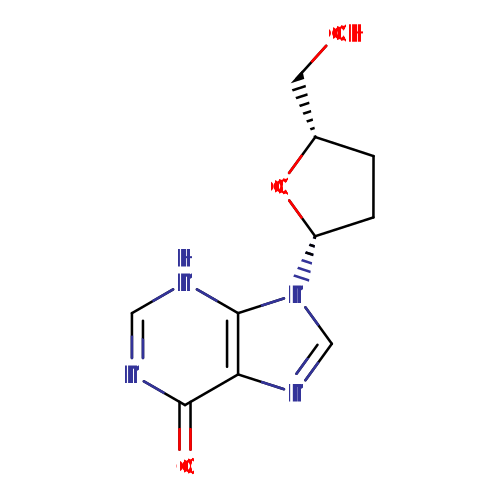
- Weight
- Average: 236.2273
Monoisotopic: 236.09094027 - Chemical Formula
- C10H12N4O3
- Synonyms
- 2,3-Dideoxyinosine
- 9-((2R,5S)-5-(hydroxymethyl)-tetrahydrofuran-2-yl)-1H-purin-6(9H)-one
- 9-((2R,5S)-5-Hydroxymethyl-tetrahydro-furan-2-yl)-1,9-dihydro-purin-6-one
- 9-((2S,5R)-5-Hydroxymethyl-tetrahydro-furan-2-yl)-9H-purin-6-ol
- 9-[(2R,5S)-5-(hydroxymethyl)tetrahydrofuran-2-yl]-1,9-dihydro-6H-purin-6-one
- ddI
- ddIno
- Didanosina
- Didanosine
- Didanosinum
- Dideoxyinosine
- External IDs
- BMY-40900

Pharmacology
- Indication
For use, in combination with other antiretroviral agents, in the treatment of HIV-1 infection in adults.
 Reduce drug development failure ratesBuild, train, & validate machine-learning modelswith evidence-based and structured datasets.Build, train, & validate predictive machine-learning models with structured datasets.
- Associated Conditions
Indication Type Indication Combined Product Details Approval Level Age Group Patient Characteristics Dose Form Used in combination to treat Hiv-1 infection •••••••••••• - Contraindications & Blackbox Warnings
 Prevent Adverse Drug Events TodayTap into our Clinical API for life-saving information on contraindications & blackbox warnings, population restrictions, harmful risks, & more.Avoid life-threatening adverse drug events with our Clinical API
- Pharmacodynamics
Didanosine is a nucleoside reverse transcriptase inhibitor (NRTI) with activity against Human Immunodeficiency Virus Type 1 (HIV-1). Didanosine is a hypoxanthine attached to the sugar ring, unlike other nucleoside analogues. Didanosine is phosphorylated to active metabolites that compete for incorporation into viral DNA. They inhibit the HIV reverse transcriptase enzyme competitively and act as a chain terminator of DNA synthesis. Didanosine is effective against HIV, and usually used in combination with other antiviral therapy. Switching from long term AZT treatment to didanosine has been shown to be beneficial. Didanosine has weak acid stability and therefore, it is often combined with an antacid.
- Mechanism of action
Didanosine (ddI) is metabolized intracellularly by a series of cellular enzymes to its active moiety, dideoxyadenosine triphosphate (ddATP), which inhibits the HIV reverse transcriptase enzyme competitively by competing with natural dATP. It also acts as a chain terminator by its incorporation into viral DNA as the lack of a 3'-OH group in the incorporated nucleoside analogue prevents the formation of the 5' to 3' phosphodiester linkage essential for DNA chain elongation, and therefore, the viral DNA growth is terminated.
Target Actions Organism AReverse transcriptase/RNaseH inhibitorHuman immunodeficiency virus 1 UPurine nucleoside phosphorylase substrateHumans - Absorption
Rapidly absorbed (bioavailability 30-40%) with peak plasma concentrations appearing within 0.5 and 1.5 hrs.
- Volume of distribution
Not Available
- Protein binding
Low (<5%)
- Metabolism
Rapidly metabolized intracellularly to its active moiety, 2,3-dideoxyadenosine-5-triphosphate (ddA-TP). It is then further metabolized hepatically to yield hypoxanthine, xanthine, and uric acid.
Hover over products below to view reaction partners
- Route of elimination
Based on data from in vitro and animal studies, it is presumed that the metabolism of didanosine in man occurs by the same pathways responsible for the elimination of endogenous purines. Purines are eliminated by the kidneys.
- Half-life
30 minutes in plasma and more than 12 hours in intracellular environment.
- Clearance
Not Available
- Adverse Effects
 Improve decision support & research outcomesWith structured adverse effects data, including: blackbox warnings, adverse reactions, warning & precautions, & incidence rates. View sample adverse effects data in our new Data Library!Improve decision support & research outcomes with our structured adverse effects data.
- Toxicity
Side effects include pancreatitis, peripheral neuropathy, diarrhea, hyperuricemia and hepatic dysfunction
- Pathways
Pathway Category Didanosine Action Pathway Drug action - Pharmacogenomic Effects/ADRs
- Not Available
Interactions
- Drug Interactions
- This information should not be interpreted without the help of a healthcare provider. If you believe you are experiencing an interaction, contact a healthcare provider immediately. The absence of an interaction does not necessarily mean no interactions exist.
Drug Interaction Integrate drug-drug
interactions in your softwareAbacavir Didanosine may decrease the excretion rate of Abacavir which could result in a higher serum level. Aceclofenac Aceclofenac may decrease the excretion rate of Didanosine which could result in a higher serum level. Acemetacin Acemetacin may decrease the excretion rate of Didanosine which could result in a higher serum level. Acetaminophen Acetaminophen may decrease the excretion rate of Didanosine which could result in a higher serum level. Acetazolamide Acetazolamide may increase the excretion rate of Didanosine which could result in a lower serum level and potentially a reduction in efficacy. - Food Interactions
- Avoid alcohol.
- Take on an empty stomach. Take at least 1 hour before or 2 hours after meals.
Products
 Drug product information from 10+ global regionsOur datasets provide approved product information including:dosage, form, labeller, route of administration, and marketing period.Access drug product information from over 10 global regions.
- Product Images
- Brand Name Prescription Products
Name Dosage Strength Route Labeller Marketing Start Marketing End Region Image Videx Powder, for solution 10 mg/1mL Oral Bristol-Myers Squibb Company 1991-10-09 2021-02-28 US 
Videx Powder, for solution 10 mg/1mL Oral Bristol-Myers Squibb Company 1991-10-09 2019-11-30 US Videx Chewable Dispersible Tab 100mg Tablet 100 mg Oral Bristol Myers Squibb 1991-12-31 2008-03-27 Canada 
Videx Chewable Dispersible Tab 150mg Tablet 150 mg Oral Bristol Myers Squibb 1991-12-31 2007-05-01 Canada Videx Chewable Dispersible Tab 25mg Tablet 25 mg Oral Bristol Myers Squibb 1991-12-31 2007-01-02 Canada - Generic Prescription Products
Name Dosage Strength Route Labeller Marketing Start Marketing End Region Image Didanosine Powder, for solution 10 mg/1mL Oral Aurobindo Pharma 2007-03-08 2014-08-18 US Didanosine Capsule, delayed release 250 mg/1 Oral Aurobindo Pharma Limited 2008-09-24 Not applicable US Didanosine Capsule, delayed release pellets 400 mg/1 Oral State of Florida DOH Central Pharmacy 2009-07-01 Not applicable US 
Didanosine Capsule, delayed release pellets 400 mg/1 Oral Teva Pharmaceuticals USA, Inc. 2004-12-15 2019-03-31 US 
Didanosine Capsule, delayed release 400 mg/1 Oral Mylan Pharmaceuticals 2010-06-28 2016-06-30 US


Categories
- ATC Codes
- J05AF02 — Didanosine
- Drug Categories
- Anti-HIV Agents
- Anti-Infective Agents
- Anti-Retroviral Agents
- Antiinfectives for Systemic Use
- Antimetabolites
- Antiviral Agents
- Antivirals for Systemic Use
- Deoxyribonucleosides
- Dideoxynucleosides
- Direct Acting Antivirals
- Drugs that are Mainly Renally Excreted
- Enzyme Inhibitors
- Heterocyclic Compounds, Fused-Ring
- Human Immunodeficiency Virus Nucleoside Analog Reverse Transcriptase Inhibitor
- Neurotoxic agents
- Noxae
- Nucleic Acid Synthesis Inhibitors
- Nucleic Acids, Nucleotides, and Nucleosides
- Nucleoside and Nucleotide Reverse Transcriptase Inhibitors
- Nucleoside Reverse Transcriptase Inhibitors
- Nucleosides
- OAT1/SLC22A6 Substrates
- Purine Nucleosides
- Purines
- Reverse Transcriptase Inhibitors
- Ribonucleosides
- Toxic Actions
- Chemical TaxonomyProvided by Classyfire
- Description
- This compound belongs to the class of organic compounds known as purine 2',3'-dideoxyribonucleosides. These are compounds consisting of a purine linked to a ribose which lacks a hydroxyl group at positions 2 and 3.
- Kingdom
- Organic compounds
- Super Class
- Nucleosides, nucleotides, and analogues
- Class
- Purine nucleosides
- Sub Class
- Purine 2',3'-dideoxyribonucleosides
- Direct Parent
- Purine 2',3'-dideoxyribonucleosides
- Alternative Parents
- Hypoxanthines / 6-oxopurines / Pyrimidones / N-substituted imidazoles / Vinylogous amides / Tetrahydrofurans / Heteroaromatic compounds / Oxacyclic compounds / Azacyclic compounds / Primary alcohols show 4 more
- Substituents
- 6-oxopurine / Alcohol / Aromatic heteropolycyclic compound / Azacycle / Azole / Heteroaromatic compound / Hydrocarbon derivative / Hypoxanthine / Imidazole / Imidazopyrimidine show 17 more
- Molecular Framework
- Aromatic heteropolycyclic compounds
- External Descriptors
- purine 2',3'-dideoxyribonucleoside (CHEBI:490877)
- Affected organisms
- Human Immunodeficiency Virus
Chemical Identifiers
- UNII
- K3GDH6OH08
- CAS number
- 69655-05-6
- InChI Key
- BXZVVICBKDXVGW-NKWVEPMBSA-N
- InChI
- InChI=1S/C10H12N4O3/c15-3-6-1-2-7(17-6)14-5-13-8-9(14)11-4-12-10(8)16/h4-7,15H,1-3H2,(H,11,12,16)/t6-,7+/m0/s1
- IUPAC Name
- 9-[(2R,5S)-5-(hydroxymethyl)oxolan-2-yl]-6,9-dihydro-3H-purin-6-one
- SMILES
- OC[C@@H]1CC[C@@H](O1)N1C=NC2=C1NC=NC2=O
References
- Synthesis Reference
Bandi Parthasaradhi Reddy, Kura Rathnakar Reddy, Rapolu Raji Reddy, Dasari Muralidhara Reddy, Kesireddy Subash Chander Reddy, "Novel Process for the Preparation of Didanosine Using Novel Intermediates." U.S. Patent US20080293938, issued November 27, 2008.
US20080293938- General References
- Not Available
- External Links
- Human Metabolome Database
- HMDB0015037
- KEGG Drug
- D00296
- KEGG Compound
- C06953
- PubChem Compound
- 50599
- PubChem Substance
- 46506255
- ChemSpider
- 45864
- BindingDB
- 50404252
- 3364
- ChEBI
- 490877
- ChEMBL
- CHEMBL1460
- ZINC
- ZINC000013597823
- Therapeutic Targets Database
- DNC000528
- PharmGKB
- PA449301
- PDBe Ligand
- 2DI
- RxList
- RxList Drug Page
- Drugs.com
- Drugs.com Drug Page
- PDRhealth
- PDRhealth Drug Page
- Wikipedia
- Didanosine
- PDB Entries
- 1v3q
- FDA label
- Download (86.1 KB)
- MSDS
- Download (36.5 KB)
Clinical Trials
- Clinical Trials
Phase Status Purpose Conditions Count 4 Completed Diagnostic Cardiovascular Disease (CVD) / HIV Lipodystrophy Syndrome 1 4 Completed Treatment Hemophilia A / Human Immunodeficiency Virus (HIV) Infections 1 4 Completed Treatment Human Immunodeficiency Virus (HIV) Infections 6 4 Unknown Status Treatment Human Immunodeficiency Virus (HIV) Infections 1 3 Completed Not Available Acquired Immune Deficiency Syndrome (AIDS) / Human Immunodeficiency Virus (HIV) Infections 1
Pharmacoeconomics
- Manufacturers
- Aurobindo pharma ltd
- Barr laboratories inc
- Matrix laboratories ltd
- Bristol myers squibb co
- Bristol myers squibb co pharmaceutical research institute
- Packagers
- Advanced Pharmaceutical Services Inc.
- Amerisource Health Services Corp.
- AQ Pharmaceuticals Inc.
- A-S Medication Solutions LLC
- Aurobindo Pharma Ltd.
- Barr Pharmaceuticals
- Bristol-Myers Squibb Co.
- Dept Health Central Pharmacy
- Kaiser Foundation Hospital
- Murfreesboro Pharmaceutical Nursing Supply
- Mylan
- Physicians Total Care Inc.
- Prepak Systems Inc.
- Remedy Repack
- Dosage Forms
Form Route Strength Capsule, extended release Oral 125 mg Tablet, chewable Buccal 25 mg Tablet, chewable Oral 150 mg Capsule, extended release Oral 250 mg Tablet, chewable Oral 100 mg Capsule, coated Oral 400 mg Tablet, chewable Oral 25 mg Capsule, delayed release Oral 125 mg/1 Capsule, delayed release Oral 200 mg/1 Capsule, delayed release pellets Oral 200 mg/1 Capsule, delayed release pellets Oral 250 mg/1 Capsule, delayed release pellets Oral 400 mg/1 Powder, for solution Oral 10 mg/1mL Tablet, for suspension Oral 100 mg/1 Tablet, for suspension Oral 150 mg/1 Tablet, for suspension Oral 200 mg/1 Tablet, delayed release Oral 400 mg Capsule, coated Oral 250 mg Capsule, extended release Oral 400 mg Tablet, chewable Oral 10 mg Tablet, chewable Oral 50 mg Capsule, delayed release Oral Powder Oral Tablet, chewable Oral Tablet Oral 100 mg Tablet Oral 150 mg Tablet Oral 25 mg Tablet Oral 50 mg Capsule, delayed release Oral 125 mg Capsule, delayed release Oral 200 mg Capsule, delayed release Oral 250 mg Capsule, delayed release Oral 250 mg/1 Capsule, delayed release Oral 400 mg Capsule, delayed release Oral 400 mg/1 Powder, for solution Oral 4 g / bottle - Prices
Unit description Cost Unit Videx 4 gm Solution 200ml Bottle 124.51USD bottle Videx 2 gm Solution 100ml Bottle 58.4USD bottle Videx EC 400 mg Delayed Release Capsule 14.75USD capsule Videx ec 400 mg capsule 14.18USD capsule Didanosine 400 mg Delayed Release Capsule 12.78USD capsule Videx EC 250 mg Delayed Release Capsule 9.44USD capsule Videx ec 250 mg capsule 9.08USD capsule Didanosine 250 mg Delayed Release Capsule 8.18USD capsule Videx ec 200 mg capsule 7.12USD capsule Didanosine 200 mg Delayed Release Capsule 6.42USD capsule Videx ec 125 mg capsule 4.45USD capsule Videx 4 gm pediatric solution 0.6USD ml Videx 2 gm pediatric solution 0.55USD ml DrugBank does not sell nor buy drugs. Pricing information is supplied for informational purposes only.- Patents
Patent Number Pediatric Extension Approved Expires (estimated) Region US5880106 No 1999-03-09 2012-01-22 US CA2332922 No 2008-02-12 2018-08-04 Canada CA2072573 No 1996-05-28 2011-01-03 Canada
Properties
- State
- Solid
- Experimental Properties
Property Value Source melting point (°C) 160-163 °C PhysProp water solubility 15.8 mg/mL Not Available logP -1.24 SANGSTER (1993) - Predicted Properties
Property Value Source Water Solubility 6.58 mg/mL ALOGPS logP -0.99 ALOGPS logP -0.35 Chemaxon logS -1.6 ALOGPS pKa (Strongest Acidic) 10.94 Chemaxon pKa (Strongest Basic) 2.76 Chemaxon Physiological Charge 0 Chemaxon Hydrogen Acceptor Count 6 Chemaxon Hydrogen Donor Count 2 Chemaxon Polar Surface Area 88.74 Å2 Chemaxon Rotatable Bond Count 2 Chemaxon Refractivity 58.59 m3·mol-1 Chemaxon Polarizability 22.93 Å3 Chemaxon Number of Rings 3 Chemaxon Bioavailability 1 Chemaxon Rule of Five Yes Chemaxon Ghose Filter Yes Chemaxon Veber's Rule No Chemaxon MDDR-like Rule No Chemaxon - Predicted ADMET Features
Property Value Probability Human Intestinal Absorption + 0.996 Blood Brain Barrier + 0.823 Caco-2 permeable - 0.9019 P-glycoprotein substrate Non-substrate 0.5948 P-glycoprotein inhibitor I Non-inhibitor 0.945 P-glycoprotein inhibitor II Non-inhibitor 0.6378 Renal organic cation transporter Non-inhibitor 0.8049 CYP450 2C9 substrate Non-substrate 0.8065 CYP450 2D6 substrate Non-substrate 0.7777 CYP450 3A4 substrate Non-substrate 0.5234 CYP450 1A2 substrate Non-inhibitor 0.6934 CYP450 2C9 inhibitor Non-inhibitor 0.9064 CYP450 2D6 inhibitor Non-inhibitor 0.9145 CYP450 2C19 inhibitor Non-inhibitor 0.8646 CYP450 3A4 inhibitor Non-inhibitor 0.9608 CYP450 inhibitory promiscuity Low CYP Inhibitory Promiscuity 0.7288 Ames test AMES toxic 0.8682 Carcinogenicity Non-carcinogens 0.9094 Biodegradation Not ready biodegradable 0.8478 Rat acute toxicity 2.0874 LD50, mol/kg Not applicable hERG inhibition (predictor I) Weak inhibitor 0.9451 hERG inhibition (predictor II) Non-inhibitor 0.8735
Spectra
- Mass Spec (NIST)
- Not Available
- Spectra
- Chromatographic Properties
Collision Cross Sections (CCS)
Adduct CCS Value (Å2) Source type Source [M-H]- 154.7287669 predictedDarkChem Lite v0.1.0 [M-H]- 153.6281589 predictedDarkChem Lite v0.1.0 [M-H]- 154.8945669 predictedDarkChem Lite v0.1.0 [M-H]- 146.30229 predictedDeepCCS 1.0 (2019) [M+H]+ 155.4599669 predictedDarkChem Lite v0.1.0 [M+H]+ 151.6100057 predictedDarkChem Lite v0.1.0 [M+H]+ 155.1671669 predictedDarkChem Lite v0.1.0 [M+H]+ 148.69785 predictedDeepCCS 1.0 (2019) [M+Na]+ 154.8669669 predictedDarkChem Lite v0.1.0 [M+Na]+ 165.9169224 predictedDarkChem Lite v0.1.0 [M+Na]+ 154.9248669 predictedDarkChem Lite v0.1.0 [M+Na]+ 154.61037 predictedDeepCCS 1.0 (2019)
Targets

- Kind
- Protein
- Organism
- Human immunodeficiency virus 1
- Pharmacological action
- Yes
- Actions
- Inhibitor
- General Function
- Rna-dna hybrid ribonuclease activity
- Specific Function
- Not Available
- Gene Name
- pol
- Uniprot ID
- Q72547
- Uniprot Name
- Reverse transcriptase/RNaseH
- Molecular Weight
- 65223.615 Da
References
- Faulds D, Brogden RN: Didanosine. A review of its antiviral activity, pharmacokinetic properties and therapeutic potential in human immunodeficiency virus infection. Drugs. 1992 Jul;44(1):94-116. [Article]
- De Clercq E: Emerging anti-HIV drugs. Expert Opin Emerg Drugs. 2005 May;10(2):241-73. [Article]
- Kind
- Protein
- Organism
- Humans
- Pharmacological action
- Unknown
- Actions
- Substrate
- General Function
- Purine-nucleoside phosphorylase activity
- Specific Function
- The purine nucleoside phosphorylases catalyze the phosphorolytic breakdown of the N-glycosidic bond in the beta-(deoxy)ribonucleoside molecules, with the formation of the corresponding free purine ...
- Gene Name
- PNP
- Uniprot ID
- P00491
- Uniprot Name
- Purine nucleoside phosphorylase
- Molecular Weight
- 32117.69 Da
References
- Birmingham WR, Starbird CA, Panosian TD, Nannemann DP, Iverson TM, Bachmann BO: Bioretrosynthetic construction of a didanosine biosynthetic pathway. Nat Chem Biol. 2014 May;10(5):392-9. doi: 10.1038/nchembio.1494. Epub 2014 Mar 23. [Article]
- Ray AS, Olson L, Fridland A: Role of purine nucleoside phosphorylase in interactions between 2',3'-dideoxyinosine and allopurinol, ganciclovir, or tenofovir. Antimicrob Agents Chemother. 2004 Apr;48(4):1089-95. doi: 10.1128/aac.48.4.1089-1095.2004. [Article]
- Weibel M, Balzarini J, Bernhardt A, Mamont P: Potentiating effect of (2-[2-[(2-amino-1,6-dihydro-6-oxo-9H-purin-9-yl)methyl]-phenyl]ethenyl) -phosphonic acid (MDL 74,428), a potent inhibitor of purine nucleoside phosphorylase, on the antiretroviral activities of 2',3'-dideoxyinosine combined with ribavirin in mice. Biochem Pharmacol. 1994 Jul 19;48(2):245-52. doi: 10.1016/0006-2952(94)90094-9. [Article]
- Singhal D, Ho NF, Anderson BD: Absorption and intestinal metabolism of purine dideoxynucleosides and an adenosine deaminase-activated prodrug of 2',3'-dideoxyinosine in the mesenteric vein cannulated rat ileum. J Pharm Sci. 1998 May;87(5):569-77. doi: 10.1021/js9703582. [Article]
Carriers
- Kind
- Protein
- Organism
- Humans
- Pharmacological action
- Unknown
- General Function
- Toxic substance binding
- Specific Function
- Serum albumin, the main protein of plasma, has a good binding capacity for water, Ca(2+), Na(+), K(+), fatty acids, hormones, bilirubin and drugs. Its main function is the regulation of the colloid...
- Gene Name
- ALB
- Uniprot ID
- P02768
- Uniprot Name
- Serum albumin
- Molecular Weight
- 69365.94 Da
References
- Bocedi A, Notaril S, Narciso P, Bolli A, Fasano M, Ascenzi P: Binding of anti-HIV drugs to human serum albumin. IUBMB Life. 2004 Oct;56(10):609-14. [Article]
- Bocedi A, Notari S, Menegatti E, Fanali G, Fasano M, Ascenzi P: Allosteric modulation of anti-HIV drug and ferric heme binding to human serum albumin. FEBS J. 2005 Dec;272(24):6287-96. [Article]
Transporters
- Kind
- Protein
- Organism
- Humans
- Pharmacological action
- Unknown
- Actions
- Substrate
- General Function
- Sodium-independent organic anion transmembrane transporter activity
- Specific Function
- Involved in the renal elimination of endogenous and exogenous organic anions. Functions as organic anion exchanger when the uptake of one molecule of organic anion is coupled with an efflux of one ...
- Gene Name
- SLC22A6
- Uniprot ID
- Q4U2R8
- Uniprot Name
- Solute carrier family 22 member 6
- Molecular Weight
- 61815.78 Da
References
- Wada S, Tsuda M, Sekine T, Cha SH, Kimura M, Kanai Y, Endou H: Rat multispecific organic anion transporter 1 (rOAT1) transports zidovudine, acyclovir, and other antiviral nucleoside analogs. J Pharmacol Exp Ther. 2000 Sep;294(3):844-9. [Article]
- Kind
- Protein
- Organism
- Humans
- Pharmacological action
- Unknown
- General Function
- Nucleoside transmembrane transporter activity
- Specific Function
- Mediates both influx and efflux of nucleosides across the membrane (equilibrative transporter). It is sensitive (ES) to low concentrations of the inhibitor nitrobenzylmercaptopurine riboside (NBMPR...
- Gene Name
- SLC29A1
- Uniprot ID
- Q99808
- Uniprot Name
- Equilibrative nucleoside transporter 1
- Molecular Weight
- 50218.805 Da
References
- Yao SY, Ng AM, Sundaram M, Cass CE, Baldwin SA, Young JD: Transport of antiviral 3'-deoxy-nucleoside drugs by recombinant human and rat equilibrative, nitrobenzylthioinosine (NBMPR)-insensitive (ENT2) nucleoside transporter proteins produced in Xenopus oocytes. Mol Membr Biol. 2001 Apr-Jun;18(2):161-7. [Article]
- Kind
- Protein
- Organism
- Humans
- Pharmacological action
- Unknown
- General Function
- Nucleoside transmembrane transporter activity
- Specific Function
- Mediates equilibrative transport of purine, pyrimidine nucleosides and the purine base hypoxanthine. Very less sensitive than SLC29A1 to inhibition by nitrobenzylthioinosine (NBMPR), dipyridamole, ...
- Gene Name
- SLC29A2
- Uniprot ID
- Q14542
- Uniprot Name
- Equilibrative nucleoside transporter 2
- Molecular Weight
- 50112.335 Da
References
- Yao SY, Ng AM, Sundaram M, Cass CE, Baldwin SA, Young JD: Transport of antiviral 3'-deoxy-nucleoside drugs by recombinant human and rat equilibrative, nitrobenzylthioinosine (NBMPR)-insensitive (ENT2) nucleoside transporter proteins produced in Xenopus oocytes. Mol Membr Biol. 2001 Apr-Jun;18(2):161-7. [Article]

Drug created at June 13, 2005 13:24 / Updated at April 27, 2024 09:44