Identification
- Summary
Etacrynic acid is a diuretic used to treat ascites and edema in congestive heart failure, liver cirrhosis, and renal disease.
- Brand Names
- Edecrin
- Generic Name
- Etacrynic acid
- DrugBank Accession Number
- DB00903
- Background
A compound that inhibits symport of sodium, potassium, and chloride primarily in the ascending limb of Henle, but also in the proximal and distal tubules. This pharmacological action results in excretion of these ions, increased urinary output, and reduction in extracellular fluid. This compound has been classified as a loop or high ceiling diuretic.
- Type
- Small Molecule
- Groups
- Approved, Investigational
- Structure
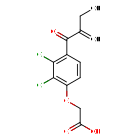
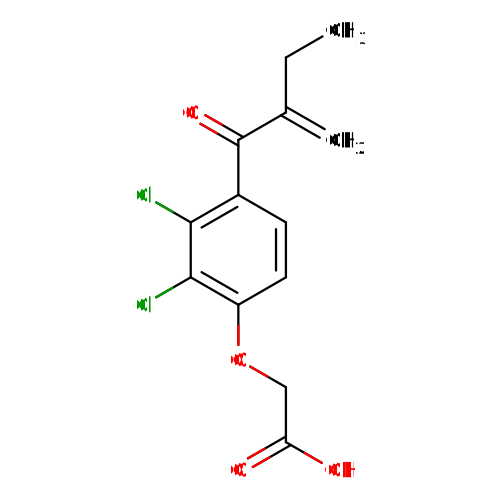
Structure for Etacrynic acid (DB00903)
- Weight
- Average: 303.138
Monoisotopic: 302.011264286 - Chemical Formula
- C13H12Cl2O4
- Synonyms
- (2,3-Dichloro-4-(2-methylene-1-oxobutyl)phenoxy)acetic acid
- Acide étacrynique
- ácido etacrínico
- Acidum etacrynicum
- Etacrinic acid
- Etacrynic acid
- Ethacrynate
- Ethacrynic acid
- Methylenebutyrylphenoxyacetic acid
- External IDs
- MK-595
- NSC-85791

Pharmacology
- Indication
For the treatment of high blood pressure and edema caused by diseases like congestive heart failure, liver failure, and kidney failure.
 Reduce drug development failure ratesBuild, train, & validate machine-learning modelswith evidence-based and structured datasets.Build, train, & validate predictive machine-learning models with structured datasets.
- Associated Conditions
Indication Type Indication Combined Product Details Approval Level Age Group Patient Characteristics Dose Form Management of Ascites •••••••••••• Management of Congenital heart disease •••••••••••• Treatment of Edema •••••••••••• Treatment of Edema •••••••••••• Treatment of Edema •••••••••••• - Contraindications & Blackbox Warnings
 Prevent Adverse Drug Events TodayTap into our Clinical API for life-saving information on contraindications & blackbox warnings, population restrictions, harmful risks, & more.Avoid life-threatening adverse drug events with our Clinical API
- Pharmacodynamics
Ethacrynic acid is a monosulfonamyl loop or high ceiling diuretic. Ethacrynic acid acts on the ascending limb of the loop of Henle and on the proximal and distal tubules. Urinary output is usually dose dependent and related to the magnitude of fluid accumulation. Water and electrolyte excretion may be increased several times over that observed with thiazide diuretics, since ethacrynic acid inhibits reabsorption of a much greater proportion of filtered sodium than most other diuretic agents. Therefore, ethacrynic acid is effective in many patients who have significant degrees of renal insufficiency. Ethacrynic acid has little or no effect on glomerular filtration or on renal blood flow, except following pronounced reductions in plasma volume when associated with rapid diuresis.
- Mechanism of action
Ethacrynic acid inhibits symport of sodium, potassium, and chloride primarily in the ascending limb of Henle, but also in the proximal and distal tubules. This pharmacological action results in excretion of these ions, increased urinary output, and reduction in extracellular fluid. Diuretics also lower blood pressure initially by reducing plasma and extracellular fluid volume; cardiac output also decreases, explaining its antihypertensive action. Eventually, cardiac output returns to normal with an accompanying decrease in peripheral resistance. Its mode of action does not involve carbonic anhydrase inhibition.
Target Actions Organism ASolute carrier family 12 member 1 inhibitorHumans ASodium/potassium-transporting ATPase subunit alpha-1 inhibitorHumans ULymphoid enhancer-binding factor 1 Not Available Humans UGlutathione S-transferase P inhibitorHumans - Absorption
Onset of action is rapid, usually within 30 minutes after an oral dose of ethacrynic acid or within 5 minutes after an intravenous injection of ethacrynic acid.
- Volume of distribution
Not Available
- Protein binding
> 98%
- Metabolism
Hepatic.
- Route of elimination
Not Available
- Half-life
Not Available
- Clearance
Not Available
- Adverse Effects
 Improve decision support & research outcomesWith structured adverse effects data, including: blackbox warnings, adverse reactions, warning & precautions, & incidence rates. View sample adverse effects data in our new Data Library!Improve decision support & research outcomes with our structured adverse effects data.
- Toxicity
Overdosage may lead to excessive diuresis with electrolyte depletion.
- Pathways
Pathway Category Ethacrynic Acid Action Pathway Drug action - Pharmacogenomic Effects/ADRs
- Not Available
Interactions
- Drug Interactions
- This information should not be interpreted without the help of a healthcare provider. If you believe you are experiencing an interaction, contact a healthcare provider immediately. The absence of an interaction does not necessarily mean no interactions exist.
Drug Interaction Integrate drug-drug
interactions in your softwareAbacavir Etacrynic acid may decrease the excretion rate of Abacavir which could result in a higher serum level. Abaloparatide The risk or severity of adverse effects can be increased when Etacrynic acid is combined with Abaloparatide. Acarbose The therapeutic efficacy of Acarbose can be decreased when used in combination with Etacrynic acid. Acebutolol The risk or severity of adverse effects can be increased when Etacrynic acid is combined with Acebutolol. Aceclofenac The therapeutic efficacy of Etacrynic acid can be decreased when used in combination with Aceclofenac. - Food Interactions
- Take with food. Food reduces irritation.
Products
 Drug product information from 10+ global regionsOur datasets provide approved product information including:dosage, form, labeller, route of administration, and marketing period.Access drug product information from over 10 global regions.
- Product Ingredients
Ingredient UNII CAS InChI Key Ethacrynate sodium K41MYV7MPM 6500-81-8 CWCSCNSKBSCYCS-UHFFFAOYSA-M - Product Images


- International/Other Brands
- Crinuryl (Assia) / Edecril (Merck) / Edecrina / Endecril / Hidromedin / Hydromedin (Merck) / Mingit / Otacril / Reomax (Bioindustria) / Taladren (Malesci) / Uregit
- Brand Name Prescription Products
Name Dosage Strength Route Labeller Marketing Start Marketing End Region Image Edecrin Tablet 25 mg/1 Oral Bausch Health US, LLC 1967-01-10 Not applicable US 
Edecrin Tablet 25 mg/1 Oral Merck Sharp & Dohme Limited 1967-01-10 2009-01-31 US Edecrin Tablet 25 mg/1 Oral KAISER FOUNDATION HOSPITALS 2013-01-10 2019-02-28 US 
Edecrin Tablet 25 mg Oral Bausch Health, Canada Inc. 2004-10-15 Not applicable Canada 
Edecrin Tablet 25 mg/1 Oral Aton Pharma, Inc. 1967-01-10 2014-12-31 US 
- Generic Prescription Products
Name Dosage Strength Route Labeller Marketing Start Marketing End Region Image Ethacrynate Sodium Injection, powder, lyophilized, for solution 50 mg/50mL Intravenous Leading Pharma, Llc 2020-10-15 Not applicable US Ethacrynate Sodium Injection, powder, for solution 50 mg/50mL Intravenous Par Pharmaceutical, Inc. 2015-07-30 Not applicable US Ethacrynate Sodium Injection, powder, lyophilized, for solution 50 mg/50mL Intravenous Zydus Pharmaceuticals USA Inc. 2018-01-24 Not applicable US Ethacrynate Sodium Injection, powder, lyophilized, for solution 50 mg/50mL Intravenous Zydus Lifesciences Limited 2018-01-24 Not applicable US Ethacrynic Acid Tablet 25 mg/1 Oral Golden State Medical Supply, Inc. 2017-05-04 Not applicable US


Categories
- ATC Codes
- C03CC01 — Etacrynic acid
- Drug Categories
- Acetates
- Acids, Acyclic
- Agents that produce neuromuscular block (indirect)
- Aryloxyacetic Acid Derivatives
- Diuretics
- Enzyme Inhibitors
- Glycolates
- High-Ceiling Diuretics
- Hydroxy Acids
- Hyperglycemia-Associated Agents
- Hypotensive Agents
- Increased Diuresis at Loop of Henle
- Natriuretic Agents
- Nephrotoxic agents
- Non Potassium Sparing Diuretics
- OAT1/SLC22A6 inhibitors
- Ototoxic agents
- Phenoxyacetates
- Sodium Potassium Chloride Symporter Inhibitors
- Chemical TaxonomyProvided by Classyfire
- Description
- This compound belongs to the class of organic compounds known as chlorophenoxyacetates. These are compounds containing a phenoxyacetate that carries one or more chlorine atoms on the benzene ring.
- Kingdom
- Organic compounds
- Super Class
- Benzenoids
- Class
- Benzene and substituted derivatives
- Sub Class
- Phenoxyacetic acid derivatives
- Direct Parent
- Chlorophenoxyacetates
- Alternative Parents
- Butyrophenones / Aryl ketones / Benzoyl derivatives / Dichlorobenzenes / Phenol ethers / Phenoxy compounds / Alkyl aryl ethers / Alpha-branched alpha,beta-unsaturated ketones / Aryl chlorides / Enones show 7 more
- Substituents
- 1,2-dichlorobenzene / Acryloyl-group / Alkyl aryl ether / Alpha,beta-unsaturated ketone / Alpha-branched alpha,beta-unsaturated-ketone / Aromatic homomonocyclic compound / Aryl chloride / Aryl halide / Aryl ketone / Benzoyl show 20 more
- Molecular Framework
- Aromatic homomonocyclic compounds
- External Descriptors
- aromatic ether, monocarboxylic acid, dichlorobenzene, aromatic ketone (CHEBI:4876)
- Affected organisms
- Humans and other mammals
Chemical Identifiers
- UNII
- M5DP350VZV
- CAS number
- 58-54-8
- InChI Key
- AVOLMBLBETYQHX-UHFFFAOYSA-N
- InChI
- InChI=1S/C13H12Cl2O4/c1-3-7(2)13(18)8-4-5-9(12(15)11(8)14)19-6-10(16)17/h4-5H,2-3,6H2,1H3,(H,16,17)
- IUPAC Name
- 2-[2,3-dichloro-4-(2-methylidenebutanoyl)phenoxy]acetic acid
- SMILES
- CCC(=C)C(=O)C1=C(Cl)C(Cl)=C(OCC(O)=O)C=C1
References
- Synthesis Reference
Schultz, E.M. and Sprague, J.M.; U.S. Patent 3,255,241; June 7, 1966; assigned to Merck & co., Inc.
- General References
- Not Available
- External Links
- Human Metabolome Database
- HMDB0015039
- KEGG Drug
- D00313
- PubChem Compound
- 3278
- PubChem Substance
- 46507562
- ChemSpider
- 3163
- BindingDB
- 50186231
- 4109
- ChEBI
- 4876
- ChEMBL
- CHEMBL456
- ZINC
- ZINC000000001382
- Therapeutic Targets Database
- DAP000748
- PharmGKB
- PA449518
- PDBe Ligand
- EAA
- RxList
- RxList Drug Page
- Drugs.com
- Drugs.com Drug Page
- Wikipedia
- Etacrynic_acid
- PDB Entries
- 11gs / 1gse / 1gsf / 2gss / 3dgq / 3gss / 3hjo / 3km6 / 3kmo / 3n9j
- FDA label
- Download (75.2 KB)
- MSDS
- Download (74 KB)
Clinical Trials
- Clinical Trials
Phase Status Purpose Conditions Count 3 Completed Treatment Fluid Over-load 1 1 Completed Treatment Bladder Cancer 1 1, 2 Completed Other Glaucoma 1 Not Available Completed Not Available Coronavirus Disease 2019 (COVID‑19) / COVID / Hypertension 1
Pharmacoeconomics
- Manufacturers
- Aton pharma inc
- Packagers
- Aton Pharma Inc.
- Ben Venue Laboratories Inc.
- Draxis Specialty Pharmaceuticals Inc.
- DSM Corp.
- Kaiser Foundation Hospital
- Merck & Co.
- Professional Co.
- Dosage Forms
Form Route Strength Tablet Oral 25 mg Tablet Oral 25 mg/1 Injection, powder, lyophilized, for solution Intravenous 50 mg/50mL Tablet Oral 50 mg Injection, powder, for solution Intravenous 50 mg/50mL Injection, powder, lyophilized, for solution Intravenous Tablet Oral Powder, for solution Intravenous 50 mg / vial Powder, for solution Intravenous 50 mg/50mL - Prices
Unit description Cost Unit Sodium edecrin 50 mg vial 527.4USD vial Edecrin sodium 50 mg vial 114.0USD vial Ethacrynic acid 100% powder 26.4USD g Edecrin 25 mg tablet 3.19USD tablet DrugBank does not sell nor buy drugs. Pricing information is supplied for informational purposes only.- Patents
- Not Available
Properties
- State
- Solid
- Experimental Properties
Property Value Source melting point (°C) 118.5-120.5 Schultz, E.M. and Sprague, J.M.; U.S. Patent 3,255,241; June 7, 1966; assigned to Merck & co., Inc. logP 3.3 Not Available pKa 3.5 MERCK INDEX (2001) - Predicted Properties
Property Value Source Water Solubility 0.0194 mg/mL ALOGPS logP 3.42 ALOGPS logP 3.66 Chemaxon logS -4.2 ALOGPS pKa (Strongest Acidic) 2.8 Chemaxon pKa (Strongest Basic) -5 Chemaxon Physiological Charge -1 Chemaxon Hydrogen Acceptor Count 4 Chemaxon Hydrogen Donor Count 1 Chemaxon Polar Surface Area 63.6 Å2 Chemaxon Rotatable Bond Count 6 Chemaxon Refractivity 72.22 m3·mol-1 Chemaxon Polarizability 28.57 Å3 Chemaxon Number of Rings 1 Chemaxon Bioavailability 1 Chemaxon Rule of Five Yes Chemaxon Ghose Filter Yes Chemaxon Veber's Rule No Chemaxon MDDR-like Rule No Chemaxon - Predicted ADMET Features
Property Value Probability Human Intestinal Absorption + 0.9591 Blood Brain Barrier - 0.6921 Caco-2 permeable + 0.5597 P-glycoprotein substrate Substrate 0.54 P-glycoprotein inhibitor I Non-inhibitor 0.5574 P-glycoprotein inhibitor II Non-inhibitor 0.9828 Renal organic cation transporter Non-inhibitor 0.9052 CYP450 2C9 substrate Non-substrate 0.8508 CYP450 2D6 substrate Non-substrate 0.8947 CYP450 3A4 substrate Non-substrate 0.5262 CYP450 1A2 substrate Non-inhibitor 0.9045 CYP450 2C9 inhibitor Inhibitor 0.8949 CYP450 2D6 inhibitor Non-inhibitor 0.9231 CYP450 2C19 inhibitor Non-inhibitor 0.9025 CYP450 3A4 inhibitor Non-inhibitor 0.831 CYP450 inhibitory promiscuity Low CYP Inhibitory Promiscuity 0.8384 Ames test Non AMES toxic 0.9133 Carcinogenicity Non-carcinogens 0.8344 Biodegradation Ready biodegradable 0.6545 Rat acute toxicity 2.4505 LD50, mol/kg Not applicable hERG inhibition (predictor I) Weak inhibitor 0.9228 hERG inhibition (predictor II) Non-inhibitor 0.9044
Spectra
- Mass Spec (NIST)
- Not Available
- Spectra
- Chromatographic Properties
Collision Cross Sections (CCS)
Adduct CCS Value (Å2) Source type Source [M-H]- 170.2196815 predictedDarkChem Lite v0.1.0 [M-H]- 166.63667 predictedDeepCCS 1.0 (2019) [M+H]+ 169.5771815 predictedDarkChem Lite v0.1.0 [M+H]+ 168.99467 predictedDeepCCS 1.0 (2019) [M+Na]+ 170.5993815 predictedDarkChem Lite v0.1.0 [M+Na]+ 175.08781 predictedDeepCCS 1.0 (2019)
Targets

- Kind
- Protein
- Organism
- Humans
- Pharmacological action
- Yes
- Actions
- Inhibitor
- General Function
- Sodium:potassium:chloride symporter activity
- Specific Function
- Electrically silent transporter system. Mediates sodium and chloride reabsorption. Plays a vital role in the regulation of ionic balance and cell volume.
- Gene Name
- SLC12A1
- Uniprot ID
- Q13621
- Uniprot Name
- Solute carrier family 12 member 1
- Molecular Weight
- 121449.13 Da
References
- Kind
- Protein
- Organism
- Humans
- Pharmacological action
- Yes
- Actions
- Inhibitor
- General Function
- Steroid hormone binding
- Specific Function
- This is the catalytic component of the active enzyme, which catalyzes the hydrolysis of ATP coupled with the exchange of sodium and potassium ions across the plasma membrane. This action creates th...
- Gene Name
- ATP1A1
- Uniprot ID
- P05023
- Uniprot Name
- Sodium/potassium-transporting ATPase subunit alpha-1
- Molecular Weight
- 112895.01 Da
References
- Ronquist G, Agren GK: A Mg2+- and Ca2+-stimulated adenosine triphosphatase at the outer surface of Ehrlich ascites tumor cells. Cancer Res. 1975 Jun;35(6):1402-6. [Article]
- Proverbio F, Condrescu-Guidi M, Whittembury G: Ouabain-insensitive Na+ stimulation of an Mg-2+ -dependent ATPase in kidney tissue. Biochim Biophys Acta. 1975 Jun 25;394(2):281-92. [Article]
- Valdes RM, Huff MO, El-Masri MA, El-Mallakh RS: Effect of ethacrynic acid on sodium pump alpha isoforms in SH-SY5Y cells. Bipolar Disord. 2003 Apr;5(2):123-8. [Article]
- Kiil F, Sejersted OM: Analysis of energy metabolism and mechanism of loop diuretics in the thick ascending limb of Henle's loop in dog kidneys. Acta Physiol Scand. 2003 May;178(1):73-82. [Article]
- Schurek HJ, Aulbert E, Ebel H, Muller-Suur C: Influence of ouabain and ethacrynic acid on sodium transport and NaK-ATPase activity in the isolated perfused rat kidney. Curr Probl Clin Biochem. 1975;4:162-8. [Article]
- Kind
- Protein
- Organism
- Humans
- Pharmacological action
- Unknown
- General Function
- Participates in the Wnt signaling pathway. Activates transcription of target genes in the presence of CTNNB1 and EP300. May play a role in hair cell differentiation and follicle morphogenesis. TLE1, TLE2, TLE3 and TLE4 repress transactivation mediated by LEF1 and CTNNB1. Regulates T-cell receptor alpha enhancer function. Binds DNA in a sequence-specific manner. PIAG antagonizes both Wnt-dependent and Wnt-independent activation by LEF1 (By similarity). Isoform 3 lacks the CTNNB1 interaction domain and may be an antagonist for Wnt signaling. Isoform 5 transcriptionally activates the fibronectin promoter, binds to and represses transcription from the E-cadherin promoter in a CTNNB1-independent manner, and is involved in reducing cellular aggregation and increasing cell migration of pancreatic cancer cells. Isoform 1 transcriptionally activates MYC and CCND1 expression and enhances proliferation of pancreatic tumor cells.
- Specific Function
- Armadillo repeat domain binding
- Gene Name
- LEF1
- Uniprot ID
- Q9UJU2
- Uniprot Name
- Lymphoid enhancer-binding factor 1
- Molecular Weight
- 44200.41 Da
References
- Lu D, Liu JX, Endo T, Zhou H, Yao S, Willert K, Schmidt-Wolf IG, Kipps TJ, Carson DA: Ethacrynic acid exhibits selective toxicity to chronic lymphocytic leukemia cells by inhibition of the Wnt/beta-catenin pathway. PLoS One. 2009 Dec 14;4(12):e8294. doi: 10.1371/journal.pone.0008294. [Article]
- Kind
- Protein
- Organism
- Humans
- Pharmacological action
- Unknown
- Actions
- Inhibitor
- Curator comments
- irreversible inhibitor
- General Function
- S-nitrosoglutathione binding
- Specific Function
- Conjugation of reduced glutathione to a wide number of exogenous and endogenous hydrophobic electrophiles. Regulates negatively CDK5 activity via p25/p35 translocation to prevent neurodegeneration.
- Gene Name
- GSTP1
- Uniprot ID
- P09211
- Uniprot Name
- Glutathione S-transferase P
- Molecular Weight
- 23355.625 Da
References
- van Iersel ML, Ploemen JP, Lo Bello M, Federici G, van Bladeren PJ: Interactions of alpha, beta-unsaturated aldehydes and ketones with human glutathione S-transferase P1-1. Chem Biol Interact. 1997 Dec 12;108(1-2):67-78. [Article]
Enzymes
- Kind
- Protein
- Organism
- Humans
- Pharmacological action
- Unknown
- Actions
- Inhibitor
- General Function
- Glutathione transferase activity
- Specific Function
- Conjugation of reduced glutathione to a wide number of exogenous and endogenous hydrophobic electrophiles.
- Gene Name
- GSTA2
- Uniprot ID
- P09210
- Uniprot Name
- Glutathione S-transferase A2
- Molecular Weight
- 25663.675 Da
References
- Depeille P, Cuq P, Passagne I, Evrard A, Vian L: Combined effects of GSTP1 and MRP1 in melanoma drug resistance. Br J Cancer. 2005 Jul 25;93(2):216-23. [Article]
- Awasthi S, Srivastava SK, Ahmad F, Ahmad H, Ansari GA: Interactions of glutathione S-transferase-pi with ethacrynic acid and its glutathione conjugate. Biochim Biophys Acta. 1993 Jul 10;1164(2):173-8. [Article]
- Iersel ML, Ploemen JP, Struik I, van Amersfoort C, Keyzer AE, Schefferlie JG, van Bladeren PJ: Inhibition of glutathione S-transferase activity in human melanoma cells by alpha,beta-unsaturated carbonyl derivatives. Effects of acrolein, cinnamaldehyde, citral, crotonaldehyde, curcumin, ethacrynic acid, and trans-2-hexenal. Chem Biol Interact. 1996 Oct 21;102(2):117-32. [Article]
- van Iersel ML, Ploemen JP, Lo Bello M, Federici G, van Bladeren PJ: Interactions of alpha, beta-unsaturated aldehydes and ketones with human glutathione S-transferase P1-1. Chem Biol Interact. 1997 Dec 12;108(1-2):67-78. [Article]
- Morrow CS, Smitherman PK, Townsend AJ: Combined expression of multidrug resistance protein (MRP) and glutathione S-transferase P1-1 (GSTP1-1) in MCF7 cells and high level resistance to the cytotoxicities of ethacrynic acid but not oxazaphosphorines or cisplatin. Biochem Pharmacol. 1998 Oct 15;56(8):1013-21. [Article]
Carriers
- Kind
- Protein
- Organism
- Humans
- Pharmacological action
- Unknown
- General Function
- Toxic substance binding
- Specific Function
- Serum albumin, the main protein of plasma, has a good binding capacity for water, Ca(2+), Na(+), K(+), fatty acids, hormones, bilirubin and drugs. Its main function is the regulation of the colloid...
- Gene Name
- ALB
- Uniprot ID
- P02768
- Uniprot Name
- Serum albumin
- Molecular Weight
- 69365.94 Da
References
- Bertucci C, Nanni B, Raffaelli A, Salvadori P: Chemical modification of human albumin at cys34 by ethacrynic acid: structural characterisation and binding properties. J Pharm Biomed Anal. 1998 Oct;18(1-2):127-36. [Article]
- Bertucci C, Wainer IW: Improved chromatographic performance of a modified human albumin based stationary phase. Chirality. 1997;9(4):335-40. [Article]
- Fehske KJ, Muller WE: High-affinity binding of ethacrynic acid is mediated by the two most important drug binding sites of human serum albumin. Pharmacology. 1986;32(4):208-13. [Article]
- Lebedev AA, Samokrutova OV: [Study of the binding of diuretics by serum proteins according to changes in tryptophan fluorescence]. Farmakol Toksikol. 1989 May-Jun;52(3):40-3. [Article]
Transporters
- Kind
- Protein
- Organism
- Humans
- Pharmacological action
- Unknown
- Actions
- Inhibitor
- General Function
- Sodium-independent organic anion transmembrane transporter activity
- Specific Function
- Involved in the renal elimination of endogenous and exogenous organic anions. Functions as organic anion exchanger when the uptake of one molecule of organic anion is coupled with an efflux of one ...
- Gene Name
- SLC22A6
- Uniprot ID
- Q4U2R8
- Uniprot Name
- Solute carrier family 22 member 6
- Molecular Weight
- 61815.78 Da
References
- Sekine T, Watanabe N, Hosoyamada M, Kanai Y, Endou H: Expression cloning and characterization of a novel multispecific organic anion transporter. J Biol Chem. 1997 Jul 25;272(30):18526-9. [Article]

Drug created at June 13, 2005 13:24 / Updated at April 26, 2024 00:45