Identification
- Summary
Buprenorphine is a partial opioid agonist used for management of severe pain that is not responsive to alternative treatments. Also used for maintenance treatment of opioid addiction.
- Brand Names
- Belbuca, Brixadi, Buprenex, Buprenorphine, Butrans, Sublocade, Suboxone, Subutex, Zubsolv
- Generic Name
- Buprenorphine
- DrugBank Accession Number
- DB00921
- Background
Buprenorphine is a weak partial mu-opioid receptor agonist and a weak kappa-opioid receptor antagonist used for the treatment of severe pain.12,15 It is also commonly used as an alternative to methadone for the treatment of severe opioid addiction.22 Buprenorphine is commercially available as the brand name product Suboxone which is formulated in a 4:1 fixed-dose combination product along with naloxone, a non-selective competitive opioid receptor antagonist. Combination with naloxone is intended to reduce the abuse potential of Suboxone, as naloxone is poorly absorbed by the oral route (and has no effect when taken orally), but would reverse the opioid agonist effects of buprenorphine if injected intravenously.14,22 Buprenorphine has poor gastrointestinal absorption and is therefore formulated as a sublingual tablet.
Buprenorphine has a number of unique pharmacokinetic and pharmacodynamic properties that make it a preferred agent for the treatment of conditions requiring high doses of strong opioids.13 For example, buprenorphine dissociates from opioid receptors very slowly, resulting in a long duration of action and relief from pain or withdrawal symptoms for upwards of 24-36 hours. Use of once-daily buprenorphine may benefit individuals who have developed tolerance to other potent opioids and who require larger and more frequent doses. Buprenorphine may also be a preferred agent over methadone (which is also commonly used to treat severe pain and opioid use disorder), as it has less effect on Qtc interval prolongation,9,10 fewer drug interactions, reduced risk of sexual side effects,17 and an improved safety profile with a lower risk of overdose and respiratory depression.6,7,8
Buprenorphine acts as a partial mu-opioid receptor agonist with a high affinity for the receptor, but lower intrinsic activity compared to other full mu-opioid agonists such as heroin, oxycodone, or methadone.15 This means that buprenorphine preferentially binds the opioid receptor and displaces lower affinity opioids without activating the receptor to a comparable degree. Clinically, this results in a slow onset of action and a clinical phenomenon known as the "ceiling effect" where once a certain dose is reached, buprenorphine's effects plateau. This effect can be beneficial, however, as dose-related side effects such as respiratory depression, sedation, and intoxication also plateau at around 32mg, resulting in a lower risk of overdose compared to methadone and other full agonist opioids.4,5 It also means that opioid-dependent patients do not experience sedation or euphoria at the same rate that they might experience with more potent opioids, improving quality of life for patients with severe pain and reducing the reinforcing effects of opioids which can lead to drug-seeking behaviours.11
Treatment of opioid addiction with buprenorphine, methadone, or slow-release oral morphine (SROM) is termed Opioid Agonist Treatment (OAT) or Opioid Substitution Therapy (OST). The intention of substitution of illicit opioids with the long-acting opioids used in OAT is to prevent withdrawal symptomns for 24-36 hours following dosing to ultimately reduce cravings and drug-seeking behaviours. Use of OAT is also intended to improved social stabilization including a reduction in crime rates, marginalization, incarceration, and use of illicit substances such as heroin or fentanyl. Illegally purchased opioids can often be injected and may be laced with other substances that increase the risk of harm or overdose. Provision of OAT is often combined with education about harm reduction including use of clean needles and injection supplies in an effort to reduce the risks associated with injection drug use which includes contraction of HIV and Hepatitis C and other complications including skin infections, abscesses, or endocarditis.16
- Type
- Small Molecule
- Groups
- Approved, Illicit, Investigational, Vet approved
- Structure
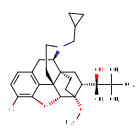
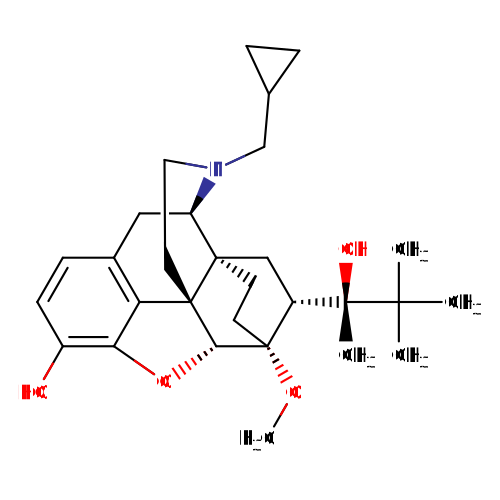
Structure for Buprenorphine (DB00921)
- Weight
- Average: 467.6401
Monoisotopic: 467.303558805 - Chemical Formula
- C29H41NO4
- Synonyms
- (−)-buprenorphine
- 17-cyclopropylmethyl-4,5α-epoxy-7α-((S)-1-hydroxy-1,2,2-trimethylpropyl)-6-methoxy-6,14-endo-ethanomorphinan-3-ol
- 2-(N-cyclopropylmethyl-4,5α-epoxy-3-hydroxy-6-methoxy-6,14-endo-ethanomorphinan-6α-yl)-3,3-dimethyl-2-butanol
- 2-[3-cyclopropylmethyl-11-hydroxy-15-methoxy-(14R)-13-oxa-3-azahexacyclo[13.2.2.12,8.01,6.06,14.07,12]icosa-7,9,11-trien-16-yl]-3,3-dimethyl-2-butanol
- 21-cyclopropyl-7α-[(S)-1-hydroxy-1,2,2-trimethylpropyl]-6,14-endo-ethano-6,7,8,14-tetrahydrooripavine
- Buprenophine
- Buprenorfina
- Buprenorphine
- Buprenorphinum

Pharmacology
- Indication
Buprenorphine is available in different formulations, such as sublingual tablets, buccal films, transdermal films, and injections, alone or in combination with naloxone.
The buccal film, intramuscular or intravenous injection, and transdermal formulation are indicated for the management of pain severe enough to require an opioid analgesic and for which alternate treatments are inadequate.21,23,24
The extended-release subcutaneous injections of buprenorphine are indicated for the treatment of moderate to severe opioid use disorder in patients who have initiated treatment with a single dose of a transmucosal buprenorphine product or who are already being treated with buprenorphine. Injections are part of a complete treatment plan that includes counselling and psychosocial support.20
Sublingual tablets and buccal films, in combination with naloxone, are indicated for the maintenance treatment of opioid dependence as part of a complete treatment plan that includes counselling and psychosocial support.19,22
 Reduce drug development failure ratesBuild, train, & validate machine-learning modelswith evidence-based and structured datasets.Build, train, & validate predictive machine-learning models with structured datasets.
- Associated Conditions
Indication Type Indication Combined Product Details Approval Level Age Group Patient Characteristics Dose Form Used as adjunct in combination to treat Opioid dependence Combination Product in combination with: Naloxone (DB01183) •••••••••••• Management of Severe pain •••••••••••• ••••••••• Adjunct therapy in treatment of Moderate opioid dependence •••••••••••• •••••••••• ••••••••••• •••••••• ••••••• Management of Moderate pain •••••••••••• ••••••••• Adjunct therapy in treatment of Severe opioid dependence •••••••••••• •••••••••• ••••••••••• •••••••• ••••••• - Contraindications & Blackbox Warnings
 Prevent Adverse Drug Events TodayTap into our Clinical API for life-saving information on contraindications & blackbox warnings, population restrictions, harmful risks, & more.Avoid life-threatening adverse drug events with our Clinical API
- Pharmacodynamics
Buprenorphine interacts predominately with the opioid mu-receptor. These mu-binding sites are discretely distributed in the human brain, spinal cord, and other tissues. In clinical settings, buprenorphine exerts its principal pharmacologic effects on the central nervous system. Its primary actions of therapeutic value are analgesia and sedation. In addition to analgesia, alterations in mood, euphoria and dysphoria, and drowsiness commonly occur. Buprenorphine depresses the respiratory centers, depresses the cough reflex, and constricts the pupils.
Dependence
Buprenorphine is a partial agonist at the mu-opioid receptor and chronic administration produces physical dependence of the opioid type, characterized by withdrawal signs and symptoms upon abrupt discontinuation or rapid taper. The withdrawal syndrome is typically milder than seen with full agonists and may be delayed in onset. Buprenorphine can be abused in a manner similar to other opioids. This should be considered when prescribing or dispensing buprenorphine in situations when the clinician is concerned about an increased risk of misuse, abuse, or diversion.[F4718]
Withdrawal
Abrupt discontinuation of treatment is not recommended as it may result in an opioid withdrawal syndrome that may be delayed in onset. Signs and symptoms may include body aches, diarrhea, gooseflesh, loss of appetite, nausea, nervousness or restlessness, anxiety, runny nose, sneezing, tremors or shivering, stomach cramps, tachycardia, trouble with sleeping, unusual increase in sweating, palpitations, unexplained fever, weakness and yawning.[F4718]
Risk of Respiratory and Central Nervous System (CNS) Depression and Overdose
Buprenorphine has been associated with life-threatening respiratory depression and death. Many, but not all, post-marketing reports regarding coma and death involved misuse by self-injection or were associated with the concomitant use of buprenorphine and benzodiazepines or other CNS depressant, including alcohol. Use buprenorphine and naloxone sublingual tablets with caution in patients with compromised respiratory function (e.g., chronic obstructive pulmonary disease, cor pulmonale, decreased respiratory reserve, hypoxia, hypercapnia, or pre-existing respiratory depression).22
Risk of Overdose in Opioid Naïve Patients
There have been reported deaths of opioid-naïve individuals who received a 2 mg dose of buprenorphine as a sublingual tablet for analgesia. Buprenorphine and naloxone sublingual tablets are not appropriate as an analgesic in opioid-naïve patients.22
Precipitation of Opioid Withdrawal Signs and Symptoms
If buprenorphine is started in opioid-dependent individuals, it will displace the other opioids and cause a phenomenon known as "precipitated withdrawal" which is characterized by a rapid and intense onset of withdrawal symptoms. Individuals must therefore be in a state of mild to moderate withdrawal before starting therapy with buprenorphine.
Because it contains naloxone, buprenorphine and naloxone sublingual tablets are also highly likely to produce marked and intense withdrawal signs and symptoms if misused parenterally by individuals dependent on full opioid agonists such as heroin, morphine, or methadone.22
Gastrointestinal Effects
Buprenorphine and other morphine-like opioids have been shown to decrease bowel motility and cause constipation. Buprenorphine may obscure the diagnosis or clinical course of patients with acute abdominal conditions and should be administered with caution to patients with dysfunction of the biliary tract.22
Effects on the Endocrine System
Opioids inhibit the secretion of adrenocorticotropic hormone (ACTH), cortisol, and luteinizing hormone (LH) in humans. They also stimulate prolactin, growth hormone (GH) secretion, and pancreatic secretion of insulin and glucagon. Chronic use of opioids may influence the hypothalamic-pituitary-gonadal axis, leading to androgen deficiency that may manifest as low libido, impotence, erectile dysfunction, amenorrhea, or infertility. The causal role of opioids in the clinical syndrome of hypogonadism is unknown because the various medical, physical, lifestyle, and psychological stressors that may influence gonadal hormone levels have not been adequately controlled for in studies conducted to date. Patients presenting with symptoms of androgen deficiency should undergo laboratory evaluation.22
Adrenal Insufficiency
Cases of adrenal insufficiency have been reported with opioid use, more often following greater than one month of use. Presentation of adrenal insufficiency may include non-specific symptoms and signs including nausea, vomiting, anorexia, fatigue, weakness, dizziness, and low blood pressure. If adrenal insufficiency is suspected, confirm the diagnosis with diagnostic testing as soon as possible. If adrenal insufficiency is diagnosed, treat with physiologic replacement doses of corticosteroids. Wean the patient off of the opioid to allow adrenal function to recover and continue corticosteroid treatment until adrenal function recovers. Other opioids may be tried as some cases reported use of a different opioid without recurrence of adrenal insufficiency. The information available does not identify any particular opioids as being more likely to be associated with adrenal insufficiency.22
Use in Patients With Impaired Hepatic Function
Buprenorphine/naloxone products are not recommended in patients with severe hepatic impairment and may not be appropriate for patients with moderate hepatic impairment. The doses of buprenorphine and naloxone in this fixed-dose combination product cannot be individually titrated, and hepatic impairment results in a reduced clearance of naloxone to a much greater extent than buprenorphine. Therefore, patients with severe hepatic impairment will be exposed to substantially higher levels of naloxone than patients with normal hepatic function. This may result in an increased risk of precipitated withdrawal at the beginning of treatment (induction) and may interfere with buprenorphine’s efficacy throughout treatment. In patients with moderate hepatic impairment, the differential reduction of naloxone clearance compared to buprenorphine clearance is not as great as in subjects with severe hepatic impairment. However, buprenorphine/naloxone products are not recommended for initiation of (treatment induction) in patients with moderate hepatic impairment due to the increased risk of precipitated withdrawal. Buprenorphine/naloxone products may be used with caution for maintenance treatment in patients with moderate hepatic impairment who have initiated treatment on a buprenorphine product without naloxone. However, patients should be carefully monitored and consideration given to the possibility of naloxone interfering with buprenorphine’s efficacy.22
Risk of Hepatitis, Hepatic Events
Cases of cytolytic hepatitis and hepatitis with jaundice have been observed in individuals receiving buprenorphine in clinical trials and through post-marketing adverse event reports. The spectrum of abnormalities ranges from transient asymptomatic elevations in hepatic transaminases to case reports of death, hepatic failure, hepatic necrosis, hepatorenal syndrome, and hepatic encephalopathy. In many cases, the presence of pre-existing liver enzyme abnormalities, infection with hepatitis B or hepatitis C virus, concomitant usage of other potentially hepatotoxic drugs, and ongoing injecting drug use may have played a causative or contributory role. In other cases, insufficient data were available to determine the etiology of the abnormality. Withdrawal of buprenorphine has resulted in amelioration of acute hepatitis in some cases; however, in other cases no dose reduction was necessary. The possibility exists that buprenorphine had a causative or contributory role in the development of the hepatic abnormality in some cases. Liver function tests, prior to initiation of treatment is recommended to establish a baseline. Periodic monitoring of liver function during treatment is also recommended. A biological and etiological evaluation is recommended when a hepatic event is suspected. Depending on the case, buprenorphine and naloxone sublingual tablets may need to be carefully discontinued to prevent withdrawal signs and symptoms and a return by the patient to illicit drug use, and strict monitoring of the patient should be initiated.22
Orthostatic Hypotension
Like other opioids, buprenorphine and naloxone sublingual tablets may produce orthostatic hypotension in ambulatory patients.
Elevation of Cerebrospinal Fluid Pressure
Buprenorphine, like other opioids, may elevate cerebrospinal fluid pressure and should be used with caution in patients with head injury, intracranial lesions, and other circumstances when cerebrospinal pressure may be increased. Buprenorphine can produce miosis and changes in the level of consciousness that may interfere with patient evaluation.
Elevation of Intracholedochal Pressure
Buprenorphine has been shown to increase intracholedochal pressure, as do other opioids, and thus should be administered with caution to patients with dysfunction of the biliary tract.
- Mechanism of action
Buprenorphine is a partial agonist at the mu-opioid receptor and an antagonist at the kappa-opioid receptor. It demonstrates a high affinity for the mu-opioid receptor but has lower intrinsic activity compared to other full mu-opioid agonists such as heroin, oxycodone, or methadone.15 This means that buprenorphine preferentially binds the opioid receptor and displaces lower affinity opioids without activating the receptor to a comparable degree. Clinically, this results in a slow onset of action and a clinical phenomenon known as the "ceiling effect" where once a certain dose is reached buprenorphine's effects plateau. This effect can be beneficial, however, as dose-related side effects such as respiratory depression, sedation, and intoxication also plateau at around 32mg, resulting in a lower risk of overdose compared to methadone and other full agonist opioids.4,5 It also means that opioid-dependent patients do not experience sedation or euphoria at the same rate that they might experience with more potent opioids, improving quality of life for patients with severe pain and reducing the reinforcing effects of opioids which can lead to drug-seeking behaviours.11
Buprenorphine's high affinity, but low intrinsic activity for the mu-opioid receptor also means that if it is started in opioid-dependent individuals, it will displace the other opioids without creating an equal opioid effect and cause a phenomenon known as "precipitated withdrawal" which is characterized by a rapid and intense onset of withdrawal symptoms (i.e. anxiety, restlessness, gastrointestinal distress, diaphoresis, intense drug cravings, and tachycardia). Individuals must therefore be in a state of mild to moderate withdrawal before starting therapy with buprenorphine.
Buprenorphine is commercially available as the brand name product Suboxone which is formulated in a 4:1 fixed-dose combination product along with naloxone, a non-selective competitive opioid receptor antagonist. Combination of an opioid agonist with an opioid antagonist may seem counterintuitive, however this combination with naloxone is intended to reduce the abuse potential of Suboxone, as naloxone is poorly absorbed by the oral route (and has no effect when taken orally), but would reverse the opioid agonist effects of buprenorphine if injected intravenously.14,22
Target Actions Organism AKappa-type opioid receptor antagonistHumans AMu-type opioid receptor partial agonistHumans UDelta-type opioid receptor antagonistHumans UNociceptin receptor Not Available Humans - Absorption
Bioavailablity of buprenorphine/naloxone is very high following intravenous or subcutaneous administration, lower by the sublingual or buccal route, and very low when administered by the oral route. It is therefore provided as a sublingual tablet that is absorbed from the oral mucosa directly into systemic circulation.18
Clinical pharmacokinetic studies found that there was wide inter-patient variability in the sublingual absorption of buprenorphine and naloxone, but within subjects the variability was low. Both Cmax and AUC of buprenorphine increased in a linear fashion with the increase in dose (in the range of 4 to 16 mg), although the increase was not directly dose-proportional. Buprenorphine combination with naloxone (2mg/0.5mg) provided in sublingual tablets demonstrated a Cmax of 0.780 ng/mL with a Tmax of 1.50 hr and AUC of 7.651 ng.hr/mL.22
Coadministration with naloxone does not effect the pharmacokinetics of buprenorphine.
- Volume of distribution
Buprenorphine is highly lipophilic, and therefore extensively distributed, with rapid penetration through the blood-brain barrier. The estimated volume of distribution is 188 - 335 L when given intravenously. It is able to cross into the placenta and breast milk.
- Protein binding
Buprenorphine is approximately 96% protein-bound, primarily to alpha- and beta-globulin.22
- Metabolism
Buprenorphine is metabolized to norbuprenorphine via Cytochrome P450 3A4/3A5-mediated N-dealkylation. Buprenorphine and norbuprenorphine both also undergo glucuronidation to the inactive metabolites buprenorphine-3-glucuronide and norbuprenorphine-3-glucuronide, respectively.18,22
While norbuprenorphine has been found to bind to opioid receptors in-vitro, brain concentrations are very low which suggests that it does not contribute to the clinical effects of buprenorphine.18
Naloxone undergoes direct glucuronidation to naloxone-3-glucuronide as well as N-dealkylation, and reduction of the 6-oxo group.22
Hover over products below to view reaction partners
- Route of elimination
Buprenorphine, like morphine and other phenolic opioid analgesics, is metabolized by the liver and its clearance is related to hepatic blood flow. It is primarily eliminated via feces (as free forms of buprenorphine and norbuprenorphine) while 10 - 30% of the dose is excreted in urine (as conjugated forms of buprenorphine and norbuprenorphine).22
The overall mean elimination half-life of buprenorphine in plasma ranges from 31 to 42 hours, although the levels are very low 10 hours after dosing (majority of AUC of buprenorphine is captured within 10 hours), indicating that the effective half-life may be shorter.22
- Half-life
Buprenorphine demonstrates slow dissociation kinetics (~166 min), which contributes to its long duration of action and allows for once-daily or even every-second-day dosing.18 In clinical trial studies, the half-life of sublingually administered buprenorphine/naloxone 2mg/0.5mg was found to be 30.75 hours.22
- Clearance
Clearance may be higher in children than in adults. Plasma clearance rate, IV administration, anaesthetized patients = 901.2 ± 39.7 mL/min; Plasma clearance rate, IV administration, healthy subjects = 1042 - 1280 mL/min.
- Adverse Effects
 Improve decision support & research outcomesWith structured adverse effects data, including: blackbox warnings, adverse reactions, warning & precautions, & incidence rates. View sample adverse effects data in our new Data Library!Improve decision support & research outcomes with our structured adverse effects data.
- Toxicity
Manifestations of acute overdose include pinpoint pupils, sedation, hypotension, respiratory depression and death.
- Pathways
Pathway Category Buprenorphine Action Pathway Drug action - Pharmacogenomic Effects/ADRs
- Not Available
Interactions
- Drug Interactions
- This information should not be interpreted without the help of a healthcare provider. If you believe you are experiencing an interaction, contact a healthcare provider immediately. The absence of an interaction does not necessarily mean no interactions exist.
Drug Interaction Integrate drug-drug
interactions in your software1,2-Benzodiazepine 1,2-Benzodiazepine may increase the central nervous system depressant (CNS depressant) activities of Buprenorphine. Abametapir The serum concentration of Buprenorphine can be increased when it is combined with Abametapir. Abatacept The metabolism of Buprenorphine can be increased when combined with Abatacept. Abemaciclib The metabolism of Abemaciclib can be decreased when combined with Buprenorphine. Abiraterone The metabolism of Buprenorphine can be decreased when combined with Abiraterone. - Food Interactions
- Avoid alcohol. Ingesting alcohol may increase the sedative and CNS depressant effects of buprenorphine.
- Avoid grapefruit products. Grapefruit inhibits the metabolism of buprenorphine through CYP3A4, which increases the serum levels buprenorphine.
- Take separate from meals. When buprenorphine is formulated as a sublingual tablet or buccal film, avoid eating or drinking until the dosage form is completely dissolved.
Products
 Drug product information from 10+ global regionsOur datasets provide approved product information including:dosage, form, labeller, route of administration, and marketing period.Access drug product information from over 10 global regions.
- Product Ingredients
Ingredient UNII CAS InChI Key Buprenorphine hydrochloride 56W8MW3EN1 53152-21-9 UAIXRPCCYXNJMQ-RZIPZOSSSA-N - Product Images
- International/Other Brands
- Addnok (Rusan Pharma Ltd.) / Buprel / Buprigesic (Neon Laboratories) / Morgesic (Samarth Pharma) / Norphin (Unichem Laboratories) / Norspan / Temgesic / Tidigesic (Sun Pharmaceuticals)
- Brand Name Prescription Products
Name Dosage Strength Route Labeller Marketing Start Marketing End Region Image Belbuca Film, soluble 600 ug/1 Buccal BioDelivery Sciences International Inc 2017-08-24 Not applicable US 
Belbuca Film 75 ug/1 Buccal Endo Pharmaceuticals 2015-06-01 2019-06-30 US Belbuca Film, soluble 150 ug/1 Buccal BioDelivery Sciences International Inc 2017-10-01 Not applicable US Belbuca Film, soluble 450 ug/1 Buccal Quality Care Products, LLC 2020-06-02 Not applicable US Belbuca Film, soluble 900 ug/1 Buccal BioDelivery Sciences International Inc 2017-08-11 Not applicable US - Generic Prescription Products
Name Dosage Strength Route Labeller Marketing Start Marketing End Region Image Bar-buprenorphine Patch 10 mcg / hour Transdermal Bard Pharmaceuticals (1990) Inc Not applicable Not applicable Canada 
Bar-buprenorphine Patch 20 mcg / hour Transdermal Bard Pharmaceuticals (1990) Inc Not applicable Not applicable Canada Bar-buprenorphine Patch 5 mcg / hour Transdermal Bard Pharmaceuticals (1990) Inc Not applicable Not applicable Canada Bar-buprenorphine Patch 15 mcg / hour Transdermal Bard Pharmaceuticals (1990) Inc Not applicable Not applicable Canada Buprenorphene Patch, extended release 20 ug/1h Transdermal Apotex Corp. 2021-10-01 Not applicable US - Mixture Products
Name Ingredients Dosage Route Labeller Marketing Start Marketing End Region Image Bunavail Buprenorphine hydrochloride (4.2 mg/1) + Naloxone hydrochloride dihydrate (0.7 mg/1) Film Buccal BioDelivery Sciences International, Inc. 2014-09-30 2021-10-31 US Bunavail Buprenorphine hydrochloride (2.1 mg/1) + Naloxone hydrochloride dihydrate (0.3 mg/1) Film Buccal BioDelivery Sciences International, Inc. 2014-09-30 2021-02-28 US Bunavail Buprenorphine hydrochloride (6.3 mg/1) + Naloxone hydrochloride dihydrate (1 mg/1) Film Buccal BioDelivery Sciences International, Inc. 2014-09-30 2021-07-31 US Bupensan Duo 2 mg/0,5 mg-Sublingualtabletten Buprenorphine hydrochloride (2 mg) + Naloxone hydrochloride dihydrate (0.5 mg) Tablet, orally disintegrating Sublingual G.L. Pharma Gmb H 2018-06-06 Not applicable Austria 
Bupensan Duo 4 mg/1 mg-Sublingualtabletten Buprenorphine hydrochloride (4 mg) + Naloxone hydrochloride dihydrate (1 mg) Tablet, orally disintegrating Sublingual G.L. Pharma Gmb H 2018-06-06 Not applicable Austria


Categories
- ATC Codes
- N07BC01 — Buprenorphine
- N07BC — Drugs used in opioid dependence
- N07B — DRUGS USED IN ADDICTIVE DISORDERS
- N07 — OTHER NERVOUS SYSTEM DRUGS
- N — NERVOUS SYSTEM
- N07BC — Drugs used in opioid dependence
- N07B — DRUGS USED IN ADDICTIVE DISORDERS
- N07 — OTHER NERVOUS SYSTEM DRUGS
- N — NERVOUS SYSTEM
- Drug Categories
- Alkaloids
- Analgesics
- BCRP/ABCG2 Inhibitors
- Central Nervous System Agents
- Central Nervous System Depressants
- Cytochrome P-450 CYP2C18 Substrates
- Cytochrome P-450 CYP2C19 Inhibitors
- Cytochrome P-450 CYP2C19 inhibitors (strength unknown)
- Cytochrome P-450 CYP2C8 Substrates
- Cytochrome P-450 CYP2C9 Substrates
- Cytochrome P-450 CYP2D6 Inhibitors
- Cytochrome P-450 CYP2D6 Inhibitors (weak)
- Cytochrome P-450 CYP2D6 Substrates
- Cytochrome P-450 CYP3A Inhibitors
- Cytochrome P-450 CYP3A Substrates
- Cytochrome P-450 CYP3A4 Inhibitors
- Cytochrome P-450 CYP3A4 Inhibitors (weak)
- Cytochrome P-450 CYP3A4 Substrates
- Cytochrome P-450 CYP3A5 Substrates
- Cytochrome P-450 CYP3A7 Substrates
- Cytochrome P-450 Enzyme Inhibitors
- Cytochrome P-450 Substrates
- Drugs Used in Addictive Disorders
- Drugs Used in Opioid Dependence
- Heterocyclic Compounds, Fused-Ring
- Mixed Agonist / Antagonist Opioids
- Morphinans
- Narcotics
- Nervous System
- Opiate Agonists
- Opiate Alkaloids
- Opiate Partial Agonists
- Opioid Antagonists
- Opioids
- Oripavine Derivatives
- P-glycoprotein inhibitors
- Peripheral Nervous System Agents
- Phenanthrenes
- Sensory System Agents
- Serotonergic Drugs Shown to Increase Risk of Serotonin Syndrome
- UGT1A1 Substrates
- UGT1A9 Substrates
- Chemical TaxonomyProvided by Classyfire
- Description
- This compound belongs to the class of organic compounds known as phenanthrenes and derivatives. These are polycyclic compounds containing a phenanthrene moiety, which is a tricyclic aromatic compound with three non-linearly fused benzene.
- Kingdom
- Organic compounds
- Super Class
- Benzenoids
- Class
- Phenanthrenes and derivatives
- Sub Class
- Not Available
- Direct Parent
- Phenanthrenes and derivatives
- Alternative Parents
- Tetralins / Azaspirodecane derivatives / Coumarans / Aralkylamines / Alkyl aryl ethers / 1-hydroxy-2-unsubstituted benzenoids / Piperidines / Tertiary alcohols / Trialkylamines / Oxacyclic compounds show 4 more
- Substituents
- 1-hydroxy-2-unsubstituted benzenoid / Alcohol / Alkyl aryl ether / Amine / Aralkylamine / Aromatic heteropolycyclic compound / Azacycle / Azaspirodecane / Coumaran / Dialkyl ether show 15 more
- Molecular Framework
- Aromatic heteropolycyclic compounds
- External Descriptors
- morphinane alkaloid (CHEBI:3216)
- Affected organisms
- Humans and other mammals
Chemical Identifiers
- UNII
- 40D3SCR4GZ
- CAS number
- 52485-79-7
- InChI Key
- RMRJXGBAOAMLHD-IHFGGWKQSA-N
- InChI
- InChI=1S/C29H41NO4/c1-25(2,3)26(4,32)20-15-27-10-11-29(20,33-5)24-28(27)12-13-30(16-17-6-7-17)21(27)14-18-8-9-19(31)23(34-24)22(18)28/h8-9,17,20-21,24,31-32H,6-7,10-16H2,1-5H3/t20-,21-,24-,26+,27-,28+,29-/m1/s1
- IUPAC Name
- (1S,2R,6S,14R,15R,16R)-3-(cyclopropylmethyl)-16-[(2S)-2-hydroxy-3,3-dimethylbutan-2-yl]-15-methoxy-13-oxa-3-azahexacyclo[13.2.2.1^{2,8}.0^{1,6}.0^{6,14}.0^{7,12}]icosa-7,9,11-trien-11-ol
- SMILES
- CO[C@]12CC[C@@]3(C[C@@H]1[C@](C)(O)C(C)(C)C)[C@H]1CC4=C5C(O[C@@H]2[C@@]35CCN1CC1CC1)=C(O)C=C4
References
- Synthesis Reference
Kazuhisa Ninomiya, Yasuhiro Fukushima, Mutsuo Okumura, Yuko Hosokawa, "Buprenorphine percutaneous absorption preparation." U.S. Patent US6090405, issued August, 1992.
US6090405- General References
- Huang P, Kehner GB, Cowan A, Liu-Chen LY: Comparison of pharmacological activities of buprenorphine and norbuprenorphine: norbuprenorphine is a potent opioid agonist. J Pharmacol Exp Ther. 2001 May;297(2):688-95. [Article]
- Bodkin JA, Zornberg GL, Lukas SE, Cole JO: Buprenorphine treatment of refractory depression. J Clin Psychopharmacol. 1995 Feb;15(1):49-57. [Article]
- Elkader A, Sproule B: Buprenorphine: clinical pharmacokinetics in the treatment of opioid dependence. Clin Pharmacokinet. 2005;44(7):661-80. [Article]
- Dahan A, Yassen A, Bijl H, Romberg R, Sarton E, Teppema L, Olofsen E, Danhof M: Comparison of the respiratory effects of intravenous buprenorphine and fentanyl in humans and rats. Br J Anaesth. 2005 Jun;94(6):825-34. doi: 10.1093/bja/aei145. Epub 2005 Apr 15. [Article]
- Walsh SL, Preston KL, Stitzer ML, Cone EJ, Bigelow GE: Clinical pharmacology of buprenorphine: ceiling effects at high doses. Clin Pharmacol Ther. 1994 May;55(5):569-80. doi: 10.1038/clpt.1994.71. [Article]
- Bruneau J, Ahamad K, Goyer ME, Poulin G, Selby P, Fischer B, Wild TC, Wood E: Management of opioid use disorders: a national clinical practice guideline. CMAJ. 2018 Mar 5;190(9):E247-E257. doi: 10.1503/cmaj.170958. [Article]
- Luty J, O'Gara C, Sessay M: Is methadone too dangerous for opiate addiction? BMJ. 2005 Dec 10;331(7529):1352-3. doi: 10.1136/bmj.331.7529.1352. [Article]
- Marteau D, McDonald R, Patel K: The relative risk of fatal poisoning by methadone or buprenorphine within the wider population of England and Wales. BMJ Open. 2015 May 29;5(5):e007629. doi: 10.1136/bmjopen-2015-007629. [Article]
- Wedam EF, Bigelow GE, Johnson RE, Nuzzo PA, Haigney MC: QT-interval effects of methadone, levomethadyl, and buprenorphine in a randomized trial. Arch Intern Med. 2007 Dec 10;167(22):2469-75. doi: 10.1001/archinte.167.22.2469. [Article]
- Anchersen K, Clausen T, Gossop M, Hansteen V, Waal H: Prevalence and clinical relevance of corrected QT interval prolongation during methadone and buprenorphine treatment: a mortality assessment study. Addiction. 2009 Jun;104(6):993-9. doi: 10.1111/j.1360-0443.2009.02549.x. Epub 2009 Apr 9. [Article]
- Tzschentke TM: Behavioral pharmacology of buprenorphine, with a focus on preclinical models of reward and addiction. Psychopharmacology (Berl). 2002 Apr;161(1):1-16. doi: 10.1007/s00213-002-1003-8. Epub 2002 Mar 6. [Article]
- Lutfy K, Eitan S, Bryant CD, Yang YC, Saliminejad N, Walwyn W, Kieffer BL, Takeshima H, Carroll FI, Maidment NT, Evans CJ: Buprenorphine-induced antinociception is mediated by mu-opioid receptors and compromised by concomitant activation of opioid receptor-like receptors. J Neurosci. 2003 Nov 12;23(32):10331-7. [Article]
- Johnson RE, Strain EC, Amass L: Buprenorphine: how to use it right. Drug Alcohol Depend. 2003 May 21;70(2 Suppl):S59-77. doi: 10.1016/s0376-8716(03)00060-7. [Article]
- Orman JS, Keating GM: Buprenorphine/naloxone: a review of its use in the treatment of opioid dependence. Drugs. 2009;69(5):577-607. doi: 10.2165/00003495-200969050-00006. [Article]
- Lutfy K, Cowan A: Buprenorphine: a unique drug with complex pharmacology. Curr Neuropharmacol. 2004 Oct;2(4):395-402. doi: 10.2174/1570159043359477. [Article]
- Toce MS, Chai PR, Burns MM, Boyer EW: Pharmacologic Treatment of Opioid Use Disorder: a Review of Pharmacotherapy, Adjuncts, and Toxicity. J Med Toxicol. 2018 Dec;14(4):306-322. doi: 10.1007/s13181-018-0685-1. Epub 2018 Oct 30. [Article]
- Yee A, Loh HS, Hisham Hashim HM, Ng CG: Clinical factors associated with sexual dysfunction among men in methadone maintenance treatment and buprenorphine maintenance treatment: a meta-analysis study. Int J Impot Res. 2014 Sep-Oct;26(5):161-6. doi: 10.1038/ijir.2014.18. Epub 2014 Jul 3. [Article]
- Coe MA, Lofwall MR, Walsh SL: Buprenorphine Pharmacology Review: Update on Transmucosal and Long-acting Formulations. J Addict Med. 2019 Mar/Apr;13(2):93-103. doi: 10.1097/ADM.0000000000000457. [Article]
- FDA Approved Drug Products: Bunavail (buprenorphine and naloxone) Sublingual, Buccal Film [Link]
- FDA Approved Drug Products: BRIXADI (buprenorphine) extended-release injection for subcutaneous use CIII (May 2023) [Link]
- FDA Approved Drug Products: BUPRENEX (buprenorphine hydrochloride) injection, for intravenous or intramuscular administration, CIII (June 2022) [Link]
- FDA Approved Drug Products: SUBOXONE (buprenorphine and naloxone) sublingual tablets, CIII (June 2022) [Link]
- FDA Approved Drug Products: BELBUCA (buprenorphine buccal film), CIII (June 2022) [Link]
- FDA Approved Drug Products: BUTRANS (buprenorphine) transdermal system, CIII (June 2022) [Link]
- FDA Approved Drug Products: SUBLOCADE (buprenorphine extended‐release) injection, for subcutaneous use, CIII (December 2023) [Link]
- External Links
- Human Metabolome Database
- HMDB0015057
- KEGG Drug
- D07132
- KEGG Compound
- C08007
- PubChem Compound
- 644073
- PubChem Substance
- 46505782
- ChemSpider
- 559124
- BindingDB
- 50026603
- 1819
- ChEBI
- 3216
- ChEMBL
- CHEMBL560511
- ZINC
- ZINC000001319780
- Therapeutic Targets Database
- DAP001353
- PharmGKB
- PA448685
- RxList
- RxList Drug Page
- Drugs.com
- Drugs.com Drug Page
- Wikipedia
- Buprenorphine
- FDA label
- Download (345 KB)
- MSDS
- Download (196 KB)
Clinical Trials
- Clinical Trials
Phase Status Purpose Conditions Count 4 Active Not Recruiting Treatment Moderate to Severe Opioid Use Disorder 1 4 Completed Basic Science Healthy Volunteers (HV) 1 4 Completed Health Services Research Human Immunodeficiency Virus (HIV) Infections / Opioid Use Disorder (OUD) 1 4 Completed Supportive Care Osteoarthritis (OA) 1 4 Completed Supportive Care Spinal Disorders 1
Pharmacoeconomics
- Manufacturers
- Purdue pharma lp
- Reckitt benckiser pharmaceuticals inc
- Bedford laboratories div ben venue laboratories inc
- Hospira inc
- Pharmaforce inc
- Barr laboratories inc
- Roxane laboratories inc
- Packagers
- A-S Medication Solutions LLC
- Bedford Labs
- Ben Venue Laboratories Inc.
- Bryant Ranch Prepack
- Hospira Inc.
- Murfreesboro Pharmaceutical Nursing Supply
- Pharmaforce Inc.
- Prepak Systems Inc.
- Purdue Pharma LP
- Rebel Distributors Corp.
- Reckitt Benckiser Inc.
- Remedy Repack
- Roxane Labs
- Teva Pharmaceutical Industries Ltd.
- Dosage Forms
Form Route Strength Plaster Transdermal 35 Mikrogramm/h Plaster Transdermal 52.5 Mikrogramm/h Plaster Transdermal 70 Mikrogramm/h Film Buccal 150 ug/1 Film Buccal 300 ug/1 Film Buccal 450 ug/1 Film Buccal 600 ug/1 Film Buccal 75 ug/1 Film Buccal 750 ug/1 Film Buccal 900 ug/1 Film, soluble Buccal 150 ug/1 Film, soluble Buccal 150 mcg Film, soluble Buccal 300 mcg Film, soluble Buccal 300 ug/1 Film, soluble Buccal 450 mcg Film, soluble Buccal 450 ug/1 Film, soluble Buccal 600 mcg Film, soluble Buccal 600 ug/1 Film, soluble Buccal 75 mcg Film, soluble Buccal 75 ug/1 Film, soluble Buccal 750 ug/1 Film, soluble Buccal 750 mcg Film, soluble Buccal 900 mcg Film, soluble Buccal 900 ug/1 Solution Parenteral Injection Subcutaneous 128 mg/0.36mL Injection Subcutaneous 16 mg/0.32mL Injection Subcutaneous 24 mg/0.48mL Injection Subcutaneous 32 mg/0.64mL Injection Subcutaneous 64 mg/0.18mL Injection Subcutaneous 8 mg/0.16mL Injection Subcutaneous 96 mg/0.27mL Tablet Oral 0.216 mg Film Buccal Plaster Transdermal Tablet, orally disintegrating Sublingual 1 mg Tablet, orally disintegrating Sublingual 12 mg Tablet, orally disintegrating Sublingual 16 mg Tablet, orally disintegrating Sublingual 2 MG Tablet, orally disintegrating Sublingual 4 MG Tablet, orally disintegrating Sublingual 8 MG Plaster Cutaneous 52.5 UG Plaster Cutaneous 5 UG Plaster Cutaneous 10 UG Plaster Cutaneous 15 UG Plaster Cutaneous 20 UG Plaster Cutaneous 35 UG Plaster Cutaneous 70 UG Tablet, orally disintegrating Sublingual 0.4 MG Tablet Plaster Cutaneous 30 UG Plaster Cutaneous 40 UG Plaster Cutaneous 35 mcg/1 Plaster Cutaneous 70 mcg/1 Plaster Transdermal 10 Mikrogramm/h Plaster Transdermal 20 Mikrogramm/h Plaster Transdermal 5 Mikrogramm/h Tablet, orally disintegrating Sublingual 0.2 MG Patch Transdermal 10 ug/1h Patch Transdermal 15 ug/1h Patch Transdermal 20 ug/1h Patch Transdermal 5 ug/1h Patch Transdermal 7.5 ug/1h Patch, extended release Transdermal 15 ug/1h Film Buccal; Sublingual Film, soluble Buccal; Sublingual Injection Intramuscular; Intravenous 0.3 mg/1mL Injection Intramuscular; Intravenous 0.324 mg/1mL Injection, solution Intramuscular; Intravenous 0.3 mg/1mL Injection, solution Intramuscular; Intravenous 0.324 mg/1mL Powder Not applicable 1 kg/1kg Tablet Oral 2 mg/1 Tablet Oral 8 mg/1 Tablet Sublingual 2 mg/1 Tablet Sublingual 8 mg/1 Patch Transdermal 35 Mikrogramm/h Patch Transdermal 52.5 Mikrogramm/h Patch Transdermal 70 Mikrogramm/h Patch Transdermal 25 MICROGRAMMI/H Patch Transdermal 30 MICROGRAMMI/H Patch Transdermal 40 MICROGRAMMI/H Patch Transdermal 10 mcg Patch Transdermal 15 mcg Patch Transdermal 20 mcg Patch Transdermal 5 mcg Patch, extended release Transdermal 10 ug/1h Patch, extended release Transdermal 2.5 ug/1h Patch, extended release Transdermal 20 ug/1h Patch, extended release Transdermal 5 ug/1h Patch, extended release Transdermal 7.5 ug/1h Patch Transdermal 10 mcg / hour Plaster Cutaneous 10 MIKROGRAMM Patch Transdermal 15 mcg / hour Patch Transdermal 20 mcg / hour Plaster Cutaneous 20 MIKROGRAMM Patch Transdermal 5 mcg / hour Plaster Cutaneous 5 MIKROGRAMM Injection, suspension, extended release Subcutaneous 128 MG Injection, suspension, extended release Subcutaneous 16 MG Injection, suspension, extended release Subcutaneous 160 MG Injection, suspension, extended release Subcutaneous 24 MG Injection, suspension, extended release Subcutaneous 32 MG Injection, suspension, extended release Subcutaneous 64 MG Injection, suspension, extended release Subcutaneous 8 MG Injection, suspension, extended release Subcutaneous 96 MG Patch Transdermal 40.000 mg Patch Transdermal 35 mcg Patch Transdermal 52.5 mcg Patch Transdermal 70 mcg Tablet Oral Tablet Sublingual 0.2 mg Plaster Transdermal 10 Mikrogramm/Stunde Plaster Cutaneous 10 mg Plaster Transdermal 20 Mikrogramm/Stunde Plaster Cutaneous 30 MIKROGRAMM Plaster Cutaneous 40 MIKROGRAMM Plaster Transdermal 5 Mikrogramm/Stunde Plaster Cutaneous 5 mg Solution Transdermal 20 mg/patch Solution Transdermal 5 mg Solution Transdermal 10 mg Patch Transdermal 10 MICROGRAMMI/ORA Patch Transdermal 15 MICROGRAMMI/ORA Patch Transdermal 20 MICROGRAMMI/ORA Patch Transdermal 25 MICROGRAMMI/ORA Patch Transdermal 30 MICROGRAMMI/ORA Patch Transdermal 40 MICROGRAMMI/ORA Patch Transdermal 5 MICROGRAMMI/ORA Solution Parenteral 0.323 mg Tablet 2 MG Tablet 8 MG Implant Subcutaneous 80 mg/1 Implant Subcutaneous 80 mg Patch Transdermal 10 MICROGRAMMI/H Patch Transdermal 20 MICROGRAMMI/H Patch Transdermal 5 MICROGRAMMI/H Implant Subcutaneous 74.2 MG Patch Transdermal 10.000 mg Patch, extended release Transdermal 10.0 mg Patch, extended release Transdermal 20.0 mg Patch, extended release Transdermal 5.0 mg Solution Subcutaneous 100 mg/1 Solution Subcutaneous 300 mg/1 Solution, gel forming, extended release Subcutaneous 100 mg / 0.5 mL Solution, gel forming, extended release Subcutaneous 300 mg / 1.5 mL Film, soluble Sublingual Tablet Oral Tablet Oral; Sublingual Tablet Sublingual Tablet, orally disintegrating Sublingual 2.16 MG Tablet, orally disintegrating Sublingual 8.64 MG Film Sublingual Injection, suspension, extended release Subcutaneous 100 MG Injection, suspension, extended release Subcutaneous 300 MG Tablet Oral 0.4 mg Tablet Oral 2 mg Tablet Oral 8 mg Solution Parenteral 0.300 mg Injection, solution Parenteral 0.3 MG/ML Tablet 0.2 MG Tablet 4 MG Injection, solution Parenteral 0.3 mg Injection Intramuscular; Intravenous 0.3 mg/ml Injection Intramuscular Tablet Oral 0.2 mg Tablet Sublingual Patch Transdermal 20.000 mg Patch Transdermal 35 mcg/h Plaster Cutaneous 35 MIKROGRAMM Plaster Cutaneous 35 mcg/h Patch Transdermal 52.5 mcg/h Plaster Cutaneous 52.5 MIKROGRAMM Plaster Cutaneous 52.5 mcg/h Patch Transdermal 70 mcg/h Plaster Cutaneous 70 MIKROGRAMM Plaster Cutaneous 70 mcg/h Plaster Cutaneous 20 MG Plaster Cutaneous 40 MG Plaster Cutaneous 30 MG Solution Transdermal 20 mg Solution Transdermal 30 mg Solution Transdermal 40 mg Patch Transdermal Patch Transdermal 35 MICROGRAMMI/H Patch Transdermal 52.5 MICROGRAMMI/H Patch Transdermal 70 MICROGRAMMI/H Tablet, orally disintegrating Sublingual - Prices
Unit description Cost Unit Buprenex 0.3 mg/ml Solution (1 Box Contains Five 1ml Box) 46.39USD box Subutex 8 mg Sublingual Tabs 10.2USD tab Subutex 8 mg tablet sl 9.4USD tablet Buprenorphine 8 mg tablet sl 7.74USD tablet Buprenex 0.3 mg/ml ampul 6.96USD ml Subutex 2 mg Sublingual Tabs 5.59USD tab Subutex 2 mg tablet sl 5.0USD tablet Buprenorphine 2 mg tablet sl 4.14USD tablet Buprenorphine 0.3 mg/ml vial 2.96USD ml DrugBank does not sell nor buy drugs. Pricing information is supplied for informational purposes only.- Patents
Patent Number Pediatric Extension Approved Expires (estimated) Region US5968547 No 1999-10-19 2017-09-29 US US5240711 No 1993-08-31 2010-11-28 US CA2276170 No 2007-12-04 2018-02-24 Canada CA2030178 No 1995-08-15 2010-11-16 Canada US6344211 No 2002-02-05 2015-12-18 US USRE41489 No 2010-08-10 2017-09-29 US USRE41408 No 2010-06-29 2017-09-29 US USRE41571 No 2010-08-24 2017-09-29 US US6264980 No 2001-07-24 2015-12-18 US US7579019 No 2009-08-25 2020-01-22 US US6159498 No 2000-12-12 2016-10-18 US US8475832 No 2013-07-02 2030-03-26 US US8603514 No 2013-12-10 2024-04-03 US US8017150 No 2011-09-13 2023-02-13 US US8147866 No 2012-04-03 2027-07-23 US US8703177 No 2014-04-22 2032-08-20 US US8470361 No 2013-06-25 2030-05-22 US US8454996 No 2013-06-04 2019-09-24 US US8658198 No 2014-02-25 2027-12-03 US US8940330 No 2015-01-27 2032-09-18 US US9259421 No 2016-02-16 2032-09-18 US US9642850 No 2017-05-09 2017-09-29 US US9522188 No 2016-12-20 2035-04-24 US US9655843 No 2017-05-23 2027-07-23 US US9439900 No 2016-09-13 2032-09-18 US US7736665 No 2010-06-15 2024-04-25 US US9687454 No 2017-06-27 2029-08-07 US US9827241 No 2017-11-28 2031-06-06 US US9498432 No 2016-11-22 2031-06-06 US US9782402 No 2017-10-10 2031-06-06 US US9272044 No 2016-03-01 2031-06-06 US US8975270 No 2015-03-10 2031-09-05 US US8921387 No 2014-12-30 2032-01-06 US US9855221 No 2018-01-02 2022-02-14 US US9901539 No 2018-02-27 2032-12-21 US US9931305 No 2018-04-03 2022-02-14 US US10198218 No 2019-02-05 2031-06-06 US US10285910 No 2019-05-14 2022-10-11 US US10558394 No 2020-02-11 2031-06-25 US US10592168 No 2020-03-17 2031-06-06 US US10646484 No 2020-05-12 2038-06-22 US US10874661 No 2020-12-29 2032-09-18 US US10946010 No 2021-03-16 2032-09-18 US US11000520 No 2021-05-11 2035-11-06 US US11020388 No 2021-06-01 2032-09-18 US US11020387 No 2021-06-01 2032-09-18 US US11135216 No 2021-10-05 2029-08-07 US US11433066 No 2012-09-18 2032-09-18 US US11110084 No 2021-09-07 2032-07-26 US US10912772 No 2021-02-09 2032-07-26 US US9937164 No 2018-04-10 2032-07-26 US US8545832 No 2013-10-01 2025-06-06 US US8236755 No 2012-08-07 2026-07-31 US US8236292 No 2012-08-07 2027-01-10 US US11135215 No 2021-10-05 2032-07-26 US US11839611 No 2015-11-06 2035-11-06 US
Properties
- State
- Solid
- Experimental Properties
Property Value Source logP 4.98 AVDEEF,A ET AL. (1996) pKa 8.31 (at 25 °C) AVDEEF,A ET AL. (1996) - Predicted Properties
Property Value Source Water Solubility 0.0168 mg/mL ALOGPS logP 4.53 ALOGPS logP 3.55 Chemaxon logS -4.4 ALOGPS pKa (Strongest Acidic) 10.42 Chemaxon pKa (Strongest Basic) 9.63 Chemaxon Physiological Charge 1 Chemaxon Hydrogen Acceptor Count 5 Chemaxon Hydrogen Donor Count 2 Chemaxon Polar Surface Area 62.16 Å2 Chemaxon Rotatable Bond Count 5 Chemaxon Refractivity 131.76 m3·mol-1 Chemaxon Polarizability 53.03 Å3 Chemaxon Number of Rings 7 Chemaxon Bioavailability 1 Chemaxon Rule of Five Yes Chemaxon Ghose Filter No Chemaxon Veber's Rule No Chemaxon MDDR-like Rule No Chemaxon - Predicted ADMET Features
Property Value Probability Human Intestinal Absorption + 0.9055 Blood Brain Barrier + 0.9401 Caco-2 permeable + 0.6893 P-glycoprotein substrate Substrate 0.9126 P-glycoprotein inhibitor I Inhibitor 0.5192 P-glycoprotein inhibitor II Non-inhibitor 0.6992 Renal organic cation transporter Inhibitor 0.5797 CYP450 2C9 substrate Non-substrate 0.8366 CYP450 2D6 substrate Substrate 0.8919 CYP450 3A4 substrate Substrate 0.8142 CYP450 1A2 substrate Non-inhibitor 0.9153 CYP450 2C9 inhibitor Non-inhibitor 0.8692 CYP450 2D6 inhibitor Non-inhibitor 0.6721 CYP450 2C19 inhibitor Non-inhibitor 0.7801 CYP450 3A4 inhibitor Non-inhibitor 0.8322 CYP450 inhibitory promiscuity Low CYP Inhibitory Promiscuity 0.9212 Ames test Non AMES toxic 0.7448 Carcinogenicity Non-carcinogens 0.9391 Biodegradation Not ready biodegradable 1.0 Rat acute toxicity 3.1511 LD50, mol/kg Not applicable hERG inhibition (predictor I) Weak inhibitor 0.8366 hERG inhibition (predictor II) Non-inhibitor 0.586
Spectra
- Mass Spec (NIST)
- Not Available
- Spectra
Spectrum Spectrum Type Splash Key Predicted GC-MS Spectrum - GC-MS Predicted GC-MS splash10-0a4i-9004200000-95c5673aa686eb387e74 Predicted MS/MS Spectrum - 10V, Positive (Annotated) Predicted LC-MS/MS splash10-014i-0000900000-41335c098b0866a02156 Predicted MS/MS Spectrum - 10V, Negative (Annotated) Predicted LC-MS/MS splash10-014i-0000900000-877684bddda5fa2f0b4c Predicted MS/MS Spectrum - 20V, Positive (Annotated) Predicted LC-MS/MS splash10-014i-0000900000-9bd99c6a50b2b7abafcc Predicted MS/MS Spectrum - 20V, Negative (Annotated) Predicted LC-MS/MS splash10-014i-0000900000-d1379b1aef0cd7ee0432 Predicted MS/MS Spectrum - 40V, Positive (Annotated) Predicted LC-MS/MS splash10-01bc-2001900000-a94610647fcf73e5717e Predicted MS/MS Spectrum - 40V, Negative (Annotated) Predicted LC-MS/MS splash10-014i-0000900000-c8ddacd69887f73bbf8f Predicted 1H NMR Spectrum 1D NMR Not Applicable Predicted 13C NMR Spectrum 1D NMR Not Applicable - Chromatographic Properties
Collision Cross Sections (CCS)
Adduct CCS Value (Å2) Source type Source [M-H]- 216.9121418 predictedDarkChem Lite v0.1.0 [M-H]- 217.7359418 predictedDarkChem Lite v0.1.0 [M-H]- 217.20308 predictedDeepCCS 1.0 (2019) [M+H]+ 213.6722418 predictedDarkChem Lite v0.1.0 [M+H]+ 217.3069418 predictedDarkChem Lite v0.1.0 [M+H]+ 219.0985 predictedDeepCCS 1.0 (2019) [M+Na]+ 214.6286418 predictedDarkChem Lite v0.1.0 [M+Na]+ 217.4496418 predictedDarkChem Lite v0.1.0 [M+Na]+ 224.87642 predictedDeepCCS 1.0 (2019)
Targets

- Kind
- Protein
- Organism
- Humans
- Pharmacological action
- Yes
- Actions
- Antagonist
- General Function
- Opioid receptor activity
- Specific Function
- G-protein coupled opioid receptor that functions as receptor for endogenous alpha-neoendorphins and dynorphins, but has low affinity for beta-endorphins. Also functions as receptor for various synt...
- Gene Name
- OPRK1
- Uniprot ID
- P41145
- Uniprot Name
- Kappa-type opioid receptor
- Molecular Weight
- 42644.665 Da
References
- Kind
- Protein
- Organism
- Humans
- Pharmacological action
- Yes
- Actions
- Partial agonist
- General Function
- Voltage-gated calcium channel activity
- Specific Function
- Receptor for endogenous opioids such as beta-endorphin and endomorphin. Receptor for natural and synthetic opioids including morphine, heroin, DAMGO, fentanyl, etorphine, buprenorphin and methadone...
- Gene Name
- OPRM1
- Uniprot ID
- P35372
- Uniprot Name
- Mu-type opioid receptor
- Molecular Weight
- 44778.855 Da
References
- Kishioka S, Paronis CA, Lewis JW, Woods JH: Buprenorphine and methoclocinnamox: agonist and antagonist effects on respiratory function in rhesus monkeys. Eur J Pharmacol. 2000 Mar 17;391(3):289-97. [Article]
- Zubieta J, Greenwald MK, Lombardi U, Woods JH, Kilbourn MR, Jewett DM, Koeppe RA, Schuster CR, Johanson CE: Buprenorphine-induced changes in mu-opioid receptor availability in male heroin-dependent volunteers: a preliminary study. Neuropsychopharmacology. 2000 Sep;23(3):326-34. [Article]
- Sanchez-Blazquez P, Gomez-Serranillos P, Garzon J: Agonists determine the pattern of G-protein activation in mu-opioid receptor-mediated supraspinal analgesia. Brain Res Bull. 2001 Jan 15;54(2):229-35. [Article]
- Mizoguchi H, Wu HE, Narita M, Hall FS, Sora I, Uhl GR, Nagase H, Tseng LF: Antagonistic property of buprenorphine for putative epsilon-opioid receptor-mediated G-protein activation by beta-endorphin in pons/medulla of the mu-opioid receptor knockout mouse. Neuroscience. 2002;115(3):715-21. [Article]
- Ide S, Minami M, Satoh M, Uhl GR, Sora I, Ikeda K: Buprenorphine antinociception is abolished, but naloxone-sensitive reward is retained, in mu-opioid receptor knockout mice. Neuropsychopharmacology. 2004 Sep;29(9):1656-63. [Article]
- Chen X, Ji ZL, Chen YZ: TTD: Therapeutic Target Database. Nucleic Acids Res. 2002 Jan 1;30(1):412-5. [Article]
- Kind
- Protein
- Organism
- Humans
- Pharmacological action
- Unknown
- Actions
- Antagonist
- General Function
- Opioid receptor activity
- Specific Function
- G-protein coupled receptor that functions as receptor for endogenous enkephalins and for a subset of other opioids. Ligand binding causes a conformation change that triggers signaling via guanine n...
- Gene Name
- OPRD1
- Uniprot ID
- P41143
- Uniprot Name
- Delta-type opioid receptor
- Molecular Weight
- 40368.235 Da
References
- Induru RR, Davis MP: Buprenorphine for neuropathic pain--targeting hyperalgesia. Am J Hosp Palliat Care. 2009 Dec-2010 Jan;26(6):470-3. doi: 10.1177/1049909109341868. Epub 2009 Aug 7. [Article]
- Lester PA, Traynor JR: Comparison of the in vitro efficacy of mu, delta, kappa and ORL1 receptor agonists and non-selective opioid agonists in dog brain membranes. Brain Res. 2006 Feb 16;1073-1074:290-6. Epub 2006 Jan 27. [Article]
- Megarbane B, Marie N, Pirnay S, Borron SW, Gueye PN, Risede P, Monier C, Noble F, Baud FJ: Buprenorphine is protective against the depressive effects of norbuprenorphine on ventilation. Toxicol Appl Pharmacol. 2006 May 1;212(3):256-67. Epub 2005 Sep 16. [Article]
- Kind
- Protein
- Organism
- Humans
- Pharmacological action
- Unknown
- General Function
- Nociceptin receptor activity
- Specific Function
- G-protein coupled opioid receptor that functions as receptor for the endogenous neuropeptide nociceptin. Ligand binding causes a conformation change that triggers signaling via guanine nucleotide-b...
- Gene Name
- OPRL1
- Uniprot ID
- P41146
- Uniprot Name
- Nociceptin receptor
- Molecular Weight
- 40692.775 Da
References
- Bloms-Funke P, Gillen C, Schuettler AJ, Wnendt S: Agonistic effects of the opioid buprenorphine on the nociceptin/OFQ receptor. Peptides. 2000 Jul;21(7):1141-6. [Article]
- Lutfy K, Eitan S, Bryant CD, Yang YC, Saliminejad N, Walwyn W, Kieffer BL, Takeshima H, Carroll FI, Maidment NT, Evans CJ: Buprenorphine-induced antinociception is mediated by mu-opioid receptors and compromised by concomitant activation of opioid receptor-like receptors. J Neurosci. 2003 Nov 12;23(32):10331-7. [Article]
Enzymes
- Kind
- Protein
- Organism
- Humans
- Pharmacological action
- Unknown
- Actions
- SubstrateInhibitor
- General Function
- Vitamin d3 25-hydroxylase activity
- Specific Function
- Cytochromes P450 are a group of heme-thiolate monooxygenases. In liver microsomes, this enzyme is involved in an NADPH-dependent electron transport pathway. It performs a variety of oxidation react...
- Gene Name
- CYP3A4
- Uniprot ID
- P08684
- Uniprot Name
- Cytochrome P450 3A4
- Molecular Weight
- 57342.67 Da
References
- Zhou SF, Zhou ZW, Yang LP, Cai JP: Substrates, inducers, inhibitors and structure-activity relationships of human Cytochrome P450 2C9 and implications in drug development. Curr Med Chem. 2009;16(27):3480-675. Epub 2009 Sep 1. [Article]
- Kobayashi K, Yamamoto T, Chiba K, Tani M, Shimada N, Ishizaki T, Kuroiwa Y: Human buprenorphine N-dealkylation is catalyzed by cytochrome P450 3A4. Drug Metab Dispos. 1998 Aug;26(8):818-21. [Article]
- McCance-Katz EF, Sullivan LE, Nallani S: Drug interactions of clinical importance among the opioids, methadone and buprenorphine, and other frequently prescribed medications: a review. Am J Addict. 2010 Jan-Feb;19(1):4-16. doi: 10.1111/j.1521-0391.2009.00005.x. [Article]
- Zhang W, Ramamoorthy Y, Tyndale RF, Sellers EM: Interaction of buprenorphine and its metabolite norbuprenorphine with cytochromes p450 in vitro. Drug Metab Dispos. 2003 Jun;31(6):768-72. doi: 10.1124/dmd.31.6.768. [Article]
- Kind
- Protein
- Organism
- Humans
- Pharmacological action
- Unknown
- Actions
- Substrate
- General Function
- Oxygen binding
- Specific Function
- Cytochromes P450 are a group of heme-thiolate monooxygenases. In liver microsomes, this enzyme is involved in an NADPH-dependent electron transport pathway. It oxidizes a variety of structurally un...
- Gene Name
- CYP3A5
- Uniprot ID
- P20815
- Uniprot Name
- Cytochrome P450 3A5
- Molecular Weight
- 57108.065 Da
References
- Zhou SF, Zhou ZW, Yang LP, Cai JP: Substrates, inducers, inhibitors and structure-activity relationships of human Cytochrome P450 2C9 and implications in drug development. Curr Med Chem. 2009;16(27):3480-675. Epub 2009 Sep 1. [Article]
- Coe MA, Lofwall MR, Walsh SL: Buprenorphine Pharmacology Review: Update on Transmucosal and Long-acting Formulations. J Addict Med. 2019 Mar/Apr;13(2):93-103. doi: 10.1097/ADM.0000000000000457. [Article]
- Kind
- Protein
- Organism
- Humans
- Pharmacological action
- Unknown
- Actions
- Substrate
- General Function
- Steroid hydroxylase activity
- Specific Function
- Cytochromes P450 are a group of heme-thiolate monooxygenases. In liver microsomes, this enzyme is involved in an NADPH-dependent electron transport pathway. It oxidizes a variety of structurally un...
- Gene Name
- CYP2C9
- Uniprot ID
- P11712
- Uniprot Name
- Cytochrome P450 2C9
- Molecular Weight
- 55627.365 Da
References
- Zhou SF, Zhou ZW, Yang LP, Cai JP: Substrates, inducers, inhibitors and structure-activity relationships of human Cytochrome P450 2C9 and implications in drug development. Curr Med Chem. 2009;16(27):3480-675. Epub 2009 Sep 1. [Article]
- Picard N, Cresteil T, Djebli N, Marquet P: In vitro metabolism study of buprenorphine: evidence for new metabolic pathways. Drug Metab Dispos. 2005 May;33(5):689-95. doi: 10.1124/dmd.105.003681. Epub 2005 Mar 2. [Article]
- Kind
- Protein
- Organism
- Humans
- Pharmacological action
- Unknown
- Actions
- Substrate
- General Function
- Steroid hydroxylase activity
- Specific Function
- Cytochromes P450 are a group of heme-thiolate monooxygenases. In liver microsomes, this enzyme is involved in an NADPH-dependent electron transport pathway. It oxidizes a variety of structurally un...
- Gene Name
- CYP2C8
- Uniprot ID
- P10632
- Uniprot Name
- Cytochrome P450 2C8
- Molecular Weight
- 55824.275 Da
References
- Moody DE, Chang Y, Huang W, McCance-Katz EF: The in vivo response of novel buprenorphine metabolites, M1 and M3, to antiretroviral inducers and inhibitors of buprenorphine metabolism. Basic Clin Pharmacol Toxicol. 2009 Sep;105(3):211-5. doi: 10.1111/j.1742-7843.2009.00432.x. Epub 2009 Jun 4. [Article]
- Picard N, Cresteil T, Djebli N, Marquet P: In vitro metabolism study of buprenorphine: evidence for new metabolic pathways. Drug Metab Dispos. 2005 May;33(5):689-95. doi: 10.1124/dmd.105.003681. Epub 2005 Mar 2. [Article]
- Kind
- Protein
- Organism
- Humans
- Pharmacological action
- Unknown
- Actions
- Substrate
- General Function
- Oxygen binding
- Specific Function
- Cytochromes P450 are a group of heme-thiolate monooxygenases. In liver microsomes, this enzyme is involved in an NADPH-dependent electron transport pathway. It oxidizes a variety of structurally un...
- Gene Name
- CYP3A7
- Uniprot ID
- P24462
- Uniprot Name
- Cytochrome P450 3A7
- Molecular Weight
- 57525.03 Da
References
- Zhou SF, Zhou ZW, Yang LP, Cai JP: Substrates, inducers, inhibitors and structure-activity relationships of human Cytochrome P450 2C9 and implications in drug development. Curr Med Chem. 2009;16(27):3480-675. Epub 2009 Sep 1. [Article]
- Picard N, Cresteil T, Djebli N, Marquet P: In vitro metabolism study of buprenorphine: evidence for new metabolic pathways. Drug Metab Dispos. 2005 May;33(5):689-95. doi: 10.1124/dmd.105.003681. Epub 2005 Mar 2. [Article]
- Kind
- Protein
- Organism
- Humans
- Pharmacological action
- Unknown
- Actions
- SubstrateInhibitor
- General Function
- Steroid hydroxylase activity
- Specific Function
- Responsible for the metabolism of many drugs and environmental chemicals that it oxidizes. It is involved in the metabolism of drugs such as antiarrhythmics, adrenoceptor antagonists, and tricyclic...
- Gene Name
- CYP2D6
- Uniprot ID
- P10635
- Uniprot Name
- Cytochrome P450 2D6
- Molecular Weight
- 55768.94 Da
References
- Umeda S, Harakawa N, Yamamoto M, Ueno K: Effect of nonspecific binding to microsomes and metabolic elimination of buprenorphine on the inhibition of cytochrome P4502D6. Biol Pharm Bull. 2005 Feb;28(2):212-6. [Article]
- Zhang W, Ramamoorthy Y, Tyndale RF, Sellers EM: Interaction of buprenorphine and its metabolite norbuprenorphine with cytochromes p450 in vitro. Drug Metab Dispos. 2003 Jun;31(6):768-72. doi: 10.1124/dmd.31.6.768. [Article]
- Umehara K, Shimokawa Y, Miyamoto G: Inhibition of human drug metabolizing cytochrome P450 by buprenorphine. Biol Pharm Bull. 2002 May;25(5):682-5. doi: 10.1248/bpb.25.682. [Article]
- Kind
- Protein
- Organism
- Humans
- Pharmacological action
- Unknown
- Actions
- Substrate
- General Function
- Steroid hydroxylase activity
- Specific Function
- Cytochromes P450 are a group of heme-thiolate monooxygenases. In liver microsomes, this enzyme is involved in an NADPH-dependent electron transport pathway. It oxidizes a variety of structurally un...
- Gene Name
- CYP2C18
- Uniprot ID
- P33260
- Uniprot Name
- Cytochrome P450 2C18
- Molecular Weight
- 55710.075 Da
References
- Picard N, Cresteil T, Djebli N, Marquet P: In vitro metabolism study of buprenorphine: evidence for new metabolic pathways. Drug Metab Dispos. 2005 May;33(5):689-95. doi: 10.1124/dmd.105.003681. Epub 2005 Mar 2. [Article]
- Joseph D, Schobelock MJ, Riesenberg RR, Vince BD, Webster LR, Adeniji A, Elgadi M, Huang F: Effect of steady-state faldaprevir on the pharmacokinetics of steady-state methadone and buprenorphine-naloxone in subjects receiving stable addiction management therapy. Antimicrob Agents Chemother. 2015 Jan;59(1):498-504. doi: 10.1128/AAC.04046-14. Epub 2014 Nov 10. [Article]
- Kacinko SL, Jones HE, Johnson RE, Choo RE, Huestis MA: Correlations of maternal buprenorphine dose, buprenorphine, and metabolite concentrations in meconium with neonatal outcomes. Clin Pharmacol Ther. 2008 Nov;84(5):604-12. doi: 10.1038/clpt.2008.156. Epub 2008 Aug 13. [Article]
- Kind
- Protein
- Organism
- Humans
- Pharmacological action
- Unknown
- Actions
- Inhibitor
- General Function
- Steroid hydroxylase activity
- Specific Function
- Responsible for the metabolism of a number of therapeutic agents such as the anticonvulsant drug S-mephenytoin, omeprazole, proguanil, certain barbiturates, diazepam, propranolol, citalopram and im...
- Gene Name
- CYP2C19
- Uniprot ID
- P33261
- Uniprot Name
- Cytochrome P450 2C19
- Molecular Weight
- 55930.545 Da
References
- Umehara K, Shimokawa Y, Miyamoto G: Inhibition of human drug metabolizing cytochrome P450 by buprenorphine. Biol Pharm Bull. 2002 May;25(5):682-5. doi: 10.1248/bpb.25.682. [Article]
- Bomsien S, Skopp G: An in vitro approach to potential methadone metabolic-inhibition interactions. Eur J Clin Pharmacol. 2007 Sep;63(9):821-7. doi: 10.1007/s00228-007-0327-z. Epub 2007 Jun 28. [Article]
- Picard N, Cresteil T, Djebli N, Marquet P: In vitro metabolism study of buprenorphine: evidence for new metabolic pathways. Drug Metab Dispos. 2005 May;33(5):689-95. doi: 10.1124/dmd.105.003681. Epub 2005 Mar 2. [Article]
Transporters
- Kind
- Protein
- Organism
- Humans
- Pharmacological action
- Unknown
- Actions
- Inhibitor
- General Function
- Xenobiotic-transporting atpase activity
- Specific Function
- Energy-dependent efflux pump responsible for decreased drug accumulation in multidrug-resistant cells.
- Gene Name
- ABCB1
- Uniprot ID
- P08183
- Uniprot Name
- Multidrug resistance protein 1
- Molecular Weight
- 141477.255 Da
References
- Tournier N, Chevillard L, Megarbane B, Pirnay S, Scherrmann JM, Decleves X: Interaction of drugs of abuse and maintenance treatments with human P-glycoprotein (ABCB1) and breast cancer resistance protein (ABCG2). Int J Neuropsychopharmacol. 2010 Aug;13(7):905-15. doi: 10.1017/S1461145709990848. Epub 2009 Nov 4. [Article]
- Kind
- Protein
- Organism
- Humans
- Pharmacological action
- Unknown
- Actions
- Inhibitor
- General Function
- Xenobiotic-transporting atpase activity
- Specific Function
- High-capacity urate exporter functioning in both renal and extrarenal urate excretion. Plays a role in porphyrin homeostasis as it is able to mediates the export of protoporhyrin IX (PPIX) both fro...
- Gene Name
- ABCG2
- Uniprot ID
- Q9UNQ0
- Uniprot Name
- ATP-binding cassette sub-family G member 2
- Molecular Weight
- 72313.47 Da
References
- Tournier N, Chevillard L, Megarbane B, Pirnay S, Scherrmann JM, Decleves X: Interaction of drugs of abuse and maintenance treatments with human P-glycoprotein (ABCB1) and breast cancer resistance protein (ABCG2). Int J Neuropsychopharmacol. 2010 Aug;13(7):905-15. doi: 10.1017/S1461145709990848. Epub 2009 Nov 4. [Article]

Drug created at June 13, 2005 13:24 / Updated at April 27, 2024 09:44