Identification
- Summary
Carboplatin is a alkylating agent used to treat advanced ovarian cancer.
- Brand Names
- Paraplatin
- Generic Name
- Carboplatin
- DrugBank Accession Number
- DB00958
- Background
Carboplatin is an organoplatinum antineoplastic alkylating agent used in the treatment of advanced ovarian carcinoma.9 Early clinical studies of carboplatin were performed in 1982.7 Carboplatin was developed as an analog of cisplatin with reduced nephrotoxicity and vomiting.3,7
Carboplatin was granted FDA approval on 3 March 1989.8
- Type
- Small Molecule
- Groups
- Approved
- Structure
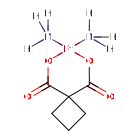
Structure for Carboplatin (DB00958)
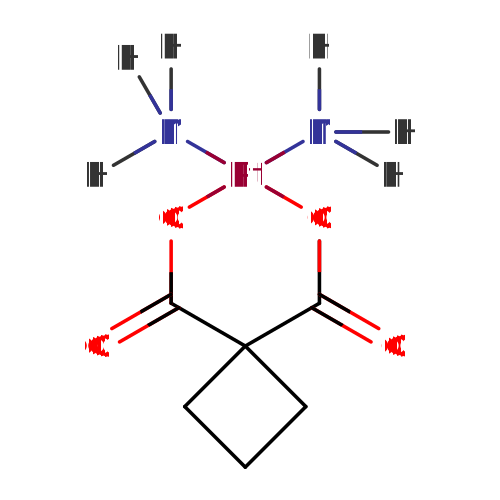
- Weight
- Average: 371.254
Monoisotopic: 371.044481331 - Chemical Formula
- C6H12N2O4Pt
- Synonyms
- Carboplatin
- Carboplatine
- Carboplatino
- CBDCA
- cis-(1,1-cyclobutanedicarboxylato)diammineplatinum(II)
- cis-diammine(1,1-cyclobutanedicarboxylato)platinum
- cis-diammine(1,1-cyclobutanedicarboxylato)platinum(II)
- External IDs
- NSC-241240

Pharmacology
- Indication
Carboplatin is indicated in combination with an established combination of chemotherapeutic agents for the initial treatment of advanced ovarian carcinoma.9 Carboplatin is also indicated for the palliative treatment of ovarian carcinoma, recurrent after prior chemotherapy.9
 Reduce drug development failure ratesBuild, train, & validate machine-learning modelswith evidence-based and structured datasets.Build, train, & validate predictive machine-learning models with structured datasets.
- Associated Conditions
Indication Type Indication Combined Product Details Approval Level Age Group Patient Characteristics Dose Form Used in combination to treat Advanced cervical cancer ••• ••••• Used in combination to treat Advanced endometrial cancer ••• ••••• Used in combination to treat Advanced head and neck cancer ••• ••••• Used in combination to treat Advanced melanoma ••• ••••• Used in combination to treat Advanced non-small cell lung cancer ••• ••••• - Associated Therapies
- Contraindications & Blackbox Warnings
 Prevent Adverse Drug Events TodayTap into our Clinical API for life-saving information on contraindications & blackbox warnings, population restrictions, harmful risks, & more.Avoid life-threatening adverse drug events with our Clinical API
- Pharmacodynamics
Carboplatin is an organoplatinum antineoplastic alkylating agent used in the treatment of advanced ovarian carcinoma.9 Carboplatin has a long duration of action as it is given every 4 weeks, and a narrow therapeutic index.9 Patients should be counselled regarding bone marrow suppression and anemia.9
- Mechanism of action
Carboplatin predominantly acts by attaching alkyl groups to the nucleotides, leading to the formation of monoadducts, and DNA fragmenting when repair enzymes attempt to correct the error.4,9 2% of carboplatin's activity comes from DNA cross-linking from a base on one strand to a base on another, preventing DNA strands from separating for synthesis or transcription.4,1 Finally, carboplatin can induce a number of different mutations.4
Target Actions Organism ADNA cross-linking/alkylationHumans - Absorption
The Cmax and AUC of carboplatin increase proportionally with increasing doses.9 A 75 mg/m2 dose reaches a Cmax of 9.06 ± 0.74 µg/mL, with an AUC of 27.18 ± 11.28 h*µg/mL.3,9 A 450 mg/m2 dose reaches a Cmax of 55.39 ± 18.30 µg/mL, with an AUC of 224.41 ± 69.07 h*µg/mL.3,9
- Volume of distribution
The apparent volume of distribution after a 30 minute intravenous infusion of 300-500 mg/m2 was 16 L.9
- Protein binding
Carboplatin is not bound to plasma protein.3 However, the free platinum is 40% irreversibly bound to plasma proteins.2
- Metabolism
Carboplatin is predominantly eliminated as the unchanged parent compound.4,5
- Route of elimination
Carboplatin is 65% eliminated in the urine within 12 hours, and 71% eliminated within 24 hours.3,9 An additional 3-5% is eliminated in urine from 24 hours to 96 hours.3,9 Biliary elimination has not been determined.3,9 Carboplatin is predominantly eliminated as the unchanged parent compound.4,5
- Half-life
The distribution half life of carboplatin is 1.1-2 hours, and the elimination half life was2.6-5.9 hours.9
- Clearance
The total body clearance after a 30 minute intravenous infusion of 300-500 mg/m2 was 4.4 L/h.9
- Adverse Effects
 Improve decision support & research outcomesWith structured adverse effects data, including: blackbox warnings, adverse reactions, warning & precautions, & incidence rates. View sample adverse effects data in our new Data Library!Improve decision support & research outcomes with our structured adverse effects data.
- Toxicity
Patients experiencing an overdose of carboplatin may present with pronounced neutropenia and hepatotoxicity.6,9 Treat patients with symptomatic and supportive measures, which may include delaying their next treatment.6
- Pathways
- Not Available
- Pharmacogenomic Effects/ADRs
- Not Available
Interactions
- Drug Interactions
- This information should not be interpreted without the help of a healthcare provider. If you believe you are experiencing an interaction, contact a healthcare provider immediately. The absence of an interaction does not necessarily mean no interactions exist.
Drug Interaction Integrate drug-drug
interactions in your softwareAbacavir Carboplatin may decrease the excretion rate of Abacavir which could result in a higher serum level. Abatacept The risk or severity of adverse effects can be increased when Carboplatin is combined with Abatacept. Abciximab The risk or severity of bleeding can be increased when Abciximab is combined with Carboplatin. Aceclofenac The risk or severity of nephrotoxicity can be increased when Carboplatin is combined with Aceclofenac. Acemetacin The risk or severity of nephrotoxicity can be increased when Carboplatin is combined with Acemetacin. - Food Interactions
- Avoid echinacea. Co-administration may decrease effectiveness of immunosuppressants.
Products
 Drug product information from 10+ global regionsOur datasets provide approved product information including:dosage, form, labeller, route of administration, and marketing period.Access drug product information from over 10 global regions.
- International/Other Brands
- Paraplatin-AQ
- Brand Name Prescription Products
Name Dosage Strength Route Labeller Marketing Start Marketing End Region Image Carboplatin Injection Solution 10 mg / mL Intravenous Eugia Pharma Inc. Not applicable Not applicable Canada 
Carboplatin Injection Liquid 10 mg / mL Intravenous TEVA Canada Limited 1994-12-31 Not applicable Canada Carboplatin Injection Solution 10 mg / mL Intravenous Auro Pharma Inc Not applicable Not applicable Canada Carboplatin Injection Solution 10 mg / mL Intravenous Omega Laboratories Ltd 2013-06-10 Not applicable Canada Carboplatin Injection BP Solution 10 mg / mL Intravenous Pfizer Canada Ulc 1997-07-30 Not applicable Canada - Generic Prescription Products
Name Dosage Strength Route Labeller Marketing Start Marketing End Region Image Carboplatin Injection, solution 600 mg/60mL Intravenous Ingenus Pharmaceuticals, LLC 2023-07-01 Not applicable US 
Carboplatin Injection, solution 10 mg/1mL Intravenous Meitheal Pharmaceuticals Inc. 2017-06-19 Not applicable US Carboplatin Injection 10 mg/1mL Intravenous Teva Parenteral Medicines, Inc. 2005-11-17 2014-11-30 US Carboplatin Injection 10 mg/1mL Intravenous Bedford Pharmaceuticals 2004-10-14 2010-06-30 US Carboplatin Injection, solution 150 mg/15mL Intravenous Teyro Labs Private Limited 2007-01-18 Not applicable US - Unapproved/Other Products
Name Ingredients Dosage Route Labeller Marketing Start Marketing End Region Image CARBOPLATIN DBL 450 MG/45 ML Carboplatin (450 mg/45ml) Injection, solution Intravenous ORNA İLAÇ TEKSTİL KİMYEVİ MAD. SAN. VE DIŞ TİC. LTD. ŞTİ. 2019-08-06 Not applicable Turkey 
CARBOPLATIN DBL ENJ. SOL. 150 MG/15 ML FLAKON, 1 ADET Carboplatin (150 mg/15ml) Injection, solution Intravenous ORNA İLAÇ TEKSTİL KİMYEVİ MAD. SAN. VE DIŞ TİC. LTD. ŞTİ. 2019-08-06 Not applicable Turkey CARBOPLATIN DBL ENJ. SOL. 50 MG/5 ML FLAKON, 1 ADET Carboplatin (50 mg/5ml) Injection, solution Intravenous ORNA İLAÇ TEKSTİL KİMYEVİ MAD. SAN. VE DIŞ TİC. LTD. ŞTİ. 2018-02-20 Not applicable Turkey
Categories
- ATC Codes
- L01XA02 — Carboplatin
- Drug Categories
- Antineoplastic Agents
- Antineoplastic and Immunomodulating Agents
- BCRP/ABCG2 Substrates
- Compounds used in a research, industrial, or household setting
- Coordination Complexes
- Cross-Linking Reagents
- Drugs that are Mainly Renally Excreted
- Immunosuppressive Agents
- Indicators and Reagents
- Laboratory Chemicals
- Myelosuppressive Agents
- Narrow Therapeutic Index Drugs
- Nephrotoxic agents
- Organometallic Compounds
- Platinum Compounds
- Chemical TaxonomyProvided by Classyfire
- Description
- This compound belongs to the class of organic compounds known as dicarboxylic acids and derivatives. These are organic compounds containing exactly two carboxylic acid groups.
- Kingdom
- Organic compounds
- Super Class
- Organic acids and derivatives
- Class
- Carboxylic acids and derivatives
- Sub Class
- Dicarboxylic acids and derivatives
- Direct Parent
- Dicarboxylic acids and derivatives
- Alternative Parents
- Carboxylic acid salts / Oxacyclic compounds / Organic transition metal salts / Metalloheterocyclic compounds / Organic oxides / Organic nitrogen compounds / Hydrocarbon derivatives / Carbonyl compounds
- Substituents
- Aliphatic heteropolycyclic compound / Carbonyl group / Carboxylic acid salt / Dicarboxylic acid or derivatives / Hydrocarbon derivative / Metalloheterocycle / Organic metal salt / Organic nitrogen compound / Organic oxide / Organic oxygen compound
- Molecular Framework
- Aliphatic heteropolycyclic compounds
- External Descriptors
- platinum coordination entity (CHEBI:31355)
- Affected organisms
- Humans and other mammals
Chemical Identifiers
- UNII
- BG3F62OND5
- CAS number
- 41575-94-4
- InChI Key
- OLESAACUTLOWQZ-UHFFFAOYSA-L
- InChI
- InChI=1S/C6H8O4.2H3N.Pt/c7-4(8)6(5(9)10)2-1-3-6;;;/h1-3H2,(H,7,8)(H,9,10);2*1H3;/q;;;+2/p-2
- IUPAC Name
- 7,7-diamino-6,8-dioxa-7-platinaspiro[3.5]nonane-5,9-dione
- SMILES
- [H][N]([H])([H])[Pt]1(OC(=O)C2(CCC2)C(=O)O1)[N]([H])([H])[H]
References
- Synthesis Reference
Jingzun Wang, Huisheng Qu, Lei Wang, Ting Wang, "Supermolecular carboplatin derivatives, their preparation and pharmaceutical composition containing them as active ingredient and applications of the compositions." U.S. Patent US07259270, issued August 21, 2007.
US07259270- General References
- Knox RJ, Friedlos F, Lydall DA, Roberts JJ: Mechanism of cytotoxicity of anticancer platinum drugs: evidence that cis-diamminedichloroplatinum(II) and cis-diammine-(1,1-cyclobutanedicarboxylato)platinum(II) differ only in the kinetics of their interaction with DNA. Cancer Res. 1986 Apr;46(4 Pt 2):1972-9. [Article]
- Sooriyaarachchi M, Narendran A, Gailer J: Comparative hydrolysis and plasma protein binding of cis-platin and carboplatin in human plasma in vitro. Metallomics. 2011 Jan;3(1):49-55. doi: 10.1039/c0mt00058b. Epub 2010 Dec 6. [Article]
- Oguri S, Sakakibara T, Mase H, Shimizu T, Ishikawa K, Kimura K, Smyth RD: Clinical pharmacokinetics of carboplatin. J Clin Pharmacol. 1988 Mar;28(3):208-15. doi: 10.1002/j.1552-4604.1988.tb03134.x. [Article]
- Povirk LF, Shuker DE: DNA damage and mutagenesis induced by nitrogen mustards. Mutat Res. 1994 Dec;318(3):205-26. doi: 10.1016/0165-1110(94)90015-9. [Article]
- Reece PA, Bishop JF, Olver IN, Stafford I, Hillcoat BL, Morstyn G: Pharmacokinetics of unchanged carboplatin (CBDCA) in patients with small cell lung carcinoma. Cancer Chemother Pharmacol. 1987;19(4):326-30. doi: 10.1007/BF00261482. [Article]
- Diaz CM, Fenix-Caballero SF, Palomo-Palomo C, Gandara-Ladronde Guevera MJ, Alegre-DelRey EJ, Blanco-Castano MA, Lopez-Vallejo JF, Diaz-Navarro J, Borrero-Rubio JM, Rios-Sanchez E: GM-006 Compliance with FDA recommendations about overdosing with carboplatin European Journal of Hospital Pharmacy: Science and Practice. 2014 Feb 24;21(Suppl 1):A116. [Article]
- Calvert AH, Harland SJ, Newell DR, Siddik ZH, Jones AC, McElwain TJ, Raju S, Wiltshaw E, Smith IE, Baker JM, Peckham MJ, Harrap KR: Early clinical studies with cis-diammine-1,1-cyclobutane dicarboxylate platinum II. Cancer Chemother Pharmacol. 1982;9(3):140-7. doi: 10.1007/BF00257742. [Article]
- FDA Approved Drug Products: Paraplatin (Carboplatin) Intravenous Injection (Discontinued) [Link]
- Dailymed: Carboplatin Intravenous Injection [Link]
- External Links
- Human Metabolome Database
- HMDB0015093
- KEGG Drug
- D01363
- PubChem Compound
- 38904
- PubChem Substance
- 46507170
- ChemSpider
- 8514637
- 40048
- ChEBI
- 31355
- ChEMBL
- CHEMBL1351
- Therapeutic Targets Database
- DAP000535
- PharmGKB
- PA448803
- RxList
- RxList Drug Page
- Drugs.com
- Drugs.com Drug Page
- Wikipedia
- Carboplatin
- FDA label
- Download (1.26 MB)
- MSDS
- Download (73.5 KB)
Clinical Trials
- Clinical Trials
Phase Status Purpose Conditions Count 4 Active Not Recruiting Treatment Central Nervous System Embryonal Tumors / Medulloblastomas 1 4 Active Not Recruiting Treatment Ovarian Cancer 1 4 Active Not Recruiting Treatment Safety and Efficacy 1 4 Active Not Recruiting Treatment Squamous Cell Carcinoma of the Head and Neck (SCCHN) 1 4 Completed Treatment Adenocarcinomas / Carcinoma / Carcinoma, Large Cell / Lung Neoplasm / Non-Small Cell Lung Cancer (NSCLC) / Squamous Cell Carcinoma (SCC) 1
Pharmacoeconomics
- Manufacturers
- App pharmaceuticals llc
- Bedford laboratories div ben venue laboratories inc
- Hospira inc
- Pliva inc
- Sandoz inc
- Watson laboratories inc
- Watson laboratories
- Bristol myers squibb co pharmaceutical research institute
- Akorn inc
- Bedford laboratories
- Bioniche pharma usa llc
- Ebewe pharma ges mbh nfg kg
- Fresenius kabi oncology plc
- Pharmachemie bv
- Pliva lachema as
- Spectrum pharmaceuticals inc
- Sun pharma global inc
- Teva parenteral medicines inc
- Bristol myers squibb co
- Packagers
- APP Pharmaceuticals
- Baxter International Inc.
- Bedford Labs
- Bell-More Laboratories Inc.
- Ben Venue Laboratories Inc.
- Bristol-Myers Squibb Co.
- Cipla Ltd.
- Ebewe Pharma
- Fresenius Kabi AB
- Generamedix Inc.
- Hospira Inc.
- Intas Pharmaceuticals Ltd.
- Mead Johnson and Co.
- Otn Generics Inc.
- Pharmachemie BV
- Pliva Inc.
- Spectrum Pharmaceuticals
- Teva Pharmaceutical Industries Ltd.
- Watson Pharmaceuticals
- Dosage Forms
Form Route Strength Injection Parenteral 50 mg Solution Parenteral 150.000 mg Injection, powder, lyophilized, for solution Intravenous 150 mg Injection Intravenous 1000 mg/100ml Injection Intravenous 150 mg/15ml Injection Intravenous 450 mg/45ml Injection Intravenous 600 mg/60ml Injection Intravenous Solution, concentrate Intravenous 10 mg Injection, solution, concentrate Intravenous 10 mg/ml Injection, solution 10 mg/1ml Injection Injection Intracavernous 10 mg/1mL Injection Intravenous 10 mg/1mL Injection, powder, lyophilized, for solution Intravenous 10 mg/1mL Injection, solution Intravenous 150 mg/15mL Injection, solution Intravenous 450 mg/45mL Injection, solution Intravenous 50 mg/5mL Injection, solution Intravenous 600 mg/60mL Solution Intravenous 150 mg/5mL Solution Intravenous 450 mg/5mL Solution Intravenous 50 mg/5mL Injection, solution, concentrate Intravenous Injection, solution, concentrate Parenteral Liquid Intravenous 10 mg / mL Injection Intravenous 10 mg Solution Intravenous 10 mg / mL Solution Intravenous 450 mg/45ml Solution Intravenous 600 mg/60ml Solution Intravenous 150 mg/15ml Injection, solution Intravenous 1000 mg/100ml Solution Parenteral 10 mg Injection, powder, lyophilized, for solution Parenteral 150 mg Solution Parenteral 150 mg Solution, concentrate Intravenous 150 mg Injection, powder, lyophilized, for solution Intravenous 450 mg Injection, powder, lyophilized, for solution Parenteral 450 mg Suspension Parenteral 450 mg Solution, concentrate Intravenous 50 mg Injection, solution, concentrate Intravenous; Parenteral 10 MG/ML Injection, powder, for solution Intravenous Injection, solution Injection, powder, lyophilized, for solution Parenteral 50 mg Solution Intravenous 10 mg Injection, solution Parenteral 150 MG/15ML Injection, solution Parenteral 450 MG/45ML Injection, solution Parenteral 50 MG/5ML Injection, solution Intravenous; Parenteral Injection, solution, concentrate Intravenous 600 mg Injection Intravenous 50 mg/5ml Solution Intravenous 150 mg Injection Intravenous 450 mg Injection Intravenous 10 mg/mL Solution Intravenous 150.000 mg Solution Intravenous 10.00 mg/ml Injection, solution Intravenous 10 mg/ml Injection, solution 10 MG/ML Solution Intravenous 50 mg Solution Intravenous 50.000 mg Solution Intravenous 450 mg Injection, powder, lyophilized, for solution Intravenous 150 mg/15mL Injection, powder, lyophilized, for solution Intravenous 450 mg/45mL Injection, powder, lyophilized, for solution Intravenous 50 mg/5mL Injection, solution Intravenous Injection, solution Intravenous 10 mg/1mL Powder, for solution Intravenous 150 mg / vial Injection, solution Intravenous 150 mg Injection, solution Intravenous 450 mg Solution Intravenous 150.00 mg Solution 10 mg/1ml - Prices
Unit description Cost Unit Paraplatin 450 mg vial 1474.46USD vial Paraplatin 150 mg vial 491.48USD vial Carboplatin 150 mg vial 255.31USD vial Paraplatin 50 mg vial 163.84USD vial Carboplatin 450 mg vial 156.25USD vial Carboplatin 50 mg vial 85.1USD vial DrugBank does not sell nor buy drugs. Pricing information is supplied for informational purposes only.- Patents
- Not Available
Properties
- State
- Solid
- Experimental Properties
Property Value Source water solubility 14 mg/mL FDA Label - Predicted Properties
Property Value Source Water Solubility 79.8 mg/mL ALOGPS logP 0.14 ALOGPS logS -0.67 ALOGPS Physiological Charge 0 Chemaxon Hydrogen Acceptor Count 0 Chemaxon Hydrogen Donor Count 0 Chemaxon Polar Surface Area 107.88 Å2 Chemaxon Rotatable Bond Count 0 Chemaxon Refractivity 60.04 m3·mol-1 Chemaxon Polarizability 18.27 Å3 Chemaxon Number of Rings 2 Chemaxon Bioavailability 1 Chemaxon Rule of Five No Chemaxon Ghose Filter No Chemaxon Veber's Rule No Chemaxon MDDR-like Rule No Chemaxon - Predicted ADMET Features
Property Value Probability Human Intestinal Absorption - 0.6183 Blood Brain Barrier + 0.8295 Caco-2 permeable - 0.584 P-glycoprotein substrate Non-substrate 0.6375 P-glycoprotein inhibitor I Non-inhibitor 0.9489 P-glycoprotein inhibitor II Non-inhibitor 0.9968 Renal organic cation transporter Non-inhibitor 0.9239 CYP450 2C9 substrate Non-substrate 0.8745 CYP450 2D6 substrate Non-substrate 0.8276 CYP450 3A4 substrate Non-substrate 0.703 CYP450 1A2 substrate Non-inhibitor 0.8142 CYP450 2C9 inhibitor Non-inhibitor 0.854 CYP450 2D6 inhibitor Non-inhibitor 0.9168 CYP450 2C19 inhibitor Non-inhibitor 0.8607 CYP450 3A4 inhibitor Non-inhibitor 0.6995 CYP450 inhibitory promiscuity Low CYP Inhibitory Promiscuity 0.9896 Ames test Non AMES toxic 0.746 Carcinogenicity Non-carcinogens 0.8906 Biodegradation Ready biodegradable 0.8235 Rat acute toxicity 2.3469 LD50, mol/kg Not applicable hERG inhibition (predictor I) Weak inhibitor 0.9596 hERG inhibition (predictor II) Non-inhibitor 0.9767
Spectra
- Mass Spec (NIST)
- Not Available
- Spectra
- Not Available
- Chromatographic Properties
Collision Cross Sections (CCS)
Adduct CCS Value (Å2) Source type Source [M-H]- 126.7443598 predictedDarkChem Lite v0.1.0
Targets

References
- Overington JP, Al-Lazikani B, Hopkins AL: How many drug targets are there? Nat Rev Drug Discov. 2006 Dec;5(12):993-6. [Article]
- Imming P, Sinning C, Meyer A: Drugs, their targets and the nature and number of drug targets. Nat Rev Drug Discov. 2006 Oct;5(10):821-34. [Article]
- Sharma S, Gong P, Temple B, Bhattacharyya D, Dokholyan NV, Chaney SG: Molecular dynamic simulations of cisplatin- and oxaliplatin-d(GG) intrastand cross-links reveal differences in their conformational dynamics. J Mol Biol. 2007 Nov 9;373(5):1123-40. Epub 2007 Aug 23. [Article]
- Appleton K, Mackay HJ, Judson I, Plumb JA, McCormick C, Strathdee G, Lee C, Barrett S, Reade S, Jadayel D, Tang A, Bellenger K, Mackay L, Setanoians A, Schatzlein A, Twelves C, Kaye SB, Brown R: Phase I and pharmacodynamic trial of the DNA methyltransferase inhibitor decitabine and carboplatin in solid tumors. J Clin Oncol. 2007 Oct 10;25(29):4603-9. [Article]
- Dailymed: Carboplatin Intravenous Injection [Link]
Enzymes
- Kind
- Protein
- Organism
- Humans
- Pharmacological action
- Unknown
- Actions
- Inducer
- General Function
- Xanthine oxidase activity
- Specific Function
- Key enzyme in purine degradation. Catalyzes the oxidation of hypoxanthine to xanthine. Catalyzes the oxidation of xanthine to uric acid. Contributes to the generation of reactive oxygen species. Ha...
- Gene Name
- XDH
- Uniprot ID
- P47989
- Uniprot Name
- Xanthine dehydrogenase/oxidase
- Molecular Weight
- 146422.99 Da
References
- Husai K, Jagannathan R, Hasan Z, Trammell GL, Rybak LP, Hazelrigg SR, Somani SM: Dose response of carboplatin-induced nephrotoxicity in rats. Pharmacol Toxicol. 2002 Aug;91(2):83-9. [Article]
- Husain K, Whitworth C, Rybak LP: Time response of carboplatin-induced nephrotoxicity in rats. Pharmacol Res. 2004 Sep;50(3):291-300. [Article]
- Husain K, Whitworth C, Somani SM, Rybak LP: Carboplatin-induced oxidative stress in rat cochlea. Hear Res. 2001 Sep;159(1-2):14-22. [Article]
- Husain K, Whitworth C, Hazelrigg S, Rybak L: Carboplatin-induced oxidative injury in rat inferior colliculus. Int J Toxicol. 2003 Sep-Oct;22(5):335-42. [Article]
- Kind
- Protein
- Organism
- Humans
- Pharmacological action
- Unknown
- Actions
- Substrate
- General Function
- Peroxidase activity
- Specific Function
- Part of the host defense system of polymorphonuclear leukocytes. It is responsible for microbicidal activity against a wide range of organisms. In the stimulated PMN, MPO catalyzes the production o...
- Gene Name
- MPO
- Uniprot ID
- P05164
- Uniprot Name
- Myeloperoxidase
- Molecular Weight
- 83867.71 Da
References
- PharmGKB: Platinum Pathway, Pharmacokinetics/Pharmacodynamics [Link]
- Kind
- Protein
- Organism
- Humans
- Pharmacological action
- Unknown
- Actions
- Substrate
- General Function
- Glutathione transferase activity
- Specific Function
- Conjugation of reduced glutathione to a wide number of exogenous and endogenous hydrophobic electrophiles. Acts on 1,2-epoxy-3-(4-nitrophenoxy)propane, phenethylisothiocyanate 4-nitrobenzyl chlorid...
- Gene Name
- GSTT1
- Uniprot ID
- P30711
- Uniprot Name
- Glutathione S-transferase theta-1
- Molecular Weight
- 27334.755 Da
References
- PharmGKB: Platinum Pathway, Pharmacokinetics/Pharmacodynamics [Link]
- Kind
- Protein
- Organism
- Humans
- Pharmacological action
- Unknown
- Actions
- Substrate
- General Function
- Zinc ion binding
- Specific Function
- Metallothioneins have a high content of cysteine residues that bind various heavy metals; these proteins are transcriptionally regulated by both heavy metals and glucocorticoids.
- Gene Name
- MT1A
- Uniprot ID
- P04731
- Uniprot Name
- Metallothionein-1A
- Molecular Weight
- 6120.19 Da
References
- PharmGKB: Platinum Pathway, Pharmacokinetics/Pharmacodynamics [Link]
- Kind
- Protein
- Organism
- Humans
- Pharmacological action
- Unknown
- Actions
- Substrate
- General Function
- Zinc ion binding
- Specific Function
- Metallothioneins have a high content of cysteine residues that bind various heavy metals; these proteins are transcriptionally regulated by both heavy metals and glucocorticoids.
- Gene Name
- MT2A
- Uniprot ID
- P02795
- Uniprot Name
- Metallothionein-2
- Molecular Weight
- 6042.05 Da
References
- PharmGKB: Platinum Pathway, Pharmacokinetics/Pharmacodynamics [Link]
- Kind
- Protein
- Organism
- Humans
- Pharmacological action
- Unknown
- Actions
- Inhibitor
- General Function
- Zinc ion binding
- Specific Function
- Destroys radicals which are normally produced within the cells and which are toxic to biological systems.
- Gene Name
- SOD1
- Uniprot ID
- P00441
- Uniprot Name
- Superoxide dismutase [Cu-Zn]
- Molecular Weight
- 15935.685 Da
References
- Husain K, Scott B, Whitworth C, Rybak LP: Time response of carboplatin-induced hearing loss in rat. Hear Res. 2004 May;191(1-2):110-8. doi: 10.1016/j.heares.2004.01.011. [Article]
- Husain K, Whitworth C, Somani SM, Rybak LP: Partial protection by lipoic acid against carboplantin-induced ototoxicity in rats. Biomed Environ Sci. 2005 Jun;18(3):198-206. [Article]
- Kind
- Protein
- Organism
- Humans
- Pharmacological action
- Unknown
- Actions
- Substrate
- General Function
- S-nitrosoglutathione binding
- Specific Function
- Conjugation of reduced glutathione to a wide number of exogenous and endogenous hydrophobic electrophiles. Regulates negatively CDK5 activity via p25/p35 translocation to prevent neurodegeneration.
- Gene Name
- GSTP1
- Uniprot ID
- P09211
- Uniprot Name
- Glutathione S-transferase P
- Molecular Weight
- 23355.625 Da
References
- PharmGKB: Platinum Pathway, Pharmacokinetics/Pharmacodynamics [Link]
- Kind
- Protein
- Organism
- Humans
- Pharmacological action
- Unknown
- Actions
- Substrate
- General Function
- Protein homodimerization activity
- Specific Function
- Conjugation of reduced glutathione to a wide number of exogenous and endogenous hydrophobic electrophiles.
- Gene Name
- GSTM1
- Uniprot ID
- P09488
- Uniprot Name
- Glutathione S-transferase Mu 1
- Molecular Weight
- 25711.555 Da
References
- PharmGKB: Platinum Pathway, Pharmacokinetics/Pharmacodynamics [Link]
- Kind
- Protein
- Organism
- Humans
- Pharmacological action
- Unknown
- Actions
- Substrate
- General Function
- Superoxide dismutase activity
- Specific Function
- The enzyme apparently serves as a quinone reductase in connection with conjugation reactions of hydroquinons involved in detoxification pathways as well as in biosynthetic processes such as the vit...
- Gene Name
- NQO1
- Uniprot ID
- P15559
- Uniprot Name
- NAD(P)H dehydrogenase [quinone] 1
- Molecular Weight
- 30867.405 Da
References
- PharmGKB: Platinum Pathway, Pharmacokinetics/Pharmacodynamics [Link]
Transporters
- Kind
- Protein
- Organism
- Humans
- Pharmacological action
- Unknown
- Actions
- Substrate
- General Function
- Copper uptake transmembrane transporter activity
- Specific Function
- High-affinity, saturable copper transporter involved in dietary copper uptake.
- Gene Name
- SLC31A1
- Uniprot ID
- O15431
- Uniprot Name
- High affinity copper uptake protein 1
- Molecular Weight
- 21090.545 Da
References
- Howell SB, Safaei R, Larson CA, Sailor MJ: Copper transporters and the cellular pharmacology of the platinum-containing cancer drugs. Mol Pharmacol. 2010 Jun;77(6):887-94. doi: 10.1124/mol.109.063172. Epub 2010 Feb 16. [Article]
- Song IS, Savaraj N, Siddik ZH, Liu P, Wei Y, Wu CJ, Kuo MT: Role of human copper transporter Ctr1 in the transport of platinum-based antitumor agents in cisplatin-sensitive and cisplatin-resistant cells. Mol Cancer Ther. 2004 Dec;3(12):1543-9. [Article]
- Kind
- Protein
- Organism
- Humans
- Pharmacological action
- Unknown
- Actions
- Substrate
- General Function
- Copper ion transmembrane transporter activity
- Specific Function
- Involved in low-affinity copper uptake.
- Gene Name
- SLC31A2
- Uniprot ID
- O15432
- Uniprot Name
- Probable low affinity copper uptake protein 2
- Molecular Weight
- 15681.29 Da
References
- Blair BG, Larson CA, Safaei R, Howell SB: Copper transporter 2 regulates the cellular accumulation and cytotoxicity of Cisplatin and Carboplatin. Clin Cancer Res. 2009 Jul 1;15(13):4312-21. doi: 10.1158/1078-0432.CCR-09-0311. Epub 2009 Jun 9. [Article]
- Kind
- Protein
- Organism
- Humans
- Pharmacological action
- Unknown
- Actions
- Substrate
- General Function
- Superoxide dismutase copper chaperone activity
- Specific Function
- May supply copper to copper-requiring proteins within the secretory pathway, when localized in the trans-Golgi network. Under conditions of elevated extracellular copper, it relocalized to the plas...
- Gene Name
- ATP7A
- Uniprot ID
- Q04656
- Uniprot Name
- Copper-transporting ATPase 1
- Molecular Weight
- 163372.275 Da
References
- Samimi G, Katano K, Holzer AK, Safaei R, Howell SB: Modulation of the cellular pharmacology of cisplatin and its analogs by the copper exporters ATP7A and ATP7B. Mol Pharmacol. 2004 Jul;66(1):25-32. [Article]
- Harrach S, Ciarimboli G: Role of transporters in the distribution of platinum-based drugs. Front Pharmacol. 2015 Apr 24;6:85. doi: 10.3389/fphar.2015.00085. eCollection 2015. [Article]
- Kind
- Protein
- Organism
- Humans
- Pharmacological action
- Unknown
- Actions
- Substrate
- General Function
- Copper-exporting atpase activity
- Specific Function
- Involved in the export of copper out of the cells, such as the efflux of hepatic copper into the bile.
- Gene Name
- ATP7B
- Uniprot ID
- P35670
- Uniprot Name
- Copper-transporting ATPase 2
- Molecular Weight
- 157261.34 Da
References
- Samimi G, Katano K, Holzer AK, Safaei R, Howell SB: Modulation of the cellular pharmacology of cisplatin and its analogs by the copper exporters ATP7A and ATP7B. Mol Pharmacol. 2004 Jul;66(1):25-32. [Article]
- Kind
- Protein
- Organism
- Humans
- Pharmacological action
- Unknown
- Actions
- Substrate
- General Function
- Xenobiotic-transporting atpase activity
- Specific Function
- High-capacity urate exporter functioning in both renal and extrarenal urate excretion. Plays a role in porphyrin homeostasis as it is able to mediates the export of protoporhyrin IX (PPIX) both fro...
- Gene Name
- ABCG2
- Uniprot ID
- Q9UNQ0
- Uniprot Name
- ATP-binding cassette sub-family G member 2
- Molecular Weight
- 72313.47 Da
References
- Ceckova M, Vackova Z, Radilova H, Libra A, Buncek M, Staud F: Effect of ABCG2 on cytotoxicity of platinum drugs: interference of EGFP. Toxicol In Vitro. 2008 Dec;22(8):1846-52. doi: 10.1016/j.tiv.2008.09.001. Epub 2008 Sep 9. [Article]
- Kind
- Protein
- Organism
- Humans
- Pharmacological action
- Unknown
- Actions
- Substrate
- General Function
- Organic anion transmembrane transporter activity
- Specific Function
- Mediates hepatobiliary excretion of numerous organic anions. May function as a cellular cisplatin transporter.
- Gene Name
- ABCC2
- Uniprot ID
- Q92887
- Uniprot Name
- Canalicular multispecific organic anion transporter 1
- Molecular Weight
- 174205.64 Da
References
- Oguri T, Fujiwara Y, Isobe T, Katoh O, Watanabe H, Yamakido M: Expression of gamma-glutamylcysteine synthetase (gamma-GCS) and multidrug resistance-associated protein (MRP), but not human canalicular multispecific organic anion transporter (cMOAT), genes correlates with exposure of human lung cancers to platinum drugs. Br J Cancer. 1998 Apr;77(7):1089-96. doi: 10.1038/bjc.1998.181. [Article]
- Hu S, Leblanc AF, Gibson AA, Hong KW, Kim JY, Janke LJ, Li L, Vasilyeva A, Finkelstein DB, Sprowl JA, Sweet DH, Schlatter E, Ciarimboli G, Schellens J, Baker SD, Pabla N, Sparreboom A: Identification of OAT1/OAT3 as Contributors to Cisplatin Toxicity. Clin Transl Sci. 2017 Sep;10(5):412-420. doi: 10.1111/cts.12480. Epub 2017 Jul 8. [Article]

Drug created at June 13, 2005 13:24 / Updated at April 26, 2024 00:45