Identification
- Summary
Telmisartan is an ARB used to treat hypertension, diabetic nephropathy, and congestive heart failure.
- Brand Names
- Actelsar Hct, Micardis, Micardis-hct, Pritor, Twynsta
- Generic Name
- Telmisartan
- DrugBank Accession Number
- DB00966
- Background
Telmisartan is an angiotensin II receptor antagonist (ARB) used in the management of hypertension. Generally, angiotensin II receptor blockers (ARBs) such as telmisartan bind to the angiotensin II type 1 (AT1) receptors with high affinity, causing inhibition of the action of angiotensin II on vascular smooth muscle, ultimately leading to a reduction in arterial blood pressure.1,2 Recent studies suggest that telmisartan may also have PPAR-gamma agonistic properties that could potentially confer beneficial metabolic effects.3
- Type
- Small Molecule
- Groups
- Approved, Investigational
- Structure
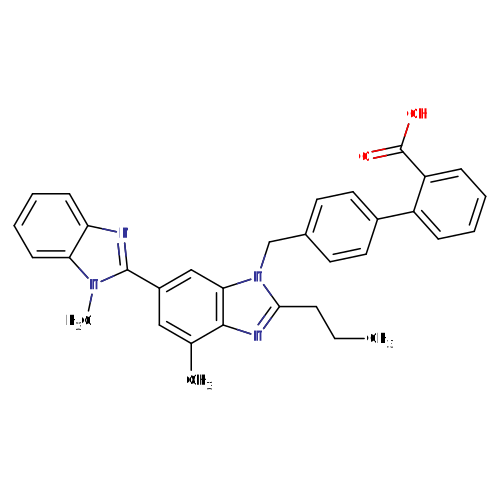
Structure for Telmisartan (DB00966)
- Weight
- Average: 514.6169
Monoisotopic: 514.236876224 - Chemical Formula
- C33H30N4O2
- Synonyms
- 4'-((1,4'-dimethyl-2'-propyl(2,6'-bi-1H-benzimidazol)-1'-yl)methyl)-(1,1'-biphenyl)-2-carboxylic acid
- 4'-((4-methyl-6-(1-methyl-2-benzimidazolyl)-2-propyl-1-benzimidazolyl)methyl)-2-biphenylcarboxylic acid
- 4'-[(1,4'-dimethyl-2'propyl[2,6'-bi-1H-benzimidazol]-1'-yl)methyl]-[1,1'-biphenyl]-2-carboxylic acid
- 4'-[(1,7'-dimethyl-2'-propyl-1H,3'H-2,5'-bibenzimidazol-3'-yl)methyl]biphenyl-2-carboxylic acid
- Telmisartan
- External IDs
- BIBR 277
- BIBR 277 SE
- BIBR 277SE
- BIBR-277

Pharmacology
- Indication
Used alone or in combination with other classes of antihypertensives for the treatment of hypertension.5 Also used in the treatment of diabetic nephropathy in hypertensive patients with type 2 diabetes mellitus, as well as the treatment of congestive heart failure (only in patients who cannot tolerate ACE inhibitors).4
 Reduce drug development failure ratesBuild, train, & validate machine-learning modelswith evidence-based and structured datasets.Build, train, & validate predictive machine-learning models with structured datasets.
- Associated Conditions
Indication Type Indication Combined Product Details Approval Level Age Group Patient Characteristics Dose Form Prevention of Cardiovascular events •••••••••••• •••••• •• •••• ••• •••••••••• Management of Diabetic nephropathy ••• ••••• Management of Heart failure ••• ••••• Used in combination to manage Hypertension Combination Product in combination with: Amlodipine (DB00381) •••••••••••• ••••• •••••••• •••••••••••• •••••••••• •••• •••••••••••• •• ••••••• ••••••• •••••• Used in combination to manage Hypertension Combination Product in combination with: Amlodipine (DB00381) •••••••••••• •••••• - Contraindications & Blackbox Warnings
 Prevent Adverse Drug Events TodayTap into our Clinical API for life-saving information on contraindications & blackbox warnings, population restrictions, harmful risks, & more.Avoid life-threatening adverse drug events with our Clinical API
- Pharmacodynamics
Telmisartan is an orally active nonpeptide angiotensin II antagonist that acts on the AT1 receptor subtype. It has the highest affinity for the AT1 receptor among commercially available ARBs and has minimal affinity for the AT2 receptor.5 New studies suggest that telmisartan may also have PPARγ agonistic properties that could potentially confer beneficial metabolic effects, as PPARγ is a nuclear receptor that regulates specific gene transcription, and whose target genes are involved in the regulation of glucose and lipid metabolism, as well as anti-inflammatory responses. This observation is currently being explored in clinical trials.3 Angiotensin II is formed from angiotensin I in a reaction catalyzed by angiotensin-converting enzyme (ACE, kininase II). Angiotensin II is the principal pressor agent of the renin-angiotensin system, with effects that include vasoconstriction, stimulation of synthesis and release of aldosterone, cardiac stimulation, and renal reabsorption of sodium. Telmisartan works by blocking the vasoconstrictor and aldosterone secretory effects of angiotensin II.2,5
- Mechanism of action
Telmisartan interferes with the binding of angiotensin II to the angiotensin II AT1-receptor by binding reversibly and selectively to the receptors in vascular smooth muscle and the adrenal gland. As angiotensin II is a vasoconstrictor, which also stimulates the synthesis and release of aldosterone, blockage of its effects results in decreases in systemic vascular resistance. Telmisartan does not inhibit the angiotensin converting enzyme, other hormone receptors, or ion channels.5 Studies also suggest that telmisartan is a partial agonist of PPARγ, which is an established target for antidiabetic drugs. This suggests that telmisartan can improve carbohydrate and lipid metabolism, as well as control insulin resistance without causing the side effects that are associated with full PPARγ activators.3
Target Actions Organism APeroxisome proliferator-activated receptor gamma partial agonistHumans AType-1 angiotensin II receptor antagonistHumans - Absorption
Oral telmisartan follows nonlinear pharmacokinetics over the dose range of 20 mg to 160 mg. Both Cmax and AUC present greater than proportional increases at higher doses. With once-daily dosing, telmisartan has trough plasma concentrations of about 10% to 25% of peak plasma concentrations. The absolute bioavailability of telmisartan depends on the dosage. At 40 mg and 160 mg, the bioavailability was 42% and 58%, respectively. Food slightly decreases bioavailability. For instance, when the 40 mg dose is administered with food, a decrease of about 6% is seen, and with the 160 mg dose, there is a decrease of about 20%.5
- Volume of distribution
Telmisartan has a volume of distribution of approximately 500 liters.5
- Protein binding
Telmisartan is highly bound to plasma proteins (>99.5%), mainly albumin and alpha 1-acid glycoprotein. Binding is not dose-dependent.5
- Metabolism
Minimally metabolized by conjugation to form a pharmacologically inactive acyl-glucuronide, the glucuronide of the parent compound is the only metabolite that has been identified in human plasma and urine. The cytochrome P450 isoenzymes are not involved in the metabolism of telmisartan.5
- Route of elimination
Following either intravenous or oral administration of 14C-labeled telmisartan, most of the administered dose (>97%) was eliminated unchanged in feces via biliary excretion; only minute amounts were found in the urine (0.91% and 0.49% of total radioactivity, respectively).5
- Half-life
Telmisartan displays bi-exponential decay kinetics with a terminal elimination half-life of approximately 24 hours.5
- Clearance
Telmisartan has a total plasma clearance of >800 mL/min.5
- Adverse Effects
 Improve decision support & research outcomesWith structured adverse effects data, including: blackbox warnings, adverse reactions, warning & precautions, & incidence rates. View sample adverse effects data in our new Data Library!Improve decision support & research outcomes with our structured adverse effects data.
- Toxicity
Intravenous LD50 in rats is 150-200 mg/kg in males and 200 to 250 mg/kg in females. Acute oral toxicity is low: no deaths and no changes occurred in rats or dogs at 2000 mg/kg, the highest dose tested.6 Limited data are available with regard to overdosage in humans. The most likely manifestations of overdosage with telmisartan would be hypotension, dizziness and tachycardia; bradycardia could occur from parasympathetic (vagal) stimulation. Supportive treatment should be instituted if symptomatic hypotension occurs. Telmisartan is not removed by hemofiltration and is not dialyzable.5
- Pathways
Pathway Category Telmisartan Action Pathway Drug action - Pharmacogenomic Effects/ADRs
- Not Available
Interactions
- Drug Interactions
- This information should not be interpreted without the help of a healthcare provider. If you believe you are experiencing an interaction, contact a healthcare provider immediately. The absence of an interaction does not necessarily mean no interactions exist.
Drug Interaction Integrate drug-drug
interactions in your softwareAbaloparatide The risk or severity of adverse effects can be increased when Telmisartan is combined with Abaloparatide. Abemaciclib Telmisartan may decrease the excretion rate of Abemaciclib which could result in a higher serum level. Abrocitinib The metabolism of Abrocitinib can be decreased when combined with Telmisartan. Acebutolol Telmisartan may increase the hypotensive activities of Acebutolol. Aceclofenac The risk or severity of renal failure, hyperkalemia, and hypertension can be increased when Telmisartan is combined with Aceclofenac. - Food Interactions
- Take with or without food. Bioavailability may be slightly reduced by taking telmisartan with food.
Products
 Drug product information from 10+ global regionsOur datasets provide approved product information including:dosage, form, labeller, route of administration, and marketing period.Access drug product information from over 10 global regions.
- Product Ingredients
Ingredient UNII CAS InChI Key Telmisartan sodium K15TQY55Q7 515815-47-1 RSGAIWOEJXRYRV-UHFFFAOYSA-M - Product Images
- Brand Name Prescription Products
Name Dosage Strength Route Labeller Marketing Start Marketing End Region Image Act Telmisartan Tablet 40 mg Oral Actavis Pharma Company 2012-10-19 2018-06-11 Canada 
Act Telmisartan Tablet 80 mg Oral Actavis Pharma Company 2012-10-19 2018-06-11 Canada Alembic-telmisartan Tablet 40 mg Oral Alembic Pharmaceuticals Limited Not applicable Not applicable Canada Alembic-telmisartan Tablet 80 mg Oral Alembic Pharmaceuticals Limited Not applicable Not applicable Canada Kinzalmono Tablet 80 mg Oral Bayer Ag 2016-09-08 Not applicable EU 
- Generic Prescription Products
Name Dosage Strength Route Labeller Marketing Start Marketing End Region Image Ach-telmisartan Tablet 80 mg Oral Accord Healthcare Inc 2014-03-12 Not applicable Canada Ach-telmisartan Tablet 40 mg Oral Accord Healthcare Inc 2014-03-12 Not applicable Canada Ag-telmisartan Tablet 80 mg Oral Angita Pharma Inc. 2021-10-12 Not applicable Canada Ag-telmisartan Tablet 40 mg Oral Angita Pharma Inc. 2021-10-12 Not applicable Canada Apo-telmisartan Tablet 80 mg Oral Apotex Corporation 2014-07-18 Not applicable Canada - Mixture Products
Name Ingredients Dosage Route Labeller Marketing Start Marketing End Region Image Ach-telmisartan Hctz Telmisartan (80 mg) + Hydrochlorothiazide (12.5 mg) Tablet Oral Accord Healthcare Inc 2014-05-27 Not applicable Canada Ach-telmisartan Hctz Telmisartan (80 mg) + Hydrochlorothiazide (25 mg) Tablet Oral Accord Healthcare Inc 2014-05-27 Not applicable Canada Act Telmisartan/hct Telmisartan (80 mg) + Hydrochlorothiazide (12.5 mg) Tablet Oral Actavis Pharma Company 2012-10-02 2018-04-30 Canada Act Telmisartan/hct Telmisartan (80 mg) + Hydrochlorothiazide (25 mg) Tablet Oral Actavis Pharma Company 2012-10-02 2018-04-30 Canada ACTELSAR HCT Telmisartan (40 MG) + Hydrochlorothiazide (12.5 MG) Tablet Oral Actavis Group Ptc Ehf. 2014-07-08 Not applicable Italy 


Categories
- ATC Codes
- C09DB04 — Telmisartan and amlodipine
- C09DB — Angiotensin II receptor blockers (ARBs) and calcium channel blockers
- C09D — ANGIOTENSIN II RECEPTOR BLOCKERS (ARBs), COMBINATIONS
- C09 — AGENTS ACTING ON THE RENIN-ANGIOTENSIN SYSTEM
- C — CARDIOVASCULAR SYSTEM
- C09CA — Angiotensin II receptor blockers (ARBs), plain
- C09C — ANGIOTENSIN II RECEPTOR BLOCKERS (ARBs), PLAIN
- C09 — AGENTS ACTING ON THE RENIN-ANGIOTENSIN SYSTEM
- C — CARDIOVASCULAR SYSTEM
- C09DX — Angiotensin II receptor blockers (ARBs), other combinations
- C09D — ANGIOTENSIN II RECEPTOR BLOCKERS (ARBs), COMBINATIONS
- C09 — AGENTS ACTING ON THE RENIN-ANGIOTENSIN SYSTEM
- C — CARDIOVASCULAR SYSTEM
- Drug Categories
- Agents Acting on the Renin-Angiotensin System
- Agents causing angioedema
- Agents causing hyperkalemia
- Angiotensin 2 Receptor Blocker
- Angiotensin II receptor antagonists
- Angiotensin II receptor blockers (ARBs) and calcium channel blockers
- Angiotensin II receptor blockers (ARBs) and diuretics
- Angiotensin II receptor blockers (ARBs), plain
- Angiotensin II Type 1 Receptor Blockers
- Angiotensin II Type 2 Receptor Blockers
- Angiotensin Receptor Antagonists
- Antihypertensive Agents
- Antihypertensive Agents Indicated for Hypertension
- BCRP/ABCG2 Inhibitors
- Benzene Derivatives
- Benzimidazoles
- Biphenyl Compounds
- BSEP/ABCB11 Substrates
- Cardiovascular Agents
- Cytochrome P-450 CYP2C19 Inhibitors
- Cytochrome P-450 CYP2C19 inhibitors (strength unknown)
- Cytochrome P-450 Enzyme Inhibitors
- Heterocyclic Compounds, Fused-Ring
- Hypotensive Agents
- P-glycoprotein inhibitors
- UGT1A3 substrates
- Chemical TaxonomyProvided by Classyfire
- Description
- This compound belongs to the class of organic compounds known as biphenyls and derivatives. These are organic compounds containing to benzene rings linked together by a C-C bond.
- Kingdom
- Organic compounds
- Super Class
- Benzenoids
- Class
- Benzene and substituted derivatives
- Sub Class
- Biphenyls and derivatives
- Direct Parent
- Biphenyls and derivatives
- Alternative Parents
- Benzoic acids / Benzimidazoles / Benzoyl derivatives / N-substituted imidazoles / Heteroaromatic compounds / Monocarboxylic acids and derivatives / Carboxylic acids / Azacyclic compounds / Organopnictogen compounds / Organooxygen compounds show 3 more
- Substituents
- Aromatic heteropolycyclic compound / Azacycle / Azole / Benzimidazole / Benzoic acid / Benzoic acid or derivatives / Benzoyl / Biphenyl / Carboxylic acid / Carboxylic acid derivative show 12 more
- Molecular Framework
- Aromatic heteropolycyclic compounds
- External Descriptors
- biphenyls, benzimidazoles (CHEBI:9434)
- Affected organisms
- Humans and other mammals
Chemical Identifiers
- UNII
- U5SYW473RQ
- CAS number
- 144701-48-4
- InChI Key
- RMMXLENWKUUMAY-UHFFFAOYSA-N
- InChI
- InChI=1S/C33H30N4O2/c1-4-9-30-35-31-21(2)18-24(32-34-27-12-7-8-13-28(27)36(32)3)19-29(31)37(30)20-22-14-16-23(17-15-22)25-10-5-6-11-26(25)33(38)39/h5-8,10-19H,4,9,20H2,1-3H3,(H,38,39)
- IUPAC Name
- 4'-{[4-methyl-6-(1-methyl-1H-1,3-benzodiazol-2-yl)-2-propyl-1H-1,3-benzodiazol-1-yl]methyl}-[1,1'-biphenyl]-2-carboxylic acid
- SMILES
- CCCC1=NC2=C(C=C(C=C2C)C2=NC3=CC=CC=C3N2C)N1CC1=CC=C(C=C1)C1=CC=CC=C1C(O)=O
References
- Synthesis Reference
Kumar AS, Ghosh S, Mehta GN: Efficient and improved synthesis of Telmisartan. Beilstein J Org Chem. 2010 Mar 11;6:25. Pubmed.
- General References
- Sharpe M, Jarvis B, Goa KL: Telmisartan: a review of its use in hypertension. Drugs. 2001;61(10):1501-29. [Article]
- Smith DH: Treatment of hypertension with an angiotensin II-receptor antagonist compared with an angiotensin-converting enzyme inhibitor: a review of clinical studies of telmisartan and enalapril. Clin Ther. 2002 Oct;24(10):1484-501. [Article]
- Galzerano D, Capogrosso C, Di Michele S, Galzerano A, Paparello P, Lama D, Gaudio C: New standards in hypertension and cardiovascular risk management: focus on telmisartan. Vasc Health Risk Manag. 2010 Mar 24;6:113-33. [Article]
- Balakumar P, Bishnoi HK, Mahadevan N: Telmisartan in the management of diabetic nephropathy: a contemporary view. Curr Diabetes Rev. 2012 May;8(3):183-90. doi: 10.2174/157339912800563972. [Article]
- FDA Approved Drug Products: MICARDIS (telmisartan) tablets for oral use [Link]
- McKesson: Telmisartan SDS [Link]
- External Links
- Human Metabolome Database
- HMDB0015101
- KEGG Drug
- D00627
- KEGG Compound
- C07710
- PubChem Compound
- 65999
- PubChem Substance
- 46505370
- ChemSpider
- 59391
- BindingDB
- 50043280
- 73494
- ChEBI
- 9434
- ChEMBL
- CHEMBL1017
- ZINC
- ZINC000001530886
- Therapeutic Targets Database
- DAP000766
- PharmGKB
- PA451605
- Guide to Pharmacology
- GtP Drug Page
- PDBe Ligand
- TLS
- RxList
- RxList Drug Page
- Drugs.com
- Drugs.com Drug Page
- PDRhealth
- PDRhealth Drug Page
- Wikipedia
- Telmisartan
- PDB Entries
- 3vn2
Clinical Trials
- Clinical Trials
Phase Status Purpose Conditions Count 4 Completed Prevention Atrial Fibrillation 2 4 Completed Prevention Cardiovascular Disease (CVD) 1 4 Completed Prevention Hypertension 1 4 Completed Prevention Stroke 1 4 Completed Treatment Abdominal Aortic Aneurysm (AAA) 1
Pharmacoeconomics
- Manufacturers
- Boehringer ingelheim
- Packagers
- A-S Medication Solutions LLC
- Boehringer Ingelheim Ltd.
- Lake Erie Medical and Surgical Supply
- Physicians Total Care Inc.
- Dosage Forms
Form Route Strength Tablet Oral Capsule, coated Oral Capsule, coated Oral 80 mg Tablet, delayed release Oral Tablet, coated Oral Tablet, coated Oral 40 mg Tablet, coated Oral 80 mg Tablet Oral 40.000 mg Tablet Oral 20 mg/1 Tablet Oral 40 mg/1 Tablet Oral 80 mg/1 Tablet Oral 4000000 mg Tablet Oral 40 mg Tablet Oral 80 mg Tablet Oral 40.000 mg Tablet Oral Tablet Oral 12.5 mg Tablet 80.000 mg Capsule Oral Tablet Rectal 40.000 mg Solution Oral Tablet Oral 40.0 mg Tablet Oral 80.000 mg Tablet Oral 30 MG Tablet Oral 60 MG Tablet 20 MG Tablet 40 MG Tablet 80 MG Tablet, film coated Oral 20 MG Tablet, film coated Oral 40 MG Tablet, film coated Oral 80 MG Tablet, film coated Oral Tablet Oral 50 mg Tablet, film coated Oral Tablet Oral 20 MG Tablet Oral 25.00 mg/tablet Tablet Oral 40.00 mg Tablet Oral 80.00 mg Tablet, multilayer Oral - Prices
Unit description Cost Unit Micardis 30 40 mg tablet Box 110.11USD box Micardis HCT 30 40-12.5 mg tablet Box 106.34USD box Micardis HCT 30 80-12.5 mg tablet Box 106.18USD box Micardis 30 80 mg tablet Box 103.92USD box Micardis HCT 30 80-25 mg tablet Box 100.48USD box Micardis 30 20 mg tablet Box 99.7USD box Micardis 20 mg tablet 3.29USD tablet Micardis hct 40-12.5 mg tablet 3.29USD tablet Micardis hct 80-12.5 mg tablet 3.29USD tablet Micardis hct 80-25 mg tablet 3.29USD tablet Micardis 40 mg tablet 2.24USD tablet Micardis 80 mg tablet 2.24USD tablet DrugBank does not sell nor buy drugs. Pricing information is supplied for informational purposes only.- Patents
Patent Number Pediatric Extension Approved Expires (estimated) Region US5591762 No 1997-01-07 2014-01-07 US 
CA2060624 No 1999-12-21 2012-02-04 Canada US6358986 No 2002-03-19 2020-01-10 US US7998953 No 2011-08-16 2020-06-06 US US8003679 No 2011-08-23 2022-10-06 US
Properties
- State
- Solid
- Experimental Properties
Property Value Source melting point (°C) 261-263 °C Not Available water solubility Practically insoluble Not Available logP 7.7 Not Available Caco2 permeability -4.82 ADME Research, USCD - Predicted Properties
Property Value Source Water Solubility 0.0035 mg/mL ALOGPS logP 6.66 ALOGPS logP 6.13 Chemaxon logS -5.2 ALOGPS pKa (Strongest Acidic) 3.62 Chemaxon pKa (Strongest Basic) 5.86 Chemaxon Physiological Charge -1 Chemaxon Hydrogen Acceptor Count 4 Chemaxon Hydrogen Donor Count 1 Chemaxon Polar Surface Area 72.94 Å2 Chemaxon Rotatable Bond Count 7 Chemaxon Refractivity 164.49 m3·mol-1 Chemaxon Polarizability 58.61 Å3 Chemaxon Number of Rings 6 Chemaxon Bioavailability 0 Chemaxon Rule of Five No Chemaxon Ghose Filter No Chemaxon Veber's Rule No Chemaxon MDDR-like Rule Yes Chemaxon - Predicted ADMET Features
Property Value Probability Human Intestinal Absorption + 1.0 Blood Brain Barrier + 0.8794 Caco-2 permeable - 0.8957 P-glycoprotein substrate Substrate 0.6061 P-glycoprotein inhibitor I Non-inhibitor 0.5261 P-glycoprotein inhibitor II Inhibitor 0.8653 Renal organic cation transporter Non-inhibitor 0.6047 CYP450 2C9 substrate Non-substrate 0.7876 CYP450 2D6 substrate Non-substrate 0.9116 CYP450 3A4 substrate Non-substrate 0.5255 CYP450 1A2 substrate Inhibitor 0.5699 CYP450 2C9 inhibitor Non-inhibitor 0.5481 CYP450 2D6 inhibitor Non-inhibitor 0.7796 CYP450 2C19 inhibitor Non-inhibitor 0.5509 CYP450 3A4 inhibitor Non-inhibitor 0.8309 CYP450 inhibitory promiscuity High CYP Inhibitory Promiscuity 0.601 Ames test Non AMES toxic 0.6432 Carcinogenicity Non-carcinogens 0.9094 Biodegradation Not ready biodegradable 0.9862 Rat acute toxicity 2.8075 LD50, mol/kg Not applicable hERG inhibition (predictor I) Weak inhibitor 0.9166 hERG inhibition (predictor II) Non-inhibitor 0.7114
Spectra
- Mass Spec (NIST)
- Not Available
- Spectra
- Chromatographic Properties
Collision Cross Sections (CCS)
Adduct CCS Value (Å2) Source type Source [M-H]- 256.0045049 predictedDarkChem Lite v0.1.0 [M-H]- 244.8111049 predictedDarkChem Lite v0.1.0 [M-H]- 249.7829049 predictedDarkChem Lite v0.1.0 [M-H]- 221.11055 predictedDeepCCS 1.0 (2019) [M+H]+ 255.5476049 predictedDarkChem Lite v0.1.0 [M+H]+ 245.6831049 predictedDarkChem Lite v0.1.0 [M+H]+ 250.3013049 predictedDarkChem Lite v0.1.0 [M+H]+ 223.50612 predictedDeepCCS 1.0 (2019) [M+Na]+ 256.0782049 predictedDarkChem Lite v0.1.0 [M+Na]+ 245.1811049 predictedDarkChem Lite v0.1.0 [M+Na]+ 229.41866 predictedDeepCCS 1.0 (2019)
Targets

- Kind
- Protein
- Organism
- Humans
- Pharmacological action
- Yes
- Actions
- Partial agonist
- General Function
- Zinc ion binding
- Specific Function
- Nuclear receptor that binds peroxisome proliferators such as hypolipidemic drugs and fatty acids. Once activated by a ligand, the nuclear receptor binds to DNA specific PPAR response elements (PPRE...
- Gene Name
- PPARG
- Uniprot ID
- P37231
- Uniprot Name
- Peroxisome proliferator-activated receptor gamma
- Molecular Weight
- 57619.58 Da
References
- Tagami T, Yamamoto H, Moriyama K, Sawai K, Usui T, Shimatsu A, Naruse M: A selective peroxisome proliferator-activated receptor-gamma modulator, telmisartan, binds to the receptor in a different fashion from thiazolidinediones. Endocrinology. 2009 Feb;150(2):862-70. doi: 10.1210/en.2008-0502. Epub 2009 Jan 15. [Article]
- Imayama I, Ichiki T, Inanaga K, Ohtsubo H, Fukuyama K, Ono H, Hashiguchi Y, Sunagawa K: Telmisartan downregulates angiotensin II type 1 receptor through activation of peroxisome proliferator-activated receptor gamma. Cardiovasc Res. 2006 Oct 1;72(1):184-90. Epub 2006 Jul 21. [Article]
- Kurtz TW: Beyond the classic angiotensin-receptor-blocker profile. Nat Clin Pract Cardiovasc Med. 2008 Jul;5 Suppl 1:S19-26. doi: 10.1038/ncpcardio0805. [Article]
- Yamagishi S, Takeuchi M: Telmisartan is a promising cardiometabolic sartan due to its unique PPAR-gamma-inducing property. Med Hypotheses. 2005;64(3):476-8. [Article]
- Kurtz TW: Treating the metabolic syndrome: telmisartan as a peroxisome proliferator-activated receptor-gamma activator. Acta Diabetol. 2005 Apr;42 Suppl 1:S9-16. [Article]
- Yamagishi S, Nakamura K, Matsui T: Potential utility of telmisartan, an angiotensin II type 1 receptor blocker with peroxisome proliferator-activated receptor-gamma (PPAR-gamma)-modulating activity for the treatment of cardiometabolic disorders. Curr Mol Med. 2007 Aug;7(5):463-9. [Article]
- Yamagishi S, Takenaka K, Inoue H: Role of insulin-sensitizing property of telmisartan, a commercially available angiotensin II type 1 receptor blocker in preventing the development of atrial fibrillation. Med Hypotheses. 2006;66(1):118-20. Epub 2005 Sep 12. [Article]
- Kind
- Protein
- Organism
- Humans
- Pharmacological action
- Yes
- Actions
- Antagonist
- General Function
- Protein heterodimerization activity
- Specific Function
- Receptor for angiotensin II. Mediates its action by association with G proteins that activate a phosphatidylinositol-calcium second messenger system.
- Gene Name
- AGTR1
- Uniprot ID
- P30556
- Uniprot Name
- Type-1 angiotensin II receptor
- Molecular Weight
- 41060.53 Da
References
- Chen X, Ji ZL, Chen YZ: TTD: Therapeutic Target Database. Nucleic Acids Res. 2002 Jan 1;30(1):412-5. [Article]
- Karlberg BE, Lins LE, Hermansson K: Efficacy and safety of telmisartan, a selective AT1 receptor antagonist, compared with enalapril in elderly patients with primary hypertension. TEES Study Group. J Hypertens. 1999 Feb;17(2):293-302. [Article]
- Balt JC, Mathy MJ, Nap A, Pfaffendorf M, van Zwieten PA: Effect of the AT1-receptor antagonists losartan, irbesartan, and telmisartan on angiotensin II-induced facilitation of sympathetic neurotransmission in the rat mesenteric artery. J Cardiovasc Pharmacol. 2001 Jul;38(1):141-8. [Article]
- Gohlke P, Weiss S, Jansen A, Wienen W, Stangier J, Rascher W, Culman J, Unger T: AT1 receptor antagonist telmisartan administered peripherally inhibits central responses to angiotensin II in conscious rats. J Pharmacol Exp Ther. 2001 Jul;298(1):62-70. [Article]
- Strohmenger HU, Lindner KH, Wienen W, Vogt J: Effects of the AT1-selective angiotensin II antagonist, telmisartan, on hemodynamics and ventricular function after cardiopulmonary resuscitation in pigs. Resuscitation. 1997 Aug;35(1):61-8. [Article]
- Fujimoto M, Masuzaki H, Tanaka T, Yasue S, Tomita T, Okazawa K, Fujikura J, Chusho H, Ebihara K, Hayashi T, Hosoda K, Nakao K: An angiotensin II AT1 receptor antagonist, telmisartan augments glucose uptake and GLUT4 protein expression in 3T3-L1 adipocytes. FEBS Lett. 2004 Oct 22;576(3):492-7. [Article]
- Sharpe M, Jarvis B, Goa KL: Telmisartan: a review of its use in hypertension. Drugs. 2001;61(10):1501-29. [Article]
- McClellan KJ, Markham A: Telmisartan. Drugs. 1998 Dec;56(6):1039-44; discussion 1045-6. [Article]
- Galzerano D, Capogrosso C, Di Michele S, Galzerano A, Paparello P, Lama D, Gaudio C: New standards in hypertension and cardiovascular risk management: focus on telmisartan. Vasc Health Risk Manag. 2010 Mar 24;6:113-33. [Article]
- Tagami T, Yamamoto H, Moriyama K, Sawai K, Usui T, Shimatsu A, Naruse M: A selective peroxisome proliferator-activated receptor-gamma modulator, telmisartan, binds to the receptor in a different fashion from thiazolidinediones. Endocrinology. 2009 Feb;150(2):862-70. doi: 10.1210/en.2008-0502. Epub 2009 Jan 15. [Article]
- Imayama I, Ichiki T, Inanaga K, Ohtsubo H, Fukuyama K, Ono H, Hashiguchi Y, Sunagawa K: Telmisartan downregulates angiotensin II type 1 receptor through activation of peroxisome proliferator-activated receptor gamma. Cardiovasc Res. 2006 Oct 1;72(1):184-90. Epub 2006 Jul 21. [Article]
- Kurtz TW: Beyond the classic angiotensin-receptor-blocker profile. Nat Clin Pract Cardiovasc Med. 2008 Jul;5 Suppl 1:S19-26. doi: 10.1038/ncpcardio0805. [Article]
- Yamagishi S, Takeuchi M: Telmisartan is a promising cardiometabolic sartan due to its unique PPAR-gamma-inducing property. Med Hypotheses. 2005;64(3):476-8. [Article]
- Yamagishi S, Nakamura K, Matsui T: Potential utility of telmisartan, an angiotensin II type 1 receptor blocker with peroxisome proliferator-activated receptor-gamma (PPAR-gamma)-modulating activity for the treatment of cardiometabolic disorders. Curr Mol Med. 2007 Aug;7(5):463-9. [Article]
Enzymes
- Kind
- Protein
- Organism
- Humans
- Pharmacological action
- Unknown
- Actions
- Inhibitor
- General Function
- Steroid hydroxylase activity
- Specific Function
- Responsible for the metabolism of a number of therapeutic agents such as the anticonvulsant drug S-mephenytoin, omeprazole, proguanil, certain barbiturates, diazepam, propranolol, citalopram and im...
- Gene Name
- CYP2C19
- Uniprot ID
- P33261
- Uniprot Name
- Cytochrome P450 2C19
- Molecular Weight
- 55930.545 Da
References
- Lake JE, Tseng CH, Currier JS: A pilot study of telmisartan for visceral adiposity in HIV infection: the metabolic abnormalities, telmisartan, and HIV infection (MATH) trial. PLoS One. 2013;8(3):e58135. doi: 10.1371/journal.pone.0058135. Epub 2013 Mar 14. [Article]
- telmisartan - Drug Summary [Link]
- CTEP.gov CYP2C19 document [File]
- EMA label, Telmisartan [File]
- Kind
- Protein
- Organism
- Humans
- Pharmacological action
- Unknown
- Actions
- Substrate
- General Function
- Retinoic acid binding
- Specific Function
- UDPGT is of major importance in the conjugation and subsequent elimination of potentially toxic xenobiotics and endogenous compounds. Isoform 2 lacks transferase activity but acts as a negative reg...
- Gene Name
- UGT1A3
- Uniprot ID
- P35503
- Uniprot Name
- UDP-glucuronosyltransferase 1-3
- Molecular Weight
- 60337.835 Da
References
- Ieiri I, Nishimura C, Maeda K, Sasaki T, Kimura M, Chiyoda T, Hirota T, Irie S, Shimizu H, Noguchi T, Yoshida K, Sugiyama Y: Pharmacokinetic and pharmacogenomic profiles of telmisartan after the oral microdose and therapeutic dose. Pharmacogenet Genomics. 2011 Aug;21(8):495-505. doi: 10.1097/FPC.0b013e3283489ce2. [Article]
- Yamada A, Maeda K, Ishiguro N, Tsuda Y, Igarashi T, Ebner T, Roth W, Ikushiro S, Sugiyama Y: The impact of pharmacogenetics of metabolic enzymes and transporters on the pharmacokinetics of telmisartan in healthy volunteers. Pharmacogenet Genomics. 2011 Sep;21(9):523-30. doi: 10.1097/FPC.0b013e3283482502. [Article]
- Gill KL, Houston JB, Galetin A: Characterization of in vitro glucuronidation clearance of a range of drugs in human kidney microsomes: comparison with liver and intestinal glucuronidation and impact of albumin. Drug Metab Dispos. 2012 Apr;40(4):825-35. doi: 10.1124/dmd.111.043984. Epub 2012 Jan 24. [Article]
- DRUG-DRUG INTERACTIONS – FROM KNOWLEDGE BASE TO CLINICAL IMPACT [File]
Transporters
- Kind
- Protein
- Organism
- Humans
- Pharmacological action
- Unknown
- Actions
- Inhibitor
- General Function
- Xenobiotic-transporting atpase activity
- Specific Function
- Energy-dependent efflux pump responsible for decreased drug accumulation in multidrug-resistant cells.
- Gene Name
- ABCB1
- Uniprot ID
- P08183
- Uniprot Name
- Multidrug resistance protein 1
- Molecular Weight
- 141477.255 Da
References
- Weiss J, Sauer A, Divac N, Herzog M, Schwedhelm E, Boger RH, Haefeli WE, Benndorf RA: Interaction of angiotensin receptor type 1 blockers with ATP-binding cassette transporters. Biopharm Drug Dispos. 2010 Mar;31(2-3):150-61. doi: 10.1002/bdd.699. [Article]
- Kind
- Protein
- Organism
- Humans
- Pharmacological action
- Unknown
- Actions
- Inhibitor
- General Function
- Organic anion transmembrane transporter activity
- Specific Function
- Mediates hepatobiliary excretion of numerous organic anions. May function as a cellular cisplatin transporter.
- Gene Name
- ABCC2
- Uniprot ID
- Q92887
- Uniprot Name
- Canalicular multispecific organic anion transporter 1
- Molecular Weight
- 174205.64 Da
References
- Weiss J, Sauer A, Divac N, Herzog M, Schwedhelm E, Boger RH, Haefeli WE, Benndorf RA: Interaction of angiotensin receptor type 1 blockers with ATP-binding cassette transporters. Biopharm Drug Dispos. 2010 Mar;31(2-3):150-61. doi: 10.1002/bdd.699. [Article]
- Kind
- Protein
- Organism
- Humans
- Pharmacological action
- Unknown
- Actions
- Inhibitor
- General Function
- Xenobiotic-transporting atpase activity
- Specific Function
- High-capacity urate exporter functioning in both renal and extrarenal urate excretion. Plays a role in porphyrin homeostasis as it is able to mediates the export of protoporhyrin IX (PPIX) both fro...
- Gene Name
- ABCG2
- Uniprot ID
- Q9UNQ0
- Uniprot Name
- ATP-binding cassette sub-family G member 2
- Molecular Weight
- 72313.47 Da
References
- Weiss J, Sauer A, Divac N, Herzog M, Schwedhelm E, Boger RH, Haefeli WE, Benndorf RA: Interaction of angiotensin receptor type 1 blockers with ATP-binding cassette transporters. Biopharm Drug Dispos. 2010 Mar;31(2-3):150-61. doi: 10.1002/bdd.699. [Article]
- Kind
- Protein
- Organism
- Humans
- Pharmacological action
- No
- Actions
- Substrate
- General Function
- Transporter activity
- Specific Function
- Involved in the ATP-dependent secretion of bile salts into the canaliculus of hepatocytes.
- Gene Name
- ABCB11
- Uniprot ID
- O95342
- Uniprot Name
- Bile salt export pump
- Molecular Weight
- 146405.83 Da
References
- Pedersen JM, Matsson P, Bergstrom CA, Hoogstraate J, Noren A, LeCluyse EL, Artursson P: Early identification of clinically relevant drug interactions with the human bile salt export pump (BSEP/ABCB11). Toxicol Sci. 2013 Dec;136(2):328-43. doi: 10.1093/toxsci/kft197. Epub 2013 Sep 6. [Article]

Drug created at June 13, 2005 13:24 / Updated at April 26, 2024 00:45