Identification
- Summary
Dactinomycin is an actinomycin used to treat a wide variety of cancers.
- Brand Names
- Cosmegen
- Generic Name
- Dactinomycin
- DrugBank Accession Number
- DB00970
- Background
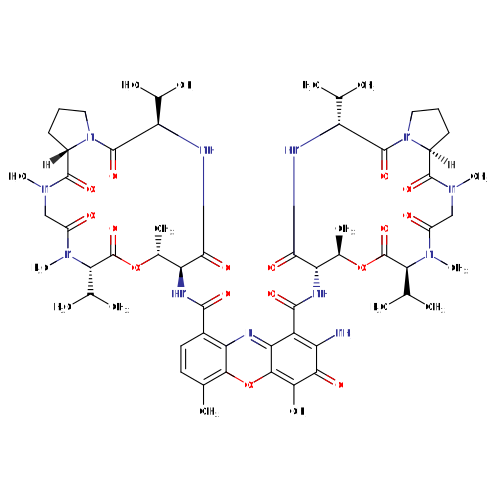
A compound composed of a two cyclic peptides attached to a phenoxazine that is derived from streptomyces parvullus. It binds to DNA and inhibits RNA synthesis (transcription), with chain elongation more sensitive than initiation, termination, or release. As a result of impaired mRNA production, protein synthesis also declines after dactinomycin therapy. (From AMA Drug Evaluations Annual, 1993, p2015)
- Type
- Small Molecule
- Groups
- Approved, Investigational
- Structure
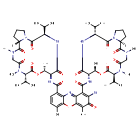
Structure for Dactinomycin (DB00970)
- Weight
- Average: 1255.417
Monoisotopic: 1254.628474764 - Chemical Formula
- C62H86N12O16
- Synonyms
- 2-amino-N,N'-bis(hexadecahydro-2,5,9-trimethyl-6,13-bis(1-methylethyl)-1,4,7,11,14-pentaoxo-1H-pyrrolo(2,1-i)(1,4,7,10,13)oxatetra-azacyclohexadecin-10-yl)-4,6-dimethyl-3-oxo-3H-phenoxazine-1,9-dicarboxamide
- 3H-PHENOXAZINE-1,9-DICARBOXAMIDE, 2-AMINO-N,N'-BIS(HEXADECAHYDRO-6,13-DIISOPROPYL-2,5,9-TRIMETHYL-1,4,7,11,14-PENTAOXO-1H-PYRROLO(2,1-I)(1,4,7,10,13)OXATETRAAZACYCLOHEXADECIN-10-YL)-4,6-DIMETHYL-3-OXO-
- ActD
- Actinomycin C1
- Actinomycin D
- ACTINOMYCIN I1
- Actinomycin IV
- ACTINOMYCIN X1
- ACTINOMYCIN-D
- ANA-conjugated dactinomycin nanoemulsion
- Dactinomicina
- Dactinomycin
- Dactinomycine
- Dactinomycinum
- DILACTONE ACTINOMYCIN D ACID
- Meractinomycin
- N,N'-((2-AMINO-4,6-DIMETHYL-3-OXO-3H-PHENOXAZINE-1,9-DIYL)-BIS(CARBONYLIMINO(2-HYDROXYPROPYLIDENE)CARBONYLIMINOISOBUTYLIDENECARBONYL-1,2-PYRROLIDINEDIYLCARBONYL(METHYLIMINO)METHYLENECARBONYL))BIS(N-METHYL-L-VALINE) DILACTONE
- ONCOSTATIN K
- External IDs
- GNF-PF-2290
- NCI-C04682
- NSC-3053

Pharmacology
- Indication
For the treatment of Wilms' tumor, childhood rhabdomyosarcoma, Ewing's sarcoma and metastatic, nonseminomatous testicular cancer as part of a combination chemotherapy and/or multi-modality treatment regimen
 Reduce drug development failure ratesBuild, train, & validate machine-learning modelswith evidence-based and structured datasets.Build, train, & validate predictive machine-learning models with structured datasets.
- Associated Conditions
Indication Type Indication Combined Product Details Approval Level Age Group Patient Characteristics Dose Form Used in combination to treat Ewing's sarcoma •••••••••••• Used in combination to treat Gestational trophoblastic tumor •••••••••••• Used in combination to treat Osteosarcoma ••• ••••• Used in combination to treat Ovarian cancer ••• ••••• Used in combination to treat Rhabdomyosarcoma •••••••••••• - Contraindications & Blackbox Warnings
 Prevent Adverse Drug Events TodayTap into our Clinical API for life-saving information on contraindications & blackbox warnings, population restrictions, harmful risks, & more.Avoid life-threatening adverse drug events with our Clinical API
- Pharmacodynamics
Generally, the actinomycins exert an inhibitory effect on gram-positive and gram-negative bacteria and on some fungi. However, the toxic properties of the actinomycins (including dactinomycin) in relation to antibacterial activity are such as to preclude their use as antibiotics in the treatment of infectious diseases. Because the actinomycins are cytotoxic, they have an antineoplastic effect which has been demonstrated in experimental animals with various types of tumor implant. This cytotoxic action is the basis for their use in the treatment of certain types of cancer. Dactinomycin is believed to produce its cytotoxic effects by binding DNA and inhibiting RNA synthesis.
- Mechanism of action
Good evidence exists that this drug bind strongly, but reversibly, to DNA, interfering with synthesis of RNA (prevention of RNA polymerase elongation) and, consequently, with protein synthesis.
Target Actions Organism ADNA adductHumans UDNA topoisomerase 2 inhibitorHumans UDNA topoisomerase 1 inhibitorHumans - Absorption
poorly absorbed from gastrointestinal tract
- Volume of distribution
Not Available
- Protein binding
5%
- Metabolism
hepatic
- Route of elimination
Not Available
- Half-life
36 hours
- Clearance
Not Available
- Adverse Effects
 Improve decision support & research outcomesWith structured adverse effects data, including: blackbox warnings, adverse reactions, warning & precautions, & incidence rates. View sample adverse effects data in our new Data Library!Improve decision support & research outcomes with our structured adverse effects data.
- Toxicity
hepatoxicity
- Pathways
- Not Available
- Pharmacogenomic Effects/ADRs
- Not Available
Interactions
- Drug Interactions
- This information should not be interpreted without the help of a healthcare provider. If you believe you are experiencing an interaction, contact a healthcare provider immediately. The absence of an interaction does not necessarily mean no interactions exist.
Drug Interaction Integrate drug-drug
interactions in your softwareAbatacept The risk or severity of adverse effects can be increased when Dactinomycin is combined with Abatacept. Abciximab The risk or severity of bleeding can be increased when Abciximab is combined with Dactinomycin. Abemaciclib Abemaciclib may decrease the excretion rate of Dactinomycin which could result in a higher serum level. Abrocitinib The serum concentration of Dactinomycin can be increased when it is combined with Abrocitinib. Acenocoumarol The risk or severity of bleeding can be increased when Acenocoumarol is combined with Dactinomycin. - Food Interactions
- No interactions found.
Products
 Drug product information from 10+ global regionsOur datasets provide approved product information including:dosage, form, labeller, route of administration, and marketing period.Access drug product information from over 10 global regions.
- International/Other Brands
- Lyovac Cosmegen (Lundbeck)
- Brand Name Prescription Products
Name Dosage Strength Route Labeller Marketing Start Marketing End Region Image Cosmegen Powder, for solution 0.5 mg / vial Intravenous Recordati Rare Diseases Canada Inc 1963-12-31 Not applicable Canada 
Cosmegen Injection, powder, lyophilized, for solution 0.5 mg/1mL Intravenous Lundbeck Inc. 1964-12-10 2013-04-23 US 
Cosmegen Injection, powder, lyophilized, for solution 0.5 mg/1mL Intravenous Merck & Co., Inc. 2007-01-01 2008-08-04 US Cosmegen Injection, powder, lyophilized, for solution 0.5 mg/1mL Intravenous RECORDATI RARE DISEASES, INC. 1964-12-10 2024-11-30 US - Generic Prescription Products
Name Dosage Strength Route Labeller Marketing Start Marketing End Region Image Dactinomycin Injection, powder, lyophilized, for solution 0.5 mg/1mL Intravenous Meitheal Pharmaceuticals Inc. 2020-11-13 Not applicable US Dactinomycin Injection, powder, lyophilized, for solution 0.5 mg/1mL Intravenous Prasco Laboratories 2017-12-04 2024-11-30 US Dactinomycin Injection, powder, lyophilized, for solution 0.5 mg/1mL Intravenous Mylan Institutional LLC 2019-06-20 Not applicable US Dactinomycin Injection, powder, lyophilized, for solution 0.5 mg/1mL Intravenous Eugia US LLC 2021-03-15 Not applicable US Dactinomycin Injection, powder, lyophilized, for solution 0.5 mg/1 Intravenous Hisun Pharmaceuticals Usa, Inc. 2021-01-01 Not applicable US
Categories
- ATC Codes
- L01DA01 — Dactinomycin
- Drug Categories
- Actinomycin
- Actinomycines
- Amino Acids, Peptides, and Proteins
- Anti-Infective Agents
- Antibiotics, Antineoplastic
- Antineoplastic Agents
- Antineoplastic and Immunomodulating Agents
- BCRP/ABCG2 Substrates
- Cytotoxic Antibiotics and Related Substances
- Enzyme Inhibitors
- Heterocyclic Compounds, Fused-Ring
- Immunosuppressive Agents
- Myelosuppressive Agents
- Narrow Therapeutic Index Drugs
- Nucleic Acid Synthesis Inhibitors
- P-glycoprotein inhibitors
- P-glycoprotein substrates
- P-glycoprotein substrates with a Narrow Therapeutic Index
- Peptides
- Peptides, Cyclic
- Protein Synthesis Inhibitors
- Chemical TaxonomyProvided by Classyfire
- Description
- This compound belongs to the class of organic compounds known as cyclic depsipeptides. These are natural or synthetic compounds having sequences of amino and hydroxy carboxylic acid residues (usually α-amino and α-hydroxy acids) connected in a ring. The residues are commonly but not necessarily regularly alternating.
- Kingdom
- Organic compounds
- Super Class
- Organic acids and derivatives
- Class
- Peptidomimetics
- Sub Class
- Depsipeptides
- Direct Parent
- Cyclic depsipeptides
- Alternative Parents
- Macrolide lactams / Phenoxazines / Macrolactams / Alpha amino acid esters / N-acyl-alpha amino acids and derivatives / Benzenoids / Dicarboxylic acids and derivatives / Pyrrolidines / Heteroaromatic compounds / Tertiary carboxylic acid amides show 12 more
- Substituents
- Alpha-amino acid ester / Alpha-amino acid or derivatives / Amine / Amino acid or derivatives / Aromatic heteropolycyclic compound / Azacycle / Benzenoid / Carbonyl group / Carboxamide group / Carboxylic acid derivative show 25 more
- Molecular Framework
- Aromatic heteropolycyclic compounds
- External Descriptors
- actinomycin (CHEBI:27666)
- Affected organisms
- Humans and other mammals
Chemical Identifiers
- UNII
- 1CC1JFE158
- CAS number
- 50-76-0
- InChI Key
- RJURFGZVJUQBHK-IIXSONLDSA-N
- InChI
- InChI=1S/C62H86N12O16/c1-27(2)42-59(84)73-23-17-19-36(73)57(82)69(13)25-38(75)71(15)48(29(5)6)61(86)88-33(11)44(55(80)65-42)67-53(78)35-22-21-31(9)51-46(35)64-47-40(41(63)50(77)32(10)52(47)90-51)54(79)68-45-34(12)89-62(87)49(30(7)8)72(16)39(76)26-70(14)58(83)37-20-18-24-74(37)60(85)43(28(3)4)66-56(45)81/h21-22,27-30,33-34,36-37,42-45,48-49H,17-20,23-26,63H2,1-16H3,(H,65,80)(H,66,81)(H,67,78)(H,68,79)/t33-,34-,36+,37+,42-,43-,44+,45+,48+,49+/m1/s1
- IUPAC Name
- N1,N9-bis[(6S,9R,10S,13R,18aS)-2,5,9-trimethyl-1,4,7,11,14-pentaoxo-6,13-bis(propan-2-yl)-hexadecahydro-1H-pyrrolo[2,1-i]1-oxa-4,7,10,13-tetraazacyclohexadecan-10-yl]-2-amino-4,6-dimethyl-3-oxo-3H-phenoxazine-1,9-dicarboxamide
- SMILES
- [H][C@@]12CCCN1C(=O)[C@H](NC(=O)[C@@H](NC(=O)C1=C3N=C4C(OC3=C(C)C=C1)=C(C)C(=O)C(N)=C4C(=O)N[C@H]1[C@@H](C)OC(=O)[C@H](C(C)C)N(C)C(=O)CN(C)C(=O)[C@]3([H])CCCN3C(=O)[C@H](NC1=O)C(C)C)[C@@H](C)OC(=O)[C@H](C(C)C)N(C)C(=O)CN(C)C2=O)C(C)C
References
- Synthesis Reference
Waksman, S.A. and Woodruff, H.B.; US. Patent 2,378,876; June 19,1945; assigned to Merck & Co., Inc.
- General References
- Sobell HM: Actinomycin and DNA transcription. Proc Natl Acad Sci U S A. 1985 Aug;82(16):5328-31. [Article]
- Turan T, Karacay O, Tulunay G, Boran N, Koc S, Bozok S, Kose MF: Results with EMA/CO (etoposide, methotrexate, actinomycin D, cyclophosphamide, vincristine) chemotherapy in gestational trophoblastic neoplasia. Int J Gynecol Cancer. 2006 May-Jun;16(3):1432-8. [Article]
- Abd El-Aal HH, Habib EE, Mishrif MM: Wilms' tumor: the experience of the pediatric unit of Kasr El-Aini center of radiation oncology and nuclear medicine (NEMROCK). J Egypt Natl Canc Inst. 2005 Dec;17(4):308-14. [Article]
- Khatua S, Nair CN, Ghosh K: Immune-mediated thrombocytopenia following dactinomycin therapy in a child with alveolar rhabdomyosarcoma: the unresolved issues. J Pediatr Hematol Oncol. 2004 Nov;26(11):777-9. [Article]
- External Links
- Human Metabolome Database
- HMDB0015105
- KEGG Drug
- D00214
- KEGG Compound
- C06770
- PubChem Compound
- 457193
- PubChem Substance
- 46509192
- ChemSpider
- 10482167
- BindingDB
- 43866
- 3100
- ChEBI
- 27666
- ChEMBL
- CHEMBL1554
- Therapeutic Targets Database
- DNC000380
- PharmGKB
- PA151917012
- RxList
- RxList Drug Page
- Drugs.com
- Drugs.com Drug Page
- Wikipedia
- Dactinomycin
Clinical Trials
- Clinical Trials
Phase Status Purpose Conditions Count 4 Unknown Status Treatment Cancer 1 3 Active Not Recruiting Treatment Adult Kidney Wilms Tumor / Beckwith-Wiedemann Syndrome / Childhood Kidney Wilms Tumor / Diffuse Hyperplastic Perilobar Nephroblastomatosis / Rhabdoid Tumors of the Kidney (RTK) / Stage I Renal Wilms Tumor / Stage II Kidney Wilms Tumor / Stage III Kidney Wilms Tumor / Stage IV Kidney Wilms Tumor / Stage V Renal Wilms Tumor 1 3 Active Not Recruiting Treatment Botryoid-Type Embryonal Rhabdomyosarcoma / Embryonal Rhabdomyosarcoma / Rhabdomyosarcoma, Alveolar / Rhabdomyosarcomas / Sclerosing Rhabdomyosarcoma / Spindle Cell Rhabdomyosarcoma 1 3 Active Not Recruiting Treatment Stage I Renal Wilms Tumor / Stage II Kidney Wilms Tumor / Stage III Kidney Wilms Tumor 1 3 Active Not Recruiting Treatment Stage III Kidney Wilms Tumor / Stage IV Kidney Wilms Tumor 1
Pharmacoeconomics
- Manufacturers
- Lundbeck inc
- Bedford laboratories div ben venue laboratories inc
- Packagers
- Lundbeck Inc.
- Merck & Co.
- Dosage Forms
Form Route Strength Injection, powder, lyophilized, for solution Parenteral 0.5 mg Injection, powder, for solution Parenteral 0.5 MG Injection, powder, lyophilized, for solution Intravenous 0.5 mg/1mL Powder, for solution Intravenous 0.5 mg / vial Injection, powder, lyophilized, for solution Intravenous 0.5 mg Injection, powder, for solution Intravenous 500 ug/1 Injection, powder, lyophilized, for solution Intravenous 0.5 mg/1 Injection, powder, for solution Intravenous 0.5 mg Injection, powder, lyophilized, for solution 0.5 mg/1vial - Prices
Unit description Cost Unit Cosmegen 0.5 mg vial 684.36USD vial DrugBank does not sell nor buy drugs. Pricing information is supplied for informational purposes only.- Patents
- Not Available
Properties
- State
- Solid
- Experimental Properties
Property Value Source melting point (°C) 241.5-243 °C Not Available water solubility Soluble at 10 °C Not Available logP 1.6 Not Available - Predicted Properties
Property Value Source Water Solubility 0.02 mg/mL ALOGPS logP 2.76 ALOGPS logP -0.097 Chemaxon logS -4.8 ALOGPS pKa (Strongest Acidic) 10.52 Chemaxon pKa (Strongest Basic) -1.1 Chemaxon Physiological Charge 0 Chemaxon Hydrogen Acceptor Count 16 Chemaxon Hydrogen Donor Count 5 Chemaxon Polar Surface Area 355.54 Å2 Chemaxon Rotatable Bond Count 8 Chemaxon Refractivity 326.17 m3·mol-1 Chemaxon Polarizability 129.24 Å3 Chemaxon Number of Rings 7 Chemaxon Bioavailability 0 Chemaxon Rule of Five No Chemaxon Ghose Filter No Chemaxon Veber's Rule No Chemaxon MDDR-like Rule Yes Chemaxon - Predicted ADMET Features
Property Value Probability Human Intestinal Absorption + 0.7619 Blood Brain Barrier - 0.9659 Caco-2 permeable - 0.6568 P-glycoprotein substrate Substrate 0.8368 P-glycoprotein inhibitor I Non-inhibitor 0.6482 P-glycoprotein inhibitor II Non-inhibitor 0.8638 Renal organic cation transporter Non-inhibitor 0.8178 CYP450 2C9 substrate Non-substrate 0.8589 CYP450 2D6 substrate Non-substrate 0.8535 CYP450 3A4 substrate Substrate 0.759 CYP450 1A2 substrate Non-inhibitor 0.9045 CYP450 2C9 inhibitor Non-inhibitor 0.9071 CYP450 2D6 inhibitor Non-inhibitor 0.923 CYP450 2C19 inhibitor Non-inhibitor 0.9025 CYP450 3A4 inhibitor Non-inhibitor 0.8614 CYP450 inhibitory promiscuity Low CYP Inhibitory Promiscuity 0.8681 Ames test Non AMES toxic 0.9133 Carcinogenicity Non-carcinogens 0.9019 Biodegradation Not ready biodegradable 0.983 Rat acute toxicity 4.3767 LD50, mol/kg Not applicable hERG inhibition (predictor I) Weak inhibitor 0.9208 hERG inhibition (predictor II) Non-inhibitor 0.5171
Spectra
- Mass Spec (NIST)
- Not Available
- Spectra
- Chromatographic Properties
Collision Cross Sections (CCS)
Adduct CCS Value (Å2) Source type Source [M-H]- 364.01746 predictedDeepCCS 1.0 (2019) [M+H]+ 365.74118 predictedDeepCCS 1.0 (2019) [M+Na]+ 372.08725 predictedDeepCCS 1.0 (2019)
Targets

References
- Overington JP, Al-Lazikani B, Hopkins AL: How many drug targets are there? Nat Rev Drug Discov. 2006 Dec;5(12):993-6. [Article]
- Imming P, Sinning C, Meyer A: Drugs, their targets and the nature and number of drug targets. Nat Rev Drug Discov. 2006 Oct;5(10):821-34. [Article]
- Yang XL, Wang AH: Structural studies of atom-specific anticancer drugs acting on DNA. Pharmacol Ther. 1999 Sep;83(3):181-215. [Article]
- Sobell HM: Actinomycin and DNA transcription. Proc Natl Acad Sci U S A. 1985 Aug;82(16):5328-31. [Article]
- Hudson JS, Brooks SC, Graves DE: Interactions of actinomycin D with human telomeric G-quadruplex DNA. Biochemistry. 2009 Jun 2;48(21):4440-7. doi: 10.1021/bi900203z. [Article]
- Kind
- Protein group
- Organism
- Humans
- Pharmacological action
- Unknown
- Actions
- Inhibitor
- General Function
- Ubiquitin binding
- Specific Function
- Control of topological states of DNA by transient breakage and subsequent rejoining of DNA strands. Topoisomerase II makes double-strand breaks. Essential during mitosis and meiosis for proper segr...
Components:
References
- Felix CA, Hosler MR, Winick NJ, Masterson M, Wilson AE, Lange BJ: ALL-1 gene rearrangements in DNA topoisomerase II inhibitor-related leukemia in children. Blood. 1995 Jun 1;85(11):3250-6. [Article]
- Kind
- Protein
- Organism
- Humans
- Pharmacological action
- Unknown
- Actions
- Inhibitor
- General Function
- Poly(a) rna binding
- Specific Function
- Releases the supercoiling and torsional tension of DNA introduced during the DNA replication and transcription by transiently cleaving and rejoining one strand of the DNA duplex. Introduces a singl...
- Gene Name
- TOP1
- Uniprot ID
- P11387
- Uniprot Name
- DNA topoisomerase 1
- Molecular Weight
- 90725.19 Da
References
- Alkorta I, Park C, Kong J, Garbisu C, Alberti M, Pon N, Hearst JE: Rhodobacter capsulatus DNA topoisomerase I purification and characterization. Arch Biochem Biophys. 1999 Feb 1;362(1):123-30. doi: 10.1006/abbi.1998.1023. [Article]
Transporters
- Kind
- Protein
- Organism
- Humans
- Pharmacological action
- Unknown
- Actions
- Inhibitor
- General Function
- Symporter activity
- Specific Function
- Sodium-ion dependent, high affinity carnitine transporter. Involved in the active cellular uptake of carnitine. Transports one sodium ion with one molecule of carnitine. Also transports organic cat...
- Gene Name
- SLC22A5
- Uniprot ID
- O76082
- Uniprot Name
- Solute carrier family 22 member 5
- Molecular Weight
- 62751.08 Da
References
- Ohashi R, Tamai I, Yabuuchi H, Nezu JI, Oku A, Sai Y, Shimane M, Tsuji A: Na(+)-dependent carnitine transport by organic cation transporter (OCTN2): its pharmacological and toxicological relevance. J Pharmacol Exp Ther. 1999 Nov;291(2):778-84. [Article]
- Kind
- Protein
- Organism
- Humans
- Pharmacological action
- Unknown
- Actions
- SubstrateInhibitor
- General Function
- Xenobiotic-transporting atpase activity
- Specific Function
- Energy-dependent efflux pump responsible for decreased drug accumulation in multidrug-resistant cells.
- Gene Name
- ABCB1
- Uniprot ID
- P08183
- Uniprot Name
- Multidrug resistance protein 1
- Molecular Weight
- 141477.255 Da
References
- Polli JW, Wring SA, Humphreys JE, Huang L, Morgan JB, Webster LO, Serabjit-Singh CS: Rational use of in vitro P-glycoprotein assays in drug discovery. J Pharmacol Exp Ther. 2001 Nov;299(2):620-8. [Article]
- Nagy H, Goda K, Fenyvesi F, Bacso Z, Szilasi M, Kappelmayer J, Lustyik G, Cianfriglia M, Szabo G Jr: Distinct groups of multidrug resistance modulating agents are distinguished by competition of P-glycoprotein-specific antibodies. Biochem Biophys Res Commun. 2004 Mar 19;315(4):942-9. [Article]
- Ambudkar SV, Lelong IH, Zhang J, Cardarelli CO, Gottesman MM, Pastan I: Partial purification and reconstitution of the human multidrug-resistance pump: characterization of the drug-stimulatable ATP hydrolysis. Proc Natl Acad Sci U S A. 1992 Sep 15;89(18):8472-6. [Article]
- Kind
- Protein
- Organism
- Humans
- Pharmacological action
- Unknown
- Actions
- Substrate
- General Function
- Transporter activity
- Specific Function
- Isoform 1: May participate directly in the active transport of drugs into subcellular organelles or influence drug distribution indirectly. Transports glutathione conjugates as leukotriene-c4 (LTC4...
- Gene Name
- ABCC6
- Uniprot ID
- O95255
- Uniprot Name
- Multidrug resistance-associated protein 6
- Molecular Weight
- 164904.81 Da
References
- Belinsky MG, Chen ZS, Shchaveleva I, Zeng H, Kruh GD: Characterization of the drug resistance and transport properties of multidrug resistance protein 6 (MRP6, ABCC6). Cancer Res. 2002 Nov 1;62(21):6172-7. [Article]
- Kind
- Protein
- Organism
- Humans
- Pharmacological action
- Unknown
- Actions
- Substrate
- General Function
- Transporter activity
- Specific Function
- Mediates export of organic anions and drugs from the cytoplasm. Mediates ATP-dependent transport of glutathione and glutathione conjugates, leukotriene C4, estradiol-17-beta-o-glucuronide, methotre...
- Gene Name
- ABCC1
- Uniprot ID
- P33527
- Uniprot Name
- Multidrug resistance-associated protein 1
- Molecular Weight
- 171589.5 Da
References
- Breuninger LM, Paul S, Gaughan K, Miki T, Chan A, Aaronson SA, Kruh GD: Expression of multidrug resistance-associated protein in NIH/3T3 cells confers multidrug resistance associated with increased drug efflux and altered intracellular drug distribution. Cancer Res. 1995 Nov 15;55(22):5342-7. [Article]
- Kind
- Protein
- Organism
- Humans
- Pharmacological action
- Unknown
- Actions
- Substrate
- General Function
- Xenobiotic-transporting atpase activity
- Specific Function
- High-capacity urate exporter functioning in both renal and extrarenal urate excretion. Plays a role in porphyrin homeostasis as it is able to mediates the export of protoporhyrin IX (PPIX) both fro...
- Gene Name
- ABCG2
- Uniprot ID
- Q9UNQ0
- Uniprot Name
- ATP-binding cassette sub-family G member 2
- Molecular Weight
- 72313.47 Da
References
- Wang X, Furukawa T, Nitanda T, Okamoto M, Sugimoto Y, Akiyama S, Baba M: Breast cancer resistance protein (BCRP/ABCG2) induces cellular resistance to HIV-1 nucleoside reverse transcriptase inhibitors. Mol Pharmacol. 2003 Jan;63(1):65-72. [Article]

Drug created at June 13, 2005 13:24 / Updated at April 23, 2024 11:38