Identification
- Summary
Irbesartan is an angiotensin receptor blocker used to treat hypertension, delay progression of diabetic nephropathy, and treat congestive heart failure.
- Brand Names
- Avalide, Avapro, Ifirmacombi, Karvea, Karvezide
- Generic Name
- Irbesartan
- DrugBank Accession Number
- DB01029
- Background
Irbesartan is an angiotensin receptor blocker (ARB) indicated to treat hypertension or diabetic nephropathy.7,8 It can also be used as part of a combination product with hydrochlorothiazide for patients not well controlled or not expected to be well controlled on monotherapy.8 Unlike angiotensin converting enzyme inhibitors, ARBs are not associated with a dry cough.7,8
Irbesartan was granted FDA approval on 30 September 1997.7,8
- Type
- Small Molecule
- Groups
- Approved, Investigational
- Structure
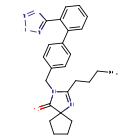
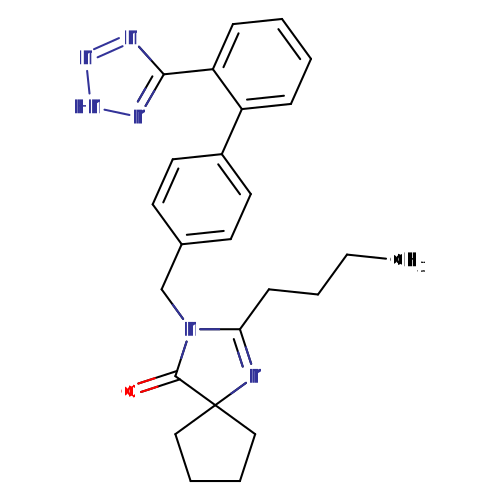
Structure for Irbesartan (DB01029)
- Weight
- Average: 428.5294
Monoisotopic: 428.232459548 - Chemical Formula
- C25H28N6O
- Synonyms
- 2-butyl-3-{[2'-(1H-tetrazol-5-yl)biphenyl-4-yl]methyl}-1,3-diazaspiro[4.4]non-1-en-4-one
- Irbesartan
- External IDs
- BMS 186295
- BMS-186295
- SR 47436
- SR-47436

Pharmacology
- Indication
Irbesartan is indicated to treat hypertension and diabetic nephropathy in hypertensive patients with type 2 diabetes, elevated serum creatinine, and proteinuria.7 A combination product with hydrochlorothiazide is indicated for hypertension in patients with uncontrolled hypertension with monotherapy or first line in patients not expected to be well controlled with monotherapy.8
 Reduce drug development failure ratesBuild, train, & validate machine-learning modelswith evidence-based and structured datasets.Build, train, & validate predictive machine-learning models with structured datasets.
- Associated Conditions
Indication Type Indication Combined Product Details Approval Level Age Group Patient Characteristics Dose Form Management of Diabetic nephropathy •••••••••••• •••••• Management of Hypertension •••••••••••• •••••• Used in combination to manage Hypertension Combination Product in combination with: Hydrochlorothiazide (DB00999) •••••••••••• ••••••••• •••••• •••••••• •••••••••••••••• ••••• •••••• •••••••• •••••• Used in combination to manage Hypertension Combination Product in combination with: Hydrochlorothiazide (DB00999) •••••••••••• ••• •••••••••• •••••••••• •••• ••••••••••• •••••• - Contraindications & Blackbox Warnings
 Prevent Adverse Drug Events TodayTap into our Clinical API for life-saving information on contraindications & blackbox warnings, population restrictions, harmful risks, & more.Avoid life-threatening adverse drug events with our Clinical API
- Pharmacodynamics
Irbesartan is an angiotensin receptor blocker used to treat hypertension and diabetic nephropathy.7,8 It has a long duration of action as it is usually taken once daily and a wide therapeutic index as doses may be as low as 150mg daily but doses of 900mg/day were well tolerated in healthy human subjects.7,8,5
- Mechanism of action
Irbesartan prevents angiotensin II binding to the AT1 receptor in tissues like vascular smooth muscle and the adrenal gland.7,8 Irbesartan and its active metabolite bind the AT1 receptor with 8500 times more affinity than they bind to the AT2 receptor.7,8 Irbesartan's prevention of angiotensin II binding causes vascular smooth muscle relaxation and prevents the secretion of aldosterone, lowering blood pressure.7,8
Angiotensin II would otherwise bind to the AT1 receptor, inducing vasoconstriction and aldosterone secretion, raising blood pressure.7,8
Target Actions Organism AType-1 angiotensin II receptor antagonistHumans UTranscription factor AP-1 other/unknownHumans - Absorption
Irbesartan is 60-80% bioavailable with a Tmax of 1.5-2hours.7,8 Taking irbesartan with food does not affect the bioavailability.7,8
In one study, healthy subjects were given single or multiple oral doses of 150mg, 300mg, 600mg, and 900mg of irbesartan.5 A single 150mg dose resulted in an AUC of 9.7±3.0µg\•hr/mL, a Tmax of 1.5 hours, a half life of 16±7 hours, and a Cmax of 1.9±0.4µg/mL.5 A single 300mg dose resulted in an AUC of 20.0±5.2µg\•hr/mL, a Tmax of 1.5 hours, a half life of 14±7 hours, and a Cmax of 2.9±0.9µg/mL.5 A single 600mg dose resulted in an AUC of 32.6±11.9µg\•hr/mL, a Tmax of 1.5 hours, a half life of 14±8 hours, and a Cmax of 4.9±1.2µg/mL.5 A single 900mg dose resulted in an AUC of 44.8±20.0µg\•hr/mL, a Tmax of 1.5 hours, a half life of 17±7 hours, and a Cmax of 5.3±1.9µg/mL.5
Multiple 150mg doses resulted in an AUC of 9.3±3.0µg\•hr/mL, a Tmax of 1.5 hours, a half life of 11±4 hours, and a Cmax of 2.04±0.4µg/mL.5 Multiple 300mg doses resulted in an AUC of 19.8±5.8µg\•hr/mL, a Tmax of 2.0 hours, a half life of 11±5 hours, and a Cmax of 3.3±0.8µg/mL.5 Multiple 600mg doses resulted in an AUC of 31.9±9.7µg\•hr/mL, a Tmax of 1.5 hours, a half life of 15±7 hours, and a Cmax of 4.4±0.7µg/mL.5 Multiple 900mg doses resulted in an AUC of 34.2±9.3µg\•hr/mL, a Tmax of 1.8 hours, a half life of 14±6 hours, and a Cmax of 5.6±2.1µg/mL.5
- Volume of distribution
- Protein binding
Irbesartan is 90% protein bound in plasma, mainly to albumin and α1-acid glycoprotein.7,8
- Metabolism
Irbesaran is largely metabolized by glucuronidation and oxidation in the liver.7,8 The majority of metabolism occurs through the action of CYP2C9 with a negligible contribution from CYP3A4.7,8 Some hydroxylation also occurs in irbesartan metabolism.3
Irbesartan can be glucuronidated by UGT1A3 to the M8 metabolite, oxidized to the M3 metabolite, or hydroxylated by CYP2C9 to one of the M4, M5, or M7 metabolites.4,3 The M4, M5, and M7 metabolites are all hydroxylated to become the M1 metabolite, which is then oxidized to the M2 metabolite.4,3 The M4 metabolite can also be oxidized to the M6 metabolite before hydroxylation to the M2 metabolite.4,3 Finally, the minor metabolite SR 49498 is generated from irbesartan by an unknown mechanism.4,3
Hover over products below to view reaction partners
- Route of elimination
20% of a radiolabelled oral dose of irbesartan is recovered in urine, and the rest is recovered in the feces.10 <2% of the dose is recovered in urine as the unchanged drug.10
- Half-life
The terminal elimination half life of irbesartan is 11-15 hours.7,8
- Clearance
Total plasma clearance of irbesartan is 157-176mL/min while renal clearance is 3.0-3.5mL/min.7,8
- Adverse Effects
 Improve decision support & research outcomesWith structured adverse effects data, including: blackbox warnings, adverse reactions, warning & precautions, & incidence rates. View sample adverse effects data in our new Data Library!Improve decision support & research outcomes with our structured adverse effects data.
- Toxicity
The oral TDLO in humans is 30mg/kg/6W.9
Symptoms of overdose include hypotension and tachycardia or bradycardia.7,8 Terlipressin may be given to treat hypotension and tachycardia if conventional vasopressors fail to control blood pressure.6
- Pathways
Pathway Category Irbesartan Action Pathway Drug action - Pharmacogenomic Effects/ADRs
- Not Available
Interactions
- Drug Interactions
- This information should not be interpreted without the help of a healthcare provider. If you believe you are experiencing an interaction, contact a healthcare provider immediately. The absence of an interaction does not necessarily mean no interactions exist.
Drug Interaction Integrate drug-drug
interactions in your softwareAbaloparatide The risk or severity of adverse effects can be increased when Irbesartan is combined with Abaloparatide. Abatacept The metabolism of Irbesartan can be increased when combined with Abatacept. Abemaciclib The serum concentration of Abemaciclib can be increased when it is combined with Irbesartan. Abiraterone The metabolism of Irbesartan can be decreased when combined with Abiraterone. Abrocitinib The metabolism of Abrocitinib can be decreased when combined with Irbesartan. - Food Interactions
- Take with or without food. The absorption is unaffected by food.
Products
 Drug product information from 10+ global regionsOur datasets provide approved product information including:dosage, form, labeller, route of administration, and marketing period.Access drug product information from over 10 global regions.
- Product Ingredients
Ingredient UNII CAS InChI Key Irbesartan hydrochloride 3OGC31WUMZ 329055-23-4 ZUYFSRQJPNUOQU-UHFFFAOYSA-N - Product Images
- Brand Name Prescription Products
Name Dosage Strength Route Labeller Marketing Start Marketing End Region Image Act Irbesartan Tablet 300 mg Oral Actavis Pharma Company 2011-03-21 2018-06-12 Canada 
Act Irbesartan Tablet 150 mg Oral Actavis Pharma Company 2011-03-21 2018-06-12 Canada Act Irbesartan Tablet 75 mg Oral Actavis Pharma Company 2011-03-21 2018-06-12 Canada Aprovel Tablet 300 mg Oral SANOFI WINTHROP INDUSTRIE 2016-09-08 Not applicable EU 
Aprovel Tablet, film coated 75 mg Oral SANOFI WINTHROP INDUSTRIE 2016-09-08 Not applicable EU - Generic Prescription Products
Name Dosage Strength Route Labeller Marketing Start Marketing End Region Image Ag-irbesartan Tablet 150 mg Oral Angita Pharma Inc. 2018-06-07 2022-09-02 Canada Ag-irbesartan Tablet 75 mg Oral Angita Pharma Inc. 2018-06-07 2022-09-02 Canada Ag-irbesartan Tablet 300 mg Oral Angita Pharma Inc. 2018-06-07 2022-09-02 Canada Apo-irbesartan Tablet 75 mg Oral Apotex Corporation 2012-09-25 Not applicable Canada Apo-irbesartan Tablet 300 mg Oral Apotex Corporation 2012-09-25 Not applicable Canada - Mixture Products
Name Ingredients Dosage Route Labeller Marketing Start Marketing End Region Image Act Irbesartan/hct Irbesartan (150 mg) + Hydrochlorothiazide (12.5 mg) Tablet Oral Actavis Pharma Company 2011-03-21 2018-06-12 Canada Act Irbesartan/hct Irbesartan (300 mg) + Hydrochlorothiazide (12.5 mg) Tablet Oral Actavis Pharma Company 2011-03-21 2018-06-12 Canada Act Irbesartan/hct Irbesartan (300 mg) + Hydrochlorothiazide (25 mg) Tablet Oral Actavis Pharma Company 2011-03-21 2018-06-12 Canada Ag-irbesartan Hctz Irbesartan (150 mg) + Hydrochlorothiazide (12.5 mg) Tablet Oral Angita Pharma Inc. 2018-09-06 2022-09-21 Canada Ag-irbesartan Hctz Irbesartan (300 mg) + Hydrochlorothiazide (12.5 mg) Tablet Oral Angita Pharma Inc. 2018-09-06 2022-09-21 Canada


Categories
- ATC Codes
- C09CA04 — Irbesartan
- C09CA — Angiotensin II receptor blockers (ARBs), plain
- C09C — ANGIOTENSIN II RECEPTOR BLOCKERS (ARBs), PLAIN
- C09 — AGENTS ACTING ON THE RENIN-ANGIOTENSIN SYSTEM
- C — CARDIOVASCULAR SYSTEM
- C09DB — Angiotensin II receptor blockers (ARBs) and calcium channel blockers
- C09D — ANGIOTENSIN II RECEPTOR BLOCKERS (ARBs), COMBINATIONS
- C09 — AGENTS ACTING ON THE RENIN-ANGIOTENSIN SYSTEM
- C — CARDIOVASCULAR SYSTEM
- C09DA — Angiotensin II receptor blockers (ARBs) and diuretics
- C09D — ANGIOTENSIN II RECEPTOR BLOCKERS (ARBs), COMBINATIONS
- C09 — AGENTS ACTING ON THE RENIN-ANGIOTENSIN SYSTEM
- C — CARDIOVASCULAR SYSTEM
- Drug Categories
- Agents Acting on the Renin-Angiotensin System
- Agents causing hyperkalemia
- Angiotensin 2 Receptor Blocker
- Angiotensin II receptor antagonists
- Angiotensin II receptor blockers (ARBs) and calcium channel blockers
- Angiotensin II receptor blockers (ARBs) and diuretics
- Angiotensin II receptor blockers (ARBs), plain
- Angiotensin II Type 2 Receptor Blockers
- Angiotensin Receptor Antagonists
- Antihypertensive Agents
- Antihypertensive Agents Indicated for Hypertension
- Benzene Derivatives
- Biphenyl Compounds
- Cardiovascular Agents
- Cytochrome P-450 CYP2C8 Inhibitors
- Cytochrome P-450 CYP2C8 Inhibitors (moderate)
- Cytochrome P-450 CYP2C8 Substrates
- Cytochrome P-450 CYP2C9 Substrates
- Cytochrome P-450 CYP3A Inhibitors
- Cytochrome P-450 CYP3A4 Inhibitors
- Cytochrome P-450 CYP3A4 Inhibitors (strength unknown)
- Cytochrome P-450 Enzyme Inhibitors
- Cytochrome P-450 Substrates
- Hypotensive Agents
- Spiro Compounds
- Tetrazoles
- UGT1A3 substrates
- Chemical TaxonomyProvided by Classyfire
- Description
- This compound belongs to the class of organic compounds known as biphenyls and derivatives. These are organic compounds containing to benzene rings linked together by a C-C bond.
- Kingdom
- Organic compounds
- Super Class
- Benzenoids
- Class
- Benzene and substituted derivatives
- Sub Class
- Biphenyls and derivatives
- Direct Parent
- Biphenyls and derivatives
- Alternative Parents
- Phenyltetrazoles and derivatives / Alpha amino acids and derivatives / Imidazolinones / Heteroaromatic compounds / Propargyl-type 1,3-dipolar organic compounds / Carboximidamides / Carboxamidines / Azacyclic compounds / Organopnictogen compounds / Organic oxides show 2 more
- Substituents
- 2-imidazoline / Alpha-amino acid or derivatives / Amidine / Aromatic heteropolycyclic compound / Azacycle / Azole / Biphenyl / Carbonyl group / Carboximidamide / Carboxylic acid amidine show 15 more
- Molecular Framework
- Aromatic heteropolycyclic compounds
- External Descriptors
- azaspiro compound, biphenylyltetrazole (CHEBI:5959)
- Affected organisms
- Humans and other mammals
Chemical Identifiers
- UNII
- J0E2756Z7N
- CAS number
- 138402-11-6
- InChI Key
- YOSHYTLCDANDAN-UHFFFAOYSA-N
- InChI
- InChI=1S/C25H28N6O/c1-2-3-10-22-26-25(15-6-7-16-25)24(32)31(22)17-18-11-13-19(14-12-18)20-8-4-5-9-21(20)23-27-29-30-28-23/h4-5,8-9,11-14H,2-3,6-7,10,15-17H2,1H3,(H,27,28,29,30)
- IUPAC Name
- 2-butyl-3-{[2'-(2H-1,2,3,4-tetrazol-5-yl)-[1,1'-biphenyl]-4-yl]methyl}-1,3-diazaspiro[4.4]non-1-en-4-one
- SMILES
- CCCCC1=NC2(CCCC2)C(=O)N1CC1=CC=C(C=C1)C1=CC=CC=C1C1=NNN=N1
References
- Synthesis Reference
Gennady Nisnevich, "Novel synthesis of irbesartan." U.S. Patent US20040192713, issued September 30, 2004.
US20040192713- General References
- Lewis EJ, Hunsicker LG, Clarke WR, Berl T, Pohl MA, Lewis JB, Ritz E, Atkins RC, Rohde R, Raz I: Renoprotective effect of the angiotensin-receptor antagonist irbesartan in patients with nephropathy due to type 2 diabetes. N Engl J Med. 2001 Sep 20;345(12):851-60. [Article]
- Croom KF, Curran MP, Goa KL, Perry CM: Irbesartan: a review of its use in hypertension and in the management of diabetic nephropathy. Drugs. 2004;64(9):999-1028. [Article]
- Chando TJ, Everett DW, Kahle AD, Starrett AM, Vachharajani N, Shyu WC, Kripalani KJ, Barbhaiya RH: Biotransformation of irbesartan in man. Drug Metab Dispos. 1998 May;26(5):408-17. [Article]
- Zhou SF, Zhou ZW, Yang LP, Cai JP: Substrates, inducers, inhibitors and structure-activity relationships of human Cytochrome P450 2C9 and implications in drug development. Curr Med Chem. 2009;16(27):3480-675. Epub 2009 Sep 1. [Article]
- Marino MR, Langenbacher K, Ford NF, Uderman HD: Pharmacokinetics and pharmacodynamics of irbesartan in healthy subjects. J Clin Pharmacol. 1998 Mar;38(3):246-55. [Article]
- McNamee JJ, Trainor D, Michalek P: Terlipressin for refractory hypotension following angiotensin-II receptor antagonist overdose. Anaesthesia. 2006 Apr;61(4):408-9. doi: 10.1111/j.1365-2044.2006.04599.x. [Article]
- FDA Approved Drug Products: Irbesartan Oral Tablets [Link]
- FDA Approved Drug Products: Irbesartan and Hydrochlorothiazide Oral Tablets [Link]
- Cayman Chemicals: Irbesartan MSDS [Link]
- Sandoz Canada: Irbesartan Product Monograph [Link]
- External Links
- Human Metabolome Database
- HMDB0015163
- KEGG Drug
- D00523
- KEGG Compound
- C07469
- PubChem Compound
- 3749
- PubChem Substance
- 46506575
- ChemSpider
- 3618
- BindingDB
- 50042235
- 83818
- ChEBI
- 5959
- ChEMBL
- CHEMBL1513
- ZINC
- ZINC000003872931
- Therapeutic Targets Database
- DAP000364
- PharmGKB
- PA450084
- Guide to Pharmacology
- GtP Drug Page
- RxList
- RxList Drug Page
- Drugs.com
- Drugs.com Drug Page
- Wikipedia
- Irbesartan
- FDA label
- Download (263 KB)
- MSDS
- Download (57.3 KB)
Clinical Trials
- Clinical Trials
Phase Status Purpose Conditions Count 4 Completed Not Available Type 2 Diabetes Mellitus 1 4 Completed Prevention Diabetic Nephropathy 1 4 Completed Prevention Myocardial Infarction 1 4 Completed Treatment Albuminuria 1 4 Completed Treatment Cardiovascular Disease (CVD) / Chronic Kidney Disease (CKD) / Hypertension, Essential Hypertension / Stroke 1
Pharmacoeconomics
- Manufacturers
- Not Available
- Packagers
- Advanced Pharmaceutical Services Inc.
- Amerisource Health Services Corp.
- AQ Pharmaceuticals Inc.
- A-S Medication Solutions LLC
- Bristol-Myers Squibb Co.
- Bryant Ranch Prepack
- Diversified Healthcare Services Inc.
- Heartland Repack Services LLC
- Murfreesboro Pharmaceutical Nursing Supply
- Physicians Total Care Inc.
- Prepackage Specialists
- Prepak Systems Inc.
- Promex Medical Inc.
- Resource Optimization and Innovation LLC
- Sanofi-Aventis Inc.
- Southwood Pharmaceuticals
- Dosage Forms
Form Route Strength Tablet, film coated Oral 75 MG Tablet Oral Tablet, film coated Oral Tablet Oral 150 mg/1 Tablet Oral 300 mg/1 Tablet Oral 75 mg Tablet Oral 75 mg/1 Tablet, film coated Oral 150.0 mg Tablet, film coated Oral 300.0 mg Tablet, film coated Oral 25.0 mg Tablet, film coated Oral 12.50 mg Tablet, film coated Oral 12.5 mg Tablet, film coated Oral 25 mg Tablet, film coated Oral 25.00 mg Tablet Oral 150.000 mg Tablet, coated Oral 30000000 mg Tablet Oral 150.000 mg Tablet, film coated Oral 150.00 mg Tablet, film coated Oral 300.00 mg Tablet, coated Oral Tablet, film coated Oral Tablet Oral 150 mg Tablet Oral 150 mg/150mg Tablet Oral 300 mg/300mg Tablet Oral 75 mg/75mg Tablet, coated Oral 150 mg/1 Tablet, coated Oral 300 mg/1 Tablet, coated Oral 75 mg/1 Tablet, film coated Oral 150 mg/1 Tablet, film coated Oral 300 mg/1 Tablet, film coated Oral 75 mg/1 Tablet, film coated Oral 300 mg Tablet, film coated Oral 225 MG Tablet, coated Oral 150 mg Tablet, coated Oral 300 mg Tablet, coated Oral 75 mg Tablet, film coated Oral 15000000 mg Tablet, film coated Oral 75.000 mg Tablet Oral 300 MG Tablet; tablet, film coated Oral Tablet Oral 300.000 mg Tablet Oral Tablet Oral 12.50 mg Tablet Oral 150.00 mg Tablet Oral 300.00 mg Tablet, film coated Oral 150 mg - Prices
Unit description Cost Unit Avalide 300-25 mg tablet 3.92USD tablet Avalide 300-12.5 mg tablet 3.63USD tablet Avalide 150-12.5 mg tablet 3.33USD tablet Avapro 300 mg tablet 2.64USD tablet Avapro 150 mg tablet 2.33USD tablet Avapro 75 mg tablet 2.21USD tablet DrugBank does not sell nor buy drugs. Pricing information is supplied for informational purposes only.- Patents
Patent Number Pediatric Extension Approved Expires (estimated) Region US5270317 No 1993-12-14 2011-09-30 US 
CA2177772 No 2007-04-10 2016-05-30 Canada CA2057913 No 1997-07-08 2011-03-20 Canada US6342247 Yes 2002-01-29 2015-12-07 US US5994348 Yes 1999-11-30 2015-12-07 US
Properties
- State
- Solid
- Experimental Properties
Property Value Source melting point (°C) 180-181 °C http://www.chemspider.com/Chemical-Structure.3618.html boiling point (°C) 648.6 http://www.chemspider.com/Chemical-Structure.3618.html water solubility <1mg/mL http://www.chemspider.com/Chemical-Structure.3618.html logP 4.5 http://www.chemspider.com/Chemical-Structure.3618.html - Predicted Properties
Property Value Source Water Solubility 0.00884 mg/mL ALOGPS logP 4.51 ALOGPS logP 5.39 Chemaxon logS -4.7 ALOGPS pKa (Strongest Acidic) 5.85 Chemaxon pKa (Strongest Basic) 4.12 Chemaxon Physiological Charge -1 Chemaxon Hydrogen Acceptor Count 5 Chemaxon Hydrogen Donor Count 1 Chemaxon Polar Surface Area 87.13 Å2 Chemaxon Rotatable Bond Count 7 Chemaxon Refractivity 136.72 m3·mol-1 Chemaxon Polarizability 47.61 Å3 Chemaxon Number of Rings 5 Chemaxon Bioavailability 1 Chemaxon Rule of Five No Chemaxon Ghose Filter No Chemaxon Veber's Rule No Chemaxon MDDR-like Rule Yes Chemaxon - Predicted ADMET Features
Property Value Probability Human Intestinal Absorption + 1.0 Blood Brain Barrier + 0.9271 Caco-2 permeable - 0.5679 P-glycoprotein substrate Substrate 0.7046 P-glycoprotein inhibitor I Inhibitor 0.639 P-glycoprotein inhibitor II Non-inhibitor 0.6458 Renal organic cation transporter Non-inhibitor 0.5091 CYP450 2C9 substrate Non-substrate 0.6401 CYP450 2D6 substrate Non-substrate 0.9115 CYP450 3A4 substrate Substrate 0.5749 CYP450 1A2 substrate Non-inhibitor 0.6782 CYP450 2C9 inhibitor Inhibitor 0.5928 CYP450 2D6 inhibitor Non-inhibitor 0.7584 CYP450 2C19 inhibitor Inhibitor 0.6619 CYP450 3A4 inhibitor Inhibitor 0.796 CYP450 inhibitory promiscuity High CYP Inhibitory Promiscuity 0.6192 Ames test Non AMES toxic 0.5238 Carcinogenicity Non-carcinogens 0.7492 Biodegradation Not ready biodegradable 1.0 Rat acute toxicity 2.7762 LD50, mol/kg Not applicable hERG inhibition (predictor I) Weak inhibitor 0.9171 hERG inhibition (predictor II) Non-inhibitor 0.7728
Spectra
- Mass Spec (NIST)
- Not Available
- Spectra
- Chromatographic Properties
Collision Cross Sections (CCS)
Adduct CCS Value (Å2) Source type Source [M-H]- 220.9081431 predictedDarkChem Lite v0.1.0 [M-H]- 220.8156431 predictedDarkChem Lite v0.1.0 [M-H]- 195.7096 predictedDeepCCS 1.0 (2019) [M+H]+ 223.6871431 predictedDarkChem Lite v0.1.0 [M+H]+ 223.4436431 predictedDarkChem Lite v0.1.0 [M+H]+ 198.0676 predictedDeepCCS 1.0 (2019) [M+Na]+ 223.1600431 predictedDarkChem Lite v0.1.0 [M+Na]+ 222.3520431 predictedDarkChem Lite v0.1.0 [M+Na]+ 204.84428 predictedDeepCCS 1.0 (2019)
Targets

- Kind
- Protein
- Organism
- Humans
- Pharmacological action
- Yes
- Actions
- Antagonist
- General Function
- Protein heterodimerization activity
- Specific Function
- Receptor for angiotensin II. Mediates its action by association with G proteins that activate a phosphatidylinositol-calcium second messenger system.
- Gene Name
- AGTR1
- Uniprot ID
- P30556
- Uniprot Name
- Type-1 angiotensin II receptor
- Molecular Weight
- 41060.53 Da
References
- Chen X, Ji ZL, Chen YZ: TTD: Therapeutic Target Database. Nucleic Acids Res. 2002 Jan 1;30(1):412-5. [Article]
- Voigt JP, Bramlage P, Fink H: Hypophagic effect of the angiotensin AT1 receptor antagonist irbesartan in rats. Eur J Pharmacol. 2007 Jun 14;564(1-3):131-7. Epub 2007 Mar 3. [Article]
- Waeber B, Burnier M: AT1-receptor antagonism in hypertension: what has been learned with irbesartan? Expert Rev Cardiovasc Ther. 2003 May;1(1):23-33. [Article]
- Dol F, Martin G, Staels B, Mares AM, Cazaubon C, Nisato D, Bidouard JP, Janiak P, Schaeffer P, Herbert JM: Angiotensin AT1 receptor antagonist irbesartan decreases lesion size, chemokine expression, and macrophage accumulation in apolipoprotein E-deficient mice. J Cardiovasc Pharmacol. 2001 Sep;38(3):395-405. [Article]
- Martin G, Dol F, Mares AM, Berezowski V, Staels B, Hum DW, Schaeffer P, Herbert JM: Lesion progression in apoE-deficient mice: implication of chemokines and effect of the AT1 angiotensin II receptor antagonist irbesartan. J Cardiovasc Pharmacol. 2004 Feb;43(2):191-9. [Article]
- van den Meiracker AH, Admiraal PJ, Janssen JA, Kroodsma JM, de Ronde WA, Boomsma F, Sissmann J, Blankestijn PJ, Mulder PG, Man In 't Veld AJ, et al.: Hemodynamic and biochemical effects of the AT1 receptor antagonist irbesartan in hypertension. Hypertension. 1995 Jan;25(1):22-9. [Article]
- Carraway JW, Park S, McCune SA, Holycross BJ, Radin MJ: Comparison of irbesartan with captopril effects on cardiac hypertrophy and gene expression in heart failure-prone male SHHF/Mcc-fa(cp) rats. J Cardiovasc Pharmacol. 1999 Mar;33(3):451-60. [Article]
- Hope S, Brecher P, Chobanian AV: Comparison of the effects of AT1 receptor blockade and angiotensin converting enzyme inhibition on atherosclerosis. Am J Hypertens. 1999 Jan;12(1 Pt 1):28-34. [Article]
- Mazzolai L, Maillard M, Rossat J, Nussberger J, Brunner HR, Burnier M: Angiotensin II receptor blockade in normotensive subjects: A direct comparison of three AT1 receptor antagonists. Hypertension. 1999 Mar;33(3):850-5. [Article]
- Morsing P, Adler G, Brandt-Eliasson U, Karp L, Ohlson K, Renberg L, Sjoquist PO, Abrahamsson T: Mechanistic differences of various AT1-receptor blockers in isolated vessels of different origin. Hypertension. 1999 Jun;33(6):1406-13. [Article]
- Adams MA, Trudeau L: Irbesartan: review of pharmacology and comparative properties. Can J Clin Pharmacol. 2000 Spring;7(1):22-31. [Article]
- Croom KF, Plosker GL: Irbesartan: a review of its use in hypertension and diabetic nephropathy. Drugs. 2008;68(11):1543-69. [Article]
- Croom KF, Curran MP, Goa KL, Perry CM: Irbesartan: a review of its use in hypertension and in the management of diabetic nephropathy. Drugs. 2004;64(9):999-1028. [Article]
- Kind
- Protein
- Organism
- Humans
- Pharmacological action
- Unknown
- Actions
- Other/unknown
- General Function
- Transcriptional activator activity, rna polymerase ii transcription factor binding
- Specific Function
- Transcription factor that recognizes and binds to the enhancer heptamer motif 5'-TGA[CG]TCA-3'. Promotes activity of NR5A1 when phosphorylated by HIPK3 leading to increased steroidogenic gene expre...
- Gene Name
- JUN
- Uniprot ID
- P05412
- Uniprot Name
- Transcription factor AP-1
- Molecular Weight
- 35675.32 Da
References
- Zhu ZS, Wang JM, Chen SL: Mesenteric artery remodeling and effects of imidapril and irbesartan on it in spontaneously hypertensive rats. World J Gastroenterol. 2004 May 15;10(10):1471-5. [Article]
- Cheng SM, Yang SP, Ho LJ, Tsao TP, Chang DM, Lai JH: Irbesartan inhibits human T-lymphocyte activation through downregulation of activator protein-1. Br J Pharmacol. 2004 Jul;142(6):933-42. Epub 2004 Jun 21. [Article]
Enzymes
- Kind
- Protein
- Organism
- Humans
- Pharmacological action
- Unknown
- Actions
- Substrate
- General Function
- Retinoic acid binding
- Specific Function
- UDPGT is of major importance in the conjugation and subsequent elimination of potentially toxic xenobiotics and endogenous compounds. Isoform 2 lacks transferase activity but acts as a negative reg...
- Gene Name
- UGT1A3
- Uniprot ID
- P35503
- Uniprot Name
- UDP-glucuronosyltransferase 1-3
- Molecular Weight
- 60337.835 Da
References
- Zhou SF, Zhou ZW, Yang LP, Cai JP: Substrates, inducers, inhibitors and structure-activity relationships of human Cytochrome P450 2C9 and implications in drug development. Curr Med Chem. 2009;16(27):3480-675. Epub 2009 Sep 1. [Article]
- Kind
- Protein
- Organism
- Humans
- Pharmacological action
- Unknown
- Actions
- Substrate
- General Function
- Prostaglandin-endoperoxide synthase activity
- Specific Function
- Converts arachidonate to prostaglandin H2 (PGH2), a committed step in prostanoid synthesis. Involved in the constitutive production of prostanoids in particular in the stomach and platelets. In gas...
- Gene Name
- PTGS1
- Uniprot ID
- P23219
- Uniprot Name
- Prostaglandin G/H synthase 1
- Molecular Weight
- 68685.82 Da
References
- Zhou SF, Zhou ZW, Yang LP, Cai JP: Substrates, inducers, inhibitors and structure-activity relationships of human Cytochrome P450 2C9 and implications in drug development. Curr Med Chem. 2009;16(27):3480-675. Epub 2009 Sep 1. [Article]
- Kind
- Protein
- Organism
- Humans
- Pharmacological action
- No
- Actions
- Inhibitor
- General Function
- Vitamin d3 25-hydroxylase activity
- Specific Function
- Cytochromes P450 are a group of heme-thiolate monooxygenases. In liver microsomes, this enzyme is involved in an NADPH-dependent electron transport pathway. It performs a variety of oxidation react...
- Gene Name
- CYP3A4
- Uniprot ID
- P08684
- Uniprot Name
- Cytochrome P450 3A4
- Molecular Weight
- 57342.67 Da
References
- Taavitsainen P, Kiukaanniemi K, Pelkonen O: In vitro inhibition screening of human hepatic P450 enzymes by five angiotensin-II receptor antagonists. Eur J Clin Pharmacol. 2000 May;56(2):135-40. [Article]
- Marino MR, Vachharajani NN: Drug interactions with irbesartan. Clin Pharmacokinet. 2001;40(8):605-14. doi: 10.2165/00003088-200140080-00004. [Article]
- Kind
- Protein
- Organism
- Humans
- Pharmacological action
- Unknown
- Actions
- Substrate
- General Function
- Steroid hydroxylase activity
- Specific Function
- Cytochromes P450 are a group of heme-thiolate monooxygenases. In liver microsomes, this enzyme is involved in an NADPH-dependent electron transport pathway. It oxidizes a variety of structurally un...
- Gene Name
- CYP2C9
- Uniprot ID
- P11712
- Uniprot Name
- Cytochrome P450 2C9
- Molecular Weight
- 55627.365 Da
References
- Zhou SF, Zhou ZW, Yang LP, Cai JP: Substrates, inducers, inhibitors and structure-activity relationships of human Cytochrome P450 2C9 and implications in drug development. Curr Med Chem. 2009;16(27):3480-675. Epub 2009 Sep 1. [Article]
- Forni V, Wuerzner G, Pruijm M, Burnier M: Long-term use and tolerability of irbesartan for control of hypertension. Integr Blood Press Control. 2011;4:17-26. doi: 10.2147/IBPC.S12211. Epub 2011 Apr 18. [Article]
- Flockhart Table of Drug Interactions [Link]
- Irbesartan FDA label [File]
- Kind
- Protein
- Organism
- Humans
- Pharmacological action
- Unknown
- Actions
- SubstrateInhibitor
- General Function
- Steroid hydroxylase activity
- Specific Function
- Cytochromes P450 are a group of heme-thiolate monooxygenases. In liver microsomes, this enzyme is involved in an NADPH-dependent electron transport pathway. It oxidizes a variety of structurally un...
- Gene Name
- CYP2C8
- Uniprot ID
- P10632
- Uniprot Name
- Cytochrome P450 2C8
- Molecular Weight
- 55824.275 Da
References
- Walsky RL, Gaman EA, Obach RS: Examination of 209 drugs for inhibition of cytochrome P450 2C8. J Clin Pharmacol. 2005 Jan;45(1):68-78. [Article]
Carriers
- Kind
- Protein
- Organism
- Humans
- Pharmacological action
- Unknown
- Actions
- Binder
- General Function
- Toxic substance binding
- Specific Function
- Serum albumin, the main protein of plasma, has a good binding capacity for water, Ca(2+), Na(+), K(+), fatty acids, hormones, bilirubin and drugs. Its main function is the regulation of the colloid...
- Gene Name
- ALB
- Uniprot ID
- P02768
- Uniprot Name
- Serum albumin
- Molecular Weight
- 69365.94 Da
References
- Kind
- Protein group
- Organism
- Humans
- Pharmacological action
- Unknown
- Actions
- Binder
- General Function
- Not Available
- Specific Function
- Functions as transport protein in the blood stream. Binds various ligands in the interior of its beta-barrel domain. Also binds synthetic drugs and influences their distribution and availability in...
Components:
References

Drug created at June 13, 2005 13:24 / Updated at April 26, 2024 00:45