Identification
- Summary
Selegiline is a monoamine oxidase inhibitor used to treat major depressive disorder and Parkinson's.
- Brand Names
- Emsam, Zelapar
- Generic Name
- Selegiline
- DrugBank Accession Number
- DB01037
- Background
A selective, irreversible inhibitor of Type B monoamine oxidase. It is used in newly diagnosed patients with Parkinson's disease. It may slow progression of the clinical disease and delay the requirement for levodopa therapy. It also may be given with levodopa upon onset of disability. (From AMA Drug Evaluations Annual, 1994, p385) The compound without isomeric designation is Deprenyl.
- Type
- Small Molecule
- Groups
- Approved, Investigational, Vet approved
- Structure
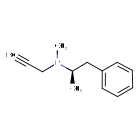
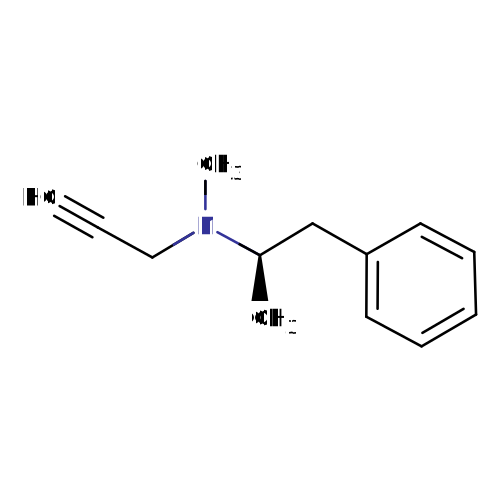
Structure for Selegiline (DB01037)
- Weight
- Average: 187.286
Monoisotopic: 187.136099551 - Chemical Formula
- C13H17N
- Synonyms
- (−)-selegiline
- L-Deprenalin
- Selegilina
- Selegiline
- Selegilinum

Pharmacology
- Indication
Monotherapy for initial treatment of Parkinson's disease, as well as an adjunct therapy in patients with a decreased response to levodopa/carbadopa. Also used for the palliative treatment of mild to moderate Alzheimer's disease and at higher doses, for the treatment of depression.
 Reduce drug development failure ratesBuild, train, & validate machine-learning modelswith evidence-based and structured datasets.Build, train, & validate predictive machine-learning models with structured datasets.
- Associated Conditions
Indication Type Indication Combined Product Details Approval Level Age Group Patient Characteristics Dose Form Management of Adhd ••• ••••• Treatment of Major depressive disorder •••••••••••• Adjunct therapy in management of Parkinson's disease •••••••••••• - Contraindications & Blackbox Warnings
 Prevent Adverse Drug Events TodayTap into our Clinical API for life-saving information on contraindications & blackbox warnings, population restrictions, harmful risks, & more.Avoid life-threatening adverse drug events with our Clinical API
- Pharmacodynamics
Dopamine is an essential chemical that occurs in many parts of the body. It is the premature degradation of dopamine that results in the symptoms of Parkinson's disease. Monoamine oxidase (MAO) is an enzyme which accelerates the breakdown of dopamine. Selegiline can prolong the effects of dopamine in the brain by preventing its breakdown through seletively blocking MAO-B. It also may prevent the removal of dopamine between nerve endings and enhance release of dopamine from nerve cells.
- Mechanism of action
Although the mechanisms for selegiline's beneficial action in the treatment of Parkinson's disease are not fully understood, the selective, irreversible inhibition of monoamine oxidase type B (MAO-B) is thought to be of primary importance. MAO-B is involved in the oxidative deamination of dopamine in the brain. Selegiline binds to MAO-B within the nigrostriatal pathways in the central nervous system, thus blocking microsomal metabolism of dopamine and enhancing the dopaminergic activity in the substantial nigra. Selegiline may also increase dopaminergic activity through mechanisms other than inhibition of MAO-B. At higher doses, selegiline can also inhibit monozmine oxidase type A (MAO-A), allowing it to be used for the treatment of depression.
Target Actions Organism AAmine oxidase [flavin-containing] B inhibitorHumans NAmine oxidase [flavin-containing] A inhibitorHumans - Absorption
Rapidly absorbed from the gastrointestinal tract.
- Volume of distribution
Not Available
- Protein binding
> 99.5%
- Metabolism
Hover over products below to view reaction partners
- Route of elimination
Not Available
- Half-life
1.2-2 hours
- Clearance
Not Available
- Adverse Effects
 Improve decision support & research outcomesWith structured adverse effects data, including: blackbox warnings, adverse reactions, warning & precautions, & incidence rates. View sample adverse effects data in our new Data Library!Improve decision support & research outcomes with our structured adverse effects data.
- Toxicity
LD50=63 mg/kg (rats, IV)
- Pathways
- Not Available
- Pharmacogenomic Effects/ADRs
- Not Available
Interactions
- Drug Interactions
- This information should not be interpreted without the help of a healthcare provider. If you believe you are experiencing an interaction, contact a healthcare provider immediately. The absence of an interaction does not necessarily mean no interactions exist.
Drug Interaction Integrate drug-drug
interactions in your software1,2-Benzodiazepine The risk or severity of CNS depression can be increased when Selegiline is combined with 1,2-Benzodiazepine. Abaloparatide Selegiline may increase the orthostatic hypotensive activities of Abaloparatide. Abametapir The serum concentration of Selegiline can be increased when it is combined with Abametapir. Abatacept The metabolism of Selegiline can be increased when combined with Abatacept. Abciximab The risk or severity of bleeding and hemorrhage can be increased when Selegiline is combined with Abciximab. - Food Interactions
- Avoid tyramine-containing foods and supplements. Consuming foods containing tyramine such as yogurt, aged cheese, ripe bananas, wine, and sourdough bread may increase the risk of having an uncontrolled hypertensive reaction.
- Take before a meal. Take selegiline oral disintegrating tablets before breakfast and at least 5 minutes before or after any food or drink. Taking selegiline with food reduces the AUC by approximately 60%.
- Take with food. Take selegiline capsules or tablets with breakfast and lunch. Food can increase the exposure to selegiline by 3-4 fold.
Products
 Drug product information from 10+ global regionsOur datasets provide approved product information including:dosage, form, labeller, route of administration, and marketing period.Access drug product information from over 10 global regions.
- Product Ingredients
Ingredient UNII CAS InChI Key Selegiline hydrochloride 6W731X367Q 14611-52-0 IYETZZCWLLUHIJ-UTONKHPSSA-N - Product Images


- International/Other Brands
- Carbex / Jumex
- Brand Name Prescription Products
Name Dosage Strength Route Labeller Marketing Start Marketing End Region Image Eldepryl Tablet 5 mg/1 Oral Somerset Pharmaceuticals Inc. 1989-06-05 2010-01-01 US 
Eldepryl Capsule 5 mg/1 Oral Mylan Specialty L.P. 1996-05-15 2015-03-31 US Eldepryl - 5mg Tab Tablet 5 mg Oral Draxis Health Inc. 1997-09-02 2004-09-23 Canada 
Eldepryl Tab 5mg Tablet 5 mg Oral Deprenyl Research Ltd. 1990-12-31 1997-07-10 Canada Emsam Patch 6 mg/24h Transdermal Mylan Specialty L.P. 2006-02-27 Not applicable US - Generic Prescription Products
Name Dosage Strength Route Labeller Marketing Start Marketing End Region Image Dom-selegiline Tablet 5 mg Oral Dominion Pharmacal 1998-09-17 2016-10-25 Canada Eldepryl Capsule 5 mg/1 Oral Somerset Pharmaceuticals Inc. 1996-05-15 2014-01-31 US Med Selegiline Tablet 5 mg Oral Medican Pharma Incorporated 1999-06-30 2011-03-29 Canada Mylan-selegiline Tablet 5 mg Oral Mylan Pharmaceuticals 1997-04-09 2017-08-02 Canada Nu-selegiline Tablet 5 mg Oral Nu Pharm Inc 1997-05-28 2012-09-04 Canada


Categories
- ATC Codes
- N04BD01 — Selegiline
- Drug Categories
- Agents that produce hypertension
- Agents that reduce seizure threshold
- Amines
- Anti-Dyskinesia Agents
- Anti-Parkinson Drugs
- Antidepressive Agents
- Antidepressive Agents Indicated for Depression
- Central Nervous System Agents
- Central Nervous System Depressants
- Compounds used in a research, industrial, or household setting
- Cytochrome P-450 CYP1A2 Inhibitors
- Cytochrome P-450 CYP1A2 Inhibitors (strength unknown)
- Cytochrome P-450 CYP1A2 Substrates
- Cytochrome P-450 CYP2A6 Inhibitors
- Cytochrome P-450 CYP2A6 Inhibitors (strength unknown)
- Cytochrome P-450 CYP2A6 Substrates
- Cytochrome P-450 CYP2B6 Inhibitors
- Cytochrome P-450 CYP2B6 Inhibitors (strength unknown)
- Cytochrome P-450 CYP2B6 Substrates
- Cytochrome P-450 CYP2C19 Substrates
- Cytochrome P-450 CYP2C8 Substrates
- Cytochrome P-450 CYP2C9 Substrates
- Cytochrome P-450 CYP2D6 Inhibitors
- Cytochrome P-450 CYP2D6 Inhibitors (weak)
- Cytochrome P-450 CYP2D6 Substrates
- Cytochrome P-450 CYP3A Substrates
- Cytochrome P-450 CYP3A4 Substrates
- Cytochrome P-450 Enzyme Inhibitors
- Cytochrome P-450 Substrates
- Dopamine Agents
- Enzyme Inhibitors
- Ethylamines
- Hypotensive Agents
- Monoamine Oxidase A Inhibitors for interaction with Monoamine Oxidase A substrates
- Monoamine Oxidase B Inhibitors
- Monoamine Oxidase Inhibitors
- Nervous System
- Neuroprotective Agents
- P-glycoprotein inhibitors
- Phenethylamines
- Protective Agents
- Psychotropic Drugs
- Serotonergic Drugs Shown to Increase Risk of Serotonin Syndrome
- Serotonin Agents
- Serotonin Modulators
- Chemical TaxonomyProvided by Classyfire
- Description
- This compound belongs to the class of organic compounds known as amphetamines and derivatives. These are organic compounds containing or derived from 1-phenylpropan-2-amine.
- Kingdom
- Organic compounds
- Super Class
- Benzenoids
- Class
- Benzene and substituted derivatives
- Sub Class
- Phenethylamines
- Direct Parent
- Amphetamines and derivatives
- Alternative Parents
- Phenylpropanes / Aralkylamines / Trialkylamines / Acetylides / Organopnictogen compounds / Hydrocarbon derivatives
- Substituents
- Acetylide / Amine / Amphetamine or derivatives / Aralkylamine / Aromatic homomonocyclic compound / Hydrocarbon derivative / Organic nitrogen compound / Organonitrogen compound / Organopnictogen compound / Phenylpropane
- Molecular Framework
- Aromatic homomonocyclic compounds
- External Descriptors
- terminal acetylenic compound, selegiline (CHEBI:9086)
- Affected organisms
- Humans and other mammals
Chemical Identifiers
- UNII
- 2K1V7GP655
- CAS number
- 14611-51-9
- InChI Key
- MEZLKOACVSPNER-GFCCVEGCSA-N
- InChI
- InChI=1S/C13H17N/c1-4-10-14(3)12(2)11-13-8-6-5-7-9-13/h1,5-9,12H,10-11H2,2-3H3/t12-/m1/s1
- IUPAC Name
- methyl[(2R)-1-phenylpropan-2-yl](prop-2-yn-1-yl)amine
- SMILES
- C[C@H](CC1=CC=CC=C1)N(C)CC#C
References
- Synthesis Reference
Silvia Ott-Dembrowski, Richard Cyrus, Jorg Schmidt, Hans Waiblinger, "Preparation of selegiline." U.S. Patent US5847216, issued March, 1962.
US5847216- General References
- Engberg G, Elebring T, Nissbrandt H: Deprenyl (selegiline), a selective MAO-B inhibitor with active metabolites; effects on locomotor activity, dopaminergic neurotransmission and firing rate of nigral dopamine neurons. J Pharmacol Exp Ther. 1991 Nov;259(2):841-7. [Article]
- Macleod AD, Counsell CE, Ives N, Stowe R: Monoamine oxidase B inhibitors for early Parkinson's disease. Cochrane Database Syst Rev. 2005 Jul 20;(3):CD004898. [Article]
- Magyar K, Tothfalusi L: Pharmacokinetic aspects of deprenyl effects. Pol J Pharmacol Pharm. 1984 Jul-Aug;36(4):373-84. [Article]
- Heinonen EH, Anttila MI, Lammintausta RA: Pharmacokinetic aspects of l-deprenyl (selegiline) and its metabolites. Clin Pharmacol Ther. 1994 Dec;56(6 Pt 2):742-9. [Article]
- Deleu D, Northway MG, Hanssens Y: Clinical pharmacokinetic and pharmacodynamic properties of drugs used in the treatment of Parkinson's disease. Clin Pharmacokinet. 2002;41(4):261-309. [Article]
- Culpepper L, Kovalick LJ: A review of the literature on the selegiline transdermal system: an effective and well-tolerated monoamine oxidase inhibitor for the treatment of depression. Prim Care Companion J Clin Psychiatry. 2008;10(1):25-30. [Article]
- Lee KC, Chen JJ: Transdermal selegiline for the treatment of major depressive disorder. Neuropsychiatr Dis Treat. 2007;3(5):527-37. [Article]
- External Links
- Human Metabolome Database
- HMDB15171
- KEGG Drug
- D03731
- KEGG Compound
- C07245
- PubChem Compound
- 26757
- PubChem Substance
- 46507655
- ChemSpider
- 24930
- BindingDB
- 15579
- 9639
- ChEBI
- 9086
- ChEMBL
- CHEMBL972
- ZINC
- ZINC000019632633
- Therapeutic Targets Database
- DAP000579
- PharmGKB
- PA451316
- RxList
- RxList Drug Page
- Drugs.com
- Drugs.com Drug Page
- Wikipedia
- Selegiline
- FDA label
- Download (189 KB)
- MSDS
- Download (73.9 KB)
Clinical Trials
- Clinical Trials
Phase Status Purpose Conditions Count 4 Completed Not Available Healthy Volunteers (HV) 1 4 Completed Diagnostic Healthy Volunteers (HV) 1 4 Completed Treatment Major Depressive Disorder (MDD) 1 4 Completed Treatment Parkinson's Disease (PD) 3 4 Terminated Treatment Depression, Bipolar 1
Pharmacoeconomics
- Manufacturers
- Not Available
- Packagers
- Alphapharm Party Ltd.
- Apotex Inc.
- Bristol-Myers Squibb Co.
- Catalent Pharma Solutions
- DAHI Animal Health Inc.
- DAVA Pharmaceuticals
- Dey Pharma LP
- Draxis Specialty Pharmaceuticals Inc.
- Endo Pharmaceuticals Inc.
- Heartland Repack Services LLC
- Legacy Pharmaceuticals Packaging LLC
- Major Pharmaceuticals
- Medisca Inc.
- Murfreesboro Pharmaceutical Nursing Supply
- Mylan
- Novopharm Ltd.
- Par Pharmaceuticals
- Physicians Total Care Inc.
- Resource Optimization and Innovation LLC
- Somerset Pharmaceuticals Inc.
- Standard Chem and Pharm Co. Ltd.
- Teva Pharmaceutical Industries Ltd.
- Torpharm Inc.
- Ultratab Labs Inc.
- Valeant Ltd.
- Dosage Forms
Form Route Strength Capsule Oral 5 mg/1 Patch Transdermal 12 mg/24h Patch Transdermal 6 mg/24h Patch Transdermal 9 mg/24h Tablet Oral 5.000 mg Solution Oral Tablet, coated Tablet Oral 10 MG Tablet Oral Tablet Oral 5 mg/1 Tablet, orally disintegrating Oral 1.25 mg/1 Tablet Oral 5 mg - Prices
Unit description Cost Unit Emsam 30 12 mg/24hr Patches Box 627.1USD box Emsam 30 6 mg/24hr Patches Box 627.1USD box Emsam 30 9 mg/24hr Patches Box 627.1USD box Selegiline hcl powder 127.3USD g Eldepryl 30 5 mg capsule Box 89.55USD box Emsam 12 mg/24 hours patch 20.1USD patch Emsam 6 mg/24 hours patch 20.1USD patch Emsam 9 mg/24 hours patch 20.1USD patch Zelapar 1.25 mg odt tablet 8.33USD tablet Selegiline HCl 5 mg capsule 2.4USD capsule Selegiline hcl 5 mg tablet 2.1USD tablet Apo-Selegiline 5 mg Tablet 1.33USD tablet Mylan-Selegiline 5 mg Tablet 1.33USD tablet Novo-Selegiline 5 mg Tablet 1.33USD tablet Nu-Selegiline 5 mg Tablet 1.33USD tablet Pms-Selegiline 5 mg Tablet 1.33USD tablet DrugBank does not sell nor buy drugs. Pricing information is supplied for informational purposes only.- Patents
Patent Number Pediatric Extension Approved Expires (estimated) Region US5648093 No 1997-07-15 2014-07-15 US US7150881 No 2006-12-19 2018-06-12 US US7070808 No 2006-07-04 2018-05-10 US US7638140 No 2009-12-29 2018-05-10 US US6423342 No 2002-07-23 2016-03-01 US
Properties
- State
- Solid
- Experimental Properties
Property Value Source melting point (°C) 141-142 °C Not Available logP 2.7 Not Available - Predicted Properties
Property Value Source Water Solubility 0.0254 mg/mL ALOGPS logP 3.08 ALOGPS logP 2.85 Chemaxon logS -3.9 ALOGPS pKa (Strongest Basic) 8.67 Chemaxon Physiological Charge 1 Chemaxon Hydrogen Acceptor Count 1 Chemaxon Hydrogen Donor Count 0 Chemaxon Polar Surface Area 3.24 Å2 Chemaxon Rotatable Bond Count 4 Chemaxon Refractivity 61.35 m3·mol-1 Chemaxon Polarizability 22.69 Å3 Chemaxon Number of Rings 1 Chemaxon Bioavailability 1 Chemaxon Rule of Five Yes Chemaxon Ghose Filter Yes Chemaxon Veber's Rule Yes Chemaxon MDDR-like Rule No Chemaxon - Predicted ADMET Features
Property Value Probability Human Intestinal Absorption + 0.9788 Blood Brain Barrier + 0.9809 Caco-2 permeable + 0.8453 P-glycoprotein substrate Non-substrate 0.543 P-glycoprotein inhibitor I Non-inhibitor 0.9632 P-glycoprotein inhibitor II Non-inhibitor 0.9779 Renal organic cation transporter Inhibitor 0.5327 CYP450 2C9 substrate Non-substrate 0.7993 CYP450 2D6 substrate Substrate 0.6987 CYP450 3A4 substrate Non-substrate 0.5671 CYP450 1A2 substrate Inhibitor 0.9107 CYP450 2C9 inhibitor Non-inhibitor 0.9341 CYP450 2D6 inhibitor Non-inhibitor 0.9231 CYP450 2C19 inhibitor Non-inhibitor 0.9026 CYP450 3A4 inhibitor Non-inhibitor 0.9285 CYP450 inhibitory promiscuity Low CYP Inhibitory Promiscuity 0.9285 Ames test Non AMES toxic 0.889 Carcinogenicity Non-carcinogens 0.6567 Biodegradation Not ready biodegradable 0.9767 Rat acute toxicity 2.9199 LD50, mol/kg Not applicable hERG inhibition (predictor I) Weak inhibitor 0.8869 hERG inhibition (predictor II) Non-inhibitor 0.8269
Spectra
- Mass Spec (NIST)
- Not Available
- Spectra
Spectrum Spectrum Type Splash Key Predicted MS/MS Spectrum - 10V, Positive (Annotated) Predicted LC-MS/MS splash10-0006-9400000000-ce456dc803e548082459 Predicted MS/MS Spectrum - 10V, Negative (Annotated) Predicted LC-MS/MS splash10-000i-0900000000-4444efe7769d7f4a171c Predicted MS/MS Spectrum - 20V, Positive (Annotated) Predicted LC-MS/MS splash10-0006-9000000000-babf742e5f2551dddf85 Predicted MS/MS Spectrum - 20V, Negative (Annotated) Predicted LC-MS/MS splash10-014l-6900000000-db429e5eec5668a1c489 Predicted MS/MS Spectrum - 40V, Negative (Annotated) Predicted LC-MS/MS splash10-0gbi-9600000000-1f9d38bbaea2ea455dc6 Predicted MS/MS Spectrum - 40V, Positive (Annotated) Predicted LC-MS/MS splash10-00kf-9000000000-4ea2d0328413a0db3c28 Predicted 1H NMR Spectrum 1D NMR Not Applicable Predicted 13C NMR Spectrum 1D NMR Not Applicable - Chromatographic Properties
Collision Cross Sections (CCS)
Adduct CCS Value (Å2) Source type Source [M-H]- 147.6223748 predictedDarkChem Lite v0.1.0 [M-H]- 139.17693 predictedDeepCCS 1.0 (2019) [M+H]+ 148.3809748 predictedDarkChem Lite v0.1.0 [M+H]+ 141.5725 predictedDeepCCS 1.0 (2019) [M+Na]+ 148.1253748 predictedDarkChem Lite v0.1.0 [M+Na]+ 148.95412 predictedDeepCCS 1.0 (2019)
Targets

- Kind
- Protein
- Organism
- Humans
- Pharmacological action
- Yes
- Actions
- Inhibitor
- General Function
- Primary amine oxidase activity
- Specific Function
- Catalyzes the oxidative deamination of biogenic and xenobiotic amines and has important functions in the metabolism of neuroactive and vasoactive amines in the central nervous system and peripheral...
- Gene Name
- MAOB
- Uniprot ID
- P27338
- Uniprot Name
- Amine oxidase [flavin-containing] B
- Molecular Weight
- 58762.475 Da
References
- Chen X, Ji ZL, Chen YZ: TTD: Therapeutic Target Database. Nucleic Acids Res. 2002 Jan 1;30(1):412-5. [Article]
- Chrisp P, Mammen GJ, Sorkin EM: Selegiline. A review of its pharmacology, symptomatic benefits and protective potential in Parkinson's disease. Drugs Aging. 1991 May;1(3):228-48. [Article]
- Heinonen EH, Myllyla V: Safety of selegiline (deprenyl) in the treatment of Parkinson's disease. Drug Saf. 1998 Jul;19(1):11-22. [Article]
- Authors unspecified: Selegiline: a second look. Six years later: too risky in Parkinson's disease. Prescrire Int. 2002 Aug;11(60):108-11. [Article]
- Macleod AD, Counsell CE, Ives N, Stowe R: Monoamine oxidase B inhibitors for early Parkinson's disease. Cochrane Database Syst Rev. 2005 Jul 20;(3):CD004898. [Article]
- Magyar K, Tothfalusi L: Pharmacokinetic aspects of deprenyl effects. Pol J Pharmacol Pharm. 1984 Jul-Aug;36(4):373-84. [Article]
- Heinonen EH, Anttila MI, Lammintausta RA: Pharmacokinetic aspects of l-deprenyl (selegiline) and its metabolites. Clin Pharmacol Ther. 1994 Dec;56(6 Pt 2):742-9. [Article]
- Deleu D, Northway MG, Hanssens Y: Clinical pharmacokinetic and pharmacodynamic properties of drugs used in the treatment of Parkinson's disease. Clin Pharmacokinet. 2002;41(4):261-309. [Article]
- Patkar AA, Pae CU, Masand PS: Transdermal selegiline: the new generation of monoamine oxidase inhibitors. CNS Spectr. 2006 May;11(5):363-75. [Article]
- Azzaro AJ, Ziemniak J, Kemper E, Campbell BJ, VanDenBerg C: Pharmacokinetics and absolute bioavailability of selegiline following treatment of healthy subjects with the selegiline transdermal system (6 mg/24 h): a comparison with oral selegiline capsules. J Clin Pharmacol. 2007 Oct;47(10):1256-67. Epub 2007 Aug 22. [Article]
- Lee KC, Chen JJ: Transdermal selegiline for the treatment of major depressive disorder. Neuropsychiatr Dis Treat. 2007;3(5):527-37. [Article]
- Baker GB, Sowa B, Todd KG: Amine oxidases and their inhibitors: what can they tell us about neuroprotection and the development of drugs for neuropsychiatric disorders? J Psychiatry Neurosci. 2007 Sep;32(5):313-5. [Article]
- Andoh T, Chock PB, Murphy DL, Chiueh CC: Role of the redox protein thioredoxin in cytoprotective mechanism evoked by (-)-deprenyl. Mol Pharmacol. 2005 Nov;68(5):1408-14. doi: 10.1124/mol.105.012302. Epub 2005 Aug 12. [Article]
- Kind
- Protein
- Organism
- Humans
- Pharmacological action
- No
- Actions
- Inhibitor
- General Function
- Serotonin binding
- Specific Function
- Catalyzes the oxidative deamination of biogenic and xenobiotic amines and has important functions in the metabolism of neuroactive and vasoactive amines in the central nervous system and peripheral...
- Gene Name
- MAOA
- Uniprot ID
- P21397
- Uniprot Name
- Amine oxidase [flavin-containing] A
- Molecular Weight
- 59681.27 Da
References
- Patkar AA, Pae CU, Masand PS: Transdermal selegiline: the new generation of monoamine oxidase inhibitors. CNS Spectr. 2006 May;11(5):363-75. [Article]
- Azzaro AJ, Ziemniak J, Kemper E, Campbell BJ, VanDenBerg C: Pharmacokinetics and absolute bioavailability of selegiline following treatment of healthy subjects with the selegiline transdermal system (6 mg/24 h): a comparison with oral selegiline capsules. J Clin Pharmacol. 2007 Oct;47(10):1256-67. Epub 2007 Aug 22. [Article]
- Lee KC, Chen JJ: Transdermal selegiline for the treatment of major depressive disorder. Neuropsychiatr Dis Treat. 2007;3(5):527-37. [Article]
- Baker GB, Sowa B, Todd KG: Amine oxidases and their inhibitors: what can they tell us about neuroprotection and the development of drugs for neuropsychiatric disorders? J Psychiatry Neurosci. 2007 Sep;32(5):313-5. [Article]
Enzymes
- Kind
- Protein
- Organism
- Humans
- Pharmacological action
- Unknown
- Actions
- SubstrateInhibitor
- General Function
- Steroid hydroxylase activity
- Specific Function
- Cytochromes P450 are a group of heme-thiolate monooxygenases. In liver microsomes, this enzyme is involved in an NADPH-dependent electron transport pathway. It oxidizes a variety of structurally un...
- Gene Name
- CYP2B6
- Uniprot ID
- P20813
- Uniprot Name
- Cytochrome P450 2B6
- Molecular Weight
- 56277.81 Da
References
- Culpepper L, Kovalick LJ: A review of the literature on the selegiline transdermal system: an effective and well-tolerated monoamine oxidase inhibitor for the treatment of depression. Prim Care Companion J Clin Psychiatry. 2008;10(1):25-30. [Article]
- Lee KC, Chen JJ: Transdermal selegiline for the treatment of major depressive disorder. Neuropsychiatr Dis Treat. 2007;3(5):527-37. [Article]
- Benetton SA, Fang C, Yang YO, Alok R, Year M, Lin CC, Yeh LT: P450 phenotyping of the metabolism of selegiline to desmethylselegiline and methamphetamine. Drug Metab Pharmacokinet. 2007 Apr;22(2):78-87. [Article]
- Walsky RL, Astuccio AV, Obach RS: Evaluation of 227 drugs for in vitro inhibition of cytochrome P450 2B6. J Clin Pharmacol. 2006 Dec;46(12):1426-38. [Article]
- Nirogi R, Palacharla RC, Mohammed AR, Manoharan A, Ponnamaneni RK, Bhyrapuneni G: Evaluation of metabolism dependent inhibition of CYP2B6 mediated bupropion hydroxylation in human liver microsomes by monoamine oxidase inhibitors and prediction of potential as perpetrators of drug interaction. Chem Biol Interact. 2015 Mar 25;230:9-20. doi: 10.1016/j.cbi.2015.01.028. Epub 2015 Feb 3. [Article]
- Sridar C, Kenaan C, Hollenberg PF: Inhibition of bupropion metabolism by selegiline: mechanism-based inactivation of human CYP2B6 and characterization of glutathione and peptide adducts. Drug Metab Dispos. 2012 Dec;40(12):2256-66. doi: 10.1124/dmd.112.046979. Epub 2012 Aug 30. [Article]
- Kind
- Protein
- Organism
- Humans
- Pharmacological action
- Unknown
- Actions
- Substrate
- General Function
- Vitamin d3 25-hydroxylase activity
- Specific Function
- Cytochromes P450 are a group of heme-thiolate monooxygenases. In liver microsomes, this enzyme is involved in an NADPH-dependent electron transport pathway. It performs a variety of oxidation react...
- Gene Name
- CYP3A4
- Uniprot ID
- P08684
- Uniprot Name
- Cytochrome P450 3A4
- Molecular Weight
- 57342.67 Da
References
- Benetton SA, Fang C, Yang YO, Alok R, Year M, Lin CC, Yeh LT: P450 phenotyping of the metabolism of selegiline to desmethylselegiline and methamphetamine. Drug Metab Pharmacokinet. 2007 Apr;22(2):78-87. [Article]
- Kind
- Protein
- Organism
- Humans
- Pharmacological action
- Unknown
- Actions
- SubstrateInhibitor
- General Function
- Steroid hydroxylase activity
- Specific Function
- Exhibits a high coumarin 7-hydroxylase activity. Can act in the hydroxylation of the anti-cancer drugs cyclophosphamide and ifosphamide. Competent in the metabolic activation of aflatoxin B1. Const...
- Gene Name
- CYP2A6
- Uniprot ID
- P11509
- Uniprot Name
- Cytochrome P450 2A6
- Molecular Weight
- 56501.005 Da
References
- Lee KC, Chen JJ: Transdermal selegiline for the treatment of major depressive disorder. Neuropsychiatr Dis Treat. 2007;3(5):527-37. [Article]
- Benetton SA, Fang C, Yang YO, Alok R, Year M, Lin CC, Yeh LT: P450 phenotyping of the metabolism of selegiline to desmethylselegiline and methamphetamine. Drug Metab Pharmacokinet. 2007 Apr;22(2):78-87. [Article]
- Rendic S: Summary of information on human CYP enzymes: human P450 metabolism data. Drug Metab Rev. 2002 Feb-May;34(1-2):83-448. [Article]
- Siu EC, Tyndale RF: Selegiline is a mechanism-based inactivator of CYP2A6 inhibiting nicotine metabolism in humans and mice. J Pharmacol Exp Ther. 2008 Mar;324(3):992-9. Epub 2007 Dec 7. [Article]
- Di YM, Chow VD, Yang LP, Zhou SF: Structure, function, regulation and polymorphism of human cytochrome P450 2A6. Curr Drug Metab. 2009 Sep;10(7):754-80. [Article]
- Tanner JA, Tyndale RF: Variation in CYP2A6 Activity and Personalized Medicine. J Pers Med. 2017 Dec 1;7(4). pii: jpm7040018. doi: 10.3390/jpm7040018. [Article]
- Kind
- Protein
- Organism
- Humans
- Pharmacological action
- Unknown
- Actions
- SubstrateInhibitor
- General Function
- Oxidoreductase activity, acting on paired donors, with incorporation or reduction of molecular oxygen, reduced flavin or flavoprotein as one donor, and incorporation of one atom of oxygen
- Specific Function
- Cytochromes P450 are a group of heme-thiolate monooxygenases. In liver microsomes, this enzyme is involved in an NADPH-dependent electron transport pathway. It oxidizes a variety of structurally un...
- Gene Name
- CYP1A2
- Uniprot ID
- P05177
- Uniprot Name
- Cytochrome P450 1A2
- Molecular Weight
- 58293.76 Da
References
- Taavitsainen P, Anttila M, Nyman L, Karnani H, Salonen JS, Pelkonen O: Selegiline metabolism and cytochrome P450 enzymes: in vitro study in human liver microsomes. Pharmacol Toxicol. 2000 May;86(5):215-21. [Article]
- Salonen JS, Nyman L, Boobis AR, Edwards RJ, Watts P, Lake BG, Price RJ, Renwick AB, Gomez-Lechon MJ, Castell JV, Ingelman-Sundberg M, Hidestrand M, Guillouzo A, Corcos L, Goldfarb PS, Lewis DF, Taavitsainen P, Pelkonen O: Comparative studies on the cytochrome p450-associated metabolism and interaction potential of selegiline between human liver-derived in vitro systems. Drug Metab Dispos. 2003 Sep;31(9):1093-102. doi: 10.1124/dmd.31.9.1093. [Article]
- CYP1A2 document, cancer.gov [File]
- Kind
- Protein
- Organism
- Humans
- Pharmacological action
- Unknown
- Actions
- Substrate
- General Function
- Steroid hydroxylase activity
- Specific Function
- Responsible for the metabolism of a number of therapeutic agents such as the anticonvulsant drug S-mephenytoin, omeprazole, proguanil, certain barbiturates, diazepam, propranolol, citalopram and im...
- Gene Name
- CYP2C19
- Uniprot ID
- P33261
- Uniprot Name
- Cytochrome P450 2C19
- Molecular Weight
- 55930.545 Da
References
- Salonen JS, Nyman L, Boobis AR, Edwards RJ, Watts P, Lake BG, Price RJ, Renwick AB, Gomez-Lechon MJ, Castell JV, Ingelman-Sundberg M, Hidestrand M, Guillouzo A, Corcos L, Goldfarb PS, Lewis DF, Taavitsainen P, Pelkonen O: Comparative studies on the cytochrome p450-associated metabolism and interaction potential of selegiline between human liver-derived in vitro systems. Drug Metab Dispos. 2003 Sep;31(9):1093-102. doi: 10.1124/dmd.31.9.1093. [Article]
- Hidestrand M, Oscarson M, Salonen JS, Nyman L, Pelkonen O, Turpeinen M, Ingelman-Sundberg M: CYP2B6 and CYP2C19 as the major enzymes responsible for the metabolism of selegiline, a drug used in the treatment of Parkinson's disease, as revealed from experiments with recombinant enzymes. Drug Metab Dispos. 2001 Nov;29(11):1480-4. [Article]
- Kind
- Protein
- Organism
- Humans
- Pharmacological action
- Unknown
- Actions
- Substrate
- General Function
- Steroid hydroxylase activity
- Specific Function
- Cytochromes P450 are a group of heme-thiolate monooxygenases. In liver microsomes, this enzyme is involved in an NADPH-dependent electron transport pathway. It oxidizes a variety of structurally un...
- Gene Name
- CYP2C8
- Uniprot ID
- P10632
- Uniprot Name
- Cytochrome P450 2C8
- Molecular Weight
- 55824.275 Da
References
- Salonen JS, Nyman L, Boobis AR, Edwards RJ, Watts P, Lake BG, Price RJ, Renwick AB, Gomez-Lechon MJ, Castell JV, Ingelman-Sundberg M, Hidestrand M, Guillouzo A, Corcos L, Goldfarb PS, Lewis DF, Taavitsainen P, Pelkonen O: Comparative studies on the cytochrome p450-associated metabolism and interaction potential of selegiline between human liver-derived in vitro systems. Drug Metab Dispos. 2003 Sep;31(9):1093-102. doi: 10.1124/dmd.31.9.1093. [Article]
- Kind
- Protein
- Organism
- Humans
- Pharmacological action
- Unknown
- Actions
- Substrate
- General Function
- Steroid hydroxylase activity
- Specific Function
- Cytochromes P450 are a group of heme-thiolate monooxygenases. In liver microsomes, this enzyme is involved in an NADPH-dependent electron transport pathway. It oxidizes a variety of structurally un...
- Gene Name
- CYP2C9
- Uniprot ID
- P11712
- Uniprot Name
- Cytochrome P450 2C9
- Molecular Weight
- 55627.365 Da
References
- Rendic S: Summary of information on human CYP enzymes: human P450 metabolism data. Drug Metab Rev. 2002 Feb-May;34(1-2):83-448. [Article]
- Kind
- Protein
- Organism
- Humans
- Pharmacological action
- Unknown
- Actions
- SubstrateInhibitor
- General Function
- Steroid hydroxylase activity
- Specific Function
- Responsible for the metabolism of many drugs and environmental chemicals that it oxidizes. It is involved in the metabolism of drugs such as antiarrhythmics, adrenoceptor antagonists, and tricyclic...
- Gene Name
- CYP2D6
- Uniprot ID
- P10635
- Uniprot Name
- Cytochrome P450 2D6
- Molecular Weight
- 55768.94 Da
References
- Nomoto M, Nakatsuka A, Nagai M, Yabe H, Moritoyo T, Moritoyo H, Nisikawa N: [Inter- and intraindividual pharmacokinetic variations in the treatment of Parkinson's disease]. Rinsho Shinkeigaku. 2005 Nov;45(11):895-8. [Article]
- Rendic S: Summary of information on human CYP enzymes: human P450 metabolism data. Drug Metab Rev. 2002 Feb-May;34(1-2):83-448. [Article]
Transporters
- Kind
- Protein
- Organism
- Humans
- Pharmacological action
- Unknown
- Actions
- Inhibitor
- General Function
- Xenobiotic-transporting atpase activity
- Specific Function
- Energy-dependent efflux pump responsible for decreased drug accumulation in multidrug-resistant cells.
- Gene Name
- ABCB1
- Uniprot ID
- P08183
- Uniprot Name
- Multidrug resistance protein 1
- Molecular Weight
- 141477.255 Da
References
- Mahar Doan KM, Humphreys JE, Webster LO, Wring SA, Shampine LJ, Serabjit-Singh CJ, Adkison KK, Polli JW: Passive permeability and P-glycoprotein-mediated efflux differentiate central nervous system (CNS) and non-CNS marketed drugs. J Pharmacol Exp Ther. 2002 Dec;303(3):1029-37. [Article]

Drug created at June 13, 2005 13:24 / Updated at April 27, 2024 09:44