Identification
- Summary
Atazanavir is an antiviral protease inhibitor used in combination with other antiretrovirals for the treatment of HIV.
- Brand Names
- Evotaz, Reyataz
- Generic Name
- Atazanavir
- DrugBank Accession Number
- DB01072
- Background
Atazanavir (formerly known as BMS-232632) is an antiretroviral drug of the protease inhibitor (PI) class. Like other antiretrovirals, it is used to treat infection of human immunodeficiency virus (HIV). Atazanavir is distinguished from other PIs in that it can be given once daily (rather than requiring multiple doses per day) and has lesser effects on the patient's lipid profile (the amounts of cholesterol and other fatty substances in the blood). Like other protease inhibitors, it is used only in combination with other HIV medications. The U.S. Food and Drug Administration (FDA) approved atazanavir on June 20, 2003.
- Type
- Small Molecule
- Groups
- Approved, Investigational
- Structure
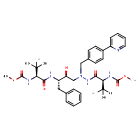
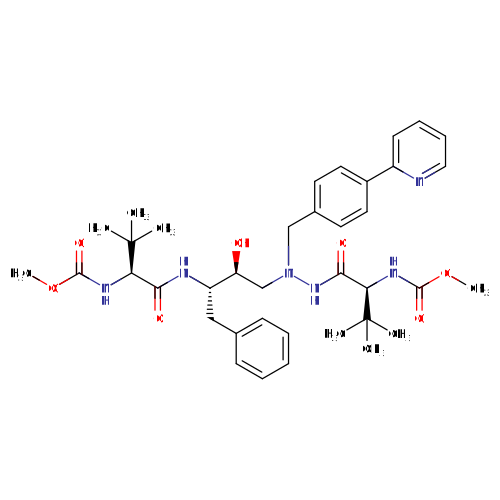
Structure for Atazanavir (DB01072)
- Weight
- Average: 704.8555
Monoisotopic: 704.389748048 - Chemical Formula
- C38H52N6O7
- Synonyms
- Atazanavir
- Atazanavirum
- ATZ
- External IDs
- BMS-232632
- CGP-73547

Pharmacology
- Indication
Atazanavir is indicated in combination with other antiretroviral agents for the treatment of HIV-1 infection in adults and pediatric patients 3 months of age and older weighing at least 5kg.9 Atazanavir is also indicated in combination with cobicistat and other antiretrovirals for the treatment of HIV-1 infection in adults and pediatric patients weighing at least 35kg.8
 Reduce drug development failure ratesBuild, train, & validate machine-learning modelswith evidence-based and structured datasets.Build, train, & validate predictive machine-learning models with structured datasets.
- Associated Conditions
Indication Type Indication Combined Product Details Approval Level Age Group Patient Characteristics Dose Form Adjunct therapy in treatment of Human immunodeficiency virus type 1 (hiv-1) infection •••••••••••• ••••• ••••••• •••••• Adjunct therapy in treatment of Human immunodeficiency virus type 1 (hiv-1) infection •••••••••••• ••••••••• •••••• •••• ••••••• •••••• Used as adjunct in combination to treat Human immunodeficiency virus type 1 (hiv-1) infection Combination Product in combination with: Cobicistat (DB09065) •••••••••••• ••••••••••• •••••• ••••••••• •••••• •• ••••• •• •• •••••• - Contraindications & Blackbox Warnings
 Prevent Adverse Drug Events TodayTap into our Clinical API for life-saving information on contraindications & blackbox warnings, population restrictions, harmful risks, & more.Avoid life-threatening adverse drug events with our Clinical API
- Pharmacodynamics
Atazanavir (ATV) is an azapeptide HIV-1 protease inhibitor (PI) with activity against Human Immunodeficiency Virus Type 1 (HIV-1). HIV-1 protease is an enzyme required for the proteolytic cleavage of the viral polyprotein precursors into the individual functional proteins found in infectious HIV-1. Atazanavir binds to the protease active site and inhibits the activity of the enzyme. This inhibition prevents cleavage of the viral polyproteins resulting in the formation of immature non-infectious viral particles. Protease inhibitors are almost always used in combination with at least two other anti-HIV drugs. Atazanivir is pharmacologically related but structurally different from other protease inhibitors and other currently available antiretrovirals.6
Atazanavir exhibits anti-HIV-1 activity with a mean 50% effective concentration (EC50) in the absence of human serum of 2 to 5 nM against a variety of laboratory and clinical HIV-1 isolates grown in peripheral blood mononuclear cells, macrophages, CEM-SS cells, and MT-2 cells.10
Atazanavir has activity against HIV-1 Group M subtype viruses A, B, C, D, AE, AG, F, G, and J isolates in cell culture. Atazanavir has variable activity against HIV-2 isolates (1.9-32 nM), with EC50 values above the EC50 values of failure isolates. Two-drug combination antiviral activity studies with atazanavir showed no antagonism in cell culture with PIs (amprenavir, indinavir, lopinavir, nelfinavir, ritonavir, and saquinavir), NNRTIs (delavirdine, efavirenz, and nevirapine), NRTIs (abacavir, didanosine, emtricitabine, lamivudine, stavudine, tenofovir DF, and zidovudine), the HIV-1 fusion inhibitor enfuvirtide, and two compounds used in the treatment of viral hepatitis, adefovir and ribavirin, without enhanced cytotoxicity.10
HIV-1 isolates with a decreased susceptibility to atazanavir have been selected in cell culture and obtained from patients treated with atazanavir or atazanavir with ritonavir. HIV-1 isolates with 93- to 183-fold reduced susceptibility to atazanavir from three different viral strains were selected in cell culture for 5 months. The substitutions in these HIV-1 viruses that contributed to atazanavir resistance include I50L, N88S, I84V, A71V, and M46I. Changes were also observed at the protease cleavage sites following drug selection. Recombinant viruses containing the I50L substitution without other major PI substitutions were growth impaired and displayed increased susceptibility in cell culture to other PIs (amprenavir, indinavir, lopinavir, nelfinavir, ritonavir, and saquinavir). The I50L and I50V substitutions yielded selective resistance to atazanavir and amprenavir, respectively, and did not appear to be cross-resistant.10
Concentration- and dose-dependent prolongation of the PR interval in the electrocardiogram has been observed in healthy subjects receiving atazanavir. In placebo-controlled Study AI424-076, the mean (±SD) maximum change in PR interval from the predose value was 24 (±15) msec following oral dosing with 400 mg of atazanavir (n=65) compared to 13 (±11) msec following dosing with placebo (n=67). The PR interval prolongations in this study were asymptomatic. There is limited information on the potential for a pharmacodynamic interaction in humans between atazanavir and other drugs that prolong the PR interval of the electrocardiogram.
Electrocardiographic effects of atazanavir were determined in a clinical pharmacology study of 72 healthy subjects. Oral doses of 400 mg (maximum recommended dosage) and 800 mg (twice the maximum recommended dosage) were compared with placebo; there was no concentration-dependent effect of atazanavir on the QTc interval (using Fridericia’s correction). In 1793 subjects with HIV-1 infection, receiving antiretroviral regimens, QTc prolongation was comparable in the atazanavir and comparator regimens. No atazanavir-treated healthy subject or subject with HIV-1 infection in clinical trials had a QTc interval >500 msec
- Mechanism of action
Atazanavir selectively inhibits the virus-specific processing of viral Gag and Gag-Pol polyproteins in HIV-1 infected cells by binding to the active site of HIV-1 protease, thus preventing the formation of mature virions. Atazanavir is not active against HIV-2.10
Target Actions Organism AHuman immunodeficiency virus type 1 protease inhibitorHuman immunodeficiency virus 1 - Absorption
Atazanavir is rapidly absorbed with a Tmax of approximately 2.5 hours. Atazanavir demonstrates nonlinear pharmacokinetics with greater than dose-proportional increases in AUC and Cmax values over the dose range of 200 to 800 mg once daily. A steady state is achieved between Days 4 and 8, with an accumulation of approximately 2.3-fold.10
Administration of atazanavir with food enhances bioavailability and reduces pharmacokinetic variability. Administration of a single 400-mg dose of atazanavir with a light meal (357 kcal, 8.2 g fat, 10.6 g protein) resulted in a 70% increase in AUC and 57% increase in Cmax relative to the fasting state. Administration of a single 400-mg dose of atazanavir with a high-fat meal (721 kcal, 37.3 g fat, 29.4 g protein) resulted in a mean increase in AUC of 35% with no change in Cmax relative to the fasting state. Administration of atazanavir with either a light or high-fat meal decreased the coefficient of variation of AUC and Cmax by approximately one-half compared to the fasting state.10
Coadministration of a single 300-mg dose of atazanavir and a 100-mg dose of ritonavir with a light meal (336 kcal, 5.1 g fat, 9.3 g protein) resulted in a 33% increase in the AUC and a 40% increase in both the Cmax and the 24-hour concentration of atazanavir relative to the fasting state. Coadministration with a high-fat meal (951 kcal, 54.7 g fat, 35.9 g protein) did not affect the AUC of atazanavir relative to fasting conditions and the Cmax was within 11% of fasting values. The 24-hour concentration following a high-fat meal was increased by approximately 33% due to delayed absorption; the median Tmax increased from 2.0 to 5.0 hours. Coadministration of atazanavir with ritonavir with either a light or a high-fat meal decreased the coefficient of variation of AUC and Cmax by approximately 25% compared to the fasting state.10
- Volume of distribution
In patients with HIV infection, the volume of distribution of atazanavir was estimated to be 88.3 L.7
- Protein binding
Atazanavir is 86% bound to human serum proteins and protein binding is independent of concentration. Atazanavir binds to both alpha-1-acid glycoprotein (AAG) and albumin to a similar extent (89% and 86%, respectively).10
- Metabolism
Atazanavir is extensively metabolized in humans. The major biotransformation pathways of atazanavir in humans consisted of monooxygenation and dioxygenation. Other minor biotransformation pathways for atazanavir or its metabolites consisted of glucuronidation, N-dealkylation, hydrolysis, and oxygenation with dehydrogenation. Two minor metabolites of atazanavir in plasma have been characterized. Neither metabolite demonstrated in vitro antiviral activity. In vitro studies using human liver microsomes suggested that atazanavir is metabolized by CYP3A.10
- Route of elimination
Following a single 400-mg dose of 14C-atazanavir, 79% and 13% of the total radioactivity was recovered in the feces and urine, respectively. Unchanged drugs accounted for approximately 20% and 7% of the administered dose in the feces and urine, respectively.10
- Half-life
The mean elimination half-life of atazanavir in healthy subjects (n=214) and adult subjects with HIV-1 infection (n=13) was approximately 7 hours at steady state following a dose of 400 mg daily with a light meal. Elimination half-life in hepatically impaired is 12.1 hours (following a single 400 mg dose).10
- Clearance
In patients with HIV infection, the clearance of atazanavir was estimated to be 12.9 L/hr.7
- Adverse Effects
 Improve decision support & research outcomesWith structured adverse effects data, including: blackbox warnings, adverse reactions, warning & precautions, & incidence rates. View sample adverse effects data in our new Data Library!Improve decision support & research outcomes with our structured adverse effects data.
- Toxicity
Not Available
- Pathways
- Not Available
- Pharmacogenomic Effects/ADRs
Interacting Gene/Enzyme Allele name Genotype(s) Defining Change(s) Type(s) Description Details UDP-glucuronosyltransferase 1-1 UGT1A1*28 (TA;TA) TA pair insertion ADR Directly Studied The presence of this genotype in UGT1A1 may indicate an increased risk of hyperbilirubinemia from atazanavir treatment. Details UDP-glucuronosyltransferase 1-1 UGT1A1*37 (TA;TA) TA pair insertion ADR Directly Studied The presence of this genotype in UGT1A1 may indicate an increased risk of hyperbilirubinemia from atazanavir treatment. Details UDP-glucuronosyltransferase 1-1 UGT1A1*80 (T;T) G > A, homozygous ADR Directly Studied The presence of this genotype in UGT1A1 may indicate an increased risk of hyperbilirubinemia from atazanavir treatment. Details
Interactions
- Drug Interactions
- This information should not be interpreted without the help of a healthcare provider. If you believe you are experiencing an interaction, contact a healthcare provider immediately. The absence of an interaction does not necessarily mean no interactions exist.
Drug Interaction Integrate drug-drug
interactions in your software1,2-Benzodiazepine The metabolism of 1,2-Benzodiazepine can be decreased when combined with Atazanavir. Abacavir The serum concentration of Abacavir can be decreased when it is combined with Atazanavir. Abametapir The serum concentration of Atazanavir can be increased when it is combined with Abametapir. Abatacept The metabolism of Atazanavir can be increased when combined with Abatacept. Abemaciclib The metabolism of Abemaciclib can be decreased when combined with Atazanavir. - Food Interactions
- Take with food. Food increases product absorption and reduces pharmacokinetic variability.
Products
 Drug product information from 10+ global regionsOur datasets provide approved product information including:dosage, form, labeller, route of administration, and marketing period.Access drug product information from over 10 global regions.
- Product Ingredients
Ingredient UNII CAS InChI Key Atazanavir sulfate 4MT4VIE29P 229975-97-7 DQSGVVGOPRWTKI-QVFAWCHISA-N - International/Other Brands
- Latazanavir / Zrivada
- Brand Name Prescription Products
Name Dosage Strength Route Labeller Marketing Start Marketing End Region Image Atazanavir Krka Capsule 300 mg Oral Krka, D.D., Novo Mesto 2020-12-16 Not applicable EU 
Atazanavir Krka Capsule 200 mg Oral Krka, D.D., Novo Mesto 2020-12-16 Not applicable EU Atazanavir Krka Capsule 300 mg Oral Krka, D.D., Novo Mesto 2020-12-16 Not applicable EU Atazanavir Krka Capsule 150 mg Oral Krka, D.D., Novo Mesto 2020-12-16 Not applicable EU Atazanavir Mylan Capsule 150 mg Oral Mylan Pharmaceuticals Limited 2021-01-12 Not applicable EU - Generic Prescription Products
Name Dosage Strength Route Labeller Marketing Start Marketing End Region Image Apo-atazanavir Capsule 200 mg Oral Apotex Corporation Not applicable Not applicable Canada 
Apo-atazanavir Capsule 150 mg Oral Apotex Corporation Not applicable Not applicable Canada Apo-atazanavir Capsule 300 mg Oral Apotex Corporation Not applicable Not applicable Canada Atazanavir Capsule, gelatin coated 300 mg/1 Oral REMEDYREPACK INC. 2020-08-10 Not applicable US 
Atazanavir Capsule 300 mg/1 Oral Amneal Pharmaceuticals NY LLC 2020-06-03 Not applicable US - Mixture Products
Name Ingredients Dosage Route Labeller Marketing Start Marketing End Region Image ANCEF ® R Atazanavir sulfate (300 mg) + Ritonavir (100 mg) Tablet, coated Oral LABORATORIOS LEGRAND S.A. 2018-03-13 Not applicable Colombia 
EVOTAZ Atazanavir (300 MG) + Cobicistat (150 MG) Tablet, film coated Oral Bristol Myers Squibb Pharma Eeig 2015-10-14 Not applicable Italy 
Evotaz Atazanavir sulfate (300 mg/1) + Cobicistat (150 mg/1) Tablet Oral E.R. Squibb & Sons, L.L.C. 2015-01-29 Not applicable US Evotaz Atazanavir sulfate (300 mg) + Cobicistat (150 mg) Tablet, film coated Oral Bristol Myers Squibb Pharma Eeig 2020-12-22 Not applicable EU Evotaz Atazanavir sulfate (300 mg/1) + Cobicistat (150 mg/1) Tablet Oral A-S Medication Solutions 2015-01-29 Not applicable US
Categories
- ATC Codes
- J05AE08 — Atazanavir
- J05AE — Protease inhibitors
- J05A — DIRECT ACTING ANTIVIRALS
- J05 — ANTIVIRALS FOR SYSTEMIC USE
- J — ANTIINFECTIVES FOR SYSTEMIC USE
- J05AR — Antivirals for treatment of HIV infections, combinations
- J05A — DIRECT ACTING ANTIVIRALS
- J05 — ANTIVIRALS FOR SYSTEMIC USE
- J — ANTIINFECTIVES FOR SYSTEMIC USE
- Drug Categories
- Amino Acids, Peptides, and Proteins
- Anti-HIV Agents
- Anti-Infective Agents
- Anti-Retroviral Agents
- Antiinfectives for Systemic Use
- Antiviral Agents
- Antivirals for Systemic Use
- Antivirals used in combination for the treatment of HIV infections
- BSEP/ABCB11 Substrates
- Cytochrome P-450 CYP1A2 Inhibitors
- Cytochrome P-450 CYP1A2 Inhibitors (strength unknown)
- Cytochrome P-450 CYP2C8 Inhibitors
- Cytochrome P-450 CYP2C8 Inhibitors (weak)
- Cytochrome P-450 CYP2C9 Inhibitors
- Cytochrome P-450 CYP2C9 Inhibitors (strength unknown)
- Cytochrome P-450 CYP2C9 Substrates
- Cytochrome P-450 CYP3A Inhibitors
- Cytochrome P-450 CYP3A Substrates
- Cytochrome P-450 CYP3A4 Inhibitors
- Cytochrome P-450 CYP3A4 Inhibitors (strong)
- Cytochrome P-450 CYP3A4 Substrates
- Cytochrome P-450 CYP3A4 Substrates (strength unknown)
- Cytochrome P-450 CYP3A5 Inhibitors
- Cytochrome P-450 CYP3A5 Inhibitors (strength unknown)
- Cytochrome P-450 CYP3A7 Inhibitors
- Cytochrome P-450 CYP3A7 Inhibitors (strength unknown)
- Cytochrome P-450 Enzyme Inhibitors
- Cytochrome P-450 Substrates
- Direct Acting Antivirals
- Enzyme Inhibitors
- HIV Protease Inhibitors
- Hyperglycemia-Associated Agents
- Nephrotoxic agents
- OATP1B1/SLCO1B1 Inhibitors
- OATP1B3 inhibitors
- Oligopeptides
- Organic Anion Transporting Polypeptide 2B1 Inhibitors
- P-glycoprotein inducers
- P-glycoprotein inhibitors
- P-glycoprotein substrates
- Peptides
- Potential QTc-Prolonging Agents
- Protease Inhibitors
- Pyridines
- QTc Prolonging Agents
- UDP Glucuronosyltransferases Inhibitors
- UGT1A1 Inhibitors
- Viral Protease Inhibitors
- Chemical TaxonomyProvided by Classyfire
- Description
- This compound belongs to the class of organic compounds known as valine and derivatives. These are compounds containing valine or a derivative thereof resulting from reaction of valine at the amino group or the carboxy group, or from the replacement of any hydrogen of glycine by a heteroatom.
- Kingdom
- Organic compounds
- Super Class
- Organic acids and derivatives
- Class
- Carboxylic acids and derivatives
- Sub Class
- Amino acids, peptides, and analogues
- Direct Parent
- Valine and derivatives
- Alternative Parents
- Alpha amino acid amides / Phenylpyridines / Phenylbutylamines / Amphetamines and derivatives / N-acyl amines / Heteroaromatic compounds / Methylcarbamates / Secondary carboxylic acid amides / Secondary alcohols / Carboxylic acid hydrazides show 7 more
- Substituents
- 2-phenylpyridine / Alcohol / Alpha-amino acid amide / Amphetamine or derivatives / Aromatic heteromonocyclic compound / Azacycle / Benzenoid / Carbamic acid ester / Carbonic acid derivative / Carbonyl group show 21 more
- Molecular Framework
- Aromatic heteromonocyclic compounds
- External Descriptors
- carbohydrazide (CHEBI:37924)
- Affected organisms
- Human Immunodeficiency Virus
Chemical Identifiers
- UNII
- QZU4H47A3S
- CAS number
- 198904-31-3
- InChI Key
- AXRYRYVKAWYZBR-GASGPIRDSA-N
- InChI
- InChI=1S/C38H52N6O7/c1-37(2,3)31(41-35(48)50-7)33(46)40-29(22-25-14-10-9-11-15-25)30(45)24-44(43-34(47)32(38(4,5)6)42-36(49)51-8)23-26-17-19-27(20-18-26)28-16-12-13-21-39-28/h9-21,29-32,45H,22-24H2,1-8H3,(H,40,46)(H,41,48)(H,42,49)(H,43,47)/t29-,30-,31+,32+/m0/s1
- IUPAC Name
- methyl N-[(1S)-1-{N'-[(2S,3S)-2-hydroxy-3-[(2S)-2-[(methoxycarbonyl)amino]-3,3-dimethylbutanamido]-4-phenylbutyl]-N'-{[4-(pyridin-2-yl)phenyl]methyl}hydrazinecarbonyl}-2,2-dimethylpropyl]carbamate
- SMILES
- COC(=O)N[C@H](C(=O)N[C@@H](CC1=CC=CC=C1)[C@@H](O)CN(CC1=CC=C(C=C1)C1=CC=CC=N1)NC(=O)[C@@H](NC(=O)OC)C(C)(C)C)C(C)(C)C
References
- Synthesis Reference
- US5849911
- General References
- Croom KF, Dhillon S, Keam SJ: Atazanavir: a review of its use in the management of HIV-1 infection. Drugs. 2009 May 29;69(8):1107-40. doi: 10.2165/00003495-200969080-00009. [Article]
- von Hentig N: Atazanavir/ritonavir: a review of its use in HIV therapy. Drugs Today (Barc). 2008 Feb;44(2):103-32. doi: 10.1358/dot.2008.44.2.1137107. [Article]
- Swainston Harrison T, Scott LJ: Atazanavir: a review of its use in the management of HIV infection. Drugs. 2005;65(16):2309-36. [Article]
- Le Tiec C, Barrail A, Goujard C, Taburet AM: Clinical pharmacokinetics and summary of efficacy and tolerability of atazanavir. Clin Pharmacokinet. 2005;44(10):1035-50. [Article]
- Lopez-Cortes LF: [Pharmacology, pharmacokinetic features and interactions of atazanavir]. Enferm Infecc Microbiol Clin. 2008 Dec;26 Suppl 17:2-8. doi: 10.1016/S0213-005X(08)76613-8. [Article]
- Busti AJ, Hall RG, Margolis DM: Atazanavir for the treatment of human immunodeficiency virus infection. Pharmacotherapy. 2004 Dec;24(12):1732-47. [Article]
- Colombo S, Buclin T, Cavassini M, Decosterd LA, Telenti A, Biollaz J, Csajka C: Population pharmacokinetics of atazanavir in patients with human immunodeficiency virus infection. Antimicrob Agents Chemother. 2006 Nov;50(11):3801-8. doi: 10.1128/AAC.00098-06. Epub 2006 Aug 28. [Article]
- FDA Approved Drug Products: Evotaz (atazanavir and cobicistat) oral tablets [Link]
- FDA Approved Drug Products: Reyataz (atazanavir) for oral use [Link]
- FDA Approved Drug Products: REYATAZ (atazanavir) capsules/oral powder, for oral use [Link]
- External Links
- Human Metabolome Database
- HMDB0015205
- KEGG Drug
- D07471
- PubChem Compound
- 148192
- PubChem Substance
- 46508504
- ChemSpider
- 130642
- BindingDB
- 13934
- 343047
- ChEBI
- 37924
- ChEMBL
- CHEMBL1163
- ZINC
- ZINC000003941496
- Therapeutic Targets Database
- DNC000332
- PharmGKB
- PA10251
- PDBe Ligand
- DR7
- RxList
- RxList Drug Page
- Drugs.com
- Drugs.com Drug Page
- PDRhealth
- PDRhealth Drug Page
- Wikipedia
- Atazanavir
- PDB Entries
- 2aqu / 2fxd / 2fxe / 2o4k / 3ekw / 3eky / 3el1 / 3el9 / 3oxx
- FDA label
- Download (412 KB)
Clinical Trials
- Clinical Trials
Phase Status Purpose Conditions Count 4 Completed Not Available Healthy Volunteers (HV) 1 4 Completed Not Available Human Immunodeficiency Virus (HIV) Infections 2 4 Completed Not Available Human Immunodeficiency Virus (HIV) Infections / Proteinuria 1 4 Completed Basic Science Drug Drug Interaction (DDI) 1 4 Completed Other Human Immunodeficiency Virus (HIV) Infections 1
Pharmacoeconomics
- Manufacturers
- Not Available
- Packagers
- A-S Medication Solutions LLC
- Bristol-Myers Squibb Co.
- E.R. Squibb and Sons LLC
- Kaiser Foundation Hospital
- Lake Erie Medical and Surgical Supply
- PCA LLC
- Physicians Total Care Inc.
- Remedy Repack
- Dosage Forms
Form Route Strength Tablet, coated Oral Capsule Oral 300.00 mg Capsule, coated Oral 200 mg Capsule, coated Oral 300 mg Capsule Oral 100 mg/1 Capsule Oral 150 mg/1 Capsule Oral 200 mg/1 Capsule Oral 300 mg/1 Powder Not applicable 25 kg/25kg Capsule Oral Capsule Oral 200.000 mg Capsule Oral 341.720 mg Capsule Oral 341.740 mg Tablet Oral Tablet, film coated Oral Capsule Oral 100 mg Capsule, gelatin coated Oral 100 mg/1 Capsule, gelatin coated Oral 150 mg/1 Capsule, gelatin coated Oral 200 mg/1 Capsule, gelatin coated Oral 300 mg/1 Powder Oral 50 MG Powder Oral 50 mg/1 Powder Oral 50 MG/1.5G Capsule Oral 150 mg Capsule Oral 200 mg Capsule Oral 300 mg Capsule, coated Oral 150 mg Capsule Oral 341.700 mg Powder Oral 50 mg/1sachet - Prices
Unit description Cost Unit Reyataz 300 mg capsule 36.63USD capsule Reyataz 150 mg capsule 18.49USD capsule Reyataz 200 mg capsule 18.49USD capsule Reyataz 100 mg capsule 18.12USD capsule DrugBank does not sell nor buy drugs. Pricing information is supplied for informational purposes only.- Patents
Patent Number Pediatric Extension Approved Expires (estimated) Region CA2250840 No 2006-07-04 2017-04-14 Canada CA2317736 No 2004-11-02 2018-12-22 Canada US5849911 Yes 1998-12-15 2017-12-20 US US6087383 Yes 2000-07-11 2019-06-21 US US8148374 Yes 2012-04-03 2030-03-03 US US10039718 Yes 2018-08-07 2033-04-06 US
Properties
- State
- Solid
- Experimental Properties
Property Value Source water solubility Free base slightly soluble (4-5 mg/mL) Not Available logP 4.5 https://www.nature.com/articles/s41467-019-12141-5 - Predicted Properties
Property Value Source Water Solubility 0.00327 mg/mL ALOGPS logP 4.08 ALOGPS logP 4.54 Chemaxon logS -5.3 ALOGPS pKa (Strongest Acidic) 11.92 Chemaxon pKa (Strongest Basic) 4.42 Chemaxon Physiological Charge 0 Chemaxon Hydrogen Acceptor Count 7 Chemaxon Hydrogen Donor Count 5 Chemaxon Polar Surface Area 171.22 Å2 Chemaxon Rotatable Bond Count 18 Chemaxon Refractivity 191.8 m3·mol-1 Chemaxon Polarizability 76.73 Å3 Chemaxon Number of Rings 3 Chemaxon Bioavailability 0 Chemaxon Rule of Five No Chemaxon Ghose Filter No Chemaxon Veber's Rule No Chemaxon MDDR-like Rule Yes Chemaxon - Predicted ADMET Features
Property Value Probability Human Intestinal Absorption + 0.7997 Blood Brain Barrier - 0.9409 Caco-2 permeable - 0.7017 P-glycoprotein substrate Substrate 0.832 P-glycoprotein inhibitor I Inhibitor 0.81 P-glycoprotein inhibitor II Non-inhibitor 0.844 Renal organic cation transporter Non-inhibitor 0.924 CYP450 2C9 substrate Non-substrate 0.7898 CYP450 2D6 substrate Non-substrate 0.9116 CYP450 3A4 substrate Substrate 0.6463 CYP450 1A2 substrate Non-inhibitor 0.7553 CYP450 2C9 inhibitor Non-inhibitor 0.7041 CYP450 2D6 inhibitor Non-inhibitor 0.848 CYP450 2C19 inhibitor Non-inhibitor 0.5948 CYP450 3A4 inhibitor Non-inhibitor 0.8425 CYP450 inhibitory promiscuity Low CYP Inhibitory Promiscuity 0.7718 Ames test Non AMES toxic 0.6714 Carcinogenicity Non-carcinogens 0.7261 Biodegradation Not ready biodegradable 1.0 Rat acute toxicity 2.7082 LD50, mol/kg Not applicable hERG inhibition (predictor I) Weak inhibitor 0.9766 hERG inhibition (predictor II) Inhibitor 0.6538
Spectra
- Mass Spec (NIST)
- Not Available
- Spectra
- Chromatographic Properties
Collision Cross Sections (CCS)
Adduct CCS Value (Å2) Source type Source [M-H]- 252.5268718 predictedDarkChem Lite v0.1.0 [M-H]- 281.7681718 predictedDarkChem Lite v0.1.0 [M-H]- 266.5693718 predictedDarkChem Lite v0.1.0 [M-H]- 253.05579 predictedDeepCCS 1.0 (2019) [M+H]+ 254.1485718 predictedDarkChem Lite v0.1.0 [M+H]+ 282.4041718 predictedDarkChem Lite v0.1.0 [M+H]+ 265.7457718 predictedDarkChem Lite v0.1.0 [M+H]+ 254.84868 predictedDeepCCS 1.0 (2019) [M+Na]+ 273.6958718 predictedDarkChem Lite v0.1.0 [M+Na]+ 281.6401718 predictedDarkChem Lite v0.1.0 [M+Na]+ 261.05154 predictedDeepCCS 1.0 (2019)
Targets

- Kind
- Protein
- Organism
- Human immunodeficiency virus 1
- Pharmacological action
- Yes
- Actions
- Inhibitor
- General Function
- Aspartic-type endopeptidase activity
- Specific Function
- Not Available
- Gene Name
- pol
- Uniprot ID
- Q72874
- Uniprot Name
- Pol polyprotein
- Molecular Weight
- 10778.7 Da
References
- Dierynck I, De Wit M, Gustin E, Keuleers I, Vandersmissen J, Hallenberger S, Hertogs K: Binding kinetics of darunavir to human immunodeficiency virus type 1 protease explain the potent antiviral activity and high genetic barrier. J Virol. 2007 Dec;81(24):13845-51. Epub 2007 Oct 10. [Article]
- Dandache S, Sevigny G, Yelle J, Stranix BR, Parkin N, Schapiro JM, Wainberg MA, Wu JJ: In vitro antiviral activity and cross-resistance profile of PL-100, a novel protease inhibitor of human immunodeficiency virus type 1. Antimicrob Agents Chemother. 2007 Nov;51(11):4036-43. Epub 2007 Jul 16. [Article]
- Wood R: Atazanavir: its role in HIV treatment. Expert Rev Anti Infect Ther. 2008 Dec;6(6):785-96. doi: 10.1586/14787210.6.6.785. [Article]
- Le Tiec C, Barrail A, Goujard C, Taburet AM: Clinical pharmacokinetics and summary of efficacy and tolerability of atazanavir. Clin Pharmacokinet. 2005;44(10):1035-50. [Article]
- Pyrko P, Kardosh A, Wang W, Xiong W, Schonthal AH, Chen TC: HIV-1 protease inhibitors nelfinavir and atazanavir induce malignant glioma death by triggering endoplasmic reticulum stress. Cancer Res. 2007 Nov 15;67(22):10920-8. [Article]
- Menendez-Arias L, Tozser J: HIV-1 protease inhibitors: effects on HIV-2 replication and resistance. Trends Pharmacol Sci. 2008 Jan;29(1):42-9. Epub 2007 Dec 4. [Article]
- Lopez-Cortes LF: [Pharmacology, pharmacokinetic features and interactions of atazanavir]. Enferm Infecc Microbiol Clin. 2008 Dec;26 Suppl 17:2-8. doi: 10.1016/S0213-005X(08)76613-8. [Article]
- Busti AJ, Hall RG, Margolis DM: Atazanavir for the treatment of human immunodeficiency virus infection. Pharmacotherapy. 2004 Dec;24(12):1732-47. [Article]
- Chen X, Ji ZL, Chen YZ: TTD: Therapeutic Target Database. Nucleic Acids Res. 2002 Jan 1;30(1):412-5. [Article]
- FDA Approved Drug Products: REYATAZ (atazanavir) capsules/oral powder, for oral use [Link]
Enzymes
- Kind
- Protein
- Organism
- Humans
- Pharmacological action
- No
- Actions
- SubstrateInhibitor
- General Function
- Vitamin d3 25-hydroxylase activity
- Specific Function
- Cytochromes P450 are a group of heme-thiolate monooxygenases. In liver microsomes, this enzyme is involved in an NADPH-dependent electron transport pathway. It performs a variety of oxidation react...
- Gene Name
- CYP3A4
- Uniprot ID
- P08684
- Uniprot Name
- Cytochrome P450 3A4
- Molecular Weight
- 57342.67 Da
References
- Le Tiec C, Barrail A, Goujard C, Taburet AM: Clinical pharmacokinetics and summary of efficacy and tolerability of atazanavir. Clin Pharmacokinet. 2005;44(10):1035-50. [Article]
- Busti AJ, Hall RG, Margolis DM: Atazanavir for the treatment of human immunodeficiency virus infection. Pharmacotherapy. 2004 Dec;24(12):1732-47. [Article]
- Zhou SF, Zhou ZW, Yang LP, Cai JP: Substrates, inducers, inhibitors and structure-activity relationships of human Cytochrome P450 2C9 and implications in drug development. Curr Med Chem. 2009;16(27):3480-675. Epub 2009 Sep 1. [Article]
- Atazanavir FDA Label [Link]
- Kind
- Protein
- Organism
- Humans
- Pharmacological action
- No
- Actions
- SubstrateInhibitor
- General Function
- Steroid hydroxylase activity
- Specific Function
- Cytochromes P450 are a group of heme-thiolate monooxygenases. In liver microsomes, this enzyme is involved in an NADPH-dependent electron transport pathway. It oxidizes a variety of structurally un...
- Gene Name
- CYP2C9
- Uniprot ID
- P11712
- Uniprot Name
- Cytochrome P450 2C9
- Molecular Weight
- 55627.365 Da
References
- Busti AJ, Hall RG, Margolis DM: Atazanavir for the treatment of human immunodeficiency virus infection. Pharmacotherapy. 2004 Dec;24(12):1732-47. [Article]
- Kind
- Protein
- Organism
- Humans
- Pharmacological action
- No
- Actions
- Inhibitor
- General Function
- Steroid binding
- Specific Function
- UDPGT is of major importance in the conjugation and subsequent elimination of potentially toxic xenobiotics and endogenous compounds. This isoform glucuronidates bilirubin IX-alpha to form both the...
- Gene Name
- UGT1A1
- Uniprot ID
- P22309
- Uniprot Name
- UDP-glucuronosyltransferase 1-1
- Molecular Weight
- 59590.91 Da
References
- Marques SC, Ikediobi ON: The clinical application of UGT1A1 pharmacogenetic testing: gene-environment interactions. Hum Genomics. 2010 Apr;4(4):238-49. doi: 10.1186/1479-7364-4-4-238. [Article]
- Burger DM, Huisman A, Van Ewijk N, Neisingh H, Van Uden P, Rongen GA, Koopmans P, Bertz RJ: The effect of atazanavir and atazanavir/ritonavir on UDP-glucuronosyltransferase using lamotrigine as a phenotypic probe. Clin Pharmacol Ther. 2008 Dec;84(6):698-703. doi: 10.1038/clpt.2008.106. Epub 2008 Jun 4. [Article]
- Atazanavir FDA Label [Link]
- Kind
- Protein
- Organism
- Humans
- Pharmacological action
- No
- Actions
- Inhibitor
- General Function
- Steroid hydroxylase activity
- Specific Function
- Cytochromes P450 are a group of heme-thiolate monooxygenases. In liver microsomes, this enzyme is involved in an NADPH-dependent electron transport pathway. It oxidizes a variety of structurally un...
- Gene Name
- CYP2C8
- Uniprot ID
- P10632
- Uniprot Name
- Cytochrome P450 2C8
- Molecular Weight
- 55824.275 Da
References
- Atazanavir FDA Label [Link]
- Kind
- Protein
- Organism
- Humans
- Pharmacological action
- Unknown
- Actions
- Inhibitor
- General Function
- Oxidoreductase activity, acting on paired donors, with incorporation or reduction of molecular oxygen, reduced flavin or flavoprotein as one donor, and incorporation of one atom of oxygen
- Specific Function
- Cytochromes P450 are a group of heme-thiolate monooxygenases. In liver microsomes, this enzyme is involved in an NADPH-dependent electron transport pathway. It oxidizes a variety of structurally un...
- Gene Name
- CYP1A2
- Uniprot ID
- P05177
- Uniprot Name
- Cytochrome P450 1A2
- Molecular Weight
- 58293.76 Da
- Kind
- Protein
- Organism
- Humans
- Pharmacological action
- Unknown
- Actions
- Inhibitor
- General Function
- Oxygen binding
- Specific Function
- Cytochromes P450 are a group of heme-thiolate monooxygenases. In liver microsomes, this enzyme is involved in an NADPH-dependent electron transport pathway. It oxidizes a variety of structurally un...
- Gene Name
- CYP3A5
- Uniprot ID
- P20815
- Uniprot Name
- Cytochrome P450 3A5
- Molecular Weight
- 57108.065 Da
References
- FDA Approved Drug Products: REYATAZ (atazanavir) capsules/oral powder, for oral use [Link]
- Kind
- Protein
- Organism
- Humans
- Pharmacological action
- No
- Actions
- Inhibitor
- General Function
- Oxygen binding
- Specific Function
- Cytochromes P450 are a group of heme-thiolate monooxygenases. In liver microsomes, this enzyme is involved in an NADPH-dependent electron transport pathway. It oxidizes a variety of structurally un...
- Gene Name
- CYP3A7
- Uniprot ID
- P24462
- Uniprot Name
- Cytochrome P450 3A7
- Molecular Weight
- 57525.03 Da
References
- FDA Approved Drug Products: REYATAZ (atazanavir) capsules/oral powder, for oral use [Link]
Carriers
- Kind
- Protein
- Organism
- Humans
- Pharmacological action
- No
- Actions
- Binder
- General Function
- Toxic substance binding
- Specific Function
- Serum albumin, the main protein of plasma, has a good binding capacity for water, Ca(2+), Na(+), K(+), fatty acids, hormones, bilirubin and drugs. Its main function is the regulation of the colloid...
- Gene Name
- ALB
- Uniprot ID
- P02768
- Uniprot Name
- Serum albumin
- Molecular Weight
- 69365.94 Da
References
- Bocedi A, Notaril S, Narciso P, Bolli A, Fasano M, Ascenzi P: Binding of anti-HIV drugs to human serum albumin. IUBMB Life. 2004 Oct;56(10):609-14. [Article]
- Bocedi A, Notari S, Menegatti E, Fanali G, Fasano M, Ascenzi P: Allosteric modulation of anti-HIV drug and ferric heme binding to human serum albumin. FEBS J. 2005 Dec;272(24):6287-96. [Article]
- FDA Approved Drug Products: REYATAZ (atazanavir) capsules/oral powder, for oral use [Link]
- Kind
- Protein group
- Organism
- Humans
- Pharmacological action
- No
- Actions
- Binder
- General Function
- Not Available
- Specific Function
- Functions as transport protein in the blood stream. Binds various ligands in the interior of its beta-barrel domain. Also binds synthetic drugs and influences their distribution and availability in...
Components:
References
- FDA Approved Drug Products: REYATAZ (atazanavir) capsules/oral powder, for oral use [Link]
Transporters
- Kind
- Protein
- Organism
- Humans
- Pharmacological action
- Unknown
- Actions
- SubstrateInhibitorInducer
- General Function
- Xenobiotic-transporting atpase activity
- Specific Function
- Energy-dependent efflux pump responsible for decreased drug accumulation in multidrug-resistant cells.
- Gene Name
- ABCB1
- Uniprot ID
- P08183
- Uniprot Name
- Multidrug resistance protein 1
- Molecular Weight
- 141477.255 Da
References
- Perloff ES, Duan SX, Skolnik PR, Greenblatt DJ, von Moltke LL: Atazanavir: effects on P-glycoprotein transport and CYP3A metabolism in vitro. Drug Metab Dispos. 2005 Jun;33(6):764-70. Epub 2005 Mar 11. [Article]
- Lucia MB, Golotta C, Rutella S, Rastrelli E, Savarino A, Cauda R: Atazanavir inhibits P-glycoprotein and multidrug resistance-associated protein efflux activity. J Acquir Immune Defic Syndr. 2005 Aug 15;39(5):635-7. [Article]
- Chinn LW, Gow JM, Tse MM, Becker SL, Kroetz DL: Interindividual variability in the effect of atazanavir and saquinavir on the expression of lymphocyte P-glycoprotein. J Antimicrob Chemother. 2007 Jul;60(1):61-7. Epub 2007 May 17. [Article]
- Wood R: Atazanavir: its role in HIV treatment. Expert Rev Anti Infect Ther. 2008 Dec;6(6):785-96. doi: 10.1586/14787210.6.6.785. [Article]
- Janneh O, Anwar T, Jungbauer C, Kopp S, Khoo SH, Back DJ, Chiba P: P-glycoprotein, multidrug resistance-associated proteins and human organic anion transporting polypeptide influence the intracellular accumulation of atazanavir. Antivir Ther. 2009;14(7):965-74. doi: 10.3851/IMP1399. [Article]
- Storch CH, Theile D, Lindenmaier H, Haefeli WE, Weiss J: Comparison of the inhibitory activity of anti-HIV drugs on P-glycoprotein. Biochem Pharmacol. 2007 May 15;73(10):1573-81. Epub 2007 Jan 24. [Article]
- Kind
- Protein
- Organism
- Humans
- Pharmacological action
- Unknown
- Actions
- SubstrateInhibitor
- General Function
- Transporter activity
- Specific Function
- Mediates export of organic anions and drugs from the cytoplasm. Mediates ATP-dependent transport of glutathione and glutathione conjugates, leukotriene C4, estradiol-17-beta-o-glucuronide, methotre...
- Gene Name
- ABCC1
- Uniprot ID
- P33527
- Uniprot Name
- Multidrug resistance-associated protein 1
- Molecular Weight
- 171589.5 Da
References
- Janneh O, Anwar T, Jungbauer C, Kopp S, Khoo SH, Back DJ, Chiba P: P-glycoprotein, multidrug resistance-associated proteins and human organic anion transporting polypeptide influence the intracellular accumulation of atazanavir. Antivir Ther. 2009;14(7):965-74. doi: 10.3851/IMP1399. [Article]
- Lucia MB, Golotta C, Rutella S, Rastrelli E, Savarino A, Cauda R: Atazanavir inhibits P-glycoprotein and multidrug resistance-associated protein efflux activity. J Acquir Immune Defic Syndr. 2005 Aug 15;39(5):635-7. [Article]
- Kind
- Protein
- Organism
- Humans
- Pharmacological action
- Unknown
- Actions
- Inhibitor
- General Function
- Sodium-independent organic anion transmembrane transporter activity
- Specific Function
- Mediates the Na(+)-independent uptake of organic anions such as pravastatin, taurocholate, methotrexate, dehydroepiandrosterone sulfate, 17-beta-glucuronosyl estradiol, estrone sulfate, prostagland...
- Gene Name
- SLCO1B1
- Uniprot ID
- Q9Y6L6
- Uniprot Name
- Solute carrier organic anion transporter family member 1B1
- Molecular Weight
- 76447.99 Da
References
- Karlgren M, Vildhede A, Norinder U, Wisniewski JR, Kimoto E, Lai Y, Haglund U, Artursson P: Classification of inhibitors of hepatic organic anion transporting polypeptides (OATPs): influence of protein expression on drug-drug interactions. J Med Chem. 2012 May 24;55(10):4740-63. doi: 10.1021/jm300212s. Epub 2012 May 15. [Article]
- Annaert P, Ye ZW, Stieger B, Augustijns P: Interaction of HIV protease inhibitors with OATP1B1, 1B3, and 2B1. Xenobiotica. 2010 Mar;40(3):163-76. doi: 10.3109/00498250903509375. [Article]
- Kind
- Protein
- Organism
- Humans
- Pharmacological action
- Unknown
- Actions
- Inhibitor
- General Function
- Sodium-independent organic anion transmembrane transporter activity
- Specific Function
- Mediates the Na(+)-independent uptake of organic anions such as 17-beta-glucuronosyl estradiol, taurocholate, triiodothyronine (T3), leukotriene C4, dehydroepiandrosterone sulfate (DHEAS), methotre...
- Gene Name
- SLCO1B3
- Uniprot ID
- Q9NPD5
- Uniprot Name
- Solute carrier organic anion transporter family member 1B3
- Molecular Weight
- 77402.175 Da
References
- Karlgren M, Vildhede A, Norinder U, Wisniewski JR, Kimoto E, Lai Y, Haglund U, Artursson P: Classification of inhibitors of hepatic organic anion transporting polypeptides (OATPs): influence of protein expression on drug-drug interactions. J Med Chem. 2012 May 24;55(10):4740-63. doi: 10.1021/jm300212s. Epub 2012 May 15. [Article]
- Kind
- Protein
- Organism
- Humans
- Pharmacological action
- No
- Actions
- Substrate
- General Function
- Transporter activity
- Specific Function
- Involved in the ATP-dependent secretion of bile salts into the canaliculus of hepatocytes.
- Gene Name
- ABCB11
- Uniprot ID
- O95342
- Uniprot Name
- Bile salt export pump
- Molecular Weight
- 146405.83 Da
References
- Pedersen JM, Matsson P, Bergstrom CA, Hoogstraate J, Noren A, LeCluyse EL, Artursson P: Early identification of clinically relevant drug interactions with the human bile salt export pump (BSEP/ABCB11). Toxicol Sci. 2013 Dec;136(2):328-43. doi: 10.1093/toxsci/kft197. Epub 2013 Sep 6. [Article]
- Kind
- Protein
- Organism
- Humans
- Pharmacological action
- No
- Actions
- Inhibitor
- General Function
- Sodium-independent organic anion transmembrane transporter activity
- Specific Function
- Mediates the Na(+)-independent transport of organic anions such as taurocholate, the prostaglandins PGD2, PGE1, PGE2, leukotriene C4, thromboxane B2 and iloprost.
- Gene Name
- SLCO2B1
- Uniprot ID
- O94956
- Uniprot Name
- Solute carrier organic anion transporter family member 2B1
- Molecular Weight
- 76709.98 Da
References
- Karlgren M, Vildhede A, Norinder U, Wisniewski JR, Kimoto E, Lai Y, Haglund U, Artursson P: Classification of inhibitors of hepatic organic anion transporting polypeptides (OATPs): influence of protein expression on drug-drug interactions. J Med Chem. 2012 May 24;55(10):4740-63. doi: 10.1021/jm300212s. Epub 2012 May 15. [Article]

Drug created at June 13, 2005 13:24 / Updated at April 27, 2024 09:44