Identification
- Summary
Streptomycin is an aminoglycoside antibiotic indicated to treat multi-drug resistant mycobacterium tuberculosis and various non-tuberculosis infections.
- Generic Name
- Streptomycin
- DrugBank Accession Number
- DB01082
- Background
Streptomycin, an antibiotic derived from Streptomyces griseus, was the first aminoglycoside to be discovered and used in practice in the 1940s.3,5 Selman Waksman and eventually Albert Schatz were recognized with the Nobel Prize in Medicine for their discovery of streptomycin and its antibacterial activity.3,6 Although streptomycin was the first antibiotic determined to be effective against mycobacterium tuberculosis, it has fallen out of favor due to resistance and is now primarily used as adjunctive treatment in cases of multi-drug resistant tuberculosis.3
- Type
- Small Molecule
- Groups
- Approved, Vet approved
- Structure
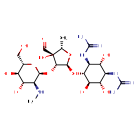
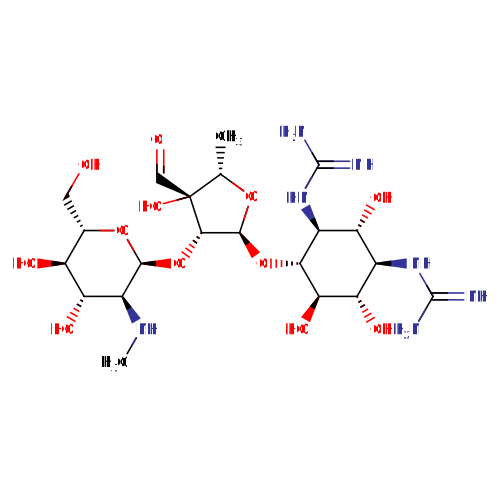
Structure for Streptomycin (DB01082)
- Weight
- Average: 581.5741
Monoisotopic: 581.265669747 - Chemical Formula
- C21H39N7O12
- Synonyms
- 2,4-diguanidino-3,5,6-trihydroxycyclohexyl 5-deoxy-2-O-(2-deoxy-2-methylamino-alpha-L-glucopyranosyl)-3-C-formyl-beta-L-lyxopentanofuranoside
- Estreptomicina
- Streptomicina
- Streptomycin
- Streptomyzin
- External IDs
- NSC-14083

Pharmacology
- Indication
Although streptomycin was the first antibiotic available for the treatment of mycobacterium tuberculosis, it is now largely a second line option due to resistance and toxicity.2 Streptomycin may also be used to treat a variety of other infections caused by susceptible strains of aerobic bacteria where other less toxic agents are ineffective. Examples include: Yersinia pestis, Francisella tularensis, Brucella, Calymmatobacterium granulomatis (donovanosis, granuloma inguinale), H. ducreyi (chancroid), H. influenzae (in respiratory, endocardial, and meningeal infections - concomitantly with another antibacterial agents). K. pneumoniae pneumonia (concomitantly with another antibacterial agent), E.coli, Proteus, A.aerogenes, K. pneumoniae, and Enterococcus faecalis in urinary tract infections, Streptococcus viridans, Enterococcus faecalis (in endocardial infections - concomitantly with penicillin), and Gram-negative bacillary bacteremia (concomitantly with another antibacterial agent).
 Reduce drug development failure ratesBuild, train, & validate machine-learning modelswith evidence-based and structured datasets.Build, train, & validate predictive machine-learning models with structured datasets.
- Associated Conditions
Indication Type Indication Combined Product Details Approval Level Age Group Patient Characteristics Dose Form Treatment of Bacteremia •••••••••••• Treatment of Bacterial infections caused by susceptible bacteria •••••••••••• Treatment of Buruli ulcer ••• ••••• Treatment of Chancroid •••••••••••• Treatment of Granuloma inguinale •••••••••••• - Contraindications & Blackbox Warnings
 Prevent Adverse Drug Events TodayTap into our Clinical API for life-saving information on contraindications & blackbox warnings, population restrictions, harmful risks, & more.Avoid life-threatening adverse drug events with our Clinical API
- Pharmacodynamics
Although streptomycin originally had broad gram-negative and gram-positive coverage, its spectrum of activity has been significantly narrowed due to antibiotic resistance.2 Streptomycins current spectrum of activity includes susceptible strains of Yersinia pestis, Francisella tularensis, Brucella, Calymmatobacterium granulomatis, H. ducreyi, H. influenza, K. pneumoniae pneumonia, E.coli, Proteus, A. aerogenes, K. pneumoniae, Enterococcus faecalis, Streptococcus viridans, Enterococcus faecalis, and Gram-negative bacillary bacteremia. Streptomycin is not reliably active against pseudomonas aeruginosa.2
Similar to other aminoglycosides, streptomycin is considered to have a narrow therapeutic index.18 Characteristic toxicities of streptomycin include nephrotoxicity and ototoxicity.2,6 Patients should be carefully monitored for early signs of hearing loss and vestibular dysfunction in order to prevent permanent damage to sensorineural cells. Neuromuscular blockade has also been rarely reported.6
- Mechanism of action
There are 3 key phases of aminoglycoside entry into cells.6 The first “ionic binding phase” occurs when polycationic aminoglycosides bind electrostatically to negatively charged components of bacterial cell membranes including with lipopolysaccharides and phospholipids within the outer membrane of Gram-negative bacteria and to teichoic acids and phospholipids within the cell membrane of Gram-positive bacteria. This binding results in displacement of divalent cations and increased membrane permeability, allowing for aminoglycoside entry.6,8,9,10
The second “energy-dependent phase I” of aminoglycoside entry into the cytoplasm relies on the proton-motive force and allows a limited amount of aminoglycoside access to its primary intracellular target - the bacterial 30S ribosome.6,10 This ultimately results in the mistranslation of proteins and disruption of the cytoplasmic membrane.2 Finally, in the “energy-dependent phase II” stage, concentration-dependent bacterial killing is observed. Aminoglycoside rapidly accumulates in the cell due to the damaged cytoplasmic membrane, and protein mistranslation and synthesis inhibition is amplified.6,10,11
Hence, aminoglycosides have both immediate bactericidal effects through membrane disruption and delayed bactericidal effects through impaired protein synthesis; observed experimental data and mathematical modeling support this two-mechanism model.6,12
Inhibition of protein synthesis is a key component of aminoglycoside efficacy. Structural and cell biological studies suggest that aminoglycosides bind to the 16S rRNA in helix 44 (h44), near the A site of the 30S ribosomal subunit, altering interactions between h44 and h45. This binding also displaces two important residues, A1492 and A1493, from h44, mimicking normal conformational changes that occur with successful codon-anticodon pairing in the A site.13,14 Overall, aminoglycoside binding has several negative effects including inhibition of translation, initiation, elongation, and ribosome recycling.6,15,16 Recent evidence suggests that the latter effect is due to a cryptic second binding site situated in h69 of the 23S rRNA of the 50S ribosomal subunit.14,16 Also, by stabilizing a conformation that mimics correct codon-anticodon pairing, aminoglycosides promote error-prone translation.17 Mistranslated proteins can incorporate into the cell membrane, inducing the damage discussed above.6,11
Target Actions Organism A16S ribosomal RNA inhibitorEnteric bacteria and other eubacteria A23S ribosomal RNA inhibitorEnteric bacteria and other eubacteria A30S ribosomal protein S12 inhibitorEscherichia coli (strain K12) ACytoplasmic membrane incorporation into and destabilizationBacteria ABacterial outer membrane incorporation into and destabilizationBacteria NProtein-arginine deiminase type-4 inhibitorHumans - Absorption
Due to poor oral absorption, aminoglycosides including streptomycin are administered parenterally. Streptomycin is available as an intramuscular injection, and in some cases may be administered intravenously.2,3 A peak serum concentration of 25-50 mcg/mL is achieved within 1 hour after intramuscular administration of 1 gram of streptomycin.20
- Volume of distribution
Not Available
- Protein binding
Not Available
- Metabolism
- Not Available
- Route of elimination
Approximately 50% of streptomycin is eliminated in the urine within 24 hours after intravenous or intramuscular administration.7
- Half-life
Streptomycins serum half-life is estimated to be 2.5 hours.2
- Clearance
Not Available
- Adverse Effects
 Improve decision support & research outcomesWith structured adverse effects data, including: blackbox warnings, adverse reactions, warning & precautions, & incidence rates. View sample adverse effects data in our new Data Library!Improve decision support & research outcomes with our structured adverse effects data.
- Toxicity
The most common symptoms of streptomycin overdose are ototoxicity and vestibular impairment.2 Streptomycin is also associated with nephrotoxicity which presents as mild elevations in blood urea, mild proteinuria, and excess cellular excretion. While in severe cases, streptomycin may lead to permanent hearing loss and vestibular dysfunction, any associated nephrotoxicity is typically transient.2,4 In cases of toxicity, streptomycin serum concentrations may be lowered with dialysis.2
- Pathways
Pathway Category Streptomycin Action Pathway Drug action - Pharmacogenomic Effects/ADRs
- Not Available
Interactions
- Drug Interactions
- This information should not be interpreted without the help of a healthcare provider. If you believe you are experiencing an interaction, contact a healthcare provider immediately. The absence of an interaction does not necessarily mean no interactions exist.
Drug Interaction Integrate drug-drug
interactions in your softwareAbacavir Abacavir may decrease the excretion rate of Streptomycin which could result in a higher serum level. Aceclofenac Aceclofenac may decrease the excretion rate of Streptomycin which could result in a higher serum level. Acemetacin Acemetacin may decrease the excretion rate of Streptomycin which could result in a higher serum level. Acenocoumarol The risk or severity of bleeding can be increased when Streptomycin is combined with Acenocoumarol. Acetaminophen Acetaminophen may decrease the excretion rate of Streptomycin which could result in a higher serum level. - Food Interactions
- No interactions found.
Products
 Drug product information from 10+ global regionsOur datasets provide approved product information including:dosage, form, labeller, route of administration, and marketing period.Access drug product information from over 10 global regions.
- Product Ingredients
Ingredient UNII CAS InChI Key Streptomycin Sulfate CW25IKJ202 3810-74-0 CFCMMYICHMLDCC-QXQFOYBSSA-N - Brand Name Prescription Products
Name Dosage Strength Route Labeller Marketing Start Marketing End Region Image Streptomycin for Injection USP Powder, for solution 1 g / vial Intramuscular Sterimax Inc 2001-10-15 Not applicable Canada 
Streptomycin Sulfate Injection USP 1g/2.5ml Liquid 1 g / 2.5 mL Intramuscular Pfizer Canada Ulc 1993-12-31 2000-07-26 Canada - Generic Prescription Products
Name Dosage Strength Route Labeller Marketing Start Marketing End Region Image Streptomycin Injection, powder, lyophilized, for solution 1 g/1 Intramuscular XGen Pharmaceuticals DJB, Inc. 1998-06-30 Not applicable US 
Streptomycin Sulfate Injection, solution 1 g/2.5mL Intramuscular Roerig 1952-03-01 2001-09-01 US
Categories
- ATC Codes
- J04AM01 — Streptomycin and isoniazid
- J04AM — Combinations of drugs for treatment of tuberculosis
- J04A — DRUGS FOR TREATMENT OF TUBERCULOSIS
- J04 — ANTIMYCOBACTERIALS
- J — ANTIINFECTIVES FOR SYSTEMIC USE
- J01GA — Streptomycins
- J01G — AMINOGLYCOSIDE ANTIBACTERIALS
- J01 — ANTIBACTERIALS FOR SYSTEMIC USE
- J — ANTIINFECTIVES FOR SYSTEMIC USE
- A07AA — Antibiotics
- A07A — INTESTINAL ANTIINFECTIVES
- A07 — ANTIDIARRHEALS, INTESTINAL ANTIINFLAMMATORY/ANTIINFECTIVE AGENTS
- A — ALIMENTARY TRACT AND METABOLISM
- Drug Categories
- Agents that produce neuromuscular block (indirect)
- Alimentary Tract and Metabolism
- Aminoglycoside Antibacterials
- Anti-Bacterial Agents
- Anti-Infective Agents
- Antibacterials for Systemic Use
- Antidiarrheals, Intestinal Antiinflammatory/antiinfective Agents
- Antiinfectives for Systemic Use
- Antimycobacterials
- Drugs for Treatment of Tuberculosis
- Drugs that are Mainly Renally Excreted
- Drugs that are Mainly Renally Excreted with a Narrow Therapeutic Index
- Glycosides
- Intestinal Antiinfectives
- Narrow Therapeutic Index Drugs
- Nephrotoxic agents
- OAT1/SLC22A6 inhibitors
- Protein Synthesis Inhibitors
- Streptomycins
- Chemical TaxonomyProvided by Classyfire
- Description
- This compound belongs to the class of organic compounds known as aminocyclitol glycosides. These are organic compounds containing an amicocyclitol moiety glycosidically linked to a carbohydrate moiety. There are two major classes of aminoglycosides containing a 2-streptamine core. They are called 4,5- and 4,6-disubstituted 2-deoxystreptamines.
- Kingdom
- Organic compounds
- Super Class
- Organic oxygen compounds
- Class
- Organooxygen compounds
- Sub Class
- Carbohydrates and carbohydrate conjugates
- Direct Parent
- Aminocyclitol glycosides
- Alternative Parents
- O-glycosyl compounds / Cyclohexanols / Cyclitols and derivatives / Monosaccharides / Oxanes / Tetrahydrofurans / Tertiary alcohols / Guanidines / 1,2-aminoalcohols / Oxacyclic compounds show 10 more
- Substituents
- 1,2-aminoalcohol / Acetal / Alcohol / Aldehyde / Aliphatic heteromonocyclic compound / Amine / Amino cyclitol glycoside / Carbonyl group / Carboximidamide / Cyclic alcohol show 23 more
- Molecular Framework
- Aliphatic heteromonocyclic compounds
- External Descriptors
- antibiotic antifungal drug, antibiotic fungicide, streptomycins (CHEBI:17076) / Streptidines, Antibiotic fungicides (C00413)
- Affected organisms
- Enteric bacteria and other eubacteria
- Mycobacteria
- Mycobacterium tuberculosis
- Yersinia pestis
- Francisella tularensis
- Staphylococcus aureus
- Enterococcus faecalis
Chemical Identifiers
- UNII
- Y45QSO73OB
- CAS number
- 57-92-1
- InChI Key
- UCSJYZPVAKXKNQ-HZYVHMACSA-N
- InChI
- InChI=1S/C21H39N7O12/c1-5-21(36,4-30)16(40-17-9(26-2)13(34)10(31)6(3-29)38-17)18(37-5)39-15-8(28-20(24)25)11(32)7(27-19(22)23)12(33)14(15)35/h4-18,26,29,31-36H,3H2,1-2H3,(H4,22,23,27)(H4,24,25,28)/t5-,6-,7+,8-,9-,10-,11+,12-,13-,14+,15+,16-,17-,18-,21+/m0/s1
- IUPAC Name
- N-[(1S,2R,3R,4S,5R,6R)-3-carbamimidamido-6-{[(2R,3R,4R,5S)-3-{[(2S,3S,4S,5R,6S)-4,5-dihydroxy-6-(hydroxymethyl)-3-(methylamino)oxan-2-yl]oxy}-4-formyl-4-hydroxy-5-methyloxolan-2-yl]oxy}-2,4,5-trihydroxycyclohexyl]guanidine
- SMILES
- CN[C@H]1[C@H](O)[C@@H](O)[C@H](CO)O[C@H]1O[C@H]1[C@H](O[C@H]2[C@H](O)[C@@H](O)[C@H](NC(N)=N)[C@@H](O)[C@@H]2NC(N)=N)O[C@@H](C)[C@]1(O)C=O
References
- Synthesis Reference
Arnold L. Demain, Kozo Nagaoka, "Derivatives of streptomycin and method of producing streptomycin derivatives by mutational biosynthesis." U.S. Patent US3993544, issued November 23, 1976.
US3993544- General References
- Block M, Blanchard DL: Aminoglycosides . [Article]
- Waters M, Tadi P: Streptomycin . [Article]
- Authors unspecified: Aminoglycosides . [Article]
- Adeyemo AA, Oluwatosin O, Omotade OO: Study of streptomycin-induced ototoxicity: protocol for a longitudinal study. Springerplus. 2016 Jun 17;5(1):758. doi: 10.1186/s40064-016-2429-5. eCollection 2016. [Article]
- Laurell G: Pharmacological intervention in the field of ototoxicity. HNO. 2019 Jun;67(6):434-439. doi: 10.1007/s00106-019-0663-1. [Article]
- Serio AW, Keepers T, Andrews L, Krause KM: Aminoglycoside Revival: Review of a Historically Important Class of Antimicrobials Undergoing Rejuvenation. EcoSal Plus. 2018 Nov;8(1). doi: 10.1128/ecosalplus.ESP-0002-2018. [Article]
- Buggs CW, Pilling MA, Bronstein B, Hirshfeld JW, Worzniak L, Key LJ: THE ABSORPTION, DISTRIBUTION, AND EXCRETION OF STREPTOMYCIN IN MAN. J Clin Invest. 1946 Jan;25(1):94-102. doi: 10.1172/JCI101693. [Article]
- Moore RA, Bates NC, Hancock RE: Interaction of polycationic antibiotics with Pseudomonas aeruginosa lipopolysaccharide and lipid A studied by using dansyl-polymyxin. Antimicrob Agents Chemother. 1986 Mar;29(3):496-500. doi: 10.1128/aac.29.3.496. [Article]
- Hancock RE, Raffle VJ, Nicas TI: Involvement of the outer membrane in gentamicin and streptomycin uptake and killing in Pseudomonas aeruginosa. Antimicrob Agents Chemother. 1981 May;19(5):777-85. doi: 10.1128/aac.19.5.777. [Article]
- Taber HW, Mueller JP, Miller PF, Arrow AS: Bacterial uptake of aminoglycoside antibiotics. Microbiol Rev. 1987 Dec;51(4):439-57. [Article]
- Davis BD, Chen LL, Tai PC: Misread protein creates membrane channels: an essential step in the bactericidal action of aminoglycosides. Proc Natl Acad Sci U S A. 1986 Aug;83(16):6164-8. doi: 10.1073/pnas.83.16.6164. [Article]
- Bulitta JB, Ly NS, Landersdorfer CB, Wanigaratne NA, Velkov T, Yadav R, Oliver A, Martin L, Shin BS, Forrest A, Tsuji BT: Two mechanisms of killing of Pseudomonas aeruginosa by tobramycin assessed at multiple inocula via mechanism-based modeling. Antimicrob Agents Chemother. 2015 Apr;59(4):2315-27. doi: 10.1128/AAC.04099-14. Epub 2015 Feb 2. [Article]
- O'Sullivan ME, Poitevin F, Sierra RG, Gati C, Dao EH, Rao Y, Aksit F, Ciftci H, Corsepius N, Greenhouse R, Hayes B, Hunter MS, Liang M, McGurk A, Mbgam P, Obrinsky T, Pardo-Avila F, Seaberg MH, Cheng AG, Ricci AJ, DeMirci H: Aminoglycoside ribosome interactions reveal novel conformational states at ambient temperature. Nucleic Acids Res. 2018 Oct 12;46(18):9793-9804. doi: 10.1093/nar/gky693. [Article]
- Ying L, Zhu H, Shoji S, Fredrick K: Roles of specific aminoglycoside-ribosome interactions in the inhibition of translation. RNA. 2019 Feb;25(2):247-254. doi: 10.1261/rna.068460.118. Epub 2018 Nov 9. [Article]
- Wallace BJ, Tai PC, Herzog EL, Davis BD: Partial inhibition of polysomal ribosomes of Escherichia coli by streptomycin. Proc Natl Acad Sci U S A. 1973 Apr;70(4):1234-7. doi: 10.1073/pnas.70.4.1234. [Article]
- Borovinskaya MA, Pai RD, Zhang W, Schuwirth BS, Holton JM, Hirokawa G, Kaji H, Kaji A, Cate JH: Structural basis for aminoglycoside inhibition of bacterial ribosome recycling. Nat Struct Mol Biol. 2007 Aug;14(8):727-32. doi: 10.1038/nsmb1271. Epub 2007 Jul 29. [Article]
- Tai PC, Wallace BJ, Davis BD: Streptomycin causes misreading of natural messenger by interacting with ribosomes after initiation. Proc Natl Acad Sci U S A. 1978 Jan;75(1):275-9. doi: 10.1073/pnas.75.1.275. [Article]
- Germovsek E, Barker CI, Sharland M: What do I need to know about aminoglycoside antibiotics? Arch Dis Child Educ Pract Ed. 2017 Apr;102(2):89-93. doi: 10.1136/archdischild-2015-309069. Epub 2016 Aug 9. [Article]
- Streptomycin FDA Label [Link]
- DailyMed Drug Label Information: Streptomycin injection [Link]
- External Links
- Human Metabolome Database
- HMDB0015214
- KEGG Compound
- C00413
- PubChem Compound
- 19649
- PubChem Substance
- 46506845
- ChemSpider
- 18508
- BindingDB
- 50103513
- 10109
- ChEBI
- 17076
- ChEMBL
- CHEMBL372795
- ZINC
- ZINC000008214681
- Therapeutic Targets Database
- DAP000144
- PharmGKB
- PA451512
- PDBe Ligand
- SRY
- RxList
- RxList Drug Page
- Drugs.com
- Drugs.com Drug Page
- Wikipedia
- Streptomycin
- PDB Entries
- 1fjg / 1nta / 1ntb / 4dr3 / 4dr5 / 4dr6 / 4dr7 / 4duz / 4dv1 / 4dv3 … show 12 more
- MSDS
- Download (73.7 KB)
Clinical Trials
- Clinical Trials
Phase Status Purpose Conditions Count 4 Unknown Status Treatment Reinfection Pulmonary Tuberculosis 1 3 Recruiting Treatment Plague, Bubonic / Pneumonic Plague 1 2 Completed Treatment Mycobacterium avium complex infection 1 2, 3 Completed Treatment Mycobacterium Ulcerans Infection 1 2, 3 Completed Treatment Plague 1
Pharmacoeconomics
- Manufacturers
- Not Available
- Packagers
- Ben Venue Laboratories Inc.
- Gallipot
- Sanofi-Aventis Inc.
- X-Gen Pharmaceuticals
- Dosage Forms
Form Route Strength Capsule Oral 100.000 mg Injection, powder, for solution Intramuscular 1.253 g Injection, solution Intramuscular 1 g Injection, powder, lyophilized, for solution Intramuscular 1 g/1 Powder, for solution Intramuscular 1 g / vial Injection 1 g Injection, solution Intramuscular 1 g/2.5mL Injection, powder, for solution Intramuscular 1 g/vial Liquid Intramuscular 1 g / 2.5 mL Injection, powder, for solution Intramuscular Injection, solution Intramuscular Syrup Solution Parenteral 1.000 g - Prices
Unit description Cost Unit Streptomycin sulf 1 gm vial 14.65USD vial Streptomycin sulfate powder 0.82USD g DrugBank does not sell nor buy drugs. Pricing information is supplied for informational purposes only.- Patents
- Not Available
Properties
- State
- Solid
- Experimental Properties
Property Value Source boiling point (°C) 872.9∓75.0°C at 760 mmHg http://www.chemspider.com/Chemical-Structure.18508.html logP -2.53 http://www.chemspider.com/Chemical-Structure.18508.html - Predicted Properties
Property Value Source Water Solubility 12.8 mg/mL ALOGPS logP -2.6 ALOGPS logP -7.6 Chemaxon logS -1.7 ALOGPS pKa (Strongest Acidic) 11.09 Chemaxon pKa (Strongest Basic) 11.6 Chemaxon Physiological Charge 3 Chemaxon Hydrogen Acceptor Count 19 Chemaxon Hydrogen Donor Count 14 Chemaxon Polar Surface Area 331.43 Å2 Chemaxon Rotatable Bond Count 9 Chemaxon Refractivity 149.47 m3·mol-1 Chemaxon Polarizability 55.87 Å3 Chemaxon Number of Rings 3 Chemaxon Bioavailability 0 Chemaxon Rule of Five No Chemaxon Ghose Filter No Chemaxon Veber's Rule No Chemaxon MDDR-like Rule Yes Chemaxon - Predicted ADMET Features
Property Value Probability Human Intestinal Absorption - 0.8824 Blood Brain Barrier - 0.9712 Caco-2 permeable - 0.6968 P-glycoprotein substrate Substrate 0.5531 P-glycoprotein inhibitor I Non-inhibitor 0.7577 P-glycoprotein inhibitor II Non-inhibitor 0.8382 Renal organic cation transporter Non-inhibitor 0.7782 CYP450 2C9 substrate Non-substrate 0.7053 CYP450 2D6 substrate Non-substrate 0.8177 CYP450 3A4 substrate Non-substrate 0.5275 CYP450 1A2 substrate Non-inhibitor 0.9045 CYP450 2C9 inhibitor Non-inhibitor 0.9072 CYP450 2D6 inhibitor Non-inhibitor 0.923 CYP450 2C19 inhibitor Non-inhibitor 0.9026 CYP450 3A4 inhibitor Non-inhibitor 0.8867 CYP450 inhibitory promiscuity Low CYP Inhibitory Promiscuity 0.8818 Ames test AMES toxic 0.9107 Carcinogenicity Non-carcinogens 0.9528 Biodegradation Not ready biodegradable 0.9821 Rat acute toxicity 1.8409 LD50, mol/kg Not applicable hERG inhibition (predictor I) Weak inhibitor 0.9924 hERG inhibition (predictor II) Non-inhibitor 0.9009
Spectra
- Mass Spec (NIST)
- Not Available
- Spectra
- Chromatographic Properties
Collision Cross Sections (CCS)
Adduct CCS Value (Å2) Source type Source [M-H]- 239.1183723 predictedDarkChem Lite v0.1.0 [M-H]- 240.9018723 predictedDarkChem Lite v0.1.0 [M-H]- 241.5993723 predictedDarkChem Lite v0.1.0 [M-H]- 223.53099 predictedDeepCCS 1.0 (2019) [M+H]+ 239.6951723 predictedDarkChem Lite v0.1.0 [M+H]+ 238.2148723 predictedDarkChem Lite v0.1.0 [M+H]+ 240.4496723 predictedDarkChem Lite v0.1.0 [M+H]+ 225.33455 predictedDeepCCS 1.0 (2019) [M+Na]+ 239.9798723 predictedDarkChem Lite v0.1.0 [M+Na]+ 238.1588723 predictedDarkChem Lite v0.1.0 [M+Na]+ 241.3448723 predictedDarkChem Lite v0.1.0 [M+Na]+ 231.5259 predictedDeepCCS 1.0 (2019)
Targets

References
- Okamoto S, Tamaru A, Nakajima C, Nishimura K, Tanaka Y, Tokuyama S, Suzuki Y, Ochi K: Loss of a conserved 7-methylguanosine modification in 16S rRNA confers low-level streptomycin resistance in bacteria. Mol Microbiol. 2007 Feb;63(4):1096-106. [Article]
- Nishimura K, Hosaka T, Tokuyama S, Okamoto S, Ochi K: Mutations in rsmG, encoding a 16S rRNA methyltransferase, result in low-level streptomycin resistance and antibiotic overproduction in Streptomyces coelicolor A3(2). J Bacteriol. 2007 May;189(10):3876-83. Epub 2007 Mar 23. [Article]
- Vila-Sanjurjo A, Lu Y, Aragonez JL, Starkweather RE, Sasikumar M, O'Connor M: Modulation of 16S rRNA function by ribosomal protein S12. Biochim Biophys Acta. 2007 Jul-Aug;1769(7-8):462-71. Epub 2007 Apr 20. [Article]
- Waters M, Tadi P: Streptomycin . [Article]
- Block M, Blanchard DL: Aminoglycosides . [Article]
References
- Ying L, Zhu H, Shoji S, Fredrick K: Roles of specific aminoglycoside-ribosome interactions in the inhibition of translation. RNA. 2019 Feb;25(2):247-254. doi: 10.1261/rna.068460.118. Epub 2018 Nov 9. [Article]
- Borovinskaya MA, Pai RD, Zhang W, Schuwirth BS, Holton JM, Hirokawa G, Kaji H, Kaji A, Cate JH: Structural basis for aminoglycoside inhibition of bacterial ribosome recycling. Nat Struct Mol Biol. 2007 Aug;14(8):727-32. doi: 10.1038/nsmb1271. Epub 2007 Jul 29. [Article]
- Kind
- Protein
- Organism
- Escherichia coli (strain K12)
- Pharmacological action
- Yes
- Actions
- Inhibitor
- Curator comments
- Note: The above was chosen as a representative target protein in a representative bacterium, and does not encompass all proteins/bacteria affected by this agent.
- General Function
- Trna binding
- Specific Function
- With S4 and S5 plays an important role in translational accuracy.Interacts with and stabilizes bases of the 16S rRNA that are involved in tRNA selection in the A site and with the mRNA backbone. Lo...
- Gene Name
- rpsL
- Uniprot ID
- P0A7S3
- Uniprot Name
- 30S ribosomal protein S12
- Molecular Weight
- 13736.995 Da
References
- Mieskes KT, Rusch-Gerdes S, Truffot-Pernot C, Feldmann K, Tortoli E, Casal M, Loscher T, Rinder H: Rapid, simple, and culture-independent detection of rpsL codon 43 mutations that are highly predictive of streptomycin resistance in Mycobacterium tuberculosis. Am J Trop Med Hyg. 2000 Jul-Aug;63(1-2):56-60. [Article]
- Kenney TJ, Churchward G: Cloning and sequence analysis of the rpsL and rpsG genes of Mycobacterium smegmatis and characterization of mutations causing resistance to streptomycin. J Bacteriol. 1994 Oct;176(19):6153-6. [Article]
- Fukuda M, Koga H, Ohno H, Ogawa K, Yang B, Miyamoto J, Tomono K, Kohno S: [Relationship between streptomycin susceptibility and rpsL mutations of Mycobacterium tuberculosis strains]. Kekkaku. 1997 Sep;72(9):507-13. [Article]
References
- Serio AW, Keepers T, Andrews L, Krause KM: Aminoglycoside Revival: Review of a Historically Important Class of Antimicrobials Undergoing Rejuvenation. EcoSal Plus. 2018 Nov;8(1). doi: 10.1128/ecosalplus.ESP-0002-2018. [Article]
- Taber HW, Mueller JP, Miller PF, Arrow AS: Bacterial uptake of aminoglycoside antibiotics. Microbiol Rev. 1987 Dec;51(4):439-57. [Article]
- Davis BD, Chen LL, Tai PC: Misread protein creates membrane channels: an essential step in the bactericidal action of aminoglycosides. Proc Natl Acad Sci U S A. 1986 Aug;83(16):6164-8. doi: 10.1073/pnas.83.16.6164. [Article]
References
- Serio AW, Keepers T, Andrews L, Krause KM: Aminoglycoside Revival: Review of a Historically Important Class of Antimicrobials Undergoing Rejuvenation. EcoSal Plus. 2018 Nov;8(1). doi: 10.1128/ecosalplus.ESP-0002-2018. [Article]
- Moore RA, Bates NC, Hancock RE: Interaction of polycationic antibiotics with Pseudomonas aeruginosa lipopolysaccharide and lipid A studied by using dansyl-polymyxin. Antimicrob Agents Chemother. 1986 Mar;29(3):496-500. doi: 10.1128/aac.29.3.496. [Article]
- Hancock RE, Raffle VJ, Nicas TI: Involvement of the outer membrane in gentamicin and streptomycin uptake and killing in Pseudomonas aeruginosa. Antimicrob Agents Chemother. 1981 May;19(5):777-85. doi: 10.1128/aac.19.5.777. [Article]
- Taber HW, Mueller JP, Miller PF, Arrow AS: Bacterial uptake of aminoglycoside antibiotics. Microbiol Rev. 1987 Dec;51(4):439-57. [Article]
- Kind
- Protein
- Organism
- Humans
- Pharmacological action
- No
- Actions
- Inhibitor
- General Function
- Protein-arginine deiminase activity
- Specific Function
- Catalyzes the citrullination/deimination of arginine residues of proteins such as histones, thereby playing a key role in histone code and regulation of stem cell maintenance. Citrullinates histone...
- Gene Name
- PADI4
- Uniprot ID
- Q9UM07
- Uniprot Name
- Protein-arginine deiminase type-4
- Molecular Weight
- 74078.65 Da
References
- Knuckley B, Luo Y, Thompson PR: Profiling Protein Arginine Deiminase 4 (PAD4): a novel screen to identify PAD4 inhibitors. Bioorg Med Chem. 2008 Jan 15;16(2):739-45. Epub 2007 Oct 13. [Article]

Drug created at June 13, 2005 13:24 / Updated at April 27, 2024 09:44