Identification
- Summary
Gemifloxacin is a quinolone antibacterial agent used for the treatment of acute bacterial exacerbation of chronic bronchitis and mild to moderate community-acquired pneumonia caused by susceptible bacteria.
- Brand Names
- Factive
- Generic Name
- Gemifloxacin
- DrugBank Accession Number
- DB01155
- Background
Gemifloxacin is a quinolone antibacterial agent with a broad-spectrum activity that is used in the treatment of acute bacterial exacerbation of chronic bronchitis and mild-to-moderate pneumonia. It is available in oral formulations. Gemifloxacin acts by inhibiting DNA synthesis through the inhibition of both DNA gyrase and topoisomerase IV, which are essential for bacterial growth.
- Type
- Small Molecule
- Groups
- Approved, Investigational
- Structure
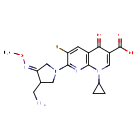
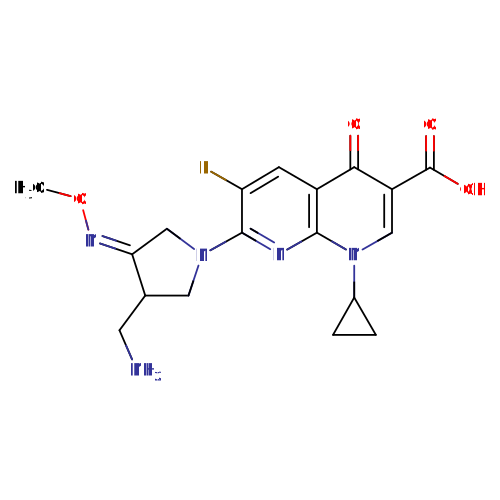
Structure for Gemifloxacin (DB01155)
- Weight
- Average: 389.3809
Monoisotopic: 389.149932358 - Chemical Formula
- C18H20FN5O4
- Synonyms
- Gemifloxacin

Pharmacology
- Indication
For the treatment of bacterial infection caused by susceptible strains such as S. pneumoniae, H. influenzae, H. parainfluenzae, or M. catarrhalis, S. pneumoniae (including multi-drug resistant strains [MDRSP]), M. pneumoniae, C. pneumoniae, or K. pneumoniae.
 Reduce drug development failure ratesBuild, train, & validate machine-learning modelswith evidence-based and structured datasets.Build, train, & validate predictive machine-learning models with structured datasets.
- Associated Conditions
Indication Type Indication Combined Product Details Approval Level Age Group Patient Characteristics Dose Form Treatment of Acute bacterial exacerbation of chronic bronchitis •••••••••••• Treatment of Bacterial infections •••••••••••• Treatment of Community-acquired pneumonia •••••••••••• Used in combination to treat Gonorrhea ••• ••••• Treatment of Bacterial rhinosinusitis ••• ••••• - Contraindications & Blackbox Warnings
 Prevent Adverse Drug Events TodayTap into our Clinical API for life-saving information on contraindications & blackbox warnings, population restrictions, harmful risks, & more.Avoid life-threatening adverse drug events with our Clinical API
- Pharmacodynamics
Gemifloxacin is a quinolone/fluoroquinolone antibiotic. Gemifloxacin is bactericidal and its mode of action depends on blocking of bacterial DNA replication by binding itself to an enzyme called DNA gyrase, which allows the untwisting required to replicate one DNA double helix into two. Notably the drug has 100 times higher affinity for bacterial DNA gyrase than for mammalian. Gemifloxacin is a broad-spectrum antibiotic that is active against both Gram-positive and Gram-negative bacteria.
- Mechanism of action
The bactericidal action of gemifloxacin results from inhibition of the enzymes topoisomerase II (DNA gyrase) and topoisomerase IV, which are required for bacterial DNA replication, transcription, repair, and recombination.
Target Actions Organism ADNA gyrase subunit A inhibitorHaemophilus influenzae (strain ATCC 51907 / DSM 11121 / KW20 / Rd) ADNA topoisomerase 4 subunit A inhibitorHaemophilus influenzae (strain ATCC 51907 / DSM 11121 / KW20 / Rd) - Absorption
Rapidly absorbed from the gastrointestinal tract. The absolute bioavailability averages approximately 71%.
- Volume of distribution
- 1.66 to 12.12 L/kg
- Protein binding
60-70%
- Metabolism
Gemifloxacin is metabolized to a limited extent by the liver. All metabolites formed are minor (<10% of the administered oral dose); the principal ones are N-acetyl gemifloxacin, the E-isomer of gemifloxacin and the carbamyl glucuronide of gemifloxacin.
Hover over products below to view reaction partners
- Route of elimination
Gemifloxacin and its metabolites are excreted via dual routes of excretion.Following oral administration of gemifloxacin to healthy subjects, a mean (± SD) of 61 ± 9.5% of the dose was excreted in the feces and 36 ± 9.3% in the urine as unchanged drug and metabolites. The mean (± SD) renal clearance following repeat doses of 320 mg was approximately 11.6 ± 3.9 L/hr (range 4.6-6 L/hr), which indicates active secretion is involved in the renal excretion of gemifloxacin.
- Half-life
7 (± 2) hours
- Clearance
- renal cl=11.6+/- 3.9 L/hr [Healthy subjects receiving repeat doses of 320 mg orally]
- Adverse Effects
 Improve decision support & research outcomesWith structured adverse effects data, including: blackbox warnings, adverse reactions, warning & precautions, & incidence rates. View sample adverse effects data in our new Data Library!Improve decision support & research outcomes with our structured adverse effects data.
- Toxicity
Not Available
- Pathways
- Not Available
- Pharmacogenomic Effects/ADRs
- Not Available
Interactions
- Drug Interactions
- This information should not be interpreted without the help of a healthcare provider. If you believe you are experiencing an interaction, contact a healthcare provider immediately. The absence of an interaction does not necessarily mean no interactions exist.
Drug Interaction Integrate drug-drug
interactions in your softwareAcarbose The therapeutic efficacy of Acarbose can be increased when used in combination with Gemifloxacin. Aceclofenac Aceclofenac may increase the neuroexcitatory activities of Gemifloxacin. Acemetacin Acemetacin may increase the neuroexcitatory activities of Gemifloxacin. Acenocoumarol The therapeutic efficacy of Acenocoumarol can be increased when used in combination with Gemifloxacin. Acetaminophen The metabolism of Acetaminophen can be decreased when combined with Gemifloxacin. - Food Interactions
- Take with or without food. The absorption is unaffected by food.
Products
 Drug product information from 10+ global regionsOur datasets provide approved product information including:dosage, form, labeller, route of administration, and marketing period.Access drug product information from over 10 global regions.
- Product Ingredients
Ingredient UNII CAS InChI Key Gemifloxacin mesylate X4S9F8RL01 210353-53-0 JIYMVSQRGZEYAX-CWUUNJJBSA-N - International/Other Brands
- Factiv
- Brand Name Prescription Products
Name Dosage Strength Route Labeller Marketing Start Marketing End Region Image Factive Tablet, film coated 320 mg/1 Oral Oscient Pharmaceuticals Corporation 2006-06-13 Not applicable US 
Factive Tablet 320 mg/1 Oral Chiesi USA, Inc. 2003-04-04 2015-03-31 US Factive Tablet 320 mg Oral Oscient Pharmaceuticals Corporation 2006-11-24 2009-02-19 Canada 
Factive Tablet 320 mg/1 Oral Vansen Pharma Inc. 2003-04-04 Not applicable US Factive Tablet 320 mg/1 Oral Merus Labs International Inc. 2003-04-04 Not applicable US
Categories
- ATC Codes
- J01MA15 — Gemifloxacin
- Drug Categories
- Anti-Bacterial Agents
- Anti-Infective Agents
- Antibacterials for Systemic Use
- Antiinfectives for Systemic Use
- Cytochrome P-450 CYP1A2 Inhibitors
- Cytochrome P-450 CYP1A2 Inhibitors (strength unknown)
- Cytochrome P-450 Enzyme Inhibitors
- Enzyme Inhibitors
- Fluoroquinolones
- Heterocyclic Compounds, Fused-Ring
- Moderate Risk QTc-Prolonging Agents
- Naphthyridines
- QTc Prolonging Agents
- Quinolines
- Quinolone Antimicrobial
- Quinolones
- Topoisomerase II Inhibitors
- Topoisomerase Inhibitors
- Chemical TaxonomyProvided by Classyfire
- Description
- This compound belongs to the class of organic compounds known as naphthyridine carboxylic acids and derivatives. These are compounds containing a naphthyridine moiety, where one of the ring atoms bears a carboxylic acid group.
- Kingdom
- Organic compounds
- Super Class
- Organoheterocyclic compounds
- Class
- Diazanaphthalenes
- Sub Class
- Naphthyridines
- Direct Parent
- Naphthyridine carboxylic acids and derivatives
- Alternative Parents
- Fluoroquinolones / Pyridinecarboxylic acids / Dialkylarylamines / Aminopyridines and derivatives / Aryl fluorides / Imidolactams / Vinylogous amides / Pyrrolidines / Heteroaromatic compounds / Oxime ethers show 10 more
- Substituents
- Amine / Amino acid / Amino acid or derivatives / Aminopyridine / Aromatic heteropolycyclic compound / Aryl fluoride / Aryl halide / Azacycle / Carboxylic acid / Carboxylic acid derivative show 23 more
- Molecular Framework
- Aromatic heteropolycyclic compounds
- External Descriptors
- monocarboxylic acid, 1,8-naphthyridine derivative, quinolone antibiotic, fluoroquinolone antibiotic (CHEBI:101853)
- Affected organisms
- Enteric bacteria and other eubacteria
Chemical Identifiers
- UNII
- OKR68Y0E4T
- CAS number
- 175463-14-6
- InChI Key
- ZRCVYEYHRGVLOC-HYARGMPZSA-N
- InChI
- InChI=1S/C18H20FN5O4/c1-28-22-14-8-23(6-9(14)5-20)17-13(19)4-11-15(25)12(18(26)27)7-24(10-2-3-10)16(11)21-17/h4,7,9-10H,2-3,5-6,8,20H2,1H3,(H,26,27)/b22-14+
- IUPAC Name
- 7-[(4Z)-3-(aminomethyl)-4-(methoxyimino)pyrrolidin-1-yl]-1-cyclopropyl-6-fluoro-4-oxo-1,4-dihydro-1,8-naphthyridine-3-carboxylic acid
- SMILES
- CO\N=C1/CN(CC1CN)C1=NC2=C(C=C1F)C(=O)C(=CN2C1CC1)C(O)=O
References
- Synthesis Reference
- US5633262
- General References
- Not Available
- External Links
- Human Metabolome Database
- HMDB0015286
- KEGG Drug
- D08012
- PubChem Compound
- 9571107
- PubChem Substance
- 46507905
- ChemSpider
- 7845573
- BindingDB
- 50178917
- 138099
- ChEBI
- 101853
- ChEMBL
- CHEMBL430
- Therapeutic Targets Database
- DAP000851
- PharmGKB
- PA10088
- RxList
- RxList Drug Page
- Drugs.com
- Drugs.com Drug Page
- PDRhealth
- PDRhealth Drug Page
- Wikipedia
- Gemifloxacin
- FDA label
- Download (139 KB)
Clinical Trials
- Clinical Trials
Phase Status Purpose Conditions Count 4 Completed Treatment Gonorrhea 1 3 Recruiting Treatment Spontaneous Bacterial Peritonitis (SBP) 1 3 Unknown Status Treatment Helicobacter Pylori Infection 1 1 Completed Screening Glucose, Low Blood / Hypoglycemia 1 0 Unknown Status Treatment Rhinoscleroma 1
Pharmacoeconomics
- Manufacturers
- Not Available
- Packagers
- Cornerstone Pharmacy
- Oscient Pharmaceuticals
- Patheon Inc.
- Dosage Forms
Form Route Strength Tablet Oral 320 mg/1 Tablet, film coated Oral 320 mg/1 Tablet, film coated Oral Tablet, film coated Oral 320 mg Tablet Oral 320 mg - Prices
Unit description Cost Unit Factive 5 320 mg tablet Box 148.08USD box Factive 320 mg tablet 28.48USD tablet DrugBank does not sell nor buy drugs. Pricing information is supplied for informational purposes only.- Patents
Patent Number Pediatric Extension Approved Expires (estimated) Region US5633262 No 1997-05-27 2015-06-15 US US6262071 No 2001-07-17 2019-09-21 US US6331550 No 2001-12-18 2019-09-21 US US6340689 No 2002-01-22 2019-09-14 US US6455540 No 2002-09-24 2019-09-21 US US6803376 No 2004-10-12 2019-09-21 US US5776944 No 1998-07-07 2017-04-04 US US6723734 No 2004-04-20 2018-03-20 US
Properties
- State
- Solid
- Experimental Properties
Property Value Source water solubility Freely soluble at neutral pH (350 mg/mL at 37 °C, pH 7.0). Not Available logP 2.3 Not Available - Predicted Properties
Property Value Source Water Solubility 0.21 mg/mL ALOGPS logP -0.82 ALOGPS logP -0.92 Chemaxon logS -3.3 ALOGPS pKa (Strongest Acidic) 5.35 Chemaxon pKa (Strongest Basic) 9.41 Chemaxon Physiological Charge 0 Chemaxon Hydrogen Acceptor Count 9 Chemaxon Hydrogen Donor Count 2 Chemaxon Polar Surface Area 121.35 Å2 Chemaxon Rotatable Bond Count 5 Chemaxon Refractivity 99.74 m3·mol-1 Chemaxon Polarizability 39.02 Å3 Chemaxon Number of Rings 4 Chemaxon Bioavailability 1 Chemaxon Rule of Five Yes Chemaxon Ghose Filter No Chemaxon Veber's Rule No Chemaxon MDDR-like Rule No Chemaxon - Predicted ADMET Features
Property Value Probability Human Intestinal Absorption + 0.9866 Blood Brain Barrier - 0.5099 Caco-2 permeable - 0.5644 P-glycoprotein substrate Substrate 0.8404 P-glycoprotein inhibitor I Non-inhibitor 0.85 P-glycoprotein inhibitor II Inhibitor 0.6012 Renal organic cation transporter Non-inhibitor 0.5751 CYP450 2C9 substrate Non-substrate 0.8462 CYP450 2D6 substrate Non-substrate 0.7919 CYP450 3A4 substrate Non-substrate 0.5148 CYP450 1A2 substrate Non-inhibitor 0.745 CYP450 2C9 inhibitor Non-inhibitor 0.6642 CYP450 2D6 inhibitor Non-inhibitor 0.809 CYP450 2C19 inhibitor Non-inhibitor 0.6581 CYP450 3A4 inhibitor Inhibitor 0.5418 CYP450 inhibitory promiscuity Low CYP Inhibitory Promiscuity 0.7405 Ames test AMES toxic 0.6124 Carcinogenicity Non-carcinogens 0.7902 Biodegradation Not ready biodegradable 1.0 Rat acute toxicity 2.5170 LD50, mol/kg Not applicable hERG inhibition (predictor I) Weak inhibitor 0.8366 hERG inhibition (predictor II) Non-inhibitor 0.6715
Spectra
- Mass Spec (NIST)
- Not Available
- Spectra
Spectrum Spectrum Type Splash Key Predicted GC-MS Spectrum - GC-MS Predicted GC-MS splash10-001i-7009000000-6c1e062d9b76f111f18c Predicted MS/MS Spectrum - 10V, Positive (Annotated) Predicted LC-MS/MS splash10-006x-0009000000-d32042ee6f3b1eb61045 Predicted MS/MS Spectrum - 10V, Negative (Annotated) Predicted LC-MS/MS splash10-01w0-0009000000-0913f6ec48ad1fbb13ac Predicted MS/MS Spectrum - 20V, Positive (Annotated) Predicted LC-MS/MS splash10-00di-0009000000-f38914499850d17a57e0 Predicted MS/MS Spectrum - 20V, Negative (Annotated) Predicted LC-MS/MS splash10-03gu-0009000000-c7630152cb6153efcfef Predicted MS/MS Spectrum - 40V, Positive (Annotated) Predicted LC-MS/MS splash10-015l-2129000000-77ebba6bf631d3dd501a Predicted MS/MS Spectrum - 40V, Negative (Annotated) Predicted LC-MS/MS splash10-0wb9-0029000000-09e62bdda587cd1c4604 Predicted 1H NMR Spectrum 1D NMR Not Applicable Predicted 13C NMR Spectrum 1D NMR Not Applicable - Chromatographic Properties
Collision Cross Sections (CCS)
Adduct CCS Value (Å2) Source type Source [M-H]- 208.816822 predictedDarkChem Lite v0.1.0 [M-H]- 185.81082 predictedDeepCCS 1.0 (2019) [M+H]+ 209.079622 predictedDarkChem Lite v0.1.0 [M+H]+ 188.16884 predictedDeepCCS 1.0 (2019) [M+Na]+ 208.727722 predictedDarkChem Lite v0.1.0 [M+Na]+ 194.98805 predictedDeepCCS 1.0 (2019)
Targets

- Kind
- Protein
- Organism
- Haemophilus influenzae (strain ATCC 51907 / DSM 11121 / KW20 / Rd)
- Pharmacological action
- Yes
- Actions
- Inhibitor
- General Function
- Dna topoisomerase type ii (atp-hydrolyzing) activity
- Specific Function
- DNA gyrase negatively supercoils closed circular double-stranded DNA in an ATP-dependent manner and also catalyzes the interconversion of other topological isomers of double-stranded DNA rings, inc...
- Gene Name
- gyrA
- Uniprot ID
- P43700
- Uniprot Name
- DNA gyrase subunit A
- Molecular Weight
- 97817.145 Da
References
- Overington JP, Al-Lazikani B, Hopkins AL: How many drug targets are there? Nat Rev Drug Discov. 2006 Dec;5(12):993-6. [Article]
- Imming P, Sinning C, Meyer A: Drugs, their targets and the nature and number of drug targets. Nat Rev Drug Discov. 2006 Oct;5(10):821-34. [Article]
- Ruiz J, Marco F, Sierra JM, Aguilar L, Garcia-Mendez E, Mensa J, Jimenez De Anta MT, Vila J: In vitro activity of gemifloxacin against clinical isolates of Neisseria gonorrhoeae with and without mutations in the gyrA gene. Int J Antimicrob Agents. 2003 Jul;22(1):73-6. [Article]
- Alkorta M, Gimenez MJ, Vicente D, Aguilar L, Perez-Trallero E: In vivo activity of gemifloxacin, moxifloxacin and levofloxacin against pneumococci with gyrA and parC point mutations in a sepsis mouse model measured with the all or nothing mortality end-point. Int J Antimicrob Agents. 2005 Feb;25(2):163-7. [Article]
- Yague G, Morris JE, Pan XS, Gould KA, Fisher LM: Cleavable-complex formation by wild-type and quinolone-resistant Streptococcus pneumoniae type II topoisomerases mediated by gemifloxacin and other fluoroquinolones. Antimicrob Agents Chemother. 2002 Feb;46(2):413-9. [Article]
- Kind
- Protein
- Organism
- Haemophilus influenzae (strain ATCC 51907 / DSM 11121 / KW20 / Rd)
- Pharmacological action
- Yes
- Actions
- Inhibitor
- General Function
- Dna topoisomerase type ii (atp-hydrolyzing) activity
- Specific Function
- Topoisomerase IV is essential for chromosome segregation. It relaxes supercoiled DNA. Performs the decatenation events required during the replication of a circular DNA molecule.
- Gene Name
- parC
- Uniprot ID
- P43702
- Uniprot Name
- DNA topoisomerase 4 subunit A
- Molecular Weight
- 83366.24 Da
References
- Overington JP, Al-Lazikani B, Hopkins AL: How many drug targets are there? Nat Rev Drug Discov. 2006 Dec;5(12):993-6. [Article]
- Imming P, Sinning C, Meyer A: Drugs, their targets and the nature and number of drug targets. Nat Rev Drug Discov. 2006 Oct;5(10):821-34. [Article]
- Alkorta M, Gimenez MJ, Vicente D, Aguilar L, Perez-Trallero E: In vivo activity of gemifloxacin, moxifloxacin and levofloxacin against pneumococci with gyrA and parC point mutations in a sepsis mouse model measured with the all or nothing mortality end-point. Int J Antimicrob Agents. 2005 Feb;25(2):163-7. [Article]
- Yague G, Morris JE, Pan XS, Gould KA, Fisher LM: Cleavable-complex formation by wild-type and quinolone-resistant Streptococcus pneumoniae type II topoisomerases mediated by gemifloxacin and other fluoroquinolones. Antimicrob Agents Chemother. 2002 Feb;46(2):413-9. [Article]
- LaPlante KL, Rybak MJ, Tsuji B, Lodise TP, Kaatz GW: Fluoroquinolone resistance in Streptococcus pneumoniae: area under the concentration-time curve/MIC ratio and resistance development with gatifloxacin, gemifloxacin, levofloxacin, and moxifloxacin. Antimicrob Agents Chemother. 2007 Apr;51(4):1315-20. Epub 2007 Feb 12. [Article]
Enzymes
- Kind
- Protein
- Organism
- Humans
- Pharmacological action
- No
- Actions
- Inhibitor
- Curator comments
- This drug is a quinolone derivative, and these agents are known to inhibit CYP1A2.
- General Function
- Oxidoreductase activity, acting on paired donors, with incorporation or reduction of molecular oxygen, reduced flavin or flavoprotein as one donor, and incorporation of one atom of oxygen
- Specific Function
- Cytochromes P450 are a group of heme-thiolate monooxygenases. In liver microsomes, this enzyme is involved in an NADPH-dependent electron transport pathway. It oxidizes a variety of structurally un...
- Gene Name
- CYP1A2
- Uniprot ID
- P05177
- Uniprot Name
- Cytochrome P450 1A2
- Molecular Weight
- 58293.76 Da
References
- Shahzadi A, Javed I, Aslam B, Muhammad F, Asi MR, Ashraf MY, Zia-ur-Rahman: Therapeutic effects of ciprofloxacin on the pharmacokinetics of carbamazepine in healthy adult male volunteers. Pak J Pharm Sci. 2011 Jan;24(1):63-8. [Article]
- Fuhr U, Strobl G, Manaut F, Anders EM, Sorgel F, Lopez-de-Brinas E, Chu DT, Pernet AG, Mahr G, Sanz F, et al.: Quinolone antibacterial agents: relationship between structure and in vitro inhibition of the human cytochrome P450 isoform CYP1A2. Mol Pharmacol. 1993 Feb;43(2):191-9. [Article]
- Get to Know an Enzyme: CYP1A2 [Link]
- EMA Withdrawal Assessment: Factive (Gemifloxacin) [Link]

Drug created at June 13, 2005 13:24 / Updated at May 07, 2021 21:25