Identification
- Summary
Phenobarbital is a long-lasting barbiturate and anticonvulsant used in the treatment of all types of seizures, except for absent seizures.
- Brand Names
- Donnatal, Luminal, Phenobarb, Phenohytro, Sezaby
- Generic Name
- Phenobarbital
- DrugBank Accession Number
- DB01174
- Background
A barbituric acid derivative that acts as a nonselective central nervous system depressant. It promotes binding to inhibitory gamma-aminobutyric acid subtype receptors, and modulates chloride currents through receptor channels. It also inhibits glutamate induced depolarizations.
- Type
- Small Molecule
- Groups
- Approved, Investigational
- Structure

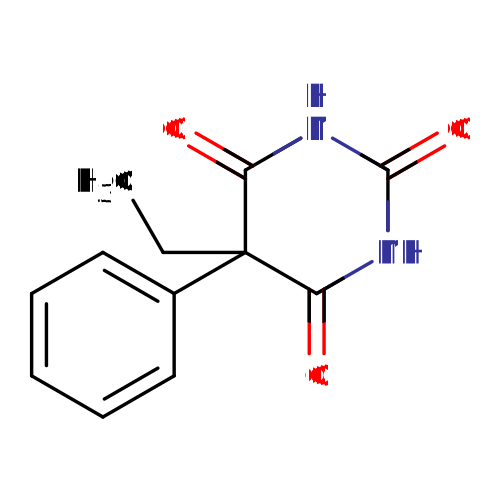
Structure for Phenobarbital (DB01174)
- Weight
- Average: 232.2353
Monoisotopic: 232.08479226 - Chemical Formula
- C12H12N2O3
- Synonyms
- 5-ethyl-5-phenyl-2,4,6(1H,3H,5H)-pyrimidinetrione
- 5-Ethyl-5-phenyl-pyrimidine-2,4,6-trione
- 5-Ethyl-5-phenylbarbituric acid
- 5-ethyl-5-phenylpyrimidine-2,4,6(1H,3H,5H)-trione
- 5-Phenyl-5-ethylbarbituric acid
- Fenobarbital
- Phenobarbital
- Phenobarbitol
- Phenobarbitone
- Phenobarbituric Acid
- Phenyläthylbarbitursäure
- Phenylethylbarbiturate
- Phenylethylbarbituric Acid
- Phenylethylbarbitursäure
- Phenylethylmalonylurea
- External IDs
- NSC-128143
- NSC-9848

Pharmacology
- Indication
For the treatment of all types of seizures except absence seizures.
 Reduce drug development failure ratesBuild, train, & validate machine-learning modelswith evidence-based and structured datasets.Build, train, & validate predictive machine-learning models with structured datasets.
- Associated Conditions
Indication Type Indication Combined Product Details Approval Level Age Group Patient Characteristics Dose Form Symptomatic treatment of Alcohol withdrawal ••• ••••• Treatment of Anxiety •••••••••••• Treatment of Febrile seizures •••••••••••• Prophylaxis of Febrile seizures •••••••••••• Treatment of Hyperbilirubinemia •••••••••••• - Associated Therapies
- Contraindications & Blackbox Warnings
 Prevent Adverse Drug Events TodayTap into our Clinical API for life-saving information on contraindications & blackbox warnings, population restrictions, harmful risks, & more.Avoid life-threatening adverse drug events with our Clinical API
- Pharmacodynamics
Phenobarbital, the longest-acting barbiturate, is used for its anticonvulsant and sedative-hypnotic properties in the management of all seizure disorders except absence (petit mal).
- Mechanism of action
Phenobarbital acts on GABAA receptors, increasing synaptic inhibition. This has the effect of elevating seizure threshold and reducing the spread of seizure activity from a seizure focus. Phenobarbital may also inhibit calcium channels, resulting in a decrease in excitatory transmitter release. The sedative-hypnotic effects of phenobarbital are likely the result of its effect on the polysynaptic midbrain reticular formation, which controls CNS arousal.
Target Actions Organism AGamma-aminobutyric acid receptor subunit alpha-1 potentiatorHumans UNeuronal acetylcholine receptor subunit alpha-4 antagonistHumans UNeuronal acetylcholine receptor subunit alpha-7 antagonistHumans UGlutamate receptor 2 antagonistHumans UGlutamate receptor ionotropic, kainate 2 antagonistHumans UNMDA receptor antagonistHumans UNuclear receptor subfamily 1 group I member 2 activatorHumans - Absorption
Absorbed in varying degrees following oral, rectal or parenteral administration. The salts are more rapidly absorbed than are the acids. The rate of absorption is increased if the sodium salt is ingested as a dilute solution or taken on an empty stomach.
- Volume of distribution
Not Available
- Protein binding
20 to 45%
- Metabolism
Hepatic (mostly via CYP2C19).
Hover over products below to view reaction partners
- Route of elimination
Not Available
- Half-life
53 to 118 hours (mean 79 hours)
- Clearance
Not Available
- Adverse Effects
 Improve decision support & research outcomesWith structured adverse effects data, including: blackbox warnings, adverse reactions, warning & precautions, & incidence rates. View sample adverse effects data in our new Data Library!Improve decision support & research outcomes with our structured adverse effects data.
- Toxicity
CNS and respiratory depression which may progress to Cheyne-Stokes respiration, areflexia, constriction of the pupils to a slight degree (though in severe poisoning they may wshow paralytic dilation), oliguria, tachycardia, hypotension, lowered body temperature, and coma. Typical shock syndrome (apnea, circulatory collapse, respiratory arrest, and death) may occur.
- Pathways
- Not Available
- Pharmacogenomic Effects/ADRs
- Not Available
Interactions
- Drug Interactions
- This information should not be interpreted without the help of a healthcare provider. If you believe you are experiencing an interaction, contact a healthcare provider immediately. The absence of an interaction does not necessarily mean no interactions exist.
Drug Interaction Integrate drug-drug
interactions in your software1,2-Benzodiazepine The metabolism of 1,2-Benzodiazepine can be increased when combined with Phenobarbital. Abacavir The metabolism of Abacavir can be increased when combined with Phenobarbital. Abaloparatide Phenobarbital may increase the hypotensive activities of Abaloparatide. Abatacept The metabolism of Phenobarbital can be increased when combined with Abatacept. Abemaciclib The metabolism of Abemaciclib can be increased when combined with Phenobarbital. - Food Interactions
- Administer vitamin supplements.
- Avoid alcohol.
- Limit caffeine intake.
- Take on an empty stomach. Taking this medication on an empty stomach increases the speed of absorption.
Products
 Drug product information from 10+ global regionsOur datasets provide approved product information including:dosage, form, labeller, route of administration, and marketing period.Access drug product information from over 10 global regions.
- Product Ingredients
Ingredient UNII CAS InChI Key Phenobarbital sodium SW9M9BB5K3 57-30-7 WRLGYAWRGXKSKG-UHFFFAOYSA-M - Product Images
- International/Other Brands
- Luminal
- Brand Name Prescription Products
Name Dosage Strength Route Labeller Marketing Start Marketing End Region Image Phenobarbital Tablet 15 mg/1 Oral AvPAK 2017-07-24 2021-10-31 US 
Phenobarbital Tablet 97.2 mg/1 Oral Westminster Pharmaceuticals, LLC 2019-05-21 Not applicable US Phenobarbital Tablet 97.2 mg/1 Oral bryant ranch prepack 2020-11-01 Not applicable US Phenobarbital Tablet 32.4 mg/1 Oral Clinical Solutions Wholesale, LLC 2022-11-30 Not applicable US Phenobarbital Tablet 100 mg/1 Oral Hikma Pharmaceuticals USA Inc. 2000-01-07 Not applicable US 
- Mixture Products
Name Ingredients Dosage Route Labeller Marketing Start Marketing End Region Image Bellergal Spacetabs Phenobarbital (40.0 mg) + Belladonna (0.2 mg) + Ergotamine tartrate (0.6 mg) Tablet, extended release Oral Paladin Labs Inc 1959-01-01 2018-06-05 Canada 
Bellergal Tab Phenobarbital (20 mg / tab) + Belladonna (.1 mg / tab) + Ergotamine tartrate (.3 mg / tab) Tablet Oral Sandoz 1951-12-31 1997-08-12 Canada Diclophen Phenobarbital (15 mg) + Dicyclomine hydrochloride (10 mg) Capsule Oral Pro Doc Limitee 1970-12-31 2009-07-23 Canada Dilantin W Phenobarbital 15mg Phenobarbital (15 mg / cap) + Phenytoin sodium (100 mg / cap) Capsule Oral Parke Davis Division, Warner Lambert Canada Inc. 1951-12-31 1999-04-08 Canada Dilantin W Phenobarbital 30mg Cap Phenobarbital (30 mg / cap) + Phenytoin sodium (100 mg / cap) Capsule Oral Parke Davis Division, Warner Lambert Canada Inc. 1969-12-31 1997-08-25 Canada - Unapproved/Other Products
Name Ingredients Dosage Route Labeller Marketing Start Marketing End Region Image B-Donna Phenobarbital (16.2 mg/1) + Atropine sulfate (0.0194 mg/1) + Hyoscyamine sulfate dihydrate (0.1037 mg/1) + Scopolamine (0.0065 mg/1) Tablet Oral Winder Laboratories, LLC 2015-12-30 2016-03-03 US Belladonna Alkaloids with Phenobarbital Phenobarbital (16.2 mg/1) + Atropine sulfate (0.0194 mg/1) + Hyoscyamine sulfate dihydrate (0.1037 mg/1) + Scopolamine (0.0065 mg/1) Tablet Oral Hikma Pharmaceuticals USA Inc. 1966-01-01 2019-07-31 US 
Belladonna Alkaloids with Phenobarbital Phenobarbital (16.2 mg/1) + Atropine sulfate (0.0194 mg/1) + Hyoscyamine sulfate dihydrate (0.1037 mg/1) + Scopolamine (0.0065 mg/1) Tablet Oral bryant ranch prepack 1966-01-01 2015-05-01 US Belladonna Alkaloids with Phenobartbital Phenobarbital (16.2 mg/1) + Atropine sulfate (0.0194 mg/1) + Hyoscyamine sulfate dihydrate (0.1037 mg/1) + Scopolamine (0.0065 mg/1) Tablet Oral Liberty Pharmaceuticals, Inc. 2000-12-01 Not applicable US 
Belladonna Alkaloids with Phenobartbital Phenobarbital (16.2 mg/1) + Atropine sulfate (0.0194 mg/1) + Hyoscyamine sulfate dihydrate (0.1037 mg/1) + Scopolamine (0.0065 mg/1) Tablet Oral Physicians Total Care, Inc. 2004-08-31 2013-01-15 US


Categories
- ATC Codes
- N05CB01 — Combinations of barbiturates
- N05CB — Barbiturates, combinations
- N05C — HYPNOTICS AND SEDATIVES
- N05 — PSYCHOLEPTICS
- N — NERVOUS SYSTEM
- Drug Categories
- Anticholinergic Agents
- Anticonvulsants
- Barbiturates
- Barbiturates and Derivatives
- BSEP/ABCB11 inducers
- Central Nervous System Agents
- Central Nervous System Depressants
- Chemically-Induced Disorders
- Cytochrome P-450 CYP1A2 Inducers
- Cytochrome P-450 CYP1A2 Inducers (strength unknown)
- Cytochrome P-450 CYP2A6 Inducers
- Cytochrome P-450 CYP2B6 Inducers
- Cytochrome P-450 CYP2B6 Inducers (strong)
- Cytochrome P-450 CYP2C18 Substrates
- Cytochrome P-450 CYP2C18 Substrates with a Narrow Therapeutic Index
- Cytochrome P-450 CYP2C19 Inducers
- Cytochrome P-450 CYP2C19 Inducers (strength unknown)
- Cytochrome P-450 CYP2C19 Substrates
- Cytochrome P-450 CYP2C19 Substrates with a Narrow Therapeutic Index
- Cytochrome P-450 CYP2C8 Inducers
- Cytochrome P-450 CYP2C8 Inducers (strength unknown)
- Cytochrome P-450 CYP2C8 Inducers (strong)
- Cytochrome P-450 CYP2C9 Inducers
- Cytochrome P-450 CYP2C9 Inducers (strength unknown)
- Cytochrome P-450 CYP2C9 Substrates
- Cytochrome P-450 CYP2C9 Substrates with a Narrow Therapeutic Index
- Cytochrome P-450 CYP2E1 Inducers
- Cytochrome P-450 CYP2E1 Inducers (strength unknown)
- Cytochrome P-450 CYP2E1 Inducers (weak)
- Cytochrome P-450 CYP2E1 Substrates
- Cytochrome P-450 CYP2E1 Substrates with a Narrow Therapeutic Index
- Cytochrome P-450 CYP3A Inducers
- Cytochrome P-450 CYP3A Inducers (strong)
- Cytochrome P-450 CYP3A4 Inducers
- Cytochrome P-450 CYP3A4 Inducers (strong)
- Cytochrome P-450 CYP3A5 Inducers
- Cytochrome P-450 CYP3A5 Inducers (strong)
- Cytochrome P-450 CYP3A7 Inducers
- Cytochrome P-450 CYP3A7 Inducers (strength unknown)
- Cytochrome P-450 Enzyme Inducers
- Cytochrome P-450 Substrates
- Enzyme Inducing Antiepileptic Drugs
- Excitatory Amino Acid Agents
- Excitatory Amino Acid Antagonists
- GABA Agents
- GABA Modulators
- Hypnotics and Sedatives
- Methemoglobinemia Associated Agents
- Narrow Therapeutic Index Drugs
- Nervous System
- Neurotransmitter Agents
- Nicotinic Antagonists
- P-glycoprotein inducers
- P-glycoprotein substrates
- P-glycoprotein substrates with a Narrow Therapeutic Index
- Phenobarbital and similars
- Psycholeptics
- Pyrimidines
- Pyrimidinones
- UGT1A1 Inducers
- UGT2B7 inducers
- Chemical TaxonomyProvided by Classyfire
- Description
- This compound belongs to the class of organic compounds known as barbituric acid derivatives. These are compounds containing a perhydropyrimidine ring substituted at C-2, -4 and -6 by oxo groups.
- Kingdom
- Organic compounds
- Super Class
- Organoheterocyclic compounds
- Class
- Diazines
- Sub Class
- Pyrimidines and pyrimidine derivatives
- Direct Parent
- Barbituric acid derivatives
- Alternative Parents
- N-acyl ureas / Diazinanes / Benzene and substituted derivatives / Dicarboximides / Azacyclic compounds / Organopnictogen compounds / Organonitrogen compounds / Organic oxides / Hydrocarbon derivatives / Carbonyl compounds
- Substituents
- 1,3-diazinane / Aromatic heteromonocyclic compound / Azacycle / Barbiturate / Benzenoid / Carbonic acid derivative / Carbonyl group / Carboxylic acid derivative / Dicarboximide / Hydrocarbon derivative
- Molecular Framework
- Aromatic heteromonocyclic compounds
- External Descriptors
- barbiturates (CHEBI:8069)
- Affected organisms
- Humans and other mammals
Chemical Identifiers
- UNII
- YQE403BP4D
- CAS number
- 50-06-6
- InChI Key
- DDBREPKUVSBGFI-UHFFFAOYSA-N
- InChI
- InChI=1S/C12H12N2O3/c1-2-12(8-6-4-3-5-7-8)9(15)13-11(17)14-10(12)16/h3-7H,2H2,1H3,(H2,13,14,15,16,17)
- IUPAC Name
- 5-ethyl-5-phenyl-1,3-diazinane-2,4,6-trione
- SMILES
- CCC1(C(=O)NC(=O)NC1=O)C1=CC=CC=C1
References
- Synthesis Reference
Tong Sun, Shawn Watson, Rajesh Manchanda, "PHENOBARBITAL SALTS; METHODS OF MAKING; AND METHODS OF USE THEREOF." U.S. Patent US20100035904, issued February 11, 2010.
US20100035904- General References
- Kwan P, Brodie MJ: Phenobarbital for the treatment of epilepsy in the 21st century: a critical review. Epilepsia. 2004 Sep;45(9):1141-9. [Article]
- Taylor S, Tudur Smith C, Williamson PR, Marson AG: Phenobarbitone versus phenytoin monotherapy for partial onset seizures and generalized onset tonic-clonic seizures. Cochrane Database Syst Rev. 2001;(4):CD002217. [Article]
- Tudur Smith C, Marson AG, Williamson PR: Carbamazepine versus phenobarbitone monotherapy for epilepsy. Cochrane Database Syst Rev. 2003;(1):CD001904. [Article]
- Kalviainen R, Eriksson K, Parviainen I: Refractory generalised convulsive status epilepticus : a guide to treatment. CNS Drugs. 2005;19(9):759-68. [Article]
- Booth D, Evans DJ: Anticonvulsants for neonates with seizures. Cochrane Database Syst Rev. 2004 Oct 18;(4):CD004218. [Article]
- Pacifici GM: Clinical Pharmacology of Phenobarbital in Neonates: Effects, Metabolism and Pharmacokinetics. Curr Pediatr Rev. 2016;12(1):48-54. doi: 10.2174/1573397111666151026223914. [Article]
- External Links
- Human Metabolome Database
- HMDB0015305
- KEGG Drug
- D00506
- KEGG Compound
- C07434
- PubChem Compound
- 4763
- PubChem Substance
- 46505776
- ChemSpider
- 4599
- BindingDB
- 50021437
- 8134
- ChEBI
- 8069
- ChEMBL
- CHEMBL40
- ZINC
- ZINC000095588079
- Therapeutic Targets Database
- DAP000061
- PharmGKB
- PA450911
- Guide to Pharmacology
- GtP Drug Page
- PDBe Ligand
- UQA
- RxList
- RxList Drug Page
- Drugs.com
- Drugs.com Drug Page
- PDRhealth
- PDRhealth Drug Page
- Wikipedia
- Phenobarbital
- PDB Entries
- 6x3w
- MSDS
- Download (53 KB)
Clinical Trials
- Clinical Trials
Phase Status Purpose Conditions Count 4 Completed Treatment Neonatal drug withdrawal syndrome 1 4 Recruiting Treatment Acute Brain Injury / Brain Ischemia Hypoxia / Cardiac Arrest / Cerebral Ischemia / Comatose / Hypoxia, Brain / Intracranial Hemorrhages / Persistent Vegetative State / Stroke / Traumatic Brain Injury (TBI) 1 4 Terminated Treatment Neonatal Convulsions 1 4 Unknown Status Treatment Alcohol Withdrawal Delirium / Alcohol Withdrawal Syndrome 1 4 Unknown Status Treatment Neonatal Convulsions 1
Pharmacoeconomics
- Manufacturers
- Not Available
- Packagers
- Actavis Group
- Amend
- Apotheca Inc.
- Baxter International Inc.
- Breckenridge Pharmaceuticals
- C.O. Truxton Inc.
- Cardinal Health
- Carlisle Laboratories Inc.
- Century Pharmaceuticals Inc.
- Comprehensive Consultant Services Inc.
- Direct Dispensing Inc.
- Dispensing Solutions
- Diversified Healthcare Services Inc.
- Econolab Inc.
- Excellium Pharmaceutical Inc.
- Group Health Cooperative
- Heartland Repack Services LLC
- Hikma Pharmaceuticals
- Hl Moore Drug Exchange
- Hospira Inc.
- Kaiser Foundation Hospital
- Kraft Pharmaceutical Co. Inc.
- Lake Erie Medical and Surgical Supply
- Lundbeck Inc.
- Major Pharmaceuticals
- Mallinckrodt Inc.
- Mckesson Corp.
- Murfreesboro Pharmaceutical Nursing Supply
- Nucare Pharmaceuticals Inc.
- Ohm Laboratories Inc.
- PD-Rx Pharmaceuticals Inc.
- Pharmaceutical Association
- Pharmaceutical Utilization Management Program VA Inc.
- Pharmacy Service Center
- Pharmedix
- Physicians Total Care Inc.
- Preferred Pharmaceuticals Inc.
- Prepak Systems Inc.
- Qualitest
- Ranbaxy Laboratories
- Remedy Repack
- Resource Optimization and Innovation LLC
- River's Edge Pharmaceuticals
- Stanley Pharmaceuticals Ltd.
- UDL Laboratories
- United Research Laboratories Inc.
- Vintage Pharmaceuticals Inc.
- West-Ward Pharmaceuticals
- Dosage Forms
Form Route Strength Elixir Oral 4 mg / mL Tablet, extended release Oral Tablet, film coated, extended release Oral Tablet Oral 100.000 mg Solution Oral 400 mg Tablet Oral 10 mg Solution Intramuscular; Intravenous 0.2 g Solution Parenteral 200 mg Injection Parenteral 40 mg Tablet Oral 100 mg Tablet Oral 50 mg Injection, solution Injection, solution Intramuscular 100 MG/2ML Injection, solution Intramuscular 30 MG/ML Solution Intramuscular; Intravenous 40 mg Injection, solution Intramuscular 100 MG Elixir Oral 0.3 % Injection, solution Intramuscular; Parenteral 200 MG/ML Syrup Capsule Oral Tablet Oral 15 mg Tablet Oral 30 mg Tablet Oral 60 mg Solution Oral 5 mg / mL Elixir Oral 20 mg/5mL Elixir Oral 20.0 mg/5mL Injection Liquid Oral 20 mg/5mL Solution Oral 20 mg/5mL Tablet Oral Tablet Oral 100 mg/1 Tablet Oral 15 mg/1 Tablet Oral 16.2 mg/1 Tablet Oral 30 mg/1 Tablet Oral 32.4 mg/1 Tablet Oral 60 mg/1 Tablet Oral 64.8 mg/1 Tablet Oral 97.2 mg/1 Solution Oral 30 mg/7.5mL Solution Oral 60 mg/15mL Injection Intramuscular 130 mg/1mL Injection Intramuscular 65 mg/1mL Injection Intramuscular; Intravenous 130 mg/1mL Injection Intramuscular; Intravenous 65 mg/1mL Injection, solution Intramuscular; Intravenous 130 mg/1mL Injection, solution Intramuscular; Intravenous 65 mg/1mL Solution Intramuscular; Intravenous; Subcutaneous 30 mg / mL Solution Intramuscular; Intravenous 120 mg / mL Solution Intramuscular; Intravenous 30 mg / mL Elixir Oral Tablet Oral Suppository Rectal Injection Intravenous 100 mg/1 Liquid Oral - Prices
Unit description Cost Unit Phenobarbital 130 mg/ml vial 4.32USD ml Phenobarbital 65 mg/ml vial 1.63USD ml Phenobarbital sodium powder 0.36USD g Pms-Phenobarbital 100 mg Tablet 0.15USD tablet Phenobarbital powder 0.13USD g Pms-Phenobarbital 60 mg Tablet 0.11USD tablet Phenobarbital 97.2 mg tablet 0.1USD tablet Phenobarbital 64.8 mg tablet 0.09USD tablet Pms-Phenobarbital 5 mg/ml Elixir 0.09USD ml Phenobarbital 16.2 mg tablet 0.08USD tablet Phenobarbital 30 mg tablet 0.08USD tablet Phenobarbital 32.4 mg tablet 0.08USD tablet Pms-Phenobarbital 30 mg Tablet 0.08USD tablet Phenobarbital 100 mg tablet 0.07USD tablet Pms-Phenobarbital 15 mg Tablet 0.07USD tablet PHENobarbital 20 mg/5ml Elixir 0.06USD ml Phenobarbital 60 mg tablet 0.03USD tablet Phenobarbital 15 mg tablet 0.02USD tablet DrugBank does not sell nor buy drugs. Pricing information is supplied for informational purposes only.- Patents
Patent Number Pediatric Extension Approved Expires (estimated) Region US11857683 No 2022-04-07 2042-04-07 US
Properties
- State
- Solid
- Experimental Properties
Property Value Source melting point (°C) 174 °C PhysProp water solubility 1110 mg/L (at 25 °C) YALKOWSKY,SH & DANNENFELSER,RM (1992) logP 1.47 HANSCH,C ET AL. (1995) pKa 7.3 BUDAVARI,S ET AL. (1996) - Predicted Properties
Property Value Source Water Solubility 0.276 mg/mL ALOGPS logP 1.4 ALOGPS logP 1.41 Chemaxon logS -2.9 ALOGPS pKa (Strongest Acidic) 7.14 Chemaxon Physiological Charge -1 Chemaxon Hydrogen Acceptor Count 3 Chemaxon Hydrogen Donor Count 2 Chemaxon Polar Surface Area 75.27 Å2 Chemaxon Rotatable Bond Count 2 Chemaxon Refractivity 59.75 m3·mol-1 Chemaxon Polarizability 22.59 Å3 Chemaxon Number of Rings 2 Chemaxon Bioavailability 1 Chemaxon Rule of Five Yes Chemaxon Ghose Filter Yes Chemaxon Veber's Rule No Chemaxon MDDR-like Rule No Chemaxon - Predicted ADMET Features
Property Value Probability Human Intestinal Absorption + 0.9935 Blood Brain Barrier + 0.9736 Caco-2 permeable - 0.5561 P-glycoprotein substrate Substrate 0.5157 P-glycoprotein inhibitor I Non-inhibitor 0.6472 P-glycoprotein inhibitor II Non-inhibitor 0.9869 Renal organic cation transporter Non-inhibitor 0.9235 CYP450 2C9 substrate Non-substrate 0.6962 CYP450 2D6 substrate Non-substrate 0.9116 CYP450 3A4 substrate Non-substrate 0.7702 CYP450 1A2 substrate Non-inhibitor 0.84 CYP450 2C9 inhibitor Non-inhibitor 0.9023 CYP450 2D6 inhibitor Non-inhibitor 0.9593 CYP450 2C19 inhibitor Non-inhibitor 0.8664 CYP450 3A4 inhibitor Non-inhibitor 0.9236 CYP450 inhibitory promiscuity Low CYP Inhibitory Promiscuity 0.9164 Ames test AMES toxic 0.9107 Carcinogenicity Non-carcinogens 0.7469 Biodegradation Not ready biodegradable 0.9894 Rat acute toxicity 3.1244 LD50, mol/kg Not applicable hERG inhibition (predictor I) Weak inhibitor 0.99 hERG inhibition (predictor II) Non-inhibitor 0.9354
Spectra
- Mass Spec (NIST)
- Download (8.44 KB)
- Spectra
- Chromatographic Properties
Collision Cross Sections (CCS)
Adduct CCS Value (Å2) Source type Source [M-H]- 157.4845834 predictedDarkChem Lite v0.1.0 [M-H]- 159.3932 predictedDeepCCS 1.0 (2019) [M-H]- 157.4845834 predictedDarkChem Lite v0.1.0 [M-H]- 159.3932 predictedDeepCCS 1.0 (2019) [M+H]+ 158.2351834 predictedDarkChem Lite v0.1.0 [M+H]+ 161.75119 predictedDeepCCS 1.0 (2019) [M+H]+ 158.2351834 predictedDarkChem Lite v0.1.0 [M+H]+ 161.75119 predictedDeepCCS 1.0 (2019) [M+Na]+ 157.8849834 predictedDarkChem Lite v0.1.0 [M+Na]+ 167.84435 predictedDeepCCS 1.0 (2019) [M+Na]+ 157.8849834 predictedDarkChem Lite v0.1.0 [M+Na]+ 167.84435 predictedDeepCCS 1.0 (2019)
Targets

- Kind
- Protein
- Organism
- Humans
- Pharmacological action
- Yes
- Actions
- Potentiator
- General Function
- Inhibitory extracellular ligand-gated ion channel activity
- Specific Function
- Component of the heteropentameric receptor for GABA, the major inhibitory neurotransmitter in the vertebrate brain. Functions also as histamine receptor and mediates cellular responses to histamine...
- Gene Name
- GABRA1
- Uniprot ID
- P14867
- Uniprot Name
- Gamma-aminobutyric acid receptor subunit alpha-1
- Molecular Weight
- 51801.395 Da
References
- Whiting PJ: The GABAA receptor gene family: new opportunities for drug development. Curr Opin Drug Discov Devel. 2003 Sep;6(5):648-57. [Article]
- Mehta AK, Ticku MK: An update on GABAA receptors. Brain Res Brain Res Rev. 1999 Apr;29(2-3):196-217. [Article]
- Yamakura T, Bertaccini E, Trudell JR, Harris RA: Anesthetics and ion channels: molecular models and sites of action. Annu Rev Pharmacol Toxicol. 2001;41:23-51. [Article]
- Krasowski MD, Harrison NL: General anaesthetic actions on ligand-gated ion channels. Cell Mol Life Sci. 1999 Aug 15;55(10):1278-303. [Article]
- Macdonald RL, McLean MJ: Anticonvulsant drugs: mechanisms of action. Adv Neurol. 1986;44:713-36. [Article]
- Overington JP, Al-Lazikani B, Hopkins AL: How many drug targets are there? Nat Rev Drug Discov. 2006 Dec;5(12):993-6. [Article]
- Imming P, Sinning C, Meyer A: Drugs, their targets and the nature and number of drug targets. Nat Rev Drug Discov. 2006 Oct;5(10):821-34. [Article]
- Kind
- Protein
- Organism
- Humans
- Pharmacological action
- Unknown
- Actions
- Antagonist
- General Function
- Ligand-gated ion channel activity
- Specific Function
- After binding acetylcholine, the AChR responds by an extensive change in conformation that affects all subunits and leads to opening of an ion-conducting channel across the plasma membrane permeabl...
- Gene Name
- CHRNA4
- Uniprot ID
- P43681
- Uniprot Name
- Neuronal acetylcholine receptor subunit alpha-4
- Molecular Weight
- 69956.47 Da
References
- Yamakura T, Bertaccini E, Trudell JR, Harris RA: Anesthetics and ion channels: molecular models and sites of action. Annu Rev Pharmacol Toxicol. 2001;41:23-51. [Article]
- Arias HR, Bhumireddy P: Anesthetics as chemical tools to study the structure and function of nicotinic acetylcholine receptors. Curr Protein Pept Sci. 2005 Oct;6(5):451-72. [Article]
- Krasowski MD, Harrison NL: General anaesthetic actions on ligand-gated ion channels. Cell Mol Life Sci. 1999 Aug 15;55(10):1278-303. [Article]
- Kind
- Protein
- Organism
- Humans
- Pharmacological action
- Unknown
- Actions
- Antagonist
- General Function
- Toxic substance binding
- Specific Function
- After binding acetylcholine, the AChR responds by an extensive change in conformation that affects all subunits and leads to opening of an ion-conducting channel across the plasma membrane. The cha...
- Gene Name
- CHRNA7
- Uniprot ID
- P36544
- Uniprot Name
- Neuronal acetylcholine receptor subunit alpha-7
- Molecular Weight
- 56448.925 Da
References
- Yamakura T, Bertaccini E, Trudell JR, Harris RA: Anesthetics and ion channels: molecular models and sites of action. Annu Rev Pharmacol Toxicol. 2001;41:23-51. [Article]
- Arias HR, Bhumireddy P: Anesthetics as chemical tools to study the structure and function of nicotinic acetylcholine receptors. Curr Protein Pept Sci. 2005 Oct;6(5):451-72. [Article]
- Krasowski MD, Harrison NL: General anaesthetic actions on ligand-gated ion channels. Cell Mol Life Sci. 1999 Aug 15;55(10):1278-303. [Article]
- Kind
- Protein
- Organism
- Humans
- Pharmacological action
- Unknown
- Actions
- Antagonist
- General Function
- Ionotropic glutamate receptor activity
- Specific Function
- Receptor for glutamate that functions as ligand-gated ion channel in the central nervous system and plays an important role in excitatory synaptic transmission. L-glutamate acts as an excitatory ne...
- Gene Name
- GRIA2
- Uniprot ID
- P42262
- Uniprot Name
- Glutamate receptor 2
- Molecular Weight
- 98820.32 Da
References
- Yamakura T, Bertaccini E, Trudell JR, Harris RA: Anesthetics and ion channels: molecular models and sites of action. Annu Rev Pharmacol Toxicol. 2001;41:23-51. [Article]
- Krasowski MD, Harrison NL: General anaesthetic actions on ligand-gated ion channels. Cell Mol Life Sci. 1999 Aug 15;55(10):1278-303. [Article]
- Jin LJ, Schlesinger F, Song YP, Dengler R, Krampfl K: The interaction of the neuroprotective compounds riluzole and phenobarbital with AMPA-type glutamate receptors: a patch-clamp study. Pharmacology. 2010;85(1):54-62. doi: 10.1159/000268641. Epub 2009 Dec 23. [Article]
- Kind
- Protein
- Organism
- Humans
- Pharmacological action
- Unknown
- Actions
- Antagonist
- General Function
- Kainate selective glutamate receptor activity
- Specific Function
- Ionotropic glutamate receptor. L-glutamate acts as an excitatory neurotransmitter at many synapses in the central nervous system. Binding of the excitatory neurotransmitter L-glutamate induces a co...
- Gene Name
- GRIK2
- Uniprot ID
- Q13002
- Uniprot Name
- Glutamate receptor ionotropic, kainate 2
- Molecular Weight
- 102582.475 Da
References
- Yamakura T, Bertaccini E, Trudell JR, Harris RA: Anesthetics and ion channels: molecular models and sites of action. Annu Rev Pharmacol Toxicol. 2001;41:23-51. [Article]
- Krasowski MD, Harrison NL: General anaesthetic actions on ligand-gated ion channels. Cell Mol Life Sci. 1999 Aug 15;55(10):1278-303. [Article]
- Kind
- Protein group
- Organism
- Humans
- Pharmacological action
- Unknown
- Actions
- Antagonist
- General Function
- Voltage-gated cation channel activity
- Specific Function
- NMDA receptor subtype of glutamate-gated ion channels with high calcium permeability and voltage-dependent sensitivity to magnesium. Mediated by glycine. This protein plays a key role in synaptic p...
Components:
References
- Daniell LC: Effect of anesthetic and convulsant barbiturates on N-methyl-D-aspartate receptor-mediated calcium flux in brain membrane vesicles. Pharmacology. 1994 Nov;49(5):296-307. [Article]
- Kind
- Protein
- Organism
- Humans
- Pharmacological action
- Unknown
- Actions
- Activator
- General Function
- Zinc ion binding
- Specific Function
- Nuclear receptor that binds and is activated by variety of endogenous and xenobiotic compounds. Transcription factor that activates the transcription of multiple genes involved in the metabolism an...
- Gene Name
- NR1I2
- Uniprot ID
- O75469
- Uniprot Name
- Nuclear receptor subfamily 1 group I member 2
- Molecular Weight
- 49761.245 Da
References
- Faucette SR, Wang H, Hamilton GA, Jolley SL, Gilbert D, Lindley C, Yan B, Negishi M, LeCluyse EL: Regulation of CYP2B6 in primary human hepatocytes by prototypical inducers. Drug Metab Dispos. 2004 Mar;32(3):348-58. [Article]
- Kobayashi K, Yamagami S, Higuchi T, Hosokawa M, Chiba K: Key structural features of ligands for activation of human pregnane X receptor. Drug Metab Dispos. 2004 Apr;32(4):468-72. [Article]
Enzymes
- Kind
- Protein
- Organism
- Humans
- Pharmacological action
- Unknown
- Actions
- SubstrateInducer
- General Function
- Steroid hydroxylase activity
- Specific Function
- Responsible for the metabolism of a number of therapeutic agents such as the anticonvulsant drug S-mephenytoin, omeprazole, proguanil, certain barbiturates, diazepam, propranolol, citalopram and im...
- Gene Name
- CYP2C19
- Uniprot ID
- P33261
- Uniprot Name
- Cytochrome P450 2C19
- Molecular Weight
- 55930.545 Da
References
- Madan A, Graham RA, Carroll KM, Mudra DR, Burton LA, Krueger LA, Downey AD, Czerwinski M, Forster J, Ribadeneira MD, Gan LS, LeCluyse EL, Zech K, Robertson P Jr, Koch P, Antonian L, Wagner G, Yu L, Parkinson A: Effects of prototypical microsomal enzyme inducers on cytochrome P450 expression in cultured human hepatocytes. Drug Metab Dispos. 2003 Apr;31(4):421-31. doi: 10.1124/dmd.31.4.421. [Article]
- Mamiya K, Hadama A, Yukawa E, Ieiri I, Otsubo K, Ninomiya H, Tashiro N, Higuchi S: CYP2C19 polymorphism effect on phenobarbitone. Pharmacokinetics in Japanese patients with epilepsy: analysis by population pharmacokinetics. Eur J Clin Pharmacol. 2000 Feb-Mar;55(11-12):821-5. [Article]
- Yukawa E, Mamiya K: Effect of CYP2C19 genetic polymorphism on pharmacokinetics of phenytoin and phenobarbital in Japanese epileptic patients using Non-linear Mixed Effects Model approach. J Clin Pharm Ther. 2006 Jun;31(3):275-82. doi: 10.1111/j.1365-2710.2006.00712.x. [Article]
- Zhou SF, Zhou ZW, Yang LP, Cai JP: Substrates, inducers, inhibitors and structure-activity relationships of human Cytochrome P450 2C9 and implications in drug development. Curr Med Chem. 2009;16(27):3480-675. Epub 2009 Sep 1. [Article]
- Pacifici GM: Clinical Pharmacology of Phenobarbital in Neonates: Effects, Metabolism and Pharmacokinetics. Curr Pediatr Rev. 2016;12(1):48-54. doi: 10.2174/1573397111666151026223914. [Article]
- Flockhart Table of Drug Interactions [Link]
- Kind
- Protein
- Organism
- Humans
- Pharmacological action
- Unknown
- Actions
- SubstrateInducer
- General Function
- Steroid hydroxylase activity
- Specific Function
- Cytochromes P450 are a group of heme-thiolate monooxygenases. In liver microsomes, this enzyme is involved in an NADPH-dependent electron transport pathway. It oxidizes a variety of structurally un...
- Gene Name
- CYP2C9
- Uniprot ID
- P11712
- Uniprot Name
- Cytochrome P450 2C9
- Molecular Weight
- 55627.365 Da
References
- Zhou SF, Zhou ZW, Yang LP, Cai JP: Substrates, inducers, inhibitors and structure-activity relationships of human Cytochrome P450 2C9 and implications in drug development. Curr Med Chem. 2009;16(27):3480-675. Epub 2009 Sep 1. [Article]
- Kawalek JC, Howard KD, Farrell DE, Derr J, Cope CV, Jackson JD, Myers MJ: Effect of oral administration of low doses of pentobarbital on the induction of cytochrome P450 isoforms and cytochrome P450-mediated reactions in immature Beagles. Am J Vet Res. 2003 Sep;64(9):1167-75. [Article]
- Chen Y, Ferguson SS, Negishi M, Goldstein JA: Induction of human CYP2C9 by rifampicin, hyperforin, and phenobarbital is mediated by the pregnane X receptor. J Pharmacol Exp Ther. 2004 Feb;308(2):495-501. Epub 2003 Nov 4. [Article]
- Zhou D, Sunzel M, Ribadeneira MD, Smith MA, Desai D, Lin J, Grimm SW: A clinical study to assess CYP1A2 and CYP3A4 induction by AZD7325, a selective GABA(A) receptor modulator - an in vitro and in vivo comparison. Br J Clin Pharmacol. 2012 Jul;74(1):98-108. doi: 10.1111/j.1365-2125.2011.04155.x. [Article]
- Pacifici GM: Clinical Pharmacology of Phenobarbital in Neonates: Effects, Metabolism and Pharmacokinetics. Curr Pediatr Rev. 2016;12(1):48-54. doi: 10.2174/1573397111666151026223914. [Article]
- Flockhart Table of Drug Interactions [Link]
- Phenobarbital Monograph [File]
- Kind
- Protein
- Organism
- Humans
- Pharmacological action
- Unknown
- Actions
- SubstrateInducer
- General Function
- Steroid hydroxylase activity
- Specific Function
- Metabolizes several precarcinogens, drugs, and solvents to reactive metabolites. Inactivates a number of drugs and xenobiotics and also bioactivates many xenobiotic substrates to their hepatotoxic ...
- Gene Name
- CYP2E1
- Uniprot ID
- P05181
- Uniprot Name
- Cytochrome P450 2E1
- Molecular Weight
- 56848.42 Da
References
- Lee AM, Joshi M, Yue J, Tyndale RF: Phenobarbital induces monkey brain CYP2E1 protein but not hepatic CYP2E1, in vitro or in vivo chlorzoxazone metabolism. Eur J Pharmacol. 2006 Dec 15;552(1-3):151-8. Epub 2006 Sep 16. [Article]
- Madan A, Graham RA, Carroll KM, Mudra DR, Burton LA, Krueger LA, Downey AD, Czerwinski M, Forster J, Ribadeneira MD, Gan LS, LeCluyse EL, Zech K, Robertson P Jr, Koch P, Antonian L, Wagner G, Yu L, Parkinson A: Effects of prototypical microsomal enzyme inducers on cytochrome P450 expression in cultured human hepatocytes. Drug Metab Dispos. 2003 Apr;31(4):421-31. doi: 10.1124/dmd.31.4.421. [Article]
- Pacifici GM: Clinical Pharmacology of Phenobarbital in Neonates: Effects, Metabolism and Pharmacokinetics. Curr Pediatr Rev. 2016;12(1):48-54. doi: 10.2174/1573397111666151026223914. [Article]
- Kind
- Protein
- Organism
- Humans
- Pharmacological action
- Unknown
- Actions
- Inducer
- General Function
- Steroid hydroxylase activity
- Specific Function
- Cytochromes P450 are a group of heme-thiolate monooxygenases. In liver microsomes, this enzyme is involved in an NADPH-dependent electron transport pathway. It oxidizes a variety of structurally un...
- Gene Name
- CYP2B6
- Uniprot ID
- P20813
- Uniprot Name
- Cytochrome P450 2B6
- Molecular Weight
- 56277.81 Da
References
- Gervot L, Rochat B, Gautier JC, Bohnenstengel F, Kroemer H, de Berardinis V, Martin H, Beaune P, de Waziers I: Human CYP2B6: expression, inducibility and catalytic activities. Pharmacogenetics. 1999 Jun;9(3):295-306. [Article]
- Faucette SR, Wang H, Hamilton GA, Jolley SL, Gilbert D, Lindley C, Yan B, Negishi M, LeCluyse EL: Regulation of CYP2B6 in primary human hepatocytes by prototypical inducers. Drug Metab Dispos. 2004 Mar;32(3):348-58. [Article]
- Wang H, Faucette SR, Gilbert D, Jolley SL, Sueyoshi T, Negishi M, LeCluyse EL: Glucocorticoid receptor enhancement of pregnane X receptor-mediated CYP2B6 regulation in primary human hepatocytes. Drug Metab Dispos. 2003 May;31(5):620-30. [Article]
- Madan A, Graham RA, Carroll KM, Mudra DR, Burton LA, Krueger LA, Downey AD, Czerwinski M, Forster J, Ribadeneira MD, Gan LS, LeCluyse EL, Zech K, Robertson P Jr, Koch P, Antonian L, Wagner G, Yu L, Parkinson A: Effects of prototypical microsomal enzyme inducers on cytochrome P450 expression in cultured human hepatocytes. Drug Metab Dispos. 2003 Apr;31(4):421-31. doi: 10.1124/dmd.31.4.421. [Article]
- Flockhart Table of Drug Interactions [Link]
- Kind
- Protein
- Organism
- Humans
- Pharmacological action
- Unknown
- Actions
- Inducer
- General Function
- Steroid hydroxylase activity
- Specific Function
- Cytochromes P450 are a group of heme-thiolate monooxygenases. In liver microsomes, this enzyme is involved in an NADPH-dependent electron transport pathway. It oxidizes a variety of structurally un...
- Gene Name
- CYP2C8
- Uniprot ID
- P10632
- Uniprot Name
- Cytochrome P450 2C8
- Molecular Weight
- 55824.275 Da
References
- Kawalek JC, Howard KD, Farrell DE, Derr J, Cope CV, Jackson JD, Myers MJ: Effect of oral administration of low doses of pentobarbital on the induction of cytochrome P450 isoforms and cytochrome P450-mediated reactions in immature Beagles. Am J Vet Res. 2003 Sep;64(9):1167-75. [Article]
- Gerbal-Chaloin S, Pascussi JM, Pichard-Garcia L, Daujat M, Waechter F, Fabre JM, Carrere N, Maurel P: Induction of CYP2C genes in human hepatocytes in primary culture. Drug Metab Dispos. 2001 Mar;29(3):242-51. [Article]
- Dvorak Z, Modriansky M, Pichard-Garcia L, Balaguer P, Vilarem MJ, Ulrichova J, Maurel P, Pascussi JM: Colchicine down-regulates cytochrome P450 2B6, 2C8, 2C9, and 3A4 in human hepatocytes by affecting their glucocorticoid receptor-mediated regulation. Mol Pharmacol. 2003 Jul;64(1):160-9. doi: 10.1124/mol.64.1.160. [Article]
- Klose TS, Blaisdell JA, Goldstein JA: Gene structure of CYP2C8 and extrahepatic distribution of the human CYP2Cs. J Biochem Mol Toxicol. 1999;13(6):289-95. doi: 10.1002/(sici)1099-0461(1999)13:6<289::aid-jbt1>3.0.co;2-n. [Article]
- Flockhart Table of Drug Interactions [Link]
- Kind
- Protein
- Organism
- Humans
- Pharmacological action
- Unknown
- Actions
- Inducer
- General Function
- Vitamin d3 25-hydroxylase activity
- Specific Function
- Cytochromes P450 are a group of heme-thiolate monooxygenases. In liver microsomes, this enzyme is involved in an NADPH-dependent electron transport pathway. It performs a variety of oxidation react...
- Gene Name
- CYP3A4
- Uniprot ID
- P08684
- Uniprot Name
- Cytochrome P450 3A4
- Molecular Weight
- 57342.67 Da
References
- von Bahr C, Steiner E, Koike Y, Gabrielsson J: Time course of enzyme induction in humans: effect of pentobarbital on nortriptyline metabolism. Clin Pharmacol Ther. 1998 Jul;64(1):18-26. [Article]
- Venkatakrishnan K, von Moltke LL, Greenblatt DJ: Nortriptyline E-10-hydroxylation in vitro is mediated by human CYP2D6 (high affinity) and CYP3A4 (low affinity): implications for interactions with enzyme-inducing drugs. J Clin Pharmacol. 1999 Jun;39(6):567-77. [Article]
- Zhou SF, Xue CC, Yu XQ, Li C, Wang G: Clinically important drug interactions potentially involving mechanism-based inhibition of cytochrome P450 3A4 and the role of therapeutic drug monitoring. Ther Drug Monit. 2007 Dec;29(6):687-710. doi: 10.1097/FTD.0b013e31815c16f5. [Article]
- PHENOBARBITAL SODIUM INJECTION Prescribing Information - Sandoz Canada [Link]
- Flockhart Table of Drug Interactions [Link]
- Kind
- Protein
- Organism
- Humans
- Pharmacological action
- No
- Actions
- Inducer
- General Function
- Oxidoreductase activity, acting on paired donors, with incorporation or reduction of molecular oxygen, reduced flavin or flavoprotein as one donor, and incorporation of one atom of oxygen
- Specific Function
- Cytochromes P450 are a group of heme-thiolate monooxygenases. In liver microsomes, this enzyme is involved in an NADPH-dependent electron transport pathway. It oxidizes a variety of structurally un...
- Gene Name
- CYP1A2
- Uniprot ID
- P05177
- Uniprot Name
- Cytochrome P450 1A2
- Molecular Weight
- 58293.76 Da
References
- Sakuma T, Ohtake M, Katsurayama Y, Jarukamjorn K, Nemoto N: Induction of CYP1A2 by phenobarbital in the livers of aryl hydrocarbon-responsive and -nonresponsive mice. Drug Metab Dispos. 1999 Mar;27(3):379-84. [Article]
- Madan A, Graham RA, Carroll KM, Mudra DR, Burton LA, Krueger LA, Downey AD, Czerwinski M, Forster J, Ribadeneira MD, Gan LS, LeCluyse EL, Zech K, Robertson P Jr, Koch P, Antonian L, Wagner G, Yu L, Parkinson A: Effects of prototypical microsomal enzyme inducers on cytochrome P450 expression in cultured human hepatocytes. Drug Metab Dispos. 2003 Apr;31(4):421-31. doi: 10.1124/dmd.31.4.421. [Article]
- Kind
- Protein
- Organism
- Humans
- Pharmacological action
- No
- Actions
- Inducer
- General Function
- Oxygen binding
- Specific Function
- Cytochromes P450 are a group of heme-thiolate monooxygenases. In liver microsomes, this enzyme is involved in an NADPH-dependent electron transport pathway. It oxidizes a variety of structurally un...
- Gene Name
- CYP3A5
- Uniprot ID
- P20815
- Uniprot Name
- Cytochrome P450 3A5
- Molecular Weight
- 57108.065 Da
References
- Hukkanen J, Lassila A, Paivarinta K, Valanne S, Sarpo S, Hakkola J, Pelkonen O, Raunio H: Induction and regulation of xenobiotic-metabolizing cytochrome P450s in the human A549 lung adenocarcinoma cell line. Am J Respir Cell Mol Biol. 2000 Mar;22(3):360-6. [Article]
- Flockhart Table of Drug Interactions [Link]
- Kind
- Protein
- Organism
- Humans
- Pharmacological action
- Unknown
- Actions
- Inducer
- General Function
- Vitamin d 24-hydroxylase activity
- Specific Function
- Cytochromes P450 are a group of heme-thiolate monooxygenases. In liver microsomes, this enzyme is involved in an NADPH-dependent electron transport pathway. It oxidizes a variety of structurally un...
- Gene Name
- CYP1A1
- Uniprot ID
- P04798
- Uniprot Name
- Cytochrome P450 1A1
- Molecular Weight
- 58164.815 Da
References
- Yoshinari K, Yoda N, Toriyabe T, Yamazoe Y: Constitutive androstane receptor transcriptionally activates human CYP1A1 and CYP1A2 genes through a common regulatory element in the 5'-flanking region. Biochem Pharmacol. 2010 Jan 15;79(2):261-9. doi: 10.1016/j.bcp.2009.08.008. Epub 2009 Aug 12. [Article]
- Sadar MD, Ash R, Sundqvist J, Olsson PE, Andersson TB: Phenobarbital induction of CYP1A1 gene expression in a primary culture of rainbow trout hepatocytes. J Biol Chem. 1996 Jul 26;271(30):17635-43. doi: 10.1074/jbc.271.30.17635. [Article]
- Sadar MD, Westlind A, Blomstrand F, Andersson TB: Induction of CYP1A1 by GABA receptor ligands. Biochem Biophys Res Commun. 1996 Dec 4;229(1):231-7. [Article]
- Kind
- Protein
- Organism
- Humans
- Pharmacological action
- Unknown
- Actions
- Substrate
- General Function
- Steroid hydroxylase activity
- Specific Function
- Cytochromes P450 are a group of heme-thiolate monooxygenases. In liver microsomes, this enzyme is involved in an NADPH-dependent electron transport pathway. It oxidizes a variety of structurally un...
- Gene Name
- CYP2C18
- Uniprot ID
- P33260
- Uniprot Name
- Cytochrome P450 2C18
- Molecular Weight
- 55710.075 Da
References
- Gerbal-Chaloin S, Pascussi JM, Pichard-Garcia L, Daujat M, Waechter F, Fabre JM, Carrere N, Maurel P: Induction of CYP2C genes in human hepatocytes in primary culture. Drug Metab Dispos. 2001 Mar;29(3):242-51. [Article]
- Kind
- Protein
- Organism
- Humans
- Pharmacological action
- No
- Actions
- Inducer
- General Function
- Oxygen binding
- Specific Function
- Cytochromes P450 are a group of heme-thiolate monooxygenases. In liver microsomes, this enzyme is involved in an NADPH-dependent electron transport pathway. It oxidizes a variety of structurally un...
- Gene Name
- CYP3A7
- Uniprot ID
- P24462
- Uniprot Name
- Cytochrome P450 3A7
- Molecular Weight
- 57525.03 Da
References
- Kind
- Protein
- Organism
- Humans
- Pharmacological action
- Unknown
- Actions
- Inducer
- General Function
- Oxygen binding
- Specific Function
- Cytochromes P450 are a group of heme-thiolate monooxygenases. In liver microsomes, this enzyme is involved in an NADPH-dependent electron transport pathway. It oxidizes a variety of structurally un...
- Gene Name
- CYP4B1
- Uniprot ID
- P13584
- Uniprot Name
- Cytochrome P450 4B1
- Molecular Weight
- 58990.64 Da
References
- Mastyugin V, Aversa E, Bonazzi A, Vafaes C, Mieyal P, Schwartzman ML: Hypoxia-induced production of 12-hydroxyeicosanoids in the corneal epithelium: involvement of a cytochrome P-4504B1 isoform. J Pharmacol Exp Ther. 1999 Jun;289(3):1611-9. [Article]
- McKinnon RA, Burgess WM, Gonzalez FJ, Gasser R, McManus ME: Species-specific expression of CYP4B1 in rabbit and human gastrointestinal tissues. Pharmacogenetics. 1994 Oct;4(5):260-70. [Article]
- Kind
- Protein
- Organism
- Humans
- Pharmacological action
- No
- Actions
- Inducer
- General Function
- Steroid binding
- Specific Function
- UDPGT is of major importance in the conjugation and subsequent elimination of potentially toxic xenobiotics and endogenous compounds. This isoform glucuronidates bilirubin IX-alpha to form both the...
- Gene Name
- UGT1A1
- Uniprot ID
- P22309
- Uniprot Name
- UDP-glucuronosyltransferase 1-1
- Molecular Weight
- 59590.91 Da
References
- Interactions [Link]
- Kind
- Protein
- Organism
- Humans
- Pharmacological action
- Unknown
- Actions
- Inducer
- Curator comments
- Enzyme action based on in vivo study in rats. Only one study supports this currently.
- General Function
- Glucuronosyltransferase activity
- Specific Function
- UDPGT is of major importance in the conjugation and subsequent elimination of potentially toxic xenobiotics and endogenous compounds.Its unique specificity for 3,4-catechol estrogens and estriol su...
- Gene Name
- UGT2B7
- Uniprot ID
- P16662
- Uniprot Name
- UDP-glucuronosyltransferase 2B7
- Molecular Weight
- 60694.12 Da
References
- Sakakibara Y, Katoh M, Kondo Y, Nadai M: Effects of Phenobarbital on Expression of UDP-Glucuronosyltransferase 1a6 and 1a7 in Rat Brain. Drug Metab Dispos. 2016 Mar;44(3):370-7. doi: 10.1124/dmd.115.067439. Epub 2015 Dec 18. [Article]
- Kind
- Protein
- Organism
- Humans
- Pharmacological action
- Unknown
- Actions
- Inducer
- General Function
- Steroid hydroxylase activity
- Specific Function
- Exhibits a high coumarin 7-hydroxylase activity. Can act in the hydroxylation of the anti-cancer drugs cyclophosphamide and ifosphamide. Competent in the metabolic activation of aflatoxin B1. Const...
- Gene Name
- CYP2A6
- Uniprot ID
- P11509
- Uniprot Name
- Cytochrome P450 2A6
- Molecular Weight
- 56501.005 Da
References
- Kawalek JC, Howard KD, Farrell DE, Derr J, Cope CV, Jackson JD, Myers MJ: Effect of oral administration of low doses of pentobarbital on the induction of cytochrome P450 isoforms and cytochrome P450-mediated reactions in immature Beagles. Am J Vet Res. 2003 Sep;64(9):1167-75. [Article]
- Madan A, Graham RA, Carroll KM, Mudra DR, Burton LA, Krueger LA, Downey AD, Czerwinski M, Forster J, Ribadeneira MD, Gan LS, LeCluyse EL, Zech K, Robertson P Jr, Koch P, Antonian L, Wagner G, Yu L, Parkinson A: Effects of prototypical microsomal enzyme inducers on cytochrome P450 expression in cultured human hepatocytes. Drug Metab Dispos. 2003 Apr;31(4):421-31. doi: 10.1124/dmd.31.4.421. [Article]
- Al Koudsi N, Hoffmann EB, Assadzadeh A, Tyndale RF: Hepatic CYP2A6 levels and nicotine metabolism: impact of genetic, physiological, environmental, and epigenetic factors. Eur J Clin Pharmacol. 2010 Mar;66(3):239-51. doi: 10.1007/s00228-009-0762-0. Epub 2009 Dec 9. [Article]
- Donato MT, Viitala P, Rodriguez-Antona C, Lindfors A, Castell JV, Raunio H, Gomez-Lechon MJ, Pelkonen O: CYP2A5/CYP2A6 expression in mouse and human hepatocytes treated with various in vivo inducers. Drug Metab Dispos. 2000 Nov;28(11):1321-6. [Article]
Transporters
- Kind
- Protein
- Organism
- Humans
- Pharmacological action
- Unknown
- Actions
- SubstrateInducer
- General Function
- Xenobiotic-transporting atpase activity
- Specific Function
- Energy-dependent efflux pump responsible for decreased drug accumulation in multidrug-resistant cells.
- Gene Name
- ABCB1
- Uniprot ID
- P08183
- Uniprot Name
- Multidrug resistance protein 1
- Molecular Weight
- 141477.255 Da
References
- Schuetz EG, Beck WT, Schuetz JD: Modulators and substrates of P-glycoprotein and cytochrome P4503A coordinately up-regulate these proteins in human colon carcinoma cells. Mol Pharmacol. 1996 Feb;49(2):311-8. [Article]
- Luna-Tortos C, Fedrowitz M, Loscher W: Several major antiepileptic drugs are substrates for human P-glycoprotein. Neuropharmacology. 2008 Dec;55(8):1364-75. doi: 10.1016/j.neuropharm.2008.08.032. Epub 2008 Sep 11. [Article]
- Kind
- Protein
- Organism
- Humans
- Pharmacological action
- Unknown
- Actions
- Inducer
- General Function
- Organic anion transmembrane transporter activity
- Specific Function
- May act as an inducible transporter in the biliary and intestinal excretion of organic anions. Acts as an alternative route for the export of bile acids and glucuronides from cholestatic hepatocyte...
- Gene Name
- ABCC3
- Uniprot ID
- O15438
- Uniprot Name
- Canalicular multispecific organic anion transporter 2
- Molecular Weight
- 169341.14 Da
References
- Kiuchi Y, Suzuki H, Hirohashi T, Tyson CA, Sugiyama Y: cDNA cloning and inducible expression of human multidrug resistance associated protein 3 (MRP3). FEBS Lett. 1998 Aug 14;433(1-2):149-52. [Article]
- Cherrington NJ, Slitt AL, Maher JM, Zhang XX, Zhang J, Huang W, Wan YJ, Moore DD, Klaassen CD: Induction of multidrug resistance protein 3 (mrp3) in vivo is independent of constitutive androstane receptor. Drug Metab Dispos. 2003 Nov;31(11):1315-9. [Article]
- Slitt AL, Cherrington NJ, Maher JM, Klaassen CD: Induction of multidrug resistance protein 3 in rat liver is associated with altered vectorial excretion of acetaminophen metabolites. Drug Metab Dispos. 2003 Sep;31(9):1176-86. [Article]
- Ogawa K, Suzuki H, Hirohashi T, Ishikawa T, Meier PJ, Hirose K, Akizawa T, Yoshioka M, Sugiyama Y: Characterization of inducible nature of MRP3 in rat liver. Am J Physiol Gastrointest Liver Physiol. 2000 Mar;278(3):G438-46. [Article]
- Kind
- Protein
- Organism
- Humans
- Pharmacological action
- Unknown
- Actions
- Inducer
- General Function
- Transporter activity
- Specific Function
- Involved in the ATP-dependent secretion of bile salts into the canaliculus of hepatocytes.
- Gene Name
- ABCB11
- Uniprot ID
- O95342
- Uniprot Name
- Bile salt export pump
- Molecular Weight
- 146405.83 Da
References
- Kast HR, Goodwin B, Tarr PT, Jones SA, Anisfeld AM, Stoltz CM, Tontonoz P, Kliewer S, Willson TM, Edwards PA: Regulation of multidrug resistance-associated protein 2 (ABCC2) by the nuclear receptors pregnane X receptor, farnesoid X-activated receptor, and constitutive androstane receptor. J Biol Chem. 2002 Jan 25;277(4):2908-15. Epub 2001 Nov 12. [Article]
- Kind
- Protein
- Organism
- Humans
- Pharmacological action
- Unknown
- Actions
- Inducer
- General Function
- Transporter activity
- Specific Function
- Mediates export of organic anions and drugs from the cytoplasm. Mediates ATP-dependent transport of glutathione and glutathione conjugates, leukotriene C4, estradiol-17-beta-o-glucuronide, methotre...
- Gene Name
- ABCC1
- Uniprot ID
- P33527
- Uniprot Name
- Multidrug resistance-associated protein 1
- Molecular Weight
- 171589.5 Da
References
- Kiuchi Y, Suzuki H, Hirohashi T, Tyson CA, Sugiyama Y: cDNA cloning and inducible expression of human multidrug resistance associated protein 3 (MRP3). FEBS Lett. 1998 Aug 14;433(1-2):149-52. [Article]
- Kind
- Protein
- Organism
- Humans
- Pharmacological action
- Unknown
- Actions
- Inducer
- General Function
- Sodium-independent organic anion transmembrane transporter activity
- Specific Function
- May mediate the release of newly synthesized prostaglandins from cells, the transepithelial transport of prostaglandins, and the clearance of prostaglandins from the circulation. Transports PGD2, a...
- Gene Name
- SLCO2A1
- Uniprot ID
- Q92959
- Uniprot Name
- Solute carrier organic anion transporter family member 2A1
- Molecular Weight
- 70043.33 Da
References
- Hagenbuch N, Reichel C, Stieger B, Cattori V, Fattinger KE, Landmann L, Meier PJ, Kullak-Ublick GA: Effect of phenobarbital on the expression of bile salt and organic anion transporters of rat liver. J Hepatol. 2001 Jun;34(6):881-7. [Article]
- Kind
- Protein
- Organism
- Humans
- Pharmacological action
- Unknown
- Actions
- Inducer
- General Function
- Organic anion transmembrane transporter activity
- Specific Function
- Mediates hepatobiliary excretion of numerous organic anions. May function as a cellular cisplatin transporter.
- Gene Name
- ABCC2
- Uniprot ID
- Q92887
- Uniprot Name
- Canalicular multispecific organic anion transporter 1
- Molecular Weight
- 174205.64 Da
References
- Courtois A, Payen L, Le Ferrec E, Scheffer GL, Trinquart Y, Guillouzo A, Fardel O: Differential regulation of multidrug resistance-associated protein 2 (MRP2) and cytochromes P450 2B1/2 and 3A1/2 in phenobarbital-treated hepatocytes. Biochem Pharmacol. 2002 Jan 15;63(2):333-41. [Article]
- Schrenk D, Baus PR, Ermel N, Klein C, Vorderstemann B, Kauffmann HM: Up-regulation of transporters of the MRP family by drugs and toxins. Toxicol Lett. 2001 Mar 31;120(1-3):51-7. [Article]
- Kast HR, Goodwin B, Tarr PT, Jones SA, Anisfeld AM, Stoltz CM, Tontonoz P, Kliewer S, Willson TM, Edwards PA: Regulation of multidrug resistance-associated protein 2 (ABCC2) by the nuclear receptors pregnane X receptor, farnesoid X-activated receptor, and constitutive androstane receptor. J Biol Chem. 2002 Jan 25;277(4):2908-15. Epub 2001 Nov 12. [Article]
- Kauffmann HM, Schrenk D: Sequence analysis and functional characterization of the 5'-flanking region of the rat multidrug resistance protein 2 (mrp2) gene. Biochem Biophys Res Commun. 1998 Apr 17;245(2):325-31. [Article]
- Johnson DR, Habeebu SS, Klaassen CD: Increase in bile flow and biliary excretion of glutathione-derived sulfhydryls in rats by drug-metabolizing enzyme inducers is mediated by multidrug resistance protein 2. Toxicol Sci. 2002 Mar;66(1):16-26. [Article]


Drug created at June 13, 2005 13:24 / Updated at April 27, 2024 09:44