Identification
- Summary
Ifosfamide is an alkylating and immunosuppressive agent used in chemotherapy for the treatment of cancers, including testicular cancer, ovarian cancer, cervical cancer, osteocarcinoma, bladder cancer, small cell lung cancer, and non-Hodgkin's lymphoma.
- Brand Names
- Ifex
- Generic Name
- Ifosfamide
- DrugBank Accession Number
- DB01181
- Background
Ifosfamide is a chemotherapeutic agent chemically related to the nitrogen mustards and a synthetic analog of cyclophosphamide. It is active as an alkylating agent and an immunosuppressive agent.
- Type
- Small Molecule
- Groups
- Approved
- Structure
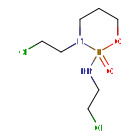
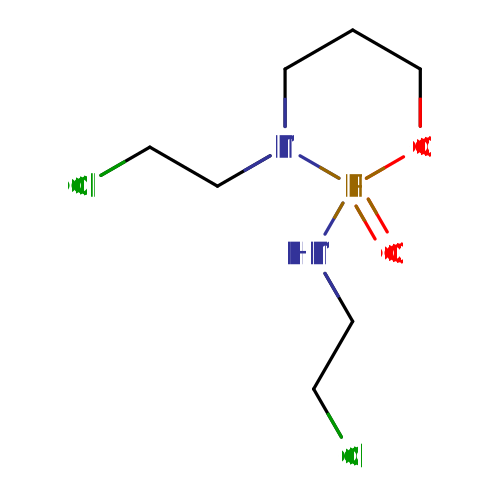
Structure for Ifosfamide (DB01181)
- Weight
- Average: 261.086
Monoisotopic: 260.02481966 - Chemical Formula
- C7H15Cl2N2O2P
- Synonyms
- 3-(2-chloroethyl)-2-((2-chloroethyl)amino)tetrahydro-2H-1,3,2-oxazaphosphorine 2-oxide
- Ifosfamida
- Ifosfamide
- Ifosfamidum
- Iphosphamide
- Isofosfamide
- Isophosphamide
- Isosfamide
- External IDs
- Z4942

Pharmacology
- Indication
Used as a component of various chemotherapeutic regimens as third-line therapy for recurrent or refractory germ cell testicular cancer. Also used as a component of various chemotherapeutic regimens for the treatment of cervical cancer, as well as in conjunction with surgery and/or radiation therapy in the treatment of various soft tissue sarcomas. Other indications include treatment of osteosarcoma, bladder cancer, ovarian cancer. small cell lung cancer, and non-Hodgkin's lymphoma.
 Reduce drug development failure ratesBuild, train, & validate machine-learning modelswith evidence-based and structured datasets.Build, train, & validate predictive machine-learning models with structured datasets.
- Associated Conditions
Indication Type Indication Combined Product Details Approval Level Age Group Patient Characteristics Dose Form Treatment of Bladder cancer ••• ••••• Treatment of Cervical cancer •••••••••••• Treatment of Head and neck cancer ••• ••••• Treatment of Hodgkin lymphoma ••• ••••• Used in combination to treat Non-hodgkin lymphoma ••• ••••• - Contraindications & Blackbox Warnings
 Prevent Adverse Drug Events TodayTap into our Clinical API for life-saving information on contraindications & blackbox warnings, population restrictions, harmful risks, & more.Avoid life-threatening adverse drug events with our Clinical API
- Pharmacodynamics
Ifosfamide requires activation by microsomal liver enzymes to active metabolites in order to exert its cytotoxic effects. Activation occurs by hydroxylation at the ring carbon atom 4 to form the unstable intermediate 4-hydroxyifosfamide. This metabolite than rapidly degrades to the stable urinary metabolite 4-ketoifosfamide. The stable urinary metabolite, 4-carboxyifosfamide, is formed upon opening of the ring. These urinary metabolites have not been found to be cytotoxic. N, N-bis (2-chloroethyl)-phosphoric acid diamide (ifosphoramide) and acrolein are also found. The major urinary metabolites, dechloroethyl ifosfamide and dechloroethyl cyclophosphamide, are formed upon enzymatic oxidation of the chloroethyl side chains and subsequent dealkylation. It is the alkylated metabolites of ifosfamide that have been shown to interact with DNA. Ifosfamide is cycle-phase nonspecific.
- Mechanism of action
The exact mechanism of ifosfamide has not been determined, but appears to be similar to other alkylating agents. Ifosfamide requires biotransformation in the liver by mixed-function oxidases (cytochrome P450 system) before it becomes active. After metabolic activation, active metabolites of ifosfamide alkylate or bind with many intracellular molecular structures, including nucleic acids. The cytotoxic action is primarily through the alkylation of DNA, done by attaching the N-7 position of guanine to its reactive electrophilic groups. The formation of inter and intra strand cross-links in the DNA results in cell death.
Target Actions Organism ADNA other/unknownHumans UNuclear receptor subfamily 1 group I member 2 Not Available Humans - Absorption
Not Available
- Volume of distribution
Ifosfamide volume of distribution (Vd) approximates the total body water volume, suggesting that distribution takes place with minimal tissue binding. Following intravenous administration of 1.5 g/m2 over 0.5 hour once daily for 5 days to 15 patients with neoplastic disease, the median Vd of ifosfamide was 0.64 L/kg on Day 1 and 0.72 L/kg on Day 5. When given to pediatric patients, the volume of distribution was 21±1.6 L/m^2.
- Protein binding
Ifosfamide shows little plasma protein binding.
- Metabolism
Primarily hepatic. Ifosfamide is metabolized through two metabolic pathways: ring oxidation ("activation") to form the active metabolite, 4-hydroxy-ifosfamide and side-chain oxidation to form the inactive metabolites, 3-dechloro-ethylifosfamide or 2-dechloroethylifosfamide with liberation of the toxic metabolite, chloroacetaldehyde. Small quantities (nmol/mL) of ifosfamide mustard and 4-hydroxyifosfamide are detectable in human plasma. Metabolism of ifosfamide is required for the generation of the biologically active species and while metabolism is extensive, it is also quite variable among patients.
Hover over products below to view reaction partners
- Route of elimination
Ifosfamide is extensively metabolized in humans and the metabolic pathways appear to be saturated at high doses. After administration of doses of 5 g/m2 of 14C-labeled ifosfamide, from 70% to 86% of the dosed radioactivity was recovered in the urine, with about 61% of the dose excreted as parent compound. At doses of 1.6–2.4 g/m2 only 12% to 18% of the dose was excreted in the urine as unchanged drug within 72 hours.
- Half-life
7-15 hours. The elimination half-life increase appeared to be related to the increase in ifosfamide volume of distribution with age.
- Clearance
- 2.4±0.33 L/h/m^2 [pediatric patients]
- Adverse Effects
 Improve decision support & research outcomesWith structured adverse effects data, including: blackbox warnings, adverse reactions, warning & precautions, & incidence rates. View sample adverse effects data in our new Data Library!Improve decision support & research outcomes with our structured adverse effects data.
- Toxicity
LD50 (mouse) = 390-1005 mg/kg, LD50 (rat) = 150-190 mg/kg. Side effects include nausea, vomiting and myelosuppression. Toxic effects include central nervous system toxicity (confusion, hallucinations) and urotoxic effects (cystitis, blood in urine).
- Pathways
Pathway Category Ifosfamide Metabolism Pathway Drug metabolism Ifosfamide Action Pathway Drug action - Pharmacogenomic Effects/ADRs
- Not Available
Interactions
- Drug Interactions
- This information should not be interpreted without the help of a healthcare provider. If you believe you are experiencing an interaction, contact a healthcare provider immediately. The absence of an interaction does not necessarily mean no interactions exist.
Drug Interaction Integrate drug-drug
interactions in your softwareAbacavir Abacavir may decrease the excretion rate of Ifosfamide which could result in a higher serum level. Abametapir The serum concentration of Ifosfamide can be increased when it is combined with Abametapir. Abatacept The metabolism of Ifosfamide can be increased when combined with Abatacept. Abciximab The risk or severity of bleeding can be increased when Ifosfamide is combined with Abciximab. Abemaciclib The metabolism of Abemaciclib can be increased when combined with Ifosfamide. - Food Interactions
- Avoid alcohol. Ingesting alcohol may worsen nausea and vomiting caused by ifosfamide.
- Exercise caution with grapefruit products. Grapefruit inhibits the CYP3A4 metabolism of ifosfamide to its active metabolite, therefore reducing its efficacy.
- Exercise caution with St. John's Wort. Close monitoring is warranted as this herb induces the CYP3A4 metabolism of ifosfamide to its alkylating active metabolites, including, chloroacetaldehyde, a nephrotoxic and neurotoxic metabolite.
Products
 Drug product information from 10+ global regionsOur datasets provide approved product information including:dosage, form, labeller, route of administration, and marketing period.Access drug product information from over 10 global regions.
- International/Other Brands
- Celofos (Celon) / Cuantil (Teva) / Holoxan (Baxter) / Mitoxana (Baxter)
- Brand Name Prescription Products
Name Dosage Strength Route Labeller Marketing Start Marketing End Region Image Ifex Injection, powder, for solution 1 g/20mL Intravenous Baxter Healthcare Corporation 1988-12-30 Not applicable US 
Ifex Injection, powder, for solution 3 g/60mL Intravenous E.R. Squibb & Sons, L.L.C. 2009-06-01 2012-03-31 US Ifex Injection, powder, for solution 1 g/20mL Intravenous E.R. Squibb & Sons, L.L.C. 2009-06-01 2012-01-31 US Ifex Powder, for solution 3 g / vial Intravenous Baxter Laboratories 2001-01-25 Not applicable Canada 
Ifex Injection, powder, for solution 3 g/60mL Intravenous Baxter Healthcare Corporation 1988-12-30 Not applicable US - Generic Prescription Products
Name Dosage Strength Route Labeller Marketing Start Marketing End Region Image Ifosfamide Injection, solution 1 g/20mL Intravenous Teva Parenteral Medicines, Inc. 2007-07-26 Not applicable US Ifosfamide Injection 50 mg/1mL Intravenous Hikma Pharmaceuticals USA Inc. 2017-06-10 Not applicable US Ifosfamide Injection, solution 50 mg/1mL Intravenous Mylan Institutional 2012-11-27 2017-12-31 US Ifosfamide Injection 50 mg/1mL Intravenous Bedford Pharmaceuticals 2010-08-31 2010-09-01 US Ifosfamide Injection, solution 50 mg/1mL Intravenous Pfizer Laboratories Div Pfizer Inc. 2012-11-27 2017-12-31 US - Mixture Products
Name Ingredients Dosage Route Labeller Marketing Start Marketing End Region Image IFEX and MESNEX Ifosfamide (1 g/20mL) + Mesna (100 mg/1mL) Kit Intravenous E.R. Squibb & Sons, L.L.C. 2009-06-01 2010-06-30 US IFEX and MESNEX Ifosfamide (1 g/20mL) + Mesna (100 mg/1mL) Kit Intravenous E.R. Squibb & Sons, L.L.C. 2009-06-01 2010-06-30 US IFEX and MESNEX Ifosfamide (3 g/60mL) + Mesna (100 mg/1mL) Kit Intravenous E.R. Squibb & Sons, L.L.C. 2009-06-01 2010-03-31 US Ifosfamide and Mesna Ifosfamide (3 g/60mL) + Mesna (100 mg/1mL) Kit Intravenous Teva Parenteral Medicines, Inc. 2012-09-26 2012-09-26 US Ifosfamide and Mesna Ifosfamide (1 g/20mL) + Mesna (100 mg/1mL) Kit Intravenous Teva Parenteral Medicines, Inc. 2012-09-26 2012-09-26 US
Categories
- ATC Codes
- L01AA06 — Ifosfamide
- Drug Categories
- Alkylating Activity
- Alkylating Drugs
- Antineoplastic Agents
- Antineoplastic Agents, Alkylating
- Antineoplastic and Immunomodulating Agents
- Cardiotoxic antineoplastic agents
- Cytochrome P-450 CYP2A6 Substrates
- Cytochrome P-450 CYP2A6 Substrates with a Narrow Therapeutic Index
- Cytochrome P-450 CYP2B6 Substrates
- Cytochrome P-450 CYP2B6 Substrates with a Narrow Therapeutic Index
- Cytochrome P-450 CYP2C18 Substrates
- Cytochrome P-450 CYP2C18 Substrates with a Narrow Therapeutic Index
- Cytochrome P-450 CYP2C19 Substrates
- Cytochrome P-450 CYP2C19 Substrates with a Narrow Therapeutic Index
- Cytochrome P-450 CYP2C8 Inducers
- Cytochrome P-450 CYP2C8 Inducers (strength unknown)
- Cytochrome P-450 CYP2C8 Substrates
- Cytochrome P-450 CYP2C8 Substrates with a Narrow Therapeutic Index
- Cytochrome P-450 CYP2C9 Substrates
- Cytochrome P-450 CYP2C9 Substrates with a Narrow Therapeutic Index
- Cytochrome P-450 CYP3A Inducers
- Cytochrome P-450 CYP3A Inhibitors
- Cytochrome P-450 CYP3A Substrates
- Cytochrome P-450 CYP3A4 Inducers
- Cytochrome P-450 CYP3A4 Inducers (strength unknown)
- Cytochrome P-450 CYP3A4 Inhibitors
- Cytochrome P-450 CYP3A4 Inhibitors (strength unknown)
- Cytochrome P-450 CYP3A4 Substrates
- Cytochrome P-450 CYP3A4 Substrates with a Narrow Therapeutic Index
- Cytochrome P-450 CYP3A5 Substrates
- Cytochrome P-450 CYP3A5 Substrates with a Narrow Therapeutic Index
- Cytochrome P-450 Enzyme Inducers
- Cytochrome P-450 Enzyme Inhibitors
- Cytochrome P-450 Substrates
- Drugs that are Mainly Renally Excreted
- Hydrocarbons, Halogenated
- Immunosuppressive Agents
- Methemoglobinemia Associated Agents
- Mustard Compounds
- Myelosuppressive Agents
- Narrow Therapeutic Index Drugs
- Nitrogen Mustard Analogues
- Nitrogen Mustard Compounds
- Noxae
- Organophosphorus Compounds
- Oxazines
- Phosphoramide Mustards
- Phosphoramides
- Toxic Actions
- Chemical TaxonomyProvided by Classyfire
- Description
- This compound belongs to the class of organic compounds known as isofamides. These are oxazaphospholanes containing the isofamide skeleton. Isofamide is a heterocyclic compound made up of a 1,3,2-oxazaphospholane, where the phosphorus atom is part of a phosphodiamide group, and the oxazaphospholane is substituted by two haloalkyl chains.
- Kingdom
- Organic compounds
- Super Class
- Organoheterocyclic compounds
- Class
- Oxazaphosphinanes
- Sub Class
- Isofamides
- Direct Parent
- Isofamides
- Alternative Parents
- Phosphoric monoester diamides / Oxacyclic compounds / Azacyclic compounds / Organopnictogen compounds / Organooxygen compounds / Organonitrogen compounds / Organochlorides / Organic oxides / Hydrocarbon derivatives / Alkyl chlorides
- Substituents
- Aliphatic heteromonocyclic compound / Alkyl chloride / Alkyl halide / Azacycle / Hydrocarbon derivative / Isofamide / Organic nitrogen compound / Organic oxide / Organic oxygen compound / Organic phosphoric acid amide
- Molecular Framework
- Aliphatic heteromonocyclic compounds
- External Descriptors
- ifosfamides (CHEBI:5864)
- Affected organisms
- Humans and other mammals
Chemical Identifiers
- UNII
- UM20QQM95Y
- CAS number
- 3778-73-2
- InChI Key
- HOMGKSMUEGBAAB-UHFFFAOYSA-N
- InChI
- InChI=1S/C7H15Cl2N2O2P/c8-2-4-10-14(12)11(6-3-9)5-1-7-13-14/h1-7H2,(H,10,12)
- IUPAC Name
- 3-(2-chloroethyl)-2-[(2-chloroethyl)amino]-1,3,2lambda5-oxazaphosphinan-2-one
- SMILES
- ClCCNP1(=O)OCCCN1CCCl
References
- Synthesis Reference
U.S. Patent 3,732,340.
US3732340- General References
- Furlanut M, Franceschi L: Pharmacology of ifosfamide. Oncology. 2003;65 Suppl 2:2-6. [Article]
- Fleming RA: An overview of cyclophosphamide and ifosfamide pharmacology. Pharmacotherapy. 1997 Sep-Oct;17(5 Pt 2):146S-154S. [Article]
- Wagner T: Ifosfamide clinical pharmacokinetics. Clin Pharmacokinet. 1994 Jun;26(6):439-56. [Article]
- Allen LM, Creaven PJ, Nelson RL: Studies on the human pharmacokinetics of isophosphamide (NSC-109724). Cancer Treat Rep. 1976 Apr;60(4):451-8. [Article]
- Brade WP, Herdrich K, Varini M: Ifosfamide--pharmacology, safety and therapeutic potential. Cancer Treat Rev. 1985 Mar;12(1):1-47. [Article]
- Zalupski M, Baker LH: Ifosfamide. J Natl Cancer Inst. 1988 Jun 15;80(8):556-66. [Article]
- Willits I, Price L, Parry A, Tilby MJ, Ford D, Cholerton S, Pearson AD, Boddy AV: Pharmacokinetics and metabolism of ifosfamide in relation to DNA damage assessed by the COMET assay in children with cancer. Br J Cancer. 2005 May 9;92(9):1626-35. [Article]
- Lokiec F: Ifosfamide: pharmacokinetic properties for central nervous system metastasis prevention. Ann Oncol. 2006 May;17 Suppl 4:iv33-6. [Article]
- Schoenike SE, Dana WJ: Ifosfamide and mesna. Clin Pharm. 1990 Mar;9(3):179-91. [Article]
- Dechant KL, Brogden RN, Pilkington T, Faulds D: Ifosfamide/mesna. A review of its antineoplastic activity, pharmacokinetic properties and therapeutic efficacy in cancer. Drugs. 1991 Sep;42(3):428-67. [Article]
- External Links
- Human Metabolome Database
- HMDB0015312
- KEGG Drug
- D00343
- KEGG Compound
- C07047
- PubChem Compound
- 3690
- PubChem Substance
- 46508335
- ChemSpider
- 3562
- BindingDB
- 189358
- 5657
- ChEBI
- 5864
- ChEMBL
- CHEMBL1024
- Therapeutic Targets Database
- DAP000537
- PharmGKB
- PA449964
- RxList
- RxList Drug Page
- Drugs.com
- Drugs.com Drug Page
- Wikipedia
- Ifosfamide
- MSDS
- Download (293 KB)
Clinical Trials
- Clinical Trials
Phase Status Purpose Conditions Count 4 Completed Treatment Anaplastic Large Cell Lymphoma / Burkitt Lymphoma / Burkitt's Leukemia / Lymphoblastic Lymphoma / Mediastinal Neoplasms 1 4 Completed Treatment Leukemia, Lymphocytic, Acute, Adult 3 4 Completed Treatment Soft Tissue Sarcoma 1 4 Enrolling by Invitation Treatment Retroperitoneal Sarcoma 1 4 Recruiting Treatment B-Cell Non-Hodgkin Lymphoma (NHL) / Burkitt Lymphoma / Diffuse Large B-Cell Lymphoma (DLBCL) / Primary Central Nervous System Lymphoma / Primary Mediastinal Lymphoma 1
Pharmacoeconomics
- Manufacturers
- Not Available
- Packagers
- APP Pharmaceuticals
- Baxter International Inc.
- Bristol-Myers Squibb Co.
- Teva Pharmaceutical Industries Ltd.
- Dosage Forms
Form Route Strength Solution Intravenous 1.000 g Solution Parenteral 500 mg Solution Intravenous 200.000 mg Injection, powder, for solution Injection, powder, for solution Intravenous 1 g Injection, powder, for solution Intravenous 200 mg Injection, powder, for solution Intravenous 500 mg Injection, powder, for solution Parenteral 1 G Injection, solution Intravenous 1 G/25ML Injection, solution Intravenous 2 G/50ML Powder, for solution Intravenous 2 G Injection, solution Intravenous 0.5 g Injection, powder, for solution 1 g Injection, solution Intravenous 1 g Injection, powder, for solution 2 g Injection, solution Intravenous 2 g Injection, solution Intravenous 500 mg Injection, powder, for solution Intravenous 1 g/25ml Injection Intravenous Injection, powder, for solution Intravenous 100000 g Injection, powder, for solution Intravenous 2 g Injection, powder, for solution Intravenous 200000 g Solution Intravenous 1000.0 mg Solution 1.000 g Injection, powder, for solution Intravenous 1 g/20mL Injection, powder, for solution Intravenous 3 g/60mL Powder, for solution Intravenous 1 g / vial Powder, for solution Intravenous 3 g / vial Kit Intravenous Powder, for solution Intravenous 2 g / vial Injection, solution Intravenous 1000 mg/1vial Solution Intravenous 1000 mg Injection, powder, lyophilized, for solution Intravenous 1000 mg Solution Parenteral 2 g Powder, for suspension Oral 1 g Injection, powder, lyophilized, for solution Intravenous 1 g Injection, powder, lyophilized, for solution Parenteral 2 g Injection, powder, lyophilized, for solution Intravenous 100000 g Injection Intravenous 50 mg/1mL Injection, powder, lyophilized, for solution Intravenous 1 g/1 Injection, solution Intravenous 1 g/20mL Injection, solution Intravenous 3 g/60mL Injection, solution Intravenous 50 mg/1mL Injection Intravenous 1 GM Solution Intravenous 1.00 g Injection, powder, lyophilized, for solution Intravenous 2 g Powder 1000 mg/1vial Powder 500 mg/1vial - Prices
Unit description Cost Unit Ifex-mesnex kit 2709.98USD kit Ifosfamide-mesna kit 787.5USD kit Ifex 3 gm vial 489.13USD vial Ifex 1 gm vial 163.04USD vial Ifosfamide 3 gm vial 114.0USD vial Ifosfamide 1 gm vial 56.4USD vial DrugBank does not sell nor buy drugs. Pricing information is supplied for informational purposes only.- Patents
Patent Number Pediatric Extension Approved Expires (estimated) Region US5252341 No 1993-10-12 2011-07-16 US
Properties
- State
- Solid
- Experimental Properties
Property Value Source melting point (°C) 39-41 °C U.S. Patent 3,732,340. water solubility 3780 mg/L Not Available logP 0.86 HANSCH,C ET AL. (1995) - Predicted Properties
Property Value Source Water Solubility 15.0 mg/mL ALOGPS logP 0.57 ALOGPS logP 0.097 Chemaxon logS -1.2 ALOGPS pKa (Strongest Acidic) 14.64 Chemaxon Physiological Charge 0 Chemaxon Hydrogen Acceptor Count 1 Chemaxon Hydrogen Donor Count 1 Chemaxon Polar Surface Area 41.57 Å2 Chemaxon Rotatable Bond Count 5 Chemaxon Refractivity 58.48 m3·mol-1 Chemaxon Polarizability 23.94 Å3 Chemaxon Number of Rings 1 Chemaxon Bioavailability 1 Chemaxon Rule of Five Yes Chemaxon Ghose Filter Yes Chemaxon Veber's Rule No Chemaxon MDDR-like Rule No Chemaxon - Predicted ADMET Features
Property Value Probability Human Intestinal Absorption + 0.9807 Blood Brain Barrier + 0.9736 Caco-2 permeable - 0.5411 P-glycoprotein substrate Non-substrate 0.7098 P-glycoprotein inhibitor I Non-inhibitor 0.6204 P-glycoprotein inhibitor II Non-inhibitor 0.9617 Renal organic cation transporter Non-inhibitor 0.8135 CYP450 2C9 substrate Non-substrate 0.7674 CYP450 2D6 substrate Non-substrate 0.9116 CYP450 3A4 substrate Substrate 0.5922 CYP450 1A2 substrate Non-inhibitor 0.9045 CYP450 2C9 inhibitor Non-inhibitor 0.9071 CYP450 2D6 inhibitor Non-inhibitor 0.9231 CYP450 2C19 inhibitor Non-inhibitor 0.9025 CYP450 3A4 inhibitor Non-inhibitor 0.8835 CYP450 inhibitory promiscuity Low CYP Inhibitory Promiscuity 0.9723 Ames test AMES toxic 0.9108 Carcinogenicity Non-carcinogens 0.8903 Biodegradation Not ready biodegradable 0.7807 Rat acute toxicity 3.2294 LD50, mol/kg Not applicable hERG inhibition (predictor I) Strong inhibitor 0.8985 hERG inhibition (predictor II) Non-inhibitor 0.8224
Spectra
- Mass Spec (NIST)
- Not Available
- Spectra
- Chromatographic Properties
Collision Cross Sections (CCS)
Adduct CCS Value (Å2) Source type Source [M-H]- 147.8752843 predictedDarkChem Lite v0.1.0 [M-H]- 141.42494 predictedDeepCCS 1.0 (2019) [M+H]+ 149.4352843 predictedDarkChem Lite v0.1.0 [M+H]+ 144.32965 predictedDeepCCS 1.0 (2019) [M+Na]+ 147.9982843 predictedDarkChem Lite v0.1.0 [M+Na]+ 153.24846 predictedDeepCCS 1.0 (2019)
Targets

References
- Furlanut M, Franceschi L: Pharmacology of ifosfamide. Oncology. 2003;65 Suppl 2:2-6. [Article]
- Hartley JM, Spanswick VJ, Gander M, Giacomini G, Whelan J, Souhami RL, Hartley JA: Measurement of DNA cross-linking in patients on ifosfamide therapy using the single cell gel electrophoresis (comet) assay. Clin Cancer Res. 1999 Mar;5(3):507-12. [Article]
- Willits I, Price L, Parry A, Tilby MJ, Ford D, Cholerton S, Pearson AD, Boddy AV: Pharmacokinetics and metabolism of ifosfamide in relation to DNA damage assessed by the COMET assay in children with cancer. Br J Cancer. 2005 May 9;92(9):1626-35. [Article]
- Lokiec F: Ifosfamide: pharmacokinetic properties for central nervous system metastasis prevention. Ann Oncol. 2006 May;17 Suppl 4:iv33-6. [Article]
- Kind
- Protein
- Organism
- Humans
- Pharmacological action
- Unknown
- General Function
- Zinc ion binding
- Specific Function
- Nuclear receptor that binds and is activated by variety of endogenous and xenobiotic compounds. Transcription factor that activates the transcription of multiple genes involved in the metabolism an...
- Gene Name
- NR1I2
- Uniprot ID
- O75469
- Uniprot Name
- Nuclear receptor subfamily 1 group I member 2
- Molecular Weight
- 49761.245 Da
References
- Harmsen S, Meijerman I, Beijnen JH, Schellens JH: Nuclear receptor mediated induction of cytochrome P450 3A4 by anticancer drugs: a key role for the pregnane X receptor. Cancer Chemother Pharmacol. 2009 Jun;64(1):35-43. doi: 10.1007/s00280-008-0842-3. Epub 2008 Oct 7. [Article]
Enzymes
- Kind
- Protein
- Organism
- Humans
- Pharmacological action
- Unknown
- Actions
- Substrate
- General Function
- Steroid hydroxylase activity
- Specific Function
- Cytochromes P450 are a group of heme-thiolate monooxygenases. In liver microsomes, this enzyme is involved in an NADPH-dependent electron transport pathway. It oxidizes a variety of structurally un...
- Gene Name
- CYP2B6
- Uniprot ID
- P20813
- Uniprot Name
- Cytochrome P450 2B6
- Molecular Weight
- 56277.81 Da
References
- Lokiec F: Ifosfamide: pharmacokinetic properties for central nervous system metastasis prevention. Ann Oncol. 2006 May;17 Suppl 4:iv33-6. [Article]
- Chen CS, Jounaidi Y, Waxman DJ: Enantioselective metabolism and cytotoxicity of R-ifosfamide and S-ifosfamide by tumor cell-expressed cytochromes P450. Drug Metab Dispos. 2005 Sep;33(9):1261-7. Epub 2005 May 26. [Article]
- Zhou SF, Zhou ZW, Yang LP, Cai JP: Substrates, inducers, inhibitors and structure-activity relationships of human Cytochrome P450 2C9 and implications in drug development. Curr Med Chem. 2009;16(27):3480-675. Epub 2009 Sep 1. [Article]
- Roy P, Yu LJ, Crespi CL, Waxman DJ: Development of a substrate-activity based approach to identify the major human liver P-450 catalysts of cyclophosphamide and ifosfamide activation based on cDNA-expressed activities and liver microsomal P-450 profiles. Drug Metab Dispos. 1999 Jun;27(6):655-66. [Article]
- Flockhart Table of Drug Interactions [Link]
- Kind
- Protein
- Organism
- Humans
- Pharmacological action
- Unknown
- Actions
- SubstrateInhibitorInducer
- General Function
- Vitamin d3 25-hydroxylase activity
- Specific Function
- Cytochromes P450 are a group of heme-thiolate monooxygenases. In liver microsomes, this enzyme is involved in an NADPH-dependent electron transport pathway. It performs a variety of oxidation react...
- Gene Name
- CYP3A4
- Uniprot ID
- P08684
- Uniprot Name
- Cytochrome P450 3A4
- Molecular Weight
- 57342.67 Da
References
- Lokiec F: Ifosfamide: pharmacokinetic properties for central nervous system metastasis prevention. Ann Oncol. 2006 May;17 Suppl 4:iv33-6. [Article]
- Chen CS, Jounaidi Y, Waxman DJ: Enantioselective metabolism and cytotoxicity of R-ifosfamide and S-ifosfamide by tumor cell-expressed cytochromes P450. Drug Metab Dispos. 2005 Sep;33(9):1261-7. Epub 2005 May 26. [Article]
- Zhou SF, Zhou ZW, Yang LP, Cai JP: Substrates, inducers, inhibitors and structure-activity relationships of human Cytochrome P450 2C9 and implications in drug development. Curr Med Chem. 2009;16(27):3480-675. Epub 2009 Sep 1. [Article]
- Roy P, Yu LJ, Crespi CL, Waxman DJ: Development of a substrate-activity based approach to identify the major human liver P-450 catalysts of cyclophosphamide and ifosfamide activation based on cDNA-expressed activities and liver microsomal P-450 profiles. Drug Metab Dispos. 1999 Jun;27(6):655-66. [Article]
- Preiss R, Schmidt R, Baumann F, Hanschmann H, Hauss J, Geissler F, Pahlig H, Ratzewiss B: Measurement of 4-hydroxylation of ifosfamide in human liver microsomes using the estimation of free and protein-bound acrolein and codetermination of keto- and carboxyifosfamide. J Cancer Res Clin Oncol. 2002 Jul;128(7):385-92. Epub 2002 Jun 11. [Article]
- Kind
- Protein
- Organism
- Humans
- Pharmacological action
- Unknown
- Actions
- Substrate
- General Function
- Oxygen binding
- Specific Function
- Cytochromes P450 are a group of heme-thiolate monooxygenases. In liver microsomes, this enzyme is involved in an NADPH-dependent electron transport pathway. It oxidizes a variety of structurally un...
- Gene Name
- CYP3A5
- Uniprot ID
- P20815
- Uniprot Name
- Cytochrome P450 3A5
- Molecular Weight
- 57108.065 Da
References
- Lokiec F: Ifosfamide: pharmacokinetic properties for central nervous system metastasis prevention. Ann Oncol. 2006 May;17 Suppl 4:iv33-6. [Article]
- Zhou SF, Zhou ZW, Yang LP, Cai JP: Substrates, inducers, inhibitors and structure-activity relationships of human Cytochrome P450 2C9 and implications in drug development. Curr Med Chem. 2009;16(27):3480-675. Epub 2009 Sep 1. [Article]
- Roy P, Yu LJ, Crespi CL, Waxman DJ: Development of a substrate-activity based approach to identify the major human liver P-450 catalysts of cyclophosphamide and ifosfamide activation based on cDNA-expressed activities and liver microsomal P-450 profiles. Drug Metab Dispos. 1999 Jun;27(6):655-66. [Article]
- Kind
- Protein
- Organism
- Humans
- Pharmacological action
- Unknown
- Actions
- Substrate
- General Function
- Steroid hydroxylase activity
- Specific Function
- Responsible for the metabolism of a number of therapeutic agents such as the anticonvulsant drug S-mephenytoin, omeprazole, proguanil, certain barbiturates, diazepam, propranolol, citalopram and im...
- Gene Name
- CYP2C19
- Uniprot ID
- P33261
- Uniprot Name
- Cytochrome P450 2C19
- Molecular Weight
- 55930.545 Da
References
- Roy P, Yu LJ, Crespi CL, Waxman DJ: Development of a substrate-activity based approach to identify the major human liver P-450 catalysts of cyclophosphamide and ifosfamide activation based on cDNA-expressed activities and liver microsomal P-450 profiles. Drug Metab Dispos. 1999 Jun;27(6):655-66. [Article]
- Lokiec F: Ifosfamide: pharmacokinetic properties for central nervous system metastasis prevention. Ann Oncol. 2006 May;17 Suppl 4:iv33-6. [Article]
- Kind
- Protein
- Organism
- Humans
- Pharmacological action
- Unknown
- Actions
- Substrate
- General Function
- Steroid hydroxylase activity
- Specific Function
- Cytochromes P450 are a group of heme-thiolate monooxygenases. In liver microsomes, this enzyme is involved in an NADPH-dependent electron transport pathway. It oxidizes a variety of structurally un...
- Gene Name
- CYP2C9
- Uniprot ID
- P11712
- Uniprot Name
- Cytochrome P450 2C9
- Molecular Weight
- 55627.365 Da
References
- Lokiec F: Ifosfamide: pharmacokinetic properties for central nervous system metastasis prevention. Ann Oncol. 2006 May;17 Suppl 4:iv33-6. [Article]
- Zhou SF, Zhou ZW, Yang LP, Cai JP: Substrates, inducers, inhibitors and structure-activity relationships of human Cytochrome P450 2C9 and implications in drug development. Curr Med Chem. 2009;16(27):3480-675. Epub 2009 Sep 1. [Article]
- Schmidt R, Baumann F, Knupfer H, Brauckhoff M, Horn LC, Schonfelder M, Kohler U, Preiss R: CYP3A4, CYP2C9 and CYP2B6 expression and ifosfamide turnover in breast cancer tissue microsomes. Br J Cancer. 2004 Feb 23;90(4):911-6. doi: 10.1038/sj.bjc.6601492. [Article]
- Kind
- Protein
- Organism
- Humans
- Pharmacological action
- Unknown
- Actions
- SubstrateInducer
- General Function
- Steroid hydroxylase activity
- Specific Function
- Cytochromes P450 are a group of heme-thiolate monooxygenases. In liver microsomes, this enzyme is involved in an NADPH-dependent electron transport pathway. It oxidizes a variety of structurally un...
- Gene Name
- CYP2C8
- Uniprot ID
- P10632
- Uniprot Name
- Cytochrome P450 2C8
- Molecular Weight
- 55824.275 Da
References
- Lokiec F: Ifosfamide: pharmacokinetic properties for central nervous system metastasis prevention. Ann Oncol. 2006 May;17 Suppl 4:iv33-6. [Article]
- Kind
- Protein
- Organism
- Humans
- Pharmacological action
- Unknown
- Actions
- Substrate
- General Function
- Steroid hydroxylase activity
- Specific Function
- Exhibits a high coumarin 7-hydroxylase activity. Can act in the hydroxylation of the anti-cancer drugs cyclophosphamide and ifosphamide. Competent in the metabolic activation of aflatoxin B1. Const...
- Gene Name
- CYP2A6
- Uniprot ID
- P11509
- Uniprot Name
- Cytochrome P450 2A6
- Molecular Weight
- 56501.005 Da
References
- Lokiec F: Ifosfamide: pharmacokinetic properties for central nervous system metastasis prevention. Ann Oncol. 2006 May;17 Suppl 4:iv33-6. [Article]
- Roy P, Yu LJ, Crespi CL, Waxman DJ: Development of a substrate-activity based approach to identify the major human liver P-450 catalysts of cyclophosphamide and ifosfamide activation based on cDNA-expressed activities and liver microsomal P-450 profiles. Drug Metab Dispos. 1999 Jun;27(6):655-66. [Article]
- Rendic S: Summary of information on human CYP enzymes: human P450 metabolism data. Drug Metab Rev. 2002 Feb-May;34(1-2):83-448. [Article]
- Kind
- Protein
- Organism
- Humans
- Pharmacological action
- Unknown
- Actions
- Substrate
- General Function
- Steroid hydroxylase activity
- Specific Function
- Cytochromes P450 are a group of heme-thiolate monooxygenases. In liver microsomes, this enzyme is involved in an NADPH-dependent electron transport pathway. It oxidizes a variety of structurally un...
- Gene Name
- CYP2C18
- Uniprot ID
- P33260
- Uniprot Name
- Cytochrome P450 2C18
- Molecular Weight
- 55710.075 Da
References
- Roy P, Yu LJ, Crespi CL, Waxman DJ: Development of a substrate-activity based approach to identify the major human liver P-450 catalysts of cyclophosphamide and ifosfamide activation based on cDNA-expressed activities and liver microsomal P-450 profiles. Drug Metab Dispos. 1999 Jun;27(6):655-66. [Article]
- Chang TK, Yu L, Goldstein JA, Waxman DJ: Identification of the polymorphically expressed CYP2C19 and the wild-type CYP2C9-ILE359 allele as low-Km catalysts of cyclophosphamide and ifosfamide activation. Pharmacogenetics. 1997 Jun;7(3):211-21. [Article]
- Kind
- Protein
- Organism
- Humans
- Pharmacological action
- Unknown
- Actions
- Substrate
- General Function
- Prostaglandin-endoperoxide synthase activity
- Specific Function
- Converts arachidonate to prostaglandin H2 (PGH2), a committed step in prostanoid synthesis. Involved in the constitutive production of prostanoids in particular in the stomach and platelets. In gas...
- Gene Name
- PTGS1
- Uniprot ID
- P23219
- Uniprot Name
- Prostaglandin G/H synthase 1
- Molecular Weight
- 68685.82 Da
References
- Zhou SF, Zhou ZW, Yang LP, Cai JP: Substrates, inducers, inhibitors and structure-activity relationships of human Cytochrome P450 2C9 and implications in drug development. Curr Med Chem. 2009;16(27):3480-675. Epub 2009 Sep 1. [Article]

Drug created at June 13, 2005 13:24 / Updated at April 27, 2024 09:44