Identification
- Summary
Fluoxymesterone is a synthetic androgenic anabolic steroid that used in the treatment of hypogonadism and delayed puberty in males, as well as breast neoplasms in women.
- Brand Names
- Androxy, Halotestin
- Generic Name
- Fluoxymesterone
- DrugBank Accession Number
- DB01185
- Background
An anabolic steroid that has been used in the treatment of male hypogonadism, delayed puberty in males, and in the treatment of breast neoplasms in women.
- Type
- Small Molecule
- Groups
- Approved, Illicit
- Structure
Structure for Fluoxymesterone (DB01185)
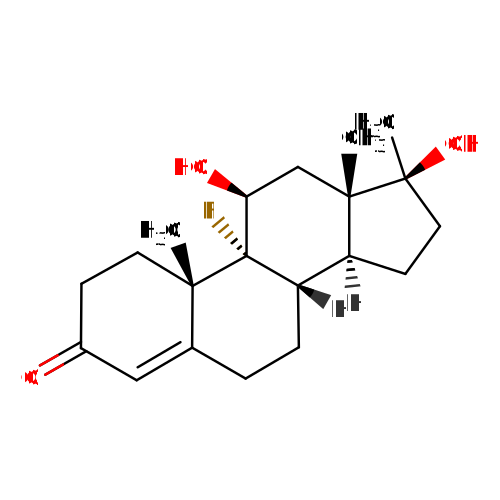
- Weight
- Average: 336.4409
Monoisotopic: 336.210072999 - Chemical Formula
- C20H29FO3
- Synonyms
- 11β,17β-Dihydroxy-9α-fluoro-17α-methyl-4-androster-3-one
- 17α-Methyl-9α-fluoro-11β-hydroxytesterone
- 9-Fluoro-11β,17β-dihydroxy-17-methylandrost-4-en-3-one
- 9α-Fluoro-11β-hydroxy-17-methyltestosterone
- Fluoximesterona
- Fluoxymesterone
- Fluoxymestérone
- Fluoxymesteronum
- External IDs
- NSC-12165

Pharmacology
- Indication
In males, used as replacement therapy in conditions associated with symptoms of deficiency or absence of endogenous testosterone. In females, for palliation of androgenresponsive recurrent mammary cancer in women who are more than one year but less than five years postmenopausal.
 Reduce drug development failure ratesBuild, train, & validate machine-learning modelswith evidence-based and structured datasets.Build, train, & validate predictive machine-learning models with structured datasets.
- Associated Conditions
Indication Type Indication Combined Product Details Approval Level Age Group Patient Characteristics Dose Form Management of Delayed puberty •••••••••••• Treatment of Gonadotropin deficiency •••••••••••• Management of Hypogonadotropic hypogonadism •••••••••••• Treatment of Lhrh deficiency •••••••••••• Management of Primary hypogonadism •••••••••••• - Contraindications & Blackbox Warnings
 Prevent Adverse Drug Events TodayTap into our Clinical API for life-saving information on contraindications & blackbox warnings, population restrictions, harmful risks, & more.Avoid life-threatening adverse drug events with our Clinical API
- Pharmacodynamics
Fluoxymesterone is a synthetic androgen, or male hormone, similar to testosterone. Fluoxymesterone works by attaching itself to androgen receptors; this causes it to interact with the parts of the cell involved in the making of proteins. It may cause an increase in the synthesis of some proteins or a decrease in the synthesis of others. These proteins have a variety of effects, including blocking the growth of some types of breast cancer cells, stimulating cells that cause male sexual characteristics, and stimulating the production of red blood cells.
- Mechanism of action
Fluoxymesterone is a synthetic androgenic anabolic steroid and is approximately 5 times as potent as natural methyltestosterone. Like testosterone and other androgenic hormones, fluoxymesterone binds to the androgen receptor. It produces retention of nitrogen, sodium, potassium, and phosphorus; increases protein anabolism; decreases amino acid catabolism and decreased urinary excretion of calcium. The antitumour activity of fluoxymesterone appears related to reduction or competitive inhibition of prolactin receptors or estrogen receptors or production.
Target Actions Organism AAndrogen receptor agonistHumans AEstrogen receptor alpha antagonistHumans UGlucocorticoid receptor antagonistHumans UCorticosteroid 11-beta-dehydrogenase isozyme 2 inhibitorHumans - Absorption
Oral absorption is less than 44%.
- Volume of distribution
Not Available
- Protein binding
Very high (99%) with 80% to sex hormone binding globulin, 19% to albumin.
- Metabolism
Presence of 17-alpha alkyl group reduces susceptibility to hepatic enzyme degradation, which slows metabolism and allows oral administration. Inactivation of testosterone occurs primarily in the liver
- Route of elimination
Not Available
- Half-life
9.2 hours
- Clearance
Not Available
- Adverse Effects
 Improve decision support & research outcomesWith structured adverse effects data, including: blackbox warnings, adverse reactions, warning & precautions, & incidence rates. View sample adverse effects data in our new Data Library!Improve decision support & research outcomes with our structured adverse effects data.
- Toxicity
Side effects include virilization (masculine traits in women), acne, fluid retention, and hypercalcemia.
- Pathways
- Not Available
- Pharmacogenomic Effects/ADRs
- Not Available
Interactions
- Drug Interactions
- This information should not be interpreted without the help of a healthcare provider. If you believe you are experiencing an interaction, contact a healthcare provider immediately. The absence of an interaction does not necessarily mean no interactions exist.
Drug Interaction Integrate drug-drug
interactions in your softwareAcarbose Fluoxymesterone may increase the hypoglycemic activities of Acarbose. Acenocoumarol Fluoxymesterone may increase the anticoagulant activities of Acenocoumarol. Acetohexamide Fluoxymesterone may increase the hypoglycemic activities of Acetohexamide. Albiglutide Fluoxymesterone may increase the hypoglycemic activities of Albiglutide. Alogliptin Fluoxymesterone may increase the hypoglycemic activities of Alogliptin. - Food Interactions
- Take with food.
Products
 Drug product information from 10+ global regionsOur datasets provide approved product information including:dosage, form, labeller, route of administration, and marketing period.Access drug product information from over 10 global regions.
- International/Other Brands
- Ora-Testryl (Bristol-Myers Squibb) / Testoral (Midy) / U-Gono (Upjohn) / UItandren (Ciba)
- Brand Name Prescription Products
Name Dosage Strength Route Labeller Marketing Start Marketing End Region Image Halotestin Tablet 10 mg/1 Oral UNSPECIFIED 2006-02-06 Not applicable US 
Halotestin Tablet 5 mg/1 Oral UNSPECIFIED 2006-02-06 Not applicable US Halotestin Tablet 2 mg/1 Oral UNSPECIFIED 2006-02-06 Not applicable US - Generic Prescription Products
Name Dosage Strength Route Labeller Marketing Start Marketing End Region Image Androxy Tablet 10 mg/1 Oral Upsher-Smith Laboratories, LLC 1983-10-21 Not applicable US
Categories
- ATC Codes
- G03BA01 — Fluoxymesterone
- Drug Categories
- 3-Oxoandrosten (4) Derivatives
- Anabolic Agents
- Androgens
- Androstanes
- Androstenediols
- Androstenes
- Androstenols
- Fused-Ring Compounds
- Genito Urinary System and Sex Hormones
- Hormones
- Hormones, Hormone Substitutes, and Hormone Antagonists
- Sex Hormones and Modulators of the Genital System
- Steroids
- Steroids, Fluorinated
- Chemical TaxonomyProvided by Classyfire
- Description
- This compound belongs to the class of organic compounds known as androgens and derivatives. These are 3-hydroxylated C19 steroid hormones. They are known to favor the development of masculine characteristics. They also show profound effects on scalp and body hair in humans.
- Kingdom
- Organic compounds
- Super Class
- Lipids and lipid-like molecules
- Class
- Steroids and steroid derivatives
- Sub Class
- Androstane steroids
- Direct Parent
- Androgens and derivatives
- Alternative Parents
- Halogenated steroids / 3-oxo delta-4-steroids / 17-hydroxysteroids / 11-beta-hydroxysteroids / Delta-4-steroids / Cyclohexenones / Tertiary alcohols / Secondary alcohols / Fluorohydrins / Cyclic alcohols and derivatives show 4 more
- Substituents
- 11-beta-hydroxysteroid / 11-hydroxysteroid / 17-hydroxysteroid / 3-oxo-delta-4-steroid / 3-oxosteroid / 9-halo-steroid / Alcohol / Aliphatic homopolycyclic compound / Alkyl fluoride / Alkyl halide show 20 more
- Molecular Framework
- Aliphatic homopolycyclic compounds
- External Descriptors
- 11beta-hydroxy steroid, 3-oxo Delta(4)-steroid, 17beta-hydroxy steroid, fluorinated steroid, anabolic androgenic steroid (CHEBI:5120) / C19 steroids (androgens) and derivatives (LMST02020025)
- Affected organisms
- Humans and other mammals
Chemical Identifiers
- UNII
- 9JU12S4YFY
- CAS number
- 76-43-7
- InChI Key
- YLRFCQOZQXIBAB-RBZZARIASA-N
- InChI
- InChI=1S/C20H29FO3/c1-17-8-6-13(22)10-12(17)4-5-15-14-7-9-19(3,24)18(14,2)11-16(23)20(15,17)21/h10,14-16,23-24H,4-9,11H2,1-3H3/t14-,15-,16-,17-,18-,19-,20-/m0/s1
- IUPAC Name
- (1S,3aS,3bS,9aS,9bR,10S,11aS)-9b-fluoro-1,10-dihydroxy-1,9a,11a-trimethyl-1H,2H,3H,3aH,3bH,4H,5H,7H,8H,9H,9aH,9bH,10H,11H,11aH-cyclopenta[a]phenanthren-7-one
- SMILES
- [H][C@@]12CC[C@](C)(O)[C@@]1(C)C[C@H](O)[C@@]1(F)[C@@]2([H])CCC2=CC(=O)CC[C@]12C
References
- Synthesis Reference
U.S. Patent 2,793,218 U.S. Patent 2,813,881
- General References
- Miner JN, Chang W, Chapman MS, Finn PD, Hong MH, Lopez FJ, Marschke KB, Rosen J, Schrader W, Turner R, van Oeveren A, Viveros H, Zhi L, Negro-Vilar A: An orally active selective androgen receptor modulator is efficacious on bone, muscle, and sex function with reduced impact on prostate. Endocrinology. 2007 Jan;148(1):363-73. Epub 2006 Oct 5. [Article]
- External Links
- Human Metabolome Database
- HMDB0015316
- KEGG Drug
- D00327
- PubChem Compound
- 6446
- PubChem Substance
- 46508867
- ChemSpider
- 6205
- BindingDB
- 18189
- 4494
- ChEBI
- 5120
- ChEMBL
- CHEMBL1445
- ZINC
- ZINC000003875484
- Therapeutic Targets Database
- DAP000904
- PharmGKB
- PA164744518
- Guide to Pharmacology
- GtP Drug Page
- RxList
- RxList Drug Page
- Drugs.com
- Drugs.com Drug Page
- Wikipedia
- Fluoxymesterone
- MSDS
- Download (75.7 KB)
Clinical Trials
- Clinical Trials
Phase Status Purpose Conditions Count 2 Terminated Treatment Metastatic Breast Cancer 1
Pharmacoeconomics
- Manufacturers
- Not Available
- Packagers
- Major Pharmaceuticals
- Qualitest
- Spectrum Pharmaceuticals
- USL Pharma Inc.
- Valeant Ltd.
- Dosage Forms
Form Route Strength Tablet Oral 10 mg/1 Tablet Oral 2 mg/1 Tablet Oral 5 mg Tablet Oral 5 mg/1 - Prices
Unit description Cost Unit Fluoxymesterone powder 391.79USD g Android 10 mg capsule 11.35USD each DrugBank does not sell nor buy drugs. Pricing information is supplied for informational purposes only.- Patents
- Not Available
Properties
- State
- Solid
- Experimental Properties
Property Value Source melting point (°C) 265 U.S. Patent 2,793,218 U.S. Patent 2,813,881 water solubility 67.5 mg/L Not Available logP 2.38 HANSCH,C ET AL. (1995) - Predicted Properties
Property Value Source Water Solubility 0.0452 mg/mL ALOGPS logP 2.5 ALOGPS logP 2.38 Chemaxon logS -3.9 ALOGPS pKa (Strongest Acidic) 13.6 Chemaxon pKa (Strongest Basic) -3 Chemaxon Physiological Charge 0 Chemaxon Hydrogen Acceptor Count 3 Chemaxon Hydrogen Donor Count 2 Chemaxon Polar Surface Area 57.53 Å2 Chemaxon Rotatable Bond Count 0 Chemaxon Refractivity 90.19 m3·mol-1 Chemaxon Polarizability 36.65 Å3 Chemaxon Number of Rings 4 Chemaxon Bioavailability 1 Chemaxon Rule of Five Yes Chemaxon Ghose Filter Yes Chemaxon Veber's Rule No Chemaxon MDDR-like Rule No Chemaxon - Predicted ADMET Features
Property Value Probability Human Intestinal Absorption + 1.0 Blood Brain Barrier + 0.9633 Caco-2 permeable + 0.8586 P-glycoprotein substrate Substrate 0.7505 P-glycoprotein inhibitor I Non-inhibitor 0.7583 P-glycoprotein inhibitor II Non-inhibitor 0.87 Renal organic cation transporter Non-inhibitor 0.8136 CYP450 2C9 substrate Non-substrate 0.862 CYP450 2D6 substrate Non-substrate 0.8773 CYP450 3A4 substrate Substrate 0.7669 CYP450 1A2 substrate Non-inhibitor 0.9041 CYP450 2C9 inhibitor Non-inhibitor 0.8159 CYP450 2D6 inhibitor Non-inhibitor 0.9286 CYP450 2C19 inhibitor Non-inhibitor 0.917 CYP450 3A4 inhibitor Non-inhibitor 0.8354 CYP450 inhibitory promiscuity Low CYP Inhibitory Promiscuity 0.8585 Ames test Non AMES toxic 0.8777 Carcinogenicity Non-carcinogens 0.9242 Biodegradation Not ready biodegradable 1.0 Rat acute toxicity 2.7028 LD50, mol/kg Not applicable hERG inhibition (predictor I) Weak inhibitor 0.943 hERG inhibition (predictor II) Non-inhibitor 0.5784
Spectra
- Mass Spec (NIST)
- Not Available
- Spectra
- Chromatographic Properties
Collision Cross Sections (CCS)
Adduct CCS Value (Å2) Source type Source [M-H]- 183.7069268 predictedDarkChem Lite v0.1.0 [M-H]- 178.8683 predictedDeepCCS 1.0 (2019) [M+H]+ 185.4897268 predictedDarkChem Lite v0.1.0 [M+H]+ 180.83336 predictedDeepCCS 1.0 (2019) [M+Na]+ 184.1047268 predictedDarkChem Lite v0.1.0 [M+Na]+ 187.62178 predictedDeepCCS 1.0 (2019)
Targets

- Kind
- Protein
- Organism
- Humans
- Pharmacological action
- Yes
- Actions
- Agonist
- General Function
- Zinc ion binding
- Specific Function
- Steroid hormone receptors are ligand-activated transcription factors that regulate eukaryotic gene expression and affect cellular proliferation and differentiation in target tissues. Transcription ...
- Gene Name
- AR
- Uniprot ID
- P10275
- Uniprot Name
- Androgen receptor
- Molecular Weight
- 98987.9 Da
References
- Fernandez L, Chirino R, Boada LD, Navarro D, Cabrera N, del Rio I, Diaz-Chico BN: Stanozolol and danazol, unlike natural androgens, interact with the low affinity glucocorticoid-binding sites from male rat liver microsomes. Endocrinology. 1994 Mar;134(3):1401-8. doi: 10.1210/endo.134.3.8119180. [Article]
- Kasperk CH, Wergedal JE, Farley JR, Linkhart TA, Turner RT, Baylink DJ: Androgens directly stimulate proliferation of bone cells in vitro. Endocrinology. 1989 Mar;124(3):1576-8. [Article]
- Smallridge RC, Vigersky R, Glass AR, Griffin JE, White BJ, Eil C: Androgen receptor abnormalities in identical twins with oligospermia. Clinical and biochemical studies. Am J Med. 1984 Dec;77(6):1049-54. [Article]
- Miner JN, Chang W, Chapman MS, Finn PD, Hong MH, Lopez FJ, Marschke KB, Rosen J, Schrader W, Turner R, van Oeveren A, Viveros H, Zhi L, Negro-Vilar A: An orally active selective androgen receptor modulator is efficacious on bone, muscle, and sex function with reduced impact on prostate. Endocrinology. 2007 Jan;148(1):363-73. Epub 2006 Oct 5. [Article]
- Kemppainen JA, Langley E, Wong CI, Bobseine K, Kelce WR, Wilson EM: Distinguishing androgen receptor agonists and antagonists: distinct mechanisms of activation by medroxyprogesterone acetate and dihydrotestosterone. Mol Endocrinol. 1999 Mar;13(3):440-54. [Article]
- Chen X, Ji ZL, Chen YZ: TTD: Therapeutic Target Database. Nucleic Acids Res. 2002 Jan 1;30(1):412-5. [Article]
- Kind
- Protein
- Organism
- Humans
- Pharmacological action
- Yes
- Actions
- Antagonist
- General Function
- Zinc ion binding
- Specific Function
- Nuclear hormone receptor. The steroid hormones and their receptors are involved in the regulation of eukaryotic gene expression and affect cellular proliferation and differentiation in target tissu...
- Gene Name
- ESR1
- Uniprot ID
- P03372
- Uniprot Name
- Estrogen receptor
- Molecular Weight
- 66215.45 Da
References
- Ingle JN, Suman VJ, Mailliard JA, Kugler JW, Krook JE, Michalak JC, Pisansky TM, Wold LE, Donohue JH, Goetz MP, Perez EA: Randomized trial of tamoxifen alone or combined with fluoxymesterone as adjuvant therapy in postmenopausal women with resected estrogen receptor positive breast cancer. North Central Cancer Treatment Group Trial 89-30-52. Breast Cancer Res Treat. 2006 Jul;98(2):217-22. Epub 2006 Mar 15. [Article]
- Sledge GW Jr, Hu P, Falkson G, Tormey D, Abeloff M: Comparison of chemotherapy with chemohormonal therapy as first-line therapy for metastatic, hormone-sensitive breast cancer: An Eastern Cooperative Oncology Group study. J Clin Oncol. 2000 Jan;18(2):262-6. [Article]
- Pearson OH, Manni A, Arafah BM: Antiestrogen treatment of breast cancer: an overview. Cancer Res. 1982 Aug;42(8 Suppl):3424s-3429s. [Article]
- Perloff M, Norton L, Korzun AH, Wood WC, Carey RW, Gottlieb A, Aust JC, Bank A, Silver RT, Saleh F, Canellos GP, Perry MC, Weiss RB, Holland JF: Postsurgical adjuvant chemotherapy of stage II breast carcinoma with or without crossover to a non-cross-resistant regimen: a Cancer and Leukemia Group B study. J Clin Oncol. 1996 May;14(5):1589-98. [Article]
- Swain SM, Steinberg SM, Bagley C, Lippman ME: Tamoxifen and fluoxymesterone versus tamoxifen and danazol in metastatic breast cancer--a randomized study. Breast Cancer Res Treat. 1988 Sep;12(1):51-7. [Article]
- Kind
- Protein
- Organism
- Humans
- Pharmacological action
- Unknown
- Actions
- Antagonist
- General Function
- Zinc ion binding
- Specific Function
- Receptor for glucocorticoids (GC). Has a dual mode of action: as a transcription factor that binds to glucocorticoid response elements (GRE), both for nuclear and mitochondrial DNA, and as a modula...
- Gene Name
- NR3C1
- Uniprot ID
- P04150
- Uniprot Name
- Glucocorticoid receptor
- Molecular Weight
- 85658.57 Da
References
- Mayer M, Rosen F: Interaction of anabolic steroids with glucocorticoid receptor sites in rat muscle cytosol. Am J Physiol. 1975 Nov;229(5):1381-6. [Article]
- Kind
- Protein
- Organism
- Humans
- Pharmacological action
- Unknown
- Actions
- Inhibitor
- General Function
- Steroid binding
- Specific Function
- Catalyzes the conversion of cortisol to the inactive metabolite cortisone. Modulates intracellular glucocorticoid levels, thus protecting the nonselective mineralocorticoid receptor from occupation...
- Gene Name
- HSD11B2
- Uniprot ID
- P80365
- Uniprot Name
- Corticosteroid 11-beta-dehydrogenase isozyme 2
- Molecular Weight
- 44126.06 Da
References
- Furstenberger C, Vuorinen A, Da Cunha T, Kratschmar DV, Saugy M, Schuster D, Odermatt A: The anabolic androgenic steroid fluoxymesterone inhibits 11beta-hydroxysteroid dehydrogenase 2-dependent glucocorticoid inactivation. Toxicol Sci. 2012 Apr;126(2):353-61. doi: 10.1093/toxsci/kfs022. Epub 2012 Jan 23. [Article]
Carriers
- Kind
- Protein
- Organism
- Humans
- Pharmacological action
- Unknown
- Actions
- Antagonist
- General Function
- Androgen binding
- Specific Function
- Functions as an androgen transport protein, but may also be involved in receptor mediated processes. Each dimer binds one molecule of steroid. Specific for 5-alpha-dihydrotestosterone, testosterone...
- Gene Name
- SHBG
- Uniprot ID
- P04278
- Uniprot Name
- Sex hormone-binding globulin
- Molecular Weight
- 43778.755 Da
References
- Smallridge RC, Vigersky R, Glass AR, Griffin JE, White BJ, Eil C: Androgen receptor abnormalities in identical twins with oligospermia. Clinical and biochemical studies. Am J Med. 1984 Dec;77(6):1049-54. [Article]
- Pugeat MM, Dunn JF, Nisula BC: Transport of steroid hormones: interaction of 70 drugs with testosterone-binding globulin and corticosteroid-binding globulin in human plasma. J Clin Endocrinol Metab. 1981 Jul;53(1):69-75. [Article]
- Vigersky RA, Easley RB, Loriaux DL: Effect of fluoxymesterone on the pituitary-gonadal axis: the role of testosterone-estradiol-binding globulin. J Clin Endocrinol Metab. 1976 Jul;43(1):1-9. [Article]

Drug created at June 13, 2005 13:24 / Updated at May 07, 2021 21:26