Identification
- Summary
Rifapentine is an antibiotic agent used in the treatment of pulmonary tuberculosis.
- Brand Names
- Priftin
- Generic Name
- Rifapentine
- DrugBank Accession Number
- DB01201
- Background
Rifapentine is an antibiotic drug used in the treatment of tuberculosis. It inhibits DNA-dependent RNA polymerase activity in susceptible cells. Specifically, it interacts with bacterial RNA polymerase but does not inhibit the mammalian enzyme.
- Type
- Small Molecule
- Groups
- Approved, Investigational
- Structure
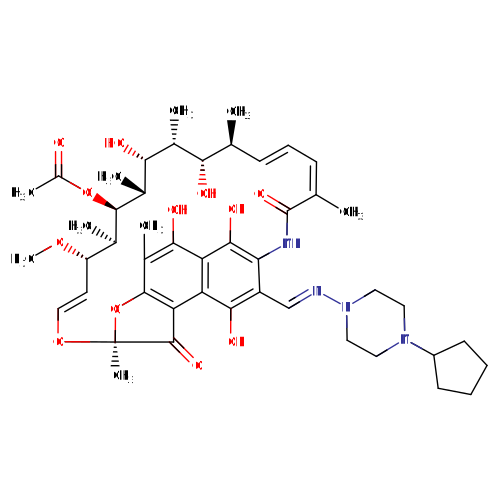
Structure for Rifapentine (DB01201)
- Weight
- Average: 877.0307
Monoisotopic: 876.452073532 - Chemical Formula
- C47H64N4O12
- Synonyms
- 3-(((4-Cyclopentyl-1-piperazinyl)imino)methyl)rifamycin
- Cyclopentylrifampicin
- Rifapentin
- Rifapentine
- External IDs
- ANTIBIOTIC DL-473IT
- DL-473
- KTC-1
- MDL-473
- R-77-3
- R-773

Pharmacology
- Indication
For the treatment of pulmonary tuberculosis.
 Reduce drug development failure ratesBuild, train, & validate machine-learning modelswith evidence-based and structured datasets.Build, train, & validate predictive machine-learning models with structured datasets.
- Associated Conditions
Indication Type Indication Combined Product Details Approval Level Age Group Patient Characteristics Dose Form Used in combination to treat Active tuberculosis •••••••••••• Used in combination to treat Latent tuberculosis •••••••••••• - Contraindications & Blackbox Warnings
 Prevent Adverse Drug Events TodayTap into our Clinical API for life-saving information on contraindications & blackbox warnings, population restrictions, harmful risks, & more.Avoid life-threatening adverse drug events with our Clinical API
- Pharmacodynamics
Rifapentine is an antibiotic that inhibits DNA-dependent RNA polymerase activity in susceptible cells. Specifically, it interacts with bacterial RNA polymerase but does not inhibit the mammalian enzyme. It is bactericidal and has a very broad spectrum of activity against most gram-positive and gram-negative organisms (including Pseudomonas aeruginosa) and specifically Mycobacterium tuberculosis. Because of rapid emergence of resistant bacteria, use is restricted to treatment of mycobacterial infections and a few other indications. Rifampin is well absorbed when taken orally and is distributed widely in body tissues and fluids, including the CSF. It is metabolized in the liver and eliminated in bile and, to a much lesser extent, in urine, but dose adjustments are unnecessary with renal insufficiency.
- Mechanism of action
Rifapentine has shown higher bacteriostatic and bactericidal activities especially against intracellular bacteria growing in human monocyte-derived macrophages. Rifapentine inhibits DNA-dependent RNA polymerase in susceptible strains of M. tuberculosis. Rifapentine acts via the inhibition of DNA-dependent RNA polymerase, leading to a suppression of RNA synthesis and cell death.
Target Actions Organism ADNA-directed RNA polymerase subunit beta' inhibitorMycobacterium tuberculosis - Absorption
Rapidly and well absorbed from the gastrointestinal tract.
- Volume of distribution
- 70.2 ± 9.1 L
- Protein binding
97.7% (bound to plasma proteins)
- Metabolism
Hepatic
- Route of elimination
Following a single 600 mg oral dose of radiolabeled rifapentine to healthy volunteers (n=4), 87% of the total 14C rifapentine was recovered in the urine (17%) and feces (70%).
- Half-life
Not Available
- Clearance
- Apparent Oral cl=2.51 +/- 0.14 L/h [Male tuberculosis patients who received 600 mg rifapentine in combination with isoniazid, pyrazinamide and ethambutol]
- Apparent Oral cl=1.69 +/- 0.41 L/h [Female tuberculosis patients who received 600 mg rifapentine in combination with isoniazid, pyrazinamide and ethambutol]
- Adverse Effects
 Improve decision support & research outcomesWith structured adverse effects data, including: blackbox warnings, adverse reactions, warning & precautions, & incidence rates. View sample adverse effects data in our new Data Library!Improve decision support & research outcomes with our structured adverse effects data.
- Toxicity
Not Available
- Pathways
- Not Available
- Pharmacogenomic Effects/ADRs
- Not Available
Interactions
- Drug Interactions
- This information should not be interpreted without the help of a healthcare provider. If you believe you are experiencing an interaction, contact a healthcare provider immediately. The absence of an interaction does not necessarily mean no interactions exist.
Drug Interaction Integrate drug-drug
interactions in your software1,2-Benzodiazepine The metabolism of 1,2-Benzodiazepine can be increased when combined with Rifapentine. Abametapir The serum concentration of Rifapentine can be increased when it is combined with Abametapir. Abemaciclib The metabolism of Abemaciclib can be increased when combined with Rifapentine. Abiraterone The metabolism of Abiraterone can be increased when combined with Rifapentine. Abrocitinib The metabolism of Abrocitinib can be increased when combined with Rifapentine. - Food Interactions
- Take with food. Taking rifapentine with food increases its bioavailability and reduces gastrointestinal upset. Rifapentine tablets can be crushed and mixed with semisolid food if necessary.
Products
 Drug product information from 10+ global regionsOur datasets provide approved product information including:dosage, form, labeller, route of administration, and marketing period.Access drug product information from over 10 global regions.
- Product Ingredients
Ingredient UNII CAS InChI Key Rifapentine hydrochloride 5915QBW8LA 127923-87-9 YAXMCEWRTZAGIM-ZYFLDTFVSA-N - Brand Name Prescription Products
Name Dosage Strength Route Labeller Marketing Start Marketing End Region Image Priftin Tablet, film coated 150 mg/1 Oral sanofi-aventis U.S. LLC 2017-02-08 Not applicable US 
Priftin Tablet, film coated 150 mg/1 Oral A-S Medication Solutions 2017-02-08 Not applicable US Priftin Tablet, film coated 150 mg/1 Oral Rpk Pharmaceuticals, Inc. 2017-02-08 Not applicable US Priftin Tablet, film coated 150 mg/1 Oral sanofi-aventis U.S. LLC 2009-03-30 2020-11-30 US
Categories
- ATC Codes
- J04AB05 — Rifapentine
- Drug Categories
- Anti-Bacterial Agents
- Anti-Infective Agents
- Antibiotics, Antitubercular
- Antiinfectives for Systemic Use
- Antimycobacterials
- Cytochrome P-450 CYP2B6 Inducers
- Cytochrome P-450 CYP2B6 Inducers (strength unknown)
- Cytochrome P-450 CYP2C19 Inducers
- Cytochrome P-450 CYP2C19 Inducers (strong)
- Cytochrome P-450 CYP2C8 Inducers
- Cytochrome P-450 CYP2C8 Inducers (strength unknown)
- Cytochrome P-450 CYP2C9 Inducers
- Cytochrome P-450 CYP2C9 Inducers (strength unknown)
- Cytochrome P-450 CYP3A Inducers
- Cytochrome P-450 CYP3A Inducers (strong)
- Cytochrome P-450 CYP3A Substrates
- Cytochrome P-450 CYP3A4 Inducers
- Cytochrome P-450 CYP3A4 Inducers (strength unknown)
- Cytochrome P-450 CYP3A4 Inducers (strong)
- Cytochrome P-450 CYP3A4 Substrates
- Cytochrome P-450 Enzyme Inducers
- Cytochrome P-450 Substrates
- Drugs for Treatment of Tuberculosis
- Heterocyclic Compounds, Fused-Ring
- Lactams, Macrocyclic
- Leprostatic Agents
- Rifamycin Antimycobacterial
- Rifamycins
- Chemical TaxonomyProvided by Classyfire
- Description
- This compound belongs to the class of organic compounds known as macrolactams. These are cyclic amides of amino carboxylic acids, having a 1-azacycloalkan-2-one structure, or analogues having unsaturation or heteroatoms replacing one or more carbon atoms of the ring. They are nitrogen analogues (the a nitrogen atom replacing the o atom of the cyclic carboxylic acid group ) of the naturally occurring macrolides.
- Kingdom
- Organic compounds
- Super Class
- Phenylpropanoids and polyketides
- Class
- Macrolactams
- Sub Class
- Not Available
- Direct Parent
- Macrolactams
- Alternative Parents
- Naphthofurans / Naphthols and derivatives / Benzofurans / Coumarans / Aryl alkyl ketones / Hydroquinones / Ketals / N-alkylpiperazines / Amino acids and derivatives / Trialkylamines show 13 more
- Substituents
- 1,4-diazinane / 1-naphthol / Acetal / Alcohol / Amine / Amino acid or derivatives / Aromatic heteropolycyclic compound / Aryl alkyl ketone / Aryl ketone / Azacycle show 34 more
- Molecular Framework
- Aromatic heteropolycyclic compounds
- External Descriptors
- N-alkylpiperazine, N-iminopiperazine, rifamycin (CHEBI:45304)
- Affected organisms
- Mycobacterium tuberculosis
- Mycobacterium
Chemical Identifiers
- UNII
- XJM390A33U
- CAS number
- 61379-65-5
- InChI Key
- WDZCUPBHRAEYDL-GZAUEHORSA-N
- InChI
- InChI=1S/C47H64N4O12/c1-24-13-12-14-25(2)46(59)49-37-32(23-48-51-20-18-50(19-21-51)31-15-10-11-16-31)41(56)34-35(42(37)57)40(55)29(6)44-36(34)45(58)47(8,63-44)61-22-17-33(60-9)26(3)43(62-30(7)52)28(5)39(54)27(4)38(24)53/h12-14,17,22-24,26-28,31,33,38-39,43,53-57H,10-11,15-16,18-21H2,1-9H3,(H,49,59)/b13-12+,22-17+,25-14-,48-23+/t24-,26+,27+,28+,33-,38-,39+,43+,47-/m0/s1
- IUPAC Name
- (7S,9E,11S,12R,13S,14R,15R,16R,17S,18S,19E,21Z)-26-[(E)-[(4-cyclopentylpiperazin-1-yl)imino]methyl]-2,15,17,27,29-pentahydroxy-11-methoxy-3,7,12,14,16,18,22-heptamethyl-6,23-dioxo-8,30-dioxa-24-azatetracyclo[23.3.1.1^{4,7}.0^{5,28}]triaconta-1(28),2,4,9,19,21,25(29),26-octaen-13-yl acetate
- SMILES
- CO[C@H]1\C=C\O[C@@]2(C)OC3=C(C2=O)C2=C(C(O)=C3C)C(O)=C(NC(=O)\C(C)=C/C=C/[C@H](C)[C@H](O)[C@@H](C)[C@@H](O)[C@@H](C)[C@H](OC(C)=O)[C@@H]1C)C(\C=N\N1CCN(CC1)C1CCCC1)=C2O
References
- General References
- Not Available
- External Links
- Human Metabolome Database
- HMDB15332
- KEGG Drug
- D00879
- KEGG Compound
- C08059
- PubChem Compound
- 6323497
- PubChem Substance
- 46507322
- ChemSpider
- 10482075
- 35617
- ChEBI
- 45304
- ChEMBL
- CHEMBL1660
- ZINC
- ZINC000169621228
- Therapeutic Targets Database
- DAP000426
- PharmGKB
- PA164783809
- PDBe Ligand
- RPT
- RxList
- RxList Drug Page
- Drugs.com
- Drugs.com Drug Page
- Wikipedia
- Rifapentine
- PDB Entries
- 2a69 / 6beh
- MSDS
- Download (58.3 KB)
Clinical Trials
- Clinical Trials
Phase Status Purpose Conditions Count 4 Active Not Recruiting Prevention Tuberculosis (TB) 1 4 Completed Prevention Tuberculosis (TB) 1 4 Not Yet Recruiting Prevention Kidney Failure / Late phase Tuberculosis 1 4 Recruiting Health Services Research Tuberculosis (TB) 1 4 Recruiting Prevention HIV Seropositivity / Households Contacts / Tuberculosis (TB) 1
Pharmacoeconomics
- Manufacturers
- Not Available
- Packagers
- Gruppo Lepetit SPA
- Sanofi-Aventis Inc.
- Dosage Forms
Form Route Strength Tablet, coated Oral 150 mg Tablet, film coated Oral 150 MG Tablet, film coated Oral 150 mg/1 - Prices
Unit description Cost Unit Priftin 150 mg tablet 3.96USD tablet DrugBank does not sell nor buy drugs. Pricing information is supplied for informational purposes only.- Patents
- Not Available
Properties
- State
- Solid
- Experimental Properties
Property Value Source logP 4 Not Available - Predicted Properties
Property Value Source Water Solubility 0.0213 mg/mL ALOGPS logP 4.83 ALOGPS logP 3.7 Chemaxon logS -4.6 ALOGPS pKa (Strongest Acidic) 6.99 Chemaxon pKa (Strongest Basic) 7.88 Chemaxon Physiological Charge 0 Chemaxon Hydrogen Acceptor Count 14 Chemaxon Hydrogen Donor Count 6 Chemaxon Polar Surface Area 220.15 Å2 Chemaxon Rotatable Bond Count 6 Chemaxon Refractivity 242 m3·mol-1 Chemaxon Polarizability 93.56 Å3 Chemaxon Number of Rings 6 Chemaxon Bioavailability 0 Chemaxon Rule of Five No Chemaxon Ghose Filter No Chemaxon Veber's Rule No Chemaxon MDDR-like Rule Yes Chemaxon - Predicted ADMET Features
Property Value Probability Human Intestinal Absorption + 0.6848 Blood Brain Barrier - 0.9659 Caco-2 permeable - 0.6609 P-glycoprotein substrate Substrate 0.8997 P-glycoprotein inhibitor I Inhibitor 0.7632 P-glycoprotein inhibitor II Non-inhibitor 0.5252 Renal organic cation transporter Non-inhibitor 0.8267 CYP450 2C9 substrate Non-substrate 0.8555 CYP450 2D6 substrate Non-substrate 0.9115 CYP450 3A4 substrate Substrate 0.7246 CYP450 1A2 substrate Non-inhibitor 0.8865 CYP450 2C9 inhibitor Non-inhibitor 0.8436 CYP450 2D6 inhibitor Non-inhibitor 0.9073 CYP450 2C19 inhibitor Non-inhibitor 0.8449 CYP450 3A4 inhibitor Non-inhibitor 0.7042 CYP450 inhibitory promiscuity Low CYP Inhibitory Promiscuity 0.8274 Ames test Non AMES toxic 0.598 Carcinogenicity Non-carcinogens 0.8187 Biodegradation Not ready biodegradable 1.0 Rat acute toxicity 2.3722 LD50, mol/kg Not applicable hERG inhibition (predictor I) Weak inhibitor 0.9221 hERG inhibition (predictor II) Inhibitor 0.6821
Spectra
- Mass Spec (NIST)
- Not Available
- Spectra
- Chromatographic Properties
Collision Cross Sections (CCS)
Adduct CCS Value (Å2) Source type Source [M-H]- 298.7473641 predictedDarkChem Lite v0.1.0 [M-H]- 283.543 predictedDeepCCS 1.0 (2019) [M+H]+ 301.7804641 predictedDarkChem Lite v0.1.0 [M+H]+ 285.1962 predictedDeepCCS 1.0 (2019) [M+Na]+ 291.35303 predictedDeepCCS 1.0 (2019)
Targets

- Kind
- Protein
- Organism
- Mycobacterium tuberculosis
- Pharmacological action
- Yes
- Actions
- Inhibitor
- General Function
- DNA-dependent RNA polymerase catalyzes the transcription of DNA into RNA using the four ribonucleoside triphosphates as substrates.
- Specific Function
- Dna binding
- Gene Name
- rpoC
- Uniprot ID
- P9WGY7
- Uniprot Name
- DNA-directed RNA polymerase subunit beta'
- Molecular Weight
- 146768.085 Da
References
- Overington JP, Al-Lazikani B, Hopkins AL: How many drug targets are there? Nat Rev Drug Discov. 2006 Dec;5(12):993-6. [Article]
- Imming P, Sinning C, Meyer A: Drugs, their targets and the nature and number of drug targets. Nat Rev Drug Discov. 2006 Oct;5(10):821-34. [Article]
- Williams DL, Spring L, Collins L, Miller LP, Heifets LB, Gangadharam PR, Gillis TP: Contribution of rpoB mutations to development of rifamycin cross-resistance in Mycobacterium tuberculosis. Antimicrob Agents Chemother. 1998 Jul;42(7):1853-7. [Article]
- Tupin A, Gualtieri M, Roquet-Baneres F, Morichaud Z, Brodolin K, Leonetti JP: Resistance to rifampicin: at the crossroads between ecological, genomic and medical concerns. Int J Antimicrob Agents. 2010 Jun;35(6):519-23. doi: 10.1016/j.ijantimicag.2009.12.017. Epub 2010 Feb 24. [Article]
Enzymes
- Kind
- Protein
- Organism
- Humans
- Pharmacological action
- No
- Actions
- Inducer
- General Function
- Steroid hydroxylase activity
- Specific Function
- Responsible for the metabolism of a number of therapeutic agents such as the anticonvulsant drug S-mephenytoin, omeprazole, proguanil, certain barbiturates, diazepam, propranolol, citalopram and im...
- Gene Name
- CYP2C19
- Uniprot ID
- P33261
- Uniprot Name
- Cytochrome P450 2C19
- Molecular Weight
- 55930.545 Da
References
- Ridtitid W, Wongnawa M, Mahatthanatrakul W, Punyo J, Sunbhanich M: Rifampin markedly decreases plasma concentrations of praziquantel in healthy volunteers. Clin Pharmacol Ther. 2002 Nov;72(5):505-13. doi: 10.1067/mcp.2002.129319. [Article]
- Rana R, Chen Y, Ferguson SS, Kissling GE, Surapureddi S, Goldstein JA: Hepatocyte nuclear factor 4{alpha} regulates rifampicin-mediated induction of CYP2C genes in primary cultures of human hepatocytes. Drug Metab Dispos. 2010 Apr;38(4):591-9. doi: 10.1124/dmd.109.030387. Epub 2010 Jan 19. [Article]
- Kind
- Protein
- Organism
- Humans
- Pharmacological action
- No
- Actions
- Inducer
- General Function
- Steroid hydroxylase activity
- Specific Function
- Cytochromes P450 are a group of heme-thiolate monooxygenases. In liver microsomes, this enzyme is involved in an NADPH-dependent electron transport pathway. It oxidizes a variety of structurally un...
- Gene Name
- CYP2B6
- Uniprot ID
- P20813
- Uniprot Name
- Cytochrome P450 2B6
- Molecular Weight
- 56277.81 Da
References
- Kind
- Protein group
- Organism
- Humans
- Pharmacological action
- Unknown
- Actions
- Inducer
- General Function
- Vitamin d3 25-hydroxylase activity
- Specific Function
- Cytochromes P450 are a group of heme-thiolate monooxygenases. In liver microsomes, this enzyme is involved in an NADPH-dependent electron transport pathway. It performs a variety of oxidation react...
Components:
| Name | UniProt ID |
|---|---|
| Cytochrome P450 3A4 | P08684 |
| Cytochrome P450 3A43 | Q9HB55 |
| Cytochrome P450 3A5 | P20815 |
| Cytochrome P450 3A7 | P24462 |
References
- Burman WJ, Gallicano K, Peloquin C: Comparative pharmacokinetics and pharmacodynamics of the rifamycin antibacterials. Clin Pharmacokinet. 2001;40(5):327-41. doi: 10.2165/00003088-200140050-00002. [Article]
- Kind
- Protein
- Organism
- Humans
- Pharmacological action
- Unknown
- Actions
- Inducer
- General Function
- Steroid hydroxylase activity
- Specific Function
- Cytochromes P450 are a group of heme-thiolate monooxygenases. In liver microsomes, this enzyme is involved in an NADPH-dependent electron transport pathway. It oxidizes a variety of structurally un...
- Gene Name
- CYP2C8
- Uniprot ID
- P10632
- Uniprot Name
- Cytochrome P450 2C8
- Molecular Weight
- 55824.275 Da
References
- Li AP, Reith MK, Rasmussen A, Gorski JC, Hall SD, Xu L, Kaminski DL, Cheng LK: Primary human hepatocytes as a tool for the evaluation of structure-activity relationship in cytochrome P450 induction potential of xenobiotics: evaluation of rifampin, rifapentine and rifabutin. Chem Biol Interact. 1997 Nov 6;107(1-2):17-30. [Article]
- Shimokawa Y, Yoda N, Kondo S, Yamamura Y, Takiguchi Y, Umehara K: Inhibitory Potential of Twenty Five Anti-tuberculosis Drugs on CYP Activities in Human Liver Microsomes. Biol Pharm Bull. 2015;38(9):1425-9. doi: 10.1248/bpb.b15-00313. Epub 2015 Jun 20. [Article]
- Winter H, Egizi E, Murray S, Erondu N, Ginsberg A, Rouse DJ, Severynse-Stevens D, Pauli E: Evaluation of the pharmacokinetic interaction between repeated doses of rifapentine or rifampin and a single dose of bedaquiline in healthy adult subjects. Antimicrob Agents Chemother. 2015 Feb;59(2):1219-24. doi: 10.1128/AAC.04171-14. Epub 2014 Dec 15. [Article]
- Kind
- Protein
- Organism
- Humans
- Pharmacological action
- Unknown
- Actions
- Inducer
- Curator comments
- The rifamycin derivative antibacterials are known to induce CYP2C9. This enzyme action is based on the drug class of Rifapentine.
- General Function
- Steroid hydroxylase activity
- Specific Function
- Cytochromes P450 are a group of heme-thiolate monooxygenases. In liver microsomes, this enzyme is involved in an NADPH-dependent electron transport pathway. It oxidizes a variety of structurally un...
- Gene Name
- CYP2C9
- Uniprot ID
- P11712
- Uniprot Name
- Cytochrome P450 2C9
- Molecular Weight
- 55627.365 Da
References
- Zheng C, Hu X, Zhao L, Hu M, Gao F: Clinical and pharmacological hallmarks of rifapentine's use in diabetes patients with active and latent tuberculosis: do we know enough? Drug Des Devel Ther. 2017 Oct 11;11:2957-2968. doi: 10.2147/DDDT.S146506. eCollection 2017. [Article]
- Asaumi R, Toshimoto K, Tobe Y, Hashizume K, Nunoya KI, Imawaka H, Lee W, Sugiyama Y: Comprehensive PBPK Model of Rifampicin for Quantitative Prediction of Complex Drug-Drug Interactions: CYP3A/2C9 Induction and OATP Inhibition Effects. CPT Pharmacometrics Syst Pharmacol. 2018 Mar;7(3):186-196. doi: 10.1002/psp4.12275. Epub 2018 Feb 5. [Article]
- Yamashita F, Sasa Y, Yoshida S, Hisaka A, Asai Y, Kitano H, Hashida M, Suzuki H: Modeling of rifampicin-induced CYP3A4 activation dynamics for the prediction of clinical drug-drug interactions from in vitro data. PLoS One. 2013 Sep 24;8(9):e70330. doi: 10.1371/journal.pone.0070330. eCollection 2013. [Article]
- Rifapentine FDA label [File]
- Induction of Drug Metabolism Enzymes and MDR1 Using a Novel Human Hepatocyte Cell Line [File]
- Kind
- Protein
- Organism
- Humans
- Pharmacological action
- Unknown
- Actions
- SubstrateInducer
- General Function
- Vitamin d3 25-hydroxylase activity
- Specific Function
- Cytochromes P450 are a group of heme-thiolate monooxygenases. In liver microsomes, this enzyme is involved in an NADPH-dependent electron transport pathway. It performs a variety of oxidation react...
- Gene Name
- CYP3A4
- Uniprot ID
- P08684
- Uniprot Name
- Cytochrome P450 3A4
- Molecular Weight
- 57342.67 Da
References
- Svensson EM, Murray S, Karlsson MO, Dooley KE: Rifampicin and rifapentine significantly reduce concentrations of bedaquiline, a new anti-TB drug. J Antimicrob Chemother. 2015 Apr;70(4):1106-14. doi: 10.1093/jac/dku504. Epub 2014 Dec 21. [Article]
- Li AP, Reith MK, Rasmussen A, Gorski JC, Hall SD, Xu L, Kaminski DL, Cheng LK: Primary human hepatocytes as a tool for the evaluation of structure-activity relationship in cytochrome P450 induction potential of xenobiotics: evaluation of rifampin, rifapentine and rifabutin. Chem Biol Interact. 1997 Nov 6;107(1-2):17-30. [Article]
- Shimokawa Y, Yoda N, Kondo S, Yamamura Y, Takiguchi Y, Umehara K: Inhibitory Potential of Twenty Five Anti-tuberculosis Drugs on CYP Activities in Human Liver Microsomes. Biol Pharm Bull. 2015;38(9):1425-9. doi: 10.1248/bpb.b15-00313. Epub 2015 Jun 20. [Article]
- Williamson B, Dooley KE, Zhang Y, Back DJ, Owen A: Induction of influx and efflux transporters and cytochrome P450 3A4 in primary human hepatocytes by rifampin, rifabutin, and rifapentine. Antimicrob Agents Chemother. 2013 Dec;57(12):6366-9. doi: 10.1128/AAC.01124-13. Epub 2013 Sep 23. [Article]
- Dooley KE, Bliven-Sizemore EE, Weiner M, Lu Y, Nuermberger EL, Hubbard WC, Fuchs EJ, Melia MT, Burman WJ, Dorman SE: Safety and pharmacokinetics of escalating daily doses of the antituberculosis drug rifapentine in healthy volunteers. Clin Pharmacol Ther. 2012 May;91(5):881-8. doi: 10.1038/clpt.2011.323. [Article]
- Burman WJ, Gallicano K, Peloquin C: Comparative pharmacokinetics and pharmacodynamics of the rifamycin antibacterials. Clin Pharmacokinet. 2001;40(5):327-41. doi: 10.2165/00003088-200140050-00002. [Article]
- Aristoff PA, Garcia GA, Kirchhoff PD, Showalter HD: Rifamycins--obstacles and opportunities. Tuberculosis (Edinb). 2010 Mar;90(2):94-118. doi: 10.1016/j.tube.2010.02.001. Epub 2010 Mar 16. [Article]
- Priftin (Rifapentine) FDA Label [Link]

Drug created at June 13, 2005 13:24 / Updated at August 07, 2021 00:11