Identification
- Summary
Anastrozole is a competitive, selective, non-steroidal aromatase inhibitor used as adjuvant therapy for the treatment of hormone receptor-positive breast cancer in postmenopausal women.
- Brand Names
- Arimidex
- Generic Name
- Anastrozole
- DrugBank Accession Number
- DB01217
- Background
Anastrozole is a non-steroidal aromatase inhibitor (AI), similar to letrozole, used to decrease circulating estrogen levels in the treatment of postmenopausal women with estrogen-responsive breast cancer.10 Anastrozole is also related to exemestane, a steroidal AI, but its non-steroidal nature provides stark advantages including a lack of steroid-associated adverse effects such as weight gain and acne.4 Aromatase inhibitors, including anastrozole, have become endocrine drugs of choice in the treatment of postmenopausal breast cancer due to a more favourable efficacy and adverse effect profile as compared to earlier estrogen receptor modulators such as tamoxifen.5,8
Anastrozole was first approved for use in the United States in 1995.10
- Type
- Small Molecule
- Groups
- Approved, Investigational
- Structure

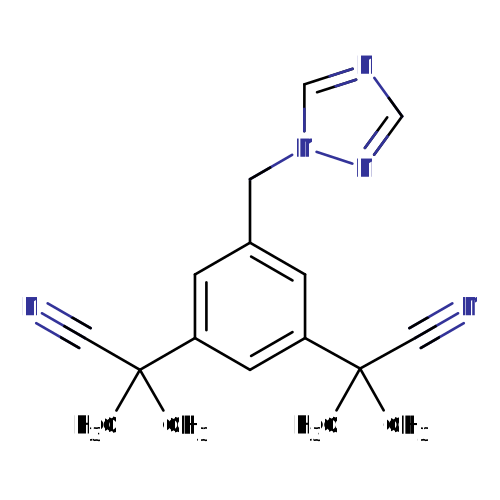
Structure for Anastrozole (DB01217)
- Weight
- Average: 293.3663
Monoisotopic: 293.164045633 - Chemical Formula
- C17H19N5
- Synonyms
- Anastrozol
- Anastrozole
- α,α,α',α'-Tetramethyl-5-(1H-1,2,4-triazol-1-ylmethyl)-m-benzenediacetonitrile
- External IDs
- ICI D1033
- ICI-D1033
- ZD-1033
- ZD1033

Pharmacology
- Indication
Anastrozole is indicated as adjunct therapy in the treatment of hormone receptor-positive early breast cancer in postmenopausal women, and as a first-line treatment for hormone receptor-positive (or hormone receptor-unknown) locally advanced or metastatic breast cancer in postmenopausal women.10 It may also be used in the treatment of advanced breast cancer in postmenopausal women who experience disease progression despite treatment with tamoxifen.11,10
 Reduce drug development failure ratesBuild, train, & validate machine-learning modelswith evidence-based and structured datasets.Build, train, & validate predictive machine-learning models with structured datasets.
- Associated Conditions
Indication Type Indication Combined Product Details Approval Level Age Group Patient Characteristics Dose Form Treatment of Advanced breast cancer •••••••••••• •••••••••••••• ••••••• ••••••••••• •••• ••••••••• ••••••• Adjunct therapy in treatment of Early breast cancer •••••••••••• •••••••••••••• Treatment of Locally advanced breast cancer •••••••••••• •••••••••••••• ••••••• •••••••• ••••••• Treatment of Locally advanced breast cancer •••••••••••• •••••••••••••• Treatment of Metastatic breast cancer •••••••••••• •••••••••••••• ••••••• •••••••• ••••••• - Contraindications & Blackbox Warnings
 Prevent Adverse Drug Events TodayTap into our Clinical API for life-saving information on contraindications & blackbox warnings, population restrictions, harmful risks, & more.Avoid life-threatening adverse drug events with our Clinical API
- Pharmacodynamics
Anastrozole prevents the conversion of adrenal androgens (e.g. testosterone) to estrogen in peripheral and tumour tissues. As the growth of many breast cancers is stimulated and/or maintained by the presence of estrogen, anastrozole helps to treat these cancers by decreasing the levels of circulating estrogens.12,9 Anastrozole has a relatively long duration of action allowing for once daily dosing - serum estradiol is reduced by approximately 70% within 24 hours of beginning therapy with 1mg once daily, and levels remain suppressed for up to 6 days following cessation of therapy.10
The incidence of ischemic cardiovascular events was increased during anastrozole therapy and patients with pre-existing ischemic heart disease should consider the risks and benefits of anastrozole before beginning therapy. Anastrozole has also been reported to decrease spine and hip bone mineral density (BMD), so consideration should be given to monitoring of BMD in patients receiving long-term therapy.10,8
- Mechanism of action
Anastrazole exerts its anti-estrogenic effects via selective and competitive inhibition of the aromatase enzyme found predominantly in the adrenal glands, liver, and fatty tissues.5 Many breast cancers are hormone receptor-positive, meaning their growth is stimulated and/or maintained by the presence of hormones such as estrogen or progesterone.10 In postmenopausal women, estrogen is primarily derived from the conversion of adrenally-produced androgens into estrogens by the aromatase enzyme - by competitively inhibiting the biosynthesis of estrogen at these enzymes, anastrozole effectively suppresses circulating estrogen levels and, subsequently, the growth of hormone receptor-positive tumours.5,9
Target Actions Organism ACytochrome P450 19A1 inhibitorHumans - Absorption
Anastrozole is rapidly absorbed and Tmax is typically reached within 2 hours of dosing under fasted conditions.5,12 Coadministration with food reduces the rate but not the overall extent of absorption - mean Cmax decreased by 16% and the median Tmax was extended to 5 hours when anastrozole was administered 30 minutes after ingestion of food,10 though this relatively minor alteration in absorption kinetics is not expected to result in clinically significant effects.11
- Volume of distribution
The volume of distribution of anastrozole into brain tissue in mice is 3.19 mL/g. Distribution into the CNS is limited due to the activity of P-gp efflux pumps at the blood brain barrier, of which anastrozole is a substrate.2
- Protein binding
Anastrozole is 40% protein bound in plasma10 and appears to be independent of plasma concentration.12
- Metabolism
Anastrozole is primarily metabolized in the liver via oxidation and glucuronidation to a number of inactive metabolites, including hydroxyanastrozole (both free and glucuronidated) and anastrozole glucuronide.1,10,12 Oxidation to hydroxyanastrozole is catalyzed predominantly by CYP3A4 (as well as CYP3A5 and CYP2C8, to a lesser extent) and the direct glucuronidation of anastrozole appears to be catalyzed mainly by UGT1A4.1
Anastrozole may also undergo N-dealkylation to form triazole and 3,5-Bis-(2-methylpropiononitrile)-benzoic acid.1 Labels for anastrozole state the main metabolite found in plasma following administration is triazole,10,12 but a recent pharmacokinetic study was unable to detect any products of N-dealkylation in vitro.1
Hover over products below to view reaction partners
- Route of elimination
Hepatic metabolism accounts for approximately 85% of anastrozole elimination.10 Approximately 10% of the administered dosage is eliminated unchanged in the urine.12,13
- Half-life
The elimination half-life of anastrozole is approximately 50 hours.10,12,5
- Clearance
Anastrozole's clearance is mainly via hepatic metabolism and can therefore be altered in patients with hepatic impairment - patients with stable hepatic cirrhosis exhibit an apparent oral clearance approximately 30% lower compared with patients with normal liver function.10,12 Conversely, renal impairment has a negligible effect on total drug clearance as the renal route is a relatively minor clearance pathway for anastrozole. In volunteers with severe renal impairment, renal clearance was reduced by 50% while total clearance was only reduced by approximately 10%.10,12
- Adverse Effects
 Improve decision support & research outcomesWith structured adverse effects data, including: blackbox warnings, adverse reactions, warning & precautions, & incidence rates. View sample adverse effects data in our new Data Library!Improve decision support & research outcomes with our structured adverse effects data.
- Toxicity
The reported oral TDLo in a human woman is 1.68 mg/kg given intermittently over the course of 12 weeks.14 Knowledge of the signs and symptoms of anastrozole overdose is incomplete as there are no documented descriptions of a patient receiving more than 60mg,13 a dose which was administered to a healthy male volunteer and was well-tolerated.10,12 There is no antidote for anastrozole and treatment should be supportive and symptomatic, including close monitoring of patient vital signs. As anastrozole exhibits relatively low protein binding, dialysis may be helpful and should be considered in select cases.10,12
- Pathways
- Not Available
- Pharmacogenomic Effects/ADRs
- Not Available
Interactions
- Drug Interactions
- This information should not be interpreted without the help of a healthcare provider. If you believe you are experiencing an interaction, contact a healthcare provider immediately. The absence of an interaction does not necessarily mean no interactions exist.
Drug Interaction Integrate drug-drug
interactions in your softwareAbatacept The metabolism of Anastrozole can be increased when combined with Abatacept. Abiraterone The metabolism of Anastrozole can be decreased when combined with Abiraterone. Acetyldigitoxin Acetyldigitoxin may decrease the cardiotoxic activities of Anastrozole. Adalimumab The metabolism of Anastrozole can be increased when combined with Adalimumab. Almotriptan The metabolism of Anastrozole can be decreased when combined with Almotriptan. - Food Interactions
- Take with or without food. Co-administration with food reduces the rate, but not the overall extent, of absorption.
Products
 Drug product information from 10+ global regionsOur datasets provide approved product information including:dosage, form, labeller, route of administration, and marketing period.Access drug product information from over 10 global regions.
- Product Images
- International/Other Brands
- Asiolex
- Brand Name Prescription Products
Name Dosage Strength Route Labeller Marketing Start Marketing End Region Image Anastrozole Tablet 1 mg Oral Sivem Pharmaceuticals Ulc 2023-07-06 Not applicable Canada 
Anastrozole Tablet 1 mg Oral Pro Doc Limitee 2012-11-22 Not applicable Canada Anastrozole Tablet, coated 1 mg/1 Oral Boscogen, Inc. 2011-03-31 Not applicable US 
Anastrozole Tablet 1 mg/1 Oral STASON PHARMACEUTICALS, INC 2021-12-01 Not applicable US Anastrozole Tablet 1 mg Oral Sanis Health Inc 2015-07-22 Not applicable Canada - Generic Prescription Products
Name Dosage Strength Route Labeller Marketing Start Marketing End Region Image Accel-anastrozole Tablets Tablet 1 mg Oral Accel Pharma Inc Not applicable Not applicable Canada Ach-anastrozole Tablet 1 mg Oral Accord Healthcare Inc 2012-10-25 Not applicable Canada Ag-anastrozole Tablet 1 mg Oral Angita Pharma Inc. 2023-07-27 Not applicable Canada Anastrozole Tablet 1 mg/1 Oral bryant ranch prepack 2010-06-22 Not applicable US 
Anastrozole Tablet, coated 1 mg/1 Oral Amerincan Health Packaging 2010-06-27 2017-01-31 US - Unapproved/Other Products
Name Ingredients Dosage Route Labeller Marketing Start Marketing End Region Image Testosterone / Anastrozole Anastrozole (20 mg/1) + Testosterone (200 mg/1) Pellet Oral Qualgen Llc 2017-11-14 Not applicable US Testozole Anastrozole (4 mg/1) + Testosterone (60 mg/1) Pellet, implantable Subcutaneous Advanced Pharmaceutical Technology, Inc. 2021-01-01 Not applicable US Testozole Anastrozole (4 mg/1) + Testosterone (60 mg/1) Pellet, implantable Subcutaneous Advanced Pharmaceutical Technology, Inc. 2021-12-21 Not applicable US


Categories
- ATC Codes
- L02BG03 — Anastrozole
- Drug Categories
- Antineoplastic Agents
- Antineoplastic Agents, Hormonal
- Antineoplastic and Immunomodulating Agents
- Aromatase Inhibitors
- Cardiotoxic antineoplastic agents
- Cytochrome P-450 CYP1A2 Inhibitors
- Cytochrome P-450 CYP1A2 Inhibitors (strength unknown)
- Cytochrome P-450 CYP2C8 Inhibitors
- Cytochrome P-450 CYP2C8 Inhibitors (strength unknown)
- Cytochrome P-450 CYP2C8 Substrates
- Cytochrome P-450 CYP2C9 Inhibitors
- Cytochrome P-450 CYP2C9 Inhibitors (strength unknown)
- Cytochrome P-450 CYP3A Inhibitors
- Cytochrome P-450 CYP3A Substrates
- Cytochrome P-450 CYP3A4 Inhibitors
- Cytochrome P-450 CYP3A4 Inhibitors (strength unknown)
- Cytochrome P-450 CYP3A4 Substrates
- Cytochrome P-450 CYP3A5 Substrates
- Cytochrome P-450 Enzyme Inhibitors
- Cytochrome P-450 Substrates
- Endocrine Therapy
- Enzyme Inhibitors
- Estrogen Antagonists
- Hormone Antagonists
- Hormone Antagonists and Related Agents
- Hormones, Hormone Substitutes, and Hormone Antagonists
- Nitriles
- P-glycoprotein substrates
- Steroid Synthesis Inhibitors
- Triazoles
- UGT1A3 substrates
- UGT1A4 substrates
- UGT2B7 substrates
- Chemical TaxonomyProvided by Classyfire
- Description
- This compound belongs to the class of organic compounds known as phenylpropanes. These are organic compounds containing a phenylpropane moiety.
- Kingdom
- Organic compounds
- Super Class
- Benzenoids
- Class
- Benzene and substituted derivatives
- Sub Class
- Phenylpropanes
- Direct Parent
- Phenylpropanes
- Alternative Parents
- Triazoles / Heteroaromatic compounds / Nitriles / Azacyclic compounds / Organopnictogen compounds / Hydrocarbon derivatives
- Substituents
- 1,2,4-triazole / Aromatic heteromonocyclic compound / Azacycle / Azole / Carbonitrile / Heteroaromatic compound / Hydrocarbon derivative / Nitrile / Organic nitrogen compound / Organoheterocyclic compound
- Molecular Framework
- Aromatic heteromonocyclic compounds
- External Descriptors
- nitrile, triazoles (CHEBI:2704)
- Affected organisms
- Humans and other mammals
Chemical Identifiers
- UNII
- 2Z07MYW1AZ
- CAS number
- 120511-73-1
- InChI Key
- YBBLVLTVTVSKRW-UHFFFAOYSA-N
- InChI
- InChI=1S/C17H19N5/c1-16(2,9-18)14-5-13(8-22-12-20-11-21-22)6-15(7-14)17(3,4)10-19/h5-7,11-12H,8H2,1-4H3
- IUPAC Name
- 2-[3-(1-cyano-1-methylethyl)-5-[(1H-1,2,4-triazol-1-yl)methyl]phenyl]-2-methylpropanenitrile
- SMILES
- CC(C)(C#N)C1=CC(=CC(CN2C=NC=N2)=C1)C(C)(C)C#N
References
- Synthesis Reference
Anil Khile, Narendra Joshi, Shekhar Bhirud, "Process for the preparation of anastrozole and intermediates thereof." U.S. Patent US20060189670, issued August 24, 2006.
US20060189670- General References
- Kamdem LK, Liu Y, Stearns V, Kadlubar SA, Ramirez J, Jeter S, Shahverdi K, Ward BA, Ogburn E, Ratain MJ, Flockhart DA, Desta Z: In vitro and in vivo oxidative metabolism and glucuronidation of anastrozole. Br J Clin Pharmacol. 2010 Dec;70(6):854-69. doi: 10.1111/j.1365-2125.2010.03791.x. [Article]
- Miyajima M, Kusuhara H, Takahashi K, Takashima T, Hosoya T, Watanabe Y, Sugiyama Y: Investigation of the effect of active efflux at the blood-brain barrier on the distribution of nonsteroidal aromatase inhibitors in the central nervous system. J Pharm Sci. 2013 Sep;102(9):3309-19. doi: 10.1002/jps.23600. Epub 2013 May 27. [Article]
- Gervasini G, Jara C, Olier C, Romero N, Martinez R, Carrillo JA: Polymorphisms in ABCB1 and CYP19A1 genes affect anastrozole plasma concentrations and clinical outcomes in postmenopausal breast cancer patients. Br J Clin Pharmacol. 2017 Mar;83(3):562-571. doi: 10.1111/bcp.13130. Epub 2016 Oct 18. [Article]
- Buzdar AU, Robertson JF, Eiermann W, Nabholtz JM: An overview of the pharmacology and pharmacokinetics of the newer generation aromatase inhibitors anastrozole, letrozole, and exemestane. Cancer. 2002 Nov 1;95(9):2006-16. doi: 10.1002/cncr.10908. [Article]
- Barros-Oliveira MDC, Costa-Silva DR, Andrade DB, Borges US, Tavares CB, Borges RS, Silva JM, Silva BBD: Use of anastrozole in the chemoprevention and treatment of breast cancer: A literature review. Rev Assoc Med Bras (1992). 2017 Apr;63(4):371-378. doi: 10.1590/1806-9282.63.04.371. [Article]
- Grimm SW, Dyroff MC: Inhibition of human drug metabolizing cytochromes P450 by anastrozole, a potent and selective inhibitor of aromatase. Drug Metab Dispos. 1997 May;25(5):598-602. [Article]
- Kelly CM, Buzdar AU: Anastrozole. Expert Opin Drug Saf. 2010 Nov;9(6):995-1003. doi: 10.1517/14740338.2010.515977. [Article]
- Cuzick J, Sestak I, Baum M, Buzdar A, Howell A, Dowsett M, Forbes JF: Effect of anastrozole and tamoxifen as adjuvant treatment for early-stage breast cancer: 10-year analysis of the ATAC trial. Lancet Oncol. 2010 Dec;11(12):1135-41. doi: 10.1016/S1470-2045(10)70257-6. Epub 2010 Nov 17. [Article]
- Gobbi S, Rampa A, Belluti F, Bisi A: Nonsteroidal aromatase inhibitors for the treatment of breast cancer: an update. Anticancer Agents Med Chem. 2014 Jan;14(1):54-65. [Article]
- FDA Approved Drug Products: Arimidex (anastrozole) oral tablets [Link]
- EMA Approved Drugs: Anastrozole [Link]
- DPD Approved Drugs: Anastrozole [Link]
- Medsafe NZ: Anastrozole [Link]
- CaymenChem: Anastrozole MSDS [Link]
- External Links
- Human Metabolome Database
- HMDB0015348
- KEGG Drug
- D00960
- KEGG Compound
- C08159
- PubChem Compound
- 2187
- PubChem Substance
- 46504987
- ChemSpider
- 2102
- BindingDB
- 10015
- 84857
- ChEBI
- 2704
- ChEMBL
- CHEMBL1399
- ZINC
- ZINC000000000941
- Therapeutic Targets Database
- DAP000627
- PharmGKB
- PA448432
- RxList
- RxList Drug Page
- Drugs.com
- Drugs.com Drug Page
- PDRhealth
- PDRhealth Drug Page
- Wikipedia
- Anastrozole
Clinical Trials
- Clinical Trials
Phase Status Purpose Conditions Count 4 Completed Health Services Research Breast Cancer 1 4 Completed Treatment Breast Cancer 4 4 Completed Treatment Endometriosis 1 4 Completed Treatment Hormono-depending Adjuvant Breast Cancer 1 4 Completed Treatment Hypogonadisms / Obesity, Severe 1
Pharmacoeconomics
- Manufacturers
- Not Available
- Packagers
- Accord Healthcare
- Ascend Laboratories LLC
- AstraZeneca Inc.
- Breckenridge Pharmaceuticals
- Cadila Healthcare Ltd.
- Cypress Pharmaceutical Inc.
- Doctor Reddys Laboratories Ltd.
- Kaiser Foundation Hospital
- Karalex Pharmaceuticals
- Lake Erie Medical and Surgical Supply
- Medisca Inc.
- Murfreesboro Pharmaceutical Nursing Supply
- Mylan
- Physicians Total Care Inc.
- Resource Optimization and Innovation LLC
- Roxane Labs
- Sandoz
- Teva Pharmaceutical Industries Ltd.
- Three Rivers Pharmaceuticals LLC
- UDL Laboratories
- Zeneca Pharma Inc.
- Zydus Pharmaceuticals
- Dosage Forms
Form Route Strength Tablet, film coated Oral Tablet Oral 1 mg/1 Tablet, coated Oral 1 mg/1 Tablet, film coated Oral 1 mg/1 Tablet, film coated Oral 1.000 mg Tablet, film coated Oral 1 mg Tablet, film coated Oral 1.0 mg Tablet, film coated Oral 1.00 mg Tablet Oral Tablet Oral 1 mg Tablet, coated Oral 100000 mg Tablet Oral 1.000 mg Tablet Oral 1.00 mg Tablet, coated Oral 1 mg Pellet Oral Pellet, implantable Subcutaneous - Prices
Unit description Cost Unit Anastrozole 100% powder 1326.52USD g Arimidex 1 mg tablet 15.3USD tablet Aromasin 25 mg tablet 14.04USD tablet DrugBank does not sell nor buy drugs. Pricing information is supplied for informational purposes only.- Patents
Patent Number Pediatric Extension Approved Expires (estimated) Region USRE36617 No 2000-03-14 2010-06-27 US CA1337420 No 1995-10-24 2012-10-24 Canada
Properties
- State
- Solid
- Experimental Properties
Property Value Source water solubility 0.53 mg/mL Canadian label (DPD) logP 1.58 Canadian label (DPD) pKa 1.4 Canadian label (DPD) - Predicted Properties
Property Value Source Water Solubility 0.0661 mg/mL ALOGPS logP 2.31 ALOGPS logP 3.03 Chemaxon logS -3.6 ALOGPS pKa (Strongest Basic) 2 Chemaxon Physiological Charge 0 Chemaxon Hydrogen Acceptor Count 4 Chemaxon Hydrogen Donor Count 0 Chemaxon Polar Surface Area 78.29 Å2 Chemaxon Rotatable Bond Count 4 Chemaxon Refractivity 97.47 m3·mol-1 Chemaxon Polarizability 31.97 Å3 Chemaxon Number of Rings 2 Chemaxon Bioavailability 1 Chemaxon Rule of Five Yes Chemaxon Ghose Filter Yes Chemaxon Veber's Rule No Chemaxon MDDR-like Rule No Chemaxon - Predicted ADMET Features
Property Value Probability Human Intestinal Absorption + 0.9965 Blood Brain Barrier + 0.9382 Caco-2 permeable + 0.5516 P-glycoprotein substrate Non-substrate 0.6405 P-glycoprotein inhibitor I Non-inhibitor 0.764 P-glycoprotein inhibitor II Non-inhibitor 0.7662 Renal organic cation transporter Non-inhibitor 0.512 CYP450 2C9 substrate Non-substrate 0.803 CYP450 2D6 substrate Non-substrate 0.9116 CYP450 3A4 substrate Substrate 0.5761 CYP450 1A2 substrate Non-inhibitor 0.6218 CYP450 2C9 inhibitor Non-inhibitor 0.7616 CYP450 2D6 inhibitor Non-inhibitor 0.9183 CYP450 2C19 inhibitor Non-inhibitor 0.6404 CYP450 3A4 inhibitor Non-inhibitor 0.6501 CYP450 inhibitory promiscuity Low CYP Inhibitory Promiscuity 0.7038 Ames test Non AMES toxic 0.6394 Carcinogenicity Non-carcinogens 0.8068 Biodegradation Not ready biodegradable 1.0 Rat acute toxicity 2.5564 LD50, mol/kg Not applicable hERG inhibition (predictor I) Weak inhibitor 0.9464 hERG inhibition (predictor II) Non-inhibitor 0.8878
Spectra
- Mass Spec (NIST)
- Not Available
- Spectra
- Chromatographic Properties
Collision Cross Sections (CCS)
Adduct CCS Value (Å2) Source type Source [M-H]- 187.7445976 predictedDarkChem Lite v0.1.0 [M-H]- 189.0756976 predictedDarkChem Lite v0.1.0 [M-H]- 189.7342976 predictedDarkChem Lite v0.1.0 [M-H]- 168.4686 predictedDeepCCS 1.0 (2019) [M+H]+ 188.7252976 predictedDarkChem Lite v0.1.0 [M+H]+ 190.3083976 predictedDarkChem Lite v0.1.0 [M+H]+ 190.5270976 predictedDarkChem Lite v0.1.0 [M+H]+ 170.82661 predictedDeepCCS 1.0 (2019) [M+Na]+ 188.0070976 predictedDarkChem Lite v0.1.0 [M+Na]+ 189.7656976 predictedDarkChem Lite v0.1.0 [M+Na]+ 177.6099 predictedDeepCCS 1.0 (2019)
Targets

- Kind
- Protein
- Organism
- Humans
- Pharmacological action
- Yes
- Actions
- Inhibitor
- General Function
- Oxygen binding
- Specific Function
- Catalyzes the formation of aromatic C18 estrogens from C19 androgens.
- Gene Name
- CYP19A1
- Uniprot ID
- P11511
- Uniprot Name
- Aromatase
- Molecular Weight
- 57882.48 Da
References
- Buzdar AU, Robertson JF, Eiermann W, Nabholtz JM: An overview of the pharmacology and pharmacokinetics of the newer generation aromatase inhibitors anastrozole, letrozole, and exemestane. Cancer. 2002 Nov 1;95(9):2006-16. doi: 10.1002/cncr.10908. [Article]
- Miller WR: Aromatase inhibitors: mechanism of action and role in the treatment of breast cancer. Semin Oncol. 2003 Aug;30(4 Suppl 14):3-11. [Article]
- Kelly CM, Buzdar AU: Anastrozole. Expert Opin Drug Saf. 2010 Nov;9(6):995-1003. doi: 10.1517/14740338.2010.515977. [Article]
- FDA Approved Drug Products: Arimidex (anastrozole) oral tablets [Link]
- DPD Approved Drugs: Anastrozole [Link]
Enzymes
- Kind
- Protein
- Organism
- Humans
- Pharmacological action
- Unknown
- Actions
- SubstrateInhibitor
- General Function
- Vitamin d3 25-hydroxylase activity
- Specific Function
- Cytochromes P450 are a group of heme-thiolate monooxygenases. In liver microsomes, this enzyme is involved in an NADPH-dependent electron transport pathway. It performs a variety of oxidation react...
- Gene Name
- CYP3A4
- Uniprot ID
- P08684
- Uniprot Name
- Cytochrome P450 3A4
- Molecular Weight
- 57342.67 Da
References
- Kamdem LK, Liu Y, Stearns V, Kadlubar SA, Ramirez J, Jeter S, Shahverdi K, Ward BA, Ogburn E, Ratain MJ, Flockhart DA, Desta Z: In vitro and in vivo oxidative metabolism and glucuronidation of anastrozole. Br J Clin Pharmacol. 2010 Dec;70(6):854-69. doi: 10.1111/j.1365-2125.2010.03791.x. [Article]
- Grimm SW, Dyroff MC: Inhibition of human drug metabolizing cytochromes P450 by anastrozole, a potent and selective inhibitor of aromatase. Drug Metab Dispos. 1997 May;25(5):598-602. [Article]
- FDA Approved Drug Products: Arimidex (anastrozole) oral tablets [Link]
- DPD Approved Drugs: Anastrozole [Link]
- Kind
- Protein
- Organism
- Humans
- Pharmacological action
- Unknown
- Actions
- Substrate
- General Function
- Oxygen binding
- Specific Function
- Cytochromes P450 are a group of heme-thiolate monooxygenases. In liver microsomes, this enzyme is involved in an NADPH-dependent electron transport pathway. It oxidizes a variety of structurally un...
- Gene Name
- CYP3A5
- Uniprot ID
- P20815
- Uniprot Name
- Cytochrome P450 3A5
- Molecular Weight
- 57108.065 Da
References
- Kamdem LK, Liu Y, Stearns V, Kadlubar SA, Ramirez J, Jeter S, Shahverdi K, Ward BA, Ogburn E, Ratain MJ, Flockhart DA, Desta Z: In vitro and in vivo oxidative metabolism and glucuronidation of anastrozole. Br J Clin Pharmacol. 2010 Dec;70(6):854-69. doi: 10.1111/j.1365-2125.2010.03791.x. [Article]
- Kind
- Protein
- Organism
- Humans
- Pharmacological action
- Unknown
- Actions
- SubstrateInhibitor
- General Function
- Steroid hydroxylase activity
- Specific Function
- Cytochromes P450 are a group of heme-thiolate monooxygenases. In liver microsomes, this enzyme is involved in an NADPH-dependent electron transport pathway. It oxidizes a variety of structurally un...
- Gene Name
- CYP2C8
- Uniprot ID
- P10632
- Uniprot Name
- Cytochrome P450 2C8
- Molecular Weight
- 55824.275 Da
References
- Kamdem LK, Liu Y, Stearns V, Kadlubar SA, Ramirez J, Jeter S, Shahverdi K, Ward BA, Ogburn E, Ratain MJ, Flockhart DA, Desta Z: In vitro and in vivo oxidative metabolism and glucuronidation of anastrozole. Br J Clin Pharmacol. 2010 Dec;70(6):854-69. doi: 10.1111/j.1365-2125.2010.03791.x. [Article]
- FDA Approved Drug Products: Arimidex (anastrozole) oral tablets [Link]
- DPD Approved Drugs: Anastrozole [Link]
- Kind
- Protein
- Organism
- Humans
- Pharmacological action
- Unknown
- Actions
- Substrate
- General Function
- Protein homodimerization activity
- Specific Function
- UDPGT is of major importance in the conjugation and subsequent elimination of potentially toxic xenobiotics and endogenous compounds. This isoform glucuronidates bilirubin IX-alpha to form both the...
- Gene Name
- UGT1A4
- Uniprot ID
- P22310
- Uniprot Name
- UDP-glucuronosyltransferase 1-4
- Molecular Weight
- 60024.535 Da
References
- Kamdem LK, Liu Y, Stearns V, Kadlubar SA, Ramirez J, Jeter S, Shahverdi K, Ward BA, Ogburn E, Ratain MJ, Flockhart DA, Desta Z: In vitro and in vivo oxidative metabolism and glucuronidation of anastrozole. Br J Clin Pharmacol. 2010 Dec;70(6):854-69. doi: 10.1111/j.1365-2125.2010.03791.x. [Article]
- Kind
- Protein
- Organism
- Humans
- Pharmacological action
- Unknown
- Actions
- Substrate
- General Function
- Retinoic acid binding
- Specific Function
- UDPGT is of major importance in the conjugation and subsequent elimination of potentially toxic xenobiotics and endogenous compounds. Isoform 2 lacks transferase activity but acts as a negative reg...
- Gene Name
- UGT1A3
- Uniprot ID
- P35503
- Uniprot Name
- UDP-glucuronosyltransferase 1-3
- Molecular Weight
- 60337.835 Da
References
- Kamdem LK, Liu Y, Stearns V, Kadlubar SA, Ramirez J, Jeter S, Shahverdi K, Ward BA, Ogburn E, Ratain MJ, Flockhart DA, Desta Z: In vitro and in vivo oxidative metabolism and glucuronidation of anastrozole. Br J Clin Pharmacol. 2010 Dec;70(6):854-69. doi: 10.1111/j.1365-2125.2010.03791.x. [Article]
- Kind
- Protein
- Organism
- Humans
- Pharmacological action
- Unknown
- Actions
- Substrate
- General Function
- Glucuronosyltransferase activity
- Specific Function
- UDPGT is of major importance in the conjugation and subsequent elimination of potentially toxic xenobiotics and endogenous compounds.Its unique specificity for 3,4-catechol estrogens and estriol su...
- Gene Name
- UGT2B7
- Uniprot ID
- P16662
- Uniprot Name
- UDP-glucuronosyltransferase 2B7
- Molecular Weight
- 60694.12 Da
References
- Kamdem LK, Liu Y, Stearns V, Kadlubar SA, Ramirez J, Jeter S, Shahverdi K, Ward BA, Ogburn E, Ratain MJ, Flockhart DA, Desta Z: In vitro and in vivo oxidative metabolism and glucuronidation of anastrozole. Br J Clin Pharmacol. 2010 Dec;70(6):854-69. doi: 10.1111/j.1365-2125.2010.03791.x. [Article]
- Kind
- Protein
- Organism
- Humans
- Pharmacological action
- Unknown
- Actions
- Inhibitor
- General Function
- Oxidoreductase activity, acting on paired donors, with incorporation or reduction of molecular oxygen, reduced flavin or flavoprotein as one donor, and incorporation of one atom of oxygen
- Specific Function
- Cytochromes P450 are a group of heme-thiolate monooxygenases. In liver microsomes, this enzyme is involved in an NADPH-dependent electron transport pathway. It oxidizes a variety of structurally un...
- Gene Name
- CYP1A2
- Uniprot ID
- P05177
- Uniprot Name
- Cytochrome P450 1A2
- Molecular Weight
- 58293.76 Da
References
- Grimm SW, Dyroff MC: Inhibition of human drug metabolizing cytochromes P450 by anastrozole, a potent and selective inhibitor of aromatase. Drug Metab Dispos. 1997 May;25(5):598-602. [Article]
- FDA Approved Drug Products: Arimidex (anastrozole) oral tablets [Link]
- DPD Approved Drugs: Anastrozole [Link]
- Kind
- Protein
- Organism
- Humans
- Pharmacological action
- Unknown
- Actions
- Inhibitor
- General Function
- Steroid hydroxylase activity
- Specific Function
- Cytochromes P450 are a group of heme-thiolate monooxygenases. In liver microsomes, this enzyme is involved in an NADPH-dependent electron transport pathway. It oxidizes a variety of structurally un...
- Gene Name
- CYP2C9
- Uniprot ID
- P11712
- Uniprot Name
- Cytochrome P450 2C9
- Molecular Weight
- 55627.365 Da
References
- Grimm SW, Dyroff MC: Inhibition of human drug metabolizing cytochromes P450 by anastrozole, a potent and selective inhibitor of aromatase. Drug Metab Dispos. 1997 May;25(5):598-602. [Article]
- FDA Approved Drug Products: Arimidex (anastrozole) oral tablets [Link]
- DPD Approved Drugs: Anastrozole [Link]
Transporters
- Kind
- Protein
- Organism
- Humans
- Pharmacological action
- Unknown
- Actions
- Substrate
- General Function
- Xenobiotic-transporting atpase activity
- Specific Function
- Energy-dependent efflux pump responsible for decreased drug accumulation in multidrug-resistant cells.
- Gene Name
- ABCB1
- Uniprot ID
- P08183
- Uniprot Name
- Multidrug resistance protein 1
- Molecular Weight
- 141477.255 Da
References
- Miyajima M, Kusuhara H, Takahashi K, Takashima T, Hosoya T, Watanabe Y, Sugiyama Y: Investigation of the effect of active efflux at the blood-brain barrier on the distribution of nonsteroidal aromatase inhibitors in the central nervous system. J Pharm Sci. 2013 Sep;102(9):3309-19. doi: 10.1002/jps.23600. Epub 2013 May 27. [Article]
- Gervasini G, Jara C, Olier C, Romero N, Martinez R, Carrillo JA: Polymorphisms in ABCB1 and CYP19A1 genes affect anastrozole plasma concentrations and clinical outcomes in postmenopausal breast cancer patients. Br J Clin Pharmacol. 2017 Mar;83(3):562-571. doi: 10.1111/bcp.13130. Epub 2016 Oct 18. [Article]

Drug created at June 13, 2005 13:24 / Updated at April 27, 2024 09:44