Identification
- Summary
Paclitaxel is a taxoid chemotherapeutic agent used as first-line and subsequent therapy for the treatment of advanced carcinoma of the ovary, and other various cancers including breast and lung cancer.
- Brand Names
- Abraxane, Taxol
- Generic Name
- Paclitaxel
- DrugBank Accession Number
- DB01229
- Background
Paclitaxel is a chemotherapeutic agent marketed under the brand name Taxol among others. Used as a treatment for various cancers, paclitaxel is a mitotic inhibitor that was first isolated in 1971 from the bark of the Pacific yew tree which contains endophytic fungi that synthesize paclitaxel. It is available as an intravenous solution for injection and the newer formulation contains albumin-bound paclitaxel marketed under the brand name Abraxane.
- Type
- Small Molecule
- Groups
- Approved, Vet approved
- Structure
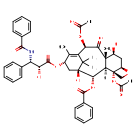
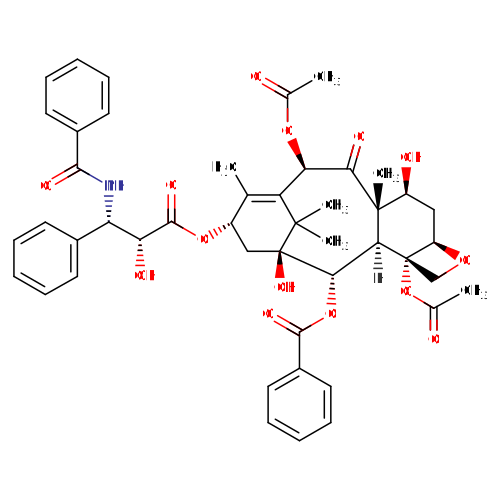
Structure for Paclitaxel (DB01229)
- Weight
- Average: 853.9061
Monoisotopic: 853.330955345 - Chemical Formula
- C47H51NO14
- Synonyms
- 5beta,20-Epoxy-1,2-alpha,4,7beta,10beta,13alpha-hexahydroxytax-11-en-9-one 4,10-diacetate 2-benzoate 13-ester with (2R,3S)-N-benzoyl-3-phenylisoserine
- ABI-007 COMPONENT PACLITAXEL
- BENZENEPROPANOIC ACID, .BETA.-(BENZOYLAMINO)-.ALPHA.-HYDROXY-, (2AR,4S,4AS,6R,9S,11S,12S,12AR,12BS)-6,12B-BIS(ACETYLOXY)-12-(BENZOYLOXY)-2A,3,4,4A,5,6,9,10,11,12,12A,12B-DODECAHYDRO-4,11-DIHYDROXY-4A,8,13,13-TETRAMETHYL-5-OXO-7,11-METHANO-1H-CYCLODECA(3,
- liposomal encapsulated paclitaxel
- NAB-PACLITAXEL COMPONENT PACLITAXEL
- Nanoparticulate paclitaxel
- Paclitaxel
- paclitaxel protein-bound particles
- Paclitaxel protein-bound particles for injection suspension
- Taxol A
- External IDs
- ABI-007
- BMS 181339-01
- BMS-181339-01
- DHP 107
- MBT 0206
- MBT-0206
- NK 105
- NK-105
- NK105
- NSC 125973
- NSC-125973
- QW-8184
- S-8184

Pharmacology
- Indication
Used in the treatment of Kaposi's sarcoma and cancer of the lung, ovarian, and breast. Abraxane® is specfically indicated for the treatment of metastatic breast cancer and locally advanced or metastatic non-small cell lung cancer.
 Reduce drug development failure ratesBuild, train, & validate machine-learning modelswith evidence-based and structured datasets.Build, train, & validate predictive machine-learning models with structured datasets.
- Associated Conditions
Indication Type Indication Combined Product Details Approval Level Age Group Patient Characteristics Dose Form Used in combination to treat Advanced cervical cancer ••• ••••• ••••••• ••••••••• •••••••••• •••••••••• ••••••••• •••••••••• ••••••••• ••••••••••• Used in combination to treat Advanced head and neck cancer ••• ••••• ••••••• ••••••••• •••••••••• •••••••••• ••••••••• •••••••••• ••••••••• ••••••••••• Used in combination to treat Advanced ovarian cancer Regimen in combination with: Cisplatin (DB00515) •••••••••••• ••••••• ••••••••• •••••••••• •••••••••• ••••••••• •••••••••• ••••••••• ••••••••••• Treatment of Advanced soft tissue sarcoma ••• ••••• ••••••• ••••••••• •••••••••• •••••••••• ••••••••• •••••••••• ••••••••• ••••••••••• Treatment of Esophageal cancer ••• ••••• ••••••• ••••••••• •••••••••• •••••••••• ••••••••• •••••••••• ••••••••• ••••••••••• - Contraindications & Blackbox Warnings
 Prevent Adverse Drug Events TodayTap into our Clinical API for life-saving information on contraindications & blackbox warnings, population restrictions, harmful risks, & more.Avoid life-threatening adverse drug events with our Clinical API
- Pharmacodynamics
Paclitaxel is a taxoid antineoplastic agent indicated as first-line and subsequent therapy for the treatment of advanced carcinoma of the ovary, and other various cancers including breast cancer. Paclitaxel is a novel antimicrotubule agent that promotes the assembly of microtubules from tubulin dimers and stabilizes microtubules by preventing depolymerization. This stability results in the inhibition of the normal dynamic reorganization of the microtubule network that is essential for vital interphase and mitotic cellular functions. In addition, paclitaxel induces abnormal arrays or "bundles" of microtubules throughout the cell cycle and multiple asters of microtubules during mitosis.
- Mechanism of action
Paclitaxel interferes with the normal function of microtubule growth. Whereas drugs like colchicine cause the depolymerization of microtubules in vivo, paclitaxel arrests their function by having the opposite effect; it hyper-stabilizes their structure. This destroys the cell's ability to use its cytoskeleton in a flexible manner. Specifically, paclitaxel binds to the β subunit of tubulin. Tubulin is the "building block" of mictotubules, and the binding of paclitaxel locks these building blocks in place. The resulting microtubule/paclitaxel complex does not have the ability to disassemble. This adversely affects cell function because the shortening and lengthening of microtubules (termed dynamic instability) is necessary for their function as a transportation highway for the cell. Chromosomes, for example, rely upon this property of microtubules during mitosis. Further research has indicated that paclitaxel induces programmed cell death (apoptosis) in cancer cells by binding to an apoptosis stopping protein called Bcl-2 (B-cell leukemia 2) and thus arresting its function.
Target Actions Organism ATubulin beta-1 chain inhibitorHumans AApoptosis regulator Bcl-2 inhibitorHumans AMicrotubule-associated protein 4 Not Available Humans AMicrotubule-associated protein 2 Not Available Humans AMicrotubule-associated protein tau Not Available Humans UNuclear receptor subfamily 1 group I member 2 inducerHumans - Absorption
When a 24 hour infusion of 135 mg/m^2 is given to ovarian cancer patients, the maximum plasma concentration (Cmax) is 195 ng/mL, while the AUC is 6300 ng•h/mL.
- Volume of distribution
- 227 to 688 L/m^2 [apparent volume of distribution at steady-state, 24 hour infusion]
- Protein binding
89%-98% bound to plasma protein. The presence of cimetidine, ranitidine, dexamethasone, or diphenhydramine did not affect protein binding of paclitaxel.
- Metabolism
Hepatic. In vitro studies with human liver microsomes and tissue slices showed that paclitaxel was metabolized primarily to 6a-hydrox-ypaclitaxel by the cytochrome P450 isozyme CYP2C8; and to two minor metabolites, 3’-p-hydroxypaclitaxel and 6a, 3’-p-dihydroxypaclitaxel, by CYP3A4.
Hover over products below to view reaction partners
- Route of elimination
In 5 patients administered a 225 or 250 mg/m2 dose of radiolabeled paclitaxel as a 3-hour infusion, a mean of 71% of the radioactivity was excreted in the feces in 120 hours, and 14% was recovered in the urine.
- Half-life
When a 24 hour infusion of 135 mg/m^2 is given to ovarian cancer patients, the elimination half=life is 52.7 hours.
- Clearance
- 21.7 L/h/m2 [Dose 135 mg/m2, infusion duration 24 h]
- 23.8 L/h/m2 [Dose 175 mg/m2, infusion duration 24 h]
- 7 L/h/m2 [Dose 135 mg/m2, infusion duration 3 h]
- 12.2 L/h/m2 [Dose 175 mg/m2, infusion duration 3 h]
- Adverse Effects
 Improve decision support & research outcomesWith structured adverse effects data, including: blackbox warnings, adverse reactions, warning & precautions, & incidence rates. View sample adverse effects data in our new Data Library!Improve decision support & research outcomes with our structured adverse effects data.
- Toxicity
Rat (ipr) LD50=32530 µg/kg. Symptoms of overdose include bone marrow suppression, peripheral neurotoxicity, and mucositis. Overdoses in pediatric patients may be associated with acute ethanol toxicity.
- Pathways
Pathway Category Paclitaxel Action Pathway Drug action - Pharmacogenomic Effects/ADRs
- Not Available
Interactions
- Drug Interactions
- This information should not be interpreted without the help of a healthcare provider. If you believe you are experiencing an interaction, contact a healthcare provider immediately. The absence of an interaction does not necessarily mean no interactions exist.
Drug Interaction Integrate drug-drug
interactions in your softwareAbaloparatide The risk or severity of adverse effects can be increased when Paclitaxel is combined with Abaloparatide. Abametapir The serum concentration of Paclitaxel can be increased when it is combined with Abametapir. Abatacept The metabolism of Paclitaxel can be increased when combined with Abatacept. Abciximab The risk or severity of bleeding can be increased when Abciximab is combined with Paclitaxel. Abemaciclib The metabolism of Abemaciclib can be increased when combined with Paclitaxel. - Food Interactions
- Avoid echinacea. Co-administration may decrease the effectiveness of immunosuppressants, and echinacea may induce CYP3A4 increasing paclitaxel metabolism.
- Exercise caution with grapefruit products. Grapefruit inhibits CYP3A4 metabolism, which may increase the serum concentration of paclitaxel.
- Exercise caution with St. John's Wort. This herb induces the CYP3A4 metabolism of paclitaxel and may reduce its serum concentration.
Products
 Drug product information from 10+ global regionsOur datasets provide approved product information including:dosage, form, labeller, route of administration, and marketing period.Access drug product information from over 10 global regions.
- International/Other Brands
- NanoPac / Paxceed
- Brand Name Prescription Products
Name Dosage Strength Route Labeller Marketing Start Marketing End Region Image Abraxane Injection, powder, for suspension 5 mg/ml Intravenous Bristol Myers Squibb Pharma Eeig 2016-09-07 Not applicable EU 
Abraxane Injection, powder, lyophilized, for suspension 100 mg/20mL Intravenous Abraxis BioScience, LLC 2005-02-10 Not applicable US 
Abraxane Injection, powder, for suspension 5 mg/ml Intravenous Bristol Myers Squibb Pharma Eeig 2016-09-07 Not applicable EU Abraxane for Injectable Suspension Powder, for suspension 100 mg / vial Intravenous Bristol Myers Squibb 2006-08-31 Not applicable Canada 
Apealea Injection, powder, for solution 60 mg Intravenous Inceptua Ab 2020-12-16 Not applicable EU - Generic Prescription Products
Name Dosage Strength Route Labeller Marketing Start Marketing End Region Image Aj-paclitaxel Solution 6 mg / mL Intravenous Agila Jamp Canada Inc Not applicable Not applicable Canada Apo-paclitaxel Injectable Solution 6 mg / mL Intravenous Apotex Corporation 2005-02-07 Not applicable Canada Onxol Injection, solution, concentrate 6 mg/1mL Intravenous IVAX Pharmaceuticals Inc 2002-01-25 2010-07-31 US Paclitaxel Injection 30 mg/5mL Intravenous Mylan Institutional LLC 2014-08-07 2021-02-28 US Paclitaxel Injection, solution 6 mg/1mL Intravenous Fresenius Kabi USA, LLC 2009-03-20 Not applicable US - Unapproved/Other Products
Name Ingredients Dosage Route Labeller Marketing Start Marketing End Region Image ANZATAX 150MG/25ML ENJ. SOL. ICEREN FLAKON, 1 ADET Paclitaxel (150 mg/25ml) Injection, solution Intravenous ORNA İLAÇ TEKSTİL KİMYEVİ MAD. SAN. VE DIŞ TİC. LTD. ŞTİ. 2020-03-17 Not applicable Turkey 
ANZATAX 300 MG/50 ML IV ENJ. SOL. ICEREN FLAKON, 1 ADET Paclitaxel (300 mg/50ml) Injection, solution Intravenous ORNA İLAÇ TEKSTİL KİMYEVİ MAD. SAN. VE DIŞ TİC. LTD. ŞTİ. 2019-04-30 Not applicable Turkey ANZATAX 30MG/5ML ENJ. SOL. ICEREN FLAKON, 1 ADET Paclitaxel (30 mg/5ml) Injection, solution Intravenous ORNA İLAÇ TEKSTİL KİMYEVİ MAD. SAN. VE DIŞ TİC. LTD. ŞTİ. 2017-05-02 Not applicable Turkey TAXOL 100 MG/17 ML FLAKON, 1 ADET Paclitaxel (100 mg/17ml) Injection Intravenous BRISTOL-MYERS SQUIBB İLAÇLARI INC. İSTANBUL ŞUBESİ 2018-08-20 2018-08-20 Turkey TAXOL 30 MG/5 ML FLAKON, 1 ADET Paclitaxel (30 mg/5ml) Injection Intravenous BRISTOL-MYERS SQUIBB İLAÇLARI INC. İSTANBUL ŞUBESİ 2018-08-20 2018-08-20 Turkey
Categories
- ATC Codes
- L01CD01 — Paclitaxel
- L01CD — Taxanes
- L01C — PLANT ALKALOIDS AND OTHER NATURAL PRODUCTS
- L01 — ANTINEOPLASTIC AGENTS
- L — ANTINEOPLASTIC AND IMMUNOMODULATING AGENTS
- Drug Categories
- Agents Causing Muscle Toxicity
- Albumins
- Amino Acids, Peptides, and Proteins
- Antimitotic Agents
- Antineoplastic Agents
- Antineoplastic Agents, Phytogenic
- Antineoplastic and Immunomodulating Agents
- BSEP/ABCB11 Inhibitors
- BSEP/ABCB11 Substrates
- BSEP/ABCB11 Substrates with a Narrow Therapeutic Index
- Cardiotoxic antineoplastic agents
- Cyclodecanes
- Cycloparaffins
- Cytochrome P-450 CYP2C8 Substrates
- Cytochrome P-450 CYP2C8 Substrates with a Narrow Therapeutic Index
- Cytochrome P-450 CYP3A Inducers
- Cytochrome P-450 CYP3A Substrates
- Cytochrome P-450 CYP3A4 Inducers
- Cytochrome P-450 CYP3A4 Inducers (strength unknown)
- Cytochrome P-450 CYP3A4 Substrates
- Cytochrome P-450 CYP3A4 Substrates with a Narrow Therapeutic Index
- Cytochrome P-450 CYP3A5 Substrates
- Cytochrome P-450 CYP3A5 Substrates with a Narrow Therapeutic Index
- Cytochrome P-450 CYP3A7 Substrates
- Cytochrome P-450 CYP3A7 Substrates with a Narrow Therapeutic Index
- Cytochrome P-450 Enzyme Inducers
- Cytochrome P-450 Substrates
- Diterpenes
- Hypotensive Agents
- Immunosuppressive Agents
- Microtubule Inhibition
- Microtubule Inhibitors
- Mitosis Modulators
- Myelosuppressive Agents
- Narrow Therapeutic Index Drugs
- Neurotoxic agents
- OATP1B3 substrates
- P-glycoprotein inhibitors
- P-glycoprotein substrates
- P-glycoprotein substrates with a Narrow Therapeutic Index
- Proteins
- Taxane Derivatives
- Taxoids
- Terpenes
- Tubulin Modulators
- Chemical TaxonomyProvided by Classyfire
- Description
- This compound belongs to the class of organic compounds known as taxanes and derivatives. These are diterpenoids with a structure based either on the taxane skeleton, or a derivative thereof. In term of phytochemistry, several derivatives of the taxane skeleton exist: 2(3->20)-abeotaxane, 3,11-cyclotaxane, 11(15->1),11(10->9)-abeotaxane, 3,8-seco-taxane, and 11(15->1)-abeotaxane, among others. More complex skeletons have been found recently, which include the taxane-derived [3.3.3] propellane ring system.
- Kingdom
- Organic compounds
- Super Class
- Lipids and lipid-like molecules
- Class
- Prenol lipids
- Sub Class
- Diterpenoids
- Direct Parent
- Taxanes and derivatives
- Alternative Parents
- Tetracarboxylic acids and derivatives / Benzoic acid esters / Benzoyl derivatives / Alpha-acyloxy ketones / Fatty acid esters / Tertiary alcohols / Secondary alcohols / Oxetanes / Carboxylic acid esters / Cyclic alcohols and derivatives show 9 more
- Substituents
- Alcohol / Alpha-acyloxy ketone / Aromatic heteropolycyclic compound / Benzenoid / Benzoate ester / Benzoic acid or derivatives / Benzoyl / Carbonyl group / Carboximidic acid / Carboximidic acid derivative show 25 more
- Molecular Framework
- Aromatic heteropolycyclic compounds
- External Descriptors
- taxane diterpenoid, tetracyclic diterpenoid (CHEBI:45863)
- Affected organisms
- Humans and other mammals
Chemical Identifiers
- UNII
- P88XT4IS4D
- CAS number
- 33069-62-4
- InChI Key
- RCINICONZNJXQF-MZXODVADSA-N
- InChI
- InChI=1S/C47H51NO14/c1-25-31(60-43(56)36(52)35(28-16-10-7-11-17-28)48-41(54)29-18-12-8-13-19-29)23-47(57)40(61-42(55)30-20-14-9-15-21-30)38-45(6,32(51)22-33-46(38,24-58-33)62-27(3)50)39(53)37(59-26(2)49)34(25)44(47,4)5/h7-21,31-33,35-38,40,51-52,57H,22-24H2,1-6H3,(H,48,54)/t31-,32-,33+,35-,36+,37+,38-,40-,45+,46-,47+/m0/s1
- IUPAC Name
- (1S,2S,3R,4S,7R,9S,10S,12R,15S)-4,12-bis(acetyloxy)-1,9-dihydroxy-15-{[(2R,3S)-2-hydroxy-3-phenyl-3-(phenylformamido)propanoyl]oxy}-10,14,17,17-tetramethyl-11-oxo-6-oxatetracyclo[11.3.1.0^{3,10}.0^{4,7}]heptadec-13-en-2-yl benzoate
- SMILES
- [H][C@]12[C@H](OC(=O)C3=CC=CC=C3)[C@]3(O)C[C@H](OC(=O)[C@H](O)[C@@H](NC(=O)C4=CC=CC=C4)C4=CC=CC=C4)C(C)=C([C@@H](OC(C)=O)C(=O)[C@]1(C)[C@@H](O)C[C@H]1OC[C@@]21OC(C)=O)C3(C)C
References
- Synthesis Reference
Hendricus B. A. de Bont, Ruben G. G. Leenders, Johan W. Scheeren, Hidde J. Haisma, Dick de Vos, "Paclitaxel prodrugs, method for preparation as well as their use in selective chemotherapy." U.S. Patent US5760072, issued September, 1989.
US5760072- General References
- Wall ME, Wani MC: Camptothecin and taxol: discovery to clinic--thirteenth Bruce F. Cain Memorial Award Lecture. Cancer Res. 1995 Feb 15;55(4):753-60. [Article]
- Wani MC, Taylor HL, Wall ME, Coggon P, McPhail AT: Plant antitumor agents. VI. The isolation and structure of taxol, a novel antileukemic and antitumor agent from Taxus brevifolia. J Am Chem Soc. 1971 May 5;93(9):2325-7. [Article]
- Fuchs DA, Johnson RK: Cytologic evidence that taxol, an antineoplastic agent from Taxus brevifolia, acts as a mitotic spindle poison. Cancer Treat Rep. 1978 Aug;62(8):1219-22. [Article]
- Saville MW, Lietzau J, Pluda JM, Feuerstein I, Odom J, Wilson WH, Humphrey RW, Feigal E, Steinberg SM, Broder S, et al.: Treatment of HIV-associated Kaposi's sarcoma with paclitaxel. Lancet. 1995 Jul 1;346(8966):26-8. [Article]
- Authors unspecified: ABI 007. Drugs R D. 2004;5(3):155-9. [Article]
- Gaitanis A, Staal S: Liposomal doxorubicin and nab-paclitaxel: nanoparticle cancer chemotherapy in current clinical use. Methods Mol Biol. 2010;624:385-92. doi: 10.1007/978-1-60761-609-2_26. [Article]
- External Links
- Human Metabolome Database
- HMDB0015360
- KEGG Drug
- D00491
- KEGG Compound
- C07394
- PubChem Compound
- 36314
- PubChem Substance
- 46506910
- ChemSpider
- 10368587
- BindingDB
- 50001839
- 56946
- ChEBI
- 45863
- ChEMBL
- CHEMBL428647
- ZINC
- ZINC000096006020
- Therapeutic Targets Database
- DNC001411
- PharmGKB
- PA450761
- Guide to Pharmacology
- GtP Drug Page
- PDBe Ligand
- TA1
- RxList
- RxList Drug Page
- Drugs.com
- Drugs.com Drug Page
- Wikipedia
- Paclitaxel
- PDB Entries
- 1jff / 2hxf / 2hxh / 2p4n / 2wbe / 3dco / 3edl / 3iz0 / 3j6g / 3j6p … show 86 more
- FDA label
- Download (220 KB)
- MSDS
- Download (74 KB)
Clinical Trials
- Clinical Trials
Phase Status Purpose Conditions Count 4 Active Not Recruiting Treatment Esophageal Squamous Cell Carcinoma (ESCC) 1 4 Active Not Recruiting Treatment Non-Small Cell Lung Cancer (NSCLC) 1 4 Active Not Recruiting Treatment Ovarian Cancer 1 4 Active Not Recruiting Treatment Safety and Efficacy 1 4 Active Not Recruiting Treatment Squamous Cell Carcinoma of the Head and Neck (SCCHN) 1
Pharmacoeconomics
- Manufacturers
- Not Available
- Packagers
- Abraxis BioScience Inc.
- Accord Healthcare
- APP Pharmaceuticals
- Barr Pharmaceuticals
- Bedford Labs
- Ben Venue Laboratories Inc.
- Bristol-Myers Squibb Co.
- Ebewe Pharma
- Ethex Corp.
- Fresenius Kabi AB
- Hospira Inc.
- Intas Pharmaceuticals Ltd.
- Ivax Pharmaceuticals
- Mead Johnson and Co.
- Pharmachemie BV
- Pliva Inc.
- Teva Pharmaceutical Industries Ltd.
- UDL Laboratories
- Dosage Forms
Form Route Strength Injection, powder, for suspension Intravenous 5 mg/ml Injection, powder, lyophilized, for solution Intravenous 100 mg Injection, powder, lyophilized, for suspension Intravenous 100 mg/20mL Powder Intravenous 100 mg Powder Intravenous; Parenteral 5 MG/ML Powder, for suspension Intravenous 100 mg / vial Powder 100 mg/1vial Injection, powder, for suspension Intravenous drip 100 mg Suspension Intravenous 100.000 mg Solution Intravenous 6.00 mg Solution Parenteral 100 mg Injection Solution Intravenous Injection, solution Intravenous 150 mg/25ml Injection, powder, for solution Intravenous 60 mg Powder, for solution Intravenous 60 MG Solution Intravenous 300.00 mg Injection, solution, concentrate Intravenous 100 mg/16.7ml Injection, solution, concentrate Intravenous 300 mg/50ml Injection Parenteral 6 mg/ml Solution Intravenous 300.000 mg Injection Parenteral 100 mg Injection Parenteral 30 mg Injection, solution, concentrate Intravenous 100 mg/16.6ml Injection, solution, concentrate Intravenous 150 mg/25ml Injection, solution, concentrate Intravenous Injection, solution, concentrate Intravenous 600 mg/100ml Solution Intravenous 150 mg/25ml Solution Intravenous 30 mg/5ml Solution Intravenous 6 mg/ml Injection Intravenous 100 MG/17ML Injection, solution, concentrate Intravenous 6.0 mg/ml Injection Intravenous 6 mg/5ml Solution Intravenous 6.000 mg Solution Parenteral 30.000 mg Solution 6 mg/1ml Injection, solution, concentrate Intravenous 6 mg/1mL Injection Intravenous 6 MG Injection Intravenous Injection Intravenous 100 mg/16.7mL Injection Intravenous 30 mg/5mL Injection Intravenous 300 mg/50mL Injection Intravenous 6 mg/1mL Injection, solution Intravenous 100 mg/16.7mL Injection, solution Intravenous 30 mg/5mL Injection, solution Intravenous 300 mg/50mL Solution Intravenous 10000000 mg Solution, concentrate Intravenous 100 mg Injection Intravenous 100 mg Solution, concentrate Intravenous 150 mg Solution Intravenous 3000000 mg Solution Parenteral 300 mg Injection, solution, concentrate Intravenous; Parenteral 6 MG/ML Liquid Intravenous 6 mg / mL Solution Intravenous 6 mg / mL Injection, solution, concentrate 100 mg/16.7ml Injection, solution, concentrate 150 mg/25ml Injection, solution, concentrate 300 mg/50ml Powder Not applicable 1 g/1g Aerosol 6 mg/1ml Solution Intravenous 30 mg Solution Intravenous 300 mg Solution Intravenous; Parenteral 30 mg Solution Parenteral 600 mg Solution Intravenous 100 mg Injection, solution, concentrate Intravenous 30 mg/5ml Solution Intravenous 150 mg Injection, solution, concentrate Intravenous 6 mg/ml Injection 6 mg/ml Powder 30 mg/1vial Injection, powder, for solution Parenteral 100 mg Injection, powder, for solution Parenteral 30 mg Solution, concentrate Intravenous 300 mg Injection Intravenous 6 MG/ML Solution Intravenous 30.000 mg Injection, solution Intravenous Injection, solution Intravenous 6 mg/ml Solution Intravenous 6 mg Injection, solution Intravenous 6 mg/1mL Solution, concentrate Intravenous 100 MG/16.7ML Solution, concentrate Intravenous 30 mg Solution, concentrate Intravenous 6 mg Solution Parenteral 6.000 mg - Prices
Unit description Cost Unit Abraxane 100 mg vial 1119.6USD vial Taxol 30 mg/5 ml vial 35.06USD ml Onxol 30 mg/5 ml vial 34.54USD ml Onxol 300 mg/50 ml vial 34.54USD ml Paclitaxel 300 mg/50 ml vial 5.31USD ml Paclitaxel 100 mg/16.7 ml vial 4.45USD ml Paclitaxel 30 mg/5 ml vial 3.54USD ml Paclitaxel 150 mg/25 ml vial 3.36USD ml DrugBank does not sell nor buy drugs. Pricing information is supplied for informational purposes only.- Patents
Patent Number Pediatric Extension Approved Expires (estimated) Region US5498421 No 1996-03-12 2013-03-12 US US5439686 No 1995-08-08 2013-02-22 US CA2155947 No 2007-08-21 2014-02-22 Canada CA2086874 No 1998-09-01 2013-01-07 Canada US7923536 Yes 2011-04-12 2024-06-09 US US8034375 Yes 2011-10-11 2027-02-13 US US8138229 Yes 2012-03-20 2024-06-09 US US8268348 Yes 2012-09-18 2026-08-21 US US8314156 Yes 2012-11-20 2024-06-09 US USRE41884 No 2010-10-26 2016-08-14 US US7758891 Yes 2010-07-20 2026-08-21 US US9101543 Yes 2015-08-11 2026-08-21 US US7820788 Yes 2010-10-26 2025-04-27 US US8853260 Yes 2014-10-07 2021-04-10 US US9597409 Yes 2017-03-21 2032-09-04 US US9393318 Yes 2016-07-19 2032-09-04 US US9511046 Yes 2016-12-06 2034-07-12 US
Properties
- State
- Solid
- Experimental Properties
Property Value Source melting point (°C) 216-217 °C FDA label water solubility Insoluble FDA label logP 3 Not Available - Predicted Properties
Property Value Source Water Solubility 0.00556 mg/mL ALOGPS logP 3.2 ALOGPS logP 3.54 Chemaxon logS -5.2 ALOGPS pKa (Strongest Acidic) 11.9 Chemaxon pKa (Strongest Basic) -1.2 Chemaxon Physiological Charge 0 Chemaxon Hydrogen Acceptor Count 10 Chemaxon Hydrogen Donor Count 4 Chemaxon Polar Surface Area 221.29 Å2 Chemaxon Rotatable Bond Count 14 Chemaxon Refractivity 218.29 m3·mol-1 Chemaxon Polarizability 87.15 Å3 Chemaxon Number of Rings 7 Chemaxon Bioavailability 0 Chemaxon Rule of Five No Chemaxon Ghose Filter No Chemaxon Veber's Rule No Chemaxon MDDR-like Rule Yes Chemaxon - Predicted ADMET Features
Property Value Probability Human Intestinal Absorption + 0.914 Blood Brain Barrier - 0.9748 Caco-2 permeable - 0.8957 P-glycoprotein substrate Substrate 0.8345 P-glycoprotein inhibitor I Inhibitor 0.5509 P-glycoprotein inhibitor II Non-inhibitor 0.7309 Renal organic cation transporter Non-inhibitor 0.9349 CYP450 2C9 substrate Non-substrate 0.837 CYP450 2D6 substrate Non-substrate 0.9116 CYP450 3A4 substrate Substrate 0.7278 CYP450 1A2 substrate Non-inhibitor 0.9045 CYP450 2C9 inhibitor Non-inhibitor 0.9071 CYP450 2D6 inhibitor Non-inhibitor 0.9231 CYP450 2C19 inhibitor Non-inhibitor 0.9025 CYP450 3A4 inhibitor Non-inhibitor 0.8309 CYP450 inhibitory promiscuity Low CYP Inhibitory Promiscuity 0.8937 Ames test Non AMES toxic 0.9132 Carcinogenicity Non-carcinogens 0.9158 Biodegradation Not ready biodegradable 0.9491 Rat acute toxicity 2.4391 LD50, mol/kg Not applicable hERG inhibition (predictor I) Weak inhibitor 0.9978 hERG inhibition (predictor II) Non-inhibitor 0.7982
Spectra
- Mass Spec (NIST)
- Not Available
- Spectra
- Chromatographic Properties
Collision Cross Sections (CCS)
Adduct CCS Value (Å2) Source type Source [M-H]- 300.8367263 predictedDarkChem Lite v0.1.0 [M-H]- 274.3408263 predictedDarkChem Lite v0.1.0 [M-H]- 274.4514 predictedDeepCCS 1.0 (2019) [M+H]+ 298.0097263 predictedDarkChem Lite v0.1.0 [M+H]+ 273.7180263 predictedDarkChem Lite v0.1.0 [M+H]+ 276.17508 predictedDeepCCS 1.0 (2019) [M+Na]+ 301.0209263 predictedDarkChem Lite v0.1.0 [M+Na]+ 282.50406 predictedDeepCCS 1.0 (2019)
Targets

- Kind
- Protein
- Organism
- Humans
- Pharmacological action
- Yes
- Actions
- Inhibitor
- General Function
- Structural constituent of cytoskeleton
- Specific Function
- Tubulin is the major constituent of microtubules. It binds two moles of GTP, one at an exchangeable site on the beta chain and one at a non-exchangeable site on the alpha chain (By similarity).
- Gene Name
- TUBB1
- Uniprot ID
- Q9H4B7
- Uniprot Name
- Tubulin beta-1 chain
- Molecular Weight
- 50326.56 Da
References
- Overington JP, Al-Lazikani B, Hopkins AL: How many drug targets are there? Nat Rev Drug Discov. 2006 Dec;5(12):993-6. [Article]
- Imming P, Sinning C, Meyer A: Drugs, their targets and the nature and number of drug targets. Nat Rev Drug Discov. 2006 Oct;5(10):821-34. [Article]
- Cheung CH, Chen HH, Kuo CC, Chang CY, Coumar MS, Hsieh HP, Chang JY: Survivin counteracts the therapeutic effect of microtubule de-stabilizers by stabilizing tubulin polymers. Mol Cancer. 2009 Jul 3;8:43. doi: 10.1186/1476-4598-8-43. [Article]
- Horwitz SB: Mechanism of action of taxol. Trends Pharmacol Sci. 1992 Apr;13(4):134-6. [Article]
- Kovacs P, Csaba G, Pallinger E, Czaker R: Effects of taxol treatment on the microtubular system and mitochondria of Tetrahymena. Cell Biol Int. 2007 Jul;31(7):724-32. Epub 2007 Jan 14. [Article]
- Kind
- Protein
- Organism
- Humans
- Pharmacological action
- Yes
- Actions
- Inhibitor
- General Function
- Ubiquitin protein ligase binding
- Specific Function
- Suppresses apoptosis in a variety of cell systems including factor-dependent lymphohematopoietic and neural cells. Regulates cell death by controlling the mitochondrial membrane permeability. Appea...
- Gene Name
- BCL2
- Uniprot ID
- P10415
- Uniprot Name
- Apoptosis regulator Bcl-2
- Molecular Weight
- 26265.66 Da
References
- Gan Y, Wientjes MG, Au JL: Expression of basic fibroblast growth factor correlates with resistance to paclitaxel in human patient tumors. Pharm Res. 2006 Jun;23(6):1324-31. Epub 2006 Jun 8. [Article]
- Thomadaki H, Talieri M, Scorilas A: Treatment of MCF-7 cells with taxol and etoposide induces distinct alterations in the expression of apoptosis-related genes BCL2, BCL2L12, BAX, CASPASE-9 and FAS. Biol Chem. 2006 Aug;387(8):1081-6. [Article]
- Yoshino T, Shiina H, Urakami S, Kikuno N, Yoneda T, Shigeno K, Igawa M: Bcl-2 expression as a predictive marker of hormone-refractory prostate cancer treated with taxane-based chemotherapy. Clin Cancer Res. 2006 Oct 15;12(20 Pt 1):6116-24. [Article]
- Matsuyoshi S, Shimada K, Nakamura M, Ishida E, Konishi N: Bcl-2 phosphorylation has pathological significance in human breast cancer. Pathobiology. 2006;73(4):205-12. [Article]
- Zhang X, Wang Q, Ling MT, Wong YC, Leung SC, Wang X: Anti-apoptotic role of TWIST and its association with Akt pathway in mediating taxol resistance in nasopharyngeal carcinoma cells. Int J Cancer. 2007 May 1;120(9):1891-8. [Article]
- Kind
- Protein
- Organism
- Humans
- Pharmacological action
- Yes
- General Function
- Structural molecule activity
- Specific Function
- Non-neuronal microtubule-associated protein. Promotes microtubule assembly.
- Gene Name
- MAP4
- Uniprot ID
- P27816
- Uniprot Name
- Microtubule-associated protein 4
- Molecular Weight
- 121003.805 Da
References
- McGrogan BT, Gilmartin B, Carney DN, McCann A: Taxanes, microtubules and chemoresistant breast cancer. Biochim Biophys Acta. 2008 Apr;1785(2):96-132. Epub 2007 Nov 12. [Article]
- Kind
- Protein
- Organism
- Humans
- Pharmacological action
- Yes
- General Function
- Structural molecule activity
- Specific Function
- The exact function of MAP2 is unknown but MAPs may stabilize the microtubules against depolymerization. They also seem to have a stiffening effect on microtubules.
- Gene Name
- MAP2
- Uniprot ID
- P11137
- Uniprot Name
- Microtubule-associated protein 2
- Molecular Weight
- 199524.51 Da
References
- McGrogan BT, Gilmartin B, Carney DN, McCann A: Taxanes, microtubules and chemoresistant breast cancer. Biochim Biophys Acta. 2008 Apr;1785(2):96-132. Epub 2007 Nov 12. [Article]
- Kind
- Protein
- Organism
- Humans
- Pharmacological action
- Yes
- General Function
- Structural constituent of cytoskeleton
- Specific Function
- Promotes microtubule assembly and stability, and might be involved in the establishment and maintenance of neuronal polarity. The C-terminus binds axonal microtubules while the N-terminus binds neu...
- Gene Name
- MAPT
- Uniprot ID
- P10636
- Uniprot Name
- Microtubule-associated protein tau
- Molecular Weight
- 78927.025 Da
References
- McGrogan BT, Gilmartin B, Carney DN, McCann A: Taxanes, microtubules and chemoresistant breast cancer. Biochim Biophys Acta. 2008 Apr;1785(2):96-132. Epub 2007 Nov 12. [Article]
- Kind
- Protein
- Organism
- Humans
- Pharmacological action
- Unknown
- Actions
- Inducer
- General Function
- Zinc ion binding
- Specific Function
- Nuclear receptor that binds and is activated by variety of endogenous and xenobiotic compounds. Transcription factor that activates the transcription of multiple genes involved in the metabolism an...
- Gene Name
- NR1I2
- Uniprot ID
- O75469
- Uniprot Name
- Nuclear receptor subfamily 1 group I member 2
- Molecular Weight
- 49761.245 Da
References
- Harmsen S, Meijerman I, Beijnen JH, Schellens JH: Nuclear receptor mediated induction of cytochrome P450 3A4 by anticancer drugs: a key role for the pregnane X receptor. Cancer Chemother Pharmacol. 2009 Jun;64(1):35-43. doi: 10.1007/s00280-008-0842-3. Epub 2008 Oct 7. [Article]
Enzymes
- Kind
- Protein
- Organism
- Humans
- Pharmacological action
- Unknown
- Actions
- SubstrateInducer
- General Function
- Vitamin d3 25-hydroxylase activity
- Specific Function
- Cytochromes P450 are a group of heme-thiolate monooxygenases. In liver microsomes, this enzyme is involved in an NADPH-dependent electron transport pathway. It performs a variety of oxidation react...
- Gene Name
- CYP3A4
- Uniprot ID
- P08684
- Uniprot Name
- Cytochrome P450 3A4
- Molecular Weight
- 57342.67 Da
References
- Fischer V, Rodriguez-Gascon A, Heitz F, Tynes R, Hauck C, Cohen D, Vickers AE: The multidrug resistance modulator valspodar (PSC 833) is metabolized by human cytochrome P450 3A. Implications for drug-drug interactions and pharmacological activity of the main metabolite. Drug Metab Dispos. 1998 Aug;26(8):802-11. [Article]
- Sonnichsen DS, Liu Q, Schuetz EG, Schuetz JD, Pappo A, Relling MV: Variability in human cytochrome P450 paclitaxel metabolism. J Pharmacol Exp Ther. 1995 Nov;275(2):566-75. [Article]
- Wang Y, Wang M, Qi H, Pan P, Hou T, Li J, He G, Zhang H: Pathway-dependent inhibition of paclitaxel hydroxylation by kinase inhibitors and assessment of drug-drug interaction potentials. Drug Metab Dispos. 2014 Apr;42(4):782-95. doi: 10.1124/dmd.113.053793. Epub 2014 Jan 29. [Article]
- Desai PB, Duan JZ, Zhu YW, Kouzi S: Human liver microsomal metabolism of paclitaxel and drug interactions. Eur J Drug Metab Pharmacokinet. 1998 Jul-Sep;23(3):417-24. [Article]
- Nallani SC, Goodwin B, Buckley AR, Buckley DJ, Desai PB: Differences in the induction of cytochrome P450 3A4 by taxane anticancer drugs, docetaxel and paclitaxel, assessed employing primary human hepatocytes. Cancer Chemother Pharmacol. 2004 Sep;54(3):219-29. doi: 10.1007/s00280-004-0799-9. Epub 2004 Jun 3. [Article]
- Flockhart Table of Drug Interactions [Link]
- Kind
- Protein
- Organism
- Humans
- Pharmacological action
- Unknown
- Actions
- Substrate
- General Function
- Oxygen binding
- Specific Function
- Cytochromes P450 are a group of heme-thiolate monooxygenases. In liver microsomes, this enzyme is involved in an NADPH-dependent electron transport pathway. It oxidizes a variety of structurally un...
- Gene Name
- CYP3A5
- Uniprot ID
- P20815
- Uniprot Name
- Cytochrome P450 3A5
- Molecular Weight
- 57108.065 Da
References
- Flockhart Table of Drug Interactions [Link]
- Kind
- Protein
- Organism
- Humans
- Pharmacological action
- Unknown
- Actions
- Substrate
- General Function
- Oxygen binding
- Specific Function
- Cytochromes P450 are a group of heme-thiolate monooxygenases. In liver microsomes, this enzyme is involved in an NADPH-dependent electron transport pathway. It oxidizes a variety of structurally un...
- Gene Name
- CYP3A7
- Uniprot ID
- P24462
- Uniprot Name
- Cytochrome P450 3A7
- Molecular Weight
- 57525.03 Da
References
- Flockhart Table of Drug Interactions [Link]
- Kind
- Protein
- Organism
- Humans
- Pharmacological action
- Unknown
- Actions
- Inhibitor
- General Function
- Oxygen binding
- Specific Function
- Catalyzes the formation of aromatic C18 estrogens from C19 androgens.
- Gene Name
- CYP19A1
- Uniprot ID
- P11511
- Uniprot Name
- Aromatase
- Molecular Weight
- 57882.48 Da
References
- Purohit A, Singh A, Ghilchik MW, Reed MJ: Inhibition of tumor necrosis factor alpha-stimulated aromatase activity by microtubule-stabilizing agents, paclitaxel and 2-methoxyestradiol. Biochem Biophys Res Commun. 1999 Jul 22;261(1):214-7. [Article]
- Kind
- Protein
- Organism
- Humans
- Pharmacological action
- Unknown
- Actions
- Inhibitor
- General Function
- Oxygen binding
- Specific Function
- Cytochromes P450 are a group of heme-thiolate monooxygenases. In liver microsomes, this enzyme is involved in an NADPH-dependent electron transport pathway. It oxidizes a variety of structurally un...
- Gene Name
- CYP1B1
- Uniprot ID
- Q16678
- Uniprot Name
- Cytochrome P450 1B1
- Molecular Weight
- 60845.33 Da
References
- Rochat B, Morsman JM, Murray GI, Figg WD, McLeod HL: Human CYP1B1 and anticancer agent metabolism: mechanism for tumor-specific drug inactivation? J Pharmacol Exp Ther. 2001 Feb;296(2):537-41. [Article]
- Kind
- Protein
- Organism
- Humans
- Pharmacological action
- Unknown
- Actions
- Substrate
- General Function
- Steroid hydroxylase activity
- Specific Function
- Cytochromes P450 are a group of heme-thiolate monooxygenases. In liver microsomes, this enzyme is involved in an NADPH-dependent electron transport pathway. It oxidizes a variety of structurally un...
- Gene Name
- CYP2C8
- Uniprot ID
- P10632
- Uniprot Name
- Cytochrome P450 2C8
- Molecular Weight
- 55824.275 Da
References
- Yu L, Shi D, Ma L, Zhou Q, Zeng S: Influence of CYP2C8 polymorphisms on the hydroxylation metabolism of paclitaxel, repaglinide and ibuprofen enantiomers in vitro. Biopharm Drug Dispos. 2013 Jul;34(5):278-87. doi: 10.1002/bdd.1842. Epub 2013 Jun 3. [Article]
- Dai D, Zeldin DC, Blaisdell JA, Chanas B, Coulter SJ, Ghanayem BI, Goldstein JA: Polymorphisms in human CYP2C8 decrease metabolism of the anticancer drug paclitaxel and arachidonic acid. Pharmacogenetics. 2001 Oct;11(7):597-607. [Article]
- Sonnichsen DS, Liu Q, Schuetz EG, Schuetz JD, Pappo A, Relling MV: Variability in human cytochrome P450 paclitaxel metabolism. J Pharmacol Exp Ther. 1995 Nov;275(2):566-75. [Article]
- Desai PB, Duan JZ, Zhu YW, Kouzi S: Human liver microsomal metabolism of paclitaxel and drug interactions. Eur J Drug Metab Pharmacokinet. 1998 Jul-Sep;23(3):417-24. [Article]
- Flockhart Table of Drug Interactions [Link]
Transporters
- Kind
- Protein
- Organism
- Humans
- Pharmacological action
- No
- Actions
- SubstrateInhibitor
- General Function
- Transporter activity
- Specific Function
- Involved in the ATP-dependent secretion of bile salts into the canaliculus of hepatocytes.
- Gene Name
- ABCB11
- Uniprot ID
- O95342
- Uniprot Name
- Bile salt export pump
- Molecular Weight
- 146405.83 Da
References
- Wang EJ, Casciano CN, Clement RP, Johnson WW: Fluorescent substrates of sister-P-glycoprotein (BSEP) evaluated as markers of active transport and inhibition: evidence for contingent unequal binding sites. Pharm Res. 2003 Apr;20(4):537-44. [Article]
- Lecureur V, Sun D, Hargrove P, Schuetz EG, Kim RB, Lan LB, Schuetz JD: Cloning and expression of murine sister of P-glycoprotein reveals a more discriminating transporter than MDR1/P-glycoprotein. Mol Pharmacol. 2000 Jan;57(1):24-35. [Article]
- Wilson A. (2016). New horizons in predictive drug metabolism and pharmacokinetics. The Royal Society of Chemistry. [ISBN:978-1-84973-828-6]
- Kind
- Protein
- Organism
- Humans
- Pharmacological action
- Unknown
- Actions
- SubstrateInhibitor
- Curator comments
- P-glycoprotein was associated with drug resistance in tumour cells and reduced therapeutic effectiveness of paclitaxel.
- General Function
- Xenobiotic-transporting atpase activity
- Specific Function
- Energy-dependent efflux pump responsible for decreased drug accumulation in multidrug-resistant cells.
- Gene Name
- ABCB1
- Uniprot ID
- P08183
- Uniprot Name
- Multidrug resistance protein 1
- Molecular Weight
- 141477.255 Da
References
- Polli JW, Wring SA, Humphreys JE, Huang L, Morgan JB, Webster LO, Serabjit-Singh CS: Rational use of in vitro P-glycoprotein assays in drug discovery. J Pharmacol Exp Ther. 2001 Nov;299(2):620-8. [Article]
- Wang EJ, Casciano CN, Clement RP, Johnson WW: Active transport of fluorescent P-glycoprotein substrates: evaluation as markers and interaction with inhibitors. Biochem Biophys Res Commun. 2001 Nov 30;289(2):580-5. [Article]
- Nagy H, Goda K, Fenyvesi F, Bacso Z, Szilasi M, Kappelmayer J, Lustyik G, Cianfriglia M, Szabo G Jr: Distinct groups of multidrug resistance modulating agents are distinguished by competition of P-glycoprotein-specific antibodies. Biochem Biophys Res Commun. 2004 Mar 19;315(4):942-9. [Article]
- Jang SH, Wientjes MG, Au JL: Kinetics of P-glycoprotein-mediated efflux of paclitaxel. J Pharmacol Exp Ther. 2001 Sep;298(3):1236-42. [Article]
- Li D, Jang SH, Kim J, Wientjes MG, Au JL: Enhanced drug-induced apoptosis associated with P-glycoprotein overexpression is specific to antimicrotubule agents. Pharm Res. 2003 Jan;20(1):45-50. [Article]
- Troutman MD, Thakker DR: Novel experimental parameters to quantify the modulation of absorptive and secretory transport of compounds by P-glycoprotein in cell culture models of intestinal epithelium. Pharm Res. 2003 Aug;20(8):1210-24. [Article]
- Kim S, Kim SS, Bang YJ, Kim SJ, Lee BJ: In vitro activities of native and designed peptide antibiotics against drug sensitive and resistant tumor cell lines. Peptides. 2003 Jul;24(7):945-53. [Article]
- Walle UK, Walle T: Taxol transport by human intestinal epithelial Caco-2 cells. Drug Metab Dispos. 1998 Apr;26(4):343-6. [Article]
- Lecureur V, Sun D, Hargrove P, Schuetz EG, Kim RB, Lan LB, Schuetz JD: Cloning and expression of murine sister of P-glycoprotein reveals a more discriminating transporter than MDR1/P-glycoprotein. Mol Pharmacol. 2000 Jan;57(1):24-35. [Article]
- Collett A, Tanianis-Hughes J, Hallifax D, Warhurst G: Predicting P-glycoprotein effects on oral absorption: correlation of transport in Caco-2 with drug pharmacokinetics in wild-type and mdr1a(-/-) mice in vivo. Pharm Res. 2004 May;21(5):819-26. [Article]
- Kuo CC, Hsieh HP, Pan WY, Chen CP, Liou JP, Lee SJ, Chang YL, Chen LT, Chen CT, Chang JY: BPR0L075, a novel synthetic indole compound with antimitotic activity in human cancer cells, exerts effective antitumoral activity in vivo. Cancer Res. 2004 Jul 1;64(13):4621-8. [Article]
- Li YC, Fung KP, Kwok TT, Lee CY, Suen YK, Kong SK: Mitochondria-targeting drug oligomycin blocked P-glycoprotein activity and triggered apoptosis in doxorubicin-resistant HepG2 cells. Chemotherapy. 2004 Jun;50(2):55-62. [Article]
- Kwak JO, Lee SH, Lee GS, Kim MS, Ahn YG, Lee JH, Kim SW, Kim KH, Lee MG: Selective inhibition of MDR1 (ABCB1) by HM30181 increases oral bioavailability and therapeutic efficacy of paclitaxel. Eur J Pharmacol. 2010 Feb 10;627(1-3):92-8. doi: 10.1016/j.ejphar.2009.11.008. Epub 2009 Nov 10. [Article]
- Woodahl EL, Crouthamel MH, Bui T, Shen DD, Ho RJ: MDR1 (ABCB1) G1199A (Ser400Asn) polymorphism alters transepithelial permeability and sensitivity to anticancer agents. Cancer Chemother Pharmacol. 2009 Jun;64(1):183-8. doi: 10.1007/s00280-008-0906-4. Epub 2009 Jan 4. [Article]
- Tiwari AK, Sodani K, Wang SR, Kuang YH, Ashby CR Jr, Chen X, Chen ZS: Nilotinib (AMN107, Tasigna) reverses multidrug resistance by inhibiting the activity of the ABCB1/Pgp and ABCG2/BCRP/MXR transporters. Biochem Pharmacol. 2009 Jul 15;78(2):153-61. doi: 10.1016/j.bcp.2009.04.002. Epub 2009 Apr 11. [Article]
- Noguchi K, Kawahara H, Kaji A, Katayama K, Mitsuhashi J, Sugimoto Y: Substrate-dependent bidirectional modulation of P-glycoprotein-mediated drug resistance by erlotinib. Cancer Sci. 2009 Sep;100(9):1701-7. doi: 10.1111/j.1349-7006.2009.01213.x. Epub 2009 May 12. [Article]
- Kind
- Protein
- Organism
- Humans
- Pharmacological action
- Unknown
- Actions
- Inhibitor
- General Function
- Transporter activity
- Specific Function
- Mediates export of organic anions and drugs from the cytoplasm. Mediates ATP-dependent transport of glutathione and glutathione conjugates, leukotriene C4, estradiol-17-beta-o-glucuronide, methotre...
- Gene Name
- ABCC1
- Uniprot ID
- P33527
- Uniprot Name
- Multidrug resistance-associated protein 1
- Molecular Weight
- 171589.5 Da
References
- Heijn M, Hooijberg JH, Scheffer GL, Szabo G, Westerhoff HV, Lankelma J: Anthracyclines modulate multidrug resistance protein (MRP) mediated organic anion transport. Biochim Biophys Acta. 1997 May 22;1326(1):12-22. [Article]
- Kind
- Protein
- Organism
- Humans
- Pharmacological action
- Unknown
- Actions
- SubstrateInhibitor
- General Function
- Atpase activity, coupled to transmembrane movement of substances
- Specific Function
- ATP-dependent transporter probably involved in cellular detoxification through lipophilic anion extrusion.
- Gene Name
- ABCC10
- Uniprot ID
- Q5T3U5
- Uniprot Name
- Multidrug resistance-associated protein 7
- Molecular Weight
- 161627.375 Da
References
- Chen ZS, Hopper-Borge E, Belinsky MG, Shchaveleva I, Kotova E, Kruh GD: Characterization of the transport properties of human multidrug resistance protein 7 (MRP7, ABCC10). Mol Pharmacol. 2003 Feb;63(2):351-8. [Article]
- Zhou Y, Hopper-Borge E, Shen T, Huang XC, Shi Z, Kuang YH, Furukawa T, Akiyama S, Peng XX, Ashby CR Jr, Chen X, Kruh GD, Chen ZS: Cepharanthine is a potent reversal agent for MRP7(ABCC10)-mediated multidrug resistance. Biochem Pharmacol. 2009 Mar 15;77(6):993-1001. doi: 10.1016/j.bcp.2008.12.005. Epub 2008 Dec 25. [Article]
- Hopper-Borge E, Xu X, Shen T, Shi Z, Chen ZS, Kruh GD: Human multidrug resistance protein 7 (ABCC10) is a resistance factor for nucleoside analogues and epothilone B. Cancer Res. 2009 Jan 1;69(1):178-84. doi: 10.1158/0008-5472.CAN-08-1420. [Article]
- Kind
- Protein
- Organism
- Humans
- Pharmacological action
- Unknown
- Actions
- Substrate
- General Function
- Sodium-independent organic anion transmembrane transporter activity
- Specific Function
- Mediates the Na(+)-independent uptake of organic anions such as 17-beta-glucuronosyl estradiol, taurocholate, triiodothyronine (T3), leukotriene C4, dehydroepiandrosterone sulfate (DHEAS), methotre...
- Gene Name
- SLCO1B3
- Uniprot ID
- Q9NPD5
- Uniprot Name
- Solute carrier organic anion transporter family member 1B3
- Molecular Weight
- 77402.175 Da
References
- Smith NF, Acharya MR, Desai N, Figg WD, Sparreboom A: Identification of OATP1B3 as a high-affinity hepatocellular transporter of paclitaxel. Cancer Biol Ther. 2005 Aug;4(8):815-8. [Article]
- Kind
- Protein
- Organism
- Humans
- Pharmacological action
- Unknown
- Actions
- Substrate
- General Function
- Organic anion transmembrane transporter activity
- Specific Function
- Mediates hepatobiliary excretion of numerous organic anions. May function as a cellular cisplatin transporter.
- Gene Name
- ABCC2
- Uniprot ID
- Q92887
- Uniprot Name
- Canalicular multispecific organic anion transporter 1
- Molecular Weight
- 174205.64 Da
References
- Fellner S, Bauer B, Miller DS, Schaffrik M, Fankhanel M, Spruss T, Bernhardt G, Graeff C, Farber L, Gschaidmeier H, Buschauer A, Fricker G: Transport of paclitaxel (Taxol) across the blood-brain barrier in vitro and in vivo. J Clin Invest. 2002 Nov;110(9):1309-18. [Article]

Drug created at June 13, 2005 13:24 / Updated at April 26, 2024 00:45