Identification
- Summary
Metoclopramide is an antiemetic agent and dopamine D2 antagonist used in the treatment of gastroesophageal reflux disease, prevention of nausea and vomiting, and to stimulate gastric emptying.
- Brand Names
- Gimoti, Reglan
- Generic Name
- Metoclopramide
- DrugBank Accession Number
- DB01233
- Background
Diabetic gastroparesis is a condition that causes frequent nausea and vomiting, which has a negative impact on quality of life and poses a significant burden on the healthcare system.6 Metoclopramide is a dopamine antagonist used to treat nausea and vomiting that may be associated with diabetic gastroparesis in addition to gastroesophageal reflux disease (GERD). It can also be used to prevent nausea or vomiting associated with chemotherapy or certain surgical or diagnostic procedures.19
One unique property of this drug is that it does not increase gastric acid secretion. It is available in the oral tablet form or in solution, and can also be administered through the intravenous route.17 Metoclopramide was initially approved by the FDA in 1980.5
- Type
- Small Molecule
- Groups
- Approved, Investigational
- Structure
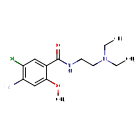
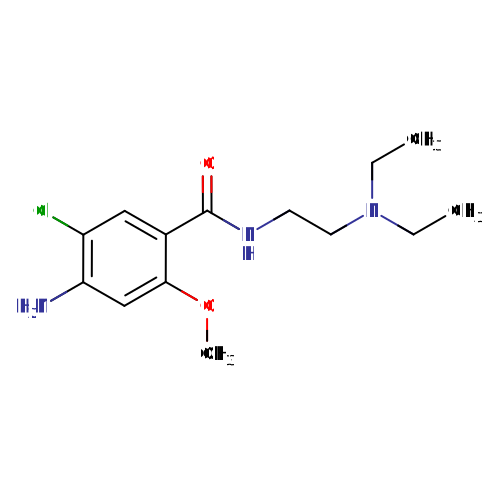
Structure for Metoclopramide (DB01233)
- Weight
- Average: 299.796
Monoisotopic: 299.14005467 - Chemical Formula
- C14H22ClN3O2
- Synonyms
- 2-methoxy-4-amino-5-chloro-N,N-(dimethylaminoethyl)benzamide
- 2-methoxy-5-chloroprocainamide
- 4-amino-5-chloro-2-methoxy-N-(β-diethylaminoethyl)benzamide
- 4-amino-5-chloro-N-(2-(diethylamino)ethyl)-o-anisamide
- Metoclopramida
- Metoclopramide
- Metoclopramidum
- External IDs
- DEL 1267

Pharmacology
- Indication
Metoclopramide in the oral tablet form is used for symptomatic treatment of both acute and recurrent diabetic gastroparesis, in addition to the treatment of gastroesophageal reflux disease (GERD) in patients who have failed to respond to traditional therapy.18 A nasal spray formulation is also indicated to treat adults with acute, recurrent diabetic gastroparesis.21
In the intravenous injection form, it is indicated for the above conditions as well as for the prevention of vomiting that may follow emetogenic chemotherapy or nausea and vomiting after surgery. Intravenous metoclopramide facilitates intubation of the small bowel and stimulates gastric emptying and barium flow in patients who require radiological examination of the stomach or small intestine. In some cases, the delay of gastrointestinal emptying interferes with the radiographic visualization of the gastrointestinal tract, and metoclopramide is used to facilitate emptying in these cases, allowing for adequate diagnostic visualization.19
Some off-label uses of metoclopramide include the management of radiation-induced nausea and vomiting, gastric bezoars, intractable hiccups, and migraine pain.8,9,10,11
 Reduce drug development failure ratesBuild, train, & validate machine-learning modelswith evidence-based and structured datasets.Build, train, & validate predictive machine-learning models with structured datasets.
- Associated Conditions
Indication Type Indication Combined Product Details Approval Level Age Group Patient Characteristics Dose Form Prophylaxis of Chemotherapy-induced nausea and vomiting •••••••••••• Symptomatic treatment of Diabetic gastroparesis •••••••••••• Used in combination for symptomatic treatment of Dyspepsia Combination Product in combination with: Pancrelipase (DB00085), Simethicone (DB09512) •••••••••••• ••••••• •••••• Used in combination for symptomatic treatment of Flatulence Combination Product in combination with: Simethicone (DB09512) •••••••••••• Treatment of Gastroesophageal reflux •••••••••••• - Associated Therapies
- Contraindications & Blackbox Warnings
 Prevent Adverse Drug Events TodayTap into our Clinical API for life-saving information on contraindications & blackbox warnings, population restrictions, harmful risks, & more.Avoid life-threatening adverse drug events with our Clinical API
- Pharmacodynamics
Metoclopramide increases gastric emptying by decreasing lower esophageal sphincter (LES) pressure. It also exerts effects on the area postrema of the brain, preventing and relieving the symptoms of nausea and vomiting. In addition, this drug increases gastrointestinal motility without increasing biliary, gastric, or pancreatic secretions.17,18,19
Because of its antidopaminergic activity, metoclopramide can cause symptoms of tardive dyskinesia (TD), dystonia, and akathisia, and should therefore not be administered for longer than 12 weeks.4,18
- Mechanism of action
Metoclopramide causes antiemetic effects by inhibiting dopamine D2 and serotonin 5-HT3 receptors in the chemoreceptor trigger zone (CTZ) located in the area postrema of the brain.2,17 Administration of this drug leads to prokinetic effects via inhibitory actions on presynaptic and postsynaptic D2 receptors, agonism of serotonin 5-HT4 receptors, and antagonism of muscarinic receptor inhibition. This action enhances the release of acetylcholine, causing increased lower esophageal sphincter (LES) and gastric tone, accelerating gastric emptying and transit through the gut. Metoclopramide antagonizes the dopamine D2 receptors. Dopamine exerts relaxant effect on the gastrointestinal tract through binding to muscular D2 receptors.2,17,18
Target Actions Organism A5-hydroxytryptamine receptor 4 agonistHumans A5-hydroxytryptamine receptor 3A antagonistHumans AMuscarinic acetylcholine receptor M1 agonistHumans ADopamine D2 receptor antagonistHumans - Absorption
Metoclopramide is rapidly absorbed in the gastrointestinal tract with an absorption rate of about 84%.4 The bioavailability of the oral preparation is reported to be about 40.7%, but can range from 30-100%.2,7
Nasal metoclopramide is 47% bioavailable.21 A 15mg dose reaches a Cmax of 41.0 ng/mL, with a Tmax of 1.25 h, and an AUC of 367 ng*h/mL.21
- Volume of distribution
The volume of distribution of metoclopramide is approximately 3.5 L/kg. This implies a high level of tissue distribution. Metoclopramide crosses the placental barrier and can cause extrapyramidal symptoms in the fetus.13,18
- Protein binding
Metoclopramide is 30% bound to plasma proteins, mainly to alpha-1-acid glycoprotein.12,19
- Metabolism
Metoclopramide undergoes first-pass metabolism and its metabolism varies according to the individual. This drug is metabolized by cytochrome P450 enzymes in the liver.2 CYP2D6 and CYP3A4 both contribute to its metabolism, with CYP2D6 being more heavily involved. CYP1A2 is also a minor contributing enzyme.16 The process of N-4 sulphate conjugation is a primary metabolic pathway of metoclopramide.4
Hover over products below to view reaction partners
- Route of elimination
About 85% of an orally administered dose was measured in the urine within 72 hours during a pharmacokinetic study. An average of 18% to 22% of 10-20 mg dose was recovered as free drug within 3 days of administration.18
- Half-life
The mean elimination half-life of metoclopramide in people with healthy renal function ranges from 5 to 6 hours but is prolonged in patients with renal impairment. Downward dose adjustment should be considered.4,13,18
- Clearance
The renal clearance of metoclopramide is 0.16 L/h/kg with a total clearance of 0.7 L/h/kg. Clinical studies showed that the clearance of metoclopramide may be reduced by up to 50% in patients with renal impairment.4 After high intravenous doses, total metoclopramide clearance ranged from 0.31 to 0.69 L/kg/h.14
- Adverse Effects
 Improve decision support & research outcomesWith structured adverse effects data, including: blackbox warnings, adverse reactions, warning & precautions, & incidence rates. View sample adverse effects data in our new Data Library!Improve decision support & research outcomes with our structured adverse effects data.
- Toxicity
The rat oral LD50 of metoclopramide is 750 mg/kg.20
Some symptoms of an overdose with metoclopramide include drowsiness, disorientation, and extrapyramidal reactions. Drugs that manage Parkinson's disease or anticholinergic drugs or antihistamines with anticholinergic properties 15 should be employed to treat extrapyramidal symptoms. Normally, these symptoms subside within 24 hours.18 Unintentional overdose in infants receiving the oral solution of metoclopramide resulted in seizures, extrapyramidal symptoms, in addition to a lethargic state.
In addition, methemoglobinemia has been found to occur in premature and full-term neonates after a metoclopramide overdose. Intravenous methylene blue may treat metoclopramide-associated methemoglobinemia. It is important to note that methylene blue administration may lead to hemolytic anemia in patients who suffer from G6PD deficiency, which can result in fatality. Dialysis has not been shown to be effective in sufficiently eliminating metoclopramide in an overdose situation due to low plasma distribution of this drug.18
- Pathways
- Not Available
- Pharmacogenomic Effects/ADRs
Interacting Gene/Enzyme Allele name Genotype(s) Defining Change(s) Type(s) Description Details Potassium voltage-gated channel subfamily H member 2 --- (C;C) / (A;C) A > C Effect Directly Studied The presence of this polymorphism in KCNH2 may be associated with increased clinical efficacy with metoclopramide. Details Alpha-1D adrenergic receptor --- (T;T) / (A;T) A > T Effect Directly Studied The presence of this polymorphism in ADRA1D may be associated with increased clinical efficacy with metoclopramide. Details Cytochrome P450 2D6 CYP2D6*2A (G;G) / (C;G) C > G ADR Directly Studied Patients with this genotype have reduced metabolism of metoclopramide and may be at a higher risk of experiencing adverse events. Details Cytochrome P450 2D6 CYP2D6*2 (A;A) / (A;G) G > A ADR Directly Studied Patients with this genotype have reduced metabolism of metoclopramide and may be at a higher risk of experiencing adverse events. Details Cytochrome P450 2D6 CYP2D6*4 (A;A) / (A;G) G > A Directly Studied Effect Patients with this genotype have reduced metabolism of metoclopramide. Details Potassium voltage-gated channel subfamily H member 2 --- (T;T) / (C;T) G > A ADR Directly Studied The presence of this polymorphism in KCNH2 is associated with higher incidences of adverse events from metoclopramide treatment. Details Multidrug resistance protein 1 --- (T;T) / (G;T) / (C;T) T Allele / G > T … show all Effect Directly Studied Patients with this polymorphism in ABCB1 may have a reduced response to clomipramine. Details NADH-cytochrome b5 reductase 3 --- Not Available Exon 2 c.129C>A / Exon 2 c.149G>A … show all ADR Inferred Risk of methemglobinemia. Details
Interactions
- Drug Interactions
- This information should not be interpreted without the help of a healthcare provider. If you believe you are experiencing an interaction, contact a healthcare provider immediately. The absence of an interaction does not necessarily mean no interactions exist.
Drug Interaction Integrate drug-drug
interactions in your software1,2-Benzodiazepine The risk or severity of sedation can be increased when Metoclopramide is combined with 1,2-Benzodiazepine. Abacavir Abacavir may decrease the excretion rate of Metoclopramide which could result in a higher serum level. Abametapir The serum concentration of Metoclopramide can be increased when it is combined with Abametapir. Abatacept The metabolism of Metoclopramide can be increased when combined with Abatacept. Abiraterone The serum concentration of Metoclopramide can be increased when it is combined with Abiraterone. - Food Interactions
- Avoid alcohol.
- Take before a meal. Co-administration with food decreases bioavailability - take 30 minutes before meals.
Products
 Drug product information from 10+ global regionsOur datasets provide approved product information including:dosage, form, labeller, route of administration, and marketing period.Access drug product information from over 10 global regions.
- Product Ingredients
Ingredient UNII CAS InChI Key Metoclopramide hydrochloride W1792A2RVD 54143-57-6 KJBLQGHJOCAOJP-UHFFFAOYSA-N Metoclopramide hydrochloride anhydrous 7B1QZY5SWZ 7232-21-5 RVFUNJWWXKCWNS-UHFFFAOYSA-N - Product Images
- International/Other Brands
- Cerucal / Degan / Elieten / Maxeran / Maxolon / METOZOLV / Plasil1 / Plazilin / Pramin / Primperan / Pulin / Pylomid / Reliveran
- Brand Name Prescription Products
Name Dosage Strength Route Labeller Marketing Start Marketing End Region Image Gimoti Spray 15 mg/0.07mL Nasal Evoke Pharma, Inc. 2020-06-19 Not applicable US 
Maxeran 5mg Tab Tablet 5 mg / tab Oral Labs Nordic Laboratories Inc. Subsidary Of M.M.D.C. 1984-12-31 1998-08-12 Canada 
Maxeran Liq Liquid 1 mg / 1 mL Oral Hoechst Marion Roussel 1995-12-31 2000-07-28 Canada Maxeran-10 (10mg Tablet) Tablet 10 mg / tab Oral Hoechst Marion Roussel 1995-12-31 2000-07-28 Canada Maxeran-5 (5mg Tablet) Tablet 5 mg / tab Oral Hoechst Marion Roussel 1996-10-23 2000-07-28 Canada - Generic Prescription Products
Name Dosage Strength Route Labeller Marketing Start Marketing End Region Image Apo-metoclop Tab 10mg Tablet 10 mg Oral Apotex Corporation 1989-12-31 Not applicable Canada Apo-metoclop Tab 5mg Tablet 5 mg Oral Apotex Corporation 1989-12-31 Not applicable Canada Mar-metoclopramide Tablet 5 mg Oral Marcan Pharmaceuticals Inc 2021-07-29 Not applicable Canada Mar-metoclopramide Tablet 10 mg Oral Marcan Pharmaceuticals Inc Not applicable Not applicable Canada Metoclopramide Tablet 5 mg/1 Oral Lake Erie Medical DBA Quality Care Products LLC 1993-07-01 2019-10-11 US - Unapproved/Other Products
Name Ingredients Dosage Route Labeller Marketing Start Marketing End Region Image METPAMID 10 MG AMPUL, 5 ADET Metoclopramide (10 mg/2ml) Injection, solution Intravenous SİFAR İLAÇLARI TİC. VE SAN. A.Ş. 2013-01-29 Not applicable Turkey 
METPAMID 10 MG TABLET, 30 ADET Metoclopramide (10 mg) Tablet Oral SİFAR İLAÇLARI TİC. VE SAN. A.Ş. 2013-01-29 Not applicable Turkey METPAMID ORAL 1MG 125 ML SOLUSYON Metoclopramide hydrochloride anhydrous (5 mg/5ml) Solution Oral SİFAR İLAÇLARI TİC. VE SAN. A.Ş. 2013-01-29 Not applicable Turkey PCP 100 Kit Metoclopramide hydrochloride (10 mg/1) + Bisacodyl (5 mg/1) + Magnesium citrate (1.745 g/29.6mL) + Petrolatum (0.76 g/1g) + Polyethylene glycol (17 g/17g) Kit Oral Asclemed Usa, Inc. 2014-01-02 Not applicable US


Categories
- ATC Codes
- A03FA01 — Metoclopramide
- Drug Categories
- Acids, Carbocyclic
- Agents Causing Muscle Toxicity
- Alimentary Tract and Metabolism
- Amides
- Aminobenzoates
- Antiemetics
- Autonomic Agents
- Benzamides and benzamide derivatives
- Benzoates
- Central Nervous System Agents
- Central Nervous System Depressants
- Chlorobenzoates
- Cholinesterase Inhibitors
- Cytochrome P-450 CYP1A2 Substrates
- Cytochrome P-450 CYP2D6 Inhibitors
- Cytochrome P-450 CYP2D6 Inhibitors (strength unknown)
- Cytochrome P-450 CYP2D6 Substrates
- Cytochrome P-450 CYP3A Substrates
- Cytochrome P-450 CYP3A4 Substrates
- Cytochrome P-450 Enzyme Inhibitors
- Cytochrome P-450 Substrates
- Dopamine Agents
- Dopamine Antagonists
- Dopamine D2 Receptor Antagonists
- Drugs for Functional Gastrointestinal Disorders
- Drugs that are Mainly Renally Excreted
- Gastrointestinal Agents
- Hydroxybenzoates
- Methemoglobinemia Associated Agents
- Neurotransmitter Agents
- P-glycoprotein substrates
- para-Aminobenzoates
- Peripheral Nervous System Agents
- Potential QTc-Prolonging Agents
- Prokinetic Agents
- Propulsives
- QTc Prolonging Agents
- Serotonergic Drugs Shown to Increase Risk of Serotonin Syndrome
- Chemical TaxonomyProvided by Classyfire
- Description
- This compound belongs to the class of organic compounds known as aminophenyl ethers. These are aromatic compounds that contain a phenol ether, which carries an amine group on the benzene ring.
- Kingdom
- Organic compounds
- Super Class
- Benzenoids
- Class
- Phenol ethers
- Sub Class
- Aminophenyl ethers
- Direct Parent
- Aminophenyl ethers
- Alternative Parents
- Methoxyanilines / Phenoxy compounds / Methoxybenzenes / Anisoles / Chlorobenzenes / Alkyl aryl ethers / Aryl chlorides / Trialkylamines / Propargyl-type 1,3-dipolar organic compounds / Carboximidic acids show 4 more
- Substituents
- Alkyl aryl ether / Amine / Aminophenyl ether / Aniline or substituted anilines / Anisole / Aromatic homomonocyclic compound / Aryl chloride / Aryl halide / Carboximidic acid / Carboximidic acid derivative show 20 more
- Molecular Framework
- Aromatic homomonocyclic compounds
- External Descriptors
- tertiary amino compound, substituted aniline, benzamides, monochlorobenzenes (CHEBI:107736)
- Affected organisms
- Humans and other mammals
Chemical Identifiers
- UNII
- L4YEB44I46
- CAS number
- 364-62-5
- InChI Key
- TTWJBBZEZQICBI-UHFFFAOYSA-N
- InChI
- InChI=1S/C14H22ClN3O2/c1-4-18(5-2)7-6-17-14(19)10-8-11(15)12(16)9-13(10)20-3/h8-9H,4-7,16H2,1-3H3,(H,17,19)
- IUPAC Name
- 4-amino-5-chloro-N-[2-(diethylamino)ethyl]-2-methoxybenzamide
- SMILES
- CCN(CC)CCNC(=O)C1=CC(Cl)=C(N)C=C1OC
References
- Synthesis Reference
- US3177252
- General References
- Tonini M, Candura SM, Messori E, Rizzi CA: Therapeutic potential of drugs with mixed 5-HT4 agonist/5-HT3 antagonist action in the control of emesis. Pharmacol Res. 1995 May;31(5):257-60. [Article]
- Lee A, Kuo B: Metoclopramide in the treatment of diabetic gastroparesis. Expert Rev Endocrinol Metab. 2010;5(5):653-662. [Article]
- van der Meer YG, Venhuizen WA, Heyland DK, van Zanten AR: Should we stop prescribing metoclopramide as a prokinetic drug in critically ill patients? Crit Care. 2014 Sep 23;18(5):502. doi: 10.1186/s13054-014-0502-4. [Article]
- Bateman DN: Clinical pharmacokinetics of metoclopramide. Clin Pharmacokinet. 1983 Nov-Dec;8(6):523-9. doi: 10.2165/00003088-198308060-00003. [Article]
- Avalos DJ, Sarosiek I, Loganathan P, McCallum RW: Diabetic gastroparesis: current challenges and future prospects. Clin Exp Gastroenterol. 2018 Sep 25;11:347-363. doi: 10.2147/CEG.S131650. eCollection 2018. [Article]
- Lacy BE, Crowell MD, Mathis C, Bauer D, Heinberg LJ: Gastroparesis: Quality of Life and Health Care Utilization. J Clin Gastroenterol. 2018 Jan;52(1):20-24. doi: 10.1097/MCG.0000000000000728. [Article]
- Mahajan HS, Gattani S: In situ gels of Metoclopramide Hydrochloride for intranasal delivery: in vitro evaluation and in vivo pharmacokinetic study in rabbits. Drug Deliv. 2010 Jan;17(1):19-27. doi: 10.3109/10717540903447194. Epub 2009 Dec 3. [Article]
- Feyer P, Jahn F, Jordan K: Prophylactic Management of Radiation-Induced Nausea and Vomiting. Biomed Res Int. 2015;2015:893013. doi: 10.1155/2015/893013. Epub 2015 Sep 3. [Article]
- Eng K, Kay M: Gastrointestinal bezoars: history and current treatment paradigms. Gastroenterol Hepatol (N Y). 2012 Nov;8(11):776-8. [Article]
- Wang T, Wang D: Metoclopramide for patients with intractable hiccups: a multicentre, randomised, controlled pilot study. Intern Med J. 2014 Dec;44(12a):1205-9. doi: 10.1111/imj.12542. [Article]
- Najjar M, Hall T, Estupinan B: Metoclopramide for Acute Migraine Treatment in the Emergency Department: An Effective Alternative to Opioids. Cureus. 2017 Apr 20;9(4):e1181. doi: 10.7759/cureus.1181. [Article]
- Webb D, Buss DC, Fifield R, Bateman DN, Routledge PA: The plasma protein binding of metoclopramide in health and renal disease. Br J Clin Pharmacol. 1986 Mar;21(3):334-6. doi: 10.1111/j.1365-2125.1986.tb05201.x. [Article]
- Ross-Lee LM, Eadie MJ, Hooper WD, Bochner F: Single-dose pharmacokinetics of metoclopramide. Eur J Clin Pharmacol. 1981;20(6):465-71. doi: 10.1007/bf00542101. [Article]
- McGovern EM, Grevel J, Bryson SM: Pharmacokinetics of high-dose metoclopramide in cancer patients. Clin Pharmacokinet. 1986 Nov-Dec;11(6):415-24. doi: 10.2165/00003088-198611060-00001. [Article]
- Allen JC, Gralla R, Reilly L, Kellick M, Young C: Metoclopramide: dose-related toxicity and preliminary antiemetic studies in children receiving cancer chemotherapy. J Clin Oncol. 1985 Aug;3(8):1136-41. doi: 10.1200/JCO.1985.3.8.1136. [Article]
- Camilleri M, Shin A: Lessons from pharmacogenetics and metoclopramide: toward the right dose of the right drug for the right patient. J Clin Gastroenterol. 2012 Jul;46(6):437-9. doi: 10.1097/MCG.0b013e3182549528. [Article]
- Sasank Isola; Ninos Adams (2019). Metoclopramide, NIH StatPearls. Stat Pearls Publishing.
- Metoclopramide FDA label [Link]
- Reglan injection FDA label [Link]
- Metoclopramide MSDS [Link]
- FDA Approved Drug Products: Gimoti Metoclopramide Nasal Spray [Link]
- INVIMA Product Authorization: Clifar (metoclopramide hydrochloride/simethicone) oral suspension [Link]
- External Links
- Human Metabolome Database
- HMDB0015363
- KEGG Drug
- D00726
- KEGG Compound
- C07868
- PubChem Compound
- 4168
- PubChem Substance
- 46505631
- ChemSpider
- 4024
- BindingDB
- 48320
- 6915
- ChEBI
- 107736
- ChEMBL
- CHEMBL86
- ZINC
- ZINC000001530716
- Therapeutic Targets Database
- DAP000530
- PharmGKB
- PA450475
- Guide to Pharmacology
- GtP Drug Page
- RxList
- RxList Drug Page
- Drugs.com
- Drugs.com Drug Page
- PDRhealth
- PDRhealth Drug Page
- Wikipedia
- Metoclopramide
- FDA label
- Download (90.1 KB)
- MSDS
- Download (73.2 KB)
Clinical Trials
- Clinical Trials
Phase Status Purpose Conditions Count 4 Completed Not Available Pill Capsule Endoscopy Completion Rates 1 4 Completed Other Labour Duration and Metoclopramide 1 4 Completed Prevention Aspiration Pneumonia / Stroke, Acute 1 4 Completed Prevention Gastric Emptying / Mechanically Ventilation / Metoclopramide / Randomized Controlled Trials 1 4 Completed Prevention Infants, Premature 1
Pharmacoeconomics
- Manufacturers
- Not Available
- Packagers
- Actavis Group
- Advanced Pharmaceutical Services Inc.
- Alaven Pharmaceutical
- Almus Pharmaceuticals Usa LLC
- Amerisource Health Services Corp.
- Anip Acquisition Co.
- A-S Medication Solutions LLC
- Atlantic Biologicals Corporation
- Baxter International Inc.
- Bay Pharma Inc.
- Bryant Ranch Prepack
- Cardinal Health
- Comprehensive Consultant Services Inc.
- Dept Health Central Pharmacy
- Direct Dispensing Inc.
- Dispensing Solutions
- Diversified Healthcare Services Inc.
- Duramed
- General Injectables and Vaccines Inc.
- H.J. Harkins Co. Inc.
- Heartland Repack Services LLC
- Hospira Inc.
- Innoviant Pharmacy Inc.
- Ipca Laboratories Ltd.
- Lake Erie Medical and Surgical Supply
- Liberty Pharmaceuticals
- Major Pharmaceuticals
- Mckesson Corp.
- Medisca Inc.
- Murfreesboro Pharmaceutical Nursing Supply
- Mutual Pharmaceutical Co.
- Neighborcare Repackaging Inc.
- Neuman Distributors Inc.
- Northstar Rx LLC
- Nucare Pharmaceuticals Inc.
- Palmetto Pharmaceuticals Inc.
- PCA LLC
- Pharmaceutical Association
- Pharmaceutical Packaging Center
- Pharmaceutical Utilization Management Program VA Inc.
- Pharmedix
- Physicians Total Care Inc.
- Piramal Healthcare
- Pliva Inc.
- Precision Dose Inc.
- Preferred Pharmaceuticals Inc.
- Prepak Systems Inc.
- Qualitest
- Ranbaxy Laboratories
- Rebel Distributors Corp.
- Redpharm Drug
- Remedy Repack
- Salix Pharmaceuticals
- Sandhills Packaging Inc.
- Sandoz
- Silarx Pharmaceuticals
- Southwood Pharmaceuticals
- Teva Pharmaceutical Industries Ltd.
- Tya Pharmaceuticals
- UDL Laboratories
- Vangard Labs Inc.
- Viasys Medsystems
- Vintage Pharmaceuticals Inc.
- Vistapharm Inc.
- Watson Pharmaceuticals
- Wockhardt Ltd.
- Xactdose Inc.
- Dosage Forms
Form Route Strength Injection, solution Intramuscular; Intravenous Solution Parenteral 25.000 mg Solution Oral 100.000 mg Solution Oral 15.00 mg Tablet, extended release Oral 15 mg Injection, solution Parenteral 10 mg Solution Oral 400.000 mg Granule Granule, effervescent Tablet, effervescent Suspension Oral Tablet Oral Injection, solution Tablet Oral 10.00 mg Tablet, coated Oral Capsule Oral 10 g Tablet Oral 50.00 mg Tablet, film coated Oral Granule, effervescent Oral Solution Oral 0.400 g Spray Nasal 15 mg/0.07mL Granule, effervescent 5 MG Tablet, effervescent 5 MG Liquid Oral 1 mg / 1 mL Solution Oral 1 MG/ML Tablet Oral 10.54 mg Capsule, extended release Oral 30 mg Injection Intramuscular; Intravenous 5 MG/ML Solution Parenteral 10.000 mg Solution Parenteral 10 mg Solution Intramuscular; Intravenous 1000000 mg Solution Oral 4 mg Solution Oral 100 mg Capsule Injection Intramuscular; Intravenous 5 mg/1mL Injection, solution Intramuscular; Intravenous 10 mg/2mL Injection, solution Intramuscular; Intravenous 5 mg/1mL Solution Oral 0.9 mg/0.9mL Solution Oral 10 mg/10mL Solution Oral 5 mg/5mL Tablet Oral 10 mg/1 Tablet Oral 5 mg/1 Solution / drops; suspension / drops Powder Not applicable 1 g/1g Tablet, orally disintegrating Oral 10 mg/1 Tablet, orally disintegrating Oral 5 mg/1 Liquid Intramuscular; Intravenous 5 mg / mL Liquid Intravenous 5 mg / mL Injection, solution Parenteral 10 MG/2ML Injection Parenteral 5 mg/ml Injection Intramuscular; Intravenous Syrup Oral Injection, solution Intravenous 10 mg/2ml Tablet Oral 10 MG Tablet, film coated Oral 100 mg Tablet, film coated Oral 20 mg Tablet, film coated Oral 50 mg Kit Oral Solution Oral 400.00 mg Solution / drops Oral 4 MG/ML Syrup Oral 10 MG/10ML Solution Intramuscular; Intravenous 5 mg / mL Solution Oral 5 mg / 5 mL Tablet Oral 5 mg Injection, solution 10 mg/2ml Spray Nasal Tablet Solution Intramuscular; Intravenous 10 mg Suppository Rectal 10 MG Solution Intramuscular; Intravenous 100 mg Solution Oral 0.09 g Tablet, film coated Oral 10 mg Injection Intramuscular; Intravenous 10 mg/2ml Solution / drops Oral Solution Parenteral 10.00 mg Injection, solution Intramuscular; Intravenous 5.0 mg/1.0mL Syrup Oral 1 mg / mL Tablet Oral 10 mg / tab Tablet Oral 5 mg / tab Solution Parenteral Tablet Oral Solution Oral 0.40 g Tablet Oral 10.000 mg Solution Intravenous 10.000 mg Solution Intramuscular; Intravenous 10 mg/2ml Solution Parenteral 11.798 mg Solution 5 mg/1ml Solution 5 mg/5ml Syrup Oral 5 mg/5mL - Prices
Unit description Cost Unit Metoclopramide hcl powder 7.65USD g Reglan 10 mg tablet 1.81USD tablet Reglan 5 mg tablet 1.41USD tablet Metoclopramide Hydrochloride 5 mg/ml 1.39USD ml Reglan 5 mg/ml vial 0.56USD ml Metoclopramide HCl 5 mg tablet 0.43USD tablet Metoclopramide 5 mg tablet 0.33USD tablet Metoclopramide 10 mg tablet 0.28USD tablet Metoclopramide 5 mg/ml ampul 0.28USD ml Metoclopramide HCl 10 mg tablet 0.27USD tablet Metoclopramide HCl 5 mg/5ml Solution 0.06USD ml Apo-Metoclop 10 mg Tablet 0.06USD tablet Apo-Metoclop 5 mg Tablet 0.06USD tablet Nu-Metoclopramide 10 mg Tablet 0.06USD tablet Nu-Metoclopramide 5 mg Tablet 0.06USD tablet Pms-Metoclopramide 10 mg Tablet 0.06USD tablet Pms-Metoclopramide 5 mg Tablet 0.06USD tablet Pms-Metoclopramide 1 mg/ml Liquid 0.04USD ml DrugBank does not sell nor buy drugs. Pricing information is supplied for informational purposes only.- Patents
Patent Number Pediatric Extension Approved Expires (estimated) Region US6221392 No 2001-04-24 2018-04-09 US US6024981 No 2000-02-15 2018-04-09 US US6413549 No 2002-07-02 2017-07-11 US US8334281 No 2012-12-18 2030-05-16 US US6770262 No 2004-08-03 2021-03-29 US US11020361 No 2021-06-01 2029-12-22 US US11628150 No 2009-12-22 2029-12-22 US US11813231 No 2009-12-22 2029-12-22 US
Properties
- State
- Solid
- Experimental Properties
Property Value Source melting point (°C) 171-173 https://www.chemicalbook.com/ChemicalProductProperty_US_CB4236007.aspx boiling point (°C) 418.7 https://www.lookchem.com/Metoclopramide-hydrochloride/ logP 2.667 https://onlinelibrary.wiley.com/doi/full/10.1002/jps.21276 logS -3.18 ADME Research, USCD pKa 9.27 https://pubchem.ncbi.nlm.nih.gov/compound/Metoclopramide - Predicted Properties
Property Value Source Water Solubility 0.31 mg/mL ALOGPS logP 2.18 ALOGPS logP 1.4 Chemaxon logS -3 ALOGPS pKa (Strongest Acidic) 14.49 Chemaxon pKa (Strongest Basic) 9.04 Chemaxon Physiological Charge 1 Chemaxon Hydrogen Acceptor Count 4 Chemaxon Hydrogen Donor Count 2 Chemaxon Polar Surface Area 67.59 Å2 Chemaxon Rotatable Bond Count 7 Chemaxon Refractivity 83.52 m3·mol-1 Chemaxon Polarizability 32.7 Å3 Chemaxon Number of Rings 1 Chemaxon Bioavailability 1 Chemaxon Rule of Five Yes Chemaxon Ghose Filter Yes Chemaxon Veber's Rule No Chemaxon MDDR-like Rule No Chemaxon - Predicted ADMET Features
Property Value Probability Human Intestinal Absorption + 0.979 Blood Brain Barrier + 0.9713 Caco-2 permeable + 0.8866 P-glycoprotein substrate Substrate 0.7687 P-glycoprotein inhibitor I Non-inhibitor 0.8782 P-glycoprotein inhibitor II Non-inhibitor 0.8783 Renal organic cation transporter Non-inhibitor 0.7276 CYP450 2C9 substrate Non-substrate 0.8602 CYP450 2D6 substrate Substrate 0.8918 CYP450 3A4 substrate Substrate 0.6375 CYP450 1A2 substrate Inhibitor 0.9107 CYP450 2C9 inhibitor Non-inhibitor 0.9071 CYP450 2D6 inhibitor Inhibitor 0.8931 CYP450 2C19 inhibitor Non-inhibitor 0.9025 CYP450 3A4 inhibitor Non-inhibitor 0.9099 CYP450 inhibitory promiscuity Low CYP Inhibitory Promiscuity 0.6223 Ames test Non AMES toxic 0.5378 Carcinogenicity Non-carcinogens 0.6142 Biodegradation Not ready biodegradable 1.0 Rat acute toxicity 2.6332 LD50, mol/kg Not applicable hERG inhibition (predictor I) Weak inhibitor 0.8367 hERG inhibition (predictor II) Inhibitor 0.8579
Spectra
- Mass Spec (NIST)
- Not Available
- Spectra
- Chromatographic Properties
Collision Cross Sections (CCS)
Adduct CCS Value (Å2) Source type Source [M-H]- 170.2209424 predictedDarkChem Lite v0.1.0 [M-H]- 166.26381 predictedDeepCCS 1.0 (2019) [M+H]+ 170.1576424 predictedDarkChem Lite v0.1.0 [M+H]+ 168.62183 predictedDeepCCS 1.0 (2019) [M+Na]+ 170.2621424 predictedDarkChem Lite v0.1.0 [M+Na]+ 174.71498 predictedDeepCCS 1.0 (2019)
Targets

- Kind
- Protein
- Organism
- Humans
- Pharmacological action
- Yes
- Actions
- Agonist
- General Function
- Serotonin receptor activity
- Specific Function
- This is one of the several different receptors for 5-hydroxytryptamine (serotonin), a biogenic hormone that functions as a neurotransmitter, a hormone, and a mitogen. The activity of this receptor ...
- Gene Name
- HTR4
- Uniprot ID
- Q13639
- Uniprot Name
- 5-hydroxytryptamine receptor 4
- Molecular Weight
- 43760.975 Da
References
- Guillemot J, Compagnon P, Cartier D, Thouennon E, Bastard C, Lihrmann I, Pichon P, Thuillez C, Plouin PF, Bertherat J, Anouar Y, Kuhn JM, Yon L, Lefebvre H: Metoclopramide stimulates catecholamine- and granin-derived peptide secretion from pheochromocytoma cells through activation of serotonin type 4 (5-HT4) receptors. Endocr Relat Cancer. 2009 Mar;16(1):281-90. doi: 10.1677/ERC-08-0190. Epub 2008 Oct 23. [Article]
- Lee A, Kuo B: Metoclopramide in the treatment of diabetic gastroparesis. Expert Rev Endocrinol Metab. 2010;5(5):653-662. [Article]
- Bartolini A, Di Cesare Mannelli L, Ghelardini C: Analgesic and antineuropathic drugs acting through central cholinergic mechanisms. Recent Pat CNS Drug Discov. 2011 May 1;6(2):119-40. [Article]
- Kind
- Protein
- Organism
- Humans
- Pharmacological action
- Yes
- Actions
- Antagonist
- General Function
- Voltage-gated potassium channel activity
- Specific Function
- This is one of the several different receptors for 5-hydroxytryptamine (serotonin), a biogenic hormone that functions as a neurotransmitter, a hormone, and a mitogen. This receptor is a ligand-gate...
- Gene Name
- HTR3A
- Uniprot ID
- P46098
- Uniprot Name
- 5-hydroxytryptamine receptor 3A
- Molecular Weight
- 55279.835 Da
References
- Costall B, Gunning SJ, Naylor RJ, Tyers MB: The effect of GR38032F, novel 5-HT3-receptor antagonist on gastric emptying in the guinea-pig. Br J Pharmacol. 1987 Jun;91(2):263-4. [Article]
- Lee A, Kuo B: Metoclopramide in the treatment of diabetic gastroparesis. Expert Rev Endocrinol Metab. 2010;5(5):653-662. [Article]
- Sasank Isola; Ninos Adams (2019). Metoclopramide, NIH StatPearls. Stat Pearls Publishing.
- Kind
- Protein
- Organism
- Humans
- Pharmacological action
- Yes
- Actions
- Agonist
- General Function
- Phosphatidylinositol phospholipase c activity
- Specific Function
- The muscarinic acetylcholine receptor mediates various cellular responses, including inhibition of adenylate cyclase, breakdown of phosphoinositides and modulation of potassium channels through the...
- Gene Name
- CHRM1
- Uniprot ID
- P11229
- Uniprot Name
- Muscarinic acetylcholine receptor M1
- Molecular Weight
- 51420.375 Da
References
- Lee A, Kuo B: Metoclopramide in the treatment of diabetic gastroparesis. Expert Rev Endocrinol Metab. 2010;5(5):653-662. [Article]
- Kind
- Protein
- Organism
- Humans
- Pharmacological action
- Yes
- Actions
- Antagonist
- General Function
- Potassium channel regulator activity
- Specific Function
- Dopamine receptor whose activity is mediated by G proteins which inhibit adenylyl cyclase.
- Gene Name
- DRD2
- Uniprot ID
- P14416
- Uniprot Name
- D(2) dopamine receptor
- Molecular Weight
- 50618.91 Da
References
- See RE, Lynch AM, Sorg BA: Subchronic administration of clozapine, but not haloperidol or metoclopramide, decreases dopamine D2 receptor messenger RNA levels in the nucleus accumbens and caudate-putamen in rats. Neuroscience. 1996 May;72(1):99-104. [Article]
- Harrold MW, Sriburi A, Matsumoto K, Miller DD, Farooqui T, Uretsky N: The interaction of ammonium, sulfonium, and sulfide analogues of metoclopramide with the dopamine D2 receptor. J Med Chem. 1993 Oct 15;36(21):3166-70. [Article]
- Kishibayashi N, Karasawa A: Stimulating effects of KW-5092, a novel gastroprokinetic agent, on the gastric emptying, small intestinal propulsion and colonic propulsion in rats. Jpn J Pharmacol. 1995 Jan;67(1):45-50. [Article]
- Chemnitius JM, Haselmeyer KH, Gonska BD, Kreuzer H, Zech R: Indirect parasympathomimetic activity of metoclopramide: reversible inhibition of cholinesterases from human central nervous system and blood. Pharmacol Res. 1996 Jul-Aug;34(1-2):65-72. [Article]
- Dahlof CG, Hargreaves RJ: Pathophysiology and pharmacology of migraine. Is there a place for antiemetics in future treatment strategies? Cephalalgia. 1998 Nov;18(9):593-604. [Article]
- Hammer D: Gastroesophageal reflux and prokinetic agents. Neonatal Netw. 2005 Mar-Apr;24(2):51-8; quiz 59-62. [Article]
- Bartolini A, Di Cesare Mannelli L, Ghelardini C: Analgesic and antineuropathic drugs acting through central cholinergic mechanisms. Recent Pat CNS Drug Discov. 2011 May 1;6(2):119-40. [Article]
- Sasank Isola; Ninos Adams (2019). Metoclopramide, NIH StatPearls. Stat Pearls Publishing.
Enzymes
- Kind
- Protein
- Organism
- Humans
- Pharmacological action
- Unknown
- Actions
- Substrate
- General Function
- Vitamin d3 25-hydroxylase activity
- Specific Function
- Cytochromes P450 are a group of heme-thiolate monooxygenases. In liver microsomes, this enzyme is involved in an NADPH-dependent electron transport pathway. It performs a variety of oxidation react...
- Gene Name
- CYP3A4
- Uniprot ID
- P08684
- Uniprot Name
- Cytochrome P450 3A4
- Molecular Weight
- 57342.67 Da
References
- Lee A, Kuo B: Metoclopramide in the treatment of diabetic gastroparesis. Expert Rev Endocrinol Metab. 2010;5(5):653-662. [Article]
- Livezey MR, Briggs ED, Bolles AK, Nagy LD, Fujiwara R, Furge LL: Metoclopramide is metabolized by CYP2D6 and is a reversible inhibitor, but not inactivator, of CYP2D6. Xenobiotica. 2014 Apr;44(4):309-319. doi: 10.3109/00498254.2013.835885. Epub 2013 Sep 6. [Article]
- Bailey DG, Dresser G, Arnold JM: Grapefruit-medication interactions: forbidden fruit or avoidable consequences? CMAJ. 2013 Mar 5;185(4):309-16. doi: 10.1503/cmaj.120951. Epub 2012 Nov 26. [Article]
- Kind
- Protein
- Organism
- Humans
- Pharmacological action
- Unknown
- Actions
- Substrate
- General Function
- Oxidoreductase activity, acting on paired donors, with incorporation or reduction of molecular oxygen, reduced flavin or flavoprotein as one donor, and incorporation of one atom of oxygen
- Specific Function
- Cytochromes P450 are a group of heme-thiolate monooxygenases. In liver microsomes, this enzyme is involved in an NADPH-dependent electron transport pathway. It oxidizes a variety of structurally un...
- Gene Name
- CYP1A2
- Uniprot ID
- P05177
- Uniprot Name
- Cytochrome P450 1A2
- Molecular Weight
- 58293.76 Da
References
- Lee A, Kuo B: Metoclopramide in the treatment of diabetic gastroparesis. Expert Rev Endocrinol Metab. 2010;5(5):653-662. [Article]
- Livezey MR, Briggs ED, Bolles AK, Nagy LD, Fujiwara R, Furge LL: Metoclopramide is metabolized by CYP2D6 and is a reversible inhibitor, but not inactivator, of CYP2D6. Xenobiotica. 2014 Apr;44(4):309-319. doi: 10.3109/00498254.2013.835885. Epub 2013 Sep 6. [Article]
- Camilleri M, Shin A: Lessons from pharmacogenetics and metoclopramide: toward the right dose of the right drug for the right patient. J Clin Gastroenterol. 2012 Jul;46(6):437-9. doi: 10.1097/MCG.0b013e3182549528. [Article]
- Kind
- Protein
- Organism
- Humans
- Pharmacological action
- Unknown
- Actions
- SubstrateInhibitor
- General Function
- Steroid hydroxylase activity
- Specific Function
- Responsible for the metabolism of many drugs and environmental chemicals that it oxidizes. It is involved in the metabolism of drugs such as antiarrhythmics, adrenoceptor antagonists, and tricyclic...
- Gene Name
- CYP2D6
- Uniprot ID
- P10635
- Uniprot Name
- Cytochrome P450 2D6
- Molecular Weight
- 55768.94 Da
References
- Livezey MR, Briggs ED, Bolles AK, Nagy LD, Fujiwara R, Furge LL: Metoclopramide is metabolized by CYP2D6 and is a reversible inhibitor, but not inactivator, of CYP2D6. Xenobiotica. 2014 Apr;44(4):309-319. doi: 10.3109/00498254.2013.835885. Epub 2013 Sep 6. [Article]
- Desta Z, Wu GM, Morocho AM, Flockhart DA: The gastroprokinetic and antiemetic drug metoclopramide is a substrate and inhibitor of cytochrome P450 2D6. Drug Metab Dispos. 2002 Mar;30(3):336-43. doi: 10.1124/dmd.30.3.336. [Article]
- Camilleri M, Shin A: Lessons from pharmacogenetics and metoclopramide: toward the right dose of the right drug for the right patient. J Clin Gastroenterol. 2012 Jul;46(6):437-9. doi: 10.1097/MCG.0b013e3182549528. [Article]
- Flockhart Table of Drug Interactions [Link]
Carriers
- Kind
- Protein
- Organism
- Humans
- Pharmacological action
- Unknown
- Actions
- Binder
- General Function
- Not Available
- Specific Function
- Functions as transport protein in the blood stream. Binds various ligands in the interior of its beta-barrel domain. Also binds synthetic drugs and influences their distribution and availability in...
- Gene Name
- ORM1
- Uniprot ID
- P02763
- Uniprot Name
- Alpha-1-acid glycoprotein 1
- Molecular Weight
- 23511.38 Da
References
Transporters
- Kind
- Protein
- Organism
- Humans
- Pharmacological action
- Unknown
- Actions
- Substrate
- General Function
- Xenobiotic-transporting atpase activity
- Specific Function
- Energy-dependent efflux pump responsible for decreased drug accumulation in multidrug-resistant cells.
- Gene Name
- ABCB1
- Uniprot ID
- P08183
- Uniprot Name
- Multidrug resistance protein 1
- Molecular Weight
- 141477.255 Da
References
- Pottier G, Marie S, Goutal S, Auvity S, Peyronneau MA, Stute S, Boisgard R, Dolle F, Buvat I, Caille F, Tournier N: Imaging the Impact of the P-Glycoprotein (ABCB1) Function on the Brain Kinetics of Metoclopramide. J Nucl Med. 2016 Feb;57(2):309-14. doi: 10.2967/jnumed.115.164350. Epub 2015 Nov 19. [Article]
- Caille F, Goutal S, Marie S, Auvity S, Cisternino S, Kuhnast B, Pottier G, Tournier N: Positron Emission Tomography Imaging Reveals an Importance of Saturable Liver Uptake Transport for the Pharmacokinetics of Metoclopramide. Contrast Media Mol Imaging. 2018 May 8;2018:7310146. doi: 10.1155/2018/7310146. eCollection 2018. [Article]
- Bauer M, Tournier N, Langer O: Imaging P-Glycoprotein Function at the Blood-Brain Barrier as a Determinant of the Variability in Response to Central Nervous System Drugs. Clin Pharmacol Ther. 2019 May;105(5):1061-1064. doi: 10.1002/cpt.1402. Epub 2019 Mar 23. [Article]

Drug created at June 13, 2005 13:24 / Updated at April 27, 2024 09:44