Identification
- Summary
Aripiprazole is an atypical antipsychotic used in the treatment of a wide variety of mood and psychotic disorders, such as schizophrenia, bipolar I, major depressive disorder, irritability associated with autism, and Tourette's syndrome.
- Brand Names
- Abilify
- Generic Name
- Aripiprazole
- DrugBank Accession Number
- DB01238
- Background
Aripiprazole is an atypical antipsychotic orally indicated for the treatment of schizophrenia, bipolar I, major depressive disorder, irritability associated with autism, and Tourette's.8 It is also indicated as an injection for agitation associated with schizophrenia or bipolar mania.8 Aripiprazole exerts its effects through agonism of dopaminergic and 5-HT1A receptors and antagonism of alpha-adrenergic and 5-HT2A receptors.8,1 Aripiprazole was given FDA approval on November 15, 2002.6
- Type
- Small Molecule
- Groups
- Approved, Investigational
- Structure
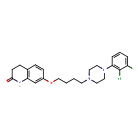
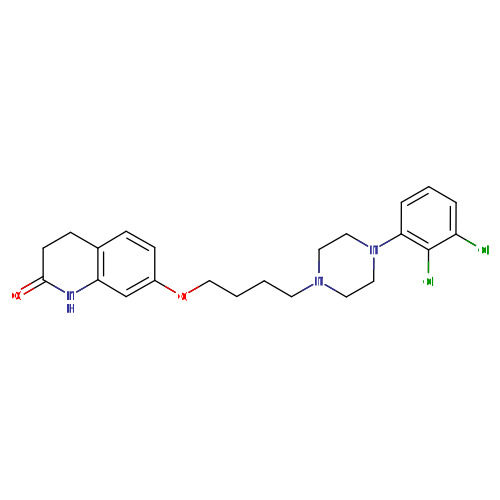
Structure for Aripiprazole (DB01238)
- Weight
- Average: 448.385
Monoisotopic: 447.148032537 - Chemical Formula
- C23H27Cl2N3O2
- Synonyms
- Aripiprazol
- Aripiprazole
- Aripiprazolum
- External IDs
- OPC 31
- OPC-14597
- OPC-31

Pharmacology
- Indication
Aripiprazole is indicated for the treatment of acute manic and mixed episodes associated with bipolar I disorder, irritability associated with autism spectrum disorder, schizophrenia, and Tourette's disorder.8 It is also used as an adjunctive treatment of major depressive disorder.[L45859 An injectable formulation of aripiprazole is indicated for agitation associated with schizophrenia or bipolar mania.8 Finally, an extended-release, bimonthly injection formulation of aripiprazole is indicated for the treatment of adult schizophrenia and maintenance therapy for adult bipolar I disorder.9
 Reduce drug development failure ratesBuild, train, & validate machine-learning modelswith evidence-based and structured datasets.Build, train, & validate predictive machine-learning models with structured datasets.
- Associated Conditions
Indication Type Indication Combined Product Details Approval Level Age Group Patient Characteristics Dose Form Treatment of Agitation •••••••••••• ••••• •••••••••• ••••••• ••• ••••••••••• •••••••• •••••••• •••••••••• ••••••••• •••••••••• ••••••••••• •••••••• ••••••• Treatment of Agitation •••••••••••• •••••••••• ••••••• ••• ••••••••••• •••••••• •••••••• •••••••••• ••••••••• •••••••••• ••••••••••• •••••••• ••••••• Maintenance of Bipolar 1 disorder •••••••••••• ••••• •••••••••• ••••••••••• •••••••• ••••••• Management of Bipolar 1 disorder •••••••••••• ••••• Treatment of Irritability •••••••••••• - Associated Therapies
- Contraindications & Blackbox Warnings
 Prevent Adverse Drug Events TodayTap into our Clinical API for life-saving information on contraindications & blackbox warnings, population restrictions, harmful risks, & more.Avoid life-threatening adverse drug events with our Clinical API
- Pharmacodynamics
Aripiprazole exhibits high affinity for dopamine D2 and D3, serotonin 5-HT1a and 5-HT2a receptors (Ki values of 0.34 nM, 0.8 nM, 1.7 nM, and 3.4 nM, respectively), moderate affinity for dopamine D4, serotonin 5-HT2c and 5-HT7, alpha1-adrenergic and histamine H1 receptors (Ki values of 44 nM, 15 nM, 39 nM, 57 nM, and 61 nM, respectively), and moderate affinity for the serotonin reuptake site (Ki=98 nM). Aripiprazole has no appreciable affinity for cholinergic muscarinic receptors (IC50>1000 nM).8
- Mechanism of action
The antipsychotic action of aripiprazole is likely due to its partial agonist activity on D2 and 5-HT1A receptors as well as its antagonist activity at 5-HT2A receptors; however, the exact mechanism has not been fully elucidated.1,8 One of the mechanisms that have been proposed is that aripiprazole both stimulates and inhibits dopamine as it engages the D2 receptor. It lowers dopamine neuronal firing at high dopamine concentrations and increases dopamine firing at low concentrations. Its partial agonist activity gives aripiprazole an intermediate level of dopaminergic neuronal tone between full agonist and antagonist of the D2 receptor.5 In addition, some adverse effects may be due to action on other receptors.[L4620] For example, orthostatic hypotension may be explained by antagonism of the adrenergic alpha-1 receptors.1
- Absorption
Tablet: Aripiprazole is well absorbed after administration of the tablet, with peak plasma concentrations occurring within 3 hours to 5 hours; the absolute oral bioavailability of the tablet formulation is 87%. ABILIFY can be administered with or without food. Administration of a 15 mg ABILIFY tablet with a standard high-fat meal did not significantly affect the Cmax or AUC of aripiprazole or its active metabolite, dehydro-aripiprazole, but delayed Tmax by 3 hours for aripiprazole and 12 hours for dehydro-aripiprazole.8
Oral Solution: Aripiprazole is well absorbed when administered orally as the solution. At equivalent doses, the plasma concentrations of aripiprazole from the solution were higher than that from the tablet formulation. In a relative bioavailability study comparing the pharmacokinetics of 30 mg aripiprazole as the oral solution to 30 mg aripiprazole tablets in healthy subjects, the solution-to-tablet ratios of geometric mean Cmax and AUC values were 122% and 114%, respectively. The single-dose pharmacokinetics of aripiprazole were linear and dose-proportional between the doses of 5 mg to 30 mg.8
Extended-release injectable suspension, bimonthly injection: Aripiprazole absorption into the systemic circulation is prolonged following gluteal intramuscular injection due to the low solubility of aripiprazole particles. The release profile of aripiprazole from ABILIFY ASIMTUFII results in sustained plasma concentrations over 2 months following gluteal injection(s). Following multiple doses, the median peak:trough ratio for aripiprazole following an ABILIFY ASIMTUFII dose is 1.3, resulting in a flat plasma concentration profile with Tmax ranging between 1 to 49 days following multiple gluteal administrations of 960 mg.9
- Volume of distribution
The steady-state volume of distribution of aripiprazole following intravenous administration is high (404 L or 4.9 L/kg), indicating extensive extravascular distribution.8,2
- Protein binding
At therapeutic concentrations, aripiprazole and its major metabolite are greater than 99% bound to serum proteins, primarily to albumin.8
- Metabolism
Aripiprazole is metabolized primarily by three biotransformation pathways: dehydrogenation, hydroxylation, and N-dealkylation. Based on in vitro studies, CYP3A4 and CYP2D6 enzymes are responsible for the dehydrogenation and hydroxylation of aripiprazole, and N-dealkylation is catalyzed by CYP3A4. Aripiprazole is the predominant drug moiety in systemic circulation. At steady-state, dehydro-aripiprazole, the active metabolite, represents about 40% of aripiprazole AUC in plasma.8
Hover over products below to view reaction partners
- Route of elimination
Following a single oral dose of [14C]-labeled aripiprazole, approximately 25% and 55% of the administered radioactivity was recovered in the urine and feces, respectively. Less than 1% of unchanged aripiprazole was excreted in the urine and approximately 18% of the oral dose was recovered unchanged in the feces.8,4
- Half-life
The mean elimination half-lives are about 75 hours and 94 hours for aripiprazole and dehydro-aripiprazole, respectively.8 For populations that are poor CYP2D6 metabolizers, the half-life of aripiprazole is 146 hours and these patients should be treated with half the normal dose.8 Other studies have reported a half-life of 61.03±19.59 hours for aripiprazole and 279±299 hours for the active metabolite.3
- Clearance
The clearance of aripiprazole was estimated to be 0.8mL/min/kg.2 Other studies have also reported a clearance rate of 3297±1042mL/hr.3
- Adverse Effects
 Improve decision support & research outcomesWith structured adverse effects data, including: blackbox warnings, adverse reactions, warning & precautions, & incidence rates. View sample adverse effects data in our new Data Library!Improve decision support & research outcomes with our structured adverse effects data.
- Toxicity
Neonates exposed to antipsychotic drugs, including ABILIFY, during the third trimester of pregnancy are at risk for extrapyramidal and/or withdrawal symptoms following delivery. Overall available data from published epidemiologic studies of pregnant women exposed to aripiprazole have not established a drug-associated risk of major birth defects, miscarriage, or adverse maternal or fetal outcomes. There are risks to the mother associated with untreated schizophrenia, bipolar I disorder, or major depressive disorder, and with exposure to antipsychotics, including ABILIFY, during pregnancy.8
In animal reproduction studies, oral and intravenous aripiprazole administration during organogenesis in rats and/or rabbits at doses 10 and 19 times, respectively, the maximum recommended human dose (MRHD) of 30 mg/day based on mg/m2 body surface area, produced fetal death, decreased fetal weight, undescended testicles, delayed skeletal ossification, skeletal abnormalities, and diaphragmatic hernia. Oral and intravenous aripiprazole administration during the pre- and post-natal period in rats at doses 10 times the MRHD based on mg/m2 body surface area, produced prolonged gestation, stillbirths, decreased pup weight, and decreased pup survival.8
ABILIFY has not been systematically studied in humans for its potential for abuse, tolerance, or physical dependence. Consequently, patients should be evaluated carefully for a history of drug abuse, and such patients should be observed closely for signs of ABILIFY misuse or abuse (e.g., development of tolerance, increases in dose, drug-seeking behavior).8
In physical dependence studies in monkeys, withdrawal symptoms were observed upon abrupt cessation of dosing. While the clinical trials did not reveal any tendency for any drug-seeking behavior, these observations were not systematic and it is not possible to predict on the basis of this limited experience the extent to which a CNS-active drug will be misused, diverted, and/or abused once marketed.8
In clinical trials and in postmarketing experience, adverse reactions of deliberate or accidental overdosage with oral ABILIFY have been reported worldwide. These include overdoses with oral ABILIFY alone and in combination with other substances. No fatality was reported with ABILIFY alone. The largest known dose with a known outcome involved acute ingestion of 1,260 mg of oral ABILIFY (42 times the maximum recommended daily dose) by a patient who fully recovered. Deliberate or accidental overdosage was also reported in children (age 12 years and younger) involving oral ABILIFY ingestions up to 195 mg with no fatalities.8
Common adverse reactions (reported in at least 5% of all overdose cases) reported with oral ABILIFY overdosage (alone or in combination with other substances) include vomiting, somnolence, and tremor. Other clinically important signs and symptoms observed in one or more patients with ABILIFY overdoses (alone or with other substances) include acidosis, aggression, aspartate aminotransferase increased, atrial fibrillation, bradycardia, coma, confusional state, convulsion, blood creatine phosphokinase increased, depressed level of consciousness, hypertension, hypokalemia, hypotension, lethargy, loss of consciousness, QRS complex prolonged, QT prolonged, pneumonia aspiration, respiratory arrest, status epilepticus, and tachycardia.8
No specific information is available on the treatment of overdose with ABILIFY. An electrocardiogram should be obtained in case of overdosage and if QT interval prolongation is present, cardiac monitoring should be instituted. Otherwise, management of overdose should concentrate on supportive therapy, maintaining an adequate airway, oxygenation and ventilation, and management of symptoms. Close medical supervision and monitoring should continue until the patient recovers.8
Charcoal: In the event of an overdose of ABILIFY, an early charcoal administration may be useful in partially preventing the absorption of aripiprazole. Administration of 50 g of activated charcoal, one hour after a single 15 mg oral dose of ABILIFY, decreased the mean AUC and Cmax of aripiprazole by 50%.8 Hemodialysis: Although there is no information on the effect of hemodialysis in treating an overdose with ABILIFY, hemodialysis is unlikely to be useful in overdose management since aripiprazole is highly bound to plasma proteins.8Lifetime carcinogenicity studies were conducted in ICR mice, F344 rats, and Sprague-Dawley (SD) rats. Aripiprazole was administered for 2 years in the diet at doses of 1, 3, 10, and 30 mg/kg/day to ICR mice and 1, 3, and 10 mg/kg/day to F344 rats (0.2, 0.5, 2 and 5 times and 0.3, 1 and 3 times the MRHD of 30 mg/day based on mg/m2 body surface area, respectively). In addition, SD rats were dosed orally for 2 years at 10, 20, 40, and 60 mg/kg/day, which are 3, 6, 13 and 19 times the MRHD based on mg/m2 body surface area. Aripiprazole did not induce tumors in male mice or male rats. In female mice, the incidences of pituitary gland adenomas and mammary gland adenocarcinomas and adenoacanthomas were increased at dietary doses of 3 to 30 mg/kg/day (0.5 to 5 times the MRHD). In female rats, the incidence of mammary gland fibroadenomas was increased at a dietary dose of 10 mg/kg/day (3 times the MRHD); and the incidences of adrenocortical carcinomas and combined adrenocortical adenomas/carcinomas were increased at an oral dose of 60 mg/kg/day (19 times the MRHD).8
An increase in mammary, pituitary, and endocrine pancreas neoplasms has been found in rodents after chronic administration of other antipsychotic drugs and is considered to be mediated by prolonged dopamine D2-receptor antagonism and hyperprolactinemia. Serum prolactin was not measured in the aripiprazole carcinogenicity studies. However, increases in serum prolactin levels were observed in female mice in a 13 week dietary study at the doses associated with mammary gland and pituitary tumors. Serum prolactin was not increased in female rats in 4 week and 13 week dietary studies at the dose associated with mammary gland tumors. The relevance for human risk of the findings of prolactin-mediated endocrine tumors in rodents is unclear.8
The mutagenic potential of aripiprazole was tested in the in vitro bacterial reverse-mutation assay, the in vitro bacterial DNA repair assay, the in vitro forward gene mutation assay in mouse lymphoma cells, the in vitro chromosomal aberration assay in Chinese hamster lung (CHL) cells, the in vivo micronucleus assay in mice, and the unscheduled DNA synthesis assay in rats. Aripiprazole and a metabolite (2,3-DCPP) were clastogenic in the in vitro chromosomal aberration assay in CHL cells with and without metabolic activation. The metabolite, 2,3-DCPP, increased numerical aberrations in the in vitro assay in CHL cells in the absence of metabolic activation. A positive response was obtained in the in vivo micronucleus assay in mice; however, the response was due to a mechanism not considered relevant to humans.8
Female rats were treated orally with aripiprazole from 2 weeks prior to mating through gestation Day 7 at doses of 2, 6, and 20 mg/kg/day, which are 0.6, 2, and 6 times the MRHD of 30 mg/day based on mg/m2 body surface area. Estrus cycle irregularities and increased corpora lutea were seen at all doses, but no impairment of fertility was seen. Increased pre-implantation loss was seen at 2 and 6 times the MRHD, and decreased fetal weight was seen at 6 times the MRHD.8
Male rats were treated orally with aripiprazole from 9 weeks prior to mating through mating at doses of 20, 40, and 60 mg/kg/day, which are 6, 13, and 19 times the MRHD of 30 mg/day based on mg/m2 body surface area. Disturbances in spermatogenesis were seen at 19 times the MRHD and prostate atrophy was seen at 13 and 19 times the MRHD without impairment of fertility.8
Pharmacokinetic properties in patients 10-17 years of age are similar to that of adults once body weight has been corrected for. No dosage adjustment is necessary in elderly patients however aripiprazole is not approved for Alzheimer's associated psychosis. Patients classified as CYP2D6 poor metabolizers should be prescribed half the regular dose of aripiprazole. Hepatic and renal function as well as sex, race, and smoking status do not affect dosage requirements for aripiprazole 8,3
- Pathways
- Not Available
- Pharmacogenomic Effects/ADRs
Interacting Gene/Enzyme Allele name Genotype(s) Defining Change(s) Type(s) Description Details Cytochrome P450 2D6 CYP2D6*3 Not Available C allele Effect Inferred Poor drug metabolizer, lower dose requirement. Details Cytochrome P450 2D6 CYP2D6*4 Not Available C allele Effect Inferred Poor drug metabolizer, lower dose requirement. Details Cytochrome P450 2D6 CYP2D6*5 Not Available Whole-gene deletion Effect Inferred Poor drug metabolizer, lower dose requirement. Details Cytochrome P450 2D6 CYP2D6*6 Not Available 1707delT Effect Inferred Poor drug metabolizer, lower dose requirement. Details Cytochrome P450 2D6 CYP2D6*7 Not Available 2935A>C Effect Inferred Poor drug metabolizer, lower dose requirement. Details Cytochrome P450 2D6 CYP2D6*8 Not Available 1758G>T Effect Inferred Poor drug metabolizer, lower dose requirement. Details Cytochrome P450 2D6 CYP2D6*11 Not Available 883G>C Effect Inferred Poor drug metabolizer, lower dose requirement. Details Cytochrome P450 2D6 CYP2D6*12 Not Available 124G>A Effect Inferred Poor drug metabolizer, lower dose requirement. Details Cytochrome P450 2D6 CYP2D6*13 Not Available CYP2D7/2D6 hybrid gene structure Effect Inferred Poor drug metabolizer, lower dose requirement. Details Cytochrome P450 2D6 CYP2D6*14A Not Available 1758G>A Effect Inferred Poor drug metabolizer, lower dose requirement. Details Cytochrome P450 2D6 CYP2D6*15 Not Available 137insT, 137_138insT Effect Inferred Poor drug metabolizer, lower dose requirement. Details Cytochrome P450 2D6 CYP2D6*19 Not Available 2539_2542delAACT Effect Inferred Poor drug metabolizer, lower dose requirement. Details Cytochrome P450 2D6 CYP2D6*20 Not Available 1973_1974insG Effect Inferred Poor drug metabolizer, lower dose requirement. Details Cytochrome P450 2D6 CYP2D6*21 Not Available 2573insC Effect Inferred Poor drug metabolizer, lower dose requirement. Details Cytochrome P450 2D6 CYP2D6*31 Not Available -1770G>A / -1584C>G … show all Effect Inferred Poor drug metabolizer, lower dose requirement. Details Cytochrome P450 2D6 CYP2D6*36 Not Available 100C>T / -1426C>T … show all Effect Inferred Poor drug metabolizer, lower dose requirement. Details Cytochrome P450 2D6 CYP2D6*38 Not Available 2587_2590delGACT Effect Inferred Poor drug metabolizer, lower dose requirement. Details Cytochrome P450 2D6 CYP2D6*40 Not Available 1863_1864ins(TTT CGC CCC)2 Effect Inferred Poor drug metabolizer, lower dose requirement. Details Cytochrome P450 2D6 CYP2D6*42 Not Available 3259_3260insGT Effect Inferred Poor drug metabolizer, lower dose requirement. Details Cytochrome P450 2D6 CYP2D6*44 Not Available 2950G>C Effect Inferred Poor drug metabolizer, lower dose requirement. Details Cytochrome P450 2D6 CYP2D6*47 Not Available 100C>T / -1426C>T … show all Effect Inferred Poor drug metabolizer, lower dose requirement. Details Cytochrome P450 2D6 CYP2D6*51 Not Available -1584C>G / -1235A>G … show all Effect Inferred Poor drug metabolizer, lower dose requirement. Details Cytochrome P450 2D6 CYP2D6*56 Not Available 3201C>T Effect Inferred Poor drug metabolizer, lower dose requirement. Details Cytochrome P450 2D6 CYP2D6*57 Not Available 100C>T / 310G>T … show all Effect Inferred Poor drug metabolizer, lower dose requirement. Details Cytochrome P450 2D6 CYP2D6*62 Not Available 4044C>T Effect Inferred Poor drug metabolizer, lower dose requirement. Details Cytochrome P450 2D6 CYP2D6*68A Not Available -1426C>T / -1235A>G … show all Effect Inferred Poor drug metabolizer, lower dose requirement. Details Cytochrome P450 2D6 CYP2D6*68B Not Available Similar but not identical switch region compared to CYP2D6*68A. Found in tandem arrangement with CYP2D6*4. Effect Inferred Poor drug metabolizer, lower dose requirement. Details Cytochrome P450 2D6 CYP2D6*69 Not Available 2988G>A / -1426C>T … show all Effect Inferred Poor drug metabolizer, lower dose requirement. Details Cytochrome P450 2D6 CYP2D6*92 Not Available 1995delC Effect Inferred Poor drug metabolizer, lower dose requirement. Details Cytochrome P450 2D6 CYP2D6*100 Not Available -1426C>T / -1235A>G … show all Effect Inferred Poor drug metabolizer, lower dose requirement. Details Cytochrome P450 2D6 CYP2D6*101 Not Available -1426C>T / -1235A>G … show all Effect Inferred Poor drug metabolizer, lower dose requirement. Details
Interactions
- Drug Interactions
- This information should not be interpreted without the help of a healthcare provider. If you believe you are experiencing an interaction, contact a healthcare provider immediately. The absence of an interaction does not necessarily mean no interactions exist.
Drug Interaction Integrate drug-drug
interactions in your software1,2-Benzodiazepine The risk or severity of CNS depression can be increased when Aripiprazole is combined with 1,2-Benzodiazepine. Abaloparatide Aripiprazole may increase the hypotensive activities of Abaloparatide. Abametapir The serum concentration of Aripiprazole can be increased when it is combined with Abametapir. Abatacept The metabolism of Aripiprazole can be increased when combined with Abatacept. Abiraterone The metabolism of Aripiprazole can be decreased when combined with Abiraterone. - Food Interactions
- Avoid alcohol. Alcohol may increase CNS effects.
- Drink plenty of fluids. Drink water to avoid dehydration while taking aripiprazole.
- Take with or without food. Food does not affect absorption.
Products
 Drug product information from 10+ global regionsOur datasets provide approved product information including:dosage, form, labeller, route of administration, and marketing period.Access drug product information from over 10 global regions.
- Product Images
- International/Other Brands
- Abilitat
- Brand Name Prescription Products
Name Dosage Strength Route Labeller Marketing Start Marketing End Region Image Abilify Tablet 10 mg Oral Otsuka Pharmaceutical Netherlands B.V. 2021-01-12 Not applicable EU 
Abilify Tablet 10 mg/1 Oral Physicians Total Care, Inc. 2006-01-31 Not applicable US 
Abilify Tablet 30 mg/1 Oral Otsuka America Pharmaceutical, Inc. 2002-11-15 Not applicable US 
Abilify Tablet, orally disintegrating 15 mg Oral Otsuka Pharmaceutical Netherlands B.V. 2021-01-12 Not applicable EU Abilify Tablet 30 mg/1 Oral Lake Erie Medical &Surgical Supply Dba Quality Care Products Llc 2012-02-17 2014-12-31 US - Generic Prescription Products
Name Dosage Strength Route Labeller Marketing Start Marketing End Region Image Apo-aripiprazole Tablet 15 mg Oral Apotex Corporation 2018-04-10 Not applicable Canada 
Apo-aripiprazole Tablet 2 mg Oral Apotex Corporation 2018-04-10 Not applicable Canada Apo-aripiprazole Tablet 30 mg Oral Apotex Corporation 2018-04-10 Not applicable Canada Apo-aripiprazole Tablet 10 mg Oral Apotex Corporation 2018-04-10 Not applicable Canada Apo-aripiprazole Tablet 20 mg Oral Apotex Corporation 2018-04-10 Not applicable Canada - Unapproved/Other Products
Name Ingredients Dosage Route Labeller Marketing Start Marketing End Region Image Abilify Aripiprazole (10 mg/1) Tablet Oral Remedy Repack 2010-12-14 2015-05-20 US Abilify Aripiprazole (30 mg/1) Tablet Oral Remedy Repack 2010-12-13 2014-06-21 US Abilify Aripiprazole (15 mg/1) Tablet Oral Remedy Repack 2010-12-14 2014-08-27 US Abilify Aripiprazole (20 mg/1) Tablet Oral Remedy Repack 2013-04-09 2014-08-12 US CUREXOL 5 MG TABLET, 28 ADET Aripiprazole (5 mg) Tablet Oral ACTAVİS İLAÇLARI A.Ş. 2019-08-06 Not applicable Turkey 


Categories
- ATC Codes
- N05AX12 — Aripiprazole
- Drug Categories
- Adrenergic alpha-1 Receptor Antagonists
- Adrenergic alpha-Antagonists
- Adrenergic Antagonists
- Agents producing tachycardia
- Agents that produce hypertension
- Anticholinergic Agents
- Antidepressive Agents
- Antidepressive Agents Indicated for Depression
- Antipsychotic Agents
- Antipsychotic Agents (Second Generation [Atypical])
- Aripiprazole and prodrugs
- Central Nervous System Agents
- Central Nervous System Depressants
- Cytochrome P-450 CYP2D6 Substrates
- Cytochrome P-450 CYP3A Substrates
- Cytochrome P-450 CYP3A4 Substrates
- Cytochrome P-450 CYP3A5 Substrates
- Cytochrome P-450 CYP3A7 Substrates
- Cytochrome P-450 Substrates
- Dopamine Agents
- Dopamine Agonists
- Dopamine Antagonists
- Dopamine D2 Receptor Antagonists
- Heterocyclic Compounds, Fused-Ring
- Histamine Antagonists
- Histamine H1 Antagonists
- Hyperglycemia-Associated Agents
- Muscarinic Antagonists
- Nervous System
- Neurotoxic agents
- Neurotransmitter Agents
- P-glycoprotein inhibitors
- Piperazines
- Potential QTc-Prolonging Agents
- Psycholeptics
- Psychotropic Drugs
- QTc Prolonging Agents
- QTc shortening agents
- Quinolines
- Quinolones
- Serotonergic Drugs Shown to Increase Risk of Serotonin Syndrome
- Serotonin 5-HT1 Receptor Agonists
- Serotonin 5-HT1 Receptor Antagonists
- Serotonin 5-HT1D Receptor Antagonists
- Serotonin 5-HT2 Receptor Antagonists
- Serotonin 5-HT2A Receptor Antagonists
- Serotonin 5-HT2C Receptor Antagonists
- Serotonin Agents
- Serotonin Receptor Agonists
- Serotonin Receptor Antagonists
- Tranquilizing Agents
- Chemical TaxonomyProvided by Classyfire
- Description
- This compound belongs to the class of organic compounds known as phenylpiperazines. These are compounds containing a phenylpiperazine skeleton, which consists of a piperazine bound to a phenyl group.
- Kingdom
- Organic compounds
- Super Class
- Organoheterocyclic compounds
- Class
- Diazinanes
- Sub Class
- Piperazines
- Direct Parent
- Phenylpiperazines
- Alternative Parents
- N-arylpiperazines / Hydroquinolones / Hydroquinolines / Dichlorobenzenes / Dialkylarylamines / Aniline and substituted anilines / N-alkylpiperazines / Alkyl aryl ethers / Aryl chlorides / Secondary carboxylic acid amides show 9 more
- Substituents
- 1,2-dichlorobenzene / Alkyl aryl ether / Amine / Amino acid or derivatives / Aniline or substituted anilines / Aromatic heteropolycyclic compound / Aryl chloride / Aryl halide / Azacycle / Benzenoid show 28 more
- Molecular Framework
- Aromatic heteropolycyclic compounds
- External Descriptors
- N-arylpiperazine, dichlorobenzene, N-alkylpiperazine, quinolone (CHEBI:31236)
- Affected organisms
- Humans and other mammals
Chemical Identifiers
- UNII
- 82VFR53I78
- CAS number
- 129722-12-9
- InChI Key
- CEUORZQYGODEFX-UHFFFAOYSA-N
- InChI
- InChI=1S/C23H27Cl2N3O2/c24-19-4-3-5-21(23(19)25)28-13-11-27(12-14-28)10-1-2-15-30-18-8-6-17-7-9-22(29)26-20(17)16-18/h3-6,8,16H,1-2,7,9-15H2,(H,26,29)
- IUPAC Name
- 7-{4-[4-(2,3-dichlorophenyl)piperazin-1-yl]butoxy}-1,2,3,4-tetrahydroquinolin-2-one
- SMILES
- ClC1=CC=CC(N2CCN(CCCCOC3=CC4=C(CCC(=O)N4)C=C3)CC2)=C1Cl
References
- Synthesis Reference
- US5006528
- General References
- Nasrallah HA: Atypical antipsychotic-induced metabolic side effects: insights from receptor-binding profiles. Mol Psychiatry. 2008 Jan;13(1):27-35. Epub 2007 Sep 11. [Article]
- Bauman JN, Frederick KS, Sawant A, Walsky RL, Cox LM, Obach RS, Kalgutkar AS: Comparison of the bioactivation potential of the antidepressant and hepatotoxin nefazodone with aripiprazole, a structural analog and marketed drug. Drug Metab Dispos. 2008 Jun;36(6):1016-29. doi: 10.1124/dmd.108.020545. Epub 2008 Mar 10. [Article]
- Kubo M, Koue T, Maune H, Fukuda T, Azuma J: Pharmacokinetics of aripiprazole, a new antipsychotic, following oral dosing in healthy adult Japanese volunteers: influence of CYP2D6 polymorphism. Drug Metab Pharmacokinet. 2007 Oct;22(5):358-66. [Article]
- Prommer E: Aripiprazole. Am J Hosp Palliat Care. 2017 Mar;34(2):180-185. doi: 10.1177/1049909115612800. Epub 2016 Jul 10. [Article]
- Frankel JS, Schwartz TL: Brexpiprazole and cariprazine: distinguishing two new atypical antipsychotics from the original dopamine stabilizer aripiprazole. Ther Adv Psychopharmacol. 2017 Jan;7(1):29-41. doi: 10.1177/2045125316672136. Epub 2016 Oct 17. [Article]
- FDA Drug Approval Package: Aripiprazole [Link]
- Clinicaltrails.gov: National Pregnancy Registry for Atypical Antipsychotics [Link]
- FDA Approved Drug Products: ABILIFY (aripiprazole) tablets for oral use, orally disintegrating tablets, oral solution, injection for intramuscular use only (November 2022) [Link]
- FDA Approved Drug Products: ABILIFY ASIMTUFII® (aripiprazole) extended-release injectable suspension, for intramuscular use [Link]
- External Links
- Human Metabolome Database
- HMDB0005042
- KEGG Drug
- D01164
- KEGG Compound
- C12564
- PubChem Compound
- 60795
- PubChem Substance
- 46505745
- ChemSpider
- 54790
- BindingDB
- 50130293
- 89013
- ChEBI
- 31236
- ChEMBL
- CHEMBL1112
- ZINC
- ZINC000001851149
- Therapeutic Targets Database
- DAP000076
- PharmGKB
- PA10026
- Guide to Pharmacology
- GtP Drug Page
- PDBe Ligand
- 9SC
- RxList
- RxList Drug Page
- Drugs.com
- Drugs.com Drug Page
- Wikipedia
- Aripiprazole
- PDB Entries
- 6a7p / 7e2z / 7voe / 7vr9 / 7wkz
- FDA label
- Download (1.35 MB)
- MSDS
- Download (24.6 KB)
Clinical Trials
- Clinical Trials
Phase Status Purpose Conditions Count 4 Active Not Recruiting Treatment Dementia / Depression / Geriatric Depression / Late Life Depression (LLD) / Major Depressive Disorder (MDD) / Major depressive disorder, recurrent episode / Mild Cognitive Impairment (MCI) / Treatment-Refractory Depression 1 4 Completed Basic Science CYP3A4 Protein, Human / Cytochrome P-450 CYP2D6 / Pharmacokinetics 1 4 Completed Basic Science Diabetes 2 4 Completed Basic Science Psychosis / Schizophrenia 1 4 Completed Health Services Research First Episode Psychosis (FEP) / Schizoaffective Disorders / Schizophrenia 1
Pharmacoeconomics
- Manufacturers
- Not Available
- Packagers
- Bristol-Myers Squibb Co.
- Bryant Ranch Prepack
- Cardinal Health
- Comprehensive Consultant Services Inc.
- DispenseXpress Inc.
- E.R. Squibb and Sons LLC
- Murfreesboro Pharmaceutical Nursing Supply
- Otsuka America
- PD-Rx Pharmaceuticals Inc.
- Physician Partners Ltd.
- Physicians Total Care Inc.
- Quality Care
- Rebel Distributors Corp.
- Remedy Repack
- Resource Optimization and Innovation LLC
- Southwood Pharmaceuticals
- Stat Rx Usa
- Dosage Forms
Form Route Strength Injection Injection, solution Intramuscular 7.5 MG/ML Injection, solution Intramuscular 9.75 mg/1.3mL Solution Oral Tablet Oral 10 mg/1 Tablet Oral 15 mg/1 Tablet Oral 15.000 mg Tablet Oral 2 mg/1 Tablet Oral 20 mg Tablet Oral 20 mg/1 Tablet Oral 30 mg/1 Tablet Oral 30 mg Tablet Oral 5 mg/1 Tablet, orally disintegrating Oral 5 MG Solution Oral 1 MG/ML Injection, suspension, extended release Intramuscular 720 mg/2.4mL Injection, suspension, extended release Intramuscular 960 mg/3.2mL Injection, powder, for suspension, extended release Intramuscular 300 mg / syr Injection, powder, for suspension, extended release Intramuscular 300 mg Injection, powder, for suspension, extended release Intramuscular 400 mg / syr Injection, powder, for suspension, extended release Intramuscular 400 mg Injection, powder, for suspension, extended release Intramuscular; Parenteral 300 MG Injection, powder, for suspension, extended release Intramuscular; Parenteral 400 MG Injection, powder, for suspension, extended release; kit Intramuscular 300 mg / vial Injection, powder, for suspension, extended release; kit Intramuscular 400 mg / vial Injection, powder, lyophilized, for suspension, extended release Intramuscular 300 mg/1.5mL Injection, powder, lyophilized, for suspension, extended release Intramuscular 400 mg/2.0mL Injection, suspension, extended release; kit Intramuscular 300 mg/1.5mL Injection, suspension, extended release; kit Intramuscular 400 mg/1.9mL Injection, powder, for suspension Intramuscular 300 mg/1vial Injection, powder, for suspension Intramuscular 400 mg/1vial Injection, suspension, extended release Intramuscular 300 mg Injection, powder, for suspension Intramuscular Injection, suspension, extended release Intramuscular 400 mg Injection, powder, for suspension, extended release Intramuscular 400 mg/vial Solution Oral 1.0 mg/ml Tablet Oral 10.0 mg Tablet Oral 2 mg Tablet Oral 5.0 mg Tablet Oral 10 mg Tablet Oral 15 mg Tablet, orally disintegrating Oral 10 mg Tablet, orally disintegrating Oral 15 mg Tablet Oral 20.00 mg Tablet Oral Tablet Oral 5 mg Tablet, soluble Buccal Tablet, orally disintegrating Oral 30 MG Tablet, orally disintegrating Oral Solution Oral 1 mg/1mL Tablet, orally disintegrating Oral 10 mg/1 Tablet, orally disintegrating Oral 15 mg/1 Tablet, orally disintegrating Oral 20 mg/1 Tablet, orally disintegrating Oral 30 mg/1 Tablet, soluble Oral Tablet Oral 30.000 mg Solution Oral 100 mg Solution Oral 10000000 mg Tablet Oral 10.000 mg Solution Oral 1 mg Solution Oral 100000 mg Tablet, soluble Buccal 15 mg Tablet, coated Oral 10 mg Tablet, coated Oral 15 mg Tablet, coated Oral 5 mg - Prices
Unit description Cost Unit Abilify Discmelt 30 10 mg Dispersible Tablet Box 636.3USD box Abilify 30 mg tablet 32.12USD tablet Abilify 15 mg tablet 26.07USD tablet Abilify 10 mg tablet 23.53USD tablet Abilify 5 mg tablet 23.53USD tablet Abilify 2 mg tablet 22.25USD tablet Abilify 20 mg tablet 21.99USD tablet Abilify discmelt 10 mg tablet 20.39USD tablet Abilify discmelt 15 mg tablet 20.39USD tablet Abilify 9.7 mg/1.3 ml vial 16.04USD ml DrugBank does not sell nor buy drugs. Pricing information is supplied for informational purposes only.- Patents
Patent Number Pediatric Extension Approved Expires (estimated) Region US5006528 No 1991-04-09 2014-10-20 US US7053092 No 2006-05-30 2022-01-28 US US8642600 Yes 2014-02-04 2022-07-28 US US8759350 No 2014-06-24 2027-03-02 US US9125939 No 2015-09-08 2026-07-28 US US9089567 No 2015-07-28 2022-01-28 US US8017615 Yes 2011-09-13 2024-12-16 US US8580796 Yes 2013-11-12 2023-03-25 US US8642760 Yes 2014-02-04 2023-03-25 US US6977257 Yes 2005-12-20 2022-10-24 US US8518421 Yes 2013-08-27 2021-07-24 US US7115587 Yes 2006-10-03 2025-01-21 US US7550445 Yes 2009-06-23 2025-01-21 US US8030313 No 2011-10-04 2024-10-19 US US8338427 No 2012-12-25 2025-03-15 US US8338428 No 2012-12-25 2023-08-06 US US8759351 No 2014-06-24 2023-08-06 US US7807680 No 2010-10-05 2024-10-19 US US8993761 No 2015-03-31 2022-09-25 US US8722679 No 2014-05-13 2024-10-19 US US8399469 No 2013-03-19 2025-06-29 US US9193685 No 2015-11-24 2033-10-24 US US8796276 No 2014-08-05 2030-06-24 US US9034867 No 2015-05-19 2032-11-07 US US8431576 No 2013-04-30 2030-10-26 US US9387182 No 2016-07-12 2023-12-25 US US9359302 No 2016-06-07 2022-09-25 US US9358207 No 2016-06-07 2020-04-12 US US9526726 No 2016-12-27 2035-03-19 US US9452131 No 2016-09-27 2035-03-19 US US8945005 No 2015-02-03 2029-08-19 US US8847766 No 2014-09-30 2030-03-29 US US9787511 No 2017-10-10 2034-09-19 US US8674825 No 2014-03-18 2029-04-09 US US9270503 No 2016-02-23 2034-09-19 US US9268909 No 2016-02-23 2033-10-15 US US8956288 No 2015-02-17 2029-07-06 US US9444503 No 2016-09-13 2027-11-19 US US8547248 No 2013-10-01 2030-12-18 US US9577864 No 2017-02-21 2033-10-03 US US8545402 No 2013-10-01 2030-04-27 US US9433371 No 2016-09-06 2029-09-15 US US8114021 No 2012-02-14 2026-11-02 US US9320455 No 2016-04-26 2031-12-15 US US9119554 No 2015-09-01 2028-12-16 US US9258035 No 2016-02-09 2029-03-05 US US8258962 No 2012-09-04 2030-11-25 US US7978064 No 2011-07-12 2026-09-14 US US8718193 No 2014-05-06 2029-12-05 US US8961412 No 2015-02-24 2030-11-17 US US9060708 No 2015-06-23 2029-03-05 US US9149577 No 2015-10-06 2029-12-15 US US9941931 No 2018-04-10 2030-11-04 US US10097388 No 2018-10-09 2034-09-19 US US10441194 No 2019-10-15 2029-05-12 US US10525057 No 2020-01-07 2034-03-08 US US10517507 No 2019-12-31 2032-06-13 US US10980803 No 2021-04-20 2033-09-24 US US11154553 No 2021-10-26 2033-09-24 US US11229378 No 2011-07-11 2031-07-11 US US11344547 No 2013-09-24 2033-09-24 US US11400087 No 2013-09-24 2033-09-24 US US11476952 No 2006-04-28 2026-04-28 US US11464423 No 2010-09-15 2030-09-15 US US11638757 No 2013-04-23 2033-04-23 US US11097007 No 2021-08-24 2033-04-23 US US10517951 No 2019-12-31 2033-04-23 US US11648347 No 2014-04-06 2034-04-06 US
Properties
- State
- Solid
- Experimental Properties
Property Value Source melting point (°C) 137-140 http://www.chemspider.com/Chemical-Structure.54790.html water solubility 0.00001% https://medsafe.govt.nz/profs/Datasheet/a/Abilifytab.pdf pKa 7.6 https://medsafe.govt.nz/profs/Datasheet/a/Abilifytab.pdf - Predicted Properties
Property Value Source Water Solubility 0.00777 mg/mL ALOGPS logP 5.21 ALOGPS logP 4.9 Chemaxon logS -4.8 ALOGPS pKa (Strongest Acidic) 13.51 Chemaxon pKa (Strongest Basic) 7.46 Chemaxon Physiological Charge 1 Chemaxon Hydrogen Acceptor Count 4 Chemaxon Hydrogen Donor Count 1 Chemaxon Polar Surface Area 44.81 Å2 Chemaxon Rotatable Bond Count 7 Chemaxon Refractivity 124.34 m3·mol-1 Chemaxon Polarizability 49.23 Å3 Chemaxon Number of Rings 4 Chemaxon Bioavailability 1 Chemaxon Rule of Five Yes Chemaxon Ghose Filter Yes Chemaxon Veber's Rule No Chemaxon MDDR-like Rule Yes Chemaxon - Predicted ADMET Features
Property Value Probability Human Intestinal Absorption + 0.9934 Blood Brain Barrier + 0.992 Caco-2 permeable + 0.5 P-glycoprotein substrate Substrate 0.7431 P-glycoprotein inhibitor I Inhibitor 0.9585 P-glycoprotein inhibitor II Inhibitor 0.9321 Renal organic cation transporter Inhibitor 0.5175 CYP450 2C9 substrate Non-substrate 0.8663 CYP450 2D6 substrate Substrate 0.8918 CYP450 3A4 substrate Substrate 0.7408 CYP450 1A2 substrate Inhibitor 0.6581 CYP450 2C9 inhibitor Inhibitor 0.6682 CYP450 2D6 inhibitor Inhibitor 0.6633 CYP450 2C19 inhibitor Inhibitor 0.8934 CYP450 3A4 inhibitor Inhibitor 0.5256 CYP450 inhibitory promiscuity High CYP Inhibitory Promiscuity 0.9104 Ames test Non AMES toxic 0.6124 Carcinogenicity Non-carcinogens 0.8765 Biodegradation Not ready biodegradable 1.0 Rat acute toxicity 2.8894 LD50, mol/kg Not applicable hERG inhibition (predictor I) Weak inhibitor 0.62 hERG inhibition (predictor II) Inhibitor 0.8814
Spectra
- Mass Spec (NIST)
- Not Available
- Spectra
- Chromatographic Properties
Collision Cross Sections (CCS)
Adduct CCS Value (Å2) Source type Source [M-H]- 208.6003939 predictedDarkChem Lite v0.1.0 [M-H]- 200.73216 predictedDeepCCS 1.0 (2019) [M+H]+ 209.4845939 predictedDarkChem Lite v0.1.0 [M+H]+ 203.18477 predictedDeepCCS 1.0 (2019) [M+Na]+ 208.7707939 predictedDarkChem Lite v0.1.0 [M+Na]+ 210.92848 predictedDeepCCS 1.0 (2019)
Targets

- Kind
- Protein
- Organism
- Humans
- Pharmacological action
- Yes
- Actions
- AntagonistPartial agonist
- General Function
- Potassium channel regulator activity
- Specific Function
- Dopamine receptor whose activity is mediated by G proteins which inhibit adenylyl cyclase.
- Gene Name
- DRD2
- Uniprot ID
- P14416
- Uniprot Name
- D(2) dopamine receptor
- Molecular Weight
- 50618.91 Da
References
- Hirose T, Kikuchi T: Aripiprazole, a novel antipsychotic agent: dopamine D2 receptor partial agonist. J Med Invest. 2005 Nov;52 Suppl:284-90. [Article]
- Inoue A, Miki S, Seto M, Kikuchi T, Morita S, Ueda H, Misu Y, Nakata Y: Aripiprazole, a novel antipsychotic drug, inhibits quinpirole-evoked GTPase activity but does not up-regulate dopamine D2 receptor following repeated treatment in the rat striatum. Eur J Pharmacol. 1997 Feb 19;321(1):105-11. [Article]
- Wood MD, Scott C, Clarke K, Westaway J, Davies CH, Reavill C, Hill M, Rourke C, Newson M, Jones DN, Forbes IT, Gribble A: Aripiprazole and its human metabolite are partial agonists at the human dopamine D2 receptor, but the rodent metabolite displays antagonist properties. Eur J Pharmacol. 2006 Sep 28;546(1-3):88-94. Epub 2006 Jul 21. [Article]
- Kim E, Yu KS, Cho JY, Shin YW, Yoo SY, Kim YY, Jang IJ, Shin SG, Kwon JS: Effects of DRD2 and CYP2D6 genotypes on delta EEG power response to aripiprazole in healthy male volunteers: a preliminary study. Hum Psychopharmacol. 2006 Dec;21(8):519-28. [Article]
- Wood M, Reavill C: Aripiprazole acts as a selective dopamine D2 receptor partial agonist. Expert Opin Investig Drugs. 2007 Jun;16(6):771-5. [Article]
- Chen X, Ji ZL, Chen YZ: TTD: Therapeutic Target Database. Nucleic Acids Res. 2002 Jan 1;30(1):412-5. [Article]
- de Bartolomeis A, Tomasetti C, Iasevoli F: Update on the Mechanism of Action of Aripiprazole: Translational Insights into Antipsychotic Strategies Beyond Dopamine Receptor Antagonism. CNS Drugs. 2015 Sep;29(9):773-99. doi: 10.1007/s40263-015-0278-3. [Article]
- Cosi C, Carilla-Durand E, Assie MB, Ormiere AM, Maraval M, Leduc N, Newman-Tancredi A: Partial agonist properties of the antipsychotics SSR181507, aripiprazole and bifeprunox at dopamine D2 receptors: G protein activation and prolactin release. Eur J Pharmacol. 2006 Mar 27;535(1-3):135-44. doi: 10.1016/j.ejphar.2006.01.051. Epub 2006 Mar 22. [Article]
- FDA Approved Drug Products: ABILIFY (aripiprazole) tablets for oral use, orally disintegrating tablets, oral solution, injection for intramuscular use only (November 2022) [Link]
- Kind
- Protein
- Organism
- Humans
- Pharmacological action
- Yes
- Actions
- Antagonist
- General Function
- Virus receptor activity
- Specific Function
- G-protein coupled receptor for 5-hydroxytryptamine (serotonin). Also functions as a receptor for various drugs and psychoactive substances, including mescaline, psilocybin, 1-(2,5-dimethoxy-4-iodop...
- Gene Name
- HTR2A
- Uniprot ID
- P28223
- Uniprot Name
- 5-hydroxytryptamine receptor 2A
- Molecular Weight
- 52602.58 Da
References
- Meltzer HY, Li Z, Kaneda Y, Ichikawa J: Serotonin receptors: their key role in drugs to treat schizophrenia. Prog Neuropsychopharmacol Biol Psychiatry. 2003 Oct;27(7):1159-72. [Article]
- Stark AD, Jordan S, Allers KA, Bertekap RL, Chen R, Mistry Kannan T, Molski TF, Yocca FD, Sharp T, Kikuchi T, Burris KD: Interaction of the novel antipsychotic aripiprazole with 5-HT1A and 5-HT 2A receptors: functional receptor-binding and in vivo electrophysiological studies. Psychopharmacology (Berl). 2007 Feb;190(3):373-82. Epub 2006 Nov 25. [Article]
- Bortolozzi A, Diaz-Mataix L, Toth M, Celada P, Artigas F: In vivo actions of aripiprazole on serotonergic and dopaminergic systems in rodent brain. Psychopharmacology (Berl). 2007 Apr;191(3):745-58. Epub 2007 Jan 30. [Article]
- de Bartolomeis A, Tomasetti C, Iasevoli F: Update on the Mechanism of Action of Aripiprazole: Translational Insights into Antipsychotic Strategies Beyond Dopamine Receptor Antagonism. CNS Drugs. 2015 Sep;29(9):773-99. doi: 10.1007/s40263-015-0278-3. [Article]
- FDA Approved Drug Products: ABILIFY (aripiprazole) tablets for oral use, orally disintegrating tablets, oral solution, injection for intramuscular use only (November 2022) [Link]
- Kind
- Protein
- Organism
- Humans
- Pharmacological action
- Unknown
- Actions
- Partial agonist
- General Function
- Serotonin receptor activity
- Specific Function
- G-protein coupled receptor for 5-hydroxytryptamine (serotonin). Also functions as a receptor for various drugs and psychoactive substances. Ligand binding causes a conformation change that triggers...
- Gene Name
- HTR1A
- Uniprot ID
- P08908
- Uniprot Name
- 5-hydroxytryptamine receptor 1A
- Molecular Weight
- 46106.335 Da
References
- Jordan S, Koprivica V, Chen R, Tottori K, Kikuchi T, Altar CA: The antipsychotic aripiprazole is a potent, partial agonist at the human 5-HT1A receptor. Eur J Pharmacol. 2002 Apr 26;441(3):137-40. [Article]
- Marona-Lewicka D, Nichols DE: Aripiprazole (OPC-14597) fully substitutes for the 5-HT1A receptor agonist LY293284 in the drug discrimination assay in rats. Psychopharmacology (Berl). 2004 Apr;172(4):415-21. Epub 2003 Nov 28. [Article]
- Jordan S, Koprivica V, Dunn R, Tottori K, Kikuchi T, Altar CA: In vivo effects of aripiprazole on cortical and striatal dopaminergic and serotonergic function. Eur J Pharmacol. 2004 Jan 1;483(1):45-53. [Article]
- Swainston Harrison T, Perry CM: Aripiprazole: a review of its use in schizophrenia and schizoaffective disorder. Drugs. 2004;64(15):1715-36. [Article]
- Cosi C, Waget A, Rollet K, Tesori V, Newman-Tancredi A: Clozapine, ziprasidone and aripiprazole but not haloperidol protect against kainic acid-induced lesion of the striatum in mice, in vivo: role of 5-HT1A receptor activation. Brain Res. 2005 May 10;1043(1-2):32-41. [Article]
- de Bartolomeis A, Tomasetti C, Iasevoli F: Update on the Mechanism of Action of Aripiprazole: Translational Insights into Antipsychotic Strategies Beyond Dopamine Receptor Antagonism. CNS Drugs. 2015 Sep;29(9):773-99. doi: 10.1007/s40263-015-0278-3. [Article]
- FDA Approved Drug Products: ABILIFY (aripiprazole) tablets for oral use, orally disintegrating tablets, oral solution, injection for intramuscular use only (November 2022) [Link]
- Kind
- Protein
- Organism
- Humans
- Pharmacological action
- No
- Actions
- Antagonist
- General Function
- Protein heterodimerization activity
- Specific Function
- This alpha-adrenergic receptor mediates its action by association with G proteins that activate a phosphatidylinositol-calcium second messenger system. Its effect is mediated by G(q) and G(11) prot...
- Gene Name
- ADRA1A
- Uniprot ID
- P35348
- Uniprot Name
- Alpha-1A adrenergic receptor
- Molecular Weight
- 51486.005 Da
References
- Nasrallah HA: Atypical antipsychotic-induced metabolic side effects: insights from receptor-binding profiles. Mol Psychiatry. 2008 Jan;13(1):27-35. Epub 2007 Sep 11. [Article]
- de Bartolomeis A, Tomasetti C, Iasevoli F: Update on the Mechanism of Action of Aripiprazole: Translational Insights into Antipsychotic Strategies Beyond Dopamine Receptor Antagonism. CNS Drugs. 2015 Sep;29(9):773-99. doi: 10.1007/s40263-015-0278-3. [Article]
- Kind
- Protein
- Organism
- Humans
- Pharmacological action
- No
- Actions
- Antagonist
- General Function
- Protein heterodimerization activity
- Specific Function
- This alpha-adrenergic receptor mediates its action by association with G proteins that activate a phosphatidylinositol-calcium second messenger system. Its effect is mediated by G(q) and G(11) prot...
- Gene Name
- ADRA1B
- Uniprot ID
- P35368
- Uniprot Name
- Alpha-1B adrenergic receptor
- Molecular Weight
- 56835.375 Da
References
- Nasrallah HA: Atypical antipsychotic-induced metabolic side effects: insights from receptor-binding profiles. Mol Psychiatry. 2008 Jan;13(1):27-35. Epub 2007 Sep 11. [Article]
- de Bartolomeis A, Tomasetti C, Iasevoli F: Update on the Mechanism of Action of Aripiprazole: Translational Insights into Antipsychotic Strategies Beyond Dopamine Receptor Antagonism. CNS Drugs. 2015 Sep;29(9):773-99. doi: 10.1007/s40263-015-0278-3. [Article]
- Kind
- Protein
- Organism
- Humans
- Pharmacological action
- Unknown
- Actions
- AntagonistPartial agonist
- General Function
- G-protein coupled amine receptor activity
- Specific Function
- Dopamine receptor whose activity is mediated by G proteins which inhibit adenylyl cyclase. Promotes cell proliferation.
- Gene Name
- DRD3
- Uniprot ID
- P35462
- Uniprot Name
- D(3) dopamine receptor
- Molecular Weight
- 44224.335 Da
References
- Nasrallah HA: Atypical antipsychotic-induced metabolic side effects: insights from receptor-binding profiles. Mol Psychiatry. 2008 Jan;13(1):27-35. Epub 2007 Sep 11. [Article]
- de Bartolomeis A, Tomasetti C, Iasevoli F: Update on the Mechanism of Action of Aripiprazole: Translational Insights into Antipsychotic Strategies Beyond Dopamine Receptor Antagonism. CNS Drugs. 2015 Sep;29(9):773-99. doi: 10.1007/s40263-015-0278-3. [Article]
- Kind
- Protein
- Organism
- Humans
- Pharmacological action
- Unknown
- Actions
- AntagonistLigand
- General Function
- Serotonin receptor activity
- Specific Function
- G-protein coupled receptor for 5-hydroxytryptamine (serotonin). Also functions as a receptor for ergot alkaloid derivatives, various anxiolytic and antidepressant drugs and other psychoactive subst...
- Gene Name
- HTR1D
- Uniprot ID
- P28221
- Uniprot Name
- 5-hydroxytryptamine receptor 1D
- Molecular Weight
- 41906.38 Da
References
- Nasrallah HA: Atypical antipsychotic-induced metabolic side effects: insights from receptor-binding profiles. Mol Psychiatry. 2008 Jan;13(1):27-35. Epub 2007 Sep 11. [Article]
- de Bartolomeis A, Tomasetti C, Iasevoli F: Update on the Mechanism of Action of Aripiprazole: Translational Insights into Antipsychotic Strategies Beyond Dopamine Receptor Antagonism. CNS Drugs. 2015 Sep;29(9):773-99. doi: 10.1007/s40263-015-0278-3. [Article]
- Kind
- Protein
- Organism
- Humans
- Pharmacological action
- Unknown
- Actions
- AntagonistPartial agonist
- General Function
- Serotonin receptor activity
- Specific Function
- This is one of the several different receptors for 5-hydroxytryptamine (serotonin), a biogenic hormone that functions as a neurotransmitter, a hormone, and a mitogen. The activity of this receptor ...
- Gene Name
- HTR7
- Uniprot ID
- P34969
- Uniprot Name
- 5-hydroxytryptamine receptor 7
- Molecular Weight
- 53554.43 Da
References
- Nasrallah HA: Atypical antipsychotic-induced metabolic side effects: insights from receptor-binding profiles. Mol Psychiatry. 2008 Jan;13(1):27-35. Epub 2007 Sep 11. [Article]
- de Bartolomeis A, Tomasetti C, Iasevoli F: Update on the Mechanism of Action of Aripiprazole: Translational Insights into Antipsychotic Strategies Beyond Dopamine Receptor Antagonism. CNS Drugs. 2015 Sep;29(9):773-99. doi: 10.1007/s40263-015-0278-3. [Article]
- Kind
- Protein
- Organism
- Humans
- Pharmacological action
- No
- Actions
- Antagonist
- General Function
- Thioesterase binding
- Specific Function
- Alpha-2 adrenergic receptors mediate the catecholamine-induced inhibition of adenylate cyclase through the action of G proteins. The rank order of potency for agonists of this receptor is oxymetazo...
- Gene Name
- ADRA2A
- Uniprot ID
- P08913
- Uniprot Name
- Alpha-2A adrenergic receptor
- Molecular Weight
- 48956.275 Da
References
- Nasrallah HA: Atypical antipsychotic-induced metabolic side effects: insights from receptor-binding profiles. Mol Psychiatry. 2008 Jan;13(1):27-35. Epub 2007 Sep 11. [Article]
- de Bartolomeis A, Tomasetti C, Iasevoli F: Update on the Mechanism of Action of Aripiprazole: Translational Insights into Antipsychotic Strategies Beyond Dopamine Receptor Antagonism. CNS Drugs. 2015 Sep;29(9):773-99. doi: 10.1007/s40263-015-0278-3. [Article]
- Kind
- Protein
- Organism
- Humans
- Pharmacological action
- No
- Actions
- AntagonistOther/unknown
- General Function
- Protein homodimerization activity
- Specific Function
- Alpha-2 adrenergic receptors mediate the catecholamine-induced inhibition of adenylate cyclase through the action of G proteins.
- Gene Name
- ADRA2C
- Uniprot ID
- P18825
- Uniprot Name
- Alpha-2C adrenergic receptor
- Molecular Weight
- 49521.585 Da
References
- Nasrallah HA: Atypical antipsychotic-induced metabolic side effects: insights from receptor-binding profiles. Mol Psychiatry. 2008 Jan;13(1):27-35. Epub 2007 Sep 11. [Article]
- de Bartolomeis A, Tomasetti C, Iasevoli F: Update on the Mechanism of Action of Aripiprazole: Translational Insights into Antipsychotic Strategies Beyond Dopamine Receptor Antagonism. CNS Drugs. 2015 Sep;29(9):773-99. doi: 10.1007/s40263-015-0278-3. [Article]
- Kind
- Protein
- Organism
- Humans
- Pharmacological action
- No
- Actions
- Antagonist
- General Function
- Histamine receptor activity
- Specific Function
- In peripheral tissues, the H1 subclass of histamine receptors mediates the contraction of smooth muscles, increase in capillary permeability due to contraction of terminal venules, and catecholamin...
- Gene Name
- HRH1
- Uniprot ID
- P35367
- Uniprot Name
- Histamine H1 receptor
- Molecular Weight
- 55783.61 Da
References
- Nasrallah HA: Atypical antipsychotic-induced metabolic side effects: insights from receptor-binding profiles. Mol Psychiatry. 2008 Jan;13(1):27-35. Epub 2007 Sep 11. [Article]
- de Bartolomeis A, Tomasetti C, Iasevoli F: Update on the Mechanism of Action of Aripiprazole: Translational Insights into Antipsychotic Strategies Beyond Dopamine Receptor Antagonism. CNS Drugs. 2015 Sep;29(9):773-99. doi: 10.1007/s40263-015-0278-3. [Article]
- Kind
- Protein
- Organism
- Humans
- Pharmacological action
- Unknown
- Actions
- AntagonistLigand
- General Function
- Serotonin receptor activity
- Specific Function
- G-protein coupled receptor for 5-hydroxytryptamine (serotonin). Also functions as a receptor for ergot alkaloid derivatives, various anxiolytic and antidepressant drugs and other psychoactive subst...
- Gene Name
- HTR1B
- Uniprot ID
- P28222
- Uniprot Name
- 5-hydroxytryptamine receptor 1B
- Molecular Weight
- 43567.535 Da
References
- Nasrallah HA: Atypical antipsychotic-induced metabolic side effects: insights from receptor-binding profiles. Mol Psychiatry. 2008 Jan;13(1):27-35. Epub 2007 Sep 11. [Article]
- de Bartolomeis A, Tomasetti C, Iasevoli F: Update on the Mechanism of Action of Aripiprazole: Translational Insights into Antipsychotic Strategies Beyond Dopamine Receptor Antagonism. CNS Drugs. 2015 Sep;29(9):773-99. doi: 10.1007/s40263-015-0278-3. [Article]
- Kind
- Protein
- Organism
- Humans
- Pharmacological action
- Unknown
- Actions
- AntagonistPartial agonist
- General Function
- Serotonin receptor activity
- Specific Function
- G-protein coupled receptor for 5-hydroxytryptamine (serotonin). Also functions as a receptor for various drugs and psychoactive substances, including ergot alkaloid derivatives, 1-2,5,-dimethoxy-4-...
- Gene Name
- HTR2C
- Uniprot ID
- P28335
- Uniprot Name
- 5-hydroxytryptamine receptor 2C
- Molecular Weight
- 51820.705 Da
References
- Nasrallah HA: Atypical antipsychotic-induced metabolic side effects: insights from receptor-binding profiles. Mol Psychiatry. 2008 Jan;13(1):27-35. Epub 2007 Sep 11. [Article]
- de Bartolomeis A, Tomasetti C, Iasevoli F: Update on the Mechanism of Action of Aripiprazole: Translational Insights into Antipsychotic Strategies Beyond Dopamine Receptor Antagonism. CNS Drugs. 2015 Sep;29(9):773-99. doi: 10.1007/s40263-015-0278-3. [Article]
- Kind
- Protein
- Organism
- Humans
- Pharmacological action
- Unknown
- Actions
- Antagonist
- General Function
- Voltage-gated potassium channel activity
- Specific Function
- This is one of the several different receptors for 5-hydroxytryptamine (serotonin), a biogenic hormone that functions as a neurotransmitter, a hormone, and a mitogen. This receptor is a ligand-gate...
- Gene Name
- HTR3A
- Uniprot ID
- P46098
- Uniprot Name
- 5-hydroxytryptamine receptor 3A
- Molecular Weight
- 55279.835 Da
References
- Nasrallah HA: Atypical antipsychotic-induced metabolic side effects: insights from receptor-binding profiles. Mol Psychiatry. 2008 Jan;13(1):27-35. Epub 2007 Sep 11. [Article]
- Kind
- Protein
- Organism
- Humans
- Pharmacological action
- Unknown
- Actions
- Antagonist
- General Function
- Serotonin receptor activity
- Specific Function
- This is one of the several different receptors for 5-hydroxytryptamine (serotonin), a biogenic hormone that functions as a neurotransmitter, a hormone, and a mitogen. The activity of this receptor ...
- Gene Name
- HTR6
- Uniprot ID
- P50406
- Uniprot Name
- 5-hydroxytryptamine receptor 6
- Molecular Weight
- 46953.625 Da
References
- Nasrallah HA: Atypical antipsychotic-induced metabolic side effects: insights from receptor-binding profiles. Mol Psychiatry. 2008 Jan;13(1):27-35. Epub 2007 Sep 11. [Article]
- de Bartolomeis A, Tomasetti C, Iasevoli F: Update on the Mechanism of Action of Aripiprazole: Translational Insights into Antipsychotic Strategies Beyond Dopamine Receptor Antagonism. CNS Drugs. 2015 Sep;29(9):773-99. doi: 10.1007/s40263-015-0278-3. [Article]
- Kind
- Protein
- Organism
- Humans
- Pharmacological action
- Unknown
- Actions
- AntagonistPartial agonistLigand
- General Function
- G-protein coupled amine receptor activity
- Specific Function
- Dopamine receptor whose activity is mediated by G proteins which activate adenylyl cyclase.
- Gene Name
- DRD1
- Uniprot ID
- P21728
- Uniprot Name
- D(1A) dopamine receptor
- Molecular Weight
- 49292.765 Da
References
- Nasrallah HA: Atypical antipsychotic-induced metabolic side effects: insights from receptor-binding profiles. Mol Psychiatry. 2008 Jan;13(1):27-35. Epub 2007 Sep 11. [Article]
- de Bartolomeis A, Tomasetti C, Iasevoli F: Update on the Mechanism of Action of Aripiprazole: Translational Insights into Antipsychotic Strategies Beyond Dopamine Receptor Antagonism. CNS Drugs. 2015 Sep;29(9):773-99. doi: 10.1007/s40263-015-0278-3. [Article]
- Kind
- Protein
- Organism
- Humans
- Pharmacological action
- Unknown
- Actions
- AntagonistPartial agonist
- General Function
- Sh3 domain binding
- Specific Function
- Dopamine receptor responsible for neuronal signaling in the mesolimbic system of the brain, an area of the brain that regulates emotion and complex behavior. Its activity is mediated by G proteins ...
- Gene Name
- DRD4
- Uniprot ID
- P21917
- Uniprot Name
- D(4) dopamine receptor
- Molecular Weight
- 48359.86 Da
References
- Nasrallah HA: Atypical antipsychotic-induced metabolic side effects: insights from receptor-binding profiles. Mol Psychiatry. 2008 Jan;13(1):27-35. Epub 2007 Sep 11. [Article]
- de Bartolomeis A, Tomasetti C, Iasevoli F: Update on the Mechanism of Action of Aripiprazole: Translational Insights into Antipsychotic Strategies Beyond Dopamine Receptor Antagonism. CNS Drugs. 2015 Sep;29(9):773-99. doi: 10.1007/s40263-015-0278-3. [Article]
- Kind
- Protein
- Organism
- Humans
- Pharmacological action
- No
- Actions
- AntagonistLigand
- General Function
- Epinephrine binding
- Specific Function
- Alpha-2 adrenergic receptors mediate the catecholamine-induced inhibition of adenylate cyclase through the action of G proteins. The rank order of potency for agonists of this receptor is clonidine...
- Gene Name
- ADRA2B
- Uniprot ID
- P18089
- Uniprot Name
- Alpha-2B adrenergic receptor
- Molecular Weight
- 49565.8 Da
References
- Nasrallah HA: Atypical antipsychotic-induced metabolic side effects: insights from receptor-binding profiles. Mol Psychiatry. 2008 Jan;13(1):27-35. Epub 2007 Sep 11. [Article]
- de Bartolomeis A, Tomasetti C, Iasevoli F: Update on the Mechanism of Action of Aripiprazole: Translational Insights into Antipsychotic Strategies Beyond Dopamine Receptor Antagonism. CNS Drugs. 2015 Sep;29(9):773-99. doi: 10.1007/s40263-015-0278-3. [Article]
- Kind
- Protein
- Organism
- Humans
- Pharmacological action
- Unknown
- Actions
- AntagonistLigand
- General Function
- Serotonin receptor activity
- Specific Function
- G-protein coupled receptor for 5-hydroxytryptamine (serotonin). Also functions as a receptor for various alkaloids and psychoactive substances. Ligand binding causes a conformation change that trig...
- Gene Name
- HTR1E
- Uniprot ID
- P28566
- Uniprot Name
- 5-hydroxytryptamine receptor 1E
- Molecular Weight
- 41681.57 Da
References
- Nasrallah HA: Atypical antipsychotic-induced metabolic side effects: insights from receptor-binding profiles. Mol Psychiatry. 2008 Jan;13(1):27-35. Epub 2007 Sep 11. [Article]
- de Bartolomeis A, Tomasetti C, Iasevoli F: Update on the Mechanism of Action of Aripiprazole: Translational Insights into Antipsychotic Strategies Beyond Dopamine Receptor Antagonism. CNS Drugs. 2015 Sep;29(9):773-99. doi: 10.1007/s40263-015-0278-3. [Article]
- Kind
- Protein
- Organism
- Humans
- Pharmacological action
- Unknown
- Actions
- AntagonistPartial agonistLigand
- General Function
- G-protein coupled amine receptor activity
- Specific Function
- Dopamine receptor whose activity is mediated by G proteins which activate adenylyl cyclase.
- Gene Name
- DRD5
- Uniprot ID
- P21918
- Uniprot Name
- D(1B) dopamine receptor
- Molecular Weight
- 52950.5 Da
References
- Nasrallah HA: Atypical antipsychotic-induced metabolic side effects: insights from receptor-binding profiles. Mol Psychiatry. 2008 Jan;13(1):27-35. Epub 2007 Sep 11. [Article]
- de Bartolomeis A, Tomasetti C, Iasevoli F: Update on the Mechanism of Action of Aripiprazole: Translational Insights into Antipsychotic Strategies Beyond Dopamine Receptor Antagonism. CNS Drugs. 2015 Sep;29(9):773-99. doi: 10.1007/s40263-015-0278-3. [Article]
- Kind
- Protein
- Organism
- Humans
- Pharmacological action
- Unknown
- Actions
- Inverse agonist
- General Function
- Serotonin receptor activity
- Specific Function
- G-protein coupled receptor for 5-hydroxytryptamine (serotonin). Also functions as a receptor for various ergot alkaloid derivatives and psychoactive substances. Ligand binding causes a conformation...
- Gene Name
- HTR2B
- Uniprot ID
- P41595
- Uniprot Name
- 5-hydroxytryptamine receptor 2B
- Molecular Weight
- 54297.41 Da
References
- de Bartolomeis A, Tomasetti C, Iasevoli F: Update on the Mechanism of Action of Aripiprazole: Translational Insights into Antipsychotic Strategies Beyond Dopamine Receptor Antagonism. CNS Drugs. 2015 Sep;29(9):773-99. doi: 10.1007/s40263-015-0278-3. [Article]
- Kind
- Protein
- Organism
- Humans
- Pharmacological action
- Unknown
- Actions
- Ligand
- General Function
- Serotonin receptor activity
- Specific Function
- This is one of the several different receptors for 5-hydroxytryptamine (serotonin), a biogenic hormone that functions as a neurotransmitter, a hormone, and a mitogen. The activity of this receptor ...
- Gene Name
- HTR5A
- Uniprot ID
- P47898
- Uniprot Name
- 5-hydroxytryptamine receptor 5A
- Molecular Weight
- 40254.69 Da
- Kind
- Protein
- Organism
- Humans
- Pharmacological action
- Unknown
- Actions
- Ligand
- General Function
- Receptor signaling protein activity
- Specific Function
- Beta-adrenergic receptors mediate the catecholamine-induced activation of adenylate cyclase through the action of G proteins. This receptor binds epinephrine and norepinephrine with approximately e...
- Gene Name
- ADRB1
- Uniprot ID
- P08588
- Uniprot Name
- Beta-1 adrenergic receptor
- Molecular Weight
- 51322.1 Da
References
- de Bartolomeis A, Tomasetti C, Iasevoli F: Update on the Mechanism of Action of Aripiprazole: Translational Insights into Antipsychotic Strategies Beyond Dopamine Receptor Antagonism. CNS Drugs. 2015 Sep;29(9):773-99. doi: 10.1007/s40263-015-0278-3. [Article]
- Kind
- Protein
- Organism
- Humans
- Pharmacological action
- Unknown
- Actions
- Ligand
- General Function
- Protein homodimerization activity
- Specific Function
- Beta-adrenergic receptors mediate the catecholamine-induced activation of adenylate cyclase through the action of G proteins. The beta-2-adrenergic receptor binds epinephrine with an approximately ...
- Gene Name
- ADRB2
- Uniprot ID
- P07550
- Uniprot Name
- Beta-2 adrenergic receptor
- Molecular Weight
- 46458.32 Da
References
- de Bartolomeis A, Tomasetti C, Iasevoli F: Update on the Mechanism of Action of Aripiprazole: Translational Insights into Antipsychotic Strategies Beyond Dopamine Receptor Antagonism. CNS Drugs. 2015 Sep;29(9):773-99. doi: 10.1007/s40263-015-0278-3. [Article]
- Kind
- Protein
- Organism
- Humans
- Pharmacological action
- Unknown
- Actions
- Ligand
- General Function
- Histamine receptor activity
- Specific Function
- The H2 subclass of histamine receptors mediates gastric acid secretion. Also appears to regulate gastrointestinal motility and intestinal secretion. Possible role in regulating cell growth and diff...
- Gene Name
- HRH2
- Uniprot ID
- P25021
- Uniprot Name
- Histamine H2 receptor
- Molecular Weight
- 40097.65 Da
References
- de Bartolomeis A, Tomasetti C, Iasevoli F: Update on the Mechanism of Action of Aripiprazole: Translational Insights into Antipsychotic Strategies Beyond Dopamine Receptor Antagonism. CNS Drugs. 2015 Sep;29(9):773-99. doi: 10.1007/s40263-015-0278-3. [Article]
- Kind
- Protein
- Organism
- Humans
- Pharmacological action
- Unknown
- Actions
- Ligand
- General Function
- Histamine receptor activity
- Specific Function
- The H3 subclass of histamine receptors could mediate the histamine signals in CNS and peripheral nervous system. Signals through the inhibition of adenylate cyclase and displays high constitutive a...
- Gene Name
- HRH3
- Uniprot ID
- Q9Y5N1
- Uniprot Name
- Histamine H3 receptor
- Molecular Weight
- 48670.81 Da
References
- de Bartolomeis A, Tomasetti C, Iasevoli F: Update on the Mechanism of Action of Aripiprazole: Translational Insights into Antipsychotic Strategies Beyond Dopamine Receptor Antagonism. CNS Drugs. 2015 Sep;29(9):773-99. doi: 10.1007/s40263-015-0278-3. [Article]
- Kind
- Protein
- Organism
- Humans
- Pharmacological action
- Unknown
- Actions
- Ligand
- General Function
- Histamine receptor activity
- Specific Function
- The H4 subclass of histamine receptors could mediate the histamine signals in peripheral tissues. Displays a significant level of constitutive activity (spontaneous activity in the absence of agoni...
- Gene Name
- HRH4
- Uniprot ID
- Q9H3N8
- Uniprot Name
- Histamine H4 receptor
- Molecular Weight
- 44495.375 Da
References
- de Bartolomeis A, Tomasetti C, Iasevoli F: Update on the Mechanism of Action of Aripiprazole: Translational Insights into Antipsychotic Strategies Beyond Dopamine Receptor Antagonism. CNS Drugs. 2015 Sep;29(9):773-99. doi: 10.1007/s40263-015-0278-3. [Article]
- Kind
- Protein
- Organism
- Humans
- Pharmacological action
- Unknown
- Actions
- Ligand
- General Function
- Phosphatidylinositol phospholipase c activity
- Specific Function
- The muscarinic acetylcholine receptor mediates various cellular responses, including inhibition of adenylate cyclase, breakdown of phosphoinositides and modulation of potassium channels through the...
- Gene Name
- CHRM1
- Uniprot ID
- P11229
- Uniprot Name
- Muscarinic acetylcholine receptor M1
- Molecular Weight
- 51420.375 Da
References
- de Bartolomeis A, Tomasetti C, Iasevoli F: Update on the Mechanism of Action of Aripiprazole: Translational Insights into Antipsychotic Strategies Beyond Dopamine Receptor Antagonism. CNS Drugs. 2015 Sep;29(9):773-99. doi: 10.1007/s40263-015-0278-3. [Article]
- Kind
- Protein
- Organism
- Humans
- Pharmacological action
- Unknown
- Actions
- Ligand
- General Function
- G-protein coupled acetylcholine receptor activity
- Specific Function
- The muscarinic acetylcholine receptor mediates various cellular responses, including inhibition of adenylate cyclase, breakdown of phosphoinositides and modulation of potassium channels through the...
- Gene Name
- CHRM2
- Uniprot ID
- P08172
- Uniprot Name
- Muscarinic acetylcholine receptor M2
- Molecular Weight
- 51714.605 Da
References
- de Bartolomeis A, Tomasetti C, Iasevoli F: Update on the Mechanism of Action of Aripiprazole: Translational Insights into Antipsychotic Strategies Beyond Dopamine Receptor Antagonism. CNS Drugs. 2015 Sep;29(9):773-99. doi: 10.1007/s40263-015-0278-3. [Article]
- Kind
- Protein
- Organism
- Humans
- Pharmacological action
- Unknown
- Actions
- Ligand
- General Function
- Receptor activity
- Specific Function
- The muscarinic acetylcholine receptor mediates various cellular responses, including inhibition of adenylate cyclase, breakdown of phosphoinositides and modulation of potassium channels through the...
- Gene Name
- CHRM3
- Uniprot ID
- P20309
- Uniprot Name
- Muscarinic acetylcholine receptor M3
- Molecular Weight
- 66127.445 Da
References
- de Bartolomeis A, Tomasetti C, Iasevoli F: Update on the Mechanism of Action of Aripiprazole: Translational Insights into Antipsychotic Strategies Beyond Dopamine Receptor Antagonism. CNS Drugs. 2015 Sep;29(9):773-99. doi: 10.1007/s40263-015-0278-3. [Article]
- Kind
- Protein
- Organism
- Humans
- Pharmacological action
- Unknown
- Actions
- Ligand
- General Function
- Guanyl-nucleotide exchange factor activity
- Specific Function
- The muscarinic acetylcholine receptor mediates various cellular responses, including inhibition of adenylate cyclase, breakdown of phosphoinositides and modulation of potassium channels through the...
- Gene Name
- CHRM4
- Uniprot ID
- P08173
- Uniprot Name
- Muscarinic acetylcholine receptor M4
- Molecular Weight
- 53048.65 Da
References
- de Bartolomeis A, Tomasetti C, Iasevoli F: Update on the Mechanism of Action of Aripiprazole: Translational Insights into Antipsychotic Strategies Beyond Dopamine Receptor Antagonism. CNS Drugs. 2015 Sep;29(9):773-99. doi: 10.1007/s40263-015-0278-3. [Article]
- Kind
- Protein
- Organism
- Humans
- Pharmacological action
- Unknown
- Actions
- Ligand
- General Function
- Phosphatidylinositol phospholipase c activity
- Specific Function
- The muscarinic acetylcholine receptor mediates various cellular responses, including inhibition of adenylate cyclase, breakdown of phosphoinositides and modulation of potassium channels through the...
- Gene Name
- CHRM5
- Uniprot ID
- P08912
- Uniprot Name
- Muscarinic acetylcholine receptor M5
- Molecular Weight
- 60073.205 Da
References
- de Bartolomeis A, Tomasetti C, Iasevoli F: Update on the Mechanism of Action of Aripiprazole: Translational Insights into Antipsychotic Strategies Beyond Dopamine Receptor Antagonism. CNS Drugs. 2015 Sep;29(9):773-99. doi: 10.1007/s40263-015-0278-3. [Article]
- Kind
- Protein
- Organism
- Humans
- Pharmacological action
- Unknown
- Actions
- Ligand
- General Function
- Opioid receptor activity
- Specific Function
- G-protein coupled opioid receptor that functions as receptor for endogenous alpha-neoendorphins and dynorphins, but has low affinity for beta-endorphins. Also functions as receptor for various synt...
- Gene Name
- OPRK1
- Uniprot ID
- P41145
- Uniprot Name
- Kappa-type opioid receptor
- Molecular Weight
- 42644.665 Da
References
- de Bartolomeis A, Tomasetti C, Iasevoli F: Update on the Mechanism of Action of Aripiprazole: Translational Insights into Antipsychotic Strategies Beyond Dopamine Receptor Antagonism. CNS Drugs. 2015 Sep;29(9):773-99. doi: 10.1007/s40263-015-0278-3. [Article]
- Kind
- Protein
- Organism
- Humans
- Pharmacological action
- Unknown
- Actions
- Ligand
- General Function
- Voltage-gated calcium channel activity
- Specific Function
- Receptor for endogenous opioids such as beta-endorphin and endomorphin. Receptor for natural and synthetic opioids including morphine, heroin, DAMGO, fentanyl, etorphine, buprenorphin and methadone...
- Gene Name
- OPRM1
- Uniprot ID
- P35372
- Uniprot Name
- Mu-type opioid receptor
- Molecular Weight
- 44778.855 Da
References
- de Bartolomeis A, Tomasetti C, Iasevoli F: Update on the Mechanism of Action of Aripiprazole: Translational Insights into Antipsychotic Strategies Beyond Dopamine Receptor Antagonism. CNS Drugs. 2015 Sep;29(9):773-99. doi: 10.1007/s40263-015-0278-3. [Article]
- Kind
- Protein
- Organism
- Humans
- Pharmacological action
- Unknown
- Actions
- Ligand
- General Function
- Opioid receptor activity
- Specific Function
- G-protein coupled receptor that functions as receptor for endogenous enkephalins and for a subset of other opioids. Ligand binding causes a conformation change that triggers signaling via guanine n...
- Gene Name
- OPRD1
- Uniprot ID
- P41143
- Uniprot Name
- Delta-type opioid receptor
- Molecular Weight
- 40368.235 Da
References
- de Bartolomeis A, Tomasetti C, Iasevoli F: Update on the Mechanism of Action of Aripiprazole: Translational Insights into Antipsychotic Strategies Beyond Dopamine Receptor Antagonism. CNS Drugs. 2015 Sep;29(9):773-99. doi: 10.1007/s40263-015-0278-3. [Article]
- Kind
- Protein group
- Organism
- Humans
- Pharmacological action
- Unknown
- Actions
- Ligand
- General Function
- Voltage-gated cation channel activity
- Specific Function
- NMDA receptor subtype of glutamate-gated ion channels with high calcium permeability and voltage-dependent sensitivity to magnesium. Mediated by glycine. This protein plays a key role in synaptic p...
Components:
References
- de Bartolomeis A, Tomasetti C, Iasevoli F: Update on the Mechanism of Action of Aripiprazole: Translational Insights into Antipsychotic Strategies Beyond Dopamine Receptor Antagonism. CNS Drugs. 2015 Sep;29(9):773-99. doi: 10.1007/s40263-015-0278-3. [Article]
- Kind
- Protein
- Organism
- Humans
- Pharmacological action
- Unknown
- Actions
- Modulator
- General Function
- Monoamine transmembrane transporter activity
- Specific Function
- Amine transporter. Terminates the action of dopamine by its high affinity sodium-dependent reuptake into presynaptic terminals.
- Gene Name
- SLC6A3
- Uniprot ID
- Q01959
- Uniprot Name
- Sodium-dependent dopamine transporter
- Molecular Weight
- 68494.255 Da
References
- de Bartolomeis A, Tomasetti C, Iasevoli F: Update on the Mechanism of Action of Aripiprazole: Translational Insights into Antipsychotic Strategies Beyond Dopamine Receptor Antagonism. CNS Drugs. 2015 Sep;29(9):773-99. doi: 10.1007/s40263-015-0278-3. [Article]
- Kind
- Protein
- Organism
- Humans
- Pharmacological action
- Unknown
- Actions
- Modulator
- General Function
- Serotonin:sodium symporter activity
- Specific Function
- Serotonin transporter whose primary function in the central nervous system involves the regulation of serotonergic signaling via transport of serotonin molecules from the synaptic cleft back into t...
- Gene Name
- SLC6A4
- Uniprot ID
- P31645
- Uniprot Name
- Sodium-dependent serotonin transporter
- Molecular Weight
- 70324.165 Da
References
- de Bartolomeis A, Tomasetti C, Iasevoli F: Update on the Mechanism of Action of Aripiprazole: Translational Insights into Antipsychotic Strategies Beyond Dopamine Receptor Antagonism. CNS Drugs. 2015 Sep;29(9):773-99. doi: 10.1007/s40263-015-0278-3. [Article]
Enzymes
- Kind
- Protein
- Organism
- Humans
- Pharmacological action
- No
- Actions
- Substrate
- General Function
- Vitamin d3 25-hydroxylase activity
- Specific Function
- Cytochromes P450 are a group of heme-thiolate monooxygenases. In liver microsomes, this enzyme is involved in an NADPH-dependent electron transport pathway. It performs a variety of oxidation react...
- Gene Name
- CYP3A4
- Uniprot ID
- P08684
- Uniprot Name
- Cytochrome P450 3A4
- Molecular Weight
- 57342.67 Da
References
- Molden E, Lunde H, Lunder N, Refsum H: Pharmacokinetic variability of aripiprazole and the active metabolite dehydroaripiprazole in psychiatric patients. Ther Drug Monit. 2006 Dec;28(6):744-9. doi: 10.1097/01.ftd.0000249944.42859.bf. [Article]
- Azuma J, Hasunuma T, Kubo M, Miyatake M, Koue T, Higashi K, Fujiwara T, Kitahara S, Katano T, Hara S: The relationship between clinical pharmacokinetics of aripiprazole and CYP2D6 genetic polymorphism: effects of CYP enzyme inhibition by coadministration of paroxetine or fluvoxamine. Eur J Clin Pharmacol. 2012 Jan;68(1):29-37. doi: 10.1007/s00228-011-1094-4. Epub 2011 Jul 8. [Article]
- Flockhart Table of Drug Interactions [Link]
- Aripiprazole Therapy and CYP2D6 Genotype [Link]
- Kind
- Protein
- Organism
- Humans
- Pharmacological action
- No
- Actions
- Substrate
- General Function
- Oxygen binding
- Specific Function
- Cytochromes P450 are a group of heme-thiolate monooxygenases. In liver microsomes, this enzyme is involved in an NADPH-dependent electron transport pathway. It oxidizes a variety of structurally un...
- Gene Name
- CYP3A7
- Uniprot ID
- P24462
- Uniprot Name
- Cytochrome P450 3A7
- Molecular Weight
- 57525.03 Da
References
- Flockhart Table of Drug Interactions [Link]
- Kind
- Protein
- Organism
- Humans
- Pharmacological action
- No
- Actions
- Substrate
- General Function
- Oxygen binding
- Specific Function
- Cytochromes P450 are a group of heme-thiolate monooxygenases. In liver microsomes, this enzyme is involved in an NADPH-dependent electron transport pathway. It oxidizes a variety of structurally un...
- Gene Name
- CYP3A5
- Uniprot ID
- P20815
- Uniprot Name
- Cytochrome P450 3A5
- Molecular Weight
- 57108.065 Da
References
- Flockhart Table of Drug Interactions [Link]
- Kind
- Protein
- Organism
- Humans
- Pharmacological action
- No
- Actions
- Substrate
- General Function
- Steroid hydroxylase activity
- Specific Function
- Responsible for the metabolism of many drugs and environmental chemicals that it oxidizes. It is involved in the metabolism of drugs such as antiarrhythmics, adrenoceptor antagonists, and tricyclic...
- Gene Name
- CYP2D6
- Uniprot ID
- P10635
- Uniprot Name
- Cytochrome P450 2D6
- Molecular Weight
- 55768.94 Da
References
- Spina E, de Leon J: Metabolic drug interactions with newer antipsychotics: a comparative review. Basic Clin Pharmacol Toxicol. 2007 Jan;100(1):4-22. doi: 10.1111/j.1742-7843.2007.00017.x. [Article]
- Swainston Harrison T, Perry CM: Aripiprazole: a review of its use in schizophrenia and schizoaffective disorder. Drugs. 2004;64(15):1715-36. [Article]
- Kubo M, Koue T, Inaba A, Takeda H, Maune H, Fukuda T, Azuma J: Influence of itraconazole co-administration and CYP2D6 genotype on the pharmacokinetics of the new antipsychotic ARIPIPRAZOLE. Drug Metab Pharmacokinet. 2005 Feb;20(1):55-64. [Article]
- Flockhart Table of Drug Interactions [Link]
Carriers
- Kind
- Protein
- Organism
- Humans
- Pharmacological action
- Unknown
- Actions
- Binder
- General Function
- Toxic substance binding
- Specific Function
- Serum albumin, the main protein of plasma, has a good binding capacity for water, Ca(2+), Na(+), K(+), fatty acids, hormones, bilirubin and drugs. Its main function is the regulation of the colloid...
- Gene Name
- ALB
- Uniprot ID
- P02768
- Uniprot Name
- Serum albumin
- Molecular Weight
- 69365.94 Da
Transporters
- Kind
- Protein
- Organism
- Humans
- Pharmacological action
- Unknown
- Actions
- Inhibitor
- General Function
- Xenobiotic-transporting atpase activity
- Specific Function
- Energy-dependent efflux pump responsible for decreased drug accumulation in multidrug-resistant cells.
- Gene Name
- ABCB1
- Uniprot ID
- P08183
- Uniprot Name
- Multidrug resistance protein 1
- Molecular Weight
- 141477.255 Da
References
- Nagasaka Y, Oda K, Iwatsubo T, Kawamura A, Usui T: Effects of aripiprazole and its active metabolite dehydroaripiprazole on the activities of drug efflux transporters expressed both in the intestine and at the blood-brain barrier. Biopharm Drug Dispos. 2012 Sep;33(6):304-15. doi: 10.1002/bdd.1801. Epub 2012 Aug 18. [Article]
- Kind
- Protein
- Organism
- Humans
- Pharmacological action
- Unknown
- General Function
- Xenobiotic-transporting atpase activity
- Specific Function
- High-capacity urate exporter functioning in both renal and extrarenal urate excretion. Plays a role in porphyrin homeostasis as it is able to mediates the export of protoporhyrin IX (PPIX) both fro...
- Gene Name
- ABCG2
- Uniprot ID
- Q9UNQ0
- Uniprot Name
- ATP-binding cassette sub-family G member 2
- Molecular Weight
- 72313.47 Da
References
- Nagasaka Y, Oda K, Iwatsubo T, Kawamura A, Usui T: Effects of aripiprazole and its active metabolite dehydroaripiprazole on the activities of drug efflux transporters expressed both in the intestine and at the blood-brain barrier. Biopharm Drug Dispos. 2012 Sep;33(6):304-15. doi: 10.1002/bdd.1801. Epub 2012 Aug 18. [Article]

Drug created at June 13, 2005 13:24 / Updated at April 23, 2024 11:38