Identification
- Summary
Isocarboxazid is a monoamine oxidase inhibitor used to treat enduring and debilitating symptoms of depression following inadequate clinical response to other antidepressant drugs.
- Brand Names
- Marplan
- Generic Name
- Isocarboxazid
- DrugBank Accession Number
- DB01247
- Background
Isocarboxazid has the formula 1-benzyl-2-(5-methyl-3-isoxazolylcarbonyl)hydrazine-isocarboxazid. It is a monoamine oxidase inhibitor.2 It is used in the treatment of major depression, dysthymic disorder, atypical disorder, panic disorder and the phobic disorders.4 It was first introduced by Roche pharmaceuticals, further developed by Validus pharms Inc and first FDA approved as a prescription drug on July 1st, 1959.
- Type
- Small Molecule
- Groups
- Approved
- Structure
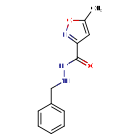
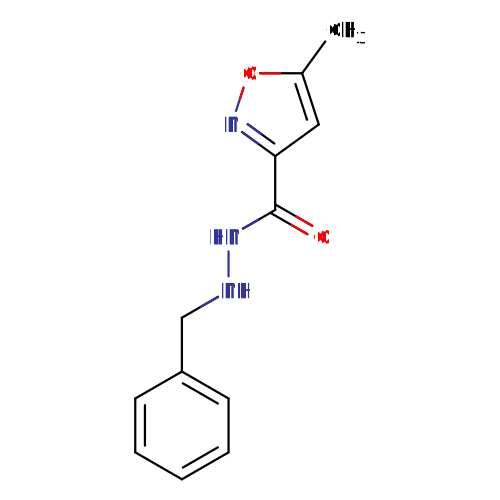
Structure for Isocarboxazid (DB01247)
- Weight
- Average: 231.2505
Monoisotopic: 231.100776675 - Chemical Formula
- C12H13N3O2
- Synonyms
- Isocarboxazid
- Isocarboxazida
- Isocarboxazide
- Isocarboxazidum
- External IDs
- RO 5-0831
- RO-5-0831

Pharmacology
- Indication
Isocarboxazid is indicated for the treatment of the enduring and debilitating symptoms of depression that have not responded to other antidepressant drugs.7 Depression is a common but serious mood disorder. The patient will present changes in its feelings, thoughts, and ability to handle everyday activities. For a mood disorder to be considered as depression, the symptoms should be present for at least two weeks.8
 Reduce drug development failure ratesBuild, train, & validate machine-learning modelswith evidence-based and structured datasets.Build, train, & validate predictive machine-learning models with structured datasets.
- Associated Conditions
Indication Type Indication Combined Product Details Approval Level Age Group Patient Characteristics Dose Form Treatment of Depression •••••••••••• - Contraindications & Blackbox Warnings
 Prevent Adverse Drug Events TodayTap into our Clinical API for life-saving information on contraindications & blackbox warnings, population restrictions, harmful risks, & more.Avoid life-threatening adverse drug events with our Clinical API
- Pharmacodynamics
In vivo and in vitro studies demonstrated isocarboxazid-driven inhibition of MAO in the brain, heart, and liver. The reduced MAO activity, caused by isocarboxazid, results in an increased concentration of serotonin, epinephrine, norepinephrine, and dopamine in storage sites throughout the central nervous system (CNS) and sympathetic nervous system. The increase of one or more monoamines is the basis for the antidepressant activity of MAO inhibitors like isocarboxazid.1
- Mechanism of action
Isocarboxazid works by irreversibly blocking the action of monoamine oxidases (MAO) in the nervous system. MAO subtypes A and B are involved in the metabolism of serotonin and catecholamine neurotransmitters such as epinephrine, norepinephrine, and dopamine. Isocarboxazid, as a nonselective MAO inhibitor, binds irreversibly to monoamine oxidase-A (MAO-A) and monoamine oxidase-B (MAO-B).1 Isocarboxacid, like other monoamine oxidase inhibitors, are unique psychopharmacological agents whose clinical effect is related to the direct action of the monoamine oxidases to transform them into reactive metabolites.5
Target Actions Organism AAmine oxidase [flavin-containing] A inhibitorHumans AAmine oxidase [flavin-containing] B inhibitorHumans - Absorption
The pharmacokinetic profile of isocarboxazid have not been fully studied but it is suggested that its properties should be fairly similar to the ones of some analogs like phenelzine and tranylcypromine. These drugs are readily absorbed by the GI tract, present a low bioavailability and reach peak concentrations in 1-2 hours.5
- Volume of distribution
Not Available
- Protein binding
The pharmacokinetic profile of isocarboxazid have not been fully studied but it is suggested that its properties should be fairly similar to the ones of some analogs like phenelzine and tranylcypromine. These drugs present a very high protein binding percentage.5
- Metabolism
The pharmacokinetic profile of isocarboxazid have not been fully studied but it is suggested that its properties should be fairly similar to the ones of some analogs like phenelzine and tranylcypromine. These drugs are rapidly metabolized by acetylation in the liver.5 As part of the metabolism, hippuric acid is a major metabolite.6
Hover over products below to view reaction partners
- Route of elimination
Most of the eliminated dose is found in the urine, accounting for the 42.5% of the administered dose after 24 hours. From this amount, 75% of the renally eliminated drug is in the form of hippuric acid. Another section of the eliminated dose is observed through the intestinal tract and it accounts for 22% of the administered dose after 24 hours.3
- Half-life
The pharmacokinetic profile of isocarboxazid have not been fully studied but it is suggested that its properties should be fairly similar to the ones of some analogs like phenelzine and tranylcypromine. The isocarboxazid half-life is of little interest as it is an irreversible monoamine oxidase inhibitor.6 These drugs present a very short half-life of 1.5-4 hours due to rapid hepatic metabolism.5
- Clearance
Not Available
- Adverse Effects
 Improve decision support & research outcomesWith structured adverse effects data, including: blackbox warnings, adverse reactions, warning & precautions, & incidence rates. View sample adverse effects data in our new Data Library!Improve decision support & research outcomes with our structured adverse effects data.
- Toxicity
Long-term toxicity studies to evaluate the carcinogenic, mutagenic and fertility impairment potential have not been conducted.Label
- Pathways
- Not Available
- Pharmacogenomic Effects/ADRs
- Not Available
Interactions
- Drug Interactions
- This information should not be interpreted without the help of a healthcare provider. If you believe you are experiencing an interaction, contact a healthcare provider immediately. The absence of an interaction does not necessarily mean no interactions exist.
Drug Interaction Integrate drug-drug
interactions in your software1,2-Benzodiazepine The risk or severity of CNS depression can be increased when Isocarboxazid is combined with 1,2-Benzodiazepine. Abaloparatide Isocarboxazid may increase the orthostatic hypotensive activities of Abaloparatide. Abciximab The risk or severity of bleeding and hemorrhage can be increased when Isocarboxazid is combined with Abciximab. Acarbose Isocarboxazid may increase the hypoglycemic activities of Acarbose. Acebutolol Isocarboxazid may increase the hypotensive activities of Acebutolol. - Food Interactions
- Avoid alcohol. The official product labeling suggests avoiding the use of CNS depressants.
- Avoid tyramine-containing foods and supplements. Foods that contain tyramine include yogurt, aged cheese, ripe bananas, wine, and sourdough bread.
- Limit caffeine intake.
Products
 Drug product information from 10+ global regionsOur datasets provide approved product information including:dosage, form, labeller, route of administration, and marketing period.Access drug product information from over 10 global regions.
- International/Other Brands
- Enerzer (Takeda) / Isocarboxazid (Alliance)
- Brand Name Prescription Products
Name Dosage Strength Route Labeller Marketing Start Marketing End Region Image Marplan Tablet 10 mg/1 Oral Validus Pharmaceuticals LLC 1959-07-01 Not applicable US 
Marplan Tablet 10 mg/1 Oral MediLink A/S 2018-12-20 Not applicable US - Unapproved/Other Products
Name Ingredients Dosage Route Labeller Marketing Start Marketing End Region Image Marplan Isocarboxazid (10 mg/1) Tablet Oral MediLink A/S 2018-12-20 Not applicable US
Categories
- ATC Codes
- N06AF01 — Isocarboxazid
- Drug Categories
- Agents that produce hypertension
- Agents that reduce seizure threshold
- Antidepressive Agents
- Antidepressive Agents Indicated for Depression
- Central Nervous System Agents
- Central Nervous System Depressants
- Drugs causing inadvertant photosensitivity
- Enzyme Inhibitors
- Hypotensive Agents
- Isoxazoles
- Monoamine Oxidase A Inhibitors for interaction with Monoamine Oxidase A substrates
- Monoamine Oxidase Inhibitors
- Monoamine Oxidase Inhibitors, Non-Selective
- Nervous System
- Photosensitizing Agents
- Psychoanaleptics
- Psychotropic Drugs
- Serotonergic Drugs Shown to Increase Risk of Serotonin Syndrome
- Serotonin Agents
- Serotonin Modulators
- Chemical TaxonomyProvided by Classyfire
- Description
- This compound belongs to the class of organic compounds known as benzene and substituted derivatives. These are aromatic compounds containing one monocyclic ring system consisting of benzene.
- Kingdom
- Organic compounds
- Super Class
- Benzenoids
- Class
- Benzene and substituted derivatives
- Sub Class
- Not Available
- Direct Parent
- Benzene and substituted derivatives
- Alternative Parents
- Isoxazoles / Heteroaromatic compounds / Carboxylic acid hydrazides / Oxacyclic compounds / Azacyclic compounds / Organopnictogen compounds / Organooxygen compounds / Organonitrogen compounds / Organic oxides / Hydrocarbon derivatives
- Substituents
- Aromatic heteromonocyclic compound / Azacycle / Azole / Carboxylic acid derivative / Carboxylic acid hydrazide / Heteroaromatic compound / Hydrocarbon derivative / Isoxazole / Monocyclic benzene moiety / Organic nitrogen compound
- Molecular Framework
- Aromatic heteromonocyclic compounds
- External Descriptors
- Not Available
- Affected organisms
- Humans and other mammals
Chemical Identifiers
- UNII
- 34237V843T
- CAS number
- 59-63-2
- InChI Key
- XKFPYPQQHFEXRZ-UHFFFAOYSA-N
- InChI
- InChI=1S/C12H13N3O2/c1-9-7-11(15-17-9)12(16)14-13-8-10-5-3-2-4-6-10/h2-7,13H,8H2,1H3,(H,14,16)
- IUPAC Name
- N'-benzyl-5-methyl-1,2-oxazole-3-carbohydrazide
- SMILES
- CC1=CC(=NO1)C(=O)NNCC1=CC=CC=C1
References
- General References
- Kennedy SH, Piran N, Warsh JJ, Prendergast P, Mainprize E, Whynot C, Garfinkel PE: A trial of isocarboxazid in the treatment of bulimia nervosa. J Clin Psychopharmacol. 1988 Dec;8(6):391-6. [Article]
- BARBER JM, MURPHY FM, CHEESEMAN EA: A clinical trial of isocarboxazid ('marplan') in angina pectoris. Br Heart J. 1962 Mar;24:192-4. [Article]
- SCHWARTZ MA: The metabolism of isocarboxazid (marplan) in the rat. J Pharmacol Exp Ther. 1960 Oct;130:157-65. [Article]
- Institute of Medicine (US) Council on Health Care Technology (1994). Medical Technology Assessment Directory (2nd ed.). American Medical Association Drug Evaluation.
- Owens D. (2010). Companion to psychiatric studies (8th ed.). Elsevier.
- Schatzberg A. and Nemeroff C. (2009). The american psychiatric publishing textbook of psychopharmacology (4th ed.). American Psychiatric Publishing Inc..
- Validus pharma news [Link]
- National Institute of Mental Health [Link]
- External Links
- Human Metabolome Database
- HMDB0015377
- KEGG Drug
- D02580
- PubChem Compound
- 3759
- PubChem Substance
- 46505330
- ChemSpider
- 3628
- BindingDB
- 163692
- 6011
- ChEBI
- 93635
- ChEMBL
- CHEMBL1201168
- ZINC
- ZINC000000001587
- Therapeutic Targets Database
- DAP000577
- PharmGKB
- PA450101
- RxList
- RxList Drug Page
- Drugs.com
- Drugs.com Drug Page
- Wikipedia
- Isocarboxazid
- FDA label
- Download (56.5 KB)
- MSDS
- Download (186 KB)
Clinical Trials
- Clinical Trials
Phase Status Purpose Conditions Count 0 Completed Basic Science Alzheimer's Disease (AD) / Healthy Volunteers (HV) / Molecular Imaging 1
Pharmacoeconomics
- Manufacturers
- Not Available
- Packagers
- Oxford Pharmaceutical Services Inc.
- Validus Pharmaceuticals
- Dosage Forms
Form Route Strength Tablet Oral 10 mg/1 - Prices
Unit description Cost Unit Marplan 10 mg tablet 3.45USD tablet DrugBank does not sell nor buy drugs. Pricing information is supplied for informational purposes only.- Patents
- Not Available
Properties
- State
- Solid
- Experimental Properties
Property Value Source melting point (°C) 105-106 °C 'MSDS' boiling point (°C) 394.5ºC at 760 mmHg 'MSDS' water solubility Very slightly soluble in hot water 'MSDS' logP 1.49 'MSDS' pKa 10.4 SANGSTER (1994) - Predicted Properties
Property Value Source Water Solubility 0.224 mg/mL ALOGPS logP 1.19 ALOGPS logP 1.43 Chemaxon logS -3 ALOGPS pKa (Strongest Acidic) 10.42 Chemaxon pKa (Strongest Basic) 2.83 Chemaxon Physiological Charge 0 Chemaxon Hydrogen Acceptor Count 3 Chemaxon Hydrogen Donor Count 2 Chemaxon Polar Surface Area 67.16 Å2 Chemaxon Rotatable Bond Count 4 Chemaxon Refractivity 74.78 m3·mol-1 Chemaxon Polarizability 24.15 Å3 Chemaxon Number of Rings 2 Chemaxon Bioavailability 1 Chemaxon Rule of Five Yes Chemaxon Ghose Filter Yes Chemaxon Veber's Rule No Chemaxon MDDR-like Rule No Chemaxon - Predicted ADMET Features
Property Value Probability Human Intestinal Absorption + 1.0 Blood Brain Barrier + 0.9783 Caco-2 permeable - 0.5531 P-glycoprotein substrate Non-substrate 0.6987 P-glycoprotein inhibitor I Non-inhibitor 0.9138 P-glycoprotein inhibitor II Non-inhibitor 0.9716 Renal organic cation transporter Non-inhibitor 0.8247 CYP450 2C9 substrate Non-substrate 0.8471 CYP450 2D6 substrate Non-substrate 0.8141 CYP450 3A4 substrate Non-substrate 0.6057 CYP450 1A2 substrate Inhibitor 0.9107 CYP450 2C9 inhibitor Non-inhibitor 0.9071 CYP450 2D6 inhibitor Non-inhibitor 0.9231 CYP450 2C19 inhibitor Non-inhibitor 0.9026 CYP450 3A4 inhibitor Non-inhibitor 0.8885 CYP450 inhibitory promiscuity Low CYP Inhibitory Promiscuity 0.8518 Ames test AMES toxic 0.5973 Carcinogenicity Carcinogens 0.5 Biodegradation Not ready biodegradable 0.9227 Rat acute toxicity 2.9486 LD50, mol/kg Not applicable hERG inhibition (predictor I) Weak inhibitor 0.9209 hERG inhibition (predictor II) Non-inhibitor 0.9069
Spectra
- Mass Spec (NIST)
- Not Available
- Spectra
- Chromatographic Properties
Collision Cross Sections (CCS)
Adduct CCS Value (Å2) Source type Source [M-H]- 161.0686144 predictedDarkChem Lite v0.1.0 [M-H]- 162.1014144 predictedDarkChem Lite v0.1.0 [M-H]- 151.5676 predictedDeepCCS 1.0 (2019) [M+H]+ 161.5387144 predictedDarkChem Lite v0.1.0 [M+H]+ 162.9655144 predictedDarkChem Lite v0.1.0 [M+H]+ 153.9256 predictedDeepCCS 1.0 (2019) [M+Na]+ 160.6831144 predictedDarkChem Lite v0.1.0 [M+Na]+ 162.0924144 predictedDarkChem Lite v0.1.0 [M+Na]+ 160.01875 predictedDeepCCS 1.0 (2019)
Targets

- Kind
- Protein
- Organism
- Humans
- Pharmacological action
- Yes
- Actions
- Inhibitor
- General Function
- Serotonin binding
- Specific Function
- Catalyzes the oxidative deamination of biogenic and xenobiotic amines and has important functions in the metabolism of neuroactive and vasoactive amines in the central nervous system and peripheral...
- Gene Name
- MAOA
- Uniprot ID
- P21397
- Uniprot Name
- Amine oxidase [flavin-containing] A
- Molecular Weight
- 59681.27 Da
References
- Chen X, Ji ZL, Chen YZ: TTD: Therapeutic Target Database. Nucleic Acids Res. 2002 Jan 1;30(1):412-5. [Article]
- Thase ME, Trivedi MH, Rush AJ: MAOIs in the contemporary treatment of depression. Neuropsychopharmacology. 1995 May;12(3):185-219. [Article]
- Kettler R, Da Prada M, Burkard WP: Comparison of monoamine oxidase-A inhibition by moclobemide in vitro and ex vivo in rats. Acta Psychiatr Scand Suppl. 1990;360:101-2. [Article]
- Kind
- Protein
- Organism
- Humans
- Pharmacological action
- Yes
- Actions
- Inhibitor
- General Function
- Primary amine oxidase activity
- Specific Function
- Catalyzes the oxidative deamination of biogenic and xenobiotic amines and has important functions in the metabolism of neuroactive and vasoactive amines in the central nervous system and peripheral...
- Gene Name
- MAOB
- Uniprot ID
- P27338
- Uniprot Name
- Amine oxidase [flavin-containing] B
- Molecular Weight
- 58762.475 Da
References
- Mason ST: Chronic administration of type A monoamine oxidase inhibitors increases duration of thiopentone anaesthesia in the rat. Physiol Behav. 1985 Aug;35(2):201-3. [Article]
- Kettler R, Da Prada M, Burkard WP: Comparison of monoamine oxidase-A inhibition by moclobemide in vitro and ex vivo in rats. Acta Psychiatr Scand Suppl. 1990;360:101-2. [Article]

Drug created at June 13, 2005 13:24 / Updated at February 21, 2021 18:51