Identification
- Summary
Docetaxel is a taxoid antineoplastic agent used in the treatment of various cancers, such as locally advanced or metastatic breast cancer, metastatic prostate cancer, gastric adenocarcinoma, and head and neck cancer.
- Brand Names
- Taxotere
- Generic Name
- Docetaxel
- DrugBank Accession Number
- DB01248
- Background
Docetaxel is a clinically well established anti-mitotic chemotherapy medication used for the treatment of different types of cancer, including breast, ovarian, and non-small cell lung cancer. Docetaxel is a complex diterpenoid molecule and a semisynthetic analogue of paclitaxel.6,7 Docetaxel reversibly binds to microtubulin with high affinity in a 1:1 stoichiometric ratio, allowing it to prevent cell division and promote to cell death.6 Compared to paclitaxel, docetaxel is two times more potent as an inhibitor of microtubule depolymerization. Docetaxel binds to microtubules but does not interact with dimeric tubulin.5
The use of docetaxel may lead to udesired outcomes such as hepatic impairment, hematologic effects, enterocolitis and neutropenic colitis, hypersensitivity reactions, fluid retention, second primary malignancies, embryo-fetal toxicity, and tumor lysis syndrome.7 Docetaxel was approved by the FDA in 1996 and is available in solution for injection for intravenous or parenteral administration.6
- Type
- Small Molecule
- Groups
- Approved, Investigational
- Structure
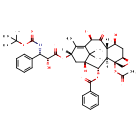
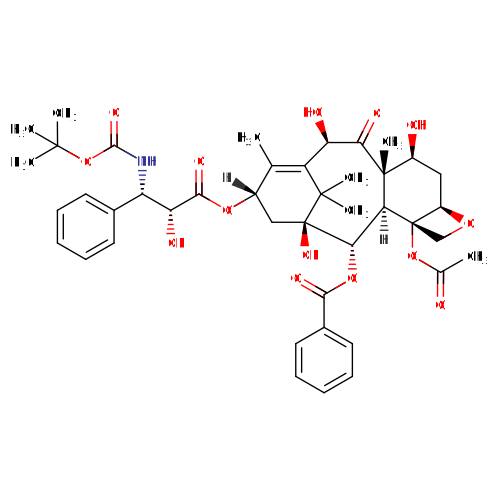
Structure for Docetaxel (DB01248)
- Weight
- Average: 807.8792
Monoisotopic: 807.346605409 - Chemical Formula
- C43H53NO14
- Synonyms
- Docetaxel
- Docetaxel anhydrous
- N-Debenzoyl-N-(tert-butoxycarbonyl)-10-deacetylpaclitaxel
- N-Debenzoyl-N-(tert-butoxycarbonyl)-10-deacetyltaxol
- TXL
- External IDs
- CKD-810
- RP-6976

Pharmacology
- Indication
Docetaxel is indicated as a single agent for the treatment of locally advanced or metastatic breast cancer after chemotherapy failure; and with doxorubicin and cyclophosphamide as adjuvant treatment of operable node-positive BC. It is also indicated as a single agent for locally advanced or metastatic non-small cell lung cancer (NSCLC) after platinum therapy failure; and with cisplatin for unresectable, locally advanced or metastatic untreated NSCLC. For the treatment of metastatic castration-resistant prostate cancer, docetaxel is indicated with prednisone. Docetaxel is also indicated with cisplatin and fluorouracil for untreated, advanced gastric adenocarcinoma, including the gastroesophageal junction, and with cisplatin and fluorouracil for induction treatment of locally advanced squamous cell carcinoma of the head and neck (SCCHN).7
 Reduce drug development failure ratesBuild, train, & validate machine-learning modelswith evidence-based and structured datasets.Build, train, & validate predictive machine-learning models with structured datasets.
- Associated Conditions
Indication Type Indication Combined Product Details Approval Level Age Group Patient Characteristics Dose Form Treatment of Esophageal cancer ••• ••••• Treatment of Locally advanced breast cancer •••••••••••• Treatment of Metastatic bladder cancer ••• ••••• Treatment of Metastatic breast cancer •••••••••••• Used in combination to treat Metastatic hormone refractory prostate cancer Regimen in combination with: Prednisone (DB00635) •••••••••••• - Contraindications & Blackbox Warnings
 Prevent Adverse Drug Events TodayTap into our Clinical API for life-saving information on contraindications & blackbox warnings, population restrictions, harmful risks, & more.Avoid life-threatening adverse drug events with our Clinical API
- Pharmacodynamics
Docetaxel is a taxoid antineoplastic agent. It promotes the assembly of microtubules from tubulin dimers and stabilizes microtubules by preventing depolymerization. This stability results in the inhibition of the normal dynamic reorganization of the microtubule network which is essential for vital interphase and mitotic cellular functions. In addition, docetaxel induces abnormal arrays or "bundles" of microtubules throughout the cell cycle and multiple asters of microtubules during mitosis.4,5
The use of docetaxel may lead to treatment-related deaths in breast cancer and non-small cell lung cancer patients, hepatic impairment, hematologic effects, enterocolitis and neutropenic colitis, hypersensitivity reactions, fluid retention, second primary malignancies, cutaneous reactions, neurologic reactions, eye disorders, asthenia, embryo-fetal toxicity, and tumor lysis syndrome.7
- Mechanism of action
Docetaxel interferes with the normal function of microtubule growth. Whereas drugs like colchicine cause the depolymerization of microtubules in vivo, docetaxel arrests their function by having the opposite effect; it hyper-stabilizes their structure. This destroys the cell's ability to use its cytoskeleton in a flexible manner. Specifically, docetaxel binds to the β-subunit of tubulin. Tubulin is the "building block" of microtubules, and the binding of docetaxel locks these building blocks in place. The resulting microtubule/docetaxel complex does not have the ability to disassemble. This adversely affects cell function because the shortening and lengthening of microtubules (termed dynamic instability) is necessary for their function as a transportation highway for the cell. Chromosomes, for example, rely upon this property of microtubules during mitosis. Further research has indicated that docetaxel induces programmed cell death (apoptosis) in cancer cells by binding to an apoptosis-stopping protein called Bcl-2 (B-cell leukemia 2), thus arresting its function.4,5,7
Target Actions Organism ATubulin beta-1 chain Not Available Humans AMicrotubule-associated protein 2 Not Available Humans AMicrotubule-associated protein 4 Not Available Humans AMicrotubule-associated protein tau Not Available Humans UApoptosis regulator Bcl-2 Not Available Humans UNuclear receptor subfamily 1 group I member 2 binderHumans - Absorption
The pharmacokinetic profile of docetaxel is consistent with a three-compartment model. The initial rapid decline represents the distribution to the peripheral compartments, and the late (terminal) phase is partly due to a relatively slow efflux of docetaxel from the peripheral compartment. The area under the curve (AUC) was dose proportional at doses between 70 mg/m2 and 115 mg/m2 with infusion times of 1 to 2 hours.7,9 In a group of patients with solid tumors given 100 mg/m2 of docetaxel intravenously, the Cmax and AUC were 2.41 μg/mL and 5.93 μg⋅h/mL, respectively.1,3
- Volume of distribution
Docetaxel has a steady-state volume of distribution of 113 L. Its pharmacokinetic profile is consistent with a three-compartment pharmacokinetic model.7,9
- Protein binding
In vitro studies show that 94% of docetaxel is bound to proteins, mainly alpha-1-acid glycoprotein, albumin, and lipoproteins. When measured in cancer patients, docetaxel is 97% bound to plasma protein. Dexamethasone does not affect the protein binding of docetaxel.7,9
- Metabolism
Docetaxel undergoes hepatic metabolism. In vitro drug interaction studies revealed that docetaxel is metabolized by the CYP3A4 isoenzyme.7,9 CYP3A5 also plays a role in the metabolism of this drug.1 In humans, docetaxel is metabolized by CYP3A4/5 into four metabolites: M1, M2, M3 and M4. Docetaxel undergoes hydroxylation of the synthetic isobutoxy side chain, forming metabolite M2. The oxidation of M2 forms an unstable aldehyde that is immediately cyclised into the stereoisomers M1 and M3. M4 is then formed by the oxidation of M1/M3.2
Hover over products below to view reaction partners
- Route of elimination
Docetaxel was eliminated in urine and feces following oxidative metabolism of the tert-butyl ester group, but fecal excretion was the main elimination route. Within 7 days, urinary and fecal excretion accounted for approximately 6% and 75% of the administered radioactivity, respectively. In the first 48 hours, approximately 80% of the radioactivity recovered was excreted in feces. One major and three minor metabolites were excreted at this point, with less than 8% as the unchanged drug.7,9
- Half-life
With plasma sampling up to 8 to 22 days after docetaxel infusion, the terminal elimination half-life was 116 hours.7 Doses between 70 and 115 mg/m2 with infusion times of 1 to 2 hours produce a triphasic elimination profile. The half-life of the alpha, beta, and gamma phases are 4 minutes, 36 minutes, and 11.1 hours, respectively.9
- Clearance
After the administration of 20–115 mg/m2 of intravenous docetaxel to cancer patients, the total body clearance was 21 L/h/m2.9 In patients aged 1 to 20 years with solid tumors that received 55 mg/m2 to 235 mg/m2 of docetaxel in a 1-hour intravenous infusion every 3 weeks, clearance was 17.3 L/h/m2.7
- Adverse Effects
 Improve decision support & research outcomesWith structured adverse effects data, including: blackbox warnings, adverse reactions, warning & precautions, & incidence rates. View sample adverse effects data in our new Data Library!Improve decision support & research outcomes with our structured adverse effects data.
- Toxicity
There is no known antidote for an overdose of docetaxel injection. In case of overdose, patients should be closely monitored in specialized units. Some of the anticipated complications of overdosage include: bone marrow suppression, peripheral neurotoxicity, and mucositis. After an overdose is discovered, patients should receive granulocyte colony-stimulating factor (G-CSF) as soon as possible. Other appropriate symptomatic measures should be taken as needed.7
In two reports of overdose, one patient received 150 mg/m2, and the other received 200 mg/m2 as 1-hour infusions. Both patients experienced severe neutropenia, mild asthenia, cutaneous reactions, and mild paresthesia, and recovered without incident.7 In rats, the oral LD50 of docetaxel is >2000 mg/kg. The intravenous LD50 in mice is 138 mg/kg.8
- Pathways
Pathway Category Docetaxel Action Pathway Drug action - Pharmacogenomic Effects/ADRs
Interacting Gene/Enzyme Allele name Genotype(s) Defining Change(s) Type(s) Description Details Canalicular multispecific organic anion transporter 1 --- (G;G) / (C;G) G Allele ADR Directly Studied Patients with this polymorphism in ABCC2 are at a higher risk of experiencing drug-induced leukopenia and drug-induced neutropenia when treated with docetaxel. Details
Interactions
- Drug Interactions
- This information should not be interpreted without the help of a healthcare provider. If you believe you are experiencing an interaction, contact a healthcare provider immediately. The absence of an interaction does not necessarily mean no interactions exist.
Drug Interaction Integrate drug-drug
interactions in your softwareAbametapir The serum concentration of Docetaxel can be increased when it is combined with Abametapir. Abatacept The metabolism of Docetaxel can be increased when combined with Abatacept. Abciximab The risk or severity of bleeding can be increased when Abciximab is combined with Docetaxel. Abemaciclib The serum concentration of Abemaciclib can be increased when it is combined with Docetaxel. Acalabrutinib The metabolism of Docetaxel can be decreased when combined with Acalabrutinib. - Food Interactions
- Avoid grapefruit products. Grapefruit inhibits CYP3A4 metabolism, which may increase the serum levels of docetaxel.
- Exercise caution with St. John's Wort. This herb induces CYP3A4 metabolism, which may reduce the serum concentration of docetaxel.
Products
 Drug product information from 10+ global regionsOur datasets provide approved product information including:dosage, form, labeller, route of administration, and marketing period.Access drug product information from over 10 global regions.
- Product Ingredients
Ingredient UNII CAS InChI Key Docetaxel trihydrate 15H5577CQD 148408-66-6 XCDIRYDKECHIPE-QHEQPUDQSA-N - Brand Name Prescription Products
Name Dosage Strength Route Labeller Marketing Start Marketing End Region Image Act Docetaxel 40 mg/ml Solution 80 mg / 2 mL Intravenous Actavis Pharma Company Not applicable Not applicable Canada 
Act Docetaxel 40 mg/ml Solution 20 mg / 0.5 mL Intravenous Actavis Pharma Company Not applicable Not applicable Canada Docefrez Kit 20 mg/0.8mL Intravenous Sun Pharma Global FZE 2011-05-03 2016-12-31 US 
Docefrez Kit 80 mg/4mL Intravenous Sun Pharma Global FZE 2011-05-03 2011-08-10 US Docetaxel Injection, solution 20 mg/1mL Intravenous Sun Pharmaceutical Industries, Inc. 2020-11-26 Not applicable US - Generic Prescription Products
Name Dosage Strength Route Labeller Marketing Start Marketing End Region Image Docetaxel Injection, solution 10 mg/1mL Intravenous Ingenus Pharmaceuticals, LLC 2017-09-07 2021-04-30 US Docetaxel Injection, solution, concentrate 20 mg/1mL Intravenous X-GEN Pharmaceuticals, Inc. 2017-04-17 Not applicable US Docetaxel Injection, solution 10 mg/1mL Intravenous Mylan Institutional LLC 2018-09-28 Not applicable US Docetaxel Injection 20 mg/1mL Intravenous Amneal Pharmaceuticals LLC 2018-01-19 Not applicable US Docetaxel Injection 10 mg/1mL Intravenous Xiromed Llc 2021-10-25 Not applicable US
Categories
- ATC Codes
- L01CD02 — Docetaxel
- Drug Categories
- Agents Causing Muscle Toxicity
- Antimitotic Agents
- Antineoplastic Agents
- Antineoplastic and Immunomodulating Agents
- BCRP/ABCG2 Substrates
- Cardiotoxic antineoplastic agents
- Cyclodecanes
- Cycloparaffins
- Cytochrome P-450 CYP3A Inhibitors
- Cytochrome P-450 CYP3A Substrates
- Cytochrome P-450 CYP3A4 Inhibitors
- Cytochrome P-450 CYP3A4 Inhibitors (strength unknown)
- Cytochrome P-450 CYP3A4 Substrates
- Cytochrome P-450 CYP3A4 Substrates with a Narrow Therapeutic Index
- Cytochrome P-450 CYP3A5 Substrates
- Cytochrome P-450 CYP3A5 Substrates with a Narrow Therapeutic Index
- Cytochrome P-450 CYP3A7 Substrates
- Cytochrome P-450 CYP3A7 Substrates with a Narrow Therapeutic Index
- Cytochrome P-450 Enzyme Inhibitors
- Cytochrome P-450 Substrates
- Diterpenes
- Hepatotoxic Agents
- Immunosuppressive Agents
- Microtubule Inhibition
- Microtubule Inhibitors
- Mitosis Modulators
- Myelosuppressive Agents
- Narrow Therapeutic Index Drugs
- OATP1B3 substrates
- P-glycoprotein substrates
- P-glycoprotein substrates with a Narrow Therapeutic Index
- Taxane Derivatives
- Taxoids
- Terpenes
- Tubulin Modulators
- Chemical TaxonomyProvided by Classyfire
- Description
- This compound belongs to the class of organic compounds known as taxanes and derivatives. These are diterpenoids with a structure based either on the taxane skeleton, or a derivative thereof. In term of phytochemistry, several derivatives of the taxane skeleton exist: 2(3->20)-abeotaxane, 3,11-cyclotaxane, 11(15->1),11(10->9)-abeotaxane, 3,8-seco-taxane, and 11(15->1)-abeotaxane, among others. More complex skeletons have been found recently, which include the taxane-derived [3.3.3] propellane ring system.
- Kingdom
- Organic compounds
- Super Class
- Lipids and lipid-like molecules
- Class
- Prenol lipids
- Sub Class
- Diterpenoids
- Direct Parent
- Taxanes and derivatives
- Alternative Parents
- Benzoic acid esters / Tricarboxylic acids and derivatives / Benzoyl derivatives / Fatty acid esters / Monosaccharides / Tertiary alcohols / Carbamate esters / Secondary alcohols / Oxetanes / Carboxylic acid esters show 10 more
- Substituents
- Alcohol / Aromatic heteropolycyclic compound / Benzenoid / Benzoate ester / Benzoic acid or derivatives / Benzoyl / Carbamic acid ester / Carbonic acid derivative / Carbonyl group / Carboxylic acid derivative show 24 more
- Molecular Framework
- Aromatic heteropolycyclic compounds
- External Descriptors
- tetracyclic diterpenoid (CHEBI:4672)
- Affected organisms
- Humans and other mammals
Chemical Identifiers
- UNII
- 699121PHCA
- CAS number
- 114977-28-5
- InChI Key
- ZDZOTLJHXYCWBA-VCVYQWHSSA-N
- InChI
- InChI=1S/C43H53NO14/c1-22-26(55-37(51)32(48)30(24-15-11-9-12-16-24)44-38(52)58-39(3,4)5)20-43(53)35(56-36(50)25-17-13-10-14-18-25)33-41(8,34(49)31(47)29(22)40(43,6)7)27(46)19-28-42(33,21-54-28)57-23(2)45/h9-18,26-28,30-33,35,46-48,53H,19-21H2,1-8H3,(H,44,52)/t26-,27-,28+,30-,31+,32+,33-,35-,41+,42-,43+/m0/s1
- IUPAC Name
- (1S,2S,3R,4S,7R,9S,10S,12R,15S)-4-(acetyloxy)-15-{[(2R,3S)-3-{[(tert-butoxy)carbonyl]amino}-2-hydroxy-3-phenylpropanoyl]oxy}-1,9,12-trihydroxy-10,14,17,17-tetramethyl-11-oxo-6-oxatetracyclo[11.3.1.0^{3,10}.0^{4,7}]heptadec-13-en-2-yl benzoate
- SMILES
- [H][C@@]1(C[C@@]2(O)[C@@H](OC(=O)C3=CC=CC=C3)[C@]3([H])[C@@]4(CO[C@@H]4C[C@H](O)[C@@]3(C)C(=O)[C@H](O)C(=C1C)C2(C)C)OC(C)=O)OC(=O)[C@H](O)[C@@H](NC(=O)OC(C)(C)C)C1=CC=CC=C1
References
- Synthesis Reference
Nicholas J. Sisti, Charles S. Swindell, "Method for docetaxel synthesis." U.S. Patent US5688977, issued September, 1991.
US5688977- General References
- Kenmotsu H, Tanigawara Y: Pharmacokinetics, dynamics and toxicity of docetaxel: Why the Japanese dose differs from the Western dose. Cancer Sci. 2015 May;106(5):497-504. doi: 10.1111/cas.12647. Epub 2015 Mar 25. [Article]
- Hendrikx JJ, Dubbelman AC, Rosing H, Schinkel AH, Schellens JH, Beijnen JH: Quantification of docetaxel and its metabolites in human plasma by liquid chromatography/tandem mass spectrometry. Rapid Commun Mass Spectrom. 2013 Sep 15;27(17):1925-34. doi: 10.1002/rcm.6654. [Article]
- Extra JM, Rousseau F, Bruno R, Clavel M, Le Bail N, Marty M: Phase I and pharmacokinetic study of Taxotere (RP 56976; NSC 628503) given as a short intravenous infusion. Cancer Res. 1993 Mar 1;53(5):1037-42. [Article]
- Pienta KJ: Preclinical mechanisms of action of docetaxel and docetaxel combinations in prostate cancer. Semin Oncol. 2001 Aug;28(4 Suppl 15):3-7. doi: 10.1016/s0093-7754(01)90148-4. [Article]
- Bissery MC, Nohynek G, Sanderink GJ, Lavelle F: Docetaxel (Taxotere): a review of preclinical and clinical experience. Part I: Preclinical experience. Anticancer Drugs. 1995 Jun;6(3):339-55, 363-8. doi: 10.1097/00001813-199506000-00001. [Article]
- Authors unspecified: Docetaxel. . [Article]
- FDA Approved Drug Products: DOCETAXEL injection for intravenous use (May 2023) [Link]
- Pfizer: Docetaxel Injection SDS [Link]
- FDA Approved Drug Products: TAXOTERE (docetaxel) for injection concentrate (December 1999) [Link]
- External Links
- Human Metabolome Database
- HMDB0015378
- KEGG Drug
- D02165
- KEGG Compound
- C11231
- PubChem Compound
- 148124
- PubChem Substance
- 46506766
- ChemSpider
- 130581
- BindingDB
- 36351
- 1299922
- ChEBI
- 4672
- ChEMBL
- CHEMBL92
- ZINC
- ZINC000085537053
- Therapeutic Targets Database
- DAP000590
- PharmGKB
- PA449383
- PDBe Ligand
- TXL
- RxList
- RxList Drug Page
- Drugs.com
- Drugs.com Drug Page
- Wikipedia
- Docetaxel
- PDB Entries
- 1ia0 / 1tub
Clinical Trials
- Clinical Trials
Phase Status Purpose Conditions Count 4 Completed Diagnostic Breast Cancer 1 4 Completed Health Services Research Breast Cancer 1 4 Completed Treatment Breast Cancer 5 4 Completed Treatment Breast Cancer / Female Breast Cancer 1 4 Completed Treatment Breast Neoplasms 1
Pharmacoeconomics
- Manufacturers
- Not Available
- Packagers
- Sanofi-Aventis Inc.
- Dosage Forms
Form Route Strength Injection Parenteral 20 mg Solution Intramuscular 21.338 mg Solution Intravenous 20.00 mg Injection Solution / drops Ophthalmic 2 MG/ML Injection, solution, concentrate Intravenous 40 mg/ml Solution Intravenous 20.000 mg Solution 20 mg/1ml Injection, solution, concentrate Intravenous 20.0 mg/ml Injection Intravenous 40 mg/ml Kit Intravenous 20 mg/0.8mL Kit Intravenous 80 mg/4mL Powder Intravenous Injection Intravenous 20 mg/ml Injection Intravenous 80 mg/ml Injection Intravenous 10 mg/1mL Injection Intravenous 160 mg/8mL Injection Intravenous 80 mg/4mL Injection, solution Intravenous 10 mg/1mL Injection, solution Intravenous 160 mg/8mL Injection, solution Intravenous 20 mg/1mL Injection, solution Intravenous 80 mg/4mL Injection, solution, concentrate Intravenous 160 mg/8mL Injection, solution, concentrate Intravenous 20 mg/2mL Injection, solution, concentrate Intravenous 20 mg/1mL Injection, solution, concentrate Intravenous 200 mg/20mL Injection, solution, concentrate Intravenous 80 mg/8mL Injection; injection, solution, concentrate Intravenous 40 mg/mL Kit Intravenous 40 mg/1mL Solution Intravenous 20 mg/1mL Solution Intravenous 21.340 mg Solution, concentrate Intravenous 120 mg Solution, concentrate Intravenous 160 mg Injection, powder, lyophilized, for solution Intravenous 20 mg Solution, concentrate Intravenous 20 mg Solution, concentrate Intravenous 80 mg Solution, concentrate Intravenous 8000000 mg Injection, solution, concentrate Intravenous; Parenteral 160 MG/8ML Injection, solution, concentrate Intravenous; Parenteral 20 MG/1ML Injection, solution, concentrate Intravenous; Parenteral 80 MG/4ML Solution Intravenous 20 mg/ml Injection, solution Intravenous 160 mg/16mL Injection, solution Intravenous 20 mg/2mL Injection, solution Intravenous 80 mg/8mL Solution Intravenous 10 mg / mL Solution Intravenous 20 mg / mL Solution Intravenous 20 mg / 0.72 mL Solution Intravenous 80 mg / 2.88 mL Injection, solution, concentrate Intravenous 180 MG/9ML Injection Parenteral 20 mg/ml Injection, solution, concentrate Intravenous 200 mg/10ml Injection Intravenous 20 mg/1mL Injection, solution, concentrate Intravenous; Parenteral 10 MG/ML Injection, powder, lyophilized, for solution Parenteral 80 mg Injection, solution, concentrate Intravenous 10 mg/ml Injection, powder, lyophilized, for solution Parenteral 20 mg Injection, solution, concentrate Intravenous 20 mg/ml Injection, solution, concentrate Intravenous 20 mg/0.72ml Injection, solution, concentrate Intravenous 80 mg/2.88ml Solution Intravenous 160 mg Solution Intravenous 40 mg Injection, solution, concentrate 160 mg/8ml Injection, powder, lyophilized, for solution Intravenous 80 mg Solution Intravenous 20 mg/0.5ml Solution Intravenous 80 mg/2ml Injection Intravenous 20 mg/0.5ml Injection Intravenous 80 mg/2ml Injection, solution, concentrate Intravenous Injection, solution, concentrate Intravenous 160 mg Injection, solution, concentrate Intravenous 20 mg Injection, solution, concentrate Intravenous 40 mg Injection, solution, concentrate Intravenous 40 mg/2ml Injection, solution, concentrate Solution Intravenous 160 mg/16ml Solution Intravenous 20 mg/2ml Solution Intravenous 80 mg/8mL Injection, solution, concentrate Intravenous 10 mg/1ml Solution Intravenous 20.00 mg Solution Intravenous 80.0000 mg Injection, powder, for solution Intravenous 20 mg Solution Parenteral 80 mg Injection Intravenous Solution 40 mg/1ml Solution Intravenous 80 mg Solution, concentrate Intravenous 40.0 mg/ml Solution Intravenous 20 mg Kit; solution Intravenous 20 mg / 0.5 mL Kit; solution Intravenous 80 mg / 2 mL Injection, solution, concentrate Intravenous 160 mg/16ml Solution Intravenous 160 mg / 8 mL Solution Intravenous 80 mg / 4 mL Solution Intravenous 20.000 mg/ml Injection, solution, concentrate Intravenous; Parenteral 20 MG/ML Injection, solution, concentrate Intravenous 120 MG/6ML Injection, solution, concentrate Intravenous 140 MG/7ML Solution Intravenous 10 mg Injection, solution, concentrate Intravenous 20 mg/0.5ml Injection, solution, concentrate Intravenous 40 mg/1mL Injection, solution, concentrate Intravenous 80 mg/2ml Injection, solution, concentrate Intravenous 80 MG Injection, solution, concentrate Intravenous 80 mg/4mL Injection, solution, concentrate Intravenous; Parenteral 20 MG Solution Intravenous 20 mg / 0.5 mL Solution Intravenous 80 mg / 2 mL Injection Intravenous 20 mg Injection, solution Intravenous Injection Intravenous 80 mg Solution Intravenous 80 mg/4ml Solution Solution Parenteral 20.000 mg Injection, solution Intravenous 40 mg/1ml - Prices
Unit description Cost Unit Taxotere 20 mg/0.5 ml vial 477.37USD vial DrugBank does not sell nor buy drugs. Pricing information is supplied for informational purposes only.- Patents
Patent Number Pediatric Extension Approved Expires (estimated) Region US5438072 No 1995-08-01 2014-05-22 US US4814470 No 1989-03-21 2010-05-14 US CA2150576 No 2005-06-21 2013-11-26 Canada CA2149055 No 2003-01-07 2013-11-08 Canada US8940786 No 2015-01-27 2033-09-30 US US9308195 No 2016-04-12 2033-09-30 US US9763880 No 2017-09-19 2033-09-30 US US10842770 No 2020-11-24 2031-08-04 US US10398785 No 2019-09-03 2036-03-14 US
Properties
- State
- Solid
- Experimental Properties
Property Value Source melting point (°C) 232 °C PhysProp water solubility Insoluble FDA label logP 2.4 Not Available - Predicted Properties
Property Value Source Water Solubility 0.0127 mg/mL ALOGPS logP 2.59 ALOGPS logP 2.92 Chemaxon logS -4.8 ALOGPS pKa (Strongest Acidic) 11.9 Chemaxon pKa (Strongest Basic) -3 Chemaxon Physiological Charge 0 Chemaxon Hydrogen Acceptor Count 10 Chemaxon Hydrogen Donor Count 5 Chemaxon Polar Surface Area 224.45 Å2 Chemaxon Rotatable Bond Count 13 Chemaxon Refractivity 203.9 m3·mol-1 Chemaxon Polarizability 82.15 Å3 Chemaxon Number of Rings 6 Chemaxon Bioavailability 0 Chemaxon Rule of Five No Chemaxon Ghose Filter No Chemaxon Veber's Rule No Chemaxon MDDR-like Rule Yes Chemaxon - Predicted ADMET Features
Property Value Probability Human Intestinal Absorption + 0.9743 Blood Brain Barrier - 0.9659 Caco-2 permeable - 0.8252 P-glycoprotein substrate Substrate 0.8259 P-glycoprotein inhibitor I Inhibitor 0.644 P-glycoprotein inhibitor II Non-inhibitor 0.5139 Renal organic cation transporter Non-inhibitor 0.9393 CYP450 2C9 substrate Non-substrate 0.816 CYP450 2D6 substrate Non-substrate 0.8828 CYP450 3A4 substrate Substrate 0.7119 CYP450 1A2 substrate Non-inhibitor 0.8299 CYP450 2C9 inhibitor Non-inhibitor 0.8737 CYP450 2D6 inhibitor Non-inhibitor 0.8972 CYP450 2C19 inhibitor Non-inhibitor 0.8421 CYP450 3A4 inhibitor Non-inhibitor 0.7324 CYP450 inhibitory promiscuity Low CYP Inhibitory Promiscuity 0.8776 Ames test Non AMES toxic 0.8382 Carcinogenicity Non-carcinogens 0.9133 Biodegradation Not ready biodegradable 0.9934 Rat acute toxicity 2.5741 LD50, mol/kg Not applicable hERG inhibition (predictor I) Weak inhibitor 0.9907 hERG inhibition (predictor II) Non-inhibitor 0.7905
Spectra
- Mass Spec (NIST)
- Not Available
- Spectra
- Chromatographic Properties
Collision Cross Sections (CCS)
Adduct CCS Value (Å2) Source type Source [M-H]- 272.1359646 predictedDarkChem Lite v0.1.0 [M-H]- 284.5782646 predictedDarkChem Lite v0.1.0 [M-H]- 259.6681 predictedDeepCCS 1.0 (2019) [M-H]- 272.1359646 predictedDarkChem Lite v0.1.0 [M-H]- 284.5782646 predictedDarkChem Lite v0.1.0 [M-H]- 259.6681 predictedDeepCCS 1.0 (2019) [M+H]+ 268.2214646 predictedDarkChem Lite v0.1.0 [M+H]+ 284.5180646 predictedDarkChem Lite v0.1.0 [M+H]+ 261.53506 predictedDeepCCS 1.0 (2019) [M+H]+ 268.2214646 predictedDarkChem Lite v0.1.0 [M+H]+ 284.5180646 predictedDarkChem Lite v0.1.0 [M+H]+ 261.53506 predictedDeepCCS 1.0 (2019) [M+Na]+ 268.5515646 predictedDarkChem Lite v0.1.0 [M+Na]+ 282.6669646 predictedDarkChem Lite v0.1.0 [M+Na]+ 267.50125 predictedDeepCCS 1.0 (2019) [M+Na]+ 268.5515646 predictedDarkChem Lite v0.1.0 [M+Na]+ 282.6669646 predictedDarkChem Lite v0.1.0 [M+Na]+ 267.50125 predictedDeepCCS 1.0 (2019)
Targets

- Kind
- Protein
- Organism
- Humans
- Pharmacological action
- Yes
- General Function
- Structural constituent of cytoskeleton
- Specific Function
- Tubulin is the major constituent of microtubules. It binds two moles of GTP, one at an exchangeable site on the beta chain and one at a non-exchangeable site on the alpha chain (By similarity).
- Gene Name
- TUBB1
- Uniprot ID
- Q9H4B7
- Uniprot Name
- Tubulin beta-1 chain
- Molecular Weight
- 50326.56 Da
References
- Gligorov J, Lotz JP: Preclinical pharmacology of the taxanes: implications of the differences. Oncologist. 2004;9 Suppl 2:3-8. [Article]
- Matesanz R, Barasoain I, Yang CG, Wang L, Li X, de Ines C, Coderch C, Gago F, Barbero JJ, Andreu JM, Fang WS, Diaz JF: Optimization of taxane binding to microtubules: binding affinity dissection and incremental construction of a high-affinity analog of paclitaxel. Chem Biol. 2008 Jun;15(6):573-85. doi: 10.1016/j.chembiol.2008.05.008. [Article]
- Snyder JP, Nettles JH, Cornett B, Downing KH, Nogales E: The binding conformation of Taxol in beta-tubulin: a model based on electron crystallographic density. Proc Natl Acad Sci U S A. 2001 Apr 24;98(9):5312-6. Epub 2001 Apr 17. [Article]
- Belani CP, Eckardt J: Development of docetaxel in advanced non-small-cell lung cancer. Lung Cancer. 2004 Dec;46 Suppl 2:S3-11. [Article]
- Kind
- Protein
- Organism
- Humans
- Pharmacological action
- Yes
- General Function
- Structural molecule activity
- Specific Function
- The exact function of MAP2 is unknown but MAPs may stabilize the microtubules against depolymerization. They also seem to have a stiffening effect on microtubules.
- Gene Name
- MAP2
- Uniprot ID
- P11137
- Uniprot Name
- Microtubule-associated protein 2
- Molecular Weight
- 199524.51 Da
References
- McGrogan BT, Gilmartin B, Carney DN, McCann A: Taxanes, microtubules and chemoresistant breast cancer. Biochim Biophys Acta. 2008 Apr;1785(2):96-132. Epub 2007 Nov 12. [Article]
- Kind
- Protein
- Organism
- Humans
- Pharmacological action
- Yes
- General Function
- Structural molecule activity
- Specific Function
- Non-neuronal microtubule-associated protein. Promotes microtubule assembly.
- Gene Name
- MAP4
- Uniprot ID
- P27816
- Uniprot Name
- Microtubule-associated protein 4
- Molecular Weight
- 121003.805 Da
References
- McGrogan BT, Gilmartin B, Carney DN, McCann A: Taxanes, microtubules and chemoresistant breast cancer. Biochim Biophys Acta. 2008 Apr;1785(2):96-132. Epub 2007 Nov 12. [Article]
- Kind
- Protein
- Organism
- Humans
- Pharmacological action
- Yes
- General Function
- Structural constituent of cytoskeleton
- Specific Function
- Promotes microtubule assembly and stability, and might be involved in the establishment and maintenance of neuronal polarity. The C-terminus binds axonal microtubules while the N-terminus binds neu...
- Gene Name
- MAPT
- Uniprot ID
- P10636
- Uniprot Name
- Microtubule-associated protein tau
- Molecular Weight
- 78927.025 Da
References
- McGrogan BT, Gilmartin B, Carney DN, McCann A: Taxanes, microtubules and chemoresistant breast cancer. Biochim Biophys Acta. 2008 Apr;1785(2):96-132. Epub 2007 Nov 12. [Article]
- Kind
- Protein
- Organism
- Humans
- Pharmacological action
- Unknown
- General Function
- Ubiquitin protein ligase binding
- Specific Function
- Suppresses apoptosis in a variety of cell systems including factor-dependent lymphohematopoietic and neural cells. Regulates cell death by controlling the mitochondrial membrane permeability. Appea...
- Gene Name
- BCL2
- Uniprot ID
- P10415
- Uniprot Name
- Apoptosis regulator Bcl-2
- Molecular Weight
- 26265.66 Da
References
- Gligorov J, Lotz JP: Preclinical pharmacology of the taxanes: implications of the differences. Oncologist. 2004;9 Suppl 2:3-8. [Article]
- Marshall J, Chen H, Yang D, Figueira M, Bouker KB, Ling Y, Lippman M, Frankel SR, Hayes DF: A phase I trial of a Bcl-2 antisense (G3139) and weekly docetaxel in patients with advanced breast cancer and other solid tumors. Ann Oncol. 2004 Aug;15(8):1274-83. [Article]
- Inoue Y, Gika M, Abiko T, Oyama T, Saitoh Y, Yamazaki H, Nakamura M, Abe Y, Kawamura M, Kobayashi K: Bcl-2 overexpression enhances in vitro sensitivity against docetaxel in non-small cell lung cancer. Oncol Rep. 2005 Feb;13(2):259-64. [Article]
- Petrylak DP: Chemotherapy for androgen-independent prostate cancer. World J Urol. 2005 Feb;23(1):10-3. Epub 2005 Feb 1. [Article]
- Miyoshi Y, Uemura H, Kubota Y: [Treatment of androgen-independent hormone refractory prostate cancer using docetaxel]. Nihon Rinsho. 2005 Feb;63(2):298-302. [Article]
- Magi-Galluzzi C, Zhou M, Reuther AM, Dreicer R, Klein EA: Neoadjuvant docetaxel treatment for locally advanced prostate cancer: a clinicopathologic study. Cancer. 2007 Sep 15;110(6):1248-54. [Article]
- Kind
- Protein
- Organism
- Humans
- Pharmacological action
- Unknown
- Actions
- Binder
- General Function
- Zinc ion binding
- Specific Function
- Nuclear receptor that binds and is activated by variety of endogenous and xenobiotic compounds. Transcription factor that activates the transcription of multiple genes involved in the metabolism an...
- Gene Name
- NR1I2
- Uniprot ID
- O75469
- Uniprot Name
- Nuclear receptor subfamily 1 group I member 2
- Molecular Weight
- 49761.245 Da
References
- Ikezoe T, Hisatake Y, Takeuchi T, Ohtsuki Y, Yang Y, Said JW, Taguchi H, Koeffler HP: HIV-1 protease inhibitor, ritonavir: a potent inhibitor of CYP3A4, enhanced the anticancer effects of docetaxel in androgen-independent prostate cancer cells in vitro and in vivo. Cancer Res. 2004 Oct 15;64(20):7426-31. [Article]
Enzymes
- Kind
- Protein
- Organism
- Humans
- Pharmacological action
- Unknown
- Actions
- SubstrateInhibitor
- General Function
- Vitamin d3 25-hydroxylase activity
- Specific Function
- Cytochromes P450 are a group of heme-thiolate monooxygenases. In liver microsomes, this enzyme is involved in an NADPH-dependent electron transport pathway. It performs a variety of oxidation react...
- Gene Name
- CYP3A4
- Uniprot ID
- P08684
- Uniprot Name
- Cytochrome P450 3A4
- Molecular Weight
- 57342.67 Da
References
- Baumhakel M, Kasel D, Rao-Schymanski RA, Bocker R, Beckurts KT, Zaigler M, Barthold D, Fuhr U: Screening for inhibitory effects of antineoplastic agents on CYP3A4 in human liver microsomes. Int J Clin Pharmacol Ther. 2001 Dec;39(12):517-28. [Article]
- Clarke SJ, Rivory LP: Clinical pharmacokinetics of docetaxel. Clin Pharmacokinet. 1999 Feb;36(2):99-114. doi: 10.2165/00003088-199936020-00002. [Article]
- Hirth J, Watkins PB, Strawderman M, Schott A, Bruno R, Baker LH: The effect of an individual's cytochrome CYP3A4 activity on docetaxel clearance. Clin Cancer Res. 2000 Apr;6(4):1255-8. [Article]
- Flockhart Table of Drug Interactions [Link]
- Kind
- Protein
- Organism
- Humans
- Pharmacological action
- Unknown
- Actions
- Substrate
- General Function
- Oxygen binding
- Specific Function
- Cytochromes P450 are a group of heme-thiolate monooxygenases. In liver microsomes, this enzyme is involved in an NADPH-dependent electron transport pathway. It oxidizes a variety of structurally un...
- Gene Name
- CYP3A5
- Uniprot ID
- P20815
- Uniprot Name
- Cytochrome P450 3A5
- Molecular Weight
- 57108.065 Da
References
- Flockhart Table of Drug Interactions [Link]
- Kind
- Protein
- Organism
- Humans
- Pharmacological action
- Unknown
- Actions
- Substrate
- General Function
- Oxygen binding
- Specific Function
- Cytochromes P450 are a group of heme-thiolate monooxygenases. In liver microsomes, this enzyme is involved in an NADPH-dependent electron transport pathway. It oxidizes a variety of structurally un...
- Gene Name
- CYP3A7
- Uniprot ID
- P24462
- Uniprot Name
- Cytochrome P450 3A7
- Molecular Weight
- 57525.03 Da
References
- Flockhart Table of Drug Interactions [Link]
- Kind
- Protein
- Organism
- Humans
- Pharmacological action
- Unknown
- Actions
- Binder
- General Function
- Oxygen binding
- Specific Function
- Cytochromes P450 are a group of heme-thiolate monooxygenases. In liver microsomes, this enzyme is involved in an NADPH-dependent electron transport pathway. It oxidizes a variety of structurally un...
- Gene Name
- CYP1B1
- Uniprot ID
- Q16678
- Uniprot Name
- Cytochrome P450 1B1
- Molecular Weight
- 60845.33 Da
References
- Bournique B, Lemarie A: Docetaxel (Taxotere) is not metabolized by recombinant human CYP1B1 in vitro, but acts as an effector of this isozyme. Drug Metab Dispos. 2002 Nov;30(11):1149-52. doi: 10.1124/dmd.30.11.1149. [Article]
Transporters
- Kind
- Protein
- Organism
- Humans
- Pharmacological action
- Unknown
- Actions
- Substrate
- General Function
- Xenobiotic-transporting atpase activity
- Specific Function
- Energy-dependent efflux pump responsible for decreased drug accumulation in multidrug-resistant cells.
- Gene Name
- ABCB1
- Uniprot ID
- P08183
- Uniprot Name
- Multidrug resistance protein 1
- Molecular Weight
- 141477.255 Da
References
- Wils P, Phung-Ba V, Warnery A, Lechardeur D, Raeissi S, Hidalgo IJ, Scherman D: Polarized transport of docetaxel and vinblastine mediated by P-glycoprotein in human intestinal epithelial cell monolayers. Biochem Pharmacol. 1994 Oct 7;48(7):1528-30. [Article]
- Shirakawa K, Takara K, Tanigawara Y, Aoyama N, Kasuga M, Komada F, Sakaeda T, Okumura K: Interaction of docetaxel ("Taxotere") with human P-glycoprotein. Jpn J Cancer Res. 1999 Dec;90(12):1380-6. [Article]
- Kind
- Protein
- Organism
- Humans
- Pharmacological action
- Unknown
- Actions
- Substrate
- General Function
- Atpase activity, coupled to transmembrane movement of substances
- Specific Function
- ATP-dependent transporter probably involved in cellular detoxification through lipophilic anion extrusion.
- Gene Name
- ABCC10
- Uniprot ID
- Q5T3U5
- Uniprot Name
- Multidrug resistance-associated protein 7
- Molecular Weight
- 161627.375 Da
References
- Hopper-Borge E, Xu X, Shen T, Shi Z, Chen ZS, Kruh GD: Human multidrug resistance protein 7 (ABCC10) is a resistance factor for nucleoside analogues and epothilone B. Cancer Res. 2009 Jan 1;69(1):178-84. doi: 10.1158/0008-5472.CAN-08-1420. [Article]
- Kind
- Protein
- Organism
- Humans
- Pharmacological action
- Unknown
- Actions
- Substrate
- General Function
- Sodium-independent organic anion transmembrane transporter activity
- Specific Function
- Mediates the Na(+)-independent uptake of organic anions such as 17-beta-glucuronosyl estradiol, taurocholate, triiodothyronine (T3), leukotriene C4, dehydroepiandrosterone sulfate (DHEAS), methotre...
- Gene Name
- SLCO1B3
- Uniprot ID
- Q9NPD5
- Uniprot Name
- Solute carrier organic anion transporter family member 1B3
- Molecular Weight
- 77402.175 Da
References
- Baker SD, Verweij J, Cusatis GA, van Schaik RH, Marsh S, Orwick SJ, Franke RM, Hu S, Schuetz EG, Lamba V, Messersmith WA, Wolff AC, Carducci MA, Sparreboom A: Pharmacogenetic pathway analysis of docetaxel elimination. Clin Pharmacol Ther. 2009 Feb;85(2):155-63. doi: 10.1038/clpt.2008.95. Epub 2008 May 28. [Article]
- Kind
- Protein
- Organism
- Humans
- Pharmacological action
- Unknown
- Actions
- Substrate
- General Function
- Sodium-independent organic anion transmembrane transporter activity
- Specific Function
- Mediates sodium-independent multispecific organic anion transport. Transport of prostaglandin E2, prostaglandin F2, tetracycline, bumetanide, estrone sulfate, glutarate, dehydroepiandrosterone sulf...
- Gene Name
- SLC22A7
- Uniprot ID
- Q9Y694
- Uniprot Name
- Solute carrier family 22 member 7
- Molecular Weight
- 60025.025 Da
References
- Kobayashi Y, Ohshiro N, Sakai R, Ohbayashi M, Kohyama N, Yamamoto T: Transport mechanism and substrate specificity of human organic anion transporter 2 (hOat2 [SLC22A7]). J Pharm Pharmacol. 2005 May;57(5):573-8. [Article]
- Kind
- Protein
- Organism
- Humans
- Pharmacological action
- Unknown
- Actions
- Substrate
- General Function
- Xenobiotic-transporting atpase activity
- Specific Function
- High-capacity urate exporter functioning in both renal and extrarenal urate excretion. Plays a role in porphyrin homeostasis as it is able to mediates the export of protoporhyrin IX (PPIX) both fro...
- Gene Name
- ABCG2
- Uniprot ID
- Q9UNQ0
- Uniprot Name
- ATP-binding cassette sub-family G member 2
- Molecular Weight
- 72313.47 Da
References
- Fellner S, Bauer B, Miller DS, Schaffrik M, Fankhanel M, Spruss T, Bernhardt G, Graeff C, Farber L, Gschaidmeier H, Buschauer A, Fricker G: Transport of paclitaxel (Taxol) across the blood-brain barrier in vitro and in vivo. J Clin Invest. 2002 Nov;110(9):1309-18. [Article]
- Nakanishi T, Ross DD: Breast cancer resistance protein (BCRP/ABCG2): its role in multidrug resistance and regulation of its gene expression. Chin J Cancer. 2012 Feb;31(2):73-99. doi: 10.5732/cjc.011.10320. Epub 2011 Nov 18. [Article]
- Kind
- Protein
- Organism
- Humans
- Pharmacological action
- Unknown
- Actions
- Substrate
- General Function
- Organic anion transmembrane transporter activity
- Specific Function
- Mediates hepatobiliary excretion of numerous organic anions. May function as a cellular cisplatin transporter.
- Gene Name
- ABCC2
- Uniprot ID
- Q92887
- Uniprot Name
- Canalicular multispecific organic anion transporter 1
- Molecular Weight
- 174205.64 Da
References
- Fellner S, Bauer B, Miller DS, Schaffrik M, Fankhanel M, Spruss T, Bernhardt G, Graeff C, Farber L, Gschaidmeier H, Buschauer A, Fricker G: Transport of paclitaxel (Taxol) across the blood-brain barrier in vitro and in vivo. J Clin Invest. 2002 Nov;110(9):1309-18. [Article]
- Kind
- Protein
- Organism
- Humans
- Pharmacological action
- Unknown
- Actions
- Substrate
- General Function
- Transporter activity
- Specific Function
- Mediates export of organic anions and drugs from the cytoplasm. Mediates ATP-dependent transport of glutathione and glutathione conjugates, leukotriene C4, estradiol-17-beta-o-glucuronide, methotre...
- Gene Name
- ABCC1
- Uniprot ID
- P33527
- Uniprot Name
- Multidrug resistance-associated protein 1
- Molecular Weight
- 171589.5 Da
References
- Fellner S, Bauer B, Miller DS, Schaffrik M, Fankhanel M, Spruss T, Bernhardt G, Graeff C, Farber L, Gschaidmeier H, Buschauer A, Fricker G: Transport of paclitaxel (Taxol) across the blood-brain barrier in vitro and in vivo. J Clin Invest. 2002 Nov;110(9):1309-18. [Article]

Drug created at June 13, 2005 13:24 / Updated at April 27, 2024 09:44