Identification
- Summary
Dasatinib is a tyrosine kinase inhibitor used for the treatment of Philadelphia chromosome-positive acute lymphoblastic leukemia or chronic myeloid leukemia.
- Brand Names
- Sprycel
- Generic Name
- Dasatinib
- DrugBank Accession Number
- DB01254
- Background
Dasatinib is an orally available multikinase inhibitor indicated for the treatment of Philadelphia chromosome (Ph)-positive leukemias.1,7 Ph is a chromosomal abnormality found in patients with chronic myelogenous leukemia (CML) and acute lymphocytic leukemia (ALL), where the ABL tyrosine kinase and the breakpoint cluster region (BCR) gene transcribe the chimeric protein BCR-ABL. BCR-ABL is associated with the uncontrolled activity of the ABL tyrosine kinase and is involved in the pathogenesis of CML and 15-30% of ALL cases.5,6 Dasatinib also inhibits a spectrum of kinases involved in cancer, including several SRC-family kinases.5
Unlike imatinib, another tyrosine kinase used for the treatment of CML and Ph-positive ALL, dasatinib inhibits the active and inactive conformations of the ABL kinase domain.2,5 Also, mutations in the kinase domain of BCR-ABL may lead to relapse during imatinib treatment. Since dasatinib does not interact with some of the residues involved in those mutations, the use of this drug represents a therapeutic alternative for patients with cancers that have developed imatinib-resistance.2 The use of dasatinib was first approved by the FDA in 2006.7,9
- Type
- Small Molecule
- Groups
- Approved, Investigational
- Structure
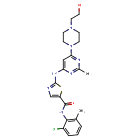
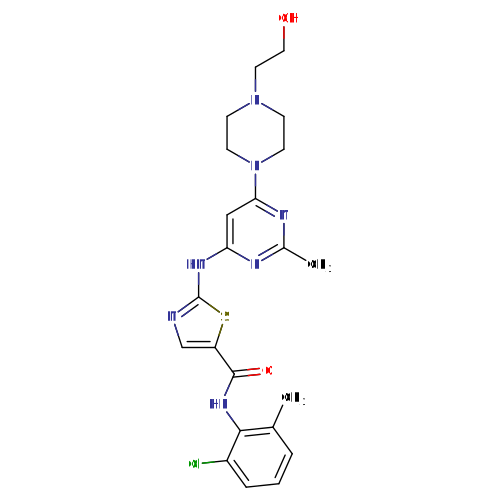
Structure for Dasatinib (DB01254)
- Weight
- Average: 488.006
Monoisotopic: 487.155721508 - Chemical Formula
- C22H26ClN7O2S
- Synonyms
- Anh. dasatinib
- Anhydrous dasatinib
- BMS dasatinib
- Dasatinib
- Dasatinib (anh.)
- dasatinib (anhydrous)
- Dasatinib anhydrous
- Dasatinibum
- N-(2-CHLORO-6-methylphenyl)-2-({6-[4-(2-hydroxyethyl)piperazin-1-yl]-2-methylpyrimidin-4-yl}amino)-1,3-thiazole-5-carboxamide
- External IDs
- BMS-354825

Pharmacology
- Indication
Dasatinib is indicated for the treatment of newly diagnosed adults with Philadelphia chromosome-positive (Ph+) chronic myeloid leukemia (CML) in chronic phase, as well as adults with chronic, accelerated, or myeloid or lymphoid blast phase Ph+ CML with resistance or intolerance to prior therapy including imatinib, and adults with Philadelphia chromosome-positive acute lymphoblastic leukemia (Ph+ ALL) with resistance or intolerance to prior therapy. Dasatinib is also indicated for the treatment of pediatric patients 1 year of age and older with Ph+ CML in chronic phase or newly diagnosed Ph+ ALL in combination with chemotherapy.7
 Reduce drug development failure ratesBuild, train, & validate machine-learning modelswith evidence-based and structured datasets.Build, train, & validate predictive machine-learning models with structured datasets.
- Associated Conditions
Indication Type Indication Combined Product Details Approval Level Age Group Patient Characteristics Dose Form Treatment of Accelerated phase chronic myologenic leukemia •••••••••••• ••••• •••••••••• •• ••••••••••• •• ••••• ••••••• Adjunct therapy in treatment of Acute lymphoblastic leukemia •••••••••••• ••••••••• ••••• ••••••••• Treatment of Acute lymphoblastic leukemia •••••••••••• ••••• •••••••••• •• ••••••••••• •• ••••• ••••••• Treatment of Chronic phase chronic myeloid leukemia •••••••••••• ••••• •••••••••• •• ••••••••••• •• ••••• ••••••• Treatment of Myeloid leukemia, chronic, chronic phase •••••••••••• ••••••••• - Contraindications & Blackbox Warnings
 Prevent Adverse Drug Events TodayTap into our Clinical API for life-saving information on contraindications & blackbox warnings, population restrictions, harmful risks, & more.Avoid life-threatening adverse drug events with our Clinical API
- Pharmacodynamics
Dasatinib is an orally available small-molecule multikinase inhibitor.5 During clinical trials, less than 1% of patients treated with dasatinib had QTc prolongation as an adverse reaction, and 1% experienced a QTcF higher than 500 ms. The use of dasatinib is also associated with myelosuppression, bleeding-related events, fluid retention, cardiovascular toxicity, pulmonary arterial hypertension, severe dermatologic reactions, tumor lysis syndrome and hepatotoxicity. It may also cause embryo-fetal toxicity and lead to adverse reactions associated with bone growth and development in pediatric patients.7
- Mechanism of action
Dasatinib is a tyrosine kinase inhibitor with several targets. At nanomolar concentrations, it inhibits BCR-ABL, SRC family (SRC, LCK, YES, FYN), c-KIT, EPHA2, and PDGFRβ.1,5,7 In patients with chronic myeloid leukemia (CML), the tyrosine kinase activity of BCR-ABL is deregulated, leading to the growth, proliferation and survival of cancerous hematopoietic cells. Dasatinib binds to the active and inactive conformation of the ABL kinase domain with a higher affinity than imatinib.6 In chronic myeloid leukemia (CML) and acute lymphoblastic leukemia (ALL) cell lines overexpressing BCR-ABL, dasatinib inhibits cell growth. Also, dasatinib has in vitro activity against leukemic cell lines that are either sensitive or resistant to imatinib.7 It has been suggested that dasatinib is able to overcome imatinib resistance caused by BCR-ABL kinase domain mutations because it does not require interaction with some of the residues involved in those mutations.6,7
- Absorption
Dasatinib has a dose-proportional pharmacokinetic profile and a linear elimination between 15 mg/day (0.15 times the lowest approved recommended dose) and 240 mg/day (1.7 times the highest approved recommended dose). At 100 mg once a day, dasatinib has a Cmax and AUC of 82.2 ng/mL and 397 ng/mL*hr, respectively. In healthy adult subjects given dasatinib as dispersed tablets in juice, the adjusted geometric mean ratio compared to intact tablets was 0.97 for Cmax, and 0.84 for AUC. The Tmax of dasatinib is between 0.5 and 6 hours following oral administration. Following a single dose of 100 mg, a high-fat meal increases the AUC of dasatinib by 14%.7
- Volume of distribution
Dasatinib has an apparent volume of distribution of 2505 L.7
- Protein binding
In vitro, the binding of dasatinib to human plasma proteins is approximately 96%.7
- Metabolism
In humans, dasatinib is mainly metabolized by CYP3A4, although flavin-containing monooxygenase 3 (FMO3) and uridine diphosphate-glucuronosyltransferase (UGT) enzymes are also involved in the formation of dasatinib metabolites.7 Five pharmacologically active dasatinib metabolites have been identified: M4, M5, M6, M20 and M24. M4, M20, and M24 are mainly generated by CYP3A4, M5 is generated by FMO3, and M6 is generated by a cytosolic oxidoreductase.3,4 M4 is equipotent to dasatinib and represents approximately 5% of the AUC. However, it is unlikely to play a major role in the observed pharmacology of dasatinib.3,7 M5 and M6 are more than 10 times less active than dasatinib and are considered minor circulating metabolites.3
Hover over products below to view reaction partners
- Route of elimination
Dasatinib is mainly eliminated via feces. Within 10 days, 4% of dasatinib is recovered in urine, while 85% is recovered in feces. Approximately 0.1% and 19% of the administered dasatinib dose was recovered unchanged in urine and feces, respectively, and the rest was recovered as metabolites.7
- Half-life
The terminal half-life of dasatinib is 3-5 hours.7
- Clearance
The clearance of dasatinib does not vary over time. Dasatinib has an apparent oral clearance of 363.8 L/hr.7
- Adverse Effects
 Improve decision support & research outcomesWith structured adverse effects data, including: blackbox warnings, adverse reactions, warning & precautions, & incidence rates. View sample adverse effects data in our new Data Library!Improve decision support & research outcomes with our structured adverse effects data.
- Toxicity
Overdose cases with dasatinib occurred in isolated cases during clinical studies. Patients that received 280 mg of dasatinib per day for 1 week developed severe myelosuppression and bleeding. Since dasatinib is associated with severe myelosuppression, patients that ingest more than the recommended dosage should be monitored closely for myelosuppression and receive appropriate supportive treatment.7
Acute overdose in animals was associated with cardiotoxicity. In rodents, ventricular necrosis and valvular/ventricular/atrial hemorrhage were detected at single doses higher than or equal to 100 mg/kg (600 mg/m2). In monkeys receiving single doses higher than or equal to 10 mg/kg (120 mg/m2), there was a tendency for increased systolic and diastolic blood pressure.7 In rats, the oral LD50 of dasatinib is 50-100 mg/kg, and in monkeys, it is 25-45 mg/kg.8
- Pathways
Pathway Category Dasatinib Inhibition of BCR-ABL Drug action - Pharmacogenomic Effects/ADRs
- Not Available
Interactions
- Drug Interactions
- This information should not be interpreted without the help of a healthcare provider. If you believe you are experiencing an interaction, contact a healthcare provider immediately. The absence of an interaction does not necessarily mean no interactions exist.
Drug Interaction Integrate drug-drug
interactions in your softwareAbametapir The serum concentration of Dasatinib can be increased when it is combined with Abametapir. Abatacept The metabolism of Dasatinib can be increased when combined with Abatacept. Abciximab The risk or severity of bleeding and hemorrhage can be increased when Dasatinib is combined with Abciximab. Abemaciclib The metabolism of Abemaciclib can be decreased when combined with Dasatinib. Abiraterone The serum concentration of Dasatinib can be increased when it is combined with Abiraterone. - Food Interactions
- Avoid grapefruit products. Grapefruit may reduce the CYP3A4 metabolism of dasatinib, increasing its serum levels.
- Avoid St. John's Wort. This herb induces CYP3A metabolism and may reduce serum levels of dasatinib.
- Take with or without food. High fat meals may increase the AUC of dasatinib by to 14%; however, the product label recommends taking dasatinib with or without food.
Products
 Drug product information from 10+ global regionsOur datasets provide approved product information including:dosage, form, labeller, route of administration, and marketing period.Access drug product information from over 10 global regions.
- Product Ingredients
Ingredient UNII CAS InChI Key Dasatinib monohydrate RBZ1571X5H 863127-77-9 XHXFZZNHDVTMLI-UHFFFAOYSA-N Dasatinib monolauryl sulfate FY77PS0C4O 2398469-56-0 SWMPKFFMQAIAEW-UHFFFAOYSA-N - Brand Name Prescription Products
Name Dosage Strength Route Labeller Marketing Start Marketing End Region Image Dasatinib Accord Tablet, film coated 70 mg Oral Accord Healthcare S.L.U. 2022-05-04 2023-03-30 EU 
Dasatinib Accord Tablet, film coated 100 mg Oral Accord Healthcare S.L.U. 2022-05-04 2023-03-30 EU Dasatinib Accord Tablet, film coated 50 mg Oral Accord Healthcare S.L.U. 2022-05-04 2023-03-30 EU Dasatinib Accord Tablet, film coated 100 mg Oral Accord Healthcare S.L.U. 2022-05-04 2023-03-30 EU Dasatinib Accord Tablet, film coated 20 mg Oral Accord Healthcare S.L.U. 2022-05-04 2023-03-30 EU - Generic Prescription Products
Name Dosage Strength Route Labeller Marketing Start Marketing End Region Image Apo-dasatinib Tablet 100 mg Oral Apotex Corporation 2020-01-06 Not applicable Canada 
Apo-dasatinib Tablet 80 mg Oral Apotex Corporation 2020-01-06 Not applicable Canada Apo-dasatinib Tablet 50 mg Oral Apotex Corporation 2020-01-06 Not applicable Canada Apo-dasatinib Tablet 70 mg Oral Apotex Corporation 2020-01-06 Not applicable Canada Apo-dasatinib Tablet 20 mg Oral Apotex Corporation 2020-01-06 Not applicable Canada
Categories
- ATC Codes
- L01EA02 — Dasatinib
- Drug Categories
- Antineoplastic Agents
- Antineoplastic and Immunomodulating Agents
- Bcr-Abl Tyrosine Kinase Inhibitors
- BCRP/ABCG2 Inhibitors
- BCRP/ABCG2 Substrates
- Cytochrome P-450 CYP1A2 Substrates
- Cytochrome P-450 CYP1A2 Substrates with a Narrow Therapeutic Index
- Cytochrome P-450 CYP3A Inhibitors
- Cytochrome P-450 CYP3A Substrates
- Cytochrome P-450 CYP3A4 Inhibitors
- Cytochrome P-450 CYP3A4 Inhibitors (weak)
- Cytochrome P-450 CYP3A4 Substrates
- Cytochrome P-450 CYP3A4 Substrates with a Narrow Therapeutic Index
- Cytochrome P-450 CYP3A5 Substrates
- Cytochrome P-450 CYP3A5 Substrates with a Narrow Therapeutic Index
- Cytochrome P-450 Enzyme Inhibitors
- Cytochrome P-450 Substrates
- Drugs causing inadvertant photosensitivity
- Enzyme Inhibitors
- Immunosuppressive Agents
- Kinase Inhibitor
- Myelosuppressive Agents
- Narrow Therapeutic Index Drugs
- P-glycoprotein inhibitors
- P-glycoprotein substrates
- P-glycoprotein substrates with a Narrow Therapeutic Index
- Photosensitizing Agents
- Potential QTc-Prolonging Agents
- Protein Kinase Inhibitors
- Pyrimidines
- QTc Prolonging Agents
- Sulfur Compounds
- Thiazoles
- Tyrosine Kinase Inhibitors
- Chemical TaxonomyProvided by Classyfire
- Description
- This compound belongs to the class of organic compounds known as aromatic anilides. These are aromatic compounds containing an anilide group in which the carboxamide group is substituted with an aromatic group. They have the general structure RNC(=O)R', where R= benzene, and R = aryl group.
- Kingdom
- Organic compounds
- Super Class
- Benzenoids
- Class
- Benzene and substituted derivatives
- Sub Class
- Anilides
- Direct Parent
- Aromatic anilides
- Alternative Parents
- N-arylpiperazines / Thiazolecarboxamides / 2-heteroaryl carboxamides / Dialkylarylamines / 2,5-disubstituted thiazoles / Toluenes / Aminopyrimidines and derivatives / Chlorobenzenes / N-alkylpiperazines / 2-amino-1,3-thiazoles show 14 more
- Substituents
- 1,2-aminoalcohol / 1,3-thiazol-2-amine / 1,4-diazinane / 2,5-disubstituted 1,3-thiazole / 2-heteroaryl carboxamide / Alcohol / Alkanolamine / Amine / Amino acid or derivatives / Aminopyrimidine show 36 more
- Molecular Framework
- Aromatic heteromonocyclic compounds
- External Descriptors
- tertiary amino compound, N-arylpiperazine, N-(2-hydroxyethyl)piperazine, aminopyrimidine, monocarboxylic acid amide, organochlorine compound, 1,3-thiazole, secondary amino compound (CHEBI:49375)
- Affected organisms
- Humans and other mammals
Chemical Identifiers
- UNII
- X78UG0A0RN
- CAS number
- 302962-49-8
- InChI Key
- ZBNZXTGUTAYRHI-UHFFFAOYSA-N
- InChI
- InChI=1S/C22H26ClN7O2S/c1-14-4-3-5-16(23)20(14)28-21(32)17-13-24-22(33-17)27-18-12-19(26-15(2)25-18)30-8-6-29(7-9-30)10-11-31/h3-5,12-13,31H,6-11H2,1-2H3,(H,28,32)(H,24,25,26,27)
- IUPAC Name
- N-(2-chloro-6-methylphenyl)-2-({6-[4-(2-hydroxyethyl)piperazin-1-yl]-2-methylpyrimidin-4-yl}amino)-1,3-thiazole-5-carboxamide
- SMILES
- CC1=NC(NC2=NC=C(S2)C(=O)NC2=C(C)C=CC=C2Cl)=CC(=N1)N1CCN(CCO)CC1
References
- Synthesis Reference
- US6596746
- General References
- Das J, Chen P, Norris D, Padmanabha R, Lin J, Moquin RV, Shen Z, Cook LS, Doweyko AM, Pitt S, Pang S, Shen DR, Fang Q, de Fex HF, McIntyre KW, Shuster DJ, Gillooly KM, Behnia K, Schieven GL, Wityak J, Barrish JC: 2-aminothiazole as a novel kinase inhibitor template. Structure-activity relationship studies toward the discovery of N-(2-chloro-6-methylphenyl)-2-[[6-[4-(2-hydroxyethyl)-1- piperazinyl)]-2-methyl-4-pyrimidinyl]amino)]-1,3-thiazole-5-carboxamide (dasatinib, BMS-354825) as a potent pan-Src kinase inhibitor. J Med Chem. 2006 Nov 16;49(23):6819-32. [Article]
- Talpaz M, Shah NP, Kantarjian H, Donato N, Nicoll J, Paquette R, Cortes J, O'Brien S, Nicaise C, Bleickardt E, Blackwood-Chirchir MA, Iyer V, Chen TT, Huang F, Decillis AP, Sawyers CL: Dasatinib in imatinib-resistant Philadelphia chromosome-positive leukemias. N Engl J Med. 2006 Jun 15;354(24):2531-41. [Article]
- Christopher LJ, Cui D, Wu C, Luo R, Manning JA, Bonacorsi SJ, Lago M, Allentoff A, Lee FY, McCann B, Galbraith S, Reitberg DP, He K, Barros A Jr, Blackwood-Chirchir A, Humphreys WG, Iyer RA: Metabolism and disposition of dasatinib after oral administration to humans. Drug Metab Dispos. 2008 Jul;36(7):1357-64. doi: 10.1124/dmd.107.018267. Epub 2008 Apr 17. [Article]
- Wang L, Christopher LJ, Cui D, Li W, Iyer R, Humphreys WG, Zhang D: Identification of the human enzymes involved in the oxidative metabolism of dasatinib: an effective approach for determining metabolite formation kinetics. Drug Metab Dispos. 2008 Sep;36(9):1828-39. doi: 10.1124/dmd.107.020255. Epub 2008 Jun 12. [Article]
- Lindauer M, Hochhaus A: Dasatinib. Recent Results Cancer Res. 2010;184:83-102. doi: 10.1007/978-3-642-01222-8_7. [Article]
- Aguilera DG, Tsimberidou AM: Dasatinib in chronic myeloid leukemia: a review. Ther Clin Risk Manag. 2009 Apr;5(2):281-9. Epub 2009 May 4. [Article]
- FDA Approved Drug Products: Sprycel (dasatinib) tablets for oral use (February 2023) [Link]
- Bristol Myers Squibb: Dasatinib SDS [Link]
- FDA Approved Drug Products: Sprycel (dasatinib) tablets for oral use (June 2006) [Link]
- External Links
- Human Metabolome Database
- HMDB0015384
- KEGG Drug
- D03658
- PubChem Compound
- 3062316
- PubChem Substance
- 46505143
- ChemSpider
- 2323020
- BindingDB
- 13216
- 1546019
- ChEBI
- 49375
- ChEMBL
- CHEMBL1421
- ZINC
- ZINC000003986735
- Therapeutic Targets Database
- DAP000004
- PharmGKB
- PA162372878
- PDBe Ligand
- 1N1
- RxList
- RxList Drug Page
- Drugs.com
- Drugs.com Drug Page
- Wikipedia
- Dasatinib
- PDB Entries
- 2gqg / 2y6o / 2zva / 3g5d / 3lfa / 3oht / 3qlg / 3sxr / 4qms / 4xey … show 11 more
Clinical Trials
- Clinical Trials
Phase Status Purpose Conditions Count 4 Completed Treatment Chronic Phase Chronic Myeloid Leukemia 2 4 Not Yet Recruiting Treatment Multiple Myeloma (MM) 1 4 Recruiting Treatment BCR-ABL / Chronic Myeloid Leukemia (CML) / Dasatinib 1 4 Recruiting Treatment Chronic Myelogenous Leukemia (CML) / Philadelphia Chromosome Positive (Ph+) Chronic Myeloid Leukemia (CML) 1 4 Recruiting Treatment Chronic Phase Chronic Myeloid Leukemia 1
Pharmacoeconomics
- Manufacturers
- Not Available
- Packagers
- Bristol-Myers Squibb Co.
- E.R. Squibb and Sons LLC
- Physicians Total Care Inc.
- Dosage Forms
Form Route Strength Tablet Oral 100 mg Tablet Oral 20 mg Tablet Oral 50 mg Tablet Oral 70 mg Tablet Oral 80 mg Tablet, film coated Oral 111 MG Tablet, film coated Oral 16 MG Tablet, film coated Oral 40 MG Tablet, film coated Oral 55 MG Tablet, film coated Oral 63 MG Tablet, film coated Oral 79 MG Tablet, film coated Oral 140 MG Tablet, film coated Oral 50 MG Tablet, film coated Oral Powder, for suspension Oral 10 MG/ML Tablet Oral 100 mg/1 Tablet Oral 140 mg/1 Tablet Oral 20 mg/1 Tablet Oral 20.000 mg Tablet Oral 50 mg/1 Tablet Oral 70 mg/1 Tablet Oral 80 mg/1 Tablet, coated Oral 100 mg Tablet, coated Oral 140 mg Tablet, coated Oral 14000000 mg Tablet, coated Oral 20 mg Tablet, coated Oral 50 mg Tablet, coated Oral 70 mg Tablet, film coated Oral 20 mg Tablet, film coated Oral 50 mg per tab Tablet, film coated Oral 70 mg Tablet, film coated Oral 100 mg Tablet, film coated Oral 80 mg Tablet Oral 140 mg - Prices
Unit description Cost Unit Sprycel 100 mg tablet 278.24USD tablet Sprycel 50 mg tablet 139.12USD tablet Sprycel 70 mg tablet 139.12USD tablet Sprycel 20 mg tablet 69.56USD tablet DrugBank does not sell nor buy drugs. Pricing information is supplied for informational purposes only.- Patents
Patent Number Pediatric Extension Approved Expires (estimated) Region CA2366932 No 2009-08-25 2020-04-12 Canada US6596746 Yes 2003-07-22 2020-12-28 US 
US7125875 Yes 2006-10-24 2020-10-13 US US7153856 Yes 2006-12-26 2020-10-28 US US7491725 Yes 2009-02-17 2026-09-28 US US8680103 Yes 2014-03-25 2025-08-04 US US11324745 No 2021-01-22 2041-01-22 US US11202778 No 2021-01-22 2041-01-22 US US11298356 No 2021-01-22 2041-01-22 US
Properties
- State
- Solid
- Experimental Properties
Property Value Source melting point (°C) 280-286 °C FDA label logP 1.8 Not Available - Predicted Properties
Property Value Source Water Solubility 0.0128 mg/mL ALOGPS logP 2.77 ALOGPS logP 4.01 Chemaxon logS -4.6 ALOGPS pKa (Strongest Acidic) 10.99 Chemaxon pKa (Strongest Basic) 7.19 Chemaxon Physiological Charge 1 Chemaxon Hydrogen Acceptor Count 8 Chemaxon Hydrogen Donor Count 3 Chemaxon Polar Surface Area 106.51 Å2 Chemaxon Rotatable Bond Count 7 Chemaxon Refractivity 133.08 m3·mol-1 Chemaxon Polarizability 50.39 Å3 Chemaxon Number of Rings 4 Chemaxon Bioavailability 1 Chemaxon Rule of Five Yes Chemaxon Ghose Filter No Chemaxon Veber's Rule No Chemaxon MDDR-like Rule Yes Chemaxon - Predicted ADMET Features
Property Value Probability Human Intestinal Absorption + 0.9852 Blood Brain Barrier - 0.507 Caco-2 permeable - 0.5638 P-glycoprotein substrate Substrate 0.6562 P-glycoprotein inhibitor I Inhibitor 0.5371 P-glycoprotein inhibitor II Inhibitor 0.5425 Renal organic cation transporter Non-inhibitor 0.7288 CYP450 2C9 substrate Non-substrate 0.7061 CYP450 2D6 substrate Non-substrate 0.8152 CYP450 3A4 substrate Substrate 0.5704 CYP450 1A2 substrate Non-inhibitor 0.5612 CYP450 2C9 inhibitor Inhibitor 0.8008 CYP450 2D6 inhibitor Non-inhibitor 0.8358 CYP450 2C19 inhibitor Inhibitor 0.574 CYP450 3A4 inhibitor Inhibitor 0.7295 CYP450 inhibitory promiscuity High CYP Inhibitory Promiscuity 0.8343 Ames test Non AMES toxic 0.7185 Carcinogenicity Non-carcinogens 0.7308 Biodegradation Not ready biodegradable 0.9863 Rat acute toxicity 2.4772 LD50, mol/kg Not applicable hERG inhibition (predictor I) Weak inhibitor 0.8538 hERG inhibition (predictor II) Inhibitor 0.718
Spectra
- Mass Spec (NIST)
- Not Available
- Spectra
- Chromatographic Properties
Collision Cross Sections (CCS)
Adduct CCS Value (Å2) Source type Source [M-H]- 234.1197177 predictedDarkChem Lite v0.1.0 [M-H]- 199.48085 predictedDeepCCS 1.0 (2019) [M+H]+ 235.0765177 predictedDarkChem Lite v0.1.0 [M+H]+ 201.83887 predictedDeepCCS 1.0 (2019) [M+Na]+ 233.6422177 predictedDarkChem Lite v0.1.0 [M+Na]+ 208.10109 predictedDeepCCS 1.0 (2019)
Targets

- Kind
- Protein
- Organism
- Humans
- Pharmacological action
- Yes
- Actions
- InhibitorMultitarget
- General Function
- Syntaxin binding
- Specific Function
- Non-receptor tyrosine-protein kinase that plays a role in many key processes linked to cell growth and survival such as cytoskeleton remodeling in response to extracellular stimuli, cell motility a...
- Gene Name
- ABL1
- Uniprot ID
- P00519
- Uniprot Name
- Tyrosine-protein kinase ABL1
- Molecular Weight
- 122871.435 Da
References
- Piccaluga PP, Paolini S, Martinelli G: Tyrosine kinase inhibitors for the treatment of Philadelphia chromosome-positive adult acute lymphoblastic leukemia. Cancer. 2007 Sep 15;110(6):1178-86. [Article]
- Das J, Chen P, Norris D, Padmanabha R, Lin J, Moquin RV, Shen Z, Cook LS, Doweyko AM, Pitt S, Pang S, Shen DR, Fang Q, de Fex HF, McIntyre KW, Shuster DJ, Gillooly KM, Behnia K, Schieven GL, Wityak J, Barrish JC: 2-aminothiazole as a novel kinase inhibitor template. Structure-activity relationship studies toward the discovery of N-(2-chloro-6-methylphenyl)-2-[[6-[4-(2-hydroxyethyl)-1- piperazinyl)]-2-methyl-4-pyrimidinyl]amino)]-1,3-thiazole-5-carboxamide (dasatinib, BMS-354825) as a potent pan-Src kinase inhibitor. J Med Chem. 2006 Nov 16;49(23):6819-32. [Article]
- Talpaz M, Shah NP, Kantarjian H, Donato N, Nicoll J, Paquette R, Cortes J, O'Brien S, Nicaise C, Bleickardt E, Blackwood-Chirchir MA, Iyer V, Chen TT, Huang F, Decillis AP, Sawyers CL: Dasatinib in imatinib-resistant Philadelphia chromosome-positive leukemias. N Engl J Med. 2006 Jun 15;354(24):2531-41. [Article]
- FDA Approved Drug Products: Sprycel (dasatinib) tablets for oral use (June 2006) [Link]
- Kind
- Protein
- Organism
- Humans
- Pharmacological action
- Yes
- Actions
- InhibitorMultitarget
- General Function
- Sh3/sh2 adaptor activity
- Specific Function
- Non-receptor protein tyrosine kinase which is activated following engagement of many different classes of cellular receptors including immune response receptors, integrins and other adhesion recept...
- Gene Name
- SRC
- Uniprot ID
- P12931
- Uniprot Name
- Proto-oncogene tyrosine-protein kinase Src
- Molecular Weight
- 59834.295 Da
References
- Kamath AV, Wang J, Lee FY, Marathe PH: Preclinical pharmacokinetics and in vitro metabolism of dasatinib (BMS-354825): a potent oral multi-targeted kinase inhibitor against SRC and BCR-ABL. Cancer Chemother Pharmacol. 2008 Mar;61(3):365-76. Epub 2007 Apr 11. [Article]
- Serrels A, Macpherson IR, Evans TR, Lee FY, Clark EA, Sansom OJ, Ashton GH, Frame MC, Brunton VG: Identification of potential biomarkers for measuring inhibition of Src kinase activity in colon cancer cells following treatment with dasatinib. Mol Cancer Ther. 2006 Dec;5(12):3014-22. Epub 2006 Dec 5. [Article]
- Quintas-Cardama A, Kantarjian H, Cortes J: Targeting ABL and SRC kinases in chronic myeloid leukemia: experience with dasatinib. Future Oncol. 2006 Dec;2(6):655-65. [Article]
- Schittenhelm MM, Shiraga S, Schroeder A, Corbin AS, Griffith D, Lee FY, Bokemeyer C, Deininger MW, Druker BJ, Heinrich MC: Dasatinib (BMS-354825), a dual SRC/ABL kinase inhibitor, inhibits the kinase activity of wild-type, juxtamembrane, and activation loop mutant KIT isoforms associated with human malignancies. Cancer Res. 2006 Jan 1;66(1):473-81. [Article]
- Nam S, Kim D, Cheng JQ, Zhang S, Lee JH, Buettner R, Mirosevich J, Lee FY, Jove R: Action of the Src family kinase inhibitor, dasatinib (BMS-354825), on human prostate cancer cells. Cancer Res. 2005 Oct 15;65(20):9185-9. [Article]
- FDA Approved Drug Products: Sprycel (dasatinib) tablets for oral use (June 2006) [Link]
- Kind
- Protein
- Organism
- Humans
- Pharmacological action
- Yes
- Actions
- Antagonist
- General Function
- Transmembrane receptor protein tyrosine kinase activity
- Specific Function
- Receptor tyrosine kinase which binds promiscuously membrane-bound ephrin-A family ligands residing on adjacent cells, leading to contact-dependent bidirectional signaling into neighboring cells. Th...
- Gene Name
- EPHA2
- Uniprot ID
- P29317
- Uniprot Name
- Ephrin type-A receptor 2
- Molecular Weight
- 108265.585 Da
References
- Lindauer M, Hochhaus A: Dasatinib. Recent Results Cancer Res. 2010;184:83-102. doi: 10.1007/978-3-642-01222-8_7. [Article]
- Christopher LJ, Cui D, Wu C, Luo R, Manning JA, Bonacorsi SJ, Lago M, Allentoff A, Lee FY, McCann B, Galbraith S, Reitberg DP, He K, Barros A Jr, Blackwood-Chirchir A, Humphreys WG, Iyer RA: Metabolism and disposition of dasatinib after oral administration to humans. Drug Metab Dispos. 2008 Jul;36(7):1357-64. doi: 10.1124/dmd.107.018267. Epub 2008 Apr 17. [Article]
- FDA Approved Drug Products: Sprycel (dasatinib) tablets for oral use (June 2006) [Link]
- Kind
- Protein
- Organism
- Humans
- Pharmacological action
- Yes
- Actions
- InhibitorMultitarget
- General Function
- Sh2 domain binding
- Specific Function
- Non-receptor tyrosine-protein kinase that plays an essential role in the selection and maturation of developing T-cells in the thymus and in the function of mature T-cells. Plays a key role in T-ce...
- Gene Name
- LCK
- Uniprot ID
- P06239
- Uniprot Name
- Tyrosine-protein kinase Lck
- Molecular Weight
- 58000.15 Da
References
- Das J, Chen P, Norris D, Padmanabha R, Lin J, Moquin RV, Shen Z, Cook LS, Doweyko AM, Pitt S, Pang S, Shen DR, Fang Q, de Fex HF, McIntyre KW, Shuster DJ, Gillooly KM, Behnia K, Schieven GL, Wityak J, Barrish JC: 2-aminothiazole as a novel kinase inhibitor template. Structure-activity relationship studies toward the discovery of N-(2-chloro-6-methylphenyl)-2-[[6-[4-(2-hydroxyethyl)-1- piperazinyl)]-2-methyl-4-pyrimidinyl]amino)]-1,3-thiazole-5-carboxamide (dasatinib, BMS-354825) as a potent pan-Src kinase inhibitor. J Med Chem. 2006 Nov 16;49(23):6819-32. [Article]
- Lindauer M, Hochhaus A: Dasatinib. Recent Results Cancer Res. 2010;184:83-102. doi: 10.1007/978-3-642-01222-8_7. [Article]
- FDA Approved Drug Products: Sprycel (dasatinib) tablets for oral use (June 2006) [Link]
- Kind
- Protein
- Organism
- Humans
- Pharmacological action
- Yes
- Actions
- Inhibitor
- General Function
- Receptor binding
- Specific Function
- Non-receptor protein tyrosine kinase that is involved in the regulation of cell growth and survival, apoptosis, cell-cell adhesion, cytoskeleton remodeling, and differentiation. Stimulation by rece...
- Gene Name
- YES1
- Uniprot ID
- P07947
- Uniprot Name
- Tyrosine-protein kinase Yes
- Molecular Weight
- 60800.78 Da
References
- Trevino JG, Summy JM, Lesslie DP, Parikh NU, Hong DS, Lee FY, Donato NJ, Abbruzzese JL, Baker CH, Gallick GE: Inhibition of SRC expression and activity inhibits tumor progression and metastasis of human pancreatic adenocarcinoma cells in an orthotopic nude mouse model. Am J Pathol. 2006 Mar;168(3):962-72. [Article]
- Margutti S, Laufer SA: Are MAP kinases drug targets? Yes, but difficult ones. ChemMedChem. 2007 Aug;2(8):1116-40. [Article]
- Lindauer M, Hochhaus A: Dasatinib. Recent Results Cancer Res. 2010;184:83-102. doi: 10.1007/978-3-642-01222-8_7. [Article]
- FDA Approved Drug Products: Sprycel (dasatinib) tablets for oral use (June 2006) [Link]
- Kind
- Protein
- Organism
- Humans
- Pharmacological action
- Yes
- Actions
- Antagonist
- General Function
- Transmembrane receptor protein tyrosine kinase activity
- Specific Function
- Tyrosine-protein kinase that acts as cell-surface receptor for the cytokine KITLG/SCF and plays an essential role in the regulation of cell survival and proliferation, hematopoiesis, stem cell main...
- Gene Name
- KIT
- Uniprot ID
- P10721
- Uniprot Name
- Mast/stem cell growth factor receptor Kit
- Molecular Weight
- 109863.655 Da
References
- Schittenhelm MM, Shiraga S, Schroeder A, Corbin AS, Griffith D, Lee FY, Bokemeyer C, Deininger MW, Druker BJ, Heinrich MC: Dasatinib (BMS-354825), a dual SRC/ABL kinase inhibitor, inhibits the kinase activity of wild-type, juxtamembrane, and activation loop mutant KIT isoforms associated with human malignancies. Cancer Res. 2006 Jan 1;66(1):473-81. [Article]
- Shah NP, Lee FY, Luo R, Jiang Y, Donker M, Akin C: Dasatinib (BMS-354825) inhibits KITD816V, an imatinib-resistant activating mutation that triggers neoplastic growth in most patients with systemic mastocytosis. Blood. 2006 Jul 1;108(1):286-91. Epub 2006 Jan 24. [Article]
- Dizdar O, Dede DS, Bulut N, Altundag K: Dasatinib may also inhibit c-Kit in triple negative breast cancer cell lines. Breast Cancer Res Treat. 2008 Jan;107(2):303. Epub 2007 Mar 10. [Article]
- FDA Approved Drug Products: Sprycel (dasatinib) tablets for oral use (June 2006) [Link]
- Kind
- Protein
- Organism
- Humans
- Pharmacological action
- Yes
- Actions
- Antagonist
- General Function
- Vascular endothelial growth factor binding
- Specific Function
- Tyrosine-protein kinase that acts as cell-surface receptor for homodimeric PDGFB and PDGFD and for heterodimers formed by PDGFA and PDGFB, and plays an essential role in the regulation of embryonic...
- Gene Name
- PDGFRB
- Uniprot ID
- P09619
- Uniprot Name
- Platelet-derived growth factor receptor beta
- Molecular Weight
- 123966.895 Da
References
- Zhang Z, Meier KE: New assignments for multitasking signal transduction inhibitors. Mol Pharmacol. 2006 May;69(5):1510-2. Epub 2006 Feb 23. [Article]
- Chen Z, Lee FY, Bhalla KN, Wu J: Potent inhibition of platelet-derived growth factor-induced responses in vascular smooth muscle cells by BMS-354825 (dasatinib). Mol Pharmacol. 2006 May;69(5):1527-33. Epub 2006 Jan 25. [Article]
- Lindauer M, Hochhaus A: Dasatinib. Recent Results Cancer Res. 2010;184:83-102. doi: 10.1007/978-3-642-01222-8_7. [Article]
- FDA Approved Drug Products: Sprycel (dasatinib) tablets for oral use (June 2006) [Link]
- Kind
- Protein
- Organism
- Humans
- Pharmacological action
- Unknown
- Actions
- Inhibitor
- General Function
- Transcription factor activity, sequence-specific dna binding
- Specific Function
- Carries out a dual function: signal transduction and activation of transcription. Mediates cellular responses to the cytokine KITLG/SCF and other growth factors. Binds to the GAS element and activa...
- Gene Name
- STAT5B
- Uniprot ID
- P51692
- Uniprot Name
- Signal transducer and activator of transcription 5B
- Molecular Weight
- 89865.35 Da
References
- Fiskus W, Pranpat M, Balasis M, Bali P, Estrella V, Kumaraswamy S, Rao R, Rocha K, Herger B, Lee F, Richon V, Bhalla K: Cotreatment with vorinostat (suberoylanilide hydroxamic acid) enhances activity of dasatinib (BMS-354825) against imatinib mesylate-sensitive or imatinib mesylate-resistant chronic myelogenous leukemia cells. Clin Cancer Res. 2006 Oct 1;12(19):5869-78. [Article]
- Nam S, Williams A, Vultur A, List A, Bhalla K, Smith D, Lee FY, Jove R: Dasatinib (BMS-354825) inhibits Stat5 signaling associated with apoptosis in chronic myelogenous leukemia cells. Mol Cancer Ther. 2007 Apr;6(4):1400-5. [Article]
- Kind
- Protein
- Organism
- Humans
- Pharmacological action
- Unknown
- Actions
- Multitarget
- General Function
- Receptor binding
- Specific Function
- Non-receptor tyrosine-protein kinase that plays an ABL1-overlapping role in key processes linked to cell growth and survival such as cytoskeleton remodeling in response to extracellular stimuli, ce...
- Gene Name
- ABL2
- Uniprot ID
- P42684
- Uniprot Name
- Abelson tyrosine-protein kinase 2
- Molecular Weight
- 128341.935 Da
References
- Lindauer M, Hochhaus A: Dasatinib. Recent Results Cancer Res. 2010;184:83-102. doi: 10.1007/978-3-642-01222-8_7. [Article]
- Hantschel O, Rix U, Schmidt U, Burckstummer T, Kneidinger M, Schutze G, Colinge J, Bennett KL, Ellmeier W, Valent P, Superti-Furga G: The Btk tyrosine kinase is a major target of the Bcr-Abl inhibitor dasatinib. Proc Natl Acad Sci U S A. 2007 Aug 14;104(33):13283-8. Epub 2007 Aug 7. [Article]
- Kind
- Protein
- Organism
- Humans
- Pharmacological action
- Yes
- Actions
- InhibitorMultitarget
- General Function
- Protein tyrosine kinase activity
- Specific Function
- Non-receptor tyrosine-protein kinase that plays a role in many biological processes including regulation of cell growth and survival, cell adhesion, integrin-mediated signaling, cytoskeletal remode...
- Gene Name
- FYN
- Uniprot ID
- P06241
- Uniprot Name
- Tyrosine-protein kinase Fyn
- Molecular Weight
- 60761.49 Da
References
- Lindauer M, Hochhaus A: Dasatinib. Recent Results Cancer Res. 2010;184:83-102. doi: 10.1007/978-3-642-01222-8_7. [Article]
- Lee D, Park YH, Lee JE, Kim HS, Min KY, Jo MG, Kim HS, Choi WS, Kim YM: Dasatinib Inhibits Lyn and Fyn Src-Family Kinases in Mast Cells to Suppress Type I Hypersensitivity in Mice. Biomol Ther (Seoul). 2020 Sep 1;28(5):456-464. doi: 10.4062/biomolther.2020.013. [Article]
- FDA Approved Drug Products: Sprycel (dasatinib) tablets for oral use (June 2006) [Link]
- Kind
- Protein
- Organism
- Humans
- Pharmacological action
- Unknown
- Actions
- Inhibitor
- General Function
- Protein tyrosine kinase activity
- Specific Function
- Non-receptor tyrosine kinase indispensable for B lymphocyte development, differentiation and signaling. Binding of antigen to the B-cell antigen receptor (BCR) triggers signaling that ultimately le...
- Gene Name
- BTK
- Uniprot ID
- Q06187
- Uniprot Name
- Tyrosine-protein kinase BTK
- Molecular Weight
- 76280.71 Da
References
- Hantschel O, Rix U, Schmidt U, Burckstummer T, Kneidinger M, Schutze G, Colinge J, Bennett KL, Ellmeier W, Valent P, Superti-Furga G: The Btk tyrosine kinase is a major target of the Bcr-Abl inhibitor dasatinib. Proc Natl Acad Sci U S A. 2007 Aug 14;104(33):13283-8. Epub 2007 Aug 7. [Article]
- Kaliamurthi S, Selvaraj G, Selvaraj C, Singh SK, Wei DQ, Peslherbe GH: Structure-Based Virtual Screening Reveals Ibrutinib and Zanubrutinib as Potential Repurposed Drugs against COVID-19. Int J Mol Sci. 2021 Jun 30;22(13). pii: ijms22137071. doi: 10.3390/ijms22137071. [Article]
- Kind
- Protein
- Organism
- Humans
- Pharmacological action
- Unknown
- Actions
- Inhibitor
- General Function
- Transcriptional activator that binds to regulatory elements in promoter regions in a cell- and response element (target)-specific manner. Induces gene expression by binding as monomers to the NR4A1 response element (NBRE) 5'-AAAAGGTCA-3' site and as homodimers to the Nur response element (NurRE) site in the promoter of their regulated target genes (By similarity). Plays a role in the regulation of proliferation, survival and differentiation of many different cell types and also in metabolism and inflammation. Mediates proliferation of vascular smooth muscle, myeloid progenitor cell and type B pancreatic cells; promotes mitogen-induced vascular smooth muscle cell proliferation through transactivation of SKP2 promoter by binding a NBRE site (By similarity). Upon PDGF stimulation, stimulates vascular smooth muscle cell proliferation by regulating CCND1 and CCND2 expression. In islets, induces type B pancreatic cell proliferation through up-regulation of genes that activate cell cycle, as well as genes that cause degradation of the CDKN1A (By similarity). Negatively regulates myeloid progenitor cell proliferation by repressing RUNX1 in a NBRE site-independent manner. During inner ear, plays a role as a key mediator of the proliferative growth phase of semicircular canal development (By similarity). Mediates also survival of neuron and smooth muscle cells; mediates CREB-induced neuronal survival, and during hippocampus development, plays a critical role in pyramidal cell survival and axonal guidance. Is required for S phase entry of the cell cycle and survival of smooth muscle cells by inducing CCND1, resulting in RB1 phosphorylation. Binds to NBRE motif in CCND1 promoter, resulting in the activation of the promoter and CCND1 transcription (By similarity). Plays also a role in inflammation; upon TNF stimulation, mediates monocyte adhesion by inducing the expression of VCAM1 and ICAM1 by binding to the NBRE consensus site (By similarity) (PubMed:20558821). In mast cells activated by Fc-epsilon receptor cross-linking, promotes the synthesis and release of cytokines but impairs events leading to degranulation (By similarity). Plays also a role in metabolism; by modulating feeding behavior; and by playing a role in energy balance by inhibiting the glucocorticoid-induced orexigenic neuropeptides AGRP expression, at least in part by forming a complex with activated NR3C1 on the AGRP- glucocorticoid response element (GRE), and thus weakening the DNA binding activity of NR3C1. Upon catecholamines stimulation, regulates gene expression that controls oxidative metabolism in skeletal muscle (By similarity). Plays a role in glucose transport by regulating translocation of the SLC2A4 glucose transporter to the cell surface (PubMed:24022864). Finally, during gastrulation plays a crucial role in the formation of anterior mesoderm by controlling cell migration. Inhibits adipogenesis (By similarity). Also participates in cardiac hypertrophy by activating PARP1 (By similarity).
- Specific Function
- Core promoter sequence-specific dna binding
- Gene Name
- NR4A3
- Uniprot ID
- Q92570
- Uniprot Name
- Nuclear receptor subfamily 4 group A member 3
- Molecular Weight
- 68229.025 Da
References
- Hantschel O, Rix U, Schmidt U, Burckstummer T, Kneidinger M, Schutze G, Colinge J, Bennett KL, Ellmeier W, Valent P, Superti-Furga G: The Btk tyrosine kinase is a major target of the Bcr-Abl inhibitor dasatinib. Proc Natl Acad Sci U S A. 2007 Aug 14;104(33):13283-8. Epub 2007 Aug 7. [Article]
- Kind
- Protein
- Organism
- Humans
- Pharmacological action
- Yes
- Actions
- Inhibitor
- General Function
- Rho guanyl-nucleotide exchange factor activity
- Specific Function
- GTPase-activating protein for RAC1 and CDC42. Promotes the exchange of RAC or CDC42-bound GDP by GTP, thereby activating them. Displays serine/threonine kinase activity.
- Gene Name
- BCR
- Uniprot ID
- P11274
- Uniprot Name
- Breakpoint cluster region protein
- Molecular Weight
- 142818.07 Da
References
- Shah NP, Tran C, Lee FY, Chen P, Norris D, Sawyers CL: Overriding imatinib resistance with a novel ABL kinase inhibitor. Science. 2004 Jul 16;305(5682):399-401. [Article]
- Reddy EP, Aggarwal AK: The ins and outs of bcr-abl inhibition. Genes Cancer. 2012 May;3(5-6):447-54. doi: 10.1177/1947601912462126. [Article]
- Kneidinger M, Schmidt U, Rix U, Gleixner KV, Vales A, Baumgartner C, Lupinek C, Weghofer M, Bennett KL, Herrmann H, Schebesta A, Thomas WR, Vrtala S, Valenta R, Lee FY, Ellmeier W, Superti-Furga G, Valent P: The effects of dasatinib on IgE receptor-dependent activation and histamine release in human basophils. Blood. 2008 Mar 15;111(6):3097-107. doi: 10.1182/blood-2007-08-104372. Epub 2008 Jan 7. [Article]
- FDA Approved Drug Products: Sprycel (dasatinib) tablets for oral use (June 2006) [Link]
- Kind
- Protein
- Organism
- Humans
- Pharmacological action
- Unknown
- Actions
- Inhibitor
- General Function
- Receptor binding
- Specific Function
- Non-receptor tyrosine-protein kinase that plays an important role in the regulation of cell growth, differentiation, migration and immune response. Phosphorylates tyrosine residues located in the C...
- Gene Name
- CSK
- Uniprot ID
- P41240
- Uniprot Name
- Tyrosine-protein kinase CSK
- Molecular Weight
- 50703.975 Da
References
- Kneidinger M, Schmidt U, Rix U, Gleixner KV, Vales A, Baumgartner C, Lupinek C, Weghofer M, Bennett KL, Herrmann H, Schebesta A, Thomas WR, Vrtala S, Valenta R, Lee FY, Ellmeier W, Superti-Furga G, Valent P: The effects of dasatinib on IgE receptor-dependent activation and histamine release in human basophils. Blood. 2008 Mar 15;111(6):3097-107. doi: 10.1182/blood-2007-08-104372. Epub 2008 Jan 7. [Article]
- Kwarcinski FE, Fox CC, Steffey ME, Soellner MB: Irreversible inhibitors of c-Src kinase that target a nonconserved cysteine. ACS Chem Biol. 2012 Nov 16;7(11):1910-7. doi: 10.1021/cb300337u. Epub 2012 Sep 5. [Article]
- Kind
- Protein
- Organism
- Humans
- Pharmacological action
- Unknown
- Actions
- Inhibitor
- General Function
- Transmembrane-ephrin receptor activity
- Specific Function
- Receptor tyrosine kinase which binds promiscuously GPI-anchored ephrin-A family ligands residing on adjacent cells, leading to contact-dependent bidirectional signaling into neighboring cells. The ...
- Gene Name
- EPHA5
- Uniprot ID
- P54756
- Uniprot Name
- Ephrin type-A receptor 5
- Molecular Weight
- 114802.31 Da
References
- Kneidinger M, Schmidt U, Rix U, Gleixner KV, Vales A, Baumgartner C, Lupinek C, Weghofer M, Bennett KL, Herrmann H, Schebesta A, Thomas WR, Vrtala S, Valenta R, Lee FY, Ellmeier W, Superti-Furga G, Valent P: The effects of dasatinib on IgE receptor-dependent activation and histamine release in human basophils. Blood. 2008 Mar 15;111(6):3097-107. doi: 10.1182/blood-2007-08-104372. Epub 2008 Jan 7. [Article]
- Wang X, Zhang M, Ping F, Liu H, Sun J, Wang Y, Shen A, Ding J, Geng M: Identification and Therapeutic Intervention of Coactivated Anaplastic Lymphoma Kinase, Fibroblast Growth Factor Receptor 2, and Ephrin Type-A Receptor 5 Kinases in Hepatocellular Carcinoma. Hepatology. 2019 Feb;69(2):573-586. doi: 10.1002/hep.29792. Epub 2018 Mar 24. [Article]
- Kind
- Protein
- Organism
- Humans
- Pharmacological action
- Unknown
- Actions
- Inhibitor
- General Function
- Transmembrane receptor protein tyrosine kinase activity
- Specific Function
- Receptor tyrosine kinase which binds promiscuously transmembrane ephrin-B family ligands residing on adjacent cells, leading to contact-dependent bidirectional signaling into neighboring cells. The...
- Gene Name
- EPHB4
- Uniprot ID
- P54760
- Uniprot Name
- Ephrin type-B receptor 4
- Molecular Weight
- 108269.26 Da
References
- Kneidinger M, Schmidt U, Rix U, Gleixner KV, Vales A, Baumgartner C, Lupinek C, Weghofer M, Bennett KL, Herrmann H, Schebesta A, Thomas WR, Vrtala S, Valenta R, Lee FY, Ellmeier W, Superti-Furga G, Valent P: The effects of dasatinib on IgE receptor-dependent activation and histamine release in human basophils. Blood. 2008 Mar 15;111(6):3097-107. doi: 10.1182/blood-2007-08-104372. Epub 2008 Jan 7. [Article]
- Aslam MI, Abraham J, Mansoor A, Druker BJ, Tyner JW, Keller C: PDGFRbeta reverses EphB4 signaling in alveolar rhabdomyosarcoma. Proc Natl Acad Sci U S A. 2014 Apr 29;111(17):6383-8. doi: 10.1073/pnas.1403608111. Epub 2014 Apr 14. [Article]
- Kind
- Protein
- Organism
- Humans
- Pharmacological action
- Unknown
- Actions
- Inhibitor
- General Function
- Protein tyrosine kinase activity
- Specific Function
- Non-receptor tyrosine-protein kinase that transmits signals from cell surface receptors devoid of kinase activity and contributes to the regulation of immune responses, including neutrophil, monocy...
- Gene Name
- FGR
- Uniprot ID
- P09769
- Uniprot Name
- Tyrosine-protein kinase Fgr
- Molecular Weight
- 59478.11 Da
References
- Kneidinger M, Schmidt U, Rix U, Gleixner KV, Vales A, Baumgartner C, Lupinek C, Weghofer M, Bennett KL, Herrmann H, Schebesta A, Thomas WR, Vrtala S, Valenta R, Lee FY, Ellmeier W, Superti-Furga G, Valent P: The effects of dasatinib on IgE receptor-dependent activation and histamine release in human basophils. Blood. 2008 Mar 15;111(6):3097-107. doi: 10.1182/blood-2007-08-104372. Epub 2008 Jan 7. [Article]
- Das J, Chen P, Norris D, Padmanabha R, Lin J, Moquin RV, Shen Z, Cook LS, Doweyko AM, Pitt S, Pang S, Shen DR, Fang Q, de Fex HF, McIntyre KW, Shuster DJ, Gillooly KM, Behnia K, Schieven GL, Wityak J, Barrish JC: 2-aminothiazole as a novel kinase inhibitor template. Structure-activity relationship studies toward the discovery of N-(2-chloro-6-methylphenyl)-2-[[6-[4-(2-hydroxyethyl)-1- piperazinyl)]-2-methyl-4-pyrimidinyl]amino)]-1,3-thiazole-5-carboxamide (dasatinib, BMS-354825) as a potent pan-Src kinase inhibitor. J Med Chem. 2006 Nov 16;49(23):6819-32. [Article]
- Kind
- Protein
- Organism
- Humans
- Pharmacological action
- Unknown
- Actions
- Binder
- General Function
- Receptor binding
- Specific Function
- Non-receptor tyrosine-protein kinase that negatively regulates cell proliferation. Positively regulates PTEN protein stability through phosphorylation of PTEN on 'Tyr-336', which in turn prevents i...
- Gene Name
- FRK
- Uniprot ID
- P42685
- Uniprot Name
- Tyrosine-protein kinase FRK
- Molecular Weight
- 58253.61 Da
References
- Kneidinger M, Schmidt U, Rix U, Gleixner KV, Vales A, Baumgartner C, Lupinek C, Weghofer M, Bennett KL, Herrmann H, Schebesta A, Thomas WR, Vrtala S, Valenta R, Lee FY, Ellmeier W, Superti-Furga G, Valent P: The effects of dasatinib on IgE receptor-dependent activation and histamine release in human basophils. Blood. 2008 Mar 15;111(6):3097-107. doi: 10.1182/blood-2007-08-104372. Epub 2008 Jan 7. [Article]
- Kind
- Protein
- Organism
- Humans
- Pharmacological action
- Unknown
- Actions
- Binder
- General Function
- Unfolded protein binding
- Specific Function
- Acts as a repressor of transcriptional activation. Inhibits the transcriptional coactivator activity of CITED1 on Smad-mediated transcription. Chaperone. Component of the PRP19-CDC5L complex that f...
- Gene Name
- HSPA8
- Uniprot ID
- P11142
- Uniprot Name
- Heat shock cognate 71 kDa protein
- Molecular Weight
- 70897.565 Da
References
- Kneidinger M, Schmidt U, Rix U, Gleixner KV, Vales A, Baumgartner C, Lupinek C, Weghofer M, Bennett KL, Herrmann H, Schebesta A, Thomas WR, Vrtala S, Valenta R, Lee FY, Ellmeier W, Superti-Furga G, Valent P: The effects of dasatinib on IgE receptor-dependent activation and histamine release in human basophils. Blood. 2008 Mar 15;111(6):3097-107. doi: 10.1182/blood-2007-08-104372. Epub 2008 Jan 7. [Article]
- Kind
- Protein
- Organism
- Humans
- Pharmacological action
- Unknown
- Actions
- Inhibitor
- General Function
- Receptor signaling protein tyrosine kinase activity
- Specific Function
- Non-receptor tyrosine-protein kinase that transmits signals from cell surface receptors and plays an important role in the regulation of innate and adaptive immune responses, hematopoiesis, respons...
- Gene Name
- LYN
- Uniprot ID
- P07948
- Uniprot Name
- Tyrosine-protein kinase Lyn
- Molecular Weight
- 58573.595 Da
References
- Kneidinger M, Schmidt U, Rix U, Gleixner KV, Vales A, Baumgartner C, Lupinek C, Weghofer M, Bennett KL, Herrmann H, Schebesta A, Thomas WR, Vrtala S, Valenta R, Lee FY, Ellmeier W, Superti-Furga G, Valent P: The effects of dasatinib on IgE receptor-dependent activation and histamine release in human basophils. Blood. 2008 Mar 15;111(6):3097-107. doi: 10.1182/blood-2007-08-104372. Epub 2008 Jan 7. [Article]
- Lee D, Park YH, Lee JE, Kim HS, Min KY, Jo MG, Kim HS, Choi WS, Kim YM: Dasatinib Inhibits Lyn and Fyn Src-Family Kinases in Mast Cells to Suppress Type I Hypersensitivity in Mice. Biomol Ther (Seoul). 2020 Sep 1;28(5):456-464. doi: 10.4062/biomolther.2020.013. [Article]
- FDA Approved Drug Products: Sprycel (dasatinib) tablets for oral use (June 2006) [Link]
- Kind
- Protein
- Organism
- Humans
- Pharmacological action
- Unknown
- Actions
- Binder
- General Function
- Protein serine/threonine kinase activity
- Specific Function
- Stress-activated component of a protein kinase signal transduction cascade. Regulates the JNK and p38 pathways. Pro-apoptotic. Role in regulation of S and G2 cell cycle checkpoint by direct phospho...
- Gene Name
- ZAK
- Uniprot ID
- Q9NYL2
- Uniprot Name
- Mitogen-activated protein kinase kinase kinase MLT
- Molecular Weight
- 91154.315 Da
References
- Kneidinger M, Schmidt U, Rix U, Gleixner KV, Vales A, Baumgartner C, Lupinek C, Weghofer M, Bennett KL, Herrmann H, Schebesta A, Thomas WR, Vrtala S, Valenta R, Lee FY, Ellmeier W, Superti-Furga G, Valent P: The effects of dasatinib on IgE receptor-dependent activation and histamine release in human basophils. Blood. 2008 Mar 15;111(6):3097-107. doi: 10.1182/blood-2007-08-104372. Epub 2008 Jan 7. [Article]
- Kind
- Protein
- Organism
- Humans
- Pharmacological action
- Unknown
- Actions
- Binder
- General Function
- Protein serine/threonine kinase activity
- Specific Function
- Serine/threonine kinase which acts as an essential component of the MAP kinase signal transduction pathway. MAPK14 is one of the four p38 MAPKs which play an important role in the cascades of cellu...
- Gene Name
- MAPK14
- Uniprot ID
- Q16539
- Uniprot Name
- Mitogen-activated protein kinase 14
- Molecular Weight
- 41292.885 Da
References
- Kneidinger M, Schmidt U, Rix U, Gleixner KV, Vales A, Baumgartner C, Lupinek C, Weghofer M, Bennett KL, Herrmann H, Schebesta A, Thomas WR, Vrtala S, Valenta R, Lee FY, Ellmeier W, Superti-Furga G, Valent P: The effects of dasatinib on IgE receptor-dependent activation and histamine release in human basophils. Blood. 2008 Mar 15;111(6):3097-107. doi: 10.1182/blood-2007-08-104372. Epub 2008 Jan 7. [Article]
- Kind
- Protein
- Organism
- Humans
- Pharmacological action
- Unknown
- Actions
- Binder
- General Function
- Metal ion binding
- Specific Function
- Not Available
- Gene Name
- PPAT
- Uniprot ID
- Q06203
- Uniprot Name
- Amidophosphoribosyltransferase
- Molecular Weight
- 57398.52 Da
References
- Kneidinger M, Schmidt U, Rix U, Gleixner KV, Vales A, Baumgartner C, Lupinek C, Weghofer M, Bennett KL, Herrmann H, Schebesta A, Thomas WR, Vrtala S, Valenta R, Lee FY, Ellmeier W, Superti-Furga G, Valent P: The effects of dasatinib on IgE receptor-dependent activation and histamine release in human basophils. Blood. 2008 Mar 15;111(6):3097-107. doi: 10.1182/blood-2007-08-104372. Epub 2008 Jan 7. [Article]
Enzymes
- Kind
- Protein
- Organism
- Humans
- Pharmacological action
- Unknown
- Actions
- Substrate
- General Function
- Vitamin d 24-hydroxylase activity
- Specific Function
- Cytochromes P450 are a group of heme-thiolate monooxygenases. In liver microsomes, this enzyme is involved in an NADPH-dependent electron transport pathway. It oxidizes a variety of structurally un...
- Gene Name
- CYP1A1
- Uniprot ID
- P04798
- Uniprot Name
- Cytochrome P450 1A1
- Molecular Weight
- 58164.815 Da
References
- van Erp NP, Gelderblom H, Guchelaar HJ: Clinical pharmacokinetics of tyrosine kinase inhibitors. Cancer Treat Rev. 2009 Dec;35(8):692-706. doi: 10.1016/j.ctrv.2009.08.004. Epub 2009 Sep 5. [Article]
- Wang L, Christopher LJ, Cui D, Li W, Iyer R, Humphreys WG, Zhang D: Identification of the human enzymes involved in the oxidative metabolism of dasatinib: an effective approach for determining metabolite formation kinetics. Drug Metab Dispos. 2008 Sep;36(9):1828-39. doi: 10.1124/dmd.107.020255. Epub 2008 Jun 12. [Article]
- Kind
- Protein
- Organism
- Humans
- Pharmacological action
- Unknown
- Actions
- Substrate
- General Function
- Oxidoreductase activity, acting on paired donors, with incorporation or reduction of molecular oxygen, reduced flavin or flavoprotein as one donor, and incorporation of one atom of oxygen
- Specific Function
- Cytochromes P450 are a group of heme-thiolate monooxygenases. In liver microsomes, this enzyme is involved in an NADPH-dependent electron transport pathway. It oxidizes a variety of structurally un...
- Gene Name
- CYP1A2
- Uniprot ID
- P05177
- Uniprot Name
- Cytochrome P450 1A2
- Molecular Weight
- 58293.76 Da
References
- van Erp NP, Gelderblom H, Guchelaar HJ: Clinical pharmacokinetics of tyrosine kinase inhibitors. Cancer Treat Rev. 2009 Dec;35(8):692-706. doi: 10.1016/j.ctrv.2009.08.004. Epub 2009 Sep 5. [Article]
- Wang L, Christopher LJ, Cui D, Li W, Iyer R, Humphreys WG, Zhang D: Identification of the human enzymes involved in the oxidative metabolism of dasatinib: an effective approach for determining metabolite formation kinetics. Drug Metab Dispos. 2008 Sep;36(9):1828-39. doi: 10.1124/dmd.107.020255. Epub 2008 Jun 12. [Article]
- Kind
- Protein
- Organism
- Humans
- Pharmacological action
- Unknown
- Actions
- Substrate
- General Function
- Oxygen binding
- Specific Function
- Cytochromes P450 are a group of heme-thiolate monooxygenases. In liver microsomes, this enzyme is involved in an NADPH-dependent electron transport pathway. It oxidizes a variety of structurally un...
- Gene Name
- CYP1B1
- Uniprot ID
- Q16678
- Uniprot Name
- Cytochrome P450 1B1
- Molecular Weight
- 60845.33 Da
References
- van Erp NP, Gelderblom H, Guchelaar HJ: Clinical pharmacokinetics of tyrosine kinase inhibitors. Cancer Treat Rev. 2009 Dec;35(8):692-706. doi: 10.1016/j.ctrv.2009.08.004. Epub 2009 Sep 5. [Article]
- Wang L, Christopher LJ, Cui D, Li W, Iyer R, Humphreys WG, Zhang D: Identification of the human enzymes involved in the oxidative metabolism of dasatinib: an effective approach for determining metabolite formation kinetics. Drug Metab Dispos. 2008 Sep;36(9):1828-39. doi: 10.1124/dmd.107.020255. Epub 2008 Jun 12. [Article]
- Kind
- Protein
- Organism
- Humans
- Pharmacological action
- Unknown
- Actions
- Substrate
- General Function
- Oxygen binding
- Specific Function
- Cytochromes P450 are a group of heme-thiolate monooxygenases. In liver microsomes, this enzyme is involved in an NADPH-dependent electron transport pathway. It oxidizes a variety of structurally un...
- Gene Name
- CYP3A5
- Uniprot ID
- P20815
- Uniprot Name
- Cytochrome P450 3A5
- Molecular Weight
- 57108.065 Da
References
- van Erp NP, Gelderblom H, Guchelaar HJ: Clinical pharmacokinetics of tyrosine kinase inhibitors. Cancer Treat Rev. 2009 Dec;35(8):692-706. doi: 10.1016/j.ctrv.2009.08.004. Epub 2009 Sep 5. [Article]
- Wang L, Christopher LJ, Cui D, Li W, Iyer R, Humphreys WG, Zhang D: Identification of the human enzymes involved in the oxidative metabolism of dasatinib: an effective approach for determining metabolite formation kinetics. Drug Metab Dispos. 2008 Sep;36(9):1828-39. doi: 10.1124/dmd.107.020255. Epub 2008 Jun 12. [Article]
- Kind
- Protein
- Organism
- Humans
- Pharmacological action
- Unknown
- Actions
- Substrate
- General Function
- Trimethylamine monooxygenase activity
- Specific Function
- Involved in the oxidative metabolism of a variety of xenobiotics such as drugs and pesticides. It N-oxygenates primary aliphatic alkylamines as well as secondary and tertiary amines. Plays an impor...
- Gene Name
- FMO3
- Uniprot ID
- P31513
- Uniprot Name
- Dimethylaniline monooxygenase [N-oxide-forming] 3
- Molecular Weight
- 60032.975 Da
References
- Wang L, Christopher LJ, Cui D, Li W, Iyer R, Humphreys WG, Zhang D: Identification of the human enzymes involved in the oxidative metabolism of dasatinib: an effective approach for determining metabolite formation kinetics. Drug Metab Dispos. 2008 Sep;36(9):1828-39. doi: 10.1124/dmd.107.020255. Epub 2008 Jun 12. [Article]
- Kind
- Protein
- Organism
- Humans
- Pharmacological action
- Unknown
- Actions
- SubstrateInhibitor
- General Function
- Vitamin d3 25-hydroxylase activity
- Specific Function
- Cytochromes P450 are a group of heme-thiolate monooxygenases. In liver microsomes, this enzyme is involved in an NADPH-dependent electron transport pathway. It performs a variety of oxidation react...
- Gene Name
- CYP3A4
- Uniprot ID
- P08684
- Uniprot Name
- Cytochrome P450 3A4
- Molecular Weight
- 57342.67 Da
References
- van Erp NP, Gelderblom H, Guchelaar HJ: Clinical pharmacokinetics of tyrosine kinase inhibitors. Cancer Treat Rev. 2009 Dec;35(8):692-706. doi: 10.1016/j.ctrv.2009.08.004. Epub 2009 Sep 5. [Article]
- Wang L, Christopher LJ, Cui D, Li W, Iyer R, Humphreys WG, Zhang D: Identification of the human enzymes involved in the oxidative metabolism of dasatinib: an effective approach for determining metabolite formation kinetics. Drug Metab Dispos. 2008 Sep;36(9):1828-39. doi: 10.1124/dmd.107.020255. Epub 2008 Jun 12. [Article]
- Dasatinib FDA label [File]
Transporters
- Kind
- Protein
- Organism
- Humans
- Pharmacological action
- Unknown
- Actions
- SubstrateInhibitor
- General Function
- Xenobiotic-transporting atpase activity
- Specific Function
- Energy-dependent efflux pump responsible for decreased drug accumulation in multidrug-resistant cells.
- Gene Name
- ABCB1
- Uniprot ID
- P08183
- Uniprot Name
- Multidrug resistance protein 1
- Molecular Weight
- 141477.255 Da
References
- Dohse M, Scharenberg C, Shukla S, Robey RW, Volkmann T, Deeken JF, Brendel C, Ambudkar SV, Neubauer A, Bates SE: Comparison of ATP-binding cassette transporter interactions with the tyrosine kinase inhibitors imatinib, nilotinib, and dasatinib. Drug Metab Dispos. 2010 Aug;38(8):1371-80. doi: 10.1124/dmd.109.031302. Epub 2010 Apr 27. [Article]
- Hegedus C, Ozvegy-Laczka C, Apati A, Magocsi M, Nemet K, Orfi L, Keri G, Katona M, Takats Z, Varadi A, Szakacs G, Sarkadi B: Interaction of nilotinib, dasatinib and bosutinib with ABCB1 and ABCG2: implications for altered anti-cancer effects and pharmacological properties. Br J Pharmacol. 2009 Oct;158(4):1153-64. doi: 10.1111/j.1476-5381.2009.00383.x. Epub 2009 Sep 28. [Article]
- Giannoudis A, Davies A, Lucas CM, Harris RJ, Pirmohamed M, Clark RE: Effective dasatinib uptake may occur without human organic cation transporter 1 (hOCT1): implications for the treatment of imatinib-resistant chronic myeloid leukemia. Blood. 2008 Oct 15;112(8):3348-54. doi: 10.1182/blood-2007-10-116236. Epub 2008 Jul 31. [Article]
- Kind
- Protein
- Organism
- Humans
- Pharmacological action
- Unknown
- Actions
- SubstrateInhibitor
- General Function
- Xenobiotic-transporting atpase activity
- Specific Function
- High-capacity urate exporter functioning in both renal and extrarenal urate excretion. Plays a role in porphyrin homeostasis as it is able to mediates the export of protoporhyrin IX (PPIX) both fro...
- Gene Name
- ABCG2
- Uniprot ID
- Q9UNQ0
- Uniprot Name
- ATP-binding cassette sub-family G member 2
- Molecular Weight
- 72313.47 Da
References
- Dohse M, Scharenberg C, Shukla S, Robey RW, Volkmann T, Deeken JF, Brendel C, Ambudkar SV, Neubauer A, Bates SE: Comparison of ATP-binding cassette transporter interactions with the tyrosine kinase inhibitors imatinib, nilotinib, and dasatinib. Drug Metab Dispos. 2010 Aug;38(8):1371-80. doi: 10.1124/dmd.109.031302. Epub 2010 Apr 27. [Article]
- Hegedus C, Ozvegy-Laczka C, Apati A, Magocsi M, Nemet K, Orfi L, Keri G, Katona M, Takats Z, Varadi A, Szakacs G, Sarkadi B: Interaction of nilotinib, dasatinib and bosutinib with ABCB1 and ABCG2: implications for altered anti-cancer effects and pharmacological properties. Br J Pharmacol. 2009 Oct;158(4):1153-64. doi: 10.1111/j.1476-5381.2009.00383.x. Epub 2009 Sep 28. [Article]

Drug created at May 09, 2007 00:32 / Updated at April 26, 2024 00:45