Identification
- Summary
Aliskiren is a direct renin inhibitor used to manage hypertension.
- Brand Names
- Rasilez, Tekturna, Tekturna Hct
- Generic Name
- Aliskiren
- DrugBank Accession Number
- DB09026
- Background
Aliskiren is the first drug in the renin inhibitor drug class and is used for the treatment of hypertension.5 It was developed by Speedel and Novartis and initially approved by the FDA in early 2007.10 Aliskiren has been proven to efficacious in reducing blood pressure when used alone or in conjunction with other antihypertensive agents.5
- Type
- Small Molecule
- Groups
- Approved, Investigational
- Structure
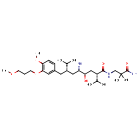
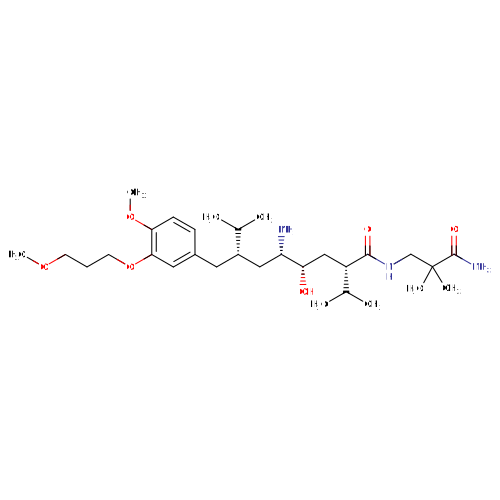
Structure for Aliskiren (DB09026)
- Weight
- Average: 551.7583
Monoisotopic: 551.393436443 - Chemical Formula
- C30H53N3O6
- Synonyms
- Aliskiren
- Aliskireno
- External IDs
- CGP 60536
- CGP60536B
- SPP 100
- SPP100

Pharmacology
- Indication
Aliskiren is used for the treatment of hypertension in children above 6 years and adults.9 This drug may also be used in conjunction with antihypertensives such as calcium channel blockers and thiazides in products form to provide additional blood pressure control.12,13
 Reduce drug development failure ratesBuild, train, & validate machine-learning modelswith evidence-based and structured datasets.Build, train, & validate predictive machine-learning models with structured datasets.
- Associated Conditions
Indication Type Indication Combined Product Details Approval Level Age Group Patient Characteristics Dose Form Used in combination to manage Hypertension Combination Product in combination with: Amlodipine (DB00381) •••••••••••• •••••• Management of Hypertension •••••••••••• ••••••••••• •••••• •••••••• ••••••• •••••• Used in combination to manage Hypertension Combination Product in combination with: Hydrochlorothiazide (DB00999) •••••••••••• ••• •••••••••• •••••••••• •••• ••••••••••• •••••• - Contraindications & Blackbox Warnings
 Prevent Adverse Drug Events TodayTap into our Clinical API for life-saving information on contraindications & blackbox warnings, population restrictions, harmful risks, & more.Avoid life-threatening adverse drug events with our Clinical API
- Pharmacodynamics
Aliskiren reduces blood pressure by inhibiting renin. This leads to a cascade of events that decreases blood pressure, lowering the risk of fatal and nonfatal cardiovascular events including stroke and myocardial infarction.2,9
- Mechanism of action
Aliskiren is a renin inhibitor.9 Renin is secreted by the kidneys when blood volume and renal perfusion decrease. It normally cleaves the protein angiotensinogen to form angiotensin I. Angiotensin I is then converted to angiotensin II, an active protein. Angiotensin II is a potent vasoconstrictor that causes the release of catecholamines into the circulation. It also promotes the secretion of aldosterone in addition to sodium reabsorption, increasing blood pressure. Additionally, angiotensin II acts on the adrenal cortex where it stimulates aldosterone release. Aldosterone increases sodium reabsorption and potassium excretion in the nephron. 11
Aliskiren prevents the above process via binding to renin at its active site, stopping the cleavage of angiotensin, in turn inhibiting the formation of angiotensin I. This ends the cascade of angiotensin II mediated mechanisms that normally increase blood pressure.5
Target Actions Organism ARenin inhibitorHumans - Absorption
Aliskiren is absorbed in the gastrointestinal tract and is poorly absorbed with a bioavailability between 2.0 and 2.5%.6,9 Peak plasma concentrations of aliskiren are achieved between 1 to 3 hours after administration.6,9 Steady-state concentrations of aliskiren are achieved within 7-8 days of regular administration.1
- Volume of distribution
Unchanged aliskiren accounts for about 80% of the drug found in the plasma.7,9
- Protein binding
The plasma protein binding of aliskiren ranges from 47-51%.1,6
- Metabolism
About 80% of the drug in plasma following oral administration is unchanged. Two major metabolites account for about 1-3% of aliskiren in the plasma. One metabolite is an O-demethylated alcohol derivative and the other is a carboxylic acid derivative. Minor oxidized and hydrolyzed metabolites may also be found in the plasma.7,9
- Route of elimination
Aliskiren is mainly excreted via the hepatobiliary route and by oxidative metabolism by hepatic cytochrome enzymes.1 Approximately one-quarter of the absorbed dose appears in the urine as unchanged parent drug. 9 One pharmacokinetic study of radiolabeled aliskiren detected 0.6% radioactivity in the urine and more than 80% in the feces, suggesting that aliskiren is mainly eliminated by the fecal route.7
- Half-life
Plasma half-life for aliskiren can range from 30 to 40 hours 7 with an accumulation half-life of about 24 hours.7
- Clearance
Aliskiren is partially cleared in the kidneys, and safety data have not been established for patients with a creatinine clearance of less than 30 mL/min.9 One pharmacokinetic study revealed an average renal clearance of 1280 +/- 500 mL/hour in healthy volunteers.8
- Adverse Effects
 Improve decision support & research outcomesWith structured adverse effects data, including: blackbox warnings, adverse reactions, warning & precautions, & incidence rates. View sample adverse effects data in our new Data Library!Improve decision support & research outcomes with our structured adverse effects data.
- Toxicity
The oral LD50 of aliskiren in rats is >2000 mg/kg.14 Overdose information is limited in the literature, however, an overdose with aliskiren is likely to result in hypotension. Supportive treatment should be initiated in the case of an overdose.9,15
- Pathways
- Not Available
- Pharmacogenomic Effects/ADRs
- Not Available
Interactions
- Drug Interactions
- This information should not be interpreted without the help of a healthcare provider. If you believe you are experiencing an interaction, contact a healthcare provider immediately. The absence of an interaction does not necessarily mean no interactions exist.
Drug Interaction Integrate drug-drug
interactions in your softwareAbaloparatide The risk or severity of adverse effects can be increased when Abaloparatide is combined with Aliskiren. Abametapir The serum concentration of Aliskiren can be increased when it is combined with Abametapir. Acebutolol Acebutolol may increase the hypotensive activities of Aliskiren. Aceclofenac The risk or severity of renal failure and hypertension can be increased when Aceclofenac is combined with Aliskiren. Acemetacin The risk or severity of renal failure and hypertension can be increased when Acemetacin is combined with Aliskiren. - Food Interactions
- Do not take with or immediately after a high-fat meal. The absorption of aliskiren is substantially reduced by taking it with high-fat meals.
- Take with or without food. Take consistently at the same time in regard to meals.
Products
 Drug product information from 10+ global regionsOur datasets provide approved product information including:dosage, form, labeller, route of administration, and marketing period.Access drug product information from over 10 global regions.
- Product Ingredients
Ingredient UNII CAS InChI Key Aliskiren hemifumarate C8A0P8G029 173334-58-2 KLRSDBSKUSSCGU-KRQUFFFQSA-N - Product Images
- Brand Name Prescription Products
Name Dosage Strength Route Labeller Marketing Start Marketing End Region Image Rasilez Tablet, film coated 150 mg Oral Noden Pharma Dac 2016-09-08 Not applicable EU 
Rasilez Tablet, film coated 150 mg Oral Noden Pharma Dac 2016-09-08 Not applicable EU Rasilez Tablet, film coated 150 mg Oral Noden Pharma Dac 2016-09-08 Not applicable EU Rasilez Tablet, film coated 150 mg Oral Noden Pharma Dac 2016-09-08 Not applicable EU Rasilez Tablet, film coated 300 mg Oral Noden Pharma Dac 2016-09-08 Not applicable EU - Generic Prescription Products
Name Dosage Strength Route Labeller Marketing Start Marketing End Region Image Aliskiren Tablet, film coated 150 mg/1 Oral Par Pharmaceutical, Inc. 2019-03-25 Not applicable US 
Aliskiren Tablet, film coated 300 mg/1 Oral Prasco Laboratories 2019-03-04 Not applicable US Aliskiren Tablet, film coated 300 mg/1 Oral Par Pharmaceutical, Inc. 2019-03-25 Not applicable US Aliskiren Tablet, film coated 150 mg/1 Oral Prasco Laboratories 2019-03-04 Not applicable US Sandoz Aliskiren Tablet 150 mg Oral Sandoz Canada Incorporated Not applicable Not applicable Canada 
- Mixture Products
Name Ingredients Dosage Route Labeller Marketing Start Marketing End Region Image Amturnide Aliskiren hemifumarate (300 mg/1) + Amlodipine besylate (5 mg/1) + Hydrochlorothiazide (25 mg/1) Tablet, film coated Oral Novartis 2010-12-21 2016-03-31 US Amturnide Aliskiren hemifumarate (300 mg/1) + Amlodipine besylate (5 mg/1) + Hydrochlorothiazide (12.5 mg/1) Tablet, film coated Oral Novartis 2010-12-21 2016-01-31 US Amturnide Aliskiren hemifumarate (300 mg/1) + Amlodipine besylate (10 mg/1) + Hydrochlorothiazide (12.5 mg/1) Tablet, film coated Oral Novartis 2010-12-21 2015-10-31 US Amturnide Aliskiren hemifumarate (150 mg/1) + Amlodipine besylate (5 mg/1) + Hydrochlorothiazide (12.5 mg/1) Tablet, film coated Oral Novartis 2010-12-21 2015-09-30 US Amturnide Aliskiren hemifumarate (300 mg/1) + Amlodipine besylate (10 mg/1) + Hydrochlorothiazide (25 mg/1) Tablet, film coated Oral Novartis 2010-12-21 2016-01-31 US


Categories
- ATC Codes
- C09XA54 — Aliskiren, amlodipine and hydrochlorothiazide
- C09XA — Renin-inhibitors
- C09X — OTHER AGENTS ACTING ON THE RENIN-ANGIOTENSIN SYSTEM
- C09 — AGENTS ACTING ON THE RENIN-ANGIOTENSIN SYSTEM
- C — CARDIOVASCULAR SYSTEM
- C09XA — Renin-inhibitors
- C09X — OTHER AGENTS ACTING ON THE RENIN-ANGIOTENSIN SYSTEM
- C09 — AGENTS ACTING ON THE RENIN-ANGIOTENSIN SYSTEM
- C — CARDIOVASCULAR SYSTEM
- C09DX — Angiotensin II receptor blockers (ARBs), other combinations
- C09D — ANGIOTENSIN II RECEPTOR BLOCKERS (ARBs), COMBINATIONS
- C09 — AGENTS ACTING ON THE RENIN-ANGIOTENSIN SYSTEM
- C — CARDIOVASCULAR SYSTEM
- C09XA — Renin-inhibitors
- C09X — OTHER AGENTS ACTING ON THE RENIN-ANGIOTENSIN SYSTEM
- C09 — AGENTS ACTING ON THE RENIN-ANGIOTENSIN SYSTEM
- C — CARDIOVASCULAR SYSTEM
- Drug Categories
- Acids, Acyclic
- Agents Acting on the Renin-Angiotensin System
- Agents causing hyperkalemia
- Antihypertensive Agents
- Antihypertensive Agents Indicated for Hypertension
- Benzene Derivatives
- Cytochrome P-450 CYP3A Substrates
- Cytochrome P-450 CYP3A4 Substrates
- Cytochrome P-450 Substrates
- Dicarboxylic Acids
- Enzyme Inhibitors
- Ethers
- Hypotensive Agents
- Methyl Ethers
- P-glycoprotein substrates
- Protease Inhibitors
- Renin Inhibitors
- Chemical TaxonomyProvided by Classyfire
- Description
- This compound belongs to the class of organic compounds known as delta amino acids and derivatives. These are compounds containing a carboxylic acid group and an amino group at the C5 carbon atom.
- Kingdom
- Organic compounds
- Super Class
- Organic acids and derivatives
- Class
- Carboxylic acids and derivatives
- Sub Class
- Amino acids, peptides, and analogues
- Direct Parent
- Delta amino acids and derivatives
- Alternative Parents
- Beta amino acids and derivatives / Phenylbutylamines / Anisoles / Methoxybenzenes / Phenoxy compounds / Alkyl aryl ethers / Aralkylamines / N-acyl amines / Secondary carboxylic acid amides / 1,2-aminoalcohols show 8 more
- Substituents
- 1,2-aminoalcohol / Alcohol / Alkyl aryl ether / Amine / Anisole / Aralkylamine / Aromatic homomonocyclic compound / Benzenoid / Beta amino acid or derivatives / Carbonyl group show 24 more
- Molecular Framework
- Aromatic homomonocyclic compounds
- External Descriptors
- monocarboxylic acid amide, monomethoxybenzene (CHEBI:601027)
- Affected organisms
- Humans and other mammals
Chemical Identifiers
- UNII
- 502FWN4Q32
- CAS number
- 173334-57-1
- InChI Key
- UXOWGYHJODZGMF-QORCZRPOSA-N
- InChI
- InChI=1S/C30H53N3O6/c1-19(2)22(14-21-10-11-26(38-8)27(15-21)39-13-9-12-37-7)16-24(31)25(34)17-23(20(3)4)28(35)33-18-30(5,6)29(32)36/h10-11,15,19-20,22-25,34H,9,12-14,16-18,31H2,1-8H3,(H2,32,36)(H,33,35)/t22-,23-,24-,25-/m0/s1
- IUPAC Name
- (2S,4S,5S,7S)-5-amino-N-(2-carbamoyl-2,2-dimethylethyl)-4-hydroxy-7-{[4-methoxy-3-(3-methoxypropoxy)phenyl]methyl}-8-methyl-2-(propan-2-yl)nonanamide
- SMILES
- COCCCOC1=C(OC)C=CC(C[C@@H](C[C@H](N)[C@@H](O)C[C@@H](C(C)C)C(=O)NCC(C)(C)C(N)=O)C(C)C)=C1
References
- Synthesis Reference
Hanessian S, Guesné S, Chénard E. Total synthesis of "aliskiren": the first Renin inhibitor in clinical practice for hypertension. Org Lett. 2010;12(8):1816‐1819. doi:10.1021/ol100427v
- General References
- Vaidyanathan S, Jarugula V, Dieterich HA, Howard D, Dole WP: Clinical pharmacokinetics and pharmacodynamics of aliskiren. Clin Pharmacokinet. 2008;47(8):515-31. [Article]
- Gradman AH, Schmieder RE, Lins RL, Nussberger J, Chiang Y, Bedigian MP: Aliskiren, a novel orally effective renin inhibitor, provides dose-dependent antihypertensive efficacy and placebo-like tolerability in hypertensive patients. Circulation. 2005 Mar 1;111(8):1012-8. Epub 2005 Feb 21. [Article]
- Staessen JA, Li Y, Richart T: Oral renin inhibitors. Lancet. 2006 Oct 21;368(9545):1449-56. [Article]
- Sanoski CA: Aliskiren: an oral direct renin inhibitor for the treatment of hypertension. Pharmacotherapy. 2009 Feb;29(2):193-212. doi: 10.1592/phco.29.2.193. [Article]
- Oh BH: Aliskiren, the first in a new class of direct renin inhibitors for hypertension: present and future perspectives. Expert Opin Pharmacother. 2007 Nov;8(16):2839-49. doi: 10.1517/14656566.8.16.2839. [Article]
- Buczko W, Hermanowicz JM: Pharmacokinetics and pharmacodynamics of aliskiren, an oral direct renin inhibitor. Pharmacol Rep. 2008 Sep-Oct;60(5):623-31. [Article]
- Waldmeier F, Glaenzel U, Wirz B, Oberer L, Schmid D, Seiberling M, Valencia J, Riviere GJ, End P, Vaidyanathan S: Absorption, distribution, metabolism, and elimination of the direct renin inhibitor aliskiren in healthy volunteers. Drug Metab Dispos. 2007 Aug;35(8):1418-28. doi: 10.1124/dmd.106.013797. Epub 2007 May 17. [Article]
- Vaidyanathan S, Bigler H, Yeh C, Bizot MN, Dieterich HA, Howard D, Dole WP: Pharmacokinetics of the oral direct renin inhibitor aliskiren alone and in combination with irbesartan in renal impairment. Clin Pharmacokinet. 2007;46(8):661-75. doi: 10.2165/00003088-200746080-00003. [Article]
- FDA Approved Products: Tekturna (Aliskiren) oral tablets and pellets [Link]
- The Pharmaletter: Novartis and Speedel [Link]
- NIH StatPearls: Physiology, Renin Angiotensin System [Link]
- FDA Approved Products: Tekamlo (amlodipine and aliskiren) oral tablets [Link]
- FDA Approved Products: Tekturna HCT (aliskiren and hydrochlorothiazide) oral tablets [Link]
- Product monograph: Rasilez HCT (Aliskiren fumarate and hydrochlorothiazide oral tablets) [Link]
- NIH StatPearls: Aliskiren [Link]
- External Links
- Human Metabolome Database
- HMDB0015387
- KEGG Drug
- D03208
- PubChem Compound
- 5493444
- PubChem Substance
- 310264980
- ChemSpider
- 4591452
- BindingDB
- 17950
- 325646
- ChEBI
- 601027
- ChEMBL
- CHEMBL1639
- ZINC
- ZINC000004393164
- PharmGKB
- PA143487910
- PDBe Ligand
- C41
- Drugs.com
- Drugs.com Drug Page
- Wikipedia
- Aliskiren
- PDB Entries
- 2v0z
- FDA label
- Download (612 KB)
Clinical Trials
- Clinical Trials
Phase Status Purpose Conditions Count 4 Completed Not Available Type 2 Diabetes Mellitus 1 4 Completed Diagnostic Hypertension 1 4 Completed Other Coronary Artery Disease (CAD) / Type 2 Diabetes Mellitus 1 4 Completed Screening Chronic Kidney Disease (CKD) / Hypertension / Proteinuria 1 4 Completed Treatment Blood Pressures / Chronic Kidney Disease (CKD) / Proteinuria 1
Pharmacoeconomics
- Manufacturers
- Not Available
- Packagers
- Not Available
- Dosage Forms
Form Route Strength Tablet, film coated Oral Tablet, film coated Oral 150 MG Tablet, film coated Oral 300 MG Tablet Oral Tablet Oral 150 mg Tablet Oral 300 mg Tablet, film coated Oral 150 mg/1 Tablet, film coated Oral 300 mg/1 Tablet, film coated Oral - Prices
- Not Available
- Patents
Patent Number Pediatric Extension Approved Expires (estimated) Region CA2147056 No 2005-10-25 2015-04-13 Canada US5559111 Yes 1996-09-24 2019-01-21 US US8617595 Yes 2013-12-31 2026-08-19 US US8618172 No 2013-12-31 2028-07-13 US US8168616 No 2012-05-01 2026-07-03 US US8613949 No 2013-12-24 2029-12-21 US US8618174 No 2013-12-31 2021-11-15 US US8183295 No 2012-05-22 2023-05-16 US US9023893 No 2015-05-05 2022-03-03 US
Properties
- State
- Solid
- Experimental Properties
Property Value Source melting point (°C) >95 https://www.accessdata.fda.gov/drugsatfda_docs/nda/2010/022545Orig1s000EA.pdf boiling point (°C) 748.4±60.0 https://m.chemicalbook.com/ChemicalProductProperty_EN_CB9966226.htm water solubility Highly soluble in water (as hemifumarate salt) Not Available logP 2.45 https://www.ncbi.nlm.nih.gov/pmc/articles/PMC3103912/ pKa 9.49 https://m.chemicalbook.com/ChemicalProductProperty_EN_CB9966226.htm - Predicted Properties
Property Value Source Water Solubility 0.0021 mg/mL ALOGPS logP 3.87 ALOGPS logP 3.12 Chemaxon logS -5.4 ALOGPS pKa (Strongest Acidic) 14.56 Chemaxon pKa (Strongest Basic) 9.57 Chemaxon Physiological Charge 1 Chemaxon Hydrogen Acceptor Count 7 Chemaxon Hydrogen Donor Count 4 Chemaxon Polar Surface Area 146.13 Å2 Chemaxon Rotatable Bond Count 19 Chemaxon Refractivity 154.32 m3·mol-1 Chemaxon Polarizability 63.28 Å3 Chemaxon Number of Rings 1 Chemaxon Bioavailability 0 Chemaxon Rule of Five No Chemaxon Ghose Filter No Chemaxon Veber's Rule No Chemaxon MDDR-like Rule No Chemaxon - Predicted ADMET Features
- Not Available
Spectra
- Mass Spec (NIST)
- Not Available
- Spectra
- Chromatographic Properties
Collision Cross Sections (CCS)
Adduct CCS Value (Å2) Source type Source [M-H]- 271.6406298 predictedDarkChem Lite v0.1.0 [M-H]- 236.74153 predictedDeepCCS 1.0 (2019) [M+H]+ 271.0560298 predictedDarkChem Lite v0.1.0 [M+H]+ 238.56642 predictedDeepCCS 1.0 (2019) [M+Na]+ 270.8682298 predictedDarkChem Lite v0.1.0 [M+Na]+ 244.17224 predictedDeepCCS 1.0 (2019)
Targets

- Kind
- Protein
- Organism
- Humans
- Pharmacological action
- Yes
- Actions
- Inhibitor
- General Function
- Receptor binding
- Specific Function
- Renin is a highly specific endopeptidase, whose only known function is to generate angiotensin I from angiotensinogen in the plasma, initiating a cascade of reactions that produce an elevation of b...
- Gene Name
- REN
- Uniprot ID
- P00797
- Uniprot Name
- Renin
- Molecular Weight
- 45057.125 Da
References
- Nussberger J, Wuerzner G, Jensen C, Brunner HR: Angiotensin II suppression in humans by the orally active renin inhibitor Aliskiren (SPP100): comparison with enalapril. Hypertension. 2002 Jan;39(1):E1-8. [Article]
- Wood JM, Maibaum J, Rahuel J, Grutter MG, Cohen NC, Rasetti V, Ruger H, Goschke R, Stutz S, Fuhrer W, Schilling W, Rigollier P, Yamaguchi Y, Cumin F, Baum HP, Schnell CR, Herold P, Mah R, Jensen C, O'Brien E, Stanton A, Bedigian MP: Structure-based design of aliskiren, a novel orally effective renin inhibitor. Biochem Biophys Res Commun. 2003 Sep 5;308(4):698-705. [Article]
- Menard J, Guyene TT, Peyrard S, Azizi M: Conformational changes in prorenin during renin inhibition in vitro and in vivo. J Hypertens. 2006 Mar;24(3):529-34. [Article]
- Azizi M, Webb R, Nussberger J, Hollenberg NK: Renin inhibition with aliskiren: where are we now, and where are we going? J Hypertens. 2006 Feb;24(2):243-56. [Article]
- Gradman AH, Vivas Y: New drugs for hypertension: what do they offer? Curr Hypertens Rep. 2006 Oct;8(5):425-32. [Article]
- Wal P, Wal A, Rai AK, Dixit A: Aliskiren: An orally active renin inhibitor. J Pharm Bioallied Sci. 2011 Apr;3(2):189-93. doi: 10.4103/0975-7406.80764. [Article]
- FDA Approved Products: Tekturna (Aliskiren) oral tablets and pellets [Link]
Enzymes
- Kind
- Protein
- Organism
- Humans
- Pharmacological action
- No
- Actions
- Substrate
- General Function
- Vitamin d3 25-hydroxylase activity
- Specific Function
- Cytochromes P450 are a group of heme-thiolate monooxygenases. In liver microsomes, this enzyme is involved in an NADPH-dependent electron transport pathway. It performs a variety of oxidation react...
- Gene Name
- CYP3A4
- Uniprot ID
- P08684
- Uniprot Name
- Cytochrome P450 3A4
- Molecular Weight
- 57342.67 Da
References
- Vaidyanathan S, Jarugula V, Dieterich HA, Howard D, Dole WP: Clinical pharmacokinetics and pharmacodynamics of aliskiren. Clin Pharmacokinet. 2008;47(8):515-31. [Article]
- Buczko W, Hermanowicz JM: Pharmacokinetics and pharmacodynamics of aliskiren, an oral direct renin inhibitor. Pharmacol Rep. 2008 Sep-Oct;60(5):623-31. [Article]
- FDA Approved Products: Tekturna (Aliskiren) oral tablets and pellets [Link]
Transporters
- Kind
- Protein
- Organism
- Humans
- Pharmacological action
- No
- Actions
- Substrate
- General Function
- Xenobiotic-transporting atpase activity
- Specific Function
- Energy-dependent efflux pump responsible for decreased drug accumulation in multidrug-resistant cells.
- Gene Name
- ABCB1
- Uniprot ID
- P08183
- Uniprot Name
- Multidrug resistance protein 1
- Molecular Weight
- 141477.255 Da
References
- Tsukimoto M, Ohashi R, Torimoto N, Togo Y, Suzuki T, Maeda T, Kagawa Y: Effects of the inhibition of intestinal P-glycoprotein on aliskiren pharmacokinetics in cynomolgus monkeys. Biopharm Drug Dispos. 2015 Jan;36(1):15-33. doi: 10.1002/bdd.1920. Epub 2014 Oct 31. [Article]
- FDA Approved Products: Tekturna (Aliskiren) oral tablets and pellets [Link]

Drug created at October 13, 2014 22:29 / Updated at April 27, 2024 09:44