Identification
- Summary
Lapatinib is an antineoplastic agent and tyrosine kinase inhibitor used for the treatment of advanced or metastatic HER-positive breast cancer in patients who received prior chemotherapeutic treatments.
- Brand Names
- Tykerb, Tyverb
- Generic Name
- Lapatinib
- DrugBank Accession Number
- DB01259
- Background
Lapatinib is an anti-cancer drug developed by GlaxoSmithKline (GSK) as a treatment for solid tumours such as breast and lung cancer. It was approved by the FDA on March 13, 2007, for use in patients with advanced metastatic breast cancer in conjunction with the chemotherapy drug capecitabine. Lapatinib is a human epidermal growth factor receptor type 2 (HER2/ERBB2) and epidermal growth factor receptor (HER1/EGFR/ERBB1) tyrosine kinases inhibitor. It binds to the intracellular phosphorylation domain to prevent receptor autophosphorylation upon ligand binding.
- Type
- Small Molecule
- Groups
- Approved, Investigational
- Structure
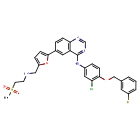
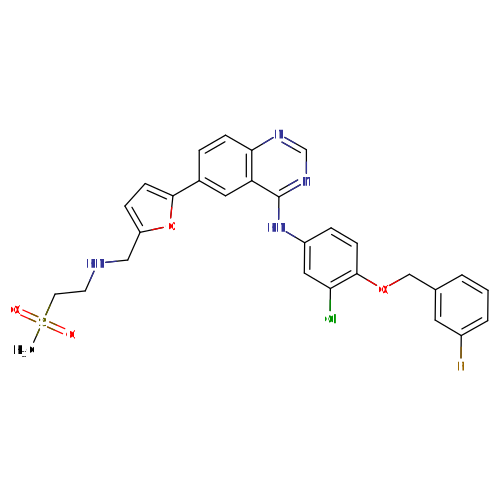
Structure for Lapatinib (DB01259)
- Weight
- Average: 581.058
Monoisotopic: 580.134731942 - Chemical Formula
- C29H26ClFN4O4S
- Synonyms
- Lapatinib
- N-(3-chloro-4-((3-fluorophenyl)methoxy)phenyl)-6-(5-(((2-(methylsulfonyl)ethyl)amino)methyl)-2-furanyl)-4-quinazolinamine
- External IDs
- GSK-572016
- GW 572016
- GW-572016X
- GW572016

Pharmacology
- Indication
Indicated in combination with capecitabine for the treatment of patients with advanced or metastatic breast cancer whose tumors overexpress the human epidermal receptor type 2 (HER2) protein and who have received prior therapy including an anthracycline, a taxane, and trastuzumab.
 Reduce drug development failure ratesBuild, train, & validate machine-learning modelswith evidence-based and structured datasets.Build, train, & validate predictive machine-learning models with structured datasets.
- Associated Conditions
Indication Type Indication Combined Product Details Approval Level Age Group Patient Characteristics Dose Form Used in combination to treat Metastatic breast cancer Regimen in combination with: Letrozole (DB01006) •••••••••••• ••••••••••••••• Used in combination to treat Refractory, advanced breast cancer Regimen in combination with: Capecitabine (DB01101) •••••••••••• Used in combination to treat Refractory, metastatic breast cancer Regimen in combination with: Capecitabine (DB01101) •••••••••••• - Contraindications & Blackbox Warnings
 Prevent Adverse Drug Events TodayTap into our Clinical API for life-saving information on contraindications & blackbox warnings, population restrictions, harmful risks, & more.Avoid life-threatening adverse drug events with our Clinical API
- Pharmacodynamics
Lapatinib is a small molecule and a member of the 4-anilinoquinazoline class of kinase inhibitors. An anti-cancer drug, lapatinib was developed by GlaxoSmithKline (GSK) as a treatment for solid tumours such as breast and lung cancer. It was approved by the FDA on March 13, 2007, for use in patients with advanced metastatic breast cancer in conjunction with the chemotherapy drug capecitabine.
- Mechanism of action
Lapatinib is a 4-anilinoquinazoline kinase inhibitor of the intracellular tyrosine kinase domains of both epidermal growth factor receptor (HER1/EGFR/ERBB1) and human epidermal growth factor receptor type 2 (HER2/ERBB2)with a dissociation half-life of ≥300 minutes. Lapatinib inhibits ERBB-driven tumor cell growth in vitro and in various animal models. An additive effect was demonstrated in an in vitro study when lapatinib and 5-florouracil (the active metabolite of capecitabine) were used in combination in the 4 tumor cell lines tested. The growth inhibitory effects of lapatinib were evaluated in trastuzumab-conditioned cell lines. Lapatinib retained significant activity against breast cancer cell lines selected for long-term growth in trastuzumab-containing medium in vitro. These in vitro findings suggest non-cross-resistance between these two agents.
Target Actions Organism AEpidermal growth factor receptor antagonistHumans AReceptor tyrosine-protein kinase erbB-2 antagonistHumans - Absorption
Absorption following oral administration of lapatinib is incomplete and variable.
- Volume of distribution
Not Available
- Protein binding
Highly bound (>99%) to albumin and alpha-1 acid glycoprotein
- Metabolism
Lapatinib undergoes extensive metabolism, primarily by CYP3A4 and CYP3A5, with minor contributions from CYP2C19 and CYP2C8 to a variety of oxidated metabolites, none of which accounts for more than 14% of the dose recovered in the feces or 10% of lapatinib concentration in plasma.
- Route of elimination
Lapatinib undergoes extensive metabolism, primarily by CYP3A4 and CYP3A5, with minor contributions from CYP2C19 and CYP2C8 to a variety of oxidated metabolites, none of which accounts for more than 14% of the dose recovered in the feces or 10% of lapatinib concentration in plasma.
- Half-life
Single-dose terminal half life: 14.2 hours Effective multiple-dose half life: 24 hours
- Clearance
Not Available
- Adverse Effects
 Improve decision support & research outcomesWith structured adverse effects data, including: blackbox warnings, adverse reactions, warning & precautions, & incidence rates. View sample adverse effects data in our new Data Library!Improve decision support & research outcomes with our structured adverse effects data.
- Toxicity
There has been a report of one patient who took 3,000 mg of lapatinib for 10 days. This patient had grade 3 diarrhea and vomiting on day 10.
- Pathways
- Not Available
- Pharmacogenomic Effects/ADRs
Interacting Gene/Enzyme Allele name Genotype(s) Defining Change(s) Type(s) Description Details HLA class II histocompatibility antigen, DQ alpha 1 chain HLA-DQA1*02:01 Not Available HLA-DQA1*02 ADR Directly Studied The presence of this polymorphism in TNXB may indicate an increased risk of drug-induced ALT-elevations leading to hepatotoxicity when treated with lapatinib. Details HLA class II histocompatibility antigen, DRB1-11 beta chain HLA-DRB1*07:01 Not Available HLA-DRB1*07 ADR Directly Studied The presence of this polymorphism in TNXB may indicate an increased risk of drug-induced ALT-elevations leading to hepatotoxicity when treated with lapatinib. Details HLA class II histocompatibility antigen, DQ beta 1 chain HLA-DQB1*02:02 Not Available HLA-DQB1*02 ADR Directly Studied The presence of this polymorphism in TNXB may indicate an increased risk of drug-induced ALT-elevations leading to hepatotoxicity when treated with lapatinib. Details Tenascin-X --- (C;C) / (C;T) T > C ADR Directly Studied The presence of this polymorphism in TNXB may indicate an increased risk of drug-induced ALT-elevations leading to hepatotoxicity when treated with lapatinib. Details
Interactions
- Drug Interactions
- This information should not be interpreted without the help of a healthcare provider. If you believe you are experiencing an interaction, contact a healthcare provider immediately. The absence of an interaction does not necessarily mean no interactions exist.
Drug Interaction Integrate drug-drug
interactions in your softwareAbametapir The serum concentration of Lapatinib can be increased when it is combined with Abametapir. Abatacept The metabolism of Lapatinib can be increased when combined with Abatacept. Abemaciclib The serum concentration of Abemaciclib can be increased when it is combined with Lapatinib. Abiraterone The metabolism of Lapatinib can be decreased when combined with Abiraterone. Abrocitinib The metabolism of Abrocitinib can be decreased when combined with Lapatinib. - Food Interactions
- Avoid grapefruit products. Grapefruit may reduce the CYP3A4 metabolism of lapatinib, increasing its serum levels.
- Take separate from meals. Take lapatinib at least 1 hour before or after eating, as lapatinib bioavailability is elevated by food.
Products
 Drug product information from 10+ global regionsOur datasets provide approved product information including:dosage, form, labeller, route of administration, and marketing period.Access drug product information from over 10 global regions.
- Product Ingredients
Ingredient UNII CAS InChI Key Lapatinib ditosylate G873GX646R 388082-78-8 XNRVGTHNYCNCFF-UHFFFAOYSA-N - Product Images

- International/Other Brands
- Tycerb
- Brand Name Prescription Products
Name Dosage Strength Route Labeller Marketing Start Marketing End Region Image Tykerb Tablet 250 mg/1 Oral Glaxosmithkline Inc 2007-03-16 2017-11-30 US 

Tykerb Tablet 250 mg Oral Novartis 2009-06-05 Not applicable Canada 
Tykerb Tablet 250 mg/1 Oral Novartis Pharmaceuticals Corporation 2016-08-03 Not applicable US Tyverb Tablet, film coated 250 mg Oral Novartis Europharm Limited 2016-09-08 Not applicable EU 
Tyverb Tablet, film coated 250 mg Oral Novartis Europharm Limited 2016-09-08 Not applicable EU - Generic Prescription Products
Name Dosage Strength Route Labeller Marketing Start Marketing End Region Image Lapatinib Tablet 250 mg/1 Oral Lupin Pharmaceuticals, Inc. 2020-09-29 Not applicable US


Categories
- ATC Codes
- L01EH01 — Lapatinib
- Drug Categories
- Antineoplastic Agents
- Antineoplastic and Immunomodulating Agents
- Cytochrome P-450 CYP2C19 Substrates
- Cytochrome P-450 CYP2C8 Inhibitors
- Cytochrome P-450 CYP2C8 Inhibitors (strength unknown)
- Cytochrome P-450 CYP2C8 Substrates
- Cytochrome P-450 CYP3A Inhibitors
- Cytochrome P-450 CYP3A Substrates
- Cytochrome P-450 CYP3A4 Inhibitors
- Cytochrome P-450 CYP3A4 Inhibitors (weak)
- Cytochrome P-450 CYP3A4 Substrates
- Cytochrome P-450 CYP3A5 Substrates
- Cytochrome P-450 Enzyme Inhibitors
- Cytochrome P-450 Substrates
- Enzyme Inhibitors
- Hepatotoxic Agents
- Heterocyclic Compounds, Fused-Ring
- Human epidermal growth factor receptor 2 (HER2) tyrosine kinase inhibitors
- Kinase Inhibitor
- P-glycoprotein inhibitors
- Potential QTc-Prolonging Agents
- Protein Kinase Inhibitors
- QTc Prolonging Agents
- Quinazolines
- Tyrosine Kinase Inhibitors
- Chemical TaxonomyProvided by Classyfire
- Description
- This compound belongs to the class of organic compounds known as quinazolinamines. These are heterocyclic aromatic compounds containing a quianazoline moiety substituted by one or more amine groups.
- Kingdom
- Organic compounds
- Super Class
- Organoheterocyclic compounds
- Class
- Diazanaphthalenes
- Sub Class
- Benzodiazines
- Direct Parent
- Quinazolinamines
- Alternative Parents
- Phenoxy compounds / Phenol ethers / Aniline and substituted anilines / Alkyl aryl ethers / Aminopyrimidines and derivatives / Aralkylamines / Chlorobenzenes / Fluorobenzenes / Aryl chlorides / Aryl fluorides show 12 more
- Substituents
- Alkyl aryl ether / Amine / Aminopyrimidine / Aniline or substituted anilines / Aralkylamine / Aromatic heteropolycyclic compound / Aryl chloride / Aryl fluoride / Aryl halide / Azacycle show 29 more
- Molecular Framework
- Aromatic heteropolycyclic compounds
- External Descriptors
- organofluorine compound, organochlorine compound, furans, quinazolines (CHEBI:49603)
- Affected organisms
- Humans and other mammals
Chemical Identifiers
- UNII
- 0VUA21238F
- CAS number
- 231277-92-2
- InChI Key
- BCFGMOOMADDAQU-UHFFFAOYSA-N
- InChI
- InChI=1S/C29H26ClFN4O4S/c1-40(36,37)12-11-32-16-23-7-10-27(39-23)20-5-8-26-24(14-20)29(34-18-33-26)35-22-6-9-28(25(30)15-22)38-17-19-3-2-4-21(31)13-19/h2-10,13-15,18,32H,11-12,16-17H2,1H3,(H,33,34,35)
- IUPAC Name
- N-{3-chloro-4-[(3-fluorophenyl)methoxy]phenyl}-6-(5-{[(2-methanesulfonylethyl)amino]methyl}furan-2-yl)quinazolin-4-amine
- SMILES
- CS(=O)(=O)CCNCC1=CC=C(O1)C1=CC2=C(C=C1)N=CN=C2NC1=CC(Cl)=C(OCC2=CC(F)=CC=C2)C=C1
References
- Synthesis Reference
- US6727256
- General References
- Nelson MH, Dolder CR: Lapatinib: a novel dual tyrosine kinase inhibitor with activity in solid tumors. Ann Pharmacother. 2006 Feb;40(2):261-9. Epub 2006 Jan 17. [Article]
- Burris HA 3rd: Dual kinase inhibition in the treatment of breast cancer: initial experience with the EGFR/ErbB-2 inhibitor lapatinib. Oncologist. 2004;9 Suppl 3:10-5. [Article]
- Burris HA 3rd, Hurwitz HI, Dees EC, Dowlati A, Blackwell KL, O'Neil B, Marcom PK, Ellis MJ, Overmoyer B, Jones SF, Harris JL, Smith DA, Koch KM, Stead A, Mangum S, Spector NL: Phase I safety, pharmacokinetics, and clinical activity study of lapatinib (GW572016), a reversible dual inhibitor of epidermal growth factor receptor tyrosine kinases, in heavily pretreated patients with metastatic carcinomas. J Clin Oncol. 2005 Aug 10;23(23):5305-13. Epub 2005 Jun 13. [Article]
- Geyer CE, Forster J, Lindquist D, Chan S, Romieu CG, Pienkowski T, Jagiello-Gruszfeld A, Crown J, Chan A, Kaufman B, Skarlos D, Campone M, Davidson N, Berger M, Oliva C, Rubin SD, Stein S, Cameron D: Lapatinib plus capecitabine for HER2-positive advanced breast cancer. N Engl J Med. 2006 Dec 28;355(26):2733-43. [Article]
- Johnston SR, Leary A: Lapatinib: a novel EGFR/HER2 tyrosine kinase inhibitor for cancer. Drugs Today (Barc). 2006 Jul;42(7):441-53. [Article]
- Tevaarwerk AJ, Kolesar JM: Lapatinib: a small-molecule inhibitor of epidermal growth factor receptor and human epidermal growth factor receptor-2 tyrosine kinases used in the treatment of breast cancer. Clin Ther. 2009;31 Pt 2:2332-48. doi: 10.1016/j.clinthera.2009.11.029. [Article]
- Medina PJ, Goodin S: Lapatinib: a dual inhibitor of human epidermal growth factor receptor tyrosine kinases. Clin Ther. 2008 Aug;30(8):1426-47. doi: 10.1016/j.clinthera.2008.08.008. [Article]
- External Links
- Human Metabolome Database
- HMDB0015388
- KEGG Drug
- D04024
- PubChem Compound
- 208908
- PubChem Substance
- 46507141
- ChemSpider
- 181006
- BindingDB
- 5445
- 480167
- ChEBI
- 49603
- ChEMBL
- CHEMBL554
- ZINC
- ZINC000001550477
- Therapeutic Targets Database
- DCL000344
- PharmGKB
- PA152241907
- PDBe Ligand
- FMM
- RxList
- RxList Drug Page
- Drugs.com
- Drugs.com Drug Page
- Wikipedia
- Lapatinib
- PDB Entries
- 1xkk / 3bbt
Clinical Trials
- Clinical Trials
Phase Status Purpose Conditions Count 4 Completed Treatment Cancer 1 3 Active Not Recruiting Health Services Research Soft Tissue Sarcoma 1 3 Active Not Recruiting Treatment Breast Cancer 2 3 Active Not Recruiting Treatment Male Breast Carcinoma / Stage IIA Breast Cancer AJCC v6 and v7 / Stage IIB Breast Cancer AJCC v6 and v7 / Stage IIIA Breast Cancer AJCC v7 / Stage IIIB Breast Cancer AJCC v7 / Stage IIIC Breast Cancer AJCC v7 1 3 Active Not Recruiting Treatment Neoplasms, Gastrointestinal Tract 1
Pharmacoeconomics
- Manufacturers
- Not Available
- Packagers
- GlaxoSmithKline Inc.
- Dosage Forms
Form Route Strength Tablet Oral 250 mg Tablet Oral 250 mg/1 Tablet, film coated Oral Tablet, film coated Oral 405 MG Tablet, film coated Oral 250 MG Tablet, film coated Oral 250.00 mg Tablet, coated Oral 250 mg - Prices
Unit description Cost Unit Tykerb 250 mg tablet 28.4USD tablet DrugBank does not sell nor buy drugs. Pricing information is supplied for informational purposes only.- Patents
Patent Number Pediatric Extension Approved Expires (estimated) Region CA2413134 No 2010-05-11 2021-06-28 Canada CA2317589 No 2007-08-08 2019-01-08 Canada US6391874 No 2002-05-21 2017-07-11 US US6713485 No 2004-03-30 2020-09-29 US US6727256 No 2004-04-27 2019-01-08 US US6828320 No 2004-12-07 2017-07-11 US US8821927 No 2014-09-02 2029-09-18 US US8513262 No 2013-08-20 2019-01-08 US US7157466 No 2007-01-02 2021-11-19 US
Properties
- State
- Solid
- Experimental Properties
Property Value Source logP 5.4 Not Available - Predicted Properties
Property Value Source Water Solubility 0.0223 mg/mL ALOGPS logP 5.18 ALOGPS logP 4.64 Chemaxon logS -4.4 ALOGPS pKa (Strongest Acidic) 16.44 Chemaxon pKa (Strongest Basic) 7.26 Chemaxon Physiological Charge 1 Chemaxon Hydrogen Acceptor Count 7 Chemaxon Hydrogen Donor Count 2 Chemaxon Polar Surface Area 106.35 Å2 Chemaxon Rotatable Bond Count 11 Chemaxon Refractivity 152.42 m3·mol-1 Chemaxon Polarizability 61.19 Å3 Chemaxon Number of Rings 5 Chemaxon Bioavailability 0 Chemaxon Rule of Five No Chemaxon Ghose Filter No Chemaxon Veber's Rule No Chemaxon MDDR-like Rule Yes Chemaxon - Predicted ADMET Features
Property Value Probability Human Intestinal Absorption + 1.0 Blood Brain Barrier + 0.6201 Caco-2 permeable - 0.5858 P-glycoprotein substrate Substrate 0.7403 P-glycoprotein inhibitor I Inhibitor 0.5414 P-glycoprotein inhibitor II Non-inhibitor 0.7799 Renal organic cation transporter Non-inhibitor 0.7442 CYP450 2C9 substrate Non-substrate 0.6688 CYP450 2D6 substrate Non-substrate 0.7644 CYP450 3A4 substrate Substrate 0.6619 CYP450 1A2 substrate Inhibitor 0.5386 CYP450 2C9 inhibitor Non-inhibitor 0.5544 CYP450 2D6 inhibitor Non-inhibitor 0.7861 CYP450 2C19 inhibitor Inhibitor 0.5274 CYP450 3A4 inhibitor Inhibitor 0.8065 CYP450 inhibitory promiscuity High CYP Inhibitory Promiscuity 0.9104 Ames test Non AMES toxic 0.543 Carcinogenicity Non-carcinogens 0.6788 Biodegradation Not ready biodegradable 1.0 Rat acute toxicity 2.5867 LD50, mol/kg Not applicable hERG inhibition (predictor I) Strong inhibitor 0.537 hERG inhibition (predictor II) Inhibitor 0.8417
Spectra
- Mass Spec (NIST)
- Not Available
- Spectra
- Chromatographic Properties
Collision Cross Sections (CCS)
Adduct CCS Value (Å2) Source type Source [M-H]- 248.6812297 predictedDarkChem Lite v0.1.0 [M-H]- 214.34505 predictedDeepCCS 1.0 (2019) [M+H]+ 249.5544297 predictedDarkChem Lite v0.1.0 [M+H]+ 216.74062 predictedDeepCCS 1.0 (2019) [M+Na]+ 248.9024297 predictedDarkChem Lite v0.1.0 [M+Na]+ 222.65315 predictedDeepCCS 1.0 (2019)
Targets

- Kind
- Protein
- Organism
- Humans
- Pharmacological action
- Yes
- Actions
- Antagonist
- General Function
- Ubiquitin protein ligase binding
- Specific Function
- Receptor tyrosine kinase binding ligands of the EGF family and activating several signaling cascades to convert extracellular cues into appropriate cellular responses. Known ligands include EGF, TG...
- Gene Name
- EGFR
- Uniprot ID
- P00533
- Uniprot Name
- Epidermal growth factor receptor
- Molecular Weight
- 134276.185 Da
References
- Xia W, Mullin RJ, Keith BR, Liu LH, Ma H, Rusnak DW, Owens G, Alligood KJ, Spector NL: Anti-tumor activity of GW572016: a dual tyrosine kinase inhibitor blocks EGF activation of EGFR/erbB2 and downstream Erk1/2 and AKT pathways. Oncogene. 2002 Sep 12;21(41):6255-63. [Article]
- Grana TM, Sartor CI, Cox AD: Epidermal growth factor receptor autocrine signaling in RIE-1 cells transformed by the Ras oncogene enhances radiation resistance. Cancer Res. 2003 Nov 15;63(22):7807-14. [Article]
- Xia W, Liu LH, Ho P, Spector NL: Truncated ErbB2 receptor (p95ErbB2) is regulated by heregulin through heterodimer formation with ErbB3 yet remains sensitive to the dual EGFR/ErbB2 kinase inhibitor GW572016. Oncogene. 2004 Jan 22;23(3):646-53. [Article]
- Zhou H, Kim YS, Peletier A, McCall W, Earp HS, Sartor CI: Effects of the EGFR/HER2 kinase inhibitor GW572016 on EGFR- and HER2-overexpressing breast cancer cell line proliferation, radiosensitization, and resistance. Int J Radiat Oncol Biol Phys. 2004 Feb 1;58(2):344-52. [Article]
- Langer CJ: Emerging role of epidermal growth factor receptor inhibition in therapy for advanced malignancy: focus on NSCLC. Int J Radiat Oncol Biol Phys. 2004 Mar 1;58(3):991-1002. [Article]
- Burris HA 3rd: Dual kinase inhibition in the treatment of breast cancer: initial experience with the EGFR/ErbB-2 inhibitor lapatinib. Oncologist. 2004;9 Suppl 3:10-5. [Article]
- Wood ER, Truesdale AT, McDonald OB, Yuan D, Hassell A, Dickerson SH, Ellis B, Pennisi C, Horne E, Lackey K, Alligood KJ, Rusnak DW, Gilmer TM, Shewchuk L: A unique structure for epidermal growth factor receptor bound to GW572016 (Lapatinib): relationships among protein conformation, inhibitor off-rate, and receptor activity in tumor cells. Cancer Res. 2004 Sep 15;64(18):6652-9. [Article]
- Vazquez-Martin A, Oliveras-Ferraros C, Cufi S, Del Barco S, Martin-Castillo B, Menendez JA: Lapatinib, a dual HER1/HER2 tyrosine kinase inhibitor, augments basal cleavage of HER2 extracellular domain (ECD) to inhibit HER2-driven cancer cell growth. J Cell Physiol. 2011 Jan;226(1):52-7. doi: 10.1002/jcp.22333. [Article]
- Johnston SR, Leary A: Lapatinib: a novel EGFR/HER2 tyrosine kinase inhibitor for cancer. Drugs Today (Barc). 2006 Jul;42(7):441-53. [Article]
- Tevaarwerk AJ, Kolesar JM: Lapatinib: a small-molecule inhibitor of epidermal growth factor receptor and human epidermal growth factor receptor-2 tyrosine kinases used in the treatment of breast cancer. Clin Ther. 2009;31 Pt 2:2332-48. doi: 10.1016/j.clinthera.2009.11.029. [Article]
- Medina PJ, Goodin S: Lapatinib: a dual inhibitor of human epidermal growth factor receptor tyrosine kinases. Clin Ther. 2008 Aug;30(8):1426-47. doi: 10.1016/j.clinthera.2008.08.008. [Article]
- Chen X, Ji ZL, Chen YZ: TTD: Therapeutic Target Database. Nucleic Acids Res. 2002 Jan 1;30(1):412-5. [Article]
- Kind
- Protein
- Organism
- Humans
- Pharmacological action
- Yes
- Actions
- Antagonist
- General Function
- Transmembrane signaling receptor activity
- Specific Function
- Protein tyrosine kinase that is part of several cell surface receptor complexes, but that apparently needs a coreceptor for ligand binding. Essential component of a neuregulin-receptor complex, alt...
- Gene Name
- ERBB2
- Uniprot ID
- P04626
- Uniprot Name
- Receptor tyrosine-protein kinase erbB-2
- Molecular Weight
- 137909.27 Da
References
- Xia W, Liu LH, Ho P, Spector NL: Truncated ErbB2 receptor (p95ErbB2) is regulated by heregulin through heterodimer formation with ErbB3 yet remains sensitive to the dual EGFR/ErbB2 kinase inhibitor GW572016. Oncogene. 2004 Jan 22;23(3):646-53. [Article]
- Zhou H, Kim YS, Peletier A, McCall W, Earp HS, Sartor CI: Effects of the EGFR/HER2 kinase inhibitor GW572016 on EGFR- and HER2-overexpressing breast cancer cell line proliferation, radiosensitization, and resistance. Int J Radiat Oncol Biol Phys. 2004 Feb 1;58(2):344-52. [Article]
- Langer CJ: Emerging role of epidermal growth factor receptor inhibition in therapy for advanced malignancy: focus on NSCLC. Int J Radiat Oncol Biol Phys. 2004 Mar 1;58(3):991-1002. [Article]
- Burris HA 3rd: Dual kinase inhibition in the treatment of breast cancer: initial experience with the EGFR/ErbB-2 inhibitor lapatinib. Oncologist. 2004;9 Suppl 3:10-5. [Article]
- Wood ER, Truesdale AT, McDonald OB, Yuan D, Hassell A, Dickerson SH, Ellis B, Pennisi C, Horne E, Lackey K, Alligood KJ, Rusnak DW, Gilmer TM, Shewchuk L: A unique structure for epidermal growth factor receptor bound to GW572016 (Lapatinib): relationships among protein conformation, inhibitor off-rate, and receptor activity in tumor cells. Cancer Res. 2004 Sep 15;64(18):6652-9. [Article]
- Grana TM, Sartor CI, Cox AD: Epidermal growth factor receptor autocrine signaling in RIE-1 cells transformed by the Ras oncogene enhances radiation resistance. Cancer Res. 2003 Nov 15;63(22):7807-14. [Article]
- Xia W, Mullin RJ, Keith BR, Liu LH, Ma H, Rusnak DW, Owens G, Alligood KJ, Spector NL: Anti-tumor activity of GW572016: a dual tyrosine kinase inhibitor blocks EGF activation of EGFR/erbB2 and downstream Erk1/2 and AKT pathways. Oncogene. 2002 Sep 12;21(41):6255-63. [Article]
- Vazquez-Martin A, Oliveras-Ferraros C, Cufi S, Del Barco S, Martin-Castillo B, Menendez JA: Lapatinib, a dual HER1/HER2 tyrosine kinase inhibitor, augments basal cleavage of HER2 extracellular domain (ECD) to inhibit HER2-driven cancer cell growth. J Cell Physiol. 2011 Jan;226(1):52-7. doi: 10.1002/jcp.22333. [Article]
- Johnston SR, Leary A: Lapatinib: a novel EGFR/HER2 tyrosine kinase inhibitor for cancer. Drugs Today (Barc). 2006 Jul;42(7):441-53. [Article]
- Tevaarwerk AJ, Kolesar JM: Lapatinib: a small-molecule inhibitor of epidermal growth factor receptor and human epidermal growth factor receptor-2 tyrosine kinases used in the treatment of breast cancer. Clin Ther. 2009;31 Pt 2:2332-48. doi: 10.1016/j.clinthera.2009.11.029. [Article]
- Medina PJ, Goodin S: Lapatinib: a dual inhibitor of human epidermal growth factor receptor tyrosine kinases. Clin Ther. 2008 Aug;30(8):1426-47. doi: 10.1016/j.clinthera.2008.08.008. [Article]
- Chen X, Ji ZL, Chen YZ: TTD: Therapeutic Target Database. Nucleic Acids Res. 2002 Jan 1;30(1):412-5. [Article]
Enzymes
- Kind
- Protein
- Organism
- Humans
- Pharmacological action
- Unknown
- Actions
- SubstrateInhibitor
- General Function
- Vitamin d3 25-hydroxylase activity
- Specific Function
- Cytochromes P450 are a group of heme-thiolate monooxygenases. In liver microsomes, this enzyme is involved in an NADPH-dependent electron transport pathway. It performs a variety of oxidation react...
- Gene Name
- CYP3A4
- Uniprot ID
- P08684
- Uniprot Name
- Cytochrome P450 3A4
- Molecular Weight
- 57342.67 Da
References
- Medina PJ, Goodin S: Lapatinib: a dual inhibitor of human epidermal growth factor receptor tyrosine kinases. Clin Ther. 2008 Aug;30(8):1426-47. doi: 10.1016/j.clinthera.2008.08.008. [Article]
- van Erp NP, Gelderblom H, Guchelaar HJ: Clinical pharmacokinetics of tyrosine kinase inhibitors. Cancer Treat Rev. 2009 Dec;35(8):692-706. doi: 10.1016/j.ctrv.2009.08.004. Epub 2009 Sep 5. [Article]
- Teng WC, Oh JW, New LS, Wahlin MD, Nelson SD, Ho HK, Chan EC: Mechanism-based inactivation of cytochrome P450 3A4 by lapatinib. Mol Pharmacol. 2010 Oct;78(4):693-703. doi: 10.1124/mol.110.065839. Epub 2010 Jul 12. [Article]
- Tykerb (Lapatinib) FDA Label [Link]
- Kind
- Protein
- Organism
- Humans
- Pharmacological action
- Unknown
- Actions
- Substrate
- General Function
- Oxygen binding
- Specific Function
- Cytochromes P450 are a group of heme-thiolate monooxygenases. In liver microsomes, this enzyme is involved in an NADPH-dependent electron transport pathway. It oxidizes a variety of structurally un...
- Gene Name
- CYP3A5
- Uniprot ID
- P20815
- Uniprot Name
- Cytochrome P450 3A5
- Molecular Weight
- 57108.065 Da
References
- Medina PJ, Goodin S: Lapatinib: a dual inhibitor of human epidermal growth factor receptor tyrosine kinases. Clin Ther. 2008 Aug;30(8):1426-47. doi: 10.1016/j.clinthera.2008.08.008. [Article]
- van Erp NP, Gelderblom H, Guchelaar HJ: Clinical pharmacokinetics of tyrosine kinase inhibitors. Cancer Treat Rev. 2009 Dec;35(8):692-706. doi: 10.1016/j.ctrv.2009.08.004. Epub 2009 Sep 5. [Article]
- Tykerb (Lapatinib) FDA Label [Link]
- Kind
- Protein
- Organism
- Humans
- Pharmacological action
- Unknown
- Actions
- SubstrateInhibitor
- General Function
- Steroid hydroxylase activity
- Specific Function
- Cytochromes P450 are a group of heme-thiolate monooxygenases. In liver microsomes, this enzyme is involved in an NADPH-dependent electron transport pathway. It oxidizes a variety of structurally un...
- Gene Name
- CYP2C8
- Uniprot ID
- P10632
- Uniprot Name
- Cytochrome P450 2C8
- Molecular Weight
- 55824.275 Da
References
- Teng WC, Oh JW, New LS, Wahlin MD, Nelson SD, Ho HK, Chan EC: Mechanism-based inactivation of cytochrome P450 3A4 by lapatinib. Mol Pharmacol. 2010 Oct;78(4):693-703. doi: 10.1124/mol.110.065839. Epub 2010 Jul 12. [Article]
- Get to know an Enzyme: CYP2C8 [Link]
- Tykerb (Lapatinib) FDA Label [Link]
- EMA label, Lapatinib [File]
- Kind
- Protein
- Organism
- Humans
- Pharmacological action
- Unknown
- Actions
- Substrate
- General Function
- Steroid hydroxylase activity
- Specific Function
- Responsible for the metabolism of a number of therapeutic agents such as the anticonvulsant drug S-mephenytoin, omeprazole, proguanil, certain barbiturates, diazepam, propranolol, citalopram and im...
- Gene Name
- CYP2C19
- Uniprot ID
- P33261
- Uniprot Name
- Cytochrome P450 2C19
- Molecular Weight
- 55930.545 Da
References
- Medina PJ, Goodin S: Lapatinib: a dual inhibitor of human epidermal growth factor receptor tyrosine kinases. Clin Ther. 2008 Aug;30(8):1426-47. doi: 10.1016/j.clinthera.2008.08.008. [Article]
- van Erp NP, Gelderblom H, Guchelaar HJ: Clinical pharmacokinetics of tyrosine kinase inhibitors. Cancer Treat Rev. 2009 Dec;35(8):692-706. doi: 10.1016/j.ctrv.2009.08.004. Epub 2009 Sep 5. [Article]
- Nelson MH, Dolder CR: A review of lapatinib ditosylate in the treatment of refractory or advanced breast cancer. Ther Clin Risk Manag. 2007 Aug;3(4):665-73. [Article]
- Tykerb (Lapatinib) FDA Label [Link]
Transporters
- Kind
- Protein
- Organism
- Humans
- Pharmacological action
- Unknown
- Actions
- Inhibitor
- General Function
- Xenobiotic-transporting atpase activity
- Specific Function
- Energy-dependent efflux pump responsible for decreased drug accumulation in multidrug-resistant cells.
- Gene Name
- ABCB1
- Uniprot ID
- P08183
- Uniprot Name
- Multidrug resistance protein 1
- Molecular Weight
- 141477.255 Da
References
- Dai CL, Tiwari AK, Wu CP, Su XD, Wang SR, Liu DG, Ashby CR Jr, Huang Y, Robey RW, Liang YJ, Chen LM, Shi CJ, Ambudkar SV, Chen ZS, Fu LW: Lapatinib (Tykerb, GW572016) reverses multidrug resistance in cancer cells by inhibiting the activity of ATP-binding cassette subfamily B member 1 and G member 2. Cancer Res. 2008 Oct 1;68(19):7905-14. doi: 10.1158/0008-5472.CAN-08-0499. [Article]
- FDA Drug Development and Drug Interactions: Table of Substrates, Inhibitors and Inducers [Link]
- Kind
- Protein
- Organism
- Humans
- Pharmacological action
- Unknown
- Actions
- Inhibitor
- General Function
- Tap2 binding
- Specific Function
- Involved in the transport of antigens from the cytoplasm to the endoplasmic reticulum for association with MHC class I molecules. Also acts as a molecular scaffold for the final stage of MHC class ...
- Gene Name
- TAP1
- Uniprot ID
- Q03518
- Uniprot Name
- Antigen peptide transporter 1
- Molecular Weight
- 87216.855 Da
References
- Dai CL, Tiwari AK, Wu CP, Su XD, Wang SR, Liu DG, Ashby CR Jr, Huang Y, Robey RW, Liang YJ, Chen LM, Shi CJ, Ambudkar SV, Chen ZS, Fu LW: Lapatinib (Tykerb, GW572016) reverses multidrug resistance in cancer cells by inhibiting the activity of ATP-binding cassette subfamily B member 1 and G member 2. Cancer Res. 2008 Oct 1;68(19):7905-14. doi: 10.1158/0008-5472.CAN-08-0499. [Article]

Drug created at May 16, 2007 17:27 / Updated at September 28, 2023 05:46