Identification
- Summary
Rasagiline is an irreversible inhibitor of monoamine oxidase used for the symptomatic management of idiopathic Parkinson's disease as initial monotherapy and as adjunct therapy to levodopa.
- Brand Names
- Azilect
- Generic Name
- Rasagiline
- DrugBank Accession Number
- DB01367
- Background
Rasagiline is an irreversible inhibitor of monoamine oxidase and is used as a monotherapy in early Parkinson's disease or as an adjunct therapy in more advanced cases.
- Type
- Small Molecule
- Groups
- Approved
- Structure
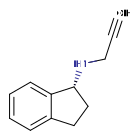
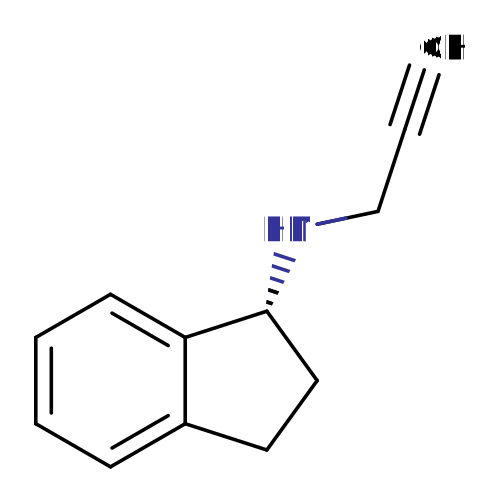
Structure for Rasagiline (DB01367)
- Weight
- Average: 171.2383
Monoisotopic: 171.104799421 - Chemical Formula
- C12H13N
- Synonyms
- (1R)-N-propargylindan-1-amine
- (R)-indan-1-yl-prop-2-ynyl-amine
- (R)-N-2-Propynyl-1-indanamine
- RAS
- Rasagilina
- Rasagiline
- External IDs
- AGN-1135
- TV-1030

Pharmacology
- Indication
For the treatment of the signs and symptoms of idiopathic Parkinsons disease as initial monotherapy and as adjunct therapy to levodopa.
 Reduce drug development failure ratesBuild, train, & validate machine-learning modelswith evidence-based and structured datasets.Build, train, & validate predictive machine-learning models with structured datasets.
- Associated Conditions
Indication Type Indication Combined Product Details Approval Level Age Group Patient Characteristics Dose Form Symptomatic treatment of Parkinson's disease •••••••••••• - Contraindications & Blackbox Warnings
 Prevent Adverse Drug Events TodayTap into our Clinical API for life-saving information on contraindications & blackbox warnings, population restrictions, harmful risks, & more.Avoid life-threatening adverse drug events with our Clinical API
- Pharmacodynamics
Rasagiline is a propargylamine and an irreversible inhibitor of monoamine oxidase (MAO). MAO, a flavin-containing enzyme, regulates the metabolic degradation of catecholamines and serotonin in the CNS and peripheral tissues. It is classified into two major molecular species, A and B, and is localized in mitochondrial membranes throughout the body in nerve terminals, brain, liver and intestinal mucosa. MAO-A is found predominantly in the GI tract and liver, and regulates the metabolic degradation of circulating catecholamines and dietary amines. MAO-B is the major form in the human brain and is responsible for the regulation of the metabolic degradation of dopamine and phenylethylamine. In ex vivo animal studies in brain, liver and intestinal tissues rasagiline was shown to be a potent,selective, and irreversible monoamine oxidase type B (MAO-B) inhibitor. At the recommended therapeutic doses, Rasagiline was also shown to be a potent and irreversible inhibitor of MAO-B in platelets. The selectivity of rasagiline for inhibiting only MAO-B (and not MAO-A) in humans and the sensitivity to tyramine during rasagiline treatment at any dose has not been sufficiently characterized to avoid restriction of dietary tyramine and amines contained in medications.
- Mechanism of action
The precise mechanisms of action of rasagiline is unknown. One mechanism is believed to be related to its MAO-B inhibitory activity, which causes an increase in extracellular levels of dopamine in the striatum. The elevated dopamine level and subsequent increased dopaminergic activity are likely to mediate rasagiline's beneficial effects seen in models of dopaminergic motor dysfunction.
Target Actions Organism AAmine oxidase [flavin-containing] B inhibitorHumans AApoptosis regulator Bcl-2 activatorHumans - Absorption
Rasagiline is rapidly absorbed following oral administration. The absolute bioavailability of rasagiline is about 36%.
- Volume of distribution
- 87 L
- Protein binding
Plasma protein binding ranges from 88-94% with mean extent of binding of 61-63% to human albumin over the concentration range of 1-100 ng/ml.
- Metabolism
Rasagiline undergoes almost complete biotransformation in the liver prior to excretion. In vitro experiments indicate that both routes of rasagiline metabolism are dependent on the cytochrome P450 (CYP) system, with CYP 1A2 being the major isoenzyme involved in rasagiline metabolism.
- Route of elimination
Rasagiline undergoes almost complete biotransformation in the liver prior to excretion. Glucuronide conjugation of rasagiline and its metabolites, with subsequent urinary excretion, is the major elimination pathway. After oral administration of 14C-labeled rasagiline, elimination occurred primarily via urine and secondarily via feces (62% of total dose in urine and 7% of total dose in feces over 7 days), with a total calculated recovery of 84% of the dose over a period of 38 days. Less than 1% of rasagiline was excreted as unchanged drug in urine.
- Half-life
Rasagiline has a mean steady-state half life of 3 hours but there is no correlation of pharmacokinetics with its pharmacological effect because of its irreversible inhibition of MAO-B.
- Clearance
Not Available
- Adverse Effects
 Improve decision support & research outcomesWith structured adverse effects data, including: blackbox warnings, adverse reactions, warning & precautions, & incidence rates. View sample adverse effects data in our new Data Library!Improve decision support & research outcomes with our structured adverse effects data.
- Toxicity
Signs and symptoms of overdosage may include, alone or in combination, any of the following: drowsiness, dizziness, faintness, irritability, hyperactivity, agitation, severe headache, hallucinations, trismus, opisthotonos, convulsions, and coma; rapid and irregular pulse, hypertension, hypotension and vascular collapse; precordial pain, respiratory depression and failure, hyperpyrexia, diaphoresis, and cool, clammy skin.
- Pathways
- Not Available
- Pharmacogenomic Effects/ADRs
- Not Available
Interactions
- Drug Interactions
- This information should not be interpreted without the help of a healthcare provider. If you believe you are experiencing an interaction, contact a healthcare provider immediately. The absence of an interaction does not necessarily mean no interactions exist.
Drug Interaction Integrate drug-drug
interactions in your software1,2-Benzodiazepine The risk or severity of CNS depression can be increased when Rasagiline is combined with 1,2-Benzodiazepine. Abacavir Abacavir may decrease the excretion rate of Rasagiline which could result in a higher serum level. Abaloparatide Rasagiline may increase the orthostatic hypotensive activities of Abaloparatide. Abametapir The serum concentration of Rasagiline can be increased when it is combined with Abametapir. Abatacept The metabolism of Rasagiline can be increased when combined with Abatacept. - Food Interactions
- Avoid St. John's Wort. Co-administration of rasagiline with this herb is contraindicated.
- Avoid tyramine-containing foods and supplements. Avoid food containing high amounts of tyramine (>150mg) as these may increase the risk of hypertensive reaction. Tyramine-containing foods include cheese, red wine, fava beans, pickled food, cured food, and alcoholic beverages.
- Take with or without food.
Products
 Drug product information from 10+ global regionsOur datasets provide approved product information including:dosage, form, labeller, route of administration, and marketing period.Access drug product information from over 10 global regions.
- Product Ingredients
Ingredient UNII CAS InChI Key Rasagiline mesylate LH8C2JI290 161735-79-1 JDBJJCWRXSVHOQ-UTONKHPSSA-N Rasagiline tartrate B9A329CN07 136236-52-7 YGKHOZXCTLKSLJ-KHAGDFGNSA-N - Product Images


- Brand Name Prescription Products
Name Dosage Strength Route Labeller Marketing Start Marketing End Region Image Asn-rasagiline Tablet 0.5 mg Oral Ascend Laboratories Ltd Not applicable Not applicable Canada 
Asn-rasagiline Tablet 1 mg Oral Ascend Laboratories Ltd Not applicable Not applicable Canada Azilect Tablet 1 mg/1 Oral Aphena Pharma Solutions Tennessee, Inc. 2006-07-10 Not applicable US 
Azilect Tablet 1 mg Oral Teva B.V. 2020-12-16 Not applicable EU 
Azilect Tablet 1 mg Oral Teva B.V. 2020-12-16 Not applicable EU - Generic Prescription Products
Name Dosage Strength Route Labeller Marketing Start Marketing End Region Image Ag-rasagiline Tablet 0.5 mg Oral Angita Pharma Inc. Not applicable Not applicable Canada Ag-rasagiline Tablet 1 mg Oral Angita Pharma Inc. Not applicable Not applicable Canada Apo-rasagiline Tablet 1 mg Oral Apotex Corporation 2016-01-12 Not applicable Canada Apo-rasagiline Tablet 0.5 mg Oral Apotex Corporation 2016-01-12 Not applicable Canada Jamp Rasagiline Tablet 0.5 mg Oral Jamp Pharma Corporation 2020-09-04 Not applicable Canada


Categories
- ATC Codes
- N04BD02 — Rasagiline
- Drug Categories
- Agents that produce hypertension
- Agents that reduce seizure threshold
- Anti-Parkinson Drugs
- Antidepressive Agents
- Central Nervous System Agents
- Central Nervous System Depressants
- Compounds used in a research, industrial, or household setting
- Cytochrome P-450 CYP1A2 Substrates
- Cytochrome P-450 Substrates
- Dopamine Agents
- Drugs that are Mainly Renally Excreted
- Enzyme Inhibitors
- Hypotensive Agents
- Indenes
- Monoamine Oxidase B Inhibitors
- Monoamine Oxidase Inhibitors
- Nervous System
- Neuroprotective Agents
- Protective Agents
- Serotonergic Drugs Shown to Increase Risk of Serotonin Syndrome
- Serotonin Agents
- Serotonin Modulators
- Chemical TaxonomyProvided by Classyfire
- Description
- This compound belongs to the class of organic compounds known as indanes. These are compounds containing an indane moiety, which consists of a cyclopentane fused to a benzene ring.
- Kingdom
- Organic compounds
- Super Class
- Benzenoids
- Class
- Indanes
- Sub Class
- Not Available
- Direct Parent
- Indanes
- Alternative Parents
- Aralkylamines / Dialkylamines / Acetylides / Organopnictogen compounds / Hydrocarbon derivatives
- Substituents
- Acetylide / Amine / Aralkylamine / Aromatic homopolycyclic compound / Hydrocarbon derivative / Indane / Organic nitrogen compound / Organonitrogen compound / Organopnictogen compound / Secondary aliphatic amine
- Molecular Framework
- Aromatic homopolycyclic compounds
- External Descriptors
- terminal acetylenic compound, secondary amine, indanes (CHEBI:63620)
- Affected organisms
- Humans and other mammals
Chemical Identifiers
- UNII
- 003N66TS6T
- CAS number
- 136236-51-6
- InChI Key
- RUOKEQAAGRXIBM-GFCCVEGCSA-N
- InChI
- InChI=1S/C12H13N/c1-2-9-13-12-8-7-10-5-3-4-6-11(10)12/h1,3-6,12-13H,7-9H2/t12-/m1/s1
- IUPAC Name
- (1R)-N-(prop-2-yn-1-yl)-2,3-dihydro-1H-inden-1-amine
- SMILES
- C#CCN[C@@H]1CCC2=CC=CC=C12
References
- Synthesis Reference
Jeffrey Sterling, David Lerner, Harel Rosen, Leonid Bronov, Dalia Medini-Green, Berta Iosefzon, Tirtsah Berger-Peskin, Ramy Lidor-Hadas, Eliezer Bahar, "Rasagiline formulations and processes for their preparation." U.S. Patent US07598420, issued October 06, 2009.
US07598420- General References
- Weinreb O, Amit T, Bar-Am O, Youdim MB: Rasagiline: a novel anti-Parkinsonian monoamine oxidase-B inhibitor with neuroprotective activity. Prog Neurobiol. 2010 Nov;92(3):330-44. doi: 10.1016/j.pneurobio.2010.06.008. Epub 2010 Jun 19. [Article]
- Leegwater-Kim J, Bortan E: The role of rasagiline in the treatment of Parkinson's disease. Clin Interv Aging. 2010 May 25;5:149-56. [Article]
- Chen JJ, Swope DM, Dashtipour K: Comprehensive review of rasagiline, a second-generation monoamine oxidase inhibitor, for the treatment of Parkinson's disease. Clin Ther. 2007 Sep;29(9):1825-49. [Article]
- External Links
- Human Metabolome Database
- HMDB0015454
- KEGG Drug
- D08469
- PubChem Compound
- 3052776
- PubChem Substance
- 46506045
- ChemSpider
- 2314553
- BindingDB
- 10989
- 134748
- ChEBI
- 63620
- ChEMBL
- CHEMBL887
- ZINC
- ZINC000019875504
- Therapeutic Targets Database
- DAP001107
- PharmGKB
- PA164764584
- PDBe Ligand
- RAU
- RxList
- RxList Drug Page
- Drugs.com
- Drugs.com Drug Page
- Wikipedia
- Rasagiline
- PDB Entries
- 5g6s
- FDA label
- Download (200 KB)
Clinical Trials
- Clinical Trials
Phase Status Purpose Conditions Count 4 Completed Treatment Depressive Symptomatology / Parkinson's Disease (PD) 1 4 Completed Treatment Parkinson's Disease (PD) 8 4 Completed Treatment Parkinson's Disease (PD) / Sleep Disturbance 1 4 Completed Treatment Schizophrenia 1 4 Terminated Supportive Care Retinal Detachment 1
Pharmacoeconomics
- Manufacturers
- Not Available
- Packagers
- Murfreesboro Pharmaceutical Nursing Supply
- Teva Pharmaceutical Industries Ltd.
- Dosage Forms
Form Route Strength Tablet Oral 0.5 mg Tablet Oral 1 mg/1 Tablet Oral 1.000 mg Tablet, film coated Tablet, film coated 1 mg Tablet Oral 1.561 mg Tablet Oral 1.44 mg Tablet Oral 1.00 mg Tablet Oral 0.780 mg Tablet Oral Tablet Oral 0.5 mg/1 Tablet Oral 1 mg - Prices
Unit description Cost Unit Azilect 0.5 mg tablet 12.11USD tablet Azilect 1 mg tablet 12.11USD tablet DrugBank does not sell nor buy drugs. Pricing information is supplied for informational purposes only.- Patents
Patent Number Pediatric Extension Approved Expires (estimated) Region US5387612 No 1995-02-07 2012-02-07 US CA2232310 No 2008-01-08 2016-09-18 Canada CA2031714 No 1998-08-25 2010-12-06 Canada US5453446 No 1995-09-26 2017-02-07 US US7815942 No 2010-10-19 2027-08-27 US US7572834 No 2009-08-11 2026-12-05 US US6126968 No 2000-10-03 2016-09-18 US
Properties
- State
- Solid
- Experimental Properties
- Not Available
- Predicted Properties
Property Value Source Water Solubility 0.0249 mg/mL ALOGPS logP 2.26 ALOGPS logP 2.3 Chemaxon logS -3.8 ALOGPS pKa (Strongest Basic) 8.4 Chemaxon Physiological Charge 1 Chemaxon Hydrogen Acceptor Count 1 Chemaxon Hydrogen Donor Count 1 Chemaxon Polar Surface Area 12.03 Å2 Chemaxon Rotatable Bond Count 2 Chemaxon Refractivity 54.47 m3·mol-1 Chemaxon Polarizability 20.25 Å3 Chemaxon Number of Rings 2 Chemaxon Bioavailability 1 Chemaxon Rule of Five Yes Chemaxon Ghose Filter Yes Chemaxon Veber's Rule Yes Chemaxon MDDR-like Rule No Chemaxon - Predicted ADMET Features
Property Value Probability Human Intestinal Absorption + 0.9901 Blood Brain Barrier + 0.9782 Caco-2 permeable + 0.5585 P-glycoprotein substrate Non-substrate 0.661 P-glycoprotein inhibitor I Non-inhibitor 0.7409 P-glycoprotein inhibitor II Non-inhibitor 0.7116 Renal organic cation transporter Non-inhibitor 0.5584 CYP450 2C9 substrate Non-substrate 0.8037 CYP450 2D6 substrate Substrate 0.5724 CYP450 3A4 substrate Non-substrate 0.6928 CYP450 1A2 substrate Inhibitor 0.9037 CYP450 2C9 inhibitor Non-inhibitor 0.8259 CYP450 2D6 inhibitor Inhibitor 0.6769 CYP450 2C19 inhibitor Inhibitor 0.5689 CYP450 3A4 inhibitor Non-inhibitor 0.8542 CYP450 inhibitory promiscuity High CYP Inhibitory Promiscuity 0.534 Ames test Non AMES toxic 0.6468 Carcinogenicity Non-carcinogens 0.8959 Biodegradation Not ready biodegradable 0.6073 Rat acute toxicity 2.8164 LD50, mol/kg Not applicable hERG inhibition (predictor I) Weak inhibitor 0.7804 hERG inhibition (predictor II) Non-inhibitor 0.7137
Spectra
- Mass Spec (NIST)
- Not Available
- Spectra
Spectrum Spectrum Type Splash Key Predicted GC-MS Spectrum - GC-MS Predicted GC-MS splash10-014i-2900000000-dbab21c92cfad0a2ad81 Predicted MS/MS Spectrum - 10V, Positive (Annotated) Predicted LC-MS/MS splash10-014i-0900000000-36386de372130f7762b2 Predicted MS/MS Spectrum - 10V, Negative (Annotated) Predicted LC-MS/MS splash10-0uk9-9500000000-6de9252ceeb994109a2c Predicted MS/MS Spectrum - 20V, Positive (Annotated) Predicted LC-MS/MS splash10-014r-5900000000-bda4b91a6ec5a21a5a33 Predicted MS/MS Spectrum - 20V, Negative (Annotated) Predicted LC-MS/MS splash10-0uk9-8900000000-c0fa8fcdbb6817ecd4f4 Predicted MS/MS Spectrum - 40V, Negative (Annotated) Predicted LC-MS/MS splash10-0gb9-2900000000-90a1b74cf5819a6816b9 Predicted MS/MS Spectrum - 40V, Positive (Annotated) Predicted LC-MS/MS splash10-0k9f-9700000000-1e57776438a6612a43ab Predicted 1H NMR Spectrum 1D NMR Not Applicable Predicted 13C NMR Spectrum 1D NMR Not Applicable - Chromatographic Properties
Collision Cross Sections (CCS)
Adduct CCS Value (Å2) Source type Source [M-H]- 144.4856252 predictedDarkChem Lite v0.1.0 [M-H]- 145.2889252 predictedDarkChem Lite v0.1.0 [M-H]- 133.385 predictedDeepCCS 1.0 (2019) [M+H]+ 145.2963252 predictedDarkChem Lite v0.1.0 [M+H]+ 146.5864252 predictedDarkChem Lite v0.1.0 [M+H]+ 136.20668 predictedDeepCCS 1.0 (2019) [M+Na]+ 145.0524252 predictedDarkChem Lite v0.1.0 [M+Na]+ 146.0732252 predictedDarkChem Lite v0.1.0 [M+Na]+ 145.13033 predictedDeepCCS 1.0 (2019)
Targets

- Kind
- Protein
- Organism
- Humans
- Pharmacological action
- Yes
- Actions
- Inhibitor
- General Function
- Primary amine oxidase activity
- Specific Function
- Catalyzes the oxidative deamination of biogenic and xenobiotic amines and has important functions in the metabolism of neuroactive and vasoactive amines in the central nervous system and peripheral...
- Gene Name
- MAOB
- Uniprot ID
- P27338
- Uniprot Name
- Amine oxidase [flavin-containing] B
- Molecular Weight
- 58762.475 Da
References
- Naoi M, Maruyama W: Functional mechanism of neuroprotection by inhibitors of type B monoamine oxidase in Parkinson's disease. Expert Rev Neurother. 2009 Aug;9(8):1233-50. doi: 10.1586/ern.09.68. [Article]
- Uzun M, Alp R, Uzlu E, Alp S, Citil M, Topcu B, Erdogan HM: Investigation of oral selegiline and rasagiline administration on QT interval in conscious rabbits. Eur Rev Med Pharmacol Sci. 2009 Mar-Apr;13(2):95-8. [Article]
- Youdim MB, Weinstock M: Molecular basis of neuroprotective activities of rasagiline and the anti-Alzheimer drug TV3326 [(N-propargyl-(3R)aminoindan-5-YL)-ethyl methyl carbamate]. Cell Mol Neurobiol. 2001 Dec;21(6):555-73. [Article]
- Chau KY, Cooper JM, Schapira AH: Rasagiline protects against alpha-synuclein induced sensitivity to oxidative stress in dopaminergic cells. Neurochem Int. 2010 Nov;57(5):525-9. doi: 10.1016/j.neuint.2010.06.017. Epub 2010 Jul 17. [Article]
- Weinreb O, Amit T, Bar-Am O, Youdim MB: Rasagiline: a novel anti-Parkinsonian monoamine oxidase-B inhibitor with neuroprotective activity. Prog Neurobiol. 2010 Nov;92(3):330-44. doi: 10.1016/j.pneurobio.2010.06.008. Epub 2010 Jun 19. [Article]
- Youdim MB, Bar Am O, Yogev-Falach M, Weinreb O, Maruyama W, Naoi M, Amit T: Rasagiline: neurodegeneration, neuroprotection, and mitochondrial permeability transition. J Neurosci Res. 2005 Jan 1-15;79(1-2):172-9. [Article]
- Leegwater-Kim J, Bortan E: The role of rasagiline in the treatment of Parkinson's disease. Clin Interv Aging. 2010 May 25;5:149-56. [Article]
- Chen JJ, Swope DM, Dashtipour K: Comprehensive review of rasagiline, a second-generation monoamine oxidase inhibitor, for the treatment of Parkinson's disease. Clin Ther. 2007 Sep;29(9):1825-49. [Article]
- Chen X, Ji ZL, Chen YZ: TTD: Therapeutic Target Database. Nucleic Acids Res. 2002 Jan 1;30(1):412-5. [Article]
- Kind
- Protein
- Organism
- Humans
- Pharmacological action
- Yes
- Actions
- Activator
- General Function
- Ubiquitin protein ligase binding
- Specific Function
- Suppresses apoptosis in a variety of cell systems including factor-dependent lymphohematopoietic and neural cells. Regulates cell death by controlling the mitochondrial membrane permeability. Appea...
- Gene Name
- BCL2
- Uniprot ID
- P10415
- Uniprot Name
- Apoptosis regulator Bcl-2
- Molecular Weight
- 26265.66 Da
References
- Youdim MB, Weinstock M: Molecular basis of neuroprotective activities of rasagiline and the anti-Alzheimer drug TV3326 [(N-propargyl-(3R)aminoindan-5-YL)-ethyl methyl carbamate]. Cell Mol Neurobiol. 2001 Dec;21(6):555-73. [Article]
- Akao Y, Maruyama W, Yi H, Shamoto-Nagai M, Youdim MB, Naoi M: An anti-Parkinson's disease drug, N-propargyl-1(R)-aminoindan (rasagiline), enhances expression of anti-apoptotic bcl-2 in human dopaminergic SH-SY5Y cells. Neurosci Lett. 2002 Jun 28;326(2):105-8. [Article]
- Maruyama W, Akao Y, Carrillo MC, Kitani K, Youdium MB, Naoi M: Neuroprotection by propargylamines in Parkinson's disease: suppression of apoptosis and induction of prosurvival genes. Neurotoxicol Teratol. 2002 Sep-Oct;24(5):675-82. [Article]
- Youdim MB, Amit T, Falach-Yogev M, Bar Am O, Maruyama W, Naoi M: The essentiality of Bcl-2, PKC and proteasome-ubiquitin complex activations in the neuroprotective-antiapoptotic action of the anti-Parkinson drug, rasagiline. Biochem Pharmacol. 2003 Oct 15;66(8):1635-41. [Article]
- Bar-Am O, Weinreb O, Amit T, Youdim MB: Regulation of Bcl-2 family proteins, neurotrophic factors, and APP processing in the neurorescue activity of propargylamine. FASEB J. 2005 Nov;19(13):1899-901. Epub 2005 Sep 7. [Article]
Enzymes
- Kind
- Protein
- Organism
- Humans
- Pharmacological action
- Unknown
- Actions
- Substrate
- General Function
- Oxidoreductase activity, acting on paired donors, with incorporation or reduction of molecular oxygen, reduced flavin or flavoprotein as one donor, and incorporation of one atom of oxygen
- Specific Function
- Cytochromes P450 are a group of heme-thiolate monooxygenases. In liver microsomes, this enzyme is involved in an NADPH-dependent electron transport pathway. It oxidizes a variety of structurally un...
- Gene Name
- CYP1A2
- Uniprot ID
- P05177
- Uniprot Name
- Cytochrome P450 1A2
- Molecular Weight
- 58293.76 Da
References
- Lecht S, Haroutiunian S, Hoffman A, Lazarovici P: Rasagiline - a novel MAO B inhibitor in Parkinson's disease therapy. Ther Clin Risk Manag. 2007 Jun;3(3):467-74. [Article]
- Leegwater-Kim J, Bortan E: The role of rasagiline in the treatment of Parkinson's disease. Clin Interv Aging. 2010 May 25;5:149-56. [Article]
- Chen JJ, Swope DM, Dashtipour K: Comprehensive review of rasagiline, a second-generation monoamine oxidase inhibitor, for the treatment of Parkinson's disease. Clin Ther. 2007 Sep;29(9):1825-49. [Article]
- Rasagiline FDA label [File]

Drug created at June 13, 2005 13:24 / Updated at April 27, 2024 09:44