Identification
- Summary
Flunarizine is a selective calcium-entry blocker used as migraine prophylaxis in patients with severe and frequent episodes who have not responded adequately to more common treatments.
- Generic Name
- Flunarizine
- DrugBank Accession Number
- DB04841
- Background
Flunarizine is a selective calcium entry blocker with calmodulin binding properties and histamine H1 blocking activity. It is effective in the prophylaxis of migraine, occlusive peripheral vascular disease, vertigo of central and peripheral origin, and as an adjuvant in the therapy of epilepsy.
- Type
- Small Molecule
- Groups
- Approved
- Structure
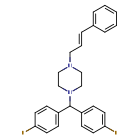
Structure for Flunarizine (DB04841)

- Weight
- Average: 404.4948
Monoisotopic: 404.206405252 - Chemical Formula
- C26H26F2N2
- Synonyms
- 1-[bis(4-fluorophenyl)methyl]-4-[(2E)-3-phenylprop-2-en-1-yl]piperazine
- Flunarizina
- Flunarizine
- Flunarizinum

Pharmacology
- Indication
Used in the prophylaxis of migraine, occlusive peripheral vascular disease, vertigo of central and peripheral origin, and as an adjuvant in the therapy of epilepsy.
 Reduce drug development failure ratesBuild, train, & validate machine-learning modelswith evidence-based and structured datasets.Build, train, & validate predictive machine-learning models with structured datasets.
- Associated Conditions
Indication Type Indication Combined Product Details Approval Level Age Group Patient Characteristics Dose Form Prophylaxis of Severe migraine •••••••••••• - Contraindications & Blackbox Warnings
 Prevent Adverse Drug Events TodayTap into our Clinical API for life-saving information on contraindications & blackbox warnings, population restrictions, harmful risks, & more.Avoid life-threatening adverse drug events with our Clinical API
- Pharmacodynamics
Flunarizine is a selective calcium entry blocker with calmodulin binding properties and histamine H1 blocking activity.
- Mechanism of action
Flunarizine inhibits the influx of extracellular calcium through myocardial and vascular membrane pores by physically plugging the channel. The decrease in intracellular calcium inhibits the contractile processes of smooth muscle cells, causing dilation of the coronary and systemic arteries, increased oxygen delivery to the myocardial tissue, decreased total peripheral resistance, decreased systemic blood pressure, and decreased afterload.
Target Actions Organism AVoltage-dependent T-type calcium channel subunit alpha-1G inhibitorHumans AVoltage-dependent T-type calcium channel subunit alpha-1H inhibitorHumans AVoltage-dependent T-type calcium channel subunit alpha-1I inhibitorHumans ACalmodulin antagonistHumans UHistamine H1 receptor antagonistHumans - Absorption
85% following oral administration.
- Volume of distribution
Not Available
- Protein binding
99% bound to plasma proteins
- Metabolism
Hepatic, to two metabolites via N-dealylation and hydroxylation.
Hover over products below to view reaction partners
- Route of elimination
Not Available
- Half-life
18 days
- Clearance
Not Available
- Adverse Effects
 Improve decision support & research outcomesWith structured adverse effects data, including: blackbox warnings, adverse reactions, warning & precautions, & incidence rates. View sample adverse effects data in our new Data Library!Improve decision support & research outcomes with our structured adverse effects data.
- Toxicity
-Flunarizine should be used with care in patients with depression or those being prescribed other agents, such as phenothiazines, concurrently, which may cause extrapyramidal side-effects. -Acute overdosage has been reported and the observed symptoms were sedation, agitation and tachycardia. -Treatment of acute overdosage consists of charcoal administration, induction of emesis or gastric lavage, and supportive measures. No specific antidote is known.
- Pathways
Pathway Category Flunarizine H1-Antihistamine Action Drug action - Pharmacogenomic Effects/ADRs
- Not Available
Interactions
- Drug Interactions
- This information should not be interpreted without the help of a healthcare provider. If you believe you are experiencing an interaction, contact a healthcare provider immediately. The absence of an interaction does not necessarily mean no interactions exist.
Drug Interaction Integrate drug-drug
interactions in your software1,2-Benzodiazepine The risk or severity of CNS depression can be increased when Flunarizine is combined with 1,2-Benzodiazepine. Abametapir The serum concentration of Flunarizine can be increased when it is combined with Abametapir. Abatacept The metabolism of Flunarizine can be increased when combined with Abatacept. Abiraterone The serum concentration of Flunarizine can be increased when it is combined with Abiraterone. Abrocitinib The metabolism of Abrocitinib can be decreased when combined with Flunarizine. - Food Interactions
- Avoid alcohol.
- Take with or without food. The absorption is unaffected by food.
Products
 Drug product information from 10+ global regionsOur datasets provide approved product information including:dosage, form, labeller, route of administration, and marketing period.Access drug product information from over 10 global regions.
- Product Ingredients
Ingredient UNII CAS InChI Key Flunarizine dihydrochloride C11102TO53 30484-77-6 RXKMOPXNWTYEHI-RDRKJGRWSA-N - International/Other Brands
- Flugeral (Italfarmaco) / Fluxarten (GlaxoSmithKline) / Gradient (Polifarma) / Sibelium (Janssen) / Zinasen (AtralCipan)
- Brand Name Prescription Products
Name Dosage Strength Route Labeller Marketing Start Marketing End Region Image Flunarizine Capsule 5 mg Oral Aa Pharma Inc 2002-08-08 Not applicable Canada 
Sibelium Cap 5mg Capsule 5 mg Oral Pharmascience Inc 1990-12-31 2009-01-29 Canada - Generic Prescription Products
Name Dosage Strength Route Labeller Marketing Start Marketing End Region Image Novo-flunarizine - Cap 5mg Capsule 5 mg Oral Novopharm Limited 1998-04-30 2015-10-26 Canada - Over the Counter Products
Name Dosage Strength Route Labeller Marketing Start Marketing End Region Image FORKNOW TABLET 10 mg Tablet 10 mg Oral YUNG SHIN PHARMACEUTICAL (SINGAPORE) PTE LTD 1995-04-07 Not applicable Singapore 
POLI-FLUNARIN CAPSULE 5 mg Capsule 5 mg Oral MD PHARMACEUTICALS PTE. LTD. 1997-07-23 Not applicable Singapore
Categories
- ATC Codes
- N07CA03 — Flunarizine
- Drug Categories
- Agents causing hyperkalemia
- Antiarrhythmic agents
- Anticonvulsants
- Antimigraine Agents, Miscellaneous
- Antivertigo Preparations
- Bradycardia-Causing Agents
- Calcium Channel Blockers
- Calcium-Regulating Hormones and Agents
- Cardiovascular Agents
- Central Nervous System Agents
- Central Nervous System Depressants
- Cytochrome P-450 CYP1A2 Substrates
- Cytochrome P-450 CYP2A6 Substrates
- Cytochrome P-450 CYP2C9 Substrates
- Cytochrome P-450 CYP2D6 Substrates
- Cytochrome P-450 CYP3A Substrates
- Cytochrome P-450 CYP3A4 Substrates
- Cytochrome P-450 Substrates
- Histamine Agents
- Histamine Antagonists
- Histamine H1 Antagonists
- Membrane Transport Modulators
- Nervous System
- Neurotransmitter Agents
- Piperazine Derivatives
- Piperazines
- Vasodilating Agents
- Chemical TaxonomyProvided by Classyfire
- Description
- This compound belongs to the class of organic compounds known as diphenylmethanes. These are compounds containing a diphenylmethane moiety, which consists of a methane wherein two hydrogen atoms are replaced by two phenyl groups.
- Kingdom
- Organic compounds
- Super Class
- Benzenoids
- Class
- Benzene and substituted derivatives
- Sub Class
- Diphenylmethanes
- Direct Parent
- Diphenylmethanes
- Alternative Parents
- Styrenes / N-alkylpiperazines / Fluorobenzenes / Aralkylamines / Aryl fluorides / Trialkylamines / Azacyclic compounds / Organopnictogen compounds / Organofluorides / Hydrocarbon derivatives
- Substituents
- 1,4-diazinane / Amine / Aralkylamine / Aromatic heteromonocyclic compound / Aryl fluoride / Aryl halide / Azacycle / Diphenylmethane / Fluorobenzene / Halobenzene
- Molecular Framework
- Aromatic heteromonocyclic compounds
- External Descriptors
- Not Available
- Affected organisms
- Humans and other mammals
Chemical Identifiers
- UNII
- R7PLA2DM0J
- CAS number
- 52468-60-7
- InChI Key
- SMANXXCATUTDDT-QPJJXVBHSA-N
- InChI
- InChI=1S/C26H26F2N2/c27-24-12-8-22(9-13-24)26(23-10-14-25(28)15-11-23)30-19-17-29(18-20-30)16-4-7-21-5-2-1-3-6-21/h1-15,26H,16-20H2/b7-4+
- IUPAC Name
- 1-[bis(4-fluorophenyl)methyl]-4-[(2E)-3-phenylprop-2-en-1-yl]piperazine
- SMILES
- FC1=CC=C(C=C1)C(N1CCN(C\C=C\C2=CC=CC=C2)CC1)C1=CC=C(F)C=C1
References
- Synthesis Reference
Matthew Peterson, Julius Remenar, Carlos Sanrame, "NOVEL FLUNARIZINE SALT FORMS AND METHODS OF MAKING AND USING THE SAME." U.S. Patent US20080200474, issued August 21, 2008.
US20080200474- General References
- Not Available
- External Links
- Human Metabolome Database
- HMDB0015589
- KEGG Drug
- D01303
- PubChem Compound
- 941361
- PubChem Substance
- 46507129
- ChemSpider
- 819216
- BindingDB
- 50017702
- 4459
- ChEBI
- 135652
- ChEMBL
- CHEMBL30008
- ZINC
- ZINC000019360739
- Therapeutic Targets Database
- DAP000142
- PharmGKB
- PA164776636
- Drugs.com
- Drugs.com Drug Page
- Wikipedia
- Flunarizine
Clinical Trials
- Clinical Trials
Phase Status Purpose Conditions Count 4 Completed Basic Science Chronic Migraine / Chronic Pain / Fibromyalgia 1 4 Completed Prevention Migraine in Adolescents 1 4 Completed Treatment Chronic Migraine 1 4 Completed Treatment Schizophrenia 1 4 Recruiting Treatment Migraine 1
Pharmacoeconomics
- Manufacturers
- Not Available
- Packagers
- Not Available
- Dosage Forms
Form Route Strength Tablet Oral Capsule Oral 10 MG Tablet Oral 1000000 mg Tablet Oral 11.4 mg Capsule, coated Oral 5 mg Tablet Oral 11.8 MG Tablet Oral 10 MG Tablet Oral 5.000 mg Capsule Oral Tablet Oral 5.9 mg Tablet, film coated Oral Tablet, film coated Oral 5 MG Tablet Oral 5 MG Capsule, coated Oral 10 mg Tablet, coated Oral 5 mg Capsule Oral 5 mg Capsule, extended release 5 mg - Prices
Unit description Cost Unit Apo-Flunarizine 5 mg Capsule 0.75USD capsule DrugBank does not sell nor buy drugs. Pricing information is supplied for informational purposes only.- Patents
- Not Available
Properties
- State
- Solid
- Experimental Properties
Property Value Source melting point (°C) 251.5 Janssen, P.A.J.; U.S. Patent 3,773,939; November 20, 1973; assigned to Janssen Pharmaceutica N.V. logP 5.78 BIOBYTE (1995) - Predicted Properties
Property Value Source Water Solubility 0.00168 mg/mL ALOGPS logP 5.3 ALOGPS logP 6.17 Chemaxon logS -5.4 ALOGPS pKa (Strongest Basic) 7.22 Chemaxon Physiological Charge 1 Chemaxon Hydrogen Acceptor Count 2 Chemaxon Hydrogen Donor Count 0 Chemaxon Polar Surface Area 6.48 Å2 Chemaxon Rotatable Bond Count 6 Chemaxon Refractivity 120.3 m3·mol-1 Chemaxon Polarizability 44.2 Å3 Chemaxon Number of Rings 4 Chemaxon Bioavailability 1 Chemaxon Rule of Five No Chemaxon Ghose Filter No Chemaxon Veber's Rule Yes Chemaxon MDDR-like Rule Yes Chemaxon - Predicted ADMET Features
Property Value Probability Human Intestinal Absorption + 0.9574 Blood Brain Barrier + 0.9789 Caco-2 permeable + 0.5893 P-glycoprotein substrate Substrate 0.7209 P-glycoprotein inhibitor I Inhibitor 0.9266 P-glycoprotein inhibitor II Non-inhibitor 0.6563 Renal organic cation transporter Inhibitor 0.7605 CYP450 2C9 substrate Non-substrate 0.8855 CYP450 2D6 substrate Substrate 0.8918 CYP450 3A4 substrate Non-substrate 0.7208 CYP450 1A2 substrate Inhibitor 0.9107 CYP450 2C9 inhibitor Non-inhibitor 0.9229 CYP450 2D6 inhibitor Inhibitor 0.9323 CYP450 2C19 inhibitor Non-inhibitor 0.9025 CYP450 3A4 inhibitor Non-inhibitor 0.9034 CYP450 inhibitory promiscuity High CYP Inhibitory Promiscuity 0.7304 Ames test Non AMES toxic 0.8902 Carcinogenicity Non-carcinogens 0.9422 Biodegradation Not ready biodegradable 1.0 Rat acute toxicity 2.3271 LD50, mol/kg Not applicable hERG inhibition (predictor I) Strong inhibitor 0.5261 hERG inhibition (predictor II) Inhibitor 0.7549
Spectra
- Mass Spec (NIST)
- Not Available
- Spectra
- Chromatographic Properties
Collision Cross Sections (CCS)
Adduct CCS Value (Å2) Source type Source [M-H]- 215.7968638 predictedDarkChem Lite v0.1.0 [M-H]- 196.66583 predictedDeepCCS 1.0 (2019) [M+H]+ 216.5786638 predictedDarkChem Lite v0.1.0 [M+H]+ 199.02383 predictedDeepCCS 1.0 (2019) [M+Na]+ 216.2153638 predictedDarkChem Lite v0.1.0 [M+Na]+ 205.42197 predictedDeepCCS 1.0 (2019)
Targets

- Kind
- Protein
- Organism
- Humans
- Pharmacological action
- Yes
- Actions
- Inhibitor
- General Function
- Scaffold protein binding
- Specific Function
- Voltage-sensitive calcium channels (VSCC) mediate the entry of calcium ions into excitable cells and are also involved in a variety of calcium-dependent processes, including muscle contraction, hor...
- Gene Name
- CACNA1G
- Uniprot ID
- O43497
- Uniprot Name
- Voltage-dependent T-type calcium channel subunit alpha-1G
- Molecular Weight
- 262468.62 Da
References
- Overington JP, Al-Lazikani B, Hopkins AL: How many drug targets are there? Nat Rev Drug Discov. 2006 Dec;5(12):993-6. [Article]
- Imming P, Sinning C, Meyer A: Drugs, their targets and the nature and number of drug targets. Nat Rev Drug Discov. 2006 Oct;5(10):821-34. [Article]
- Uebele VN, Nuss CE, Fox SV, Garson SL, Cristescu R, Doran SM, Kraus RL, Santarelli VP, Li Y, Barrow JC, Yang ZQ, Schlegel KA, Rittle KE, Reger TS, Bednar RA, Lemaire W, Mullen FA, Ballard JE, Tang C, Dai G, McManus OB, Koblan KS, Renger JJ: Positive allosteric interaction of structurally diverse T-type calcium channel antagonists. Cell Biochem Biophys. 2009;55(2):81-93. doi: 10.1007/s12013-009-9057-4. Epub 2009 Jul 7. [Article]
- Santi CM, Cayabyab FS, Sutton KG, McRory JE, Mezeyova J, Hamming KS, Parker D, Stea A, Snutch TP: Differential inhibition of T-type calcium channels by neuroleptics. J Neurosci. 2002 Jan 15;22(2):396-403. [Article]
- Kind
- Protein
- Organism
- Humans
- Pharmacological action
- Yes
- Actions
- Inhibitor
- General Function
- Scaffold protein binding
- Specific Function
- Voltage-sensitive calcium channels (VSCC) mediate the entry of calcium ions into excitable cells and are also involved in a variety of calcium-dependent processes, including muscle contraction, hor...
- Gene Name
- CACNA1H
- Uniprot ID
- O95180
- Uniprot Name
- Voltage-dependent T-type calcium channel subunit alpha-1H
- Molecular Weight
- 259160.2 Da
References
- Overington JP, Al-Lazikani B, Hopkins AL: How many drug targets are there? Nat Rev Drug Discov. 2006 Dec;5(12):993-6. [Article]
- Imming P, Sinning C, Meyer A: Drugs, their targets and the nature and number of drug targets. Nat Rev Drug Discov. 2006 Oct;5(10):821-34. [Article]
- Chen X, Ji ZL, Chen YZ: TTD: Therapeutic Target Database. Nucleic Acids Res. 2002 Jan 1;30(1):412-5. [Article]
- Uebele VN, Nuss CE, Fox SV, Garson SL, Cristescu R, Doran SM, Kraus RL, Santarelli VP, Li Y, Barrow JC, Yang ZQ, Schlegel KA, Rittle KE, Reger TS, Bednar RA, Lemaire W, Mullen FA, Ballard JE, Tang C, Dai G, McManus OB, Koblan KS, Renger JJ: Positive allosteric interaction of structurally diverse T-type calcium channel antagonists. Cell Biochem Biophys. 2009;55(2):81-93. doi: 10.1007/s12013-009-9057-4. Epub 2009 Jul 7. [Article]
- Santi CM, Cayabyab FS, Sutton KG, McRory JE, Mezeyova J, Hamming KS, Parker D, Stea A, Snutch TP: Differential inhibition of T-type calcium channels by neuroleptics. J Neurosci. 2002 Jan 15;22(2):396-403. [Article]
- Kind
- Protein
- Organism
- Humans
- Pharmacological action
- Yes
- Actions
- Inhibitor
- General Function
- Voltage-gated calcium channel activity
- Specific Function
- Voltage-sensitive calcium channels (VSCC) mediate the entry of calcium ions into excitable cells and are also involved in a variety of calcium-dependent processes, including muscle contraction, hor...
- Gene Name
- CACNA1I
- Uniprot ID
- Q9P0X4
- Uniprot Name
- Voltage-dependent T-type calcium channel subunit alpha-1I
- Molecular Weight
- 245100.8 Da
References
- Overington JP, Al-Lazikani B, Hopkins AL: How many drug targets are there? Nat Rev Drug Discov. 2006 Dec;5(12):993-6. [Article]
- Imming P, Sinning C, Meyer A: Drugs, their targets and the nature and number of drug targets. Nat Rev Drug Discov. 2006 Oct;5(10):821-34. [Article]
- Uebele VN, Nuss CE, Fox SV, Garson SL, Cristescu R, Doran SM, Kraus RL, Santarelli VP, Li Y, Barrow JC, Yang ZQ, Schlegel KA, Rittle KE, Reger TS, Bednar RA, Lemaire W, Mullen FA, Ballard JE, Tang C, Dai G, McManus OB, Koblan KS, Renger JJ: Positive allosteric interaction of structurally diverse T-type calcium channel antagonists. Cell Biochem Biophys. 2009;55(2):81-93. doi: 10.1007/s12013-009-9057-4. Epub 2009 Jul 7. [Article]
- Santi CM, Cayabyab FS, Sutton KG, McRory JE, Mezeyova J, Hamming KS, Parker D, Stea A, Snutch TP: Differential inhibition of T-type calcium channels by neuroleptics. J Neurosci. 2002 Jan 15;22(2):396-403. [Article]
- Kind
- Protein
- Organism
- Humans
- Pharmacological action
- Yes
- Actions
- Antagonist
- General Function
- Titin binding
- Specific Function
- Calmodulin mediates the control of a large number of enzymes, ion channels, aquaporins and other proteins by Ca(2+). Among the enzymes to be stimulated by the calmodulin-Ca(2+) complex are a number...
- Gene Name
- CALM1
- Uniprot ID
- P0DP23
- Uniprot Name
- Calmodulin
- Molecular Weight
- 16837.47 Da
References
- Gajdus M, Szadujkis-Szadurski L, Szadujkis-Szadurski R, Glaza I, Zalewska M, Szadujkis-Szadurska K, Gurtowska N: Role of calcium and calmodulin in reaction of gastric fundus contraction. Postepy Hig Med Dosw (Online). 2011 Sep 5;65:569-73. doi: 10.5604/17322693.958061. [Article]
- Castellino SM, Friedman HS, Elion GB, Ong ET, Marcelli SL, Page R, Bigner DD, Dewhirst MW: Flunarizine enhancement of melphalan activity against drug-sensitive/resistant rhabdomyosarcoma. Br J Cancer. 1995 Jun;71(6):1181-7. doi: 10.1038/bjc.1995.230. [Article]
- Kavanagh BD, Coffey BE, Needham D, Hochmuth RM, Dewhirst MW: The effect of flunarizine on erythrocyte suspension viscosity under conditions of extreme hypoxia, low pH, and lactate treatment. Br J Cancer. 1993 Apr;67(4):734-41. doi: 10.1038/bjc.1993.134. [Article]
- Kind
- Protein
- Organism
- Humans
- Pharmacological action
- Unknown
- Actions
- Antagonist
- General Function
- Histamine receptor activity
- Specific Function
- In peripheral tissues, the H1 subclass of histamine receptors mediates the contraction of smooth muscles, increase in capillary permeability due to contraction of terminal venules, and catecholamin...
- Gene Name
- HRH1
- Uniprot ID
- P35367
- Uniprot Name
- Histamine H1 receptor
- Molecular Weight
- 55783.61 Da
References
- Overington JP, Al-Lazikani B, Hopkins AL: How many drug targets are there? Nat Rev Drug Discov. 2006 Dec;5(12):993-6. [Article]
- Imming P, Sinning C, Meyer A: Drugs, their targets and the nature and number of drug targets. Nat Rev Drug Discov. 2006 Oct;5(10):821-34. [Article]
- Taylor JE, Defeudis FV: Interactions of verapamil, D 600, flunarizine and nifedipine with cerebral histamine-receptors. Neurochem Int. 1986;9(3):379-81. [Article]
Enzymes
- Kind
- Protein
- Organism
- Humans
- Pharmacological action
- No
- Actions
- Substrate
- General Function
- Vitamin d3 25-hydroxylase activity
- Specific Function
- Cytochromes P450 are a group of heme-thiolate monooxygenases. In liver microsomes, this enzyme is involved in an NADPH-dependent electron transport pathway. It performs a variety of oxidation react...
- Gene Name
- CYP3A4
- Uniprot ID
- P08684
- Uniprot Name
- Cytochrome P450 3A4
- Molecular Weight
- 57342.67 Da
References
- Uesawa Y, Takeuchi T, Mohri K: Integrated analysis on the physicochemical properties of dihydropyridine calcium channel blockers in grapefruit juice interactions. Curr Pharm Biotechnol. 2012 Jul;13(9):1705-17. [Article]
- Kind
- Protein
- Organism
- Humans
- Pharmacological action
- Unknown
- Actions
- Substrate
- General Function
- Steroid hydroxylase activity
- Specific Function
- Responsible for the metabolism of many drugs and environmental chemicals that it oxidizes. It is involved in the metabolism of drugs such as antiarrhythmics, adrenoceptor antagonists, and tricyclic...
- Gene Name
- CYP2D6
- Uniprot ID
- P10635
- Uniprot Name
- Cytochrome P450 2D6
- Molecular Weight
- 55768.94 Da
References
- Zhou SF, Zhou ZW, Yang LP, Cai JP: Substrates, inducers, inhibitors and structure-activity relationships of human Cytochrome P450 2C9 and implications in drug development. Curr Med Chem. 2009;16(27):3480-675. Epub 2009 Sep 1. [Article]
- Narimatsu S, Kariya S, Isozaki S, Ohmori S, Kitada M, Hosokawa S, Masubuchi Y, Suzuki T: Involvement of CYP2D6 in oxidative metabolism of cinnarizine and flunarizine in human liver microsomes. Biochem Biophys Res Commun. 1993 Jun 30;193(3):1262-8. doi: 10.1006/bbrc.1993.1761. [Article]
- Kariya S, Isozaki S, Uchino K, Suzuki T, Narimatsu S: Oxidative metabolism of flunarizine and cinnarizine by microsomes from B-lymphoblastoid cell lines expressing human cytochrome P450 enzymes. Biol Pharm Bull. 1996 Nov;19(11):1511-4. doi: 10.1248/bpb.19.1511. [Article]
- Kind
- Protein
- Organism
- Humans
- Pharmacological action
- Unknown
- Actions
- Substrate
- General Function
- Steroid hydroxylase activity
- Specific Function
- Cytochromes P450 are a group of heme-thiolate monooxygenases. In liver microsomes, this enzyme is involved in an NADPH-dependent electron transport pathway. It oxidizes a variety of structurally un...
- Gene Name
- CYP2C9
- Uniprot ID
- P11712
- Uniprot Name
- Cytochrome P450 2C9
- Molecular Weight
- 55627.365 Da
References
- Zhou SF, Zhou ZW, Yang LP, Cai JP: Substrates, inducers, inhibitors and structure-activity relationships of human Cytochrome P450 2C9 and implications in drug development. Curr Med Chem. 2009;16(27):3480-675. Epub 2009 Sep 1. [Article]
- Rendic S: Summary of information on human CYP enzymes: human P450 metabolism data. Drug Metab Rev. 2002 Feb-May;34(1-2):83-448. [Article]
- Kariya S, Isozaki S, Uchino K, Suzuki T, Narimatsu S: Oxidative metabolism of flunarizine and cinnarizine by microsomes from B-lymphoblastoid cell lines expressing human cytochrome P450 enzymes. Biol Pharm Bull. 1996 Nov;19(11):1511-4. doi: 10.1248/bpb.19.1511. [Article]
- Kind
- Protein
- Organism
- Humans
- Pharmacological action
- Unknown
- Actions
- Substrate
- General Function
- Vitamin d 24-hydroxylase activity
- Specific Function
- Cytochromes P450 are a group of heme-thiolate monooxygenases. In liver microsomes, this enzyme is involved in an NADPH-dependent electron transport pathway. It oxidizes a variety of structurally un...
- Gene Name
- CYP1A1
- Uniprot ID
- P04798
- Uniprot Name
- Cytochrome P450 1A1
- Molecular Weight
- 58164.815 Da
References
- Kariya S, Isozaki S, Uchino K, Suzuki T, Narimatsu S: Oxidative metabolism of flunarizine and cinnarizine by microsomes from B-lymphoblastoid cell lines expressing human cytochrome P450 enzymes. Biol Pharm Bull. 1996 Nov;19(11):1511-4. doi: 10.1248/bpb.19.1511. [Article]
- Kind
- Protein
- Organism
- Humans
- Pharmacological action
- Unknown
- Actions
- Substrate
- Curator comments
- Data is limited to in vitro studies.
- General Function
- Oxidoreductase activity, acting on paired donors, with incorporation or reduction of molecular oxygen, reduced flavin or flavoprotein as one donor, and incorporation of one atom of oxygen
- Specific Function
- Cytochromes P450 are a group of heme-thiolate monooxygenases. In liver microsomes, this enzyme is involved in an NADPH-dependent electron transport pathway. It oxidizes a variety of structurally un...
- Gene Name
- CYP1A2
- Uniprot ID
- P05177
- Uniprot Name
- Cytochrome P450 1A2
- Molecular Weight
- 58293.76 Da
References
- Kariya S, Isozaki S, Uchino K, Suzuki T, Narimatsu S: Oxidative metabolism of flunarizine and cinnarizine by microsomes from B-lymphoblastoid cell lines expressing human cytochrome P450 enzymes. Biol Pharm Bull. 1996 Nov;19(11):1511-4. doi: 10.1248/bpb.19.1511. [Article]
- Kind
- Protein
- Organism
- Humans
- Pharmacological action
- Unknown
- Actions
- Substrate
- General Function
- Steroid hydroxylase activity
- Specific Function
- Exhibits a high coumarin 7-hydroxylase activity. Can act in the hydroxylation of the anti-cancer drugs cyclophosphamide and ifosphamide. Competent in the metabolic activation of aflatoxin B1. Const...
- Gene Name
- CYP2A6
- Uniprot ID
- P11509
- Uniprot Name
- Cytochrome P450 2A6
- Molecular Weight
- 56501.005 Da
References
- Rendic S: Summary of information on human CYP enzymes: human P450 metabolism data. Drug Metab Rev. 2002 Feb-May;34(1-2):83-448. [Article]
- Kariya S, Isozaki S, Uchino K, Suzuki T, Narimatsu S: Oxidative metabolism of flunarizine and cinnarizine by microsomes from B-lymphoblastoid cell lines expressing human cytochrome P450 enzymes. Biol Pharm Bull. 1996 Nov;19(11):1511-4. doi: 10.1248/bpb.19.1511. [Article]

Drug created at September 27, 2007 13:47 / Updated at April 26, 2024 00:45