Identification
- Summary
Nilotinib is a kinase inhibitor used for the chronic phase treatment of Chronic Myeloid Leukemia (CML) that is Philadelphia chromosome positive and for the treatment of CML that is resistant to therapy containing imatinib.
- Brand Names
- Tasigna
- Generic Name
- Nilotinib
- DrugBank Accession Number
- DB04868
- Background
Nilotinib, also known as AMN107, is a tyrosine kinase inhibitor under investigation as a possible treatment for chronic myelogenous leukemia (CML). A Phase I clinical trial in 2006 showed that this drug was relatively safe and offered significant therapeutic benefits in cases of CML which were found to be resistant to treatment with imatinib (Gleevec), another tyrosine kinase inhibitor used as a first-line treatment for CML.
- Type
- Small Molecule
- Groups
- Approved, Investigational
- Structure
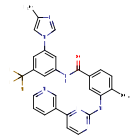
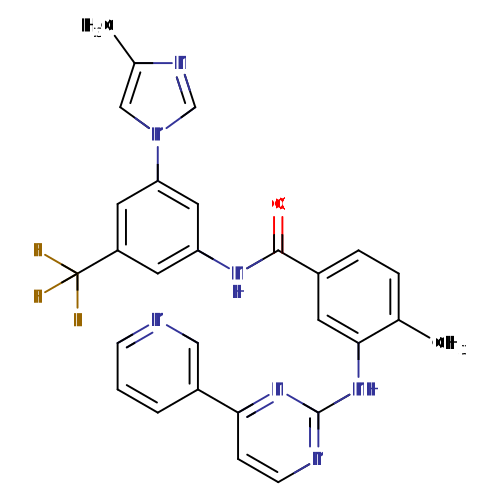
Structure for Nilotinib (DB04868)
- Weight
- Average: 529.5158
Monoisotopic: 529.183792976 - Chemical Formula
- C28H22F3N7O
- Synonyms
- Nilotinib
- Nilotinibum
- External IDs
- AMN 107
- AMN-107
- AMN107

Pharmacology
- Indication
For the potential treatment of various leukemias, including chronic myeloid leukemia (CML).
 Reduce drug development failure ratesBuild, train, & validate machine-learning modelswith evidence-based and structured datasets.Build, train, & validate predictive machine-learning models with structured datasets.
- Associated Conditions
Indication Type Indication Combined Product Details Approval Level Age Group Patient Characteristics Dose Form Treatment of Accelerated phase chronic myologenic leukemia •••••••••••• ••••••••••• •••••• ••••••••• ••••••••• •• •••••••• •••••• •••••••••• ••••••• Treatment of Accelerated phase chronic myologenic leukemia •••••••••••• ••••••••••• •••••• ••••••••• •••••••• •••••••••• •••••••• •••••••••• ••••••• Treatment of Myeloid leukemia, chronic, chronic phase •••••••••••• ••••••••••• •••••• ••••••••• ••••••••• •• •••••••• •••••• •••••••••• ••••••• Treatment of Myeloid leukemia, chronic, chronic phase •••••••••••• ••••••••••• •••••• ••••••••• •••••••• ••••••••••• •••••••• ••••••••• ••••••• Treatment of Newly diagnosed, chronic phase chronic myeloid leukemia •••••••••••• ••••••••••• •••••• ••••••••• ••••••• - Contraindications & Blackbox Warnings
 Prevent Adverse Drug Events TodayTap into our Clinical API for life-saving information on contraindications & blackbox warnings, population restrictions, harmful risks, & more.Avoid life-threatening adverse drug events with our Clinical API
- Pharmacodynamics
Nilotinib is a transduction inhibitor that targets BCR-ABL, c-kit and PDGF, for the potential treatment of various leukemias, including chronic myeloid leukemia (CML).
- Mechanism of action
Chronic myelogenous leukaemia (CML) is caused by the BCR-ABL oncogene. Nilotinib inhibits the tyrosine kinase activity of the BCR-ABL protein. Nilotinib fits into the ATP-binding site of the BCR-ABL protein with higher affinity than imatinib, over-riding resistance caused by mutations. The ability of AMN107 to inhibit TEL-platelet-derived growth factor receptor-beta (TEL-PDGFRbeta), which causes chronic myelomonocytic leukaemia, and FIP1-like-1-PDGFRalpha, which causes hypereosinophilic syndrome, suggests potential use of AMN107 for myeloproliferative diseases characterised by these kinase fusions (Stover et al, 2005; Weisberg et al, 2005). AMN107 also inhibits the c-Kit receptor kinase, including the D816V-mutated variant of KIT, at pharmacologically achievable concentrations, supporting potential utility in the treatment of mastocytosis, and gastrointestinal stromal tumours (Weisberg et al, 2005; von Bubnoff et al, 2005; Gleixner et al, 2006).
Target Actions Organism ATyrosine-protein kinase ABL1 inhibitorHumans UMast/stem cell growth factor receptor Kit antagonistHumans - Absorption
Orally available
- Volume of distribution
Not Available
- Protein binding
Not Available
- Metabolism
- Not Available
- Route of elimination
Not Available
- Half-life
15 hours
- Clearance
Not Available
- Adverse Effects
 Improve decision support & research outcomesWith structured adverse effects data, including: blackbox warnings, adverse reactions, warning & precautions, & incidence rates. View sample adverse effects data in our new Data Library!Improve decision support & research outcomes with our structured adverse effects data.
- Toxicity
Not Available
- Pathways
Pathway Category Nilotinib Inhibition of BCR-ABL Drug action - Pharmacogenomic Effects/ADRs
Interacting Gene/Enzyme Allele name Genotype(s) Defining Change(s) Type(s) Description Details UDP-glucuronosyltransferase 1-1 UGT1A1*28 or UGT1A 7/7 Not Available extra TA in promoter ADR Directly Studied Patients who carry this polymorphism in UGT1A1 are at a higer risk of developing hyperbilirubinemia when treated with nilotinib. Details
Interactions
- Drug Interactions
- This information should not be interpreted without the help of a healthcare provider. If you believe you are experiencing an interaction, contact a healthcare provider immediately. The absence of an interaction does not necessarily mean no interactions exist.
Drug Interaction Integrate drug-drug
interactions in your software1,2-Benzodiazepine The metabolism of 1,2-Benzodiazepine can be decreased when combined with Nilotinib. Abacavir The metabolism of Abacavir can be decreased when combined with Nilotinib. Abametapir The serum concentration of Nilotinib can be increased when it is combined with Abametapir. Abatacept The metabolism of Nilotinib can be increased when combined with Abatacept. Abciximab The risk or severity of bleeding can be increased when Abciximab is combined with Nilotinib. - Food Interactions
- Avoid grapefruit products. Grapefruit inhibits the CYP3A4 metabolism of nilotinib, causing increased serum levels of nilotinib.
- Avoid St. John's Wort. This herb induces CYP3A4 metabolism, which may reduce the serum concentration of nilotinib.
- Take on an empty stomach. Food increases the AUC of nilotinib. Separate nilotinib administration from meals by at least one hour before and two hours after eating.
Products
 Drug product information from 10+ global regionsOur datasets provide approved product information including:dosage, form, labeller, route of administration, and marketing period.Access drug product information from over 10 global regions.
- Product Ingredients
Ingredient UNII CAS InChI Key Nilotinib hydrochloride monohydrate 5JHU0N1R6K 923288-90-8 YCBPQSYLYYBPDW-UHFFFAOYSA-N - Brand Name Prescription Products
Name Dosage Strength Route Labeller Marketing Start Marketing End Region Image Tasigna Capsule 200 mg Oral Novartis Europharm Limited 2016-09-08 Not applicable EU 
Tasigna Capsule 150 mg Oral Novartis Europharm Limited 2016-09-08 Not applicable EU Tasigna Capsule 150 mg/1 Oral Novartis Pharmaceuticals Corporation 2007-10-29 Not applicable US 
Tasigna Capsule 150 mg Oral Novartis Europharm Limited 2016-09-08 Not applicable EU Tasigna Capsule 150 mg Oral Novartis Europharm Limited 2016-09-08 Not applicable EU
Categories
- ATC Codes
- L01EA03 — Nilotinib
- Drug Categories
- Antineoplastic Agents
- Antineoplastic and Immunomodulating Agents
- Bcr-Abl Tyrosine Kinase Inhibitors
- BCRP/ABCG2 Inhibitors
- BCRP/ABCG2 Substrates
- Cytochrome P-450 CYP2B6 Inducers
- Cytochrome P-450 CYP2B6 Inducers (strength unknown)
- Cytochrome P-450 CYP2C8 Inducers
- Cytochrome P-450 CYP2C8 Inducers (strength unknown)
- Cytochrome P-450 CYP2C8 Inhibitors
- Cytochrome P-450 CYP2C8 Inhibitors (moderate)
- Cytochrome P-450 CYP2C9 Inhibitors
- Cytochrome P-450 CYP2C9 Inhibitors (strength unknown)
- Cytochrome P-450 CYP2D6 Inhibitors
- Cytochrome P-450 CYP2D6 Inhibitors (moderate)
- Cytochrome P-450 CYP3A Inhibitors
- Cytochrome P-450 CYP3A Substrates
- Cytochrome P-450 CYP3A4 Inhibitors
- Cytochrome P-450 CYP3A4 Inhibitors (strength unknown)
- Cytochrome P-450 CYP3A4 Inhibitors (strong)
- Cytochrome P-450 CYP3A4 Substrates
- Cytochrome P-450 CYP3A4 Substrates with a Narrow Therapeutic Index
- Cytochrome P-450 Enzyme Inducers
- Cytochrome P-450 Enzyme Inhibitors
- Cytochrome P-450 Substrates
- Drugs causing inadvertant photosensitivity
- Enzyme Inhibitors
- Highest Risk QTc-Prolonging Agents
- Hyperglycemia-Associated Agents
- Immunosuppressive Agents
- Kinase Inhibitor
- Myelosuppressive Agents
- Narrow Therapeutic Index Drugs
- OATP1B1/SLCO1B1 Inhibitors
- P-glycoprotein inhibitors
- P-glycoprotein substrates
- P-glycoprotein substrates with a Narrow Therapeutic Index
- Photosensitizing Agents
- Protein Kinase Inhibitors
- QTc Prolonging Agents
- Tyrosine Kinase Inhibitors
- UGT1A1 Inhibitors
- Chemical TaxonomyProvided by Classyfire
- Description
- This compound belongs to the class of organic compounds known as benzanilides. These are aromatic compounds containing an anilide group in which the carboxamide group is substituted with a benzene ring. They have the general structure RNC(=O)R', where R,R'= benzene.
- Kingdom
- Organic compounds
- Super Class
- Benzenoids
- Class
- Benzene and substituted derivatives
- Sub Class
- Anilides
- Direct Parent
- Benzanilides
- Alternative Parents
- Pyridinylpyrimidines / Phenylimidazoles / Trifluoromethylbenzenes / Aminobenzoic acids and derivatives / p-Toluamides / Benzamides / Aniline and substituted anilines / Benzoyl derivatives / Aminopyrimidines and derivatives / Pyridines and derivatives show 12 more
- Substituents
- 1-phenylimidazole / Alkyl fluoride / Alkyl halide / Amine / Amino acid or derivatives / Aminobenzoic acid or derivatives / Aminopyrimidine / Aniline or substituted anilines / Aromatic heteromonocyclic compound / Azacycle show 29 more
- Molecular Framework
- Aromatic heteromonocyclic compounds
- External Descriptors
- imidazoles, pyrimidines, secondary amino compound, pyridines, carboxamide, (trifluoromethyl)benzenes (CHEBI:52172)
- Affected organisms
- Humans and other mammals
Chemical Identifiers
- UNII
- F41401512X
- CAS number
- 641571-10-0
- InChI Key
- HHZIURLSWUIHRB-UHFFFAOYSA-N
- InChI
- InChI=1S/C28H22F3N7O/c1-17-5-6-19(10-25(17)37-27-33-9-7-24(36-27)20-4-3-8-32-14-20)26(39)35-22-11-21(28(29,30)31)12-23(13-22)38-15-18(2)34-16-38/h3-16H,1-2H3,(H,35,39)(H,33,36,37)
- IUPAC Name
- 4-methyl-N-[3-(4-methyl-1H-imidazol-1-yl)-5-(trifluoromethyl)phenyl]-3-{[4-(pyridin-3-yl)pyrimidin-2-yl]amino}benzamide
- SMILES
- CC1=CN(C=N1)C1=CC(NC(=O)C2=CC=C(C)C(NC3=NC=CC(=N3)C3=CN=CC=C3)=C2)=CC(=C1)C(F)(F)F
References
- Synthesis Reference
Yanling WANG, Jie LI, Vinod Kumar KANSAL, Jirang ZHU, Revital LIFSHITZ-LIRON, Dhirenkumar N. MISTRY, Sanjay L. VASOYA, Sundaraselvan ARIYAMUTHU, Gideon PILARSKI, Xungui HE, "NILOTINIB INTERMEDIATES AND PREPARATION THEREOF." U.S. Patent US20100016590, issued January 21, 2010.
US20100016590- General References
- Kantarjian H, Giles F, Wunderle L, Bhalla K, O'Brien S, Wassmann B, Tanaka C, Manley P, Rae P, Mietlowski W, Bochinski K, Hochhaus A, Griffin JD, Hoelzer D, Albitar M, Dugan M, Cortes J, Alland L, Ottmann OG: Nilotinib in imatinib-resistant CML and Philadelphia chromosome-positive ALL. N Engl J Med. 2006 Jun 15;354(24):2542-51. [Article]
- Maekawa T, Ashihara E, Kimura S: The Bcr-Abl tyrosine kinase inhibitor imatinib and promising new agents against Philadelphia chromosome-positive leukemias. Int J Clin Oncol. 2007 Oct;12(5):327-40. Epub 2007 Oct 22. [Article]
- Breccia M, Cannella L, Nanni M, Stefanizzi C, Alimena G: Nilotinib can override dasatinib resistance in chronic myeloid leukemia patients with secondary resistance to imatinib first-line therapy. Acta Haematol. 2007;118(3):162-4. Epub 2007 Sep 20. [Article]
- Kantarjian HM, Giles F, Gattermann N, Bhalla K, Alimena G, Palandri F, Ossenkoppele GJ, Nicolini FE, O'Brien SG, Litzow M, Bhatia R, Cervantes F, Haque A, Shou Y, Resta DJ, Weitzman A, Hochhaus A, le Coutre P: Nilotinib (formerly AMN107), a highly selective BCR-ABL tyrosine kinase inhibitor, is effective in patients with Philadelphia chromosome-positive chronic myelogenous leukemia in chronic phase following imatinib resistance and intolerance. Blood. 2007 Nov 15;110(10):3540-6. Epub 2007 Aug 22. [Article]
- Jabbour E, Cortes J, Giles F, O'Brien S, Kantarijan H: Drug evaluation: Nilotinib - a novel Bcr-Abl tyrosine kinase inhibitor for the treatment of chronic myelocytic leukemia and beyond. IDrugs. 2007 Jul;10(7):468-79. [Article]
- External Links
- Human Metabolome Database
- HMDB0015595
- KEGG Drug
- D08953
- PubChem Compound
- 644241
- PubChem Substance
- 99443226
- ChemSpider
- 559260
- BindingDB
- 50237710
- 662281
- ChEBI
- 52172
- ChEMBL
- CHEMBL255863
- ZINC
- ZINC000006716957
- PharmGKB
- PA165958345
- PDBe Ligand
- NIL
- Wikipedia
- Nilotinib
- PDB Entries
- 3cs9 / 5mo4
- MSDS
- Download (68.9 KB)
Clinical Trials
- Clinical Trials
Phase Status Purpose Conditions Count 4 Active Not Recruiting Treatment Chronyc Myeloid Leukemia 1 4 Active Not Recruiting Treatment Gastrointestinal Stromal Tumor (GIST) 1 4 Completed Treatment Acute Lymphoblastic Leukemia (ALL) / Chronic Myelogenous Leukemia (CML) / Metastatic Gastrointestinal Stromal Tumors (GIST) / Receptor Tyrosine Kinase (KIT) Mutated Melanoma 1 4 Completed Treatment Chronic Myelogenous Leukemia (CML) 2 4 Completed Treatment Chronic Myelogenous Leukemia in Chronic Phase 1
Pharmacoeconomics
- Manufacturers
- Not Available
- Packagers
- Not Available
- Dosage Forms
Form Route Strength Capsule Oral Capsule Oral 150 mg/1 Capsule Oral 165.45 MG Capsule Oral 200 mg/1 Capsule Oral 220.6 MG Capsule Oral 220.600 mg Capsule Oral 50 mg/1 Capsule Oral 50 mg Capsule Oral 200 mg Capsule, coated Oral 150 mg Capsule, coated Oral 15000000 mg Capsule Oral 150 mg - Prices
- Not Available
- Patents
Patent Number Pediatric Extension Approved Expires (estimated) Region CA2491632 No 2009-11-10 2023-07-04 Canada 
US7169791 Yes 2007-01-30 2024-01-04 US US8389537 Yes 2013-03-05 2027-01-18 US US8415363 Yes 2013-04-09 2027-01-18 US US8293756 Yes 2012-10-23 2028-03-25 US US8501760 Yes 2013-08-06 2027-01-18 US US8163904 Yes 2012-04-24 2029-02-23 US US9061029 Yes 2015-06-23 2032-10-07 US
Properties
- State
- Solid
- Experimental Properties
- Not Available
- Predicted Properties
Property Value Source Water Solubility 0.00201 mg/mL ALOGPS logP 4.51 ALOGPS logP 5.36 Chemaxon logS -5.4 ALOGPS pKa (Strongest Acidic) 12.38 Chemaxon pKa (Strongest Basic) 5.92 Chemaxon Physiological Charge 0 Chemaxon Hydrogen Acceptor Count 6 Chemaxon Hydrogen Donor Count 2 Chemaxon Polar Surface Area 97.62 Å2 Chemaxon Rotatable Bond Count 7 Chemaxon Refractivity 152.85 m3·mol-1 Chemaxon Polarizability 52.35 Å3 Chemaxon Number of Rings 5 Chemaxon Bioavailability 0 Chemaxon Rule of Five No Chemaxon Ghose Filter No Chemaxon Veber's Rule No Chemaxon MDDR-like Rule Yes Chemaxon - Predicted ADMET Features
Property Value Probability Human Intestinal Absorption + 1.0 Blood Brain Barrier + 0.9066 Caco-2 permeable - 0.5792 P-glycoprotein substrate Non-substrate 0.6879 P-glycoprotein inhibitor I Inhibitor 0.556 P-glycoprotein inhibitor II Inhibitor 0.6002 Renal organic cation transporter Non-inhibitor 0.8253 CYP450 2C9 substrate Non-substrate 0.8178 CYP450 2D6 substrate Non-substrate 0.8547 CYP450 3A4 substrate Substrate 0.5552 CYP450 1A2 substrate Inhibitor 0.7324 CYP450 2C9 inhibitor Non-inhibitor 0.5739 CYP450 2D6 inhibitor Non-inhibitor 0.8275 CYP450 2C19 inhibitor Inhibitor 0.5554 CYP450 3A4 inhibitor Inhibitor 0.6784 CYP450 inhibitory promiscuity High CYP Inhibitory Promiscuity 0.7862 Ames test Non AMES toxic 0.5204 Carcinogenicity Non-carcinogens 0.8175 Biodegradation Not ready biodegradable 1.0 Rat acute toxicity 2.6343 LD50, mol/kg Not applicable hERG inhibition (predictor I) Weak inhibitor 0.9961 hERG inhibition (predictor II) Inhibitor 0.8458
Spectra
- Mass Spec (NIST)
- Not Available
- Spectra
- Chromatographic Properties
Collision Cross Sections (CCS)
Adduct CCS Value (Å2) Source type Source [M-H]- 229.6825362 predictedDarkChem Lite v0.1.0 [M-H]- 221.74214 predictedDeepCCS 1.0 (2019) [M+H]+ 230.9167362 predictedDarkChem Lite v0.1.0 [M+H]+ 224.1377 predictedDeepCCS 1.0 (2019) [M+Na]+ 229.7651362 predictedDarkChem Lite v0.1.0 [M+Na]+ 230.05025 predictedDeepCCS 1.0 (2019)
Targets

- Kind
- Protein
- Organism
- Humans
- Pharmacological action
- Yes
- Actions
- Inhibitor
- General Function
- Syntaxin binding
- Specific Function
- Non-receptor tyrosine-protein kinase that plays a role in many key processes linked to cell growth and survival such as cytoskeleton remodeling in response to extracellular stimuli, cell motility a...
- Gene Name
- ABL1
- Uniprot ID
- P00519
- Uniprot Name
- Tyrosine-protein kinase ABL1
- Molecular Weight
- 122871.435 Da
References
- Maekawa T, Ashihara E, Kimura S: The Bcr-Abl tyrosine kinase inhibitor imatinib and promising new agents against Philadelphia chromosome-positive leukemias. Int J Clin Oncol. 2007 Oct;12(5):327-40. Epub 2007 Oct 22. [Article]
- Kantarjian HM, Giles F, Gattermann N, Bhalla K, Alimena G, Palandri F, Ossenkoppele GJ, Nicolini FE, O'Brien SG, Litzow M, Bhatia R, Cervantes F, Haque A, Shou Y, Resta DJ, Weitzman A, Hochhaus A, le Coutre P: Nilotinib (formerly AMN107), a highly selective BCR-ABL tyrosine kinase inhibitor, is effective in patients with Philadelphia chromosome-positive chronic myelogenous leukemia in chronic phase following imatinib resistance and intolerance. Blood. 2007 Nov 15;110(10):3540-6. Epub 2007 Aug 22. [Article]
- Weisberg E, Manley P, Mestan J, Cowan-Jacob S, Ray A, Griffin JD: AMN107 (nilotinib): a novel and selective inhibitor of BCR-ABL. Br J Cancer. 2006 Jun 19;94(12):1765-9. Epub 2006 May 23. [Article]
- Swords R, Mahalingam D, Padmanabhan S, Carew J, Giles F: Nilotinib: optimal therapy for patients with chronic myeloid leukemia and resistance or intolerance to imatinib. Drug Des Devel Ther. 2009 Sep 21;3:89-101. [Article]
- Rosti G, Palandri F, Castagnetti F, Breccia M, Levato L, Gugliotta G, Capucci A, Cedrone M, Fava C, Intermesoli T, Cambrin GR, Stagno F, Tiribelli M, Amabile M, Luatti S, Poerio A, Soverini S, Testoni N, Martinelli G, Alimena G, Pane F, Saglio G, Baccarani M: Nilotinib for the frontline treatment of Ph(+) chronic myeloid leukemia. Blood. 2009 Dec 3;114(24):4933-8. doi: 10.1182/blood-2009-07-232595. Epub 2009 Oct 12. [Article]
- Kind
- Protein
- Organism
- Humans
- Pharmacological action
- Unknown
- Actions
- Antagonist
- General Function
- Transmembrane receptor protein tyrosine kinase activity
- Specific Function
- Tyrosine-protein kinase that acts as cell-surface receptor for the cytokine KITLG/SCF and plays an essential role in the regulation of cell survival and proliferation, hematopoiesis, stem cell main...
- Gene Name
- KIT
- Uniprot ID
- P10721
- Uniprot Name
- Mast/stem cell growth factor receptor Kit
- Molecular Weight
- 109863.655 Da
References
- Guo T, Agaram NP, Wong GC, Hom G, D'Adamo D, Maki RG, Schwartz GK, Veach D, Clarkson BD, Singer S, DeMatteo RP, Besmer P, Antonescu CR: Sorafenib inhibits the imatinib-resistant KITT670I gatekeeper mutation in gastrointestinal stromal tumor. Clin Cancer Res. 2007 Aug 15;13(16):4874-81. [Article]
Enzymes
- Kind
- Protein
- Organism
- Humans
- Pharmacological action
- Unknown
- Actions
- SubstrateInhibitor
- General Function
- Vitamin d3 25-hydroxylase activity
- Specific Function
- Cytochromes P450 are a group of heme-thiolate monooxygenases. In liver microsomes, this enzyme is involved in an NADPH-dependent electron transport pathway. It performs a variety of oxidation react...
- Gene Name
- CYP3A4
- Uniprot ID
- P08684
- Uniprot Name
- Cytochrome P450 3A4
- Molecular Weight
- 57342.67 Da
References
- Tanaka C, Yin OQ, Smith T, Sethuraman V, Grouss K, Galitz L, Harrell R, Schran H: Effects of rifampin and ketoconazole on the pharmacokinetics of nilotinib in healthy participants. J Clin Pharmacol. 2011 Jan;51(1):75-83. doi: 10.1177/0091270010367428. Epub 2010 Aug 11. [Article]
- Haouala A, Widmer N, Duchosal MA, Montemurro M, Buclin T, Decosterd LA: Drug interactions with the tyrosine kinase inhibitors imatinib, dasatinib, and nilotinib. Blood. 2011 Feb 24;117(8):e75-87. doi: 10.1182/blood-2010-07-294330. Epub 2010 Sep 1. [Article]
- Yin OQ, Gallagher N, Tanaka C, Fisher D, Sethuraman V, Zhou W, Lin TH, Heuman D, Schran H: Effects of hepatic impairment on the pharmacokinetics of nilotinib: an open-label, single-dose, parallel-group study. Clin Ther. 2009;31 Pt 2:2459-69. doi: 10.1016/j.clinthera.2009.11.015. [Article]
- Deremer DL, Ustun C, Natarajan K: Nilotinib: a second-generation tyrosine kinase inhibitor for the treatment of chronic myelogenous leukemia. Clin Ther. 2008 Nov;30(11):1956-75. doi: 10.1016/j.clinthera.2008.11.014. [Article]
- Tasigna® (nilotinib) FDA Label [Link]
- Kind
- Protein
- Organism
- Humans
- Pharmacological action
- Unknown
- Actions
- InhibitorInducer
- General Function
- Steroid hydroxylase activity
- Specific Function
- Cytochromes P450 are a group of heme-thiolate monooxygenases. In liver microsomes, this enzyme is involved in an NADPH-dependent electron transport pathway. It oxidizes a variety of structurally un...
- Gene Name
- CYP2C8
- Uniprot ID
- P10632
- Uniprot Name
- Cytochrome P450 2C8
- Molecular Weight
- 55824.275 Da
References
- Haouala A, Widmer N, Duchosal MA, Montemurro M, Buclin T, Decosterd LA: Drug interactions with the tyrosine kinase inhibitors imatinib, dasatinib, and nilotinib. Blood. 2011 Feb 24;117(8):e75-87. doi: 10.1182/blood-2010-07-294330. Epub 2010 Sep 1. [Article]
- Deremer DL, Ustun C, Natarajan K: Nilotinib: a second-generation tyrosine kinase inhibitor for the treatment of chronic myelogenous leukemia. Clin Ther. 2008 Nov;30(11):1956-75. doi: 10.1016/j.clinthera.2008.11.014. [Article]
- Backman JT, Filppula AM, Niemi M, Neuvonen PJ: Role of Cytochrome P450 2C8 in Drug Metabolism and Interactions. Pharmacol Rev. 2016 Jan;68(1):168-241. doi: 10.1124/pr.115.011411. [Article]
- Kind
- Protein
- Organism
- Humans
- Pharmacological action
- Unknown
- Actions
- Inhibitor
- Curator comments
- The FDA label indicates that nilotinib is an inhibitor of CYP2C9, but failed to have clinically significant effects on the metabolism of single-dose warfarin (a CYP2C9 substrate).
- General Function
- Steroid hydroxylase activity
- Specific Function
- Cytochromes P450 are a group of heme-thiolate monooxygenases. In liver microsomes, this enzyme is involved in an NADPH-dependent electron transport pathway. It oxidizes a variety of structurally un...
- Gene Name
- CYP2C9
- Uniprot ID
- P11712
- Uniprot Name
- Cytochrome P450 2C9
- Molecular Weight
- 55627.365 Da
References
- Kind
- Protein
- Organism
- Humans
- Pharmacological action
- Unknown
- Actions
- Inhibitor
- General Function
- Steroid hydroxylase activity
- Specific Function
- Responsible for the metabolism of many drugs and environmental chemicals that it oxidizes. It is involved in the metabolism of drugs such as antiarrhythmics, adrenoceptor antagonists, and tricyclic...
- Gene Name
- CYP2D6
- Uniprot ID
- P10635
- Uniprot Name
- Cytochrome P450 2D6
- Molecular Weight
- 55768.94 Da
References
- Haouala A, Widmer N, Duchosal MA, Montemurro M, Buclin T, Decosterd LA: Drug interactions with the tyrosine kinase inhibitors imatinib, dasatinib, and nilotinib. Blood. 2011 Feb 24;117(8):e75-87. doi: 10.1182/blood-2010-07-294330. Epub 2010 Sep 1. [Article]
- Deremer DL, Ustun C, Natarajan K: Nilotinib: a second-generation tyrosine kinase inhibitor for the treatment of chronic myelogenous leukemia. Clin Ther. 2008 Nov;30(11):1956-75. doi: 10.1016/j.clinthera.2008.11.014. [Article]
- Kind
- Protein
- Organism
- Humans
- Pharmacological action
- Unknown
- Actions
- Inducer
- General Function
- Steroid hydroxylase activity
- Specific Function
- Cytochromes P450 are a group of heme-thiolate monooxygenases. In liver microsomes, this enzyme is involved in an NADPH-dependent electron transport pathway. It oxidizes a variety of structurally un...
- Gene Name
- CYP2B6
- Uniprot ID
- P20813
- Uniprot Name
- Cytochrome P450 2B6
- Molecular Weight
- 56277.81 Da
References
- Haouala A, Widmer N, Duchosal MA, Montemurro M, Buclin T, Decosterd LA: Drug interactions with the tyrosine kinase inhibitors imatinib, dasatinib, and nilotinib. Blood. 2011 Feb 24;117(8):e75-87. doi: 10.1182/blood-2010-07-294330. Epub 2010 Sep 1. [Article]
Transporters
- Kind
- Protein
- Organism
- Humans
- Pharmacological action
- Unknown
- Actions
- SubstrateInhibitor
- General Function
- Xenobiotic-transporting atpase activity
- Specific Function
- Energy-dependent efflux pump responsible for decreased drug accumulation in multidrug-resistant cells.
- Gene Name
- ABCB1
- Uniprot ID
- P08183
- Uniprot Name
- Multidrug resistance protein 1
- Molecular Weight
- 141477.255 Da
References
- Tiwari AK, Sodani K, Wang SR, Kuang YH, Ashby CR Jr, Chen X, Chen ZS: Nilotinib (AMN107, Tasigna) reverses multidrug resistance by inhibiting the activity of the ABCB1/Pgp and ABCG2/BCRP/MXR transporters. Biochem Pharmacol. 2009 Jul 15;78(2):153-61. doi: 10.1016/j.bcp.2009.04.002. Epub 2009 Apr 11. [Article]
- Hegedus C, Ozvegy-Laczka C, Apati A, Magocsi M, Nemet K, Orfi L, Keri G, Katona M, Takats Z, Varadi A, Szakacs G, Sarkadi B: Interaction of nilotinib, dasatinib and bosutinib with ABCB1 and ABCG2: implications for altered anti-cancer effects and pharmacological properties. Br J Pharmacol. 2009 Oct;158(4):1153-64. doi: 10.1111/j.1476-5381.2009.00383.x. Epub 2009 Sep 28. [Article]
- Haouala A, Widmer N, Duchosal MA, Montemurro M, Buclin T, Decosterd LA: Drug interactions with the tyrosine kinase inhibitors imatinib, dasatinib, and nilotinib. Blood. 2011 Feb 24;117(8):e75-87. doi: 10.1182/blood-2010-07-294330. Epub 2010 Sep 1. [Article]
- Kind
- Protein
- Organism
- Humans
- Pharmacological action
- Unknown
- Actions
- SubstrateInhibitor
- General Function
- Xenobiotic-transporting atpase activity
- Specific Function
- High-capacity urate exporter functioning in both renal and extrarenal urate excretion. Plays a role in porphyrin homeostasis as it is able to mediates the export of protoporhyrin IX (PPIX) both fro...
- Gene Name
- ABCG2
- Uniprot ID
- Q9UNQ0
- Uniprot Name
- ATP-binding cassette sub-family G member 2
- Molecular Weight
- 72313.47 Da
References
- Tiwari AK, Sodani K, Wang SR, Kuang YH, Ashby CR Jr, Chen X, Chen ZS: Nilotinib (AMN107, Tasigna) reverses multidrug resistance by inhibiting the activity of the ABCB1/Pgp and ABCG2/BCRP/MXR transporters. Biochem Pharmacol. 2009 Jul 15;78(2):153-61. doi: 10.1016/j.bcp.2009.04.002. Epub 2009 Apr 11. [Article]
- Hegedus C, Ozvegy-Laczka C, Apati A, Magocsi M, Nemet K, Orfi L, Keri G, Katona M, Takats Z, Varadi A, Szakacs G, Sarkadi B: Interaction of nilotinib, dasatinib and bosutinib with ABCB1 and ABCG2: implications for altered anti-cancer effects and pharmacological properties. Br J Pharmacol. 2009 Oct;158(4):1153-64. doi: 10.1111/j.1476-5381.2009.00383.x. Epub 2009 Sep 28. [Article]
- Haouala A, Widmer N, Duchosal MA, Montemurro M, Buclin T, Decosterd LA: Drug interactions with the tyrosine kinase inhibitors imatinib, dasatinib, and nilotinib. Blood. 2011 Feb 24;117(8):e75-87. doi: 10.1182/blood-2010-07-294330. Epub 2010 Sep 1. [Article]
- Kind
- Protein
- Organism
- Humans
- Pharmacological action
- Unknown
- Actions
- Inhibitor
- General Function
- Steroid binding
- Specific Function
- UDPGT is of major importance in the conjugation and subsequent elimination of potentially toxic xenobiotics and endogenous compounds. This isoform glucuronidates bilirubin IX-alpha to form both the...
- Gene Name
- UGT1A1
- Uniprot ID
- P22309
- Uniprot Name
- UDP-glucuronosyltransferase 1-1
- Molecular Weight
- 59590.91 Da
References
- Haouala A, Widmer N, Duchosal MA, Montemurro M, Buclin T, Decosterd LA: Drug interactions with the tyrosine kinase inhibitors imatinib, dasatinib, and nilotinib. Blood. 2011 Feb 24;117(8):e75-87. doi: 10.1182/blood-2010-07-294330. Epub 2010 Sep 1. [Article]
- Kind
- Protein
- Organism
- Humans
- Pharmacological action
- Unknown
- Actions
- Inhibitor
- General Function
- Sodium-independent organic anion transmembrane transporter activity
- Specific Function
- Mediates the Na(+)-independent uptake of organic anions such as pravastatin, taurocholate, methotrexate, dehydroepiandrosterone sulfate, 17-beta-glucuronosyl estradiol, estrone sulfate, prostagland...
- Gene Name
- SLCO1B1
- Uniprot ID
- Q9Y6L6
- Uniprot Name
- Solute carrier organic anion transporter family member 1B1
- Molecular Weight
- 76447.99 Da
References
- Hu S, Mathijssen RH, de Bruijn P, Baker SD, Sparreboom A: Inhibition of OATP1B1 by tyrosine kinase inhibitors: in vitro-in vivo correlations. Br J Cancer. 2014 Feb 18;110(4):894-8. doi: 10.1038/bjc.2013.811. Epub 2014 Jan 7. [Article]

Drug created at October 20, 2007 09:39 / Updated at February 02, 2024 22:53