Identification
- Summary
Prasugrel is a P2Y12 platelet inhibitor used to reduce risk of thrombotic cardiovascular events in unstable angina or non-ST-elevation myocardial infarction (NSTEMI), and in patients with STEMI when managed with either primary or delayed PCI.
- Brand Names
- Effient, Efient
- Generic Name
- Prasugrel
- DrugBank Accession Number
- DB06209
- Background
Prasugrel, a thienopyridine derivative, is a platelet activation and aggregation inhibitor structurally and pharmacologically related to clopidogrel and ticlopidine. Similar to clopidogrel, prasugrel is a prodrug that requires enzymatic transformation in the liver to its active metabolite, R-138727. R-138727 irreversibly binds to P2Y12 type ADP receptors on platelets thus preventing activation of the GPIIb/IIIa receptor complex. As a result, inhibition of ADP-mediated platelet activation and aggregation occurs. Prasugrel was developed by Daiichi Sankyo Co. and is currently marketed in the United States and Canada in cooperation with Eli Lilly and Company for acute coronary syndromes planned for percutaneous coronary intervention (PCI). FDA approved in 2009.
- Type
- Small Molecule
- Groups
- Approved
- Structure
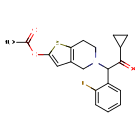
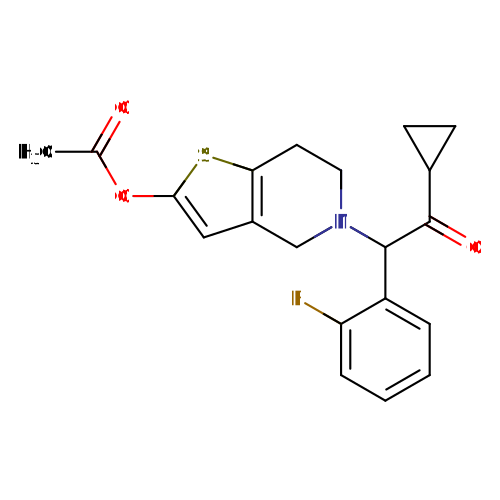
Structure for Prasugrel (DB06209)
- Weight
- Average: 373.441
Monoisotopic: 373.114792406 - Chemical Formula
- C20H20FNO3S
- Synonyms
- Prasugrel
- External IDs
- CS-747
- LY-640315

Pharmacology
- Indication
Indicated in combination with acetylsalicylic acid (ASA) to prevent atherothrombotic events in patients with acute coronary syndrome (ACS) who are to be managed with percutaneous coronary intervention (PCI). May be used in patients with unstable angina (UA), non-ST elevation myocardial infarction (NSTEMI), ST-elevation myocardial infarction (STEMI) who are to be managed with PCI. Prasugrel is not recommended in patients 75 years of age or greater, those that weigh<60kg, and patients with a history of stroke or transient ischemic attack due to increased risk of fatal and intracranial bleeding.
 Reduce drug development failure ratesBuild, train, & validate machine-learning modelswith evidence-based and structured datasets.Build, train, & validate predictive machine-learning models with structured datasets.
- Associated Conditions
Indication Type Indication Combined Product Details Approval Level Age Group Patient Characteristics Dose Form Prevention of Cardiovascular event •••••••••••• Prevention of Cardiovascular event •••••••••••• Prevention of Cardiovascular event •••••••••••• - Contraindications & Blackbox Warnings
 Prevent Adverse Drug Events TodayTap into our Clinical API for life-saving information on contraindications & blackbox warnings, population restrictions, harmful risks, & more.Avoid life-threatening adverse drug events with our Clinical API
- Pharmacodynamics
Prasugrel is a thienopyridine ADP receptor inhibitors which inhibits platelet aggregation by irreversibly binding to P2Y12 receptors.
- Mechanism of action
Prasugrel is an thienopyridine and a prodrug which inhibits ADP receptors by irreversibly acting on the P2Y12 receptor on platelets. The active metabolite of prasugrel prevents binding of adenosine diphosphate (ADP) to its platelet receptor, impairing the ADP-mediated activation of the glycoprotein GPIIb/IIIa complex. Prasugrel is proposed to have a similar mechanism of action to clopidogrel.
Target Actions Organism AP2Y purinoceptor 12 antagonistHumans - Absorption
79% or greater of the dose is absorbed after oral administration. Absorption and metabolism occur rapidly and peak plasma concentrations (Cmax) are reached approximately 30 minutes following oral administration. Administration with a high fat, high calorie meal did not affect the AUC of the active metabolite in healthy individuals, but the Cmax was decreased by ~49% and the Tmax was increased to 0.5 to 1.5 hours. Prasugrel may be administered with or without food.
- Volume of distribution
44-68L
- Protein binding
Approximately 98% of the active metabolite was bound to human serum albumin in a 4% buffered solution. The major inactive metabolites are also highly bound to human plasma proteins.
- Metabolism
Prasugrel is not detected in plasma following oral administration. It is rapidly hydrolyzed in the intestine to thiolactone by human carboxylesterase (hCE) 2. This intermediate is further metabolized to its active metabolite, R-138727, in a single step by cytochrome P450 enzymes in the liver (primarily CYP3A4 and CYP2B6 and to a lesser extent by CYP2C9 and CYP2C19). The active metabolite is further metabolized by S-methylation or cysteine conjugation to two inactive metabolites.
Unlike clopidogrel, transformation of prasugrel to its active metabolite does not appear to be affected by cytochrome P450 polymorphisms.
Hover over products below to view reaction partners
- Route of elimination
Approximately 68% of the orally administered dose is excreted in urine and 27% in the feces, as inactive metabolites. The active metabolite is not expected to be removed by dialysis.
- Half-life
The active metabolite has an elimination half-life of about 7.4 hours (range 2-15 hours).
- Clearance
Apparent clearance = 112 - 166 L/hr
- Adverse Effects
 Improve decision support & research outcomesWith structured adverse effects data, including: blackbox warnings, adverse reactions, warning & precautions, & incidence rates. View sample adverse effects data in our new Data Library!Improve decision support & research outcomes with our structured adverse effects data.
- Toxicity
LD50 (rat) 1,000 - 2,000 mg/kg; LD50 (rabbit) > 1,000 mg/kg
- Pathways
- Not Available
- Pharmacogenomic Effects/ADRs
- Not Available
Interactions
- Drug Interactions
- This information should not be interpreted without the help of a healthcare provider. If you believe you are experiencing an interaction, contact a healthcare provider immediately. The absence of an interaction does not necessarily mean no interactions exist.
Drug Interaction Integrate drug-drug
interactions in your softwareAbacavir Abacavir may decrease the excretion rate of Prasugrel which could result in a higher serum level. Abametapir The serum concentration of Prasugrel can be increased when it is combined with Abametapir. Abatacept The metabolism of Prasugrel can be increased when combined with Abatacept. Abciximab The risk or severity of bleeding can be increased when Abciximab is combined with Prasugrel. Abrocitinib The risk or severity of bleeding and thrombocytopenia can be increased when Prasugrel is combined with Abrocitinib. - Food Interactions
- Avoid herbs and supplements with anticoagulant/antiplatelet activity. Examples include garlic, ginger, bilberry, danshen, piracetam, and ginkgo biloba.
- Take with or without food.
Products
 Drug product information from 10+ global regionsOur datasets provide approved product information including:dosage, form, labeller, route of administration, and marketing period.Access drug product information from over 10 global regions.
- Product Ingredients
Ingredient UNII CAS InChI Key Prasugrel besylate 7KYD4NE018 952340-40-8 UFXQKLQPHZRPDV-UHFFFAOYSA-N Prasugrel hydrochloride G89JQ59I13 389574-19-0 JALHGCPDPSNJNY-UHFFFAOYSA-N - Product Images


- International/Other Brands
- Prasita (Daiichi Sankyo Co.)
- Brand Name Prescription Products
Name Dosage Strength Route Labeller Marketing Start Marketing End Region Image Effient Tablet, film coated 10 mg/1 Oral Cardinal Health 2012-03-01 2018-04-30 US 

Effient Tablet, film coated 10 mg/1 Oral Eli Lilly and Company 2009-07-10 2009-07-10 US Effient Tablet, coated 10 mg/1 Oral Cosette Pharmaceuticals, Inc. 2022-09-01 Not applicable US Effient Tablet, coated 10 mg/1 Oral Daiichi Sankyo, Inc. 2009-07-10 2023-12-31 US Effient Tablet, film coated 10 mg/1 Oral Eli Lilly and Company 2009-07-10 2022-03-31 US 
- Generic Prescription Products
Name Dosage Strength Route Labeller Marketing Start Marketing End Region Image Jamp Prasugrel Tablet 10 mg Oral Jamp Pharma Corporation 2021-05-14 Not applicable Canada 
Prasugrel Tablet, film coated 10 mg/1 Oral Unichem Pharmaceuticals (USA), Inc. 2023-10-16 Not applicable US Prasugrel Tablet, film coated 10 mg/1 Oral Sunshine Lake Pharma Co., Ltd. 2019-01-30 Not applicable US Prasugrel Tablet, film coated 10 mg/1 Oral Aurobindo Pharma Limited 2017-10-16 Not applicable US Prasugrel Tablet, film coated 10 mg/1 Oral Lupin Pharmaceuticals, Inc. 2023-07-01 Not applicable US


Categories
- ATC Codes
- B01AC22 — Prasugrel
- Drug Categories
- Anticoagulants
- Antiplatelet agents
- Blood and Blood Forming Organs
- Cytochrome P-450 CYP2B6 Substrates
- Cytochrome P-450 CYP2C19 Substrates
- Cytochrome P-450 CYP2C9 Substrates
- Cytochrome P-450 CYP3A Substrates
- Cytochrome P-450 CYP3A4 Substrates
- Cytochrome P-450 Substrates
- Decreased Platelet Aggregation
- Drugs that are Mainly Renally Excreted
- Hematologic Agents
- P2Y12 Platelet Inhibitor
- Piperazines
- Platelet Aggregation Inhibitors Excl. Heparin
- Purinergic P2Y Receptor Antagonists
- Sulfur Compounds
- Thiophenes
- Chemical TaxonomyProvided by Classyfire
- Description
- This compound belongs to the class of organic compounds known as thienopyridines. These are heterocyclic compounds containing a thiophene ring fused to a pyridine ring. Thiophene is 5-membered ring consisting of four carbon atoms and one sulfur atom. Pyridine is a 6-membered ring consisting of five carbon atoms and one nitrogen center.
- Kingdom
- Organic compounds
- Super Class
- Organoheterocyclic compounds
- Class
- Thienopyridines
- Sub Class
- Not Available
- Direct Parent
- Thienopyridines
- Alternative Parents
- 2,3,5-trisubstituted thiophenes / Aralkylamines / Fluorobenzenes / Pyridines and derivatives / Aryl fluorides / Alpha-amino ketones / Heteroaromatic compounds / Trialkylamines / Carboxylic acid esters / Amino acids and derivatives show 6 more
- Substituents
- 2,3,5-trisubstituted thiophene / Alpha-aminoketone / Amine / Amino acid or derivatives / Aralkylamine / Aromatic heteropolycyclic compound / Aryl fluoride / Aryl halide / Azacycle / Benzenoid show 23 more
- Molecular Framework
- Aromatic heteropolycyclic compounds
- External Descriptors
- tertiary amino compound, acetate ester, cyclopropanes, ketone, monofluorobenzenes, thienopyridine (CHEBI:87723)
- Affected organisms
- Humans and other mammals
Chemical Identifiers
- UNII
- 34K66TBT99
- CAS number
- 150322-43-3
- InChI Key
- DTGLZDAWLRGWQN-UHFFFAOYSA-N
- InChI
- InChI=1S/C20H20FNO3S/c1-12(23)25-18-10-14-11-22(9-8-17(14)26-18)19(20(24)13-6-7-13)15-4-2-3-5-16(15)21/h2-5,10,13,19H,6-9,11H2,1H3
- IUPAC Name
- 5-[2-cyclopropyl-1-(2-fluorophenyl)-2-oxoethyl]-4H,5H,6H,7H-thieno[3,2-c]pyridin-2-yl acetate
- SMILES
- CC(=O)OC1=CC2=C(CCN(C2)C(C(=O)C2CC2)C2=CC=CC=C2F)S1
References
- Synthesis Reference
Teruhiko Inoue, Kazuyoshi Nakamura, Masahiko Hagihara, Hiroyuki Miyata, Yukinori Wada, Naoyuki Yokota, "Process for Producing High-Purity Prasugrel and Acid Addition Salt Thereof." U.S. Patent US20090203729, issued August 13, 2009.
US20090203729- General References
- Dovlatova NL, Jakubowski JA, Sugidachi A, Heptinstall S: The reversible P2Y antagonist cangrelor influences the ability of the active metabolites of clopidogrel and prasugrel to produce irreversible inhibition of platelet function. J Thromb Haemost. 2008 Jul;6(7):1153-9. doi: 10.1111/j.1538-7836.2008.03020.x. Epub 2008 Jul 1. [Article]
- Tagarakis GI: Ticagrelor and prasugrel: two novel, most-promising antiplatelet agents. Recent Pat Cardiovasc Drug Discov. 2010 Nov;5(3):208-11. [Article]
- Angiolillo DJ: The evolution of antiplatelet therapy in the treatment of acute coronary syndromes: from aspirin to the present day. Drugs. 2012 Nov 12;72(16):2087-116. doi: 10.2165/11640880-000000000-00000. [Article]
- Jeong YH, Tantry US, Gurbel PA: Importance of potent P2Y(12) receptor blockade in acute myocardial infarction: focus on prasugrel. Expert Opin Pharmacother. 2012 Aug;13(12):1771-96. doi: 10.1517/14656566.2012.704909. Epub 2012 Jul 12. [Article]
- External Links
- Human Metabolome Database
- HMDB0015625
- KEGG Drug
- D05597
- PubChem Compound
- 6918456
- PubChem Substance
- 99443238
- ChemSpider
- 5293653
- 613391
- ChEBI
- 87723
- ChEMBL
- CHEMBL1201772
- PharmGKB
- PA154410481
- RxList
- RxList Drug Page
- Drugs.com
- Drugs.com Drug Page
- PDRhealth
- PDRhealth Drug Page
- Wikipedia
- Prasugrel
- FDA label
- Download (1000 KB)
- MSDS
- Download (134 KB)
Clinical Trials
- Clinical Trials
Phase Status Purpose Conditions Count 4 Active Not Recruiting Treatment Coronavirus Disease 2019 (COVID‑19) 1 4 Completed Basic Science Coronary Artery Disease (CAD) 1 4 Completed Diagnostic Coronary Artery Disease (CAD) 1 4 Completed Other Acute Coronary Syndrome (ACS) 1 4 Completed Other Coronary Artery Disease (CAD) 1
Pharmacoeconomics
- Manufacturers
- Not Available
- Packagers
- Not Available
- Dosage Forms
Form Route Strength Tablet Oral 10 mg Tablet, coated Oral 10 mg/1 Tablet, coated Oral 5 mg/1 Tablet, film coated Oral 10 mg/1 Tablet, film coated Oral 4.12 Mg Tablet, film coated Oral 5.49 Mg Tablet, coated Oral 10 mg Tablet, coated Oral 5 mg Tablet Oral 5 mg Tablet, film coated Oral 5 mg/1 Tablet, film coated Oral 10 MG Tablet, film coated Oral 5 MG Tablet, film coated Oral - Prices
- Not Available
- Patents
Patent Number Pediatric Extension Approved Expires (estimated) Region US6693115 No 2004-02-17 2021-07-03 US CA2077695 No 2002-08-20 2012-09-08 Canada US8404703 Yes 2013-03-26 2023-07-02 US US8569325 Yes 2013-10-29 2023-07-02 US US5288726 Yes 1994-02-22 2017-10-14 US
Properties
- State
- Solid
- Experimental Properties
Property Value Source logP 3.536 MSDS - Predicted Properties
Property Value Source Water Solubility 0.00237 mg/mL ALOGPS logP 3.67 ALOGPS logP 4.31 Chemaxon logS -5.2 ALOGPS pKa (Strongest Acidic) 15.34 Chemaxon pKa (Strongest Basic) 5.12 Chemaxon Physiological Charge 0 Chemaxon Hydrogen Acceptor Count 3 Chemaxon Hydrogen Donor Count 0 Chemaxon Polar Surface Area 46.61 Å2 Chemaxon Rotatable Bond Count 6 Chemaxon Refractivity 96.81 m3·mol-1 Chemaxon Polarizability 37.7 Å3 Chemaxon Number of Rings 4 Chemaxon Bioavailability 1 Chemaxon Rule of Five Yes Chemaxon Ghose Filter Yes Chemaxon Veber's Rule No Chemaxon MDDR-like Rule Yes Chemaxon - Predicted ADMET Features
Property Value Probability Human Intestinal Absorption + 1.0 Blood Brain Barrier + 0.9352 Caco-2 permeable + 0.5325 P-glycoprotein substrate Substrate 0.767 P-glycoprotein inhibitor I Inhibitor 0.6555 P-glycoprotein inhibitor II Non-inhibitor 0.7365 Renal organic cation transporter Inhibitor 0.5312 CYP450 2C9 substrate Non-substrate 0.7508 CYP450 2D6 substrate Non-substrate 0.7371 CYP450 3A4 substrate Substrate 0.5402 CYP450 1A2 substrate Non-inhibitor 0.5288 CYP450 2C9 inhibitor Non-inhibitor 0.5706 CYP450 2D6 inhibitor Non-inhibitor 0.7051 CYP450 2C19 inhibitor Inhibitor 0.7083 CYP450 3A4 inhibitor Non-inhibitor 0.7432 CYP450 inhibitory promiscuity High CYP Inhibitory Promiscuity 0.8719 Ames test Non AMES toxic 0.6616 Carcinogenicity Non-carcinogens 0.9521 Biodegradation Not ready biodegradable 0.9961 Rat acute toxicity 2.4834 LD50, mol/kg Not applicable hERG inhibition (predictor I) Weak inhibitor 0.7927 hERG inhibition (predictor II) Non-inhibitor 0.6438
Spectra
- Mass Spec (NIST)
- Not Available
- Spectra
- Chromatographic Properties
Collision Cross Sections (CCS)
Adduct CCS Value (Å2) Source type Source [M-H]- 198.0351359 predictedDarkChem Lite v0.1.0 [M-H]- 170.83142 predictedDeepCCS 1.0 (2019) [M+H]+ 198.1982359 predictedDarkChem Lite v0.1.0 [M+H]+ 173.18944 predictedDeepCCS 1.0 (2019) [M+Na]+ 198.0999359 predictedDarkChem Lite v0.1.0 [M+Na]+ 180.20473 predictedDeepCCS 1.0 (2019)
Targets

- Kind
- Protein
- Organism
- Humans
- Pharmacological action
- Yes
- Actions
- Antagonist
- General Function
- Guanyl-nucleotide exchange factor activity
- Specific Function
- Receptor for ADP and ATP coupled to G-proteins that inhibit the adenylyl cyclase second messenger system. Not activated by UDP and UTP. Required for normal platelet aggregation and blood coagulation.
- Gene Name
- P2RY12
- Uniprot ID
- Q9H244
- Uniprot Name
- P2Y purinoceptor 12
- Molecular Weight
- 39438.355 Da
References
- Dovlatova NL, Jakubowski JA, Sugidachi A, Heptinstall S: The reversible P2Y antagonist cangrelor influences the ability of the active metabolites of clopidogrel and prasugrel to produce irreversible inhibition of platelet function. J Thromb Haemost. 2008 Jul;6(7):1153-9. doi: 10.1111/j.1538-7836.2008.03020.x. Epub 2008 Jul 1. [Article]
Enzymes
- Kind
- Protein
- Organism
- Humans
- Pharmacological action
- Unknown
- Actions
- Substrate
- General Function
- Methylumbelliferyl-acetate deacetylase activity
- Specific Function
- Involved in the detoxification of xenobiotics and in the activation of ester and amide prodrugs. Shows high catalytic efficiency for hydrolysis of cocaine, 4-methylumbelliferyl acetate, heroin and ...
- Gene Name
- CES2
- Uniprot ID
- O00748
- Uniprot Name
- Cocaine esterase
- Molecular Weight
- 61806.41 Da
References
- Angiolillo DJ: The evolution of antiplatelet therapy in the treatment of acute coronary syndromes: from aspirin to the present day. Drugs. 2012 Nov 12;72(16):2087-116. doi: 10.2165/11640880-000000000-00000. [Article]
- Kind
- Protein
- Organism
- Humans
- Pharmacological action
- No
- Actions
- Substrate
- General Function
- Vitamin d3 25-hydroxylase activity
- Specific Function
- Cytochromes P450 are a group of heme-thiolate monooxygenases. In liver microsomes, this enzyme is involved in an NADPH-dependent electron transport pathway. It performs a variety of oxidation react...
- Gene Name
- CYP3A4
- Uniprot ID
- P08684
- Uniprot Name
- Cytochrome P450 3A4
- Molecular Weight
- 57342.67 Da
References
- Angiolillo DJ: The evolution of antiplatelet therapy in the treatment of acute coronary syndromes: from aspirin to the present day. Drugs. 2012 Nov 12;72(16):2087-116. doi: 10.2165/11640880-000000000-00000. [Article]
- Kind
- Protein
- Organism
- Humans
- Pharmacological action
- No
- Actions
- Substrate
- General Function
- Steroid hydroxylase activity
- Specific Function
- Cytochromes P450 are a group of heme-thiolate monooxygenases. In liver microsomes, this enzyme is involved in an NADPH-dependent electron transport pathway. It oxidizes a variety of structurally un...
- Gene Name
- CYP2B6
- Uniprot ID
- P20813
- Uniprot Name
- Cytochrome P450 2B6
- Molecular Weight
- 56277.81 Da
References
- Kind
- Protein
- Organism
- Humans
- Pharmacological action
- No
- Actions
- Substrate
- General Function
- Steroid hydroxylase activity
- Specific Function
- Cytochromes P450 are a group of heme-thiolate monooxygenases. In liver microsomes, this enzyme is involved in an NADPH-dependent electron transport pathway. It oxidizes a variety of structurally un...
- Gene Name
- CYP2C9
- Uniprot ID
- P11712
- Uniprot Name
- Cytochrome P450 2C9
- Molecular Weight
- 55627.365 Da
References
- Kind
- Protein
- Organism
- Humans
- Pharmacological action
- No
- Actions
- Substrate
- General Function
- Steroid hydroxylase activity
- Specific Function
- Responsible for the metabolism of a number of therapeutic agents such as the anticonvulsant drug S-mephenytoin, omeprazole, proguanil, certain barbiturates, diazepam, propranolol, citalopram and im...
- Gene Name
- CYP2C19
- Uniprot ID
- P33261
- Uniprot Name
- Cytochrome P450 2C19
- Molecular Weight
- 55930.545 Da
References
- Angiolillo DJ: The evolution of antiplatelet therapy in the treatment of acute coronary syndromes: from aspirin to the present day. Drugs. 2012 Nov 12;72(16):2087-116. doi: 10.2165/11640880-000000000-00000. [Article]
Carriers
- Kind
- Protein
- Organism
- Humans
- Pharmacological action
- Unknown
- Actions
- Substrate
- General Function
- Toxic substance binding
- Specific Function
- Serum albumin, the main protein of plasma, has a good binding capacity for water, Ca(2+), Na(+), K(+), fatty acids, hormones, bilirubin and drugs. Its main function is the regulation of the colloid...
- Gene Name
- ALB
- Uniprot ID
- P02768
- Uniprot Name
- Serum albumin
- Molecular Weight
- 69365.94 Da

Drug created at March 19, 2008 16:17 / Updated at April 23, 2024 11:38