Identification
- Summary
Lornoxicam is an NSAID indicated in the treatment of mild to moderate pain, as well as rheumatoid arthritis and osteoarthritis.
- Generic Name
- Lornoxicam
- DrugBank Accession Number
- DB06725
- Background
Lornoxicam (chlortenoxicam) is a new nonsteroidal anti-inflammatory drug (NSAID) of the oxicam class with analgesic, anti-inflammatory and antipyretic properties. Lornoxicam differs from other oxicam compounds in its potent inhibition of prostaglandin biosynthesis, a property that explains the particularly pronounced efficacy of the drug. Lornoxicam is approved for use in Japan.
- Type
- Small Molecule
- Groups
- Approved, Investigational
- Structure
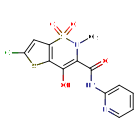
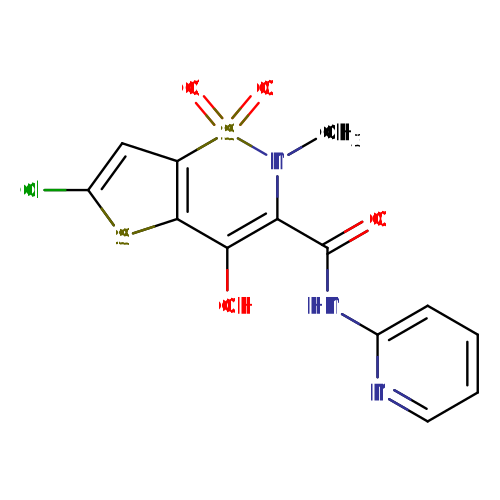
Structure for Lornoxicam (DB06725)
- Weight
- Average: 371.81
Monoisotopic: 370.9801259 - Chemical Formula
- C13H10ClN3O4S2
- Synonyms
- Chlortenoxicam
- Lornoxicam
- Lornoxicamum
- External IDs
- CCRIS 8589
- Ro 13-9297

Pharmacology
- Indication
For the treatment of acute mild to moderate pain, as well as pain and inflammation of the joints caused by certain types of rheumatic diseases.
 Reduce drug development failure ratesBuild, train, & validate machine-learning modelswith evidence-based and structured datasets.Build, train, & validate predictive machine-learning models with structured datasets.
- Associated Conditions
Indication Type Indication Combined Product Details Approval Level Age Group Patient Characteristics Dose Form Symptomatic treatment of Osteoarthritis (oa) •••••••••••• ••••••••• Symptomatic treatment of Rheumatoid arthritis •••••••••••• ••••••••• Treatment of Acute mild to moderate pain •••••••••••• - Contraindications & Blackbox Warnings
 Prevent Adverse Drug Events TodayTap into our Clinical API for life-saving information on contraindications & blackbox warnings, population restrictions, harmful risks, & more.Avoid life-threatening adverse drug events with our Clinical API
- Pharmacodynamics
Lornoxicam is a non-steroidal anti-inflammatory drug (NSAID) that belongs to the oxicam class. As with other NSAIDS, lornoxicam is a potent inhibitor of the cyclooxgenase enzymes, which are responsible for catalyzing the formation of prostaglandins (act as messenger molecules in the process of inflammation) and thromboxane from arachidonic acid. Unlike some NSAIDS, lornoxicam's inhibition of cyclooxygenase does not lead to an increase in leukotriene formation, meaning that arachidonic acid is not moved to the 5-lipoxygenase cascade, resulting in the minimization of the risk of adverse events.
- Mechanism of action
Like other NSAIDS, lornoxicam's anti-inflammatory and analgesic activity is related to its inhibitory action on prostaglandin and thromboxane synthesis through the inhibition of both COX-1 and COX-2. This leads to the reduction of inflammation, pain, fever, and swelling, which are mediated by prostaglandins. However, the exact mechanism of lornoxicam, like that of the other NSAIDs, has not been fully determined.
Target Actions Organism AProstaglandin G/H synthase 1 inhibitorHumans AProstaglandin G/H synthase 2 inhibitorHumans - Absorption
Lornoxicam is absorbed rapidly and almost completely from the GI tract (90-100%).
- Volume of distribution
Not Available
- Protein binding
Lornoxicam is 99% bound to plasma proteins (almost exlusively to serum albumin).
- Metabolism
Lornoxicam is metabolized completely by cyp 2C9 with the principal metabolite being 5'-hydroxy-lornoxicam and only negligible amounts of intact lornoxicam are excreted unchanged in the urine. Approximately 2/3 of the drug is eliminated via the liver and 1/3 via the kidneys in the active form.
Hover over products below to view reaction partners
- Route of elimination
Not Available
- Half-life
3-5 hours
- Clearance
Not Available
- Adverse Effects
 Improve decision support & research outcomesWith structured adverse effects data, including: blackbox warnings, adverse reactions, warning & precautions, & incidence rates. View sample adverse effects data in our new Data Library!Improve decision support & research outcomes with our structured adverse effects data.
- Toxicity
Not Available
- Pathways
Pathway Category Lornoxicam Action Pathway Drug action - Pharmacogenomic Effects/ADRs
- Not Available
Interactions
- Drug Interactions
- This information should not be interpreted without the help of a healthcare provider. If you believe you are experiencing an interaction, contact a healthcare provider immediately. The absence of an interaction does not necessarily mean no interactions exist.
Drug Interaction Integrate drug-drug
interactions in your softwareAbacavir Lornoxicam may decrease the excretion rate of Abacavir which could result in a higher serum level. Abatacept The metabolism of Lornoxicam can be increased when combined with Abatacept. Abciximab The risk or severity of bleeding and hemorrhage can be increased when Lornoxicam is combined with Abciximab. Abrocitinib The metabolism of Abrocitinib can be decreased when combined with Lornoxicam. Acebutolol Lornoxicam may decrease the antihypertensive activities of Acebutolol. - Food Interactions
- Not Available
Products
 Drug product information from 10+ global regionsOur datasets provide approved product information including:dosage, form, labeller, route of administration, and marketing period.Access drug product information from over 10 global regions.
- International/Other Brands
- Lorcam (Taisho Pharmaceutical Co.) / Xafon (Nycomed)
- Mixture Products
Name Ingredients Dosage Route Labeller Marketing Start Marketing End Region Image LORNOPAR 8/300 MG EFERVESAN TABLET ,20 ADET Lornoxicam (8 mg) + Acetaminophen (300 mg) Tablet, effervescent Oral VİTALİS İLAÇ SAN. TİC. A.Ş. 2020-08-14 Not applicable Turkey 
- Unapproved/Other Products
Name Ingredients Dosage Route Labeller Marketing Start Marketing End Region Image XEFO RAPID 8 MG FILM TABLET, 10 ADET Lornoxicam (8 mg) Tablet, film coated Oral TAKEDA İLAÇ SAĞLIK SAN. TİC. LTD. ŞTİ. 2013-01-29 2022-10-11 Turkey
Categories
- ATC Codes
- M01AC05 — Lornoxicam
- Drug Categories
- Agents causing hyperkalemia
- Agents that produce hypertension
- Analgesics
- Analgesics, Non-Narcotic
- Anti-Inflammatory Agents
- Anti-Inflammatory Agents, Non-Steroidal
- Anti-Inflammatory Agents, Non-Steroidal (Non-Selective)
- Antiinflammatory and Antirheumatic Products
- Antiinflammatory and Antirheumatic Products, Non-Steroids
- Antirheumatic Agents
- Cytochrome P-450 CYP2C9 Substrates
- Cytochrome P-450 Substrates
- Musculo-Skeletal System
- Nephrotoxic agents
- Non COX-2 selective NSAIDS
- Oxicams
- Peripheral Nervous System Agents
- Sensory System Agents
- Sulfur Compounds
- Thiazines
- Chemical TaxonomyProvided by Classyfire
- Description
- This compound belongs to the class of organic compounds known as alpha amino acids and derivatives. These are amino acids in which the amino group is attached to the carbon atom immediately adjacent to the carboxylate group (alpha carbon), or a derivative thereof.
- Kingdom
- Organic compounds
- Super Class
- Organic acids and derivatives
- Class
- Carboxylic acids and derivatives
- Sub Class
- Amino acids, peptides, and analogues
- Direct Parent
- Alpha amino acids and derivatives
- Alternative Parents
- Thienothiazines / 2,3,5-trisubstituted thiophenes / N-arylamides / 1,2-thiazines / Aryl chlorides / Imidolactams / Organosulfonamides / Pyridines and derivatives / Vinylogous acids / Heteroaromatic compounds show 7 more
- Substituents
- 2,3,5-trisubstituted thiophene / Alpha-amino acid or derivatives / Aromatic heteropolycyclic compound / Aryl chloride / Aryl halide / Azacycle / Carbonyl group / Carboxamide group / Heteroaromatic compound / Hydrocarbon derivative show 20 more
- Molecular Framework
- Aromatic heteropolycyclic compounds
- External Descriptors
- monocarboxylic acid amide, organochlorine compound, pyridines, heteroaryl hydroxy compound, thienothiazine (CHEBI:31783)
- Affected organisms
- Humans and other mammals
Chemical Identifiers
- UNII
- ER09126G7A
- CAS number
- 70374-39-9
- InChI Key
- WLHQHAUOOXYABV-UHFFFAOYSA-N
- InChI
- InChI=1S/C13H10ClN3O4S2/c1-17-10(13(19)16-9-4-2-3-5-15-9)11(18)12-7(23(17,20)21)6-8(14)22-12/h2-6,18H,1H3,(H,15,16,19)
- IUPAC Name
- 6-chloro-4-hydroxy-2-methyl-1,1-dioxo-N-(pyridin-2-yl)-2H-1λ⁶-thieno[2,3-e][1,2]thiazine-3-carboxamide
- SMILES
- CN1C(C(=O)NC2=CC=CC=N2)=C(O)C2=C(C=C(Cl)S2)S1(=O)=O
References
- General References
- Balfour JA, Fitton A, Barradell LB: Lornoxicam. A review of its pharmacology and therapeutic potential in the management of painful and inflammatory conditions. Drugs. 1996 Apr;51(4):639-57. [Article]
- Vane JR: Introduction: mechanism of action of NSAIDs. Br J Rheumatol. 1996 Apr;35 Suppl 1:1-3. [Article]
- Radhofer-Welte S, Rabasseda X: Lornoxicam, a new potent NSAID with an improved tolerability profile. Drugs Today (Barc). 2000 Jan;36(1):55-76. [Article]
- Skjodt NM, Davies NM: Clinical pharmacokinetics of lornoxicam. A short half-life oxicam. Clin Pharmacokinet. 1998 Jun;34(6):421-8. [Article]
- Olkkola KT, Brunetto AV, Mattila MJ: Pharmacokinetics of oxicam nonsteroidal anti-inflammatory agents. Clin Pharmacokinet. 1994 Feb;26(2):107-20. [Article]
- Hitzenberger G, Radhofer-Welte S, Takacs F, Rosenow D: Pharmacokinetics of lornoxicam in man. Postgrad Med J. 1990;66 Suppl 4:S22-7. [Article]
- Pruss TP, Stroissnig H, Radhofer-Welte S, Wendtlandt W, Mehdi N, Takacs F, Fellier H: Overview of the pharmacological properties, pharmacokinetics and animal safety assessment of lornoxicam. Postgrad Med J. 1990;66 Suppl 4:S18-21. [Article]
- Bonnabry P, Leemann T, Dayer P: Role of human liver microsomal CYP2C9 in the biotransformation of lornoxicam. Eur J Clin Pharmacol. 1996;49(4):305-8. [Article]
- External Links
- KEGG Drug
- D01866
- PubChem Compound
- 54690031
- PubChem Substance
- 99443271
- ChemSpider
- 10442760
- BindingDB
- 92331
- 20890
- ChEBI
- 31783
- ChEMBL
- CHEMBL1569487
- ZINC
- ZINC000100015491
- PharmGKB
- PA165958395
- Wikipedia
- Lornoxicam
Clinical Trials
- Clinical Trials
Phase Status Purpose Conditions Count 4 Completed Prevention Acute Pain / Edema / Trismus 1 4 Completed Treatment Acute Coronary Syndrome (ACS) 1 4 Completed Treatment Postoperative pain 1 4 Unknown Status Treatment Bacillus Calmette-Guerin (BCG) Cystitis / Intravesical Instillation / Non-Muscle-invasive Bladder Cancer (NMIBC) 1 3 Completed Treatment Postoperative pain 1
Pharmacoeconomics
- Manufacturers
- Not Available
- Packagers
- Not Available
- Dosage Forms
Form Route Strength Powder Parenteral 8 mg Tablet Oral 8 mg Capsule Oral 4 mg Tablet, effervescent 8 mg Tablet, film coated Oral 4 mg Tablet, film coated Oral 8 mg Injection, solution Intramuscular; Intravenous 8 mg Tablet, effervescent Oral Injection, powder, for solution Intramuscular; Intravenous Granule, for suspension Oral Injection, powder, for solution Tablet, coated Oral Injection, powder, for solution Intramuscular; Intravenous 8 mg Tablet, film coated Oral Injection, powder, for solution Intramuscular; Intravenous 8 mg/2mL Injection, powder, for solution Parenteral Tablet, coated Oral 4 mg Tablet, coated Oral 8 mg Injection, powder, lyophilized, for solution Intramuscular; Intravenous 8 mg - Prices
- Not Available
- Patents
- Not Available
Properties
- State
- Solid
- Experimental Properties
Property Value Source logP 2.62 BIOBYTE STARLIST (2009) - Predicted Properties
Property Value Source Water Solubility 0.0437 mg/mL ALOGPS logP 3.08 ALOGPS logP 0.64 Chemaxon logS -3.9 ALOGPS pKa (Strongest Acidic) 1.82 Chemaxon pKa (Strongest Basic) 4.22 Chemaxon Physiological Charge -1 Chemaxon Hydrogen Acceptor Count 5 Chemaxon Hydrogen Donor Count 2 Chemaxon Polar Surface Area 99.6 Å2 Chemaxon Rotatable Bond Count 2 Chemaxon Refractivity 87.9 m3·mol-1 Chemaxon Polarizability 33.3 Å3 Chemaxon Number of Rings 3 Chemaxon Bioavailability 1 Chemaxon Rule of Five Yes Chemaxon Ghose Filter Yes Chemaxon Veber's Rule No Chemaxon MDDR-like Rule No Chemaxon - Predicted ADMET Features
Property Value Probability Human Intestinal Absorption + 0.9964 Blood Brain Barrier - 0.964 Caco-2 permeable + 0.7528 P-glycoprotein substrate Substrate 0.5511 P-glycoprotein inhibitor I Non-inhibitor 0.8209 P-glycoprotein inhibitor II Non-inhibitor 0.8506 Renal organic cation transporter Non-inhibitor 0.9132 CYP450 2C9 substrate Substrate 0.6831 CYP450 2D6 substrate Non-substrate 0.8868 CYP450 3A4 substrate Non-substrate 0.6652 CYP450 1A2 substrate Non-inhibitor 0.7958 CYP450 2C9 inhibitor Inhibitor 0.7138 CYP450 2D6 inhibitor Non-inhibitor 0.8714 CYP450 2C19 inhibitor Non-inhibitor 0.7777 CYP450 3A4 inhibitor Non-inhibitor 0.8755 CYP450 inhibitory promiscuity Low CYP Inhibitory Promiscuity 0.7815 Ames test Non AMES toxic 0.8009 Carcinogenicity Non-carcinogens 0.6844 Biodegradation Not ready biodegradable 0.9851 Rat acute toxicity 3.8570 LD50, mol/kg Not applicable hERG inhibition (predictor I) Weak inhibitor 0.9494 hERG inhibition (predictor II) Non-inhibitor 0.8681
Spectra
- Mass Spec (NIST)
- Not Available
- Spectra
- Chromatographic Properties
Collision Cross Sections (CCS)
Adduct CCS Value (Å2) Source type Source [M-H]- 167.94875 predictedDeepCCS 1.0 (2019) [M+H]+ 170.30675 predictedDeepCCS 1.0 (2019) [M+Na]+ 176.55019 predictedDeepCCS 1.0 (2019)
Targets

- Kind
- Protein
- Organism
- Humans
- Pharmacological action
- Yes
- Actions
- Inhibitor
- General Function
- Prostaglandin-endoperoxide synthase activity
- Specific Function
- Converts arachidonate to prostaglandin H2 (PGH2), a committed step in prostanoid synthesis. Involved in the constitutive production of prostanoids in particular in the stomach and platelets. In gas...
- Gene Name
- PTGS1
- Uniprot ID
- P23219
- Uniprot Name
- Prostaglandin G/H synthase 1
- Molecular Weight
- 68685.82 Da
References
- Renner RM, Jensen JT, Nichols MD, Edelman AB: Pain control in first-trimester surgical abortion: a systematic review of randomized controlled trials. Contraception. 2010 May;81(5):372-88. doi: 10.1016/j.contraception.2009.12.008. Epub 2010 Jan 27. [Article]
- Berg J, Fellier H, Christoph T, Grarup J, Stimmeder D: The analgesic NSAID lornoxicam inhibits cyclooxygenase (COX)-1/-2, inducible nitric oxide synthase (iNOS), and the formation of interleukin (IL)-6 in vitro. Inflamm Res. 1999 Jul;48(7):369-79. [Article]
- Rose P, Steinhauser C: Comparison of Lornoxicam and Rofecoxib in Patients with Activated Osteoarthritis (COLOR Study). Clin Drug Investig. 2004;24(4):227-36. [Article]
- Bianchi M, Panerai AE: Effects of lornoxicam, piroxicam, and meloxicam in a model of thermal hindpaw hyperalgesia induced by formalin injection in rat tail. Pharmacol Res. 2002 Feb;45(2):101-5. [Article]
- Kind
- Protein
- Organism
- Humans
- Pharmacological action
- Yes
- Actions
- Inhibitor
- General Function
- Prostaglandin-endoperoxide synthase activity
- Specific Function
- Converts arachidonate to prostaglandin H2 (PGH2), a committed step in prostanoid synthesis. Constitutively expressed in some tissues in physiological conditions, such as the endothelium, kidney and...
- Gene Name
- PTGS2
- Uniprot ID
- P35354
- Uniprot Name
- Prostaglandin G/H synthase 2
- Molecular Weight
- 68995.625 Da
References
- Renner RM, Jensen JT, Nichols MD, Edelman AB: Pain control in first-trimester surgical abortion: a systematic review of randomized controlled trials. Contraception. 2010 May;81(5):372-88. doi: 10.1016/j.contraception.2009.12.008. Epub 2010 Jan 27. [Article]
- Berg J, Fellier H, Christoph T, Grarup J, Stimmeder D: The analgesic NSAID lornoxicam inhibits cyclooxygenase (COX)-1/-2, inducible nitric oxide synthase (iNOS), and the formation of interleukin (IL)-6 in vitro. Inflamm Res. 1999 Jul;48(7):369-79. [Article]
- Rose P, Steinhauser C: Comparison of Lornoxicam and Rofecoxib in Patients with Activated Osteoarthritis (COLOR Study). Clin Drug Investig. 2004;24(4):227-36. [Article]
- Bianchi M, Panerai AE: Effects of lornoxicam, piroxicam, and meloxicam in a model of thermal hindpaw hyperalgesia induced by formalin injection in rat tail. Pharmacol Res. 2002 Feb;45(2):101-5. [Article]
Enzymes
- Kind
- Protein
- Organism
- Humans
- Pharmacological action
- Unknown
- Actions
- Substrate
- General Function
- Steroid hydroxylase activity
- Specific Function
- Cytochromes P450 are a group of heme-thiolate monooxygenases. In liver microsomes, this enzyme is involved in an NADPH-dependent electron transport pathway. It oxidizes a variety of structurally un...
- Gene Name
- CYP2C9
- Uniprot ID
- P11712
- Uniprot Name
- Cytochrome P450 2C9
- Molecular Weight
- 55627.365 Da
References
- Rodrigues AD: Impact of CYP2C9 genotype on pharmacokinetics: are all cyclooxygenase inhibitors the same? Drug Metab Dispos. 2005 Nov;33(11):1567-75. Epub 2005 Aug 23. [Article]
- Martinez C, Blanco G, Garcia-Martin E, Agundez JA: [Clinical pharmacogenomics for CYP2C8 and CYP2C9: general concepts and application to the use of NSAIDs]. Farm Hosp. 2006 Jul-Aug;30(4):240-8. [Article]
- Zhang Y, Zhong D, Si D, Guo Y, Chen X, Zhou H: Lornoxicam pharmacokinetics in relation to cytochrome P450 2C9 genotype. Br J Clin Pharmacol. 2005 Jan;59(1):14-7. [Article]
- Kohl C, Steinkellner M: Prediction of pharmacokinetic drug/drug interactions from In vitro data: interactions of the nonsteroidal anti-inflammatory drug lornoxicam with oral anticoagulants. Drug Metab Dispos. 2000 Feb;28(2):161-8. [Article]
- Bonnabry P, Leemann T, Dayer P: Role of human liver microsomal CYP2C9 in the biotransformation of lornoxicam. Eur J Clin Pharmacol. 1996;49(4):305-8. [Article]
- Rendic S: Summary of information on human CYP enzymes: human P450 metabolism data. Drug Metab Rev. 2002 Feb-May;34(1-2):83-448. [Article]
- Flockhart Table of Drug Interactions [Link]

Drug created at August 18, 2010 18:12 / Updated at June 19, 2021 00:26