Identification
- Summary
Azacitidine is a pyrimidine nucleoside analogue used to treat certain subtypes of myelodysplastic syndrome.
- Brand Names
- Onureg, Vidaza
- Generic Name
- Azacitidine
- DrugBank Accession Number
- DB00928
- Background
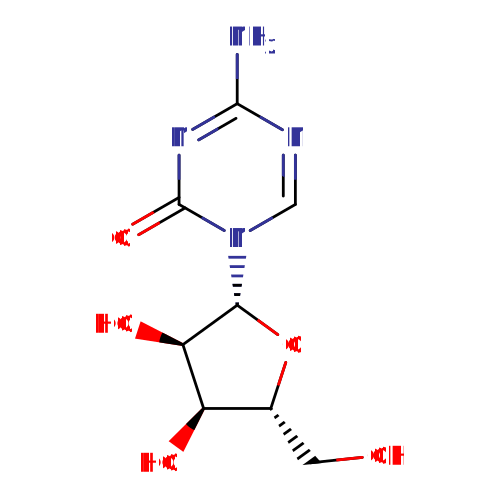
Azacitidine is a pyrimidine nucleoside analogue with anti-neoplastic activity. It differs from cytosine by the presence of nitrogen in the C5-position, key in its hypomethylating activity.1,8,10 Two main mechanisms of action have been proposed for azacitidine. One of them is the induction of cytotoxicity. As an analogue of cytidine, it is able to incorporate into RNA and DNA, disrupting RNA metabolism and inhibiting protein and DNA synthesis. The other one is through the inhibition of DNA methyltransferase, impairing DNA methylation.2 Due to its anti-neoplastic activity and its ability to inhibit methylation in replicating DNA, azacytidine has been used mainly used in the treatment of myelodysplastic syndromes (MDS) and acute myeloid leukemia (AML), two types of cancer characterized by the presence of aberrant DNA methylation.2,5,6,11,12
In May 2004, the FDA approved the use of azacitidine administered subcutaneously for the treatment of MDS of all French-American-British (FAB) subtypes. In January 2007, the FDA approved the intravenous administration of azacitidine.10 The use of oral azacitidine for the treatment of AML in patients in complete remission was approved by the FDA in September 2020.13
- Type
- Small Molecule
- Groups
- Approved, Investigational
- Structure
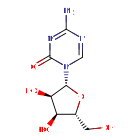
Structure for Azacitidine (DB00928)
- Weight
- Average: 244.2047
Monoisotopic: 244.080769514 - Chemical Formula
- C8H12N4O5
- Synonyms
- 4-amino-1-beta-D-ribofuranosyl-s-triazin-2(1H)-one
- 5-azacytidine
- Azacitidina
- Azacitidine
- Azacitidinum
- Azacytidine
- External IDs
- CC-486
- NSC-102816
- U-18,496
- U-18496

Pharmacology
- Indication
Azacitidine (for subcutaneous or intravenous use) is indicated for the treatment of adult patients with the following French-American-British (FAB) myelodysplastic syndrome (MDS) subtypes: refractory anemia (RA) or refractory anemia with ringed sideroblasts (RARS) (if accompanied by neutropenia or thrombocytopenia or requiring transfusions), refractory anemia with excess blasts (RAEB), refractory anemia with excess blasts in transformation (RAEB-T), and chronic myelomonocytic leukemia (CMMoL). Azacitidine is also indicated for the treatment of pediatric patients aged 1 month and older with newly diagnosed Juvenile Myelomonocytic Leukemia (JMML).15,16
Azacitidine (for oral use) is indicated for continued treatment of adult patients with acute myeloid leukemia (AML) who achieved first complete remission or complete remission with incomplete blood count recovery following intensive induction chemotherapy and are not able to complete intensive curative therapy.13
 Reduce drug development failure ratesBuild, train, & validate machine-learning modelswith evidence-based and structured datasets.Build, train, & validate predictive machine-learning models with structured datasets.
- Associated Conditions
Indication Type Indication Combined Product Details Approval Level Age Group Patient Characteristics Dose Form Treatment of Acute myeloid leukemia •••••••••••• ••••• ••••••••• Treatment of Acute myeloid leukemia (aml) •••••••••••• ••••• ••••••••• •••••••••••• •••••• Treatment of Acute myeloid leukemia (aml) •••••••••••• ••••• •••••• Treatment of Chronic myelomonocytic leukemia •••••••••••• ••••••••• Treatment of Refractory anemia •••••••••••• ••••••••• - Contraindications & Blackbox Warnings
 Prevent Adverse Drug Events TodayTap into our Clinical API for life-saving information on contraindications & blackbox warnings, population restrictions, harmful risks, & more.Avoid life-threatening adverse drug events with our Clinical API
- Pharmacodynamics
The concentration of azacitidine required for maximum inhibition of DNA methylation in vitro does not cause major suppression of DNA synthesis, and hypomethylation may restore normal function to genes critical for differentiation and proliferation.16 Genome-wide DNA methylation levels in bone marrow granulocytes were reduced in patients with juvenile myelomonocytic leukemia after the first treatment cycle of azacitidine (75 mg/m2 or 2.5 mg/kg), confirming the DNA-hypomethylating activity of azacitidine.16
The use of azacitidine causes anemia, neutropenia and thrombocytopenia in adult patients with myelodysplastic syndrome and pediatric patients with juvenile myelomonocytic leukemia. Azacitidine may cause renal toxicity, tumor lysis syndrome and embryo-fetal toxicity. It may also lead to the development of hepatotoxicity in patients with severe pre-existing hepatic impairment.16
- Mechanism of action
Azacitidine (5-azacytidine) is a chemical analogue of the cytosine nucleoside present in DNA and RNA.1,2 It induces antineoplastic activity by inhibiting DNA methyltransferase at low doses and inducing cytotoxicity by incorporating itself into RNA and DNA at high doses.3,4,7
Covalent binding to DNA methyltransferase results in DNA hypomethylation and prevents DNA synthesis.7 On the other hand, the incorporation of azacitidine into RNA and DNA leads to cytotoxicity as follows: Following cellular uptake, azacitidine is phosphorylated by uridine-cytidine kinase to form 5-azacytidine monophosphate. Afterwards, pyrimidine monophosphate and diphosphate kinases phosphorylate 5-azacytidine monophosphate to form 5-azacytidine diphosphate and triphosphate, respectively. Azacitidine triphosphate is able to incorporate into RNA, disrupting RNA metabolism and protein synthesis. The reduction of azacytidine diphosphate leads to the formation of 5-aza-deoxycytidine diphosphate, which is then phosphorylated to form 5-azadeoxycitidine triphosphate, a compound able to incorporate into DNA and inhibit DNA synthesis.2
As a ribonucleoside, azacitidine incorporates into RNA to a larger extent than into DNA. Incorporating into RNA leads to the disassembly of polyribosomes, defective methylation and acceptor function of transfer RNA, and the inhibition of protein production, resulting in cell death. During the S-phase of the cell cycle, azacitidine exhibits the highest toxicity; however, the predominant mechanism of cytotoxicity has not been elucidated.2
The cytotoxic effects of azacitidine cause the death of rapidly dividing cells, including cancer cells that are no longer responsive to normal growth control mechanisms. Non-proliferating cells are relatively insensitive to azacitidine. It is believed that azacitidine exerts its antineoplastic effects through direct cytotoxicity on abnormal hematopoietic cells in the bone marrow.16
Target Actions Organism ADNA (cytosine-5)-methyltransferase 1 inhibitorHumans ARNA otherHumans ADNA otherHumans - Absorption
Azacitidine is rapidly absorbed after subcutaneous administration.9,16 In adult patients with myelodysplastic syndrome given a single subcutaneous dose of 75 mg/m2 of azacitidine, the Cmax and Tmax were 750 ng/ml and 0.5 hours, respectively. Based on the area under the curve, the bioavailability of subcutaneous azacitidine relative to intravenous azacitidine is approximately 89%. In 21 patients with cancer given subcutaneous azacitidine, the AUC and Cmax were approximately dose-proportional between 25 and 100 mg/m2. Multiple subcutaneous or intravenous doses of azacitidine are not expected to result in drug accumulation.16
- Volume of distribution
In patients given an intravenous dose of azacitidine, the volume of distribution is 76 L.16
- Protein binding
Not available.
- Metabolism
An in vitro study of azacitidine incubation in human liver fractions indicated that cytochrome P450 (CYP) enzymes do not participate in the metabolism of azacitidine. Azacitidine is metabolized through spontaneous hydrolysis and deamination mediated by cytidine deaminase.16
- Route of elimination
Azacitidine and its metabolites are mainly excreted through urine.9,16 In five cancer patients given radioactive azacitidine intravenously, the cumulative urinary excretion was 85% of the radioactive dose. Fecal excretion accounted for less than 1% of administered radioactivity over three days. Following the subcutaneous administration of 14C-azacitidine, the mean excretion of radioactivity in urine was 50%.16
- Half-life
The mean half-life of azacitidine after subcutaneous administration is 41 minutes. The mean elimination half-life of azacitidine and its metabolites was about 4 hours for intravenous and subcutaneous administrations.16
- Clearance
Azacitidine has an apparent subcutaneous clearance of 167 L/hour in adults. In pediatric patients, the geometric mean clearance was 21.8 L/hour.16
- Adverse Effects
 Improve decision support & research outcomesWith structured adverse effects data, including: blackbox warnings, adverse reactions, warning & precautions, & incidence rates. View sample adverse effects data in our new Data Library!Improve decision support & research outcomes with our structured adverse effects data.
- Toxicity
One case of overdose with azacitidine was reported during clinical trials. After receiving a single dose of 290 mg/m2 of azacitidine intravenously (almost 4 times the recommended starting dose), a patient experienced diarrhea, nausea, and vomiting. These adverse events resolved without sequelae, and the correct dose was resumed the following day. In case of overdose, patients should be monitored with appropriate blood counts and receive supportive treatment as necessary. There is no known specific antidote for azacitidine overdosage.16 In mice, the oral LD50 of azacitidine is 572 mg/kg, while the intravenous LD50 is approximately 117 mg/kg.17
- Pathways
- Not Available
- Pharmacogenomic Effects/ADRs
- Not Available
Interactions
- Drug Interactions
- This information should not be interpreted without the help of a healthcare provider. If you believe you are experiencing an interaction, contact a healthcare provider immediately. The absence of an interaction does not necessarily mean no interactions exist.
Drug Interaction Integrate drug-drug
interactions in your softwareAbacavir Azacitidine may decrease the excretion rate of Abacavir which could result in a higher serum level. Abatacept The risk or severity of adverse effects can be increased when Azacitidine is combined with Abatacept. Abciximab The risk or severity of bleeding can be increased when Abciximab is combined with Azacitidine. Aceclofenac Aceclofenac may decrease the excretion rate of Azacitidine which could result in a higher serum level. Acemetacin Acemetacin may decrease the excretion rate of Azacitidine which could result in a higher serum level. - Food Interactions
- No interactions found.
Products
 Drug product information from 10+ global regionsOur datasets provide approved product information including:dosage, form, labeller, route of administration, and marketing period.Access drug product information from over 10 global regions.
- Product Images

- International/Other Brands
- Ladakamycin / Mylosar
- Brand Name Prescription Products
Name Dosage Strength Route Labeller Marketing Start Marketing End Region Image Azacitidine Injection, powder, lyophilized, for solution 100 mg/1 Intravenous; Subcutaneous BluePoint Laboratories 2017-07-01 Not applicable US 
Azacitidine Injection, powder, lyophilized, for solution 100 mg/1 Intravenous; Subcutaneous Actavis Pharma, Inc. 2016-09-22 2019-04-30 US Azacitidine Betapharm 25 mg/mL Subcutaneous Betapharm Arzneimittel Gmb H 2020-12-23 Not applicable EU 
Azacitidine Celgene 25 mg/ml Subcutaneous Celgene Europe Bv 2020-12-16 2021-08-04 EU Azacitidine for Injection Powder, for suspension 100 mg / vial Subcutaneous Fresenius Kabi Not applicable Not applicable Canada 
- Generic Prescription Products
Name Dosage Strength Route Labeller Marketing Start Marketing End Region Image Azacitidine Injection, powder, lyophilized, for solution 100 mg/30mL Intravenous; Subcutaneous Meitheal Pharmaceuticals Inc. 2020-11-02 Not applicable US Azacitidine Injection, powder, lyophilized, for solution 100 mg/1 Intravenous; Subcutaneous Sandoz Inc 2013-09-16 2025-02-28 US Azacitidine Injection, powder, lyophilized, for solution 100 mg/1 Intravenous; Subcutaneous Wockhardt USA LLC. 2016-09-29 Not applicable US 
Azacitidine Injection, powder, lyophilized, for solution 100 mg/1 Intravenous; Subcutaneous Northstar RxLLC 2018-05-04 Not applicable US Azacitidine Injection, powder, lyophilized, for solution 100 mg/50mL Subcutaneous Breckenridge Pharmaceutical, Inc. 2017-06-23 2024-01-31 US - Mixture Products
Name Ingredients Dosage Route Labeller Marketing Start Marketing End Region Image Azacitidine Accord Azacitidine (100 mg) + Azacitidine (125 mg) Subcutaneous Accord Healthcare S.L.U. 2022-06-06 Not applicable EU Azacitidine Accord Azacitidine (100 mg) + Azacitidine (125 mg) Subcutaneous Accord Healthcare S.L.U. 2020-12-16 Not applicable EU Azacitidine Accord Azacitidine (100 mg) + Azacitidine (125 mg) Subcutaneous Accord Healthcare S.L.U. 2022-06-06 Not applicable EU Azacitidine Accord Azacitidine (100 mg) + Azacitidine (125 mg) Subcutaneous Accord Healthcare S.L.U. 2020-12-16 Not applicable EU


Categories
- ATC Codes
- L01BC07 — Azacitidine
- Drug Categories
- Antimetabolites
- Antineoplastic Agents
- Antineoplastic and Immunomodulating Agents
- Aza Compounds
- Cytidine Deaminase Substrates
- Drugs that are Mainly Renally Excreted
- Enzyme Inhibitors
- Immunosuppressive Agents
- Myelosuppressive Agents
- Narrow Therapeutic Index Drugs
- Noxae
- Nucleic Acid Synthesis Inhibitors
- Nucleic Acids, Nucleotides, and Nucleosides
- Nucleoside Metabolic Inhibitor
- Nucleosides
- Pyrimidine Analogues
- Pyrimidine Nucleosides
- Pyrimidines
- Ribonucleosides
- Toxic Actions
- Chemical TaxonomyProvided by Classyfire
- Description
- This compound belongs to the class of organic compounds known as glycosylamines. These are compounds consisting of an amine with a beta-N-glycosidic bond to a carbohydrate, thus forming a cyclic hemiaminal ether bond (alpha-amino ether).
- Kingdom
- Organic compounds
- Super Class
- Organic oxygen compounds
- Class
- Organooxygen compounds
- Sub Class
- Carbohydrates and carbohydrate conjugates
- Direct Parent
- Glycosylamines
- Alternative Parents
- Pentoses / Triazinones / Aminotriazines / 1,3,5-triazines / Tetrahydrofurans / Heteroaromatic compounds / Secondary alcohols / Oxacyclic compounds / Azacyclic compounds / Primary amines show 4 more
- Substituents
- 1,3,5-triazine / Alcohol / Amine / Amino-1,3,5-triazine / Aminotriazine / Aromatic heteromonocyclic compound / Azacycle / Heteroaromatic compound / Hydrocarbon derivative / Monosaccharide show 14 more
- Molecular Framework
- Aromatic heteromonocyclic compounds
- External Descriptors
- nucleoside analogue, N-glycosyl-1,3,5-triazine (CHEBI:2038)
- Affected organisms
- Humans and other mammals
Chemical Identifiers
- UNII
- M801H13NRU
- CAS number
- 320-67-2
- InChI Key
- NMUSYJAQQFHJEW-KVTDHHQDSA-N
- InChI
- InChI=1S/C8H12N4O5/c9-7-10-2-12(8(16)11-7)6-5(15)4(14)3(1-13)17-6/h2-6,13-15H,1H2,(H2,9,11,16)/t3-,4-,5-,6-/m1/s1
- IUPAC Name
- 4-amino-1-[(2R,3R,4S,5R)-3,4-dihydroxy-5-(hydroxymethyl)oxolan-2-yl]-1,2-dihydro-1,3,5-triazin-2-one
- SMILES
- NC1=NC(=O)N(C=N1)[C@@H]1O[C@H](CO)[C@@H](O)[C@H]1O
References
- Synthesis Reference
Lorenzo DE FERRA, Maurizio ZENONI, Stefano TURCHETTA, Mauro ANIBALDI, Ettore AMMIRATI, Paolo BRANDI, Giorgio BERARDI, "PROCESS FOR THE SYNTHESIS OF AZACITIDINE AND DECITABINE." U.S. Patent US20110245485, issued October 06, 2011.
US20110245485- General References
- Cihak A: Biological effects of 5-azacytidine in eukaryotes. Oncology. 1974;30(5):405-22. [Article]
- Kaminskas E, Farrell AT, Wang YC, Sridhara R, Pazdur R: FDA drug approval summary: azacitidine (5-azacytidine, Vidaza) for injectable suspension. Oncologist. 2005 Mar;10(3):176-82. [Article]
- Leone G, Voso MT, Teofili L, Lubbert M: Inhibitors of DNA methylation in the treatment of hematological malignancies and MDS. Clin Immunol. 2003 Oct;109(1):89-102. [Article]
- Ghoshal K, Bai S: DNA methyltransferases as targets for cancer therapy. Drugs Today (Barc). 2007 Jun;43(6):395-422. [Article]
- Silverman LR, Demakos EP, Peterson BL, Kornblith AB, Holland JC, Odchimar-Reissig R, Stone RM, Nelson D, Powell BL, DeCastro CM, Ellerton J, Larson RA, Schiffer CA, Holland JF: Randomized controlled trial of azacitidine in patients with the myelodysplastic syndrome: a study of the cancer and leukemia group B. J Clin Oncol. 2002 May 15;20(10):2429-40. [Article]
- Silverman LR: Targeting hypomethylation of DNA to achieve cellular differentiation in myelodysplastic syndromes (MDS). Oncologist. 2001;6 Suppl 5:8-14. [Article]
- Issa JP, Kantarjian H: Azacitidine. Nat Rev Drug Discov. 2005 May;Suppl:S6-7. [Article]
- O'Dwyer K, Maslak P: Azacitidine and the beginnings of therapeutic epigenetic modulation. Expert Opin Pharmacother. 2008 Aug;9(11):1981-6. doi: 10.1517/14656566.9.11.1981 . [Article]
- Siddiqui MA, Scott LJ: Azacitidine: in myelodysplastic syndromes. Drugs. 2005;65(13):1781-9; discussion 1790-1. [Article]
- Abdulhaq H, Rossetti JM: The role of azacitidine in the treatment of myelodysplastic syndromes. Expert Opin Investig Drugs. 2007 Dec;16(12):1967-75. [Article]
- Keating GM: Azacitidine: a review of its use in higher-risk myelodysplastic syndromes/acute myeloid leukaemia. Drugs. 2009;69(17):2501-18. doi: 10.2165/11202840-000000000-00000. [Article]
- Sullivan M, Hahn K, Kolesar JM: Azacitidine: a novel agent for myelodysplastic syndromes. Am J Health Syst Pharm. 2005 Aug 1;62(15):1567-73. [Article]
- FDA Approved Drug Products: ONUREG (azacitidine) tablets [Link]
- Health Canada Product Monograph: VIDAZA (azacitidine) injection [Link]
- FDA Approved Drug Products: VIDAZA (azacitidine) injection, subcutaneous or intravenous use [Link]
- FDA Approved Drug Products: VIDAZA (azacitidine) injection, subcutaneous or intravenous use (September 2022) [Link]
- Celgene: Azacitidine SDS [Link]
- External Links
- Human Metabolome Database
- HMDB0015063
- KEGG Drug
- D03021
- KEGG Compound
- C11262
- PubChem Compound
- 9444
- PubChem Substance
- 46509032
- ChemSpider
- 9072
- BindingDB
- 50424715
- 1251
- ChEBI
- 2038
- ChEMBL
- CHEMBL1489
- ZINC
- ZINC000003861768
- Therapeutic Targets Database
- DAP000640
- PharmGKB
- PA451996
- PDBe Ligand
- 5AE
- RxList
- RxList Drug Page
- Drugs.com
- Drugs.com Drug Page
- Wikipedia
- Azacitidine
- PDB Entries
- 4qd3
Clinical Trials
- Clinical Trials
Phase Status Purpose Conditions Count 4 Active Not Recruiting Treatment Acute Myeloid Leukemia 1 4 Completed Treatment Myelodysplastic Syndrome 1 4 Not Yet Recruiting Treatment Acute Myeloid Leukemia 1 4 Not Yet Recruiting Treatment Myelodysplastic Syndrome 1 4 Recruiting Treatment Acute Myeloid Leukaemia; Myelodysplastic Syndromes;Chronic Myelomonocytic Leukemia 1
Pharmacoeconomics
- Manufacturers
- Celgene corp
- Packagers
- Baxter International Inc.
- Ben Venue Laboratories Inc.
- Celgene
- Pharmion LLC
- Dosage Forms
Form Route Strength Injection, powder, for suspension Subcutaneous Injection, powder, lyophilized, for suspension Subcutaneous 100 mg/ml Injection, powder, for suspension 25 mg/ml Powder Subcutaneous 25 MG/ML Powder Powder 25 MG/ML Powder Parenteral 25 MG/ML Injection, powder, lyophilized, for solution Intravenous; Subcutaneous 100 mg/50mL Injection, powder, lyophilized, for solution Intravenous; Subcutaneous 100 mg/4mL Injection, powder, lyophilized, for solution Intravenous; Subcutaneous 100 mg/30mL Injection, powder, lyophilized, for solution Intravenous; Subcutaneous 100 mg/1 Injection, powder, lyophilized, for solution Subcutaneous 100 mg/50mL Powder, for suspension Subcutaneous 150 mg / vial Powder Intravenous; Subcutaneous 100 mg Injection, powder, for solution 100 mg/1vial Injection, powder, lyophilized, for suspension Subcutaneous 100 mg/1vial Injection, powder, for suspension Intravenous; Subcutaneous Injection, powder, lyophilized, for suspension Subcutaneous 100 mg Injection Subcutaneous Suspension Subcutaneous 100.00 mg Powder Intravenous 100 mg Tablet Oral 200 mg Tablet Oral 300 mg Tablet, film coated Oral 200 mg/1 Tablet, film coated Oral 200 MG Tablet, film coated Oral 300 mg/1 Tablet, film coated Oral 300 MG Injection, powder, lyophilized, for solution Intravenous; Subcutaneous 100 mg Solution Subcutaneous 100.000 mg Solution Subcutaneous 100.00 mg Injection, powder, lyophilized, for suspension Subcutaneous 100 mg/4mL Powder Parenteral; Subcutaneous 25 MG/ML Powder, for suspension Subcutaneous 100 mg / vial Suspension Subcutaneous 100.000 mg Injection, powder, lyophilized, for suspension Subcutaneous Injection, powder, for suspension Subcutaneous 100 mg Injection, powder, for suspension Intravenous; Subcutaneous 100 mg Injection Subcutaneous 100 mg Powder 100 mg/1vial - Prices
Unit description Cost Unit Vidaza 100 mg vial 588.23USD vial DrugBank does not sell nor buy drugs. Pricing information is supplied for informational purposes only.- Patents
Patent Number Pediatric Extension Approved Expires (estimated) Region US8846628 No 2014-09-30 2030-06-03 US US11571436 No 2009-05-14 2029-05-14 US
Properties
- State
- Solid
- Experimental Properties
Property Value Source melting point (°C) 229 °C PhysProp water solubility 8.9E+004 mg/L Not Available logP -3.5 Not Available - Predicted Properties
Property Value Source Water Solubility 12.1 mg/mL ALOGPS logP -2.4 ALOGPS logP -3.1 Chemaxon logS -1.3 ALOGPS pKa (Strongest Acidic) 12.55 Chemaxon pKa (Strongest Basic) 1.96 Chemaxon Physiological Charge 0 Chemaxon Hydrogen Acceptor Count 8 Chemaxon Hydrogen Donor Count 4 Chemaxon Polar Surface Area 140.97 Å2 Chemaxon Rotatable Bond Count 2 Chemaxon Refractivity 52.19 m3·mol-1 Chemaxon Polarizability 21.5 Å3 Chemaxon Number of Rings 2 Chemaxon Bioavailability 1 Chemaxon Rule of Five Yes Chemaxon Ghose Filter No Chemaxon Veber's Rule No Chemaxon MDDR-like Rule No Chemaxon - Predicted ADMET Features
Property Value Probability Human Intestinal Absorption + 0.9509 Blood Brain Barrier + 0.8753 Caco-2 permeable - 0.8715 P-glycoprotein substrate Non-substrate 0.7879 P-glycoprotein inhibitor I Non-inhibitor 0.9591 P-glycoprotein inhibitor II Non-inhibitor 0.9671 Renal organic cation transporter Non-inhibitor 0.9355 CYP450 2C9 substrate Non-substrate 0.8103 CYP450 2D6 substrate Non-substrate 0.8572 CYP450 3A4 substrate Non-substrate 0.6067 CYP450 1A2 substrate Non-inhibitor 0.9045 CYP450 2C9 inhibitor Non-inhibitor 0.9436 CYP450 2D6 inhibitor Non-inhibitor 0.9438 CYP450 2C19 inhibitor Non-inhibitor 0.9329 CYP450 3A4 inhibitor Non-inhibitor 0.9617 CYP450 inhibitory promiscuity Low CYP Inhibitory Promiscuity 0.9839 Ames test AMES toxic 0.8058 Carcinogenicity Non-carcinogens 0.9182 Biodegradation Not ready biodegradable 0.8432 Rat acute toxicity 1.7991 LD50, mol/kg Not applicable hERG inhibition (predictor I) Weak inhibitor 0.9794 hERG inhibition (predictor II) Non-inhibitor 0.8996
Spectra
- Mass Spec (NIST)
- Not Available
- Spectra
Spectrum Spectrum Type Splash Key Predicted GC-MS Spectrum - GC-MS Predicted GC-MS splash10-08nc-9420000000-deb4c3c2e01ce611d805 Predicted MS/MS Spectrum - 10V, Positive (Annotated) Predicted LC-MS/MS splash10-03di-0900000000-0926f2f5f469326aa30b Predicted MS/MS Spectrum - 10V, Negative (Annotated) Predicted LC-MS/MS splash10-0hfx-9450000000-50b1083709142293ee8a Predicted MS/MS Spectrum - 20V, Positive (Annotated) Predicted LC-MS/MS splash10-03di-2900000000-0ba55a50b07145eb1ddd Predicted MS/MS Spectrum - 20V, Negative (Annotated) Predicted LC-MS/MS splash10-014i-9100000000-d40e54e58e9eb978a5a6 Predicted MS/MS Spectrum - 40V, Negative (Annotated) Predicted LC-MS/MS splash10-00kf-9000000000-76d796b375338cbb893a Predicted MS/MS Spectrum - 40V, Positive (Annotated) Predicted LC-MS/MS splash10-022a-9400000000-466015d5596da2aaa07d 1H NMR Spectrum 1D NMR Not Applicable 13C NMR Spectrum 1D NMR Not Applicable Predicted 1H NMR Spectrum 1D NMR Not Applicable Predicted 13C NMR Spectrum 1D NMR Not Applicable - Chromatographic Properties
Collision Cross Sections (CCS)
Adduct CCS Value (Å2) Source type Source [M-H]- 161.3006852 predictedDarkChem Lite v0.1.0 [M-H]- 161.0279852 predictedDarkChem Lite v0.1.0 [M-H]- 160.6494852 predictedDarkChem Lite v0.1.0 [M-H]- 149.57274 predictedDeepCCS 1.0 (2019) [M+H]+ 161.2781852 predictedDarkChem Lite v0.1.0 [M+H]+ 162.0811852 predictedDarkChem Lite v0.1.0 [M+H]+ 161.4730852 predictedDarkChem Lite v0.1.0 [M+H]+ 151.9683 predictedDeepCCS 1.0 (2019) [M+Na]+ 160.7080852 predictedDarkChem Lite v0.1.0 [M+Na]+ 161.2826852 predictedDarkChem Lite v0.1.0 [M+Na]+ 158.94322 predictedDeepCCS 1.0 (2019)
Targets

- Kind
- Protein
- Organism
- Humans
- Pharmacological action
- Yes
- Actions
- Inhibitor
- General Function
- Zinc ion binding
- Specific Function
- Methylates CpG residues. Preferentially methylates hemimethylated DNA. Associates with DNA replication sites in S phase maintaining the methylation pattern in the newly synthesized strand, that is ...
- Gene Name
- DNMT1
- Uniprot ID
- P26358
- Uniprot Name
- DNA (cytosine-5)-methyltransferase 1
- Molecular Weight
- 183163.635 Da
References
- Chen X, Ji ZL, Chen YZ: TTD: Therapeutic Target Database. Nucleic Acids Res. 2002 Jan 1;30(1):412-5. [Article]
- Kaminskas E, Farrell AT, Wang YC, Sridhara R, Pazdur R: FDA drug approval summary: azacitidine (5-azacytidine, Vidaza) for injectable suspension. Oncologist. 2005 Mar;10(3):176-82. [Article]
- Cataldo VD, Cortes J, Quintas-Cardama A: Azacitidine for the treatment of myelodysplastic syndrome. Expert Rev Anticancer Ther. 2009 Jul;9(7):875-84. doi: 10.1586/era.09.61. [Article]
- Leone G, Voso MT, Teofili L, Lubbert M: Inhibitors of DNA methylation in the treatment of hematological malignancies and MDS. Clin Immunol. 2003 Oct;109(1):89-102. [Article]
- Ghoshal K, Bai S: DNA methyltransferases as targets for cancer therapy. Drugs Today (Barc). 2007 Jun;43(6):395-422. [Article]
- Silverman LR, Demakos EP, Peterson BL, Kornblith AB, Holland JC, Odchimar-Reissig R, Stone RM, Nelson D, Powell BL, DeCastro CM, Ellerton J, Larson RA, Schiffer CA, Holland JF: Randomized controlled trial of azacitidine in patients with the myelodysplastic syndrome: a study of the cancer and leukemia group B. J Clin Oncol. 2002 May 15;20(10):2429-40. [Article]
- Fenaux P: Inhibitors of DNA methylation: beyond myelodysplastic syndromes. Nat Clin Pract Oncol. 2005 Dec;2 Suppl 1:S36-44. [Article]
- Silverman LR: Targeting hypomethylation of DNA to achieve cellular differentiation in myelodysplastic syndromes (MDS). Oncologist. 2001;6 Suppl 5:8-14. [Article]
- O'Dwyer K, Maslak P: Azacitidine and the beginnings of therapeutic epigenetic modulation. Expert Opin Pharmacother. 2008 Aug;9(11):1981-6. doi: 10.1517/14656566.9.11.1981 . [Article]
- Hollenbach PW, Nguyen AN, Brady H, Williams M, Ning Y, Richard N, Krushel L, Aukerman SL, Heise C, MacBeth KJ: A comparison of azacitidine and decitabine activities in acute myeloid leukemia cell lines. PLoS One. 2010 Feb 2;5(2):e9001. doi: 10.1371/journal.pone.0009001. [Article]
- Glover AB, Leyland-Jones B: Biochemistry of azacitidine: a review. Cancer Treat Rep. 1987 Oct;71(10):959-64. [Article]
References
- Muller A, Florek M: 5-Azacytidine/Azacitidine. Recent Results Cancer Res. 2010;184:159-70. doi: 10.1007/978-3-642-01222-8_11. [Article]
- Kaminskas E, Farrell AT, Wang YC, Sridhara R, Pazdur R: FDA drug approval summary: azacitidine (5-azacytidine, Vidaza) for injectable suspension. Oncologist. 2005 Mar;10(3):176-82. [Article]
- Hollenbach PW, Nguyen AN, Brady H, Williams M, Ning Y, Richard N, Krushel L, Aukerman SL, Heise C, MacBeth KJ: A comparison of azacitidine and decitabine activities in acute myeloid leukemia cell lines. PLoS One. 2010 Feb 2;5(2):e9001. doi: 10.1371/journal.pone.0009001. [Article]
- Glover AB, Leyland-Jones B: Biochemistry of azacitidine: a review. Cancer Treat Rep. 1987 Oct;71(10):959-64. [Article]
- Cihak A, Vesely J, Skoda J: Azapyrimidine nucleosides: metabolism and inhibitory mechanisms. Adv Enzyme Regul. 1985;24:335-54. [Article]
- Dapp MJ, Clouser CL, Patterson S, Mansky LM: 5-Azacytidine can induce lethal mutagenesis in human immunodeficiency virus type 1. J Virol. 2009 Nov;83(22):11950-8. doi: 10.1128/JVI.01406-09. Epub 2009 Sep 2. [Article]
References
- Overington JP, Al-Lazikani B, Hopkins AL: How many drug targets are there? Nat Rev Drug Discov. 2006 Dec;5(12):993-6. [Article]
- Imming P, Sinning C, Meyer A: Drugs, their targets and the nature and number of drug targets. Nat Rev Drug Discov. 2006 Oct;5(10):821-34. [Article]
- Allen A: Epigenetic alterations and cancer: new targets for therapy. IDrugs. 2007 Oct;10(10):709-12. [Article]
- Kaminskas E, Farrell AT, Wang YC, Sridhara R, Pazdur R: FDA drug approval summary: azacitidine (5-azacytidine, Vidaza) for injectable suspension. Oncologist. 2005 Mar;10(3):176-82. [Article]
- O'Dwyer K, Maslak P: Azacitidine and the beginnings of therapeutic epigenetic modulation. Expert Opin Pharmacother. 2008 Aug;9(11):1981-6. doi: 10.1517/14656566.9.11.1981 . [Article]
- Muller A, Florek M: 5-Azacytidine/Azacitidine. Recent Results Cancer Res. 2010;184:159-70. doi: 10.1007/978-3-642-01222-8_11. [Article]
- Hollenbach PW, Nguyen AN, Brady H, Williams M, Ning Y, Richard N, Krushel L, Aukerman SL, Heise C, MacBeth KJ: A comparison of azacitidine and decitabine activities in acute myeloid leukemia cell lines. PLoS One. 2010 Feb 2;5(2):e9001. doi: 10.1371/journal.pone.0009001. [Article]
- Glover AB, Leyland-Jones B: Biochemistry of azacitidine: a review. Cancer Treat Rep. 1987 Oct;71(10):959-64. [Article]
- Cihak A, Vesely J, Skoda J: Azapyrimidine nucleosides: metabolism and inhibitory mechanisms. Adv Enzyme Regul. 1985;24:335-54. [Article]
- Dapp MJ, Clouser CL, Patterson S, Mansky LM: 5-Azacytidine can induce lethal mutagenesis in human immunodeficiency virus type 1. J Virol. 2009 Nov;83(22):11950-8. doi: 10.1128/JVI.01406-09. Epub 2009 Sep 2. [Article]
Enzymes
- Kind
- Protein
- Organism
- Humans
- Pharmacological action
- Unknown
- Actions
- Substrate
- General Function
- Zinc ion binding
- Specific Function
- This enzyme scavenges exogenous and endogenous cytidine and 2'-deoxycytidine for UMP synthesis.
- Gene Name
- CDA
- Uniprot ID
- P32320
- Uniprot Name
- Cytidine deaminase
- Molecular Weight
- 16184.545 Da
References
- Garcia-Manero G, Stoltz ML, Ward MR, Kantarjian H, Sharma S: A pilot pharmacokinetic study of oral azacitidine. Leukemia. 2008 Sep;22(9):1680-4. doi: 10.1038/leu.2008.145. Epub 2008 Jun 12. [Article]

Drug created at June 13, 2005 13:24 / Updated at April 23, 2024 11:38