Identification
- Generic Name
- Troglitazone
- DrugBank Accession Number
- DB00197
- Background
Troglitazone was withdrawn in 2000 due to risk of hepatotoxicity. It was superseded by pioglitazone and rosiglitazone.
- Type
- Small Molecule
- Groups
- Approved, Investigational, Withdrawn
- Structure
Structure for Troglitazone (DB00197)
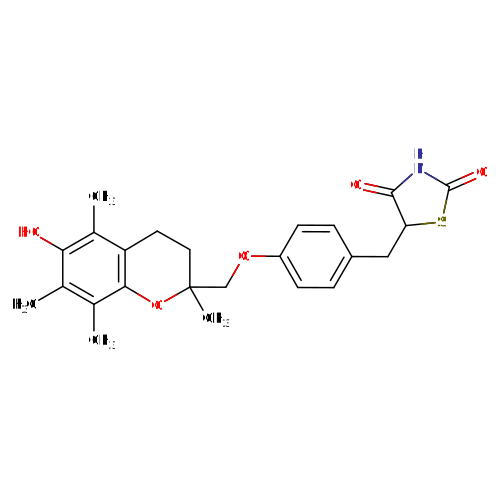
- Weight
- Average: 441.54
Monoisotopic: 441.160993669 - Chemical Formula
- C24H27NO5S
- Synonyms
- Troglitazona
- Troglitazone

Pharmacology
- Indication
For the treatment of Type II diabetes mellitus. It is used alone or in combination with a sulfonylurea, metformin, or insulin as an adjunct to diet and exercise.
 Reduce drug development failure ratesBuild, train, & validate machine-learning modelswith evidence-based and structured datasets.Build, train, & validate predictive machine-learning models with structured datasets.
- Contraindications & Blackbox Warnings
 Prevent Adverse Drug Events TodayTap into our Clinical API for life-saving information on contraindications & blackbox warnings, population restrictions, harmful risks, & more.Avoid life-threatening adverse drug events with our Clinical API
- Pharmacodynamics
Troglitazone is an oral antihyperglycemic agent which acts primarily by decreasing insulin resistance. Troglitazone is used in the management of type II diabetes (noninsulin-dependent diabetes mellitus (NIDDM) also known as adult-onset diabetes). It improves sensitivity to insulin in muscle and adipose tissue and inhibits hepatic gluconeogenesis. Troglitazone is not chemically or functionally related to either the sulfonylureas, the biguanides, or the g-glucosidase inhibitors. Troglitazone may be used concomitantly with a sulfonylurea or insulin to improve glycemic control.
- Mechanism of action
Troglitazone is a thiazolidinedione antidiabetic agent that lowers blood glucose by improving target cell response to insulin. It has a unique mechanism of action that is dependent on the presence of insulin for activity. Troglitazone decreases hepatic glucose output and increases insulin dependent glucose disposal in skeletal muscle. Its mechanism of action is thought to involve binding to nuclear receptors (PPAR) that regulate the transcription of a number of insulin responsive genes critical for the control of glucose and lipid metabolism. Troglitazone is a ligand to both PPARα and PPARγ, with a highter affinity for PPARγ. The drug also contains an α-tocopheroyl moiety, potentially giving it vitamin E-like activity. Troglitazone has been shown to reduce inflammation, and is associated with a decrase in nuclear factor kappa-B (NF-κB) and a concomitant increase in its inhibitor (IκB). Unlike sulfonylureas, troglitazone is not an insulin secretagogue.
Target Actions Organism APeroxisome proliferator-activated receptor gamma agonistregulatorHumans NEstrogen-related receptor gamma inverse agonistHumans NSteroid hormone receptor ERR1 inverse agonistHumans UPeroxisome proliferator-activated receptor delta Not Available Humans UPeroxisome proliferator-activated receptor alpha Not Available Humans UGlutathione S-transferase P Not Available Humans NLong-chain-fatty-acid--CoA ligase 4 inhibitorHumans UPlasminogen activator inhibitor 1 antagonistHumans NEquilibrative nucleoside transporter 1 inhibitorHumans - Absorption
Absorbed rapidly. Food increases the extent of absorption by 30% to 85%.
- Volume of distribution
Not Available
- Protein binding
> 99% (primarily to serum albumin)
- Metabolism
A sulfate conjugate metabolite (Metabolite 1) and a quinone metabolite (Metabolite 3) have been detected in the plasma of healthy males. A glucuronide conjugate (Metabolite 2) has been detected in the urine and also in negligible amounts in the plasma. In healthy volunteers and in patients with type 2 diabetes, the steady-state concentration of Metabolite 1 is six to seven times that of troglitazone and Metabolite 3. In in vivo drug interaction studies, troglitazone has been shown to induce cytochrome P450 CYP3A4 at clinically relevant doses.
- Route of elimination
Not Available
- Half-life
16-34 hours
- Clearance
Not Available
- Adverse Effects
 Improve decision support & research outcomesWith structured adverse effects data, including: blackbox warnings, adverse reactions, warning & precautions, & incidence rates. View sample adverse effects data in our new Data Library!Improve decision support & research outcomes with our structured adverse effects data.
- Toxicity
Not Available
- Pathways
- Not Available
- Pharmacogenomic Effects/ADRs
- Not Available
Interactions
- Drug Interactions
- This information should not be interpreted without the help of a healthcare provider. If you believe you are experiencing an interaction, contact a healthcare provider immediately. The absence of an interaction does not necessarily mean no interactions exist.
Drug Interaction Integrate drug-drug
interactions in your softwareAbatacept The metabolism of Troglitazone can be increased when combined with Abatacept. Abemaciclib The metabolism of Abemaciclib can be increased when combined with Troglitazone. Abiraterone The metabolism of Troglitazone can be decreased when combined with Abiraterone. Abrocitinib The metabolism of Abrocitinib can be decreased when combined with Troglitazone. Acalabrutinib The metabolism of Acalabrutinib can be increased when combined with Troglitazone. - Food Interactions
- Not Available
Products
 Drug product information from 10+ global regionsOur datasets provide approved product information including:dosage, form, labeller, route of administration, and marketing period.Access drug product information from over 10 global regions.
- International/Other Brands
- Noscal / Resulin / Rezulin / Romozin
Categories
- ATC Codes
- A10BG01 — Troglitazone
- Drug Categories
- Alimentary Tract and Metabolism
- Benzopyrans
- Blood Glucose Lowering Agents
- BSEP/ABCB11 Inhibitors
- Chromans
- Cytochrome P-450 CYP2B6 Inducers
- Cytochrome P-450 CYP2B6 Inducers (strength unknown)
- Cytochrome P-450 CYP2C19 Inhibitors
- Cytochrome P-450 CYP2C19 inhibitors (strength unknown)
- Cytochrome P-450 CYP2C8 Inhibitors
- Cytochrome P-450 CYP2C8 Inhibitors (moderate)
- Cytochrome P-450 CYP2C8 Substrates
- Cytochrome P-450 CYP2C9 Inhibitors
- Cytochrome P-450 CYP2C9 Inhibitors (moderate)
- Cytochrome P-450 CYP2C9 Substrates
- Cytochrome P-450 CYP3A Inducers
- Cytochrome P-450 CYP3A Inhibitors
- Cytochrome P-450 CYP3A4 Inducers
- Cytochrome P-450 CYP3A4 Inducers (strength unknown)
- Cytochrome P-450 CYP3A5 Inhibitors
- Cytochrome P-450 CYP3A5 Inhibitors (strength unknown)
- Cytochrome P-450 CYP3A7 Inhibitors
- Cytochrome P-450 CYP3A7 Inhibitors (strength unknown)
- Cytochrome P-450 Enzyme Inducers
- Cytochrome P-450 Enzyme Inhibitors
- Cytochrome P-450 Substrates
- Drugs Used in Diabetes
- Heterocyclic Compounds, Fused-Ring
- OATP1B1/SLCO1B1 Inhibitors
- Oral Hypoglycemics
- Pyrans
- Sulfur Compounds
- Thiazoles
- Thiazolidinediones
- UGT1A1 Substrates
- UGT1A3 substrates
- UGT1A4 substrates
- UGT1A6 Inhibitors
- UGT1A6 substrate
- UGT1A9 Substrates
- UGT2B7 substrates
- Chemical TaxonomyProvided by Classyfire
- Description
- This compound belongs to the class of organic compounds known as 1-benzopyrans. These are organic aromatic compounds that 1-benzopyran, a bicyclic compound made up of a benzene ring fused to a pyran, so that the oxygen atom is at the 1-position.
- Kingdom
- Organic compounds
- Super Class
- Organoheterocyclic compounds
- Class
- Benzopyrans
- Sub Class
- 1-benzopyrans
- Direct Parent
- 1-benzopyrans
- Alternative Parents
- Phenoxy compounds / Phenol ethers / Thiazolidinediones / Alkyl aryl ethers / Dicarboximides / Thiocarbamic acid derivatives / Organic carbonic acids and derivatives / Oxacyclic compounds / Azacyclic compounds / Organopnictogen compounds show 4 more
- Substituents
- 1-benzopyran / Alkyl aryl ether / Aromatic heteropolycyclic compound / Azacycle / Benzenoid / Carbonic acid derivative / Carbonyl group / Carboxylic acid derivative / Dicarboximide / Ether show 14 more
- Molecular Framework
- Aromatic heteropolycyclic compounds
- External Descriptors
- thiazolidinone, chromanes (CHEBI:9753) / a small molecule (CPD-11439)
- Affected organisms
- Humans and other mammals
Chemical Identifiers
- UNII
- I66ZZ0ZN0E
- CAS number
- 97322-87-7
- InChI Key
- GXPHKUHSUJUWKP-UHFFFAOYSA-N
- InChI
- InChI=1S/C24H27NO5S/c1-13-14(2)21-18(15(3)20(13)26)9-10-24(4,30-21)12-29-17-7-5-16(6-8-17)11-19-22(27)25-23(28)31-19/h5-8,19,26H,9-12H2,1-4H3,(H,25,27,28)
- IUPAC Name
- 5-({4-[(6-hydroxy-2,5,7,8-tetramethyl-3,4-dihydro-2H-1-benzopyran-2-yl)methoxy]phenyl}methyl)-1,3-thiazolidine-2,4-dione
- SMILES
- CC1=C(C)C2=C(CCC(C)(COC3=CC=C(CC4SC(=O)NC4=O)C=C3)O2)C(C)=C1O
References
- Synthesis Reference
Krishnamurthi Vyas, Chebiyyam Prabhakar, Sreenivas Dharmaraja Rao, Mamillapalli Ramabadhra Sarma, Om Gaddam Reddy, Rajagopalan Ramanujam, Ranjan Chakrabarti, "Polymorphic forms of troglitazone having enhanced anti-diabetic activity and a process for their preparation." U.S. Patent US5700820, issued June, 1992.
US5700820- General References
- Aljada A, Garg R, Ghanim H, Mohanty P, Hamouda W, Assian E, Dandona P: Nuclear factor-kappaB suppressive and inhibitor-kappaB stimulatory effects of troglitazone in obese patients with type 2 diabetes: evidence of an antiinflammatory action? J Clin Endocrinol Metab. 2001 Jul;86(7):3250-6. [Article]
- External Links
- Human Metabolome Database
- HMDB0259292
- KEGG Drug
- D00395
- PubChem Compound
- 5591
- PubChem Substance
- 46504655
- ChemSpider
- 5389
- BindingDB
- 50088494
- 72610
- ChEBI
- 9753
- ChEMBL
- CHEMBL408
- Therapeutic Targets Database
- DAP001337
- PharmGKB
- PA451799
- Guide to Pharmacology
- GtP Drug Page
- RxList
- RxList Drug Page
- Drugs.com
- Drugs.com Drug Page
- Wikipedia
- Troglitazone
- FDA label
- Download (501 KB)
Clinical Trials
- Clinical Trials
Phase Status Purpose Conditions Count 2 Completed Treatment Impaired Glucose Tolerance / Type 2 Diabetes Mellitus 1 2 Completed Treatment Sarcomas 1 2, 3 Completed Treatment Atherosclerosis / Diabetes Mellitus 1 Not Available Completed Not Available Bone Fractures / Type 2 Diabetes Mellitus 1 Not Available Completed Not Available Type 2 Diabetes Mellitus 3
Pharmacoeconomics
- Manufacturers
- Sankyo usa corp
- Pfizer pharmaceuticals ltd
- Packagers
- Murfreesboro Pharmaceutical Nursing Supply
- Dosage Forms
- Not Available
- Prices
- Not Available
- Patents
Patent Number Pediatric Extension Approved Expires (estimated) Region US5602133 No 1997-02-11 2013-09-15 US 
US5859037 No 1999-01-12 2017-11-13 US US6011049 No 2000-01-04 2017-11-13 US
Properties
- State
- Solid
- Experimental Properties
Property Value Source melting point (°C) 184-186 °C Not Available logP 3.6 Not Available - Predicted Properties
Property Value Source Water Solubility 0.00121 mg/mL ALOGPS logP 4.16 ALOGPS logP 5.5 Chemaxon logS -5.6 ALOGPS pKa (Strongest Acidic) 6.61 Chemaxon pKa (Strongest Basic) -4.6 Chemaxon Physiological Charge -1 Chemaxon Hydrogen Acceptor Count 5 Chemaxon Hydrogen Donor Count 2 Chemaxon Polar Surface Area 84.86 Å2 Chemaxon Rotatable Bond Count 5 Chemaxon Refractivity 120.99 m3·mol-1 Chemaxon Polarizability 47.27 Å3 Chemaxon Number of Rings 4 Chemaxon Bioavailability 1 Chemaxon Rule of Five No Chemaxon Ghose Filter Yes Chemaxon Veber's Rule No Chemaxon MDDR-like Rule No Chemaxon - Predicted ADMET Features
Property Value Probability Human Intestinal Absorption + 0.868 Blood Brain Barrier + 0.8183 Caco-2 permeable - 0.6915 P-glycoprotein substrate Substrate 0.7514 P-glycoprotein inhibitor I Non-inhibitor 0.7854 P-glycoprotein inhibitor II Non-inhibitor 0.7015 Renal organic cation transporter Non-inhibitor 0.861 CYP450 2C9 substrate Non-substrate 0.8329 CYP450 2D6 substrate Substrate 0.8919 CYP450 3A4 substrate Substrate 0.7408 CYP450 1A2 substrate Non-inhibitor 0.5726 CYP450 2C9 inhibitor Non-inhibitor 0.6843 CYP450 2D6 inhibitor Non-inhibitor 0.9266 CYP450 2C19 inhibitor Non-inhibitor 0.6359 CYP450 3A4 inhibitor Non-inhibitor 0.5517 CYP450 inhibitory promiscuity Low CYP Inhibitory Promiscuity 0.5121 Ames test Non AMES toxic 0.584 Carcinogenicity Non-carcinogens 0.9211 Biodegradation Not ready biodegradable 0.9881 Rat acute toxicity 1.9768 LD50, mol/kg Not applicable hERG inhibition (predictor I) Weak inhibitor 0.9911 hERG inhibition (predictor II) Non-inhibitor 0.6643
Spectra
- Mass Spec (NIST)
- Not Available
- Spectra
Spectrum Spectrum Type Splash Key Predicted MS/MS Spectrum - 10V, Positive (Annotated) Predicted LC-MS/MS splash10-0006-0030900000-fdd75d7e6404f192d09f Predicted MS/MS Spectrum - 10V, Negative (Annotated) Predicted LC-MS/MS splash10-0006-0070900000-060bbd2c79b0f09312c0 Predicted MS/MS Spectrum - 20V, Positive (Annotated) Predicted LC-MS/MS splash10-0076-0456900000-a342f584359e970180ad Predicted MS/MS Spectrum - 20V, Negative (Annotated) Predicted LC-MS/MS splash10-0006-9224600000-07dbc891f26c5f46d1e9 Predicted MS/MS Spectrum - 40V, Positive (Annotated) Predicted LC-MS/MS splash10-05fu-0791200000-c7c08dfdb95225c51cd3 Predicted MS/MS Spectrum - 40V, Negative (Annotated) Predicted LC-MS/MS splash10-0f6x-4911100000-7ab3094b0cb821251309 Predicted 1H NMR Spectrum 1D NMR Not Applicable Predicted 13C NMR Spectrum 1D NMR Not Applicable - Chromatographic Properties
Collision Cross Sections (CCS)
Adduct CCS Value (Å2) Source type Source [M-H]- 205.3192 predictedDeepCCS 1.0 (2019) [M+H]+ 207.67719 predictedDeepCCS 1.0 (2019) [M+Na]+ 214.97328 predictedDeepCCS 1.0 (2019)
Targets

- Kind
- Protein
- Organism
- Humans
- Pharmacological action
- Yes
- Actions
- AgonistRegulator
- General Function
- Zinc ion binding
- Specific Function
- Nuclear receptor that binds peroxisome proliferators such as hypolipidemic drugs and fatty acids. Once activated by a ligand, the nuclear receptor binds to DNA specific PPAR response elements (PPRE...
- Gene Name
- PPARG
- Uniprot ID
- P37231
- Uniprot Name
- Peroxisome proliferator-activated receptor gamma
- Molecular Weight
- 57619.58 Da
References
- Kitamura S, Miyazaki Y, Shinomura Y, Kondo S, Kanayama S, Matsuzawa Y: Peroxisome proliferator-activated receptor gamma induces growth arrest and differentiation markers of human colon cancer cells. Jpn J Cancer Res. 1999 Jan;90(1):75-80. [Article]
- Demetri GD, Fletcher CD, Mueller E, Sarraf P, Naujoks R, Campbell N, Spiegelman BM, Singer S: Induction of solid tumor differentiation by the peroxisome proliferator-activated receptor-gamma ligand troglitazone in patients with liposarcoma. Proc Natl Acad Sci U S A. 1999 Mar 30;96(7):3951-6. [Article]
- Petrova TV, Akama KT, Van Eldik LJ: Cyclopentenone prostaglandins suppress activation of microglia: down-regulation of inducible nitric-oxide synthase by 15-deoxy-Delta12,14-prostaglandin J2. Proc Natl Acad Sci U S A. 1999 Apr 13;96(8):4668-73. [Article]
- Camp HS, Whitton AL, Tafuri SR: PPARgamma activators down-regulate the expression of PPARgamma in 3T3-L1 adipocytes. FEBS Lett. 1999 Mar 26;447(2-3):186-90. [Article]
- Satoh T, Furuta K, Suzuki M, Watanabe Y: Prostaglandin J2 and its metabolites promote neurite outgrowth induced by nerve growth factor in PC12 cells. Biochem Biophys Res Commun. 1999 Apr 29;258(1):50-3. [Article]
- Chen X, Ji ZL, Chen YZ: TTD: Therapeutic Target Database. Nucleic Acids Res. 2002 Jan 1;30(1):412-5. [Article]
- Baek SJ, Wilson LC, Hsi LC, Eling TE: Troglitazone, a peroxisome proliferator-activated receptor gamma (PPAR gamma ) ligand, selectively induces the early growth response-1 gene independently of PPAR gamma. A novel mechanism for its anti-tumorigenic activity. J Biol Chem. 2003 Feb 21;278(8):5845-53. Epub 2002 Dec 9. [Article]
- Subbaramaiah K, Lin DT, Hart JC, Dannenberg AJ: Peroxisome proliferator-activated receptor gamma ligands suppress the transcriptional activation of cyclooxygenase-2. Evidence for involvement of activator protein-1 and CREB-binding protein/p300. J Biol Chem. 2001 Apr 13;276(15):12440-8. Epub 2001 Jan 23. [Article]
- Kind
- Protein
- Organism
- Humans
- Pharmacological action
- No
- Actions
- Inverse agonist
- General Function
- Zinc ion binding
- Specific Function
- Orphan receptor that acts as transcription activator in the absence of bound ligand. Binds specifically to an estrogen response element and activates reporter genes controlled by estrogen response ...
- Gene Name
- ESRRG
- Uniprot ID
- P62508
- Uniprot Name
- Estrogen-related receptor gamma
- Molecular Weight
- 51305.485 Da
References
- Wang Y, Fang F, Wong CW: Troglitazone is an estrogen-related receptor alpha and gamma inverse agonist. Biochem Pharmacol. 2010 Jul 1;80(1):80-5. doi: 10.1016/j.bcp.2010.03.013. Epub 2010 Mar 16. [Article]
- Kind
- Protein
- Organism
- Humans
- Pharmacological action
- No
- Actions
- Inverse agonist
- General Function
- Zinc ion binding
- Specific Function
- Binds to an ERR-alpha response element (ERRE) containing a single consensus half-site, 5'-TNAAGGTCA-3'. Can bind to the medium-chain acyl coenzyme A dehydrogenase (MCAD) response element NRRE-1 and...
- Gene Name
- ESRRA
- Uniprot ID
- P11474
- Uniprot Name
- Steroid hormone receptor ERR1
- Molecular Weight
- 45509.11 Da
References
- Wang Y, Fang F, Wong CW: Troglitazone is an estrogen-related receptor alpha and gamma inverse agonist. Biochem Pharmacol. 2010 Jul 1;80(1):80-5. doi: 10.1016/j.bcp.2010.03.013. Epub 2010 Mar 16. [Article]
- Kind
- Protein
- Organism
- Humans
- Pharmacological action
- Unknown
- General Function
- Zinc ion binding
- Specific Function
- Ligand-activated transcription factor. Receptor that binds peroxisome proliferators such as hypolipidemic drugs and fatty acids. Has a preference for poly-unsaturated fatty acids, such as gamma-lin...
- Gene Name
- PPARD
- Uniprot ID
- Q03181
- Uniprot Name
- Peroxisome proliferator-activated receptor delta
- Molecular Weight
- 49902.99 Da
References
- Inoue I, Itoh F, Aoyagi S, Tazawa S, Kusama H, Akahane M, Mastunaga T, Hayashi K, Awata T, Komoda T, Katayama S: Fibrate and statin synergistically increase the transcriptional activities of PPARalpha/RXRalpha and decrease the transactivation of NFkappaB. Biochem Biophys Res Commun. 2002 Jan 11;290(1):131-9. [Article]
- Kind
- Protein
- Organism
- Humans
- Pharmacological action
- Unknown
- General Function
- Zinc ion binding
- Specific Function
- Ligand-activated transcription factor. Key regulator of lipid metabolism. Activated by the endogenous ligand 1-palmitoyl-2-oleoyl-sn-glycerol-3-phosphocholine (16:0/18:1-GPC). Activated by oleyleth...
- Gene Name
- PPARA
- Uniprot ID
- Q07869
- Uniprot Name
- Peroxisome proliferator-activated receptor alpha
- Molecular Weight
- 52224.595 Da
References
- Inoue I, Itoh F, Aoyagi S, Tazawa S, Kusama H, Akahane M, Mastunaga T, Hayashi K, Awata T, Komoda T, Katayama S: Fibrate and statin synergistically increase the transcriptional activities of PPARalpha/RXRalpha and decrease the transactivation of NFkappaB. Biochem Biophys Res Commun. 2002 Jan 11;290(1):131-9. [Article]
- Kind
- Protein
- Organism
- Humans
- Pharmacological action
- Unknown
- General Function
- S-nitrosoglutathione binding
- Specific Function
- Conjugation of reduced glutathione to a wide number of exogenous and endogenous hydrophobic electrophiles. Regulates negatively CDK5 activity via p25/p35 translocation to prevent neurodegeneration.
- Gene Name
- GSTP1
- Uniprot ID
- P09211
- Uniprot Name
- Glutathione S-transferase P
- Molecular Weight
- 23355.625 Da
References
- Boerma JS, Vermeulen NP, Commandeur JN: Application of CYP102A1M11H as a tool for the generation of protein adducts of reactive drug metabolites. Chem Res Toxicol. 2011 Aug 15;24(8):1263-74. doi: 10.1021/tx2001515. Epub 2011 Jun 16. [Article]
- Kind
- Protein
- Organism
- Humans
- Pharmacological action
- No
- Actions
- Inhibitor
- General Function
- Very long-chain fatty acid-coa ligase activity
- Specific Function
- Activation of long-chain fatty acids for both synthesis of cellular lipids, and degradation via beta-oxidation. Preferentially uses arachidonate and eicosapentaenoate as substrates.
- Gene Name
- ACSL4
- Uniprot ID
- O60488
- Uniprot Name
- Long-chain-fatty-acid--CoA ligase 4
- Molecular Weight
- 79187.38 Da
References
- Kim JH, Lewin TM, Coleman RA: Expression and characterization of recombinant rat Acyl-CoA synthetases 1, 4, and 5. Selective inhibition by triacsin C and thiazolidinediones. J Biol Chem. 2001 Jul 6;276(27):24667-73. Epub 2001 Apr 23. [Article]
- Lewin TM, Van Horn CG, Krisans SK, Coleman RA: Rat liver acyl-CoA synthetase 4 is a peripheral-membrane protein located in two distinct subcellular organelles, peroxisomes, and mitochondrial-associated membrane. Arch Biochem Biophys. 2002 Aug 15;404(2):263-70. [Article]
- Lewin TM, Kim JH, Granger DA, Vance JE, Coleman RA: Acyl-CoA synthetase isoforms 1, 4, and 5 are present in different subcellular membranes in rat liver and can be inhibited independently. J Biol Chem. 2001 Jul 6;276(27):24674-9. Epub 2001 Apr 23. [Article]
- Kind
- Protein
- Organism
- Humans
- Pharmacological action
- Unknown
- Actions
- Antagonist
- General Function
- Serine-type endopeptidase inhibitor activity
- Specific Function
- Serine protease inhibitor. This inhibitor acts as 'bait' for tissue plasminogen activator, urokinase, protein C and matriptase-3/TMPRSS7. Its rapid interaction with PLAT may function as a major con...
- Gene Name
- SERPINE1
- Uniprot ID
- P05121
- Uniprot Name
- Plasminogen activator inhibitor 1
- Molecular Weight
- 45059.695 Da
References
- Sobel BE: Insulin resistance and thrombosis: a cardiologist's view. Am J Cardiol. 1999 Jul 8;84(1A):37J-41J. [Article]
- Gottschling-Zeller H, Rohrig K, Hauner H: Troglitazone reduces plasminogen activator inhibitor-1 expression and secretion in cultured human adipocytes. Diabetologia. 2000 Mar;43(3):377-83. [Article]
- Nordt TK, Peter K, Bode C, Sobel BE: Differential regulation by troglitazone of plasminogen activator inhibitor type 1 in human hepatic and vascular cells. J Clin Endocrinol Metab. 2000 Apr;85(4):1563-8. [Article]
- Kato K, Yamada D, Midorikawa S, Sato W, Watanabe T: Improvement by the insulin-sensitizing agent, troglitazone, of abnormal fibrinolysis in type 2 diabetes mellitus. Metabolism. 2000 May;49(5):662-5. [Article]
- Kruszynska YT, Yu JG, Olefsky JM, Sobel BE: Effects of troglitazone on blood concentrations of plasminogen activator inhibitor 1 in patients with type 2 diabetes and in lean and obese normal subjects. Diabetes. 2000 Apr;49(4):633-9. [Article]
- Kind
- Protein
- Organism
- Humans
- Pharmacological action
- No
- Actions
- Inhibitor
- General Function
- Nucleoside transmembrane transporter activity
- Specific Function
- Mediates both influx and efflux of nucleosides across the membrane (equilibrative transporter). It is sensitive (ES) to low concentrations of the inhibitor nitrobenzylmercaptopurine riboside (NBMPR...
- Gene Name
- SLC29A1
- Uniprot ID
- Q99808
- Uniprot Name
- Equilibrative nucleoside transporter 1
- Molecular Weight
- 50218.805 Da
References
- Leung GP, Man RY, Tse CM: Effect of thiazolidinediones on equilibrative nucleoside transporter-1 in human aortic smooth muscle cells. Biochem Pharmacol. 2005 Aug 1;70(3):355-62. [Article]
Enzymes
- Kind
- Protein
- Organism
- Humans
- Pharmacological action
- Unknown
- Actions
- Inhibitor
- General Function
- Oxygen binding
- Specific Function
- Catalyzes the formation of aromatic C18 estrogens from C19 androgens.
- Gene Name
- CYP19A1
- Uniprot ID
- P11511
- Uniprot Name
- Aromatase
- Molecular Weight
- 57882.48 Da
References
- Kumavath R, Azad M, Devarapalli P, Tiwari S, Kar S, Barh D, Azevedo V, Kumar AP: Novel aromatase inhibitors selection using induced fit docking and extra precision methods: Potential clinical use in ER-alpha-positive breast cancer. Bioinformation. 2016 Oct 10;12(6):324-331. doi: 10.6026/97320630012324. eCollection 2016. [Article]
- Kind
- Protein
- Organism
- Humans
- Pharmacological action
- Unknown
- Actions
- Inducer
- General Function
- Vitamin d 24-hydroxylase activity
- Specific Function
- Cytochromes P450 are a group of heme-thiolate monooxygenases. In liver microsomes, this enzyme is involved in an NADPH-dependent electron transport pathway. It oxidizes a variety of structurally un...
- Gene Name
- CYP1A1
- Uniprot ID
- P04798
- Uniprot Name
- Cytochrome P450 1A1
- Molecular Weight
- 58164.815 Da
References
- Kim HG, Han EH, Jeong HG: Effect of troglitazone on CYP1A1 induction. Toxicology. 2008 Apr 18;246(2-3):166-71. doi: 10.1016/j.tox.2008.01.003. Epub 2008 Jan 16. [Article]
- Kind
- Protein
- Organism
- Humans
- Pharmacological action
- Unknown
- Actions
- Inducer
- General Function
- Steroid hydroxylase activity
- Specific Function
- Cytochromes P450 are a group of heme-thiolate monooxygenases. In liver microsomes, this enzyme is involved in an NADPH-dependent electron transport pathway. It oxidizes a variety of structurally un...
- Gene Name
- CYP2B6
- Uniprot ID
- P20813
- Uniprot Name
- Cytochrome P450 2B6
- Molecular Weight
- 56277.81 Da
References
- Rendic S: Summary of information on human CYP enzymes: human P450 metabolism data. Drug Metab Rev. 2002 Feb-May;34(1-2):83-448. [Article]
- Sahi J, Hamilton G, Sinz M, Barros S, Huang SM, Lesko LJ, LeCluyse EL: Effect of troglitazone on cytochrome P450 enzymes in primary cultures of human and rat hepatocytes. Xenobiotica. 2000 Mar;30(3):273-84. [Article]
- Kind
- Protein
- Organism
- Humans
- Pharmacological action
- Unknown
- Actions
- SubstrateInhibitor
- General Function
- Steroid hydroxylase activity
- Specific Function
- Cytochromes P450 are a group of heme-thiolate monooxygenases. In liver microsomes, this enzyme is involved in an NADPH-dependent electron transport pathway. It oxidizes a variety of structurally un...
- Gene Name
- CYP2C9
- Uniprot ID
- P11712
- Uniprot Name
- Cytochrome P450 2C9
- Molecular Weight
- 55627.365 Da
References
- Rendic S: Summary of information on human CYP enzymes: human P450 metabolism data. Drug Metab Rev. 2002 Feb-May;34(1-2):83-448. [Article]
- Yamazaki H, Suzuki M, Tane K, Shimada N, Nakajima M, Yokoi T: In vitro inhibitory effects of troglitazone and its metabolites on drug oxidation activities of human cytochrome P450 enzymes: comparison with pioglitazone and rosiglitazone. Xenobiotica. 2000 Jan;30(1):61-70. [Article]
- Yamazaki H, Shibata A, Suzuki M, Nakajima M, Shimada N, Guengerich FP, Yokoi T: Oxidation of troglitazone to a quinone-type metabolite catalyzed by cytochrome P-450 2C8 and P-450 3A4 in human liver microsomes. Drug Metab Dispos. 1999 Nov;27(11):1260-6. [Article]
- Sahi J, Black CB, Hamilton GA, Zheng X, Jolley S, Rose KA, Gilbert D, LeCluyse EL, Sinz MW: Comparative effects of thiazolidinediones on in vitro P450 enzyme induction and inhibition. Drug Metab Dispos. 2003 Apr;31(4):439-46. [Article]
- Kind
- Protein
- Organism
- Humans
- Pharmacological action
- Unknown
- Actions
- Inhibitor
- General Function
- Oxygen binding
- Specific Function
- Cytochromes P450 are a group of heme-thiolate monooxygenases. In liver microsomes, this enzyme is involved in an NADPH-dependent electron transport pathway. It oxidizes a variety of structurally un...
- Gene Name
- CYP3A5
- Uniprot ID
- P20815
- Uniprot Name
- Cytochrome P450 3A5
- Molecular Weight
- 57108.065 Da
References
- Ogino M, Nagata K, Yamazoe Y: Selective suppressions of human CYP3A forms, CYP3A5 and CYP3A7, by troglitazone in HepG2 cells. Drug Metab Pharmacokinet. 2002;17(1):42-6. [Article]
- Kind
- Protein
- Organism
- Humans
- Pharmacological action
- Unknown
- Actions
- Inhibitor
- General Function
- Oxygen binding
- Specific Function
- Cytochromes P450 are a group of heme-thiolate monooxygenases. In liver microsomes, this enzyme is involved in an NADPH-dependent electron transport pathway. It oxidizes a variety of structurally un...
- Gene Name
- CYP3A7
- Uniprot ID
- P24462
- Uniprot Name
- Cytochrome P450 3A7
- Molecular Weight
- 57525.03 Da
References
- Ogino M, Nagata K, Yamazoe Y: Selective suppressions of human CYP3A forms, CYP3A5 and CYP3A7, by troglitazone in HepG2 cells. Drug Metab Pharmacokinet. 2002;17(1):42-6. [Article]
- Kind
- Protein
- Organism
- Humans
- Pharmacological action
- Unknown
- Actions
- Substrate
- General Function
- Retinoic acid binding
- Specific Function
- UDPGT is of major importance in the conjugation and subsequent elimination of potentially toxic xenobiotics and endogenous compounds. Isoform 2 lacks transferase activity but acts as a negative reg...
- Gene Name
- UGT1A3
- Uniprot ID
- P35503
- Uniprot Name
- UDP-glucuronosyltransferase 1-3
- Molecular Weight
- 60337.835 Da
References
- Watanabe Y, Nakajima M, Yokoi T: Troglitazone glucuronidation in human liver and intestine microsomes: high catalytic activity of UGT1A8 and UGT1A10. Drug Metab Dispos. 2002 Dec;30(12):1462-9. [Article]
- Kind
- Protein
- Organism
- Humans
- Pharmacological action
- Unknown
- Actions
- Substrate
- General Function
- Protein homodimerization activity
- Specific Function
- UDPGT is of major importance in the conjugation and subsequent elimination of potentially toxic xenobiotics and endogenous compounds. This isoform glucuronidates bilirubin IX-alpha to form both the...
- Gene Name
- UGT1A4
- Uniprot ID
- P22310
- Uniprot Name
- UDP-glucuronosyltransferase 1-4
- Molecular Weight
- 60024.535 Da
References
- Watanabe Y, Nakajima M, Yokoi T: Troglitazone glucuronidation in human liver and intestine microsomes: high catalytic activity of UGT1A8 and UGT1A10. Drug Metab Dispos. 2002 Dec;30(12):1462-9. [Article]
- Kind
- Protein
- Organism
- Humans
- Pharmacological action
- Unknown
- Actions
- SubstrateInhibitor
- General Function
- Protein homodimerization activity
- Specific Function
- UDPGT is of major importance in the conjugation and subsequent elimination of potentially toxic xenobiotics and endogenous compounds. This isoform has specificity for phenols. Isoform 3 lacks trans...
- Gene Name
- UGT1A6
- Uniprot ID
- P19224
- Uniprot Name
- UDP-glucuronosyltransferase 1-6
- Molecular Weight
- 60750.215 Da
References
- Watanabe Y, Nakajima M, Yokoi T: Troglitazone glucuronidation in human liver and intestine microsomes: high catalytic activity of UGT1A8 and UGT1A10. Drug Metab Dispos. 2002 Dec;30(12):1462-9. [Article]
- Ito M, Yamamoto K, Sato H, Fujiyama Y, Bamba T: Inhibitory effect of troglitazone on glucuronidation catalyzed by human uridine diphosphate-glucuronosyltransferase 1A6. Eur J Clin Pharmacol. 2001 Mar;56(12):893-5. [Article]
- Kind
- Protein
- Organism
- Humans
- Pharmacological action
- Unknown
- Actions
- Substrate
- General Function
- Retinoic acid binding
- Specific Function
- UDPGT is of major importance in the conjugation and subsequent elimination of potentially toxic xenobiotics and endogenous compounds. Isoform 2 lacks transferase activity but acts as a negative reg...
- Gene Name
- UGT1A7
- Uniprot ID
- Q9HAW7
- Uniprot Name
- UDP-glucuronosyltransferase 1-7
- Molecular Weight
- 59818.315 Da
References
- Watanabe Y, Nakajima M, Yokoi T: Troglitazone glucuronidation in human liver and intestine microsomes: high catalytic activity of UGT1A8 and UGT1A10. Drug Metab Dispos. 2002 Dec;30(12):1462-9. [Article]
- Kind
- Protein
- Organism
- Humans
- Pharmacological action
- Unknown
- Actions
- Substrate
- General Function
- Steroid binding
- Specific Function
- UDPGT is of major importance in the conjugation and subsequent elimination of potentially toxic xenobiotics and endogenous compounds. Isoform 2 lacks transferase activity but acts as a negative reg...
- Gene Name
- UGT1A8
- Uniprot ID
- Q9HAW9
- Uniprot Name
- UDP-glucuronosyltransferase 1-8
- Molecular Weight
- 59741.035 Da
References
- Watanabe Y, Nakajima M, Yokoi T: Troglitazone glucuronidation in human liver and intestine microsomes: high catalytic activity of UGT1A8 and UGT1A10. Drug Metab Dispos. 2002 Dec;30(12):1462-9. [Article]
- Kind
- Protein
- Organism
- Humans
- Pharmacological action
- Unknown
- Actions
- Substrate
- General Function
- Retinoic acid binding
- Specific Function
- UDPGT is of major importance in the conjugation and subsequent elimination of potentially toxic xenobiotics and endogenous compounds. This isoform has specificity for phenols. Isoform 2 lacks trans...
- Gene Name
- UGT1A9
- Uniprot ID
- O60656
- Uniprot Name
- UDP-glucuronosyltransferase 1-9
- Molecular Weight
- 59940.495 Da
References
- Watanabe Y, Nakajima M, Yokoi T: Troglitazone glucuronidation in human liver and intestine microsomes: high catalytic activity of UGT1A8 and UGT1A10. Drug Metab Dispos. 2002 Dec;30(12):1462-9. [Article]
- Barbier O, Villeneuve L, Bocher V, Fontaine C, Torra IP, Duhem C, Kosykh V, Fruchart JC, Guillemette C, Staels B: The UDP-glucuronosyltransferase 1A9 enzyme is a peroxisome proliferator-activated receptor alpha and gamma target gene. J Biol Chem. 2003 Apr 18;278(16):13975-83. Epub 2003 Feb 11. [Article]
- Kind
- Protein
- Organism
- Humans
- Pharmacological action
- Unknown
- Actions
- Substrate
- General Function
- Protein kinase c binding
- Specific Function
- UDPGT is of major importance in the conjugation and subsequent elimination of potentially toxic xenobiotics and endogenous compounds. Isoform 2 lacks transferase activity but acts as a negative reg...
- Gene Name
- UGT1A10
- Uniprot ID
- Q9HAW8
- Uniprot Name
- UDP-glucuronosyltransferase 1-10
- Molecular Weight
- 59809.075 Da
References
- Watanabe Y, Nakajima M, Yokoi T: Troglitazone glucuronidation in human liver and intestine microsomes: high catalytic activity of UGT1A8 and UGT1A10. Drug Metab Dispos. 2002 Dec;30(12):1462-9. [Article]
- Kind
- Protein
- Organism
- Humans
- Pharmacological action
- Unknown
- Actions
- Substrate
- General Function
- Glucuronosyltransferase activity
- Specific Function
- UDPGT is of major importance in the conjugation and subsequent elimination of potentially toxic xenobiotics and endogenous compounds.Its unique specificity for 3,4-catechol estrogens and estriol su...
- Gene Name
- UGT2B7
- Uniprot ID
- P16662
- Uniprot Name
- UDP-glucuronosyltransferase 2B7
- Molecular Weight
- 60694.12 Da
References
- Watanabe Y, Nakajima M, Yokoi T: Troglitazone glucuronidation in human liver and intestine microsomes: high catalytic activity of UGT1A8 and UGT1A10. Drug Metab Dispos. 2002 Dec;30(12):1462-9. [Article]
- Kind
- Protein
- Organism
- Humans
- Pharmacological action
- Unknown
- Actions
- Substrate
- General Function
- Glucuronosyltransferase activity
- Specific Function
- UDPGTs are of major importance in the conjugation and subsequent elimination of potentially toxic xenobiotics and endogenous compounds. This isozyme displays activity toward several classes of xeno...
- Gene Name
- UGT2B15
- Uniprot ID
- P54855
- Uniprot Name
- UDP-glucuronosyltransferase 2B15
- Molecular Weight
- 61035.815 Da
References
- Watanabe Y, Nakajima M, Yokoi T: Troglitazone glucuronidation in human liver and intestine microsomes: high catalytic activity of UGT1A8 and UGT1A10. Drug Metab Dispos. 2002 Dec;30(12):1462-9. [Article]
- Kind
- Protein
- Organism
- Humans
- Pharmacological action
- Unknown
- Actions
- Inducer
- General Function
- Vitamin d3 25-hydroxylase activity
- Specific Function
- Cytochromes P450 are a group of heme-thiolate monooxygenases. In liver microsomes, this enzyme is involved in an NADPH-dependent electron transport pathway. It performs a variety of oxidation react...
- Gene Name
- CYP3A4
- Uniprot ID
- P08684
- Uniprot Name
- Cytochrome P450 3A4
- Molecular Weight
- 57342.67 Da
References
- Prueksaritanont T, Vega JM, Zhao J, Gagliano K, Kuznetsova O, Musser B, Amin RD, Liu L, Roadcap BA, Dilzer S, Lasseter KC, Rogers JD: Interactions between simvastatin and troglitazone or pioglitazone in healthy subjects. J Clin Pharmacol. 2001 May;41(5):573-81. [Article]
- Dimaraki EV, Jaffe CA: Troglitazone induces CYP3A4 activity leading to falsely abnormal dexamethasone suppression test. J Clin Endocrinol Metab. 2003 Jul;88(7):3113-6. doi: 10.1210/jc.2002-021778. [Article]
- Sahi J, Hamilton G, Sinz M, Barros S, Huang SM, Lesko LJ, LeCluyse EL: Effect of troglitazone on cytochrome P450 enzymes in primary cultures of human and rat hepatocytes. Xenobiotica. 2000 Mar;30(3):273-84. [Article]
- Flockhart Table of Drug Interactions [Link]
- Kind
- Protein
- Organism
- Humans
- Pharmacological action
- Unknown
- Actions
- Inhibitor
- General Function
- Steroid hydroxylase activity
- Specific Function
- Responsible for the metabolism of a number of therapeutic agents such as the anticonvulsant drug S-mephenytoin, omeprazole, proguanil, certain barbiturates, diazepam, propranolol, citalopram and im...
- Gene Name
- CYP2C19
- Uniprot ID
- P33261
- Uniprot Name
- Cytochrome P450 2C19
- Molecular Weight
- 55930.545 Da
References
- Yamazaki H, Suzuki M, Tane K, Shimada N, Nakajima M, Yokoi T: In vitro inhibitory effects of troglitazone and its metabolites on drug oxidation activities of human cytochrome P450 enzymes: comparison with pioglitazone and rosiglitazone. Xenobiotica. 2000 Jan;30(1):61-70. [Article]
- Kind
- Protein
- Organism
- Humans
- Pharmacological action
- Unknown
- Actions
- Substrate
- General Function
- Steroid binding
- Specific Function
- UDPGT is of major importance in the conjugation and subsequent elimination of potentially toxic xenobiotics and endogenous compounds. This isoform glucuronidates bilirubin IX-alpha to form both the...
- Gene Name
- UGT1A1
- Uniprot ID
- P22309
- Uniprot Name
- UDP-glucuronosyltransferase 1-1
- Molecular Weight
- 59590.91 Da
References
- Watanabe Y, Nakajima M, Yokoi T: Troglitazone glucuronidation in human liver and intestine microsomes: high catalytic activity of UGT1A8 and UGT1A10. Drug Metab Dispos. 2002 Dec;30(12):1462-9. [Article]
- Kind
- Protein
- Organism
- Humans
- Pharmacological action
- Unknown
- Actions
- SubstrateInhibitor
- General Function
- Steroid hydroxylase activity
- Specific Function
- Cytochromes P450 are a group of heme-thiolate monooxygenases. In liver microsomes, this enzyme is involved in an NADPH-dependent electron transport pathway. It oxidizes a variety of structurally un...
- Gene Name
- CYP2C8
- Uniprot ID
- P10632
- Uniprot Name
- Cytochrome P450 2C8
- Molecular Weight
- 55824.275 Da
References
- Schoch GA, Yano JK, Sansen S, Dansette PM, Stout CD, Johnson EF: Determinants of cytochrome P450 2C8 substrate binding: structures of complexes with montelukast, troglitazone, felodipine, and 9-cis-retinoic acid. J Biol Chem. 2008 Jun 20;283(25):17227-37. doi: 10.1074/jbc.M802180200. Epub 2008 Apr 15. [Article]
- Backman JT, Filppula AM, Niemi M, Neuvonen PJ: Role of Cytochrome P450 2C8 in Drug Metabolism and Interactions. Pharmacol Rev. 2016 Jan;68(1):168-241. doi: 10.1124/pr.115.011411. [Article]
- Yamazaki H, Suzuki M, Tane K, Shimada N, Nakajima M, Yokoi T: In vitro inhibitory effects of troglitazone and its metabolites on drug oxidation activities of human cytochrome P450 enzymes: comparison with pioglitazone and rosiglitazone. Xenobiotica. 2000 Jan;30(1):61-70. [Article]
- Sahi J, Black CB, Hamilton GA, Zheng X, Jolley S, Rose KA, Gilbert D, LeCluyse EL, Sinz MW: Comparative effects of thiazolidinediones on in vitro P450 enzyme induction and inhibition. Drug Metab Dispos. 2003 Apr;31(4):439-46. [Article]
Transporters
- Kind
- Protein
- Organism
- Humans
- Pharmacological action
- Unknown
- Actions
- Inhibitor
- General Function
- Transporter activity
- Specific Function
- Involved in the ATP-dependent secretion of bile salts into the canaliculus of hepatocytes.
- Gene Name
- ABCB11
- Uniprot ID
- O95342
- Uniprot Name
- Bile salt export pump
- Molecular Weight
- 146405.83 Da
References
- Wang EJ, Casciano CN, Clement RP, Johnson WW: Fluorescent substrates of sister-P-glycoprotein (BSEP) evaluated as markers of active transport and inhibition: evidence for contingent unequal binding sites. Pharm Res. 2003 Apr;20(4):537-44. [Article]
- Funk C, Pantze M, Jehle L, Ponelle C, Scheuermann G, Lazendic M, Gasser R: Troglitazone-induced intrahepatic cholestasis by an interference with the hepatobiliary export of bile acids in male and female rats. Correlation with the gender difference in troglitazone sulfate formation and the inhibition of the canalicular bile salt export pump (Bsep) by troglitazone and troglitazone sulfate. Toxicology. 2001 Oct 5;167(1):83-98. [Article]
- Saito H, Osumi M, Hirano H, Shin W, Nakamura R, Ishikawa T: Technical pitfalls and improvements for high-speed screening and QSAR analysis to predict inhibitors of the human bile salt export pump (ABCB11/BSEP). AAPS J. 2009 Sep;11(3):581-9. doi: 10.1208/s12248-009-9137-9. Epub 2009 Aug 18. [Article]
- Kind
- Protein
- Organism
- Humans
- Pharmacological action
- Unknown
- Actions
- Inhibitor
- General Function
- Sodium-independent organic anion transmembrane transporter activity
- Specific Function
- Mediates the Na(+)-independent uptake of organic anions such as pravastatin, taurocholate, methotrexate, dehydroepiandrosterone sulfate, 17-beta-glucuronosyl estradiol, estrone sulfate, prostagland...
- Gene Name
- SLCO1B1
- Uniprot ID
- Q9Y6L6
- Uniprot Name
- Solute carrier organic anion transporter family member 1B1
- Molecular Weight
- 76447.99 Da
References
- Nozawa T, Sugiura S, Nakajima M, Goto A, Yokoi T, Nezu J, Tsuji A, Tamai I: Involvement of organic anion transporting polypeptides in the transport of troglitazone sulfate: implications for understanding troglitazone hepatotoxicity. Drug Metab Dispos. 2004 Mar;32(3):291-4. [Article]

Drug created at June 13, 2005 13:24 / Updated at April 09, 2024 18:12