Identification
- Summary
Azithromycin is a macrolide antibiotic used to treat a variety of bacterial infections.
- Brand Names
- Azasite, Zithromax, Zmax
- Generic Name
- Azithromycin
- DrugBank Accession Number
- DB00207
- Background
Azithromycin is a broad-spectrum macrolide antibiotic with a long half-life and a high degree of tissue penetration 3. It was initially approved by the FDA in 1991 4.
It is primarily used for the treatment of respiratory, enteric and genitourinary infections and may be used instead of other macrolides for some sexually transmitted and enteric infections. It is structurally related to erythromycin 2.
Azithromycin [9-deoxo-9a-aza-9a-methyl-9a-homoerythromycin] is a part of the azalide subclass of macrolides, and contains a 15-membered ring, with a methyl-substituted nitrogen instead of a carbonyl group at the 9a position on the aglycone ring, which allows for the prevention of its metabolism. This differentiates azithromycin from other types of macrolides 4.
In March 2020, a small study was funded by the French government to investigate the treatment of COVID-19 with a combination of azithromycin and the anti-malaria drug hydroxychloroquine. The results were positive, all patients taking the combination were virologically cured within 6 days of treatment, however, larger studies are required.9
- Type
- Small Molecule
- Groups
- Approved
- Structure
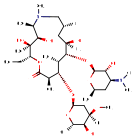
Structure for Azithromycin (DB00207)
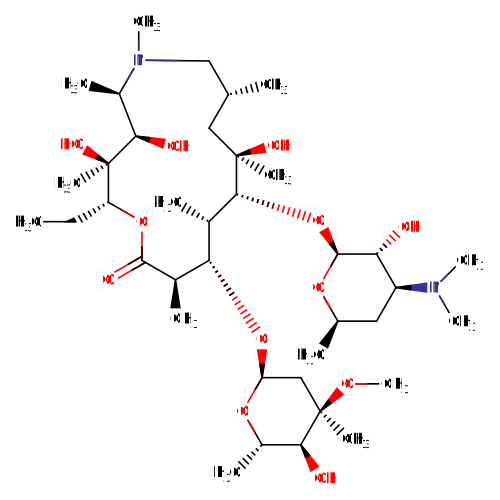
- Weight
- Average: 748.9845
Monoisotopic: 748.508525778 - Chemical Formula
- C38H72N2O12
- Synonyms
- Azithromycin
- Azithromycine
- Azithromycinum
- Azitromicina
- External IDs
- CP 62993
- CP-62,993
- CP-62993
- DRG-0104
- XZ 405
- XZ 450
- XZ-450

Pharmacology
- Indication
Azithromycin should be used only to treat or prevent infections that are proven or strongly suspected to be caused by susceptible bacteria in order to prevent the development antimicrobial resistance and maintain the efficacy of azithromycin Label.
Azithromycin is indicated for the treatment of patients with mild to moderate infections caused by susceptible strains of the microorganisms listed in the specific conditions below. Recommended dosages, duration of therapy and considerations for various patient populations may vary among these infections. Refer to the FDA label and "Indications" section of this drug entry for detailed information Label.
Adults:
Acute bacterial exacerbations of chronic obstructive pulmonary disease due to Haemophilus influenzae, Moraxella catarrhalis or Streptococcus pneumoniae
Acute bacterial sinusitis due to Haemophilus influenzae, Moraxella catarrhalis or Streptococcus pneumoniae
Community-acquired pneumonia due to Chlamydophila pneumoniae, Haemophilus influenzae, Mycoplasma pneumoniae or Streptococcus pneumoniae in patients appropriate for oral therapy
Pharyngitis/tonsillitis caused by Streptococcus pyogenes as an alternative to first-line therapy in individuals who cannot use first-line therapy. Uncomplicated skin and skin structure infections due to Staphylococcus aureus, Streptococcus pyogenes, or Streptococcus agalactiae. Abscesses usually require surgical drainage.
Urethritis and cervicitis due to Chlamydia trachomatis or Neisseria gonorrhoeae.
Genital ulcer disease in men due to Haemophilus ducreyi (chancroid). Due to the small number of women included in clinical trials, the efficacy of azithromycin in the treatment of chancroid in women has not been established.
Pediatric Patients
Acute otitis media caused by Haemophilus influenzae, Moraxella catarrhalis or Streptococcus pneumoniae
Community-acquired pneumonia due to Chlamydophila pneumoniae, Haemophilus influenzae, Mycoplasma pneumoniae or Streptococcus pneumoniae in patients appropriate for oral therapy.
Pharyngitis/tonsillitis caused by Streptococcus pyogenes as an alternative to first-line therapy in individuals who cannot use first-line therapy.
 Reduce drug development failure ratesBuild, train, & validate machine-learning modelswith evidence-based and structured datasets.Build, train, & validate predictive machine-learning models with structured datasets.
- Associated Conditions
Indication Type Indication Combined Product Details Approval Level Age Group Patient Characteristics Dose Form Treatment of Acute bacterial sinusitis •••••••••••• •••••• Treatment of Acute otitis media •••••••••••• ••••••••• •••••••• Treatment of Acute bacterial exacerbation of copd caused by haemophilus influenza infections, moraxella catarrhalis infection, streptococcus pneumoniae infections •••••••••••• •••••• Treatment of Bacterial conjunctivitis •••••••••••• •••••••• Treatment of Bacterial sinusitis •••••••••••• ••••••••• •••••••• - Contraindications & Blackbox Warnings
 Prevent Adverse Drug Events TodayTap into our Clinical API for life-saving information on contraindications & blackbox warnings, population restrictions, harmful risks, & more.Avoid life-threatening adverse drug events with our Clinical API
- Pharmacodynamics
Macrolides stop bacterial growth by inhibiting protein synthesis and translation, treating bacterial infections 4. Azithromycin has additional immunomodulatory effects and has been used in chronic respiratory inflammatory diseases for this purpose 3.
- Mechanism of action
In order to replicate, bacteria require a specific process of protein synthesis, enabled by ribosomal proteins 6. Azithromycin binds to the 23S rRNA of the bacterial 50S ribosomal subunit. It stops bacterial protein synthesis by inhibiting the transpeptidation/translocation step of protein synthesis and by inhibiting the assembly of the 50S ribosomal subunit Label, 5. This results in the control of various bacterial infections 7, Label. The strong affinity of macrolides, including azithromycin, for bacterial ribosomes, is consistent with their broad‐spectrum antibacterial activities 7.
Azithromycin is highly stable at a low pH, giving it a longer serum half-life and increasing its concentrations in tissues compared to erythromycin 4.
Target Actions Organism A23S ribosomal RNA inhibitorEnteric bacteria and other eubacteria UProtein-arginine deiminase type-4 inhibitorHumans - Absorption
Bioavailability of azithromycin is 37% following oral administration. Absorption is not affected by food. Macrolide absorption in the intestines is believed to be mediated by P-glycoprotein (ABCB1) efflux transporters, which are known to be encoded by the ABCB1 gene 4.
- Volume of distribution
After oral administration, azithromycin is widely distributed in tissues with an apparent steady-state volume of distribution of 31.1 L/kg Label. Significantly greater azithromycin concentrations have been measured in the tissues rather than in plasma or serum Label, 3. The lung, tonsils and prostate are organs have shown a particularly high rate of azithromycin uptake 3.
This drug is concentrated within macrophages and polymorphonucleocytes, allowing for effective activity against Chlamydia trachomatis 4. In addition, azithromycin is found to be concentrated in phagocytes and fibroblasts, shown by in vitro incubation techniques. In vivo studies demonstrate that concentration in phagocytes may contribute to azithromycin distribution to inflamed tissues Label.
- Protein binding
The serum protein binding of azithromycin varies in humans, decreasing from 51% at 0.02 µg/mL to 7% at 2 µg/mL Label.
- Metabolism
In vitro and in vivo studies to assess the metabolism of azithromycin have not been performed Label, however, this drug is eliminated by the liver 8, Label.
- Route of elimination
Biliary excretion of azithromycin, primarily as unchanged drug, is a major route of elimination. Over a 1 week period, approximately 6% of the administered dose is found as unchanged drug in urine Label.
- Half-life
Terminal elimination half-life: 68 hours Label
- Clearance
Mean apparent plasma cl=630 mL/min (following single 500 mg oral and i.v. dose) Label
- Adverse Effects
 Improve decision support & research outcomesWith structured adverse effects data, including: blackbox warnings, adverse reactions, warning & precautions, & incidence rates. View sample adverse effects data in our new Data Library!Improve decision support & research outcomes with our structured adverse effects data.
- Toxicity
Rat Oral LD50: >2000 mk/kg MSDS
Possible major adverse effects include cardiovascular arrhythmias and hearing loss. Macrolide resistance is also an ongoing issue.3 Hepatotoxicity has been observed in rare cases.4
A note on the risk of liver toxicity:
Due to the act that azithromycin is mainly eliminated by the liver, caution should be observed when azithromycin is given to patients with decreased hepatic function Label.
A note on potential renal toxicity:
Because limited data in patients with renal GFR <10 mL/min, caution should be exercised when prescribing azithromycin to these patients Label.
Use in Pregnancy:
This drug is categorized as a pregnancy category B drug. Reproduction studies have been done in rats and mice at doses up to moderately maternally toxic doses (for example, 200 mg/kg/day). These doses, based on a mg/m2 basis, are approximately 4 and 2 times, respectively, the human daily dose of 500 mg. In the animal studies, no harmful effects to the fetus due to azithromycin were observed. There are, at this time, no conclusive and well-controlled studies that have been done in pregnant women. Because animal reproduction studies do not always predict human response, azithromycin should be used during pregnancy only if clearly needed Label.
Nursing Mothers:
It is unknown at this time whether azithromycin is excreted in human milk. Because many other drugs are excreted in human milk, caution should be observed when azithromycin is given to a nursing woman Label.
Carcinogenesis, Mutagenesis, Impairment of Fertility:
Long-term studies in animals have not been performed to study carcinogenic potential. Azithromycin has demonstrated no potential to be mutagenic in standard laboratory tests. No evidence of negative effects on fertility due to azithromycin was found Label.
- Pathways
Pathway Category Azithromycin Action Pathway Drug action - Pharmacogenomic Effects/ADRs
- Not Available
Interactions
- Drug Interactions
- This information should not be interpreted without the help of a healthcare provider. If you believe you are experiencing an interaction, contact a healthcare provider immediately. The absence of an interaction does not necessarily mean no interactions exist.
Drug Interaction Integrate drug-drug
interactions in your softwareAbametapir The serum concentration of Azithromycin can be increased when it is combined with Abametapir. Abatacept The metabolism of Azithromycin can be increased when combined with Abatacept. Abciximab The risk or severity of adverse effects can be increased when Azithromycin is combined with Abciximab. Abemaciclib The metabolism of Abemaciclib can be decreased when combined with Azithromycin. Acalabrutinib The metabolism of Acalabrutinib can be decreased when combined with Azithromycin. - Food Interactions
- Take on an empty stomach. Take at least 1 hour before or 2 hours after meals.
Products
 Drug product information from 10+ global regionsOur datasets provide approved product information including:dosage, form, labeller, route of administration, and marketing period.Access drug product information from over 10 global regions.
- Product Ingredients
Ingredient UNII CAS InChI Key Azithromycin dihydrate 5FD1131I7S 117772-70-0 SRMPHJKQVUDLQE-KUJJYQHYSA-N Azithromycin hemiethanolate monohydrate S548K9P0TK 554432-19-8 FEWUYCASOAUDHD-LCPFZDPDSA-N Azithromycin monohydrate JTE4MNN1MD 121470-24-4 HQUPLSLYZHKKQT-WVVFQGGUSA-N - Product Images
- International/Other Brands
- Azenil / Azibiot / Azifast / Azigram / Azimakrol / Azin / Azithrocin / Azitromax / Azitromin / Aztrin / Hemomycin / Misultina / Penalox / Sumamed / Vinzam / Zifin / Zitrocin / Zitrotek
- Brand Name Prescription Products
Name Dosage Strength Route Labeller Marketing Start Marketing End Region Image Act Azithromycin Tablet 600 mg Oral Actavis Pharma Company 2005-11-02 2019-06-24 Canada 
Act Azithromycin Tablet 250 mg Oral Actavis Pharma Company 2005-11-02 2018-06-12 Canada Azasite Solution / drops 10 mg/1mL Ophthalmic Thea Pharma Inc. 2022-11-01 Not applicable US 
Azasite Solution 1 % w/w Ophthalmic Inspire Pharmaceuticals, Inc. Not applicable Not applicable Canada Azasite Solution 1 % w/w Ophthalmic Insite Vision Incorporated Not applicable Not applicable Canada - Generic Prescription Products
Name Dosage Strength Route Labeller Marketing Start Marketing End Region Image Ag-azithromycin Tablet 250 mg Oral Angita Pharma Inc. 2018-09-26 Not applicable Canada Ag-azithromycin Tablet 600 mg Oral Angita Pharma Inc. 2018-09-26 Not applicable Canada Apo-azithromycin Capsule 250 mg Oral Apotex Corporation Not applicable Not applicable Canada Apo-azithromycin Tablet 250 mg Oral Apotex Corporation 2005-11-02 Not applicable Canada Apo-azithromycin Z Tablet 250 mg Oral Apotex Corporation 2014-03-06 Not applicable Canada - Unapproved/Other Products
Name Ingredients Dosage Route Labeller Marketing Start Marketing End Region Image Azithromycin Dihydrate Azithromycin dihydrate (500 mg/1) Tablet, coated Oral Lannett Company, Inc. 2020-04-18 Not applicable US Zithromax Azithromycin dihydrate (250 mg/1) Tablet, film coated Oral Pfizer Laboratories Div Pfizer Inc 2020-04-30 Not applicable US


Categories
- ATC Codes
- J01RA07 — Azithromycin, fluconazole and secnidazole
- J01RA — Combinations of antibacterials
- J01R — COMBINATIONS OF ANTIBACTERIALS
- J01 — ANTIBACTERIALS FOR SYSTEMIC USE
- J — ANTIINFECTIVES FOR SYSTEMIC USE
- J01FA — Macrolides
- J01F — MACROLIDES, LINCOSAMIDES AND STREPTOGRAMINS
- J01 — ANTIBACTERIALS FOR SYSTEMIC USE
- J — ANTIINFECTIVES FOR SYSTEMIC USE
- Drug Categories
- Anti-Bacterial Agents
- Anti-Infective Agents
- Antibacterials for Systemic Use
- Antiinfectives for Systemic Use
- Cytochrome P-450 CYP3A Inhibitors
- Cytochrome P-450 CYP3A Substrates
- Cytochrome P-450 CYP3A4 Inhibitors
- Cytochrome P-450 CYP3A4 Inhibitors (strength unknown)
- Cytochrome P-450 CYP3A4 Substrates
- Cytochrome P-450 CYP3A4 Substrates (strength unknown)
- Cytochrome P-450 Enzyme Inhibitors
- Cytochrome P-450 Substrates
- Drugs causing inadvertant photosensitivity
- Experimental Unapproved Treatments for COVID-19
- Lactones
- Macrolide Antimicrobial
- Macrolides
- Macrolides, Lincosamides and Streptogramins
- Moderate Risk QTc-Prolonging Agents
- Ophthalmologicals
- P-glycoprotein inhibitors
- P-glycoprotein substrates
- Photosensitizing Agents
- Polyketides
- QTc Prolonging Agents
- Chemical TaxonomyProvided by Classyfire
- Description
- This compound belongs to the class of organic compounds known as aminoglycosides. These are molecules or a portion of a molecule composed of amino-modified sugars.
- Kingdom
- Organic compounds
- Super Class
- Organic oxygen compounds
- Class
- Organooxygen compounds
- Sub Class
- Carbohydrates and carbohydrate conjugates
- Direct Parent
- Aminoglycosides
- Alternative Parents
- Macrolides and analogues / O-glycosyl compounds / Oxanes / Monosaccharides / Tertiary alcohols / Trialkylamines / Secondary alcohols / 1,2-aminoalcohols / Amino acids and derivatives / Carboxylic acid esters show 11 more
- Substituents
- 1,2-aminoalcohol / Acetal / Alcohol / Aliphatic heteromonocyclic compound / Amine / Amino acid or derivatives / Aminoglycoside core / Azacycle / Carbonyl group / Carboxylic acid derivative show 22 more
- Molecular Framework
- Aliphatic heteromonocyclic compounds
- External Descriptors
- macrolide antibiotic (CHEBI:2955)
- Affected organisms
- Humans and other mammals
Chemical Identifiers
- UNII
- J2KLZ20U1M
- CAS number
- 83905-01-5
- InChI Key
- MQTOSJVFKKJCRP-BICOPXKESA-N
- InChI
- InChI=1S/C38H72N2O12/c1-15-27-38(10,46)31(42)24(6)40(13)19-20(2)17-36(8,45)33(52-35-29(41)26(39(11)12)16-21(3)48-35)22(4)30(23(5)34(44)50-27)51-28-18-37(9,47-14)32(43)25(7)49-28/h20-33,35,41-43,45-46H,15-19H2,1-14H3/t20-,21-,22+,23-,24-,25+,26+,27-,28+,29-,30+,31-,32+,33-,35+,36-,37-,38-/m1/s1
- IUPAC Name
- (2R,3S,4R,5R,8R,10R,11R,12S,13S,14R)-11-{[(2S,3R,4S,6R)-4-(dimethylamino)-3-hydroxy-6-methyloxan-2-yl]oxy}-2-ethyl-3,4,10-trihydroxy-13-{[(2R,4R,5S,6S)-5-hydroxy-4-methoxy-4,6-dimethyloxan-2-yl]oxy}-3,5,6,8,10,12,14-heptamethyl-1-oxa-6-azacyclopentadecan-15-one
- SMILES
- CC[C@H]1OC(=O)[C@H](C)[C@@H](O[C@H]2C[C@@](C)(OC)[C@@H](O)[C@H](C)O2)[C@H](C)[C@@H](O[C@@H]2O[C@H](C)C[C@@H]([C@H]2O)N(C)C)[C@](C)(O)C[C@@H](C)CN(C)[C@H](C)[C@@H](O)[C@]1(C)O
References
- Synthesis Reference
William Heggie, Zita Maria De Mouro Vaz Azevedo Mendes, "Process for the preparation of azithromycin." U.S. Patent US6013778, issued November, 1994.
US6013778- General References
- Noedl H, Krudsood S, Chalermratana K, Silachamroon U, Leowattana W, Tangpukdee N, Looareesuwan S, Miller RS, Fukuda M, Jongsakul K, Sriwichai S, Rowan J, Bhattacharyya H, Ohrt C, Knirsch C: Azithromycin combination therapy with artesunate or quinine for the treatment of uncomplicated Plasmodium falciparum malaria in adults: a randomized, phase 2 clinical trial in Thailand. Clin Infect Dis. 2006 Nov 15;43(10):1264-71. Epub 2006 Oct 12. [Article]
- Peters DH, Friedel HA, McTavish D: Azithromycin. A review of its antimicrobial activity, pharmacokinetic properties and clinical efficacy. Drugs. 1992 Nov;44(5):750-99. doi: 10.2165/00003495-199244050-00007. [Article]
- McMullan BJ, Mostaghim M: Prescribing azithromycin. Aust Prescr. 2015 Jun;38(3):87-9. Epub 2015 Jun 1. [Article]
- Fohner AE, Sparreboom A, Altman RB, Klein TE: PharmGKB summary: Macrolide antibiotic pathway, pharmacokinetics/pharmacodynamics. Pharmacogenet Genomics. 2017 Apr;27(4):164-167. doi: 10.1097/FPC.0000000000000270. [Article]
- Champney WS, Miller M: Inhibition of 50S ribosomal subunit assembly in Haemophilus influenzae cells by azithromycin and erythromycin. Curr Microbiol. 2002 Jun;44(6):418-24. [Article]
- Champney WS, Burdine R: Macrolide antibiotics inhibit 50S ribosomal subunit assembly in Bacillus subtilis and Staphylococcus aureus. Antimicrob Agents Chemother. 1995 Sep;39(9):2141-4. [Article]
- Dinos GP: The macrolide antibiotic renaissance. Br J Pharmacol. 2017 Sep;174(18):2967-2983. doi: 10.1111/bph.13936. Epub 2017 Aug 10. [Article]
- Singlas E: [Clinical pharmacokinetics of azithromycin]. Pathol Biol (Paris). 1995 Jun;43(6):505-11. [Article]
- Gautret P, Lagier JC, Parola P, Hoang VT, Meddeb L, Mailhe M, Doudier B, Courjon J, Giordanengo V, Vieira VE, Dupont HT, Honore S, Colson P, Chabriere E, La Scola B, Rolain JM, Brouqui P, Raoult D: Hydroxychloroquine and azithromycin as a treatment of COVID-19: results of an open-label non-randomized clinical trial. Int J Antimicrob Agents. 2020 Mar 20:105949. doi: 10.1016/j.ijantimicag.2020.105949. [Article]
- Zithromax FDA label [File]
- Azithromycin, Ophthalmic FDA label [File]
- Sandoz Azithromycin Canadian Monograph [File]
- External Links
- Human Metabolome Database
- HMDB0014352
- KEGG Compound
- C06838
- PubChem Compound
- 447043
- PubChem Substance
- 46507743
- ChemSpider
- 10482163
- BindingDB
- 50373918
- 1299904
- ChEBI
- 2955
- ChEMBL
- CHEMBL529
- ZINC
- ZINC000085537026
- Therapeutic Targets Database
- DNC001539
- PharmGKB
- PA448519
- PDBe Ligand
- ZIT
- RxList
- RxList Drug Page
- Drugs.com
- Drugs.com Drug Page
- Wikipedia
- Azithromycin
- PDB Entries
- 1m1k / 1nwy / 1yhq / 4v7y / 5igi / 5igv / 5uxc / 5uxd / 7w1a / 8e42 … show 2 more
- MSDS
- Download (34.7 KB)
Clinical Trials
- Clinical Trials
Phase Status Purpose Conditions Count 4 Active Not Recruiting Prevention Stillbirths and Infant Mortality 1 4 Active Not Recruiting Treatment Co-Infection / Death / Diarrhea / Malaria / Malnutrition / Pneumonia 1 4 Completed Not Available Healthy Volunteers (HV) 1 4 Completed Basic Science Microbial Colonization 1 4 Completed Diagnostic Healthy Volunteers (HV) 1
Pharmacoeconomics
- Manufacturers
- Pfizer chemicals div pfizer inc
- Pfizer global research development
- Pliva inc
- Sandoz inc
- Teva pharmaceuticals usa
- Pfizer central research
- App pharmaceuticals llc
- Gland pharma ltd
- Hospira inc
- Pliva hrvatska doo
- Sagent strides llc
- Teva parenteral medicines inc
- Pfizer inc
- Inspire pharmaceuticals inc
- Mylan pharmaceuticals inc
- Teva pharmaceuticals usa inc
- Wockhardt ltd
- Packagers
- Advanced Pharmaceutical Services Inc.
- Aidarex Pharmacuticals LLC
- Amerisource Health Services Corp.
- Apotheca Inc.
- APP Pharmaceuticals
- AQ Pharmaceuticals Inc.
- A-S Medication Solutions LLC
- Baxter International Inc.
- Cardinal Health
- Catalent Pharma Solutions
- Comprehensive Consultant Services Inc.
- Dept Health Central Pharmacy
- Direct Dispensing Inc.
- Dispensing Solutions
- Diversified Healthcare Services Inc.
- Eon Labs
- Greenstone LLC
- H.J. Harkins Co. Inc.
- Hospira Inc.
- Innoviant Pharmacy Inc.
- Inspire Pharmaceuticals
- Kaiser Foundation Hospital
- Lake Erie Medical and Surgical Supply
- Liberty Pharmaceuticals
- Major Pharmaceuticals
- Medisca Inc.
- Murfreesboro Pharmaceutical Nursing Supply
- Mylan
- Nucare Pharmaceuticals Inc.
- Palmetto Pharmaceuticals Inc.
- Patheon Inc.
- PD-Rx Pharmaceuticals Inc.
- Pfizer Inc.
- Pharmaceutical Utilization Management Program VA Inc.
- Pharmpak Inc.
- Physicians Total Care Inc.
- Pliva Inc.
- Preferred Pharmaceuticals Inc.
- Prepackage Specialists
- Prepak Systems Inc.
- Public Health Department Seattle and King County
- Rebel Distributors Corp.
- Redpharm Drug
- Remedy Repack
- Sagent Pharmaceuticals
- Sandoz
- Sicor Pharmaceuticals
- Southwood Pharmaceuticals
- Stat Rx Usa
- Stat Scripts LLC
- Strides Arcolab Limited
- Teva Pharmaceutical Industries Ltd.
- Tya Pharmaceuticals
- UDL Laboratories
- US Pharmaceutical Group
- Warner Chilcott Co. Inc.
- Wockhardt Ltd.
- Dosage Forms
Form Route Strength Powder, for solution Oral 4 g Tablet Oral 524.000 mg Tablet, film coated Oral 250 mg Powder, for suspension Oral 400000 g Solution Ophthalmic 1 % w/w Solution Ophthalmic 10 mg/1mL Solution / drops Ophthalmic 10 mg/1mL Tablet, film coated Oral 500 mg Syrup Oral 200 MG/5ML Tablet Oral 524.100 mg Powder Parenteral 200 MG/5ML Tablet, coated Oral 500 mg Injection, powder, for solution Parenteral Injection, powder, lyophilized, for solution Intravenous Capsule Oral For suspension Oral 100 mg/5mL For suspension Oral 200 mg/5mL Injection Intravenous 2.5 g/23mL Injection Intravenous 500 mg/10mL Injection Intravenous 500 mg/4.8mL Injection, powder, for solution Intravenous Injection, powder, lyophilized, for solution Intravenous 100 mg/1mL Injection, powder, lyophilized, for solution Intravenous 500 mg/1 Injection, powder, lyophilized, for solution Intravenous 500 mg/5mL Powder, for solution Oral 200 mg / 5 mL Powder, for suspension Oral 1 g/1 Powder, for suspension Oral 100 mg/5mL Powder, for suspension Oral 1200 mg/30mL Powder, for suspension Oral 200 mg/5mL Powder, for suspension Oral 200 mg / 5 mL Powder, for suspension Oral 900 mg/22.5mL Powder, for suspension Parenteral 200 mg/5mL Suspension Oral 100 mg/5mL Suspension Oral 200 mg/5mL Tablet, film coated Oral 250 mg/1 Tablet, film coated Oral 500 mg/1 Tablet, film coated Oral 600 mg/1 Powder, for suspension Oral Syrup Oral Tablet, coated Oral 500 mg/1 Tablet, film coated Oral 524.1 Mg Tablet, film coated Oral 530 MG Injection, powder, for solution Parenteral 500 mg Injection, powder, for solution 500 mg/1vial Injection, powder, for solution Intravenous 500.00 mg Injection, powder, lyophilized, for solution Intravenous 500 mg/10mL Tablet Oral 250 mg/1 Tablet Oral 500 mg/1 Tablet Oral 600 mg/1 Powder Oral Powder Parenteral 5 ML Powder Parenteral 200 MG Injection, powder, lyophilized, for solution Intravenous 500 mg Tablet Oral 500.00 mg Tablet Oral 50000000 mg Suspension Oral 4 g Powder, for suspension Oral 4.286 g Capsule, coated Oral 500 mg Powder, for suspension Oral 40 MG/ML Powder, for solution 500 MG Powder, for suspension Oral 100 MG Powder, for suspension Oral 150 MG Powder, for suspension Oral 200 MG Powder, for suspension Oral 300 MG Powder, for suspension Oral 400 MG Injection, powder, for solution Intravenous 0.5 g Injection, powder, for solution 500 mg Tablet, coated Oral 528.5 mg Injection, powder, for suspension Oral 200 mg Suspension Oral Solution Ophthalmic 3.575 mg Powder, for solution Parenteral 500 MG Solution / drops Ophthalmic Solution / drops Ophthalmic 15 mg/g Powder, for suspension Oral 40 g Solution Ophthalmic 14.300 mg Solution Ophthalmic; Topical 14.3 mg Tablet, film coated Oral 524 Mg Tablet, film coated Oral 250.00 mg Injection, powder, for solution Suspension Oral 0.90000 g Suspension Oral 1500 g Solution Intravenous Suspension Oral 1200.000 mg Tablet Oral 500.000 mg Tablet Oral 500 mg Solution Ophthalmic 15 mg Capsule Oral 250 MG Suspension Oral 4 mg Tablet Oral 250 mg Tablet Oral 600 mg Powder, for suspension Oral 600 MG Capsule Oral 500.000 mg Drug delivery system Oral 4 g Tablet Oral Powder, for solution Oral 5 g Powder, for suspension Oral 4 g Tablet, coated Oral 25000000 mg Tablet, film coated Oral 530000 MG Powder Oral 40 MG/ml Powder, for solution Intravenous 500 MG Tablet, coated Oral 600 MG Tablet, coated Oral 1000 mg Injection Intravenous Syrup Oral 100 MG Syrup Oral 50 MG Powder 500 mg Tablet Oral Powder, for suspension Oral 100 mg / 5 mL Powder Oral 100 mg/1sachet Tablet, coated Oral 250 mg Powder, for solution Oral 200 mg/5ml Powder, for solution Intravenous 500 mg / vial Injection, powder, for solution Intravenous 100 mg/ml Tablet, film coated Oral 600 mg Injection, powder, for solution Intravenous 500 mg/1vial Tablet, coated Oral 50000000 mg Granule, for suspension Oral 2 G Injection, powder, lyophilized, for solution Parenteral 500 mg Injection, powder, for solution Intravenous 500 mg Powder, for suspension Oral 2 g/60mL Granule, for suspension, extended release Oral 2.096 g/bottle Granule, for suspension, extended release Oral 2 g / bottle Tablet, film coated Oral Solution Ophthalmic 3.750 mg Powder 500 mg/1vial - Prices
Unit description Cost Unit Zithromax 3 1 gm Packets Box 118.26USD box Azithromycin 2.5 gm bulk vial 75.6USD each Zmax adult-ped 2 g/60 ml susp 70.39USD each Zithromax Tri-Pak 3 500 mg tablet Disp Pack 69.67USD disp Zithromax Z-Pak 6 250 mg tablet Disp Pack 68.62USD disp Zmax 2 g/60 ml susp sr 67.04USD each Zmax pediatric 2 g/60 ml susp 67.04USD each Zithromax 200 mg/5ml Suspension 30ml Bottle 52.0USD bottle Zithromax 100 mg/5ml Suspension 15ml Bottle 51.6USD bottle Zithromax 200 mg/5ml Suspension 15ml Bottle 50.46USD bottle Zithromax 200 mg/5ml Suspension 22.5ml Bottle 50.46USD bottle Azithromycin 3 500 mg tablet Disp Pack 48.52USD disp Azithromycin 6 250 mg tablet Disp Pack 48.52USD disp Azasite 1% eye drops 42.85USD ml Zithromax i.v. 500 mg vial 34.39USD vial Azithromycin 200 mg/5ml Suspension 15ml Bottle 34.25USD bottle Zithromax 600 mg tablet 27.22USD tablet Zithromax 500 mg tablet 22.68USD tablet Zithromax tri-pak 500 mg tablet 22.24USD tablet Azithromycin 600 mg tablet 19.04USD tablet Azithromycin 500 mg tablet 15.87USD tablet Trimox 125 mg/5ml Suspension 100ml Bottle 11.99USD bottle Trimox 125 mg/5ml Suspension 150ml Bottle 11.99USD bottle Trimox 250 mg/5ml Suspension 80ml Bottle 11.99USD bottle Zithromax 250 mg z-pak tablet 11.12USD tablet Azithromycin i.v. 500 mg vial 11.09USD each Azithromycin powder 10.89USD g Zithromax 250 mg tablet 9.41USD tablet Azithromycin 250 mg tablet 6.33USD tablet Apo-Azithromycin 250 mg Tablet 3.11USD tablet Co Azithromycin 250 mg Tablet 3.11USD tablet Mylan-Azithromycin 250 mg Tablet 3.11USD tablet Novo-Azithromycin 250 mg Tablet 3.11USD tablet Phl-Azithromycin 250 mg Tablet 3.11USD tablet Pms-Azithromycin 250 mg Tablet 3.11USD tablet Ratio-Azithromycin 250 mg Tablet 3.11USD tablet Sandoz Azithromycin 250 mg Tablet 3.11USD tablet Zithromax 40 mg/ml Suspension 1.7USD ml Zithromax 20 mg/ml Suspension 1.2USD ml Novo-Azithromycin 40 mg/ml Suspension 0.95USD ml Pms-Azithromycin 40 mg/ml Suspension 0.95USD ml Sandoz Azithromycin 40 mg/ml Suspension 0.95USD ml Novo-Azithromycin 20 mg/ml Suspension 0.67USD ml Pms-Azithromycin 20 mg/ml Suspension 0.67USD ml Sandoz Azithromycin 20 mg/ml Suspension 0.67USD ml DrugBank does not sell nor buy drugs. Pricing information is supplied for informational purposes only.- Patents
Patent Number Pediatric Extension Approved Expires (estimated) Region US5192535 No 1993-03-09 2010-03-09 US CA2467611 No 2010-03-30 2024-05-18 Canada CA2148071 No 2000-10-17 2015-04-27 Canada US6984403 No 2006-01-10 2024-02-14 US US7887844 No 2011-02-15 2024-02-14 US US6268489 No 2001-07-31 2018-07-31 US US6068859 No 2000-05-30 2017-05-30 US US6159458 No 2000-12-12 2017-11-04 US US6239113 No 2001-05-29 2019-03-31 US US6569443 No 2003-05-27 2019-03-31 US US6861411 No 2005-03-01 2018-11-25 US US7056893 No 2006-06-06 2019-03-31 US
Properties
- State
- Solid
- Experimental Properties
Property Value Source melting point (°C) 126 http://www.chemspider.com/Chemical-Structure.2298410.html water solubility soluble in ethanol and DSMO, minimally soluble in water https://www.caymanchem.com/pdfs/15004.pdf logP 3.03 http://www.medicines.org.au/files/afpazith.pdf pKa 8.5 https://journals.plos.org/plosone/article?id=10.1371/journal.pone.0174372 - Predicted Properties
Property Value Source Water Solubility 0.514 mg/mL ALOGPS logP 3.03 ALOGPS logP 2.44 Chemaxon logS -3.2 ALOGPS pKa (Strongest Acidic) 12.43 Chemaxon pKa (Strongest Basic) 9.57 Chemaxon Physiological Charge 2 Chemaxon Hydrogen Acceptor Count 13 Chemaxon Hydrogen Donor Count 5 Chemaxon Polar Surface Area 180.08 Å2 Chemaxon Rotatable Bond Count 7 Chemaxon Refractivity 194.11 m3·mol-1 Chemaxon Polarizability 82.93 Å3 Chemaxon Number of Rings 3 Chemaxon Bioavailability 0 Chemaxon Rule of Five No Chemaxon Ghose Filter No Chemaxon Veber's Rule No Chemaxon MDDR-like Rule Yes Chemaxon - Predicted ADMET Features
Property Value Probability Human Intestinal Absorption - 0.5518 Blood Brain Barrier - 0.9739 Caco-2 permeable - 0.7578 P-glycoprotein substrate Substrate 0.8765 P-glycoprotein inhibitor I Inhibitor 0.8513 P-glycoprotein inhibitor II Non-inhibitor 0.8893 Renal organic cation transporter Non-inhibitor 0.8753 CYP450 2C9 substrate Non-substrate 0.8373 CYP450 2D6 substrate Non-substrate 0.9116 CYP450 3A4 substrate Substrate 0.6403 CYP450 1A2 substrate Non-inhibitor 0.9295 CYP450 2C9 inhibitor Non-inhibitor 0.9021 CYP450 2D6 inhibitor Non-inhibitor 0.8904 CYP450 2C19 inhibitor Non-inhibitor 0.9023 CYP450 3A4 inhibitor Non-inhibitor 0.9533 CYP450 inhibitory promiscuity Low CYP Inhibitory Promiscuity 0.9751 Ames test Non AMES toxic 0.9133 Carcinogenicity Non-carcinogens 0.9397 Biodegradation Not ready biodegradable 0.9673 Rat acute toxicity 2.5423 LD50, mol/kg Not applicable hERG inhibition (predictor I) Weak inhibitor 0.9929 hERG inhibition (predictor II) Non-inhibitor 0.8555
Spectra
- Mass Spec (NIST)
- Not Available
- Spectra
- Chromatographic Properties
Collision Cross Sections (CCS)
Adduct CCS Value (Å2) Source type Source [M-H]- 279.849668 predictedDarkChem Lite v0.1.0 [M-H]- 274.323668 predictedDarkChem Lite v0.1.0 [M-H]- 263.98578 predictedDeepCCS 1.0 (2019) [M+H]+ 273.269768 predictedDarkChem Lite v0.1.0 [M+H]+ 265.672868 predictedDarkChem Lite v0.1.0 [M+H]+ 265.7095 predictedDeepCCS 1.0 (2019) [M+Na]+ 274.066068 predictedDarkChem Lite v0.1.0 [M+Na]+ 272.0013 predictedDeepCCS 1.0 (2019)
Targets

References
- Ng LK, Martin I, Liu G, Bryden L: Mutation in 23S rRNA associated with macrolide resistance in Neisseria gonorrhoeae. Antimicrob Agents Chemother. 2002 Sep;46(9):3020-5. [Article]
- Jalava J, Vaara M, Huovinen P: Mutation at the position 2058 of the 23S rRNA as a cause of macrolide resistance in Streptococcus pyogenes. Ann Clin Microbiol Antimicrob. 2004 May 6;3:5. [Article]
- Pereyre S, Renaudin H, Charron A, Bebear C, Bebear CM: Emergence of a 23S rRNA mutation in Mycoplasma hominis associated with a loss of the intrinsic resistance to erythromycin and azithromycin. J Antimicrob Chemother. 2006 Apr;57(4):753-6. Epub 2006 Feb 7. [Article]
- Marvig RL, Sondergaard MS, Damkiaer S, Hoiby N, Johansen HK, Molin S, Jelsbak L: Mutations in 23S rRNA confer resistance against azithromycin in Pseudomonas aeruginosa. Antimicrob Agents Chemother. 2012 Aug;56(8):4519-21. doi: 10.1128/AAC.00630-12. Epub 2012 May 29. [Article]
- Kind
- Protein
- Organism
- Humans
- Pharmacological action
- Unknown
- Actions
- Inhibitor
- Curator comments
- Data for this target action are limited at this time.
- General Function
- Protein-arginine deiminase activity
- Specific Function
- Catalyzes the citrullination/deimination of arginine residues of proteins such as histones, thereby playing a key role in histone code and regulation of stem cell maintenance. Citrullinates histone...
- Gene Name
- PADI4
- Uniprot ID
- Q9UM07
- Uniprot Name
- Protein-arginine deiminase type-4
- Molecular Weight
- 74078.65 Da
References
- Knuckley B, Luo Y, Thompson PR: Profiling Protein Arginine Deiminase 4 (PAD4): a novel screen to identify PAD4 inhibitors. Bioorg Med Chem. 2008 Jan 15;16(2):739-45. Epub 2007 Oct 13. [Article]
Enzymes
- Kind
- Protein
- Organism
- Humans
- Pharmacological action
- Unknown
- Actions
- SubstrateInhibitor
- Curator comments
- Data regarding this enzyme action are limited and this enzyme action is unlikely to result in clinically significant effects.
- General Function
- Vitamin d3 25-hydroxylase activity
- Specific Function
- Cytochromes P450 are a group of heme-thiolate monooxygenases. In liver microsomes, this enzyme is involved in an NADPH-dependent electron transport pathway. It performs a variety of oxidation react...
- Gene Name
- CYP3A4
- Uniprot ID
- P08684
- Uniprot Name
- Cytochrome P450 3A4
- Molecular Weight
- 57342.67 Da
References
- Fohner AE, Sparreboom A, Altman RB, Klein TE: PharmGKB summary: Macrolide antibiotic pathway, pharmacokinetics/pharmacodynamics. Pharmacogenet Genomics. 2017 Apr;27(4):164-167. doi: 10.1097/FPC.0000000000000270. [Article]
- Zhou SF, Xue CC, Yu XQ, Li C, Wang G: Clinically important drug interactions potentially involving mechanism-based inhibition of cytochrome P450 3A4 and the role of therapeutic drug monitoring. Ther Drug Monit. 2007 Dec;29(6):687-710. doi: 10.1097/FTD.0b013e31815c16f5. [Article]
Transporters
- Kind
- Protein
- Organism
- Humans
- Pharmacological action
- Unknown
- Actions
- SubstrateInhibitor
- General Function
- Xenobiotic-transporting atpase activity
- Specific Function
- Energy-dependent efflux pump responsible for decreased drug accumulation in multidrug-resistant cells.
- Gene Name
- ABCB1
- Uniprot ID
- P08183
- Uniprot Name
- Multidrug resistance protein 1
- Molecular Weight
- 141477.255 Da
References
- Wang E, Lew K, Barecki M, Casciano CN, Clement RP, Johnson WW: Quantitative distinctions of active site molecular recognition by P-glycoprotein and cytochrome P450 3A4. Chem Res Toxicol. 2001 Dec;14(12):1596-603. [Article]
- Asakura E, Nakayama H, Sugie M, Zhao YL, Nadai M, Kitaichi K, Shimizu A, Miyoshi M, Takagi K, Takagi K, Hasegawa T: Azithromycin reverses anticancer drug resistance and modifies hepatobiliary excretion of doxorubicin in rats. Eur J Pharmacol. 2004 Jan 26;484(2-3):333-9. [Article]
- Sugie M, Asakura E, Zhao YL, Torita S, Nadai M, Baba K, Kitaichi K, Takagi K, Takagi K, Hasegawa T: Possible involvement of the drug transporters P glycoprotein and multidrug resistance-associated protein Mrp2 in disposition of azithromycin. Antimicrob Agents Chemother. 2004 Mar;48(3):809-14. [Article]
- McMullan BJ, Mostaghim M: Prescribing azithromycin. Aust Prescr. 2015 Jun;38(3):87-9. Epub 2015 Jun 1. [Article]
- Kind
- Protein
- Organism
- Humans
- Pharmacological action
- Unknown
- Actions
- SubstrateInhibitor
- General Function
- Organic anion transmembrane transporter activity
- Specific Function
- Mediates hepatobiliary excretion of numerous organic anions. May function as a cellular cisplatin transporter.
- Gene Name
- ABCC2
- Uniprot ID
- Q92887
- Uniprot Name
- Canalicular multispecific organic anion transporter 1
- Molecular Weight
- 174205.64 Da
References
- Sugie M, Asakura E, Zhao YL, Torita S, Nadai M, Baba K, Kitaichi K, Takagi K, Takagi K, Hasegawa T: Possible involvement of the drug transporters P glycoprotein and multidrug resistance-associated protein Mrp2 in disposition of azithromycin. Antimicrob Agents Chemother. 2004 Mar;48(3):809-14. [Article]
- Asakura E, Nakayama H, Sugie M, Zhao YL, Nadai M, Kitaichi K, Shimizu A, Miyoshi M, Takagi K, Takagi K, Hasegawa T: Azithromycin reverses anticancer drug resistance and modifies hepatobiliary excretion of doxorubicin in rats. Eur J Pharmacol. 2004 Jan 26;484(2-3):333-9. [Article]
- Yamaguchi S, Zhao YL, Nadai M, Yoshizumi H, Cen X, Torita S, Takagi K, Takagi K, Hasegawa T: Involvement of the drug transporters p glycoprotein and multidrug resistance-associated protein Mrp2 in telithromycin transport. Antimicrob Agents Chemother. 2006 Jan;50(1):80-7. doi: 10.1128/AAC.50.1.80-87.2006. [Article]
- Fohner AE, Sparreboom A, Altman RB, Klein TE: PharmGKB summary: Macrolide antibiotic pathway, pharmacokinetics/pharmacodynamics. Pharmacogenet Genomics. 2017 Apr;27(4):164-167. doi: 10.1097/FPC.0000000000000270. [Article]

Drug created at June 13, 2005 13:24 / Updated at April 26, 2024 00:45