Identification
- Summary
Diltiazem is a calcium channel blocker used to treat hypertension and to manage chronic stable angina.
- Brand Names
- Cardizem, Cartia, Matzim, Taztia, Tiadylt, Tiazac
- Generic Name
- Diltiazem
- DrugBank Accession Number
- DB00343
- Background
Diltiazem is a benzothiazepine derivative with antihypertensive and vasodilating properties. Approved in 1982 by the FDA, it is a member of the non-dihydropyridine calcium channel blockers drug class. It works through various mechanisms of action, but it primarily works by inhibiting the calcium influx into cardiac and vascular smooth muscle during depolarization.12 Compared to dihydropyridine drugs, such as nifedipine, that preferentially act on vascular smooth muscle and verapamil that directly acts on the heart muscle, diltiazem displays an intermediate specificity to target both the cardiac and vascular smooth muscle.8 Being a potent vasodilator, diltiazem is used clinically as an antihypertensive, anti-arrhythmic, and as an anti-anginal agent 9 for the management of cardiovascular conditions such as hypertension, chronic stable angina, atrial fibrillation, atrial flutter. Apart from its main FDA-approved indications, diltiazem has also been used for numerous off-label indications, such as anal fissures (in topical formulations), migraine prophylaxis, pulmonary hypertension, and rest-related cramps in the lower extremities.9 Typically available in extended-release oral and intravenous formulations, diltiazem is marketed under various brand names with Cardizem and Tiazac being the most common ones.
- Type
- Small Molecule
- Groups
- Approved, Investigational
- Structure
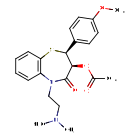
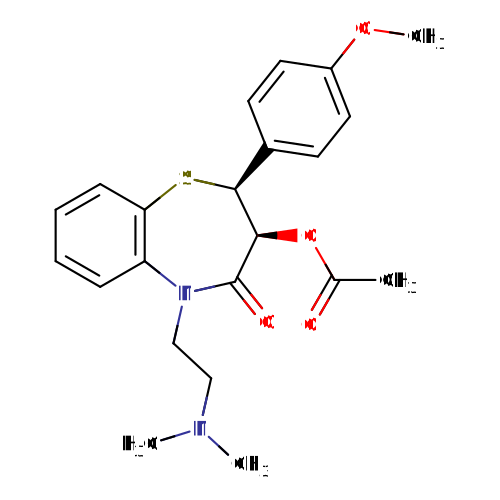
Structure for Diltiazem (DB00343)
- Weight
- Average: 414.518
Monoisotopic: 414.16132802 - Chemical Formula
- C22H26N2O4S
- Synonyms
- (+)-cis-5-[2-(dimethylamino)ethyl]-2,3-dihydro-3-hydroxy-2-(p-methoxyphenyl)-1,5-benzothiazepin-4(5H)-one acetate ester
- (2S-cis)-3-(acetyloxy)-5-[2-(dimethylamino)ethyl]-2,3-dihydro-2-(4-methoxyphenyl)-1,5-benzothiazepin-4(5H)-one
- (2S,3S)-5-(2-(dimethylamino)ethyl)-2-(4-methoxyphenyl)-4-oxo-2,3,4,5-tetrahydrobenzo[b][1,4]thiazepin-3-yl acetate
- Acetic acid (2S,3S)-5-(2-dimethylamino-ethyl)-2-(4-methoxy-phenyl)-4-oxo-2,3,4,5-tetrahydro-benzo[b][1,4]thiazepin-3-yl ester
- d-cis-diltiazem
- Diltiazem
- Diltiazemum

Pharmacology
- Indication
Oral
Indicated for the management of hypertension, to lower blood pressure, alone or in combination with other antihypertensive agents.12
Indicated for use to improve exercise tolerance in patients with chronic stable angina.12
Indicated for the management of variant angina (Prinzmetal's angina).11
Intravenous
Indicated for the short-term management of atrial fibrillation or atrial flutter for temporary control of rapid ventricular rate.10
Indicated for the rapid conversion of paroxysmal supraventricular tachycardias (PSVT) to sinus rhythm. This includes AV nodal reentrant tachycardias and reciprocating tachycardias associated with an extranodal accessory pathway such as the WPW syndrome or short PR syndrome.10
Off-label
Indicated for off-label uses in anal fissures (as topical formulation), migraine prophylaxis, cramps in lower leg related to rest, pulmonary hypertension,9 idiopathic dilated cardiomyopathy, and proteinuria associated with diabetic nephropathy.11
 Reduce drug development failure ratesBuild, train, & validate machine-learning modelswith evidence-based and structured datasets.Build, train, & validate predictive machine-learning models with structured datasets.
- Associated Conditions
Indication Type Indication Combined Product Details Approval Level Age Group Patient Characteristics Dose Form Treatment of Anal fissure ••• ••••• Management of Angina •••••••••••• Management of Angina pectoris, variant •••••••••••• ••••• •••••••• •••••••• ••••••• Management of Atrial fibrillation •••••••••••• •••••••••• •••••••••• ••••••• •••••••••••• ••• ••••••••• •••••••••• •••••••• Management of Atrial flutter •••••••••••• •••••••••• •••••••••• ••••••• •••••••••••• ••• ••••••••• •••••••••• •••••••• - Contraindications & Blackbox Warnings
 Prevent Adverse Drug Events TodayTap into our Clinical API for life-saving information on contraindications & blackbox warnings, population restrictions, harmful risks, & more.Avoid life-threatening adverse drug events with our Clinical API
- Pharmacodynamics
Diltiazem is an antihypertensive and vasodilating agent that works by relaxing the vascular muscle and reducing blood pressure. This is related to the long-term therapeutic effects, as lowering the blood pressure reduces the risk of fatal and non-fatal cardiovascular events, primarily strokes and myocardial infarctions.12 Diltiazem inhibits the influx of extracellular calcium ions across the myocardial and vascular smooth muscle cell membranes during depolarization. Diltiazem is classified as a negative inotrope (decreased force) and negative chronotrope (decreased rate).9 It is also considered a rate-control drug as it reduces heart rate.2,8 Diltiazem is exerts hemodynamic actions by reducing blood pressure, systemic vascular resistance, the rate-pressure product, and coronary vascular resistance while increasing coronary blood flow.10 Diltiazem decreases sinoatrial and atrioventricular conduction in isolated tissues and has a negative inotropic effect in isolated preparations.12 In supraventricular tachycardia, diltiazem prolongs AV nodal refractories.10
As the magnitude of blood pressure reduction is related to the degree of hypertension, the antihypertensive effect of diltiazem is most pronounced in individuals with hypertension. In a randomized, double-blind, parallel-group, dose-response study involving patients with essential hypertension, there was a reduction in the diastolic blood pressure by 1.9, 5.4, 6.1, and 8.6 mmHg in the patients receiving diltiazem at doses of 120, 240, 360, and 540 mg, respectively. In patients receiving placebo, there was a reduction in the diastolic blood pressure by 2.6 mmHg.In a randomized, double-blind study involving patients with chronic stable angina, variable doses of diltiazem administered at night all caused an increased exercise tolerance in the after 21 hours, compared to placebo.12 In the NORDIL study of patients with hypertension, the therapeutic effectiveness of diltiazem in reducing cardiovascular morbidity and mortality was assessed.2 When using the combined primary endpoint as fatal and non-fatal stroke, myocardial infarction, and other cardiovascular death, fatal and non-fatal stroke was shown to be reduced by 25% in the diltiazem group. Although the clinical significance to this effect remains unclear, it is suggested that diltiazem may exert a protective role against cerebral stroke in hypertensive patients.2
- Mechanism of action
Excitation of cardiac muscle involves the activation of a slow calcium inward current that is induced by L-type slow calcium channels, which are voltage-sensitive, ion-selective channels3 associated with a high activation threshold and slow inactivation profile.8 L-type calcium channels are the main current responsible for the late phase of the pacemaker potential.5 Acting as the main Ca2+ source for contraction in smooth and cardiac muscle, activation of L-type calcium channels allows the influx of calcium ions into the muscles upon depolarization and excitation of the channel.3 It is proposed that this cation influx may also trigger the release of additional calcium ions from intracellular storage sites.3 Diltiazem is a slow calcium channel blocker that binds to the extracellular site of the alpha-1C subunit of the channel, which is thought to be the S5-6 linker region of the transmembrane domain IV and/or S6 segment of domain III.5 Diltiazem can get access to this binding site from either the intracellular or extracellular side, but it requires a voltage-induced conformational changes in the membrane.5 Diltiazem inhibits the influx of extracellular calcium across the myocardial and vascular smooth muscle cell membranes.12 In isolated human atrial and ventricular myocardium, diltiazem suppressed tension over the range of membrane potentials associated with calcium channel activity but had little effect on the tension-voltage relations at more positive potentials.4 This effect is thought to be mediated by the voltage-dependent block of the L-type calcium channels and inhibition of calcium ion release from the ER stores, without altering the sodium-calcium coupled transport or calcium sensitivity of myofilaments.4 Through inhibition of inward calcium current, diltiazem exerts a direct ionotropic and energy sparing effect on the myocardium.3 Diltiazem fslows atrioventricular nodal conduction, which is due to its ability to impede slow channel function.3
Reduced intracellular calcium concentrations equate to increased smooth muscle relaxation resulting in arterial vasodilation and therefore, decreased blood pressure.9 The decrease in intracellular calcium inhibits the contractile processes of the myocardial smooth muscle cells, causing dilation of the coronary and systemic arteries, increased oxygen delivery to the myocardial tissue, decreased total peripheral resistance, decreased systemic blood pressure, and decreased afterload.9,12 Through its actions on reducing calcium levels in cardiac and vascular smooth muscles, diltiazem causes a reduction in the contractile processes of the myocardial smooth muscle cells and vasodilation of the coronary and systemic arteries, including epicardial and subendocardial. This subsequently leads to increased oxygen delivery to the myocardial tissue, improved cardiac output due to increased stroke volume, decreased total peripheral resistance, decreased systemic blood pressure and heart rate, and decreased afterload.9,12 Diltiazem lowers myocardial oxygen demand through a reduction in heart rate, blood pressure, and cardiac contractility; this leads to a therapeutic effect in improving exercise tolerance in chronic stable angina.2,9
Target Actions Organism AVoltage-dependent L-type calcium channel subunit alpha-1C blockerHumans AVoltage-dependent calcium channel gamma-1 subunit blockerHumans - Absorption
Diltiazem is readily absorbed from the gastrointestinal tract. Minimum therapeutic plasma diltiazem concentrations appear to be in the range of 50 to 200 ng/mL. Following oral administration of extended formulations of 360 mg diltiazem, the drug in plasma was detectable within 3 to 4 hours and the peak plasma concentrations were reached between 11 and 18 hours post-dose. Diltiazem peak and systemic exposures were not affected by concurrent food intake.12 Due to hepatic first-pass metabolism, the absolute bioavailability following oral administration is about 40%,12 with the value ranging from 24 to 74% due to high interindividual variation in the first pass effect.1 The bioavailability may increase in patients with hepatic impairment.12
- Volume of distribution
The apparent volume of distribution of diltiazem was approximately 305 L following a single intravenous injection in healthy male volunteers.10
- Protein binding
Diltiazem is about 70-80% bound to plasma proteins, according to in vitro binding studies.12 About 40% of the drug is thought to bind to alpha-1-glycoprotein at clinically significant concentrations while about 30% of the drug is bound to albumin.10
- Metabolism
Diltiazem is subject to extensive first-pass metabolism, which explains its relatively low absolute oral bioavailability. It undergoes N-demethylation primarily mediated by CYP3A4. CYP2D6 is responsible for O-demethylation and esterases mediate deacetylation.7 There was large inter-individual variability in the circulating plasma levels of metabolites in healthy volunteers.6
In healthy volunteers, the major circulating metabolites in the plasma are N-monodesmethyl diltilazem, deacetyl diltiazem, and deacetyl N-monodesmethyl diltiazem, which are all pharmacologically active.6 Deacetyl diltiazem retains about 25-50% of the pharmacological activity to that of the parent compound.12 Deacetyl diltiazem can be further transformed into deacetyl diltiazem N-oxide or deacetyl O-desmethyl diltiazem. N-monodesmethyl diltilazem can be further metabolized to N,O-didesmethyl diltiazem. Deacetyl N-monodesmethyl diltiazem can be further metabolized to deacetyl N,O-didesmethyl diltiazem, which can be glucuronidated or sulphated.6 Diltiazem can be O-demethylated by CYP2D6 to form O-desmethyl diltiazem.7
Hover over products below to view reaction partners
- Route of elimination
Due to its extensive metabolism, only 2% to 4% of the unchanged drug can be detected in the urine.12 The major urinary metabolite in healthy volunnteers was N-monodesmethyl diltiazem, followed by deacetyl N,O-didesmethyl diltiazem, deacetyl N-monodesmethyl diltiazem, and deacetyl diltiazem; however, there seems to be large inter-individual variability in the urinary excretion of DTZ and its metabolites.6
- Half-life
The plasma elimination half-life is approximately 3.0 to 4.5 hours following single and multiple oral doses. The half-life may slightly increase with dose and the extent of hepatic impairment.12 The apparent elimination half-life for diltiazem as extended-release tablets after single or multiple dosing is 6 to 9 hours.12 The plasma elimination half-life is approximately 3.4 hours following administration of a single intravenous injection.10 The elimination half-lives of pharmacologically active metabolites are longer than that of diltiazem.6
- Clearance
Following a single intravenous injection in healthy male volunteers, the systemic clearance of diltiazem was approximately 65 L/h. After constant rate intravenous infusion, the systemic clearance decreased to 48 L/h.10
- Adverse Effects
 Improve decision support & research outcomesWith structured adverse effects data, including: blackbox warnings, adverse reactions, warning & precautions, & incidence rates. View sample adverse effects data in our new Data Library!Improve decision support & research outcomes with our structured adverse effects data.
- Toxicity
Clinical Toxicity and Overdose
The oral LD50 ranges from 415 to 740mg/kg in mice and 560 to 810 mg/kg in rats. The oral LD50 in dogs is considered to be in excess of 50 mg/kg. A dose of 360 mg/kg resulted in lethality in monkeys. The intravenous LD50 is 60 mg/kg in mice and 38 mg/kg in rats.
Cases of overdose from doses ranging from less than 1 g to 18 g have been reported with diltiazem, with several cases involving multiple drug ingestions resulting in death. Overdoses were associated with bradycardia, hypotension, heart block, and cardiac failure that may manifest as dizziness, lightheadedness, and fatigue.9 Actual treatment and dosage should depend on the severity of the clinical situation and the judgment and experience of the treating physician. Diltiazem overdose should be responded with appropriate supportive measures and gastrointestinal decontamination. Bradycardia and heart block can be treated with atropine at doses ranging from 0.60 to 1.0 mg. In the case of bradycardia, if there is no response to vagal blockage, cautious administration of isoproterenol should be considered. Cardiac pacing can also be used to treat fixed high-degree AV block. In the case of heart failure, blood pressure may be maintained with the use of fluids and vasopressors, as well as inotropic agents such as isoproterenol, dopamine, or dobutamine. Other appropriate measures include ventilatory support, gastric lavage, activated charcoal, and/or intravenous calcium. Diltiazem does not appear to be removed by peritoneal or hemodialysis.12
Non-clinical toxicity
In a 24-month study in rats receiving oral doses of up to 100 mg/kg/day, there was no evidence of carcinogenicity. There was also no mutagenic response in vitro or in vivo in mammalian cell assays or in vitro bacterial assays. No evidence of impaired fertility was observed in a study performed in male and female rats receiving oral doses of up to 100 mg/kg/day.12
Pregnancy and Lactation
In reproduction studies in animals, administration of diltiazem at doses ranging from five to twenty times the daily recommended human therapeutic dose resulted in cases of the embryo and fetal lethality and skeletal abnormalities, and an increase in the risk of stillbirths. There have been no up-to-date controlled studies that investigated the use of diltiazem in pregnant women. The use of diltiazem in pregnant women should be undertaken only if the potential benefit justifies the risk to the fetus.12 Diltiazem is excreted in human milk, where one report suggests that the concentrations in breast milk may approximate serum levels; therefore, the decision should be made to either discontinue nursing or the use of the drug after careful consideration of the clinical necessity of diltiazem therapy in the nursing mother.12
Use in special populations
As there is limited information on the variable effects of diltiazem in geriatric patients, the initial therapy of diltiazem should involve the low end of the dosing range, reflecting the greater frequency of decreased hepatic, renal, or cardiac function, and of concomitant disease or other drug therapy. Currently, there are no specific dosing guidelines for patients with renal or hepatic impairment.12
- Pathways
Pathway Category Diltiazem Action Pathway Drug action - Pharmacogenomic Effects/ADRs
Interacting Gene/Enzyme Allele name Genotype(s) Defining Change(s) Type(s) Description Details Beta-1 adrenergic receptor --- (G;G) / (C;G) C > G Effect Directly Studied Patients with this genotype require a lower dosage of diltiazem to achieve a favourable rate-control response when treating atrial fibrillation. Details
Interactions
- Drug Interactions
- This information should not be interpreted without the help of a healthcare provider. If you believe you are experiencing an interaction, contact a healthcare provider immediately. The absence of an interaction does not necessarily mean no interactions exist.
Drug Interaction Integrate drug-drug
interactions in your software1,2-Benzodiazepine The metabolism of 1,2-Benzodiazepine can be decreased when combined with Diltiazem. Abaloparatide The risk or severity of adverse effects can be increased when Diltiazem is combined with Abaloparatide. Abametapir The serum concentration of Diltiazem can be increased when it is combined with Abametapir. Abatacept The metabolism of Diltiazem can be increased when combined with Abatacept. Abemaciclib The metabolism of Abemaciclib can be decreased when combined with Diltiazem. - Food Interactions
- Avoid natural licorice. The risk of cardiovascular adverse effects may be increased.
Products
 Drug product information from 10+ global regionsOur datasets provide approved product information including:dosage, form, labeller, route of administration, and marketing period.Access drug product information from over 10 global regions.
- Product Ingredients
Ingredient UNII CAS InChI Key Diltiazem hydrochloride OLH94387TE 33286-22-5 HDRXZJPWHTXQRI-BHDTVMLSSA-N Diltiazem malate 14Y6444DRP 144604-00-2 IUSFTUWHKCSCDY-QTKZZPNDSA-N Diltiazem maleate 896626Q8XW 139492-78-7 WHBXLOWLFLTDMD-WECFPGDBSA-N - Product Images
- International/Other Brands
- Acalix (Roemmers) / Adizem (Mundipharma) / Altiazem (Lusofarmaco) / Anoheal / Calcicard / Cartia / Dilacor / Dilacor-XR (Watson) / Dilcontin (Modi-Mundipharma) / Dilrene (Sanofi) / Dilticard (Intra) / Dilzem (Pfizer) / Herbesser (Mitsubishi Tanabe) / Incoril AP (Bago) / Masdil (Esteve) / Surazem / TAZTIA / Tildem / Viazem (Biovail)
- Brand Name Prescription Products
Name Dosage Strength Route Labeller Marketing Start Marketing End Region Image Act Diltiazem CD Capsule, extended release 180 mg Oral TEVA Canada Limited 2011-10-06 Not applicable Canada 
Act Diltiazem CD Capsule, extended release 300 mg Oral TEVA Canada Limited 2011-10-06 Not applicable Canada Act Diltiazem CD Capsule, extended release 120 mg Oral TEVA Canada Limited 2011-10-06 Not applicable Canada Act Diltiazem CD Capsule, extended release 240 mg Oral TEVA Canada Limited 2011-10-06 Not applicable Canada Act Diltiazem T Capsule, extended release 180 mg Oral TEVA Canada Limited 2011-10-06 Not applicable Canada - Generic Prescription Products
Name Dosage Strength Route Labeller Marketing Start Marketing End Region Image Aa-diltiaz Tablet 60 mg Oral Aa Pharma Inc 1988-12-31 Not applicable Canada Aa-diltiaz Tablet 30 mg Oral Aa Pharma Inc 1988-12-31 Not applicable Canada Alti-diltiazem Tab 30mg Tablet 30 mg Oral Altimed Pharma Inc. 1990-12-31 2005-05-27 Canada Alti-diltiazem Tab 60mg Tablet 60 mg Oral Altimed Pharma Inc. 1990-12-31 2005-05-27 Canada Apo-diltiaz CD Capsule, extended release 180 mg Oral Apotex Corporation 1997-03-27 Not applicable Canada - Unapproved/Other Products
Name Ingredients Dosage Route Labeller Marketing Start Marketing End Region Image Diltiazem HCl Diltiazem hydrochloride (1 mg/1mL) Injection, solution Intravenous Cantrell Drug Company 2011-09-30 2017-12-06 US 
Diltiazem HCl Diltiazem hydrochloride (0.83 mg/1mL) Injection, solution Intravenous Cantrell Drug Company 2013-10-22 Not applicable US Diltiazem Hydrochloride Diltiazem hydrochloride (180 mg/1) Capsule, extended release Oral Remedy Repack 2011-08-17 2012-01-18 US


Categories
- ATC Codes
- C08DB01 — Diltiazem
- C08DB — Benzothiazepine derivatives
- C08D — SELECTIVE CALCIUM CHANNEL BLOCKERS WITH DIRECT CARDIAC EFFECTS
- C08 — CALCIUM CHANNEL BLOCKERS
- C — CARDIOVASCULAR SYSTEM
- Drug Categories
- Agents causing hyperkalemia
- Agents for Treatment of Hemorrhoids and Anal Fissures for Topical Use
- Antiarrhythmic agents
- Antihypertensive Agents
- Antihypertensive Agents Indicated for Hypertension
- Benzazepines
- Benzothiazepine Derivatives
- Bradycardia-Causing Agents
- Calcium Channel Blockers
- Calcium Channel Blockers (Nondihydropyridine)
- Calcium-Regulating Hormones and Agents
- Cardiovascular Agents
- Cytochrome P-450 CYP2C19 Substrates
- Cytochrome P-450 CYP2C8 Inhibitors
- Cytochrome P-450 CYP2C8 Inhibitors (moderate)
- Cytochrome P-450 CYP2C8 Substrates
- Cytochrome P-450 CYP2C9 Substrates
- Cytochrome P-450 CYP2D6 Substrates
- Cytochrome P-450 CYP3A Inhibitors
- Cytochrome P-450 CYP3A Substrates
- Cytochrome P-450 CYP3A4 Inhibitors
- Cytochrome P-450 CYP3A4 Inhibitors (moderate)
- Cytochrome P-450 CYP3A4 Inhibitors (strong)
- Cytochrome P-450 CYP3A4 Substrates
- Cytochrome P-450 CYP3A5 Inhibitors
- Cytochrome P-450 CYP3A5 Inhibitors (moderate)
- Cytochrome P-450 CYP3A5 Substrates
- Cytochrome P-450 CYP3A7 Inhibitors
- Cytochrome P-450 CYP3A7 Inhibitors (moderate)
- Cytochrome P-450 CYP3A7 Inhibitors (strong)
- Cytochrome P-450 CYP3A7 Substrates
- Cytochrome P-450 Enzyme Inhibitors
- Cytochrome P-450 Substrates
- Drugs causing inadvertant photosensitivity
- Heterocyclic Compounds, Fused-Ring
- Hypotensive Agents
- Membrane Transport Modulators
- Miscellaneous Calcium-channel Blocking Agents
- Moderate Risk QTc-Prolonging Agents
- Negative Inotrope
- P-glycoprotein inhibitors
- P-glycoprotein substrates
- Photosensitizing Agents
- QTc Prolonging Agents
- Selective Calcium Channel Blockers With Direct Cardiac Effects
- Vasodilating Agents
- Vasoprotectives
- Chemical TaxonomyProvided by Classyfire
- Description
- This compound belongs to the class of organic compounds known as benzothiazepines. These are organic compounds containing a benzene fused to a thiazepine ring (a seven-membered ring with a nitrogen atom and a sulfur atom replacing two carbon atoms).
- Kingdom
- Organic compounds
- Super Class
- Organoheterocyclic compounds
- Class
- Benzothiazepines
- Sub Class
- Not Available
- Direct Parent
- Benzothiazepines
- Alternative Parents
- Phenoxy compounds / Methoxybenzenes / Anisoles / Alkyl aryl ethers / Alkylarylthioethers / Tertiary carboxylic acid amides / Trialkylamines / Amino acids and derivatives / Lactams / Carboxylic acid esters show 6 more
- Substituents
- Alkyl aryl ether / Alkylarylthioether / Amine / Amino acid or derivatives / Anisole / Aromatic heteropolycyclic compound / Aryl thioether / Azacycle / Benzenoid / Benzothiazepine show 22 more
- Molecular Framework
- Aromatic heteropolycyclic compounds
- External Descriptors
- 5-[2-(dimethylamino)ethyl]-2-(4-methoxyphenyl)-4-oxo-2,3,4,5-tetrahydro-1,5-benzothiazepin-3-yl acetate (CHEBI:101278)
- Affected organisms
- Humans and other mammals
Chemical Identifiers
- UNII
- EE92BBP03H
- CAS number
- 42399-41-7
- InChI Key
- HSUGRBWQSSZJOP-RTWAWAEBSA-N
- InChI
- InChI=1S/C22H26N2O4S/c1-15(25)28-20-21(16-9-11-17(27-4)12-10-16)29-19-8-6-5-7-18(19)24(22(20)26)14-13-23(2)3/h5-12,20-21H,13-14H2,1-4H3/t20-,21+/m1/s1
- IUPAC Name
- (2S,3S)-5-[2-(dimethylamino)ethyl]-2-(4-methoxyphenyl)-4-oxo-2,3,4,5-tetrahydro-1,5-benzothiazepin-3-yl acetate
- SMILES
- COC1=CC=C(C=C1)[C@@H]1SC2=C(C=CC=C2)N(CCN(C)C)C(=O)[C@@H]1OC(C)=O
References
- Synthesis Reference
Kugita, H., Inoue, H., Ikezaki, M. and Takeo, S.; U.S. Patent 3,562,257; assigned to Tanabe Seiyaku Co.,Ltd., Japan.
US3562257- General References
- Hermann P, Rodger SD, Remones G, Thenot JP, London DR, Morselli PL: Pharmacokinetics of diltiazem after intravenous and oral administration. Eur J Clin Pharmacol. 1983;24(3):349-52. [Article]
- Rodriguez Padial L, Baron-Esquivias G, Hernandez Madrid A, Marzal Martin D, Pallares-Carratala V, de la Sierra A: Clinical Experience with Diltiazem in the Treatment of Cardiovascular Diseases. Cardiol Ther. 2016 Jun;5(1):75-82. doi: 10.1007/s40119-016-0059-1. Epub 2016 Mar 25. [Article]
- Nayler WG, Dillon JS: Calcium antagonists and their mode of action: an historical overview. Br J Clin Pharmacol. 1986;21 Suppl 2:97S-107S. doi: 10.1111/j.1365-2125.1986.tb02859.x. [Article]
- Sutton MS, Morad M: Mechanisms of action of diltiazem in isolated human atrial and ventricular myocardium. J Mol Cell Cardiol. 1987 May;19(5):497-508. [Article]
- O'Connor SE, Grosset A, Janiak P: The pharmacological basis and pathophysiological significance of the heart rate-lowering property of diltiazem. Fundam Clin Pharmacol. 1999;13(2):145-53. [Article]
- Yeung PK, Prescott C, Haddad C, Montague TJ, McGregor C, Quilliam MA, Xei M, Li R, Farmer P, Klassen GA: Pharmacokinetics and metabolism of diltiazem in healthy males and females following a single oral dose. Eur J Drug Metab Pharmacokinet. 1993 Apr-Jun;18(2):199-206. doi: 10.1007/BF03188796. [Article]
- Molden E, Asberg A, Christensen H: Desacetyl-diltiazem displays severalfold higher affinity to CYP2D6 compared with CYP3A4. Drug Metab Dispos. 2002 Jan;30(1):1-3. [Article]
- 4, 22. (2012). In Rang and Dale's Pharmacology (7th ed., pp. 50, 272). Edinburgh: Elsevier/Churchill Livingstone. [ISBN:978-0-7020-3471-8]
- Diltiazem - StatPearls - NCBI Bookshelf [Link]
- Diltiazem Hydrochloride Injection Label - Bedford Laboratories [Link]
- Cardizem (diltiazem hydrochloride) Drug Summary - PDR.net [Link]
- CARDIZEM® LA (diltiazem hydrochloride) extended-release tablets - FDA Label [Link]
- CARDIZEM® CD (diltiazem HCl) Capsules - FDA Label [Link]
- External Links
- Human Metabolome Database
- HMDB0014487
- KEGG Drug
- D07845
- KEGG Compound
- C06958
- PubChem Compound
- 39186
- PubChem Substance
- 46505667
- ChemSpider
- 35850
- BindingDB
- 50004704
- 3443
- ChEBI
- 101278
- ChEMBL
- CHEMBL23
- ZINC
- ZINC000000621893
- Therapeutic Targets Database
- DAP001262
- PharmGKB
- PA449334
- PDBe Ligand
- C9F
- RxList
- RxList Drug Page
- Drugs.com
- Drugs.com Drug Page
- PDRhealth
- PDRhealth Drug Page
- Wikipedia
- Diltiazem
- PDB Entries
- 6jpb / 8sc2
- MSDS
- Download (73.2 KB)
Clinical Trials
- Clinical Trials
Phase Status Purpose Conditions Count 4 Completed Not Available Healthy Volunteers (HV) 1 4 Completed Supportive Care Pain 1 4 Completed Treatment Acute Coronary Syndrome (ACS) 1 4 Completed Treatment Acute Myocardial Infarction (AMI) / Percutaneous Coronary Intervention (PCI) 1 4 Completed Treatment Antispastic Therapy / Coronary Artery Bypass Grafting (CABG) / Pilot Study / Radial Artery Grafts 1
Pharmacoeconomics
- Manufacturers
- Biovail laboratories inc
- Watson laboratories inc florida
- Watson laboratories inc
- Apotex inc
- Actavis elizabeth llc
- Kv pharmaceutical co
- Mylan pharmaceuticals inc
- Teva pharmaceuticals usa inc
- Apotex inc etobicoke site
- Biovail corp international
- Biovail laboratories international srl
- Apotex inc richmond hill
- Baxter healthcare corp anesthesia and critical care
- Bedford laboratories div ben venue laboratories inc
- Hospira inc
- International medication systems ltd
- Taylor pharmacal co
- Teva parenteral medicines inc
- Apothecon inc div bristol myers squibb
- Dava pharmaceuticals inc
- Ivax pharmaceuticals inc sub teva pharmaceuticals usa
- Teva pharmaceuticals usa
- Merck and co inc
- Packagers
- Abbott Laboratories Ltd.
- Actavis Group
- Advanced Pharmaceutical Services Inc.
- Akorn Inc.
- Amerisource Health Services Corp.
- Apotex Inc.
- Apotheca Inc.
- A-S Medication Solutions LLC
- Atlantic Biologicals Corporation
- Baxter International Inc.
- Bedford Labs
- Ben Venue Laboratories Inc.
- Biovail Pharmaceuticals
- Bracco Diagnostics Inc.
- Bryant Ranch Prepack
- BTA Pharmaceuticals
- Cardinal Health
- Caremark LLC
- Comprehensive Consultant Services Inc.
- Corepharma LLC
- Dept Health Central Pharmacy
- Direct Dispensing Inc.
- DispenseXpress Inc.
- Dispensing Solutions
- Diversified Healthcare Services Inc.
- Driam Usa Inc.
- Elan Pharmaceuticals Inc.
- Ethex Corp.
- Ethypharm
- Forest Pharmaceuticals
- Gruppo Lepetit SPA
- Heartland Repack Services LLC
- Hl Moore Drug Exchange
- Hospira Inc.
- Inwood Labs
- Ivax Pharmaceuticals
- Kaiser Foundation Hospital
- KV Pharmaceutical Co.
- Lake Erie Medical and Surgical Supply
- Liberty Pharmaceuticals
- Long Wing International Inc.
- Major Pharmaceuticals
- Mckesson Corp.
- Medisca Inc.
- Meridian Medical Technologies Inc.
- Murfreesboro Pharmaceutical Nursing Supply
- Mylan
- Neighborcare Repackaging Inc.
- Neuman Distributors Inc.
- Novex Pharma
- Nucare Pharmaceuticals Inc.
- Palmetto Pharmaceuticals Inc.
- PD-Rx Pharmaceuticals Inc.
- Pharmaceutical Utilization Management Program VA Inc.
- Pharmacy Service Center
- Pharmedium
- Physicians Total Care Inc.
- Preferred Pharmaceuticals Inc.
- Prepackage Specialists
- Prepak Systems Inc.
- Prescript Pharmaceuticals
- Rebel Distributors Corp.
- Remedy Repack
- Resource Optimization and Innovation LLC
- Sandhills Packaging Inc.
- Sanofi-Aventis Inc.
- Southwood Pharmaceuticals
- Teva Pharmaceutical Industries Ltd.
- Ther-Rx Corp.
- Torpharm Inc.
- Tya Pharmaceuticals
- UDL Laboratories
- Vangard Labs Inc.
- Vetter Pharma Fertigung GmbH and Co. KG
- Watson Pharmaceuticals
- Dosage Forms
Form Route Strength Injection, powder, for solution Intravenous 50 MG/5ML Tablet, extended release Oral 60 MG Capsule, coated pellets Oral Capsule Oral 60 mg Gel Other 2.000 g Tablet Oral 30.000 mg Tablet Oral 90.000 mg Tablet Oral 180.000 mg Injection, powder, for solution Intravenous 50 MG/2.5ML Capsule, extended release Oral 180 mg Capsule, extended release Oral 240 mg Capsule, extended release Oral 300 mg Tablet, extended release Oral 120 mg Tablet, film coated Oral 120 mg Tablet, film coated Oral 30 mg Tablet, film coated Oral 60 mg Tablet, coated Oral 120 mg/1 Tablet, coated Oral 30 mg/1 Tablet, coated Oral 60 mg/1 Tablet, coated Oral 90 mg/1 Capsule Oral 120 mg/1 Capsule Oral 180 mg/1 Capsule Oral 240 mg/1 Capsule Oral 300 mg/1 Capsule Oral 360 mg/1 Liquid Intravenous 5 mg / mL Tablet Oral 120 mg/1 Tablet Oral 180 mg/1 Tablet Oral 240 mg/1 Tablet Oral 300 mg/1 Tablet Oral 360 mg/1 Tablet Oral 420 mg/1 Capsule, extended release Oral 60 mg Capsule Oral Tablet Oral 90 mg Tablet, extended release Oral Tablet, coated Oral 60 mg Capsule, extended release Oral 200 MG Tablet, coated Oral 30 mg Tablet, extended release Oral 90 MG Injection, powder, lyophilized, for solution Parenteral 25 mg Injection, powder, lyophilized, for solution Parenteral 100 mg Capsule, coated Oral 200 mg Capsule, liquid filled Oral 180 mg Solution Intravenous 5 mg Capsule Oral 120 MG Capsule Oral 180 MG Capsule Oral 240 MG Tablet, film coated Oral 180 mg Injection, solution Intravenous 0.83 mg/1mL Injection, solution Intravenous 1 mg/1mL Capsule, coated, extended release Oral 360 mg/1 Capsule, extended release Oral 120 mg/1 Capsule, extended release Oral 180 mg/1 Capsule, extended release Oral 240 mg/1 Capsule, extended release Oral 300 mg/1 Capsule, extended release Oral 360 mg/1 Capsule, extended release Oral 420 mg/1 Capsule, extended release Oral 60 mg/1 Capsule, extended release Oral 90 mg/1 Injection Intravenous Injection Intravenous 5 mg/1mL Injection, powder, lyophilized, for solution Intravenous 100 mg/1 Injection, solution Intravenous 5 mg/1mL Tablet Oral 30 mg/1 Tablet Oral 60 mg/1 Tablet Oral 90 mg/1 Tablet, film coated Oral 120 mg/1 Tablet, film coated Oral 30 mg/1 Tablet, film coated Oral 60 mg/1 Tablet, film coated Oral 90 mg/1 Tablet, extended release Oral 120 mg/1 Tablet, extended release Oral 180 mg/1 Tablet, extended release Oral 240 mg/1 Tablet, extended release Oral 300 mg/1 Tablet, extended release Oral 360 mg/1 Tablet, extended release Oral 420 mg/1 Capsule, coated, extended release Oral 120 mg/1 Capsule, coated, extended release Oral 180 mg/1 Capsule, coated, extended release Oral 240 mg/1 Capsule, coated, extended release Oral 300 mg/1 Solution Intravenous 5 mg / mL Tablet, film coated Oral 90 mg Tablet, coated Oral 90 mg Injection, powder, lyophilized, for solution Intravenous Injection, powder, for solution Intravenous 50 MG/3ML Injection, powder, for solution Intravenous 50 mg Capsule, extended release Oral Tablet Oral Capsule Oral 90 mg Injection, powder, for solution Intravenous 10 mg/ampoule Injection, powder, for solution Intravenous 50 mg/ampoule Cream Topical 2 % Capsule, coated pellets Oral 120 mg Capsule, coated pellets Oral 180 mg Capsule, coated pellets Oral 240 mg Capsule, coated pellets Oral 300 mg Tablet Oral 30.0000 mg Injection Intravenous 25 mg Capsule, extended release Oral 360 mg Tablet, extended release Oral 180 mg Tablet, extended release Oral 240 mg Tablet, extended release Oral 300 mg Tablet, extended release Oral 360 mg Tablet, coated Oral 180 mg Powder, for solution 100 MG Tablet Oral 30 mg Tablet Oral 60 mg Capsule, extended release Oral 90 mg Injection, powder, for solution Intravenous 10 mg/1ampoule Injection, powder, for solution Intravenous 50 mg/1ampoule Capsule Oral 100 mg Capsule Oral 200 mg Capsule, extended release Oral 120 mg Capsule, delayed release 120 mg - Prices
Unit description Cost Unit Cormax 0.05% Solution 50ml Bottle 81.6USD bottle Cormax 0.05% Solution 25ml Bottle 45.99USD bottle Cormax 0.05% Cream 15 gm Tube 43.98USD tube Diltiazem hcl 100 mg vial 9.54USD vial Diltiazem hcl powder 8.42USD g Cardizem CD 360 mg 24 Hour Capsule 7.94USD capsule Cardizem cd 360 mg capsule 7.63USD capsule Cardizem CD 300 mg 24 Hour Capsule 7.3USD capsule Cardizem LA 420 mg 24 Hour tablet 5.56USD tablet Cardizem CD 240 mg 24 Hour Capsule 5.48USD capsule Cardizem la 420 mg tablet 5.35USD tablet Diltiazem HCl Coated Beads 420 mg 24 Hour tablet 5.01USD tablet Cardizem la 360 mg tablet 4.94USD tablet Cardizem LA 360 mg 24 Hour tablet 4.81USD tablet Cardizem LA 300 mg 24 Hour tablet 4.71USD tablet Diltiazem HCl Coated Beads 360 mg 24 Hour tablet 4.62USD tablet Cardizem la 300 mg tablet 4.59USD tablet Diltiazem HCl Coated Beads 300 mg 24 Hour tablet 4.3USD tablet Cardizem CD 180 mg 24 Hour Capsule 3.98USD capsule Tiazac 420 mg 24 Hour Capsule 3.88USD capsule Tiazac 360 mg 24 Hour Capsule 3.7USD capsule Cardizem LA 240 mg 24 Hour tablet 3.67USD tablet Tiazac 300 mg 24 Hour Capsule 3.64USD capsule Cardizem la 240 mg tablet 3.53USD tablet Cardizem 120 mg tablet 3.49USD tablet Cardizem CD 120 mg 24 Hour Capsule 3.4USD capsule Dilacor XR 180 mg 24 Hour Capsule 3.3USD capsule Dilacor XR 240 mg 24 Hour Capsule 3.3USD capsule Diltiazem HCl Coated Beads 240 mg 24 Hour tablet 3.3USD tablet Dilacor xr 240 mg capsule 3.29USD capsule Cardizem Cd 300 mg Controlled-Delivery Capsule 3.25USD capsule Cardizem la 180 mg tablet 3.15USD tablet Cardizem LA 180 mg 24 Hour tablet 3.07USD tablet Dilacor xr 180 mg capsule 3.07USD capsule Tiazac er 420 mg capsule 3.03USD capsule Cardizem la 120 mg tablet 2.98USD tablet Diltiazem HCl Coated Beads 180 mg 24 Hour tablet 2.95USD tablet Diltiazem HCl ER Beads 420 mg 24 Hour Capsule 2.87USD capsule Dilacor XR 120 mg 24 Hour Capsule 2.86USD capsule Tiazac er 360 mg capsule 2.86USD capsule Tiazac er 300 mg capsule 2.83USD capsule Tiazac 240 mg 24 Hour Capsule 2.8USD capsule Cartia XT 300 mg 24 Hour Capsule 2.76USD capsule Dilt-CD 300 mg 24 Hour Capsule 2.76USD capsule Diltiazem HCl Coated Beads 300 mg 24 Hour Capsule 2.76USD capsule Cormax 0.05% cream 2.71USD g Cartia xt 300 mg capsule 2.66USD capsule Dilt-cd er 300 mg capsule 2.66USD capsule Dilacor xr 120 mg capsule 2.61USD capsule Cardizem Cd 240 mg Controlled-Delivery Capsule 2.6USD capsule Diltiazem HCl ER Beads 360 mg 24 Hour Capsule 2.44USD capsule Tiazac 360 mg Extended-Release Capsule 2.42USD capsule Diltiazem HCl ER Beads 300 mg 24 Hour Capsule 2.39USD capsule Cardizem LA 120 mg 24 Hour tablet 2.35USD tablet Tiazac 240 mg capsule sa 2.31USD capsule Tiazac er 240 mg capsule 2.18USD capsule Cardizem cd 300 mg capsule 2.15USD capsule Cartia XT 240 mg 24 Hour Capsule 2.13USD capsule Diltiazem HCl Coated Beads 240 mg 24 Hour Capsule 2.13USD capsule Dilt-cd 240 mg capsule 2.05USD capsule Cardizem 90 mg tablet 2.02USD tablet Tiazac 180 mg 24 Hour Capsule 1.98USD capsule Tiazac 300 mg Extended-Release Capsule 1.98USD capsule Cardizem Cd 180 mg Controlled-Delivery Capsule 1.96USD capsule Diltiazem HCl ER Beads 240 mg 24 Hour Capsule 1.85USD capsule Cardizem sr 120 mg capsule 1.83USD capsule Apo-Diltiaz Cd 300 mg Controlled-Delivery Capsule 1.82USD capsule Novo-Diltazem Cd 300 mg Controlled-Delivery Capsule 1.82USD capsule Ratio-Diltiazem Cd 300 mg Controlled-Delivery Capsule 1.82USD capsule Sandoz Diltiazem Cd 300 mg Controlled-Delivery Capsule 1.82USD capsule Cardizem cd 240 mg capsule 1.69USD capsule Tiazac 120 mg 24 Hour Capsule 1.69USD capsule Tiazac 240 mg Extended-Release Capsule 1.61USD capsule Tiazac er 180 mg capsule 1.52USD capsule Cartia XT 180 mg 24 Hour Capsule 1.5USD capsule Dilt-CD 180 mg 24 Hour Capsule 1.5USD capsule Diltiazem HCl Coated Beads 180 mg 24 Hour Capsule 1.5USD capsule Cardizem Cd 120 mg Controlled-Delivery Capsule 1.48USD capsule Apo-Diltiaz Cd 240 mg Controlled-Delivery Capsule 1.46USD capsule Novo-Diltazem Cd 240 mg Controlled-Delivery Capsule 1.46USD capsule Nu-Diltiaz-Cd 240 mg Controlled-Delivery Capsule 1.46USD capsule Ratio-Diltiazem Cd 240 mg Controlled-Delivery Capsule 1.46USD capsule Sandoz Diltiazem Cd 240 mg Controlled-Delivery Capsule 1.46USD capsule Tiazac Xc 240 mg Extended-Release Tablet 1.46USD tablet Tiazac Xc 300 mg Extended-Release Tablet 1.46USD tablet Tiazac Xc 360 mg Extended-Release Tablet 1.46USD tablet Dilt-cd 180 mg capsule 1.45USD capsule Diltiazem HCl 120 mg tablet 1.42USD tablet Diltiazem 120 mg tablet 1.36USD tablet Apo-Diltiaz Tz 360 mg Extended-Release Capsule 1.36USD capsule Novo-Diltiazem Hcl Er 360 mg Extended-Release Capsule 1.36USD capsule Sandoz Diltiazem T 360 mg Extended-Release Capsule 1.36USD capsule Cardizem 30 mg tablet 1.34USD tablet Diltiazem HCl ER Beads 180 mg 24 Hour Capsule 1.3USD capsule Diltiazem HCl CR 120 mg 12 Hour Capsule 1.29USD capsule Tiazac er 120 mg capsule 1.26USD capsule Cartia XT 120 mg 24 Hour Capsule 1.25USD capsule Dilt-CD 120 mg 24 Hour Capsule 1.25USD capsule Diltiazem HCl Coated Beads 120 mg 24 Hour Capsule 1.25USD capsule Cardizem cd 180 mg capsule 1.24USD capsule Tiazac 180 mg Extended-Release Capsule 1.21USD capsule Cartia xt 120 mg capsule 1.2USD capsule Dilt-cd 120 mg capsule 1.2USD capsule Diltiazem HCl CR 240 mg 24 Hour Capsule 1.19USD capsule Diltia XT 240 mg 24 Hour Capsule 1.17USD capsule Diltiazem HCl CR 180 mg 24 Hour Capsule 1.11USD capsule Apo-Diltiaz Tz 300 mg Extended-Release Capsule 1.11USD capsule Novo-Diltiazem Hcl Er 300 mg Extended-Release Capsule 1.11USD capsule Sandoz Diltiazem T 300 mg Extended-Release Capsule 1.11USD capsule Tiazac Xc 180 mg Extended-Release Tablet 1.1USD tablet Diltia XT 180 mg 24 Hour Capsule 1.1USD capsule Apo-Diltiaz Cd 180 mg Controlled-Delivery Capsule 1.1USD capsule Novo-Diltazem Cd 180 mg Controlled-Delivery Capsule 1.1USD capsule Nu-Diltiaz-Cd 180 mg Controlled-Delivery Capsule 1.1USD capsule Ratio-Diltiazem Cd 180 mg Controlled-Delivery Capsule 1.1USD capsule Sandoz Diltiazem Cd 180 mg Controlled-Delivery Capsule 1.1USD capsule Diltiazem HCl ER Beads 120 mg 24 Hour Capsule 1.08USD capsule Diltiazem HCl 90 mg tablet 1.05USD tablet Diltiazem 90 mg tablet 1.01USD tablet Diltiazem HCl CR 90 mg 12 Hour Capsule 0.99USD capsule Cardizem cd 120 mg capsule 0.97USD capsule Cardizem 60 mg tablet 0.95USD tablet Diltiazem HCl CR 120 mg 24 Hour Capsule 0.95USD capsule Apo-Diltiaz Tz 240 mg Extended-Release Capsule 0.9USD capsule Novo-Diltiazem Hcl Er 240 mg Extended-Release Capsule 0.9USD capsule Sandoz Diltiazem T 240 mg Extended-Release Capsule 0.9USD capsule Tiazac 120 mg Extended-Release Capsule 0.89USD capsule Diltiazem HCl CR 60 mg 12 Hour Capsule 0.86USD capsule Apo-Diltiaz Cd 120 mg Controlled-Delivery Capsule 0.83USD capsule Novo-Diltazem Cd 120 mg Controlled-Delivery Capsule 0.83USD capsule Nu-Diltiaz-Cd 120 mg Controlled-Delivery Capsule 0.83USD capsule Ratio-Diltiazem Cd 120 mg Controlled-Delivery Capsule 0.83USD capsule Sandoz Diltiazem Cd 120 mg Controlled-Delivery Capsule 0.83USD capsule Tiazac Xc 120 mg Extended-Release Tablet 0.83USD tablet Cartia xt 240 mg capsule 0.81USD capsule Diltiazem HCl 60 mg tablet 0.77USD tablet Diltiazem 60 mg tablet 0.74USD tablet Apo-Diltiaz Tz 180 mg Extended-Release Capsule 0.68USD capsule Novo-Diltiazem Hcl Er 180 mg Extended-Release Capsule 0.68USD capsule Sandoz Diltiazem T 180 mg Extended-Release Capsule 0.68USD capsule Cartia xt 180 mg capsule 0.6USD capsule Apo-Diltiaz Tz 120 mg Extended-Release Capsule 0.5USD capsule Novo-Diltiazem Hcl Er 120 mg Extended-Release Capsule 0.5USD capsule Sandoz Diltiazem T 120 mg Extended-Release Capsule 0.5USD capsule Diltiazem HCl 30 mg tablet 0.49USD tablet Diltiazem 30 mg tablet 0.47USD tablet Diltia xt 240 mg capsule 0.43USD capsule Diltia xt 180 mg capsule 0.42USD capsule Diltiazem-d5w 250 mg/250 ml 0.42USD ml Diltia xt 120 mg capsule 0.38USD capsule Apo-Diltiaz 60 mg Tablet 0.38USD tablet Novo-Diltazem 60 mg Tablet 0.38USD tablet Nu-Diltiaz 60 mg Tablet 0.38USD tablet Apo-Diltiaz 30 mg Tablet 0.22USD tablet Novo-Diltazem 30 mg Tablet 0.22USD tablet Nu-Diltiaz 30 mg Tablet 0.22USD tablet DrugBank does not sell nor buy drugs. Pricing information is supplied for informational purposes only.- Patents
Patent Number Pediatric Extension Approved Expires (estimated) Region US5286497 No 1994-02-15 2011-05-20 US CA2307547 No 2007-08-14 2020-05-04 Canada CA2111085 No 1999-04-27 2012-06-25 Canada US7108866 No 2006-09-19 2019-12-17 US US6923984 No 2005-08-02 2021-02-25 US
Properties
- State
- Solid
- Experimental Properties
Property Value Source melting point (°C) 187-188 Kugita, H., Inoue, H., Ikezaki, M. and Takeo, S.; U.S. Patent 3,562,257; assigned to Tanabe Seiyaku Co.,Ltd., Japan. water solubility 465 mg/L MCFARLAND,JW ET AL. (2001) logP 2.8 Human Metabolome Database (HMDB) Caco2 permeability -4.38 ADME Research, USCD - Predicted Properties
Property Value Source logP 2.73 Chemaxon pKa (Strongest Acidic) 12.86 Chemaxon pKa (Strongest Basic) 8.18 Chemaxon Physiological Charge 1 Chemaxon Hydrogen Acceptor Count 4 Chemaxon Hydrogen Donor Count 0 Chemaxon Polar Surface Area 59.08 Å2 Chemaxon Rotatable Bond Count 7 Chemaxon Refractivity 114.37 m3·mol-1 Chemaxon Polarizability 43.68 Å3 Chemaxon Number of Rings 3 Chemaxon Bioavailability 1 Chemaxon Rule of Five Yes Chemaxon Ghose Filter Yes Chemaxon Veber's Rule No Chemaxon MDDR-like Rule Yes Chemaxon - Predicted ADMET Features
Property Value Probability Human Intestinal Absorption + 0.9788 Blood Brain Barrier + 0.506 Caco-2 permeable + 0.8867 P-glycoprotein substrate Substrate 0.8645 P-glycoprotein inhibitor I Inhibitor 0.8675 P-glycoprotein inhibitor II Inhibitor 0.8997 Renal organic cation transporter Non-inhibitor 0.7634 CYP450 2C9 substrate Non-substrate 0.699 CYP450 2D6 substrate Substrate 0.8918 CYP450 3A4 substrate Substrate 0.7407 CYP450 1A2 substrate Non-inhibitor 0.9046 CYP450 2C9 inhibitor Non-inhibitor 0.9071 CYP450 2D6 inhibitor Non-inhibitor 0.9231 CYP450 2C19 inhibitor Non-inhibitor 0.9025 CYP450 3A4 inhibitor Inhibitor 0.796 CYP450 inhibitory promiscuity Low CYP Inhibitory Promiscuity 0.8681 Ames test Non AMES toxic 0.6985 Carcinogenicity Non-carcinogens 0.8772 Biodegradation Not ready biodegradable 0.9951 Rat acute toxicity 2.4130 LD50, mol/kg Not applicable hERG inhibition (predictor I) Weak inhibitor 0.9971 hERG inhibition (predictor II) Inhibitor 0.7723
Spectra
- Mass Spec (NIST)
- Not Available
- Spectra
- Chromatographic Properties
Collision Cross Sections (CCS)
Adduct CCS Value (Å2) Source type Source [M-H]- 210.7018292 predictedDarkChem Lite v0.1.0 [M-H]- 193.47336 predictedDeepCCS 1.0 (2019) [M+H]+ 211.1837292 predictedDarkChem Lite v0.1.0 [M+H]+ 195.83136 predictedDeepCCS 1.0 (2019) [M+Na]+ 211.2675292 predictedDarkChem Lite v0.1.0 [M+Na]+ 202.17946 predictedDeepCCS 1.0 (2019)
Targets

- Kind
- Protein
- Organism
- Humans
- Pharmacological action
- Yes
- Actions
- Blocker
- General Function
- Voltage-gated calcium channel activity
- Specific Function
- Voltage-sensitive calcium channels (VSCC) mediate the entry of calcium ions into excitable cells and are also involved in a variety of calcium-dependent processes, including muscle contraction, hor...
- Gene Name
- CACNA1C
- Uniprot ID
- Q13936
- Uniprot Name
- Voltage-dependent L-type calcium channel subunit alpha-1C
- Molecular Weight
- 248974.1 Da
References
- O'Connor SE, Grosset A, Janiak P: The pharmacological basis and pathophysiological significance of the heart rate-lowering property of diltiazem. Fundam Clin Pharmacol. 1999;13(2):145-53. [Article]
- Kind
- Protein
- Organism
- Humans
- Pharmacological action
- Yes
- Actions
- Blocker
- General Function
- Voltage-gated calcium channel activity
- Specific Function
- This protein is a subunit of the dihydropyridine (DHP) sensitive calcium channel. Plays a role in excitation-contraction coupling. The skeletal muscle DHP-sensitive Ca(2+) channel may function only...
- Gene Name
- CACNG1
- Uniprot ID
- Q06432
- Uniprot Name
- Voltage-dependent calcium channel gamma-1 subunit
- Molecular Weight
- 25028.105 Da
References
- Budriesi R, Ioan P, Carosati E, Cruciani G, Zhorov BS, Chiarini A: Ligands of diltiazem binding site: an overview of some chemotypes. Mini Rev Med Chem. 2009 Oct;9(12):1379-88. [Article]
- Romero M, Sanchez I, Pujol MD: New advances in the field of calcium channel antagonists: cardiovascular effects and structure-activity relationships. Curr Med Chem Cardiovasc Hematol Agents. 2003 Jun;1(2):113-41. [Article]
Enzymes
- Kind
- Protein
- Organism
- Humans
- Pharmacological action
- Unknown
- Actions
- SubstrateInhibitor
- General Function
- Vitamin d3 25-hydroxylase activity
- Specific Function
- Cytochromes P450 are a group of heme-thiolate monooxygenases. In liver microsomes, this enzyme is involved in an NADPH-dependent electron transport pathway. It performs a variety of oxidation react...
- Gene Name
- CYP3A4
- Uniprot ID
- P08684
- Uniprot Name
- Cytochrome P450 3A4
- Molecular Weight
- 57342.67 Da
References
- Williams JA, Ring BJ, Cantrell VE, Jones DR, Eckstein J, Ruterbories K, Hamman MA, Hall SD, Wrighton SA: Comparative metabolic capabilities of CYP3A4, CYP3A5, and CYP3A7. Drug Metab Dispos. 2002 Aug;30(8):883-91. [Article]
- Kosuge K, Jun Y, Watanabe H, Kimura M, Nishimoto M, Ishizaki T, Ohashi K: Effects of CYP3A4 inhibition by diltiazem on pharmacokinetics and dynamics of diazepam in relation to CYP2C19 genotype status. Drug Metab Dispos. 2001 Oct;29(10):1284-9. [Article]
- Zhou S, Yung Chan S, Cher Goh B, Chan E, Duan W, Huang M, McLeod HL: Mechanism-based inhibition of cytochrome P450 3A4 by therapeutic drugs. Clin Pharmacokinet. 2005;44(3):279-304. doi: 10.2165/00003088-200544030-00005. [Article]
- Flockhart Table of Drug Interactions [Link]
- Drug Interactions & Labeling - FDA [Link]
- Co-Administration of the CYP3A4 Inhibitor Diltiazem Counteracts Mitotane-Induced Clearance of Glucocorticoids and Antihypertensives in a Patient with Adrenocortical Carcinoma [Link]
- FDA Drug Development and Drug Interactions: Table of Substrates, Inhibitors and Inducers [Link]
- Kind
- Protein
- Organism
- Humans
- Pharmacological action
- Unknown
- Actions
- SubstrateInhibitor
- General Function
- Oxygen binding
- Specific Function
- Cytochromes P450 are a group of heme-thiolate monooxygenases. In liver microsomes, this enzyme is involved in an NADPH-dependent electron transport pathway. It oxidizes a variety of structurally un...
- Gene Name
- CYP3A5
- Uniprot ID
- P20815
- Uniprot Name
- Cytochrome P450 3A5
- Molecular Weight
- 57108.065 Da
References
- Yamamoto T, Kubota T, Ozeki T, Sawada M, Yokota S, Yamada Y, Kumagai Y, Iga T: Effects of the CYP3A5 genetic polymorphism on the pharmacokinetics of diltiazem. Clin Chim Acta. 2005 Dec;362(1-2):147-54. doi: 10.1016/j.cccn.2005.06.013. Epub 2005 Jul 15. [Article]
- Zheng T, Su CH, Zhao J, Zhang XJ, Zhang TY, Zhang LR, Kan QC, Zhang SJ: Effects of CYP3A5 and CYP2D6 genetic polymorphism on the pharmacokinetics of diltiazem and its metabolites in Chinese subjects. Pharmazie. 2013 Apr;68(4):257-60. [Article]
- Zhou LY, Zuo XC, Chen K, Wang JL, Chen QJ, Zhou YN, Yuan H, Ma Y, Zhu LJ, Peng YX, Ming YZ: Significant impacts of CYP3A4*1G and CYP3A5*3 genetic polymorphisms on the pharmacokinetics of diltiazem and its main metabolites in Chinese adult kidney transplant patients. J Clin Pharm Ther. 2016 Jun;41(3):341-7. doi: 10.1111/jcpt.12394. Epub 2016 May 5. [Article]
- Pinto AG, Horlander J, Chalasani N, Hamman M, Asghar A, Kolwankar D, Hall SD: Diltiazem inhibits human intestinal cytochrome P450 3A (CYP3A) activity in vivo without altering the expression of intestinal mRNA or protein. Br J Clin Pharmacol. 2005 Apr;59(4):440-6. doi: 10.1111/j.1365-2125.2005.02343.x. [Article]
- Flockhart Table of Drug Interactions [Link]
- Drug Interactions & Labeling - FDA [Link]
- Kind
- Protein
- Organism
- Humans
- Pharmacological action
- Unknown
- Actions
- SubstrateInhibitor
- General Function
- Oxygen binding
- Specific Function
- Cytochromes P450 are a group of heme-thiolate monooxygenases. In liver microsomes, this enzyme is involved in an NADPH-dependent electron transport pathway. It oxidizes a variety of structurally un...
- Gene Name
- CYP3A7
- Uniprot ID
- P24462
- Uniprot Name
- Cytochrome P450 3A7
- Molecular Weight
- 57525.03 Da
References
- Kind
- Protein
- Organism
- Humans
- Pharmacological action
- Unknown
- Actions
- Substrate
- General Function
- Steroid hydroxylase activity
- Specific Function
- Responsible for the metabolism of a number of therapeutic agents such as the anticonvulsant drug S-mephenytoin, omeprazole, proguanil, certain barbiturates, diazepam, propranolol, citalopram and im...
- Gene Name
- CYP2C19
- Uniprot ID
- P33261
- Uniprot Name
- Cytochrome P450 2C19
- Molecular Weight
- 55930.545 Da
References
- Kosuge K, Jun Y, Watanabe H, Kimura M, Nishimoto M, Ishizaki T, Ohashi K: Effects of CYP3A4 inhibition by diltiazem on pharmacokinetics and dynamics of diazepam in relation to CYP2C19 genotype status. Drug Metab Dispos. 2001 Oct;29(10):1284-9. [Article]
- McGinnity DF, Parker AJ, Soars M, Riley RJ: Automated definition of the enzymology of drug oxidation by the major human drug metabolizing cytochrome P450s. Drug Metab Dispos. 2000 Nov;28(11):1327-34. [Article]
- Kind
- Protein
- Organism
- Humans
- Pharmacological action
- Unknown
- Actions
- Substrate
- General Function
- Steroid hydroxylase activity
- Specific Function
- Responsible for the metabolism of many drugs and environmental chemicals that it oxidizes. It is involved in the metabolism of drugs such as antiarrhythmics, adrenoceptor antagonists, and tricyclic...
- Gene Name
- CYP2D6
- Uniprot ID
- P10635
- Uniprot Name
- Cytochrome P450 2D6
- Molecular Weight
- 55768.94 Da
References
- Molden E, Asberg A, Christensen H: Desacetyl-diltiazem displays severalfold higher affinity to CYP2D6 compared with CYP3A4. Drug Metab Dispos. 2002 Jan;30(1):1-3. [Article]
- Molden E, Johansen PW, Boe GH, Bergan S, Christensen H, Rugstad HE, Rootwelt H, Reubsaet L, Lehne G: Pharmacokinetics of diltiazem and its metabolites in relation to CYP2D6 genotype. Clin Pharmacol Ther. 2002 Sep;72(3):333-42. doi: 10.1067/mcp.2002.127396. [Article]
- Molden E, Asberg A, Christensen H: CYP2D6 is involved in O-demethylation of diltiazem. An in vitro study with transfected human liver cells. Eur J Clin Pharmacol. 2000 Nov;56(8):575-9. [Article]
- Kind
- Protein
- Organism
- Humans
- Pharmacological action
- Unknown
- Actions
- Substrate
- General Function
- Steroid hydroxylase activity
- Specific Function
- Cytochromes P450 are a group of heme-thiolate monooxygenases. In liver microsomes, this enzyme is involved in an NADPH-dependent electron transport pathway. It oxidizes a variety of structurally un...
- Gene Name
- CYP2C8
- Uniprot ID
- P10632
- Uniprot Name
- Cytochrome P450 2C8
- Molecular Weight
- 55824.275 Da
References
- Sutton D, Butler AM, Nadin L, Murray M: Role of CYP3A4 in human hepatic diltiazem N-demethylation: inhibition of CYP3A4 activity by oxidized diltiazem metabolites. J Pharmacol Exp Ther. 1997 Jul;282(1):294-300. [Article]
Carriers
- Kind
- Protein
- Organism
- Humans
- Pharmacological action
- No
- Actions
- Binder
- General Function
- Toxic substance binding
- Specific Function
- Serum albumin, the main protein of plasma, has a good binding capacity for water, Ca(2+), Na(+), K(+), fatty acids, hormones, bilirubin and drugs. Its main function is the regulation of the colloid...
- Gene Name
- ALB
- Uniprot ID
- P02768
- Uniprot Name
- Serum albumin
- Molecular Weight
- 69365.94 Da
References
- Diltiazem Hydrochloride Injection Label - Bedford Laboratories [Link]
- Kind
- Protein
- Organism
- Humans
- Pharmacological action
- No
- Actions
- Binder
- General Function
- Not Available
- Specific Function
- Functions as transport protein in the blood stream. Binds various ligands in the interior of its beta-barrel domain. Also binds synthetic drugs and influences their distribution and availability in...
- Gene Name
- ORM1
- Uniprot ID
- P02763
- Uniprot Name
- Alpha-1-acid glycoprotein 1
- Molecular Weight
- 23511.38 Da
References
- Diltiazem Hydrochloride Injection Label - Bedford Laboratories [Link]
Transporters
- Kind
- Protein
- Organism
- Humans
- Pharmacological action
- Unknown
- Actions
- SubstrateInhibitor
- General Function
- Xenobiotic-transporting atpase activity
- Specific Function
- Energy-dependent efflux pump responsible for decreased drug accumulation in multidrug-resistant cells.
- Gene Name
- ABCB1
- Uniprot ID
- P08183
- Uniprot Name
- Multidrug resistance protein 1
- Molecular Weight
- 141477.255 Da
References
- Polli JW, Wring SA, Humphreys JE, Huang L, Morgan JB, Webster LO, Serabjit-Singh CS: Rational use of in vitro P-glycoprotein assays in drug discovery. J Pharmacol Exp Ther. 2001 Nov;299(2):620-8. [Article]
- Takara K, Sakaeda T, Tanigawara Y, Nishiguchi K, Ohmoto N, Horinouchi M, Komada F, Ohnishi N, Yokoyama T, Okumura K: Effects of 12 Ca2+ antagonists on multidrug resistance, MDR1-mediated transport and MDR1 mRNA expression. Eur J Pharm Sci. 2002 Aug;16(3):159-65. [Article]
- Saeki T, Ueda K, Tanigawara Y, Hori R, Komano T: P-glycoprotein-mediated transcellular transport of MDR-reversing agents. FEBS Lett. 1993 Jun 7;324(1):99-102. [Article]

Drug created at June 13, 2005 13:24 / Updated at April 27, 2024 09:44