Identification
- Summary
Sorafenib is a kinase inhibitor used to treat unresectable liver carcinoma, advanced renal carcinoma, and differentiated thyroid carcinoma.
- Brand Names
- Nexavar
- Generic Name
- Sorafenib
- DrugBank Accession Number
- DB00398
- Background
Sorafenib is a bi-aryl urea and an oral multikinase inhibitor. It targets cell surface tyrosine kinase receptors and downstream intracellular kinases that are implicated in tumour cell proliferation and tumour angiogenesis.1 First approved by the FDA and European Commission in 2007 for the treatment of hepatocellular carcinoma, sorafenib is also indicated to treat renal carcinoma and differentiated thyroid carcinoma.3
- Type
- Small Molecule
- Groups
- Approved, Investigational
- Structure
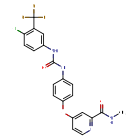
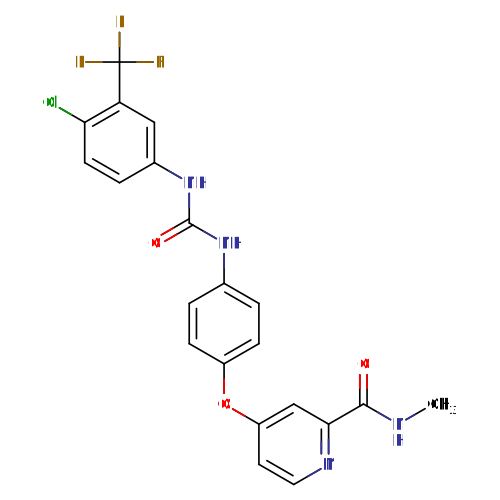
Structure for Sorafenib (DB00398)
- Weight
- Average: 464.825
Monoisotopic: 464.08630272 - Chemical Formula
- C21H16ClF3N4O3
- Synonyms
- 4-(4-((((4-Chloro-3-(trifluoromethyl)phenyl)amino)carbonyl)amino)phenoxy)-N-methyl-2-pyridinecarboxamide
- N-(4-Chloro-3-(trifluoromethyl)phenyl)-N'-(4-(2-(N-methylcarbamoyl)-4-pyridyloxy)phenyl)urea
- Sorafenib
- Sorafénib
- Sorafenibum
- External IDs
- BAY 43-9006
- BAY-43-9006

Pharmacology
- Indication
Sorafenib is indicated for the treatment of unresectable hepatocellular carcinoma and advanced renal cell carcinoma.5,6
In the US, it is also indicated for the treatment of patients with locally recurrent or metastatic, progressive, differentiated thyroid carcinoma that is refractory to radioactive iodine treatment.5
 Reduce drug development failure ratesBuild, train, & validate machine-learning modelswith evidence-based and structured datasets.Build, train, & validate predictive machine-learning models with structured datasets.
- Associated Conditions
Indication Type Indication Combined Product Details Approval Level Age Group Patient Characteristics Dose Form Treatment of Advanced renal cell carcinoma (arcc) •••••••••••• •••••• Treatment of Advanced renal cell carcinoma (arcc) •••••••••••• •••••• Treatment of Angiosarcoma ••• ••••• •••••• Treatment of Gastrointestinal stromal tumor ••• ••••• •••••• Treatment of Leiomyosarcoma (lms) ••• ••••• •••••• - Contraindications & Blackbox Warnings
 Prevent Adverse Drug Events TodayTap into our Clinical API for life-saving information on contraindications & blackbox warnings, population restrictions, harmful risks, & more.Avoid life-threatening adverse drug events with our Clinical API
- Pharmacodynamics
Sorafenib decreases tumour cell proliferation in vitro. It attenuated tumour growth of human tumour xenografts in immunocompromised mice, reduced tumour angiogenesis, and increased tumour apoptosis in models of hepatocellular carcinoma, renal cell carcinoma, and differentiated thyroid carcinoma.1,5 Some studies suggest that sorafenib induces apoptosis in several tumour cell lines, although this effect is inconsistent across cell lines.1 Antiviral effects of sorafenib have been documented, as it was shown to inhibit hepatitis C viral replication in vitro.1
- Mechanism of action
Kinases are involved in tumour cell signalling, proliferation, angiogenesis, and apoptosis.3,5 Sorafenib inhibits multiple intracellular serine/threonine kinases in the Ras/mitogen-activated protein kinase (MAPK) signal transduction pathway. Intracellular Raf serine/threonine kinase isoforms inhibited by sorafenib include Raf-1 (or C-Raf), wild-type B-Raf, and mutant B-Raf. Sorafenib inhibits cell surface tyrosine kinase receptors such as KIT, FMS-like tyrosine kinase 3 (FLT-3), RET, RET/PTC, vascular endothelial growth factor receptor-1 (VEGFR-1), VEGFR-2, VEGFR-3, and platelet-derived growth factor receptor-β (PDGFR-β).1,2,3,5
Sorafenib is thought to exhibit a dual mechanism of action: it blocks tumour proliferation and growth by inhibiting the RAF/MEK/extracellular signal-regulated kinase (ERK) pathway on tumour cells, and reduces tumour angiogenesis by inhibiting VEGFR and PDGFR signalling in tumour vasculature.1,4
Target Actions Organism ASerine/threonine-protein kinase B-raf inhibitorHumans ARAF proto-oncogene serine/threonine-protein kinase inhibitorHumans AVascular endothelial growth factor receptor 3 inhibitorHumans AVascular endothelial growth factor receptor 2 inhibitorHumans AVascular endothelial growth factor receptor 1 inhibitorHumans AReceptor-type tyrosine-protein kinase FLT3 inhibitorHumans APlatelet-derived growth factor receptor beta inhibitorHumans AMast/stem cell growth factor receptor Kit antagonistHumans AFibroblast growth factor receptor 1 inhibitorHumans AProto-oncogene tyrosine-protein kinase receptor Ret inhibitorHumans - Absorption
The administration of multiple doses for seven days resulted in a 2.5- to 7-fold accumulation compared to a single dose. Steady-state concentrations were achieved within seven days, with a peak-to-trough ratio of mean concentrations of less than 2. Mean Cmax and AUC increased less than proportionally beyond oral doses of 400 mg administered twice daily. The Tmax is approximately three hours.5
The mean relative bioavailability was 38–49% following the administration of oral sorafenib tablets. A high-fat meal reduced bioavailability by 29%.5
- Volume of distribution
Sorafenib is widely distributed to tissues, indicating that it is lipophilic.1
- Protein binding
In vitro, sorafenib is 99.5% bound to human plasma proteins.5
- Metabolism
Sorafenib undergoes oxidative metabolism by CYP3A4 in the liver, as well as glucuronidation by UGT1A9 in the liver and kidneys.1,5 At steady-state, sorafenib accounts for 70-85% of the circulating analytes in plasma.1 About eight metabolites of sorafenib have been identified, of which five were detected in plasma. The main circulating metabolite was the pyridine N-oxide form, which comprises approximately 9–16% of the total circulating dose at steady-state: the pharmacological activity of this metabolite was comparable to the parent drug.5
Hover over products below to view reaction partners
- Route of elimination
Following oral administration of a 100 mg dose of sorafenib, about 96% of the dose was recovered within 14 days, with 77% of the dose being excreted in feces and 19% of the dose being excreted in urine as glucuronidated metabolites. Unchanged sorafenib accounted for 51% of the dose excreted in feces.5
- Half-life
The mean elimination half-life of sorafenib was approximately 25 to 48 hours.5
- Clearance
Not Available
- Adverse Effects
 Improve decision support & research outcomesWith structured adverse effects data, including: blackbox warnings, adverse reactions, warning & precautions, & incidence rates. View sample adverse effects data in our new Data Library!Improve decision support & research outcomes with our structured adverse effects data.
- Toxicity
The oral lowest published toxic dose (Toxic Dose Low, TDLo) is 2.84 mg/kg/21D (intermittent).7 The oral LD50 of sorafenib tosylate in rats is >2000 mg/kg.8
The adverse reactions observed at 800 mg sorafenib twice daily (twice the recommended dose) were primarily diarrhea and dermatologic. No information is available on symptoms of acute overdose in animals because of the saturation of absorption in oral acute toxicity studies conducted in animals. The prescribing information recommends the discontinuation of sorafenib treatment and initiation of supportive care in cases of suspected overdose.5
- Pathways
Pathway Category Sorafenib Metabolism Pathway Drug metabolism - Pharmacogenomic Effects/ADRs
- Not Available
Interactions
- Drug Interactions
- This information should not be interpreted without the help of a healthcare provider. If you believe you are experiencing an interaction, contact a healthcare provider immediately. The absence of an interaction does not necessarily mean no interactions exist.
Drug Interaction Integrate drug-drug
interactions in your softwareAbacavir The metabolism of Abacavir can be decreased when combined with Sorafenib. Abametapir The serum concentration of Sorafenib can be increased when it is combined with Abametapir. Abatacept The metabolism of Sorafenib can be increased when combined with Abatacept. Abciximab The risk or severity of bleeding can be increased when Abciximab is combined with Sorafenib. Abemaciclib The serum concentration of Abemaciclib can be increased when it is combined with Sorafenib. - Food Interactions
- Do not take with or immediately after a high-fat meal. Take sorafenib at least 1 hour before or 2 hours after a high-fat meal, as sorafenib absorption can be reduced by a high-fat meal.
- Exercise caution with grapefruit products. Grapefruit inhibits CYP3A4 metabolism, which may increase the serum levels of sorafenib.
- Exercise caution with St. John's Wort. This herb induces CYP3A4 metabolism, which may reduce serum levels of sorafenib.
- Take on an empty stomach. Take sorafenib at least one hour before or two hours after a meal.
Products
 Drug product information from 10+ global regionsOur datasets provide approved product information including:dosage, form, labeller, route of administration, and marketing period.Access drug product information from over 10 global regions.
- Product Ingredients
Ingredient UNII CAS InChI Key Sorafenib tosylate 5T62Q3B36J 475207-59-1 IVDHYUQIDRJSTI-UHFFFAOYSA-N - Product Images

- Brand Name Prescription Products
Name Dosage Strength Route Labeller Marketing Start Marketing End Region Image Nexavar Tablet, film coated 200 mg/1 Oral Bayer HealthCare Pharmaceuticals Inc. 2005-12-20 Not applicable US 

Nexavar Tablet, film coated 200 mg/1 Oral Bayer HealthCare Pharmaceuticals Inc. 2023-10-02 Not applicable US Nexavar Tablet, film coated 200 mg/1 Oral Bayer Pharmaceuticals Corporartion 2007-02-23 2007-02-23 US Nexavar Tablet 200 mg Oral Bayer 2006-07-31 Not applicable Canada 
Nexavar Tablet, film coated 200 mg Oral Bayer Ag 2016-09-08 Not applicable EU 
- Generic Prescription Products
Name Dosage Strength Route Labeller Marketing Start Marketing End Region Image Apo-sorafenib Tablet 200 mg Oral Apotex Corporation Not applicable Not applicable Canada Sorafenib Tablet, film coated 200 mg/1 Oral Torrent Pharmaceuticals Limited 2023-04-12 Not applicable US Sorafenib Tablet, film coated 200 mg/1 Oral Dr.Reddys Laboratories Inc 2022-06-08 Not applicable US Sorafenib Tablet, film coated 200 mg/1 Oral Yabao Pharmaceutical Co., Ltd. Beijing 2022-12-01 Not applicable US Sorafenib Tablet, film coated 200 mg/1 Oral Bora Pharmaceutical Laboratories Inc. 2022-12-01 Not applicable US


Categories
- ATC Codes
- L01EX02 — Sorafenib
- Drug Categories
- Amides
- Antineoplastic Agents
- Antineoplastic and Immunomodulating Agents
- BCRP/ABCG2 Inhibitors
- BCRP/ABCG2 Substrates
- Benzene Derivatives
- Cytochrome P-450 CYP1A2 Substrates
- Cytochrome P-450 CYP1A2 Substrates with a Narrow Therapeutic Index
- Cytochrome P-450 CYP2B6 Inhibitors
- Cytochrome P-450 CYP2B6 Inhibitors (moderate)
- Cytochrome P-450 CYP2C19 Inhibitors
- Cytochrome P-450 CYP2C19 inhibitors (strength unknown)
- Cytochrome P-450 CYP2C8 Inhibitors
- Cytochrome P-450 CYP2C8 Inhibitors (strength unknown)
- Cytochrome P-450 CYP2C8 Inhibitors (strong)
- Cytochrome P-450 CYP2C8 Substrates
- Cytochrome P-450 CYP2C8 Substrates with a Narrow Therapeutic Index
- Cytochrome P-450 CYP2C9 Inhibitors
- Cytochrome P-450 CYP2C9 Inhibitors (strong)
- Cytochrome P-450 CYP2D6 Inhibitors
- Cytochrome P-450 CYP2D6 Inhibitors (strength unknown)
- Cytochrome P-450 CYP3A Inhibitors
- Cytochrome P-450 CYP3A Substrates
- Cytochrome P-450 CYP3A4 Inhibitors
- Cytochrome P-450 CYP3A4 Inhibitors (strength unknown)
- Cytochrome P-450 CYP3A4 Substrates
- Cytochrome P-450 CYP3A4 Substrates with a Narrow Therapeutic Index
- Cytochrome P-450 CYP3A5 Substrates
- Cytochrome P-450 CYP3A5 Substrates with a Narrow Therapeutic Index
- Cytochrome P-450 CYP3A7 Substrates
- Cytochrome P-450 CYP3A7 Substrates with a Narrow Therapeutic Index
- Cytochrome P-450 Enzyme Inhibitors
- Cytochrome P-450 Substrates
- Drugs that are Mainly Renally Excreted
- Enzyme Inhibitors
- Immunosuppressive Agents
- Kinase Inhibitor
- Myelosuppressive Agents
- Narrow Therapeutic Index Drugs
- Nicotinic Acids
- OATP1B1/SLCO1B1 Inhibitors
- P-glycoprotein inhibitors
- P-glycoprotein substrates
- P-glycoprotein substrates with a Narrow Therapeutic Index
- Phenylurea Compounds
- Potential QTc-Prolonging Agents
- Protein Kinase Inhibitors
- Pyridines
- QTc Prolonging Agents
- Tyrosine Kinase Inhibitors
- UGT1A1 Inhibitors
- UGT1A9 Inhibitors
- UGT1A9 Substrates
- UGT1A9 Substrates with a Narrow Therapeutic Index
- Chemical TaxonomyProvided by Classyfire
- Description
- This compound belongs to the class of organic compounds known as diarylethers. These are organic compounds containing the dialkyl ether functional group, with the formula ROR', where R and R' are aryl groups.
- Kingdom
- Organic compounds
- Super Class
- Organic oxygen compounds
- Class
- Organooxygen compounds
- Sub Class
- Ethers
- Direct Parent
- Diarylethers
- Alternative Parents
- Trifluoromethylbenzenes / N-phenylureas / Pyridinecarboxamides / 2-heteroaryl carboxamides / Phenoxy compounds / Phenol ethers / Chlorobenzenes / Aryl chlorides / Heteroaromatic compounds / Secondary carboxylic acid amides show 10 more
- Substituents
- 2-heteroaryl carboxamide / Alkyl fluoride / Alkyl halide / Aromatic heteromonocyclic compound / Aryl chloride / Aryl halide / Azacycle / Benzenoid / Carbonic acid derivative / Carbonyl group show 25 more
- Molecular Framework
- Aromatic heteromonocyclic compounds
- External Descriptors
- aromatic ether, ureas, monochlorobenzenes, (trifluoromethyl)benzenes, pyridinecarboxamide (CHEBI:50924)
- Affected organisms
- Humans and other mammals
Chemical Identifiers
- UNII
- 9ZOQ3TZI87
- CAS number
- 284461-73-0
- InChI Key
- MLDQJTXFUGDVEO-UHFFFAOYSA-N
- InChI
- InChI=1S/C21H16ClF3N4O3/c1-26-19(30)18-11-15(8-9-27-18)32-14-5-2-12(3-6-14)28-20(31)29-13-4-7-17(22)16(10-13)21(23,24)25/h2-11H,1H3,(H,26,30)(H2,28,29,31)
- IUPAC Name
- 4-[4-({[4-chloro-3-(trifluoromethyl)phenyl]carbamoyl}amino)phenoxy]-N-methylpyridine-2-carboxamide
- SMILES
- CNC(=O)C1=NC=CC(OC2=CC=C(NC(=O)NC3=CC(=C(Cl)C=C3)C(F)(F)F)C=C2)=C1
References
- Synthesis Reference
Ales Gavenda, Alexandr Jegorov, Pierluigi Rossetto, Peter Lindsay MacDonald, Augusto Canavesi, "POLYMORPHS OF SORAFENIB TOSYLATE AND SORAFENIB HEMI-TOSYLATE, AND PROCESSES FOR PREPARATION THEREOF." U.S. Patent US20090192200, issued July 30, 2009.
US20090192200- General References
- Iyer R, Fetterly G, Lugade A, Thanavala Y: Sorafenib: a clinical and pharmacologic review. Expert Opin Pharmacother. 2010 Aug;11(11):1943-55. doi: 10.1517/14656566.2010.496453. [Article]
- Keating GM: Sorafenib: A Review in Hepatocellular Carcinoma. Target Oncol. 2017 Apr;12(2):243-253. doi: 10.1007/s11523-017-0484-7. [Article]
- Keating GM, Santoro A: Sorafenib: a review of its use in advanced hepatocellular carcinoma. Drugs. 2009;69(2):223-40. doi: 10.2165/00003495-200969020-00006. [Article]
- Adnane L, Trail PA, Taylor I, Wilhelm SM: Sorafenib (BAY 43-9006, Nexavar), a dual-action inhibitor that targets RAF/MEK/ERK pathway in tumor cells and tyrosine kinases VEGFR/PDGFR in tumor vasculature. Methods Enzymol. 2006;407:597-612. [Article]
- FDA Approved Drug Products: NEXAVAR (sorafenib) tablets, for oral use [Link]
- EMA Approved Drug Products: Sorafenib Accord Oral Tablets [Link]
- Cayman Chemical: Sorafenib MSDS [Link]
- CymitQuimica: Sorafenib Tosylate MSDS [Link]
- External Links
- Human Metabolome Database
- HMDB0014542
- KEGG Drug
- D08524
- PubChem Compound
- 216239
- PubChem Substance
- 46505329
- ChemSpider
- 187440
- BindingDB
- 16673
- 495881
- ChEBI
- 50924
- ChEMBL
- CHEMBL1336
- ZINC
- ZINC000001493878
- Therapeutic Targets Database
- DAP000006
- PharmGKB
- PA7000
- PDBe Ligand
- BAX
- RxList
- RxList Drug Page
- Drugs.com
- Drugs.com Drug Page
- Wikipedia
- Sorafenib
- PDB Entries
- 1uwh / 1uwj / 3gcs / 3heg / 3rgf / 3wze / 4asd / 5hi2
Clinical Trials
- Clinical Trials
Phase Status Purpose Conditions Count 4 Active Not Recruiting Treatment Hepatocellular Carcinoma 1 4 Completed Treatment Hepatectomy / Hepatocellular Carcinoma / Sorafenib 1 4 Completed Treatment Hepatocellular Carcinoma 3 4 Enrolling by Invitation Treatment Hepatocellular Carcinoma / Portal Vein Tumor Thrombosis 1 4 Recruiting Basic Science Hepatocellular Carcinoma 1
Pharmacoeconomics
- Manufacturers
- Bayer healthcare pharmaceuticals inc
- Packagers
- Bayer Healthcare
- Dosage Forms
Form Route Strength Tablet Oral 200 mg Tablet, coated Oral 200 mg Tablet, film coated Oral 200 mg/1 Tablet, film coated Oral 274 mg Tablet, film coated Oral 400 mg Tablet, film coated Oral Tablet, film coated Oral 200 MG - Prices
Unit description Cost Unit Nexavar 200 mg tablet 66.61USD tablet DrugBank does not sell nor buy drugs. Pricing information is supplied for informational purposes only.- Patents
Patent Number Pediatric Extension Approved Expires (estimated) Region CA2315715 No 2010-06-22 2018-12-22 Canada CA2359510 No 2007-02-13 2020-01-12 Canada US8618141 No 2013-12-31 2023-02-11 US US8877933 No 2014-11-04 2027-12-24 US US8124630 No 2012-02-28 2020-01-12 US US8841330 No 2014-09-23 2020-01-12 US US7235576 No 2007-06-26 2020-01-12 US US7897623 No 2011-03-01 2020-01-12 US US7351834 No 2008-04-01 2020-01-12 US US9737488 No 2017-08-22 2028-09-10 US
Properties
- State
- Solid
- Experimental Properties
Property Value Source melting point (°C) 187-226 https://static.cymitquimica.com/products/45/pdf/sds-1615876.pdf water solubility < 0.01 g/L https://static.cymitquimica.com/products/45/pdf/sds-1615876.pdf - Predicted Properties
Property Value Source Water Solubility 0.00171 mg/mL ALOGPS logP 4.12 ALOGPS logP 4.34 Chemaxon logS -5.4 ALOGPS pKa (Strongest Acidic) 11.55 Chemaxon pKa (Strongest Basic) 3.03 Chemaxon Physiological Charge 0 Chemaxon Hydrogen Acceptor Count 3 Chemaxon Hydrogen Donor Count 3 Chemaxon Polar Surface Area 92.35 Å2 Chemaxon Rotatable Bond Count 6 Chemaxon Refractivity 114.52 m3·mol-1 Chemaxon Polarizability 41.33 Å3 Chemaxon Number of Rings 3 Chemaxon Bioavailability 1 Chemaxon Rule of Five Yes Chemaxon Ghose Filter Yes Chemaxon Veber's Rule No Chemaxon MDDR-like Rule Yes Chemaxon - Predicted ADMET Features
Property Value Probability Human Intestinal Absorption + 0.9649 Blood Brain Barrier + 0.851 Caco-2 permeable - 0.5138 P-glycoprotein substrate Non-substrate 0.5086 P-glycoprotein inhibitor I Non-inhibitor 0.7141 P-glycoprotein inhibitor II Non-inhibitor 0.9359 Renal organic cation transporter Non-inhibitor 0.8938 CYP450 2C9 substrate Non-substrate 0.6569 CYP450 2D6 substrate Non-substrate 0.8212 CYP450 3A4 substrate Non-substrate 0.5341 CYP450 1A2 substrate Inhibitor 0.6168 CYP450 2C9 inhibitor Non-inhibitor 0.6171 CYP450 2D6 inhibitor Non-inhibitor 0.9145 CYP450 2C19 inhibitor Inhibitor 0.637 CYP450 3A4 inhibitor Non-inhibitor 0.7339 CYP450 inhibitory promiscuity High CYP Inhibitory Promiscuity 0.6629 Ames test Non AMES toxic 0.8143 Carcinogenicity Non-carcinogens 0.8684 Biodegradation Not ready biodegradable 1.0 Rat acute toxicity 2.7885 LD50, mol/kg Not applicable hERG inhibition (predictor I) Weak inhibitor 0.9488 hERG inhibition (predictor II) Non-inhibitor 0.6415
Spectra
- Mass Spec (NIST)
- Not Available
- Spectra
Spectrum Spectrum Type Splash Key Predicted GC-MS Spectrum - GC-MS Predicted GC-MS splash10-022j-2972400000-d028d5e696594206a526 Predicted MS/MS Spectrum - 10V, Positive (Annotated) Predicted LC-MS/MS splash10-0159-0010900000-745ff5021ea7edf6a854 Predicted MS/MS Spectrum - 20V, Positive (Annotated) Predicted LC-MS/MS splash10-0159-0010900000-fd12a6fffe62eb724145 Predicted MS/MS Spectrum - 10V, Negative (Annotated) Predicted LC-MS/MS splash10-0007-0902400000-47964cccaeafdb854d16 Predicted MS/MS Spectrum - 40V, Positive (Annotated) Predicted LC-MS/MS splash10-01p9-1693400000-3024d29de7aea58e8889 Predicted MS/MS Spectrum - 20V, Negative (Annotated) Predicted LC-MS/MS splash10-000f-3940100000-1267858fe6e7286d568b Predicted MS/MS Spectrum - 40V, Negative (Annotated) Predicted LC-MS/MS splash10-0006-6915200000-fce06bd0ce7d2573ff8f Predicted 1H NMR Spectrum 1D NMR Not Applicable Predicted 13C NMR Spectrum 1D NMR Not Applicable - Chromatographic Properties
Collision Cross Sections (CCS)
Adduct CCS Value (Å2) Source type Source [M-H]- 222.7914665 predictedDarkChem Lite v0.1.0 [M-H]- 201.7416 predictedDeepCCS 1.0 (2019) [M+H]+ 224.0945665 predictedDarkChem Lite v0.1.0 [M+H]+ 204.13716 predictedDeepCCS 1.0 (2019) [M+Na]+ 222.9889665 predictedDarkChem Lite v0.1.0 [M+Na]+ 210.0703 predictedDeepCCS 1.0 (2019)
Targets

- Kind
- Protein
- Organism
- Humans
- Pharmacological action
- Yes
- Actions
- Inhibitor
- Curator comments
- It binds to Ras/Raf with an IC50 40 ng/mL.
- General Function
- Protein serine/threonine kinase activity
- Specific Function
- Protein kinase involved in the transduction of mitogenic signals from the cell membrane to the nucleus. May play a role in the postsynaptic responses of hippocampal neuron. Phosphorylates MAP2K1, a...
- Gene Name
- BRAF
- Uniprot ID
- P15056
- Uniprot Name
- Serine/threonine-protein kinase B-raf
- Molecular Weight
- 84436.135 Da
References
- Flaherty KT: Chemotherapy and targeted therapy combinations in advanced melanoma. Clin Cancer Res. 2006 Apr 1;12(7 Pt 2):2366s-2370s. [Article]
- Haluska FG, Ibrahim N: Therapeutic targets in melanoma: map kinase pathway. Curr Oncol Rep. 2006 Sep;8(5):400-5. [Article]
- Kim S, Yazici YD, Calzada G, Wang ZY, Younes MN, Jasser SA, El-Naggar AK, Myers JN: Sorafenib inhibits the angiogenesis and growth of orthotopic anaplastic thyroid carcinoma xenografts in nude mice. Mol Cancer Ther. 2007 Jun;6(6):1785-92. [Article]
- Eisen T, Ahmad T, Flaherty KT, Gore M, Kaye S, Marais R, Gibbens I, Hackett S, James M, Schuchter LM, Nathanson KL, Xia C, Simantov R, Schwartz B, Poulin-Costello M, O'Dwyer PJ, Ratain MJ: Sorafenib in advanced melanoma: a Phase II randomised discontinuation trial analysis. Br J Cancer. 2006 Sep 4;95(5):581-6. Epub 2006 Aug 1. [Article]
- Lu X, Tang X, Guo W, Ren T, Zhao H: Sorafenib induces growth inhibition and apoptosis of human chondrosarcoma cells by blocking the RAF/ERK/MEK pathway. J Surg Oncol. 2010 Dec 1;102(7):821-6. doi: 10.1002/jso.21661. [Article]
- Chen X, Ji ZL, Chen YZ: TTD: Therapeutic Target Database. Nucleic Acids Res. 2002 Jan 1;30(1):412-5. [Article]
- Iyer R, Fetterly G, Lugade A, Thanavala Y: Sorafenib: a clinical and pharmacologic review. Expert Opin Pharmacother. 2010 Aug;11(11):1943-55. doi: 10.1517/14656566.2010.496453. [Article]
- Kind
- Protein
- Organism
- Humans
- Pharmacological action
- Yes
- Actions
- Inhibitor
- General Function
- Protein serine/threonine kinase activity
- Specific Function
- Serine/threonine-protein kinase that acts as a regulatory link between the membrane-associated Ras GTPases and the MAPK/ERK cascade, and this critical regulatory link functions as a switch determin...
- Gene Name
- RAF1
- Uniprot ID
- P04049
- Uniprot Name
- RAF proto-oncogene serine/threonine-protein kinase
- Molecular Weight
- 73051.025 Da
References
- Adnane L, Trail PA, Taylor I, Wilhelm SM: Sorafenib (BAY 43-9006, Nexavar), a dual-action inhibitor that targets RAF/MEK/ERK pathway in tumor cells and tyrosine kinases VEGFR/PDGFR in tumor vasculature. Methods Enzymol. 2006;407:597-612. [Article]
- Gollob JA, Wilhelm S, Carter C, Kelley SL: Role of Raf kinase in cancer: therapeutic potential of targeting the Raf/MEK/ERK signal transduction pathway. Semin Oncol. 2006 Aug;33(4):392-406. [Article]
- Huether A, Hopfner M, Baradari V, Schuppan D, Scherubl H: Sorafenib alone or as combination therapy for growth control of cholangiocarcinoma. Biochem Pharmacol. 2007 May 1;73(9):1308-17. Epub 2007 Jan 5. [Article]
- Cascone T, Gridelli C, Ciardiello F: Combined targeted therapies in non-small cell lung cancer: a winner strategy? Curr Opin Oncol. 2007 Mar;19(2):98-102. [Article]
- Gridelli C, Maione P, Del Gaizo F, Colantuoni G, Guerriero C, Ferrara C, Nicolella D, Comunale D, De Vita A, Rossi A: Sorafenib and sunitinib in the treatment of advanced non-small cell lung cancer. Oncologist. 2007 Feb;12(2):191-200. [Article]
- Lu X, Tang X, Guo W, Ren T, Zhao H: Sorafenib induces growth inhibition and apoptosis of human chondrosarcoma cells by blocking the RAF/ERK/MEK pathway. J Surg Oncol. 2010 Dec 1;102(7):821-6. doi: 10.1002/jso.21661. [Article]
- Smalley KS, Xiao M, Villanueva J, Nguyen TK, Flaherty KT, Letrero R, Van Belle P, Elder DE, Wang Y, Nathanson KL, Herlyn M: CRAF inhibition induces apoptosis in melanoma cells with non-V600E BRAF mutations. Oncogene. 2009 Jan 8;28(1):85-94. doi: 10.1038/onc.2008.362. Epub 2008 Sep 15. [Article]
- Wilhelm SM, Adnane L, Newell P, Villanueva A, Llovet JM, Lynch M: Preclinical overview of sorafenib, a multikinase inhibitor that targets both Raf and VEGF and PDGF receptor tyrosine kinase signaling. Mol Cancer Ther. 2008 Oct;7(10):3129-40. doi: 10.1158/1535-7163.MCT-08-0013. [Article]
- Iyer R, Fetterly G, Lugade A, Thanavala Y: Sorafenib: a clinical and pharmacologic review. Expert Opin Pharmacother. 2010 Aug;11(11):1943-55. doi: 10.1517/14656566.2010.496453. [Article]
- Kind
- Protein
- Organism
- Humans
- Pharmacological action
- Yes
- Actions
- Inhibitor
- General Function
- Vascular endothelial growth factor-activated receptor activity
- Specific Function
- Tyrosine-protein kinase that acts as a cell-surface receptor for VEGFC and VEGFD, and plays an essential role in adult lymphangiogenesis and in the development of the vascular network and the cardi...
- Gene Name
- FLT4
- Uniprot ID
- P35916
- Uniprot Name
- Vascular endothelial growth factor receptor 3
- Molecular Weight
- 152755.94 Da
References
- Lathia C, Lettieri J, Cihon F, Gallentine M, Radtke M, Sundaresan P: Lack of effect of ketoconazole-mediated CYP3A inhibition on sorafenib clinical pharmacokinetics. Cancer Chemother Pharmacol. 2006 May;57(5):685-92. Epub 2005 Aug 25. [Article]
- Adnane L, Trail PA, Taylor I, Wilhelm SM: Sorafenib (BAY 43-9006, Nexavar), a dual-action inhibitor that targets RAF/MEK/ERK pathway in tumor cells and tyrosine kinases VEGFR/PDGFR in tumor vasculature. Methods Enzymol. 2006;407:597-612. [Article]
- Gridelli C, Maione P, Del Gaizo F, Colantuoni G, Guerriero C, Ferrara C, Nicolella D, Comunale D, De Vita A, Rossi A: Sorafenib and sunitinib in the treatment of advanced non-small cell lung cancer. Oncologist. 2007 Feb;12(2):191-200. [Article]
- Strumberg D: Preclinical and clinical development of the oral multikinase inhibitor sorafenib in cancer treatment. Drugs Today (Barc). 2005 Dec;41(12):773-84. [Article]
- Reddy GK, Bukowski RM: Sorafenib: recent update on activity as a single agent and in combination with interferon-alpha2 in patients with advanced-stage renal cell carcinoma. Clin Genitourin Cancer. 2006 Mar;4(4):246-8. [Article]
- Iyer R, Fetterly G, Lugade A, Thanavala Y: Sorafenib: a clinical and pharmacologic review. Expert Opin Pharmacother. 2010 Aug;11(11):1943-55. doi: 10.1517/14656566.2010.496453. [Article]
- Kind
- Protein
- Organism
- Humans
- Pharmacological action
- Yes
- Actions
- Inhibitor
- Curator comments
- It binds to VEGFR-2 with an IC50 of 570 ng/mL.
- General Function
- Vascular endothelial growth factor-activated receptor activity
- Specific Function
- Tyrosine-protein kinase that acts as a cell-surface receptor for VEGFA, VEGFC and VEGFD. Plays an essential role in the regulation of angiogenesis, vascular development, vascular permeability, and ...
- Gene Name
- KDR
- Uniprot ID
- P35968
- Uniprot Name
- Vascular endothelial growth factor receptor 2
- Molecular Weight
- 151525.555 Da
References
- Schoffski P, Dumez H, Clement P, Hoeben A, Prenen H, Wolter P, Joniau S, Roskams T, Van Poppel H: Emerging role of tyrosine kinase inhibitors in the treatment of advanced renal cell cancer: a review. Ann Oncol. 2006 Aug;17(8):1185-96. Epub 2006 Jan 17. [Article]
- Veronese ML, Mosenkis A, Flaherty KT, Gallagher M, Stevenson JP, Townsend RR, O'Dwyer PJ: Mechanisms of hypertension associated with BAY 43-9006. J Clin Oncol. 2006 Mar 20;24(9):1363-9. Epub 2006 Jan 30. [Article]
- Rini BI: Sorafenib. Expert Opin Pharmacother. 2006 Mar;7(4):453-61. [Article]
- Adnane L, Trail PA, Taylor I, Wilhelm SM: Sorafenib (BAY 43-9006, Nexavar), a dual-action inhibitor that targets RAF/MEK/ERK pathway in tumor cells and tyrosine kinases VEGFR/PDGFR in tumor vasculature. Methods Enzymol. 2006;407:597-612. [Article]
- Lacouture ME, Desai A, Soltani K, Petronic-Rosic V, Laumann AE, Ratain MJ, Stadler WM: Inflammation of actinic keratoses subsequent to therapy with sorafenib, a multitargeted tyrosine-kinase inhibitor. Clin Exp Dermatol. 2006 Nov;31(6):783-5. Epub 2006 Jul 4. [Article]
- Iyer R, Fetterly G, Lugade A, Thanavala Y: Sorafenib: a clinical and pharmacologic review. Expert Opin Pharmacother. 2010 Aug;11(11):1943-55. doi: 10.1517/14656566.2010.496453. [Article]
- Kind
- Protein
- Organism
- Humans
- Pharmacological action
- Yes
- Actions
- Inhibitor
- Curator comments
- It binds to VEGFR-1 with an IC50 of 165 ng/mL.
- General Function
- Vegf-b-activated receptor activity
- Specific Function
- Tyrosine-protein kinase that acts as a cell-surface receptor for VEGFA, VEGFB and PGF, and plays an essential role in the development of embryonic vasculature, the regulation of angiogenesis, cell ...
- Gene Name
- FLT1
- Uniprot ID
- P17948
- Uniprot Name
- Vascular endothelial growth factor receptor 1
- Molecular Weight
- 150767.185 Da
References
- Wilhelm SM, Carter C, Tang L, Wilkie D, McNabola A, Rong H, Chen C, Zhang X, Vincent P, McHugh M, Cao Y, Shujath J, Gawlak S, Eveleigh D, Rowley B, Liu L, Adnane L, Lynch M, Auclair D, Taylor I, Gedrich R, Voznesensky A, Riedl B, Post LE, Bollag G, Trail PA: BAY 43-9006 exhibits broad spectrum oral antitumor activity and targets the RAF/MEK/ERK pathway and receptor tyrosine kinases involved in tumor progression and angiogenesis. Cancer Res. 2004 Oct 1;64(19):7099-109. [Article]
- Carlomagno F, Anaganti S, Guida T, Salvatore G, Troncone G, Wilhelm SM, Santoro M: BAY 43-9006 inhibition of oncogenic RET mutants. J Natl Cancer Inst. 2006 Mar 1;98(5):326-34. [Article]
- Wilhelm S, Carter C, Lynch M, Lowinger T, Dumas J, Smith RA, Schwartz B, Simantov R, Kelley S: Discovery and development of sorafenib: a multikinase inhibitor for treating cancer. Nat Rev Drug Discov. 2006 Oct;5(10):835-44. [Article]
- Iyer R, Fetterly G, Lugade A, Thanavala Y: Sorafenib: a clinical and pharmacologic review. Expert Opin Pharmacother. 2010 Aug;11(11):1943-55. doi: 10.1517/14656566.2010.496453. [Article]
- Kind
- Protein
- Organism
- Humans
- Pharmacological action
- Yes
- Actions
- Inhibitor
- General Function
- Vascular endothelial growth factor-activated receptor activity
- Specific Function
- Tyrosine-protein kinase that acts as cell-surface receptor for the cytokine FLT3LG and regulates differentiation, proliferation and survival of hematopoietic progenitor cells and of dendritic cells...
- Gene Name
- FLT3
- Uniprot ID
- P36888
- Uniprot Name
- Receptor-type tyrosine-protein kinase FLT3
- Molecular Weight
- 112902.51 Da
References
- Auclair D, Miller D, Yatsula V, Pickett W, Carter C, Chang Y, Zhang X, Wilkie D, Burd A, Shi H, Rocks S, Gedrich R, Abriola L, Vasavada H, Lynch M, Dumas J, Trail PA, Wilhelm SM: Antitumor activity of sorafenib in FLT3-driven leukemic cells. Leukemia. 2007 Mar;21(3):439-45. Epub 2007 Jan 4. [Article]
- Lierman E, Lahortiga I, Van Miegroet H, Mentens N, Marynen P, Cools J: The ability of sorafenib to inhibit oncogenic PDGFRbeta and FLT3 mutants and overcome resistance to other small molecule inhibitors. Haematologica. 2007 Jan;92(1):27-34. [Article]
- Iyer R, Fetterly G, Lugade A, Thanavala Y: Sorafenib: a clinical and pharmacologic review. Expert Opin Pharmacother. 2010 Aug;11(11):1943-55. doi: 10.1517/14656566.2010.496453. [Article]
- Kind
- Protein
- Organism
- Humans
- Pharmacological action
- Yes
- Actions
- Inhibitor
- General Function
- Vascular endothelial growth factor binding
- Specific Function
- Tyrosine-protein kinase that acts as cell-surface receptor for homodimeric PDGFB and PDGFD and for heterodimers formed by PDGFA and PDGFB, and plays an essential role in the regulation of embryonic...
- Gene Name
- PDGFRB
- Uniprot ID
- P09619
- Uniprot Name
- Platelet-derived growth factor receptor beta
- Molecular Weight
- 123966.895 Da
References
- Gollob JA: Sorafenib: scientific rationales for single-agent and combination therapy in clear-cell renal cell carcinoma. Clin Genitourin Cancer. 2005 Dec;4(3):167-74. [Article]
- Guida T, Anaganti S, Provitera L, Gedrich R, Sullivan E, Wilhelm SM, Santoro M, Carlomagno F: Sorafenib inhibits imatinib-resistant KIT and platelet-derived growth factor receptor beta gatekeeper mutants. Clin Cancer Res. 2007 Jun 1;13(11):3363-9. [Article]
- Unnithan J, Rini BI: The role of targeted therapy in metastatic renal cell carcinoma. ScientificWorldJournal. 2007 Mar 2;7:800-7. [Article]
- Iyer R, Fetterly G, Lugade A, Thanavala Y: Sorafenib: a clinical and pharmacologic review. Expert Opin Pharmacother. 2010 Aug;11(11):1943-55. doi: 10.1517/14656566.2010.496453. [Article]
- Kind
- Protein
- Organism
- Humans
- Pharmacological action
- Yes
- Actions
- Antagonist
- General Function
- Transmembrane receptor protein tyrosine kinase activity
- Specific Function
- Tyrosine-protein kinase that acts as cell-surface receptor for the cytokine KITLG/SCF and plays an essential role in the regulation of cell survival and proliferation, hematopoiesis, stem cell main...
- Gene Name
- KIT
- Uniprot ID
- P10721
- Uniprot Name
- Mast/stem cell growth factor receptor Kit
- Molecular Weight
- 109863.655 Da
References
- Guida T, Anaganti S, Provitera L, Gedrich R, Sullivan E, Wilhelm SM, Santoro M, Carlomagno F: Sorafenib inhibits imatinib-resistant KIT and platelet-derived growth factor receptor beta gatekeeper mutants. Clin Cancer Res. 2007 Jun 1;13(11):3363-9. [Article]
- Koch CA, Gimm O, Vortmeyer AO, Al-Ali HK, Lamesch P, Ott R, Kluge R, Bierbach U, Tannapfel A: Does the expression of c-kit (CD117) in neuroendocrine tumors represent a target for therapy? Ann N Y Acad Sci. 2006 Aug;1073:517-26. [Article]
- Lierman E, Lahortiga I, Van Miegroet H, Mentens N, Marynen P, Cools J: The ability of sorafenib to inhibit oncogenic PDGFRbeta and FLT3 mutants and overcome resistance to other small molecule inhibitors. Haematologica. 2007 Jan;92(1):27-34. [Article]
- Cascone T, Gridelli C, Ciardiello F: Combined targeted therapies in non-small cell lung cancer: a winner strategy? Curr Opin Oncol. 2007 Mar;19(2):98-102. [Article]
- Liu L, Cao Y, Chen C, Zhang X, McNabola A, Wilkie D, Wilhelm S, Lynch M, Carter C: Sorafenib blocks the RAF/MEK/ERK pathway, inhibits tumor angiogenesis, and induces tumor cell apoptosis in hepatocellular carcinoma model PLC/PRF/5. Cancer Res. 2006 Dec 15;66(24):11851-8. [Article]
- Iyer R, Fetterly G, Lugade A, Thanavala Y: Sorafenib: a clinical and pharmacologic review. Expert Opin Pharmacother. 2010 Aug;11(11):1943-55. doi: 10.1517/14656566.2010.496453. [Article]
- Kind
- Protein
- Organism
- Humans
- Pharmacological action
- Yes
- Actions
- Inhibitor
- General Function
- Protein tyrosine kinase activity
- Specific Function
- Tyrosine-protein kinase that acts as cell-surface receptor for fibroblast growth factors and plays an essential role in the regulation of embryonic development, cell proliferation, differentiation ...
- Gene Name
- FGFR1
- Uniprot ID
- P11362
- Uniprot Name
- Fibroblast growth factor receptor 1
- Molecular Weight
- 91866.935 Da
References
- Wilhelm SM, Carter C, Tang L, Wilkie D, McNabola A, Rong H, Chen C, Zhang X, Vincent P, McHugh M, Cao Y, Shujath J, Gawlak S, Eveleigh D, Rowley B, Liu L, Adnane L, Lynch M, Auclair D, Taylor I, Gedrich R, Voznesensky A, Riedl B, Post LE, Bollag G, Trail PA: BAY 43-9006 exhibits broad spectrum oral antitumor activity and targets the RAF/MEK/ERK pathway and receptor tyrosine kinases involved in tumor progression and angiogenesis. Cancer Res. 2004 Oct 1;64(19):7099-109. [Article]
- Carlomagno F, Anaganti S, Guida T, Salvatore G, Troncone G, Wilhelm SM, Santoro M: BAY 43-9006 inhibition of oncogenic RET mutants. J Natl Cancer Inst. 2006 Mar 1;98(5):326-34. [Article]
- Wilhelm S, Carter C, Lynch M, Lowinger T, Dumas J, Smith RA, Schwartz B, Simantov R, Kelley S: Discovery and development of sorafenib: a multikinase inhibitor for treating cancer. Nat Rev Drug Discov. 2006 Oct;5(10):835-44. [Article]
- Kind
- Protein
- Organism
- Humans
- Pharmacological action
- Yes
- Actions
- Inhibitor
- General Function
- Transmembrane receptor protein tyrosine kinase activity
- Specific Function
- Receptor tyrosine-protein kinase involved in numerous cellular mechanisms including cell proliferation, neuronal navigation, cell migration, and cell differentiation upon binding with glial cell de...
- Gene Name
- RET
- Uniprot ID
- P07949
- Uniprot Name
- Proto-oncogene tyrosine-protein kinase receptor Ret
- Molecular Weight
- 124317.465 Da
References
- Wilhelm SM, Carter C, Tang L, Wilkie D, McNabola A, Rong H, Chen C, Zhang X, Vincent P, McHugh M, Cao Y, Shujath J, Gawlak S, Eveleigh D, Rowley B, Liu L, Adnane L, Lynch M, Auclair D, Taylor I, Gedrich R, Voznesensky A, Riedl B, Post LE, Bollag G, Trail PA: BAY 43-9006 exhibits broad spectrum oral antitumor activity and targets the RAF/MEK/ERK pathway and receptor tyrosine kinases involved in tumor progression and angiogenesis. Cancer Res. 2004 Oct 1;64(19):7099-109. [Article]
- Carlomagno F, Anaganti S, Guida T, Salvatore G, Troncone G, Wilhelm SM, Santoro M: BAY 43-9006 inhibition of oncogenic RET mutants. J Natl Cancer Inst. 2006 Mar 1;98(5):326-34. [Article]
- Wilhelm S, Carter C, Lynch M, Lowinger T, Dumas J, Smith RA, Schwartz B, Simantov R, Kelley S: Discovery and development of sorafenib: a multikinase inhibitor for treating cancer. Nat Rev Drug Discov. 2006 Oct;5(10):835-44. [Article]
Enzymes
- Kind
- Protein
- Organism
- Humans
- Pharmacological action
- Unknown
- Actions
- SubstrateInhibitor
- Curator comments
- Sorafenib competitively inhibited CYP3A4 in vitro.
- General Function
- Vitamin d3 25-hydroxylase activity
- Specific Function
- Cytochromes P450 are a group of heme-thiolate monooxygenases. In liver microsomes, this enzyme is involved in an NADPH-dependent electron transport pathway. It performs a variety of oxidation react...
- Gene Name
- CYP3A4
- Uniprot ID
- P08684
- Uniprot Name
- Cytochrome P450 3A4
- Molecular Weight
- 57342.67 Da
References
- Gomo C, Coriat R, Faivre L, Mir O, Ropert S, Billemont B, Dauphin A, Tod M, Goldwasser F, Blanchet B: Pharmacokinetic interaction involving sorafenib and the calcium-channel blocker felodipine in a patient with hepatocellular carcinoma. Invest New Drugs. 2011 Dec;29(6):1511-4. doi: 10.1007/s10637-010-9514-3. Epub 2010 Aug 13. [Article]
- van Erp NP, Gelderblom H, Guchelaar HJ: Clinical pharmacokinetics of tyrosine kinase inhibitors. Cancer Treat Rev. 2009 Dec;35(8):692-706. doi: 10.1016/j.ctrv.2009.08.004. Epub 2009 Sep 5. [Article]
- Flaherty KT, Lathia C, Frye RF, Schuchter L, Redlinger M, Rosen M, O'Dwyer PJ: Interaction of sorafenib and cytochrome P450 isoenzymes in patients with advanced melanoma: a phase I/II pharmacokinetic interaction study. Cancer Chemother Pharmacol. 2011 Nov;68(5):1111-8. doi: 10.1007/s00280-011-1585-0. Epub 2011 Feb 25. [Article]
- Sugiyama M, Fujita K, Murayama N, Akiyama Y, Yamazaki H, Sasaki Y: Sorafenib and sunitinib, two anticancer drugs, inhibit CYP3A4-mediated and activate CY3A5-mediated midazolam 1'-hydroxylation. Drug Metab Dispos. 2011 May;39(5):757-62. doi: 10.1124/dmd.110.037853. Epub 2011 Jan 25. [Article]
- Flockhart Table of Drug Interactions [Link]
- FDA Approved Drug Products: NEXAVAR (sorafenib) tablets, for oral use [Link]
- Kind
- Protein
- Organism
- Humans
- Pharmacological action
- Unknown
- Actions
- Inhibitor
- Curator comments
- Sorafenib competitively inhibited CYP2C9 in vitro.
- General Function
- Steroid hydroxylase activity
- Specific Function
- Cytochromes P450 are a group of heme-thiolate monooxygenases. In liver microsomes, this enzyme is involved in an NADPH-dependent electron transport pathway. It oxidizes a variety of structurally un...
- Gene Name
- CYP2C9
- Uniprot ID
- P11712
- Uniprot Name
- Cytochrome P450 2C9
- Molecular Weight
- 55627.365 Da
References
- Gong L, Giacomini MM, Giacomini C, Maitland ML, Altman RB, Klein TE: PharmGKB summary: sorafenib pathways. Pharmacogenet Genomics. 2017 Jun;27(6):240-246. doi: 10.1097/FPC.0000000000000279. [Article]
- Holstein A, Kovacs P, Beil W: Severe hypoglycemia due to possible interaction between glibenclamide and sorafenib in a patient with hepatocellular carcinoma. Curr Drug Saf. 2013 Apr;8(2):148-52. [Article]
- FDA Approved Drug Products: NEXAVAR (sorafenib) tablets, for oral use [Link]
- Kind
- Protein
- Organism
- Humans
- Pharmacological action
- Unknown
- Actions
- SubstrateInhibitor
- Curator comments
- Sorafenib competitively inhibited CYP2C8 in vitro.
- General Function
- Steroid hydroxylase activity
- Specific Function
- Cytochromes P450 are a group of heme-thiolate monooxygenases. In liver microsomes, this enzyme is involved in an NADPH-dependent electron transport pathway. It oxidizes a variety of structurally un...
- Gene Name
- CYP2C8
- Uniprot ID
- P10632
- Uniprot Name
- Cytochrome P450 2C8
- Molecular Weight
- 55824.275 Da
References
- Flaherty KT, Lathia C, Frye RF, Schuchter L, Redlinger M, Rosen M, O'Dwyer PJ: Interaction of sorafenib and cytochrome P450 isoenzymes in patients with advanced melanoma: a phase I/II pharmacokinetic interaction study. Cancer Chemother Pharmacol. 2011 Nov;68(5):1111-8. doi: 10.1007/s00280-011-1585-0. Epub 2011 Feb 25. [Article]
- Flockhart Table of Drug Interactions [Link]
- FDA Approved Drug Products: NEXAVAR (sorafenib) tablets, for oral use [Link]
- Kind
- Protein
- Organism
- Humans
- Pharmacological action
- Unknown
- Actions
- Substrate
- General Function
- Oxygen binding
- Specific Function
- Cytochromes P450 are a group of heme-thiolate monooxygenases. In liver microsomes, this enzyme is involved in an NADPH-dependent electron transport pathway. It oxidizes a variety of structurally un...
- Gene Name
- CYP3A5
- Uniprot ID
- P20815
- Uniprot Name
- Cytochrome P450 3A5
- Molecular Weight
- 57108.065 Da
References
- Flockhart Table of Drug Interactions [Link]
- Kind
- Protein
- Organism
- Humans
- Pharmacological action
- Unknown
- Actions
- Substrate
- General Function
- Oxygen binding
- Specific Function
- Cytochromes P450 are a group of heme-thiolate monooxygenases. In liver microsomes, this enzyme is involved in an NADPH-dependent electron transport pathway. It oxidizes a variety of structurally un...
- Gene Name
- CYP3A7
- Uniprot ID
- P24462
- Uniprot Name
- Cytochrome P450 3A7
- Molecular Weight
- 57525.03 Da
References
- Flockhart Table of Drug Interactions [Link]
- Kind
- Protein
- Organism
- Humans
- Pharmacological action
- Unknown
- Actions
- Inhibitor
- Curator comments
- Sorafenib competitively inhibited CYP2B6 in vitro.
- General Function
- Steroid hydroxylase activity
- Specific Function
- Cytochromes P450 are a group of heme-thiolate monooxygenases. In liver microsomes, this enzyme is involved in an NADPH-dependent electron transport pathway. It oxidizes a variety of structurally un...
- Gene Name
- CYP2B6
- Uniprot ID
- P20813
- Uniprot Name
- Cytochrome P450 2B6
- Molecular Weight
- 56277.81 Da
References
- Flaherty KT, Lathia C, Frye RF, Schuchter L, Redlinger M, Rosen M, O'Dwyer PJ: Interaction of sorafenib and cytochrome P450 isoenzymes in patients with advanced melanoma: a phase I/II pharmacokinetic interaction study. Cancer Chemother Pharmacol. 2011 Nov;68(5):1111-8. doi: 10.1007/s00280-011-1585-0. Epub 2011 Feb 25. [Article]
- Flockhart Table of Drug Interactions [Link]
- FDA Approved Drug Products: NEXAVAR (sorafenib) tablets, for oral use [Link]
- Kind
- Protein
- Organism
- Humans
- Pharmacological action
- Unknown
- Actions
- Substrate
- General Function
- Oxidoreductase activity, acting on paired donors, with incorporation or reduction of molecular oxygen, reduced flavin or flavoprotein as one donor, and incorporation of one atom of oxygen
- Specific Function
- Cytochromes P450 are a group of heme-thiolate monooxygenases. In liver microsomes, this enzyme is involved in an NADPH-dependent electron transport pathway. It oxidizes a variety of structurally un...
- Gene Name
- CYP1A2
- Uniprot ID
- P05177
- Uniprot Name
- Cytochrome P450 1A2
- Molecular Weight
- 58293.76 Da
References
- Flaherty KT, Lathia C, Frye RF, Schuchter L, Redlinger M, Rosen M, O'Dwyer PJ: Interaction of sorafenib and cytochrome P450 isoenzymes in patients with advanced melanoma: a phase I/II pharmacokinetic interaction study. Cancer Chemother Pharmacol. 2011 Nov;68(5):1111-8. doi: 10.1007/s00280-011-1585-0. Epub 2011 Feb 25. [Article]
- Zimmerman EI, Roberts JL, Li L, Finkelstein D, Gibson A, Chaudhry AS, Schuetz EG, Rubnitz JE, Inaba H, Baker SD: Ontogeny and sorafenib metabolism. Clin Cancer Res. 2012 Oct 15;18(20):5788-95. doi: 10.1158/1078-0432.CCR-12-1967. Epub 2012 Aug 27. [Article]
- Kind
- Protein
- Organism
- Humans
- Pharmacological action
- Unknown
- Actions
- Inhibitor
- Curator comments
- Sorafenib competitively inhibited CYP2C19 in vitro.
- General Function
- Steroid hydroxylase activity
- Specific Function
- Responsible for the metabolism of a number of therapeutic agents such as the anticonvulsant drug S-mephenytoin, omeprazole, proguanil, certain barbiturates, diazepam, propranolol, citalopram and im...
- Gene Name
- CYP2C19
- Uniprot ID
- P33261
- Uniprot Name
- Cytochrome P450 2C19
- Molecular Weight
- 55930.545 Da
References
- Flaherty KT, Lathia C, Frye RF, Schuchter L, Redlinger M, Rosen M, O'Dwyer PJ: Interaction of sorafenib and cytochrome P450 isoenzymes in patients with advanced melanoma: a phase I/II pharmacokinetic interaction study. Cancer Chemother Pharmacol. 2011 Nov;68(5):1111-8. doi: 10.1007/s00280-011-1585-0. Epub 2011 Feb 25. [Article]
- FDA Approved Drug Products: NEXAVAR (sorafenib) tablets, for oral use [Link]
- Kind
- Protein
- Organism
- Humans
- Pharmacological action
- Unknown
- Actions
- Inhibitor
- Curator comments
- Sorafenib competitively inhibited CYP2D6 in vitro.
- General Function
- Steroid hydroxylase activity
- Specific Function
- Responsible for the metabolism of many drugs and environmental chemicals that it oxidizes. It is involved in the metabolism of drugs such as antiarrhythmics, adrenoceptor antagonists, and tricyclic...
- Gene Name
- CYP2D6
- Uniprot ID
- P10635
- Uniprot Name
- Cytochrome P450 2D6
- Molecular Weight
- 55768.94 Da
References
- Flaherty KT, Lathia C, Frye RF, Schuchter L, Redlinger M, Rosen M, O'Dwyer PJ: Interaction of sorafenib and cytochrome P450 isoenzymes in patients with advanced melanoma: a phase I/II pharmacokinetic interaction study. Cancer Chemother Pharmacol. 2011 Nov;68(5):1111-8. doi: 10.1007/s00280-011-1585-0. Epub 2011 Feb 25. [Article]
- FDA Approved Drug Products: NEXAVAR (sorafenib) tablets, for oral use [Link]
- Kind
- Protein
- Organism
- Humans
- Pharmacological action
- Unknown
- Actions
- SubstrateInhibitor
- General Function
- Retinoic acid binding
- Specific Function
- UDPGT is of major importance in the conjugation and subsequent elimination of potentially toxic xenobiotics and endogenous compounds. This isoform has specificity for phenols. Isoform 2 lacks trans...
- Gene Name
- UGT1A9
- Uniprot ID
- O60656
- Uniprot Name
- UDP-glucuronosyltransferase 1-9
- Molecular Weight
- 59940.495 Da
References
- Gomo C, Coriat R, Faivre L, Mir O, Ropert S, Billemont B, Dauphin A, Tod M, Goldwasser F, Blanchet B: Pharmacokinetic interaction involving sorafenib and the calcium-channel blocker felodipine in a patient with hepatocellular carcinoma. Invest New Drugs. 2011 Dec;29(6):1511-4. doi: 10.1007/s10637-010-9514-3. Epub 2010 Aug 13. [Article]
- van Erp NP, Gelderblom H, Guchelaar HJ: Clinical pharmacokinetics of tyrosine kinase inhibitors. Cancer Treat Rev. 2009 Dec;35(8):692-706. doi: 10.1016/j.ctrv.2009.08.004. Epub 2009 Sep 5. [Article]
- Keating GM, Santoro A: Sorafenib: a review of its use in advanced hepatocellular carcinoma. Drugs. 2009;69(2):223-40. doi: 10.2165/00003495-200969020-00006. [Article]
- FDA Approved Drug Products: NEXAVAR (sorafenib) tablets, for oral use [Link]
- Kind
- Protein
- Organism
- Humans
- Pharmacological action
- Unknown
- Actions
- Inhibitor
- General Function
- Steroid binding
- Specific Function
- UDPGT is of major importance in the conjugation and subsequent elimination of potentially toxic xenobiotics and endogenous compounds. This isoform glucuronidates bilirubin IX-alpha to form both the...
- Gene Name
- UGT1A1
- Uniprot ID
- P22309
- Uniprot Name
- UDP-glucuronosyltransferase 1-1
- Molecular Weight
- 59590.91 Da
References
- FDA Approved Drug Products: NEXAVAR (sorafenib) tablets, for oral use [Link]
Transporters
- Kind
- Protein
- Organism
- Humans
- Pharmacological action
- Unknown
- Actions
- SubstrateInhibitor
- General Function
- Xenobiotic-transporting atpase activity
- Specific Function
- Energy-dependent efflux pump responsible for decreased drug accumulation in multidrug-resistant cells.
- Gene Name
- ABCB1
- Uniprot ID
- P08183
- Uniprot Name
- Multidrug resistance protein 1
- Molecular Weight
- 141477.255 Da
References
- Hu S, Chen Z, Franke R, Orwick S, Zhao M, Rudek MA, Sparreboom A, Baker SD: Interaction of the multikinase inhibitors sorafenib and sunitinib with solute carriers and ATP-binding cassette transporters. Clin Cancer Res. 2009 Oct 1;15(19):6062-9. doi: 10.1158/1078-0432.CCR-09-0048. Epub 2009 Sep 22. [Article]
- Lagas JS, van Waterschoot RA, Sparidans RW, Wagenaar E, Beijnen JH, Schinkel AH: Breast cancer resistance protein and P-glycoprotein limit sorafenib brain accumulation. Mol Cancer Ther. 2010 Feb;9(2):319-26. doi: 10.1158/1535-7163.MCT-09-0663. Epub 2010 Jan 26. [Article]
- FDA Approved Drug Products: NEXAVAR (sorafenib) tablets, for oral use [Link]
- Kind
- Protein
- Organism
- Humans
- Pharmacological action
- Unknown
- Actions
- SubstrateInhibitor
- Curator comments
- The literature seems to reflect that Sorafenib is either strictly a substrate or an inhibitor.
- General Function
- Xenobiotic-transporting atpase activity
- Specific Function
- High-capacity urate exporter functioning in both renal and extrarenal urate excretion. Plays a role in porphyrin homeostasis as it is able to mediates the export of protoporhyrin IX (PPIX) both fro...
- Gene Name
- ABCG2
- Uniprot ID
- Q9UNQ0
- Uniprot Name
- ATP-binding cassette sub-family G member 2
- Molecular Weight
- 72313.47 Da
References
- Hu S, Chen Z, Franke R, Orwick S, Zhao M, Rudek MA, Sparreboom A, Baker SD: Interaction of the multikinase inhibitors sorafenib and sunitinib with solute carriers and ATP-binding cassette transporters. Clin Cancer Res. 2009 Oct 1;15(19):6062-9. doi: 10.1158/1078-0432.CCR-09-0048. Epub 2009 Sep 22. [Article]
- Lagas JS, van Waterschoot RA, Sparidans RW, Wagenaar E, Beijnen JH, Schinkel AH: Breast cancer resistance protein and P-glycoprotein limit sorafenib brain accumulation. Mol Cancer Ther. 2010 Feb;9(2):319-26. doi: 10.1158/1535-7163.MCT-09-0663. Epub 2010 Jan 26. [Article]
- Wei Y, Ma Y, Zhao Q, Ren Z, Li Y, Hou T, Peng H: New use for an old drug: inhibiting ABCG2 with sorafenib. Mol Cancer Ther. 2012 Aug;11(8):1693-702. doi: 10.1158/1535-7163.MCT-12-0215. Epub 2012 May 16. [Article]
- Huang WC, Hsieh YL, Hung CM, Chien PH, Chien YF, Chen LC, Tu CY, Chen CH, Hsu SC, Lin YM, Chen YJ: BCRP/ABCG2 inhibition sensitizes hepatocellular carcinoma cells to sorafenib. PLoS One. 2013 Dec 31;8(12):e83627. doi: 10.1371/journal.pone.0083627. eCollection 2013. [Article]
- Kind
- Protein
- Organism
- Humans
- Pharmacological action
- Unknown
- Actions
- Inhibitor
- General Function
- Atpase activity, coupled to transmembrane movement of substances
- Specific Function
- May be an organic anion pump relevant to cellular detoxification.
- Gene Name
- ABCC4
- Uniprot ID
- O15439
- Uniprot Name
- Multidrug resistance-associated protein 4
- Molecular Weight
- 149525.33 Da
References
- Hu S, Chen Z, Franke R, Orwick S, Zhao M, Rudek MA, Sparreboom A, Baker SD: Interaction of the multikinase inhibitors sorafenib and sunitinib with solute carriers and ATP-binding cassette transporters. Clin Cancer Res. 2009 Oct 1;15(19):6062-9. doi: 10.1158/1078-0432.CCR-09-0048. Epub 2009 Sep 22. [Article]
- Kind
- Protein
- Organism
- Humans
- Pharmacological action
- Unknown
- Actions
- Inhibitor
- General Function
- Organic anion transmembrane transporter activity
- Specific Function
- Mediates hepatobiliary excretion of numerous organic anions. May function as a cellular cisplatin transporter.
- Gene Name
- ABCC2
- Uniprot ID
- Q92887
- Uniprot Name
- Canalicular multispecific organic anion transporter 1
- Molecular Weight
- 174205.64 Da
References
- Hu S, Chen Z, Franke R, Orwick S, Zhao M, Rudek MA, Sparreboom A, Baker SD: Interaction of the multikinase inhibitors sorafenib and sunitinib with solute carriers and ATP-binding cassette transporters. Clin Cancer Res. 2009 Oct 1;15(19):6062-9. doi: 10.1158/1078-0432.CCR-09-0048. Epub 2009 Sep 22. [Article]
- Kind
- Protein
- Organism
- Humans
- Pharmacological action
- Unknown
- Actions
- Substrate
- General Function
- Transmembrane transporter activity
- Specific Function
- Can activate specifically hydrolysis of GTP bound to RAC1 and CDC42, but not RALA. Mediates ATP-dependent transport of S-(2,4-dinitrophenyl)-glutathione (DNP-SG) and doxorubicin (DOX) and is the ma...
- Gene Name
- RALBP1
- Uniprot ID
- Q15311
- Uniprot Name
- RalA-binding protein 1
- Molecular Weight
- 76062.86 Da
References
- Singhal SS, Sehrawat A, Sahu M, Singhal P, Vatsyayan R, Rao Lelsani PC, Yadav S, Awasthi S: Rlip76 transports sunitinib and sorafenib and mediates drug resistance in kidney cancer. Int J Cancer. 2010 Mar 15;126(6):1327-38. doi: 10.1002/ijc.24767. [Article]
- Kind
- Protein
- Organism
- Humans
- Pharmacological action
- Unknown
- Actions
- Inhibitor
- General Function
- Sodium-independent organic anion transmembrane transporter activity
- Specific Function
- Mediates the Na(+)-independent uptake of organic anions such as pravastatin, taurocholate, methotrexate, dehydroepiandrosterone sulfate, 17-beta-glucuronosyl estradiol, estrone sulfate, prostagland...
- Gene Name
- SLCO1B1
- Uniprot ID
- Q9Y6L6
- Uniprot Name
- Solute carrier organic anion transporter family member 1B1
- Molecular Weight
- 76447.99 Da
References
- Hu S, Mathijssen RH, de Bruijn P, Baker SD, Sparreboom A: Inhibition of OATP1B1 by tyrosine kinase inhibitors: in vitro-in vivo correlations. Br J Cancer. 2014 Feb 18;110(4):894-8. doi: 10.1038/bjc.2013.811. Epub 2014 Jan 7. [Article]

Drug created at June 13, 2005 13:24 / Updated at April 26, 2024 00:45