Identification
- Summary
Ceftazidime is an injected broad-spectrum third-generation cephalosporin beta-lactam antibiotic used to treat or prevent a variety of bacterial infections, including pneumonia, gynecological infections, bone and joint infections, and septicemia, among others.
- Brand Names
- Avycaz, Fortaz, Tazicef, Zavicefta
- Generic Name
- Ceftazidime
- DrugBank Accession Number
- DB00438
- Background
Bacteria possess a cell wall comprising a glycopeptide polymer commonly known as peptidoglycan, which is synthesized and remodelled through the action of a family of enzymes known as "penicillin-binding proteins" (PBPs).1 β-lactam antibiotics, including cephalosporins, are PBP inhibitors that, through inhibition of essential PBPs, result in impaired cell wall homeostasis, loss of cell integrity, and ultimately bacterial cell death.1,2,3 Ceftazidime is a third-generation cephalosporin with broad-spectrum antibacterial activity, including against some treatment-resistant bacteria such as Pseudomonas aeruginosa.12
Ceftazidime was approved by the FDA on July 19, 1985, and is currently available either alone or in combination with the non-β-lactam β-lactamase inhibitor avibactam to treat a variety of bacterial infections.12,13
- Type
- Small Molecule
- Groups
- Approved
- Structure
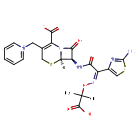
Structure for Ceftazidime (DB00438)

- Weight
- Average: 546.576
Monoisotopic: 546.099138468 - Chemical Formula
- C22H22N6O7S2
- Synonyms
- CAZ
- Ceftazidim
- Ceftazidima
- Ceftazidime
- Ceftazidime anhydrous
- Ceftazidimum
- External IDs
- GR 20263

Pharmacology
- Indication
Ceftazidime is indicated for the treatment of lower respiratory tract infections, skin and skin structure infections, urinary tract infections, bacterial septicemia, bone and joint infections, gynecologic infections, intra-abdominal infections (including peritonitis), and central nervous system infections (including meningitis) caused by susceptible bacteria.12
Ceftazidime is indicated in combination with avibactam to treat infections caused by susceptible Gram-negative organisms, including complicated intra-abdominal infections (cIAI), in conjunction with metronidazole, and complicated urinary tract infections (cUTI), including pyelonephritis, in patients aged three months and older. This combination is also indicated to treat hospital-acquired and ventilator-associated bacterial pneumonia (HABP/VABP) in patients aged 18 years and older.15
In all cases, to mitigate the risk of bacterial resistance and preserve clinical efficacy, ceftazidime should only be used for infections that are confirmed or strongly suspected to be caused by susceptible bacterial strains.12,15
 Reduce drug development failure ratesBuild, train, & validate machine-learning modelswith evidence-based and structured datasets.Build, train, & validate predictive machine-learning models with structured datasets.
- Associated Conditions
Indication Type Indication Combined Product Details Approval Level Age Group Patient Characteristics Dose Form Used in combination to treat Bacteremia Combination Product in combination with: Sodium carbonate (DB09460) •••••••••••• ••••••••• Treatment of Bacterial infection •••••••••••• Treatment of Bacterial septicemia •••••••••••• ••••••••• Treatment of Bone and joint infections •••••••••••• ••••••••• Used in combination to treat Bone and joint infections Combination Product in combination with: Sodium carbonate (DB09460) •••••••••••• ••••••••• - Contraindications & Blackbox Warnings
 Prevent Adverse Drug Events TodayTap into our Clinical API for life-saving information on contraindications & blackbox warnings, population restrictions, harmful risks, & more.Avoid life-threatening adverse drug events with our Clinical API
- Pharmacodynamics
Ceftazidime is a semisynthetic, broad-spectrum, third-generation cephalosporin antibiotic that is bactericidal through inhibition of enzymes responsible for cell-wall synthesis, primarily penicillin-binding protein 3 (PBP3).12 Among cephalosporins, ceftazidime is notable for its resistance to numerous β-lactamases and its broad spectrum of activity against Gram-negative bacteria, including Pseudomonas aeruginosa.4 However, it is less active than first- and second-generation cephalosporins against Staphylococcus aureus and other Gram-positive bacteria and also has low activity against anaerobes.4,9 Ceftazidime has confirmed activity against clinically relevant Gram-negative bacteria including Citrobacter spp., Enterobacter spp., Klebsiella spp., Proteus spp., Serratia spp., _Escherichia coli, Haemophilus influenzae, Neisseria meningitidis, Pseudomonas aeruginosa, and some Gram-positive bacteria including Staphylococcus spp. and Streptococcus spp. There are also in vitro data for ceftazidime efficacy against a wide variety of other bacteria, such as Acinetobacter baumannii and Neisseria gonorrhoeae, but no clear clinical studies to support the use of ceftazidime for infections caused by these bacteria.12
Although β-lactam antibiotics like ceftazidime are generally well tolerated, there remains a risk of serious acute hypersensitivity reactions, which is higher in patients with a known allergy to ceftazidime or any other β-lactam antibiotic. As with all antibiotics, ceftazidime may result in the overgrowth of non-susceptible organisms and potentially serious effects including Clostridium difficile-associated diarrhea (CDAD); CDAD should be considered in patients who develop diarrhea and, in confirmed cases, supportive care initiated immediately. Ceftazidime is primarily renally excreted such that high and prolonged serum concentrations can occur in patients with renal insufficiency, leading to seizures, nonconvulsive status epilepticus (NCSE), encephalopathy, coma, asterixis, neuromuscular excitability, and myoclonia. Treatment may lead to the development or induction of resistance with a risk of treatment failure. Periodic susceptibility testing should be considered, and monotherapy failure may necessitate the addition of another antibiotic such as an aminoglycoside. Cephalosporin use may decrease prothrombin activity, which may be improved by exogenous vitamin K. Inadvertent intra-arterial administration of ceftazidime may result in distal necrosis.12
- Mechanism of action
The bacterial cell wall, which is located at the periphery of Gram-positive bacteria and within the periplasm of Gram-negative bacteria, comprises a glycopeptide polymer synthesized through cross-linking of glycans to peptide stems on alternating saccharides, which is known commonly as peptidoglycan.1 Cell wall formation, recycling, and remodelling require numerous enzymes, including a family of enzymes with similar active site character despite distinct and sometimes overlapping roles as carboxypeptidases, endopeptidases, transpeptidases, and transglycosylases, known as "penicillin-binding proteins" (PBPs). The number of PBPs differs between bacteria, in which some are considered essential and others redundant. In general, inhibition of one or more essential PBPs results in impaired cell wall homeostasis, loss of cell integrity, and is ultimately bactericidal.1,2,3
Ceftazidime is a semisynthetic third-generation cephalosporin with broad activity against numerous Gram-negative and some Gram-positive bacteria.12 Like other β-lactam antibiotics, ceftazidime exhibits its bactericidal effect primarily through direct inhibition of specific PBPs in susceptible bacteria.4 In vitro experiments in Gram-negative bacteria such as Escherichia coli, Pseudomonas aeruginosa, Acinetobacter baumannii, and Klebsiella pneumoniae suggest that ceftazidime primarily binds to PBP3, with weaker binding to PBP1a/1b and PBP2 as well; although binding to other PBPs, such as PBP4, is detectable, the concentrations required are much greater than those achieved clinically.4,5,6,7,8 Similarly, ceftazidime showed binding to Staphylococcus aureus PBP 1, 2, and 3 with a much lower affinity for PBP4.5 Recent data for Mycobacterium abcessus suggest that ceftazidime can inhibit PonA1, PonA2, and PbpA at intermediate concentrations.3
Target Actions Organism APeptidoglycan synthase FtsI inhibitorEscherichia coli (strain K12) APenicillin-binding protein 1A inhibitorEscherichia coli (strain K12) APenicillin-binding protein 1B inhibitorEscherichia coli (strain K12) APenicillin-binding protein 2 inhibitorEscherichia coli (strain K12) UBeta-lactamase Toho-1 substrateEscherichia coli - Absorption
Ceftazidime administered intravenously in healthy males produced mean Cmax values of between 42 and 170 μg/mL for doses between 500 mg and 2 g, and are reached immediately following the end of the infusion period.12 The Cmax for 1 g of ceftazidime administered intramuscularly is attained approximately one hour following injection and is between 37 and 43 mg/L.4 Following intramuscular administration of 500 mg and 1 g of ceftazidime, the serum concentration remained above 4 μg/mL for six and eight hours, respectively.12
Ceftazidime Cmax and AUC show linear proportionality to the dose over the therapeutic range.4,12 In individuals with normal renal function, ceftazidime given intravenously every eight hours for 10 days as either 1 or 2 g doses showed no accumulation.12
- Volume of distribution
Ceftazidime has a volume of distribution of 15-20 L.4
- Protein binding
Ceftazidime plasma protein binding ranges from 5-22.8% (typically less than 10%) and is independent of concentration.4,12 Ceftazidime has been shown to bind human serum albumin.10,11
- Metabolism
Ceftazidime is not appreciably metabolized.4
- Route of elimination
Approximately 80% to 90% of an intramuscular or intravenous dose of ceftazidime is excreted unchanged by the kidneys over a 24-hour period. When administered intravenously, 50% of the dose appears in the urine within two hours, with another 32% of the dose appearing by eight hours post-administration.12
- Half-life
Ceftazidime has an elimination half-life of 1.5-2.8 hours in healthy subjects.4,12 As ceftazidime is primarily renally excreted, its half-life is significantly prolonged in patients with renal impairment.12 In patients with creatinine clearance < 12 mL/min, the half-life is prolonged to between 14 and 30 hours.4
- Clearance
The mean renal clearance of ceftazidime in healthy subjects ranges from 72 to 141 mL/min while the calculated plasma clearance is approximately 115 mL/min.4,12
- Adverse Effects
 Improve decision support & research outcomesWith structured adverse effects data, including: blackbox warnings, adverse reactions, warning & precautions, & incidence rates. View sample adverse effects data in our new Data Library!Improve decision support & research outcomes with our structured adverse effects data.
- Toxicity
Ceftazidime overdosage has occurred in patients with renal failure. Reactions included seizure activity, encephalopathy, asterixis, neuromuscular excitability, and coma. Patients who receive an acute overdosage should be carefully observed and given supportive treatment. In the presence of renal insufficiency, hemodialysis or peritoneal dialysis may aid in the removal of ceftazidime from the body.12
- Pathways
- Not Available
- Pharmacogenomic Effects/ADRs
- Not Available
Interactions
- Drug Interactions
- This information should not be interpreted without the help of a healthcare provider. If you believe you are experiencing an interaction, contact a healthcare provider immediately. The absence of an interaction does not necessarily mean no interactions exist.
Drug Interaction Integrate drug-drug
interactions in your softwareAbacavir Ceftazidime may decrease the excretion rate of Abacavir which could result in a higher serum level. Abciximab The therapeutic efficacy of Abciximab can be decreased when used in combination with Ceftazidime. Aceclofenac The risk or severity of nephrotoxicity can be increased when Ceftazidime is combined with Aceclofenac. Acemetacin The risk or severity of nephrotoxicity can be increased when Ceftazidime is combined with Acemetacin. Acenocoumarol The risk or severity of bleeding can be increased when Ceftazidime is combined with Acenocoumarol. - Food Interactions
- No interactions found.
Products
 Drug product information from 10+ global regionsOur datasets provide approved product information including:dosage, form, labeller, route of administration, and marketing period.Access drug product information from over 10 global regions.
- Product Ingredients
Ingredient UNII CAS InChI Key Ceftazidime pentahydrate 9M416Z9QNR 78439-06-2 NMVPEQXCMGEDNH-TZVUEUGBSA-N Ceftazidime sodium CMC30V039K 73547-61-2 JEEWDSDYUSEQML-ROMZVAKDSA-M - International/Other Brands
- Cefzim (Pharco B International) / Ceptaz / Fortum (GlaxoSmithKline) / Tazidime / Veltadim (Novell)
- Brand Name Prescription Products
Name Dosage Strength Route Labeller Marketing Start Marketing End Region Image Ceftazidime and Dextrose Injection, solution 1 g/50mL Intravenous B. Braun Medical Inc. 2011-06-13 Not applicable US 
Ceftazidime and Dextrose Injection, solution 2 g/50mL Intravenous B. Braun Medical Inc. 2011-06-13 Not applicable US Ceftazidime for Injection BP Powder, for solution 2 g / vial Intravenous Sterimax Inc 2015-05-29 Not applicable Canada 
Ceftazidime for Injection BP Powder, for solution 1 g / vial Intramuscular; Intravenous Sterimax Inc 2015-05-28 Not applicable Canada Ceftazidime for Injection BP Powder, for solution 6 g / vial Intravenous Sterimax Inc 2015-06-08 Not applicable Canada - Generic Prescription Products
Name Dosage Strength Route Labeller Marketing Start Marketing End Region Image Ceftazidime Injection, powder, for solution 1 g/1 Intramuscular; Intravenous Sandoz 2008-05-15 Not applicable US Ceftazidime Injection, powder, for solution 1 g/1 Intramuscular; Intravenous WG Critical Care, LLC 2013-01-31 Not applicable US Ceftazidime Injection, powder, for solution 2 g/1 Intravenous Pfizer Laboratories, Division of Pfizer Inc 2010-05-28 2012-10-31 US Ceftazidime Injection, powder, for solution 2 g/1 Intravenous Sagent Pharmaceuticals 2015-07-01 2023-01-31 US Ceftazidime Injection, powder, for solution 2 g/1 Intravenous Aurobindo Pharma 2010-05-28 2012-10-31 US - Mixture Products
Name Ingredients Dosage Route Labeller Marketing Start Marketing End Region Image Avycaz Ceftazidime pentahydrate (2 g/1) + Avibactam sodium (0.5 g/1) Powder, for solution Intravenous Allergan, Inc. 2014-12-26 Not applicable US CEFAZIME FOR INJECTION 1 g/vial Ceftazidime pentahydrate (1 g) + Sodium carbonate (121 mg) Injection Intramuscular; Intravenous ZYFAS MEDICAL CO 2001-03-26 Not applicable Singapore 
CEFTAZIDIMA QILU Ceftazidime pentahydrate (500 MG) + Sodium carbonate (64 mg) Injection, powder, for solution Parenteral Qilu Pharma Spain S.L. 2019-07-11 2023-02-09 Italy 
CEFTAZIDIMA QILU Ceftazidime pentahydrate (1 G) + Sodium carbonate (128 mg) Injection, powder, for solution Parenteral Qilu Pharma Spain S.L. 2019-07-11 Not applicable Italy CEFTAZIDIMA QILU Ceftazidime pentahydrate (1 G) + Sodium carbonate (128 mg) Injection, powder, for solution Parenteral Qilu Pharma Spain S.L. 2019-07-11 Not applicable Italy
Categories
- ATC Codes
- J01DD02 — Ceftazidime
- Drug Categories
- Amides
- Anti-Bacterial Agents
- Anti-Infective Agents
- Antibacterials for Systemic Use
- Antiinfectives for Systemic Use
- beta Lactam Antibiotics
- beta-Lactams
- Cephalosporins
- Drugs that are Mainly Renally Excreted
- Heterocyclic Compounds, Fused-Ring
- Lactams
- Nephrotoxic agents
- OAT1/SLC22A6 inhibitors
- Sulfur Compounds
- Thiazines
- Third-Generation Cephalosporins
- Chemical TaxonomyProvided by Classyfire
- Description
- This compound belongs to the class of organic compounds known as cephalosporins. These are compounds containing a 1,2-thiazine fused to a 2-azetidinone to for a oxo-5-thia-1-azabicyclo[4.2.0]oct-2-ene-2-carboxylic acid moiety or a derivative thereof.
- Kingdom
- Organic compounds
- Super Class
- Organoheterocyclic compounds
- Class
- Lactams
- Sub Class
- Beta lactams
- Direct Parent
- Cephalosporins
- Alternative Parents
- N-acyl-alpha amino acids and derivatives / 2,4-disubstituted thiazoles / 1,3-thiazines / Pyridinium derivatives / 2-amino-1,3-thiazoles / Dicarboxylic acids and derivatives / Tertiary carboxylic acid amides / Heteroaromatic compounds / Secondary carboxylic acid amides / Amino acids show 13 more
- Substituents
- 1,3-thiazol-2-amine / 2,4-disubstituted 1,3-thiazole / Alpha-amino acid or derivatives / Amine / Amino acid / Amino acid or derivatives / Aromatic heteropolycyclic compound / Azacycle / Azetidine / Azole show 28 more
- Molecular Framework
- Aromatic heteropolycyclic compounds
- External Descriptors
- cephalosporin, oxime O-ether (CHEBI:3508)
- Affected organisms
- Enteric bacteria and other eubacteria
Chemical Identifiers
- UNII
- DZR1ENT301
- CAS number
- 72558-82-8
- InChI Key
- ORFOPKXBNMVMKC-DWVKKRMSSA-N
- InChI
- InChI=1S/C22H22N6O7S2/c1-22(2,20(33)34)35-26-13(12-10-37-21(23)24-12)16(29)25-14-17(30)28-15(19(31)32)11(9-36-18(14)28)8-27-6-4-3-5-7-27/h3-7,10,14,18H,8-9H2,1-2H3,(H4-,23,24,25,29,31,32,33,34)/b26-13-/t14-,18-/m1/s1
- IUPAC Name
- 1-{[(6R,7R)-7-[(2Z)-2-(2-amino-1,3-thiazol-4-yl)-2-[(1-carboxy-1-methylethoxy)imino]acetamido]-2-carboxylato-8-oxo-5-thia-1-azabicyclo[4.2.0]oct-2-en-3-yl]methyl}pyridin-1-ium
- SMILES
- [O-]C(=O)C1=C(CS[C@]2([H])[C@H](NC(=O)C(=N/OC(C)(C)C(O)=O)\C3=CSC(N)=N3)C(=O)N12)C[N+]1=CC=CC=C1
References
- Synthesis Reference
Ronald C. Browning, Melvin G. Pleiss, Jr., "Crystallization process for ceftazidime derivative." U.S. Patent US4659813, issued May, 1982.
US4659813- General References
- Fisher JF, Mobashery S: Constructing and deconstructing the bacterial cell wall. Protein Sci. 2020 Mar;29(3):629-646. doi: 10.1002/pro.3737. Epub 2019 Nov 20. [Article]
- Bush K, Bradford PA: beta-Lactams and beta-Lactamase Inhibitors: An Overview. Cold Spring Harb Perspect Med. 2016 Aug 1;6(8). pii: cshperspect.a025247. doi: 10.1101/cshperspect.a025247. [Article]
- Sayed ARM, Shah NR, Basso KB, Kamat M, Jiao Y, Moya B, Sutaria DS, Lang Y, Tao X, Liu W, Shin E, Zhou J, Werkman C, Louie A, Drusano GL, Bulitta JB: First Penicillin-Binding Protein Occupancy Patterns for 15 beta-Lactams and beta-Lactamase Inhibitors in Mycobacterium abscessus. Antimicrob Agents Chemother. 2020 Dec 16;65(1). pii: AAC.01956-20. doi: 10.1128/AAC.01956-20. Print 2020 Dec 16. [Article]
- Richards DM, Brogden RN: Ceftazidime. A review of its antibacterial activity, pharmacokinetic properties and therapeutic use. Drugs. 1985 Feb;29(2):105-61. doi: 10.2165/00003495-198529020-00002. [Article]
- Hayes MV, Orr DC: Mode of action of ceftazidime: affinity for the penicillin-binding proteins of Escherichia coli K12, Pseudomonas aeruginosa and Staphylococcus aureus. J Antimicrob Chemother. 1983 Aug;12(2):119-26. [Article]
- Davies TA, Shang W, Bush K, Flamm RK: Affinity of doripenem and comparators to penicillin-binding proteins in Escherichia coli and Pseudomonas aeruginosa. Antimicrob Agents Chemother. 2008 Apr;52(4):1510-2. doi: 10.1128/AAC.01529-07. Epub 2008 Feb 4. [Article]
- Penwell WF, Shapiro AB, Giacobbe RA, Gu RF, Gao N, Thresher J, McLaughlin RE, Huband MD, DeJonge BL, Ehmann DE, Miller AA: Molecular mechanisms of sulbactam antibacterial activity and resistance determinants in Acinetobacter baumannii. Antimicrob Agents Chemother. 2015 Mar;59(3):1680-9. doi: 10.1128/AAC.04808-14. Epub 2015 Jan 5. [Article]
- Sutaria DS, Moya B, Green KB, Kim TH, Tao X, Jiao Y, Louie A, Drusano GL, Bulitta JB: First Penicillin-Binding Protein Occupancy Patterns of beta-Lactams and beta-Lactamase Inhibitors in Klebsiella pneumoniae. Antimicrob Agents Chemother. 2018 May 25;62(6). pii: AAC.00282-18. doi: 10.1128/AAC.00282-18. Print 2018 Jun. [Article]
- Shirley M: Ceftazidime-Avibactam: A Review in the Treatment of Serious Gram-Negative Bacterial Infections. Drugs. 2018 Apr;78(6):675-692. doi: 10.1007/s40265-018-0902-x. [Article]
- Nerli B, Romanini D, Pico G: Structural specificity requirements in the binding of beta lactam antibiotics to human serum albumin. Chem Biol Interact. 1997 May 2;104(2-3):179-202. [Article]
- Siddiqi MK, Alam P, Chaturvedi SK, Nusrat S, Ajmal MR, Abdelhameed AS, Khan RH: Probing the interaction of cephalosporin antibiotic-ceftazidime with human serum albumin: A biophysical investigation. Int J Biol Macromol. 2017 Dec;105(Pt 1):292-299. doi: 10.1016/j.ijbiomac.2017.07.036. Epub 2017 Jul 8. [Article]
- FDA Approved Drug Products: FORTAZ (ceftazidime) injection [Link]
- FDA Approved Drug Products: AVYCAZ (ceftazidime and avibactam) injection [Link]
- Cayman Chemical: ceftazidime MSDS [Link]
- FDA Approved Drug Products: AVYCAZ (ceftazidime and avibactam) injection for intravenous use (December 2022) [Link]
- External Links
- Human Metabolome Database
- HMDB0014582
- KEGG Drug
- D07654
- KEGG Compound
- C06889
- PubChem Compound
- 5481173
- PubChem Substance
- 46506143
- ChemSpider
- 4587145
- BindingDB
- 50420259
- 1545984
- ChEBI
- 3508
- ChEMBL
- CHEMBL44354
- Therapeutic Targets Database
- DAP000433
- PharmGKB
- PA448861
- RxList
- RxList Drug Page
- Drugs.com
- Drugs.com Drug Page
- Wikipedia
- Ceftazidime
- FDA label
- Download (360 KB)
- MSDS
- Download (28 KB)
Clinical Trials
- Clinical Trials
Phase Status Purpose Conditions Count 4 Completed Other Cystic Fibrosis (CF) 1 4 Completed Prevention Pancreatitis 1 4 Completed Prevention Peritoneal dialysis therapy 1 4 Completed Treatment Acute Tubulo-Interstitial Nephritis / Bacteremia / Hospital-Acquired Pneumonia / Intraabdominal Infections / Urinary Tract Infection / Ventilator Associated Bacterial Pneumonia (VABP) 1 4 Completed Treatment Antibiotic Reaction / Febrile Neutropenia / Leukemias / Pediatric Cancer 1
Pharmacoeconomics
- Manufacturers
- Acs dobfar spa
- Aurobindo pharma ltd
- Wockhardt ltd
- Glaxosmithkline
- Hospira inc
- Eli lilly and co
- Baxter healthcare corp
- Packagers
- Antibioticos Ltd.
- Aurobindo Pharma Ltd.
- Baxter International Inc.
- BMH Ltd.
- Cardinal Health
- GlaxoSmithKline Inc.
- Hospira Inc.
- Medisca Inc.
- Sagent Pharmaceuticals
- Sandoz
- Wockhardt Ltd.
- Dosage Forms
Form Route Strength Solution Parenteral 1000 mg Powder, for solution Intravenous Injection, powder, for solution 1 g Injection Intramuscular; Intravenous 1 gr Injection Intramuscular; Intravenous 2 gr Injection Intramuscular; Intravenous 1 g Injection, powder, for solution Parenteral 1 g Injection, powder, for solution Parenteral Injection, powder, for solution Parenteral 2 g Injection, powder, for solution Parenteral 500 mg Solution Parenteral 1.165 g Injection, powder, for solution Intramuscular 1 G/3ML Injection, powder, for solution Intramuscular 250 MG/1ML Injection, powder, for solution Intramuscular 500 MG/1.5ML Injection, powder, for solution Intravenous 1 G/10ML Powder, for solution Parenteral 2 G Injection, powder, for solution Intramuscular; Parenteral 1 G/3ML Injection, powder, for solution Intramuscular; Parenteral 250 MG/1ML Injection, powder, for solution Intramuscular; Parenteral 500 MG/1.5ML Injection, powder, for solution Intravenous; Parenteral 1 G/10ML Injection, powder, for solution 1000 MG Injection, powder, for solution 2000 MG Injection, powder, for solution Intramuscular 250 MG/ML Injection, powder, for solution Intramuscular; Parenteral 250 MG/ML Injection, powder, for solution Parenteral Injection, powder, for solution Intramuscular; Parenteral 1 G Injection, powder, for solution Intravenous; Parenteral 1 G Powder, for solution 2 G Injection, powder, for solution Intramuscular; Intravenous Injection, powder, for solution Intramuscular; Intravenous 1 g/1 Injection, powder, for solution Intramuscular; Intravenous 500 mg/1 Injection, powder, for solution Intravenous 2 g/1 Injection, powder, for solution Intravenous 200 mg/1mL Injection, powder, for solution Intravenous 6 g/100mL Injection, powder, for solution Intravenous 6 g/30mL Injection, powder, for solution Intramuscular; Intravenous 1.0 g Injection, solution Intravenous 1 g/50mL Injection, solution Intravenous 2 g/50mL Powder, for solution Intravenous 3 g / vial Powder, for solution Intravenous 6 g / vial Injection, powder, for solution Intramuscular; Intravenous 1000 mgvial Injection, powder, for solution Intravenous 2000 mg Injection Injection, powder, for solution Powder, for solution Intravenous 10 g / vial Powder, for solution Intramuscular; Intravenous 1 g / vial Powder, for solution Intravenous 2 g / vial Solution Parenteral 1.000 g Solution Intravenous 2.000 mL Injection, powder, for solution Intramuscular; Intravenous 100 mg/1mL Injection, powder, for solution Intramuscular; Intravenous 111 mg/1mL Injection, powder, for solution Intramuscular; Intravenous 170 mg/1mL Injection, powder, for solution Intramuscular; Intravenous 20 mg/1mL Injection, powder, for solution Intramuscular; Intravenous 200 mg/1mL Injection, powder, for solution Intramuscular; Intravenous 56 mg/1mL Injection, powder, lyophilized, for solution Intramuscular; Intravenous 1 g/1 Injection, powder, lyophilized, for solution Intramuscular; Intravenous 2 g/1 Injection, solution Intravenous 20 mg/1mL Injection, solution Intravenous 40 mg/1mL Powder, for solution Intramuscular; Intravenous 500 mg / vial Injection, powder, for solution Intramuscular; Intravenous 1 g Injection, powder, for solution Intravenous 2 g Injection Intramuscular; Intravenous Powder Intramuscular 250 MG/1ML Powder Intravenous 1 G/10ML Powder, for solution 1 G/100ML Powder, for solution 1 G Powder, for solution 2 G/100ML Injection Intravenous 0.5 g Injection Intravenous 1 g Injection Intravenous 2 g Injection, powder, for solution Intramuscular Injection Intramuscular; Intravenous 1 G Injection, powder, for solution Intramuscular; Intravenous 500 mg Injection, powder, for solution Intravenous Powder, for solution Injection, powder, for solution Intravenous 1 g Injection, powder, for solution Parenteral 1 G/3ML Injection, powder, for solution Parenteral 250 MG/1ML Injection, powder, for solution Parenteral 500 MG/1.5ML Injection, powder, for solution Intravenous 1 g/1 Injection, powder, for solution Intravenous 6 g/1 Powder, for solution Intravenous 1 g / vial Powder Intramuscular; Intravenous 500 mg / vial Injection, powder, for solution Intramuscular; Intravenous 1 g/vial Injection, powder, for solution Injection, powder, for solution Intravenous Injection, powder, for solution Intravenous; Parenteral Powder, for solution Intravenous 0.5 g Solution Intravenous Injection, powder, for solution Intramuscular; Intravenous 0.5 g Injection, solution Intravenous 2 g Powder 500 mg/1vial - Prices
Unit description Cost Unit Fortaz 6 g/vial 150.11USD vial Ceftazidime 6 gm vial 97.05USD vial Fortaz 6 gm vial 82.8USD vial Fortaz 2 g/vial 50.01USD vial Tazicef 6 gram vial 29.88USD vial Fortaz 2 gm add-vantage vial 28.93USD vial Fortaz 2 gm vial 28.45USD vial Fortaz 1 g/vial 25.44USD vial Ceftazidime 2 gm vial 19.97USD vial Fortaz 1 gm add-vantage vial 14.71USD vial Fortaz 1 gm vial 14.23USD vial Tazicef 2 gram vial 10.66USD vial Ceftazidime 1 gm vial 10.46USD vial Ceftazidime-sodium carb powder 6.27USD g Tazicef 1 gram vial 4.57USD vial Fortaz-iso-osmot 2 gm/50 ml 0.62USD ml Fortaz-iso-osmotic 1 gm/50 ml 0.34USD ml DrugBank does not sell nor buy drugs. Pricing information is supplied for informational purposes only.- Patents
Patent Number Pediatric Extension Approved Expires (estimated) Region US7112592 No 2006-09-26 2022-02-24 US US8178554 No 2012-05-15 2021-07-24 US US7612087 No 2009-11-03 2026-11-12 US US8471025 No 2013-06-25 2031-08-12 US US8835455 No 2014-09-16 2030-10-08 US US8969566 No 2015-03-03 2032-06-15 US US9284314 No 2016-03-15 2032-06-15 US US9695122 No 2017-07-04 2032-06-15 US
Properties
- State
- Solid
- Experimental Properties
Property Value Source melting point (°C) 103-113 O'Callaghan, C.H., Livermore, D.G.H. and Newall, C.E.; British Patent 2,025,398; January 23, 1980; assigned to Glaxo Group Ltd. logP -1.60 HANSCH,C ET AL. (1995) - Predicted Properties
Property Value Source Water Solubility 0.00573 mg/mL ALOGPS logP -1.2 ALOGPS logP -4.2 Chemaxon logS -5 ALOGPS pKa (Strongest Acidic) 2.42 Chemaxon pKa (Strongest Basic) 4.02 Chemaxon Physiological Charge -1 Chemaxon Hydrogen Acceptor Count 10 Chemaxon Hydrogen Donor Count 3 Chemaxon Polar Surface Area 191.22 Å2 Chemaxon Rotatable Bond Count 9 Chemaxon Refractivity 143.88 m3·mol-1 Chemaxon Polarizability 51.03 Å3 Chemaxon Number of Rings 4 Chemaxon Bioavailability 1 Chemaxon Rule of Five No Chemaxon Ghose Filter No Chemaxon Veber's Rule No Chemaxon MDDR-like Rule Yes Chemaxon - Predicted ADMET Features
Property Value Probability Human Intestinal Absorption - 0.8406 Blood Brain Barrier - 0.9857 Caco-2 permeable - 0.7235 P-glycoprotein substrate Substrate 0.8593 P-glycoprotein inhibitor I Non-inhibitor 0.8782 P-glycoprotein inhibitor II Inhibitor 0.6684 Renal organic cation transporter Non-inhibitor 0.8311 CYP450 2C9 substrate Non-substrate 0.8404 CYP450 2D6 substrate Non-substrate 0.8155 CYP450 3A4 substrate Substrate 0.5897 CYP450 1A2 substrate Non-inhibitor 0.8112 CYP450 2C9 inhibitor Non-inhibitor 0.7396 CYP450 2D6 inhibitor Non-inhibitor 0.8758 CYP450 2C19 inhibitor Non-inhibitor 0.7009 CYP450 3A4 inhibitor Non-inhibitor 0.8354 CYP450 inhibitory promiscuity Low CYP Inhibitory Promiscuity 0.7222 Ames test Non AMES toxic 0.7979 Carcinogenicity Non-carcinogens 0.8252 Biodegradation Not ready biodegradable 0.9951 Rat acute toxicity 1.6048 LD50, mol/kg Not applicable hERG inhibition (predictor I) Weak inhibitor 0.9938 hERG inhibition (predictor II) Non-inhibitor 0.659
Spectra
- Mass Spec (NIST)
- Not Available
- Spectra
- Chromatographic Properties
Collision Cross Sections (CCS)
Adduct CCS Value (Å2) Source type Source [M-H]- 214.267802 predictedDarkChem Lite v0.1.0 [M-H]- 218.78352 predictedDeepCCS 1.0 (2019) [M+H]+ 213.063202 predictedDarkChem Lite v0.1.0 [M+H]+ 220.71751 predictedDeepCCS 1.0 (2019) [M+Na]+ 214.182702 predictedDarkChem Lite v0.1.0 [M+Na]+ 226.45793 predictedDeepCCS 1.0 (2019)
Targets

- Kind
- Protein
- Organism
- Escherichia coli (strain K12)
- Pharmacological action
- Yes
- Actions
- Inhibitor
- Curator comments
- The above was chosen as a representative target protein in a representative bacterium, and does not encompass all proteins/bacteria affected by this agent.
- General Function
- Peptidoglycan glycosyltransferase activity
- Specific Function
- Essential cell division protein that is required for the synthesis of peptidoglycan at the division septum (PubMed:1103132, PubMed:9614966). Catalyzes the synthesis of cross-linked peptidoglycan fr...
- Gene Name
- ftsI
- Uniprot ID
- P0AD68
- Uniprot Name
- Peptidoglycan synthase FtsI
- Molecular Weight
- 63876.925 Da
References
- Hayes MV, Orr DC: Mode of action of ceftazidime: affinity for the penicillin-binding proteins of Escherichia coli K12, Pseudomonas aeruginosa and Staphylococcus aureus. J Antimicrob Chemother. 1983 Aug;12(2):119-26. [Article]
- Richards DM, Brogden RN: Ceftazidime. A review of its antibacterial activity, pharmacokinetic properties and therapeutic use. Drugs. 1985 Feb;29(2):105-61. doi: 10.2165/00003495-198529020-00002. [Article]
- Davies TA, Shang W, Bush K, Flamm RK: Affinity of doripenem and comparators to penicillin-binding proteins in Escherichia coli and Pseudomonas aeruginosa. Antimicrob Agents Chemother. 2008 Apr;52(4):1510-2. doi: 10.1128/AAC.01529-07. Epub 2008 Feb 4. [Article]
- Penwell WF, Shapiro AB, Giacobbe RA, Gu RF, Gao N, Thresher J, McLaughlin RE, Huband MD, DeJonge BL, Ehmann DE, Miller AA: Molecular mechanisms of sulbactam antibacterial activity and resistance determinants in Acinetobacter baumannii. Antimicrob Agents Chemother. 2015 Mar;59(3):1680-9. doi: 10.1128/AAC.04808-14. Epub 2015 Jan 5. [Article]
- Sutaria DS, Moya B, Green KB, Kim TH, Tao X, Jiao Y, Louie A, Drusano GL, Bulitta JB: First Penicillin-Binding Protein Occupancy Patterns of beta-Lactams and beta-Lactamase Inhibitors in Klebsiella pneumoniae. Antimicrob Agents Chemother. 2018 May 25;62(6). pii: AAC.00282-18. doi: 10.1128/AAC.00282-18. Print 2018 Jun. [Article]
- Kind
- Protein
- Organism
- Escherichia coli (strain K12)
- Pharmacological action
- Yes
- Actions
- Inhibitor
- Curator comments
- The above was chosen as a representative target protein in a representative bacterium, and does not encompass all proteins/bacteria affected by this agent.
- General Function
- Serine-type d-ala-d-ala carboxypeptidase activity
- Specific Function
- Cell wall formation. Synthesis of cross-linked peptidoglycan from the lipid intermediates. The enzyme has a penicillin-insensitive transglycosylase N-terminal domain (formation of linear glycan str...
- Gene Name
- mrcA
- Uniprot ID
- P02918
- Uniprot Name
- Penicillin-binding protein 1A
- Molecular Weight
- 93635.545 Da
References
- Hayes MV, Orr DC: Mode of action of ceftazidime: affinity for the penicillin-binding proteins of Escherichia coli K12, Pseudomonas aeruginosa and Staphylococcus aureus. J Antimicrob Chemother. 1983 Aug;12(2):119-26. [Article]
- Richards DM, Brogden RN: Ceftazidime. A review of its antibacterial activity, pharmacokinetic properties and therapeutic use. Drugs. 1985 Feb;29(2):105-61. doi: 10.2165/00003495-198529020-00002. [Article]
- Davies TA, Shang W, Bush K, Flamm RK: Affinity of doripenem and comparators to penicillin-binding proteins in Escherichia coli and Pseudomonas aeruginosa. Antimicrob Agents Chemother. 2008 Apr;52(4):1510-2. doi: 10.1128/AAC.01529-07. Epub 2008 Feb 4. [Article]
- Penwell WF, Shapiro AB, Giacobbe RA, Gu RF, Gao N, Thresher J, McLaughlin RE, Huband MD, DeJonge BL, Ehmann DE, Miller AA: Molecular mechanisms of sulbactam antibacterial activity and resistance determinants in Acinetobacter baumannii. Antimicrob Agents Chemother. 2015 Mar;59(3):1680-9. doi: 10.1128/AAC.04808-14. Epub 2015 Jan 5. [Article]
- Sutaria DS, Moya B, Green KB, Kim TH, Tao X, Jiao Y, Louie A, Drusano GL, Bulitta JB: First Penicillin-Binding Protein Occupancy Patterns of beta-Lactams and beta-Lactamase Inhibitors in Klebsiella pneumoniae. Antimicrob Agents Chemother. 2018 May 25;62(6). pii: AAC.00282-18. doi: 10.1128/AAC.00282-18. Print 2018 Jun. [Article]
- Kind
- Protein
- Organism
- Escherichia coli (strain K12)
- Pharmacological action
- Yes
- Actions
- Inhibitor
- Curator comments
- The above was chosen as a representative target protein in a representative bacterium, and does not encompass all proteins/bacteria affected by this agent.
- General Function
- Serine-type d-ala-d-ala carboxypeptidase activity
- Specific Function
- Cell wall formation. Synthesis of cross-linked peptidoglycan from the lipid intermediates. The enzyme has a penicillin-insensitive transglycosylase N-terminal domain (formation of linear glycan str...
- Gene Name
- mrcB
- Uniprot ID
- P02919
- Uniprot Name
- Penicillin-binding protein 1B
- Molecular Weight
- 94291.875 Da
References
- Hayes MV, Orr DC: Mode of action of ceftazidime: affinity for the penicillin-binding proteins of Escherichia coli K12, Pseudomonas aeruginosa and Staphylococcus aureus. J Antimicrob Chemother. 1983 Aug;12(2):119-26. [Article]
- Richards DM, Brogden RN: Ceftazidime. A review of its antibacterial activity, pharmacokinetic properties and therapeutic use. Drugs. 1985 Feb;29(2):105-61. doi: 10.2165/00003495-198529020-00002. [Article]
- Davies TA, Shang W, Bush K, Flamm RK: Affinity of doripenem and comparators to penicillin-binding proteins in Escherichia coli and Pseudomonas aeruginosa. Antimicrob Agents Chemother. 2008 Apr;52(4):1510-2. doi: 10.1128/AAC.01529-07. Epub 2008 Feb 4. [Article]
- Penwell WF, Shapiro AB, Giacobbe RA, Gu RF, Gao N, Thresher J, McLaughlin RE, Huband MD, DeJonge BL, Ehmann DE, Miller AA: Molecular mechanisms of sulbactam antibacterial activity and resistance determinants in Acinetobacter baumannii. Antimicrob Agents Chemother. 2015 Mar;59(3):1680-9. doi: 10.1128/AAC.04808-14. Epub 2015 Jan 5. [Article]
- Sutaria DS, Moya B, Green KB, Kim TH, Tao X, Jiao Y, Louie A, Drusano GL, Bulitta JB: First Penicillin-Binding Protein Occupancy Patterns of beta-Lactams and beta-Lactamase Inhibitors in Klebsiella pneumoniae. Antimicrob Agents Chemother. 2018 May 25;62(6). pii: AAC.00282-18. doi: 10.1128/AAC.00282-18. Print 2018 Jun. [Article]
- Kind
- Protein
- Organism
- Escherichia coli (strain K12)
- Pharmacological action
- Yes
- Actions
- Inhibitor
- Curator comments
- The above was chosen as a representative target protein in a representative bacterium, and does not encompass all proteins/bacteria affected by this agent.
- General Function
- Serine-type d-ala-d-ala carboxypeptidase activity
- Specific Function
- Cell wall formation; PBP-2 is responsible for the determination of the rod shape of the cell. It synthesizes cross-linked peptidoglycan from lipid intermediates.
- Gene Name
- mrdA
- Uniprot ID
- P0AD65
- Uniprot Name
- Penicillin-binding protein 2
- Molecular Weight
- 70856.1 Da
References
- Hayes MV, Orr DC: Mode of action of ceftazidime: affinity for the penicillin-binding proteins of Escherichia coli K12, Pseudomonas aeruginosa and Staphylococcus aureus. J Antimicrob Chemother. 1983 Aug;12(2):119-26. [Article]
- Richards DM, Brogden RN: Ceftazidime. A review of its antibacterial activity, pharmacokinetic properties and therapeutic use. Drugs. 1985 Feb;29(2):105-61. doi: 10.2165/00003495-198529020-00002. [Article]
- Davies TA, Shang W, Bush K, Flamm RK: Affinity of doripenem and comparators to penicillin-binding proteins in Escherichia coli and Pseudomonas aeruginosa. Antimicrob Agents Chemother. 2008 Apr;52(4):1510-2. doi: 10.1128/AAC.01529-07. Epub 2008 Feb 4. [Article]
- Penwell WF, Shapiro AB, Giacobbe RA, Gu RF, Gao N, Thresher J, McLaughlin RE, Huband MD, DeJonge BL, Ehmann DE, Miller AA: Molecular mechanisms of sulbactam antibacterial activity and resistance determinants in Acinetobacter baumannii. Antimicrob Agents Chemother. 2015 Mar;59(3):1680-9. doi: 10.1128/AAC.04808-14. Epub 2015 Jan 5. [Article]
- Sutaria DS, Moya B, Green KB, Kim TH, Tao X, Jiao Y, Louie A, Drusano GL, Bulitta JB: First Penicillin-Binding Protein Occupancy Patterns of beta-Lactams and beta-Lactamase Inhibitors in Klebsiella pneumoniae. Antimicrob Agents Chemother. 2018 May 25;62(6). pii: AAC.00282-18. doi: 10.1128/AAC.00282-18. Print 2018 Jun. [Article]
- Kind
- Protein
- Organism
- Escherichia coli
- Pharmacological action
- Unknown
- Actions
- Substrate
- General Function
- Beta-lactamase activity
- Specific Function
- Has strong cefotaxime-hydrolyzing activity.
- Gene Name
- bla
- Uniprot ID
- Q47066
- Uniprot Name
- Beta-lactamase Toho-1
- Molecular Weight
- 31446.6 Da
References
- Ishii Y, Ohno A, Taguchi H, Imajo S, Ishiguro M, Matsuzawa H: Cloning and sequence of the gene encoding a cefotaxime-hydrolyzing class A beta-lactamase isolated from Escherichia coli. Antimicrob Agents Chemother. 1995 Oct;39(10):2269-75. [Article]
Carriers
- Kind
- Protein
- Organism
- Humans
- Pharmacological action
- No
- Actions
- Binder
- General Function
- Toxic substance binding
- Specific Function
- Serum albumin, the main protein of plasma, has a good binding capacity for water, Ca(2+), Na(+), K(+), fatty acids, hormones, bilirubin and drugs. Its main function is the regulation of the colloid...
- Gene Name
- ALB
- Uniprot ID
- P02768
- Uniprot Name
- Serum albumin
- Molecular Weight
- 69365.94 Da
References
- Nerli B, Romanini D, Pico G: Structural specificity requirements in the binding of beta lactam antibiotics to human serum albumin. Chem Biol Interact. 1997 May 2;104(2-3):179-202. [Article]
- Siddiqi MK, Alam P, Chaturvedi SK, Nusrat S, Ajmal MR, Abdelhameed AS, Khan RH: Probing the interaction of cephalosporin antibiotic-ceftazidime with human serum albumin: A biophysical investigation. Int J Biol Macromol. 2017 Dec;105(Pt 1):292-299. doi: 10.1016/j.ijbiomac.2017.07.036. Epub 2017 Jul 8. [Article]
Transporters
- Kind
- Protein
- Organism
- Humans
- Pharmacological action
- Unknown
- Actions
- Inhibitor
- Curator comments
- A study using cloned rat OAT1 transporter expressed in oocytes suggested that ceftazidime could inhibit OAT1, yet prescribing information for avibactam/ceftazidime states that ceftazidime is not a clinically relevant OAT1 inhibitor.
- General Function
- Sodium-independent organic anion transmembrane transporter activity
- Specific Function
- Involved in the renal elimination of endogenous and exogenous organic anions. Functions as organic anion exchanger when the uptake of one molecule of organic anion is coupled with an efflux of one ...
- Gene Name
- SLC22A6
- Uniprot ID
- Q4U2R8
- Uniprot Name
- Solute carrier family 22 member 6
- Molecular Weight
- 61815.78 Da
References
- Jariyawat S, Sekine T, Takeda M, Apiwattanakul N, Kanai Y, Sophasan S, Endou H: The interaction and transport of beta-lactam antibiotics with the cloned rat renal organic anion transporter 1. J Pharmacol Exp Ther. 1999 Aug;290(2):672-7. [Article]
- FDA Approved Drug Products: AVYCAZ (ceftazidime and avibactam) injection [Link]

Drug created at June 13, 2005 13:24 / Updated at May 09, 2024 09:57