Identification
- Summary
Levothyroxine is a synthetic T4 hormone used to treat hypothyroidism that can be used along with surgery and radioiodine therapy to manage thyrotropin-dependent well-differentiated thyroid cancer.
- Brand Names
- Eltroxin, Ermeza, Euthyrox, Levo-T, Levothroid, Levoxyl, Np Thyroid, Synthroid, Thyquidity, Tirosint, Unithroid
- Generic Name
- Levothyroxine
- DrugBank Accession Number
- DB00451
- Background
Levothyroxine is a synthetically produced form of thyroxine, a major endogenous hormone secreted by the thyroid gland.15 Also known as L-thyroxine or the brand name product Synthroid, levothyroxine is used primarily to treat hypothyroidism, a condition where the thyroid gland is no longer able to produce sufficient quantities of the thyroid hormones T4 (tetraiodothyronine or thyroxine) and T3 (triiodothyronine or Liothyronine), resulting in diminished down-stream effects of these hormones. Without sufficient quantities of circulating thyroid hormones, symptoms of hypothyroidism begin to develop such as fatigue, increased heart rate, depression4, dry skin and hair, muscle cramps, constipation, weight gain, memory impairment, and poor tolerance to cold temperatures.16,10
In response to Thyroid Stimulating Hormone (TSH) release by the pituitary gland, a normally functioning thyroid gland will produce and secrete T4, which is then converted through deiodination (by type I or type II 5′-deiodinases)8 into its active metabolite T3. While T4 is the major product secreted by the thyroid gland, T3 exerts the majority of the physiological effects of the thyroid hormones; T4 and T3 have a relative potency of ~1:4 (T4:T3).15 T4 and T3 act on nearly every cell of the body, but have a particularly strong effect on the cardiac system.6 As a result, many cardiac functions including heart rate, cardiac output, and systemic vascular resistance are closely linked to thyroid status.7
Prior to the development of levothyroxine, Thyroid, porcine or desiccated thyroid, used to be the mainstay of treatment for hypothyroidism. However, this is no longer recommended for the majority of patients due to several clinical concerns including limited controlled trials supporting its use. Desiccated thyroid products contain a ratio of T4 to T3 of 4.2:1, which is significantly lower than the 14:1 ratio of secretion by the human thyroid gland. This higher proportion of T3 in desiccated thyroid products can lead to supraphysiologic levels of T3 which may put patients at risk of thyrotoxicosis if thyroid extract therapy is not adjusted according to the serum TSH.10,16
- Type
- Small Molecule
- Groups
- Approved
- Structure
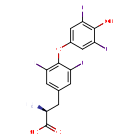
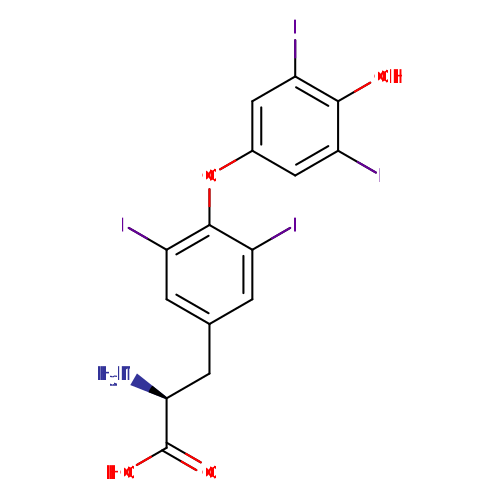
Structure for Levothyroxine (DB00451)
- Weight
- Average: 776.87
Monoisotopic: 776.686681525 - Chemical Formula
- C15H11I4NO4
- Synonyms
- 3,3',5,5'-Tetraiodo-L-thyronine
- 3,5,3',5'-Tetraiodo-L-thyronine
- 4-(4-Hydroxy-3,5-diiodophenoxy)-3,5-diiodo-L-phenylalanine
- L-T4
- L-Thyroxine
- Levothyroxin
- LT4
- O-(4-Hydroxy-3,5-diidophenyl)-3,5-diiodo-L-tyrosine
- O-(4-Hydroxy-3,5-diiodophenyl)-3,5-diiodo-L-tyrosine
- T4
- Thyroxine

Pharmacology
- Indication
Levothyroxine is indicated as replacement therapy in primary (thyroidal), secondary (pituitary) and tertiary (hypothalamic) congenital or acquired hypothyroidism. It is also indicated as an adjunct to surgery and radioiodine therapy in the management of thyrotropin-dependent well-differentiated thyroid cancer.
 Reduce drug development failure ratesBuild, train, & validate machine-learning modelswith evidence-based and structured datasets.Build, train, & validate predictive machine-learning models with structured datasets.
- Associated Conditions
Indication Type Indication Combined Product Details Approval Level Age Group Patient Characteristics Dose Form Used in combination for symptomatic treatment of Cellulite Combination Product in combination with: Escin (DB15907) ••• ••• •••••••• Management of Euthyroid goiter •••••••••••• Prevention of Euthyroid goiter •••••••••••• Management of Hypothyroidism •••••••••••• •••••• Used in combination to treat Hypothyroidism Combination Product in combination with: Liothyronine (DB00279) •••••••••••• - Contraindications & Blackbox Warnings
 Prevent Adverse Drug Events TodayTap into our Clinical API for life-saving information on contraindications & blackbox warnings, population restrictions, harmful risks, & more.Avoid life-threatening adverse drug events with our Clinical API
- Pharmacodynamics
Oral levothyroxine is a synthetic hormone that exerts the same physiologic effect as endogenous T4, thereby maintaining normal T4 levels when a deficiency is present.
Levothyroxine has a narrow therapeutic index and is titrated to maintain a euthyroid state with TSH (thyroid stimulating hormone) within a therapeutic range of 0.4–4.0 mIU/L.10 Over- or under-treatment with levothyroxine may have negative effects on growth and development, cardiovascular function, bone metabolism, reproductive function, cognitive function, emotional state, gastrointestinal function and glucose and lipid metabolism. The dose of levothyroxine should be titrated slowly and carefully and patients should be monitored for their response to titration to avoid these effects. TSH levels should be monitored at least yearly to avoid over-treating with levothyroxine which can result in hyperthyroidism (TSH <0.1mIU/L) and symptoms of increased heart rate, diarrhea, tremor, hypercalcemia, and weakness to name a few.16
As many cardiac functions including heart rate, cardiac output, and systemic vascular resistance are closely linked to thyroid status,7 over-treatment with levothyroxine may result in increases in heart rate, cardiac wall thickness, and cardiac contractility and may precipitate angina or arrhythmias, particularly in patients with cardiovascular disease and in elderly patients. In populations with any cardiac concerns, levothyroxine should be initiated at lower doses than those recommended in younger individuals or in patients without cardiac disease. Patients receiving concomitant levothyroxine and sympathomimetic agents should be monitored for signs and symptoms of coronary insufficiency. If cardiac symptoms develop or worsen, reduce the levothyroxine dose or withhold for one week and restart at a lower dose.16
Increased bone resorption and decreased bone mineral density may occur as a result of levothyroxine over-replacement, particularly in post-menopausal women. The increased bone resorption may be associated with increased serum levels and urinary excretion of calcium and phosphorous, elevations in bone alkaline phosphatase and suppressed serum parathyroid hormone levels. Administer the minimum dose of levothyroxine that achieves the desired clinical and biochemical response to mitigate this risk.
Addition of levothyroxine therapy in patients with diabetes mellitus may worsen glycemic control and result in increased antidiabetic agent or insulin requirements. Carefully monitor glycemic control after starting, changing or discontinuing levothyroxine.
- Mechanism of action
Levothyroxine is a synthetically prepared levo-isomer of the thyroid hormone thyroxine (T4, a tetra-iodinated tyrosine derivative) that acts as a replacement in deficiency syndromes such as hypothyroidism. T4 is the major hormone secreted from the thyroid gland and is chemically identical to the naturally secreted T4: it increases metabolic rate, decreases thyroid-stimulating hormone (TSH) production from the anterior lobe of the pituitary gland, and, in peripheral tissues, is converted to T3. Thyroxine is released from its precursor protein thyroglobulin through proteolysis and secreted into the blood where is it then peripherally deiodinated to form triiodothyronine (T3) which exerts a broad spectrum of stimulatory effects on cell metabolism. T4 and T3 have a relative potency of ~1:4.
Thyroid hormone increases the metabolic rate of cells of all tissues in the body. In the fetus and newborn, thyroid hormone is important for the growth and development of all tissues including bones and the brain. In adults, thyroid hormone helps to maintain brain function, food metabolism, and body temperature, among other effects. The symptoms of thyroid deficiency relieved by levothyroxine include slow speech, lack of energy, weight gain, hair loss, dry thick skin and unusual sensitivity to cold.
The thyroid hormones have been shown to exert both genomic and non-genomic effects.9 They exert their genomic effects by diffusing into the cell nucleus and binding to thyroid hormone receptors in DNA regions called thyroid hormone response elements (TREs) near genes.2 This complex of T4, T3, DNA, and other coregulatory proteins causes a conformational change and a resulting shift in transcriptional regulation of nearby genes, synthesis of messenger RNA, and cytoplasmic protein production.2,6 For example, in cardiac tissues T3 has been shown to regulate the genes for α- and β-myosin heavy chains, production of the sarcoplasmic reticulum proteins calcium-activated ATPase (Ca2+-ATPase) and phospholamban, β-adrenergic receptors, guanine-nucleotide regulatory proteins, and adenylyl cyclase types V and VI as well as several plasma-membrane ion transporters, such as Na+/K+–ATPase, Na+/Ca2+ exchanger, and voltage-gated potassium channels, including Kv1.5, Kv4.2, and Kv4.3. 7 As a result, many cardiac functions including heart rate, cardiac output, and systemic vascular resistance are closely linked to thyroid status.
The non-genomic actions of the thyroid hormones have been shown to occur through binding to a plasma membrane receptor integrin aVb3 at the Arg-Gly-Asp recognition site.12 From the cell-surface, T4 binding to integrin results in down-stream effects including activation of mitogen-activated protein kinase (MAPK; ERK1/2) and causes subsequent effects on cellular/nuclear events including angiogenesis and tumor cell proliferation.6,11
Target Actions Organism AIntegrin alpha-V Not Available Humans AIntegrin beta-3 Not Available Humans AThyroid hormone receptor alpha agonistHumans AThyroid hormone receptor beta agonistHumans - Absorption
Absorption of orally administered T4 from the gastrointestinal tract ranges from 40% to 80% with the majority of the levothyroxine dose absorbed from the jejunum and upper ileum. T4 absorption is increased by fasting, and decreased in malabsorption syndromes and by certain foods such as soybeans, milk, and dietary fiber. Absorption may also decrease with age. In addition, many drugs affect T4 absorption including bile acide sequestrants, sucralfate, proton pump inhibitors, and minerals such as calcium (including in yogurt and milk products)3, magnesium, iron, and aluminum supplements. To prevent the formation of insoluble chelates, levothyroxine should generally be taken on an empty stomach at least 2 hours before a meal and separated by at least 4 hours from any interacting agents.
- Volume of distribution
Not Available
- Protein binding
Circulating thyroid hormones are greater than 99% bound to plasma proteins, including thyroxine-binding globulin (TBG), thyroxine-binding prealbumin (TBPA) and albumin (TBA). The higher affinity of both TBG and TBPA for T4 partially explains the higher serum levels, slower metabolic clearance and longer half-life of T4 compared to T3. Protein-bound thyroid hormones exist in reverse equilibrium with small amounts of free hormone where only unbound hormone is metabolically active.16
- Metabolism
Approximately 70% of secreted T4 is deiodinated to equal amounts of T3 and reverse triiodothyronine (rT3), which is calorigenically inactive. T4 is slowly eliminated through its major metabolic pathway to T3 via sequential deiodination, where approximately 80% of circulating T3 is derived from peripheral T4. The liver is the major site of degradation for both T4 and T3, with T4 deiodination also occurring at a number of additional sites, including the kidney and other tissues.
Elimination of T4 and T3 involves hepatic conjugation to glucuronic and sulfuric acids. The hormones undergo enterohepatic circulation as conjugates are hydrolyzed in the intestine and reabsorbed. Conjugated compounds that reach the colon are hydrolyzed and eliminated as free compounds in the feces. Other minor T4 metabolites have been identified. 16
Hover over products below to view reaction partners
- Route of elimination
Thyroid hormones are primarily eliminated by the kidneys. A portion of the conjugated hormone reaches the colon unchanged and is eliminated in the feces. Approximately 20% of T4 is eliminated in the stool. Urinary excretion of T4 decreases with age.16
- Half-life
T4 half-life is 6 to 7 days. T3 half-life is 1 to 2 days.16
- Clearance
Not Available
- Adverse Effects
 Improve decision support & research outcomesWith structured adverse effects data, including: blackbox warnings, adverse reactions, warning & precautions, & incidence rates. View sample adverse effects data in our new Data Library!Improve decision support & research outcomes with our structured adverse effects data.
- Toxicity
LD50=20 mg/kg (orally in rat). Hypermetabolic state indistinguishable from thyrotoxicosis of endogenous origin. Symptoms of thyrotoxicosis include weight loss, increased appetite, palpitations, nervousness, diarrhea, abdominal cramps, sweating, tachycardia, increased pulse and blood pressure, cardiac arrhythmias, tremors, insomnia, heat intolerance, fever, and menstrual irregularities.
- Pathways
Pathway Category Thyroid Hormone Synthesis Metabolic - Pharmacogenomic Effects/ADRs
- Not Available
Interactions
- Drug Interactions
- This information should not be interpreted without the help of a healthcare provider. If you believe you are experiencing an interaction, contact a healthcare provider immediately. The absence of an interaction does not necessarily mean no interactions exist.
Drug Interaction Integrate drug-drug
interactions in your softwareAbemaciclib The serum concentration of Abemaciclib can be decreased when it is combined with Levothyroxine. Acalabrutinib The therapeutic efficacy of Levothyroxine can be decreased when used in combination with Acalabrutinib. Acarbose The therapeutic efficacy of Acarbose can be decreased when used in combination with Levothyroxine. Acebutolol The therapeutic efficacy of Levothyroxine can be decreased when used in combination with Acebutolol. Acenocoumarol The therapeutic efficacy of Acenocoumarol can be increased when used in combination with Levothyroxine. - Food Interactions
- Avoid calcium supplements/calcium rich foods. Calcium may interfere with the absorption of this drug by forming an insoluble complex. Separate medication administration by at least 4 hours.
- Avoid grapefruit products. Grapefruit may delay the absorption of this medication.
- Avoid iron supplements. Iron may interfere with the absorption of this drug by forming an insoluble complex. Separate medication administration by at least 4 hours.
- Avoid multivalent ions. Examples include iron, magnesium, and calcium. These are often found in antacids, vitamins, and supplements - separate medication administration by at least 4 hours.
- Do not take with bran and high fiber foods. Dietary fiber, soybean flour, cottonseed meal, and walnuts may reduce the absorption of levothyroxine.
- Take on an empty stomach. Levothyroxine should be taken on an empty stomach 30-60 minutes prior to the first meal of the day.
Products
 Drug product information from 10+ global regionsOur datasets provide approved product information including:dosage, form, labeller, route of administration, and marketing period.Access drug product information from over 10 global regions.
- Product Ingredients
Ingredient UNII CAS InChI Key Levothyroxine sodium 054I36CPMN 55-03-8 YDTFRJLNMPSCFM-UHFFFAOYSA-M Levothyroxine sodium pentahydrate 9J765S329G 6106-07-6 Not applicable - Product Images
- International/Other Brands
- Eutirox (Merck) / Letrox (Berlin-Chemie) / Levaxin (Nycomed) / Levothyrox (Merck) / Oroxine (GlaxoSmithKline) / Thyrax (Merck)
- Brand Name Prescription Products
Name Dosage Strength Route Labeller Marketing Start Marketing End Region Image Eltroxin Tablet 100 mcg Oral Aspen Pharmacare Canada Inc. 1998-11-27 Not applicable Canada 
Eltroxin Tablet 150 mcg Oral Aspen Pharmacare Canada Inc. 1974-12-31 Not applicable Canada Eltroxin Tablet 300 mcg Oral Aspen Pharmacare Canada Inc. 1998-02-11 2018-09-17 Canada Eltroxin Tablet 200 mcg Oral Aspen Pharmacare Canada Inc. 1997-04-02 Not applicable Canada Eltroxin Tablet 50 mcg Oral Aspen Pharmacare Canada Inc. 1951-12-30 Not applicable Canada - Generic Prescription Products
Name Dosage Strength Route Labeller Marketing Start Marketing End Region Image Apo-levothyroxine Tablet 300 mcg Oral Apotex Corporation Not applicable Not applicable Canada Apo-levothyroxine Tablet 100 mcg Oral Apotex Corporation Not applicable Not applicable Canada Levothroxine Sodium Tablet 75 ug/1 Oral Direct_Rx 2019-07-03 Not applicable US 
Levothyroxine Tablet 125 ug/1 Oral Northwind Pharmaceuticals 2014-09-14 Not applicable US 
Levothyroxine sodium Tablet 88 ug/1 Oral Nucare Pharmaceuticals,inc. 2020-11-25 Not applicable US - Mixture Products
Name Ingredients Dosage Route Labeller Marketing Start Marketing End Region Image BITIRON 50 MCG/12.5 MCG TABLET, 100 ADET Levothyroxine sodium (50 mcg) + Liothyronine (12.5 mcg) Tablet Oral ABDİ İBRAHİM İLAÇ SAN. VE TİC. A.Ş. 1975-01-21 Not applicable Turkey 
EFEROX JOD 100UG/100UG Levothyroxine sodium (100 mcg/1) + Potassium Iodide (131 mcg/1) Tablet Oral 2015-07-01 Not applicable Germany 
EFEROX JOD 100UG/100UG Levothyroxine sodium (100 mcg/1) + Potassium Iodide (131 mcg/1) Tablet Oral 2015-07-01 Not applicable Germany EFEROX JOD 100UG/150UG TAB Levothyroxine sodium (100 mcg/1) + Potassium Iodide (196 mcg/1) Tablet Oral 2015-07-01 Not applicable Germany EFEROX JOD 100UG/150UG TAB Levothyroxine sodium (100 mcg/1) + Potassium Iodide (196 mcg/1) Tablet Oral 2015-07-01 Not applicable Germany - Unapproved/Other Products
Name Ingredients Dosage Route Labeller Marketing Start Marketing End Region Image Adthyza Thyroid Levothyroxine (57 ug/1) + Liothyronine (13.5 ug/1) Tablet Oral Azurity Pharmaceuticals, Inc. 2023-12-18 Not applicable US Adthyza Thyroid Levothyroxine (9.5 ug/1) + Liothyronine (2.25 ug/1) Tablet Oral Azurity Pharmaceuticals, Inc. 2023-12-18 Not applicable US Adthyza thyroid Levothyroxine (38 ug/1) + Liothyronine (9 ug/1) Tablet Oral Azurity Pharmaceuticals, Inc. 2023-02-20 Not applicable US Adthyza Thyroid Levothyroxine (38 ug/1) + Liothyronine (9 ug/1) Tablet Oral Azurity Pharmaceuticals, Inc. 2023-12-18 Not applicable US Adthyza thyroid Levothyroxine (76 ug/1) + Liothyronine (18 ug/1) Tablet Oral Azurity Pharmaceuticals, Inc. 2023-02-20 Not applicable US


Categories
- ATC Codes
- H03AA01 — Levothyroxine sodium
- H03AA — Thyroid hormones
- H03A — THYROID PREPARATIONS
- H03 — THYROID THERAPY
- H — SYSTEMIC HORMONAL PREPARATIONS, EXCL. SEX HORMONES AND INSULINS
- Drug Categories
- Agents used to treat hypothyroidism
- Amino Acids
- Amino Acids, Aromatic
- Amino Acids, Cyclic
- Amino Acids, Peptides, and Proteins
- Cytochrome P-450 CYP2C8 Inhibitors
- Cytochrome P-450 CYP2C8 Inhibitors (moderate)
- Cytochrome P-450 Enzyme Inhibitors
- Hormones
- Hormones, Hormone Substitutes, and Hormone Antagonists
- Narrow Therapeutic Index Drugs
- OATP1B1/SLCO1B1 Inhibitors
- OATP1B3 inhibitors
- Organic Anion Transporting Polypeptide 2B1 Inhibitors
- P-glycoprotein inducers
- Systemic Hormonal Preparations, Excl. Sex Hormones and Insulins
- Thyroid Products
- Thyroxine-binding globulin substrates
- UGT1A1 Substrates
- UGT1A1 Substrates with a Narrow Therapeutic Index
- Chemical TaxonomyProvided by Classyfire
- Description
- This compound belongs to the class of organic compounds known as phenylalanine and derivatives. These are compounds containing phenylalanine or a derivative thereof resulting from reaction of phenylalanine at the amino group or the carboxy group, or from the replacement of any hydrogen of glycine by a heteroatom.
- Kingdom
- Organic compounds
- Super Class
- Organic acids and derivatives
- Class
- Carboxylic acids and derivatives
- Sub Class
- Amino acids, peptides, and analogues
- Direct Parent
- Phenylalanine and derivatives
- Alternative Parents
- Diphenylethers / Phenylpropanoic acids / Diarylethers / Amphetamines and derivatives / L-alpha-amino acids / Phenoxy compounds / Phenol ethers / O-iodophenols / Aralkylamines / Iodobenzenes show 10 more
- Substituents
- 2-halophenol / 2-iodophenol / 3-phenylpropanoic-acid / Alpha-amino acid / Amine / Amino acid / Amphetamine or derivatives / Aralkylamine / Aromatic homomonocyclic compound / Aryl halide show 27 more
- Molecular Framework
- Aromatic homomonocyclic compounds
- External Descriptors
- non-proteinogenic L-alpha-amino acid, L-phenylalanine derivative, iodophenol, 2-halophenol, thyroxine (CHEBI:18332) / thyroxine, Other amino acids, Biogenic amines (C01829)
- Affected organisms
- Humans and other mammals
Chemical Identifiers
- UNII
- Q51BO43MG4
- CAS number
- 51-48-9
- InChI Key
- XUIIKFGFIJCVMT-LBPRGKRZSA-N
- InChI
- InChI=1S/C15H11I4NO4/c16-8-4-7(5-9(17)13(8)21)24-14-10(18)1-6(2-11(14)19)3-12(20)15(22)23/h1-2,4-5,12,21H,3,20H2,(H,22,23)/t12-/m0/s1
- IUPAC Name
- (2S)-2-amino-3-[4-(4-hydroxy-3,5-diiodophenoxy)-3,5-diiodophenyl]propanoic acid
- SMILES
- N[C@@H](CC1=CC(I)=C(OC2=CC(I)=C(O)C(I)=C2)C(I)=C1)C(O)=O
References
- Synthesis Reference
Jivn-Ren Chen, Dimitri C. Papadimitriou, "Stable dosage of levothyroxine sodium and process of production." U.S. Patent US5225204, issued November, 1991.
US5225204- General References
- Uchino H, Kanai Y, Kim DK, Wempe MF, Chairoungdua A, Morimoto E, Anders MW, Endou H: Transport of amino acid-related compounds mediated by L-type amino acid transporter 1 (LAT1): insights into the mechanisms of substrate recognition. Mol Pharmacol. 2002 Apr;61(4):729-37. [Article]
- Cheng SY, Leonard JL, Davis PJ: Molecular aspects of thyroid hormone actions. Endocr Rev. 2010 Apr;31(2):139-70. doi: 10.1210/er.2009-0007. Epub 2010 Jan 5. [Article]
- Chon DA, Reisman T, Weinreb JE, Hershman JM, Leung AM: Concurrent Milk Ingestion Decreases Absorption of Levothyroxine. Thyroid. 2018 Apr;28(4):454-457. doi: 10.1089/thy.2017.0428. Epub 2018 Mar 28. [Article]
- Tang R, Wang J, Yang L, Ding X, Zhong Y, Pan J, Yang H, Mu L, Chen X, Chen Z: Subclinical Hypothyroidism and Depression: A Systematic Review and Meta-Analysis. Front Endocrinol (Lausanne). 2019 Jun 4;10:340. doi: 10.3389/fendo.2019.00340. eCollection 2019. [Article]
- Gottwald-Hostalek U, Uhl W, Wolna P, Kahaly GJ: New levothyroxine formulation meeting 95-105% specification over the whole shelf-life: results from two pharmacokinetic trials. Curr Med Res Opin. 2017 Feb;33(2):169-174. doi: 10.1080/03007995.2016.1246434. Epub 2016 Oct 21. [Article]
- Osmak-Tizon L, Poussier M, Cottin Y, Rochette L: Non-genomic actions of thyroid hormones: Molecular aspects. Arch Cardiovasc Dis. 2014 Apr;107(4):207-11. doi: 10.1016/j.acvd.2014.02.001. Epub 2014 Mar 26. [Article]
- Klein I, Ojamaa K: Thyroid hormone and the cardiovascular system. N Engl J Med. 2001 Feb 15;344(7):501-9. doi: 10.1056/NEJM200102153440707. [Article]
- Kaplan MM, Breitbart R: Conversion of thyroxine to triiodothyronine in the anterior pituitary gland and the influence of this process on thyroid status. Horm Metab Res Suppl. 1984;14:79-85. [Article]
- Hammes SR, Davis PJ: Overlapping nongenomic and genomic actions of thyroid hormone and steroids. Best Pract Res Clin Endocrinol Metab. 2015 Aug;29(4):581-93. doi: 10.1016/j.beem.2015.04.001. Epub 2015 Apr 22. [Article]
- Jonklaas J, Bianco AC, Bauer AJ, Burman KD, Cappola AR, Celi FS, Cooper DS, Kim BW, Peeters RP, Rosenthal MS, Sawka AM: Guidelines for the treatment of hypothyroidism: prepared by the american thyroid association task force on thyroid hormone replacement. Thyroid. 2014 Dec;24(12):1670-751. doi: 10.1089/thy.2014.0028. [Article]
- Davis PJ, Leonard JL, Davis FB: Mechanisms of nongenomic actions of thyroid hormone. Front Neuroendocrinol. 2008 May;29(2):211-8. doi: 10.1016/j.yfrne.2007.09.003. Epub 2007 Oct 5. [Article]
- Bergh JJ, Lin HY, Lansing L, Mohamed SN, Davis FB, Mousa S, Davis PJ: Integrin alphaVbeta3 contains a cell surface receptor site for thyroid hormone that is linked to activation of mitogen-activated protein kinase and induction of angiogenesis. Endocrinology. 2005 Jul;146(7):2864-71. doi: 10.1210/en.2005-0102. Epub 2005 Mar 31. [Article]
- FDA Approved Drug Products: Synthroid® oral tablets [Link]
- FDA Approved Drug Products: SYNTHROID (levothyroxine sodium) tablets for oral use (revised Aug 2022) [Link]
- FDA Label - levothyroxine [File]
- American Association of Clinical Endocrinologists (AACE): Clinical Practice Guidelines for Hypothyroidism in Adults [File]
- External Links
- Human Metabolome Database
- HMDB0000248
- KEGG Drug
- D08125
- KEGG Compound
- C01829
- PubChem Compound
- 5819
- PubChem Substance
- 46507672
- ChemSpider
- 5614
- BindingDB
- 50301375
- 10582
- ChEBI
- 58448
- ChEMBL
- CHEMBL1624
- ZINC
- ZINC000003830993
- Therapeutic Targets Database
- DAP000083
- PharmGKB
- PA450221
- Guide to Pharmacology
- GtP Drug Page
- PDBe Ligand
- T44
- RxList
- RxList Drug Page
- Drugs.com
- Drugs.com Drug Page
- PDRhealth
- PDRhealth Drug Page
- Wikipedia
- Levothyroxine
- PDB Entries
- 1eta / 1etb / 1f86 / 1hk1 / 1hk2 / 1hk3 / 1hk4 / 1hk5 / 1ict / 1ie4 … show 16 more
- MSDS
- Download (51.7 KB)
Clinical Trials
- Clinical Trials
Phase Status Purpose Conditions Count 4 Active Not Recruiting Treatment Congenital Hypothyroidism 1 4 Active Not Recruiting Treatment Coronavirus Disease 2019 (COVID‑19) / Endocrine System Diseases / Hypothyroidism / Thyroid Gland Diseases 1 4 Completed Not Available Hypothyroidism 1 4 Completed Prevention Graves´ Disease 1 4 Completed Treatment Atherosclerosis / Heart Failure / Thyroid Dysfunction 2
Pharmacoeconomics
- Manufacturers
- Institute biochimique sa (ibsa)
- Institut biochimique sa ibsa
- Vintage pharmaceuticals llc
- Alara pharmaceutical corporation
- Lloyd inc
- Merck kgaa
- Mylan pharmaceuticals inc
- King pharmaceuticals inc
- Abbott laboratories
- Jerome stevens pharmaceuticals inc
- Packagers
- Abbott Laboratories Ltd.
- Advanced Pharmaceutical Services Inc.
- Akrimax Pharmaceuticals
- Amerisource Health Services Corp.
- Apotheca Inc.
- APP Pharmaceuticals
- A-S Medication Solutions LLC
- Atlantic Biologicals Corporation
- BASF Corp.
- Bedford Labs
- Ben Venue Laboratories Inc.
- Bryant Ranch Prepack
- Cardinal Health
- Caremark LLC
- Comprehensive Consultant Services Inc.
- Corepharma LLC
- Direct Dispensing Inc.
- Direct Pharmaceuticals Inc.
- Dispensing Solutions
- Diversified Healthcare Services Inc.
- Forest Pharmaceuticals
- Genpharm LP
- Giant Food Inc.
- H.E. Butt Grocery Co.
- H.J. Harkins Co. Inc.
- Heartland Repack Services LLC
- Innovative Manufacturing and Distribution Services Inc.
- Jerome Stevens Pharmaceuticals Inc.
- JMI Daniels Pharmaceuticals Inc.
- Kaiser Foundation Hospital
- King Pharmaceuticals Inc.
- Lake Erie Medical and Surgical Supply
- Lannett Co. Inc.
- Liberty Pharmaceuticals
- Lloyd Pharmaceuticals
- Macnary Ltd.
- Major Pharmaceuticals
- Mckesson Corp.
- Medisca Inc.
- Merck KGaA
- Monarch Pharmacy
- Murfreesboro Pharmaceutical Nursing Supply
- Mylan
- Neuman Distributors Inc.
- Nucare Pharmaceuticals Inc.
- Palmetto Pharmaceuticals Inc.
- Patheon Inc.
- PCA LLC
- PD-Rx Pharmaceuticals Inc.
- Pharmaceutical Utilization Management Program VA Inc.
- Pharmacy Service Center
- Pharmedix
- Physicians Total Care Inc.
- Preferred Pharmaceuticals Inc.
- Prepackage Specialists
- Prepak Systems Inc.
- Prescript Pharmaceuticals
- Qualitest
- Rebel Distributors Corp.
- Remedy Repack
- Resource Optimization and Innovation LLC
- Rite Aid Corp.
- Sandhills Packaging Inc.
- Sandoz
- Simildiet SL
- Southwood Pharmaceuticals
- Stat Scripts LLC
- Teva Pharmaceutical Industries Ltd.
- UDL Laboratories
- Va Cmop Dallas
- Watson Pharmaceuticals
- Dosage Forms
Form Route Strength Tablet Oral 100.000 mcg Tablet Oral 100 UG Tablet Oral 125 UG Tablet Oral 150 UG Tablet Oral 50 UG Tablet Oral 75 UG Tablet Oral 100 mcg/1 Tablet Oral 125 mcg/1 Tablet Oral 150 mcg/1 Tablet Oral 175 mcg/1 Tablet Oral 200 mcg/1 Tablet Oral 25 mcg/1 Tablet Oral 50 mcg/1 Tablet Oral 75 mcg/1 Tablet Oral .1 mg / tab Tablet Oral .2 mg / tab Tablet Oral .3 mg Tablet Oral .05 mg / tab Solution Oral 30 ug/1mL Tablet Oral 100 MIKROGRAMM Tablet Oral 112 MIKROGRAMM Tablet Oral 125 MIKROGRAMM Tablet Oral 137 MIKROGRAMM Tablet Oral 150 MIKROGRAMM Tablet Oral 175 MIKROGRAMM Tablet Oral 200 MIKROGRAMM Tablet Oral 25 MIKROGRAMM Tablet Oral 50 MIKROGRAMM Tablet Oral 75 MIKROGRAMM Tablet Oral 88 MIKROGRAMM Tablet Oral 100 MCG Tablet Oral 125 MCG Tablet Oral 150 MCG Tablet Oral 150 cg Tablet Oral 25 cg Tablet Oral 50 MCG Tablet Oral 75 MCG Tablet Oral 11200000 mcg Tablet Oral 13700000 mcg Tablet Oral 8800000 mcg Solution Oral 2.000 mg Tablet Oral 50.000 mcg Tablet Oral 0.112 mg Tablet Oral 0.125 mg Tablet Oral 0.15 mg Tablet Oral 0.175 mg Tablet Oral 0.2 mg Tablet Oral 0.025 mg Tablet Oral 0.075 mg Tablet Oral 0.088 mg Tablet Oral 25 UG Tablet Oral 175 UG Tablet Oral 200 UG Tablet Oral 112 UG Tablet Oral 88 UG Tablet Oral 63 UG Tablet Oral 137 UG Solution Oral 100 Mikrogramm/5ml Solution Oral 25 Mikrogramm/5ml Solution Oral 50 Mikrogramm/5ml Tablet Oral 112 mcg / tab Tablet Oral 175 mcg / tab Tablet Oral 12.5 mcg Injection Intravenous 100 ug/5mL Injection Intravenous 500 ug/5mL Injection, powder, lyophilized, for solution Intravenous 100 ug/1 Injection, powder, lyophilized, for solution Intravenous 100 ug/5mL Injection, powder, lyophilized, for solution Intravenous 200 ug/5mL Injection, powder, lyophilized, for solution Intravenous 500 ug/5mL Injection, powder, lyophilized, for solution Intravenous 500 ug/1 Injection, solution Intravenous 100 ug/1mL Injection, solution Intravenous 20 ug/1mL Injection, solution Intravenous 40 ug/1mL Tablet Not applicable 100 ug/1 Tablet Not applicable 112 ug/1 Tablet Not applicable 125 ug/1 Tablet Not applicable 137 ug/1 Tablet Not applicable 150 ug/1 Tablet Not applicable 175 ug/1 Tablet Not applicable 200 ug/1 Tablet Not applicable 25 ug/1 Tablet Not applicable 50 ug/1 Tablet Not applicable 75 ug/1 Tablet Not applicable 88 ug/1 Tablet Oral .025 mg/1 Tablet Oral .05 mg/1 Tablet Oral .075 mg/1 Tablet Oral .088 mg/1 Tablet Oral .1 mg/1 Tablet Oral .112 mg/1 Tablet Oral .125 mg/1 Tablet Oral .137 mg/1 Tablet Oral .15 mg/1 Tablet Oral .150 mg/1 Tablet Oral 0.025 mg/1 Tablet Oral 0.05 mg/1 Tablet Oral 0.050 mg/1 Tablet Oral 0.075 mg/1 Tablet Oral 0.088 mg/1 Tablet Oral 0.1 mg/1 Tablet Oral 0.100 mg/1 Tablet Oral 0.112 mg/1 Tablet Oral 0.125 mg/1 Tablet Oral 0.137 mg/1 Tablet Oral 0.15 mg/1 Tablet Oral 0.150 mg/1 Tablet Oral 0.175 mg/1 Tablet Oral 0.2 mg/1 Tablet Oral 0.200 mg/1 Tablet Oral 0.3 mg/1 Tablet Oral 0.300 mg/1 Tablet Oral 100 ug/1 Tablet Oral 112 ug/1 Tablet Oral 125 ug/1 Tablet Oral 137 ug/1 Tablet Oral 150 ug/1 Tablet Oral 175 ug/1 Tablet Oral 200 ug/1 Tablet Oral 25 ug/1 Tablet Oral 300 ug/1 Tablet Oral 50 ug/1 Tablet Oral 75 ug/1 Tablet Oral 88 ug/1 Powder, for solution Intramuscular; Intravenous 200 mcg / vial Powder, for solution Intramuscular; Intravenous 500 mcg / vial Injection, powder, for solution Intramuscular; Intravenous 500 mcg Solution Intramuscular; Intravenous 100 mcg / mL Solution Intramuscular; Intravenous 40 mcg / mL Tablet Oral 15000000 mcg Tablet Oral 25 mcg Tablet Oral 7500000 mcg Tablet Oral 50 cg Tablet Oral 100 MICROGRAMMI Tablet Oral 125 MICROGRAMMI Tablet Oral 150 MICROGRAMMI Tablet Oral 175 MICROGRAMMI Tablet Oral 200 MICROGRAMMI Tablet Oral 25 MICROGRAMMI Tablet Oral 50 MICROGRAMMI Tablet Oral 75 MICROGRAMMI Tablet Oral 112 cg Tablet Oral 5000000 mcg Tablet Oral 88 cg Solution Oral Tablet Oral 100 cg Tablet Oral 100.000 µg Tablet Topical Tablet Oral Tablet Oral 100 mcg / tab Tablet Oral 125 mcg / tab Tablet Oral 150 mcg / tab Tablet Oral 200 mcg / tab Tablet Oral 25 mcg / tab Tablet Oral 300 mcg / tab Tablet Oral 50 mcg / tab Tablet Oral 75 mcg / tab Tablet Oral 0.100 mg Emulsion Cutaneous Tablet Oral 137 mcg Tablet Oral 25.000 mcg Tablet Oral 20000000 mcg Tablet Oral 17500000 mcg Liquid Intravenous 500 mcg / vial Tablet Oral 112 mcg Tablet Oral 175 mcg Tablet Oral 200 mcg Tablet Oral 300 mcg Tablet Oral 88 mcg Capsule Oral 100 Mikrogramm Capsule Oral 112 Mikrogramm Capsule Oral 125 Mikrogramm Capsule Oral 13 Mikrogramm Capsule Oral 137 Mikrogramm Capsule Oral 150 Mikrogramm Capsule Oral 175 Mikrogramm Capsule Oral 200 Mikrogramm Capsule Oral 25 Mikrogramm Capsule Oral 50 Mikrogramm Capsule Oral 75 Mikrogramm Capsule Oral 88 Mikrogramm Solution Oral 100 Mikrogramm Solution Oral 112 Mikrogramm Solution Oral 125 Mikrogramm Solution Oral 13 Mikrogramm Solution Oral 137 Mikrogramm Solution Oral 150 Mikrogramm Solution Oral 175 Mikrogramm Solution Oral 200 Mikrogramm Solution Oral 25 Mikrogramm Solution Oral 50 Mikrogramm Solution Oral 75 Mikrogramm Solution Oral 88 Mikrogramm Tablet Oral 0.1 mg Tablet Oral 150.000 mcg Solution Oral 100 ug/5mL Tablet Oral 160 Mikrogramm Tablet Oral Tablet Oral 0.05 mg Capsule Oral Solution Oral 100 mcg/5mL Solution Oral 25 mcg/5mL Solution Oral 50 mcg/5mL Capsule Oral 100 mcg Capsule Oral 112 mcg Capsule Oral 125 mcg Capsule Oral 13 mcg Capsule Oral 137 mcg Capsule Oral 150 mcg Capsule Oral 175 mcg Capsule Oral 200 mcg Capsule Oral 25 mcg Capsule Oral 50 mcg Capsule Oral 75 mcg Capsule Oral 88 mcg Tablet Oral 0.050 mg Capsule Oral 100 ug/1 Capsule Oral 112 ug/1 Capsule Oral 125 ug/1 Capsule Oral 13 ug/1 Capsule Oral 137 ug/1 Capsule Oral 150 ug/1 Capsule Oral 175 ug/1 Capsule Oral 200 ug/1 Capsule Oral 25 ug/1 Capsule Oral 37.5 ug/1 Capsule Oral 44 ug/1 Capsule Oral 50 ug/1 Capsule Oral 62.5 ug/1 Capsule Oral 75 ug/1 Capsule Oral 88 ug/1 Solution Oral 100 mcg/mL Solution Oral 25 mcg/mL Solution Oral 50 mcg/mL Solution Oral 75 mcg/mL Solution / drops Oral 100 mcg/mL Solution Oral 100 ug/1mL Solution Oral 112 ug/1mL Solution Oral 125 ug/1mL Solution Oral 13 ug/1mL Solution Oral 137 ug/1mL Solution Oral 150 ug/1mL Solution Oral 175 ug/1mL Solution Oral 200 ug/1mL Solution Oral 25 ug/1mL Solution Oral 37.5 ug/1mL Solution Oral 44 ug/1mL Solution Oral 50 ug/1mL Solution Oral 62.5 ug/1mL Solution Oral 75 ug/1mL Solution Oral 88 ug/1mL Tablet Oral 62 mcg Tablet Oral 0.0500 mg Tablet, sugar coated Oral 0.1 mg - Prices
Unit description Cost Unit Levothyroxine sodium powder 159.12USD g Levothyroxine 200 mcg vial 24.0USD vial Levothyroxine 500 mcg vial 24.0USD vial Levoxyl 300 mcg tablet 2.34USD tablet Synthroid 300 mcg tablet 1.29USD tablet Synthroid 175 mcg tablet 1.07USD tablet Synthroid 200 mcg tablet 0.99USD tablet Synthroid 137 mcg tablet 0.87USD tablet Synthroid 112 mcg tablet 0.84USD tablet Synthroid 125 mcg tablet 0.84USD tablet Synthroid 150 mcg tablet 0.83USD tablet Levothyroxine Sodium 300 mcg tablet 0.77USD tablet Synthroid 100 mcg tablet 0.73USD tablet Synthroid 75 mcg tablet 0.72USD tablet Synthroid 88 mcg tablet 0.71USD tablet Levoxyl 200 mcg tablet 0.7USD tablet Levoxyl 175 mcg tablet 0.69USD tablet Unithroid 300 mcg tablet 0.69USD tablet Synthroid 50 mcg tablet 0.65USD tablet Levoxyl 137 mcg tablet 0.62USD tablet Unithroid 200 mcg tablet 0.62USD tablet Levoxyl 112 mcg tablet 0.61USD tablet Synthroid 25 mcg tablet 0.61USD tablet Unithroid 175 mcg tablet 0.61USD tablet Levoxyl 150 mcg tablet 0.59USD tablet Levoxyl 125 mcg tablet 0.58USD tablet Levothyroxine Sodium 175 mcg tablet 0.57USD tablet Levothyroxine Sodium 200 mcg tablet 0.57USD tablet Levothyroxine 175 mcg tablet 0.55USD tablet Unithroid 150 mcg tablet 0.55USD tablet Levoxyl 88 mcg tablet 0.54USD tablet Unithroid 112 mcg tablet 0.53USD tablet Unithroid 125 mcg tablet 0.53USD tablet Levoxyl 75 mcg tablet 0.52USD tablet Levothroid 300 mcg tablet 0.51USD tablet Levoxyl 100 mcg tablet 0.51USD tablet Levothyroxine Sodium 100 mcg tablet 0.5USD tablet Levothyroxine Sodium 150 mcg tablet 0.5USD tablet Levothyroxine Sodium 88 mcg tablet 0.5USD tablet Levoxyl 50 mcg tablet 0.49USD tablet Unithroid 88 mcg tablet 0.49USD tablet Unithroid 100 mcg tablet 0.47USD tablet Unithroid 75 mcg tablet 0.47USD tablet Levothyroxine Sodium 125 mcg tablet 0.47USD tablet Levothyroxine Sodium 137 mcg tablet 0.47USD tablet Levothyroxine Sodium 50 mcg tablet 0.47USD tablet Levothyroxine Sodium 75 mcg tablet 0.47USD tablet Levothyroxine Sodium 112 mcg tablet 0.46USD tablet Levothyroxine 137 mcg tablet 0.45USD tablet Levoxyl 25 mcg tablet 0.45USD tablet Levothyroxine 112 mcg tablet 0.44USD tablet Levothyroxine Sodium 25 mcg tablet 0.43USD tablet Unithroid 50 mcg tablet 0.43USD tablet Unithroid 25 mcg tablet 0.42USD tablet Unithroid direct 100 mcg tablet 0.42USD tablet Unithroid direct 112 mcg tablet 0.42USD tablet Unithroid direct 125 mcg tablet 0.42USD tablet Unithroid direct 150 mcg tablet 0.42USD tablet Unithroid direct 175 mcg tablet 0.42USD tablet Unithroid direct 200 mcg tablet 0.42USD tablet Unithroid direct 25 mcg tablet 0.42USD tablet Unithroid direct 300 mcg tablet 0.42USD tablet Unithroid direct 50 mcg tablet 0.42USD tablet Unithroid direct 75 mcg tablet 0.42USD tablet Unithroid direct 88 mcg tablet 0.42USD tablet Levothroid 200 mcg tablet 0.4USD tablet Levothroid 175 mcg tablet 0.38USD tablet Levothyroxine 88 mcg tablet 0.38USD tablet Levothroid 125 mcg tablet 0.36USD tablet Levothroid 150 mcg tablet 0.36USD tablet Levothroid 100 mcg tablet 0.35USD tablet Levothroid 137 mcg tablet 0.35USD tablet Levothroid 112 mcg tablet 0.34USD tablet Levothroid 75 mcg tablet 0.33USD tablet Levothroid 88 mcg tablet 0.33USD tablet Levothyroxine 300 mcg tablet 0.32USD tablet Levothroid 25 mcg tablet 0.31USD tablet Unithroid 137 mcg tablet 0.31USD tablet Levothroid 50 mcg tablet 0.3USD tablet Levothyroxine 200 mcg tablet 0.29USD tablet Levothyroxine 150 mcg tablet 0.24USD tablet Levothyroxine 125 mcg tablet 0.22USD tablet Levothyroxine 100 mcg tablet 0.2USD tablet Levothyroxine 75 mcg tablet 0.2USD tablet Levothyroxine 50 mcg tablet 0.18USD tablet Synthroid 0.137 mg Tablet 0.18USD tablet Levothyroxine 25 mcg tablet 0.17USD tablet Synthroid 0.3 mg Tablet 0.12USD tablet Synthroid 0.175 mg Tablet 0.11USD tablet Synthroid 0.075 mg Tablet 0.1USD tablet Synthroid 0.088 mg Tablet 0.1USD tablet Synthroid 0.112 mg Tablet 0.1USD tablet Synthroid 0.125 mg Tablet 0.1USD tablet Synthroid 0.025 mg Tablet 0.09USD tablet Synthroid 0.2 mg Tablet 0.09USD tablet Synthroid 0.1 mg Tablet 0.08USD tablet Synthroid 0.15 mg Tablet 0.08USD tablet Eltroxin 0.3 mg Tablet 0.07USD tablet Synthroid 0.05 mg Tablet 0.06USD tablet Eltroxin 0.2 mg Tablet 0.05USD tablet Eltroxin 0.1 mg Tablet 0.04USD tablet Eltroxin 0.15 mg Tablet 0.04USD tablet Eltroxin 0.05 mg Tablet 0.03USD tablet DrugBank does not sell nor buy drugs. Pricing information is supplied for informational purposes only.- Patents
Patent Number Pediatric Extension Approved Expires (estimated) Region US7723390 No 2010-05-25 2024-03-14 US US7101569 No 2006-09-05 2023-10-02 US US7067148 No 2006-06-27 2022-02-15 US US6555581 No 2003-04-29 2022-02-15 US US6399101 No 2002-06-04 2020-03-30 US US9168239 No 2015-10-27 2032-08-29 US US9168238 No 2015-10-27 2032-08-29 US US9006289 No 2015-04-14 2032-10-03 US US7691411 No 2010-04-06 2024-03-14 US US9782376 No 2017-10-10 2036-12-01 US US10398669 No 2019-09-03 2036-12-01 US US10537538 No 2020-01-21 2037-02-28 US US9050307 No 2015-06-09 2031-08-06 US US11096913 No 2021-08-24 2037-02-28 US US11135190 No 2021-10-05 2036-12-01 US US11154498 No 2021-10-26 2036-07-20 US US10231931 No 2019-03-19 2038-03-23 US US10406108 No 2019-09-10 2038-03-23 US US9345772 No 2016-05-24 2035-02-27 US US11241382 No 2019-09-17 2039-09-17 US
Properties
- State
- Solid
- Experimental Properties
Property Value Source melting point (°C) 235.5 °C PhysProp water solubility 0.105 mg/mL Not Available logP 4 Not Available - Predicted Properties
Property Value Source Water Solubility 0.00898 mg/mL ALOGPS logP 1.15 ALOGPS logP 3.73 Chemaxon logS -4.9 ALOGPS pKa (Strongest Acidic) 0.27 Chemaxon pKa (Strongest Basic) 9.43 Chemaxon Physiological Charge 0 Chemaxon Hydrogen Acceptor Count 4 Chemaxon Hydrogen Donor Count 3 Chemaxon Polar Surface Area 92.78 Å2 Chemaxon Rotatable Bond Count 5 Chemaxon Refractivity 126.79 m3·mol-1 Chemaxon Polarizability 49.4 Å3 Chemaxon Number of Rings 2 Chemaxon Bioavailability 1 Chemaxon Rule of Five No Chemaxon Ghose Filter No Chemaxon Veber's Rule No Chemaxon MDDR-like Rule No Chemaxon - Predicted ADMET Features
Property Value Probability Human Intestinal Absorption + 0.7212 Blood Brain Barrier - 0.6886 Caco-2 permeable - 0.653 P-glycoprotein substrate Non-substrate 0.5321 P-glycoprotein inhibitor I Non-inhibitor 0.9175 P-glycoprotein inhibitor II Non-inhibitor 0.9709 Renal organic cation transporter Non-inhibitor 0.8891 CYP450 2C9 substrate Non-substrate 0.8309 CYP450 2D6 substrate Non-substrate 0.9116 CYP450 3A4 substrate Non-substrate 0.6847 CYP450 1A2 substrate Non-inhibitor 0.5924 CYP450 2C9 inhibitor Non-inhibitor 0.7037 CYP450 2D6 inhibitor Non-inhibitor 0.923 CYP450 2C19 inhibitor Non-inhibitor 0.9025 CYP450 3A4 inhibitor Non-inhibitor 0.831 CYP450 inhibitory promiscuity Low CYP Inhibitory Promiscuity 0.8459 Ames test Non AMES toxic 0.7591 Carcinogenicity Non-carcinogens 0.9148 Biodegradation Not ready biodegradable 0.9693 Rat acute toxicity 2.7082 LD50, mol/kg Not applicable hERG inhibition (predictor I) Weak inhibitor 0.9697 hERG inhibition (predictor II) Non-inhibitor 0.8508
Spectra
- Mass Spec (NIST)
- Not Available
- Spectra
- Chromatographic Properties
Collision Cross Sections (CCS)
Adduct CCS Value (Å2) Source type Source [M-H]- 188.3194872 predictedDarkChem Lite v0.1.0 [M-H]- 188.4599872 predictedDarkChem Lite v0.1.0 [M-H]- 188.0584872 predictedDarkChem Lite v0.1.0 [M-H]- 188.2034872 predictedDarkChem Lite v0.1.0 [M-H]- 213.66298 predictedDeepCCS 1.0 (2019) [M+H]+ 186.6091872 predictedDarkChem Lite v0.1.0 [M+H]+ 187.3454872 predictedDarkChem Lite v0.1.0 [M+H]+ 186.8990872 predictedDarkChem Lite v0.1.0 [M+H]+ 216.19824 predictedDeepCCS 1.0 (2019) [M+Na]+ 186.0892872 predictedDarkChem Lite v0.1.0 [M+Na]+ 186.0494872 predictedDarkChem Lite v0.1.0 [M+Na]+ 186.3219872 predictedDarkChem Lite v0.1.0 [M+Na]+ 223.30836 predictedDeepCCS 1.0 (2019)
Targets

- Kind
- Protein
- Organism
- Humans
- Pharmacological action
- Yes
- General Function
- Voltage-gated calcium channel activity
- Specific Function
- The alpha-V (ITGAV) integrins are receptors for vitronectin, cytotactin, fibronectin, fibrinogen, laminin, matrix metalloproteinase-2, osteopontin, osteomodulin, prothrombin, thrombospondin and vWF...
- Gene Name
- ITGAV
- Uniprot ID
- P06756
- Uniprot Name
- Integrin alpha-V
- Molecular Weight
- 116036.855 Da
References
- Hammes SR, Davis PJ: Overlapping nongenomic and genomic actions of thyroid hormone and steroids. Best Pract Res Clin Endocrinol Metab. 2015 Aug;29(4):581-93. doi: 10.1016/j.beem.2015.04.001. Epub 2015 Apr 22. [Article]
- Davis PJ, Leonard JL, Davis FB: Mechanisms of nongenomic actions of thyroid hormone. Front Neuroendocrinol. 2008 May;29(2):211-8. doi: 10.1016/j.yfrne.2007.09.003. Epub 2007 Oct 5. [Article]
- Kind
- Protein
- Organism
- Humans
- Pharmacological action
- Yes
- General Function
- Virus receptor activity
- Specific Function
- Integrin alpha-V/beta-3 (ITGAV:ITGB3) is a receptor for cytotactin, fibronectin, laminin, matrix metalloproteinase-2, osteopontin, osteomodulin, prothrombin, thrombospondin, vitronectin and von Wil...
- Gene Name
- ITGB3
- Uniprot ID
- P05106
- Uniprot Name
- Integrin beta-3
- Molecular Weight
- 87056.975 Da
References
- Hammes SR, Davis PJ: Overlapping nongenomic and genomic actions of thyroid hormone and steroids. Best Pract Res Clin Endocrinol Metab. 2015 Aug;29(4):581-93. doi: 10.1016/j.beem.2015.04.001. Epub 2015 Apr 22. [Article]
- Davis PJ, Leonard JL, Davis FB: Mechanisms of nongenomic actions of thyroid hormone. Front Neuroendocrinol. 2008 May;29(2):211-8. doi: 10.1016/j.yfrne.2007.09.003. Epub 2007 Oct 5. [Article]
- Kind
- Protein
- Organism
- Humans
- Pharmacological action
- Yes
- Actions
- Agonist
- General Function
- Zinc ion binding
- Specific Function
- Isoform Alpha-1: Nuclear hormone receptor that can act as a repressor or activator of transcription. High affinity receptor for thyroid hormones, including triiodothyronine and thyroxine.Isoform Al...
- Gene Name
- THRA
- Uniprot ID
- P10827
- Uniprot Name
- Thyroid hormone receptor alpha
- Molecular Weight
- 54815.055 Da
References
- Imming P, Sinning C, Meyer A: Drugs, their targets and the nature and number of drug targets. Nat Rev Drug Discov. 2006 Oct;5(10):821-34. [Article]
- Overington JP, Al-Lazikani B, Hopkins AL: How many drug targets are there? Nat Rev Drug Discov. 2006 Dec;5(12):993-6. [Article]
- Bernal J: Thyroid hormone receptors in brain development and function. Nat Clin Pract Endocrinol Metab. 2007 Mar;3(3):249-59. [Article]
- Nakajima Y, Yamada M, Horiguchi K, Satoh T, Hashimoto K, Tokuhiro E, Onigata K, Mori M: Resistance to thyroid hormone due to a novel thyroid hormone receptor mutant in a patient with hypothyroidism secondary to lingual thyroid and functional characterization of the mutant receptor. Thyroid. 2010 Aug;20(8):917-26. doi: 10.1089/thy.2009.0389. [Article]
- Chen X, Ji ZL, Chen YZ: TTD: Therapeutic Target Database. Nucleic Acids Res. 2002 Jan 1;30(1):412-5. [Article]
- Cheng SY, Leonard JL, Davis PJ: Molecular aspects of thyroid hormone actions. Endocr Rev. 2010 Apr;31(2):139-70. doi: 10.1210/er.2009-0007. Epub 2010 Jan 5. [Article]
- Kind
- Protein
- Organism
- Humans
- Pharmacological action
- Yes
- Actions
- Agonist
- General Function
- Zinc ion binding
- Specific Function
- Nuclear hormone receptor that can act as a repressor or activator of transcription. High affinity receptor for thyroid hormones, including triiodothyronine and thyroxine.
- Gene Name
- THRB
- Uniprot ID
- P10828
- Uniprot Name
- Thyroid hormone receptor beta
- Molecular Weight
- 52787.16 Da
References
- Imming P, Sinning C, Meyer A: Drugs, their targets and the nature and number of drug targets. Nat Rev Drug Discov. 2006 Oct;5(10):821-34. [Article]
- Marazuela M, Nattero L, Moure D, Garcia-Polo I, Figueroa-Vega N, Guijarro C: Thyroid hormone resistance and pituitary enlargement after thyroid ablation in a woman on levothyroxine treatment. Thyroid. 2008 Oct;18(10):1119-23. doi: 10.1089/thy.2007.0375. [Article]
- Sivakumar T, Chaidarun S: Resistance to thyroid hormone in a patient with coexisting Graves' disease. Thyroid. 2010 Feb;20(2):213-6. doi: 10.1089/thy.2009.0175. [Article]
- Grasberger H, Ringkananont U, Croxson M, Refetoff S: Resistance to thyroid hormone in a patient with thyroid dysgenesis. Thyroid. 2005 Jul;15(7):730-3. [Article]
- Cheng SY, Leonard JL, Davis PJ: Molecular aspects of thyroid hormone actions. Endocr Rev. 2010 Apr;31(2):139-70. doi: 10.1210/er.2009-0007. Epub 2010 Jan 5. [Article]
Enzymes
- Kind
- Protein
- Organism
- Humans
- Pharmacological action
- No
- Actions
- Substrate
- General Function
- Steroid binding
- Specific Function
- UDPGT is of major importance in the conjugation and subsequent elimination of potentially toxic xenobiotics and endogenous compounds. This isoform glucuronidates bilirubin IX-alpha to form both the...
- Gene Name
- UGT1A1
- Uniprot ID
- P22309
- Uniprot Name
- UDP-glucuronosyltransferase 1-1
- Molecular Weight
- 59590.91 Da
References
- Williams JA, Hyland R, Jones BC, Smith DA, Hurst S, Goosen TC, Peterkin V, Koup JR, Ball SE: Drug-drug interactions for UDP-glucuronosyltransferase substrates: a pharmacokinetic explanation for typically observed low exposure (AUCi/AUC) ratios. Drug Metab Dispos. 2004 Nov;32(11):1201-8. doi: 10.1124/dmd.104.000794. Epub 2004 Aug 10. [Article]
- Kind
- Protein
- Organism
- Humans
- Pharmacological action
- No
- Actions
- Inducer
- General Function
- Xenobiotic-transporting atpase activity
- Specific Function
- Energy-dependent efflux pump responsible for decreased drug accumulation in multidrug-resistant cells.
- Gene Name
- ABCB1
- Uniprot ID
- P08183
- Uniprot Name
- Multidrug resistance protein 1
- Molecular Weight
- 141477.255 Da
References
- Siegmund W, Altmannsberger S, Paneitz A, Hecker U, Zschiesche M, Franke G, Meng W, Warzok R, Schroeder E, Sperker B, Terhaag B, Cascorbi I, Kroemer HK: Effect of levothyroxine administration on intestinal P-glycoprotein expression: consequences for drug disposition. Clin Pharmacol Ther. 2002 Sep;72(3):256-64. [Article]
- Mitin T, Von Moltke LL, Court MH, Greenblatt DJ: Levothyroxine up-regulates P-glycoprotein independent of the pregnane X receptor. Drug Metab Dispos. 2004 Aug;32(8):779-82. doi: 10.1124/dmd.32.8.779. [Article]
- Kind
- Protein
- Organism
- Humans
- Pharmacological action
- Unknown
- Actions
- Inhibitor
- General Function
- Steroid hydroxylase activity
- Specific Function
- Cytochromes P450 are a group of heme-thiolate monooxygenases. In liver microsomes, this enzyme is involved in an NADPH-dependent electron transport pathway. It oxidizes a variety of structurally un...
- Gene Name
- CYP2C8
- Uniprot ID
- P10632
- Uniprot Name
- Cytochrome P450 2C8
- Molecular Weight
- 55824.275 Da
References
- Walsky RL, Gaman EA, Obach RS: Examination of 209 drugs for inhibition of cytochrome P450 2C8. J Clin Pharmacol. 2005 Jan;45(1):68-78. [Article]
- Backman JT, Filppula AM, Niemi M, Neuvonen PJ: Role of Cytochrome P450 2C8 in Drug Metabolism and Interactions. Pharmacol Rev. 2016 Jan;68(1):168-241. doi: 10.1124/pr.115.011411. [Article]
Carriers
- Kind
- Protein
- Organism
- Humans
- Pharmacological action
- No
- General Function
- Identical protein binding
- Specific Function
- Thyroid hormone-binding protein. Probably transports thyroxine from the bloodstream to the brain.
- Gene Name
- TTR
- Uniprot ID
- P02766
- Uniprot Name
- Transthyretin
- Molecular Weight
- 15886.88 Da
References
- Eneqvist T, Lundberg E, Karlsson A, Huang S, Santos CR, Power DM, Sauer-Eriksson AE: High resolution crystal structures of piscine transthyretin reveal different binding modes for triiodothyronine and thyroxine. J Biol Chem. 2004 Jun 18;279(25):26411-6. Epub 2004 Apr 13. [Article]
- Palha JA: Transthyretin as a thyroid hormone carrier: function revisited. Clin Chem Lab Med. 2002 Dec;40(12):1292-300. [Article]
- Kind
- Protein
- Organism
- Humans
- Pharmacological action
- No
- Actions
- Substrate
- General Function
- Serine-type endopeptidase inhibitor activity
- Specific Function
- Major thyroid hormone transport protein in serum.
- Gene Name
- SERPINA7
- Uniprot ID
- P05543
- Uniprot Name
- Thyroxine-binding globulin
- Molecular Weight
- 46324.12 Da
References
- Palha JA: Transthyretin as a thyroid hormone carrier: function revisited. Clin Chem Lab Med. 2002 Dec;40(12):1292-300. [Article]
- Kind
- Protein
- Organism
- Humans
- Pharmacological action
- No
- General Function
- Toxic substance binding
- Specific Function
- Serum albumin, the main protein of plasma, has a good binding capacity for water, Ca(2+), Na(+), K(+), fatty acids, hormones, bilirubin and drugs. Its main function is the regulation of the colloid...
- Gene Name
- ALB
- Uniprot ID
- P02768
- Uniprot Name
- Serum albumin
- Molecular Weight
- 69365.94 Da
References
- Palha JA: Transthyretin as a thyroid hormone carrier: function revisited. Clin Chem Lab Med. 2002 Dec;40(12):1292-300. [Article]
Transporters
- Kind
- Protein
- Organism
- Humans
- Pharmacological action
- Unknown
- Actions
- Substrate
- General Function
- Thyroid hormone transmembrane transporter activity
- Specific Function
- Mediates the Na(+)-independent high affinity transport of organic anions such as the thyroid hormones thyroxine (T4) and rT3. Other potential substrates, such as triiodothyronine (T3), 17-beta-gluc...
- Gene Name
- SLCO1C1
- Uniprot ID
- Q9NYB5
- Uniprot Name
- Solute carrier organic anion transporter family member 1C1
- Molecular Weight
- 78695.625 Da
References
- Westholm DE, Stenehjem DD, Rumbley JN, Drewes LR, Anderson GW: Competitive inhibition of organic anion transporting polypeptide 1c1-mediated thyroxine transport by the fenamate class of nonsteroidal antiinflammatory drugs. Endocrinology. 2009 Feb;150(2):1025-32. doi: 10.1210/en.2008-0188. Epub 2008 Oct 9. [Article]
- Berman HM, Westbrook J, Feng Z, Gilliland G, Bhat TN, Weissig H, Shindyalov IN, Bourne PE: The Protein Data Bank. Nucleic Acids Res. 2000 Jan 1;28(1):235-42. [Article]
- Pizzagalli F, Hagenbuch B, Stieger B, Klenk U, Folkers G, Meier PJ: Identification of a novel human organic anion transporting polypeptide as a high affinity thyroxine transporter. Mol Endocrinol. 2002 Oct;16(10):2283-96. [Article]
- Karlgren M, Vildhede A, Norinder U, Wisniewski JR, Kimoto E, Lai Y, Haglund U, Artursson P: Classification of inhibitors of hepatic organic anion transporting polypeptides (OATPs): influence of protein expression on drug-drug interactions. J Med Chem. 2012 May 24;55(10):4740-63. doi: 10.1021/jm300212s. Epub 2012 May 15. [Article]
- Kind
- Protein
- Organism
- Humans
- Pharmacological action
- Unknown
- Actions
- Inhibitor
- General Function
- Transporter activity
- Specific Function
- Very active and specific thyroid hormone transporter. Stimulates cellular uptake of thyroxine (T4), triiodothyronine (T3), reverse triiodothyronine (rT3) and diidothyronine. Does not transport Leu,...
- Gene Name
- SLC16A2
- Uniprot ID
- P36021
- Uniprot Name
- Monocarboxylate transporter 8
- Molecular Weight
- 59510.86 Da
References
- Friesema EC, Ganguly S, Abdalla A, Manning Fox JE, Halestrap AP, Visser TJ: Identification of monocarboxylate transporter 8 as a specific thyroid hormone transporter. J Biol Chem. 2003 Oct 10;278(41):40128-35. Epub 2003 Jul 18. [Article]
- Kind
- Protein
- Organism
- Humans
- Pharmacological action
- Unknown
- Actions
- Inducer
- General Function
- Xenobiotic-transporting atpase activity
- Specific Function
- Energy-dependent efflux pump responsible for decreased drug accumulation in multidrug-resistant cells.
- Gene Name
- ABCB1
- Uniprot ID
- P08183
- Uniprot Name
- Multidrug resistance protein 1
- Molecular Weight
- 141477.255 Da
References
- Siegmund W, Altmannsberger S, Paneitz A, Hecker U, Zschiesche M, Franke G, Meng W, Warzok R, Schroeder E, Sperker B, Terhaag B, Cascorbi I, Kroemer HK: Effect of levothyroxine administration on intestinal P-glycoprotein expression: consequences for drug disposition. Clin Pharmacol Ther. 2002 Sep;72(3):256-64. [Article]
- Kind
- Protein
- Organism
- Humans
- Pharmacological action
- Unknown
- Actions
- Substrate
- General Function
- Sodium-independent organic anion transmembrane transporter activity
- Specific Function
- Mediates the Na(+)-independent transport of organic anions such as sulfobromophthalein (BSP) and conjugated (taurocholate) and unconjugated (cholate) bile acids (By similarity). Selectively inhibit...
- Gene Name
- SLCO1A2
- Uniprot ID
- P46721
- Uniprot Name
- Solute carrier organic anion transporter family member 1A2
- Molecular Weight
- 74144.105 Da
References
- Kullak-Ublick GA, Ismair MG, Stieger B, Landmann L, Huber R, Pizzagalli F, Fattinger K, Meier PJ, Hagenbuch B: Organic anion-transporting polypeptide B (OATP-B) and its functional comparison with three other OATPs of human liver. Gastroenterology. 2001 Feb;120(2):525-33. [Article]
- Karlgren M, Vildhede A, Norinder U, Wisniewski JR, Kimoto E, Lai Y, Haglund U, Artursson P: Classification of inhibitors of hepatic organic anion transporting polypeptides (OATPs): influence of protein expression on drug-drug interactions. J Med Chem. 2012 May 24;55(10):4740-63. doi: 10.1021/jm300212s. Epub 2012 May 15. [Article]
- Kind
- Protein
- Organism
- Humans
- Pharmacological action
- Unknown
- Actions
- Inhibitor
- General Function
- Sodium-independent organic anion transmembrane transporter activity
- Specific Function
- Mediates the Na(+)-independent uptake of organic anions such as pravastatin, taurocholate, methotrexate, dehydroepiandrosterone sulfate, 17-beta-glucuronosyl estradiol, estrone sulfate, prostagland...
- Gene Name
- SLCO1B1
- Uniprot ID
- Q9Y6L6
- Uniprot Name
- Solute carrier organic anion transporter family member 1B1
- Molecular Weight
- 76447.99 Da
References
- Karlgren M, Vildhede A, Norinder U, Wisniewski JR, Kimoto E, Lai Y, Haglund U, Artursson P: Classification of inhibitors of hepatic organic anion transporting polypeptides (OATPs): influence of protein expression on drug-drug interactions. J Med Chem. 2012 May 24;55(10):4740-63. doi: 10.1021/jm300212s. Epub 2012 May 15. [Article]
- Kind
- Protein
- Organism
- Humans
- Pharmacological action
- Unknown
- Actions
- Substrate
- General Function
- Thyroid hormone transmembrane transporter activity
- Specific Function
- Mediates the Na(+)-independent transport of organic anions such as the thyroid hormones T3 (triiodo-L-thyronine), T4 (thyroxine) and rT3, and of estrone-3-sulfate and taurocholate.
- Gene Name
- SLCO4A1
- Uniprot ID
- Q96BD0
- Uniprot Name
- Solute carrier organic anion transporter family member 4A1
- Molecular Weight
- 77192.505 Da
References
- Karlgren M, Vildhede A, Norinder U, Wisniewski JR, Kimoto E, Lai Y, Haglund U, Artursson P: Classification of inhibitors of hepatic organic anion transporting polypeptides (OATPs): influence of protein expression on drug-drug interactions. J Med Chem. 2012 May 24;55(10):4740-63. doi: 10.1021/jm300212s. Epub 2012 May 15. [Article]
- Kind
- Protein
- Organism
- Humans
- Pharmacological action
- Unknown
- General Function
- Peptide antigen binding
- Specific Function
- Sodium-independent, high-affinity transport of large neutral amino acids such as phenylalanine, tyrosine, leucine, arginine and tryptophan, when associated with SLC3A2/4F2hc. Involved in cellular a...
- Gene Name
- SLC7A5
- Uniprot ID
- Q01650
- Uniprot Name
- Large neutral amino acids transporter small subunit 1
- Molecular Weight
- 55009.62 Da
References
- Uchino H, Kanai Y, Kim DK, Wempe MF, Chairoungdua A, Morimoto E, Anders MW, Endou H: Transport of amino acid-related compounds mediated by L-type amino acid transporter 1 (LAT1): insights into the mechanisms of substrate recognition. Mol Pharmacol. 2002 Apr;61(4):729-37. [Article]
- Kind
- Protein
- Organism
- Humans
- Pharmacological action
- Unknown
- Actions
- Inhibitor
- General Function
- Sodium-independent organic anion transmembrane transporter activity
- Specific Function
- Mediates the Na(+)-independent transport of organic anions such as taurocholate, the prostaglandins PGD2, PGE1, PGE2, leukotriene C4, thromboxane B2 and iloprost.
- Gene Name
- SLCO2B1
- Uniprot ID
- O94956
- Uniprot Name
- Solute carrier organic anion transporter family member 2B1
- Molecular Weight
- 76709.98 Da
References
- Karlgren M, Vildhede A, Norinder U, Wisniewski JR, Kimoto E, Lai Y, Haglund U, Artursson P: Classification of inhibitors of hepatic organic anion transporting polypeptides (OATPs): influence of protein expression on drug-drug interactions. J Med Chem. 2012 May 24;55(10):4740-63. doi: 10.1021/jm300212s. Epub 2012 May 15. [Article]

Drug created at June 13, 2005 13:24 / Updated at April 26, 2024 00:46