Identification
- Summary
Loratadine is a second generation antihistamine used to manage the symptoms of allergic rhinitis.
- Brand Names
- Alavert, Alavert D, Allerclear, Claritin, Claritin-D, Diphen, Loradamed, Wal-itin, Wal-itin D
- Generic Name
- Loratadine
- DrugBank Accession Number
- DB00455
- Background
Loratadine is a second generation antihistamine used to manage symptoms of allergic rhinitis.5 A lack of sedative and CNS adverse effects make loratadine, along with other second generation antihistamines, preferable over their 1st generation counterparts in many clinical situations.7
- Type
- Small Molecule
- Groups
- Approved, Investigational
- Structure
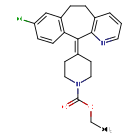
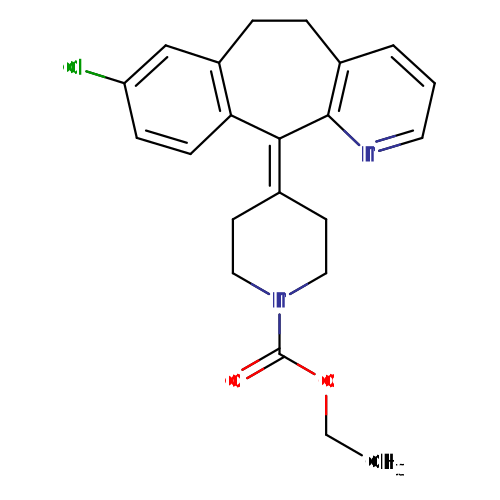
Structure for Loratadine (DB00455)
- Weight
- Average: 382.883
Monoisotopic: 382.144805697 - Chemical Formula
- C22H23ClN2O2
- Synonyms
- Loratadina
- Loratadine
- Loratadinum
- External IDs
- SCH-29851

Pharmacology
- Indication
Loratadine is a 2nd generation antihistamine and is used to manage symptoms of allergic rhinitis, wheal formation, urticaria, and other allergic dermatologic conditions.5617
 Reduce drug development failure ratesBuild, train, & validate machine-learning modelswith evidence-based and structured datasets.Build, train, & validate predictive machine-learning models with structured datasets.
- Associated Conditions
Indication Type Indication Combined Product Details Approval Level Age Group Patient Characteristics Dose Form Symptomatic treatment of Allergic dermatologic disorders ••• ••• ••••••• Symptomatic treatment of Allergic dermatologic disorders ••• ••• ••••••• ••••••• ••••••• •••••• •••••••••••••• Used in combination for symptomatic treatment of Allergic rhinitis (ar) Combination Product in combination with: Pseudoephedrine (DB00852) •••••••••••• ••••••• ••••••• •••••••• ••••••• Used in combination for symptomatic treatment of Allergic rhinitis (ar) Combination Product in combination with: Pseudoephedrine (DB00852), Acetaminophen (DB00316) •••••••••••• •••••• Symptomatic treatment of Allergic rhinitis (ar) •••••••••••• ••••••• •••••••••••• - Contraindications & Blackbox Warnings
 Prevent Adverse Drug Events TodayTap into our Clinical API for life-saving information on contraindications & blackbox warnings, population restrictions, harmful risks, & more.Avoid life-threatening adverse drug events with our Clinical API
- Pharmacodynamics
Like other 2nd generation antihistamines, loratadine is selective for peripheral H1 receptors.9 Loratadine does not penetrate effectively into the central nervous system and has poor affinity for CNS H1-receptors.9 These qualities result in a lack of CNS depressant effects such as drowsiness, sedation, and impaired psychomotor function.9
- Mechanism of action
Histamine release is a key mediator in allergic rhinitis and urticaria.1278 As a result, loratadine exerts it's effect by targeting H1 histamine receptors.
Loratadine binds to H1 histamine receptors found on the surface of epithelial cells, endothelial cells, eosinophils, neutrophils, airway cells, and vascular smooth muscle cells among others.7 H1 histamine receptors fall under the wider umbrella of G-protein coupled receptors, and exist in a state of equilibrium between the active and inactive forms.78 Histamine binding to the H1-receptor facilitates cross linking between transmembrane domains III and V, stabilizing the active form of the receptor.78 On the other hand, antihistamines bind to a different site on the H1 receptor favouring the inactive form.78
Hence, loratadine can more accurately be classified as an "inverse agonist" as opposed to a "histamine antagonist", and can prevent or reduce the severity of histamine mediated symptoms.7817
Target Actions Organism AHistamine H1 receptor antagonistHumans UPotassium voltage-gated channel subfamily H member 2 antagonistHumans - Absorption
Loratadine is rapidly absorbed and achieves peak plasma concentration in 1-2 hours, while it's main metabolite achieves peak plasma concentration in 3-4 hours.6
In the rapid dissolve formulation, the pharmacokinetic parameters of loratadine are as follows17: Cmax = 2.56 ng/ml, Tmax = 1.14 hrs, AUC = 6.14 ng x hr/ml.
In the rapid dissolve formulation, the pharmacokinetic parameters of descarboethoxyloratadine are as follows17: Cmax = 3.72 ng/ml, Tmax = 1.97 hr, AUC = 49.1 ng x hr/ml.
In the conventional formulation, the pharmacokinetic parameters of loratadine are as follows17: Cmax = 2.11 ng/ml, Tmax = 1.00 hr, AUC = 4.64 ng x hr/ml
In the conventional formulation, the pharmacokinetic parameters of descarboethoxyloratadine are as follows17: Cmax = 3.66 ng/ml, Tmax = 1.97 hr, AUC = 48.4 ng x hr/ml
- Volume of distribution
The volume of distribution of loratadine is 120 L/Kg.18
- Protein binding
97 - 99% of the loratadine is bound to plasma proteins.17
- Metabolism
Loratadine undergoes extensive first pass metabolism in the liver and is primarily metabolized by CYP3A4, CYP2D6, CYP1A1 and CYP2C19. Less involved CYP enzymes include CYP1A2, CYP2B6, CYP2C8, CYP2C9 and CYP3A5.1011 CYP3A4 and CYP2D6 are mainly responsible for metabolizing loratadine to descarboethoxyloratadine.11 This primary metabolite is 4 times more pharmacologically active than loratadine.6
In addition, a study demonstrates that descarboethoxyloratadine is first glucuronidated by UGT2B10, then hydroxylated by CYP2C8 to form 3-hydroxydesloratadine.15 Further glucuronidation of 3-hydroxydesloratadine facilitates excretion.16
Hover over products below to view reaction partners
- Route of elimination
Over a 10 day period, 40% of loratadine is excreted in the urine, and 42% is eliminated in the faeces.17
- Half-life
The elimination half life is approximately 10 hours for loratadine and 20 hours for descarboethoxyloratadine.6
- Clearance
The clearance of loratadine after single oral doses of 20 mg and 40 mg are 12 L/h/kg and 9 L/h/kg respectively.9 P-glycoprotein is involved in the clearance of many 2nd generation antihistamines, including loratadine, from the central nervous system. 1st generation antihistamines are not cleared by P-glycoprotein, which may help explain why they have a different central nervous system adverse effect profile compared to their 2nd generation counterparts.1813 It appears that an antihistamine with higher affinity for p-glycoprotein will have a lower incidence of CNS adverse effects.14
- Adverse Effects
 Improve decision support & research outcomesWith structured adverse effects data, including: blackbox warnings, adverse reactions, warning & precautions, & incidence rates. View sample adverse effects data in our new Data Library!Improve decision support & research outcomes with our structured adverse effects data.
- Toxicity
Second generation antihistamines such as loratadine have very few adverse effects; however, insomnia, headache, fatigue, drowsiness and rash have been reported.7 Symptoms of loratadine overdose include gastrointestinal side effects, agitation, drowsiness, tachycardia, and headache.7 It is advised to obtain an ECG in the event of loratadine overdose.7
- Pathways
Pathway Category Loratadine H1-Antihistamine Action Drug action - Pharmacogenomic Effects/ADRs
- Not Available
Interactions
- Drug Interactions
- This information should not be interpreted without the help of a healthcare provider. If you believe you are experiencing an interaction, contact a healthcare provider immediately. The absence of an interaction does not necessarily mean no interactions exist.
Drug Interaction Integrate drug-drug
interactions in your softwareAbametapir The serum concentration of Loratadine can be increased when it is combined with Abametapir. Aclidinium Aclidinium may increase the anticholinergic activities of Loratadine. Acrivastine The risk or severity of QTc prolongation can be increased when Loratadine is combined with Acrivastine. Adenosine The risk or severity of QTc prolongation can be increased when Loratadine is combined with Adenosine. Ajmaline The risk or severity of QTc prolongation can be increased when Loratadine is combined with Ajmaline. - Food Interactions
- No interactions found.
Products
 Drug product information from 10+ global regionsOur datasets provide approved product information including:dosage, form, labeller, route of administration, and marketing period.Access drug product information from over 10 global regions.
- Product Images
- International/Other Brands
- Aerotina / Alavert / Biloina / Civeran / Fristamin / Histaloran / Lomilan / Loracert / Loradex / Loranox / Lorastine / Loratyne / Loritine / Nularef / Restamine / Roletra / Sensibit
- Generic Prescription Products
Name Dosage Strength Route Labeller Marketing Start Marketing End Region Image Loratadine Tablet 10 mg/1 Oral Northwind Pharmaceuticals 2014-10-27 Not applicable US 
Loratadine Allergy Relief Tablet 10 mg/1 Oral Clinical Solutions Wholsesale 2003-08-28 2017-06-28 US 
Loratadine antihistamine Tablet 10 mg/1 Oral bryant ranch prepack 2008-10-15 Not applicable US 
Loratadineantihistamine antihistamine Tablet 10 mg/1 Oral Remedy Repack 2013-05-29 2016-07-11 US Loratadineantihistamine antihistamine Tablet 10 mg/1 Oral Remedy Repack 2015-02-19 2017-01-23 US - Over the Counter Products
Name Dosage Strength Route Labeller Marketing Start Marketing End Region Image 24 / 7 Life Non-Drowsy Allergy Relief Tablet 10 mg/1 Oral Lil' Drug Store Products, Inc. 2022-10-24 Not applicable US 24 / 7 Life Non-Drowsy Allergy Relief Tablet 10 mg/1 Oral Lil' Drug Store Products, Inc. 2020-12-17 Not applicable US 24 Hour Allergy Relief Tablet 10 mg/1 Oral Meijer Distribution Inc 2014-12-30 2016-05-21 US 24 Hour Allergy Remedy Tablet 10 mg Oral Vita Health Products Inc 2006-07-28 Not applicable Canada 
7 Select Allergy Relief Tablet 10 mg/1 Oral 7-Eleven 2014-05-14 2020-10-31 US - Mixture Products
Name Ingredients Dosage Route Labeller Marketing Start Marketing End Region Image 12 Hour Allergy and Congestion Loratadine (5 mg/1) + Pseudoephedrine sulfate (120 mg/1) Tablet, film coated, extended release Oral Walgreen Company 2018-05-05 Not applicable US ADOREM GRIPA TABLETAS Loratadine (5 mg) + Acetaminophen (500 mg) + Phenylephrine hydrochloride (10 mg) Tablet Oral LABORATORIOS SIEGFRIED S.A.S. 2006-11-10 2010-06-18 Colombia 
Alavert Allergy and Congestion D-12 hour Loratadine (5 mg/1) + Pseudoephedrine sulfate (120 mg/1) Tablet, film coated, extended release Oral Foundation Consumer Brands 2021-12-15 Not applicable US Alavert Allergy Sinus D-12 Loratadine (5 mg/1) + Pseudoephedrine sulfate (120 mg/1) Tablet, film coated, extended release Oral Physicians Total Care, Inc. 2007-04-26 2012-06-30 US Alavert Allergy Sinus D-12 Loratadine (5 mg/1) + Pseudoephedrine sulfate (120 mg/1) Tablet, film coated, extended release Oral Haleon US Holdings LLC 2004-01-30 Not applicable US 
- Unapproved/Other Products
Name Ingredients Dosage Route Labeller Marketing Start Marketing End Region Image AlloPAX Loratadine (3 g/3g) + Levocetirizine dihydrochloride (3 g/3g) Kit Transdermal PharmaGenetico LLC 2015-06-30 Not applicable US Help I have allergies Loratadine (10 mg/1) Tablet Oral Help Remedies, Inc. 2009-07-01 Not applicable US Loratadine Loratadine (10 mg/1) Tablet Oral Rebel Distributors 2010-01-21 Not applicable US 
Nazirex Compounding Kit Loratadine (1 g/1g) + Levocetirizine dihydrochloride (1 g/1g) Kit Topical Alvix Laboratories 2015-03-18 2015-07-01 US


Categories
- ATC Codes
- R06AX13 — Loratadine
- Drug Categories
- Anti-Allergic Agents
- Antihistamines for Systemic Use
- Antipruritics
- Benzocycloheptenes
- BSEP/ABCB11 Substrates
- Cytochrome P-450 CYP1A2 Substrates
- Cytochrome P-450 CYP2B6 Substrates
- Cytochrome P-450 CYP2C19 Inhibitors
- Cytochrome P-450 CYP2C19 Inhibitors (weak)
- Cytochrome P-450 CYP2C19 Substrates
- Cytochrome P-450 CYP2C8 Inhibitors
- Cytochrome P-450 CYP2C8 Inhibitors (moderate)
- Cytochrome P-450 CYP2C8 Substrates
- Cytochrome P-450 CYP2C9 Substrates
- Cytochrome P-450 CYP2D6 Inhibitors
- Cytochrome P-450 CYP2D6 Inhibitors (weak)
- Cytochrome P-450 CYP2D6 Substrates
- Cytochrome P-450 CYP3A Inhibitors
- Cytochrome P-450 CYP3A Substrates
- Cytochrome P-450 CYP3A4 Inhibitors
- Cytochrome P-450 CYP3A4 Inhibitors (weak)
- Cytochrome P-450 CYP3A4 Substrates
- Cytochrome P-450 CYP3A5 Substrates
- Cytochrome P-450 Enzyme Inhibitors
- Cytochrome P-450 Substrates
- Dermatologicals
- Dibenzocycloheptenes
- Histamine Antagonists
- Histamine H1 Antagonists
- Histamine H1 Antagonists, Non-Sedating
- Loratadine and derivatives
- Neurotransmitter Agents
- P-glycoprotein inhibitors
- P-glycoprotein substrates
- Piperidines
- Potential QTc-Prolonging Agents
- QTc Prolonging Agents
- Chemical TaxonomyProvided by Classyfire
- Description
- This compound belongs to the class of organic compounds known as benzocycloheptapyridines. These are aromatic compounds containing a benzene ring and a pyridine ring fused to a seven membered carbocycle.
- Kingdom
- Organic compounds
- Super Class
- Organoheterocyclic compounds
- Class
- Benzocycloheptapyridines
- Sub Class
- Not Available
- Direct Parent
- Benzocycloheptapyridines
- Alternative Parents
- Piperidinecarboxylic acids / Pyridines and derivatives / Benzenoids / Aryl chlorides / Heteroaromatic compounds / Carbamate esters / Organic carbonic acids and derivatives / Azacyclic compounds / Organopnictogen compounds / Organonitrogen compounds show 4 more
- Substituents
- Aromatic heteropolycyclic compound / Aryl chloride / Aryl halide / Azacycle / Benzenoid / Benzocycloheptapyridine / Carbamic acid ester / Carbonic acid derivative / Carbonyl group / Heteroaromatic compound show 12 more
- Molecular Framework
- Aromatic heteropolycyclic compounds
- External Descriptors
- Not Available
- Affected organisms
- Humans and other mammals
Chemical Identifiers
- UNII
- 7AJO3BO7QN
- CAS number
- 79794-75-5
- InChI Key
- JCCNYMKQOSZNPW-UHFFFAOYSA-N
- InChI
- InChI=1S/C22H23ClN2O2/c1-2-27-22(26)25-12-9-15(10-13-25)20-19-8-7-18(23)14-17(19)6-5-16-4-3-11-24-21(16)20/h3-4,7-8,11,14H,2,5-6,9-10,12-13H2,1H3
- IUPAC Name
- ethyl 4-{13-chloro-4-azatricyclo[9.4.0.0^{3,8}]pentadeca-1(11),3(8),4,6,12,14-hexaen-2-ylidene}piperidine-1-carboxylate
- SMILES
- CCOC(=O)N1CCC(CC1)=C1C2=C(CCC3=C1N=CC=C3)C=C(Cl)C=C2
References
- Synthesis Reference
Alberto Stampa, Pelayo Camps, Gloria Rodriguez, Jordi Bosch, Maria del Carmen Onrubia, "Process for the preparation of loratadine." U.S. Patent US6084100, issued July 04, 2000.
US6084100- General References
- See S: Desloratadine for allergic rhinitis. Am Fam Physician. 2003 Nov 15;68(10):2015-6. [Article]
- Menardo JL, Horak F, Danzig MR, Czarlewski W: A review of loratadine in the treatment of patients with allergic bronchial asthma. Clin Ther. 1997 Nov-Dec;19(6):1278-93; discussion 1523-4. [Article]
- Howarth PH: Histamine and asthma: an appraisal based on specific H1-receptor antagonism. Clin Exp Allergy. 1990 Aug;20 Suppl 2:31-41. [Article]
- Baroody FM, Naclerio RM: Antiallergic effects of H1-receptor antagonists. Allergy. 2000;55 Suppl 64:17-27. [Article]
- Tenn MW, Steacy LM, Ng CC, Ellis AK: Onset of action for loratadine tablets for the symptomatic control of seasonal allergic rhinitis in adults challenged with ragweed pollen in the Environmental Exposure Unit: a post hoc analysis of total symptom score. Allergy Asthma Clin Immunol. 2018 Jan 16;14:5. doi: 10.1186/s13223-017-0227-4. eCollection 2018. [Article]
- Barenholtz HA, McLeod DC: Loratadine: a nonsedating antihistamine with once-daily dosing. DICP. 1989 Jun;23(6):445-50. [Article]
- Randall KL, Hawkins CA: Antihistamines and allergy. Aust Prescr. 2018 Apr;41(2):41-45. doi: 10.18773/austprescr.2018.013. Epub 2018 Apr 3. [Article]
- Church MK, Church DS: Pharmacology of antihistamines. Indian J Dermatol. 2013 May;58(3):219-24. doi: 10.4103/0019-5154.110832. [Article]
- Clissold SP, Sorkin EM, Goa KL: Loratadine. A preliminary review of its pharmacodynamic properties and therapeutic efficacy. Drugs. 1989 Jan;37(1):42-57. [Article]
- Ghosal A, Gupta S, Ramanathan R, Yuan Y, Lu X, Su AD, Alvarez N, Zbaida S, Chowdhury SK, Alton KB: Metabolism of loratadine and further characterization of its in vitro metabolites. Drug Metab Lett. 2009 Aug;3(3):162-70. Epub 2009 Aug 1. [Article]
- Zhang YF, Chen XY, Zhong DF, Dong YM: Pharmacokinetics of loratadine and its active metabolite descarboethoxyloratadine in healthy Chinese subjects. Acta Pharmacol Sin. 2003 Jul;24(7):715-8. [Article]
- Naclerio RM: The role of histamine in allergic rhinitis. J Allergy Clin Immunol. 1990 Oct;86(4 Pt 2):628-32. doi: 10.1016/s0091-6749(05)80227-1. [Article]
- Obradovic T, Dobson GG, Shingaki T, Kungu T, Hidalgo IJ: Assessment of the first and second generation antihistamines brain penetration and role of P-glycoprotein. Pharm Res. 2007 Feb;24(2):318-27. doi: 10.1007/s11095-006-9149-4. Epub 2006 Dec 19. [Article]
- Conen S, Theunissen EL, Vermeeren A, van Ruitenbeek P, Stiers P, Mehta MA, Toennes SW, Ramaekers JG: The role of P-glycoprotein in CNS antihistamine effects. Psychopharmacology (Berl). 2013 Sep;229(1):9-19. doi: 10.1007/s00213-013-3075-z. Epub 2013 Apr 7. [Article]
- Kazmi F, Barbara JE, Yerino P, Parkinson A: A long-standing mystery solved: the formation of 3-hydroxydesloratadine is catalyzed by CYP2C8 but prior glucuronidation of desloratadine by UDP-glucuronosyltransferase 2B10 is an obligatory requirement. Drug Metab Dispos. 2015 Apr;43(4):523-33. doi: 10.1124/dmd.114.062620. Epub 2015 Jan 16. [Article]
- Aratyn-Schaus Y, Ramanathan R: Advances in high-resolution MS and hepatocyte models solve a long-standing metabolism challenge: the loratadine story. Bioanalysis. 2016 Aug;8(16):1645-62. doi: 10.4155/bio-2016-0094. Epub 2016 Jul 27. [Article]
- Health Canada Product Monograph: Claritin (loratadine) [Link]
- Comparative Pharmacology of the H1 Antihistamines [Link]
- External Links
- Human Metabolome Database
- HMDB0005000
- KEGG Drug
- D00364
- PubChem Compound
- 3957
- PubChem Substance
- 46507853
- ChemSpider
- 3820
- BindingDB
- 22876
- 28889
- ChEBI
- 6538
- ChEMBL
- CHEMBL998
- ZINC
- ZINC000000537931
- Therapeutic Targets Database
- DAP000101
- PharmGKB
- PA450266
- RxList
- RxList Drug Page
- Drugs.com
- Drugs.com Drug Page
- Wikipedia
- Loratadine
- MSDS
- Download (51.7 KB)
Clinical Trials
- Clinical Trials
Phase Status Purpose Conditions Count 4 Completed Other Allergic Rhinitis (AR) 1 4 Completed Other Healthy Volunteers (HV) 1 4 Completed Treatment Allergic Conjunctivitis (AC) 1 4 Completed Treatment Allergic Rhinitis (AR) 2 4 Completed Treatment Allergic Rhinitis (AR) / Allergy to Tree Pollen / Seasonal Allergic Rhinitis 1
Pharmacoeconomics
- Manufacturers
- Schering plough healthcare products inc
- Taro pharmaceuticals usa inc
- Apotex inc richmond hill
- L perrigo co
- Ranbaxy laboratories ltd
- Silarx pharmaceuticals inc
- Taro pharmaceutical industries ltd
- Teva pharmaceuticals usa inc
- Wockhardt eu operations (swiss) ag
- Wyeth consumer healthcare
- Impax laboratories inc
- Watson laboratories inc florida
- Apotex inc etobicoke site
- Mylan pharmaceuticals inc
- Perrigo co
- Sandoz inc
- Packagers
- Amerisource Health Services Corp.
- AstraZeneca Inc.
- Cardinal Health
- Catalent Pharma Solutions
- Chain Drug
- Concern Stirol
- CVS Pharmacy
- Direct Dispensing Inc.
- Dispensing Solutions
- Diversified Healthcare Services Inc.
- H.J. Harkins Co. Inc.
- Major Pharmaceuticals
- Merck & Co.
- Neuman Distributors Inc.
- Novartis AG
- Nucare Pharmaceuticals Inc.
- Patient First Corp.
- PD-Rx Pharmaceuticals Inc.
- Physicians Total Care Inc.
- Prepak Systems Inc.
- Prescript Pharmaceuticals
- Professional Co.
- S&P Healthcare
- Southwood Pharmaceuticals
- Walgreen Co.
- West-Ward Pharmaceuticals
- Wockhardt Ltd.
- Wyeth Pharmaceuticals
- Dosage Forms
Form Route Strength Tablet, chewable Buccal 10 mg Tablet, film coated, extended release Oral Solution Oral 1.000 mg Tablet, film coated Oral Tablet Oral Kit Transdermal Tablet, effervescent Oral Tablet, orally disintegrating Oral Suspension Oral 1 mg/ml Solution Oral 100.000 mg Syrup Oral 100.000 mg Capsule Oral Liquid Oral 5 mg/5mL Tablet, orally disintegrating Oral 10 mg/1 Tablet Oral Syrup Oral 5 mg/5ml Tablet, chewable Oral 5 mg/1 Tablet, multilayer, extended release Oral Tablet, chewable Oral 10 mg/1 Kit Oral Syrup Oral 5 mg / 5 mL Tablet, orally disintegrating Oral 10 mg Tablet, orally disintegrating Oral 5 mg Tablet, orally disintegrating Oral 5 mg/1 Syrup Oral 1 mg / mL Film, soluble Oral 10 MG Tablet, sugar coated Oral Tablet, film coated Oral 10 mg Syrup Oral Capsule, liquid filled Oral Tablet, delayed release Oral Cream; kit; liquid; ointment; tablet; tablet, chewable; tablet, film coated Oral; Topical Syrup Oral 0.100 g Solution Oral Tablet, effervescent Oral 10 MG Tablet, film coated Oral Tablet, film coated Oral 5 MG Solution Oral 0.100 g Tablet, film coated Oral 10 mg/1 Solution Oral 100 mg Suspension Oral 1 mg/1ml Syrup Oral 0.10 g Tablet Oral 10.000 mg Granule Oral Solution Oral 1 mg Suspension Oral Syrup Oral 1.0 mg/ml Tablet Oral 10.0 mg Tablet Oral 10 mg Tablet Oral 1000000 mg Syrup Oral 100 mg Syrup Oral 1 MG/ML Solution Oral 0.1 g Tablet, soluble Oral 10 mg Syrup Oral 0.1 g Capsule, liquid filled Oral 10 mg/1 Solution Oral 5 mg/5mL Tablet Oral 10 mg/1 Tablet Oral 5 mg/1 Tablet, extended release Oral Capsule, coated Oral Capsule Oral 10 mg Capsule, liquid filled Oral 10 mg Solution Oral 100.00 mg Solution Oral Kit Topical Tablet Oral 10 mg / tab Syrup Oral Tablet Oral 10000 MG Suspension Oral Powder, for solution Oral Capsule, extended release Tablet Oral 10.00 mg Tablet, soluble Oral Tablet, coated Oral Syrup Oral 100.00 mg Syrup Oral 5 ml/5ml Syrup Oral 5 mg/5ml Tablet, coated Oral 10 mg - Prices
Unit description Cost Unit Claritin 30 10 mg tablet Box 29.99USD box Lisinopril 100% powder 21.6USD g Zestril 40 mg tablet 2.48USD tablet Claritin-d 12 hour tablet sa 2.46USD tablet Prinivil 40 mg tablet 2.4USD tablet Zestril 30 mg tablet 2.4USD tablet Zestril 5 mg tablet 1.54USD tablet Lisinopril 30 mg tablet 1.51USD tablet Claritin 10 mg tablet 1.48USD tablet Claritin-d 24 hour tablet sa 1.43USD tablet Zestril 10 mg tablet 1.43USD tablet Claritin 10 mg reditabs 1.4USD tablet Lisinopril 40 mg tablet 1.26USD tablet Zestril 20 mg tablet 1.25USD tablet Prinivil 20 mg tablet 1.23USD tablet Prinivil 10 mg tablet 1.15USD tablet Loratadine-d 24hr tablet 1.11USD tablet Prinivil 5 mg tablet 1.11USD tablet Lisinopril 20 mg tablet 1.07USD tablet Child's claritin 5 mg tablet chew 1.02USD tablet Lisinopril 10 mg tablet 0.99USD tablet Lisinopril 5 mg tablet 0.96USD tablet CVS Pharmacy loratadine-d 24hr tablet 0.89USD tablet Zestril 2.5 mg tablet 0.79USD tablet Tavist nd 10 mg tablet 0.74USD tablet Wal-itin 10 mg tablet 0.7USD tablet Alavert d-12 allergy-sinus tablet 0.68USD tablet Alavert 10 mg tablet 0.64USD tablet Lisinopril 2.5 mg tablet 0.64USD tablet CVS Pharmacy loratadine 10 mg tablet 0.52USD tablet Loratadine 10 mg tablet 0.47USD tablet CVS Pharmacy allergy relief 10 mg tablet 0.44USD tablet Qc loratadine 10 mg tablet 0.08USD tablet Allergy relief 10 mg tablet 0.07USD tablet DrugBank does not sell nor buy drugs. Pricing information is supplied for informational purposes only.- Patents
Patent Number Pediatric Extension Approved Expires (estimated) Region US6132758 No 2000-10-17 2018-06-01 US
Properties
- State
- Solid
- Experimental Properties
Property Value Source melting point (°C) 134-136 °C https://www.chemicalbook.com/ChemicalProductProperty_US_CB5283770.aspx water solubility <1 mg/ml at 25°C https://www.chemicalbook.com/ChemicalProductProperty_US_CB5283770.aspx - Predicted Properties
Property Value Source Water Solubility 0.0134 mg/mL ALOGPS logP 4.8 ALOGPS logP 4.55 Chemaxon logS -4.5 ALOGPS pKa (Strongest Basic) 4.33 Chemaxon Physiological Charge 0 Chemaxon Hydrogen Acceptor Count 2 Chemaxon Hydrogen Donor Count 0 Chemaxon Polar Surface Area 42.43 Å2 Chemaxon Rotatable Bond Count 2 Chemaxon Refractivity 116.98 m3·mol-1 Chemaxon Polarizability 41.68 Å3 Chemaxon Number of Rings 4 Chemaxon Bioavailability 1 Chemaxon Rule of Five Yes Chemaxon Ghose Filter Yes Chemaxon Veber's Rule No Chemaxon MDDR-like Rule No Chemaxon - Predicted ADMET Features
Property Value Probability Human Intestinal Absorption + 1.0 Blood Brain Barrier + 0.9754 Caco-2 permeable - 0.5488 P-glycoprotein substrate Substrate 0.7337 P-glycoprotein inhibitor I Inhibitor 0.9505 P-glycoprotein inhibitor II Inhibitor 0.8387 Renal organic cation transporter Non-inhibitor 0.5143 CYP450 2C9 substrate Non-substrate 0.8197 CYP450 2D6 substrate Substrate 0.8918 CYP450 3A4 substrate Substrate 0.677 CYP450 1A2 substrate Non-inhibitor 0.9045 CYP450 2C9 inhibitor Inhibitor 0.8949 CYP450 2D6 inhibitor Non-inhibitor 0.9231 CYP450 2C19 inhibitor Inhibitor 0.8994 CYP450 3A4 inhibitor Non-inhibitor 0.831 CYP450 inhibitory promiscuity High CYP Inhibitory Promiscuity 0.9359 Ames test Non AMES toxic 0.6884 Carcinogenicity Non-carcinogens 0.915 Biodegradation Not ready biodegradable 0.9963 Rat acute toxicity 2.8964 LD50, mol/kg Not applicable hERG inhibition (predictor I) Weak inhibitor 0.7531 hERG inhibition (predictor II) Inhibitor 0.8456
Spectra
- Mass Spec (NIST)
- Not Available
- Spectra
- Chromatographic Properties
Collision Cross Sections (CCS)
Adduct CCS Value (Å2) Source type Source [M-H]- 199.044604 predictedDarkChem Lite v0.1.0 [M-H]- 195.4247137 predictedDarkChem Lite v0.1.0 [M-H]- 187.70808 predictedDeepCCS 1.0 (2019) [M+H]+ 199.392804 predictedDarkChem Lite v0.1.0 [M+H]+ 184.3887636 predictedDarkChem Lite v0.1.0 [M+H]+ 190.0661 predictedDeepCCS 1.0 (2019) [M+Na]+ 199.309204 predictedDarkChem Lite v0.1.0 [M+Na]+ 199.533504 predictedDarkChem Lite v0.1.0 [M+Na]+ 197.12764 predictedDeepCCS 1.0 (2019)
Targets

- Kind
- Protein
- Organism
- Humans
- Pharmacological action
- Yes
- Actions
- Antagonist
- General Function
- Histamine receptor activity
- Specific Function
- In peripheral tissues, the H1 subclass of histamine receptors mediates the contraction of smooth muscles, increase in capillary permeability due to contraction of terminal venules, and catecholamin...
- Gene Name
- HRH1
- Uniprot ID
- P35367
- Uniprot Name
- Histamine H1 receptor
- Molecular Weight
- 55783.61 Da
References
- Chen X, Ji ZL, Chen YZ: TTD: Therapeutic Target Database. Nucleic Acids Res. 2002 Jan 1;30(1):412-5. [Article]
- Cieslewicz G, Gondorowicz K, Grzelewska-Rzymowska I, Rozniecki J, Wojciechowska B: [Effect of loratadine--selective antagonist of histamine (H1) receptor--on allergen-induced bronchoconstriction in atopic asthmatics]. Pneumonol Alergol Pol. 1992;60(11-12):11-5. [Article]
- Cieslewicz G, Gondorowicz K, Grzelewska-Rzymowska I, Rozniecki J: [Effect of loratadine, selective antagonist of histamine H1 receptors, on histamine-induced bronchoconstriction]. Pneumonol Alergol Pol. 1995;63(5-6):281-5. [Article]
- Letari O, Miozzo A, Folco G, Belloni PA, Sala A, Rovati GE, Nicosia S: Effects of loratadine on cytosolic Ca2+ levels and leukotriene release: novel mechanisms of action independent of the anti-histamine activity. Eur J Pharmacol. 1994 Feb 15;266(3):219-27. [Article]
- Cavero I, Mestre M, Guillon JM, Heuillet E, Roach AG: Preclinical in vitro cardiac electrophysiology: a method of predicting arrhythmogenic potential of antihistamines in humans? Drug Saf. 1999;21 Suppl 1:19-31; discussion 81-7. [Article]
- Tamura T, Masaki S, Ohmori K, Karasawa A: Effect of olopatadine and other histamine H1 receptor antagonists on the skin inflammation induced by repeated topical application of oxazolone in mice. Pharmacology. 2005 Dec;75(1):45-52. Epub 2005 Jun 7. [Article]
- Grzelewska-Rzymowska I, Gondorowicz K, Cieslewicz G, Rozniecki J, Wojciechowska B: [Effect of loratadine (LO), a selective H1 antagonist, on histamine-induced bronchoconstriction]. Pneumonol Alergol Pol. 1992;60(11-12):16-21. [Article]
- Menardo JL, Horak F, Danzig MR, Czarlewski W: A review of loratadine in the treatment of patients with allergic bronchial asthma. Clin Ther. 1997 Nov-Dec;19(6):1278-93; discussion 1523-4. [Article]
- Howarth PH: Histamine and asthma: an appraisal based on specific H1-receptor antagonism. Clin Exp Allergy. 1990 Aug;20 Suppl 2:31-41. [Article]
- Kind
- Protein
- Organism
- Humans
- Pharmacological action
- Unknown
- Actions
- Antagonist
- General Function
- Voltage-gated potassium channel activity involved in ventricular cardiac muscle cell action potential repolarization
- Specific Function
- Pore-forming (alpha) subunit of voltage-gated inwardly rectifying potassium channel. Channel properties are modulated by cAMP and subunit assembly. Mediates the rapidly activating component of the ...
- Gene Name
- KCNH2
- Uniprot ID
- Q12809
- Uniprot Name
- Potassium voltage-gated channel subfamily H member 2
- Molecular Weight
- 126653.52 Da
References
- Crumb WJ Jr: Loratadine blockade of K(+) channels in human heart: comparison with terfenadine under physiological conditions. J Pharmacol Exp Ther. 2000 Jan;292(1):261-4. [Article]
- Taglialatela M, Pannaccione A, Castaldo P, Giorgio G, Zhou Z, January CT, Genovese A, Marone G, Annunziato L: Molecular basis for the lack of HERG K+ channel block-related cardiotoxicity by the H1 receptor blocker cetirizine compared with other second-generation antihistamines. Mol Pharmacol. 1998 Jul;54(1):113-21. [Article]
Enzymes
- Kind
- Protein
- Organism
- Humans
- Pharmacological action
- No
- Actions
- SubstrateInhibitor
- General Function
- Vitamin d3 25-hydroxylase activity
- Specific Function
- Cytochromes P450 are a group of heme-thiolate monooxygenases. In liver microsomes, this enzyme is involved in an NADPH-dependent electron transport pathway. It performs a variety of oxidation react...
- Gene Name
- CYP3A4
- Uniprot ID
- P08684
- Uniprot Name
- Cytochrome P450 3A4
- Molecular Weight
- 57342.67 Da
References
- Warzecha H, Ferme D, Peer M, Frank A, Unger M: Bioconversion of the antihistaminc drug loratadine by tobacco cell suspension cultures expressing human cytochrome P450 3A4. J Biosci Bioeng. 2010 Mar;109(3):288-90. doi: 10.1016/j.jbiosc.2009.09.001. Epub 2009 Sep 29. [Article]
- Li C, Lee MY, Choi JS: Effects of silybinin, CYP3A4 and P-glycoprotein inhibitor in vitro, on the bioavailability of loratadine in rats. Pharmazie. 2010 Jul;65(7):510-4. [Article]
- Barecki ME, Casciano CN, Johnson WW, Clement RP: In vitro characterization of the inhibition profile of loratadine, desloratadine, and 3-OH-desloratadine for five human cytochrome P-450 enzymes. Drug Metab Dispos. 2001 Sep;29(9):1173-5. [Article]
- Kind
- Protein
- Organism
- Humans
- Pharmacological action
- Unknown
- Actions
- SubstrateInhibitor
- General Function
- Steroid hydroxylase activity
- Specific Function
- Responsible for the metabolism of many drugs and environmental chemicals that it oxidizes. It is involved in the metabolism of drugs such as antiarrhythmics, adrenoceptor antagonists, and tricyclic...
- Gene Name
- CYP2D6
- Uniprot ID
- P10635
- Uniprot Name
- Cytochrome P450 2D6
- Molecular Weight
- 55768.94 Da
References
- Barecki ME, Casciano CN, Johnson WW, Clement RP: In vitro characterization of the inhibition profile of loratadine, desloratadine, and 3-OH-desloratadine for five human cytochrome P-450 enzymes. Drug Metab Dispos. 2001 Sep;29(9):1173-5. [Article]
- Yumibe N, Huie K, Chen KJ, Snow M, Clement RP, Cayen MN: Identification of human liver cytochrome P450 enzymes that metabolize the nonsedating antihistamine loratadine. Formation of descarboethoxyloratadine by CYP3A4 and CYP2D6. Biochem Pharmacol. 1996 Jan 26;51(2):165-72. [Article]
- Yin OQ, Shi XJ, Tomlinson B, Chow MS: Effect of cyp2d6*10 allele on the pharmacokinetics of loratadine in chinese subjects. Drug Metab Dispos. 2005 Sep;33(9):1283-7. doi: 10.1124/dmd.105.005025. Epub 2005 Jun 2. [Article]
- Kind
- Protein
- Organism
- Humans
- Pharmacological action
- No
- Actions
- Substrate
- General Function
- Vitamin d 24-hydroxylase activity
- Specific Function
- Cytochromes P450 are a group of heme-thiolate monooxygenases. In liver microsomes, this enzyme is involved in an NADPH-dependent electron transport pathway. It oxidizes a variety of structurally un...
- Gene Name
- CYP1A1
- Uniprot ID
- P04798
- Uniprot Name
- Cytochrome P450 1A1
- Molecular Weight
- 58164.815 Da
References
- Ghosal A, Gupta S, Ramanathan R, Yuan Y, Lu X, Su AD, Alvarez N, Zbaida S, Chowdhury SK, Alton KB: Metabolism of loratadine and further characterization of its in vitro metabolites. Drug Metab Lett. 2009 Aug;3(3):162-70. Epub 2009 Aug 1. [Article]
- Aratyn-Schaus Y, Ramanathan R: Advances in high-resolution MS and hepatocyte models solve a long-standing metabolism challenge: the loratadine story. Bioanalysis. 2016 Aug;8(16):1645-62. doi: 10.4155/bio-2016-0094. Epub 2016 Jul 27. [Article]
- Kind
- Protein
- Organism
- Humans
- Pharmacological action
- No
- Actions
- SubstrateInhibitor
- General Function
- Steroid hydroxylase activity
- Specific Function
- Responsible for the metabolism of a number of therapeutic agents such as the anticonvulsant drug S-mephenytoin, omeprazole, proguanil, certain barbiturates, diazepam, propranolol, citalopram and im...
- Gene Name
- CYP2C19
- Uniprot ID
- P33261
- Uniprot Name
- Cytochrome P450 2C19
- Molecular Weight
- 55930.545 Da
References
- Barecki ME, Casciano CN, Johnson WW, Clement RP: In vitro characterization of the inhibition profile of loratadine, desloratadine, and 3-OH-desloratadine for five human cytochrome P-450 enzymes. Drug Metab Dispos. 2001 Sep;29(9):1173-5. [Article]
- Ghosal A, Gupta S, Ramanathan R, Yuan Y, Lu X, Su AD, Alvarez N, Zbaida S, Chowdhury SK, Alton KB: Metabolism of loratadine and further characterization of its in vitro metabolites. Drug Metab Lett. 2009 Aug;3(3):162-70. Epub 2009 Aug 1. [Article]
- Aratyn-Schaus Y, Ramanathan R: Advances in high-resolution MS and hepatocyte models solve a long-standing metabolism challenge: the loratadine story. Bioanalysis. 2016 Aug;8(16):1645-62. doi: 10.4155/bio-2016-0094. Epub 2016 Jul 27. [Article]
- Kind
- Protein
- Organism
- Humans
- Pharmacological action
- Unknown
- Actions
- SubstrateInhibitor
- General Function
- Steroid hydroxylase activity
- Specific Function
- Cytochromes P450 are a group of heme-thiolate monooxygenases. In liver microsomes, this enzyme is involved in an NADPH-dependent electron transport pathway. It oxidizes a variety of structurally un...
- Gene Name
- CYP2C8
- Uniprot ID
- P10632
- Uniprot Name
- Cytochrome P450 2C8
- Molecular Weight
- 55824.275 Da
References
- Walsky RL, Gaman EA, Obach RS: Examination of 209 drugs for inhibition of cytochrome P450 2C8. J Clin Pharmacol. 2005 Jan;45(1):68-78. [Article]
- Backman JT, Filppula AM, Niemi M, Neuvonen PJ: Role of Cytochrome P450 2C8 in Drug Metabolism and Interactions. Pharmacol Rev. 2016 Jan;68(1):168-241. doi: 10.1124/pr.115.011411. [Article]
- Kind
- Protein
- Organism
- Humans
- Pharmacological action
- Unknown
- Actions
- Substrate
- General Function
- Oxidoreductase activity, acting on paired donors, with incorporation or reduction of molecular oxygen, reduced flavin or flavoprotein as one donor, and incorporation of one atom of oxygen
- Specific Function
- Cytochromes P450 are a group of heme-thiolate monooxygenases. In liver microsomes, this enzyme is involved in an NADPH-dependent electron transport pathway. It oxidizes a variety of structurally un...
- Gene Name
- CYP1A2
- Uniprot ID
- P05177
- Uniprot Name
- Cytochrome P450 1A2
- Molecular Weight
- 58293.76 Da
References
- Ghosal A, Gupta S, Ramanathan R, Yuan Y, Lu X, Su AD, Alvarez N, Zbaida S, Chowdhury SK, Alton KB: Metabolism of loratadine and further characterization of its in vitro metabolites. Drug Metab Lett. 2009 Aug;3(3):162-70. Epub 2009 Aug 1. [Article]
- Kind
- Protein
- Organism
- Humans
- Pharmacological action
- Unknown
- Actions
- Substrate
- General Function
- Steroid hydroxylase activity
- Specific Function
- Cytochromes P450 are a group of heme-thiolate monooxygenases. In liver microsomes, this enzyme is involved in an NADPH-dependent electron transport pathway. It oxidizes a variety of structurally un...
- Gene Name
- CYP2B6
- Uniprot ID
- P20813
- Uniprot Name
- Cytochrome P450 2B6
- Molecular Weight
- 56277.81 Da
References
- Ghosal A, Gupta S, Ramanathan R, Yuan Y, Lu X, Su AD, Alvarez N, Zbaida S, Chowdhury SK, Alton KB: Metabolism of loratadine and further characterization of its in vitro metabolites. Drug Metab Lett. 2009 Aug;3(3):162-70. Epub 2009 Aug 1. [Article]
- Kind
- Protein
- Organism
- Humans
- Pharmacological action
- Unknown
- Actions
- Substrate
- General Function
- Steroid hydroxylase activity
- Specific Function
- Cytochromes P450 are a group of heme-thiolate monooxygenases. In liver microsomes, this enzyme is involved in an NADPH-dependent electron transport pathway. It oxidizes a variety of structurally un...
- Gene Name
- CYP2C9
- Uniprot ID
- P11712
- Uniprot Name
- Cytochrome P450 2C9
- Molecular Weight
- 55627.365 Da
References
- Ghosal A, Gupta S, Ramanathan R, Yuan Y, Lu X, Su AD, Alvarez N, Zbaida S, Chowdhury SK, Alton KB: Metabolism of loratadine and further characterization of its in vitro metabolites. Drug Metab Lett. 2009 Aug;3(3):162-70. Epub 2009 Aug 1. [Article]
- Kind
- Protein
- Organism
- Humans
- Pharmacological action
- Unknown
- Actions
- Substrate
- General Function
- Oxygen binding
- Specific Function
- Cytochromes P450 are a group of heme-thiolate monooxygenases. In liver microsomes, this enzyme is involved in an NADPH-dependent electron transport pathway. It oxidizes a variety of structurally un...
- Gene Name
- CYP3A5
- Uniprot ID
- P20815
- Uniprot Name
- Cytochrome P450 3A5
- Molecular Weight
- 57108.065 Da
References
- Ghosal A, Gupta S, Ramanathan R, Yuan Y, Lu X, Su AD, Alvarez N, Zbaida S, Chowdhury SK, Alton KB: Metabolism of loratadine and further characterization of its in vitro metabolites. Drug Metab Lett. 2009 Aug;3(3):162-70. Epub 2009 Aug 1. [Article]
- Kind
- Protein
- Organism
- Humans
- Pharmacological action
- Unknown
- General Function
- UDPGT is of major importance in the conjugation and subsequent elimination of potentially toxic xenobiotics and endogenous compounds.
- Specific Function
- Glucuronosyltransferase activity
- Gene Name
- UGT2B10
- Uniprot ID
- P36537
- Uniprot Name
- UDP-glucuronosyltransferase 2B10
- Molecular Weight
- 60773.485 Da
References
- Kazmi F, Barbara JE, Yerino P, Parkinson A: A long-standing mystery solved: the formation of 3-hydroxydesloratadine is catalyzed by CYP2C8 but prior glucuronidation of desloratadine by UDP-glucuronosyltransferase 2B10 is an obligatory requirement. Drug Metab Dispos. 2015 Apr;43(4):523-33. doi: 10.1124/dmd.114.062620. Epub 2015 Jan 16. [Article]
- Kind
- Protein
- Organism
- Humans
- Pharmacological action
- Unknown
- General Function
- Steroid binding
- Specific Function
- UDPGT is of major importance in the conjugation and subsequent elimination of potentially toxic xenobiotics and endogenous compounds. This isoform glucuronidates bilirubin IX-alpha to form both the...
- Gene Name
- UGT1A1
- Uniprot ID
- P22309
- Uniprot Name
- UDP-glucuronosyltransferase 1-1
- Molecular Weight
- 59590.91 Da
References
- Aratyn-Schaus Y, Ramanathan R: Advances in high-resolution MS and hepatocyte models solve a long-standing metabolism challenge: the loratadine story. Bioanalysis. 2016 Aug;8(16):1645-62. doi: 10.4155/bio-2016-0094. Epub 2016 Jul 27. [Article]
- Kind
- Protein
- Organism
- Humans
- Pharmacological action
- Unknown
- General Function
- Retinoic acid binding
- Specific Function
- UDPGT is of major importance in the conjugation and subsequent elimination of potentially toxic xenobiotics and endogenous compounds. Isoform 2 lacks transferase activity but acts as a negative reg...
- Gene Name
- UGT1A3
- Uniprot ID
- P35503
- Uniprot Name
- UDP-glucuronosyltransferase 1-3
- Molecular Weight
- 60337.835 Da
References
- Aratyn-Schaus Y, Ramanathan R: Advances in high-resolution MS and hepatocyte models solve a long-standing metabolism challenge: the loratadine story. Bioanalysis. 2016 Aug;8(16):1645-62. doi: 10.4155/bio-2016-0094. Epub 2016 Jul 27. [Article]
- Kind
- Protein
- Organism
- Humans
- Pharmacological action
- Unknown
- General Function
- Glucuronosyltransferase activity
- Specific Function
- UDPGTs are of major importance in the conjugation and subsequent elimination of potentially toxic xenobiotics and endogenous compounds. This isozyme displays activity toward several classes of xeno...
- Gene Name
- UGT2B15
- Uniprot ID
- P54855
- Uniprot Name
- UDP-glucuronosyltransferase 2B15
- Molecular Weight
- 61035.815 Da
References
- Aratyn-Schaus Y, Ramanathan R: Advances in high-resolution MS and hepatocyte models solve a long-standing metabolism challenge: the loratadine story. Bioanalysis. 2016 Aug;8(16):1645-62. doi: 10.4155/bio-2016-0094. Epub 2016 Jul 27. [Article]
Transporters
- Kind
- Protein
- Organism
- Humans
- Pharmacological action
- No
- Actions
- SubstrateInhibitor
- General Function
- Xenobiotic-transporting atpase activity
- Specific Function
- Energy-dependent efflux pump responsible for decreased drug accumulation in multidrug-resistant cells.
- Gene Name
- ABCB1
- Uniprot ID
- P08183
- Uniprot Name
- Multidrug resistance protein 1
- Molecular Weight
- 141477.255 Da
References
- Wang EJ, Casciano CN, Clement RP, Johnson WW: Evaluation of the interaction of loratadine and desloratadine with P-glycoprotein. Drug Metab Dispos. 2001 Aug;29(8):1080-3. [Article]
- Obradovic T, Dobson GG, Shingaki T, Kungu T, Hidalgo IJ: Assessment of the first and second generation antihistamines brain penetration and role of P-glycoprotein. Pharm Res. 2007 Feb;24(2):318-27. doi: 10.1007/s11095-006-9149-4. Epub 2006 Dec 19. [Article]
- Chen C, Hanson E, Watson JW, Lee JS: P-glycoprotein limits the brain penetration of nonsedating but not sedating H1-antagonists. Drug Metab Dispos. 2003 Mar;31(3):312-8. doi: 10.1124/dmd.31.3.312. [Article]
- Comparative Pharmacology of the H1 Antihistamines [File]
- Kind
- Protein
- Organism
- Humans
- Pharmacological action
- Unknown
- Actions
- Substrate
- General Function
- Transporter activity
- Specific Function
- Involved in the ATP-dependent secretion of bile salts into the canaliculus of hepatocytes.
- Gene Name
- ABCB11
- Uniprot ID
- O95342
- Uniprot Name
- Bile salt export pump
- Molecular Weight
- 146405.83 Da
References
- Pedersen JM, Matsson P, Bergstrom CA, Hoogstraate J, Noren A, LeCluyse EL, Artursson P: Early identification of clinically relevant drug interactions with the human bile salt export pump (BSEP/ABCB11). Toxicol Sci. 2013 Dec;136(2):328-43. doi: 10.1093/toxsci/kft197. Epub 2013 Sep 6. [Article]

Drug created at June 13, 2005 13:24 / Updated at April 27, 2024 09:44