Identification
- Summary
Fluoxetine is a selective serotonin reuptake inhibitor used to treat major depressive disorder, bulimia, OCD, premenstrual dysphoric disorder, panic disorder, and bipolar I.
- Brand Names
- Prozac, Sarafem, Symbyax
- Generic Name
- Fluoxetine
- DrugBank Accession Number
- DB00472
- Background
Fluoxetine is a 2nd generation antidepressant categorized as a selective serotonin reuptake inhibitor (SSRI).2 It gained FDA approval in 1987 and although it was initially intended for the treatment of depression, today it is commonly prescribed to manage depression in addition to various other pathologies.13
- Type
- Small Molecule
- Groups
- Approved, Vet approved
- Structure
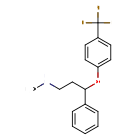
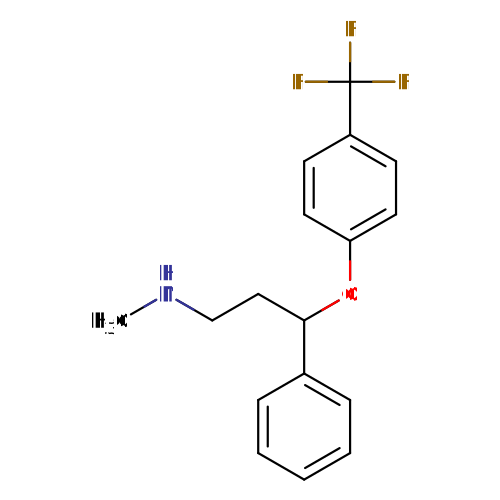
Structure for Fluoxetine (DB00472)
- Weight
- Average: 309.3261
Monoisotopic: 309.134048818 - Chemical Formula
- C17H18F3NO
- Synonyms
- (+-)-N-Methyl-3-phenyl-3-((alpha,alpha,alpha-trifluoro-P-tolyl)oxy)propylamine
- (+-)-N-Methyl-gamma-(4-(trifluoromethyl)phenoxy)benzenepropanamine
- Fluoxetin
- Fluoxetina
- Fluoxétine
- Fluoxetine
- Fluoxetinum
- External IDs
- Lilly 103472
- Lilly 110 140

Pharmacology
- Indication
Fluoxetine is indicated for both acute and maintenance treatment of major depressive disorder, obsessive compulsive disorder, and bulimia nervosa; however, it is only indicated for acute treatment of panic disorder independent of whether agoraphobia is present.12 Fluoxetine may also be used in combination with olanzapine to treat depression related to Bipolar I Disorder, and treatment resistant depression.12 Fluoxetine is additionally indicated for the treatment of female patients with premenstrual dysphoric disorder (PMDD).18
 Reduce drug development failure ratesBuild, train, & validate machine-learning modelswith evidence-based and structured datasets.Build, train, & validate predictive machine-learning models with structured datasets.
- Associated Conditions
Indication Type Indication Combined Product Details Approval Level Age Group Patient Characteristics Dose Form Treatment of Alcohol dependence ••• ••••• Management of Anorexia nervosa ••• ••••• Management of Bulimia nervosa •••••••••••• •••••••• •• •••••• •••••••• Treatment of Cataplexy ••• ••••• Used in combination to manage Depression Regimen in combination with: Olanzapine (DB00334) •••••••••••• - Associated Therapies
- Contraindications & Blackbox Warnings
 Prevent Adverse Drug Events TodayTap into our Clinical API for life-saving information on contraindications & blackbox warnings, population restrictions, harmful risks, & more.Avoid life-threatening adverse drug events with our Clinical API
- Pharmacodynamics
Fluoxetine blocks the serotonin reuptake transporter in the presynaptic terminal, which ultimately results in sustained levels of 5-hydroxytryptamine (5-HT) in certain brain areas.13 However, fluoxetine binds with relatively poor affinity to 5-HT, dopaminergic, adrenergic, cholinergic, muscarinic, and histamine receptors which explains why it has a far more desirable adverse effect profile compared to earlier developed classes of antidepressants such as tricyclic antidepressants.132
- Mechanism of action
The monoaminergic hypothesis of depression emerged in 1965 and linked depression with dysfunction of neurotransmitters such as noradrenaline and serotonin.13 Indeed, low levels of serotonin have been observed in the cerebrospinal fluid of patients diagnosed with depression.3 As a result of this hypothesis, drugs that modulate levels of serotonin such as fluoxetine were developed.13
Fluoxetine is a selective serotonin reuptake inhibitor (SSRI) and as the name suggests, it exerts it's therapeutic effect by inhibiting the presynaptic reuptake of the neurotransmitter serotonin.2 As a result, levels of 5-hydroxytryptamine (5-HT) are increased in various parts of the brain.13 Further, fluoxetine has high affinity for 5-HT transporters, weak affinity for noradrenaline transporters and no affinity for dopamine transporters indicating that it is 5-HT selective.13
Fluoxetine interacts to a degree with the 5-HT2C receptor and it has been suggested that through this mechanism, it is able to increase noradrenaline and dopamine levels in the prefrontal cortex.13
Target Actions Organism ASodium-dependent serotonin transporter inhibitorHumans U5-hydroxytryptamine receptor 2C antagonistHumans UNeuronal acetylcholine receptor subunit alpha-2 antagonistHumans UNeuronal acetylcholine receptor subunit alpha-3 antagonistHumans UNeuronal acetylcholine receptor subunit beta-4 antagonistHumans UCyclin-dependent kinases regulatory subunit 1 Not Available Humans UPotassium voltage-gated channel subfamily H member 2 inhibitorHumans - Absorption
The oral bioavailability of fluoxetine is <90% as a result of hepatic first pass metabolism.13
In a bioequivalence study, the Cmax of fluoxetine 20 mg for the established reference formulation was 11.754 ng/mL while the Cmax for the proposed generic formulation was 11.786 ng/ml.11
Fluoxetine is very lipophilic and highly plasma protein bound, allowing the drug and it's active metabolite, norfluoxetine, to be distributed to the brain.13
- Volume of distribution
The volume of distribution of fluoxetine and it's metabolite varies between 20 to 42 L/kg.6
- Protein binding
Approximately 94% of fluoxetine is plasma protein bound.2
- Metabolism
Fluoxetine is metabolized to norfluoxetine by CYP1A2, CYP2B6, CYP2C9, CYP2C19, CYP2D6, CYP3A4, and CYP3A5 upon ingestion.138 Although all of the mentioned enzymes contribute to N-demethylation of fluoxetine, CYP2D6, CYP2C9 and CYP3A4 appear to be the major contributing enzymes for phase I metabolism.8 In addition, there is evidence to suggest that CYP2C19 and CYP3A4 mediate O-dealkylation of fluoxetine and norfluoxetine to produce para-trifluoromethylphenol which is subsequently metabolized to hippuric acid.910 Both fluoxetine and norfluoxetine undergo glucuronidation to facilitate excretion.13
Notably, both the parent drug and active metabolite inhibit CYP2D6 isozymes, and as a result patients who are being treated with fluoxetine are susceptible to drug interactions.1316
Hover over products below to view reaction partners
- Route of elimination
Fluoxetine is primarily eliminated in the urine.15
- Half-life
The half life of fluoxetine is significant with the elimination half-life of the parent drug averaging 1-3 days after acute administration, and 4-6 days after chronic administration.12 Further, the elimination half life of it's active metabolite, norfluoxetine, ranges from 4-16 days after both acute and chronic administration.12 The half-life of fluoxetine should be considered when switching patients from fluoxetine to another antidepressant since marked accumulation occurs after chronic use.12 Fluoxetine's long half-life may even be beneficial when discontinuing the drug since the risk of withdrawal is minimized.13
- Clearance
The clearance value of fluoxetine in healthy patients is reported to be 9.6 ml/min/kg.7
- Adverse Effects
 Improve decision support & research outcomesWith structured adverse effects data, including: blackbox warnings, adverse reactions, warning & precautions, & incidence rates. View sample adverse effects data in our new Data Library!Improve decision support & research outcomes with our structured adverse effects data.
- Toxicity
In a report that included 234 fluoxetine overdose cases, it was concluded that symptoms resulting from fluoxetine overdose were generally minor and short in duration.5 The most common overdose adverse effects included drowsiness, tremor, tachycardia, nausea and vomiting, and providing the patient with aggressive supportive care was the recommended intervention.45
Despite this evidence, more severe adverse effects have been linked to fluoxetine ingestion although most of these reports involved co-ingestion with other substances or drugs as well as other factors.4 For example, there is a case report that details a patient who ingested 1400 mg of fluoxetine in a suicide attempt and as a result, experienced a generalized seizure three hours later.4 In a separate case, a 14 year old patient ingested 1.2 g of fluoxetine and subsequently experienced tonic/clonic seizures, symptoms consistent with serotonin syndrome, and rhabdomyolysis, although the patient did not experience sustained renal injury.6
- Pathways
Pathway Category Fluoxetine Metabolism Pathway Drug metabolism Fluoxetine Action Pathway Drug action - Pharmacogenomic Effects/ADRs
- Not Available
Interactions
- Drug Interactions
- This information should not be interpreted without the help of a healthcare provider. If you believe you are experiencing an interaction, contact a healthcare provider immediately. The absence of an interaction does not necessarily mean no interactions exist.
Drug Interaction Integrate drug-drug
interactions in your software1,2-Benzodiazepine The serum concentration of 1,2-Benzodiazepine can be increased when it is combined with Fluoxetine. Abametapir The serum concentration of Fluoxetine can be increased when it is combined with Abametapir. Abatacept The metabolism of Fluoxetine can be increased when combined with Abatacept. Abciximab The risk or severity of hemorrhage can be increased when Fluoxetine is combined with Abciximab. Abemaciclib The metabolism of Abemaciclib can be decreased when combined with Fluoxetine. - Food Interactions
- Avoid alcohol.
- Take with or without food.
Products
 Drug product information from 10+ global regionsOur datasets provide approved product information including:dosage, form, labeller, route of administration, and marketing period.Access drug product information from over 10 global regions.
- Product Ingredients
Ingredient UNII CAS InChI Key Fluoxetine hydrochloride I9W7N6B1KJ 56296-78-7 GIYXAJPCNFJEHY-UHFFFAOYSA-N - Product Images
- International/Other Brands
- Adofen (Brainpharma) / Animex-On (Laboratorios) / Fluoxeren (Menarini) / Fontex (Lilly) / Ladose (Lilly)
- Brand Name Prescription Products
Name Dosage Strength Route Labeller Marketing Start Marketing End Region Image Act Fluoxetine Capsule 10 mg Oral Dr. Reddy's Laboratories Inc 2000-05-31 2023-06-27 Canada 
Act Fluoxetine Capsule 40 mg Oral Dr. Reddy's Laboratories Inc Not applicable Not applicable Canada Act Fluoxetine Capsule 20 mg Oral Dr. Reddy's Laboratories Inc 2000-05-31 2023-06-27 Canada Bci Fluoxetine Capsule 20 mg Oral Baker Cummins Inc Not applicable Not applicable Canada Fluoxetine Capsule 20 mg Oral Sivem Pharmaceuticals Ulc 2011-10-14 Not applicable Canada - Generic Prescription Products
Name Dosage Strength Route Labeller Marketing Start Marketing End Region Image Accel-fluoxetine Capsule 20 mg Oral Accel Pharma Inc 2015-03-26 2018-03-29 Canada Accel-fluoxetine Capsule 10 mg Oral Accel Pharma Inc 2015-03-26 2018-03-29 Canada Ach-fluoxetine Capsule 10 mg Oral Accord Healthcare Inc 2012-10-10 Not applicable Canada Ach-fluoxetine Capsule 20 mg Oral Accord Healthcare Inc 2012-05-01 Not applicable Canada Ag-fluoxetine Capsule 20 mg Oral Angita Pharma Inc. 2019-03-15 Not applicable Canada - Mixture Products
Name Ingredients Dosage Route Labeller Marketing Start Marketing End Region Image FLUXOPIN 12 MG/25 MG KAPSÜL ,30 KAPSÜL Fluoxetine hydrochloride (25 mg) + Olanzapine (12 mg) Capsule Oral Deva Holding A.S. 2020-08-14 2018-10-26 Turkey 
FLUXOPIN 12 MG/50 MG KAPSÜL ,30 KAPSÜL Fluoxetine hydrochloride (50 mg) + Olanzapine (12 mg) Capsule Oral Deva Holding A.S. 2020-08-14 2018-10-26 Turkey FLUXOPIN 3 MG/25 MG KAPSÜL ,30 KAPSÜL Fluoxetine hydrochloride (25 mg) + Olanzapine (3 mg) Capsule Oral Deva Holding A.S. 2020-08-14 2018-10-26 Turkey FLUXOPIN 6 MG/25 MG KAPSÜL ,30 KAPSÜL Fluoxetine hydrochloride (25 mg) + Olanzapine (6 mg) Capsule Oral Deva Holding A.S. 2020-08-14 2018-10-26 Turkey FLUXOPIN 6 MG/50 MG KAPSÜL ,30 KAPSÜL Fluoxetine hydrochloride (50 mg) + Olanzapine (6 mg) Capsule Oral Deva Holding A.S. 2020-08-14 2018-10-26 Turkey - Unapproved/Other Products
Name Ingredients Dosage Route Labeller Marketing Start Marketing End Region Image Gaboxetine Fluoxetine hydrochloride (10 mg/1) + Choline (125 mg/1) Kit Oral Physician Therapeutics Llc 2011-07-07 Not applicable US 
Sentraflox AM-10 Fluoxetine hydrochloride (10 mg/1) + Choline (250 mg/1) Kit Oral Physician Therapeutics Llc 2011-07-07 Not applicable US Sentroxatine Fluoxetine hydrochloride (10 mg/1) + Choline (250 mg/1) Kit Oral Physician Therapeutics Llc 2011-02-17 Not applicable US


Categories
- ATC Codes
- N06CA03 — Fluoxetine and psycholeptics
- N06CA — Antidepressants in combination with psycholeptics
- N06C — PSYCHOLEPTICS AND PSYCHOANALEPTICS IN COMBINATION
- N06 — PSYCHOANALEPTICS
- N — NERVOUS SYSTEM
- Drug Categories
- Agents that reduce seizure threshold
- Amines
- Anticholinergic Agents
- Antidepressive Agents
- Antidepressive Agents Indicated for Depression
- Antidepressive Agents, Second-Generation
- Central Nervous System Agents
- Central Nervous System Depressants
- Cytochrome P-450 CYP1A2 Inhibitors
- Cytochrome P-450 CYP1A2 Inhibitors (strength unknown)
- Cytochrome P-450 CYP1A2 Substrates
- Cytochrome P-450 CYP2B6 Substrates
- Cytochrome P-450 CYP2C19 Inhibitors
- Cytochrome P-450 CYP2C19 Inhibitors (strong)
- Cytochrome P-450 CYP2C19 Substrates
- Cytochrome P-450 CYP2C9 Inhibitors
- Cytochrome P-450 CYP2C9 Inhibitors (moderate)
- Cytochrome P-450 CYP2C9 Inhibitors (strength unknown)
- Cytochrome P-450 CYP2C9 Substrates
- Cytochrome P-450 CYP2D6 Inhibitors
- Cytochrome P-450 CYP2D6 Inhibitors (strong)
- Cytochrome P-450 CYP2D6 Substrates
- Cytochrome P-450 CYP3A Inhibitors
- Cytochrome P-450 CYP3A Substrates
- Cytochrome P-450 CYP3A4 Inhibitors
- Cytochrome P-450 CYP3A4 Inhibitors (weak)
- Cytochrome P-450 CYP3A4 Substrates
- Cytochrome P-450 CYP3A5 Substrates
- Cytochrome P-450 Enzyme Inhibitors
- Cytochrome P-450 Substrates
- Enzyme Inhibitors
- Highest Risk QTc-Prolonging Agents
- Hypoglycemia-Associated Agents
- Membrane Transport Modulators
- Nervous System
- Neurotransmitter Agents
- Neurotransmitter Uptake Inhibitors
- Nicotinic Antagonists
- P-glycoprotein inhibitors
- Propylamines
- Psychoanaleptics
- Psychotropic Drugs
- QTc Prolonging Agents
- Selective Serotonin Reuptake Inhibitors
- Serotonergic Drugs Shown to Increase Risk of Serotonin Syndrome
- Serotonin 5-HT2 Receptor Antagonists
- Serotonin 5-HT2C Receptor Antagonists
- Serotonin Agents
- Serotonin Modulators
- Serotonin Receptor Antagonists
- Vasodilating Agents
- Chemical TaxonomyProvided by Classyfire
- Description
- This compound belongs to the class of organic compounds known as trifluoromethylbenzenes. These are organofluorine compounds that contain a benzene ring substituted with one or more trifluoromethyl groups.
- Kingdom
- Organic compounds
- Super Class
- Benzenoids
- Class
- Benzene and substituted derivatives
- Sub Class
- Trifluoromethylbenzenes
- Direct Parent
- Trifluoromethylbenzenes
- Alternative Parents
- Phenoxy compounds / Phenol ethers / Aralkylamines / Alkyl aryl ethers / Dialkylamines / Organopnictogen compounds / Organofluorides / Hydrocarbon derivatives / Alkyl fluorides
- Substituents
- Alkyl aryl ether / Alkyl fluoride / Alkyl halide / Amine / Aralkylamine / Aromatic homomonocyclic compound / Ether / Hydrocarbon derivative / Organic nitrogen compound / Organic oxygen compound
- Molecular Framework
- Aromatic homomonocyclic compounds
- External Descriptors
- aromatic ether, secondary amino compound, (trifluoromethyl)benzenes (CHEBI:86990)
- Affected organisms
- Humans and other mammals
Chemical Identifiers
- UNII
- 01K63SUP8D
- CAS number
- 54910-89-3
- InChI Key
- RTHCYVBBDHJXIQ-UHFFFAOYSA-N
- InChI
- InChI=1S/C17H18F3NO/c1-21-12-11-16(13-5-3-2-4-6-13)22-15-9-7-14(8-10-15)17(18,19)20/h2-10,16,21H,11-12H2,1H3
- IUPAC Name
- methyl({3-phenyl-3-[4-(trifluoromethyl)phenoxy]propyl})amine
- SMILES
- CNCCC(OC1=CC=C(C=C1)C(F)(F)F)C1=CC=CC=C1
References
- Synthesis Reference
Eduard Schwartz, Joseph Kaspi, Zinovi Itov, Gidon Pilarski, "Production of fluoxetine and new intermediates." U.S. Patent US5225585, issued October, 1990.
US5225585- General References
- Wong DT, Bymaster FP, Engleman EA: Prozac (fluoxetine, Lilly 110140), the first selective serotonin uptake inhibitor and an antidepressant drug: twenty years since its first publication. Life Sci. 1995;57(5):411-41. [Article]
- Sommi RW, Crismon ML, Bowden CL: Fluoxetine: a serotonin-specific, second-generation antidepressant. Pharmacotherapy. 1987 Jan-Feb;7(1):1-15. [Article]
- Sohel AJ, Molla M: Fluoxetine . [Article]
- Suchard JR: Fluoxetine overdose-induced seizure. West J Emerg Med. 2008 Aug;9(3):154-6. [Article]
- Borys DJ, Setzer SC, Ling LJ, Reisdorf JJ, Day LC, Krenzelok EP: Acute fluoxetine overdose: a report of 234 cases. Am J Emerg Med. 1992 Mar;10(2):115-20. [Article]
- Lee-Kelland R, Zehra S, Mappa P: Fluoxetine overdose in a teenager resulting in serotonin syndrome, seizure and delayed onset rhabdomyolysis. BMJ Case Rep. 2018 Oct 8;2018. pii: bcr-2018-225529. doi: 10.1136/bcr-2018-225529. [Article]
- Schenker S, Bergstrom RF, Wolen RL, Lemberger L: Fluoxetine disposition and elimination in cirrhosis. Clin Pharmacol Ther. 1988 Sep;44(3):353-9. doi: 10.1038/clpt.1988.161. [Article]
- Margolis JM, O'Donnell JP, Mankowski DC, Ekins S, Obach RS: (R)-, (S)-, and racemic fluoxetine N-demethylation by human cytochrome P450 enzymes. Drug Metab Dispos. 2000 Oct;28(10):1187-91. [Article]
- Liu ZQ, Zhu B, Tan YF, Tan ZR, Wang LS, Huang SL, Shu Y, Zhou HH: O-Dealkylation of fluoxetine in relation to CYP2C19 gene dose and involvement of CYP3A4 in human liver microsomes. J Pharmacol Exp Ther. 2002 Jan;300(1):105-11. doi: 10.1124/jpet.300.1.105. [Article]
- Crifasi JA, Le NX, Long C: Simultaneous identification and quantitation of fluoxetine and its metabolite, norfluoxetine, in biological samples by GC-MS. J Anal Toxicol. 1997 Oct;21(6):415-9. doi: 10.1093/jat/21.6.415. [Article]
- Shi S, Liu Y, Wu J, Li Z, Zhao Y, Zhong D, Zeng F: Comparative bioavailability and tolerability of a single 20-mg dose of two fluoxetine hydrochloride dispersible tablet formulations in fasting, healthy Chinese male volunteers: an open-label, randomized-sequence, two-period crossover study. Clin Ther. 2010 Oct;32(11):1977-86. doi: 10.1016/j.clinthera.2010.10.003. [Article]
- FDA Approved Drug Products: Prozac (fluoxetine) oral capsules [Link]
- Fluoxetine: A case history of its discovery and preclinical development [Link]
- The Distribution of Fluoxetine in Human Fluids and Tissues [Link]
- DailyMed - Fluoxetine [Link]
- Flockhart Table of Drug Interactions [Link]
- Health Canada Product Monograph: Fluoxetine oral capsules [Link]
- FDA Approved Drug Products: Sarafem (fluoxetine hydrochloride) tablets for oral use [Link]
- DailyMed Label: PROZAC (fluoxetine capsules) for oral use [Link]
- External Links
- Human Metabolome Database
- HMDB0014615
- KEGG Drug
- D00823
- PubChem Compound
- 3386
- PubChem Substance
- 46507902
- ChemSpider
- 3269
- BindingDB
- 30130
- 4493
- ChEBI
- 86990
- ChEMBL
- CHEMBL41
- Therapeutic Targets Database
- DAP000186
- PharmGKB
- PA449673
- Guide to Pharmacology
- GtP Drug Page
- RxList
- RxList Drug Page
- Drugs.com
- Drugs.com Drug Page
- Wikipedia
- Fluoxetine
- MSDS
- Download (76.7 KB)
Clinical Trials
- Clinical Trials
Phase Status Purpose Conditions Count 4 Active Not Recruiting Treatment Depressive Disorder 1 4 Completed Basic Science Bipolar Disorder (BD) 1 4 Completed Basic Science Major Depressive Disorder (MDD) 1 4 Completed Diagnostic Major Depressive Disorder (MDD) 1 4 Completed Health Services Research Healthy Volunteers (HV) 1
Pharmacoeconomics
- Manufacturers
- Barr laboratories inc
- Dr reddys laboratories ltd
- Eli lilly and co
- Mutual pharmacal co
- Watson laboratories inc
- Alembic ltd
- Alphapharm party ltd
- Aurobindo pharma ltd
- Beijing double crane pharmaceutical co ltd
- Carlsbad technology inc
- Dr reddys laboratories inc
- Ivax pharmaceuticals inc sub teva pharmaceuticals usa
- Landela pharmaceutical
- Mallinckrodt inc
- Mylan pharmaceuticals inc
- Par pharmaceutical inc
- Pliva inc
- Ranbaxy laboratories ltd
- Sandoz inc
- Teva pharmaceuticals usa inc
- Wockhardt ltd
- Lilly research laboratories div eli lilly and co
- Actavis mid atlantic llc
- Aurobindo pharma usa inc
- Hi tech pharmacal co inc
- Lannett holdings inc
- Novex pharma
- Pharmaceutical assoc inc div beach products
- Silarx pharmaceuticals inc
- Wockhardt eu operations (swiss) ag
- Warner chilcott inc
- Packagers
- Advanced Pharmaceutical Services Inc.
- Alphapharm Party Ltd.
- Amerisource Health Services Corp.
- Amneal Pharmaceuticals
- Apotex Inc.
- AQ Pharmaceuticals Inc.
- A-S Medication Solutions LLC
- Atlantic Biologicals Corporation
- Aurobindo Pharma Ltd.
- Barr Pharmaceuticals
- Blenheim Pharmacal
- Bryant Ranch Prepack
- Cardinal Health
- Caremark LLC
- Carlsbad Technology Inc.
- Comprehensive Consultant Services Inc.
- Corepharma LLC
- Coupler Enterprises Inc.
- D.M. Graham Laboratories Inc.
- DHHS Program Support Center Supply Service Center
- Dispensing Solutions
- Diversified Healthcare Services Inc.
- Doctor Reddys Laboratories Ltd.
- DSM Corp.
- Eli Lilly & Co.
- Eon Labs
- Golden State Medical Supply Inc.
- H.J. Harkins Co. Inc.
- Heartland Repack Services LLC
- Innoviant Pharmacy Inc.
- Ivax Pharmaceuticals
- Kaiser Foundation Hospital
- Keltman Pharmaceuticals Inc.
- Lake Erie Medical and Surgical Supply
- Legacy Pharmaceuticals Packaging LLC
- Liberty Pharmaceuticals
- Lilly Del Caribe Inc.
- Major Pharmaceuticals
- Mallinckrodt Inc.
- Medvantx Inc.
- Murfreesboro Pharmaceutical Nursing Supply
- Mylan
- Northstar Rx LLC
- Norwich Pharmaceuticals Inc.
- Novex Pharma
- Novopharm Ltd.
- Nucare Pharmaceuticals Inc.
- Ohm Laboratories Inc.
- Palmetto Pharmaceuticals Inc.
- Par Pharmaceuticals
- PCA LLC
- PD-Rx Pharmaceuticals Inc.
- Pharmaceutical Association
- Pharmaceutical Utilization Management Program VA Inc.
- Pharmedix
- Pharmpak Inc.
- Physician Partners Ltd.
- Physicians Total Care Inc.
- Pliva Inc.
- Preferred Pharmaceuticals Inc.
- Prepackage Specialists
- Prepak Systems Inc.
- Promex Medical Inc.
- Prx Pharmaceuticals
- Ranbaxy Laboratories
- Rebel Distributors Corp.
- Remedy Repack
- Resource Optimization and Innovation LLC
- Sandhills Packaging Inc.
- Sandoz
- Silarx Pharmaceuticals
- Southwood Pharmaceuticals
- Spectrum Pharmaceuticals
- St Mary's Medical Park Pharmacy
- Stat Rx Usa
- Teva Pharmaceutical Industries Ltd.
- Tya Pharmaceuticals
- UDL Laboratories
- Va Cmop Dallas
- Vangard Labs Inc.
- Warner Chilcott Co. Inc.
- WC Pharmaceuticals
- Wockhardt Ltd.
- Xactdose Inc.
- Dosage Forms
Form Route Strength Tablet Oral 22.357 mg Capsule Oral 20.000 mg Tablet, soluble Oral Capsule Oral 22.400 mg Tablet Oral 22.40 mg Capsule Oral 20 mg Tablet, soluble Oral 20 MG Tablet, film coated Oral Solution Oral Tablet Oral 10 MG Tablet Oral 40 MG Tablet, film coated Oral 20 MG Tablet, film coated Oral 40 MG Syrup Oral 0.421 g Capsule, coated Oral 20 mg Tablet, orally disintegrating Oral 20 MG Tablet, coated Oral 20 mg Capsule Not applicable 20 mg/1 Capsule Oral 20 mg/1 Liquid Oral 20 mg/5mL Tablet, film coated Oral 60 mg/1 Tablet Oral Capsule Oral 10 mg/1 Capsule Oral 22.36 MG Capsule Oral 22.4 Mg Capsule Oral 40 mg/1 Capsule, delayed release Oral 90 mg/1 Capsule, delayed release pellets Oral 90 mg/1 For solution Oral 20 mg/5mL Tablet Oral 10 mg/1 Tablet Oral 20 mg/1 Tablet Oral 22.36 MG Tablet Oral 60 mg/1 Tablet, coated Oral 10 mg/1 Tablet, coated Oral 20 mg/1 Tablet, film coated Oral 10 mg/1 Tablet, film coated Oral 20 mg/1 Capsule Oral 40 mg Tablet Oral 20.000 mg Capsule, gelatin coated Oral Syrup Oral 0.4 g Tablet, film coated Oral 60 mg Solution Oral 20 mg / 5 mL Capsule Oral Capsule Oral 20.00 mg Capsule Oral 60 mg Capsule Oral Capsule Oral 20.0000 mg Solution Oral 20 mg/5mL Tablet, for suspension Oral 20 MG Capsule Oral 22.360 mg Capsule Oral 10 mg Capsule, coated Oral 90 mg Liquid Oral 20 mg / 5 mL Tablet Oral 15 mg/1 Kit Oral Capsule Oral 10 mg / cap Capsule Oral 20 mg / cap Tablet Oral 20.00 mg Solution Oral 0.4 g Solution Oral 448 mg Tablet Oral 20 mg - Prices
Unit description Cost Unit PROzac 20 mg/5ml Solution 120ml Bottle 266.51USD bottle PROzac Weekly 1 Package = 4 capsule (90 mg) Disp Pack 140.77USD disp Sarafem 7 10 mg tablet Box 61.08USD box Sarafem 7 20 mg tablet Each Box Contains 7 tablet 59.55USD box Prozac weekly 90 mg capsule 34.5USD capsule PROzac 40 mg capsule 13.89USD capsule Fluoxetine hcl powder 8.32USD g Sarafem 10 mg tablet 7.91USD tablet Sarafem 15 mg tablet 7.91USD tablet Sarafem 20 mg tablet 7.91USD tablet PROzac 20 mg capsule 6.95USD capsule PROzac 10 mg capsule 6.77USD capsule FLUoxetine HCl 40 mg capsule 5.54USD capsule PROzac 10 mg tablet 4.31USD tablet Fluoxetine hcl 20 mg tablet 4.26USD tablet Rapiflux 20 mg tablet 3.11USD tablet FLUoxetine HCl 20 mg capsule 2.77USD capsule Fluoxetine hcl 10 mg tablet 2.72USD tablet FLUoxetine HCl 10 mg capsule 2.7USD capsule Fxt 40 40 mg Capsule 2.3USD capsule Prozac 10 mg Capsule 2.02USD capsule Prozac 20 mg Capsule 2.02USD capsule Apo-Fluoxetine 10 mg Capsule 1.13USD capsule Co Fluoxetine 10 mg Capsule 1.13USD capsule Mylan-Fluoxetine 10 mg Capsule 1.13USD capsule Novo-Fluoxetine 10 mg Capsule 1.13USD capsule Nu-Fluoxetine 10 mg Capsule 1.13USD capsule Phl-Fluoxetine 10 mg Capsule 1.13USD capsule Pms-Fluoxetine 10 mg Capsule 1.13USD capsule Ratio-Fluoxetine Hydrochloride 10 mg Capsule 1.13USD capsule Sandoz Fluoxetine 10 mg Capsule 1.13USD capsule Apo-Fluoxetine 20 mg Capsule 1.06USD capsule Co Fluoxetine 20 mg Capsule 1.06USD capsule Mylan-Fluoxetine 20 mg Capsule 1.06USD capsule Novo-Fluoxetine 20 mg Capsule 1.06USD capsule Nu-Fluoxetine 20 mg Capsule 1.06USD capsule Phl-Fluoxetine 20 mg Capsule 1.06USD capsule Pms-Fluoxetine 20 mg Capsule 1.06USD capsule Ratio-Fluoxetine Hydrochloride 20 mg Capsule 1.06USD capsule Sandoz Fluoxetine 20 mg Capsule 1.06USD capsule FLUoxetine HCl 20 mg/5ml Solution 1.03USD ml Apo-Fluoxetine 4 mg/ml Liquid 0.61USD liquid DrugBank does not sell nor buy drugs. Pricing information is supplied for informational purposes only.- Patents
Patent Number Pediatric Extension Approved Expires (estimated) Region US6960577 No 2005-11-01 2017-11-01 US US5910319 Yes 1999-06-08 2017-11-29 US US5985322 Yes 1999-11-16 2017-11-29 US USRE39030 No 2006-03-21 2017-05-29 US US5945416 No 1999-08-31 2017-03-24 US
Properties
- State
- Solid
- Experimental Properties
Property Value Source melting point (°C) 193 - 197 °C MSDS boiling point (°C) 395.1°C at 760 mmHg https://www.lookchem.com/Fluoxetine/ water solubility insoluble https://www.lookchem.com/Fluoxetine/ logP 4.05 ADLARD,M ET AL. (1995) - Predicted Properties
Property Value Source Water Solubility 0.0017 mg/mL ALOGPS logP 4.09 ALOGPS logP 4.17 Chemaxon logS -5.3 ALOGPS pKa (Strongest Basic) 9.8 Chemaxon Physiological Charge 1 Chemaxon Hydrogen Acceptor Count 2 Chemaxon Hydrogen Donor Count 1 Chemaxon Polar Surface Area 21.26 Å2 Chemaxon Rotatable Bond Count 7 Chemaxon Refractivity 80.37 m3·mol-1 Chemaxon Polarizability 30.33 Å3 Chemaxon Number of Rings 2 Chemaxon Bioavailability 1 Chemaxon Rule of Five Yes Chemaxon Ghose Filter Yes Chemaxon Veber's Rule Yes Chemaxon MDDR-like Rule No Chemaxon - Predicted ADMET Features
Property Value Probability Human Intestinal Absorption + 1.0 Blood Brain Barrier + 0.983 Caco-2 permeable + 0.8867 P-glycoprotein substrate Substrate 0.5899 P-glycoprotein inhibitor I Inhibitor 0.8565 P-glycoprotein inhibitor II Inhibitor 0.5459 Renal organic cation transporter Inhibitor 0.5633 CYP450 2C9 substrate Non-substrate 0.7475 CYP450 2D6 substrate Substrate 0.8918 CYP450 3A4 substrate Substrate 0.5754 CYP450 1A2 substrate Inhibitor 0.9107 CYP450 2C9 inhibitor Non-inhibitor 0.907 CYP450 2D6 inhibitor Inhibitor 0.8932 CYP450 2C19 inhibitor Inhibitor 0.8993 CYP450 3A4 inhibitor Inhibitor 0.7959 CYP450 inhibitory promiscuity High CYP Inhibitory Promiscuity 0.7149 Ames test Non AMES toxic 0.7105 Carcinogenicity Non-carcinogens 0.8089 Biodegradation Not ready biodegradable 0.9868 Rat acute toxicity 2.6048 LD50, mol/kg Not applicable hERG inhibition (predictor I) Strong inhibitor 0.6058 hERG inhibition (predictor II) Inhibitor 0.8467
Spectra
- Mass Spec (NIST)
- Not Available
- Spectra
- Chromatographic Properties
Collision Cross Sections (CCS)
Adduct CCS Value (Å2) Source type Source [M-H]- 177.5806429 predictedDarkChem Lite v0.1.0 [M-H]- 170.9421 predictedDeepCCS 1.0 (2019) [M+H]+ 178.3538429 predictedDarkChem Lite v0.1.0 [M+H]+ 173.3001 predictedDeepCCS 1.0 (2019) [M+Na]+ 177.7759429 predictedDarkChem Lite v0.1.0 [M+Na]+ 179.39323 predictedDeepCCS 1.0 (2019)
Targets

- Kind
- Protein
- Organism
- Humans
- Pharmacological action
- Yes
- Actions
- Inhibitor
- General Function
- Serotonin:sodium symporter activity
- Specific Function
- Serotonin transporter whose primary function in the central nervous system involves the regulation of serotonergic signaling via transport of serotonin molecules from the synaptic cleft back into t...
- Gene Name
- SLC6A4
- Uniprot ID
- P31645
- Uniprot Name
- Sodium-dependent serotonin transporter
- Molecular Weight
- 70324.165 Da
References
- Iceta R, Mesonero JE, Alcalde AI: Effect of long-term fluoxetine treatment on the human serotonin transporter in Caco-2 cells. Life Sci. 2007 Mar 27;80(16):1517-24. Epub 2007 Jan 20. [Article]
- Mirza NR, Nielsen EO, Troelsen KB: Serotonin transporter density and anxiolytic-like effects of antidepressants in mice. Prog Neuropsychopharmacol Biol Psychiatry. 2007 May 9;31(4):858-66. Epub 2007 Jan 30. [Article]
- Sanders AC, Hussain AJ, Hen R, Zhuang X: Chronic blockade or constitutive deletion of the serotonin transporter reduces operant responding for food reward. Neuropsychopharmacology. 2007 Nov;32(11):2321-9. Epub 2007 Mar 14. [Article]
- Goren MZ, Kucukibrahimoglu E, Berkman K, Terzioglu B: Fluoxetine partly exerts its actions through GABA: a neurochemical evidence. Neurochem Res. 2007 Sep;32(9):1559-65. Epub 2007 May 8. [Article]
- Chen X, Ji ZL, Chen YZ: TTD: Therapeutic Target Database. Nucleic Acids Res. 2002 Jan 1;30(1):412-5. [Article]
- Tatsumi M, Groshan K, Blakely RD, Richelson E: Pharmacological profile of antidepressants and related compounds at human monoamine transporters. Eur J Pharmacol. 1997 Dec 11;340(2-3):249-58. [Article]
- Fluoxetine: A case history of its discovery and preclinical development [Link]
- Kind
- Protein
- Organism
- Humans
- Pharmacological action
- Unknown
- Actions
- Antagonist
- General Function
- Serotonin receptor activity
- Specific Function
- G-protein coupled receptor for 5-hydroxytryptamine (serotonin). Also functions as a receptor for various drugs and psychoactive substances, including ergot alkaloid derivatives, 1-2,5,-dimethoxy-4-...
- Gene Name
- HTR2C
- Uniprot ID
- P28335
- Uniprot Name
- 5-hydroxytryptamine receptor 2C
- Molecular Weight
- 51820.705 Da
References
- Chanrion B, Mannoury la Cour C, Gavarini S, Seimandi M, Vincent L, Pujol JF, Bockaert J, Marin P, Millan MJ: Inverse agonist and neutral antagonist actions of antidepressants at recombinant and native 5-hydroxytryptamine2C receptors: differential modulation of cell surface expression and signal transduction. Mol Pharmacol. 2008 Mar;73(3):748-57. Epub 2007 Dec 14. [Article]
- Cryan JF, Lucki I: Antidepressant-like behavioral effects mediated by 5-Hydroxytryptamine(2C) receptors. J Pharmacol Exp Ther. 2000 Dec;295(3):1120-6. [Article]
- Ni YG, Miledi R: Blockage of 5HT2C serotonin receptors by fluoxetine (Prozac). Proc Natl Acad Sci U S A. 1997 Mar 4;94(5):2036-40. doi: 10.1073/pnas.94.5.2036. [Article]
- Kind
- Protein
- Organism
- Humans
- Pharmacological action
- Unknown
- Actions
- Antagonist
- General Function
- Drug binding
- Specific Function
- After binding acetylcholine, the AChR responds by an extensive change in conformation that affects all subunits and leads to opening of an ion-conducting channel across the plasma membrane.
- Gene Name
- CHRNA2
- Uniprot ID
- Q15822
- Uniprot Name
- Neuronal acetylcholine receptor subunit alpha-2
- Molecular Weight
- 59764.82 Da
References
- Garcia-Colunga J, Awad JN, Miledi R: Blockage of muscle and neuronal nicotinic acetylcholine receptors by fluoxetine (Prozac). Proc Natl Acad Sci U S A. 1997 Mar 4;94(5):2041-4. [Article]
- Kind
- Protein
- Organism
- Humans
- Pharmacological action
- Unknown
- Actions
- Antagonist
- General Function
- Ligand-gated ion channel activity
- Specific Function
- After binding acetylcholine, the AChR responds by an extensive change in conformation that affects all subunits and leads to opening of an ion-conducting channel across the plasma membrane.
- Gene Name
- CHRNA3
- Uniprot ID
- P32297
- Uniprot Name
- Neuronal acetylcholine receptor subunit alpha-3
- Molecular Weight
- 57479.54 Da
References
- Garcia-Colunga J, Awad JN, Miledi R: Blockage of muscle and neuronal nicotinic acetylcholine receptors by fluoxetine (Prozac). Proc Natl Acad Sci U S A. 1997 Mar 4;94(5):2041-4. [Article]
- Kind
- Protein
- Organism
- Humans
- Pharmacological action
- Unknown
- Actions
- Antagonist
- General Function
- Ligand-gated ion channel activity
- Specific Function
- After binding acetylcholine, the AChR responds by an extensive change in conformation that affects all subunits and leads to opening of an ion-conducting channel across the plasma membrane.
- Gene Name
- CHRNB4
- Uniprot ID
- P30926
- Uniprot Name
- Neuronal acetylcholine receptor subunit beta-4
- Molecular Weight
- 56378.985 Da
References
- Garcia-Colunga J, Awad JN, Miledi R: Blockage of muscle and neuronal nicotinic acetylcholine receptors by fluoxetine (Prozac). Proc Natl Acad Sci U S A. 1997 Mar 4;94(5):2041-4. [Article]
- Kind
- Protein
- Organism
- Humans
- Pharmacological action
- Unknown
- General Function
- Cyclin-dependent protein serine/threonine kinase regulator activity
- Specific Function
- Binds to the catalytic subunit of the cyclin dependent kinases and is essential for their biological function.
- Gene Name
- CKS1B
- Uniprot ID
- P61024
- Uniprot Name
- Cyclin-dependent kinases regulatory subunit 1
- Molecular Weight
- 9660.14 Da
References
- Krishnan A, Hariharan R, Nair SA, Pillai MR: Fluoxetine mediates G0/G1 arrest by inducing functional inhibition of cyclin dependent kinase subunit (CKS)1. Biochem Pharmacol. 2008 May 15;75(10):1924-34. doi: 10.1016/j.bcp.2008.02.013. Epub 2008 Feb 17. [Article]
- Kind
- Protein
- Organism
- Humans
- Pharmacological action
- Unknown
- Actions
- Inhibitor
- General Function
- Voltage-gated potassium channel activity involved in ventricular cardiac muscle cell action potential repolarization
- Specific Function
- Pore-forming (alpha) subunit of voltage-gated inwardly rectifying potassium channel. Channel properties are modulated by cAMP and subunit assembly. Mediates the rapidly activating component of the ...
- Gene Name
- KCNH2
- Uniprot ID
- Q12809
- Uniprot Name
- Potassium voltage-gated channel subfamily H member 2
- Molecular Weight
- 126653.52 Da
References
- Chiu PJ, Marcoe KF, Bounds SE, Lin CH, Feng JJ, Lin A, Cheng FC, Crumb WJ, Mitchell R: Validation of a [3H]astemizole binding assay in HEK293 cells expressing HERG K+ channels. J Pharmacol Sci. 2004 Jul;95(3):311-9. [Article]
- Rajamani S, Eckhardt LL, Valdivia CR, Klemens CA, Gillman BM, Anderson CL, Holzem KM, Delisle BP, Anson BD, Makielski JC, January CT: Drug-induced long QT syndrome: hERG K+ channel block and disruption of protein trafficking by fluoxetine and norfluoxetine. Br J Pharmacol. 2006 Nov;149(5):481-9. doi: 10.1038/sj.bjp.0706892. Epub 2006 Sep 11. [Article]
Enzymes
- Kind
- Protein
- Organism
- Humans
- Pharmacological action
- Unknown
- Actions
- Substrate
- General Function
- Steroid hydroxylase activity
- Specific Function
- Cytochromes P450 are a group of heme-thiolate monooxygenases. In liver microsomes, this enzyme is involved in an NADPH-dependent electron transport pathway. It oxidizes a variety of structurally un...
- Gene Name
- CYP2B6
- Uniprot ID
- P20813
- Uniprot Name
- Cytochrome P450 2B6
- Molecular Weight
- 56277.81 Da
References
- Margolis JM, O'Donnell JP, Mankowski DC, Ekins S, Obach RS: (R)-, (S)-, and racemic fluoxetine N-demethylation by human cytochrome P450 enzymes. Drug Metab Dispos. 2000 Oct;28(10):1187-91. [Article]
- Ekins S, Iyer M, Krasowski MD, Kharasch ED: Molecular characterization of CYP2B6 substrates. Curr Drug Metab. 2008 Jun;9(5):363-73. [Article]
- Kind
- Protein
- Organism
- Humans
- Pharmacological action
- Unknown
- Actions
- Substrate
- General Function
- Oxygen binding
- Specific Function
- Cytochromes P450 are a group of heme-thiolate monooxygenases. In liver microsomes, this enzyme is involved in an NADPH-dependent electron transport pathway. It oxidizes a variety of structurally un...
- Gene Name
- CYP3A5
- Uniprot ID
- P20815
- Uniprot Name
- Cytochrome P450 3A5
- Molecular Weight
- 57108.065 Da
References
- Margolis JM, O'Donnell JP, Mankowski DC, Ekins S, Obach RS: (R)-, (S)-, and racemic fluoxetine N-demethylation by human cytochrome P450 enzymes. Drug Metab Dispos. 2000 Oct;28(10):1187-91. [Article]
- Kind
- Protein
- Organism
- Humans
- Pharmacological action
- Unknown
- Actions
- SubstrateInhibitor
- General Function
- Steroid hydroxylase activity
- Specific Function
- Cytochromes P450 are a group of heme-thiolate monooxygenases. In liver microsomes, this enzyme is involved in an NADPH-dependent electron transport pathway. It oxidizes a variety of structurally un...
- Gene Name
- CYP2C9
- Uniprot ID
- P11712
- Uniprot Name
- Cytochrome P450 2C9
- Molecular Weight
- 55627.365 Da
References
- Margolis JM, O'Donnell JP, Mankowski DC, Ekins S, Obach RS: (R)-, (S)-, and racemic fluoxetine N-demethylation by human cytochrome P450 enzymes. Drug Metab Dispos. 2000 Oct;28(10):1187-91. [Article]
- Wang JF, Yan JY, Wei DQ, Chou KC: Binding of CYP2C9 with diverse drugs and its implications for metabolic mechanism. Med Chem. 2009 May;5(3):263-70. [Article]
- Schmider J, Greenblatt DJ, von Moltke LL, Karsov D, Shader RI: Inhibition of CYP2C9 by selective serotonin reuptake inhibitors in vitro: studies of phenytoin p-hydroxylation. Br J Clin Pharmacol. 1997 Nov;44(5):495-8. doi: 10.1046/j.1365-2125.1997.00601.x. [Article]
- Hemeryck A, De Vriendt C, Belpaire FM: Inhibition of CYP2C9 by selective serotonin reuptake inhibitors: in vitro studies with tolbutamide and (S)-warfarin using human liver microsomes. Eur J Clin Pharmacol. 1999 Feb;54(12):947-51. [Article]
- Flockhart Table of Drug Interactions [Link]
- Kind
- Protein
- Organism
- Humans
- Pharmacological action
- No
- Actions
- SubstrateInhibitor
- General Function
- Steroid hydroxylase activity
- Specific Function
- Responsible for the metabolism of many drugs and environmental chemicals that it oxidizes. It is involved in the metabolism of drugs such as antiarrhythmics, adrenoceptor antagonists, and tricyclic...
- Gene Name
- CYP2D6
- Uniprot ID
- P10635
- Uniprot Name
- Cytochrome P450 2D6
- Molecular Weight
- 55768.94 Da
References
- Margolis JM, O'Donnell JP, Mankowski DC, Ekins S, Obach RS: (R)-, (S)-, and racemic fluoxetine N-demethylation by human cytochrome P450 enzymes. Drug Metab Dispos. 2000 Oct;28(10):1187-91. [Article]
- Flockhart Table of Drug Interactions [Link]
- FDA Drug Development and Drug Interactions: Table of Substrates, Inhibitors and Inducers [Link]
- Kind
- Protein
- Organism
- Humans
- Pharmacological action
- Unknown
- Actions
- Inducer
- Curator comments
- Data in the literature are limited regarding this enzyme. One study found that fluoxetine was a CYP2B inducer in rats.
- General Function
- Oxidoreductase activity, acting on paired donors, with incorporation or reduction of molecular oxygen, reduced flavin or flavoprotein as one donor, and incorporation of one atom of oxygen
- Specific Function
- Not Available
- Gene Name
- CYP2B
- Uniprot ID
- Q14097
- Uniprot Name
- CYP2B protein
- Molecular Weight
- 43147.81 Da
References
- Haduch A, Wojcikowski J, Daniel WA: Effect of selected antidepressant drugs on cytochrome P450 2B (CYP2B) in rat liver. An in vitro and in vivo study. Pharmacol Rep. 2008 Nov-Dec;60(6):957-65. [Article]
- Kind
- Protein
- Organism
- Humans
- Pharmacological action
- Unknown
- Actions
- SubstrateInhibitor
- General Function
- Oxidoreductase activity, acting on paired donors, with incorporation or reduction of molecular oxygen, reduced flavin or flavoprotein as one donor, and incorporation of one atom of oxygen
- Specific Function
- Cytochromes P450 are a group of heme-thiolate monooxygenases. In liver microsomes, this enzyme is involved in an NADPH-dependent electron transport pathway. It oxidizes a variety of structurally un...
- Gene Name
- CYP1A2
- Uniprot ID
- P05177
- Uniprot Name
- Cytochrome P450 1A2
- Molecular Weight
- 58293.76 Da
References
- Micallef J, Fakra E, Blin O: [Use of antidepressant drugs in schizophrenic patients with depression]. Encephale. 2006 Mar-Apr;32(2 Pt 1):263-9. [Article]
- Schmider J, Greenblatt DJ, von Moltke LL, Karsov D, Shader RI: Inhibition of CYP2C9 by selective serotonin reuptake inhibitors in vitro: studies of phenytoin p-hydroxylation. Br J Clin Pharmacol. 1997 Nov;44(5):495-8. doi: 10.1046/j.1365-2125.1997.00601.x. [Article]
- English BA, Dortch M, Ereshefsky L, Jhee S: Clinically significant psychotropic drug-drug interactions in the primary care setting. Curr Psychiatry Rep. 2012 Aug;14(4):376-90. doi: 10.1007/s11920-012-0284-9. [Article]
- Margolis JM, O'Donnell JP, Mankowski DC, Ekins S, Obach RS: (R)-, (S)-, and racemic fluoxetine N-demethylation by human cytochrome P450 enzymes. Drug Metab Dispos. 2000 Oct;28(10):1187-91. [Article]
- Kind
- Protein
- Organism
- Humans
- Pharmacological action
- No
- Actions
- SubstrateInhibitor
- Curator comments
- The level of CYP3A4 enzyme inhibition caused by fluoxetine is not thought to be clinically significant, according to official prescribing information.
- General Function
- Vitamin d3 25-hydroxylase activity
- Specific Function
- Cytochromes P450 are a group of heme-thiolate monooxygenases. In liver microsomes, this enzyme is involved in an NADPH-dependent electron transport pathway. It performs a variety of oxidation react...
- Gene Name
- CYP3A4
- Uniprot ID
- P08684
- Uniprot Name
- Cytochrome P450 3A4
- Molecular Weight
- 57342.67 Da
References
- Micallef J, Fakra E, Blin O: [Use of antidepressant drugs in schizophrenic patients with depression]. Encephale. 2006 Mar-Apr;32(2 Pt 1):263-9. [Article]
- DeVane CL, Donovan JL, Liston HL, Markowitz JS, Cheng KT, Risch SC, Willard L: Comparative CYP3A4 inhibitory effects of venlafaxine, fluoxetine, sertraline, and nefazodone in healthy volunteers. J Clin Psychopharmacol. 2004 Feb;24(1):4-10. [Article]
- Margolis JM, O'Donnell JP, Mankowski DC, Ekins S, Obach RS: (R)-, (S)-, and racemic fluoxetine N-demethylation by human cytochrome P450 enzymes. Drug Metab Dispos. 2000 Oct;28(10):1187-91. [Article]
- Spina E, Avenoso A, Scordo MG, Ancione M, Madia A, Gatti G, Perucca E: Inhibition of risperidone metabolism by fluoxetine in patients with schizophrenia: a clinically relevant pharmacokinetic drug interaction. J Clin Psychopharmacol. 2002 Aug;22(4):419-23. doi: 10.1097/00004714-200208000-00014. [Article]
- Klotz U: Interaction potential of lercanidipine, a new vasoselective dihydropyridine calcium antagonist. Arzneimittelforschung. 2002;52(3):155-61. doi: 10.1055/s-0031-1299873. [Article]
- Fluoxetine FDA label [Link]
- Kind
- Protein
- Organism
- Humans
- Pharmacological action
- Unknown
- Actions
- SubstrateInhibitor
- General Function
- Steroid hydroxylase activity
- Specific Function
- Responsible for the metabolism of a number of therapeutic agents such as the anticonvulsant drug S-mephenytoin, omeprazole, proguanil, certain barbiturates, diazepam, propranolol, citalopram and im...
- Gene Name
- CYP2C19
- Uniprot ID
- P33261
- Uniprot Name
- Cytochrome P450 2C19
- Molecular Weight
- 55930.545 Da
References
- Harvey AT, Preskorn SH: Fluoxetine pharmacokinetics and effect on CYP2C19 in young and elderly volunteers. J Clin Psychopharmacol. 2001 Apr;21(2):161-6. [Article]
- Liu ZQ, Cheng ZN, Huang SL, Chen XP, Ou-Yang DS, Jiang CH, Zhou HH: Effect of the CYP2C19 oxidation polymorphism on fluoxetine metabolism in Chinese healthy subjects. Br J Clin Pharmacol. 2001 Jul;52(1):96-9. [Article]
- Margolis JM, O'Donnell JP, Mankowski DC, Ekins S, Obach RS: (R)-, (S)-, and racemic fluoxetine N-demethylation by human cytochrome P450 enzymes. Drug Metab Dispos. 2000 Oct;28(10):1187-91. [Article]
- Flockhart Table of Drug Interactions [Link]
- Drug Interactions & Labeling - FDA [Link]
- Fluoxetine Metabolism Pathway [Link]
Carriers
- Kind
- Protein
- Organism
- Humans
- Pharmacological action
- Unknown
- Actions
- Substrate
- General Function
- Toxic substance binding
- Specific Function
- Serum albumin, the main protein of plasma, has a good binding capacity for water, Ca(2+), Na(+), K(+), fatty acids, hormones, bilirubin and drugs. Its main function is the regulation of the colloid...
- Gene Name
- ALB
- Uniprot ID
- P02768
- Uniprot Name
- Serum albumin
- Molecular Weight
- 69365.94 Da
References
- FDA Approved Drug Products: Prozac (fluoxetine) oral capsules [Link]
- Kind
- Protein
- Organism
- Humans
- Pharmacological action
- Unknown
- Actions
- Substrate
- General Function
- Not Available
- Specific Function
- Functions as transport protein in the blood stream. Binds various ligands in the interior of its beta-barrel domain. Also binds synthetic drugs and influences their distribution and availability in...
- Gene Name
- ORM1
- Uniprot ID
- P02763
- Uniprot Name
- Alpha-1-acid glycoprotein 1
- Molecular Weight
- 23511.38 Da
References
- FDA Approved Drug Products: Prozac (fluoxetine) oral capsules [Link]
Transporters
- Kind
- Protein
- Organism
- Humans
- Pharmacological action
- Unknown
- Actions
- Inhibitor
- General Function
- Xenobiotic-transporting atpase activity
- Specific Function
- Energy-dependent efflux pump responsible for decreased drug accumulation in multidrug-resistant cells.
- Gene Name
- ABCB1
- Uniprot ID
- P08183
- Uniprot Name
- Multidrug resistance protein 1
- Molecular Weight
- 141477.255 Da
References
- Weiss J, Dormann SM, Martin-Facklam M, Kerpen CJ, Ketabi-Kiyanvash N, Haefeli WE: Inhibition of P-glycoprotein by newer antidepressants. J Pharmacol Exp Ther. 2003 Apr;305(1):197-204. [Article]
- O'Brien FE, Dinan TG, Griffin BT, Cryan JF: Interactions between antidepressants and P-glycoprotein at the blood-brain barrier: clinical significance of in vitro and in vivo findings. Br J Pharmacol. 2012 Jan;165(2):289-312. doi: 10.1111/j.1476-5381.2011.01557.x. [Article]
- Human P-glycoprotein differentially affects antidepressant drug transport: relevance to blood-brain barrier permeability [Link]

Drug created at June 13, 2005 13:24 / Updated at April 27, 2024 09:44