Banner
targets (1) enzymes (8)
for drugs
Identification
Name Voriconazole
Accession Number DB00582 (APRD00543)
Type small molecule
Groups approved
Description

Voriconazole (Vfend®, Pfizer) is a triazole antifungal medication used to treat serious fungal infections. It is used to treat invasive fungal infections that are generally seen in patients who are immunocompromised. These include invasive candidiasis, invasive aspergillosis, and emerging fungal infections.

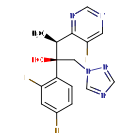
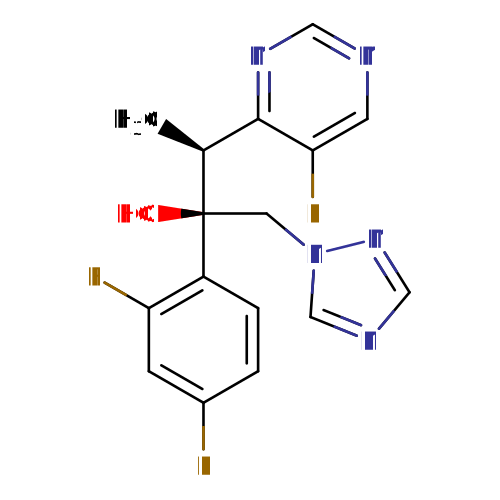
Structure Thumb
Download: MOL | SDF | SMILES | InChI
Display: 2D Structure | 3D Structure
Synonyms
VCZ
Salts Not Available
Brand names
Name Company
Vfend
Brand mixtures Not Available
Categories
  • Antifungals
  • Antifungal Agents
CAS number 137234-62-9
Weight Average: 349.3105
Monoisotopic: 349.11504471
Chemical Formula C16H14F3N5O
InChI Key InChIKey=BCEHBSKCWLPMDN-MGPLVRAMSA-N
InChI
InChI=1S/C16H14F3N5O/c1-10(15-14(19)5-20-7-22-15)16(25,6-24-9-21-8-23-24)12-3-2-11(17)4-13(12)18/h2-5,7-10,25H,6H2,1H3/t10-,16+/m0/s1
Plain Text
IUPAC Name
(2R,3S)-2-(2,4-difluorophenyl)-3-(5-fluoropyrimidin-4-yl)-1-(1H-1,2,4-triazol-1-yl)butan-2-ol
SMILES
C[C@@H](C1=NC=NC=C1F)[C@](O)(CN1C=NC=N1)C1=C(F)C=C(F)C=C1
Plain Text
Mass Spec Not Available
Taxonomy
Kingdom Organic
Classes
  • Benzyl Alcohols and Derivatives
  • Cumenes and Derivatives
  • Phenethylamines
Substructures
  • Hydroxy Compounds
  • Benzyl Alcohols and Derivatives
  • Triazoles
  • Benzene and Derivatives
  • Cumenes and Derivatives
  • Pyrimidines and Derivatives
  • Alcohols and Polyols
  • Halobenzenes
  • Phenethylamines
  • Heterocyclic compounds
  • Aromatic compounds
  • Imines
  • Cyanamides
  • Aryl Halides
Pharmacology
Indication For the treatment of esophageal candidiasis, invasive pulmonary aspergillosis, and serious fungal infections caused by Scedosporium apiospermum and Fusarium spp.
Pharmacodynamics Voriconazole is a triazole antifungal agent indicated for use in the treatment of fungal infections including invasive aspergillosis, esophageal candidiasis, and serious fungal infections caused by Scedosporium apiospermum (asexual form of Pseudallescheria boydii) and Fusarium spp. including Fusarium solani. Fungal plasma membranes are similar to mammalian plasma membranes, differing in having the nonpolar sterol ergosterol, rather than cholesterol, as the principal sterol. Membrane sterols such as ergosterol provide structure, modulation of membrane fluidity, and possibly control of some physiologic events. Voriconazole effects the formation of the fungal plasma membrane by indirectly inhibiting the biosynthesis of ergosterol. This results in plasma membrane permeability changes and inhibition of growth.
Mechanism of action Voriconazole binds and inhibits ergosterol synthesis by inhibiting CYP450-dependent 14-alpha sterol demethylase. The inhibition of 14-alpha sterol demethylase results in a depletion of ergosterol in fungal cell membrane.
Absorption The oral bioavailability is estimated to be 96% (CV 13%).
Volume of distribution
  • 4.6 L/kg
Protein binding 58%
Metabolism Hepatic. The major metabolite of voriconazole is the N-oxide, which accounts for 72% of the circulating radiolabelled metabolites in plasma. Since this metabolite has minimal antifungal activity, it does not contribute to the overall efficacy of voriconazole.
Route of elimination Voriconazole is eliminated via hepatic metabolism with less than 2% of the dose excreted unchanged in the urine.
Half life Not Available
Clearance Not Available
Toxicity The minimum lethal oral dose in mice and rats was 300 mg/kg (equivalent to 4 and 7 times the recommended maintenance dose (RMD), based on body surface area). At this dose, clinical signs observed in both mice and rats included salivation, mydriasis, titubation (loss of balance while moving), depressed behavior, prostration, partially closed eyes, and dyspnea. Other signs in mice were convulsions, corneal opacification and swollen abdomen.
Affected organisms
  • Yeast and other fungi
Pathways Not Available
Pharmacoeconomics
Manufacturers
  • Pfizer inc
  • Matrix laboratories ltd
Packagers
Dosage forms
Form Route Strength
Solution Intravenous
Tablet Oral
Prices
Unit description Cost Unit
Vfend 40 mg/ml Suspension 75ml Bottle 870.72 USD bottle
Vfend iv 200 mg vial 143.5 USD vial
Vfend 200 mg tablet 49.74 USD tablet
Vfend 50 mg tablet 12.43 USD tablet
DrugBank does not sell nor buy drugs. Pricing information is supplied for informational purposes only.
Patents
Country Patent Number Approved Expires (estimated)
United States 6632803 1998-06-02 2018-06-02
United States 5116844 1992-08-11 2009-08-11
Canada 2295035 2005-04-19 2018-06-02
Canada 2035314 2000-01-18 2011-01-30
Properties
State solid
Experimental Properties
Property Value Source
melting point 127-130 °C Not Available
water solubility Low Not Available
logP 1 Not Available
Predicted Properties
Property Value Source
water solubility 9.78e-02 g/l ALOGPS
logP 1.65 ALOGPS
logP 1.82 ChemAxon
logS -3.5 ALOGPS
pKa (strongest acidic) 12.71 ChemAxon
pKa (strongest basic) 2.27 ChemAxon
physiological charge 0 ChemAxon
hydrogen acceptor count 5 ChemAxon
hydrogen donor count 1 ChemAxon
polar surface area 76.72 ChemAxon
rotatable bond count 5 ChemAxon
refractivity 95.28 ChemAxon
polarizability 30.54 ChemAxon
References
Synthesis Reference Not Available
General Reference
  1. Herbrecht R, Denning DW, Patterson TF, Bennett JE, Greene RE, Oestmann JW, Kern WV, Marr KA, Ribaud P, Lortholary O, Sylvester R, Rubin RH, Wingard JR, Stark P, Durand C, Caillot D, Thiel E, Chandrasekar PH, Hodges MR, Schlamm HT, Troke PF, de Pauw B: Voriconazole versus amphotericin B for primary therapy of invasive aspergillosis. N Engl J Med. 2002 Aug 8;347(6):408-15. Pubmed
  2. Patterson TF, Boucher HW, Herbrecht R, Denning DW, Lortholary O, Ribaud P, Rubin RH, Wingard JR, DePauw B, Schlamm HT, Troke P, Bennett JE: Strategy of following voriconazole versus amphotericin B therapy with other licensed antifungal therapy for primary treatment of invasive aspergillosis: impact of other therapies on outcome. Clin Infect Dis. 2005 Nov 15;41(10):1448-52. Epub 2005 Oct 13. Pubmed
  3. Kullberg BJ, Sobel JD, Ruhnke M, Pappas PG, Viscoli C, Rex JH, Cleary JD, Rubinstein E, Church LW, Brown JM, Schlamm HT, Oborska IT, Hilton F, Hodges MR: Voriconazole versus a regimen of amphotericin B followed by fluconazole for candidaemia in non-neutropenic patients: a randomised non-inferiority trial. Lancet. 2005 Oct 22-28;366(9495):1435-42. Pubmed
  4. Ally R, Schurmann D, Kreisel W, Carosi G, Aguirrebengoa K, Dupont B, Hodges M, Troke P, Romero AJ: A randomized, double-blind, double-dummy, multicenter trial of voriconazole and fluconazole in the treatment of esophageal candidiasis in immunocompromised patients. Clin Infect Dis. 2001 Nov 1;33(9):1447-54. Epub 2001 Sep 26. Pubmed
  5. Walsh TJ, Pappas P, Winston DJ, Lazarus HM, Petersen F, Raffalli J, Yanovich S, Stiff P, Greenberg R, Donowitz G, Schuster M, Reboli A, Wingard J, Arndt C, Reinhardt J, Hadley S, Finberg R, Laverdiere M, Perfect J, Garber G, Fioritoni G, Anaissie E, Lee J: Voriconazole compared with liposomal amphotericin B for empirical antifungal therapy in patients with neutropenia and persistent fever. N Engl J Med. 2002 Jan 24;346(4):225-34. Pubmed
External Links
Resource Link
KEGG Drug D00578 Link_out
KEGG Compound C07622 Link_out
PubChem Compound 71616 Link_out
PubChem Substance 46506421 Link_out
ChemSpider 64684 Link_out
ChEBI 10023 Link_out
ChEMBL 10023 Link_out
Therapeutic Targets Database DAP001271 Link_out
PharmGKB PA10233 Link_out
Drug Product Database 2256460 Link_out
RxList http://www.rxlist.com/cgi/generic/vfend.htm Link_out
Drugs.com http://www.drugs.com/cdi/voriconazole.html Link_out
Wikipedia http://en.wikipedia.org/wiki/Voriconazole Link_out
ATC Codes
  • J02AC03
AHFS Codes
  • 08:14.08
PDB Entries Not Available
FDA label show (321 KB)
MSDS show (57.2 KB)
Interactions
Drug Interactions
Drug Interaction
Abarelix Additive QTc prolongation may occur. Consider alternate therapy or monitor for QTc prolongation as this can lead to Torsade de Pointes (TdP).
Alfentanil Voriconazole, a strong CYP3A4 inhibitor, may increase the serum concentration of alfentanil by decreasing its metabolism. Monitor for increased anesthetic and respiratory depressant effects and consider using lower alfentanil doses or alternate anesthetic.
Alfuzosin Voriconazole, a strong CYP3A4 inhibitor, may increase the serum concentration of alfuzosin by decreasing its metabolism. Use of alfuzosin with strong CYP3A4 inhibitors is contraindicated by the manufacturer.
Almotriptan Voriconazole, a strong CYP3A4 inhibitor, may increase the serum concentration of almotriptan by decreasing its metabolism. The initial and maximum doses should not exceed 6.25 mg and 12.5 mg, respectively during concomitant therapy. Concomitant therapy should be avoided in patients with impaired hepatic or renal function.
Alprazolam Voriconazole may increase the serum concentration of alprazolam by decreasing its metabolism. Monitor for alprazolam toxicity if voriconazole is initiated or dose increased.
ambrisentan Voriconazole, a strong CYP3A4 inhibitor, may increase the serum concentration of ambrisentan by decreasing its metabolism. Monitor for changes in the therapeutic and adverse effects of ambrisentan if voriconazole is initiated, discontinued or dose changed.
Amiodarone Additive QTc prolongation may occur. Voriconazole, a strong CYP3A4 inhibitor, may increase the serum concentration of amiodarone by decreasing its metabolism. Consider alternate therapy or monitor for changes in the therapeutic and adverse effects of amiodarone if voriconazole is initiated, discontinued or dose changed.
Amitriptyline Additive QTc prolongation may occur. Consider alternate therapy or monitor for QTc prolongation as this can lead to Torsade de Pointes (TdP).
Amlodipine Voriconazole may increase the serum concentration of amlodipine by decreasing its metabolism. Monitor for changes in the therapeutic and adverse effects of amlodipine if voriconazole is initiated, discontinued or dose changed.
Amobarbital Amobarbital may reduce serum concentrations and efficacy of voriconazole. Concomitant voriconazole and long-acting barbiturates therapy is contraindicated.
Amoxapine Additive QTc prolongation may occur. Consider alternate therapy or monitor for QTc prolongation as this can lead to Torsade de Pointes (TdP).
Amprenavir Voriconazole, a strong CYP3A4 inhibitor, may increase the serum concentration of amprenavir by decreasing its metabolism. The serum concentration of voriconazole may be increased by amprenavir. Monitor for changes in the therapeutic and adverse effects of both agents if concomitant therapy is initiated, discontinued or if doses are changed.
Apixaban Avoid combination. Otherwise, voriconazole will likely increase apixaban serum concentration.
Apomorphine Additive QTc prolongation may occur. Consider alternate therapy or monitor for QTc prolongation as this can lead to Torsade de Pointes (TdP).
Aprepitant Voriconazole, a strong CYP3A4 inhibitor, may increase the serum concentration of aprepitant by decreasing its metabolism. Monitor for changes in the therapeutic and adverse effects of aprepitant if voriconazole is initiated, discontinued or dose changed.
Aripiprazole Voriconazole, a strong CYP3A4 inhibitor, may increase the serum concentration of aripiprazole by decreasing its metabolism. Monitor for changes in the therapeutic and adverse effects of aripiprazole if voriconazole is initiated, discontinued or dose changed.
armodafinil Voriconazole, a strong CYP3A4 inhibitor, may increase the serum concentration of armodafinil by decreasing its metabolism. Monitor for changes in the therapeutic and adverse effects of armodafinil if voriconazole is initiated, discontinued or dose changed.
Arsenic trioxide Additive QTc prolongation may occur. Consider alternate therapy or monitor for QTc prolongation as this can lead to Torsade de Pointes (TdP).
Artemether Additive QTc-prolongation may occur. Concomitant therapy should be avoided.
Asenapine Additive QTc prolongation may occur. Consider alternate therapy or monitor for QTc prolongation as this can lead to Torsade de Pointes (TdP).
Astemizole Increased risk of cardiotoxicity and arrhythmias
Atazanavir Voriconazole, a strong CYP3A4 inhibitor, may increase the serum concentration of atazanavir by decreasing its metabolism. The serum concentration of voriconazole may be increased by atazanavir. Monitor for changes in the therapeutic and adverse effects of both agents if concomitant therapy is initiated, discontinued or if doses are changed.
Atorvastatin Voriconazole, a strong CYP3A4 inhibitor, may increase the serum concentration of atorvastatin by decreasing its metabolism. Monitor for changes in the therapeutic and adverse effects of atorvastatin if voriconazole is initiated, discontinued or dose changed.
Benzphetamine Voriconazole, a strong CYP3A4 inhibitor, may increase the serum concentration of benzphetamine by decreasing its metabolism. Monitor for changes in the therapeutic and adverse effects of benzphetamine if voriconazole is initiated, discontinued or dose changed.
Bisoprolol Voriconazole, a strong CYP3A4 inhibitor, may increase the serum concentration of bisoprolol by decreasing its metabolism. Monitor for changes in the therapeutic and adverse effects of bisoprolol if voriconazole is initiated, discontinued or dose changed.
Bortezomib Voriconazole, a strong CYP3A4 inhibitor, may increase the serum concentration of bortezomib by decreasing its metabolism. Monitor for changes in the therapeutic and adverse effects of bortezomib if voriconazole is initiated, discontinued or dose changed.
Bosentan Voriconazole, a strong CYP3A4 inhibitor, may increase the serum concentration of bosentan by decreasing its metabolism. Monitor for changes in the therapeutic and adverse effects of bosentan if voriconazole is initiated, discontinued or dose changed.
Bromazepam Voriconazole may increase the serum concentration of bromazepam by decreasing its metabolism. Monitor for changes in the therapeutic and adverse effects of bromazepam if voriconazole is initiated, discontinued or dose changed.
Bromocriptine Voriconazole may increase the serum concentration of bromocriptine likely by decreasing its metabolism. Concomitant therapy is contraindicated.
Budesonide Voriconazole, a strong CYP3A4 inhibitor, may increase the serum concentration of budesonide by decreasing its metabolism. Monitor for changes in the therapeutic and adverse effects of budesonide if voriconazole is initiated, discontinued or dose changed.
Buprenorphine Voriconazole, a strong CYP3A4 inhibitor, may increase the serum concentration of buprenorphine by decreasing its metabolism. Monitor for changes in the therapeutic and adverse effects of buprenorphine if voriconazole is initiated, discontinued or dose changed.
Buspirone Voriconazole may increase the serum concentration of buspirone likely by decreasing its metabolism via CYP3A4. Monitor for changes in the therapeutic and adverse effects of buspirone if voriconazole is initiated, discontinued or dose changed.
Busulfan Voriconazole, a strong CYP3A4 inhibitor, may increase the serum concentration of busulfan by decreasing its metabolism. Monitor for changes in the therapeutic and adverse effects of busulfan if voriconazole is initiated, discontinued or dose changed.
Butabarbital Butabarbital may reduce serum concentrations and efficacy of voriconazole. Concomitant voriconazole and long-acting barbiturates therapy is contraindicated.
Butalbital Butalbital may reduce serum concentrations and efficacy of voriconazole. Concomitant voriconazole and long-acting barbiturates therapy is contraindicated.
Cabazitaxel Concomitant therapy with a strong CYP3A4 inhibitor may increase concentrations of cabazitaxel. Avoid concomitant therapy.
Cabergoline Voriconazole may increase the serum concentration of cabergoline likely by decreasing its metabolism. Concomitant therapy is contraindicated.
Calcitriol Voriconazole, a strong CYP3A4 inhibitor, may increase the serum concentration of calcitriol by decreasing its metabolism. Monitor for changes in the therapeutic and adverse effects of calcitriol if voriconazole is initiated, discontinued or dose changed.
Capecitabine Capecitabine, a strong CYP2C9 inhibitor, may increase the serum concentration of voriconazole by decreasing its metabolism. Monitor for changes in the therapeutic and adverse effects of voriconazole if capecitabine is initiated, discontinued or dose changed.
Carbamazepine Carbamazepine may reduce serum concentrations and efficacy of voriconazole likely by increasing its metabolism. Concomitant voriconazole and carbamazepine therapy is contraindicated.
Chlordiazepoxide Voriconazole may increase the serum concentration of chlordiazepoxide by decreasing its metabolism. Monitor for chlordiazepoxide toxicity if voriconazole is initiated or dose increased.
Chloroquine Voriconazole, a strong CYP3A4 inhibitor, may increase the serum concentration of chloroquine by decreasing its metabolism. Monitor for changes in the therapeutic and adverse effects of chloroquine if voriconazole is initiated, discontinued or dose changed.
Chlorpheniramine Voriconazole, a strong CYP3A4 inhibitor, may increase the serum concentration of chlorpheniramine by decreasing its metabolism. Monitor for changes in the therapeutic and adverse effects of chlorpheniramine if voriconazole is initiated, discontinued or dose changed.
Chlorpropamide Additive QTc prolongation may occur. Consider alternate therapy or monitor for QTc prolongation as this can lead to Torsade de Pointes (TdP).
Ciclesonide Voriconazole, a strong CYP3A4 inhibitor, may increase the serum concentration of ciclesonide by decreasing its metabolism. Monitor for changes in the therapeutic and adverse effects of ciclesonide if voriconazole is initiated, discontinued or dose changed.
Cilostazol Voriconzole may increase the serum concentration of cilostazol by decreasing its metabolism. Monitor for increased therapeutic/adverse effects of cilostazol and consider reducing the dose during concomitant therapy.
Cinacalcet Voriconazole, a strong CYP3A4 inhibitor, may increase the serum concentration of cinacalcet by decreasing its metabolism. Monitor for changes in the therapeutic and adverse effects of cinacalcet if voriconazole is initiated, discontinued or dose changed.
Cisapride Voriconazole may increase the serum concentration and toxicity of cisapride likely by decreasing its metabolism. Additive QTc prolongation may also occur. Concomitant therapy is contraindicated.
Citalopram Voriconazole, a strong CYP3A4 inhibitor, may increase the serum concentration of citalopram by decreasing its metabolism. Monitor for changes in the therapeutic and adverse effects of citalopram if voriconazole is initiated, discontinued or dose changed.
Clarithromycin Additive QTc prolongation may occur. Voriconazole, a strong CYP3A4 inhibitor, may increase the serum concentration of clarithromycin by decreasing its metabolism. Clarithromycin may increase the serum concentration of voriconazole by decreasing its metabolism. Consider alternate therapy or monitor for QTc prolongation and changes in the therapeutic and adverse effects of both agents if concomitant therapy is initiated, discontinued or dose changed.
Clobazam Voriconazole may increase the serum concentration of clobazam by decreasing its metabolism. Monitor for clobazam toxicity if voriconazole is initiated or dose increased.
Clomipramine Additive QTc prolongation may occur. Consider alternate therapy or monitor for QTc prolongation as this can lead to Torsade de Pointes (TdP).
Clonazepam Voriconazole may increase the serum concentration of clonazepam by decreasing its metabolism. Monitor for clonazepam toxicity if voriconazole is initiated or dose increased.
Clorazepate Voriconazole may increase the serum concentration of clorazepate by decreasing its metabolism. Monitor for clorazepate toxicity if voriconazole is initiated or dose increased.
Cocaine Voriconazole, a strong CYP3A4 inhibitor, may increase the serum concentration of cocaine by decreasing its metabolism. Monitor for changes in the therapeutic and adverse effects of cocaine if voriconazole is initiated, discontinued or dose changed.
Colchicine Voriconazole, a strong CYP3A4 inhibitor, may increase the serum concentration of colchicine by decreasing its metabolism. A dose reduction of colchicine is recommended along with increased monitoring for colchicine toxicity. Concomitant therapy is contraindicated in patients with renal and/or hepatic impairment.
Conivaptan Voriconazole, a strong CYP3A4 inhibitor, may increase the serum concentration of conivaptan by inhibiting its metabolism. Concomitant therapy is contraindicated.
Cyclosporine Voriconazole, a strong CYP3A4 inhibitor, may increase the serum concentration of cyclosporine by decreasing its metabolism. Consider reducing the dose of cyclosporine. Monitor cyclosporine serum concentrations and therapeutic and toxic effects if initiating, discontinuing or adjusting voriconazole therapy.
Dantrolene Voriconazole, a strong CYP3A4 inhibitor, may increase the serum concentration of dantrolene by decreasing its metabolism. Consider alternate therapy or monitor for changes in the therapeutic and adverse effects of dantrolene if voriconazole is initiated, discontinued or dose changed.
Dapsone Voriconazole, a strong CYP3A4 inhibitor, may increase the serum concentration of dapsone by decreasing its metabolism. Monitor for changes in the therapeutic and adverse effects of dapsone if voriconazole is initiated, discontinued or dose changed.
Darifenacin Voriconazole, a strong CYP3A4 inhibitor, may increase the serum concentration of darifenacin by decreasing its metabolism. Monitor for changes in the therapeutic and adverse effects of darifenacin if voriconazole is initiated, discontinued or dose changed.
Darunavir Darunavir may reduce serum concentrations and efficacy of voriconazole. This combination should be avoided unless the potential benefits outweigh the risk of reduced voriconazole efficacy.
Dasatinib Additive QTc prolongation may occur. Voriconazole, a strong CYP3A4 inhibitor, may also increase the serum concentration of dasatinib by decreasing its metabolism. Consider alternate therapy or monitor for changes in the therapeutic and adverse effects of dasatinib if voriconazole is initiated, discontinued or dose changed.
Delavirdine Delavirdine, a strong CYP2C9 inhibitor, may increase the serum concentration of voriconazole by decreasing its metabolism. Monitor for changes in the therapeutic and adverse effects of voriconazole if delavirdine is initiated, discontinued or dose changed.
Desipramine Additive QTc prolongation may occur. Consider alternate therapy or monitor for QTc prolongation as this can lead to Torsade de Pointes (TdP).
Dexamethasone Voriconazole, a strong CYP3A4 inhibitor, may increase the serum concentration of dexamethasone by decreasing its metabolism. Monitor for changes in the therapeutic and adverse effects of dexamethasone if voriconazole is initiated, discontinued or dose changed.
Diazepam Voriconazole may increase the serum concentration of diazepam by decreasing its metabolism. Monitor for diazepam toxicity if voriconazole is initiated or dose increased.
Diclofenac Voriconazole, a strong CYP2C9 inhibitor, may increase the serum concentration of diclofenac by decreasing its metabolism. Renal impairment may increase the risk of diclofenac adverse effects. Monitor for changes in therapeutic and adverse effects of diclofenac if voriconazole is initiated, discontinued or dose changed.
Didanosine Didanosine may interfere with the absorption of orally administered voriconazole. Enteric coated didanosine does not exert this effect. Didanosine buffered formulations should be administered at least 2 hours from oral voriconazole administration.
Digitoxin Voriconazole, a strong CYP3A4 inhibitor, may increase the serum concentration of digitoxin by decreasing its metabolism. Monitor for changes in the therapeutic and adverse effects of digitoxin if voriconazole is initiated, discontinued or dose changed.
Digoxin Voriconazole may increase the serum concentration of digoxin. Monitor for increased serum concentrations and toxic effects of digoxin if voriconazole is initiated or dose increased.
Dihydroergotamine Voriconazole, a strong CYP3A4 inhibitor, may increase the serum concentration of dihydroergotamine by decreasing its metabolism. Concomitant therapy is contraindicated.
Diltiazem Voriconazole, a strong CYP3A4 inhibitor, may increase the serum concentration of diltiazem by decreasing its metabolism. Monitor for changes in the therapeutic and adverse effects of diltiazem if voriconazole is initiated, discontinued or dose changed.
Disopyramide Additive QTc prolongation may occur. Voriconazole, a strong CYP3A4 inhibitor, may also increase the serum concentration of disopyramide by decreasing its metabolism. Consider alternate therapy or monitor for QTc prolongation and changes in the therapeutic and adverse effects of disopyramide if voriconazole is initiated, discontinued or dose changed.
Docetaxel Voriconazole, a strong CYP3A4 inhibitor, may increase the serum concentration of docetaxel by decreasing its metabolism. Consider using a non-interacting antifungal or monitor for changes in the therapeutic and adverse effects of docetaxel if voriconazole is initiated, discontinued or dose changed.
Dofetilide Voriconazole may increase the serum concentration of dofetilide by decreasing its metabolism. Concomitant therapy is contraindicated.
Dolasetron Additive QTc prolongation may occur. Consider alternate therapy or monitor for QTc prolongation as this can lead to Torsade de Pointes (TdP).
Doxepin Additive QTc prolongation may occur. Voriconazole, a strong CYP3A4 inhibitor, may also increase the serum concentration of doxepin by decreasing its metabolism. Consider alternate therapy or monitor for QTc prolongation and changes in the therapeutic and adverse effects of doxepin if voriconazole is initiated, discontinued or dose changed.
Doxorubicin Voriconazole, a strong CYP3A4 inhibitor, may increase the serum concentration of doxorubicin by decreasing its metabolism. Monitor for changes in the therapeutic and adverse effects of doxorubicin if voriconazole is initiated, discontinued or dose changed.
Dronedarone Voriconazole, a strong CYP3A4 inhibitor, may increase the serum concentration by decreasing its metabolism. Additive QTc prolongation may also occur. Concomitant therapy is contraindicated.
Dronedarone Voriconazole is a strong CYP3A4 inhibitor in which concomitant use with dronedarone will significantly increase its exposure. Avoid concomitant use.
Droperidol Additive QTc prolongation may occur. Consider alternate therapy or monitor for QTc prolongation as this can lead to Torsade de Pointes (TdP).
Efavirenz Efavirenze may decrease the serum concentration of voriconazole likely by increasing its metabolism. Voriconazole may increase the serum concentration of efavirenz by decreasing its metabolism. Consider alternate therapy or adjust doses and monitor for reduced voriconazole efficacy and increased efavirenz adverse effects during concomitant therapy.
Eletriptan Voriconazole, a strong CYP3A4 inhibitor, may increase the serum concentration of eletriptan by decreasing its metabolism. Consider avoiding administration of the two agents within 72 hours of each other. Monitor for changes in the therapeutic and adverse effects of eletriptan if voriconazole is initiated, discontinued or dose changed.
Eplerenone Voriconazole, a strong CYP3A4 inhibitor, may increase the serum concentration of eplerenone by decreasing its metabolism. Concomitant therapy is contraindicated.
Ergoloid mesylate Voriconazole, a strong CYP3A4 inhibitor, may increase the serum concentration of ergoloid mesylates by decreasing their metabolism. Concomitant therapy is contraindicated.
Ergonovine Voriconazole, a strong CYP3A4 inhibitor, may increase the serum concentration of ergonovine by decreasing its metabolism. Concomitant therapy is contraindicated.
Ergotamine Voriconazole, a strong CYP3A4 inhibitor, may increase the serum concentration of ergotamine by decreasing its metabolism. Concomitant therapy is contraindicated.
Erlotinib Voriconazole, a strong CYP3A4 inhibitor, may increase the serum concentration of erlotinib by decreasing its metabolism. Monitor for changes in the therapeutic and adverse effects of erlotinib if voriconazole is initiated, discontinued or dose changed.
Erythromycin Voriconazole, a strong CYP3A4 inhibitor, may increase the serum concentration of erythromycin by decreasing its metabolism. Erythromycin may increase the serum concentration of voriconazole by decreasing its metabolism. Additive QTc prolongation may also occur. Consider alternate therapy or monitor for QTc prolongation and changes in the therapeutic and adverse effects of both agents if concomitant therapy is initiated, discontinued or dose changed.
Escitalopram Voriconazole, a strong CYP3A4 inhibitor, may increase the serum concentration of escitalopram by decreasing its metabolism. Monitor for changes in the therapeutic and adverse effects of escitalopram if voriconazole is initiated, discontinued or dose changed.
Estazolam Voriconazole may increase the serum concentration of estazolam by decreasing its metabolism. Monitor for estazolam toxicity if voriconazole is initiated or dose increased.
Eszopiclone Voriconazole, a strong CYP3A4 inhibitor, may increase the serum concentration of eszopiclone by decreasing its metabolism. Monitor for changes in the therapeutic and adverse effects of eszopiclone if voriconazole is initiated, discontinued or dose changed.
Ethosuximide Voriconazole, a strong CYP3A4 inhibitor, may increase the serum concentration of ethosuximide by decreasing its metabolism. Monitor for changes in the therapeutic and adverse effects of ambrisentan if voriconazole is initiated, discontinued or dose changed.
Etoposide Voriconazole, a strong CYP3A4 inhibitor, may increase the serum concentration of etoposide by decreasing its metabolism. Monitor for changes in the therapeutic and adverse effects of etoposide if voriconazole is initiated, discontinued or dose changed.
Etravirine Voriconazole may increase the serum concentration of etravirine likely by inhibiting its metabolism. Etravirine, a CYP2C19 inhibitor, may decrease the serum concentration of voriconazole. Monitor for changes in the therapeutic and adverse effects of both agents if concomitant therapy is initiated, discontinued or doses are changed.
Everolimus Voriconzole, a strong CYP3A4 inhibitor, may increase the serum concentration of everolimus by decreasing its metabolism. Concurrent therapy should be avoided.
Felbamate Voriconazole, a strong CYP3A4 inhibitor, may increase the serum concentration of felbamate by decreasing its metabolism. Monitor for changes in the therapeutic and adverse effects of felbamate if voriconazole is initiated, discontinued or dose changed.
Felodipine Voriconazole, a strong CYP3A4 inhibitor, may increase the serum concentration of felodipine by decreasing its metabolism. Monitor for changes in the therapeutic and adverse effects of felodipine if voriconazole is initiated, discontinued or dose changed.
Fentanyl Voriconazole, a strong CYP3A4 inhibitor, may increase the serum concentration of fentanyl by decreasing its metabolism. Adverse effects include life-threatening respiratory depression. Monitor for changes in the therapeutic and adverse effects of fentanyl if voriconazole is initiated, discontinued or dose changed.
Flecainide Additive QTc prolongation may occur. Consider alternate therapy or monitor for QTc prolongation as this can lead to Torsade de Pointes (TdP).
Floxuridine Floxuridine, a strong CYP2C9 inhibitor, may increase the serum concentration of voriconazole by decreasing its metabolism. Monitor for changes in the therapeutic and adverse effects of voriconazole if floxuridine is initiated, discontinued or dose changed.
Fluconazole Fluconazole, a strong CYP2C9 inhibitor, may increase the serum concentration of voriconazole by decreasing its metabolism. Additive QTc prolongation may also occur. Consider alternate therapy or monitor for QTc prolongation and changes in the therapeutic and adverse effects of voriconazole if fluconazole is initiated, discontinued or dose changed.
Flunisolide Voriconazole, a strong CYP3A4 inhibitor, may increase the serum concentration of flunisolide by decreasing its metabolism. Monitor for changes in the therapeutic and adverse effects of flunisolide if voriconazole is initiated, discontinued or dose changed.
Fluorouracil Fluorouracil, a strong CYP2C9 inhibitor, may increase the serum concentration of voriconazole by decreasing its metabolism. Monitor for changes in the therapeutic and adverse effects of voriconazole if fluorouracil is initiated, discontinued or dose changed.
Fluoxetine Additive QTc prolongation may occur. Consider alternate therapy or monitor for QTc prolongation as this can lead to Torsade de Pointes (TdP).
Flupenthixol Additive QTc prolongation may occur. Consider alternate therapy or monitor for QTc prolongation as this can lead to Torsade de Pointes (TdP).
Flurazepam Voriconazole, a strong CYP3A4 inhibitor, may increase the serum concentration of flurazepam by decreasing its metabolism. Monitor for flurazepam toxicity if voriconazole is initiated or dose increased.
Flurbiprofen Flurbiprofen, a strong CYP2C9 inhibitor, may increase the serum concentration of voriconazole by decreasing its metabolism. Monitor for changes in the therapeutic and adverse effects of voriconazole if flurbiprofen is initiated, discontinued or dose changed.
Flutamide Voriconazole, a strong CYP3A4 inhibitor, may increase the serum concentration of flutamide by decreasing its metabolism. Monitor for changes in the therapeutic and adverse effects of flutamide if voriconazole is initiated, discontinued or dose changed.
Fluticasone Propionate Voriconazole, a strong CYP3A4 inhibitor, may increase the serum concentration of fluticasone by decreasing its metabolism. Monitor for changes in the therapeutic and adverse effects of fluticasone if voriconazole is initiated, discontinued or dose changed.
Fosamprenavir Voriconazole may increase the serum concentration of fosamprenavir by decreasing its metabolism. Fosamprenavir may increase the serum concentration of voriconazole. Monitor for changes in the therapeutic and adverse effects of both agents if concomitant therapy is initiated, discontinued or if doses are changed.
Foscarnet Additive QTc prolongation may occur. Consider alternate therapy or monitor for QTc prolongation as this can lead to Torsade de Pointes (TdP).
Fosphenytoin The hydantoin decreases the effect of voriconazole
Gatifloxacin Additive QTc prolongation may occur. Consider alternate therapy or monitor for QTc prolongation as this can lead to Torsade de Pointes (TdP).
Gefitinib Voriconazole, a strong CYP3A4 inhibitor, may increase the serum concentration of gefitinib by decreasing its metabolism. Monitor for changes in the therapeutic and adverse effects of gefitinib if voriconazole is initiated, discontinued or dose changed.
Gemfibrozil Gemfibrozil, a strong CYP2C9 inhibitor, may increase the serum concentration of voriconazole by decreasing its metabolism. Monitor for changes in the therapeutic and adverse effects of voriconazole if gemfibrozil is initiated, discontinued or dose changed.
Halofantrine Voriconazole may increase the serum concentration of halofantrine by decreasing its metabolism by CYP3A4. Concomitant therapy should be avoided due to the concentration-dependent risk of QTc prolongation related to halofantrine.
Haloperidol Voriconazole, a strong CYP3A4 inhibitor, may increase the serum concentration of haloperidol by decreasing its metabolism. Additive QTc prolongation may also occur. Consider alternate therapy or monitor for changes in the therapeutic and adverse effects of haloperidol if voriconazole is initiated, discontinued or dose changed.
Ibuprofen Ibuprofen, a strong CYP2C9 inhibitor, may increase the serum concentration of voriconazole by decreasing its metabolism. Monitor for changes in the therapeutic and adverse effects of voriconazole if ibuprofen is initiated, discontinued or dose changed.
Ibutilide Additive QTc prolongation may occur. Consider alternate therapy or monitor for QTc prolongation as this can lead to Torsade de Pointes (TdP).
Ifosfamide Voriconazole, a strong CYP3A4 inhibitor, may increase the serum concentration of ifosfamide by decreasing its metabolism. Monitor for changes in the therapeutic and adverse effects of ifosfamide if voriconazole is initiated, discontinued or dose changed.
Imatinib Voriconazole, a strong CYP3A4 inhibitor, may increase the serum concentration of imatinib by decreasing its metabolism. Additive QTc prolongation may also occur. Consider alternate therapy or monitor for changes in the therapeutic and adverse effects of imatinib if voriconazole is initiated, discontinued or dose changed.
Imipramine Additive QTc prolongation may occur. Consider alternate therapy or monitor for QTc prolongation as this can lead to Torsade de Pointes (TdP).
Indapamide Additive QTc prolongation may occur. Consider alternate therapy or monitor for QTc prolongation as this can lead to Torsade de Pointes (TdP).
Indinavir Voriconazole may increase the serum concentration of indinavir by decreasing its metabolism. Indinavir may increase the serum concentration of voriconazole. Monitor for changes in the therapeutic and adverse effects of both agents if concomitant therapy is initiated, discontinued or if doses are changed.
Indomethacin Indomethacin, a strong CYP2C9 inhibitor, may increase the serum concentration of voriconazole by decreasing its metabolism. Monitor for changes in the therapeutic and adverse effects of voriconazole if indomethacin is initiated, discontinued or dose changed.
Irinotecan Voriconazole, a strong CYP3A4 inhibitor, may increase the serum concentration of irinotecan by decreasing its metabolism. Monitor for changes in the therapeutic and adverse effects of irinotecan if voriconazole is initiated, discontinued or dose changed.
Isosorbide Dinitrate Voriconazole, a strong CYP3A4 inhibitor, may increase the serum concentration of isosorbide dinitrate by decreasing its metabolism. Monitor for changes in the therapeutic and adverse effects of isosorbide dinitrate if voriconazole is initiated, discontinued or dose changed.
Isosorbide Mononitrate Voriconazole, a strong CYP3A4 inhibitor, may increase the serum concentration of isosorbide mononitrate by decreasing its metabolism. Monitor for changes in the therapeutic and adverse effects of isosorbide mononitrate if voriconazole is initiated, discontinued or dose changed.
Isradipine Voriconazole, a strong CYP3A4 inhibitor, may increase the serum concentration of isradipine by decreasing its metabolism. Additive QTc prolongation may also occur. Consider alternate therapy or monitor for changes in the therapeutic and adverse effects of isradipine if voriconazole is initiated, discontinued or dose changed.
Ixabepilone Voriconazole, a strong CYP3A4 inhibitor, may increase the serum concentration of ixabepilone by decreasing its metabolism. Monitor for changes in the therapeutic and adverse effects of ixabepilone if voriconazole is initiated, discontinued or dose changed.
Ketamine Voriconazole, a strong CYP3A4 inhibitor, may increase the serum concentration of ketamine by decreasing its metabolism. Monitor for changes in the therapeutic and adverse effects of ketamine if voriconazole is initiated, discontinued or dose changed.
Ketoconazole Ketoconazole, a strong CYP2C9 inhibitor, may increase the serum concentration of voriconazole by decreasing its metabolism. Monitor for changes in the therapeutic and adverse effects of voriconazole if ketoconazole is initiated, discontinued or dose changed.
Lapatinib Voriconazole, a strong CYP3A4 inhibitor, may increase the serum concentration of lapatinib by decreasing its metabolism. Monitor for changes in the therapeutic and adverse effects of lapatinib if voriconazole is initiated, discontinued or dose changed.
Levofloxacin Additive QTc prolongation may occur. Consider alternate therapy or monitor for QTc prolongation as this can lead to Torsade de Pointes (TdP).
Lidocaine Voriconazole, a strong CYP3A4 inhibitor, may increase the serum concentration of lidocaine by decreasing its metabolism. Monitor for changes in the therapeutic and adverse effects of lidocaine if voriconazole is initiated, discontinued or dose changed.
Lopinavir Lopinavir may reduce serum concentration and efficacy of voriconazole. This combination should be avoided unless the potential benefits outweigh the risk of reduced voriconazole efficacy.
Lovastatin Voriconazole, a strong CYP3A4 inhibitor, may increase the serum concentration of lovastatin by decreasing its metabolism. Monitor for changes in the therapeutic and adverse effects of lovastatin if voriconazole is initiated, discontinued or dose changed.
Loxapine Additive QTc prolongation may occur. Consider alternate therapy or monitor for QTc prolongation as this can lead to Torsade de Pointes (TdP).
Lumefantrine Additive QTc-prolongation may occur. Concomitant therapy should be avoided.
Maprotiline Additive QTc prolongation may occur. Consider alternate therapy or monitor for QTc prolongation as this can lead to Torsade de Pointes (TdP).
Maraviroc Voriconazole, a strong CYP3A4 inhibitor, may increase the serum concentration of maraviroc by decreasing its metabolism. A dose reduction in maraviroc is warranted. Monitor for changes in the therapeutic and adverse effects of maraviroc if voriconazole is initiated, discontinued or dose changed.
Mefenamic acid Mefanamic acid, a strong CYP2C9 inhibitor, may increase the serum concentration of voriconazole by decreasing its metabolism. Monitor for changes in the therapeutic and adverse effects of voriconazole if mefanamic acid is initiated, discontinued or dose changed.
Mefloquine Voriconazole, a strong CYP3A4 inhibitor, may increase the serum concentration of mefloquine by decreasing its metabolism. Additive QTc prolongation may also occur. Consider alternate therapy or monitor for changes in the therapeutic and adverse effects of mefloquine if voriconazole is initiated, discontinued or dose changed.
Meloxicam Voriconazole may increase the serum concentration of meloxicam by decreasing its metabolism via CYP2C9 and CYP3A4. Monitor for changes in the therapeutic and adverse effects of meloxicam if voriconazole is initiated, discontinued or dose changed.
Mesoridazine Additive QTc prolongation may occur. Consider alternate therapy or monitor for QTc prolongation as this can lead to Torsade de Pointes (TdP).
Methadone Voriconazole, a strong CYP3A4 inhibitor, may increase the serum concentration of methadone by decreasing its metabolism. Additive QTc prolongation may also occur. Consider alternate therapy or monitor for changes in the therapeutic and adverse effects of methadone if voriconazole is initiated, discontinued or dose changed.
Methotrimeprazine Additive QTc prolongation may occur. Consider alternate therapy or monitor for QTc prolongation as this can lead to Torsade de Pointes (TdP).
Methylergonovine Voriconazole, a strong CYP3A4 inhibitor, may increase the serum concentration of methylergonovine by decreasing its metabolism. Concomitant therapy is contraindicated.
Miconazole Miconazole, a strong CYP2C9 inhibitor, may increase the serum concentration of voriconazole by decreasing its metabolism. Monitor for changes in the therapeutic and adverse effects of voriconazole if miconazole is initiated, discontinued or dose changed.
Midazolam Voriconazole may increase the serum concentration of midazolam by decreasing its metabolism. Monitor for midazolam toxicity if voriconazole is initiated or dose increased.
Mirtazapine Voriconazole, a strong CYP3A4 inhibitor, may increase the serum concentration of mirtazapine by decreasing its metabolism. Monitor for changes in the therapeutic and adverse effects of mirtazapine if voriconazole is initiated, discontinued or dose changed.
Modafinil Voriconazole, a strong CYP3A4 inhibitor, may increase the serum concentration of modafinil by decreasing its metabolism. Monitor for changes in the therapeutic and adverse effects of modafinil if voriconazole is initiated, discontinued or dose changed.
Moricizine Voriconazole, a strong CYP3A4 inhibitor, may increase the serum concentration of moricizine by decreasing its metabolism. Monitor for changes in the therapeutic and adverse effects of moricizine if voriconazole is initiated, discontinued or dose changed.
Moxifloxacin Additive QTc prolongation may occur. Consider alternate therapy or monitor for QTc prolongation as this can lead to Torsade de Pointes (TdP).
Nateglinide Voriconazole, a strong CYP3A4 inhibitor, may increase the serum concentration of nateglinide by decreasing its metabolism. Monitor for changes in the therapeutic and adverse effects of nateglinide if voriconazole is initiated, discontinued or dose changed.
Nefazodone Voriconazole, a strong CYP3A4 inhibitor, may increase the serum concentration of nefazodone by decreasing its metabolism. Monitor for changes in the therapeutic and adverse effects of nefazodone if voriconazole is initiated, discontinued or dose changed.
Nelfinavir Nelfinavir may decrease the serum concentration of voriconazole likely by increasing its metabolism. Voriconazole may increase the serum concentration of nelfinavir by decreasing its metabolism. Consider alternate therapy or adjust doses and monitor for reduced voriconazole efficacy and increased nelfinavir adverse effects during concomitant therapy.
Nicardipine Nicardipine, a strong CYP2C9 inhibitor, may increase the serum concentration of voriconazole by decreasing its metabolism. Voriconazole, a strong CYP3A4 inhibitor, may increase the serum concentration of nicardipine by decreasing its metabolism. Monitor for changes in the therapeutic and adverse effects of voriconazole and nicardipine if concomitant therapy is initiated, discontinued or doses are changed.
Nifedipine Voriconazole, a strong CYP3A4 inhibitor, may increase the serum concentration of nifedipine by decreasing its metabolism. Monitor for changes in the therapeutic and adverse effects of nifedipine if voriconazole is initiated, discontinued or dose changed.
Nilotinib Voriconazole may increase the serum concentration of nilotinib by inhibiting its metabolism by CYP3A4. Additive QTc prolongation may also occur. Concomitant therapy should be avoided.
Nimodipine Voriconazole, a strong CYP3A4 inhibitor, may increase the serum concentration of nimodipine by decreasing its metabolism. Monitor for changes in the therapeutic and adverse effects of nimodipine if voriconazole is initiated, discontinued or dose changed.
Nisoldipine Voriconazole, a strong CYP3A4 inhibitor, may increase the serum concentration of nisoldipine by decreasing its metabolism. Concomitant therapy should be avoided.
Nitrendipine Voriconazole, a strong CYP3A4 inhibitor, may increase the serum concentration of nitrendipine by decreasing its metabolism. Monitor for changes in the therapeutic and adverse effects of nitrendipine if voriconazole is initiated, discontinued or dose changed.
Norfloxacin Additive QTc prolongation may occur. Consider alternate therapy or monitor for QTc prolongation as this can lead to Torsade de Pointes (TdP).
Nortriptyline Additive QTc prolongation may occur. Consider alternate therapy or monitor for QTc prolongation as this can lead to Torsade de Pointes (TdP).
Octreotide Additive QTc prolongation may occur. Consider alternate therapy or monitor for QTc prolongation as this can lead to Torsade de Pointes (TdP).
Omeprazole Voriconazole increases the effect and toxicity of omeprazole
Paclitaxel Voriconazole, a strong CYP3A4 inhibitor, may increase the serum concentration of paclitaxel by decreasing its metabolism. Monitor for changes in the therapeutic and adverse effects of paclitaxel if voriconazole is initiated, discontinued or dose changed.
Pentamidine Additive QTc prolongation may occur. Consider alternate therapy or monitor for QTc prolongation as this can lead to Torsade de Pointes (TdP).
Perflutren Additive QTc prolongation may occur. Consider alternate therapy or monitor for QTc prolongation as this can lead to Torsade de Pointes (TdP).
Pergolide Voriconazole may increase the serum concentration of pergolide likely by decreasing its metabolism. Concomitant therapy is contraindicated.
Phencyclidine Voriconazole, a strong CYP3A4 inhibitor, may increase the serum concentration of phencyclidine by decreasing its metabolism. Monitor for changes in the therapeutic and adverse effects of phencyclidine if voriconazole is initiated, discontinued or dose changed.
Phenobarbital Phenobarbital may reduce serum concentrations and efficacy of voriconazole. Concomitant voriconazole and long-acting barbiturates therapy is contraindicated.
Phenytoin Voriconazole may increase the serum concentration of phenytoin by decreasing its metabolism. Phenytoin may increase the serum concentration of voriconazole by increasing its metabolism. Consider alternate antifungal therapy or monitor for voriconazole therapy failure and phenytoin toxicity.
Pimozide Voriconazole, a strong CYP3A4 inhibitor, may increase the serum concentration of pimozide by decreasing its metabolism. Increased risk of QTc prolongation and development arrhythmias. Concomitant use is contraindicated.
Pipotiazine Voriconazole, a strong CYP3A4 inhibitor, may increase the serum concentration of pipotiazine by decreasing its metabolism. Monitor for changes in the therapeutic and adverse effects of pipotiazine if voriconazole is initiated, discontinued or dose changed.
Piroxicam Piroxicam, a strong CYP2C9 inhibitor, may increase the serum concentration of voriconazole by decreasing its metabolism. Monitor for changes in the therapeutic and adverse effects of voriconazole if piroxicam is initiated, discontinued or dose changed.
Prazepam Voriconazole may increase the serum concentration of prazepam by decreasing its metabolism. Monitor for prazepam toxicity if voriconazole is initiated or dose increased.
Praziquantel Voriconazole, a strong CYP3A4 inhibitor, may increase the serum concentration of praziquantel by decreasing its metabolism. Monitor for changes in the therapeutic and adverse effects of praziquantel if voriconazole is initiated, discontinued or dose changed.
Primidone The barbiturate, primidone, decreases the effect of voriconazole.
Probucol Additive QTc prolongation may occur. Consider alternate therapy or monitor for QTc prolongation as this can lead to Torsade de Pointes (TdP).
Procainamide Additive QTc prolongation may occur. Consider alternate therapy or monitor for QTc prolongation as this can lead to Torsade de Pointes (TdP).
Propafenone Additive QTc prolongation may occur. Consider alternate therapy or monitor for QTc prolongation as this can lead to Torsade de Pointes (TdP).
Protriptyline Additive QTc prolongation may occur. Consider alternate therapy or monitor for QTc prolongation as this can lead to Torsade de Pointes (TdP).
Quetiapine Voriconazole, a strong CYP3A4 inhibitor, may increase the serum concentration of quetiapine by decreasing its metabolism. Additive QTc prolongation may also occur. Consider alternate therapy or monitor for changes in the therapeutic and adverse effects of quetiapine if voriconazole is initiated, discontinued or dose changed.
Quinidine Voriconazole may increase the serum concentration of quinidine likely by inhibiting its metabolism by CYP3A4. Additive QTc prolongation may also occur. Consider alternate therapy or monitor for changes in the serum concentration and toxic effects of quinidine if voriconazole is initiated, discontinued or dose changed.
Quinine Additive QTc prolongation may occur. Concomitant therapy should be avoided.
Ranolazine Voriconazole, a strong CYP3A4 inhibitor, may increase the serum concentration of ranolazine by decreasing its metabolism. Additive QTc prolongation may also occur. Concomitant therapy is contraindicated.
Repaglinide Voriconazole, a strong CYP3A4 inhibitor, may increase the serum concentration of repaglinide by decreasing its metabolism. Monitor for changes in the therapeutic and adverse effects of repaglinide if voriconazole is initiated, discontinued or dose changed.
Rifabutin Rifabutin may decrease the serum concentration of voriconazole likely by increasing its metabolism via CYP3A enzymes. Voriconazole may increase the serum concentration of rifabutin likely by inhibiting its metabolism via CYP3A. Concomitant therapy is contraindicated.
Rifampin Rifampin may decrease the serum concentration of voriconazole likely by increasing its metabolism via CYP3A enzymes. Voriconazole may increase the serum concentration of rifampin likely by inhibiting its metabolism via CYP3A. Concomitant therapy is contraindicated.
Rifapentine Rifapentine may decrease the serum concentration of voriconazole likely by increasing its metabolism via CYP3A enzymes. Voriconazole may increase the serum concentration of rifapentin likely by inhibiting its metabolism via CYP3A. Concomitant therapy is contraindicated.
Risperidone Additive QTc prolongation may occur. Consider alternate therapy or monitor for QTc prolongation as this can lead to Torsade de Pointes (TdP).
Ritonavir Ritonavir may decrease the serum concentration of voriconazole by increasing its metabolism. Concomitant therapy with high dose ritonavir is contraindicated. Caution should be used with lower doses as decreased voriconazole efficacy may occur.
Rivaroxaban Voriconazole, a strong CYP3A4 inhibitor, may increase the serum concentration of rivaroxaban by decreasing its metabolism. Increased bleed risks may occur. Consider alternate therapy.
Salmeterol Voriconazole, a strong CYP3A4 inhibitor may increase the serum concentration of salmeterol by decreasing its metabolism. Consider alternate therapy.
Saquinavir Voriconazole may increase the serum concentration of saquinavir by decreasing its metabolism. Saquinavir may increase the serum concentration of voriconazole. Monitor for changes in the therapeutic and adverse effects of both agents if concomitant therapy is initiated, discontinued or if doses are changed.
Saxagliptin Voriconazole, a strong CYP3A4 inhibitor, may increase the serum concentration of saxagliptin by decreasing its metabolism. Monitor for changes in the therapeutic and adverse effects of saxagliptin if voriconazole is initiated, discontinued or dose changed.
Sibutramine Voriconazole, a strong CYP3A4 inhibitor, may increase the serum concentration of sibutramine by decreasing its metabolism. Monitor for changes in the therapeutic and adverse effects of sibutramine if voriconazole is initiated, discontinued or dose changed.
Sildenafil Voriconazole, a strong CYP3A4 inhibitor, may increase the serum concentration of sildenafil by decreasing its metabolism. Monitor for changes in the therapeutic and adverse effects of sildenafil if voriconazole is initiated, discontinued or dose changed.
Silodosin Voriconazole, a strong CYP3A4 inhibitor, may increase the serum concentration of silodosin by decreasing its metabolism. Concomitant therapy is contraindicated.
Simvastatin Voriconazole, a strong CYP3A4 inhibitor, may increase the serum concentration of simvastatin by decreasing its metabolism. Monitor for changes in the therapeutic and adverse effects of simvastain if voriconazole is initiated, discontinued or dose changed.
Sirolimus Voriconazole may increase the serum concentration of sirolimus likely by inhibition of CYP3A4-mediated metabolism or p-glyprotein transport of sirolimus. Consider alternate therapy or reduce the dose of sirolimus and monitor serum levels during concomitant therapy.
Sitaxentan Sitaxsentan, a strong CYP2C9 inhibitor, may increase the serum concentration of voriconazole by decreasing its metabolism. Monitor for changes in the therapeutic and adverse effects of voriconazole if sitaxsentan is initiated, discontinued or dose changed.
Solifenacin Voriconazole, a strong CYP3A4 inhibitor, may increase the serum concentration of solifenacin by decreasing its metabolism. Monitor for changes in the therapeutic and adverse effects of solifenacin if voriconazole is initiated, discontinued or dose changed.
Sotalol Additive QTc prolongation may occur. Consider alternate therapy or monitor for QTc prolongation as this can lead to Torsade de Pointes (TdP).
Sparfloxacin Additive QTc prolongation may occur. Consider alternate therapy or monitor for QTc prolongation as this can lead to Torsade de Pointes (TdP).
Spiramycin Voriconazole, a strong CYP3A4 inhibitor, may increase the serum concentration of spiramycin by decreasing its metabolism. Monitor for changes in the therapeutic and adverse effects of spiramycin if voriconazole is initiated, discontinued or dose changed.
St. John's Wort St. John's Wort may decrease the serum concentration of voriconazole by increasing its elimination. Concomitant therapy is contraindicated.
Sufentanil Voriconazole, a strong CYP3A4 inhibitor, may increase the serum concentration of sufentanil by decreasing its metabolism. Monitor for changes in the therapeutic and adverse effects of sufentanil if voriconazole is initiated, discontinued or dose changed.
Sulfisoxazole Sulfisoxazole, a strong CYP2C9 inhibitor, may increase the serum concentration of voriconazole by decreasing its metabolism. Monitor for changes in the therapeutic and adverse effects of voriconazole if sulfisoxazole is initiated, discontinued or dose changed.
Sunitinib Voriconazole, a strong CYP3A4 inhibitor, may increase the serum concentration of sunitinib by decreasing its metabolism. Additive QTc prolongation may also occur. Consider alternate therapy or monitor for changes in the therapeutic and adverse effects of sunitinib if voriconazole is initiated, discontinued or dose changed.
Tacrolimus Voriconazole, a strong CYP3A4 inhibitor, may increase the serum concentration of tacrolimus by decreasing its metabolism. Additive QTc prolongation may also occur. Consider alternate therapy or monitor for changes in the therapeutic and adverse effects of tacrolimus if voriconazole is initiated, discontinued or dose changed.
Tadalafil Voriconazole, a strong CYP3A4 inhibitor, may increase the serum concentration of tadalafil by decreasing its metabolism. Concomitant therapy should be avoided if possible due to high risk of tadalafil toxicity.
Tamoxifen Voriconazole, a strong CYP3A4 inhibitor, may increase the serum concentration of tamoxifen by decreasing its metabolism. Monitor for changes in the therapeutic and adverse effects of tamoxifen if voriconazole is initiated, discontinued or dose changed.
Tamsulosin Voriconazole, a strong CYP3A4 inhibitor, may increase the serum concentration of tamsulosin by decreasing its metabolism. Monitor for changes in the therapeutic and adverse effects of tamsulosin if voriconazole is initiated, discontinued or dose changed.
Telithromycin Voriconazole, a strong CYP3A4 inhibitor, may increase the serum concentration of telithromycin by decreasing its metabolism. Telithromycin may increase the serum concentration of voriconazole by decreasing its metabolism. Monitor for changes in the therapeutic and adverse effects of both agents if concomitant therapy is initiated, discontinued or dose changed. QTc interval prolongation may also occur.
Temsirolimus Voriconazole, a strong CYP3A4 inhibitor, may increase the serum concentration of temsirolimus and its active metabolite, sirolimus, by decreasing their metabolism. Concomitant therapy should be avoided.
Teniposide The strong CYP3A4 inhibitor, Voriconazole, may decrease the metabolism and clearance of Teniposide, a CYP3A4 substrate. Consider alternate therapy or monitor for changes in the therapeutic/adverse effects of Teniposide if Voriconazole is initiated, discontinued or dose changed.
Terfenadine Increased risk of cardiotoxicity and arrhythmias
Tetrabenazine Additive QTc prolongation may occur. Concomitant therapy should be avoided.
Theophylline Voriconazole, a strong CYP3A4 inhibitor, may increase the serum concentration of theophylline by decreasing its metabolism. Monitor for changes in the therapeutic and adverse effects of theophylline if voriconazole is initiated, discontinued or dose changed.
Thioridazine Additive QTc prolongation may occur. Concomitant use is contraindicated.
Thiothixene Additive QTc prolongation may occur. Consider alternate therapy or monitor for QTc prolongation as this can lead to Torsade de Pointes (TdP).
Tiagabine Voriconazole, a strong CYP3A4 inhibitor, may increase the serum concentration of tiagabine by decreasing its metabolism. Monitor for changes in the therapeutic and adverse effects of tiagabine if voriconazole is initiated, discontinued or dose changed.
Tipranavir Voriconazole may increase the serum concentration of tipranavir by decreasing its metabolism. Tipranavir may increase the serum concentration of voriconazole. Monitor for changes in the therapeutic and adverse effects of both agents if concomitant therapy is initiated, discontinued or if doses are changed.
Tolbutamide Tolbutamide, a strong CYP2C9 inhibitor, may decrease the metabolism and clearance of Voriconazole. Consider alternate therapy or monitor for changes in Voriconazole therapeutic and adverse effects if Tolbutamide is initiated, discontinued or dose changed.
Tolterodine Voriconazole, a strong CYP3A4 inhibitor, may increase the serum concentration of tolterodine by decreasing its metabolism. Tolterodine is mainly metabolized via the CYP2D6 pathway. This interaction is likely only a concern in patients who are poor CYP2D6 metabolizers. Monitor for changes in the therapeutic and adverse effects of tolterodine if voriconazole is initiated, discontinued or dose changed.
Tolvaptan Voriconazole, a strong CYP3A4 inhibitor, may increase the serum concentration of Tolvaptan by decreasing its metabolism. Concomitant therapy is contraindicated.
Toremifene Additive QTc-prolongation may occur, increasing the risk of serious ventricular arrhythmias. Consider alternate therapy. A thorough risk:benefit assessment is required prior to co-administration.
Tramadol Voriconazole, a strong CYP3A4 inhibitor, may increase the serum concentration of tramadol by decreasing its metabolism. Monitor for changes in the therapeutic and adverse effects of tramadol if voriconazole is initiated, discontinued or dose changed.
Trazodone Voriconazole, a strong CYP3A4 inhibitor, may increase the serum concentration of trazodone by decreasing its metabolism. Monitor for changes in the therapeutic and adverse effects of trazodone if voriconazole is initiated, discontinued or dose changed.
Triazolam Voriconazole may increase the serum concentration of triazolam by decreasing its metabolism. Monitor for triazolam toxicity if voriconazole is initiated or dose increased.
Trimipramine Voriconazole, a strong CYP3A4 inhibitor, may increase the serum concentration of trimipramine by decreasing its metabolism. Additive QTc prolongation may also occur. Monitor for changes in the therapeutic and adverse effects of trimipramine if voriconazole is initiated, discontinued or dose changed.
Vardenafil Voriconazole, a strong CYP3A4 inhibitor, may increase the serum concentration of vardenafil by decreasing its metabolism. Monitor for changes in the therapeutic and adverse effects of vardenafil if voriconazole is initiated, discontinued or dose changed.
Venlafaxine Voriconazole, a strong CYP3A4 inhibitor, may increase the serum concentration of venlafaxine by decreasing its metabolism. Monitor for changes in the therapeutic and adverse effects of venlafaxine if voriconazole is initiated, discontinued or dose changed.
Verapamil Voriconazole, a strong CYP3A4 inhibitor, may increase the serum concentration of verapamil by decreasing its metabolism. Monitor for changes in the therapeutic and adverse effects of verapamil if voriconazole is initiated, discontinued or dose changed.
Vilazodone CYP3A4 Inhibitors (Strong) may increase the serum concentration of Vilazodone. imit maximum adult vilazodone dose to 20 mg/day in patients receiving strong CYP3A4 inhibitors.
Vinblastine Voriconazole, a strong CYP3A4 inhibitor, may decrease the metabolism of Vinblastine. Consider alternate therapy to avoid Vinblastine toxicity. Monitor for changes in the therapeutic/adverse effects of Vinblastine if Voriconazole is initiated, discontinued or dose changed.
Vincristine Voriconazole, a strong CYP3A4 inhibitor, may increase the serum concentration of Vincristine by decreasing its metabolism. Consider alternate therapy to avoid Vincristine toxicity. Monitor for changes in the therapeutic and adverse effects of Vincristine if Voriconazole is initiated, discontinued or dose changed.
Vinorelbine Voriconazole, a strong CYP3A4 inhibitor, may increase the serum concentration of Vinorelbine by decreasing its metabolism. Consider alternate therapy to avoid Vinorelbine toxicity. Monitor for changes in the therapeutic and adverse effects of Vinorelbine if Voriconazole is initiated, discontinued or dose changed.
Vorinostat Additive QTc prolongation may occur. Consider alternate therapy or monitor for QTc prolongation as this can lead to Torsade de Pointes (TdP).
Ziprasidone Additive QTc-prolonging effects may increase the risk of severe arrhythmias. Concomitant therapy should be avoided.
Zolpidem Voriconazole, a strong CYP3A4 inhibitor, may increase the serum concentration of zolpidem by decreasing its metabolism. Consider alternate therapy or monitor for changes in the therapeutic and adverse effects of zolpidem if voriconazole is initiated, discontinued or dose changed.
Zonisamide Voriconazole, a strong CYP3A4 inhibitor, may increase the serum concentration of zonisamide by decreasing its metabolism. Consider alternate therapy or monitor for changes in the therapeutic and adverse effects of zonisamide if voriconazole is initiated, discontinued or dose changed.
Zopiclone Voriconazole, a strong CYP3A4 inhibitor, may increase the serum concentration of zopiclone by decreasing its metabolism. Consider alternate therapy or monitor for changes in the therapeutic and adverse effects of zopiclone if voriconazole is initiated, discontinued or dose changed.
Zuclopenthixol Additive QTc prolongation may occur. Consider alternate therapy or use caution and monitor for QTc prolongation as this can lead to Torsade de Pointes (TdP).
Food Interactions Not Available
Targets

1. Cytochrome P450 51

Pharmacological action: yes
Actions: antagonist, inhibitor

Catalyzes C14-demethylation of lanosterol which is critical for ergosterol biosynthesis. It transforms lanosterol into 4,4'-dimethyl cholesta-8,14,24-triene-3-beta-ol

Organism class: fungal
UniProt ID: P10613 Link_out
Gene: ERG11
Protein Sequence: FASTA
Gene Sequence: FASTA
SNPs: SNPJam Report Link_out

References:
  1. Overington JP, Al-Lazikani B, Hopkins AL: How many drug targets are there? Nat Rev Drug Discov. 2006 Dec;5(12):993-6. Pubmed
  2. Imming P, Sinning C, Meyer A: Drugs, their targets and the nature and number of drug targets. Nat Rev Drug Discov. 2006 Oct;5(10):821-34. Pubmed
  3. Morales IJ, Vohra PK, Puri V, Kottom TJ, Limper AH, Thomas CF Jr: Characterization of a lanosterol 14 alpha-demethylase from Pneumocystis carinii. Am J Respir Cell Mol Biol. 2003 Aug;29(2):232-8. Epub 2003 Feb 26. Pubmed
  4. Sanguinetti M, Posteraro B, Fiori B, Ranno S, Torelli R, Fadda G: Mechanisms of azole resistance in clinical isolates of Candida glabrata collected during a hospital survey of antifungal resistance. Antimicrob Agents Chemother. 2005 Feb;49(2):668-79. Pubmed
  5. Li X, Brown N, Chau AS, Lopez-Ribot JL, Ruesga MT, Quindos G, Mendrick CA, Hare RS, Loebenberg D, DiDomenico B, McNicholas PM: Changes in susceptibility to posaconazole in clinical isolates of Candida albicans. J Antimicrob Chemother. 2004 Jan;53(1):74-80. Epub 2003 Dec 4. Pubmed
  6. Thompson GR 3rd, Lewis JS 2nd: Pharmacology and clinical use of voriconazole. Expert Opin Drug Metab Toxicol. 2010 Jan;6(1):83-94. Pubmed
  7. Berman HM, Westbrook J, Feng Z, Gilliland G, Bhat TN, Weissig H, Shindyalov IN, Bourne PE: The Protein Data Bank. Nucleic Acids Res. 2000 Jan 1;28(1):235-42. Pubmed
  8. Xu Y, Sheng C, Wang W, Che X, Cao Y, Dong G, Wang S, Ji H, Miao Z, Yao J, Zhang W: Structure-based rational design, synthesis and antifungal activity of oxime-containing azole derivatives. Bioorg Med Chem Lett. 2010 May 1;20(9):2942-5. Epub 2010 Mar 7. Pubmed
  9. Xu J, Cao Y, Zhang J, Yu S, Zou Y, Chai X, Wu Q, Zhang D, Jiang Y, Sun Q: Design, synthesis and antifungal activities of novel 1,2,4-triazole derivatives. Eur J Med Chem. 2011 Jul;46(7):3142-8. Epub 2011 Feb 24. Pubmed

Enzymes

1. Dimethylaniline monooxygenase [N-oxide-forming] 1

Actions: substrate

This protein is involved in the oxidative metabolism of a variety of xenobiotics such as drugs and pesticides. Form I catalyzes the N-oxygenation of secondary and tertiary amines

UniProt ID: Q01740 Link_out
Gene: FMO1 Link_out
Protein Sequence: FASTA
Gene Sequence: FASTA
SNPs: SNPJam Report Link_out

References:
  1. Zhou SF, Zhou ZW, Yang LP, Cai JP: Substrates, inducers, inhibitors and structure-activity relationships of human Cytochrome P450 2C9 and implications in drug development. Curr Med Chem. 2009;16(27):3480-675. Epub 2009 Sep 1. Pubmed

2. Dimethylaniline monooxygenase [N-oxide-forming] 3

Actions: substrate

Involved in the oxidative metabolism of a variety of xenobiotics such as drugs and pesticides. It N-oxygenates primary aliphatic alkylamines as well as secondary and tertiary amines. Plays an important role in the metabolism of trimethylamine (TMA), via the production of TMA N-oxide (TMAO). Is also able to perform S-oxidation when acting on sulfide compounds

UniProt ID: P31513 Link_out
Gene: FMO3 Link_out
Protein Sequence: FASTA
Gene Sequence: FASTA
SNPs: SNPJam Report Link_out

References:
  1. Zhou SF, Zhou ZW, Yang LP, Cai JP: Substrates, inducers, inhibitors and structure-activity relationships of human Cytochrome P450 2C9 and implications in drug development. Curr Med Chem. 2009;16(27):3480-675. Epub 2009 Sep 1. Pubmed

3. Cytochrome P450 3A5

Actions: inhibitor

Cytochromes P450 are a group of heme-thiolate monooxygenases. In liver microsomes, this enzyme is involved in an NADPH-dependent electron transport pathway. It oxidizes a variety of structurally unrelated compounds, including steroids, fatty acids, and xenobiotics

UniProt ID: P20815 Link_out
Gene: CYP3A5 Link_out
Protein Sequence: FASTA
Gene Sequence: FASTA
SNPs: SNPJam Report Link_out

References:
  1. Flockhart DA. Drug Interactions: Cytochrome P450 Drug Interaction Table. Indiana University School of Medicine (2007). Accessed May 28, 2010.

4. Cytochrome P450 3A7

Actions: inhibitor

Cytochromes P450 are a group of heme-thiolate monooxygenases. In liver microsomes, this enzyme is involved in an NADPH-dependent electron transport pathway. It oxidizes a variety of structurally unrelated compounds, including steroids, fatty acids, and xenobiotics

UniProt ID: P24462 Link_out
Gene: CYP3A7 Link_out
Protein Sequence: FASTA
Gene Sequence: FASTA
SNPs: SNPJam Report Link_out

References:
  1. Flockhart DA. Drug Interactions: Cytochrome P450 Drug Interaction Table. Indiana University School of Medicine (2007). Accessed May 28, 2010.

5. Cytochrome P450 2C19

Actions: substrate, inhibitor

Responsible for the metabolism of a number of therapeutic agents such as the anticonvulsant drug S-mephenytoin, omeprazole, proguanil, certain barbiturates, diazepam, propranolol, citalopram and imipramine

UniProt ID: P33261 Link_out
Gene: CYP2C19 Link_out
Protein Sequence: FASTA
Gene Sequence: FASTA
SNPs: SNPJam Report Link_out

References:
  1. Zhou SF, Zhou ZW, Yang LP, Cai JP: Substrates, inducers, inhibitors and structure-activity relationships of human Cytochrome P450 2C9 and implications in drug development. Curr Med Chem. 2009;16(27):3480-675. Epub 2009 Sep 1. Pubmed
  2. Preissner S, Kroll K, Dunkel M, Senger C, Goldsobel G, Kuzman D, Guenther S, Winnenburg R, Schroeder M, Preissner R: SuperCYP: a comprehensive database on Cytochrome P450 enzymes including a tool for analysis of CYP-drug interactions. Nucleic Acids Res. 2010 Jan;38(Database issue):D237-43. Epub 2009 Nov 24. Pubmed

6. Cytochrome P450 3A4

Actions: substrate, inhibitor

Cytochromes P450 are a group of heme-thiolate monooxygenases. In liver microsomes, this enzyme is involved in an NADPH-dependent electron transport pathway. It performs a variety of oxidation reactions (e.g. caffeine 8-oxidation, omeprazole sulphoxidation, midazolam 1'-hydroxylation and midazolam 4- hydroxylation) of structurally unrelated compounds, including steroids, fatty acids, and xenobiotics. The enzyme also hydroxylates etoposide

UniProt ID: P08684 Link_out
Gene: CYP3A4
Protein Sequence: FASTA
Gene Sequence: FASTA
SNPs: SNPJam Report Link_out

References:
  1. Zhou SF, Zhou ZW, Yang LP, Cai JP: Substrates, inducers, inhibitors and structure-activity relationships of human Cytochrome P450 2C9 and implications in drug development. Curr Med Chem. 2009;16(27):3480-675. Epub 2009 Sep 1. Pubmed
  2. Flockhart DA. Drug Interactions: Cytochrome P450 Drug Interaction Table. Indiana University School of Medicine (2007). Accessed May 28, 2010.
  3. Preissner S, Kroll K, Dunkel M, Senger C, Goldsobel G, Kuzman D, Guenther S, Winnenburg R, Schroeder M, Preissner R: SuperCYP: a comprehensive database on Cytochrome P450 enzymes including a tool for analysis of CYP-drug interactions. Nucleic Acids Res. 2010 Jan;38(Database issue):D237-43. Epub 2009 Nov 24. Pubmed

7. Cytochrome P450 2C9

Actions: substrate, inhibitor

Cytochromes P450 are a group of heme-thiolate monooxygenases. In liver microsomes, this enzyme is involved in an NADPH-dependent electron transport pathway. It oxidizes a variety of structurally unrelated compounds, including steroids, fatty acids, and xenobiotics. This enzyme contributes to the wide pharmacokinetics variability of the metabolism of drugs such as S- warfarin, diclofenac, phenytoin, tolbutamide and losartan

UniProt ID: P11712 Link_out
Gene: CYP2C9
Protein Sequence: FASTA
Gene Sequence: FASTA
SNPs: SNPJam Report Link_out

References:
  1. Zhou SF, Zhou ZW, Yang LP, Cai JP: Substrates, inducers, inhibitors and structure-activity relationships of human Cytochrome P450 2C9 and implications in drug development. Curr Med Chem. 2009;16(27):3480-675. Epub 2009 Sep 1. Pubmed
  2. Flockhart DA. Drug Interactions: Cytochrome P450 Drug Interaction Table. Indiana University School of Medicine (2007). Accessed May 28, 2010.
  3. Preissner S, Kroll K, Dunkel M, Senger C, Goldsobel G, Kuzman D, Guenther S, Winnenburg R, Schroeder M, Preissner R: SuperCYP: a comprehensive database on Cytochrome P450 enzymes including a tool for analysis of CYP-drug interactions. Nucleic Acids Res. 2010 Jan;38(Database issue):D237-43. Epub 2009 Nov 24. Pubmed

8. Prostaglandin G/H synthase 1

Actions: substrate

May play an important role in regulating or promoting cell proliferation in some normal and neoplastically transformed cells

UniProt ID: P23219 Link_out
Gene: PTGS1 Link_out
Protein Sequence: FASTA
Gene Sequence: FASTA
SNPs: SNPJam Report Link_out

References:
  1. Zhou SF, Zhou ZW, Yang LP, Cai JP: Substrates, inducers, inhibitors and structure-activity relationships of human Cytochrome P450 2C9 and implications in drug development. Curr Med Chem. 2009;16(27):3480-675. Epub 2009 Sep 1. Pubmed

Comments
Drug created on June 13, 2005 07:24 / Updated on February 08, 2013 16:19