Identification
- Summary
Labetalol is an alpha and beta adrenergic antagonist used to treat hypertension, angina, and sympathetic overactivity syndrome.
- Brand Names
- Trandate
- Generic Name
- Labetalol
- DrugBank Accession Number
- DB00598
- Background
Labetalol is a racemic mixture of 2 diastereoisomers where dilevalol, the R,R' stereoisomer, makes up 25% of the mixture.8 Labetalol is formulated as an injection or tablets to treat hypertension.7,8
Labetalol was granted FDA approval on 1 August 1984.6
- Type
- Small Molecule
- Groups
- Approved
- Structure
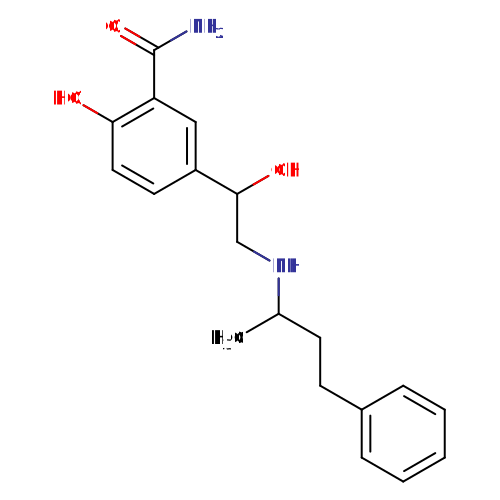
Structure for Labetalol (DB00598)
- Weight
- Average: 328.4055
Monoisotopic: 328.178692644 - Chemical Formula
- C19H24N2O3
- Synonyms
- 3-Carboxamido-4-hydroxy-alpha-((1-methyl-3-phenylpropylamino)methyl)benzyl alcohol
- 5-(1-Hydroxy-2-(1-methyl-3-phenylpropylamino)ethyl)salicylamide
- Labetalol
- Labétalol
- Labetalolum
- Labetolol

Pharmacology
- Indication
Labetalol injections are indicated to control blood pressure in severe hypertension.7 Labetalol tablets are indicated alone or in combination with antihypertensives like thiazides and loop diuretics to manage hypertension.8
 Reduce drug development failure ratesBuild, train, & validate machine-learning modelswith evidence-based and structured datasets.Build, train, & validate predictive machine-learning models with structured datasets.
- Associated Conditions
Indication Type Indication Combined Product Details Approval Level Age Group Patient Characteristics Dose Form Management of Hypertension ••• ••••• ••••••••• Management of Hypertension •••••••••••• Treatment of Hypertensive emergency ••• ••••• Treatment of Hypertensive crisis •••••••••••• Symptomatic treatment of Pheochromocytoma ••• ••••• - Contraindications & Blackbox Warnings
 Prevent Adverse Drug Events TodayTap into our Clinical API for life-saving information on contraindications & blackbox warnings, population restrictions, harmful risks, & more.Avoid life-threatening adverse drug events with our Clinical API
- Pharmacodynamics
Labetalol antagonizes various adrenergic receptors to decrease blood pressure.5,3,4,7 The duration of action is long as it is generally given twice daily, and the therapeutic window is wide as patients usually take 200-400mg twice daily.8 Patients susceptible to bronchospasms should not use labetalol unless they are unresponsive to or intolerant of other antihypertensives.8
- Mechanism of action
Labetalol non-selectively antagonizes beta-adrenergic receptors, and selectively antagonizes alpha-1-adrenergic receptors.5 Following oral administration, labetalol has 3 times the beta-blocking ability than alpha-blocking ability.5 This increases to 6.9 times following intravenous administration.5 Antagonism of alpha-1-adrenergic receptors leads to vasodilation and decreased vascular resistance.3 This leads to a decrease in blood pressure that is most pronounced while standing.4 Antagonism of beta-1-adrenergic receptors leads to a slight decrease in heart rate.7 Antagonism of beta-2-adrenergic receptors leads to some of the side effects of labetalol such as bronchospasms, however this may be slightly attenuated by alpha-1-adrenergic antagonism.4 Labetalol leads to sustained vasodilation over the long term without a significant decrease in cardiac output or stroke volume, and a minimal decrease in heart rate.3,4
Target Actions Organism ABeta-1 adrenergic receptor antagonistHumans ABeta-2 adrenergic receptor antagonistHumans AAlpha-1 adrenergic receptors antagonistHumans - Absorption
100mg and 200mg oral doses of labetalol have a Tmax of 20 minutes to 2 hours.2 Bioavailability may be as low as 11% or as high as 86% and may increase in older patients or when taken with food.2
- Volume of distribution
In normotensive patients, the volume of distribution is 805L.2 In hypertensive patients, the volume of distribution is between 188-747L with an average of 392L.2
- Protein binding
- Metabolism
The metabolism of labetalol has not been fully described in the literature but studies in sheep show an N-dealkylation to 3-amino-1-phenyl butane.1 This metabolite may be further metabolized to benzylacetone and 3-amino-(4-hydroxyphenyl)butane.1 Labetalol in humans is mainly metabolized to glucuronide metabolites such as the O-phenyl-glucuronide and the N-glucuronide.2,7,8
Hover over products below to view reaction partners
- Route of elimination
Radiolabelled doses of labetalol are 55-60% recovered in the urine and 12-27% recovered in the feces.2
- Half-life
Labetalol has a half life of 1.7-6.1 hours.2
- Clearance
Labetalol has a plasma clearance of approximately 1500mL/min and a whole blood clearance of 1100mL/min.2
- Adverse Effects
 Improve decision support & research outcomesWith structured adverse effects data, including: blackbox warnings, adverse reactions, warning & precautions, & incidence rates. View sample adverse effects data in our new Data Library!Improve decision support & research outcomes with our structured adverse effects data.
- Toxicity
The oral LD50 in mice is 600mg/kg and in rats is >2g/kg.7,8 The intravenous LD50 in mice and rats is 50-60mg/kg.7,8
Patients experiencing an overdose may present with excessive hypotension and bradycardia.7,8 Patients should be placed on their back with their legs raised to maintain perfusion of the brain.7,8 Oral overdoses may be treated with gastric lavage or emesis, bradycardia may be treated with atropine or epinephrine, cardiac failure may be treated with digitalis and a diuretic, hypotension may be treated with vasopressors, bronchospasms may be treated with epinephrine or a beta2 agonist, and seizures may be treated with diazepam.7,8
- Pathways
Pathway Category Labetalol Action Pathway Drug action - Pharmacogenomic Effects/ADRs
- Not Available
Interactions
- Drug Interactions
- This information should not be interpreted without the help of a healthcare provider. If you believe you are experiencing an interaction, contact a healthcare provider immediately. The absence of an interaction does not necessarily mean no interactions exist.
Drug Interaction Integrate drug-drug
interactions in your softwareAbacavir Labetalol may decrease the excretion rate of Abacavir which could result in a higher serum level. Abaloparatide The risk or severity of adverse effects can be increased when Labetalol is combined with Abaloparatide. Abatacept The metabolism of Labetalol can be increased when combined with Abatacept. Abiraterone The metabolism of Labetalol can be decreased when combined with Abiraterone. Abrocitinib The metabolism of Abrocitinib can be decreased when combined with Labetalol. - Food Interactions
- Take with or without food. The absorption is unaffected by food.
Products
 Drug product information from 10+ global regionsOur datasets provide approved product information including:dosage, form, labeller, route of administration, and marketing period.Access drug product information from over 10 global regions.
- Product Ingredients
Ingredient UNII CAS InChI Key Labetalol hydrochloride 1GEV3BAW9J 32780-64-6 WQVZLXWQESQGIF-UHFFFAOYSA-N - Product Images
- International/Other Brands
- Albetol (Leiras) / Latol (Standard) / Normadate (GlaxoSmithKline) / Normodyne (Schering)
- Brand Name Prescription Products
Name Dosage Strength Route Labeller Marketing Start Marketing End Region Image Labetalol HCl Injection, solution 5 mg/1mL Intravenous Cantrell Drug Company 2012-05-18 2015-01-14 US 
Labetalol HCl in Dextrose Injection 1 mg/1mL Intravenous Hikma Pharmaceuticals USA Inc. 2020-11-09 Not applicable US Labetalol HCl in Sodium Chloride Injection 1 mg/1mL Intravenous Hikma Pharmaceuticals USA Inc. 2020-11-09 Not applicable US Labetalol HCl in Sodium Chloride Injection 1 mg/1mL Intravenous Hikma Pharmaceuticals USA Inc. 2020-11-09 Not applicable US Labetalol HCl in Sodium Chloride Injection 1 mg/1mL Intravenous Hikma Pharmaceuticals USA Inc. 2020-11-09 Not applicable US - Generic Prescription Products
Name Dosage Strength Route Labeller Marketing Start Marketing End Region Image Apo-labetalol Tablet 100 mg Oral Apotex Corporation 2001-03-16 Not applicable Canada 
Apo-labetalol Tablet 200 mg Oral Apotex Corporation 2001-06-01 Not applicable Canada Labetalol Tablet, film coated 200 mg/1 Oral Sun Pharmaceutical Industries, Inc. 1999-07-29 2014-07-29 US Labetalol Tablet, film coated 100 mg/1 Oral Marlex Pharmaceuticals Inc 2018-04-01 Not applicable US Labetalol Tablet, film coated 300 mg/1 Oral Marlex Pharmaceuticals Inc 2018-04-01 Not applicable US - Unapproved/Other Products
Name Ingredients Dosage Route Labeller Marketing Start Marketing End Region Image Labetalol HCl Labetalol hydrochloride (5 mg/1mL) Injection, solution Intravenous Cantrell Drug Company 2012-05-18 2015-01-14 US


Categories
- ATC Codes
- C07BG01 — Labetalol and thiazides
- C07BG — Alpha and beta blocking agents and thiazides
- C07B — BETA BLOCKING AGENTS AND THIAZIDES
- C07 — BETA BLOCKING AGENTS
- C — CARDIOVASCULAR SYSTEM
- C07CG — Alpha and beta blocking agents and other diuretics
- C07C — BETA BLOCKING AGENTS AND OTHER DIURETICS
- C07 — BETA BLOCKING AGENTS
- C — CARDIOVASCULAR SYSTEM
- Drug Categories
- Adrenergic Agents
- Adrenergic alpha-1 Receptor Antagonists
- Adrenergic alpha-Antagonists
- Adrenergic Antagonists
- Adrenergic beta-Antagonists
- Agents causing hyperkalemia
- Agents producing tachycardia
- Alcohols
- Alpha and Beta Blocking Agents
- Alpha and Beta Blocking Agents and Thiazides
- Amides
- Amines
- Amino Alcohols
- Antihypertensive Agents
- Antihypertensive Agents Indicated for Hypertension
- Autonomic Agents
- Beta Blocking Agents and Thiazides
- Bradycardia-Causing Agents
- Cardiovascular Agents
- Cytochrome P-450 CYP2C19 Substrates
- Cytochrome P-450 CYP2D6 Inhibitors
- Cytochrome P-450 CYP2D6 Inhibitors (strength unknown)
- Cytochrome P-450 CYP2D6 Substrates
- Cytochrome P-450 Enzyme Inhibitors
- Cytochrome P-450 Substrates
- Drugs that are Mainly Renally Excreted
- Ethanolamines
- Hypotensive Agents
- Negative Inotrope
- Neurotransmitter Agents
- Peripheral alpha-1 blockers
- Peripheral Nervous System Agents
- Salicylamides
- Sympathomimetics
- UGT1A1 Substrates
- UGT1A9 Substrates
- UGT2B7 substrates
- Vasodilating Agents
- Chemical TaxonomyProvided by Classyfire
- Description
- This compound belongs to the class of organic compounds known as salicylamides. These are carboxamide derivatives of salicylic acid. Salicylic acid is the ortho-hydroxylated derivative of benzoic acid.
- Kingdom
- Organic compounds
- Super Class
- Benzenoids
- Class
- Benzene and substituted derivatives
- Sub Class
- Benzoic acids and derivatives
- Direct Parent
- Salicylamides
- Alternative Parents
- Benzamides / Benzoyl derivatives / Aralkylamines / 1-hydroxy-2-unsubstituted benzenoids / Vinylogous acids / Secondary alcohols / Primary carboxylic acid amides / Amino acids and derivatives / 1,2-aminoalcohols / Dialkylamines show 4 more
- Substituents
- 1,2-aminoalcohol / 1-hydroxy-2-unsubstituted benzenoid / Alcohol / Amine / Amino acid or derivatives / Aralkylamine / Aromatic alcohol / Aromatic homomonocyclic compound / Benzamide / Benzoyl show 16 more
- Molecular Framework
- Aromatic homomonocyclic compounds
- External Descriptors
- benzamides, secondary amino compound (CHEBI:6343)
- Affected organisms
- Humans and other mammals
Chemical Identifiers
- UNII
- R5H8897N95
- CAS number
- 36894-69-6
- InChI Key
- SGUAFYQXFOLMHL-UHFFFAOYSA-N
- InChI
- InChI=1S/C19H24N2O3/c1-13(7-8-14-5-3-2-4-6-14)21-12-18(23)15-9-10-17(22)16(11-15)19(20)24/h2-6,9-11,13,18,21-23H,7-8,12H2,1H3,(H2,20,24)
- IUPAC Name
- 2-hydroxy-5-{1-hydroxy-2-[(4-phenylbutan-2-yl)amino]ethyl}benzamide
- SMILES
- CC(CCC1=CC=CC=C1)NCC(O)C1=CC(C(N)=O)=C(O)C=C1
References
- Synthesis Reference
U.S. Patent 4,012,444.
- General References
- Yeleswaram K, Rurak DW, Kwan E, Hall C, Doroudian A, Abbott FS, Axelson JE: Disposition, metabolism, and pharmacodynamics of labetalol in adult sheep. Drug Metab Dispos. 1993 Mar-Apr;21(2):284-92. [Article]
- McNeil JJ, Louis WJ: Clinical pharmacokinetics of labetalol. Clin Pharmacokinet. 1984 Mar-Apr;9(2):157-67. doi: 10.2165/00003088-198409020-00003. [Article]
- Opie LH: Role of vasodilation in the antihypertensive and antianginal effects of labetalol: implications for therapy of combined hypertension and angina. Cardiovasc Drugs Ther. 1988 Sep;2(3):369-76. [Article]
- Carter BL: Labetalol. Drug Intell Clin Pharm. 1983 Oct;17(10):704-12. [Article]
- MacCarthy EP, Bloomfield SS: Labetalol: a review of its pharmacology, pharmacokinetics, clinical uses and adverse effects. Pharmacotherapy. 1983 Jul-Aug;3(4):193-219. [Article]
- FDA Approved Drug Products: Normodyne Labetalol Hydrochloride Injection (Discontinued) [Link]
- FDA Approved Drug Products: Labetalol Hydrochloride Injection [Link]
- FDA Approved Drug Products: Labetalol Hydrochloride Tablet [Link]
- External Links
- Human Metabolome Database
- HMDB0014736
- KEGG Drug
- D08106
- KEGG Compound
- C07063
- PubChem Compound
- 3869
- PubChem Substance
- 46505511
- ChemSpider
- 3734
- BindingDB
- 25758
- 6185
- ChEBI
- 167638
- ChEMBL
- CHEMBL429
- Therapeutic Targets Database
- DAP000038
- PharmGKB
- PA164743150
- RxList
- RxList Drug Page
- Drugs.com
- Drugs.com Drug Page
- PDRhealth
- PDRhealth Drug Page
- Wikipedia
- Labetalol
- FDA label
- Download (401 KB)
- MSDS
- Download (53.7 KB)
Clinical Trials
- Clinical Trials
Phase Status Purpose Conditions Count 4 Active Not Recruiting Treatment Ischemic Stroke 1 4 Completed Other Cardiac Failure / Cardiovascular Disease (CVD) / Heart Failure / Heart Failure With Preserved Ejection Fraction (HFpEF) / Heart Failure, Diastolic 2 4 Completed Prevention Hypotension Drug-Induced 1 4 Completed Prevention Surgery, Laparoscopic 1 4 Completed Supportive Care Deliberate Hypotension / Sinus Endoscopic Surgery / Tissue Perfusion 1
Pharmacoeconomics
- Manufacturers
- Apothecon inc div bristol myers squibb
- Bedford laboratories div ben venue laboratories inc
- Claris lifesciences ltd
- Hospira inc
- Taylor pharmaceuticals
- Sagent strides llc
- Schering corp sub schering plough corp
- Prometheus laboratories inc
- Ivax pharmaceuticals inc sub teva pharmaceuticals usa
- Mutual pharmaceutical co inc
- Sandoz inc
- Teva pharmaceuticals usa inc
- Watson laboratories inc
- Packagers
- Akorn Inc.
- Amerisource Health Services Corp.
- Apotex Inc.
- Baxter International Inc.
- Bedford Labs
- Ben Venue Laboratories Inc.
- Cardinal Health
- Comprehensive Consultant Services Inc.
- Diversified Healthcare Services Inc.
- Eon Labs
- Goldline Laboratories Inc.
- Heartland Repack Services LLC
- Hospira Inc.
- Ivax Pharmaceuticals
- Kaiser Foundation Hospital
- Major Pharmaceuticals
- Mckesson Corp.
- Murfreesboro Pharmaceutical Nursing Supply
- Neuman Distributors Inc.
- Novex Pharma
- Nucare Pharmaceuticals Inc.
- Pharmaceutical Utilization Management Program VA Inc.
- Physicians Total Care Inc.
- Prometheus Laboratories Inc.
- Rebel Distributors Corp.
- Sagent Pharmaceuticals
- Sandhills Packaging Inc.
- Southwood Pharmaceuticals
- Teva Pharmaceutical Industries Ltd.
- UDL Laboratories
- United Research Laboratories Inc.
- Vangard Labs Inc.
- Watson Pharmaceuticals
- Wellspring Pharmaceutical
- Dosage Forms
Form Route Strength Tablet Oral Solution Intravenous 100.00 mg Solution Intravenous 5 mg Solution Intravenous 100 mg Powder Not applicable 1 kg/1kg Injection Intravenous 1 mg/1mL Injection Intravenous 5 mg/1mL Tablet, coated Oral 100 mg/1 Tablet, coated Oral 200 mg/1 Tablet, coated Oral 300 mg/1 Tablet, film coated Oral 100 mg/1 Tablet, film coated Oral 200 mg/1 Tablet, film coated Oral 300 mg/1 Solution Intravenous 5 mg / mL Injection, solution Intravenous Injection Intravenous Injection Intravenous 25 mg/5ml Injection, solution Intravenous 5 MG/ML Injection, solution Intravenous 5 mg/1mL Tablet Oral 100 mg/1 Tablet Oral 200 mg/1 Tablet Oral 200 mg Tablet Oral 300 mg/1 Tablet, film coated Oral 100 MG Tablet, film coated Oral 200 MG Liquid Intravenous 5 mg / mL Injection Intravenous 100 mg/20ml Tablet Oral 100 mg / tab Tablet Oral 200 mg / tab Tablet Oral 100 mg Solution Intravenous 5 mg/1ml - Prices
Unit description Cost Unit Labetalol Hydrochloride 5 mg/ml 1.36USD ml Trandate 300 mg tablet 1.28USD tablet Trandate 5 mg/ml vial 1.25USD ml Trandate 200 mg tablet 1.08USD tablet Labetalol hcl 300 mg tablet 1.02USD tablet Normodyne 200 mg tablet 1.0USD tablet Labetalol hcl 200 mg tablet 0.76USD tablet Trandate 100 mg tablet 0.68USD tablet Labetalol hcl 100 mg tablet 0.53USD tablet Trandate 200 mg Tablet 0.47USD tablet Trandate 100 mg Tablet 0.27USD tablet Labetalol hcl 5 mg/ml vial 0.1USD ml DrugBank does not sell nor buy drugs. Pricing information is supplied for informational purposes only.- Patents
- Not Available
Properties
- State
- Solid
- Experimental Properties
Property Value Source melting point (°C) 188 °C U.S. Patent 4,012,444. boiling point (°C) 552.7 http://www.chemspider.com/Chemical-Structure.3734.html pKa 9.3 https://pubchem.ncbi.nlm.nih.gov/compound/Labetalol#section=Caco2-Permeability - Predicted Properties
Property Value Source Water Solubility 0.00578 mg/mL ALOGPS logP 1.73 ALOGPS logP 1.89 Chemaxon logS -4.8 ALOGPS pKa (Strongest Acidic) 8.05 Chemaxon pKa (Strongest Basic) 9.8 Chemaxon Physiological Charge 1 Chemaxon Hydrogen Acceptor Count 4 Chemaxon Hydrogen Donor Count 4 Chemaxon Polar Surface Area 95.58 Å2 Chemaxon Rotatable Bond Count 8 Chemaxon Refractivity 94.72 m3·mol-1 Chemaxon Polarizability 36.83 Å3 Chemaxon Number of Rings 2 Chemaxon Bioavailability 1 Chemaxon Rule of Five Yes Chemaxon Ghose Filter Yes Chemaxon Veber's Rule No Chemaxon MDDR-like Rule No Chemaxon - Predicted ADMET Features
Property Value Probability Human Intestinal Absorption + 0.9943 Blood Brain Barrier - 0.8313 Caco-2 permeable + 0.8867 P-glycoprotein substrate Substrate 0.7073 P-glycoprotein inhibitor I Non-inhibitor 0.8908 P-glycoprotein inhibitor II Non-inhibitor 0.9269 Renal organic cation transporter Non-inhibitor 0.8457 CYP450 2C9 substrate Non-substrate 0.7448 CYP450 2D6 substrate Substrate 0.8918 CYP450 3A4 substrate Non-substrate 0.6202 CYP450 1A2 substrate Non-inhibitor 0.9046 CYP450 2C9 inhibitor Non-inhibitor 0.9071 CYP450 2D6 inhibitor Inhibitor 0.8932 CYP450 2C19 inhibitor Inhibitor 0.8995 CYP450 3A4 inhibitor Non-inhibitor 0.8256 CYP450 inhibitory promiscuity Low CYP Inhibitory Promiscuity 0.8383 Ames test Non AMES toxic 0.9133 Carcinogenicity Non-carcinogens 0.9189 Biodegradation Not ready biodegradable 0.945 Rat acute toxicity 2.1174 LD50, mol/kg Not applicable hERG inhibition (predictor I) Weak inhibitor 0.9501 hERG inhibition (predictor II) Non-inhibitor 0.7398
Spectra
- Mass Spec (NIST)
- Not Available
- Spectra
- Chromatographic Properties
Collision Cross Sections (CCS)
Adduct CCS Value (Å2) Source type Source [M-H]- 185.3595433 predictedDarkChem Lite v0.1.0 [M-H]- 178.87865 predictedDeepCCS 1.0 (2019) [M+H]+ 187.2297433 predictedDarkChem Lite v0.1.0 [M+H]+ 181.25519 predictedDeepCCS 1.0 (2019) [M+Na]+ 186.5338433 predictedDarkChem Lite v0.1.0 [M+Na]+ 188.72588 predictedDeepCCS 1.0 (2019)
Targets

- Kind
- Protein
- Organism
- Humans
- Pharmacological action
- Yes
- Actions
- Antagonist
- General Function
- Receptor signaling protein activity
- Specific Function
- Beta-adrenergic receptors mediate the catecholamine-induced activation of adenylate cyclase through the action of G proteins. This receptor binds epinephrine and norepinephrine with approximately e...
- Gene Name
- ADRB1
- Uniprot ID
- P08588
- Uniprot Name
- Beta-1 adrenergic receptor
- Molecular Weight
- 51322.1 Da
References
- Riva E, Mennini T, Latini R: The alpha- and beta-adrenoceptor blocking activities of labetalol and its RR-SR (50:50) stereoisomers. Br J Pharmacol. 1991 Dec;104(4):823-8. [Article]
- Monopoli A, Bamonte F, Forlani A, Ongini E, Parravicini L: Effects of the R, R-isomer of labetalol, SCH 19927, in isolated tissues and in spontaneously hypertensive rats during a repeated treatment. Arch Int Pharmacodyn Ther. 1984 Dec;272(2):256-63. [Article]
- Sassard J, Zech PY, Pozet N, Cuisinaud G, Vincent M: [Comparative effects of an alpha 1 and beta 1-2 blocker (labetalol) and a beta-1 blocker (atenolol) in the hypertensive patient]. J Pharmacol. 1983;14 Suppl 2:121-9. [Article]
- Nakagawa Y, Takeda K, Sakurai H, Mitomi A, Imai S: [Antihypertensive effects of labetalol in three types of hypertensive models of rats (author's transl)]. Nihon Yakurigaku Zasshi. 1981 Apr;77(4):435-45. [Article]
- Chen X, Ji ZL, Chen YZ: TTD: Therapeutic Target Database. Nucleic Acids Res. 2002 Jan 1;30(1):412-5. [Article]
- Pujos E, Cren-Olive C, Paisse O, Flament-Waton MM, Grenier-Loustalot MF: Comparison of the analysis of beta-blockers by different techniques. J Chromatogr B Analyt Technol Biomed Life Sci. 2009 Dec 1;877(31):4007-14. doi: 10.1016/j.jchromb.2009.10.014. Epub 2009 Oct 17. [Article]
- Rosendorff C: Beta-blocking agents with vasodilator activity. J Hypertens Suppl. 1993 Jun;11(4):S37-40. [Article]
- van Zwieten PA: An overview of the pharmacodynamic properties and therapeutic potential of combined alpha- and beta-adrenoceptor antagonists. Drugs. 1993 Apr;45(4):509-17. [Article]
- Kind
- Protein
- Organism
- Humans
- Pharmacological action
- Yes
- Actions
- Antagonist
- General Function
- Protein homodimerization activity
- Specific Function
- Beta-adrenergic receptors mediate the catecholamine-induced activation of adenylate cyclase through the action of G proteins. The beta-2-adrenergic receptor binds epinephrine with an approximately ...
- Gene Name
- ADRB2
- Uniprot ID
- P07550
- Uniprot Name
- Beta-2 adrenergic receptor
- Molecular Weight
- 46458.32 Da
References
- Doggrell SA: The effects of labetalol and dilevalol on isolated cardiovascular preparations of the guinea-pig and rat. J Pharm Pharmacol. 1992 Dec;44(12):1001-6. [Article]
- Doggrell SA: Relaxant and beta 2-adrenoceptor blocking activities of labetalol, dilevalol, amosulalol and KF-4317 on the rat isolated aorta. J Pharm Pharmacol. 1988 Nov;40(11):812-5. [Article]
- Chen X, Ji ZL, Chen YZ: TTD: Therapeutic Target Database. Nucleic Acids Res. 2002 Jan 1;30(1):412-5. [Article]
- Sassard J, Zech PY, Pozet N, Cuisinaud G, Vincent M: [Comparative effects of an alpha 1 and beta 1-2 blocker (labetalol) and a beta-1 blocker (atenolol) in the hypertensive patient]. J Pharmacol. 1983;14 Suppl 2:121-9. [Article]
- Pujos E, Cren-Olive C, Paisse O, Flament-Waton MM, Grenier-Loustalot MF: Comparison of the analysis of beta-blockers by different techniques. J Chromatogr B Analyt Technol Biomed Life Sci. 2009 Dec 1;877(31):4007-14. doi: 10.1016/j.jchromb.2009.10.014. Epub 2009 Oct 17. [Article]
- Rosendorff C: Beta-blocking agents with vasodilator activity. J Hypertens Suppl. 1993 Jun;11(4):S37-40. [Article]
- van Zwieten PA: An overview of the pharmacodynamic properties and therapeutic potential of combined alpha- and beta-adrenoceptor antagonists. Drugs. 1993 Apr;45(4):509-17. [Article]
- Kind
- Protein group
- Organism
- Humans
- Pharmacological action
- Yes
- Actions
- Antagonist
- General Function
- Protein heterodimerization activity
- Specific Function
- This alpha-adrenergic receptor mediates its action by association with G proteins that activate a phosphatidylinositol-calcium second messenger system. Its effect is mediated by G(q) and G(11) prot...
Components:
| Name | UniProt ID |
|---|---|
| Alpha-1A adrenergic receptor | P35348 |
| Alpha-1B adrenergic receptor | P35368 |
| Alpha-1D adrenergic receptor | P25100 |
References
- Bernstein JS, Ebert TJ, Stowe DF, Schmeling WT, Nelson MA, Woods MP: Partial attenuation of hemodynamic responses to rapid sequence induction and intubation with labetalol. J Clin Anesth. 1989;1(6):444-51. [Article]
- Nakamura T, Maruyama K, Ohnuki T, Hattori K, Watanabe K, Nagatomo T: Tamsulosin: assessment of affinityof (3)H-P razosin binding to two alpha-1- adrenoceptor subtypes in the canine aorta. Pharmacology. 1999 Nov;59(5):234-8. [Article]
- Sassard J, Zech PY, Pozet N, Cuisinaud G, Vincent M: [Comparative effects of an alpha 1 and beta 1-2 blocker (labetalol) and a beta-1 blocker (atenolol) in the hypertensive patient]. J Pharmacol. 1983;14 Suppl 2:121-9. [Article]
- Pedersen ME, Cockcroft JR: The vasodilatory beta-blockers. Curr Hypertens Rep. 2007 Aug;9(4):269-77. [Article]
- Shiraishi K, Moriya M, Miyake N, Takayanagi I: Alpha 1-adrenoceptor blocking activities of bevantolol hydrochloride(NC-1400) and labetalol in rat isolated thoracic aorta--do they distinguish between subtypes? Gen Pharmacol. 1992 Sep;23(5):843-5. [Article]
- Rosendorff C: Beta-blocking agents with vasodilator activity. J Hypertens Suppl. 1993 Jun;11(4):S37-40. [Article]
- van Zwieten PA: An overview of the pharmacodynamic properties and therapeutic potential of combined alpha- and beta-adrenoceptor antagonists. Drugs. 1993 Apr;45(4):509-17. [Article]
Enzymes
- Kind
- Protein
- Organism
- Humans
- Pharmacological action
- Unknown
- Actions
- SubstrateInhibitor
- General Function
- Steroid hydroxylase activity
- Specific Function
- Responsible for the metabolism of many drugs and environmental chemicals that it oxidizes. It is involved in the metabolism of drugs such as antiarrhythmics, adrenoceptor antagonists, and tricyclic...
- Gene Name
- CYP2D6
- Uniprot ID
- P10635
- Uniprot Name
- Cytochrome P450 2D6
- Molecular Weight
- 55768.94 Da
References
- Hermann DJ, Krol TF, Dukes GE, Hussey EK, Danis M, Han YH, Powell JR, Hak LJ: Comparison of verapamil, diltiazem, and labetalol on the bioavailability and metabolism of imipramine. J Clin Pharmacol. 1992 Feb;32(2):176-83. [Article]
- Shin J, Johnson JA: Pharmacogenetics of beta-blockers. Pharmacotherapy. 2007 Jun;27(6):874-87. doi: 10.1592/phco.27.6.874. [Article]
- Kind
- Protein
- Organism
- Humans
- Pharmacological action
- Unknown
- Actions
- Substrate
- General Function
- Steroid hydroxylase activity
- Specific Function
- Responsible for the metabolism of a number of therapeutic agents such as the anticonvulsant drug S-mephenytoin, omeprazole, proguanil, certain barbiturates, diazepam, propranolol, citalopram and im...
- Gene Name
- CYP2C19
- Uniprot ID
- P33261
- Uniprot Name
- Cytochrome P450 2C19
- Molecular Weight
- 55930.545 Da
References
- Flockhart Table of Drug Interactions [Link]
- Kind
- Protein
- Organism
- Humans
- Pharmacological action
- Unknown
- Actions
- Substrate
- General Function
- Steroid binding
- Specific Function
- UDPGT is of major importance in the conjugation and subsequent elimination of potentially toxic xenobiotics and endogenous compounds. This isoform glucuronidates bilirubin IX-alpha to form both the...
- Gene Name
- UGT1A1
- Uniprot ID
- P22309
- Uniprot Name
- UDP-glucuronosyltransferase 1-1
- Molecular Weight
- 59590.91 Da
References
- Jeong H, Choi S, Song JW, Chen H, Fischer JH: Regulation of UDP-glucuronosyltransferase (UGT) 1A1 by progesterone and its impact on labetalol elimination. Xenobiotica. 2008 Jan;38(1):62-75. doi: 10.1080/00498250701744633 . [Article]
- Kind
- Protein
- Organism
- Humans
- Pharmacological action
- Unknown
- Actions
- Substrate
- General Function
- Glucuronosyltransferase activity
- Specific Function
- UDPGT is of major importance in the conjugation and subsequent elimination of potentially toxic xenobiotics and endogenous compounds.Its unique specificity for 3,4-catechol estrogens and estriol su...
- Gene Name
- UGT2B7
- Uniprot ID
- P16662
- Uniprot Name
- UDP-glucuronosyltransferase 2B7
- Molecular Weight
- 60694.12 Da
References
- Jeong H, Choi S, Song JW, Chen H, Fischer JH: Regulation of UDP-glucuronosyltransferase (UGT) 1A1 by progesterone and its impact on labetalol elimination. Xenobiotica. 2008 Jan;38(1):62-75. doi: 10.1080/00498250701744633 . [Article]
- Kind
- Protein
- Organism
- Humans
- Pharmacological action
- Unknown
- Actions
- Substrate
- General Function
- Retinoic acid binding
- Specific Function
- UDPGT is of major importance in the conjugation and subsequent elimination of potentially toxic xenobiotics and endogenous compounds. This isoform has specificity for phenols. Isoform 2 lacks trans...
- Gene Name
- UGT1A9
- Uniprot ID
- O60656
- Uniprot Name
- UDP-glucuronosyltransferase 1-9
- Molecular Weight
- 59940.495 Da
References
- Jeong H, Choi S, Song JW, Chen H, Fischer JH: Regulation of UDP-glucuronosyltransferase (UGT) 1A1 by progesterone and its impact on labetalol elimination. Xenobiotica. 2008 Jan;38(1):62-75. doi: 10.1080/00498250701744633 . [Article]
Carriers
- Kind
- Protein
- Organism
- Humans
- Pharmacological action
- Unknown
- Actions
- Substrate
- General Function
- Toxic substance binding
- Specific Function
- Serum albumin, the main protein of plasma, has a good binding capacity for water, Ca(2+), Na(+), K(+), fatty acids, hormones, bilirubin and drugs. Its main function is the regulation of the colloid...
- Gene Name
- ALB
- Uniprot ID
- P02768
- Uniprot Name
- Serum albumin
- Molecular Weight
- 69365.94 Da
References
- Martinez-Gomez MA, Sagrado S, Villanueva-Camanas RM, Medina-Hernandez MJ: Characterization of basic drug-human serum protein interactions by capillary electrophoresis. Electrophoresis. 2006 Sep;27(17):3410-9. doi: 10.1002/elps.200600102. [Article]
- Kind
- Protein group
- Organism
- Humans
- Pharmacological action
- Unknown
- Actions
- Substrate
- General Function
- Not Available
- Specific Function
- Functions as transport protein in the blood stream. Binds various ligands in the interior of its beta-barrel domain. Also binds synthetic drugs and influences their distribution and availability in...
Components:
References
- Martinez-Gomez MA, Sagrado S, Villanueva-Camanas RM, Medina-Hernandez MJ: Characterization of basic drug-human serum protein interactions by capillary electrophoresis. Electrophoresis. 2006 Sep;27(17):3410-9. doi: 10.1002/elps.200600102. [Article]
Transporters
- Kind
- Protein
- Organism
- Humans
- Pharmacological action
- Unknown
- General Function
- Efflux transmembrane transporter activity
- Specific Function
- Drug efflux transporter present in a number of stem cells that acts as a regulator of cellular differentiation. Able to mediate efflux from cells of the rhodamine dye and of the therapeutic drug do...
- Gene Name
- ABCB5
- Uniprot ID
- Q2M3G0
- Uniprot Name
- ATP-binding cassette sub-family B member 5
- Molecular Weight
- 138639.48 Da
References
- Wessler JD, Grip LT, Mendell J, Giugliano RP: The P-glycoprotein transport system and cardiovascular drugs. J Am Coll Cardiol. 2013 Jun 25;61(25):2495-502. doi: 10.1016/j.jacc.2013.02.058. Epub 2013 Apr 3. [Article]

Drug created at June 13, 2005 13:24 / Updated at April 26, 2024 00:45