Identification
- Summary
Efavirenz is a non-nucleoside reverse transcriptase inhibitor used to treat HIV infection or prevent the spread of HIV.
- Brand Names
- Atripla, Stocrin, Sustiva, Symfi
- Generic Name
- Efavirenz
- DrugBank Accession Number
- DB00625
- Background
Efavirenz (brand names Sustiva® and Stocrin®) is a non-nucleoside reverse transcriptase inhibitor (NNRTI) and is used as part of highly active antiretroviral therapy (HAART) for the treatment of a human immunodeficiency virus (HIV) type 1.
For HIV infection that has not previously been treated, efavirenz and lamivudine in combination with zidovudine or tenofovir is the preferred NNRTI-based regimen.
Efavirenz is also used in combination with other antiretroviral agents as part of an expanded postexposure prophylaxis regimen to prevent HIV transmission for those exposed to materials associated with a high risk for HIV transmission.
- Type
- Small Molecule
- Groups
- Approved, Investigational
- Structure
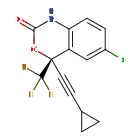
Structure for Efavirenz (DB00625)
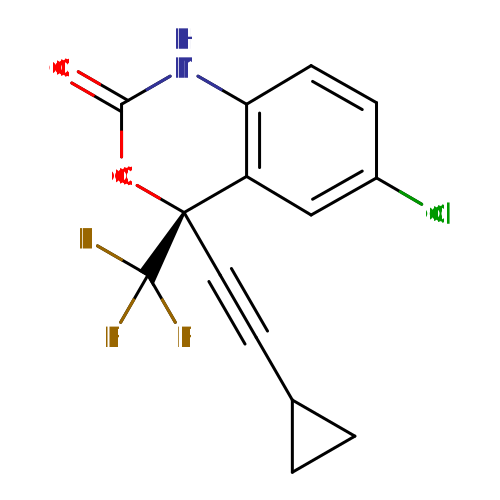
- Weight
- Average: 315.675
Monoisotopic: 315.027390859 - Chemical Formula
- C14H9ClF3NO2
- Synonyms
- (S)-6-chloro-4-(Cyclopropylethynyl)-1,4-dihydro-(S)-6-chloro-4-(cyclopropylethynyl)-1,4-dihydro-4-(trifluoromethyl)-2H-3,1-benzoxazin-2-one4-(trifluoromethyl)-2H-3,1-benzoxazin-2-one
- (S)-6-chloro-4-cyclopropylethynyl-4-trifluoromethyl-1,4-dihydro-benzo[d][1,3]oxazin-2-one
- 6-chloro-4-(2-cyclopropyl-1-ethynyl)-4-trifluoromethyl-(4S)-1,4-dihydro-2H-benzo[d][1,3]oxazin-2-one
- Efavirenz
- Éfavirenz
- Efavirenzum
- External IDs
- DMP 266
- L 743726

Pharmacology
- Indication
For use in combination treatment of HIV infection (AIDS)
 Reduce drug development failure ratesBuild, train, & validate machine-learning modelswith evidence-based and structured datasets.Build, train, & validate predictive machine-learning models with structured datasets.
- Associated Conditions
Indication Type Indication Combined Product Details Approval Level Age Group Patient Characteristics Dose Form Used as adjunct in combination to treat Hiv-1 infection •••••••••••• •••••• ••••••••• - Contraindications & Blackbox Warnings
 Prevent Adverse Drug Events TodayTap into our Clinical API for life-saving information on contraindications & blackbox warnings, population restrictions, harmful risks, & more.Avoid life-threatening adverse drug events with our Clinical API
- Pharmacodynamics
Efavirenz (dideoxyinosine, ddI) is an oral non-nucleoside reverse transcriptase inhibitor (NNRTI). It is a synthetic purine derivative and, similar to zidovudine, zalcitabine, and stavudine. Efavirenz was originally approved specifically for the treatment of HIV infections in patients who failed therapy with zidovudine. Currently, the CDC recommends that Efavirenz be given as part of a three-drug regimen that includes another nucleoside reverse transcriptase inhibitor (e.g., lamivudine, stavudine, zidovudine) and a protease inhibitor or efavirenz when treating HIV infection.
- Mechanism of action
Similar to zidovudine, efavirenz inhibits the activity of viral RNA-directed DNA polymerase (i.e., reverse transcriptase). Antiviral activity of efavirenz is dependent on intracellular conversion to the active triphosphorylated form. The rate of efavirenz phosphorylation varies, depending on cell type. It is believed that inhibition of reverse transcriptase interferes with the generation of DNA copies of viral RNA, which, in turn, are necessary for synthesis of new virions. Intracellular enzymes subsequently eliminate the HIV particle that previously had been uncoated, and left unprotected, during entry into the host cell. Thus, reverse transcriptase inhibitors are virustatic and do not eliminate HIV from the body. Even though human DNA polymerase is less susceptible to the pharmacologic effects of triphosphorylated efavirenz, this action may nevertheless account for some of the drug's toxicity.
Target Actions Organism AReverse transcriptase/RNaseH inhibitorHuman immunodeficiency virus 1 - Absorption
Not Available
- Volume of distribution
Not Available
- Protein binding
99.5-99.75%
- Metabolism
Efavirenz is principally metabolized by the cytochrome P450 system to hydroxylated metabolites with subsequent glucuronidation of these hydroxylated metabolites. These metabolites are essentially inactive against HIV-1.
Hover over products below to view reaction partners
- Route of elimination
Nearly all of the urinary excretion of the radiolabeled drug was in the form of metabolites.
- Half-life
40-55 hours
- Clearance
Not Available
- Adverse Effects
 Improve decision support & research outcomesWith structured adverse effects data, including: blackbox warnings, adverse reactions, warning & precautions, & incidence rates. View sample adverse effects data in our new Data Library!Improve decision support & research outcomes with our structured adverse effects data.
- Toxicity
Not Available
- Pathways
Pathway Category Efavirenz Action Pathway Drug action - Pharmacogenomic Effects/ADRs
Interacting Gene/Enzyme Allele name Genotype(s) Defining Change(s) Type(s) Description Details Cytochrome P450 2B6 CYP2B6*6 Not Available G > T / A > G Effect Directly Studied The presence of this polymorphism in CYP2B6 is associated with reduction in efavirenz metabolism. Details
Interactions
- Drug Interactions
- This information should not be interpreted without the help of a healthcare provider. If you believe you are experiencing an interaction, contact a healthcare provider immediately. The absence of an interaction does not necessarily mean no interactions exist.
Drug Interaction Integrate drug-drug
interactions in your software1,2-Benzodiazepine The metabolism of 1,2-Benzodiazepine can be decreased when combined with Efavirenz. Abacavir The metabolism of Abacavir can be increased when combined with Efavirenz. Abametapir The serum concentration of Efavirenz can be increased when it is combined with Abametapir. Abatacept The metabolism of Efavirenz can be increased when combined with Abatacept. Abemaciclib The metabolism of Abemaciclib can be decreased when combined with Efavirenz. - Food Interactions
- Avoid excessive or chronic alcohol consumption. Alcohol may contribute to additive adverse effects when taken with efavirenz.
- Take on an empty stomach. Taking efavirenz with food increases efavirenz concentrations and may increase the frequency of adverse reactions. In patients who cannot swallow capsules, the capsule contents can be administered with a small amount of food or infant formula using the capsule sprinkle method of administration.
Products
 Drug product information from 10+ global regionsOur datasets provide approved product information including:dosage, form, labeller, route of administration, and marketing period.Access drug product information from over 10 global regions.
- Product Images


- International/Other Brands
- E.F. (McNeil & Argus) / Efavir (Cipla) / Efcure (Emcure Pharmaceuticals) / Efferven (Ranbaxy Laboratories) / Estiva (Hetero) / Evirenz (Alkem Laboratories) / Viranz (Aurobindo Pharma)
- Brand Name Prescription Products
Name Dosage Strength Route Labeller Marketing Start Marketing End Region Image Atripla Tablet, film coated 600 mg/1 Oral Remedy Repack 2013-03-29 2014-03-29 US 
Efavirenz Tablet, film coated 600 mg/1 Oral Mylan Laboratories Limited 2016-02-17 Not applicable US Efavirenz Teva Tablet, film coated 600 mg Oral Teva B.V. 2021-02-10 Not applicable EU 
Efavirenz Teva Tablet, film coated 600 mg Oral Teva B.V. 2021-02-10 Not applicable EU Efavirenz Teva Tablet, film coated 600 mg Oral Teva B.V. 2021-02-10 Not applicable EU - Generic Prescription Products
Name Dosage Strength Route Labeller Marketing Start Marketing End Region Image Auro-efavirenz Tablet 600 mg Oral Auro Pharma Inc 2014-03-03 Not applicable Canada 
Efavirenz Tablet, film coated 600 mg/1 Oral Mylan Pharmaceuticals Inc. 2018-01-30 2023-01-31 US Efavirenz Tablet, film coated 600 mg/1 Oral REMEDYREPACK INC. 2020-12-08 Not applicable US Efavirenz Capsule 50 mg/1 Oral Aurobindo Pharma Limited 2017-12-15 Not applicable US Efavirenz Tablet 600 mg/1 Oral REMEDYREPACK INC. 2018-04-06 Not applicable US - Mixture Products
Name Ingredients Dosage Route Labeller Marketing Start Marketing End Region Image Apo-efavirenz-emtricitabine-tenofovir Efavirenz (600 mg) + Emtricitabine (200 mg) + Tenofovir disoproxil fumarate (300 mg) Tablet Oral Apotex Corporation 2018-09-04 Not applicable Canada Atripla Efavirenz (600 mg/1) + Emtricitabine (200 mg/1) + Tenofovir disoproxil fumarate (300 mg/1) Tablet, film coated Oral Gilead Sciences, Llc 2006-07-20 Not applicable US Atripla Efavirenz (600 mg/1) + Emtricitabine (200 mg/1) + Tenofovir disoproxil fumarate (300 mg/1) Tablet, film coated Oral Physicians Total Care, Inc. 2012-10-16 Not applicable US Atripla Efavirenz (600 mg/1) + Emtricitabine (200 mg/1) + Tenofovir disoproxil fumarate (300 mg/1) Tablet, film coated Oral Doh Central Pharmacy 2009-07-01 Not applicable US Atripla Efavirenz (600 mg/1) + Emtricitabine (200 mg/1) + Tenofovir disoproxil fumarate (300 mg/1) Tablet, film coated Oral A-S Medication Solutions 2006-07-20 2019-11-30 US


Categories
- ATC Codes
- J05AR06 — Emtricitabine, tenofovir disoproxil and efavirenz
- J05AR — Antivirals for treatment of HIV infections, combinations
- J05A — DIRECT ACTING ANTIVIRALS
- J05 — ANTIVIRALS FOR SYSTEMIC USE
- J — ANTIINFECTIVES FOR SYSTEMIC USE
- J05AG — Non-nucleoside reverse transcriptase inhibitors
- J05A — DIRECT ACTING ANTIVIRALS
- J05 — ANTIVIRALS FOR SYSTEMIC USE
- J — ANTIINFECTIVES FOR SYSTEMIC USE
- Drug Categories
- Anti-Infective Agents
- Anti-Retroviral Agents
- Antiinfectives for Systemic Use
- Antiviral Agents
- Antivirals for Systemic Use
- Antivirals used in combination for the treatment of HIV infections
- BSEP/ABCB11 Substrates
- Central Nervous System Depressants
- Cycloparaffins
- Cytochrome P-450 CYP1A2 Inhibitors
- Cytochrome P-450 CYP1A2 Inhibitors (strength unknown)
- Cytochrome P-450 CYP1A2 Substrates
- Cytochrome P-450 CYP2B6 Inducers
- Cytochrome P-450 CYP2B6 Inducers (strength unknown)
- Cytochrome P-450 CYP2B6 Substrates
- Cytochrome P-450 CYP2C19 Inducers
- Cytochrome P-450 CYP2C19 Inducers (strength unknown)
- Cytochrome P-450 CYP2C19 Inhibitors
- Cytochrome P-450 CYP2C19 Inhibitors (moderate)
- Cytochrome P-450 CYP2C8 Inhibitors
- Cytochrome P-450 CYP2C8 Inhibitors (moderate)
- Cytochrome P-450 CYP2C9 Inhibitors
- Cytochrome P-450 CYP2C9 Inhibitors (moderate)
- Cytochrome P-450 CYP2D6 Inhibitors
- Cytochrome P-450 CYP2D6 Inhibitors (strength unknown)
- Cytochrome P-450 CYP3A Inducers
- Cytochrome P-450 CYP3A Inhibitors
- Cytochrome P-450 CYP3A Substrates
- Cytochrome P-450 CYP3A4 Inducers
- Cytochrome P-450 CYP3A4 Inducers (moderate)
- Cytochrome P-450 CYP3A4 Inhibitors
- Cytochrome P-450 CYP3A4 Inhibitors (strong)
- Cytochrome P-450 CYP3A4 Substrates
- Cytochrome P-450 CYP3A5 Inducers
- Cytochrome P-450 CYP3A5 Inducers (moderate)
- Cytochrome P-450 CYP3A7 Inducers
- Cytochrome P-450 CYP3A7 Inducers (moderate)
- Cytochrome P-450 Enzyme Inducers
- Cytochrome P-450 Enzyme Inhibitors
- Cytochrome P-450 Substrates
- Direct Acting Antivirals
- Enzyme Inhibitors
- Heterocyclic Compounds, Fused-Ring
- Human Immunodeficiency Virus 1 Non-Nucleoside Analog Reverse Transcriptase Inhibitor
- Hydrocarbons, Acyclic
- Inducers of Drug Clearance
- Moderate Risk QTc-Prolonging Agents
- Non-Nucleoside Reverse Transcriptase Inhibitors
- Nonnucleoside Reverse Transcriptase Inhibitors
- Nucleic Acid Synthesis Inhibitors
- OCT1 inhibitors
- Oxazines
- QTc Prolonging Agents
- Reverse Transcriptase Inhibitors
- UGT1A1 Inducers
- Chemical TaxonomyProvided by Classyfire
- Description
- This compound belongs to the class of organic compounds known as benzoxazines. These are organic compounds containing a benzene fused to an oxazine ring (a six-membered aliphatic ring with four carbon atoms, one oxygen atom, and one nitrogen atom).
- Kingdom
- Organic compounds
- Super Class
- Organoheterocyclic compounds
- Class
- Benzoxazines
- Sub Class
- Not Available
- Direct Parent
- Benzoxazines
- Alternative Parents
- Ynones / Benzenoids / Aryl chlorides / Propargyl-type 1,3-dipolar organic compounds / Oxacyclic compounds / Azacyclic compounds / Organopnictogen compounds / Organonitrogen compounds / Organofluorides / Organochlorides show 2 more
- Substituents
- Alkyl fluoride / Alkyl halide / Aromatic heteropolycyclic compound / Aryl chloride / Aryl halide / Azacycle / Benzenoid / Benzoxazine / Hydrocarbon derivative / Organic 1,3-dipolar compound show 11 more
- Molecular Framework
- Aromatic heteropolycyclic compounds
- External Descriptors
- organofluorine compound, organochlorine compound, cyclopropanes, acetylenic compound, benzoxazine (CHEBI:119486)
- Affected organisms
- Human Immunodeficiency Virus
Chemical Identifiers
- UNII
- JE6H2O27P8
- CAS number
- 154598-52-4
- InChI Key
- XPOQHMRABVBWPR-ZDUSSCGKSA-N
- InChI
- InChI=1S/C14H9ClF3NO2/c15-9-3-4-11-10(7-9)13(14(16,17)18,21-12(20)19-11)6-5-8-1-2-8/h3-4,7-8H,1-2H2,(H,19,20)/t13-/m0/s1
- IUPAC Name
- (4S)-6-chloro-4-(2-cyclopropylethynyl)-4-(trifluoromethyl)-2,4-dihydro-1H-3,1-benzoxazin-2-one
- SMILES
- FC(F)(F)[C@]1(OC(=O)NC2=C1C=C(Cl)C=C2)C#CC1CC1
References
- Synthesis Reference
John Doney, "Amorphous efavirenz and the production thereof." U.S. Patent US20070026073, issued February 01, 2007.
US20070026073- General References
- Ren J, Bird LE, Chamberlain PP, Stewart-Jones GB, Stuart DI, Stammers DK: Structure of HIV-2 reverse transcriptase at 2.35-A resolution and the mechanism of resistance to non-nucleoside inhibitors. Proc Natl Acad Sci U S A. 2002 Oct 29;99(22):14410-5. Epub 2002 Oct 17. [Article]
- Robertson SM, Penzak SR, Lane J, Pau AK, Mican JM: A potentially significant interaction between efavirenz and phenytoin: a case report and review of the literature. Clin Infect Dis. 2005 Jul 15;41(2):e15-8. doi: 10.1086/431208. Epub 2005 Jun 7. [Article]
- Michaud V, Ogburn E, Thong N, Aregbe AO, Quigg TC, Flockhart DA, Desta Z: Induction of CYP2C19 and CYP3A activity following repeated administration of efavirenz in healthy volunteers. Clin Pharmacol Ther. 2012 Mar;91(3):475-82. doi: 10.1038/clpt.2011.249. Epub 2012 Feb 8. [Article]
- FDA Approved Drugs: Sustiva® oral capsules/tablets [Link]
- External Links
- Human Metabolome Database
- HMDB0014763
- KEGG Drug
- D00896
- KEGG Compound
- C08088
- PubChem Compound
- 64139
- PubChem Substance
- 46506827
- ChemSpider
- 57715
- BindingDB
- 2483
- 195085
- ChEBI
- 119486
- ChEMBL
- CHEMBL223228
- ZINC
- ZINC000002020233
- Therapeutic Targets Database
- DAP000709
- PharmGKB
- PA449441
- PDBe Ligand
- EFZ
- RxList
- RxList Drug Page
- Drugs.com
- Drugs.com Drug Page
- Wikipedia
- Efavirenz
- PDB Entries
- 1fk9 / 1fko / 1ikv / 1ikw / 1jkh / 4b3o / 6bsg / 6bsh / 6bsi / 6bsj … show 1 more
- FDA label
- Download (154 KB)
- MSDS
- Download (57.6 KB)
Clinical Trials
- Clinical Trials
Phase Status Purpose Conditions Count 4 Active Not Recruiting Treatment Human Immunodeficiency Virus Type 1 (HIV-1) Infection 1 4 Completed Not Available Healthy Volunteers (HV) 1 4 Completed Not Available Human Immunodeficiency Virus (HIV) Infections 1 4 Completed Basic Science Human Immunodeficiency Virus (HIV) Infections 1 4 Completed Diagnostic Cardiovascular Disease (CVD) / HIV Lipodystrophy Syndrome 1
Pharmacoeconomics
- Manufacturers
- Bristol myers squibb co
- Bristol myers squibb pharma co
- Packagers
- Apotheca Inc.
- Bristol-Myers Squibb Co.
- Lake Erie Medical and Surgical Supply
- Physicians Total Care Inc.
- Remedy Repack
- Dosage Forms
Form Route Strength Tablet, film coated Oral Tablet, film coated Oral 60000000 mg Capsule Oral 100 mg/1 Tablet Oral 600 mg/1 Tablet Oral 600.00 mg Tablet, delayed release Oral 600 mg Tablet, film coated Oral Tablet, film coated Oral 600 mg Tablet Oral Tablet Oral 600.000 mg Tablet, coated Oral 0.6 g Capsule, coated Oral 200 mg Tablet Oral 400.000 mg Solution Oral 30 mg/ml Tablet, film coated Oral 200 mg Tablet, film coated Oral 50 mg Tablet Oral 200 MG Tablet Oral Tablet Oral 200.0 mg Tablet Oral 50.0 mg Capsule Oral 200 mg/1 Capsule Oral 50 mg/1 Capsule, gelatin coated Oral 200 mg/1 Capsule, gelatin coated Oral 50 mg/1 Solution Oral 30 MG Tablet, film coated Oral 600 mg/1 Capsule Oral 100 mg Capsule Oral 200 mg Capsule Oral 50 mg Tablet Oral 600 mg Capsule Oral Capsule, coated Oral 100 mg Capsule, coated Oral 50 mg Tablet, coated Oral Tablet, coated Oral 50 mg Tablet, coated Oral 600 mg Tablet, coated Oral 200 mg - Prices
Unit description Cost Unit Sustiva 600 mg tablet 21.68USD tablet Sustiva 200 mg capsule 7.37USD capsule Sustiva 100 mg capsule 3.34USD capsule Sustiva 50 mg capsule 1.84USD capsule DrugBank does not sell nor buy drugs. Pricing information is supplied for informational purposes only.- Patents
Patent Number Pediatric Extension Approved Expires (estimated) Region US5811423 No 1998-09-22 2012-08-07 US CA2279198 No 2009-04-14 2018-02-02 Canada CA2101572 No 2001-08-28 2013-07-29 Canada US5914331 Yes 1999-06-22 2018-01-02 US US6043230 Yes 2000-03-28 2018-01-25 US US5814639 Yes 1998-09-29 2017-03-29 US US6555133 Yes 2003-04-29 2019-10-06 US US6939964 Yes 2005-09-06 2018-07-20 US US6639071 Yes 2003-10-28 2018-08-14 US US6238695 Yes 2001-05-29 2019-10-06 US US6642245 Yes 2003-11-04 2021-05-04 US US6703396 Yes 2004-03-09 2021-09-09 US US5922695 Yes 1999-07-13 2018-01-25 US US5935946 Yes 1999-08-10 2018-01-25 US US5977089 Yes 1999-11-02 2018-01-25 US US8592397 No 2013-11-26 2024-01-13 US US8716264 No 2014-05-06 2024-01-13 US US9018192 No 2015-04-28 2026-06-13 US US8598185 No 2013-12-03 2028-05-01 US US9545414 No 2017-01-17 2026-06-13 US US9457036 No 2016-10-04 2024-01-13 US US9744181 No 2017-08-29 2024-01-13 US
Properties
- State
- Solid
- Experimental Properties
Property Value Source melting point (°C) 139-141 °C Not Available logP 4.6 Not Available - Predicted Properties
Property Value Source Water Solubility 0.00855 mg/mL ALOGPS logP 3.89 ALOGPS logP 4.46 Chemaxon logS -4.6 ALOGPS pKa (Strongest Acidic) 12.52 Chemaxon pKa (Strongest Basic) -1.5 Chemaxon Physiological Charge 0 Chemaxon Hydrogen Acceptor Count 2 Chemaxon Hydrogen Donor Count 1 Chemaxon Polar Surface Area 38.33 Å2 Chemaxon Rotatable Bond Count 3 Chemaxon Refractivity 71.34 m3·mol-1 Chemaxon Polarizability 26.81 Å3 Chemaxon Number of Rings 3 Chemaxon Bioavailability 1 Chemaxon Rule of Five Yes Chemaxon Ghose Filter Yes Chemaxon Veber's Rule Yes Chemaxon MDDR-like Rule No Chemaxon - Predicted ADMET Features
Property Value Probability Human Intestinal Absorption + 0.9964 Blood Brain Barrier + 0.9182 Caco-2 permeable + 0.5553 P-glycoprotein substrate Non-substrate 0.7617 P-glycoprotein inhibitor I Non-inhibitor 0.7451 P-glycoprotein inhibitor II Non-inhibitor 0.9557 Renal organic cation transporter Non-inhibitor 0.9157 CYP450 2C9 substrate Non-substrate 0.8033 CYP450 2D6 substrate Non-substrate 0.9116 CYP450 3A4 substrate Substrate 0.6037 CYP450 1A2 substrate Inhibitor 0.6996 CYP450 2C9 inhibitor Non-inhibitor 0.6975 CYP450 2D6 inhibitor Non-inhibitor 0.8699 CYP450 2C19 inhibitor Non-inhibitor 0.5291 CYP450 3A4 inhibitor Non-inhibitor 0.7577 CYP450 inhibitory promiscuity Low CYP Inhibitory Promiscuity 0.6705 Ames test Non AMES toxic 0.6991 Carcinogenicity Non-carcinogens 0.8997 Biodegradation Not ready biodegradable 1.0 Rat acute toxicity 2.5416 LD50, mol/kg Not applicable hERG inhibition (predictor I) Weak inhibitor 0.9617 hERG inhibition (predictor II) Non-inhibitor 0.9098
Spectra
- Mass Spec (NIST)
- Not Available
- Spectra
- Chromatographic Properties
Collision Cross Sections (CCS)
Adduct CCS Value (Å2) Source type Source [M-H]- 164.9544722 predictedDarkChem Lite v0.1.0 [M-H]- 166.4698499 predictedDarkChem Lite v0.1.0 [M-H]- 165.0550722 predictedDarkChem Lite v0.1.0 [M-H]- 158.46745 predictedDeepCCS 1.0 (2019) [M+H]+ 165.7622722 predictedDarkChem Lite v0.1.0 [M+H]+ 167.3307786 predictedDarkChem Lite v0.1.0 [M+H]+ 165.5860722 predictedDarkChem Lite v0.1.0 [M+H]+ 160.82545 predictedDeepCCS 1.0 (2019) [M+Na]+ 164.8714722 predictedDarkChem Lite v0.1.0 [M+Na]+ 165.0041722 predictedDarkChem Lite v0.1.0 [M+Na]+ 165.2170722 predictedDarkChem Lite v0.1.0 [M+Na]+ 167.82262 predictedDeepCCS 1.0 (2019)
Targets

- Kind
- Protein
- Organism
- Human immunodeficiency virus 1
- Pharmacological action
- Yes
- Actions
- Inhibitor
- General Function
- Rna-dna hybrid ribonuclease activity
- Specific Function
- Not Available
- Gene Name
- pol
- Uniprot ID
- Q72547
- Uniprot Name
- Reverse transcriptase/RNaseH
- Molecular Weight
- 65223.615 Da
References
Enzymes
- Kind
- Protein
- Organism
- Humans
- Pharmacological action
- Unknown
- Actions
- Inducer
- General Function
- Steroid hydroxylase activity
- Specific Function
- Responsible for the metabolism of a number of therapeutic agents such as the anticonvulsant drug S-mephenytoin, omeprazole, proguanil, certain barbiturates, diazepam, propranolol, citalopram and im...
- Gene Name
- CYP2C19
- Uniprot ID
- P33261
- Uniprot Name
- Cytochrome P450 2C19
- Molecular Weight
- 55930.545 Da
References
- Michaud V, Ogburn E, Thong N, Aregbe AO, Quigg TC, Flockhart DA, Desta Z: Induction of CYP2C19 and CYP3A activity following repeated administration of efavirenz in healthy volunteers. Clin Pharmacol Ther. 2012 Mar;91(3):475-82. doi: 10.1038/clpt.2011.249. Epub 2012 Feb 8. [Article]
- Michaud V, Kreutz Y, Skaar T, Ogburn E, Thong N, Flockhart DA, Desta Z: Efavirenz-mediated induction of omeprazole metabolism is CYP2C19 genotype dependent. Pharmacogenomics J. 2014 Apr;14(2):151-9. doi: 10.1038/tpj.2013.17. Epub 2013 Apr 30. [Article]
- Xu C, Desta Z: In vitro analysis and quantitative prediction of efavirenz inhibition of eight cytochrome P450 (CYP) enzymes: major effects on CYPs 2B6, 2C8, 2C9 and 2C19. Drug Metab Pharmacokinet. 2013;28(4):362-71. Epub 2013 Feb 5. [Article]
- Kind
- Protein
- Organism
- Humans
- Pharmacological action
- Unknown
- Actions
- Inhibitor
- General Function
- Steroid hydroxylase activity
- Specific Function
- Cytochromes P450 are a group of heme-thiolate monooxygenases. In liver microsomes, this enzyme is involved in an NADPH-dependent electron transport pathway. It oxidizes a variety of structurally un...
- Gene Name
- CYP2C9
- Uniprot ID
- P11712
- Uniprot Name
- Cytochrome P450 2C9
- Molecular Weight
- 55627.365 Da
References
- Kind
- Protein
- Organism
- Humans
- Pharmacological action
- Unknown
- Actions
- SubstrateInducer
- General Function
- Steroid hydroxylase activity
- Specific Function
- Cytochromes P450 are a group of heme-thiolate monooxygenases. In liver microsomes, this enzyme is involved in an NADPH-dependent electron transport pathway. It oxidizes a variety of structurally un...
- Gene Name
- CYP2B6
- Uniprot ID
- P20813
- Uniprot Name
- Cytochrome P450 2B6
- Molecular Weight
- 56277.81 Da
References
- Zhou SF, Zhou ZW, Yang LP, Cai JP: Substrates, inducers, inhibitors and structure-activity relationships of human Cytochrome P450 2C9 and implications in drug development. Curr Med Chem. 2009;16(27):3480-675. Epub 2009 Sep 1. [Article]
- Hesse LM, von Moltke LL, Shader RI, Greenblatt DJ: Ritonavir, efavirenz, and nelfinavir inhibit CYP2B6 activity in vitro: potential drug interactions with bupropion. Drug Metab Dispos. 2001 Feb;29(2):100-2. [Article]
- Walsky RL, Astuccio AV, Obach RS: Evaluation of 227 drugs for in vitro inhibition of cytochrome P450 2B6. J Clin Pharmacol. 2006 Dec;46(12):1426-38. [Article]
- Rendic S: Summary of information on human CYP enzymes: human P450 metabolism data. Drug Metab Rev. 2002 Feb-May;34(1-2):83-448. [Article]
- Fahmi OA, Shebley M, Palamanda J, Sinz MW, Ramsden D, Einolf HJ, Chen L, Wang H: Evaluation of CYP2B6 Induction and Prediction of Clinical Drug-Drug Interactions: Considerations from the IQ Consortium Induction Working Group-An Industry Perspective. Drug Metab Dispos. 2016 Oct;44(10):1720-30. doi: 10.1124/dmd.116.071076. Epub 2016 Jul 15. [Article]
- Flockhart Table of Drug Interactions [Link]
- Kind
- Protein
- Organism
- Humans
- Pharmacological action
- Unknown
- Actions
- SubstrateInhibitorInducer
- General Function
- Vitamin d3 25-hydroxylase activity
- Specific Function
- Cytochromes P450 are a group of heme-thiolate monooxygenases. In liver microsomes, this enzyme is involved in an NADPH-dependent electron transport pathway. It performs a variety of oxidation react...
- Gene Name
- CYP3A4
- Uniprot ID
- P08684
- Uniprot Name
- Cytochrome P450 3A4
- Molecular Weight
- 57342.67 Da
References
- Lakhman SS, Ma Q, Morse GD: Pharmacogenomics of CYP3A: considerations for HIV treatment. Pharmacogenomics. 2009 Aug;10(8):1323-39. doi: 10.2217/pgs.09.53. [Article]
- Zhu M, Kaul S, Nandy P, Grasela DM, Pfister M: Model-based approach to characterize efavirenz autoinduction and concurrent enzyme induction with carbamazepine. Antimicrob Agents Chemother. 2009 Jun;53(6):2346-53. doi: 10.1128/AAC.01120-08. Epub 2009 Feb 17. [Article]
- Hariparsad N, Nallani SC, Sane RS, Buckley DJ, Buckley AR, Desai PB: Induction of CYP3A4 by efavirenz in primary human hepatocytes: comparison with rifampin and phenobarbital. J Clin Pharmacol. 2004 Nov;44(11):1273-81. doi: 10.1177/0091270004269142. [Article]
- Malaty LI, Kuper JJ: Drug interactions of HIV protease inhibitors. Drug Saf. 1999 Feb;20(2):147-69. doi: 10.2165/00002018-199920020-00005. [Article]
- FDA table of interactions [Link]
- FDA Drug Development and Drug Interactions: Table of Substrates, Inhibitors and Inducers [Link]
- Efavirenz FDA label [File]
- Kind
- Protein
- Organism
- Humans
- Pharmacological action
- Unknown
- Actions
- Inducer
- General Function
- Oxygen binding
- Specific Function
- Cytochromes P450 are a group of heme-thiolate monooxygenases. In liver microsomes, this enzyme is involved in an NADPH-dependent electron transport pathway. It oxidizes a variety of structurally un...
- Gene Name
- CYP3A5
- Uniprot ID
- P20815
- Uniprot Name
- Cytochrome P450 3A5
- Molecular Weight
- 57108.065 Da
References
- Kind
- Protein
- Organism
- Humans
- Pharmacological action
- Unknown
- Actions
- Inducer
- General Function
- Oxygen binding
- Specific Function
- Cytochromes P450 are a group of heme-thiolate monooxygenases. In liver microsomes, this enzyme is involved in an NADPH-dependent electron transport pathway. It oxidizes a variety of structurally un...
- Gene Name
- CYP3A7
- Uniprot ID
- P24462
- Uniprot Name
- Cytochrome P450 3A7
- Molecular Weight
- 57525.03 Da
References
- Flockhart Table of Drug Interactions [Link]
- Kind
- Protein
- Organism
- Humans
- Pharmacological action
- Unknown
- Actions
- SubstrateInhibitor
- Curator comments
- The FDA label states that this enzyme inhibition occurs in vitro and is unlikely to occur at therapeutic concentrations.
- General Function
- Oxidoreductase activity, acting on paired donors, with incorporation or reduction of molecular oxygen, reduced flavin or flavoprotein as one donor, and incorporation of one atom of oxygen
- Specific Function
- Cytochromes P450 are a group of heme-thiolate monooxygenases. In liver microsomes, this enzyme is involved in an NADPH-dependent electron transport pathway. It oxidizes a variety of structurally un...
- Gene Name
- CYP1A2
- Uniprot ID
- P05177
- Uniprot Name
- Cytochrome P450 1A2
- Molecular Weight
- 58293.76 Da
References
- Metzger IF, Dave N, Kreutz Y, Lu JBL, Galinsky RE, Desta Z: CYP2B6 Genotype-Dependent Inhibition of CYP1A2 and Induction of CYP2A6 by the Antiretroviral Drug Efavirenz in Healthy Volunteers. Clin Transl Sci. 2019 Jul 24. doi: 10.1111/cts.12671. [Article]
- Xu C, Desta Z: In vitro analysis and quantitative prediction of efavirenz inhibition of eight cytochrome P450 (CYP) enzymes: major effects on CYPs 2B6, 2C8, 2C9 and 2C19. Drug Metab Pharmacokinet. 2013;28(4):362-71. Epub 2013 Feb 5. [Article]
- Ogburn ET, Jones DR, Masters AR, Xu C, Guo Y, Desta Z: Efavirenz primary and secondary metabolism in vitro and in vivo: identification of novel metabolic pathways and cytochrome P450 2A6 as the principal catalyst of efavirenz 7-hydroxylation. Drug Metab Dispos. 2010 Jul;38(7):1218-29. doi: 10.1124/dmd.109.031393. Epub 2010 Mar 24. [Article]
- Efavirenz FDA label [File]
- Kind
- Protein
- Organism
- Humans
- Pharmacological action
- Unknown
- Actions
- Inhibitor
- General Function
- Steroid hydroxylase activity
- Specific Function
- Responsible for the metabolism of many drugs and environmental chemicals that it oxidizes. It is involved in the metabolism of drugs such as antiarrhythmics, adrenoceptor antagonists, and tricyclic...
- Gene Name
- CYP2D6
- Uniprot ID
- P10635
- Uniprot Name
- Cytochrome P450 2D6
- Molecular Weight
- 55768.94 Da
References
- von Moltke LL, Greenblatt DJ, Granda BW, Giancarlo GM, Duan SX, Daily JP, Harmatz JS, Shader RI: Inhibition of human cytochrome P450 isoforms by nonnucleoside reverse transcriptase inhibitors. J Clin Pharmacol. 2001 Jan;41(1):85-91. doi: 10.1177/00912700122009728. [Article]
- Xu C, Desta Z: In vitro analysis and quantitative prediction of efavirenz inhibition of eight cytochrome P450 (CYP) enzymes: major effects on CYPs 2B6, 2C8, 2C9 and 2C19. Drug Metab Pharmacokinet. 2013;28(4):362-71. Epub 2013 Feb 5. [Article]
- Kind
- Protein
- Organism
- Humans
- Pharmacological action
- Unknown
- Actions
- Inhibitor
- General Function
- Steroid hydroxylase activity
- Specific Function
- Cytochromes P450 are a group of heme-thiolate monooxygenases. In liver microsomes, this enzyme is involved in an NADPH-dependent electron transport pathway. It oxidizes a variety of structurally un...
- Gene Name
- CYP2C8
- Uniprot ID
- P10632
- Uniprot Name
- Cytochrome P450 2C8
- Molecular Weight
- 55824.275 Da
- Kind
- Protein
- Organism
- Humans
- Pharmacological action
- No
- Actions
- Inducer
- General Function
- Steroid binding
- Specific Function
- UDPGT is of major importance in the conjugation and subsequent elimination of potentially toxic xenobiotics and endogenous compounds. This isoform glucuronidates bilirubin IX-alpha to form both the...
- Gene Name
- UGT1A1
- Uniprot ID
- P22309
- Uniprot Name
- UDP-glucuronosyltransferase 1-1
- Molecular Weight
- 59590.91 Da
References
- Interactions [Link]
Carriers
- Kind
- Protein
- Organism
- Humans
- Pharmacological action
- Unknown
- General Function
- Toxic substance binding
- Specific Function
- Serum albumin, the main protein of plasma, has a good binding capacity for water, Ca(2+), Na(+), K(+), fatty acids, hormones, bilirubin and drugs. Its main function is the regulation of the colloid...
- Gene Name
- ALB
- Uniprot ID
- P02768
- Uniprot Name
- Serum albumin
- Molecular Weight
- 69365.94 Da
References
- Bocedi A, Notaril S, Narciso P, Bolli A, Fasano M, Ascenzi P: Binding of anti-HIV drugs to human serum albumin. IUBMB Life. 2004 Oct;56(10):609-14. [Article]
- Bocedi A, Notari S, Menegatti E, Fanali G, Fasano M, Ascenzi P: Allosteric modulation of anti-HIV drug and ferric heme binding to human serum albumin. FEBS J. 2005 Dec;272(24):6287-96. [Article]
Transporters
- Kind
- Protein
- Organism
- Humans
- Pharmacological action
- No
- Actions
- Substrate
- General Function
- Transporter activity
- Specific Function
- Involved in the ATP-dependent secretion of bile salts into the canaliculus of hepatocytes.
- Gene Name
- ABCB11
- Uniprot ID
- O95342
- Uniprot Name
- Bile salt export pump
- Molecular Weight
- 146405.83 Da
References
- Pedersen JM, Matsson P, Bergstrom CA, Hoogstraate J, Noren A, LeCluyse EL, Artursson P: Early identification of clinically relevant drug interactions with the human bile salt export pump (BSEP/ABCB11). Toxicol Sci. 2013 Dec;136(2):328-43. doi: 10.1093/toxsci/kft197. Epub 2013 Sep 6. [Article]
- Kind
- Protein
- Organism
- Humans
- Pharmacological action
- Unknown
- Actions
- Inhibitor
- General Function
- Secondary active organic cation transmembrane transporter activity
- Specific Function
- Translocates a broad array of organic cations with various structures and molecular weights including the model compounds 1-methyl-4-phenylpyridinium (MPP), tetraethylammonium (TEA), N-1-methylnico...
- Gene Name
- SLC22A1
- Uniprot ID
- O15245
- Uniprot Name
- Solute carrier family 22 member 1
- Molecular Weight
- 61153.345 Da
References
- Moss DM, Liptrott NJ, Siccardi M, Owen A: Interactions of antiretroviral drugs with the SLC22A1 (OCT1) drug transporter. Front Pharmacol. 2015 Apr 10;6:78. doi: 10.3389/fphar.2015.00078. eCollection 2015. [Article]
- Arimany-Nardi C, Minuesa G, Keller T, Erkizia I, Koepsell H, Martinez-Picado J, Pastor-Anglada M: Role of Human Organic Cation Transporter 1 (hOCT1) Polymorphisms in Lamivudine (3TC) Uptake and Drug-Drug Interactions. Front Pharmacol. 2016 Jun 24;7:175. doi: 10.3389/fphar.2016.00175. eCollection 2016. [Article]
- Ceckova M, Reznicek J, Deutsch B, Fromm MF, Staud F: Efavirenz reduces renal excretion of lamivudine in rats by inhibiting organic cation transporters (OCT, Oct) and multidrug and toxin extrusion proteins (MATE, Mate). PLoS One. 2018 Aug 16;13(8):e0202706. doi: 10.1371/journal.pone.0202706. eCollection 2018. [Article]

Drug created at June 13, 2005 13:24 / Updated at April 26, 2024 00:45