Identification
- Summary
Dextropropoxyphene is an opioid analgesic used to treat mild to moderate pain.
- Brand Names
- Darvocet-N, Darvon
- Generic Name
- Dextropropoxyphene
- DrugBank Accession Number
- DB00647
- Background
Dextropropoxyphene is an opioid analgesic manufactured by Eli Lilly and Company. It is used in the symptomatic treatment of mild pain. It displays antitussive and local anaesthetic actions. Due to the risk of cardiac arrhythmias and overdose, possibly leading to death, dextropropoxyphene has been withdrawn from the market in Europe and the United States. The drug is often referred to as the general form, "propoxyphene", however only the dextro-isomer (dextropropoxyphene) has any analgesic effect. The levo-isomer appears to exhibit a very limited antitussive effect.
- Type
- Small Molecule
- Groups
- Approved, Illicit, Investigational, Withdrawn
- Structure
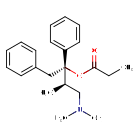
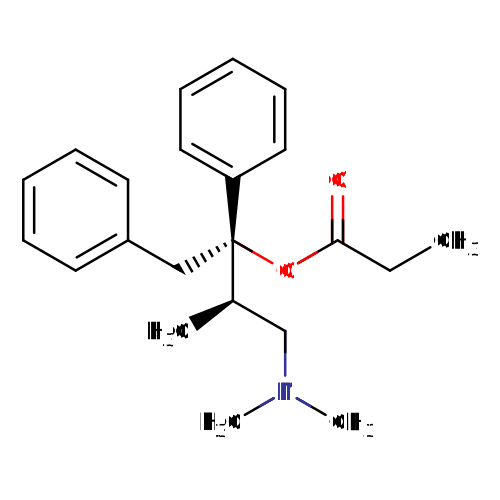
Structure for Dextropropoxyphene (DB00647)
- Weight
- Average: 339.4712
Monoisotopic: 339.219829177 - Chemical Formula
- C22H29NO2
- Synonyms
- d-Propoxyphene
- Destropropossifene
- Dextropropoxifeno
- Dextropropoxyphen
- Dextropropoxyphène
- Dextropropoxyphene
- Dextropropoxyphenum
- Dextroproxifeno
- Propoxyphene
- External IDs
- IDS-ND-004(SECT.2)
- J5.928E
- L 16298
- SK 65
- SK-65

Pharmacology
- Indication
For the relief of mild to moderate pain.
 Reduce drug development failure ratesBuild, train, & validate machine-learning modelswith evidence-based and structured datasets.Build, train, & validate predictive machine-learning models with structured datasets.
- Associated Conditions
Indication Type Indication Combined Product Details Approval Level Age Group Patient Characteristics Dose Form Management of Pain •••••••••••• - Contraindications & Blackbox Warnings
 Prevent Adverse Drug Events TodayTap into our Clinical API for life-saving information on contraindications & blackbox warnings, population restrictions, harmful risks, & more.Avoid life-threatening adverse drug events with our Clinical API
- Pharmacodynamics
Propoxyphene, a synthetic opiate agonist, is structurally similar to methadone. Its general pharmacologic properties are those of the opiates as a group. The analgesic effect of propoxyphene is due to the d-isomer, dextropropoxyphene. It binds to the opiate receptors and leads to a decrease of the perception of pain stimuli. Propoxyphene possesses little to no antitussive activity and no antipyretic action.
- Mechanism of action
Propoxyphene acts as a weak agonist at OP1, OP2, and OP3 opiate receptors within the central nervous system (CNS). Propoxyphene primarily affects OP3 receptors, which are coupled with G-protein receptors and function as modulators, both positive and negative, of synaptic transmission via G-proteins that activate effector proteins. Binding of the opiate stimulates the exchange of GTP for GDP on the G-protein complex. As the effector system is adenylate cyclase and cAMP located at the inner surface of the plasma membrane, opioids decrease intracellular cAMP by inhibiting adenylate cyclase. Subsequently, the release of nociceptive neurotransmitters such as substance P, GABA, dopamine, acetylcholine, and noradrenaline is inhibited. Opioids such as propoxyphene also inhibit the release of vasopressin, somatostatin, insulin, and glucagon. Opioids close N-type voltage-operated calcium channels (OP2-receptor agonist) and open calcium-dependent inwardly rectifying potassium channels (OP3 and OP1 receptor agonist). This results in hyperpolarization and reduced neuronal excitability.
Target Actions Organism AMu-type opioid receptor agonistHumans ADelta-type opioid receptor agonistHumans AKappa-type opioid receptor antagonistHumans ULiver carboxylesterase 1 Not Available Humans UNMDA receptor antagonistHumans - Absorption
Not Available
- Volume of distribution
- 16 L/kg
- Protein binding
Not Available
- Metabolism
Hepatic
- Route of elimination
The major route of metabolism is cytochrome CYP3A4 mediated N-demethylation to norpropoxyphene, which is excreted by the kidneys. In 48 hours, approximately 20% to 25% of the administered dose of propoxyphene is excreted via the urine, most of which is free or conjugated norpropoxyphene.
- Half-life
6-12 hours
- Clearance
- 2.6 L/min
- Adverse Effects
 Improve decision support & research outcomesWith structured adverse effects data, including: blackbox warnings, adverse reactions, warning & precautions, & incidence rates. View sample adverse effects data in our new Data Library!Improve decision support & research outcomes with our structured adverse effects data.
- Toxicity
Coma, respiratory depression, circulatory collapse, and pulmonary edema. Seizures occur more frequently in patients with propoxyphene intoxication than in those with opiate intoxication. LD50=230mg/kg (orally in rat, Emerson)
- Pathways
Pathway Category Propoxyphene Action Pathway Drug action - Pharmacogenomic Effects/ADRs
- Not Available
Interactions
- Drug Interactions
- This information should not be interpreted without the help of a healthcare provider. If you believe you are experiencing an interaction, contact a healthcare provider immediately. The absence of an interaction does not necessarily mean no interactions exist.
Drug Interaction Integrate drug-drug
interactions in your software1,2-Benzodiazepine The risk or severity of adverse effects can be increased when Dextropropoxyphene is combined with 1,2-Benzodiazepine. Abametapir The serum concentration of Dextropropoxyphene can be increased when it is combined with Abametapir. Abatacept The metabolism of Dextropropoxyphene can be increased when combined with Abatacept. Abemaciclib The serum concentration of Abemaciclib can be increased when it is combined with Dextropropoxyphene. Abiraterone The metabolism of Dextropropoxyphene can be decreased when combined with Abiraterone. - Food Interactions
- Avoid alcohol.
- Take with or without food. Food does not significantly affect absorption.
Products
 Drug product information from 10+ global regionsOur datasets provide approved product information including:dosage, form, labeller, route of administration, and marketing period.Access drug product information from over 10 global regions.
- Product Ingredients
Ingredient UNII CAS InChI Key Dextropropoxyphene hydrochloride CB2TL9PS0T 1639-60-7 QMQBBUPJKANITL-MYXGOWFTSA-N Dextropropoxyphene napsylate 38M219L1OJ 26570-10-5 GBKONKCASNNUQD-VGHSCWAPSA-N - Product Images

- International/Other Brands
- Abalgin (DLF) / Dacoton (Standard) / Deprancol (Parke Davis) / Depronal (Pfizer) / Dolene / Doloxene (Aspen Pharmacare)
- Brand Name Prescription Products
Name Dosage Strength Route Labeller Marketing Start Marketing End Region Image 642 Tab Tablet 65 mg Oral Pendopharm Division Of Pharmascience Inc 1968-12-31 2010-11-25 Canada 
Darvon Capsule 65 mg/1 Oral Xanodyne Pharmaceuticals 2009-09-25 2010-11-19 US 
Darvon-N Capsule 100 mg Oral Paladin Labs Inc 1973-12-31 2010-12-23 Canada Darvon-N Tablet, film coated 100 mg/1 Oral Xanodyne Pharmaceuticals 2009-09-25 2010-11-19 US Darvon-N Tablet, film coated 100 mg/1 Oral Physicians Total Care, Inc. 2007-01-08 2008-06-30 US - Generic Prescription Products
Name Dosage Strength Route Labeller Marketing Start Marketing End Region Image Novo-propoxyn Cap 65mg Capsule 65 mg Oral Novopharm Limited 1970-12-31 2005-08-10 Canada Propoxyphene Capsule 65 mg/1 Oral Pd Rx Pharmaceuticals, Inc. 1973-06-20 2015-05-08 US Propoxyphene Capsule 65 mg/1 Oral West Ward Pharmaceutical 1973-06-20 2010-11-24 US Propoxyphene Capsule 65 mg/1 Oral Pd Rx Pharmaceuticals, Inc. 2010-05-10 2015-05-08 US Propoxyphene Capsule 65 mg/1 Oral Stat Rx USA 2009-10-27 Not applicable US - Mixture Products
Name Ingredients Dosage Route Labeller Marketing Start Marketing End Region Image 692 Tab Dextropropoxyphene hydrochloride (65 mg) + Acetylsalicylic acid (375 mg) + Caffeine (30 mg) Tablet Oral Merck Frosst Canada & Cie, Merck Frosst Canada & Co. 1986-02-13 1998-04-21 Canada 692 Tablet Dextropropoxyphene hydrochloride (65 mg) + Acetylsalicylic acid (375 mg) + Caffeine (30 mg) Tablet Oral Lioh Inc. 1998-09-01 2006-08-25 Canada Balacet 325 Dextropropoxyphene napsylate (100 mg/1) + Acetaminophen (325 mg/1) Tablet, film coated Oral Cornerstone Therapeutics Inc. 2004-06-28 2010-08-10 US Balacet 325 Dextropropoxyphene napsylate (100 mg/1) + Acetaminophen (325 mg/1) Tablet, film coated Oral Cornerstone Therapeutics Inc. 2004-06-28 2010-11-19 US Children's Cough & Cold Relief Dextropropoxyphene hydrochloride (7.5 mg / 5 mL) + Pseudoephedrine hydrochloride (15 mg / 5 mL) Syrup Oral Crls Not applicable Not applicable Canada - Unapproved/Other Products
Name Ingredients Dosage Route Labeller Marketing Start Marketing End Region Image Therapoxyphene 650 Dextropropoxyphene napsylate (100 mg/1) + Acetaminophen (650 mg/1) Tablet Oral Physician Therapeutics Llc 2010-10-14 2010-12-03 US

Categories
- ATC Codes
- N02AC04 — DextropropoxypheneN02AC54 — Dextropropoxyphene, combinations excl. psycholepticsN02AC74 — Dextropropoxyphene, combinations with psycholeptics
- Drug Categories
- Acids, Acyclic
- Agents that reduce seizure threshold
- Analgesics
- Central Nervous System Agents
- Central Nervous System Depressants
- Cytochrome P-450 CYP2D6 Inhibitors
- Cytochrome P-450 CYP2D6 Inhibitors (strength unknown)
- Cytochrome P-450 CYP2D6 Substrates
- Cytochrome P-450 CYP3A Inhibitors
- Cytochrome P-450 CYP3A Substrates
- Cytochrome P-450 CYP3A4 Inhibitors
- Cytochrome P-450 CYP3A4 Inhibitors (strength unknown)
- Cytochrome P-450 CYP3A4 Substrates
- Cytochrome P-450 Enzyme Inhibitors
- Cytochrome P-450 Substrates
- Diphenylpropylamine Derivatives
- High-risk opioids
- Narcotics
- Nervous System
- Opioid Agonist
- Opioids
- Peripheral Nervous System Agents
- Propionates
- Sensory System Agents
- Serotonergic Drugs Shown to Increase Risk of Serotonin Syndrome
- Chemical TaxonomyProvided by Classyfire
- Description
- This compound belongs to the class of organic compounds known as stilbenes. These are organic compounds containing a 1,2-diphenylethylene moiety. Stilbenes (C6-C2-C6 ) are derived from the common phenylpropene (C6-C3) skeleton building block. The introduction of one or more hydroxyl groups to a phenyl ring lead to stilbenoids.
- Kingdom
- Organic compounds
- Super Class
- Phenylpropanoids and polyketides
- Class
- Stilbenes
- Sub Class
- Not Available
- Direct Parent
- Stilbenes
- Alternative Parents
- Phenylbutylamines / Benzyloxycarbonyls / Phenylpropanes / Aralkylamines / Trialkylamines / Carboxylic acid esters / Amino acids and derivatives / Monocarboxylic acids and derivatives / Organopnictogen compounds / Organic oxides show 2 more
- Substituents
- Amine / Amino acid or derivatives / Aralkylamine / Aromatic homomonocyclic compound / Benzenoid / Benzyloxycarbonyl / Carbonyl group / Carboxylic acid derivative / Carboxylic acid ester / Hydrocarbon derivative show 13 more
- Molecular Framework
- Aromatic homomonocyclic compounds
- External Descriptors
- 1-benzyl-3-(dimethylamino)-2-methyl-1-phenylpropyl propanoate (CHEBI:51173)
- Affected organisms
- Humans and other mammals
Chemical Identifiers
- UNII
- S2F83W92TK
- CAS number
- 469-62-5
- InChI Key
- XLMALTXPSGQGBX-GCJKJVERSA-N
- InChI
- InChI=1S/C22H29NO2/c1-5-21(24)25-22(18(2)17-23(3)4,20-14-10-7-11-15-20)16-19-12-8-6-9-13-19/h6-15,18H,5,16-17H2,1-4H3/t18-,22+/m1/s1
- IUPAC Name
- (2S,3R)-4-(dimethylamino)-3-methyl-1,2-diphenylbutan-2-yl propanoate
- SMILES
- CCC(=O)O[C@@](CC1=CC=CC=C1)([C@H](C)CN(C)C)C1=CC=CC=C1
References
- Synthesis Reference
Carl R. White, "Synthesis and purification of d-propoxyphene hydrochloride." U.S. Patent US4661625, issued April, 1973.
US4661625- General References
- Coda BA, Rudy AC, Archer SM, Wermeling DP: Pharmacokinetics and bioavailability of single-dose intranasal hydromorphone hydrochloride in healthy volunteers. Anesth Analg. 2003 Jul;97(1):117-23, table of contents. [Article]
- Ulens C, Daenens P, Tytgat J: Norpropoxyphene-induced cardiotoxicity is associated with changes in ion-selectivity and gating of HERG currents. Cardiovasc Res. 1999 Dec;44(3):568-78. [Article]
- Tyers MB: A classification of opiate receptors that mediate antinociception in animals. Br J Pharmacol. 1980 Jul;69(3):503-12. [Article]
- FDA data [Link]
- Drug Information [Link]
- Drugs.com [Link]
- External Links
- KEGG Drug
- D07809
- KEGG Compound
- C07406
- PubChem Compound
- 10100
- PubChem Substance
- 46506690
- ChemSpider
- 9696
- BindingDB
- 82269
- 8785
- ChEBI
- 51173
- ChEMBL
- CHEMBL1213351
- ZINC
- ZINC000001530769
- Therapeutic Targets Database
- DAP000017
- PharmGKB
- PA451142
- RxList
- RxList Drug Page
- Drugs.com
- Drugs.com Drug Page
- Wikipedia
- Dextropropoxyphene
- MSDS
- Download (46.1 KB)
Clinical Trials
- Clinical Trials
Phase Status Purpose Conditions Count 4 Completed Supportive Care Pain / Unspecified Adult Solid Tumor, Protocol Specific 1 4 Terminated Treatment Healthy Volunteers (HV) 1 4 Terminated Treatment Spinal Stenosis of Lumbar Region 1
Pharmacoeconomics
- Manufacturers
- Xanodyne pharmaceutics inc
- Heritage pharmaceuticals inc
- Mk laboratories inc
- Halsey drug co inc
- Alra laboratories inc
- Impax laboratories inc
- Ivax pharmaceuticals inc sub teva pharmaceuticals usa
- Mutual pharmaceutical co inc
- Mylan pharmaceuticals inc
- Nexgen pharma inc
- Par pharmaceutical inc
- Purepac pharmaceutical co
- Private formulations inc
- Roxane laboratories inc
- Sandoz inc
- Teva pharmaceuticals usa inc
- Valeant pharmaceuticals international
- Vintage pharmaceuticals inc
- Watson laboratories inc
- West ward pharmaceutical corp
- Whiteworth towne paulsen inc
- Warner chilcott div warner lambert co
- Aaipharma llc
- Packagers
- AAIPharma Inc.
- Aidarex Pharmacuticals LLC
- Altura Pharmaceuticals Inc.
- Amerisource Health Services Corp.
- Apotheca Inc.
- Aristos Pharmaceuticals
- A-S Medication Solutions LLC
- Blenheim Pharmacal
- Bryant Ranch Prepack
- Cardinal Health
- Caremark LLC
- Comprehensive Consultant Services Inc.
- Corepharma LLC
- Cornerstone Pharmacy
- D.M. Graham Laboratories Inc.
- Direct Dispensing Inc.
- Dispensing Solutions
- Diversified Healthcare Services Inc.
- DSM Corp.
- Golden State Medical Supply Inc.
- H and H Laboratories
- H.J. Harkins Co. Inc.
- Heartland Repack Services LLC
- Innoviant Pharmacy Inc.
- Ivax Pharmaceuticals
- Kaiser Foundation Hospital
- Keltman Pharmaceuticals Inc.
- Lake Erie Medical and Surgical Supply
- Liberty Pharmaceuticals
- Lilly Del Caribe Inc.
- Major Pharmaceuticals
- Mallinckrodt Inc.
- Mckesson Corp.
- Medvantx Inc.
- Mikart Inc.
- Murfreesboro Pharmaceutical Nursing Supply
- Mylan
- Nexgen Pharma Inc.
- Nucare Pharmaceuticals Inc.
- Palmetto Pharmaceuticals Inc.
- Par Pharmaceuticals
- PCA LLC
- PD-Rx Pharmaceuticals Inc.
- Pharmedix
- Physicians Total Care Inc.
- Pliva Inc.
- Preferred Pharmaceuticals Inc.
- Prepackage Specialists
- Prepak Systems Inc.
- Qualitest
- Ranbaxy Laboratories
- Rebel Distributors Corp.
- Redpharm Drug
- Remedy Repack
- Resource Optimization and Innovation LLC
- Sandhills Packaging Inc.
- Smartscience Laboratories Inc.
- Southwood Pharmaceuticals
- St Mary's Medical Park Pharmacy
- Stat Rx Usa
- Talbert Medical Management Corp.
- Teva Pharmaceutical Industries Ltd.
- UDL Laboratories
- Va Cmop Dallas
- Veratex Corp.
- Vintage Pharmaceuticals Inc.
- Watson Pharmaceuticals
- West-Ward Pharmaceuticals
- Wockhardt Ltd.
- Xanodyne Pharmaceuticals Inc.
- Dosage Forms
Form Route Strength Tablet Oral 65 mg Syrup Oral Capsule Oral Capsule Oral 100 mg Tablet, film coated Oral 100 mg/1 Pill Suppository Capsule Oral 65 mg Capsule Oral 65 mg/1 Tablet Oral Tablet, film coated Oral - Prices
Unit description Cost Unit Propoxyphene napsylate powder 5.33USD g Darvon-n 100 mg tablet 2.16USD tablet Darvon 65 mg capsule 1.71USD capsule Propoxyphene N-APAP 100-500 mg tablet 1.6USD tablet Darvon 65 mg pulvule 1.49USD each Propoxyphene N-APAP 50-325 mg tablet 1.32USD tablet Propoxyphene-APAP 65-650 mg tablet 0.57USD tablet Propoxyphene N-APAP 100-650 mg tablet 0.47USD tablet Propoxyphene hcl 65 mg capsule 0.43USD capsule DrugBank does not sell nor buy drugs. Pricing information is supplied for informational purposes only.- Patents
- Not Available
Properties
- State
- Solid
- Experimental Properties
Property Value Source melting point (°C) 75.5 °C PhysProp water solubility 3.32 mg/L (at 25 °C) MCFARLAND,JW ET AL. (2001) logP 4.18 HANSCH,C ET AL. (1995) - Predicted Properties
Property Value Source Water Solubility 0.00419 mg/mL ALOGPS logP 4.06 ALOGPS logP 4.9 Chemaxon logS -4.9 ALOGPS pKa (Strongest Basic) 9.52 Chemaxon Physiological Charge 1 Chemaxon Hydrogen Acceptor Count 2 Chemaxon Hydrogen Donor Count 0 Chemaxon Polar Surface Area 29.54 Å2 Chemaxon Rotatable Bond Count 9 Chemaxon Refractivity 102.88 m3·mol-1 Chemaxon Polarizability 38.86 Å3 Chemaxon Number of Rings 2 Chemaxon Bioavailability 1 Chemaxon Rule of Five Yes Chemaxon Ghose Filter Yes Chemaxon Veber's Rule Yes Chemaxon MDDR-like Rule No Chemaxon - Predicted ADMET Features
Property Value Probability Human Intestinal Absorption + 0.997 Blood Brain Barrier + 0.9503 Caco-2 permeable + 0.7277 P-glycoprotein substrate Substrate 0.5798 P-glycoprotein inhibitor I Inhibitor 0.7851 P-glycoprotein inhibitor II Non-inhibitor 0.6469 Renal organic cation transporter Non-inhibitor 0.6086 CYP450 2C9 substrate Non-substrate 0.833 CYP450 2D6 substrate Non-substrate 0.9117 CYP450 3A4 substrate Substrate 0.6032 CYP450 1A2 substrate Inhibitor 0.6357 CYP450 2C9 inhibitor Non-inhibitor 0.7637 CYP450 2D6 inhibitor Inhibitor 0.6887 CYP450 2C19 inhibitor Non-inhibitor 0.7628 CYP450 3A4 inhibitor Non-inhibitor 0.7992 CYP450 inhibitory promiscuity Low CYP Inhibitory Promiscuity 0.646 Ames test Non AMES toxic 0.8896 Carcinogenicity Carcinogens 0.7164 Biodegradation Not ready biodegradable 0.9714 Rat acute toxicity 2.9360 LD50, mol/kg Not applicable hERG inhibition (predictor I) Weak inhibitor 0.9033 hERG inhibition (predictor II) Inhibitor 0.6837
Spectra
- Mass Spec (NIST)
- Not Available
- Spectra
- Chromatographic Properties
Collision Cross Sections (CCS)
Adduct CCS Value (Å2) Source type Source [M-H]- 197.6262793 predictedDarkChem Lite v0.1.0 [M-H]- 180.2934 predictedDeepCCS 1.0 (2019) [M+H]+ 197.9417793 predictedDarkChem Lite v0.1.0 [M+H]+ 182.6514 predictedDeepCCS 1.0 (2019) [M+Na]+ 197.4102793 predictedDarkChem Lite v0.1.0 [M+Na]+ 189.34523 predictedDeepCCS 1.0 (2019)
Targets

- Kind
- Protein
- Organism
- Humans
- Pharmacological action
- Yes
- Actions
- Agonist
- General Function
- Voltage-gated calcium channel activity
- Specific Function
- Receptor for endogenous opioids such as beta-endorphin and endomorphin. Receptor for natural and synthetic opioids including morphine, heroin, DAMGO, fentanyl, etorphine, buprenorphin and methadone...
- Gene Name
- OPRM1
- Uniprot ID
- P35372
- Uniprot Name
- Mu-type opioid receptor
- Molecular Weight
- 44778.855 Da
References
- Chen X, Ji ZL, Chen YZ: TTD: Therapeutic Target Database. Nucleic Acids Res. 2002 Jan 1;30(1):412-5. [Article]
- Ulens C, Daenens P, Tytgat J: Norpropoxyphene-induced cardiotoxicity is associated with changes in ion-selectivity and gating of HERG currents. Cardiovasc Res. 1999 Dec;44(3):568-78. [Article]
- Tyers MB: A classification of opiate receptors that mediate antinociception in animals. Br J Pharmacol. 1980 Jul;69(3):503-12. [Article]
- Picker MJ: Discriminative stimulus effects of the mixed-opioid agonist/antagonist dezocine: cross-substitution by mu and delta opioid agonists. J Pharmacol Exp Ther. 1997 Dec;283(3):1009-17. [Article]
- Codd EE, Shank RP, Schupsky JJ, Raffa RB: Serotonin and norepinephrine uptake inhibiting activity of centrally acting analgesics: structural determinants and role in antinociception. J Pharmacol Exp Ther. 1995 Sep;274(3):1263-70. [Article]
- Bannwarth B, Richez C: The dextropropoxyphene controversy. Joint Bone Spine. 2009 Oct;76(5):449-51. doi: 10.1016/j.jbspin.2009.04.004. Epub 2009 Jul 14. [Article]
- Walker EA, Tiano MJ, Benyas SI, Dykstra LA, Picker MJ: Naltrexone and beta-funaltrexamine antagonism of the antinociceptive and response rate-decreasing effects of morphine, dezocine, and d-propoxyphene. Psychopharmacology (Berl). 1999 May;144(1):45-53. [Article]
- Kind
- Protein
- Organism
- Humans
- Pharmacological action
- Yes
- Actions
- Agonist
- General Function
- Opioid receptor activity
- Specific Function
- G-protein coupled receptor that functions as receptor for endogenous enkephalins and for a subset of other opioids. Ligand binding causes a conformation change that triggers signaling via guanine n...
- Gene Name
- OPRD1
- Uniprot ID
- P41143
- Uniprot Name
- Delta-type opioid receptor
- Molecular Weight
- 40368.235 Da
References
- Neil A: Affinities of some common opioid analgesics towards four binding sites in mouse brain. Naunyn Schmiedebergs Arch Pharmacol. 1984 Nov;328(1):24-9. [Article]
- Kind
- Protein
- Organism
- Humans
- Pharmacological action
- Yes
- Actions
- Antagonist
- General Function
- Opioid receptor activity
- Specific Function
- G-protein coupled opioid receptor that functions as receptor for endogenous alpha-neoendorphins and dynorphins, but has low affinity for beta-endorphins. Also functions as receptor for various synt...
- Gene Name
- OPRK1
- Uniprot ID
- P41145
- Uniprot Name
- Kappa-type opioid receptor
- Molecular Weight
- 42644.665 Da
References
- Kind
- Protein
- Organism
- Humans
- Pharmacological action
- Unknown
- General Function
- Triglyceride lipase activity
- Specific Function
- Involved in the detoxification of xenobiotics and in the activation of ester and amide prodrugs. Hydrolyzes aromatic and aliphatic esters, but has no catalytic activity toward amides or a fatty acy...
- Gene Name
- CES1
- Uniprot ID
- P23141
- Uniprot Name
- Liver carboxylesterase 1
- Molecular Weight
- 62520.62 Da
References
- Zhang J, Burnell JC, Dumaual N, Bosron WF: Binding and hydrolysis of meperidine by human liver carboxylesterase hCE-1. J Pharmacol Exp Ther. 1999 Jul;290(1):314-8. [Article]
- Kind
- Protein group
- Organism
- Humans
- Pharmacological action
- Unknown
- Actions
- Antagonist
- General Function
- Voltage-gated cation channel activity
- Specific Function
- NMDA receptor subtype of glutamate-gated ion channels with high calcium permeability and voltage-dependent sensitivity to magnesium. Mediated by glycine. This protein plays a key role in synaptic p...
Components:
References
- Ebert B, Thorkildsen C, Andersen S, Christrup LL, Hjeds H: Opioid analgesics as noncompetitive N-methyl-D-aspartate (NMDA) antagonists. Biochem Pharmacol. 1998 Sep 1;56(5):553-9. doi: 10.1016/s0006-2952(98)00088-4. [Article]
Enzymes
- Kind
- Protein
- Organism
- Humans
- Pharmacological action
- Unknown
- Actions
- SubstrateInhibitor
- General Function
- Steroid hydroxylase activity
- Specific Function
- Responsible for the metabolism of many drugs and environmental chemicals that it oxidizes. It is involved in the metabolism of drugs such as antiarrhythmics, adrenoceptor antagonists, and tricyclic...
- Gene Name
- CYP2D6
- Uniprot ID
- P10635
- Uniprot Name
- Cytochrome P450 2D6
- Molecular Weight
- 55768.94 Da
References
- Yue QY, Sawe J: Different effects of inhibitors on the O- and N-demethylation of codeine in human liver microsomes. Eur J Clin Pharmacol. 1997;52(1):41-7. [Article]
- Kerry NL, Somogyi AA, Bochner F, Mikus G: The role of CYP2D6 in primary and secondary oxidative metabolism of dextromethorphan: in vitro studies using human liver microsomes. Br J Clin Pharmacol. 1994 Sep;38(3):243-8. [Article]
- Sanz EJ, Bertilsson L: d-Propoxyphene is a potent inhibitor of debrisoquine, but not S-mephenytoin 4-hydroxylation in vivo. Ther Drug Monit. 1990 May;12(3):297-9. doi: 10.1097/00007691-199005000-00016. [Article]
- Kind
- Protein
- Organism
- Humans
- Pharmacological action
- Unknown
- Actions
- SubstrateInhibitor
- General Function
- Vitamin d3 25-hydroxylase activity
- Specific Function
- Cytochromes P450 are a group of heme-thiolate monooxygenases. In liver microsomes, this enzyme is involved in an NADPH-dependent electron transport pathway. It performs a variety of oxidation react...
- Gene Name
- CYP3A4
- Uniprot ID
- P08684
- Uniprot Name
- Cytochrome P450 3A4
- Molecular Weight
- 57342.67 Da
References
- Somogyi AA, Menelaou A, Fullston SV: CYP3A4 mediates dextropropoxyphene N-demethylation to nordextropropoxyphene: human in vitro and in vivo studies and lack of CYP2D6 involvement. Xenobiotica. 2004 Oct;34(10):875-87. doi: 10.1080/00498250400008371 . [Article]
- Spina E, Pisani F, Perucca E: Clinically significant pharmacokinetic drug interactions with carbamazepine. An update. Clin Pharmacokinet. 1996 Sep;31(3):198-214. doi: 10.2165/00003088-199631030-00004. [Article]
- Kind
- Protein group
- Organism
- Humans
- Pharmacological action
- Unknown
- Actions
- Inhibitor
- General Function
- Vitamin d3 25-hydroxylase activity
- Specific Function
- Cytochromes P450 are a group of heme-thiolate monooxygenases. In liver microsomes, this enzyme is involved in an NADPH-dependent electron transport pathway. It performs a variety of oxidation react...
Components:
| Name | UniProt ID |
|---|---|
| Cytochrome P450 3A4 | P08684 |
| Cytochrome P450 3A43 | Q9HB55 |
| Cytochrome P450 3A5 | P20815 |
| Cytochrome P450 3A7 | P24462 |
References
- Yue QY, Sawe J: Different effects of inhibitors on the O- and N-demethylation of codeine in human liver microsomes. Eur J Clin Pharmacol. 1997;52(1):41-7. [Article]
- Kind
- Protein
- Organism
- Humans
- Pharmacological action
- Unknown
- Actions
- Inhibitor
- General Function
- Glucuronosyltransferase activity
- Specific Function
- UDPGTs are of major importance in the conjugation and subsequent elimination of potentially toxic xenobiotics and endogenous compounds. This isozyme is active on polyhydroxylated estrogens (such as...
- Gene Name
- UGT2B4
- Uniprot ID
- P06133
- Uniprot Name
- UDP-glucuronosyltransferase 2B4
- Molecular Weight
- 60512.035 Da
References
- Raungrut P, Uchaipichat V, Elliot DJ, Janchawee B, Somogyi AA, Miners JO: In vitro-in vivo extrapolation predicts drug-drug interactions arising from inhibition of codeine glucuronidation by dextropropoxyphene, fluconazole, ketoconazole, and methadone in humans. J Pharmacol Exp Ther. 2010 Aug;334(2):609-18. doi: 10.1124/jpet.110.167916. Epub 2010 May 18. [Article]

Drug created at June 13, 2005 13:24 / Updated at March 03, 2024 02:32