Identification
- Summary
Midazolam is a short-acting benzodiazepine with rapid onset that is commonly used in seizures, anesthesia and anxiety disorders.
- Brand Names
- Buccolam, Busulfex, Nayzilam, Seizalam
- Generic Name
- Midazolam
- DrugBank Accession Number
- DB00683
- Background
Midazolam is a short-acting hypnotic-sedative drug with anxiolytic, muscle relaxant, anticonvulsant, sedative, hypnotic, and amnesic properties.6 It belongs to a class of drugs called benzodiazepines. This drug is unique from others in this class due to its rapid onset of effects and short duration of action.6 Midazolam is available by oral, rectal, intranasal, intramuscular (IM), and intravenous (IV) routes and has been used in various biomedical applications, including dentistry, cardiac surgery, and endoscopic procedures as pre-anesthetic medication, and as an adjunct to local anesthesia.21
This drug was initially approved by the US FDA in 1985, and has been approved for various indications since.19 In late 2018, the intramuscular preparation was approved by the FDA for the treatment of status epilepticus in adults.19 In May 2019, the nasal spray of midazolam was approved for the acute treatment of distinctive intermittent, stereotypic seizure episodes in patients 12 years of age and older.8 Midazolam is considered a schedule IV drug in the United States due to the low potential for abuse and low risk of dependence.10
- Type
- Small Molecule
- Groups
- Approved, Illicit
- Structure
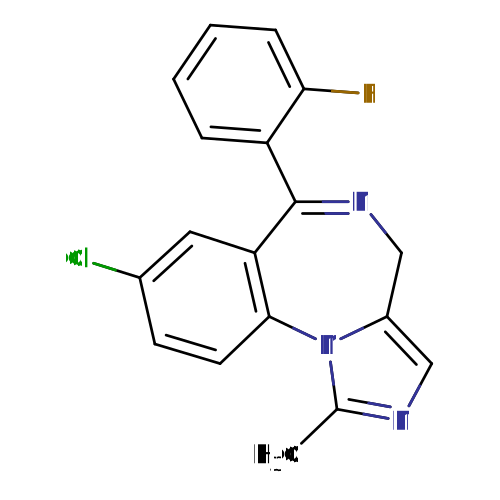
Structure for Midazolam (DB00683)
- Weight
- Average: 325.767
Monoisotopic: 325.078203343 - Chemical Formula
- C18H13ClFN3
- Synonyms
- Midazolam
- Midazolamum
- External IDs
- Dea No. 2884
- Ro 21-3981/001
- Ro 21-3981/003

Pharmacology
- Indication
Midazolam has different indications depending on its formulation by the FDA.
Nasal
For the nasal spray formulation, midazolam is indicated for the acute treatment of intermittent, stereotypic episodes of frequent seizure activity (i.e., seizure clusters, acute repetitive seizures) that are distinct from a patient’s usual seizure pattern in patients with epilepsy 12 years of age and older.13
Intravenous
For the intravenous injection formulation, midazolam is indicated as an agent for sedation/anxiolysis/amnesia and prior to or during diagnostic, therapeutic or endoscopic procedures, such as bronchoscopy, gastroscopy, cystoscopy, coronary angiography, cardiac catheterization, oncology procedures, radiologic procedures, suture of lacerations and other procedures either alone or in combination with other CNS depressants.14 The sedative, anxiolytic and amnestic use of midazolam can also be employed pre-operatively.14 It can also be indicated for induction of general anesthesia, before administration of other anesthetic agents or as a component of intravenous supplementation of nitrous oxide and oxygen for a balanced anesthesia.14 A relatively narrower dose range of midazolam and a shorter period of induction can be achieved if midazolam is combined with narcotic premedication.14 Finally, midazolam can be indicated as a continous intravenous infusion for sedation of intubated and mechanically ventilated patients as a component of anesthesia or during treatment in a critical care setting.14
Intramuscular
For the intramusuclar injection formulation, midazolam is indicated for preoperative sedation/anxiolysis/amnesia or for treatment of status epilepticus in adults.14,15
Oral
Midazolam syrup is indicated for use in pediatric patients for sedation, anxiolysis and amnesia prior to diagnostic, therapeutic or endoscopic procedures or before induction of anesthesia. It is only approved in monitored settings only and not for chronic or home use.11
In Europe, a buccal formulation of midazolam is also approved for the treatment of prolonged, acute, convulsive seizures in infants, toddlers, children and adolescents (from 3 months to < 18 years). For infants between 3-6 months of age treatment should be in a hospital setting where monitoring is possible and resuscitation equipment is available.16
 Reduce drug development failure ratesBuild, train, & validate machine-learning modelswith evidence-based and structured datasets.Build, train, & validate predictive machine-learning models with structured datasets.
- Associated Conditions
Indication Type Indication Combined Product Details Approval Level Age Group Patient Characteristics Dose Form Treatment of Epileptic seizure •••••••••••• ••••••••••• ••••• ••••••• ••••••• ••••••• ••••• Treatment of Status epilepticus •••••••••••• ••••• ••••••••• - Associated Therapies
- Contraindications & Blackbox Warnings
 Prevent Adverse Drug Events TodayTap into our Clinical API for life-saving information on contraindications & blackbox warnings, population restrictions, harmful risks, & more.Avoid life-threatening adverse drug events with our Clinical API
- Pharmacodynamics
General effects
Midazolam is a short-acting benzodiazepine central nervous system (CNS) depressant. Pharmacodynamic properties of midazolam and its metabolites, which are similar to those of other benzodiazepine drugs, include sedative, anxiolytic, amnestic, muscle relaxant, as well as hypnotic activities.20 Benzodiazepines enhance the inhibitory action of the amino acid neurotransmitter gamma-aminobutyric acid (GABA). Receptors for GABA are targeted by many important drugs that affect GABA function and are commonly used in the treatment of anxiety disorder, epilepsy, insomnia, spasticity, and aggressive behavior.7
Sedation and memory
The onset of sedation after intramuscular administration in adults is 15 minutes, with maximal sedation occurring 30-60 minutes after injection.Label In one study of adults, when tested the following day, 73% of the patients who were administered midazolam intramuscularly had no recollection of memory cards shown 30 minutes following drug administration; 40% had no recollection of the memory cards shown 60 minutes after drug administration. Onset time of sedative effects in pediatric patients begins within 5 minutes and peaks at 15-30 minutes depending upon the dose administered. In the pediatric population, up to 85% had no memory of pictures shown after receiving intramuscular midazolam compared to 5% of the placebo control group.20
Sedation in both adult and pediatric patients is reached within 3 to 5 minutes post intravenous (IV) injection. The time of onset is affected by the dose administered and the simultaneous administration of narcotic pre-medication. Seventy-one (71%) percent of the adult patients in clinical endoscopy studies had no memory of insertion of the endoscope; 82% of the patients had no memory of withdrawal of the endoscope.14
Anesthesia induction
When midazolam is administered intravenously (IV) for anesthetic induction, induction of anesthesia occurs in about 1.5 minutes when narcotic pre-medication has been given and in 2 to 2.5 minutes without narcotic pre-medication/ other sedative pre-medication. Impairment in a memory test was observed in 90% of the patients.14
- Mechanism of action
The actions of benzodiazepines such as midazolam are mediated through the inhibitory neurotransmitter gamma-aminobutyric acid (GABA), which is one of the major inhibitory neurotransmitters in the central nervous system. Benzodiazepines increase the activity of GABA, thereby producing a sedating effect, relaxing skeletal muscles, and inducing sleep, anesthesia, and amnesia. Benzodiazepines bind to the benzodiazepine site on GABA-A receptors, which potentiates the effects of GABA by increasing the frequency of chloride channel opening.20 These receptors have been identified in different body tissues including the heart and skeletal muscle, although mainly appear to be present in the central nervous system.6
Target Actions Organism AGABA(A) Receptor positive allosteric modulatorHumans AGABA(A) Receptor Benzodiazepine Binding Site ligandHumans UAdenosine receptor A2a potentiatorHumans - Absorption
Intramuscular
Following IM administration of a single 10 mg midazolam dose to healthy subjects, midazolam was absorbed with median Tmax (range) of 0.5 (0.25 to 0.5) hours; midazolam's mean (±SD) Cmax and AUC0-∞ were 113.9 (±30.9) ng/mL and 402.7 (±97.0) ng∙h/mL, respectively.15
Rectal
After rectal administration midazolam is absorbed rapidly. Maximum plasma concentration is reached within 30 minutes. The absolute bioavailability is approximately 50%.21
Intranasal Administration
Following the nasal administration of a single 5 mg midazolam dose to healthy adults, midazolam was absorbed with a median Tmax (range) of 17.3 (7.8 to 28.2) minutes; midazolam's mean (±SD) Cmax and AUC0-∞ were 54.7 (±30.4) ng/mL and 126.2 (±59) ng∙h/mL, respectively. The mean absolute bioavailability is approximately 44%.13
Oral
In pediatric patients from 6 months to <16 years old, the mean Tmax values across dose groups (0.25, 0.5, and 1.0 mg/kg) range from 0.17 to 2.65 hours. Midazolam also exhibits linear pharmacokinetics within this dose range (up to a maximum dose of 40 mg). Linearity was also demonstrated across the doses within the age group of 2 years to <12 years having 18 patients at each of the three doses. Due to first-pass metabolism, only 40-50% of the administered oral dose reaches the circulation.6 The absolute bioavailability of midazolam is about 36%, which is not affected by pediatric age or weight. Cmax and AUC0-∞ were also calculated to range from 28 to 201 ng/mL and 67.6 to 821 ng∙h/mL respectively.11
Buccal
After oromucosal administration midazolam is absorbed rapidly. Maximum plasma concentration is reached within 30 minutes in children. The absolute bioavailability of oromucosal midazolam is about 75% in adults. The bioavailability of oromucosal midazolam has been estimated at 87% in children with severe malaria and convulsions. Cmax and AUC0-∞ were also calculated to range from 87 to 148 ng/mL and 168 to 254 ng∙h/mL respectively.16
- Volume of distribution
Female gender, old age, and obesity may increase the volume of distribution. Midazolam may also cross the placenta and has been detected in human milk and cerebrospinal fluid.Label,20
Intravenous administration
In pediatric patients (6 months to <16 years) receiving 0.15 mg/kg IV midazolam, the mean steady-state volume of distribution ranged from 1.24 to 2.02 L/kg.11 For healthy adult patients, the volume of distribution determined from six single-dose pharmacokinetic studies ranged from 1.0 to 3.1 L/kg.14
Intramuscular administration
The mean (±SD) apparent volume of distribution (Vz/F) of midazolam following a single IM dose of 10 mg midazolam was 2117 (±845.1) mL/kg in healthy subjects.15
Intranasal
The estimated total volume of distribution of midazolam is 226.5 L.13
Buccal
The steady-state volume of distribution following oromucosal administration is estimated to be 5.3 l/kg.16
- Protein binding
In adults and pediatric patients, midazolam is approximately 97% bound to plasma protein, principally albumin. In healthy volunteers, 1-hydroxy midazolam is bound to the extent of 89%.13
- Metabolism
In vitro studies with human liver microsomes indicate that the biotransformation of midazolam is mediated by the cytochrome P450-3A4 (CYP3A4). This enzyme is present in gastrointestinal tract mucosa, as well as in the liver. The 1-hydroxy-midazolam (also termed alpha-hydroxymidazolam) metabolite comprises 60% to 70% of the biotransformation products of midazolam, while 4-hydroxy-midazolam constitutes 5% or less. Small amounts of a dihydroxy derivative have also been detected, but not quantified.15 Midazolam also undergoes N-glucuronidation via UGT1A4 after the process of hepatic oxidation by cytochrome enzymes.6
Studies of the intravenous administration of 1-hydroxy-midazolam in humans suggest that 1-hydroxymidazolam is at least as potent as the parent compound, and may contribute to the net pharmacologic activity of midazolam. In vitro studies have demonstrated that the affinities of 1- and 4-hydroxy-midazolam for the benzodiazepine receptor are approximately 20% and 7%, respectively, relative to midazolam.15
Hover over products below to view reaction partners
- Route of elimination
The α-hydroxymidazolam glucuronide conjugate of midazolam is excreted in the urine. No significant amount of parent drug or metabolites is found in urine before beta-glucuronidase and sulfatase deconjugation, suggesting that the urinary metabolites are excreted mainly as conjugates. The amount of midazolam excreted unchanged in the urine when given intravenously is less than 0.5%. 45% to 57% of the dose was excreted in the urine as 1-hydroxymethyl midazolam conjugate.15 The principal urinary excretion products are glucuronide conjugates of hydroxylated derivatives.15
Plasma clearance of midazolam is higher in patients that remain in the supine position, because of a 40-60 percent increase in hepatic blood flow during supination. Pregnancy may also increase the metabolism of midazolam.6
- Half-life
Intravenous: Six single-dose pharmacokinetic studies involving healthy adults yield an elimination half-life of 1.8 to 6.4 hours (mean of approximately 3 hours).14
Intramuscular Following IM administration of 10 mg midazolam, the mean (±SD) elimination half-life of midazolam was 4.2 (±1.87) hours.15
Intranasal Following the administration of NAYZILAM in clinical trials, median midazolam and 1-hydroxy-midazolam elimination half-lives ranged from 2.1 to 6.2 hours and 2.7 to 7.2 hours, respectively, independent of dose.13
Oral The mean elimination half-life of midazolam ranged from 2.2 to 6.8 hours following single oral doses of 0.25, 0.5, and 1.0 mg/kg of midazolam HCl syrup.11
*Buccal The initial and terminal elimination half-lives are 27 and 204 minutes, respectively.16
- Clearance
Intramuscular
Following IM administration of 10 mg midazolam, the apparent total body clearance (CL/F) of midazolam was 367.3 (±73.5) mL/hr/kg.15
Intravenous:
Six single-dose pharmacokinetic studies involving healthy adults yield a total clearance (Cl) of 0.25 to 0.54 L/hr/kg.14
Intranasal
Midazolam clearance was calculated to be 1.9 mL/min/kg
Oral Following a group of patients receiving the 0.15 mg/kg IV dose, the mean total clearance ranged from 9.3 to 11.0 mL/min/kg.11
*Buccal Plasma clearance of midazolam in children following oromucosal administration is 30 ml/kg/min.16
- Adverse Effects
 Improve decision support & research outcomesWith structured adverse effects data, including: blackbox warnings, adverse reactions, warning & precautions, & incidence rates. View sample adverse effects data in our new Data Library!Improve decision support & research outcomes with our structured adverse effects data.
- Toxicity
LD50=215 mg/kg, in rats.MSDS
Overdose
Signs of overdose include sedation, somnolence, confusion, impaired coordination, diminished reflexes, coma, and deleterious effects on vital signs. Serious cardiorespiratory adverse reactions have occurred, sometimes ending in death or permanent neurologic effects, after the administration of midazolam.Label
A note on cardiac and respiratory depression
After administration of midazolam, continuous monitoring of respiratory and cardiac function is recommended until the patient is in stable condition. Serious and life-threatening cardiorespiratory adverse reactions, including hypoventilation, airway obstruction, apnea, and hypotension have been reported with the use of midazolam. Patients should be monitored in a setting with immediate access to resuscitative drugs if they are required. Resuscitation equipment and personnel trained in their use and skilled in airway management should be available when midazolam is administered.Label
The usual recommended intramuscular pre-medicating doses of midazolam do not depress the ventilatory response to carbon dioxide stimulation to a clinically significant extent in adults. Intravenous induction doses of midazolam depress the ventilatory response to carbon dioxide stimulation for at least 15 minutes longer than the duration of ventilatory depression following administration of thiopental in adults. Impairment of ventilatory response to carbon dioxide is more severe in adult patients diagnosed with chronic obstructive pulmonary disease (COPD).20
A note on dependence
When midazolam is used in long-term sedation in the ICU (intensive care unit) or other settings, physical dependence on midazolam may develop. The risk of dependence increases with dose and duration of treatment; this risk is also greater in patients with a medical history of substance abuse.10
Special caution should be exercised when administering midazolam in the following populations
High-risk patients include adults over 60 years of age, chronically ill or debilitated patients, which may include patients with chronic respiratory insufficiency, patients with chronic renal failure, impaired hepatic function or with impaired cardiac function, pediatric patients (especially those with cardiovascular instability). These high-risk patients require lower dosages and should be monitored on a continuous basis for early signs of alterations of vital functions, so that appropriate management may be administered.10
Mutagenesis
Midazolam was negative for genotoxicity during in vitro and in vivo assays.Label
Impairment of Fertility
When midazolam (0, 1, 4, or 16 mg/kg) was given orally to male and female rats before and during mating and continuing in females throughout gestation and lactation, no adverse effects on male or female fertility were observed. Midazolam plasma exposures (AUC) at the highest dose tested were approximately 6 times that in humans at the recomended human dose.Label
- Pathways
- Not Available
- Pharmacogenomic Effects/ADRs
- Not Available
Interactions
- Drug Interactions
- This information should not be interpreted without the help of a healthcare provider. If you believe you are experiencing an interaction, contact a healthcare provider immediately. The absence of an interaction does not necessarily mean no interactions exist.
Drug Interaction Integrate drug-drug
interactions in your software1,2-Benzodiazepine The risk or severity of sedation and CNS depression can be increased when Midazolam is combined with 1,2-Benzodiazepine. Abacavir Midazolam may decrease the excretion rate of Abacavir which could result in a higher serum level. Abametapir The serum concentration of Midazolam can be increased when it is combined with Abametapir. Abatacept The metabolism of Midazolam can be increased when combined with Abatacept. Abemaciclib The serum concentration of Abemaciclib can be increased when it is combined with Midazolam. - Food Interactions
- Avoid alcohol. Midazolam may make your sleepiness or dizziness worse.
- Avoid grapefruit products. Bioavailability of midazolam can increase.
Products
 Drug product information from 10+ global regionsOur datasets provide approved product information including:dosage, form, labeller, route of administration, and marketing period.Access drug product information from over 10 global regions.
- Product Ingredients
Ingredient UNII CAS InChI Key Midazolam hydrochloride W7TTW573JJ 59467-96-8 PLYSCVSCYOQVRP-UHFFFAOYSA-N Midazolam maleate 77520S18SE 59467-94-6 XYGVIBXOJOOCFR-BTJKTKAUSA-N - International/Other Brands
- Anquil (General Pharma) / Benzosed (Pharmaceutical) / Dalam (Richmond) / Damizol (Specifar) / Demizolam (Dem Ilaç) / Doricum (Roche) / Dormicum (Roche) / Dormid (Scott) / Dormipron (Chalver) / Dormire (Cristália) / Dormitol (Square) / Dormixal (Demo) / Dormonid (Roche) / Drimnorth (Northia) / Epistatus (IFET) / Flormidal (Galenika) / Fulsed (Ranbaxy) / Fulsed Injection (Terapia) / Garen (Bio-Pharma) / Gobbizolam (Gobbi) / Hipnazolam (EMS) / Hipnoz (Pharos) / Hypnofast (Incepta) / Hypnovel (Roche) / Ipnovel (Roche) / Nocturna (Lafi) / Setam (Rimsa) / Talentum (Fisiopharma) / Terap (Sanitas) / Versed (Roche)
- Brand Name Prescription Products
Name Dosage Strength Route Labeller Marketing Start Marketing End Region Image Buccolam Solution 5 mg Buccal Neuraxpharm Pharmaceuticals S.L. 2022-05-04 Not applicable EU 
Buccolam Solution 7.5 mg Buccal Neuraxpharm Pharmaceuticals S.L. 2016-09-08 Not applicable EU Buccolam Solution 10 mg Buccal Neuraxpharm Pharmaceuticals S.L. 2022-05-04 Not applicable EU Buccolam Solution 2.5 mg Buccal Neuraxpharm Pharmaceuticals S.L. 2022-05-04 Not applicable EU Buccolam Solution 5 mg Buccal Neuraxpharm Pharmaceuticals S.L. 2016-09-08 Not applicable EU - Generic Prescription Products
Name Dosage Strength Route Labeller Marketing Start Marketing End Region Image Apo-midazolam Injectable 1 mg/ml Liquid 1 mg / mL Intramuscular; Intravenous Apotex Corporation 2001-04-10 2013-08-02 Canada 
Apo-midazolam Injectable 5 mg/ml Liquid 5 mg / mL Intramuscular; Intravenous Apotex Corporation 2001-04-10 2013-08-02 Canada Midazolam Injection, solution 1 mg/1mL Intramuscular; Intravenous Steriscience Specialties Private Limited 2023-07-31 Not applicable US 
Midazolam Injection 5 mg/1mL Intramuscular; Intravenous Hikma Pharmaceuticals USA Inc. 2000-06-20 Not applicable US Midazolam Injection 1 mg/1mL Intramuscular; Intravenous Bedford Pharmaceuticals 2000-06-21 2013-06-30 US - Unapproved/Other Products
Name Ingredients Dosage Route Labeller Marketing Start Marketing End Region Image Midazolam HCl Midazolam hydrochloride (0.5 mg/1mL) Injection, solution Intravenous Cantrell Drug Company 2014-09-03 Not applicable US Midazolam HCl Midazolam hydrochloride (1 mg/1mL) Injection, solution Intravenous Cantrell Drug Company 2013-06-28 Not applicable US MIDOLAM 15 MG/3 ML IM/IV REKTAL COZELTI ICEREN AMPUL, 5 ADET Midazolam (15 mg/3ml) Injection Intramuscular; Intravenous PHARMADA İLAÇ SAN. VE TİC. A.Ş. 2020-03-17 2024-01-23 Turkey 
MIDOLAM 5 MG/1 ML IM/IV REKTAL COZELTI ICEREN AMPUL, 5 ADET Midazolam (5 mg/1ml) Injection Intramuscular; Intravenous PHARMADA İLAÇ SAN. VE TİC. A.Ş. 2020-03-17 2024-01-23 Turkey MIDOLAM 50 MG/10 ML IM/IV REKTAL COZELTI ICEREN AMPUL, 5 ADET Midazolam (50 mg/10ml) Injection Intramuscular; Intravenous PHARMADA İLAÇ SAN. VE TİC. A.Ş. 2019-11-26 2024-01-23 Turkey
Categories
- ATC Codes
- N05CD08 — Midazolam
- Drug Categories
- Adjuvants, Anesthesia
- Anesthetics
- Anti-Anxiety Agents
- Benzodiazepine hypnotics and sedatives
- Benzodiazepines and benzodiazepine derivatives
- Central Nervous System Agents
- Central Nervous System Depressants
- Cytochrome P-450 CYP3A Inhibitors
- Cytochrome P-450 CYP3A Substrates
- Cytochrome P-450 CYP3A4 Inhibitors
- Cytochrome P-450 CYP3A4 Inhibitors (strength unknown)
- Cytochrome P-450 CYP3A4 Substrates
- Cytochrome P-450 CYP3A5 Substrates
- Cytochrome P-450 CYP3A7 Substrates
- Cytochrome P-450 Enzyme Inhibitors
- Cytochrome P-450 Substrates
- Drugs that are Mainly Renally Excreted
- GABA Agents
- GABA Modulators
- Heterocyclic Compounds, Fused-Ring
- Hypnotics and Sedatives
- Nervous System
- Neurotransmitter Agents
- P-glycoprotein substrates
- Psycholeptics
- Psychotropic Drugs
- Tranquilizing Agents
- Triazolobenzodiazepines
- UGT1A4 substrates
- UGT2B7 substrates
- Chemical TaxonomyProvided by Classyfire
- Description
- This compound belongs to the class of organic compounds known as imidazo[1,5-a][1,4]benzodiazepines. These are compounds containing an imidazole ring and a 1,4-benzodiazepine ring system, both sharing one nitrogen atom.
- Kingdom
- Organic compounds
- Super Class
- Organoheterocyclic compounds
- Class
- Benzodiazepines
- Sub Class
- 1,4-benzodiazepines
- Direct Parent
- Imidazo[1,5-a][1,4]benzodiazepines
- Alternative Parents
- Fluorobenzenes / 1,4-diazepines / N-substituted imidazoles / Aryl fluorides / Aryl chlorides / Heteroaromatic compounds / Ketimines / Propargyl-type 1,3-dipolar organic compounds / Azacyclic compounds / Organopnictogen compounds show 3 more
- Substituents
- Aromatic heteropolycyclic compound / Aryl chloride / Aryl fluoride / Aryl halide / Azacycle / Azole / Benzenoid / Fluorobenzene / Halobenzene / Heteroaromatic compound show 16 more
- Molecular Framework
- Aromatic heteropolycyclic compounds
- External Descriptors
- diazepine (CHEBI:6931)
- Affected organisms
- Humans and other mammals
Chemical Identifiers
- UNII
- R60L0SM5BC
- CAS number
- 59467-70-8
- InChI Key
- DDLIGBOFAVUZHB-UHFFFAOYSA-N
- InChI
- InChI=1S/C18H13ClFN3/c1-11-21-9-13-10-22-18(14-4-2-3-5-16(14)20)15-8-12(19)6-7-17(15)23(11)13/h2-9H,10H2,1H3
- IUPAC Name
- 12-chloro-9-(2-fluorophenyl)-3-methyl-2,4,8-triazatricyclo[8.4.0.0^{2,6}]tetradeca-1(10),3,5,8,11,13-hexaene
- SMILES
- CC1=NC=C2CN=C(C3=CC=CC=C3F)C3=C(C=CC(Cl)=C3)N12
References
- Synthesis Reference
- US6262260
- General References
- Skerritt JH, Johnston GA: Enhancement of GABA binding by benzodiazepines and related anxiolytics. Eur J Pharmacol. 1983 May 6;89(3-4):193-8. [Article]
- Isojarvi JI, Tokola RA: Benzodiazepines in the treatment of epilepsy in people with intellectual disability. J Intellect Disabil Res. 1998 Dec;42 Suppl 1:80-92. [Article]
- Garratt JC, Gent JP, Feely M, Haigh JR: Can benzodiazepines be classified by characterising their anticonvulsant tolerance-inducing potential? Eur J Pharmacol. 1988 Jan 5;145(1):75-80. [Article]
- Tokunaga S, Takeda Y, Shinomiya K, Hirase M, Kamei C: Effects of some H1-antagonists on the sleep-wake cycle in sleep-disturbed rats. J Pharmacol Sci. 2007 Feb;103(2):201-6. Epub 2007 Feb 8. [Article]
- Vermeeren A: Residual effects of hypnotics: epidemiology and clinical implications. CNS Drugs. 2004;18(5):297-328. [Article]
- Nordt SP, Clark RF: Midazolam: a review of therapeutic uses and toxicity. J Emerg Med. 1997 May-Jun;15(3):357-65. [Article]
- Jembrek MJ, Vlainic J: GABA Receptors: Pharmacological Potential and Pitfalls. Curr Pharm Des. 2015;21(34):4943-59. [Article]
- Wheless JW: A critical evaluation of midazolam nasal spray for the treatment of patients with seizure clusters. Expert Rev Neurother. 2021 Nov;21(11):1195-1205. doi: 10.1080/14737175.2021.1890033. Epub 2021 Mar 12. [Article]
- Siegel GJ, Agranoff BW, Albers RW et al. (1999). Basic Neurochemistry: Molecular, Cellular and Medical Aspects (6th ed.). Lippincott Williams.
- Drug Scheduling: United States Drug Enforcement Administration (DEA) [Link]
- DailyMed: Midazolam [Link]
- NAYZILAM® (midazolam) nasal spray - FDA Label [Link]
- FDA Approved Drug Products: NAYZILAM (midazolam) nasal spray, CIV Jan 2023 [Link]
- DailyMed: Midazolam injection [Link]
- FDA Approved Drug Products: SEIZALAM® (midazolam injection), for intramuscular use [Link]
- EMA Approved Drug Products: BUCCOLAM oromucosal solution [Link]
- Health Canada Approved Drug Products: Midazolam Intramuscular or Intravenous Injection (January 2023) [Link]
- Midazolam Chemical Handbook [Link]
- CENTER FOR DRUG EVALUATION AND RESEARCH APPLICATION NUMBER: 211321Orig1s000 [Link]
- Intravenous Midazolam FDA label [File]
- MedSafe NZ: Midazolam Inj [File]
- External Links
- Human Metabolome Database
- HMDB0014821
- KEGG Drug
- D00550
- KEGG Compound
- C07524
- PubChem Compound
- 4192
- PubChem Substance
- 46507611
- ChemSpider
- 4047
- BindingDB
- 21363
- 6960
- ChEBI
- 6931
- ChEMBL
- CHEMBL655
- ZINC
- ZINC000095626706
- Therapeutic Targets Database
- DAP000241
- PharmGKB
- PA450496
- Guide to Pharmacology
- GtP Drug Page
- PDBe Ligand
- 08J
- RxList
- RxList Drug Page
- Drugs.com
- Drugs.com Drug Page
- Wikipedia
- Midazolam
- PDB Entries
- 3u5k / 5te8
- FDA label
- Download (250 KB)
- MSDS
- Download (68.9 KB)
Clinical Trials
- Clinical Trials
Phase Status Purpose Conditions Count 4 Active Not Recruiting Other Major Depressive Disorder (MDD) / Major depressive disorder, recurrent episode 1 4 Active Not Recruiting Treatment Depression, Bipolar / Suicidal Thoughts / Unipolar Depression 1 4 Active Not Recruiting Treatment Driving Performance After Minor Ambulatory Surgery / Minor Surgical Procedures With Monitored Anesthesia Care 1 4 Completed Not Available Anaesthesia / Nerve Block / Orthopaedic Disorders 1 4 Completed Not Available Disorders of Gallbladder, Biliary Tract and Pancrease 1
Pharmacoeconomics
- Manufacturers
- Apothecon inc div bristol myers squibb
- App pharmaceuticals llc
- Astrazeneca pharmaceuticals lp
- Baxter healthcare corp anesthesia and critical care
- Baxter healthcare corp anesthesia critical care
- Bedford laboratories div ben venue laboratories inc
- Ben venue laboratories inc
- Claris lifesciences ltd
- Hospira inc
- International medicated systems ltd
- International medication systems ltd
- Taylor pharmaceuticals
- Wockhardt ltd
- Hlr technology
- Apotex inc richmond hill
- Hi tech pharmacal co inc
- Paddock laboratories inc
- Ranbaxy laboratories ltd
- Roxane laboratories inc
- Hoffmann la roche inc
- Packagers
- Akorn Inc.
- APP Pharmaceuticals
- A-S Medication Solutions LLC
- B&B Pharmaceuticals
- Baxter International Inc.
- Bedford Labs
- Ben Venue Laboratories Inc.
- Cardinal Health
- Cura Pharmaceutical Co. Inc.
- Dispensing Solutions
- Ebewe Pharma
- Hi Tech Pharmacal Co. Inc.
- Hospira Inc.
- Mikart Inc.
- Novex Pharma
- Paddock Labs
- Patheon Inc.
- Pharmedium
- Physicians Total Care Inc.
- Ranbaxy Laboratories
- Roxane Labs
- Wockhardt Ltd.
- Dosage Forms
Form Route Strength Liquid Intramuscular; Intravenous 1 mg / mL Solution Intramuscular; Intravenous 1 mg Solution Buccal 10 mg Solution Buccal 2.5 mg Solution Buccal 5 mg Solution Buccal 7.5 mg Solution Parenteral 16.680 mg Injection Intramuscular; Intravenous 15 mg/3ml Injection Intramuscular; Intravenous 50 mg/10ml Injection Intramuscular; Intravenous 5 mg/5ml Solution Intramuscular; Intravenous Injection, solution Intramuscular; Intravenous; Rectal Injection Intravenous Injection Intramuscular; Intravenous 15 MG Injection Intramuscular; Intravenous 5 mg/ml Injection Intramuscular; Intravenous 5 MG Injection Intramuscular; Intravenous Tablet Oral 10.200 mg Solution Intramuscular; Intravenous; Rectal 1 mg Injection, solution Parenteral Solution Intravenous 5 mg Injection Intramuscular; Intravenous; Rectal 15 MG/3ML Solution Intramuscular; Intravenous; Rectal 5 MG/5ML Injection Intramuscular; Intravenous; Rectal 5 MG/ML Tablet, film coated Oral 15 mg Tablet, film coated Oral 7.5 mg Tablet Oral 7.5 MG Solution Intramuscular; Intravenous; Rectal 15 mg Solution Intramuscular; Intravenous; Rectal 50 mg Solution Intramuscular; Intravenous 5 mg Solution Intramuscular; Intravenous 15 mg Solution Oral 2.5 MG Solution Oral 5 MG Solution Oral 7.5 MG Solution Oral 10 mg Injection, solution Solution Intravenous 5.000 mg Solution Parenteral 5.0 mg Solution Parenteral 5.560 mg Injection, solution Intramuscular; Intravenous; Rectal 5 mg Injection Intramuscular; Intravenous 1 mg/mL Injection, solution Intramuscular; Intravenous Injection, solution Intramuscular; Intravenous 10 mg/2mL Injection, solution Intramuscular; Intravenous 2 mg/2mL Injection, solution Intramuscular; Intravenous 5 mg/5mL Solution Parenteral 15 mg Solution Intramuscular; Parenteral 15 mg Solution Intramuscular; Intravenous 50 mg Solution Intramuscular; Intravenous 500000 mg Solution Intravenous Tablet, coated Oral 7.5 mg Injection, solution 1 MG/ML Injection, solution Parenteral; Rectal 1 MG/ML Injection, solution Rectal 5 MG/ML Injection, solution Intravenous 0.5 mg/1mL Injection, solution Intravenous 1 mg/1mL Injection Intramuscular; Intravenous 1 mg/1mL Injection Intramuscular; Intravenous 10 mg/2mL Injection Intramuscular; Intravenous 2 mg/2mL Injection Intramuscular; Intravenous 5 mg/1mL Injection, solution Intramuscular; Intravenous 1 mg/1mL Injection, solution Intramuscular; Intravenous 5 mg/1mL Syrup Oral 10 mg/5mL Syrup Oral 2 mg/1mL Injection, solution 5 MG/ML Injection Intravenous 1 mg/1mL Liquid Intramuscular; Intravenous 5 mg / mL Solution Intramuscular; Intravenous 1 mg / mL Solution Intramuscular; Intravenous 5 mg / mL Solution Intravenous 1 mg / mL Injection, solution Parenteral 1 mg/ml Solution Tablet, film coated Oral Injection, solution Intramuscular; Intravenous; Rectal 1 mg/mL Injection, solution Intramuscular; Intravenous; Rectal 5 mg/ml Injection Intravenous 1 mg/ml Injection Parenteral 1 MG/ML Injection, solution Parenteral 2 mg/ml Injection Intravenous 5 mg/ml Injection, solution Parenteral 5 mg/ml Injection Parenteral 5 MG/ML Solution Intravenous 50 mg Injection Injection, solution Intravenous 5 mg Troche Sublingual Injection, solution Intramuscular 10 mg/0.7mL Spray Nasal 5 mg/0.1mL Solution Oral 2 MG/ML Solution Oral Solution Intravenous 5.60 mg Solution Parenteral 5.000 mg Solution Intramuscular; Intravenous; Rectal Injection, solution Intramuscular 5 mg/1mL Solution Intramuscular; Intravenous; Rectal 5 mg Solution Parenteral 5.00 mg Solution Parenteral 5.00000 mg Solution Parenteral 16.68 mg Solution Parenteral 15.000 mg Solution Intramuscular; Intravenous; Rectal 5 mg/mL Solution Intramuscular; Intravenous; Rectal 1 mg/mL Solution Intramuscular 15.00 mg - Prices
Unit description Cost Unit Midazolam 5 mg/ml 3.9USD ml Midazolam-nacl 2 mg/ml inj 2.31USD ml Midazolam hcl 5 mg/ml vial 1.18USD ml Midazolam-nacl 1 mg/ml inj 1.13USD ml Midazolam hcl 2 mg/ml syrup 1.08USD ml Midazolam 1 mg/ml isecure syr 0.73USD ml Midazolam hcl 1 mg/ml vial 0.26USD ml DrugBank does not sell nor buy drugs. Pricing information is supplied for informational purposes only.- Patents
Patent Number Pediatric Extension Approved Expires (estimated) Region US9289432 No 2016-03-22 2028-01-18 US US9687495 No 2017-06-27 2028-01-18 US US8217033 No 2012-07-10 2028-01-18 US US8809322 No 2014-08-19 2028-01-18 US US10966990 No 2021-04-06 2038-06-20 US
Properties
- State
- Solid
- Experimental Properties
Property Value Source melting point (°C) 161-164 L45093 boiling point (°C) 496.9±55.0 L45093 water solubility 54mg/L L45093 logP 2.73 L45093 - Predicted Properties
Property Value Source Water Solubility 0.00987 mg/mL ALOGPS logP 3.89 ALOGPS logP 3.97 Chemaxon logS -4.5 ALOGPS pKa (Strongest Basic) 6.19 Chemaxon Physiological Charge 0 Chemaxon Hydrogen Acceptor Count 2 Chemaxon Hydrogen Donor Count 0 Chemaxon Polar Surface Area 30.18 Å2 Chemaxon Rotatable Bond Count 1 Chemaxon Refractivity 99.43 m3·mol-1 Chemaxon Polarizability 32.71 Å3 Chemaxon Number of Rings 4 Chemaxon Bioavailability 1 Chemaxon Rule of Five Yes Chemaxon Ghose Filter Yes Chemaxon Veber's Rule Yes Chemaxon MDDR-like Rule No Chemaxon - Predicted ADMET Features
Property Value Probability Human Intestinal Absorption + 1.0 Blood Brain Barrier + 0.9724 Caco-2 permeable + 0.8866 P-glycoprotein substrate Non-substrate 0.5074 P-glycoprotein inhibitor I Inhibitor 0.5587 P-glycoprotein inhibitor II Inhibitor 0.8388 Renal organic cation transporter Inhibitor 0.7476 CYP450 2C9 substrate Non-substrate 0.7366 CYP450 2D6 substrate Non-substrate 0.9116 CYP450 3A4 substrate Substrate 0.7194 CYP450 1A2 substrate Inhibitor 0.8586 CYP450 2C9 inhibitor Inhibitor 0.7132 CYP450 2D6 inhibitor Non-inhibitor 0.6887 CYP450 2C19 inhibitor Inhibitor 0.6554 CYP450 3A4 inhibitor Non-inhibitor 0.5214 CYP450 inhibitory promiscuity High CYP Inhibitory Promiscuity 0.9001 Ames test Non AMES toxic 0.8024 Carcinogenicity Non-carcinogens 0.7703 Biodegradation Not ready biodegradable 1.0 Rat acute toxicity 3.1488 LD50, mol/kg Not applicable hERG inhibition (predictor I) Weak inhibitor 0.9827 hERG inhibition (predictor II) Non-inhibitor 0.7379
Spectra
- Mass Spec (NIST)
- Not Available
- Spectra
- Chromatographic Properties
Collision Cross Sections (CCS)
Adduct CCS Value (Å2) Source type Source [M-H]- 174.5475601 predictedDarkChem Lite v0.1.0 [M-H]- 173.7339 predictedDeepCCS 1.0 (2019) [M+H]+ 175.4209601 predictedDarkChem Lite v0.1.0 [M+H]+ 176.09192 predictedDeepCCS 1.0 (2019) [M+Na]+ 174.8217601 predictedDarkChem Lite v0.1.0 [M+Na]+ 182.9479 predictedDeepCCS 1.0 (2019)
Targets

- Kind
- Protein group
- Organism
- Humans
- Pharmacological action
- Yes
- Actions
- Positive allosteric modulator
- Curator comments
- The GABA(A) receptor is pentameric (i.e. comprising 5 subunit proteins) and therefore has a multitude of potential isoforms. The above target is a collection of all possible GABA(A) subunits that may participate in the formation of the pentameric receptor and is not meant to imply direct a drug-protein interaction for each individual subunit.
- General Function
- Inhibitory extracellular ligand-gated ion channel activity
- Specific Function
- Component of the heteropentameric receptor for GABA, the major inhibitory neurotransmitter in the vertebrate brain. Functions also as histamine receptor and mediates cellular responses to histamine...
Components:
References
- Sigel E, Steinmann ME: Structure, function, and modulation of GABA(A) receptors. J Biol Chem. 2012 Nov 23;287(48):40224-31. doi: 10.1074/jbc.R112.386664. Epub 2012 Oct 4. [Article]
- Zhu S, Noviello CM, Teng J, Walsh RM Jr, Kim JJ, Hibbs RE: Structure of a human synaptic GABAA receptor. Nature. 2018 Jul;559(7712):67-72. doi: 10.1038/s41586-018-0255-3. Epub 2018 Jun 27. [Article]
- Kind
- Protein group
- Organism
- Humans
- Pharmacological action
- Yes
- Actions
- Ligand
- Curator comments
- Benzodiazepines modulate GABA(A) function by binding at the interface between alpha (α) and gamma (γ) subunits. Of the 6 α-subunits, only 4 (α-1, -2, -3, and -5) participate in the formation of this binding site. The above target is a collection of all α- and γ-subunits that are known to participate in the formation of the benzodiazepine binding site.
- General Function
- Inhibitory extracellular ligand-gated ion channel activity
- Specific Function
- Component of the heteropentameric receptor for GABA, the major inhibitory neurotransmitter in the vertebrate brain. Functions also as histamine receptor and mediates cellular responses to histamine...
Components:
References
- Zhu S, Noviello CM, Teng J, Walsh RM Jr, Kim JJ, Hibbs RE: Structure of a human synaptic GABAA receptor. Nature. 2018 Jul;559(7712):67-72. doi: 10.1038/s41586-018-0255-3. Epub 2018 Jun 27. [Article]
- Sigel E, Steinmann ME: Structure, function, and modulation of GABA(A) receptors. J Biol Chem. 2012 Nov 23;287(48):40224-31. doi: 10.1074/jbc.R112.386664. Epub 2012 Oct 4. [Article]
- Kind
- Protein
- Organism
- Humans
- Pharmacological action
- Unknown
- Actions
- Potentiator
- General Function
- Identical protein binding
- Specific Function
- Receptor for adenosine. The activity of this receptor is mediated by G proteins which activate adenylyl cyclase.
- Gene Name
- ADORA2A
- Uniprot ID
- P29274
- Uniprot Name
- Adenosine receptor A2a
- Molecular Weight
- 44706.925 Da
References
- Seubert CN, Morey TE, Martynyuk AE, Cucchiara RF, Dennis DM: Midazolam selectively potentiates the A(2A) - but not A1- receptor--mediated effects of adenosine: role of nucleoside transport inhibition and clinical implications. Anesthesiology. 2000 Feb;92(2):567-77. doi: 10.1097/00000542-200002000-00041. [Article]
Enzymes
- Kind
- Protein
- Organism
- Humans
- Pharmacological action
- Unknown
- Actions
- SubstrateInhibitor
- General Function
- Vitamin d3 25-hydroxylase activity
- Specific Function
- Cytochromes P450 are a group of heme-thiolate monooxygenases. In liver microsomes, this enzyme is involved in an NADPH-dependent electron transport pathway. It performs a variety of oxidation react...
- Gene Name
- CYP3A4
- Uniprot ID
- P08684
- Uniprot Name
- Cytochrome P450 3A4
- Molecular Weight
- 57342.67 Da
References
- Foti RS, Rock DA, Wienkers LC, Wahlstrom JL: Selection of alternative CYP3A4 probe substrates for clinical drug interaction studies using in vitro data and in vivo simulation. Drug Metab Dispos. 2010 Jun;38(6):981-7. doi: 10.1124/dmd.110.032094. Epub 2010 Mar 4. [Article]
- Pelkonen O, Maenpaa J, Taavitsainen P, Rautio A, Raunio H: Inhibition and induction of human cytochrome P450 (CYP) enzymes. Xenobiotica. 1998 Dec;28(12):1203-53. [Article]
- Zhou S, Chan E, Lim LY, Boelsterli UA, Li SC, Wang J, Zhang Q, Huang M, Xu A: Therapeutic drugs that behave as mechanism-based inhibitors of cytochrome P450 3A4. Curr Drug Metab. 2004 Oct;5(5):415-42. [Article]
- Williams JA, Ring BJ, Cantrell VE, Jones DR, Eckstein J, Ruterbories K, Hamman MA, Hall SD, Wrighton SA: Comparative metabolic capabilities of CYP3A4, CYP3A5, and CYP3A7. Drug Metab Dispos. 2002 Aug;30(8):883-91. [Article]
- Galetin A, Clarke SE, Houston JB: Quinidine and haloperidol as modifiers of CYP3A4 activity: multisite kinetic model approach. Drug Metab Dispos. 2002 Dec;30(12):1512-22. [Article]
- Obach RS, Reed-Hagen AE: Measurement of Michaelis constants for cytochrome P450-mediated biotransformation reactions using a substrate depletion approach. Drug Metab Dispos. 2002 Jul;30(7):831-7. [Article]
- Flockhart Table of Drug Interactions [Link]
- Kind
- Protein
- Organism
- Humans
- Pharmacological action
- No
- Actions
- Substrate
- General Function
- Protein homodimerization activity
- Specific Function
- UDPGT is of major importance in the conjugation and subsequent elimination of potentially toxic xenobiotics and endogenous compounds. This isoform glucuronidates bilirubin IX-alpha to form both the...
- Gene Name
- UGT1A4
- Uniprot ID
- P22310
- Uniprot Name
- UDP-glucuronosyltransferase 1-4
- Molecular Weight
- 60024.535 Da
References
- Klieber S, Hugla S, Ngo R, Arabeyre-Fabre C, Meunier V, Sadoun F, Fedeli O, Rival M, Bourrie M, Guillou F, Maurel P, Fabre G: Contribution of the N-glucuronidation pathway to the overall in vitro metabolic clearance of midazolam in humans. Drug Metab Dispos. 2008 May;36(5):851-62. doi: 10.1124/dmd.107.019539. Epub 2008 Feb 6. [Article]
- Hyland R, Osborne T, Payne A, Kempshall S, Logan YR, Ezzeddine K, Jones B: In vitro and in vivo glucuronidation of midazolam in humans. Br J Clin Pharmacol. 2009 Apr;67(4):445-54. doi: 10.1111/j.1365-2125.2009.03386.x. [Article]
- Seo KA, Bae SK, Choi YK, Choi CS, Liu KH, Shin JG: Metabolism of 1'- and 4-hydroxymidazolam by glucuronide conjugation is largely mediated by UDP-glucuronosyltransferases 1A4, 2B4, and 2B7. Drug Metab Dispos. 2010 Nov;38(11):2007-13. doi: 10.1124/dmd.110.035295. Epub 2010 Aug 16. [Article]
- Liu Y, She M, Wu Z, Dai R: The inhibition study of human UDP-glucuronosyltransferases with cytochrome P450 selective substrates and inhibitors. J Enzyme Inhib Med Chem. 2011 Jun;26(3):386-93. doi: 10.3109/14756366.2010.518965. Epub 2010 Oct 13. [Article]
- Kind
- Protein
- Organism
- Humans
- Pharmacological action
- Unknown
- Actions
- Substrate
- General Function
- Oxygen binding
- Specific Function
- Cytochromes P450 are a group of heme-thiolate monooxygenases. In liver microsomes, this enzyme is involved in an NADPH-dependent electron transport pathway. It oxidizes a variety of structurally un...
- Gene Name
- CYP3A5
- Uniprot ID
- P20815
- Uniprot Name
- Cytochrome P450 3A5
- Molecular Weight
- 57108.065 Da
References
- Patki KC, Von Moltke LL, Greenblatt DJ: In vitro metabolism of midazolam, triazolam, nifedipine, and testosterone by human liver microsomes and recombinant cytochromes p450: role of cyp3a4 and cyp3a5. Drug Metab Dispos. 2003 Jul;31(7):938-44. [Article]
- Wandel C, Bocker R, Bohrer H, Browne A, Rugheimer E, Martin E: Midazolam is metabolized by at least three different cytochrome P450 enzymes. Br J Anaesth. 1994 Nov;73(5):658-61. [Article]
- Kind
- Protein
- Organism
- Humans
- Pharmacological action
- Unknown
- Actions
- Substrate
- General Function
- Oxygen binding
- Specific Function
- Cytochromes P450 are a group of heme-thiolate monooxygenases. In liver microsomes, this enzyme is involved in an NADPH-dependent electron transport pathway. It oxidizes a variety of structurally un...
- Gene Name
- CYP3A7
- Uniprot ID
- P24462
- Uniprot Name
- Cytochrome P450 3A7
- Molecular Weight
- 57525.03 Da
References
- Williams JA, Ring BJ, Cantrell VE, Jones DR, Eckstein J, Ruterbories K, Hamman MA, Hall SD, Wrighton SA: Comparative metabolic capabilities of CYP3A4, CYP3A5, and CYP3A7. Drug Metab Dispos. 2002 Aug;30(8):883-91. [Article]
- Kind
- Protein
- Organism
- Humans
- Pharmacological action
- No
- Actions
- Substrate
- General Function
- Glucuronosyltransferase activity
- Specific Function
- UDPGT is of major importance in the conjugation and subsequent elimination of potentially toxic xenobiotics and endogenous compounds.Its unique specificity for 3,4-catechol estrogens and estriol su...
- Gene Name
- UGT2B7
- Uniprot ID
- P16662
- Uniprot Name
- UDP-glucuronosyltransferase 2B7
- Molecular Weight
- 60694.12 Da
References
- Klieber S, Hugla S, Ngo R, Arabeyre-Fabre C, Meunier V, Sadoun F, Fedeli O, Rival M, Bourrie M, Guillou F, Maurel P, Fabre G: Contribution of the N-glucuronidation pathway to the overall in vitro metabolic clearance of midazolam in humans. Drug Metab Dispos. 2008 May;36(5):851-62. doi: 10.1124/dmd.107.019539. Epub 2008 Feb 6. [Article]
- Swart EL, Slort PR, Plotz FB: Growing up with midazolam in the neonatal and pediatric intensive care. Curr Drug Metab. 2012 Jul;13(6):760-6. doi: 10.2174/138920012800840347. [Article]
- Tian DD, Leonowens C, Cox EJ, Gonzalez-Perez V, Frederick KS, Scarlett YV, Fisher MB, Paine MF: Indinavir Increases Midazolam N-Glucuronidation in Humans: Identification of an Alternate CYP3A Inhibitor Using an In Vitro to In Vivo Approach. Drug Metab Dispos. 2019 Jul;47(7):724-731. doi: 10.1124/dmd.119.087007. Epub 2019 Apr 26. [Article]
- Hyland R, Osborne T, Payne A, Kempshall S, Logan YR, Ezzeddine K, Jones B: In vitro and in vivo glucuronidation of midazolam in humans. Br J Clin Pharmacol. 2009 Apr;67(4):445-54. doi: 10.1111/j.1365-2125.2009.03386.x. [Article]
- Nguyen HQ, Kimoto E, Callegari E, Obach RS: Mechanistic Modeling to Predict Midazolam Metabolite Exposure from In Vitro Data. Drug Metab Dispos. 2016 May;44(5):781-91. doi: 10.1124/dmd.115.068601. Epub 2016 Mar 8. [Article]
- Wessels AMA, Bolhuis MS, Bult W, Nijsten MWN, Kneyber MCJ, Touw DJ: A fast and simple method for the simultaneous analysis of midazolam, 1-hydroxymidazolam, 4-hydroxymidazolam and 1-hydroxymidazolam glucuronide in human serum, plasma and urine. J Chromatogr B Analyt Technol Biomed Life Sci. 2021 Jan 1;1162:122476. doi: 10.1016/j.jchromb.2020.122476. Epub 2020 Dec 3. [Article]
- Kind
- Protein
- Organism
- Humans
- Pharmacological action
- No
- Actions
- Substrate
- General Function
- Glucuronosyltransferase activity
- Specific Function
- UDPGTs are of major importance in the conjugation and subsequent elimination of potentially toxic xenobiotics and endogenous compounds. This isozyme is active on polyhydroxylated estrogens (such as...
- Gene Name
- UGT2B4
- Uniprot ID
- P06133
- Uniprot Name
- UDP-glucuronosyltransferase 2B4
- Molecular Weight
- 60512.035 Da
References
- Klieber S, Hugla S, Ngo R, Arabeyre-Fabre C, Meunier V, Sadoun F, Fedeli O, Rival M, Bourrie M, Guillou F, Maurel P, Fabre G: Contribution of the N-glucuronidation pathway to the overall in vitro metabolic clearance of midazolam in humans. Drug Metab Dispos. 2008 May;36(5):851-62. doi: 10.1124/dmd.107.019539. Epub 2008 Feb 6. [Article]
- Swart EL, Slort PR, Plotz FB: Growing up with midazolam in the neonatal and pediatric intensive care. Curr Drug Metab. 2012 Jul;13(6):760-6. doi: 10.2174/138920012800840347. [Article]
- Tian DD, Leonowens C, Cox EJ, Gonzalez-Perez V, Frederick KS, Scarlett YV, Fisher MB, Paine MF: Indinavir Increases Midazolam N-Glucuronidation in Humans: Identification of an Alternate CYP3A Inhibitor Using an In Vitro to In Vivo Approach. Drug Metab Dispos. 2019 Jul;47(7):724-731. doi: 10.1124/dmd.119.087007. Epub 2019 Apr 26. [Article]
- Hyland R, Osborne T, Payne A, Kempshall S, Logan YR, Ezzeddine K, Jones B: In vitro and in vivo glucuronidation of midazolam in humans. Br J Clin Pharmacol. 2009 Apr;67(4):445-54. doi: 10.1111/j.1365-2125.2009.03386.x. [Article]
- Nguyen HQ, Kimoto E, Callegari E, Obach RS: Mechanistic Modeling to Predict Midazolam Metabolite Exposure from In Vitro Data. Drug Metab Dispos. 2016 May;44(5):781-91. doi: 10.1124/dmd.115.068601. Epub 2016 Mar 8. [Article]
- Wessels AMA, Bolhuis MS, Bult W, Nijsten MWN, Kneyber MCJ, Touw DJ: A fast and simple method for the simultaneous analysis of midazolam, 1-hydroxymidazolam, 4-hydroxymidazolam and 1-hydroxymidazolam glucuronide in human serum, plasma and urine. J Chromatogr B Analyt Technol Biomed Life Sci. 2021 Jan 1;1162:122476. doi: 10.1016/j.jchromb.2020.122476. Epub 2020 Dec 3. [Article]
Carriers
- Kind
- Protein
- Organism
- Humans
- Pharmacological action
- No
- Actions
- Binder
- General Function
- Toxic substance binding
- Specific Function
- Serum albumin, the main protein of plasma, has a good binding capacity for water, Ca(2+), Na(+), K(+), fatty acids, hormones, bilirubin and drugs. Its main function is the regulation of the colloid...
- Gene Name
- ALB
- Uniprot ID
- P02768
- Uniprot Name
- Serum albumin
- Molecular Weight
- 69365.94 Da
References
- Influence of midazolam on the protein binding of ketorolac [Link]
- Kind
- Protein
- Organism
- Humans
- Pharmacological action
- No
- Actions
- Binder
- General Function
- Not Available
- Specific Function
- Functions as transport protein in the blood stream. Binds various ligands in the interior of its beta-barrel domain. Also binds synthetic drugs and influences their distribution and availability in...
- Gene Name
- ORM1
- Uniprot ID
- P02763
- Uniprot Name
- Alpha-1-acid glycoprotein 1
- Molecular Weight
- 23511.38 Da
References
- Influence of midazolam on the protein binding of ketorolac [Link]
Transporters
- Kind
- Protein
- Organism
- Humans
- Pharmacological action
- No
- Actions
- Substrate
- General Function
- Xenobiotic-transporting atpase activity
- Specific Function
- Energy-dependent efflux pump responsible for decreased drug accumulation in multidrug-resistant cells.
- Gene Name
- ABCB1
- Uniprot ID
- P08183
- Uniprot Name
- Multidrug resistance protein 1
- Molecular Weight
- 141477.255 Da
References
- Tolle-Sander S, Rautio J, Wring S, Polli JW, Polli JE: Midazolam exhibits characteristics of a highly permeable P-glycoprotein substrate. Pharm Res. 2003 May;20(5):757-64. doi: 10.1023/a:1023433502647. [Article]
- Kind
- Protein
- Organism
- Humans
- Pharmacological action
- No
- Actions
- Inhibitor
- General Function
- Sodium:dicarboxylate symporter activity
- Specific Function
- Transports L-glutamate and also L- and D-aspartate. Essential for terminating the postsynaptic action of glutamate by rapidly removing released glutamate from the synaptic cleft. Acts as a symport ...
- Gene Name
- SLC1A2
- Uniprot ID
- P43004
- Uniprot Name
- Excitatory amino acid transporter 2
- Molecular Weight
- 62103.665 Da
References
- Sakai F, Amaha K: Midazolam and ketamine inhibit glutamate release via a cloned human brain glutamate transporter. Can J Anaesth. 2000 Aug;47(8):800-6. doi: 10.1007/BF03019485. [Article]

Drug created at June 13, 2005 13:24 / Updated at April 27, 2024 09:44