Identification
- Summary
Tobramycin is an aminoglycoside antibiotic used to treat cystic fibrosis-associated bacterial, lower respiratory tract, urinary tract, eye, skin, bone, and skin structure infections.
- Brand Names
- Bethkis, Kitabis, Tobi, Tobi Podhaler Weekly Kit, Tobradex, Tobrex, Zylet
- Generic Name
- Tobramycin
- DrugBank Accession Number
- DB00684
- Background
Aminoglycosides, many of which are derived directly from Streptomyces spp., are concentration-dependent bactericidal antibiotics with a broad spectrum of activity against Gram-positive and Gram-negative organisms.1 Inhaled tobramycin is notable for its use in treating chronic Pseudomonas aeruginosa infections in cystic fibrosis patients, as P. aeruginosa is notoriously inherently resistant to many antibiotics.1,2,13 However, tobramycin can also be administered intravenously and topically to treat a variety of infections caused by susceptible bacteria.14,15 Its use is limited in some cases by characteristic toxicities such as nephrotoxicity and ototoxicity, yet it remains a valuable option in the face of growing resistance to front-line antibiotics such as β-lactams and cephalosporins.1,12,13,15
Tobramycin was approved by the FDA in 1975 and is currently available in a variety of forms for administration by inhalation, injection, and external application to the eye (ophthalmic).13,14,15
- Type
- Small Molecule
- Groups
- Approved, Investigational
- Structure
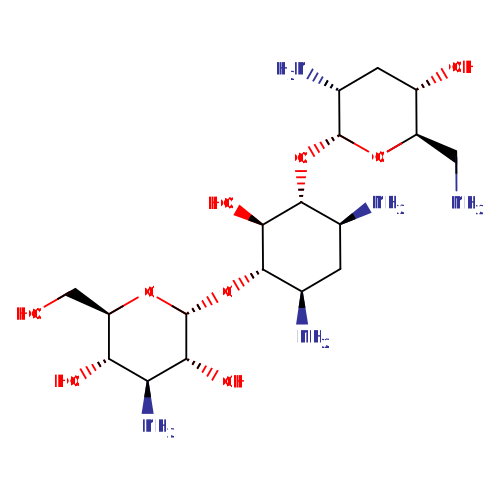
Structure for Tobramycin (DB00684)
- Weight
- Average: 467.5145
Monoisotopic: 467.259127807 - Chemical Formula
- C18H37N5O9
- Synonyms
- 3'-Deoxykanamycin B
- Nebramycin 6
- O-3-Amino-3-deoxy-alpha-D-glucopyranosyl-(1-4)-O-(2,6-diamino-2,3,6-trideoxy-alpha-D-ribohexopyranosyl-(1-4))-2-deoxy-D-streptamine
- Tobramicina
- Tobramycin
- Tobramycine
- Tobramycinum
- External IDs
- 47663
- Lilly 47663
- SPRC-AB01

Pharmacology
- Indication
Inhaled tobramycin is indicated for the management of cystic fibrosis patients with Pseudomonas aeruginosa, but is not recommended in patients under six years of age, those with forced expiratory volume in 1 second (FEV1) <25 or >80% predicted, or in those with Burkholderia cepacia.13,18
Tobramycin applied topically to the eyes is indicated for the treatment of external eye (and adjoining structure) infections by susceptible bacteria.14
Tobramycin injection is indicated in adult and pediatric patients for the treatment of serious bacterial infections, including septicemia (caused by P. aeruginosa, Escherichia coli, and Klebsiella spp.), lower respiratory tract infections (caused by P. aeruginosa, Klebsiella spp., Enterobacter spp., Serratia spp., E. coli, and Staphylococcus aureus, both penicillinase and non-penicillinase-producing strains), serious central-nervous-system infections (meningitis, caused by susceptible organisms), intra-abdominal infections including peritonitis (caused by E. coli, Klebsiella spp., and Enterobacter spp.), skin, bone, and skin structure infections (caused by P. aeruginosa, Proteus spp., E. coli, Klebsiella spp., Enterobacter spp., Serratia spp. and S. aureus), and complicated and recurrent urinary tract infections (caused by P. aeruginosa, Proteus spp., E. coli, Klebsiella spp., Enterobacter spp., Serratia spp., S. aureus, Providencia spp., and Citrobacter spp.).15 Aminoglycosides, including tobramycin, should generally not be used in uncomplicated urinary tract infections or staphylococcal infections unless less toxic antibiotics cannot be used and the bacteria in question are known to be sensitive to aminoglycosides.15,17
As with all antibiotics, tobramycin use should be limited to cases where bacterial infections are known or strongly suspected to be caused by sensitive organisms, and the possible emergence of resistance should be monitored closely.13,14,15
 Reduce drug development failure ratesBuild, train, & validate machine-learning modelswith evidence-based and structured datasets.Build, train, & validate predictive machine-learning models with structured datasets.
- Associated Conditions
Indication Type Indication Combined Product Details Approval Level Age Group Patient Characteristics Dose Form Treatment of Bacterial meningitis •••••••••••• ••••••••• Treatment of Bone infection •••••••••••• ••••••••• Management of Cystic fibrosis, pseudomonas aeruginosa infection •••••••••••• •••••• •••••••• •••• ••••••••• •••••• Management of Cystic fibrosis, pseudomonas aeruginosa infection •••••••••••• •••••• •••••••• •••• ••••••••• •••••• Management of Cystic fibrosis, pseudomonas aeruginosa infection •••••••••••• •••••• •••••••• •••• ••••••••• •••••• - Contraindications & Blackbox Warnings
 Prevent Adverse Drug Events TodayTap into our Clinical API for life-saving information on contraindications & blackbox warnings, population restrictions, harmful risks, & more.Avoid life-threatening adverse drug events with our Clinical API
- Pharmacodynamics
Tobramycin is an aminoglycoside antibiotic derived from the actinomycete Streptomyces tenebrarius.15 It has a broad spectrum of activity against Gram-negative bacteria, including Enterobacteriaceae, Escherichia coli, Klebsiella pneumoniae, Morganella morganii, Moraxella lacunata, Proteus spp., Haemophilus spp., Acinetobacter spp., Neisseria spp., and, importantly, Pseudomonas aeruginosa. Aminoglycosides also generally retain activity against the biothreat agents Yersinia pestis and Francisella tularensis. In addition, aminoglycosides are active against some Gram-positive bacteria such as Staphylococcus spp., including methicillin-resistant (MRSA) and vancomycin-resistant strains, Streptococcus spp., and Mycobacterium spp.1,14
Like other aminoglycosides, tobramycin is taken up and retained by proximal tubule and cochlear cells in the kidney and ear, respectively, and hence carries a risk of nephrotoxicity and ototoxicity.1,15 There is also a risk of neuromuscular block, which may be more pronounced in patients with preexisting neuromuscular disorders such as myasthenia gravis or Parkinson's disease.1,13,15 Aminoglycosides can cross the placenta, resulting in total, irreversible, bilateral congenital deafness in babies born to mothers who were administered an aminoglycoside during pregnancy.13,15 Due to the low systemic absorption of inhaled and topical tobramycin formulations, these effects are more pronounced with injected tobramycin than with other formulations.13,14,15 However, all formulations carry a risk of hypersensitivity reactions, including potentially fatal cutaneous reactions such as Stevens-Johnson syndrome and toxic epidermal necrolysis.13,14,15
- Mechanism of action
Tobramycin is a 4,6-disubstituted 2-deoxystreptamine (DOS) ring-containing aminoglycoside antibiotic with activity against various Gram-negative and some Gram-positive bacteria.13,14,15 The mechanism of action of tobramycin has not been unambiguously elucidated, and some insights into its mechanism rely on results using similar aminoglycosides. In general, like other aminoglycosides, tobramycin is bactericidal and exhibits both immediate and delayed killing, which are attributed to different mechanisms, as outlined below.1,2
Aminoglycosides are polycationic at physiological pH, such that they readily bind to bacterial membranes ("ionic binding"); this includes binding to lipopolysaccharide and phospholipids within the outer membrane of Gram-negative bacteria and to teichoic acid and phospholipids within the cell membrane of Gram-positive bacteria. This binding displaces divalent cations and increases membrane permeability, which allows aminoglycoside entry.1,3,4,5 Additional aminoglycoside entry ("energy-dependent phase I") into the cytoplasm requires the proton-motive force, allowing access of the aminoglycoside to its primary intracellular target of the bacterial 30S ribosome.1,5 Mistranslated proteins produced as a result of aminoglycoside binding to the ribosome (see below) integrate into and disrupt the cell membrane, which allows more of the aminoglycoside into the cell ("energy-dependent phase II").1,5,6 Hence, tobramycin and other aminoglycosides have both immediate bactericidal effects through membrane disruption and delayed bactericidal effects through impaired protein synthesis; observed experimental data and mathematical modelling support this two-mechanism model.1,2
Inhibition of protein synthesis was the first recognized effect of aminoglycoside antibiotics. Structural and cell biological studies suggest that aminoglycosides bind to the 16S rRNA in helix 44 (h44), near the A site of the 30S ribosomal subunit, altering interactions between h44 and h45. This binding also displaces two important residues, A1492 and A1493, from h44, mimicking normal conformational changes that occur with successful codon-anticodon pairing in the A site.7,8 Overall, aminoglycoside binding has several negative effects, including inhibiting translation initiation and elongation and ribosome recycling.1,9,10 Recent evidence suggests that the latter effect is due to a cryptic second binding site situated in h69 of the 23S rRNA of the 50S ribosomal subunit.8,10 Also, by stabilizing a conformation that mimics correct codon-anticodon pairing, aminoglycosides promote error-prone translation;11 mistranslated proteins can incorporate into the cell membrane, inducing the damage discussed above.1,6
Although direct mutation of the 16S rRNA is a rare resistance mechanism, due to the gene being present in numerous copies, posttranscriptional 16S rRNA modification by 16S rRNA methyltransferases (16S-RMTases) at the N7 position of G1405 or the N1 position of A1408 are common resistance mechanisms in aminoglycoside-resistant bacteria.1,12 These mutants also further support the proposed mechanism of action of aminoglycosides. Direct modification of the aminoglycoside itself through acetylation, adenylation, and phosphorylation by aminoglycoside-modifying enzymes (AMEs) are also commonly encountered resistance mutations.1,12 Finally, due to the requirement for active transport of aminoglycosides across bacterial membranes, they are not active against obligately anaerobic bacteria.1
Target Actions Organism A16S ribosomal RNA inhibitorEnteric bacteria and other eubacteria A23S ribosomal RNA inhibitorEnteric bacteria and other eubacteria ABacterial outer membrane incorporation into and destabilizationBacteria ACytoplasmic membrane incorporation into and destabilizationBacteria - Absorption
Tobramycin administered by inhalation in cystic fibrosis patients showed greater variability in sputum as compared to serum. After a single 112 mg dose, the serum Cmax was 1.02 ± 0.53 μg/mL, which was reached in one hour (Tmax), while the sputum Cmax was 1048 ± 1080 μg/g. Comparatively, for a 300 mg dose, the serum Cmax was 1.04 ± 0.58 μg/mL, which was also reached within one hour, while the sputum Cmax was 737 ± 1028 μg/g. The systemic exposure (AUC0-12) was also similar between the two doses, at 4.6 ± 2.0 μg∙h/mL for the 112 mg dose and 4.8 ± 2.5 μg∙h/mL for the 300 mg dose. When tobramycin was administered over a four-week cycle at 112 mg twice daily, the Cmax measured one hour after dosing ranged from 1.48 ± 0.69 μg/mL to 1.99 ± 0.59 μg/mL.13
- Volume of distribution
Inhalation tobramycin had an apparent volume of distribution in the central compartment of 85.1 L for a typical cystic fibrosis patient.13
- Protein binding
Tobramycin binding to serum proteins is negligible.13
- Metabolism
Tobramycin is not appreciably metabolized.13
- Route of elimination
Tobramycin is primarily excreted unchanged in the urine.13
- Half-life
Tobramycin has an apparent serum terminal half-life of ~3 hours following a single 112 mg inhaled dose in cystic fibrosis patients.13
- Clearance
Inhaled tobramycin has an apparent serum clearance of 14.5 L/h in cystic fibrosis patients aged 6-58 years.13
- Adverse Effects
 Improve decision support & research outcomesWith structured adverse effects data, including: blackbox warnings, adverse reactions, warning & precautions, & incidence rates. View sample adverse effects data in our new Data Library!Improve decision support & research outcomes with our structured adverse effects data.
- Toxicity
Toxicity information regarding tobramycin is not readily available. Patients experiencing an overdose are at an increased risk of severe adverse effects such as nephrotoxicity, ototoxicity, neuromuscular blockade, and respiratory failure/paralysis. Symptomatic and supportive measures are recommended; hemodialysis may help clear excess tobramycin. Accidental ingestion of tobramycin is unlikely to result in an overdose, as aminoglycosides are poorly absorbed in the gastrointestinal tract.13,15
Poor gastrointestinal absorption is reflected in animal studies. When administered by the intraperitoneal or subcutaneous route, the LD50 for mice and rats ranges from 367-1030 mg/kg while the oral LD50 values are more than 7500 mg/kg.16
- Pathways
Pathway Category Tobramycin Action Pathway Drug action - Pharmacogenomic Effects/ADRs
- Not Available
Interactions
- Drug Interactions
- This information should not be interpreted without the help of a healthcare provider. If you believe you are experiencing an interaction, contact a healthcare provider immediately. The absence of an interaction does not necessarily mean no interactions exist.
Drug Interaction Integrate drug-drug
interactions in your softwareAbacavir Abacavir may decrease the excretion rate of Tobramycin which could result in a higher serum level. Aceclofenac Aceclofenac may decrease the excretion rate of Tobramycin which could result in a higher serum level. Acemetacin Acemetacin may decrease the excretion rate of Tobramycin which could result in a higher serum level. Acenocoumarol The risk or severity of bleeding can be increased when Tobramycin is combined with Acenocoumarol. Acetaminophen Acetaminophen may decrease the excretion rate of Tobramycin which could result in a higher serum level. - Food Interactions
- No interactions found.
Products
 Drug product information from 10+ global regionsOur datasets provide approved product information including:dosage, form, labeller, route of administration, and marketing period.Access drug product information from over 10 global regions.
- Product Ingredients
Ingredient UNII CAS InChI Key Tobramycin hydrochloride 01IX3OU168 95188-93-5 CVDADWBWFLWJNQ-TWDWGCDDSA-N Tobramycin sulfate HJT0RXD7JK 49842-07-1 ZEUUPKVZFKBXPW-TWDWGCDDSA-N - International/Other Brands
- Aktob (Akorn) / Alveoterol (Tetrafarm) / Amgy (Kobec) / Bactob (Solitaire) / Belbarmicina (Quimica Luar) / Bideon Biotic (Fecofar) / Bioptic (Bausch & Lomb) / Bramitob (Torrex) / Gernebcin (Infectopharm) / Nebcin (Lilly) / Obracin (EuroCept) / Tobracin (Opso Saline) / Tobramaxin (Alcon)
- Brand Name Prescription Products
Name Dosage Strength Route Labeller Marketing Start Marketing End Region Image Bethkis Solution 300 mg/4mL Respiratory (inhalation) Chiesi USA, Inc. 2013-04-15 Not applicable US 
Kitabis Pak Solution 300 mg/5mL Respiratory (inhalation) Catalent Pharma Solutions,Llc 2015-02-19 2018-03-22 US Kitabis Pak Solution 300 mg/5mL Respiratory (inhalation) Pari Respiratory Equipment, Inc. 2015-02-19 Not applicable US Nebcin Inj 1.2gm/30ml Liquid 1.2 g / vial Intramuscular; Intravenous Eli Lilly & Co. Ltd. 1986-12-31 2003-05-12 Canada 
Nebcin Inj 10mg/ml Liquid 10 mg / mL Intramuscular; Intravenous Eli Lilly & Co. Ltd. 1975-12-31 2003-05-12 Canada - Generic Prescription Products
Name Dosage Strength Route Labeller Marketing Start Marketing End Region Image Aj-tobramycin Liquid 40 mg / mL Intramuscular; Intravenous Agila Jamp Canada Inc Not applicable Not applicable Canada Apo-tobramycin Solution 0.3 % Ophthalmic Apotex Corporation 2002-09-18 Not applicable Canada Jamp-tobramycin Solution 40 mg / mL Intramuscular; Intravenous Jamp Pharma Corporation 2014-03-11 2022-11-15 Canada PMS-tobramycin 0.3% Ophthalmic Solution Liquid 3 mg / mL Ophthalmic Pharmascience Inc 1999-02-18 2017-09-30 Canada Sandoz Tobramycin Solution 0.3 % Ophthalmic Sandoz Canada Incorporated 2000-08-21 Not applicable Canada - Over the Counter Products
Name Dosage Strength Route Labeller Marketing Start Marketing End Region Image DW TOBRAMYCIN OPHTHALMIC SOLUTION Liquid 3 mg/1ml Ophthalmic บริษัท ฐิติรัตน์สานนท์ จำกัด 2006-06-06 Not applicable Thailand 
TOBREX Solution / drops 3 mg/1ml Ophthalmic บริษัท โนวาร์ตีส (ประเทศไทย) จำกัด 2017-09-12 Not applicable Thailand - Mixture Products
Name Ingredients Dosage Route Labeller Marketing Start Marketing End Region Image COLDETOM Tobramycin (0.3 %) + Dexamethasone (0.1 %) Solution / drops Auricular (otic) Scharper S.P.A. 2014-10-06 Not applicable Italy 
COLDETOM Tobramycin (0.3 %) + Dexamethasone (0.1 %) Solution / drops Auricular (otic) Scharper S.P.A. 2014-10-06 Not applicable Italy COMBİDEX %0.3 + %0.1 GÖZ DAMLASI, ÇÖZELTİ, 5 ML Tobramycin (0.3 %) + Dexamethasone (0.1 %) Solution / drops Ophthalmic BİLİM İLAÇ SAN. VE TİC. A.Ş. 2018-11-06 Not applicable Turkey 
COMBIDEX OFTALMIK SÜSPANSIYON, 5 ML Tobramycin (3 mg/ml) + Dexamethasone (1 mg/ml) Suspension Ophthalmic BİLİM İLAÇ SAN. VE TİC. A.Ş. 2020-08-14 2018-08-16 Turkey COMBITIMOR Tobramycin (0.3 %) + Dexamethasone (0.1 %) Solution / drops Auricular (otic) Fidia Farmaceutici S.P.A. 2014-07-08 Not applicable Italy
Categories
- ATC Codes
- S01AA12 — TobramycinJ01GB01 — Tobramycin
- Drug Categories
- Agents that produce neuromuscular block (indirect)
- Aminoglycoside Antibacterials
- Anti-Bacterial Agents
- Anti-Infective Agents
- Antibacterials for Systemic Use
- Antiinfectives for Systemic Use
- Carbohydrates
- Drugs that are Mainly Renally Excreted
- Drugs that are Mainly Renally Excreted with a Narrow Therapeutic Index
- Glycosides
- Narrow Therapeutic Index Drugs
- Nebramycin
- Nephrotoxic agents
- Ophthalmologicals
- Ototoxic agents
- Sensory Organs
- Chemical TaxonomyProvided by Classyfire
- Description
- This compound belongs to the class of organic compounds known as 4,6-disubstituted 2-deoxystreptamines. These are 2-deoxystreptamine aminoglycosides that a glycosidically linked to a pyranose of furanose unit at the C4- and C6-positions.
- Kingdom
- Organic compounds
- Super Class
- Organic oxygen compounds
- Class
- Organooxygen compounds
- Sub Class
- Carbohydrates and carbohydrate conjugates
- Direct Parent
- 4,6-disubstituted 2-deoxystreptamines
- Alternative Parents
- O-glycosyl compounds / Aminocyclitols and derivatives / Cyclohexylamines / Cyclohexanols / Oxanes / Monosaccharides / 1,2-aminoalcohols / Oxacyclic compounds / Acetals / Primary alcohols show 3 more
- Substituents
- 1,2-aminoalcohol / 4,6-disubstituted 2-deoxystreptamine / Acetal / Alcohol / Aliphatic heteromonocyclic compound / Amine / Aminocyclitol or derivatives / Cyclic alcohol / Cyclitol or derivatives / Cyclohexanol show 15 more
- Molecular Framework
- Aliphatic heteromonocyclic compounds
- External Descriptors
- amino cyclitol glycoside (CHEBI:28864)
- Affected organisms
- Enteric bacteria and other eubacteria
Chemical Identifiers
- UNII
- VZ8RRZ51VK
- CAS number
- 32986-56-4
- InChI Key
- NLVFBUXFDBBNBW-PBSUHMDJSA-N
- InChI
- InChI=1S/C18H37N5O9/c19-3-9-8(25)2-7(22)17(29-9)31-15-5(20)1-6(21)16(14(15)28)32-18-13(27)11(23)12(26)10(4-24)30-18/h5-18,24-28H,1-4,19-23H2/t5-,6+,7+,8-,9+,10+,11-,12+,13+,14-,15+,16-,17+,18+/m0/s1
- IUPAC Name
- (2S,3R,4S,5S,6R)-4-amino-2-{[(1S,2S,3R,4S,6R)-4,6-diamino-3-{[(2R,3R,5S,6R)-3-amino-6-(aminomethyl)-5-hydroxyoxan-2-yl]oxy}-2-hydroxycyclohexyl]oxy}-6-(hydroxymethyl)oxane-3,5-diol
- SMILES
- NC[C@H]1O[C@H](O[C@@H]2[C@@H](N)C[C@@H](N)[C@H](O[C@H]3O[C@H](CO)[C@@H](O)[C@H](N)[C@H]3O)[C@H]2O)[C@H](N)C[C@@H]1O
References
- Synthesis Reference
Istvan Bakondi-Kovacs, "Metabolic controlled fermentation process for carbamoyl tobramycin production." U.S. Patent US20020197683, issued December 26, 2002.
US20020197683- General References
- Serio AW, Keepers T, Andrews L, Krause KM: Aminoglycoside Revival: Review of a Historically Important Class of Antimicrobials Undergoing Rejuvenation. EcoSal Plus. 2018 Nov;8(1). doi: 10.1128/ecosalplus.ESP-0002-2018. [Article]
- Bulitta JB, Ly NS, Landersdorfer CB, Wanigaratne NA, Velkov T, Yadav R, Oliver A, Martin L, Shin BS, Forrest A, Tsuji BT: Two mechanisms of killing of Pseudomonas aeruginosa by tobramycin assessed at multiple inocula via mechanism-based modeling. Antimicrob Agents Chemother. 2015 Apr;59(4):2315-27. doi: 10.1128/AAC.04099-14. Epub 2015 Feb 2. [Article]
- Moore RA, Bates NC, Hancock RE: Interaction of polycationic antibiotics with Pseudomonas aeruginosa lipopolysaccharide and lipid A studied by using dansyl-polymyxin. Antimicrob Agents Chemother. 1986 Mar;29(3):496-500. doi: 10.1128/aac.29.3.496. [Article]
- Hancock RE, Raffle VJ, Nicas TI: Involvement of the outer membrane in gentamicin and streptomycin uptake and killing in Pseudomonas aeruginosa. Antimicrob Agents Chemother. 1981 May;19(5):777-85. doi: 10.1128/aac.19.5.777. [Article]
- Taber HW, Mueller JP, Miller PF, Arrow AS: Bacterial uptake of aminoglycoside antibiotics. Microbiol Rev. 1987 Dec;51(4):439-57. [Article]
- Davis BD, Chen LL, Tai PC: Misread protein creates membrane channels: an essential step in the bactericidal action of aminoglycosides. Proc Natl Acad Sci U S A. 1986 Aug;83(16):6164-8. doi: 10.1073/pnas.83.16.6164. [Article]
- O'Sullivan ME, Poitevin F, Sierra RG, Gati C, Dao EH, Rao Y, Aksit F, Ciftci H, Corsepius N, Greenhouse R, Hayes B, Hunter MS, Liang M, McGurk A, Mbgam P, Obrinsky T, Pardo-Avila F, Seaberg MH, Cheng AG, Ricci AJ, DeMirci H: Aminoglycoside ribosome interactions reveal novel conformational states at ambient temperature. Nucleic Acids Res. 2018 Oct 12;46(18):9793-9804. doi: 10.1093/nar/gky693. [Article]
- Ying L, Zhu H, Shoji S, Fredrick K: Roles of specific aminoglycoside-ribosome interactions in the inhibition of translation. RNA. 2019 Feb;25(2):247-254. doi: 10.1261/rna.068460.118. Epub 2018 Nov 9. [Article]
- Wallace BJ, Tai PC, Herzog EL, Davis BD: Partial inhibition of polysomal ribosomes of Escherichia coli by streptomycin. Proc Natl Acad Sci U S A. 1973 Apr;70(4):1234-7. doi: 10.1073/pnas.70.4.1234. [Article]
- Borovinskaya MA, Pai RD, Zhang W, Schuwirth BS, Holton JM, Hirokawa G, Kaji H, Kaji A, Cate JH: Structural basis for aminoglycoside inhibition of bacterial ribosome recycling. Nat Struct Mol Biol. 2007 Aug;14(8):727-32. doi: 10.1038/nsmb1271. Epub 2007 Jul 29. [Article]
- Tai PC, Wallace BJ, Davis BD: Streptomycin causes misreading of natural messenger by interacting with ribosomes after initiation. Proc Natl Acad Sci U S A. 1978 Jan;75(1):275-9. doi: 10.1073/pnas.75.1.275. [Article]
- Doi Y, Wachino JI, Arakawa Y: Aminoglycoside Resistance: The Emergence of Acquired 16S Ribosomal RNA Methyltransferases. Infect Dis Clin North Am. 2016 Jun;30(2):523-537. doi: 10.1016/j.idc.2016.02.011. [Article]
- FDA Approved Drug Products: TOBI PODHALER (tobramycin) inhalation [Link]
- FDA Approved Drug Products: TOBREX (tobramycin) ophthalmic [Link]
- FDA Approved Drug Products: tobramycin for injection [Link]
- Cayman Chemical: tobramycin MSDS [Link]
- FDA Approved Drug Products: Tobramycin for injection for intravenous use (February 2023) [Link]
- FDA Approved Drug Products: TOBI (tobramycin) inhalation solution for oral inhalation use (February 2023) [Link]
- FDA Approved Drug Products: TOBI (tobramycin) inhalation solution for oral inhalation use (April 2023) [Link]
- External Links
- Human Metabolome Database
- HMDB0014822
- KEGG Drug
- D00063
- KEGG Compound
- C00397
- PubChem Compound
- 36294
- PubChem Substance
- 46507662
- ChemSpider
- 33377
- BindingDB
- 50366778
- 10627
- ChEBI
- 28864
- ChEMBL
- CHEMBL1747
- ZINC
- ZINC000008214692
- Therapeutic Targets Database
- DAP000110
- PharmGKB
- PA451704
- PDBe Ligand
- TOY
- RxList
- RxList Drug Page
- Drugs.com
- Drugs.com Drug Page
- Wikipedia
- Tobramycin
- PDB Entries
- 1lc4 / 1m4d / 3sg8 / 3vet / 4ebk / 4evy / 4jd6 / 4lfc / 4xje / 5cfs … show 3 more
- FDA label
- Download (414 KB)
- MSDS
- Download (73.3 KB)
Clinical Trials
- Clinical Trials
Phase Status Purpose Conditions Count 4 Completed Prevention Antibacterial therapy / Bone Fractures / Fractures, Open / Lower Extremity Fractures / Upper Extremity Fractures / Wounds and Injuries--Infections 1 4 Completed Treatment Antibotics in Cementless Knees 1 4 Completed Treatment Blepharokeratoconjunctivitis 1 4 Completed Treatment Cancer / Fever / Neutropenia 1 4 Completed Treatment Cataracts / Pseudo Exfoliation Syndrome 1
Pharmacoeconomics
- Manufacturers
- Alcon laboratories inc
- Akorn inc
- Alcon universal ltd
- Altana inc
- Bausch and lomb pharmaceuticals inc
- Novex pharma
- Falcon pharmaceuticals ltd
- Novartis pharmaceuticals corp
- Eli lilly and co
- Akorn strides llc
- Apothecon inc div bristol myers squibb
- App pharmaceuticals llc
- Astrazeneca lp
- Baxter healthcare corp anesthesia and critical care
- Hospira inc
- Marsam pharmaceuticals llc
- Teva parenteral medicines inc
- X gen pharmaceuticals inc
- Packagers
- Advanced Pharmaceutical Services Inc.
- Akorn Inc.
- Alcon Laboratories
- Apotex Inc.
- APP Pharmaceuticals
- A-S Medication Solutions LLC
- Bausch & Lomb Inc.
- Bristol-Myers Squibb Co.
- Cardinal Health
- Clipper Distributing Co. LLC
- Darby Dental Supply Co. Inc.
- Dispensing Solutions
- Diversified Healthcare Services Inc.
- E.R. Squibb and Sons LLC
- Eye Care and Cure Corp.
- Falcon Pharmaceuticals Ltd.
- H.J. Harkins Co. Inc.
- Hospira Inc.
- Innoviant Pharmacy Inc.
- Keltman Pharmaceuticals Inc.
- Lake Erie Medical and Surgical Supply
- Major Pharmaceuticals
- Medical Ophthalmics
- Medisca Inc.
- MWI Veterinary Supply Co.
- Novartis AG
- Novex Pharma
- Nucare Pharmaceuticals Inc.
- Ocusoft
- Palmetto Pharmaceuticals Inc.
- PD-Rx Pharmaceuticals Inc.
- Pharmedix
- Physicians Total Care Inc.
- Preferred Pharmaceuticals Inc.
- Rebel Distributors Corp.
- Redpharm Drug
- Rx Veterinary Products
- Stat Rx Usa
- Strides Arcolab Limited
- Taylor Pharmaceuticals
- Teva Pharmaceutical Industries Ltd.
- Vedco Inc.
- Wilson Ophthalmic Corp.
- X-Gen Pharmaceuticals
- Dosage Forms
Form Route Strength Spray Respiratory (inhalation) Liquid Intramuscular; Intravenous 40 mg / mL Powder Respiratory (inhalation) 300 mg Solution Respiratory (inhalation) 300 mg/4mL Solution Solution Respiratory (inhalation) 300 mg Solution Respiratory (inhalation) Solution Ophthalmic Solution / drops Intraocular Solution / drops Auricular (otic) Solution Conjunctival; Ophthalmic Solution Nasal 75.0 mg Ointment Conjunctival; Ophthalmic; Topical 0.3 g Solution Ophthalmic 3.000 mg Solution Respiratory (inhalation) 300 mg/5mL Solution / drops Conjunctival 0.3 % Solution / drops Ophthalmic 3 MG/ML Liquid Intramuscular; Intravenous 1.2 g / vial Liquid Intramuscular; Intravenous 10 mg / mL Liquid Intravenous 10 mg / mL Liquid Intramuscular; Intravenous 60 mg / syr Liquid Intramuscular; Intravenous 80 mg / syr Injection, solution Intramuscular; Intravenous 100 MG/2ML Injection, solution Intramuscular; Intravenous 150 MG/2ML Injection, solution Intramuscular; Intravenous 300 mg/4ml Injection, solution Intramuscular; Intravenous 80 MG Injection, solution Parenteral 20 MG/2ML Injection, solution Parenteral 40 MG/ML Solution Conjunctival; Ophthalmic 0.3 g Ointment 3.000 mg Ointment Conjunctival; Ophthalmic 0.3 g Liquid Ophthalmic Solution Ophthalmic 4.4 mg Solution Ophthalmic 440000 mg Suspension Auricular (otic) Suspension / drops Auricular (otic) Solution / drops Ophthalmic 5 ml Solution Ophthalmic 0.3 % Solution Respiratory (inhalation) 60 mg / mL Injection Intramuscular; Intravenous Injection Intramuscular; Intravenous 80 mg/2mL Solution Buccal 300.000 mg Solution Oral 300 mg/5mL Solution Oral; Respiratory (inhalation) 300 mg/5mL Solution Respiratory (inhalation) 300 mg / 5 mL Capsule Oral; Respiratory (inhalation) 28 mg/1 Capsule Respiratory (inhalation) 28 mg Powder, metered Respiratory (inhalation) 28 MG Capsule, coated Oral 28 mg Solution Respiratory (inhalation) 30000000 mg Solution Ophthalmic 300 mg Suspension Conjunctival; Ophthalmic Ointment Ophthalmic Ointment Ophthalmic 0.1 % Suspension Ophthalmic Suspension / drops Ophthalmic 0.1 % Ointment Conjunctival; Ophthalmic Ointment Conjunctival; Ophthalmic 0.1 g Solution Ophthalmic Ointment Ophthalmic 0.3 % Solution / drops Solution / drops Ophthalmic 0.3 % Solution 300 MG/5ML Suspension / drops Intraocular Injection, solution Parenteral 100 MG/2ML Injection, solution Parenteral 150 MG/2ML Solution Respiratory (inhalation) 60 mg Ointment Ophthalmic; Topical 0.3 g Solution Conjunctival; Ophthalmic 3 mg Solution Ophthalmic 3 mg Injection, solution Injection Intramuscular; Intravenous 10 mg/1mL Injection Intramuscular; Intravenous 40 mg/1mL Injection Intravenous 1200 mg/30mL Injection Intravenous 40 mg/1mL Injection, powder, for solution Intravenous 1200 mg/30mL Injection, powder, lyophilized, for solution Intravenous 1.2 g/30mL Injection, solution Intramuscular; Intravenous 10 mg/1mL Injection, solution Intramuscular; Intravenous 40 mg/1mL Injection, solution Intravenous 40 mg/1mL Injection, solution, concentrate Intravenous 10 mg/1mL Solution Ophthalmic 3 mg/1mL Solution Ophthalmic 3.0 mg/1mL Solution Oral 3 mg/1mL Solution Respiratory (inhalation) 60 mg/1mL Solution / drops Ophthalmic 3 mg/1mL Solution / drops Ophthalmic 3.0 mg/1mL Suspension / drops Ophthalmic Solution Parenteral Powder, for solution Intravenous 1.2 g / vial Injection, solution Intravenous 0.8 mg/1mL Injection, solution Intravenous 1.2 mg/1mL Inhalant Respiratory (inhalation) 300 mg/5mL Solution Intramuscular; Intravenous 10 mg / mL Solution Intramuscular; Intravenous 40 mg / mL Liquid Ophthalmic 3 mg / mL Solution Ophthalmic; Topical 3 mg Injection, solution, concentrate Intravenous Ointment Ophthalmic 0.3 % w/w Ointment Ophthalmic 3 mg/1g Ointment Ophthalmic 3.00 mg Solution Ophthalmic 0.3 % w/v Ointment Ophthalmic Solution / drops Ophthalmic Ointment Ophthalmic 3 mg/g Solution Ophthalmic 3 mg/ml Solution Conjunctival; Ophthalmic 300000 mg Solution Conjunctival; Rectal 3 mg Solution Respiratory (inhalation) 300.000 mg Solution Buccal 300.00 mg Ointment Ophthalmic 3.000 mg Solution Respiratory (inhalation) 170 MG Solution / drops Ophthalmic Liquid Ophthalmic 3 mg/1ml - Prices
Unit description Cost Unit Tobi (1 Box = 56, 5ml Ampules = 280ml Total) 280ml Plastic Container 4461.42USD plastic Tobramycin 1.2 gm vial 338.25USD vial TobraDex 0.3-0.1% Suspension 10ml Bottle 200.43USD bottle TobraDex 0.3-0.1% Ointment 3.5 gm Tube 126.67USD tube TobraDex 0.3-0.1% Suspension 5ml Bottle 98.11USD bottle Tobrex 0.3% Ointment 3.5 gm Tube 80.02USD tube Tobrex 0.3% Solution 5ml Bottle 67.58USD bottle TobraDex 0.3-0.1% Suspension 2.5ml Bottle 54.99USD bottle Tobramycin sulfate powder 53.55USD g Tobradex eye drops 19.27USD ml Tobi 300 mg/5 ml solution 17.58USD ml Tobramycin Sulfate 0.3% Solution 5ml Bottle 15.99USD bottle Tobrex 0.3% eye drops 13.0USD ml Tobi 60 mg/ml Solution 11.4USD ml Tobramycin Sulfate 40 mg/ml Solution 3.6USD ml Tobramycin 40 mg/ml 3.14USD ml Tobramycin 0.3% eye drops 2.99USD ml Aktob 0.3% eye drops 2.85USD ml Tobrex 0.3 % Ointment 2.66USD g Tobramycin 10 mg/ml 2.26USD ml Tobrex 0.3 % Solution 1.88USD ml Pms-Tobramycin 0.3 % Solution 1.05USD ml Sandoz Tobramycin 0.3 % Solution 1.05USD ml Tobramycin 60 mg/50 ml ns 0.19USD ml DrugBank does not sell nor buy drugs. Pricing information is supplied for informational purposes only.- Patents
Patent Number Pediatric Extension Approved Expires (estimated) Region US5508269 No 1996-04-16 2014-10-19 US US5149694 No 1992-09-22 2009-09-22 US CA2414737 No 2009-01-06 2021-06-26 Canada US7795316 No 2010-09-14 2028-08-03 US US8101582 No 2012-01-24 2027-12-19 US US8450287 No 2013-05-28 2027-12-19 US US7368102 No 2008-05-06 2022-12-19 US US8715623 No 2014-05-06 2022-12-19 US US7559325 No 2009-07-14 2025-10-27 US US7442388 No 2008-10-28 2020-05-10 US US7097827 No 2006-08-29 2016-04-16 US US8349294 No 2013-01-08 2020-05-10 US US8069851 No 2011-12-06 2024-09-24 US US7516741 No 2009-04-14 2024-01-11 US US7939502 No 2011-05-10 2022-06-14 US US6987094 No 2006-01-17 2022-09-22 US US7696178 No 2010-04-13 2023-03-17 US US10207066 No 2019-02-19 2030-11-04 US US8664187 No 2014-03-04 2025-06-20 US US8869794 No 2014-10-28 2028-09-12 US US9421166 No 2016-08-23 2022-12-19 US USRE47526 No 2019-07-23 2024-04-09 US US11484671 No 2004-11-07 2024-11-07 US
Properties
- State
- Solid
- Experimental Properties
Property Value Source water solubility freely soluble FDA Label logP -5.8 https://www.fishersci.com/store/msds?partNumber=AC455430010&productDescription=TOBRAMYCIN%2C+97%25+1GR&vendorId=VN00032119&countryCode=US&language=en - Predicted Properties
Property Value Source Water Solubility 53.7 mg/mL ALOGPS logP -3 ALOGPS logP -6.5 Chemaxon logS -0.94 ALOGPS pKa (Strongest Acidic) 12.54 Chemaxon pKa (Strongest Basic) 9.66 Chemaxon Physiological Charge 5 Chemaxon Hydrogen Acceptor Count 14 Chemaxon Hydrogen Donor Count 10 Chemaxon Polar Surface Area 268.17 Å2 Chemaxon Rotatable Bond Count 6 Chemaxon Refractivity 106.69 m3·mol-1 Chemaxon Polarizability 47.17 Å3 Chemaxon Number of Rings 3 Chemaxon Bioavailability 0 Chemaxon Rule of Five No Chemaxon Ghose Filter No Chemaxon Veber's Rule No Chemaxon MDDR-like Rule Yes Chemaxon - Predicted ADMET Features
Property Value Probability Human Intestinal Absorption - 0.9313 Blood Brain Barrier - 0.9794 Caco-2 permeable - 0.759 P-glycoprotein substrate Substrate 0.5933 P-glycoprotein inhibitor I Non-inhibitor 0.7579 P-glycoprotein inhibitor II Non-inhibitor 0.9086 Renal organic cation transporter Non-inhibitor 0.8412 CYP450 2C9 substrate Non-substrate 0.8361 CYP450 2D6 substrate Non-substrate 0.8333 CYP450 3A4 substrate Non-substrate 0.6662 CYP450 1A2 substrate Non-inhibitor 0.9052 CYP450 2C9 inhibitor Non-inhibitor 0.9359 CYP450 2D6 inhibitor Non-inhibitor 0.923 CYP450 2C19 inhibitor Non-inhibitor 0.9117 CYP450 3A4 inhibitor Non-inhibitor 0.9728 CYP450 inhibitory promiscuity Low CYP Inhibitory Promiscuity 0.9398 Ames test Non AMES toxic 0.7537 Carcinogenicity Non-carcinogens 0.9469 Biodegradation Not ready biodegradable 0.9052 Rat acute toxicity 1.7638 LD50, mol/kg Not applicable hERG inhibition (predictor I) Weak inhibitor 0.9695 hERG inhibition (predictor II) Non-inhibitor 0.7522
Spectra
- Mass Spec (NIST)
- Not Available
- Spectra
Spectrum Spectrum Type Splash Key Predicted GC-MS Spectrum - GC-MS Predicted GC-MS splash10-000t-9331300000-a064abea38315acb9ea8 Predicted MS/MS Spectrum - 10V, Positive (Annotated) Predicted LC-MS/MS splash10-0v01-0600900000-17b55e2e091e6f717cbc Predicted MS/MS Spectrum - 10V, Negative (Annotated) Predicted LC-MS/MS splash10-02t9-0702900000-46585948403c4de4a697 Predicted MS/MS Spectrum - 20V, Positive (Annotated) Predicted LC-MS/MS splash10-0kvo-0763900000-a1fabba1e0b525cc0c7d Predicted MS/MS Spectrum - 20V, Negative (Annotated) Predicted LC-MS/MS splash10-02t9-1823900000-26c7ecbfe1f7e0a92c37 Predicted MS/MS Spectrum - 40V, Positive (Annotated) Predicted LC-MS/MS splash10-00kk-6429200000-0915b1f4ead47bdff7fe Predicted MS/MS Spectrum - 40V, Negative (Annotated) Predicted LC-MS/MS splash10-0c29-3695500000-0eae58bc8fc0dd7ede59 Predicted 1H NMR Spectrum 1D NMR Not Applicable Predicted 13C NMR Spectrum 1D NMR Not Applicable - Chromatographic Properties
Collision Cross Sections (CCS)
Adduct CCS Value (Å2) Source type Source [M-H]- 208.8976636 predictedDarkChem Lite v0.1.0 [M-H]- 210.5375636 predictedDarkChem Lite v0.1.0 [M-H]- 203.45587 predictedDeepCCS 1.0 (2019) [M+H]+ 210.0291636 predictedDarkChem Lite v0.1.0 [M+H]+ 210.9530636 predictedDarkChem Lite v0.1.0 [M+H]+ 205.3361 predictedDeepCCS 1.0 (2019) [M+Na]+ 209.0556636 predictedDarkChem Lite v0.1.0 [M+Na]+ 211.35616 predictedDeepCCS 1.0 (2019)
Targets

References
- Doi Y, de Oliveira Garcia D, Adams J, Paterson DL: Coproduction of novel 16S rRNA methylase RmtD and metallo-beta-lactamase SPM-1 in a panresistant Pseudomonas aeruginosa isolate from Brazil. Antimicrob Agents Chemother. 2007 Mar;51(3):852-6. Epub 2006 Dec 11. [Article]
- Bogaerts P, Galimand M, Bauraing C, Deplano A, Vanhoof R, De Mendonca R, Rodriguez-Villalobos H, Struelens M, Glupczynski Y: Emergence of ArmA and RmtB aminoglycoside resistance 16S rRNA methylases in Belgium. J Antimicrob Chemother. 2007 Mar;59(3):459-64. Epub 2007 Jan 15. [Article]
- Chen SY, Lin TH: A molecular dynamics study on binding recognition between several 4,5 and 4,6-linked aminoglycosides with A-site RNA. J Mol Recognit. 2010 Sep-Oct;23(5):423-34. doi: 10.1002/jmr.1008. [Article]
- O'Sullivan ME, Poitevin F, Sierra RG, Gati C, Dao EH, Rao Y, Aksit F, Ciftci H, Corsepius N, Greenhouse R, Hayes B, Hunter MS, Liang M, McGurk A, Mbgam P, Obrinsky T, Pardo-Avila F, Seaberg MH, Cheng AG, Ricci AJ, DeMirci H: Aminoglycoside ribosome interactions reveal novel conformational states at ambient temperature. Nucleic Acids Res. 2018 Oct 12;46(18):9793-9804. doi: 10.1093/nar/gky693. [Article]
- Ying L, Zhu H, Shoji S, Fredrick K: Roles of specific aminoglycoside-ribosome interactions in the inhibition of translation. RNA. 2019 Feb;25(2):247-254. doi: 10.1261/rna.068460.118. Epub 2018 Nov 9. [Article]
- Serio AW, Keepers T, Andrews L, Krause KM: Aminoglycoside Revival: Review of a Historically Important Class of Antimicrobials Undergoing Rejuvenation. EcoSal Plus. 2018 Nov;8(1). doi: 10.1128/ecosalplus.ESP-0002-2018. [Article]
References
- Ying L, Zhu H, Shoji S, Fredrick K: Roles of specific aminoglycoside-ribosome interactions in the inhibition of translation. RNA. 2019 Feb;25(2):247-254. doi: 10.1261/rna.068460.118. Epub 2018 Nov 9. [Article]
- Borovinskaya MA, Pai RD, Zhang W, Schuwirth BS, Holton JM, Hirokawa G, Kaji H, Kaji A, Cate JH: Structural basis for aminoglycoside inhibition of bacterial ribosome recycling. Nat Struct Mol Biol. 2007 Aug;14(8):727-32. doi: 10.1038/nsmb1271. Epub 2007 Jul 29. [Article]
References
- Serio AW, Keepers T, Andrews L, Krause KM: Aminoglycoside Revival: Review of a Historically Important Class of Antimicrobials Undergoing Rejuvenation. EcoSal Plus. 2018 Nov;8(1). doi: 10.1128/ecosalplus.ESP-0002-2018. [Article]
- Moore RA, Bates NC, Hancock RE: Interaction of polycationic antibiotics with Pseudomonas aeruginosa lipopolysaccharide and lipid A studied by using dansyl-polymyxin. Antimicrob Agents Chemother. 1986 Mar;29(3):496-500. doi: 10.1128/aac.29.3.496. [Article]
- Hancock RE, Raffle VJ, Nicas TI: Involvement of the outer membrane in gentamicin and streptomycin uptake and killing in Pseudomonas aeruginosa. Antimicrob Agents Chemother. 1981 May;19(5):777-85. doi: 10.1128/aac.19.5.777. [Article]
- Taber HW, Mueller JP, Miller PF, Arrow AS: Bacterial uptake of aminoglycoside antibiotics. Microbiol Rev. 1987 Dec;51(4):439-57. [Article]
References
- Serio AW, Keepers T, Andrews L, Krause KM: Aminoglycoside Revival: Review of a Historically Important Class of Antimicrobials Undergoing Rejuvenation. EcoSal Plus. 2018 Nov;8(1). doi: 10.1128/ecosalplus.ESP-0002-2018. [Article]
- Taber HW, Mueller JP, Miller PF, Arrow AS: Bacterial uptake of aminoglycoside antibiotics. Microbiol Rev. 1987 Dec;51(4):439-57. [Article]
- Davis BD, Chen LL, Tai PC: Misread protein creates membrane channels: an essential step in the bactericidal action of aminoglycosides. Proc Natl Acad Sci U S A. 1986 Aug;83(16):6164-8. doi: 10.1073/pnas.83.16.6164. [Article]

Drug created at June 13, 2005 13:24 / Updated at April 27, 2024 09:44