Identification
- Summary
Dexamethasone is a glucocorticoid available in various modes of administration that is used for the treatment of various inflammatory conditions, including bronchial asthma, as well as endocrine and rheumatic disorders.
- Brand Names
- Baycadron, Ciprodex, Decadron, Dexamethasone Intensol, Dextenza, Dioptrol, Hexadrol, Hidex 6-day Taper, Maxidex, Maxitrol, Neofordex, Ozurdex, Taperdex 12 Day Taper, Taperdex 6 Day Taper, Taperdex 7-day Taper, Tobradex, Zcort 7 Day Taper
- Generic Name
- Dexamethasone
- DrugBank Accession Number
- DB01234
- Background
Dexamethasone, or MK-125, is a corticosteroid fluorinated at position 9 used to treat endocrine, rheumatic, collagen, dermatologic, allergic, ophthalmic, gastrointestinal, respiratory, hematologic, neoplastic, edematous, and other conditions.13 Developed in 1957, it is structurally similar to other corticosteroids like hydrocortisone and prednisolone.9
Dexamethasone was granted FDA approval on 30 October 1958.11 In a press release for the Randomized Evaluation of COVID-19 Therapy (RECOVERY) trial on 16 June 2020, dexamethasone was recommended for use in COVID-19 patients with severe respiratory symptoms. Dexamethasone reduced deaths by approximately one third in patients requiring ventilation and by one fifth in those requiring oxygen.22
- Type
- Small Molecule
- Groups
- Approved, Investigational, Vet approved
- Structure
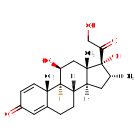
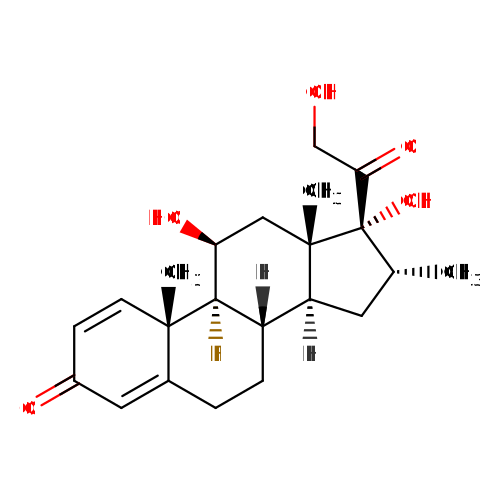
Structure for Dexamethasone (DB01234)
- Weight
- Average: 392.4611
Monoisotopic: 392.199902243 - Chemical Formula
- C22H29FO5
- Synonyms
- 1-Dehydro-16alpha-methyl-9alpha-fluorohydrocortisone
- 1-Dehydro-16α-methyl-9α-fluorohydrocortisone
- 16alpha-Methyl-9alpha-fluoro-1-dehydrocortisol
- 16α-Methyl-9α-fluoro-1-dehydrocortisol
- 9alpha-Fluoro-16alpha-methylprednisolone
- 9α-Fluoro-16α-methylprednisolone
- Dexametasona
- Dexamethasone
- Dexaméthasone
- Dexamethasonum
- External IDs
- ISV-305
- NSC-34521
- OTO-104

Pharmacology
- Indication
Dexamethasone and ciprofloxacin otic suspension is indicated for bacterial infections with inflammation in acute otitis media and acute otitis externa.12 Intramuscular and intravenous injections are indicated for a number of endocrine, rheumatic, collagen, dermatologic, allergic, ophthalmic, gastrointestinal, respiratory, hematologic, neoplastic, edematous, and other conditions.13 Oral tablets are indicated for the treatment of multiple myeloma.16 An intravitreal implant is indicated for some forms of macular edema and non-infectious posterior uveitis affecting the posterior of the eye.19 Various ophthalmic formulations are indicated for inflammatory conditions of the eye.14,15,17,18,20,21
 Reduce drug development failure ratesBuild, train, & validate machine-learning modelswith evidence-based and structured datasets.Build, train, & validate predictive machine-learning models with structured datasets.
- Associated Conditions
Indication Type Indication Combined Product Details Approval Level Age Group Patient Characteristics Dose Form Management of Acne rosacea •••••••••••• Management of Acquired hemolytic anemia •••••••••••• Management of Acute gouty arthritis •••••••••••• Management of Acute leukemia •••••••••••• Used in combination to treat Acute otitis externa Combination Product in combination with: Ciprofloxacin (DB00537) •••••••••••• •••••• •••••••••• ••••••• •••••••••• - Contraindications & Blackbox Warnings
 Prevent Adverse Drug Events TodayTap into our Clinical API for life-saving information on contraindications & blackbox warnings, population restrictions, harmful risks, & more.Avoid life-threatening adverse drug events with our Clinical API
- Pharmacodynamics
Corticosteroids bind to the glucocorticoid receptor, inhibiting pro-inflammatory signals, and promoting anti-inflammatory signals.3 Dexamethasone's duration of action varies depending on the route.12,13,14,15,16,17,18,19,20,21 Corticosteroids have a wide therapeutic window as patients may require doses that are multiples of what the body naturally produces.3 Patients taking corticosteroids should be counselled regarding the risk of hypothalamic-pituitary-adrenal axis suppression and increased susceptibility to infections.3
- Mechanism of action
The short term effects of corticosteroids are decreased vasodilation and permeability of capillaries, as well as decreased leukocyte migration to sites of inflammation.3 Corticosteroids binding to the glucocorticoid receptor mediates changes in gene expression that lead to multiple downstream effects over hours to days.3
Glucocorticoids inhibit neutrophil apoptosis and demargination; they inhibit phospholipase A2, which decreases the formation of arachidonic acid derivatives; they inhibit NF-Kappa B and other inflammatory transcription factors; they promote anti-inflammatory genes like interleukin-10.3
Lower doses of corticosteroids provide an anti-inflammatory effect, while higher doses are immunosuppressive.3 High doses of glucocorticoids for an extended period bind to the mineralocorticoid receptor, raising sodium levels and decreasing potassium levels.3
Target Actions Organism AGlucocorticoid receptor agonistHumans UNuclear receptor subfamily 0 group B member 1 stimulatorHumans UAnnexin A1 agonistHumans UNitric oxide synthase, inducible negative modulatorHumans UNuclear receptor subfamily 1 group I member 2 agonistHumans - Absorption
Absorption via the intramuscular route is slower than via the intravenous route.13 A 3mg intramuscular dose reaches a Cmax of 34.6±6.0ng/mL with a Tmax of 2.0±1.2h and an AUC of 113±38ng*h/mL.5 A 1.5mg oral dose reaches a Cmax of 13.9±6.8ng/mL with a Tmax of 2.0±0.5h and an AUC of 331±50ng*h/mL.5 Oral dexamethasone is approximately 70-78% bioavailable in healthy subjects.6
- Volume of distribution
A 1.5mg oral dose of dexamethasone has a volume of distribution of 51.0L, while a 3mg intramuscular dose has a volume of distribution of 96.0L.5
- Protein binding
Dexamethasone is approximately 77% protein bound in plasma.16 The majority of protein binding is with serum albumin.10 Dexamethasone does not significantly bind to corticosteroid binding protein.10
- Metabolism
Dexamethasone is 6-hydroxylated by CYP3A4 to 6α- and 6β-hydroxydexamethasone.1 Dexamethasone is reversibly metabolized to 11-dehydrodexamethasone by corticosteroid 11-beta-dehydrogenase isozyme 2 and can also be converted back to dexamethasone by Corticosteroid 11-beta-dehydrogenase isozyme 1.7,8
Hover over products below to view reaction partners
- Route of elimination
Corticosteroids are generally eliminated predominantly in the urine.4 However, dexamethasone is <10% elminated in urine.16
- Half-life
The mean terminal half life of a 20mg oral tablet is 4 hours.16 A 1.5mg oral dose of dexamethasone has a half life of 6.6±4.3h, while a 3mg intramuscular dose has a half life of 4.2±1.2h.5
- Clearance
A 20mg oral tablet has a clearance of 15.7L/h.16 A 1.5mg oral dose of dexamethasone has a clearance of 15.6±4.9L/h while a 3.0mg intramuscular dose has a clearance of 9.9±1.4L/h.5
- Adverse Effects
 Improve decision support & research outcomesWith structured adverse effects data, including: blackbox warnings, adverse reactions, warning & precautions, & incidence rates. View sample adverse effects data in our new Data Library!Improve decision support & research outcomes with our structured adverse effects data.
- Toxicity
The oral LD50 in female mice was 6.5g/kg and 794mg/kg via the intravenous route.13
Overdoses are not expected with otic formulations.12 Chronic high doses of glucocorticoids can lead to the development of cataract, glaucoma, hypertension, water retention, hyperlipidemia, peptic ulcer, pancreatitis, myopathy, osteoporosis, mood changes, psychosis, dermal atrophy, allergy, acne, hypertrichosis, immune suppression, decreased resistance to infection, moon face, hyperglycemia, hypocalcemia, hypophosphatemia, metabolic acidosis, growth suppression, and secondary adrenal insufficiency.2 Overdose may be treated by adjusting the dose or stopping the corticosteroid as well as initiating symptomatic and supportive treatment.2
- Pathways
- Not Available
- Pharmacogenomic Effects/ADRs
- Not Available
Interactions
- Drug Interactions
- This information should not be interpreted without the help of a healthcare provider. If you believe you are experiencing an interaction, contact a healthcare provider immediately. The absence of an interaction does not necessarily mean no interactions exist.
Drug Interaction Integrate drug-drug
interactions in your software1,2-Benzodiazepine The metabolism of 1,2-Benzodiazepine can be increased when combined with Dexamethasone. Abametapir The serum concentration of Dexamethasone can be increased when it is combined with Abametapir. Abatacept The metabolism of Dexamethasone can be increased when combined with Abatacept. Abemaciclib The metabolism of Abemaciclib can be increased when combined with Dexamethasone. Abiraterone The metabolism of Abiraterone can be increased when combined with Dexamethasone. - Food Interactions
- Avoid alcohol.
- Take with food. Food reduces irritation.
Products
 Drug product information from 10+ global regionsOur datasets provide approved product information including:dosage, form, labeller, route of administration, and marketing period.Access drug product information from over 10 global regions.
- Product Ingredients
Ingredient UNII CAS InChI Key Dexamethasone phosphate 2BP70L44PR 312-93-6 VQODGRNSFPNSQE-CXSFZGCWSA-N Dexamethasone sodium phosphate AI9376Y64P 2392-39-4 PLCQGRYPOISRTQ-FCJDYXGNSA-L - Product Images
- Brand Name Prescription Products
Name Dosage Strength Route Labeller Marketing Start Marketing End Region Image Accufix II Dec Model 033-212 Implant 0.7 mg / imp Intravitreal Telectronics Pacing Systems Inc. 1994-12-31 1999-08-27 Canada 
Decadron Tablet 0.75 mg/1 Oral Merck Sharp & Dohme Corp. 1958-10-30 2007-11-30 US 
Decadron Tablet 0.5 mg/1 Oral Merck Sharp & Dohme Corp. 1958-10-30 2007-11-30 US Decadron Phosphate Eye Ear Sol 0.1% Liquid 1 mg / mL Auricular (otic); Ophthalmic Merck Frosst Canada & Cie, Merck Frosst Canada & Co. 1960-12-31 1998-04-21 Canada Decadron Phosphate Inj 4mg/ml Liquid 4 mg / mL Intramuscular; Intravenous Merck Frosst Canada & Cie, Merck Frosst Canada & Co. 1959-12-31 2001-08-01 Canada - Generic Prescription Products
Name Dosage Strength Route Labeller Marketing Start Marketing End Region Image Apo-dexamethasone Tablet 4 mg Oral Apotex Corporation 2004-03-08 Not applicable Canada Apo-dexamethasone Tablet 0.5 mg Oral Apotex Corporation 2004-11-17 Not applicable Canada Baycadron Elixir 0.5 mg/5mL Oral Wockhardt 1983-07-27 Not applicable US Decadron Tablet 0.75 mg/1 Oral Pragma Pharmaceuticals, LLC 2018-02-28 2022-03-31 US Decadron Elixir 0.5 mg/5mL Oral Pragma Pharmaceuticals, LLC 2018-03-15 Not applicable US - Mixture Products
Name Ingredients Dosage Route Labeller Marketing Start Marketing End Region Image 999 Itch Relief Dexamethasone (15 mg/20000mg) + Menthol (200 mg/20000mg) + Synthetic camphor (200 mg/20000mg) Ointment Topical China Resources Sanjiu Medical & Pharmaceutical Co Ltd 2003-07-03 Not applicable US ACEFOS DUO® SUSPENSIÓN INYECTABLE Dexamethasone (8 mg) + Dexamethasone (2 mg) Suspension Intra-articular; Intralesional; Intramuscular ARBOFARMA S.A.S. 2018-06-20 Not applicable Colombia 
ACEFOS DUO® SUSPENSIÓN INYECTABLE Dexamethasone (8 mg) + Dexamethasone (2 mg) Suspension Intra-articular; Intralesional; Intramuscular ARBOFARMA S.A.S. 2018-06-20 Not applicable Colombia AK-Trol Dexamethasone (1 mg/1g) + Neomycin sulfate (3.5 mg/1g) + Polymyxin B sulfate (10000 [USP'U]/1g) Ointment Ophthalmic Physicians Total Care, Inc. 1996-01-05 2000-06-30 US BIODERM® CREMA Dexamethasone (0.04 g) + Gentamicin sulfate (0.1 g) + Ketoconazole (2 g) Cream Topical LABORATORIOS SIEGFRIED S.A.S. 2006-11-10 Not applicable Colombia - Unapproved/Other Products
Name Ingredients Dosage Route Labeller Marketing Start Marketing End Region Image Dex-Moxi Dexamethasone sodium phosphate (1 mg/1mL) + Moxifloxacin hydrochloride monohydrate (5 mg/1mL) Injection, solution Ophthalmic Imprimis Njof, Llc 2018-01-05 Not applicable US Dex-Moxi PF Dexamethasone sodium phosphate (1 mg/1mL) + Moxifloxacin hydrochloride monohydrate (5 mg/1mL) Injection, solution Intraocular ImprimisRx NJ 2018-01-01 Not applicable US Dex-Moxi-Ketor Dexamethasone sodium phosphate (1 mg/1mL) + Ketorolac tromethamine (0.4 mg/1mL) + Moxifloxacin hydrochloride monohydrate (0.5 mg/1mL) Injection, solution Ophthalmic Imprimis Njof, Llc 2018-01-05 Not applicable US Dexamethasone Sodium Phosphate 0.1% / Finasteride 0.1% / Minoxidil 5% Dexamethasone sodium phosphate (0.1 g/100g) + Finasteride (0.1 g/100g) + Minoxidil (5 g/100g) Solution Topical Sincerus Florida, LLC 2019-05-09 Not applicable US Dexamethasone Sodium Phosphate 0.1% / Finasteride 0.1% / Minoxidil 5% / Tretinoin 0.025% Dexamethasone sodium phosphate (0.1 g/100g) + Finasteride (0.1 g/100g) + Minoxidil (5 g/100g) + Tretinoin (0.025 g/100g) Solution Topical Sincerus Florida 2019-05-09 Not applicable US


Categories
- ATC Codes
- R01AD53 — Dexamethasone, combinations
- R01AD — Corticosteroids
- R01A — DECONGESTANTS AND OTHER NASAL PREPARATIONS FOR TOPICAL USE
- R01 — NASAL PREPARATIONS
- R — RESPIRATORY SYSTEM
- D07XB — Corticosteroids, moderately potent, other combinations
- D07X — CORTICOSTEROIDS, OTHER COMBINATIONS
- D07 — CORTICOSTEROIDS, DERMATOLOGICAL PREPARATIONS
- D — DERMATOLOGICALS
- R01AD — Corticosteroids
- R01A — DECONGESTANTS AND OTHER NASAL PREPARATIONS FOR TOPICAL USE
- R01 — NASAL PREPARATIONS
- R — RESPIRATORY SYSTEM
- D10AA — Corticosteroids, combinations for treatment of acne
- D10A — ANTI-ACNE PREPARATIONS FOR TOPICAL USE
- D10 — ANTI-ACNE PREPARATIONS
- D — DERMATOLOGICALS
- S01CB — Corticosteroids/antiinfectives/mydriatics in combination
- S01C — ANTIINFLAMMATORY AGENTS AND ANTIINFECTIVES IN COMBINATION
- S01 — OPHTHALMOLOGICALS
- S — SENSORY ORGANS
- S02CA — Corticosteroids and antiinfectives in combination
- S02C — CORTICOSTEROIDS AND ANTIINFECTIVES IN COMBINATION
- S02 — OTOLOGICALS
- S — SENSORY ORGANS
- S03CA — Corticosteroids and antiinfectives in combination
- S03C — CORTICOSTEROIDS AND ANTIINFECTIVES IN COMBINATION
- S03 — OPHTHALMOLOGICAL AND OTOLOGICAL PREPARATIONS
- S — SENSORY ORGANS
- C05AA — Corticosteroids
- C05A — AGENTS FOR TREATMENT OF HEMORRHOIDS AND ANAL FISSURES FOR TOPICAL USE
- C05 — VASOPROTECTIVES
- C — CARDIOVASCULAR SYSTEM
- S01CA — Corticosteroids and antiinfectives in combination
- S01C — ANTIINFLAMMATORY AGENTS AND ANTIINFECTIVES IN COMBINATION
- S01 — OPHTHALMOLOGICALS
- S — SENSORY ORGANS
- D07CB — Corticosteroids, moderately potent, combinations with antibiotics
- D07C — CORTICOSTEROIDS, COMBINATIONS WITH ANTIBIOTICS
- D07 — CORTICOSTEROIDS, DERMATOLOGICAL PREPARATIONS
- D — DERMATOLOGICALS
- H02AB — Glucocorticoids
- H02A — CORTICOSTEROIDS FOR SYSTEMIC USE, PLAIN
- H02 — CORTICOSTEROIDS FOR SYSTEMIC USE
- H — SYSTEMIC HORMONAL PREPARATIONS, EXCL. SEX HORMONES AND INSULINS
- S01BA — Corticosteroids, plain
- S01B — ANTIINFLAMMATORY AGENTS
- S01 — OPHTHALMOLOGICALS
- S — SENSORY ORGANS
- A01AC — Corticosteroids for local oral treatment
- A01A — STOMATOLOGICAL PREPARATIONS
- A01 — STOMATOLOGICAL PREPARATIONS
- A — ALIMENTARY TRACT AND METABOLISM
- S03BA — Corticosteroids
- S03B — CORTICOSTEROIDS
- S03 — OPHTHALMOLOGICAL AND OTOLOGICAL PREPARATIONS
- S — SENSORY ORGANS
- D07AB — Corticosteroids, moderately potent (group II)
- D07A — CORTICOSTEROIDS, PLAIN
- D07 — CORTICOSTEROIDS, DERMATOLOGICAL PREPARATIONS
- D — DERMATOLOGICALS
- Drug Categories
- Adrenal Cortex Hormones
- Adrenals
- Agents Causing Muscle Toxicity
- Agents for Treatment of Hemorrhoids and Anal Fissures for Topical Use
- Alimentary Tract and Metabolism
- Anti-Acne Preparations
- Anti-Acne Preparations for Topical Use
- Anti-Inflammatory Agents
- Antiemetics
- Antineoplastic Agents
- Antineoplastic Agents, Hormonal
- Autonomic Agents
- BCRP/ABCG2 Inhibitors
- BSEP/ABCB11 inducers
- Central Nervous System Agents
- Corticosteroid Hormone Receptor Agonists
- Corticosteroids
- Corticosteroids for Local Oral Treatment
- Corticosteroids for Systemic Use
- Corticosteroids for Systemic Use, Plain
- Corticosteroids, Dermatological Preparations
- Corticosteroids, Moderately Potent (Group II)
- Cytochrome P-450 CYP2A6 Inducers
- Cytochrome P-450 CYP2B6 Inducers
- Cytochrome P-450 CYP2B6 Inducers (strength unknown)
- Cytochrome P-450 CYP2C19 Inducers
- Cytochrome P-450 CYP2C19 Inducers (strength unknown)
- Cytochrome P-450 CYP2C8 Inducers
- Cytochrome P-450 CYP2C8 Inducers (strength unknown)
- Cytochrome P-450 CYP2E1 Inducers
- Cytochrome P-450 CYP2E1 Inducers (strength unknown)
- Cytochrome P-450 CYP3A Inducers
- Cytochrome P-450 CYP3A Inducers (strong)
- Cytochrome P-450 CYP3A Inhibitors
- Cytochrome P-450 CYP3A Substrates
- Cytochrome P-450 CYP3A4 Inducers
- Cytochrome P-450 CYP3A4 Inducers (moderate)
- Cytochrome P-450 CYP3A4 Inducers (strong)
- Cytochrome P-450 CYP3A4 Inhibitors
- Cytochrome P-450 CYP3A4 Inhibitors (weak)
- Cytochrome P-450 CYP3A4 Substrates
- Cytochrome P-450 CYP3A5 Inducers
- Cytochrome P-450 CYP3A5 Inducers (moderate)
- Cytochrome P-450 CYP3A5 Substrates
- Cytochrome P-450 CYP3A7 Inducers
- Cytochrome P-450 CYP3A7 Inducers (strength unknown)
- Cytochrome P-450 CYP3A7 Substrates
- Cytochrome P-450 Enzyme Inducers
- Cytochrome P-450 Enzyme Inhibitors
- Cytochrome P-450 Substrates
- Dermatologicals
- Experimental Unapproved Treatments for COVID-19
- Fused-Ring Compounds
- Gastrointestinal Agents
- Hormones
- Hormones, Hormone Substitutes, and Hormone Antagonists
- Hyperglycemia-Associated Agents
- Immunosuppressive Agents
- Inducers of Drug Clearance
- Nasal Preparations
- OAT3/SLC22A8 Substrates
- Ophthalmological and Otological Preparations
- Ophthalmologicals
- Otologicals
- P-glycoprotein inducers
- P-glycoprotein inhibitors
- P-glycoprotein substrates
- Peripheral Nervous System Agents
- Pregnadienes
- Pregnadienetriols
- Pregnanes
- Sensory Organs
- Steroids
- Steroids, Fluorinated
- Stomatological Preparations
- Systemic Hormonal Preparations, Excl. Sex Hormones and Insulins
- Vasoprotectives
- Chemical TaxonomyProvided by Classyfire
- Description
- This compound belongs to the class of organic compounds known as 21-hydroxysteroids. These are steroids carrying a hydroxyl group at the 21-position of the steroid backbone.
- Kingdom
- Organic compounds
- Super Class
- Lipids and lipid-like molecules
- Class
- Steroids and steroid derivatives
- Sub Class
- Hydroxysteroids
- Direct Parent
- 21-hydroxysteroids
- Alternative Parents
- Gluco/mineralocorticoids, progestogins and derivatives / 20-oxosteroids / 11-beta-hydroxysteroids / 17-hydroxysteroids / 3-oxo delta-1,4-steroids / Halogenated steroids / Delta-1,4-steroids / Tertiary alcohols / Alpha-hydroxy ketones / Secondary alcohols show 8 more
- Substituents
- 11-beta-hydroxysteroid / 11-hydroxysteroid / 17-hydroxysteroid / 20-oxosteroid / 21-hydroxysteroid / 3-oxo-delta-1,4-steroid / 3-oxosteroid / 9-halo-steroid / Alcohol / Aliphatic homopolycyclic compound show 23 more
- Molecular Framework
- Aliphatic homopolycyclic compounds
- External Descriptors
- 11beta-hydroxy steroid, 17alpha-hydroxy steroid, glucocorticoid, 20-oxo steroid, fluorinated steroid, 3-oxo-Delta(1),Delta(4)-steroid, 21-hydroxy steroid (CHEBI:41879) / Pregnane and derivatives [Fig] (C15643)
- Affected organisms
- Humans and other mammals
Chemical Identifiers
- UNII
- 7S5I7G3JQL
- CAS number
- 50-02-2
- InChI Key
- UREBDLICKHMUKA-CXSFZGCWSA-N
- InChI
- InChI=1S/C22H29FO5/c1-12-8-16-15-5-4-13-9-14(25)6-7-19(13,2)21(15,23)17(26)10-20(16,3)22(12,28)18(27)11-24/h6-7,9,12,15-17,24,26,28H,4-5,8,10-11H2,1-3H3/t12-,15+,16+,17+,19+,20+,21+,22+/m1/s1
- IUPAC Name
- (1R,2R,3aS,3bS,9aS,9bR,10S,11aS)-9b-fluoro-1,10-dihydroxy-1-(2-hydroxyacetyl)-2,9a,11a-trimethyl-1H,2H,3H,3aH,3bH,4H,5H,7H,9aH,9bH,10H,11H,11aH-cyclopenta[a]phenanthren-7-one
- SMILES
- [H][C@@]12C[C@@H](C)[C@](O)(C(=O)CO)[C@@]1(C)C[C@H](O)[C@@]1(F)[C@@]2([H])CCC2=CC(=O)C=C[C@]12C
References
- Synthesis Reference
Fried, J.; US. Patent 2,852.51 1; September 16, 1958; assigned to Olin Mathieson Chemical Corporation. Muller, G., Bardoneschi, R. and Jolly, J.; U.S. Patent 3,007,923; November 7, 1961; assigned to Les Laboratories Francais de Chimiotherapie, France.
- General References
- Tomlinson ES, Maggs JL, Park BK, Back DJ: Dexamethasone metabolism in vitro: species differences. J Steroid Biochem Mol Biol. 1997 Jul;62(4):345-52. doi: 10.1016/s0960-0760(97)00038-1. [Article]
- Ciriaco M, Ventrice P, Russo G, Scicchitano M, Mazzitello G, Scicchitano F, Russo E: Corticosteroid-related central nervous system side effects. J Pharmacol Pharmacother. 2013 Dec;4(Suppl 1):S94-8. doi: 10.4103/0976-500X.120975. [Article]
- Yasir M, Sonthalia S: Corticosteroid Adverse Effects . [Article]
- Czock D, Keller F, Rasche FM, Haussler U: Pharmacokinetics and pharmacodynamics of systemically administered glucocorticoids. Clin Pharmacokinet. 2005;44(1):61-98. doi: 10.2165/00003088-200544010-00003. [Article]
- Loew D, Schuster O, Graul EH: Dose-dependent pharmacokinetics of dexamethasone. Eur J Clin Pharmacol. 1986;30(2):225-30. doi: 10.1007/bf00614309. [Article]
- Spoorenberg SM, Deneer VH, Grutters JC, Pulles AE, Voorn GP, Rijkers GT, Bos WJ, van de Garde EM: Pharmacokinetics of oral vs. intravenous dexamethasone in patients hospitalized with community-acquired pneumonia. Br J Clin Pharmacol. 2014 Jul;78(1):78-83. doi: 10.1111/bcp.12295. [Article]
- Diederich S, Hanke B, Oelkers W, Bahr V: Metabolism of dexamethasone in the human kidney: nicotinamide adenine dinucleotide-dependent 11beta-reduction. J Clin Endocrinol Metab. 1997 May;82(5):1598-602. [Article]
- Diederich S, Hanke B, Burkhardt P, Muller M, Schoneshofer M, Bahr V, Oelkers W: Metabolism of synthetic corticosteroids by 11 beta-hydroxysteroid-dehydrogenases in man. Steroids. 1998 May-Jun;63(5-6):271-7. doi: 10.1016/s0039-128x(98)00039-7. [Article]
- BUNIM JJ, BLACK RL, LUTWAK L, PETERSON RE, WHEDON GD: Studies on dexamethasone, a new synthetic steroid, in rheurheumatoid arthritis: a preliminary report; adrenal cortical, metabolic and early clinical effects. Arthritis Rheum. 1958 Aug;1(4):313-31. doi: 10.1002/art.1780010404. [Article]
- Cummings DM, Larijani GE, Conner DP, Ferguson RK, Rocci ML Jr: Characterization of dexamethasone binding in normal and uremic human serum. DICP. 1990 Mar;24(3):229-31. doi: 10.1177/106002809002400301. [Article]
- FDA Approved Drug Products: Decadron Dexamethasone Oral Tablet (Discontinued) [Link]
- FDA Approved Drug Products: Ciprodex Dexamethasone and Ciprofloxacin Otic Suspension [Link]
- FDA Approved Drug Products: Dexamethasone Injection [Link]
- FDA Approved Drug Products: Dextenza Dexamethasone Ophthalmic Insert [Link]
- FDA Approved Drug Products: Dexycu Dexamethasone Intraocular Suspension [Link]
- FDA Approved Drug Products: Hemady Dexamethasone Oral Tablets [Link]
- FDA Approved Drug Products: Maxidex Dexamethasone Ophthalmic Suspension [Link]
- FDA Approved Drug Products: Maxitrol Neomycin, Polymyxin B, and Dexamethasone Ophthalmic Suspension [Link]
- FDA Approved Drug Products: Ozurdex Dexamethasone Intravitreal Implant [Link]
- FDA Approved Drug Products: Maxitrol Neomycin, Polymyxin B, and Dexamethasone Ophthalmic Ointment [Link]
- FDA Approved Drug Products: Tobradex Tobramycin and Dexamethasone Ophthlamic Suspension [Link]
- RECOVERY trial news release: dexamethasone [Link]
- External Links
- Human Metabolome Database
- HMDB0015364
- KEGG Drug
- D00292
- KEGG Compound
- C15643
- PubChem Compound
- 5743
- PubChem Substance
- 46508930
- ChemSpider
- 5541
- BindingDB
- 18207
- 3264
- ChEBI
- 41879
- ChEMBL
- CHEMBL384467
- ZINC
- ZINC000003875332
- Therapeutic Targets Database
- DAP000007
- PharmGKB
- PA449247
- Guide to Pharmacology
- GtP Drug Page
- PDBe Ligand
- DEX
- RxList
- RxList Drug Page
- Drugs.com
- Drugs.com Drug Page
- PDRhealth
- PDRhealth Drug Page
- Wikipedia
- Dexamethasone
- PDB Entries
- 1m2z / 1p93 / 3mne / 3mno / 3mnp / 4uda / 4udc / 6nwk / 6xk0 / 7krj … show 8 more
- FDA label
- Download (96 KB)
- MSDS
- Download (74.8 KB)
Clinical Trials
- Clinical Trials
Phase Status Purpose Conditions Count 4 Active Not Recruiting Basic Science Critical Limb Ischemia (CLI) / Peripheral Arterial Disease (PAD) / Vascular Diseases 1 4 Active Not Recruiting Other ACL Injuries 1 4 Active Not Recruiting Prevention Dysphagia 1 4 Active Not Recruiting Prevention Postoperative pain 1 4 Active Not Recruiting Supportive Care Chemotherapy-Induced Nausea and Vomiting 1
Pharmacoeconomics
- Manufacturers
- Not Available
- Packagers
- Advanced Pharmaceutical Services Inc.
- Akorn Inc.
- Alcon Laboratories
- Allergan Inc.
- Amend
- American Regent
- Amerisource Health Services Corp.
- Apotheca Inc.
- APP Pharmaceuticals
- A-S Medication Solutions LLC
- Atlantic Biologicals Corporation
- Bausch & Lomb Inc.
- Baxter International Inc.
- Bimeda Inc.
- Blansett Pharmacal Co. Inc.
- Bryant Ranch Prepack
- C.O. Truxton Inc.
- Cardinal Health
- Carlisle Laboratories Inc.
- Clint Pharmaceutical Inc.
- Consolidated Midland Corp.
- Darby Dental Supply Co. Inc.
- Direct Dispensing Inc.
- Dispensing Solutions
- Diversified Healthcare Services Inc.
- ECR Pharmaceuticals
- Falcon Pharmaceuticals Ltd.
- General Injectables and Vaccines Inc.
- Generics Puerto Rico Inc.
- Keene Pharmaceuticals Inc.
- Lake Erie Medical and Surgical Supply
- Luitpold Pharmaceuticals Inc.
- Major Pharmaceuticals
- Martica Enterprises Inc.
- Martin Surgical Supply
- Medisca Inc.
- Merck & Co.
- Merit Pharmaceuticals
- Murfreesboro Pharmaceutical Nursing Supply
- MWI Veterinary Supply Co.
- National Pharmaceuticals
- Neuman Distributors Inc.
- Nord Ost Corp.
- Nucare Pharmaceuticals Inc.
- Ocusoft
- Paddock Labs
- Par Pharmaceuticals
- PCA LLC
- PD-Rx Pharmaceuticals Inc.
- Pharmedix
- Physicians Total Care Inc.
- Preferred Pharmaceuticals Inc.
- Prescript Pharmaceuticals
- Primedics Laboratories
- Qualitest
- Raz Co. Inc.
- Rebel Distributors Corp.
- Redpharm Drug
- Remedy Repack
- Resource Optimization and Innovation LLC
- Robar Inc.
- Roxane Labs
- San Jose Surgical Supply Inc.
- Sandhills Packaging Inc.
- Southwood Pharmaceuticals
- St Mary's Medical Park Pharmacy
- Stat Rx Usa
- Strides Arcolab Limited
- Teva Pharmaceutical Industries Ltd.
- Veratex Corp.
- Wa Butler Co.
- Wockhardt Ltd.
- Dosage Forms
Form Route Strength Implant Intravitreal 0.7 mg / imp Tablet Oral 0.500 mg Tablet Tablet Oral 0.75 mg Elixir Oral 0.5 mg/5mL Tablet Oral 0.5 MG/2MG Solution Nasal Solution Parenteral 8.745 mg Injection, solution Parenteral 4 MG/1ML Solution / drops Auricular (otic); Ophthalmic 5 ml Solution / drops Ophthalmic Solution Intra-articular; Intralesional; Intramuscular; Intravenous 8 mg Solution Auricular (otic) 0.3 % Suspension Auricular (otic) Suspension / drops Auricular (otic) Solution Parenteral 4.00 mg Solution / drops Intraocular Solution / drops Auricular (otic) Injection, solution; injection, suspension; kit Epidural; Intra-articular; Intracaudal; Intramuscular; Intravenous; Perineural; Topical Liquid Dental Kit Oral; Topical Injection Intramuscular; Intrasynovial; Intravenous 4 mg/mL Injection Intramuscular; Intrasynovial; Intravenous 8 mg/2mL Injection, solution Parenteral 8 MG/2ML Solution / drops Oral 2 MG/ML Solution Intra-articular; Intramuscular; Intravenous 8 mg Liquid Auricular (otic); Ophthalmic 1 mg / mL Tablet Oral .5 mg Solution Oral 2000000 mg Injection Intramuscular; Intravenous 2 mg/ml Injection 2 MG/ml Tablet Oral 4.000 mg Solution / drops Auricular (otic); Ophthalmic 5 mg/5ml Syrup Oral 8 mg Solution Intravenous 8 mg/2ml Suspension / drops Ophthalmic Cream Cutaneous 0.1 g/100g Cream Topical 1 g Solution / drops Auricular (otic); Ophthalmic Cream Cutaneous Injection, solution Injection, solution 8 MG/2ML Injection, solution Intramuscular; Intravenous 4 MG/ML Injection, solution Intramuscular; Intravenous 8 MG/2ML Injection, solution 4 MG/ML Cream Topical Injection, solution Ophthalmic Injection, solution Intraocular Injection, solution Parenteral 100 MG Injection, solution Parenteral 40 MG Spray Nasal 13.5 mcg/14mL Solution Ophthalmic 1 mg/ml Ointment Ophthalmic 0.3 mg/g Solution Ophthalmic 5 ml Solution / drops Ophthalmic 0.1 % Solution Parenteral 5.25 mg Cream Topical 0.1 g Solution Intramuscular; Intravenous 800000 mg Solution Ophthalmic 1.000 mg Gel Ophthalmic 0.1 %w/w Gel Ophthalmic 0985 mg/g Solution Paste Oral Paste Oral 1 mg/g Paste Submucosal 1 mg/g Solution Parenteral 8 mg Solution Parenteral 4 mg Solution Intramuscular; Intravenous 10.52 mg Solution Intramuscular; Intravenous 8 mg Solution Intramuscular; Intravenous 4 mg Injection Intramuscular; Intravenous 8 mg Solution Intramuscular; Intravenous 4.3726 mg Injection, solution Intramuscular; Intravenous Tablet Oral 1.5 MG Tablet Oral 8 MG Cream Topical 0.5 mg/g Tablet Oral 20 MG Tablet Oral 40 MG Solution Intra-articular; Intralesional; Intramuscular; Intravenous; Soft tissue 10 mg / mL Solution Oral 0.5 mg/5mL Solution Oral 1 mg/10mL Tablet Oral 0.5 mg/1 Tablet Oral 0.5 mg/0.5mg Tablet Oral 0.75 mg/1 Tablet Oral 0.75 mg/0.75mg Tablet Oral 1 mg/1 Tablet Oral 1.5 mg/1 Tablet Oral 2 mg/1 Tablet Oral 4 mg/1 Tablet Oral 6 mg/1 Solution, concentrate Oral 1 mg/1mL Solution Intramuscular; Intrasynovial; Intravenous 10 mg / 1 mL Liquid Intramuscular; Intrasynovial; Intravenous 10 mg / 1 mL Injection Injection 5.45 mg Injection Intra-articular; Intralesional; Intramuscular; Intravenous; Soft tissue 10 mg/1mL Injection Intra-articular; Intralesional; Intramuscular; Intravenous; Soft tissue 4 mg/1mL Injection Intramuscular 10 mg/1mL Injection Intramuscular; Intravenous 10 mg/1mL Injection Intramuscular; Intravenous 100 mg/10mL Injection, emulsion Intramuscular; Intravenous 10 mg/1mL Injection, solution Intra-articular; Intralesional; Intramuscular; Intravenous; Soft tissue 4 mg/1mL Injection, solution Intramuscular 4 mg/1mL Injection, solution Intramuscular; Intravenous 10 mg/1mL Injection, solution Intramuscular; Intravenous 4 mg/1mL Injection, solution Intravenous 4 mg/1mL Injection, suspension Intra-articular; Intralesional; Intramuscular; Intravenous; Soft tissue 4 mg/1mL Solution Ophthalmic 1 mg/1mL Solution / drops Ophthalmic 1 mg/1mL Solution Topical Solution Intramuscular; Intrasynovial; Intravenous 4 mg / mL Solution Intramuscular; Intrasynovial; Intravenous 10 mg / mL Injection Intramuscular; Intravenous 4 mg/ml Solution Intra-articular; Intralesional; Intramuscular; Intravenous; Soft tissue 4 mg / mL Solution Intra-articular; Intramuscular; Intravenous 4 mg / mL Solution Intramuscular; Intravenous 10 mg / mL Liquid Intra-articular; Intralesional; Intramuscular; Intravenous; Soft tissue 4 mg / mL Elixir Oral Liquid Auricular (otic); Ophthalmic Solution 4 mg/1ml Injection Intramuscular; Intravenous 5 mg/ml Solution / drops Auricular (otic); Ophthalmic 1 MG/ML Injection Intra-articular; Intramuscular; Intravenous; Intravitreal 8 mg/2ml Kit Infiltration; Intramuscular; Intravenous; Topical Kit Epidural; Infiltration; Intramuscular; Intravenous; Topical Insert Ophthalmic 0.4 mg/1 Solution Conjunctival; Ophthalmic Solution Auricular (otic); Ophthalmic Solution / drops Auricular (otic); Ophthalmic Injection, suspension Intraocular 517 ug/0.005mL Kit Intramuscular; Intravenous; Topical Solution Intramuscular 100.000 mg Suspension Intra-articular; Intralesional; Intramuscular Implant Intravitreal .5 mg / unit Implant Intravitreal 0.5 mg / unit Gel Ophthalmic 1.5 MG/ML Solution Ophthalmic 1.140 mg Solution / drops Ophthalmic 1.5 MG/ML Solution Auricular (otic); Topical Injection, solution Intramuscular; Intravenous 100 mg/10ml Injection, solution Intramuscular; Intravenous 40 mg/5ml Injection Parenteral 100 mg Injection Parenteral 40 mg Cream Topical 200000 g Tablet Oral 20 mg/1 Injection, solution Intra-articular; Intralesional; Intramuscular; Intravenous; Soft tissue 10 mg/1mL Liquid Intramuscular; Intravenous 4 mg / mL Solution Oral 2 mg/5ml Injection 8 mg/2ml Suspension Conjunctival; Ophthalmic 1 mg Solution / drops Auricular (otic) 10 ml Injection Intravenous 4 mg/ml Injection, solution; kit Intra-articular; Intralesional; Intramuscular; Intravenous; Perineural; Soft tissue Ointment Ophthalmic 2 MG/G Solution / drops Ophthalmic 2 MG/ML Kit Topical Ointment Ophthalmic 0.1 % w/w Ointment Ophthalmic 0.5 mg/1g Suspension Ophthalmic 0.1 % w/v Suspension Ophthalmic 1 mg/1mL Suspension / drops Ophthalmic 1 mg/1mL Suspension / drops Ophthalmic 0.1 % Suspension Ophthalmic 0.1 % Suspension Ophthalmic Ointment Ophthalmic 0.1 % Solution Ophthalmic 0.1 % Ointment Ophthalmic 1.000 mg Suspension Ophthalmic 1.000 mg Suspension Conjunctival; Ophthalmic 1 mg Tablet Oral Solution Parenteral 8.00 mg Solution / drops Ophthalmic Syrup Oral Solution Ophthalmic 0.1 % w/v Solution / drops Ophthalmic 1 mg/ml Solution Oral 20 mg Ointment Ophthalmic Solution Intraocular; Ophthalmic Suspension Ophthalmic Suspension / drops Ophthalmic Suspension / drops Topical Solution Intramuscular 8.000 mg Solution Ophthalmic 3 mg Gel Conjunctival Solution Ophthalmic Solution Parenteral 200 mg Injection, solution; kit Epidural; Intracaudal; Intramuscular; Intravenous; Perineural; Topical Solution Ophthalmic; Topical Liquid Ophthalmic; Topical .1 % Solution Auricular (otic); Ophthalmic 0.1 % Ointment Conjunctival; Ophthalmic Solution Conjunctival; Ophthalmic 1 mg Solution Ophthalmic 1 mg Implant Intraocular 700.000 mcg Implant Intravitreal 0.7 mg Implant Intravitreal 0.7 mg/1 Implant Intravitreal 700 MICROGRAMMI Implant Intravitreal 700 mcg Implant Intravitreal Implant Ophthalmic 0.7 mg Intrauterine device Intraocular; Intrauterine 0.7 mg Injection 40 mg/10ml Suspension Intramuscular Tablet Oral 2 mg Elixir Oral 0.5 mg / 5 mL Liquid Intramuscular; Intravenous 10 mg / mL Solution Ophthalmic 1.3 mg Solution / drops Auricular (otic); Ophthalmic .1 % Kit Intramuscular; Intravenous Solution Parenteral 8.0 mg Injection, solution Intramuscular Kit Epidural; Infiltration; Intramuscular; Intravenous; Perineural; Topical Solution / drops Auricular (otic); Ophthalmic 0.1 % Solution Intravenous 8.740 mg Ointment Auricular (otic); Ophthalmic Ointment Topical Injection Intramuscular; Intrasynovial; Intravenous 8 g Injection, solution Parenteral 4 MG/ML Ointment Ophthalmic 0.2 % Solution / drops Oral 0.2 % Spray Nasal 0.15 mg Solution Oral 0.02 % Suspension Conjunctival; Ophthalmic 2 mg Solution Parenteral Suspension Conjunctival; Ophthalmic Ointment Ophthalmic 0.1 % Suspension / drops Ophthalmic 0.1 % Ointment Conjunctival; Ophthalmic 0.1 g Suspension / drops Intraocular Cream Rectal; Topical Solution Intramuscular Emulsion Urethral Solution / drops Ophthalmic 0.15 % Tablet, effervescent Oral 2 MG Tablet, effervescent Oral 4 MG Tablet, effervescent Oral 8 MG Solution Parenteral 8.000 mg Ointment Ophthalmic Liquid Ophthalmic Capsule Liquid Auricular (otic) Injection, solution 4 mg/1ml Syrup 0.5 mg/5ml Tablet, sugar coated Oral 0.5 mg Tablet Oral 0.25 mg Tablet, film coated 0.5 mg Solution 5 mg/1ml Tablet Oral 0.5 mg Tablet Oral 4 mg Implant Intravitreal 0.7 mg/implant - Prices
Unit description Cost Unit Ozurdex 0.7 mg implant 1554.0USD implant Maxidex 0.1% Suspension 15ml Bottle 97.96USD bottle Maxitrol 0.1-5-10000 Ointment 3.5 gm Tube 87.3USD tube Maxitrol 5-10000-0.1 Suspension 5ml Bottle 75.88USD bottle Maxidex 0.1% Suspension 5ml Bottle 53.57USD bottle Dexamethasone Sodium Phosphate 4 mg/ml Solution (1 Box = 25x1ml Vials) 41.99USD box Dexamethasone micronized powd 41.31USD g Dexamethasone powder 21.27USD g Dexamethasone Sodium Phosphate 0.1% Solution 5ml Bottle 19.99USD bottle Dexamethasone acetate powd 15.12USD g Dexamethasone sod ph powder 14.24USD g Dexamethasone Sodium Phosphate 4 mg/ml Solution 5ml Vial 13.99USD vial Dexamethasone Sodium Phosphate 10 mg/ml 4.78USD ml Dexamethasone Sodium Phosphate 4 mg/ml 1 Vial = 5ml 4.0USD ml Dexamethasone 0.1% eye drop 3.43USD ml Dexasol 0.1% eye drops 3.38USD ml Maxidex 0.1 % Ointment 2.69USD g Dexamethasone 10 mg/ml vial 2.56USD ml Maxidex 0.1% eye drops 2.36USD ml Dexamethasone Sodium Phosphate 4 mg/ml 1.77USD ml Maxidex 0.1 % Suspension 1.73USD ml Sandoz Dexamethasone Sod. Phosphate 0.1 % Solution 1.38USD ml Pms-Dexamethasone Sodium Phosp 10 mg/ml 1.34USD ml Dexamethasone 4 mg/ml vial 1.04USD ml Dexamethasone 6 mg tablet 1.01USD tablet Dexasone 4 mg Tablet 0.86USD tablet Apo-Dexamethasone 4 mg Tablet 0.8USD tablet Pms-Dexamethasone 4 mg Tablet 0.8USD tablet Ratio-Dexamethasone 4 mg Tablet 0.8USD tablet Dexamethasone 2 mg tablet 0.68USD tablet Dexamethasone 1 mg/1 ml soln 0.65USD ml Dexamethasone 4 mg tablet 0.6USD tablet Dexamethasone 1 mg tablet 0.49USD tablet Pms-Dexamethasone 0.75 mg Tablet 0.47USD tablet Pms-Dexamethasone 2 mg Tablet 0.43USD tablet Dexamethasone 0.5 mg/5ml Elixir 0.4USD ml Dexamethasone 0.75 mg tablet 0.38USD tablet Dexamethasone 1.5 mg tablet 0.35USD tablet Dexamethasone 0.5 mg tablet 0.31USD tablet Apo-Dexamethasone 0.5 mg Tablet 0.21USD tablet Pms-Dexamethasone 0.5 mg Tablet 0.2USD tablet Ratio-Dexamethasone 0.5 mg Tablet 0.18USD tablet DrugBank does not sell nor buy drugs. Pricing information is supplied for informational purposes only.- Patents
Patent Number Pediatric Extension Approved Expires (estimated) Region US8846650 No 2014-09-30 2025-06-04 US US9149486 No 2015-10-06 2022-09-13 US US6359016 No 2002-03-19 2020-08-10 US US6284804 No 2001-09-04 2020-08-10 US US6726918 No 2004-04-27 2020-10-20 US US6899717 No 2005-05-31 2023-11-01 US US8034366 No 2011-10-11 2023-01-09 US US8506987 No 2013-08-13 2023-01-09 US US9012437 No 2015-04-21 2020-10-20 US US8043628 No 2011-10-25 2020-10-20 US US8088407 No 2012-01-03 2020-10-20 US US9283178 No 2016-03-15 2020-10-20 US US9192511 No 2015-11-24 2023-01-09 US US8063031 No 2011-11-22 2020-10-20 US US7033605 No 2006-04-25 2020-10-20 US US7767223 No 2010-08-03 2021-11-28 US US8034370 No 2011-10-11 2023-01-09 US US7795316 No 2010-09-14 2028-08-03 US US8101582 No 2012-01-24 2027-12-19 US US8450287 No 2013-05-28 2027-12-19 US US9345714 No 2016-05-24 2022-09-13 US US9402805 No 2016-08-02 2022-09-13 US US9592242 No 2017-03-14 2020-10-20 US US9775849 No 2017-10-03 2020-10-20 US US6960346 No 2005-11-01 2023-07-03 US US7560120 No 2009-07-14 2022-09-05 US US10028965 No 2018-07-24 2034-05-23 US US10022502 No 2018-07-17 2020-09-12 US US10076526 No 2018-09-18 2023-01-09 US US8563027 No 2013-10-22 2030-02-12 US US8409606 No 2013-04-02 2030-05-14 US US10159683 No 2018-12-25 2034-05-23 US US9254267 No 2016-02-09 2024-09-11 US US10537585 No 2020-01-21 2037-12-18 US US10702539 No 2020-07-07 2023-01-09 US US10799642 No 2020-10-13 2032-05-11 US US11304961 No 2017-12-18 2037-12-18 US US11097061 No 2021-08-24 2039-06-23 US US11458041 No 2017-11-16 2037-11-16 US
Properties
- State
- Solid
- Experimental Properties
Property Value Source melting point (°C) 260-264 ChemSpider water solubility 89 mg/L (at 25 °C) YALKOWSKY,SH & DANNENFELSER,RM (1992) logP 1.83 HANSCH,C ET AL. (1995) logS -3.64 ADME Research, USCD Caco2 permeability -4.75 ADME Research, USCD - Predicted Properties
Property Value Source Water Solubility 0.0505 mg/mL ALOGPS logP 1.93 ALOGPS logP 1.68 Chemaxon logS -3.9 ALOGPS pKa (Strongest Acidic) 12.42 Chemaxon pKa (Strongest Basic) -3.3 Chemaxon Physiological Charge 0 Chemaxon Hydrogen Acceptor Count 5 Chemaxon Hydrogen Donor Count 3 Chemaxon Polar Surface Area 94.83 Å2 Chemaxon Rotatable Bond Count 2 Chemaxon Refractivity 102.49 m3·mol-1 Chemaxon Polarizability 40.71 Å3 Chemaxon Number of Rings 4 Chemaxon Bioavailability 1 Chemaxon Rule of Five Yes Chemaxon Ghose Filter Yes Chemaxon Veber's Rule No Chemaxon MDDR-like Rule No Chemaxon - Predicted ADMET Features
Property Value Probability Human Intestinal Absorption + 0.992 Blood Brain Barrier + 0.9781 Caco-2 permeable + 0.8304 P-glycoprotein substrate Substrate 0.7862 P-glycoprotein inhibitor I Non-inhibitor 0.8112 P-glycoprotein inhibitor II Non-inhibitor 0.8134 Renal organic cation transporter Non-inhibitor 0.7971 CYP450 2C9 substrate Non-substrate 0.8733 CYP450 2D6 substrate Non-substrate 0.9115 CYP450 3A4 substrate Substrate 0.7315 CYP450 1A2 substrate Non-inhibitor 0.938 CYP450 2C9 inhibitor Non-inhibitor 0.9106 CYP450 2D6 inhibitor Non-inhibitor 0.9231 CYP450 2C19 inhibitor Non-inhibitor 0.9247 CYP450 3A4 inhibitor Non-inhibitor 0.8308 CYP450 inhibitory promiscuity Low CYP Inhibitory Promiscuity 0.9169 Ames test Non AMES toxic 0.9132 Carcinogenicity Non-carcinogens 0.9399 Biodegradation Not ready biodegradable 1.0 Rat acute toxicity 2.1482 LD50, mol/kg Not applicable hERG inhibition (predictor I) Weak inhibitor 0.9558 hERG inhibition (predictor II) Inhibitor 0.5091
Spectra
- Mass Spec (NIST)
- Not Available
- Spectra
- Chromatographic Properties
Collision Cross Sections (CCS)
Adduct CCS Value (Å2) Source type Source [M-H]- 200.5607403 predictedDarkChem Lite v0.1.0 [M-H]- 183.1403496 predictedDarkChem Lite v0.1.0 [M-H]- 193.32462 predictedDeepCCS 1.0 (2019) [M+H]+ 205.0308403 predictedDarkChem Lite v0.1.0 [M+H]+ 191.0385409 predictedDarkChem Lite v0.1.0 [M+H]+ 195.22002 predictedDeepCCS 1.0 (2019) [M+Na]+ 200.8533403 predictedDarkChem Lite v0.1.0 [M+Na]+ 203.5742586 predictedDarkChem Lite v0.1.0 [M+Na]+ 201.1668 predictedDeepCCS 1.0 (2019)
Targets

- Kind
- Protein
- Organism
- Humans
- Pharmacological action
- Yes
- Actions
- Agonist
- General Function
- Zinc ion binding
- Specific Function
- Receptor for glucocorticoids (GC). Has a dual mode of action: as a transcription factor that binds to glucocorticoid response elements (GRE), both for nuclear and mitochondrial DNA, and as a modula...
- Gene Name
- NR3C1
- Uniprot ID
- P04150
- Uniprot Name
- Glucocorticoid receptor
- Molecular Weight
- 85658.57 Da
References
- Warne JP, John CD, Christian HC, Morris JF, Flower RJ, Sugden D, Solito E, Gillies GE, Buckingham JC: Gene deletion reveals roles for annexin A1 in the regulation of lipolysis and IL-6 release in epididymal adipose tissue. Am J Physiol Endocrinol Metab. 2006 Dec;291(6):E1264-73. Epub 2006 Jul 11. [Article]
- Grossman R, Yehuda R, Golier J, McEwen B, Harvey P, Maria NS: Cognitive effects of intravenous hydrocortisone in subjects with PTSD and healthy control subjects. Ann N Y Acad Sci. 2006 Jul;1071:410-21. [Article]
- Funato H, Kobayashi A, Watanabe Y: Differential effects of antidepressants on dexamethasone-induced nuclear translocation and expression of glucocorticoid receptor. Brain Res. 2006 Oct 30;1117(1):125-34. Epub 2006 Sep 7. [Article]
- Vaitkuviene A, Ulinskaite A, Meskys R, Duburs G, Klusa V, Liutkevicius E: Study of the interaction of 1,4-dihydropyridine derivatives with glucocorticoid hormone receptors from the rat liver. Pharmacol Rep. 2006 Jul-Aug;58(4):551-8. [Article]
- Wang D, Zhang H, Lang F, Yun CC: Acute activation of NHE3 by dexamethasone correlates with activation of SGK1 and requires a functional glucocorticoid receptor. Am J Physiol Cell Physiol. 2007 Jan;292(1):C396-404. Epub 2006 Sep 13. [Article]
- Chen X, Ji ZL, Chen YZ: TTD: Therapeutic Target Database. Nucleic Acids Res. 2002 Jan 1;30(1):412-5. [Article]
- Kind
- Protein
- Organism
- Humans
- Pharmacological action
- Unknown
- Actions
- Stimulator
- General Function
- Transcription factor binding
- Specific Function
- Orphan nuclear receptor. Component of a cascade required for the development of the hypothalamic-pituitary-adrenal-gonadal axis. Acts as a coregulatory protein that inhibits the transcriptional act...
- Gene Name
- NR0B1
- Uniprot ID
- P51843
- Uniprot Name
- Nuclear receptor subfamily 0 group B member 1
- Molecular Weight
- 51717.185 Da
References
- Gummow BM, Scheys JO, Cancelli VR, Hammer GD: Reciprocal regulation of a glucocorticoid receptor-steroidogenic factor-1 transcription complex on the Dax-1 promoter by glucocorticoids and adrenocorticotropic hormone in the adrenal cortex. Mol Endocrinol. 2006 Nov;20(11):2711-23. Epub 2006 Jul 20. [Article]
- Yu CC, Li PH: In vivo inhibition of steroidogenic acute regulatory protein expression by dexamethasone parallels induction of the negative transcription factor DAX-1. Endocrine. 2006 Dec;30(3):313-23. [Article]
- Kind
- Protein
- Organism
- Humans
- Pharmacological action
- Unknown
- Actions
- Agonist
- General Function
- Structural molecule activity
- Specific Function
- Plays important roles in the innate immune response as effector of glucocorticoid-mediated responses and regulator of the inflammatory process. Has anti-inflammatory activity (PubMed:8425544). Play...
- Gene Name
- ANXA1
- Uniprot ID
- P04083
- Uniprot Name
- Annexin A1
- Molecular Weight
- 38713.855 Da
References
- Morand EF, Hall P, Hutchinson P, Yang YH: Regulation of annexin I in rheumatoid synovial cells by glucocorticoids and interleukin-1. Mediators Inflamm. 2006;2006(2):73835. [Article]
- John CD, Theogaraj E, Christian HC, Morris JF, Smith SF, Buckingham JC: Time-specific effects of perinatal glucocorticoid treatment on anterior pituitary morphology, annexin 1 expression and adrenocorticotrophic hormone secretion in the adult female rat. J Neuroendocrinol. 2006 Dec;18(12):949-59. [Article]
- Davies E, Omer S, Buckingham JC, Morris JF, Christian HC: Expression and externalization of annexin 1 in the adrenal gland: structure and function of the adrenal gland in annexin 1-null mutant mice. Endocrinology. 2007 Mar;148(3):1030-8. Epub 2006 Dec 7. [Article]
- Wang C, Wang J, Guo HF, Liu RY: Involvement of annexin I in the dexamethasone-mediated upregulation of A549 cells phagocytosis of apoptotic eosinophils. Immunol Lett. 2007 Aug 15;111(2):103-10. Epub 2007 Jul 2. [Article]
- Kind
- Protein
- Organism
- Humans
- Pharmacological action
- Unknown
- Actions
- Negative modulator
- General Function
- Tetrahydrobiopterin binding
- Specific Function
- Produces nitric oxide (NO) which is a messenger molecule with diverse functions throughout the body. In macrophages, NO mediates tumoricidal and bactericidal actions. Also has nitrosylase activity ...
- Gene Name
- NOS2
- Uniprot ID
- P35228
- Uniprot Name
- Nitric oxide synthase, inducible
- Molecular Weight
- 131116.3 Da
References
- Soderberg M, Raffalli-Mathieu F, Lang MA: Regulation of the murine inducible nitric oxide synthase gene by dexamethasone involves a heterogeneous nuclear ribonucleoprotein I (hnRNPI) dependent pathway. Mol Immunol. 2007 May;44(12):3204-10. Epub 2007 Mar 26. [Article]
- Huang H, Lavoie-Lamoureux A, Moran K, Lavoie JP: IL-4 stimulates the expression of CXCL-8, E-selectin, VEGF, and inducible nitric oxide synthase mRNA by equine pulmonary artery endothelial cells. Am J Physiol Lung Cell Mol Physiol. 2007 May;292(5):L1147-54. [Article]
- Nandi J, Saud B, Zinkievich JM, Palma DT, Levine RA: 5-aminosalicylic acid improves indomethacin-induced enteropathy by inhibiting iNOS transcription in rats. Dig Dis Sci. 2008 Jan;53(1):123-32. Epub 2007 May 15. [Article]
- Chen X, Ji ZL, Chen YZ: TTD: Therapeutic Target Database. Nucleic Acids Res. 2002 Jan 1;30(1):412-5. [Article]
- Kind
- Protein
- Organism
- Humans
- Pharmacological action
- Unknown
- Actions
- Agonist
- General Function
- Zinc ion binding
- Specific Function
- Nuclear receptor that binds and is activated by variety of endogenous and xenobiotic compounds. Transcription factor that activates the transcription of multiple genes involved in the metabolism an...
- Gene Name
- NR1I2
- Uniprot ID
- O75469
- Uniprot Name
- Nuclear receptor subfamily 1 group I member 2
- Molecular Weight
- 49761.245 Da
References
- Kretschmer XC, Baldwin WS: CAR and PXR: xenosensors of endocrine disrupters? Chem Biol Interact. 2005 Aug 15;155(3):111-28. [Article]
Enzymes
- Kind
- Protein
- Organism
- Humans
- Pharmacological action
- Unknown
- Actions
- Substrate
- General Function
- Steroid binding
- Specific Function
- Catalyzes the conversion of cortisol to the inactive metabolite cortisone. Modulates intracellular glucocorticoid levels, thus protecting the nonselective mineralocorticoid receptor from occupation...
- Gene Name
- HSD11B2
- Uniprot ID
- P80365
- Uniprot Name
- Corticosteroid 11-beta-dehydrogenase isozyme 2
- Molecular Weight
- 44126.06 Da
References
- Diederich S, Hanke B, Oelkers W, Bahr V: Metabolism of dexamethasone in the human kidney: nicotinamide adenine dinucleotide-dependent 11beta-reduction. J Clin Endocrinol Metab. 1997 May;82(5):1598-602. [Article]
- Diederich S, Hanke B, Burkhardt P, Muller M, Schoneshofer M, Bahr V, Oelkers W: Metabolism of synthetic corticosteroids by 11 beta-hydroxysteroid-dehydrogenases in man. Steroids. 1998 May-Jun;63(5-6):271-7. doi: 10.1016/s0039-128x(98)00039-7. [Article]
- Kind
- Protein
- Organism
- Humans
- Pharmacological action
- Unknown
- Actions
- SubstrateInhibitorInducer
- General Function
- Vitamin d3 25-hydroxylase activity
- Specific Function
- Cytochromes P450 are a group of heme-thiolate monooxygenases. In liver microsomes, this enzyme is involved in an NADPH-dependent electron transport pathway. It performs a variety of oxidation react...
- Gene Name
- CYP3A4
- Uniprot ID
- P08684
- Uniprot Name
- Cytochrome P450 3A4
- Molecular Weight
- 57342.67 Da
References
- Ekins S, Bravi G, Wikel JH, Wrighton SA: Three-dimensional-quantitative structure activity relationship analysis of cytochrome P-450 3A4 substrates. J Pharmacol Exp Ther. 1999 Oct;291(1):424-33. [Article]
- Lampen A, Christians U, Guengerich FP, Watkins PB, Kolars JC, Bader A, Gonschior AK, Dralle H, Hackbarth I, Sewing KF: Metabolism of the immunosuppressant tacrolimus in the small intestine: cytochrome P450, drug interactions, and interindividual variability. Drug Metab Dispos. 1995 Dec;23(12):1315-24. [Article]
- Christians U, Schmidt G, Bader A, Lampen A, Schottmann R, Linck A, Sewing KF: Identification of drugs inhibiting the in vitro metabolism of tacrolimus by human liver microsomes. Br J Clin Pharmacol. 1996 Mar;41(3):187-90. [Article]
- Miranda SR, Meyer SA: Cytotoxicity of chloroacetanilide herbicide alachlor in HepG2 cells independent of CYP3A4 and CYP3A7. Food Chem Toxicol. 2007 May;45(5):871-7. doi: 10.1016/j.fct.2006.11.011. Epub 2006 Nov 26. [Article]
- Yamaguchi Y, Kirita S, Baba T, Aoyama J, Touchi A, Tukey RH, Guengerich FP, Matsubara T: Identification of rat and human cytochrome P450 forms involved in the metabolism of the thromboxane A2 receptor antagonist (+)-S-145. Drug Metab Dispos. 1997 Jan;25(1):75-80. [Article]
- Gomez-Lechon MJ, Donato T, Jover R, Rodriguez C, Ponsoda X, Glaise D, Castell JV, Guguen-Guillouzo C: Expression and induction of a large set of drug-metabolizing enzymes by the highly differentiated human hepatoma cell line BC2. Eur J Biochem. 2001 Mar;268(5):1448-59. [Article]
- Berson A, Wolf C, Chachaty C, Fisch C, Fau D, Eugene D, Loeper J, Gauthier JC, Beaune P, Pompon D, et al.: Metabolic activation of the nitroaromatic antiandrogen flutamide by rat and human cytochromes P-450, including forms belonging to the 3A and 1A subfamilies. J Pharmacol Exp Ther. 1993 Apr;265(1):366-72. [Article]
- McCune JS, Hawke RL, LeCluyse EL, Gillenwater HH, Hamilton G, Ritchie J, Lindley C: In vivo and in vitro induction of human cytochrome P4503A4 by dexamethasone. Clin Pharmacol Ther. 2000 Oct;68(4):356-66. doi: 10.1067/mcp.2000.110215. [Article]
- Dexamethasone monograph, Boehringer Ingelheim [Link]
- Flockhart Table of Drug Interactions [Link]
- FDA Approved Drug Products: Hemady Dexamethasone Oral Tablets [Link]
- Kind
- Protein
- Organism
- Humans
- Pharmacological action
- Unknown
- Actions
- Substrate
- General Function
- 11-beta-hydroxysteroid dehydrogenase [nad(p)] activity
- Specific Function
- Catalyzes reversibly the conversion of cortisol to the inactive metabolite cortisone. Catalyzes reversibly the conversion of 7-ketocholesterol to 7-beta-hydroxycholesterol. In intact cells, the rea...
- Gene Name
- HSD11B1
- Uniprot ID
- P28845
- Uniprot Name
- Corticosteroid 11-beta-dehydrogenase isozyme 1
- Molecular Weight
- 32400.665 Da
References
- Diederich S, Hanke B, Oelkers W, Bahr V: Metabolism of dexamethasone in the human kidney: nicotinamide adenine dinucleotide-dependent 11beta-reduction. J Clin Endocrinol Metab. 1997 May;82(5):1598-602. [Article]
- Diederich S, Hanke B, Burkhardt P, Muller M, Schoneshofer M, Bahr V, Oelkers W: Metabolism of synthetic corticosteroids by 11 beta-hydroxysteroid-dehydrogenases in man. Steroids. 1998 May-Jun;63(5-6):271-7. doi: 10.1016/s0039-128x(98)00039-7. [Article]
- Kind
- Protein
- Organism
- Humans
- Pharmacological action
- Unknown
- Actions
- SubstrateInducer
- General Function
- Oxygen binding
- Specific Function
- Cytochromes P450 are a group of heme-thiolate monooxygenases. In liver microsomes, this enzyme is involved in an NADPH-dependent electron transport pathway. It oxidizes a variety of structurally un...
- Gene Name
- CYP3A5
- Uniprot ID
- P20815
- Uniprot Name
- Cytochrome P450 3A5
- Molecular Weight
- 57108.065 Da
References
- Hukkanen J, Lassila A, Paivarinta K, Valanne S, Sarpo S, Hakkola J, Pelkonen O, Raunio H: Induction and regulation of xenobiotic-metabolizing cytochrome P450s in the human A549 lung adenocarcinoma cell line. Am J Respir Cell Mol Biol. 2000 Mar;22(3):360-6. [Article]
- Hukkanen J, Vaisanen T, Lassila A, Piipari R, Anttila S, Pelkonen O, Raunio H, Hakkola J: Regulation of CYP3A5 by glucocorticoids and cigarette smoke in human lung-derived cells. J Pharmacol Exp Ther. 2003 Feb;304(2):745-52. [Article]
- Flockhart Table of Drug Interactions [Link]
- Kind
- Protein
- Organism
- Humans
- Pharmacological action
- Unknown
- Actions
- SubstrateInducer
- General Function
- Oxygen binding
- Specific Function
- Cytochromes P450 are a group of heme-thiolate monooxygenases. In liver microsomes, this enzyme is involved in an NADPH-dependent electron transport pathway. It oxidizes a variety of structurally un...
- Gene Name
- CYP3A7
- Uniprot ID
- P24462
- Uniprot Name
- Cytochrome P450 3A7
- Molecular Weight
- 57525.03 Da
References
- Kind
- Protein
- Organism
- Humans
- Pharmacological action
- Unknown
- Actions
- Inhibitor
- General Function
- Steroid 17-alpha-monooxygenase activity
- Specific Function
- Conversion of pregnenolone and progesterone to their 17-alpha-hydroxylated products and subsequently to dehydroepiandrosterone (DHEA) and androstenedione. Catalyzes both the 17-alpha-hydroxylation ...
- Gene Name
- CYP17A1
- Uniprot ID
- P05093
- Uniprot Name
- Steroid 17-alpha-hydroxylase/17,20 lyase
- Molecular Weight
- 57369.995 Da
References
- Trzeciak WH, LeHoux JG, Waterman MR, Simpson ER: Dexamethasone inhibits corticotropin-induced accumulation of CYP11A and CYP17 messenger RNAs in bovine adrenocortical cells. Mol Endocrinol. 1993 Feb;7(2):206-13. doi: 10.1210/mend.7.2.8385739. [Article]
- Kind
- Protein
- Organism
- Humans
- Pharmacological action
- Unknown
- Actions
- InhibitorInducer
- General Function
- Vitamin d 24-hydroxylase activity
- Specific Function
- Cytochromes P450 are a group of heme-thiolate monooxygenases. In liver microsomes, this enzyme is involved in an NADPH-dependent electron transport pathway. It oxidizes a variety of structurally un...
- Gene Name
- CYP1A1
- Uniprot ID
- P04798
- Uniprot Name
- Cytochrome P450 1A1
- Molecular Weight
- 58164.815 Da
References
- Baron JM, Holler D, Schiffer R, Frankenberg S, Neis M, Merk HF, Jugert FK: Expression of multiple cytochrome p450 enzymes and multidrug resistance-associated transport proteins in human skin keratinocytes. J Invest Dermatol. 2001 Apr;116(4):541-8. doi: 10.1046/j.1523-1747.2001.01298.x. [Article]
- Monostory K, Kohalmy K, Prough RA, Kobori L, Vereczkey L: The effect of synthetic glucocorticoid, dexamethasone on CYP1A1 inducibility in adult rat and human hepatocytes. FEBS Lett. 2005 Jan 3;579(1):229-35. doi: 10.1016/j.febslet.2004.11.080. [Article]
- Kind
- Protein
- Organism
- Humans
- Pharmacological action
- Unknown
- Actions
- Inducer
- General Function
- Steroid hydroxylase activity
- Specific Function
- Exhibits a high coumarin 7-hydroxylase activity. Can act in the hydroxylation of the anti-cancer drugs cyclophosphamide and ifosphamide. Competent in the metabolic activation of aflatoxin B1. Const...
- Gene Name
- CYP2A6
- Uniprot ID
- P11509
- Uniprot Name
- Cytochrome P450 2A6
- Molecular Weight
- 56501.005 Da
References
- Onica T, Nichols K, Larin M, Ng L, Maslen A, Dvorak Z, Pascussi JM, Vilarem MJ, Maurel P, Kirby GM: Dexamethasone-mediated up-regulation of human CYP2A6 involves the glucocorticoid receptor and increased binding of hepatic nuclear factor 4 alpha to the proximal promoter. Mol Pharmacol. 2008 Feb;73(2):451-60. Epub 2007 Oct 31. [Article]
- Meunier V, Bourrie M, Julian B, Marti E, Guillou F, Berger Y, Fabre G: Expression and induction of CYP1A1/1A2, CYP2A6 and CYP3A4 in primary cultures of human hepatocytes: a 10-year follow-up. Xenobiotica. 2000 Jun;30(6):589-607. doi: 10.1080/004982500406426 . [Article]
- Waxman DJ, Chang TK: Spectrofluorometric analysis of CYP2A6-catalyzed coumarin 7-hydroxylation. Methods Mol Biol. 2006;320:91-6. doi: 10.1385/1-59259-998-2:91. [Article]
- Kind
- Protein
- Organism
- Humans
- Pharmacological action
- Unknown
- Actions
- Inducer
- General Function
- Steroid hydroxylase activity
- Specific Function
- Cytochromes P450 are a group of heme-thiolate monooxygenases. In liver microsomes, this enzyme is involved in an NADPH-dependent electron transport pathway. It oxidizes a variety of structurally un...
- Gene Name
- CYP2B6
- Uniprot ID
- P20813
- Uniprot Name
- Cytochrome P450 2B6
- Molecular Weight
- 56277.81 Da
References
- Baron JM, Holler D, Schiffer R, Frankenberg S, Neis M, Merk HF, Jugert FK: Expression of multiple cytochrome p450 enzymes and multidrug resistance-associated transport proteins in human skin keratinocytes. J Invest Dermatol. 2001 Apr;116(4):541-8. doi: 10.1046/j.1523-1747.2001.01298.x. [Article]
- Wang H, Tompkins LM: CYP2B6: new insights into a historically overlooked cytochrome P450 isozyme. Curr Drug Metab. 2008 Sep;9(7):598-610. [Article]
- Kind
- Protein
- Organism
- Humans
- Pharmacological action
- Unknown
- Actions
- Inducer
- General Function
- Steroid hydroxylase activity
- Specific Function
- Responsible for the metabolism of a number of therapeutic agents such as the anticonvulsant drug S-mephenytoin, omeprazole, proguanil, certain barbiturates, diazepam, propranolol, citalopram and im...
- Gene Name
- CYP2C19
- Uniprot ID
- P33261
- Uniprot Name
- Cytochrome P450 2C19
- Molecular Weight
- 55930.545 Da
References
- Raucy JL, Mueller L, Duan K, Allen SW, Strom S, Lasker JM: Expression and induction of CYP2C P450 enzymes in primary cultures of human hepatocytes. J Pharmacol Exp Ther. 2002 Aug;302(2):475-82. doi: 10.1124/jpet.102.033837. [Article]
- Scott SA, Sangkuhl K, Shuldiner AR, Hulot JS, Thorn CF, Altman RB, Klein TE: PharmGKB summary: very important pharmacogene information for cytochrome P450, family 2, subfamily C, polypeptide 19. Pharmacogenet Genomics. 2012 Feb;22(2):159-65. doi: 10.1097/FPC.0b013e32834d4962. [Article]
- Kind
- Protein
- Organism
- Humans
- Pharmacological action
- Unknown
- Actions
- Inducer
- General Function
- Steroid hydroxylase activity
- Specific Function
- Cytochromes P450 are a group of heme-thiolate monooxygenases. In liver microsomes, this enzyme is involved in an NADPH-dependent electron transport pathway. It oxidizes a variety of structurally un...
- Gene Name
- CYP2C8
- Uniprot ID
- P10632
- Uniprot Name
- Cytochrome P450 2C8
- Molecular Weight
- 55824.275 Da
References
- Backman JT, Filppula AM, Niemi M, Neuvonen PJ: Role of Cytochrome P450 2C8 in Drug Metabolism and Interactions. Pharmacol Rev. 2016 Jan;68(1):168-241. doi: 10.1124/pr.115.011411. [Article]
- Pascussi JM, Gerbal-Chaloin S, Fabre JM, Maurel P, Vilarem MJ: Dexamethasone enhances constitutive androstane receptor expression in human hepatocytes: consequences on cytochrome P450 gene regulation. Mol Pharmacol. 2000 Dec;58(6):1441-50. doi: 10.1124/mol.58.6.1441. [Article]
- Gerbal-Chaloin S, Pascussi JM, Pichard-Garcia L, Daujat M, Waechter F, Fabre JM, Carrere N, Maurel P: Induction of CYP2C genes in human hepatocytes in primary culture. Drug Metab Dispos. 2001 Mar;29(3):242-51. [Article]
- Kind
- Protein
- Organism
- Humans
- Pharmacological action
- Unknown
- Actions
- Inducer
- General Function
- Steroid hydroxylase activity
- Specific Function
- Metabolizes several precarcinogens, drugs, and solvents to reactive metabolites. Inactivates a number of drugs and xenobiotics and also bioactivates many xenobiotic substrates to their hepatotoxic ...
- Gene Name
- CYP2E1
- Uniprot ID
- P05181
- Uniprot Name
- Cytochrome P450 2E1
- Molecular Weight
- 56848.42 Da
References
- Baron JM, Holler D, Schiffer R, Frankenberg S, Neis M, Merk HF, Jugert FK: Expression of multiple cytochrome p450 enzymes and multidrug resistance-associated transport proteins in human skin keratinocytes. J Invest Dermatol. 2001 Apr;116(4):541-8. doi: 10.1046/j.1523-1747.2001.01298.x. [Article]
- Sampol E, Mirrione A, Villard PH, Piccerelle P, Scoma H, Berbis P, Barra Y, Durand A, Lacarelle B: Evidence for a tissue-specific induction of cutaneous CYP2E1 by dexamethasone. Biochem Biophys Res Commun. 1997 Jun 27;235(3):557-61. doi: 10.1006/bbrc.1997.6829. [Article]
- Monostory K, Vereczkey L: Combined action of phenobarbital and dexamethasone on the activity of rat liver P450 system. Acta Pharm Hung. 1993 Sep;63(5):296-300. [Article]
- Kind
- Protein
- Organism
- Humans
- Pharmacological action
- Unknown
- Actions
- Inducer
- General Function
- Monooxygenase activity
- Specific Function
- Exhibits low testosterone 6-beta-hydroxylase activity.
- Gene Name
- CYP3A43
- Uniprot ID
- Q9HB55
- Uniprot Name
- Cytochrome P450 3A43
- Molecular Weight
- 57669.21 Da
References
- Krusekopf S, Roots I, Kleeberg U: Differential drug-induced mRNA expression of human CYP3A4 compared to CYP3A5, CYP3A7 and CYP3A43. Eur J Pharmacol. 2003 Apr 11;466(1-2):7-12. doi: 10.1016/s0014-2999(03)01481-x. [Article]
- Kind
- Protein
- Organism
- Humans
- Pharmacological action
- Unknown
- Actions
- Inducer
- General Function
- Leukotriene-b4 20-monooxygenase activity
- Specific Function
- Catalyzes the omega- and (omega-1)-hydroxylation of various fatty acids such as laurate, myristate and palmitate. Has little activity toward prostaglandins A1 and E1. Oxidizes arachidonic acid to 2...
- Gene Name
- CYP4A11
- Uniprot ID
- Q02928
- Uniprot Name
- Cytochrome P450 4A11
- Molecular Weight
- 59347.31 Da
References
- Cummings BS, Lasker JM, Lash LH: Expression of glutathione-dependent enzymes and cytochrome P450s in freshly isolated and primary cultures of proximal tubular cells from human kidney. J Pharmacol Exp Ther. 2000 May;293(2):677-85. [Article]
- Savas U, Hsu MH, Johnson EF: Differential regulation of human CYP4A genes by peroxisome proliferators and dexamethasone. Arch Biochem Biophys. 2003 Jan 1;409(1):212-20. doi: 10.1016/s0003-9861(02)00499-x. [Article]
- Kind
- Protein
- Organism
- Humans
- Pharmacological action
- Unknown
- Actions
- Inhibitor
- General Function
- Steroid 11-beta-monooxygenase activity
- Specific Function
- Has steroid 11-beta-hydroxylase activity. In addition to this activity, the 18 or 19-hydroxylation of steroids and the aromatization of androstendione to estrone have also been ascribed to cytochro...
- Gene Name
- CYP11B1
- Uniprot ID
- P15538
- Uniprot Name
- Cytochrome P450 11B1, mitochondrial
- Molecular Weight
- 57572.44 Da
References
- Fardella CE, Pinto M, Mosso L, Gomez-Sanchez C, Jalil J, Montero J: Genetic study of patients with dexamethasone-suppressible aldosteronism without the chimeric CYP11B1/CYP11B2 gene. J Clin Endocrinol Metab. 2001 Oct;86(10):4805-7. doi: 10.1210/jcem.86.10.7920. [Article]
Carriers
- Kind
- Protein
- Organism
- Humans
- Pharmacological action
- Unknown
- Actions
- Binder
- General Function
- Toxic substance binding
- Specific Function
- Serum albumin, the main protein of plasma, has a good binding capacity for water, Ca(2+), Na(+), K(+), fatty acids, hormones, bilirubin and drugs. Its main function is the regulation of the colloid...
- Gene Name
- ALB
- Uniprot ID
- P02768
- Uniprot Name
- Serum albumin
- Molecular Weight
- 69365.94 Da
References
- Cummings DM, Larijani GE, Conner DP, Ferguson RK, Rocci ML Jr: Characterization of dexamethasone binding in normal and uremic human serum. DICP. 1990 Mar;24(3):229-31. doi: 10.1177/106002809002400301. [Article]
Transporters
- Kind
- Protein
- Organism
- Humans
- Pharmacological action
- Unknown
- Actions
- SubstrateInhibitorInducer
- General Function
- Xenobiotic-transporting atpase activity
- Specific Function
- Energy-dependent efflux pump responsible for decreased drug accumulation in multidrug-resistant cells.
- Gene Name
- ABCB1
- Uniprot ID
- P08183
- Uniprot Name
- Multidrug resistance protein 1
- Molecular Weight
- 141477.255 Da
References
- Geick A, Eichelbaum M, Burk O: Nuclear receptor response elements mediate induction of intestinal MDR1 by rifampin. J Biol Chem. 2001 May 4;276(18):14581-7. Epub 2001 Jan 31. [Article]
- Romiti N, Tramonti G, Chieli E: Influence of different chemicals on MDR-1 P-glycoprotein expression and activity in the HK-2 proximal tubular cell line. Toxicol Appl Pharmacol. 2002 Sep 1;183(2):83-91. [Article]
- Schuetz JD, Silverman JA, Thottassery JV, Furuya KN, Schuetz EG: Divergent regulation of the class II P-glycoprotein gene in primary cultures of hepatocytes versus H35 hepatoma by glucocorticoids. Cell Growth Differ. 1995 Oct;6(10):1321-32. [Article]
- Polli JW, Wring SA, Humphreys JE, Huang L, Morgan JB, Webster LO, Serabjit-Singh CS: Rational use of in vitro P-glycoprotein assays in drug discovery. J Pharmacol Exp Ther. 2001 Nov;299(2):620-8. [Article]
- Schwab D, Fischer H, Tabatabaei A, Poli S, Huwyler J: Comparison of in vitro P-glycoprotein screening assays: recommendations for their use in drug discovery. J Med Chem. 2003 Apr 24;46(9):1716-25. [Article]
- Adachi Y, Suzuki H, Sugiyama Y: Comparative studies on in vitro methods for evaluating in vivo function of MDR1 P-glycoprotein. Pharm Res. 2001 Dec;18(12):1660-8. [Article]
- Yates CR, Chang C, Kearbey JD, Yasuda K, Schuetz EG, Miller DD, Dalton JT, Swaan PW: Structural determinants of P-glycoprotein-mediated transport of glucocorticoids. Pharm Res. 2003 Nov;20(11):1794-803. [Article]
- Schinkel AH, Wagenaar E, van Deemter L, Mol CA, Borst P: Absence of the mdr1a P-Glycoprotein in mice affects tissue distribution and pharmacokinetics of dexamethasone, digoxin, and cyclosporin A. J Clin Invest. 1995 Oct;96(4):1698-705. [Article]
- Matoulkova P, Pavek P, Maly J, Vlcek J: Cytochrome P450 enzyme regulation by glucocorticoids and consequences in terms of drug interaction. Expert Opin Drug Metab Toxicol. 2014 Mar;10(3):425-35. doi: 10.1517/17425255.2014.878703. Epub 2014 Jan 23. [Article]
- Kind
- Protein
- Organism
- Humans
- Pharmacological action
- Unknown
- Actions
- Substrate
- General Function
- Sodium-independent organic anion transmembrane transporter activity
- Specific Function
- Plays an important role in the excretion/detoxification of endogenous and exogenous organic anions, especially from the brain and kidney. Involved in the transport basolateral of steviol, fexofenad...
- Gene Name
- SLC22A8
- Uniprot ID
- Q8TCC7
- Uniprot Name
- Solute carrier family 22 member 8
- Molecular Weight
- 59855.585 Da
References
- VanWert AL, Gionfriddo MR, Sweet DH: Organic anion transporters: discovery, pharmacology, regulation and roles in pathophysiology. Biopharm Drug Dispos. 2010 Jan;31(1):1-71. doi: 10.1002/bdd.693. [Article]
- Kind
- Protein
- Organism
- Humans
- Pharmacological action
- Unknown
- Actions
- Inducer
- General Function
- Transporter activity
- Specific Function
- Involved in the ATP-dependent secretion of bile salts into the canaliculus of hepatocytes.
- Gene Name
- ABCB11
- Uniprot ID
- O95342
- Uniprot Name
- Bile salt export pump
- Molecular Weight
- 146405.83 Da
References
- Fardel O, Payen L, Courtois A, Vernhet L, Lecureur V: Regulation of biliary drug efflux pump expression by hormones and xenobiotics. Toxicology. 2001 Oct 5;167(1):37-46. [Article]
- Kind
- Protein
- Organism
- Humans
- Pharmacological action
- Unknown
- Actions
- Inducer
- General Function
- Organic anion transmembrane transporter activity
- Specific Function
- Mediates hepatobiliary excretion of numerous organic anions. May function as a cellular cisplatin transporter.
- Gene Name
- ABCC2
- Uniprot ID
- Q92887
- Uniprot Name
- Canalicular multispecific organic anion transporter 1
- Molecular Weight
- 174205.64 Da
References
- Demeule M, Jodoin J, Beaulieu E, Brossard M, Beliveau R: Dexamethasone modulation of multidrug transporters in normal tissues. FEBS Lett. 1999 Jan 15;442(2-3):208-14. [Article]
- Schrenk D, Baus PR, Ermel N, Klein C, Vorderstemann B, Kauffmann HM: Up-regulation of transporters of the MRP family by drugs and toxins. Toxicol Lett. 2001 Mar 31;120(1-3):51-7. [Article]
- Kind
- Protein
- Organism
- Humans
- Pharmacological action
- Unknown
- Actions
- Inhibitor
- General Function
- Xenobiotic-transporting atpase activity
- Specific Function
- High-capacity urate exporter functioning in both renal and extrarenal urate excretion. Plays a role in porphyrin homeostasis as it is able to mediates the export of protoporhyrin IX (PPIX) both fro...
- Gene Name
- ABCG2
- Uniprot ID
- Q9UNQ0
- Uniprot Name
- ATP-binding cassette sub-family G member 2
- Molecular Weight
- 72313.47 Da
References
- Elahian F, Kalalinia F, Behravan J: Evaluation of indomethacin and dexamethasone effects on BCRP-mediated drug resistance in MCF-7 parental and resistant cell lines. Drug Chem Toxicol. 2010 Apr;33(2):113-9. doi: 10.3109/01480540903390000. [Article]
- Kind
- Protein
- Organism
- Humans
- Pharmacological action
- Unknown
- Actions
- Inhibitor
- General Function
- Sodium-independent organic anion transmembrane transporter activity
- Specific Function
- Mediates the Na(+)-independent transport of organic anions such as sulfobromophthalein (BSP) and conjugated (taurocholate) and unconjugated (cholate) bile acids (By similarity). Selectively inhibit...
- Gene Name
- SLCO1A2
- Uniprot ID
- P46721
- Uniprot Name
- Solute carrier organic anion transporter family member 1A2
- Molecular Weight
- 74144.105 Da
References
- Kullak-Ublick GA, Fisch T, Oswald M, Hagenbuch B, Meier PJ, Beuers U, Paumgartner G: Dehydroepiandrosterone sulfate (DHEAS): identification of a carrier protein in human liver and brain. FEBS Lett. 1998 Mar 13;424(3):173-6. [Article]
- Bossuyt X, Muller M, Hagenbuch B, Meier PJ: Polyspecific drug and steroid clearance by an organic anion transporter of mammalian liver. J Pharmacol Exp Ther. 1996 Mar;276(3):891-6. [Article]

Drug created at June 13, 2005 13:24 / Updated at April 27, 2024 09:44