Identification
- Summary
Moexipril is an angiotensin converting enzyme inhibitor prodrug used to treat hypertension.
- Brand Names
- Univasc
- Generic Name
- Moexipril
- DrugBank Accession Number
- DB00691
- Background
Moexipril is a non-sulfhydryl containing precursor of the active angiotensin-converting enzyme (ACE) inhibitor moexiprilat. It is used to treat high blood pressure (hypertension). It works by relaxing blood vessels, causing them to widen. Lowering high blood pressure helps prevent strokes, heart attacks and kidney problems.
- Type
- Small Molecule
- Groups
- Approved
- Structure
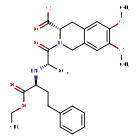
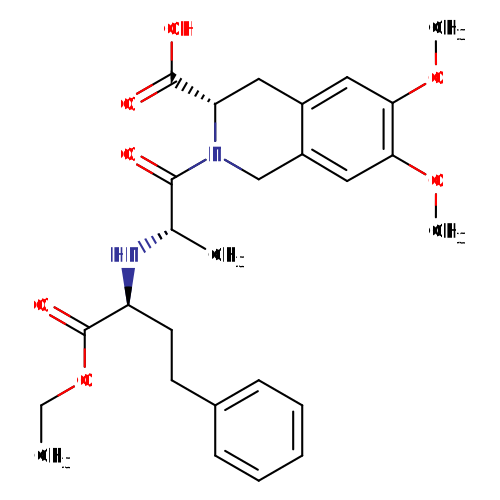
Structure for Moexipril (DB00691)
- Weight
- Average: 498.5681
Monoisotopic: 498.236601452 - Chemical Formula
- C27H34N2O7
- Synonyms
- Moexipril
- Moexiprilum
- External IDs
- RS-10085

Pharmacology
- Indication
For the treatment of hypertension.
 Reduce drug development failure ratesBuild, train, & validate machine-learning modelswith evidence-based and structured datasets.Build, train, & validate predictive machine-learning models with structured datasets.
- Associated Conditions
Indication Type Indication Combined Product Details Approval Level Age Group Patient Characteristics Dose Form Used in combination to manage Hypertension Combination Product in combination with: Hydrochlorothiazide (DB00999) •••••••••••• Management of Hypertension •••••••••••• - Contraindications & Blackbox Warnings
 Prevent Adverse Drug Events TodayTap into our Clinical API for life-saving information on contraindications & blackbox warnings, population restrictions, harmful risks, & more.Avoid life-threatening adverse drug events with our Clinical API
- Pharmacodynamics
Moexipril is a non-sulfhydryl containing precursor of the active angiotensin-converting enzyme (ACE) inhibitor moexiprilat. It is used to treat high blood pressure (hypertension). It works by relaxing blood vessels, causing them to widen. Lowering high blood pressure helps prevent strokes, heart attacks and kidney problems.
- Mechanism of action
Moexipril is a prodrug for moexiprilat, which inhibits ACE in humans and animals. The mechanism through which moexiprilat lowers blood pressure is believed to be primarily inhibition of ACE activity. ACE is a peptidyl dipeptidase that catalyzes the conversion of the inactive decapeptide angiotensin I to the vasoconstrictor substance angiotensin II. Angiotensin II is a potent peripheral vasoconstrictor that also stimulates aldosterone secretion by the adrenal cortex and provides negative feedback on renin secretion. ACE is identical to kininase II, an enzyme that degrades bradykinin, an endothelium-dependent vasodilator. Moexiprilat is about 1000 times as potent as moexipril in inhibiting ACE and kininase II. Inhibition of ACE results in decreased angiotensin II formation, leading to decreased vasoconstriction, increased plasma renin activity, and decreased aldosterone secretion. The latter results in diuresis and natriuresis and a small increase in serum potassium concentration (mean increases of about 0.25 mEq/L were seen when moexipril was used alone). Whether increased levels of bradykinin, a potent vasodepressor peptide, play a role in the therapeutic effects of moexipril remains to be elucidated. Although the principal mechanism of moexipril in blood pressure reduction is believed to be through the renin-angiotensin-aldosterone system, ACE inhibitors have some effect on blood pressure even in apparent low-renin hypertension.
Target Actions Organism AAngiotensin-converting enzyme inhibitorHumans - Absorption
Moexipril is incompletely absorbed, with bioavailability as moexiprilat of about 13% compared to intravenous (I.V.) moexipril (both measuring the metabolite moexiprilat), and is markedly affected by food, which reduces Cmax and AUC by about 70% and 40%, respectively, after the ingestion of a low-fat breakfast or by 80% and 50%, respectively, after the ingestion of a high-fat breakfast.
- Volume of distribution
- 183 L
- Protein binding
Moexiprilat is approxomately 50% protein bound.
- Metabolism
Rapidly converted to moexiprilat, the active metabolite. Conversion to the active metabolite is thought to require carboxyesterases and is likely to occur in organs or tissues, other than the gastrointestinal tract, in which carboxyesterases occur. The liver is thought to be one site of conversion, but not the primary site.
Hover over products below to view reaction partners
- Route of elimination
Moexiprilat undergoes renal elimination.
- Half-life
Moexipril elimination half-life is approximately 1 hour. Moexiprilat elimination half-life is 2 to 9 hours.
- Clearance
- 441 mL/min
- Adverse Effects
 Improve decision support & research outcomesWith structured adverse effects data, including: blackbox warnings, adverse reactions, warning & precautions, & incidence rates. View sample adverse effects data in our new Data Library!Improve decision support & research outcomes with our structured adverse effects data.
- Toxicity
Human overdoses of moexipril have not been reported. In case reports of overdoses with other ACE inhibitors, hypotension has been the principal adverse effect noted. Single oral doses of 2 g/kg moexipril were associated with significant lethality in mice. Rats, however, tolerated single oral doses of up to 3 g/kg. Common adverse effects include cough, dizziness, diarrhea, flu syndrome, fatigue, pharyngitis, flushing, rash, and myalgia
- Pathways
Pathway Category Moexipril Action Pathway Drug action Moexipril Metabolism Pathway Drug metabolism - Pharmacogenomic Effects/ADRs
- Not Available
Interactions
- Drug Interactions
- This information should not be interpreted without the help of a healthcare provider. If you believe you are experiencing an interaction, contact a healthcare provider immediately. The absence of an interaction does not necessarily mean no interactions exist.
Drug Interaction Integrate drug-drug
interactions in your softwareAbaloparatide The risk or severity of adverse effects can be increased when Moexipril is combined with Abaloparatide. Acebutolol Moexipril may increase the hypotensive activities of Acebutolol. Aceclofenac The risk or severity of renal failure, hyperkalemia, and hypertension can be increased when Aceclofenac is combined with Moexipril. Acemetacin The risk or severity of renal failure, hyperkalemia, and hypertension can be increased when Acemetacin is combined with Moexipril. Acetylsalicylic acid The therapeutic efficacy of Moexipril can be decreased when used in combination with Acetylsalicylic acid. - Food Interactions
- Avoid hypertensive herbs (e.g. bayberry, blue cohosh, cayenne, ephedra, and licorice).
- Avoid potassium-containing products. Potassium products increase the risk of hyperkalemia.
- Limit salt intake. Salt may attenuate the antihypertensive effect.
- Take separate from meals. Take 1 hour before meals.
Products
 Drug product information from 10+ global regionsOur datasets provide approved product information including:dosage, form, labeller, route of administration, and marketing period.Access drug product information from over 10 global regions.
- Product Ingredients
Ingredient UNII CAS InChI Key Moexipril Hydrochloride Q1UMG3UH45 82586-52-5 JXRAXHBVZQZSIC-JKVLGAQCSA-N - Active Moieties
Name Kind UNII CAS InChI Key Moexiprilat prodrug H3753190JS 103775-14-0 CMPAGYDKASJORH-YSSFQJQWSA-N - Product Images
- Brand Name Prescription Products
Name Dosage Strength Route Labeller Marketing Start Marketing End Region Image Moexipril hydrochloride Tablet, film coated 7.5 mg/1 Oral Cobalt Laboratories 2006-12-15 2013-02-28 US 

Moexipril hydrochloride Tablet, film coated 15 mg/1 Oral Cobalt Laboratories 2006-12-15 2013-05-31 US Univasc Tablet, film coated 7.5 mg/1 Oral Ucb Inc 1995-07-15 Not applicable US Univasc Tablet, film coated 15 mg/1 Oral Physicians Total Care, Inc. 2001-08-28 2011-06-30 US Univasc Tablet, film coated 7.5 mg/1 Oral Physicians Total Care, Inc. 2003-04-03 2011-06-30 US - Generic Prescription Products
Name Dosage Strength Route Labeller Marketing Start Marketing End Region Image Moexipril Hydrochloride Tablet, coated 7.5 mg/1 Oral Paddock Laboratories, Inc. 2006-11-30 2014-03-31 US Moexipril Hydrochloride Tablet 15 mg/1 Oral Apotex Corp. 2008-06-09 2012-03-31 US Moexipril Hydrochloride Tablet, film coated 15 mg/1 Oral Glenmark Pharmaceuticals Inc., USA 2010-12-31 Not applicable US 
Moexipril Hydrochloride Tablet, film coated 7.5 mg/1 Oral Teva Pharmaceuticals USA, Inc. 2003-05-08 Not applicable US 
Moexipril Hydrochloride Tablet, film coated 7.5 mg/1 Oral Carilion Materials Management 2003-05-08 Not applicable US 
- Mixture Products
Name Ingredients Dosage Route Labeller Marketing Start Marketing End Region Image FEMIPRES PLUS Moexipril (7.5 mg) + Hydrochlorothiazide (12.5 mg) Tablet, film coated Oral Teofarma S.R.L. 2014-07-08 2019-05-08 Italy 
FEMIPRES PLUS Moexipril Hydrochloride (15 MG) + Hydrochlorothiazide (25 MG) Tablet, coated Oral Teofarma S.R.L. 2014-07-08 Not applicable Italy FEMPRESS PLUS 15MG/25MG Moexipril Hydrochloride (15 mg) + Hydrochlorothiazide (25 mg) Tablet, film coated Oral 2010-09-01 2020-12-15 Germany 
Moexipril Hydrochloride and Hydrochlorothiazide Moexipril Hydrochloride (15 mg/1) + Hydrochlorothiazide (12.5 mg/1) Tablet, film coated Oral Heritage Pharmaceuticals Inc. d/b/a Avet Pharmaceuticals Inc. 2014-03-07 2014-03-08 US Moexipril Hydrochloride and Hydrochlorothiazide Moexipril Hydrochloride (15 mg/1) + Hydrochlorothiazide (12.5 mg/1) Tablet, film coated Oral AvKARE, Inc. 2017-04-03 2020-02-03 US


Categories
- ATC Codes
- C09AA13 — Moexipril
- C09AA — ACE inhibitors, plain
- C09A — ACE INHIBITORS, PLAIN
- C09 — AGENTS ACTING ON THE RENIN-ANGIOTENSIN SYSTEM
- C — CARDIOVASCULAR SYSTEM
- Drug Categories
- ACE Inhibitors and Diuretics
- Agents Acting on the Renin-Angiotensin System
- Agents causing angioedema
- Agents causing hyperkalemia
- Angiotensin-Converting Enzyme Inhibitors
- Antihypertensive Agents
- Antihypertensive Agents Indicated for Hypertension
- Cardiovascular Agents
- Drugs causing inadvertant photosensitivity
- Enzyme Inhibitors
- Heterocyclic Compounds, Fused-Ring
- Hypotensive Agents
- Isoquinolines
- Photosensitizing Agents
- Potential QTc-Prolonging Agents
- Protease Inhibitors
- QTc Prolonging Agents
- Chemical TaxonomyProvided by Classyfire
- Description
- This compound belongs to the class of organic compounds known as dipeptides. These are organic compounds containing a sequence of exactly two alpha-amino acids joined by a peptide bond.
- Kingdom
- Organic compounds
- Super Class
- Organic acids and derivatives
- Class
- Carboxylic acids and derivatives
- Sub Class
- Amino acids, peptides, and analogues
- Direct Parent
- Dipeptides
- Alternative Parents
- Alpha amino acid esters / N-acyl-L-alpha-amino acids / Alpha amino acid amides / Tetrahydroisoquinolines / Anisoles / Alkyl aryl ethers / Aralkylamines / Fatty acid esters / Benzene and substituted derivatives / Dicarboxylic acids and derivatives show 10 more
- Substituents
- Alkyl aryl ether / Alpha-amino acid amide / Alpha-amino acid ester / Alpha-amino acid or derivatives / Alpha-dipeptide / Amine / Amino acid / Amino acid or derivatives / Anisole / Aralkylamine show 25 more
- Molecular Framework
- Aromatic heteropolycyclic compounds
- External Descriptors
- peptide (CHEBI:6960)
- Affected organisms
- Humans and other mammals
Chemical Identifiers
- UNII
- WT87C52TJZ
- CAS number
- 103775-10-6
- InChI Key
- UWWDHYUMIORJTA-HSQYWUDLSA-N
- InChI
- InChI=1S/C27H34N2O7/c1-5-36-27(33)21(12-11-18-9-7-6-8-10-18)28-17(2)25(30)29-16-20-15-24(35-4)23(34-3)14-19(20)13-22(29)26(31)32/h6-10,14-15,17,21-22,28H,5,11-13,16H2,1-4H3,(H,31,32)/t17-,21-,22-/m0/s1
- IUPAC Name
- (3S)-2-[(2S)-2-{[(2S)-1-ethoxy-1-oxo-4-phenylbutan-2-yl]amino}propanoyl]-6,7-dimethoxy-1,2,3,4-tetrahydroisoquinoline-3-carboxylic acid
- SMILES
- CCOC(=O)[C@H](CCC1=CC=CC=C1)N[C@@H](C)C(=O)N1CC2=CC(OC)=C(OC)C=C2C[C@H]1C(O)=O
References
- General References
- Asmar R, Sayegh F, Tracz W, Hlawaty M, Olszowska M, Jourde M, Vincent M, Goujoun B, Maldonado J: Reversal of left ventricular hypertrophy with the ACE inhibitor moexipril in patients with essential hypertension. Acta Cardiol. 2002 Feb;57(1):31-2. [Article]
- Blacher J, Raison J, Amah G, Schiemann AL, Stimpel M, Safar ME: Increased arterial distensibility in postmenopausal hypertensive women with and without hormone replacement therapy after acute administration of the ACE inhibitor moexipril. Cardiovasc Drugs Ther. 1998 Sep;12(4):409-14. [Article]
- Brogden RN, Wiseman LR: Moexipril. A review of its use in the management of essential hypertension. Drugs. 1998 Jun;55(6):845-60. [Article]
- Cawello W, Boekens H, Waitzinger J, Miller U: Moexipril shows a long duration of action related to an extended pharmacokinetic half-life and prolonged ACE inhibition. Int J Clin Pharmacol Ther. 2002 Jan;40(1):9-17. [Article]
- Chrysant SG, Chrysant GS: Pharmacological and clinical profile of moexipril: a concise review. J Clin Pharmacol. 2004 Aug;44(8):827-36. [Article]
- Chrysant SG, Chrysant GS: Pharmacological profile and clinical use of moexipril. Expert Rev Cardiovasc Ther. 2003 Sep;1(3):345-52. [Article]
- Chrysant GS, Nguyen PK: Moexipril and left ventricular hypertrophy. Vasc Health Risk Manag. 2007;3(1):23-30. [Article]
- Grass GM, Morehead WT: Evidence for site-specific absorption of a novel ACE inhibitor. Pharm Res. 1989 Sep;6(9):759-65. [Article]
- Kalasz H, Petroianu G, Tekes K, Klebovich I, Ludanyi K, Gulyas Z: Metabolism of moexipril to moexiprilat: determination of in vitro metabolism using HPLC-ES-MS. Med Chem. 2007 Jan;3(1):101-6. [Article]
- Persson B, Stimpel M: Evaluation of the antihypertensive efficacy and tolerability of moexipril, a new ACE inhibitor, compared to hydrochlorothiazide in elderly patients. Eur J Clin Pharmacol. 1996;50(4):259-64. [Article]
- Spinar J, Vitovec J: MORE--MOexipril and REgression of left ventricle hypertrophy in combination therapy A multicentric open label clinical trial. Int J Cardiol. 2005 Apr 20;100(2):199-206. [Article]
- Stimpel M, Koch B, Oparil S: Antihypertensive treatment in postmenopausal women: results from a prospective, randomized, double-blind, controlled study comparing an ACE inhibitor (moexipril) with a diuretic (hydrochlorothiazide). Cardiology. 1998 May;89(4):271-6. [Article]
- White CM: Pharmacologic, pharmacokinetic, and therapeutic differences among ACE inhibitors. Pharmacotherapy. 1998 May-Jun;18(3):588-99. [Article]
- White WB, Whelton A, Fox AA, Stimpel M, Kaihlanen PM: Tricenter assessment of the efficacy of the ACE inhibitor, moexipril, by ambulatory blood pressure monitoring. J Clin Pharmacol. 1995 Mar;35(3):233-8. [Article]
- External Links
- Human Metabolome Database
- HMDB0014829
- KEGG Compound
- C07704
- PubChem Compound
- 91270
- PubChem Substance
- 46508441
- ChemSpider
- 82418
- BindingDB
- 50084673
- 30131
- ChEBI
- 6960
- ChEMBL
- CHEMBL1165
- ZINC
- ZINC000003812306
- Therapeutic Targets Database
- DAP000586
- PharmGKB
- PA164769059
- RxList
- RxList Drug Page
- Drugs.com
- Drugs.com Drug Page
- PDRhealth
- PDRhealth Drug Page
- Wikipedia
- Moexipril
Clinical Trials
- Clinical Trials
Phase Status Purpose Conditions Count 4 Completed Treatment Induction of Intraoperative Hypotension 1 2 Completed Treatment Primary Biliary Cholangitis 1 1 Completed Not Available Healthy Volunteers (HV) 2 1 Completed Treatment Healthy Volunteers (HV) 2 Not Available Completed Not Available Coronavirus Disease 2019 (COVID‑19) / COVID / Hypertension 1
Pharmacoeconomics
- Manufacturers
- Apotex inc
- Glenmark generics ltd
- Paddock laboratories inc
- Teva pharmaceuticals usa inc
- Schwarz pharma inc
- Packagers
- Apotex Inc.
- A-S Medication Solutions LLC
- Cobalt Pharmaceuticals Inc.
- Glenmark Generics Ltd.
- Murfreesboro Pharmaceutical Nursing Supply
- Paddock Labs
- Physicians Total Care Inc.
- Prepackage Specialists
- Resource Optimization and Innovation LLC
- Schwarz Pharma Inc.
- Teva Pharmaceutical Industries Ltd.
- Dosage Forms
Form Route Strength Tablet Oral Tablet Oral Tablet, film coated Oral Tablet Oral 15 mg/1 Tablet Oral 7.5 mg/1 Tablet, coated Oral 15 mg/1 Tablet, coated Oral 7.5 mg/1 Tablet, coated Oral Tablet Oral 7.500 mg Tablet, film coated Oral Tablet, film coated Oral 15 mg/1 Tablet, film coated Oral 7.5 mg/1 Tablet, film coated Oral 15 mg Tablet, film coated Oral 7.5 mg - Prices
Unit description Cost Unit Univasc 15 mg tablet 2.44USD tablet Univasc 7.5 mg tablet 2.13USD tablet Moexipril hcl 15 mg tablet 1.48USD tablet Moexipril hcl 7.5 mg tablet 1.41USD tablet DrugBank does not sell nor buy drugs. Pricing information is supplied for informational purposes only.- Patents
- Not Available
Properties
- State
- Solid
- Experimental Properties
Property Value Source water solubility Soluble (about 10% weight-to-volume) in distilled water at room temperature as HCl salt. Not Available logP 2.7 Not Available - Predicted Properties
Property Value Source Water Solubility 0.00585 mg/mL ALOGPS logP 1.52 ALOGPS logP 1.5 Chemaxon logS -4.9 ALOGPS pKa (Strongest Acidic) 3.46 Chemaxon pKa (Strongest Basic) 5.2 Chemaxon Physiological Charge -1 Chemaxon Hydrogen Acceptor Count 7 Chemaxon Hydrogen Donor Count 2 Chemaxon Polar Surface Area 114.4 Å2 Chemaxon Rotatable Bond Count 12 Chemaxon Refractivity 132.88 m3·mol-1 Chemaxon Polarizability 53.55 Å3 Chemaxon Number of Rings 3 Chemaxon Bioavailability 1 Chemaxon Rule of Five Yes Chemaxon Ghose Filter No Chemaxon Veber's Rule No Chemaxon MDDR-like Rule Yes Chemaxon - Predicted ADMET Features
Property Value Probability Human Intestinal Absorption - 0.5775 Blood Brain Barrier - 0.9022 Caco-2 permeable - 0.7313 P-glycoprotein substrate Substrate 0.9085 P-glycoprotein inhibitor I Inhibitor 0.5919 P-glycoprotein inhibitor II Inhibitor 0.8157 Renal organic cation transporter Non-inhibitor 0.8146 CYP450 2C9 substrate Non-substrate 0.8588 CYP450 2D6 substrate Non-substrate 0.8369 CYP450 3A4 substrate Substrate 0.7014 CYP450 1A2 substrate Non-inhibitor 0.8205 CYP450 2C9 inhibitor Non-inhibitor 0.5961 CYP450 2D6 inhibitor Non-inhibitor 0.8261 CYP450 2C19 inhibitor Non-inhibitor 0.6592 CYP450 3A4 inhibitor Non-inhibitor 0.5935 CYP450 inhibitory promiscuity Low CYP Inhibitory Promiscuity 0.6861 Ames test Non AMES toxic 0.8358 Carcinogenicity Non-carcinogens 0.9378 Biodegradation Not ready biodegradable 0.9762 Rat acute toxicity 2.5131 LD50, mol/kg Not applicable hERG inhibition (predictor I) Weak inhibitor 0.9715 hERG inhibition (predictor II) Inhibitor 0.8751
Spectra
- Mass Spec (NIST)
- Not Available
- Spectra
Spectrum Spectrum Type Splash Key Predicted GC-MS Spectrum - GC-MS Predicted GC-MS splash10-004i-2321900000-ca0e1fd0441e1f76dfdc Predicted MS/MS Spectrum - 10V, Positive (Annotated) Predicted LC-MS/MS splash10-0002-0130900000-80bd1c1fe9badb399c41 Predicted MS/MS Spectrum - 10V, Negative (Annotated) Predicted LC-MS/MS splash10-0002-0142900000-ee1d1fc4470d92f31e75 Predicted MS/MS Spectrum - 20V, Positive (Annotated) Predicted LC-MS/MS splash10-0561-0223900000-33e5316dad9dbe650bd3 Predicted MS/MS Spectrum - 20V, Negative (Annotated) Predicted LC-MS/MS splash10-00ko-5292500000-da4f33ec24cf3065c8b4 Predicted MS/MS Spectrum - 40V, Positive (Annotated) Predicted LC-MS/MS splash10-01ox-3920100000-f53b71a145cc5eb96bcf Predicted MS/MS Spectrum - 40V, Negative (Annotated) Predicted LC-MS/MS splash10-03di-0940100000-6acde9eb8a51e9c5a0f6 Predicted 1H NMR Spectrum 1D NMR Not Applicable Predicted 13C NMR Spectrum 1D NMR Not Applicable - Chromatographic Properties
Collision Cross Sections (CCS)
Adduct CCS Value (Å2) Source type Source [M-H]- 249.3687858 predictedDarkChem Lite v0.1.0 [M-H]- 203.26231 predictedDeepCCS 1.0 (2019) [M+H]+ 250.9179858 predictedDarkChem Lite v0.1.0 [M+H]+ 205.65787 predictedDeepCCS 1.0 (2019) [M+Na]+ 249.2286858 predictedDarkChem Lite v0.1.0 [M+Na]+ 211.57039 predictedDeepCCS 1.0 (2019)
Targets

- Kind
- Protein
- Organism
- Humans
- Pharmacological action
- Yes
- Actions
- Inhibitor
- General Function
- Zinc ion binding
- Specific Function
- Converts angiotensin I to angiotensin II by release of the terminal His-Leu, this results in an increase of the vasoconstrictor activity of angiotensin. Also able to inactivate bradykinin, a potent...
- Gene Name
- ACE
- Uniprot ID
- P12821
- Uniprot Name
- Angiotensin-converting enzyme
- Molecular Weight
- 149713.675 Da
References
- Chen X, Ji ZL, Chen YZ: TTD: Therapeutic Target Database. Nucleic Acids Res. 2002 Jan 1;30(1):412-5. [Article]
- Chrysant SG, Chrysant GS: Pharmacological and clinical profile of moexipril: a concise review. J Clin Pharmacol. 2004 Aug;44(8):827-36. [Article]
- Edling O, Bao G, Feelisch M, Unger T, Gohlke P: Moexipril, a new angiotensin-converting enzyme (ACE) inhibitor: pharmacological characterization and comparison with enalapril. J Pharmacol Exp Ther. 1995 Nov;275(2):854-63. [Article]
- Song JC, White CM: Clinical pharmacokinetics and selective pharmacodynamics of new angiotensin converting enzyme inhibitors: an update. Clin Pharmacokinet. 2002;41(3):207-24. [Article]
Transporters
- Kind
- Protein
- Organism
- Humans
- Pharmacological action
- Unknown
- Actions
- Substrate
- General Function
- Proton-dependent oligopeptide secondary active transmembrane transporter activity
- Specific Function
- Proton-coupled intake of oligopeptides of 2 to 4 amino acids with a preference for dipeptides. May constitute a major route for the absorption of protein digestion end-products.
- Gene Name
- SLC15A1
- Uniprot ID
- P46059
- Uniprot Name
- Solute carrier family 15 member 1
- Molecular Weight
- 78805.265 Da
References
- Knutter I, Wollesky C, Kottra G, Hahn MG, Fischer W, Zebisch K, Neubert RH, Daniel H, Brandsch M: Transport of angiotensin-converting enzyme inhibitors by H+/peptide transporters revisited. J Pharmacol Exp Ther. 2008 Nov;327(2):432-41. doi: 10.1124/jpet.108.143339. Epub 2008 Aug 19. [Article]
- Kind
- Protein
- Organism
- Humans
- Pharmacological action
- Unknown
- Actions
- Substrate
- General Function
- Peptide:proton symporter activity
- Specific Function
- Proton-coupled intake of oligopeptides of 2 to 4 amino acids with a preference for dipeptides.
- Gene Name
- SLC15A2
- Uniprot ID
- Q16348
- Uniprot Name
- Solute carrier family 15 member 2
- Molecular Weight
- 81782.77 Da
References
- Knutter I, Wollesky C, Kottra G, Hahn MG, Fischer W, Zebisch K, Neubert RH, Daniel H, Brandsch M: Transport of angiotensin-converting enzyme inhibitors by H+/peptide transporters revisited. J Pharmacol Exp Ther. 2008 Nov;327(2):432-41. doi: 10.1124/jpet.108.143339. Epub 2008 Aug 19. [Article]

Drug created at June 13, 2005 13:24 / Updated at March 03, 2024 02:32