Identification
- Summary
Lamivudine is a reverse transcriptase inhibitor used to treat HIV and hepatitis B infections.
- Brand Names
- Cimduo, Combivir, Delstrigo, Dovato, Epivir, Epivir Hbv, Epzicom, Kivexa, Symfi, Triumeq, Trizivir, Zeffix
- Generic Name
- Lamivudine
- DrugBank Accession Number
- DB00709
- Background
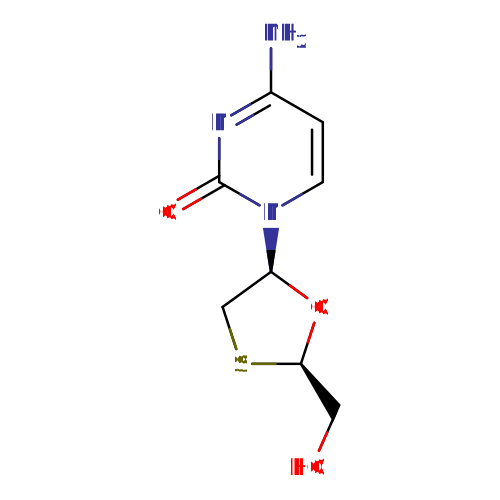
A reverse transcriptase inhibitor and zalcitabine analog in which a sulfur atom replaces the 3' carbon of the pentose ring. It is used to treat Human Immunodeficiency Virus Type 1 (HIV-1) and hepatitis B (HBV).
- Type
- Small Molecule
- Groups
- Approved, Investigational
- Structure
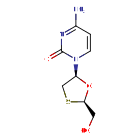
Structure for Lamivudine (DB00709)
- Weight
- Average: 229.256
Monoisotopic: 229.052111923 - Chemical Formula
- C8H11N3O3S
- Synonyms
- (-)-1-((2R,5S)-2-(Hydroxymethyl)-1,3-oxathiolan-5-yl)cytosine
- (-)-2'-Deoxy-3'-thiacytidine
- 2',3'-Dideoxy-3'-thiacytidine
- 3'-Thia-2',3'-dideoxycytidine
- 3TC
- beta-L-2',3'-Dideoxy-3'-thiacytidine
- beta-L-3'-Thia-2',3'-dideoxycytidine
- Lamivudin
- Lamivudina
- Lamivudine
- Lamivudinum
- External IDs
- BCH 189, (-)-
- GR 109714X
- GR-109714X

Pharmacology
- Indication
For the treatment of HIV infection and chronic hepatitis B (HBV).
 Reduce drug development failure ratesBuild, train, & validate machine-learning modelswith evidence-based and structured datasets.Build, train, & validate predictive machine-learning models with structured datasets.
- Associated Conditions
Indication Type Indication Combined Product Details Approval Level Age Group Patient Characteristics Dose Form Treatment of Chronic hepatitis b •••••••••••• Treatment of Hiv infection •••••••••••• Used in combination to treat Human immunodeficiency virus type 1 (hiv-1) infection Combination Product in combination with: Dolutegravir (DB08930), Abacavir (DB01048) •••••••••••• •••••• ••••••••• •••• •••••• •• •• •• •• •••• ••••••• ••••••• ••• •••••••••• Used in combination to treat Human immunodeficiency virus type 1 (hiv-1) infection Combination Product in combination with: Dolutegravir (DB08930) •••••••••••• ••••• •••••• •••••••••••••• •••••••• ••••••••••••• •••••••••• •••••• ••• •••• •••• •• •••••• ••• •••• •• ••••••• •• ••••••••• ••••••• Used in combination to treat Human immunodeficiency virus type 1 (hiv-1) infection Combination Product in combination with: Dolutegravir (DB08930) •••••••••••• ••••• ••••••••• ••••• - Contraindications & Blackbox Warnings
 Prevent Adverse Drug Events TodayTap into our Clinical API for life-saving information on contraindications & blackbox warnings, population restrictions, harmful risks, & more.Avoid life-threatening adverse drug events with our Clinical API
- Pharmacodynamics
Lamivudine is a nucleoside reverse transcriptase inhibitor (NRTI) with activity against Human Immunodeficiency Virus Type 1 (HIV-1) and hepatitis B (HBV) to disrupt viral DNA synthesis. When phosphorylated, lamivudine can form active metabolites that compete for incorporation into viral DNA. Via DNA incorporation, lamivudine metabolites competitively inhibit the activity of the HIV reverse transcriptase enzyme and act as a chain terminator of DNA synthesis. Due to the lack of a 3'-OH group, incorporated nucleoside analogues prevent the formation of a 5' to 3' phosphodiester linkage that is essential for DNA chain elongation.
- Mechanism of action
Lamivudine is a synthetic nucleoside analogue and is phosphorylated intracellularly to its active 5'-triphosphate metabolite, lamivudine triphosphate (L-TP). This nucleoside analogue is incorporated into viral DNA by HIV reverse transcriptase and HBV polymerase, resulting in DNA chain termination.
Target Actions Organism AReverse transcriptase/RNaseH inhibitorHuman immunodeficiency virus 1 ADNA binderHumans AProtein P inhibitorHBV-F - Absorption
Lamivudine was rapidly absorbed after oral administration in HIV-infected patients. Absolute bioavailability in 12 adult patients was 86% ± 16% (mean ± SD) for the 150-mg tablet and 87% ± 13% for the oral solution. The peak serum lamivudine concentration (Cmax) was 1.5 ± 0.5 mcg/mL when an oral dose of 2 mg/kg twice a day was given to HIV-1 patients. When given with food, absorption is slower, compared to the fasted state.
- Volume of distribution
Apparent volume of distribution, IV administration = 1.3 ± 0.4 L/kg. Volume of distribution was independent of dose and did not correlate with body weight.
- Protein binding
<36% bound to plasma protein.
- Metabolism
Metabolism of lamivudine is a minor route of elimination. In man, the only known metabolite of lamivudine is the trans-sulfoxide metabolite. This biotransformation is catalyzed by sulfotransferases.
Hover over products below to view reaction partners
- Route of elimination
The majority of lamivudine is eliminated unchanged in urine by active organic cationic secretion. 5.2% ± 1.4% (mean ± SD) of the dose was excreted as the trans-sulfoxide metabolite in the urine. Lamivudine is excreted in human breast milk and into the milk of lactating rats.
- Half-life
5 to 7 hours (healthy or HBV-infected patients)
- Clearance
- Renal clearance = 199.7 ± 56.9 mL/min [300 mg oral dose, healthy subjects]
- Renal clearance = 280.4 ± 75.2 mL/min [single IV dose, HIV-1-infected patients]
- Total clearance = 398.5 ± 69.1 mL/min [HIV-1-infected patients]
- Adverse Effects
 Improve decision support & research outcomesWith structured adverse effects data, including: blackbox warnings, adverse reactions, warning & precautions, & incidence rates. View sample adverse effects data in our new Data Library!Improve decision support & research outcomes with our structured adverse effects data.
- Toxicity
The most common reported adverse reactions (incidence ≥15%) in adults were headache, nausea, malaise and fatigue, nasal signs and symptoms, diarrhea, and cough.
- Pathways
Pathway Category Lamivudine Metabolism Pathway Drug metabolism Lamivudine Action Pathway Drug action - Pharmacogenomic Effects/ADRs
- Not Available
Interactions
- Drug Interactions
- This information should not be interpreted without the help of a healthcare provider. If you believe you are experiencing an interaction, contact a healthcare provider immediately. The absence of an interaction does not necessarily mean no interactions exist.
Drug Interaction Integrate drug-drug
interactions in your softwareAbemaciclib Abemaciclib may decrease the excretion rate of Lamivudine which could result in a higher serum level. Aceclofenac Aceclofenac may decrease the excretion rate of Lamivudine which could result in a higher serum level. Acemetacin Acemetacin may decrease the excretion rate of Lamivudine which could result in a higher serum level. Acetaminophen Acetaminophen may decrease the excretion rate of Lamivudine which could result in a higher serum level. Acetazolamide Acetazolamide may increase the excretion rate of Lamivudine which could result in a lower serum level and potentially a reduction in efficacy. - Food Interactions
- Take with or without food. Food delays drug absorption, but not to a clinically significant extent.
Products
 Drug product information from 10+ global regionsOur datasets provide approved product information including:dosage, form, labeller, route of administration, and marketing period.Access drug product information from over 10 global regions.
- Product Images
- International/Other Brands
- Amilitrap (Dosa) / Antiheb (Mebiphar) / Avilam (Beximco) / Avolam (Ranbaxy Laboratories) / Epivir-HBV (GlaxoSmithKline) / Flamivud (Flamingo Pharmacueticals) / Ganvirel (Ivax) / Hepavir (Square) / Hepitec (GlaxoSmithKline) / Heptavir (Hetero) / Heptodin (GlaxoSmithKline) / Heptodine (GlaxoSmithKline) / Lamda (Cadila) / Lamibergen (Paylos) / Lamidac (Zydus) / Lamitec (Zifam India) / Lamivir (Incepta) / Zeffix (GlaxoSmithKline)
- Brand Name Prescription Products
Name Dosage Strength Route Labeller Marketing Start Marketing End Region Image 3tc Tablet 300 mg Oral ViiV Healthcare ULC 2003-09-09 Not applicable Canada 
3tc Tablet 150 mg Oral ViiV Healthcare ULC 1995-12-31 Not applicable Canada 3tc Solution 10 mg / mL Oral ViiV Healthcare ULC 1995-12-31 Not applicable Canada Combivir Tablet, film coated 150 mg/1 Oral Remedy Repack 2013-03-12 2014-03-12 US 

Epivir Tablet 150 mg/1 Oral Remedy Repack 2011-02-03 2012-10-18 US - Generic Prescription Products
Name Dosage Strength Route Labeller Marketing Start Marketing End Region Image Apo-lamivudine Tablet 300 mg Oral Apotex Corporation 2012-05-18 Not applicable Canada Apo-lamivudine Tablet 150 mg Oral Apotex Corporation 2012-05-18 Not applicable Canada Apo-lamivudine Hbv Tablet 100 mg Oral Apotex Corporation 2012-09-21 Not applicable Canada Auro-lamivudine Tablet 300 mg Oral Auro Pharma Inc 2013-10-16 2013-10-16 Canada Auro-lamivudine Tablet 150 mg Oral Auro Pharma Inc 2013-10-16 2013-10-16 Canada - Mixture Products
Name Ingredients Dosage Route Labeller Marketing Start Marketing End Region Image ABACAVIR 600 MG + LAMIVUDINA 300 MG TABLETAS RECUBIERTAS Lamivudine (300 mg) + Abacavir sulfate (600 mg) Tablet, coated Oral NUTRI MACK S.A.S. 2015-03-18 2020-06-05 Colombia 
Abacavir and Lamivudine Lamivudine (300 mg/1) + Abacavir sulfate (600 mg/1) Tablet, film coated Oral Teva Pharmaceuticals USA, Inc. 2016-09-29 2021-11-30 US Abacavir and Lamivudine Lamivudine (300 mg/1) + Abacavir sulfate (600 mg/1) Tablet, film coated Oral Burel Pharmaceuticals, Llc 2019-11-15 Not applicable US Abacavir and Lamivudine Lamivudine (300 mg/1) + Abacavir sulfate (600 mg/1) Tablet, film coated Oral Prasco Laboratories 2016-09-29 2020-12-31 US Abacavir and Lamivudine Lamivudine (300 mg/1) + Abacavir sulfate (600 mg/1) Tablet, film coated Oral Lupin Pharmaceuticals, Inc. 2017-03-28 Not applicable US


Categories
- ATC Codes
- J05AR27 — Lamivudine, tenofovir disoproxil and dolutegravir
- J05AR — Antivirals for treatment of HIV infections, combinations
- J05A — DIRECT ACTING ANTIVIRALS
- J05 — ANTIVIRALS FOR SYSTEMIC USE
- J — ANTIINFECTIVES FOR SYSTEMIC USE
- J05AR — Antivirals for treatment of HIV infections, combinations
- J05A — DIRECT ACTING ANTIVIRALS
- J05 — ANTIVIRALS FOR SYSTEMIC USE
- J — ANTIINFECTIVES FOR SYSTEMIC USE
- J05AR — Antivirals for treatment of HIV infections, combinations
- J05A — DIRECT ACTING ANTIVIRALS
- J05 — ANTIVIRALS FOR SYSTEMIC USE
- J — ANTIINFECTIVES FOR SYSTEMIC USE
- J05AR — Antivirals for treatment of HIV infections, combinations
- J05A — DIRECT ACTING ANTIVIRALS
- J05 — ANTIVIRALS FOR SYSTEMIC USE
- J — ANTIINFECTIVES FOR SYSTEMIC USE
- J05AR — Antivirals for treatment of HIV infections, combinations
- J05A — DIRECT ACTING ANTIVIRALS
- J05 — ANTIVIRALS FOR SYSTEMIC USE
- J — ANTIINFECTIVES FOR SYSTEMIC USE
- J05AR — Antivirals for treatment of HIV infections, combinations
- J05A — DIRECT ACTING ANTIVIRALS
- J05 — ANTIVIRALS FOR SYSTEMIC USE
- J — ANTIINFECTIVES FOR SYSTEMIC USE
- J05AR — Antivirals for treatment of HIV infections, combinations
- J05A — DIRECT ACTING ANTIVIRALS
- J05 — ANTIVIRALS FOR SYSTEMIC USE
- J — ANTIINFECTIVES FOR SYSTEMIC USE
- J05AR — Antivirals for treatment of HIV infections, combinations
- J05A — DIRECT ACTING ANTIVIRALS
- J05 — ANTIVIRALS FOR SYSTEMIC USE
- J — ANTIINFECTIVES FOR SYSTEMIC USE
- J05AR — Antivirals for treatment of HIV infections, combinations
- J05A — DIRECT ACTING ANTIVIRALS
- J05 — ANTIVIRALS FOR SYSTEMIC USE
- J — ANTIINFECTIVES FOR SYSTEMIC USE
- J05AR — Antivirals for treatment of HIV infections, combinations
- J05A — DIRECT ACTING ANTIVIRALS
- J05 — ANTIVIRALS FOR SYSTEMIC USE
- J — ANTIINFECTIVES FOR SYSTEMIC USE
- J05AR — Antivirals for treatment of HIV infections, combinations
- J05A — DIRECT ACTING ANTIVIRALS
- J05 — ANTIVIRALS FOR SYSTEMIC USE
- J — ANTIINFECTIVES FOR SYSTEMIC USE
- J05AR — Antivirals for treatment of HIV infections, combinations
- J05A — DIRECT ACTING ANTIVIRALS
- J05 — ANTIVIRALS FOR SYSTEMIC USE
- J — ANTIINFECTIVES FOR SYSTEMIC USE
- Drug Categories
- Agents Causing Muscle Toxicity
- Anti-HIV Agents
- Anti-Infective Agents
- Anti-Retroviral Agents
- Antiinfectives for Systemic Use
- Antiviral Agents
- Antivirals for Systemic Use
- Antivirals used in combination for the treatment of HIV infections
- BCRP/ABCG2 Substrates
- Deoxycytidine
- Deoxyribonucleosides
- Dideoxynucleosides
- Direct Acting Antivirals
- Drugs that are Mainly Renally Excreted
- Enzyme Inhibitors
- Hepatitis B Virus Nucleoside Analog Reverse Transcriptase Inhibitor
- Human Immunodeficiency Virus Nucleoside Analog Reverse Transcriptase Inhibitor
- Nucleic Acid Synthesis Inhibitors
- Nucleic Acids, Nucleotides, and Nucleosides
- Nucleoside and Nucleotide Reverse Transcriptase Inhibitors
- Nucleoside Reverse Transcriptase Inhibitors
- Nucleosides
- OAT1/SLC22A6 Substrates
- OCT1 substrates
- OCT2 Substrates
- P-glycoprotein substrates
- Pyrimidine Nucleosides
- Pyrimidines
- Reverse Transcriptase Inhibitors
- Chemical TaxonomyProvided by Classyfire
- Description
- This compound belongs to the class of organic compounds known as 3'-thia pyrimidine nucleosides. These are nucleoside analogues with a structure that consists of a pyrimidine base, which is N-substituted at the 1-position with a 3'-thia derivative (1,3-oxazolidine) of the ribose moiety that is characteristic of nucleosides.
- Kingdom
- Organic compounds
- Super Class
- Nucleosides, nucleotides, and analogues
- Class
- Nucleoside and nucleotide analogues
- Sub Class
- 3'-thia pyrimidine nucleosides
- Direct Parent
- 3'-thia pyrimidine nucleosides
- Alternative Parents
- Hydroxypyrimidines / Hydropyrimidines / Oxathiolanes / Monothioacetals / Heteroaromatic compounds / Oxacyclic compounds / Azacyclic compounds / Primary alcohols / Organopnictogen compounds / Organonitrogen compounds show 1 more
- Substituents
- 3'-thia pyrimidine nucleoside / Alcohol / Aromatic heteromonocyclic compound / Azacycle / Heteroaromatic compound / Hydrocarbon derivative / Hydropyrimidine / Hydroxypyrimidine / Monothioacetal / Organic nitrogen compound show 9 more
- Molecular Framework
- Aromatic heteromonocyclic compounds
- External Descriptors
- primary alcohol, oxacycle, monothioacetal (CHEBI:63577)
- Affected organisms
- Human Immunodeficiency Virus
- Hepatitis B virus
Chemical Identifiers
- UNII
- 2T8Q726O95
- CAS number
- 134678-17-4
- InChI Key
- JTEGQNOMFQHVDC-NKWVEPMBSA-N
- InChI
- InChI=1S/C8H11N3O3S/c9-5-1-2-11(8(13)10-5)6-4-15-7(3-12)14-6/h1-2,6-7,12H,3-4H2,(H2,9,10,13)/t6-,7+/m0/s1
- IUPAC Name
- 4-amino-1-[(2R,5S)-2-(hydroxymethyl)-1,3-oxathiolan-5-yl]-1,2-dihydropyrimidin-2-one
- SMILES
- NC1=NC(=O)N(C=C1)[C@@H]1CS[C@H](CO)O1
References
- Synthesis Reference
Jinliang LI, Feng LV, "PROCESS FOR STEREOSELECTIVE SYNTHESIS OF LAMIVUDINE." U.S. Patent US20100249409, issued September 30, 2010.
US20100249409- General References
- Fox Z, Dragsted UB, Gerstoft J, Phillips AN, Kjaer J, Mathiesen L, Youle M, Katlama C, Hill A, Bruun JN, Clumeck N, Dellamonica P, Lundgren JD: A randomized trial to evaluate continuation versus discontinuation of lamivudine in individuals failing a lamivudine-containing regimen: the COLATE trial. Antivir Ther. 2006;11(6):761-70. [Article]
- FDA Approved Drug Products: Triumeq/Triumeq PD (abacavir, dolutegravir, and lamivudine) for oral administration [Link]
- External Links
- Human Metabolome Database
- HMDB0014847
- KEGG Drug
- D00353
- KEGG Compound
- C07065
- PubChem Compound
- 60825
- PubChem Substance
- 46507855
- ChemSpider
- 54812
- BindingDB
- 50366817
- 68244
- ChEBI
- 63577
- ChEMBL
- CHEMBL141
- ZINC
- ZINC000000012346
- Therapeutic Targets Database
- DAP000167
- PharmGKB
- PA450163
- PDBe Ligand
- 3TC
- RxList
- RxList Drug Page
- Drugs.com
- Drugs.com Drug Page
- PDRhealth
- PDRhealth Drug Page
- Wikipedia
- Lamivudine
- PDB Entries
- 2noa
- FDA label
- Download (310 KB)
- MSDS
- Download (57.6 KB)
Clinical Trials
- Clinical Trials
Phase Status Purpose Conditions Count 4 Active Not Recruiting Treatment Human Immunodeficiency Virus (HIV) Infections 2 4 Active Not Recruiting Treatment Human Immunodeficiency Virus Type 1 (HIV-1) Infection 1 4 Completed Not Available Human Immunodeficiency Virus (HIV) Infections 1 4 Completed Not Available Human Immunodeficiency Virus (HIV) Infections / Proteinuria 1 4 Completed Basic Science Abnormality of Adipose Tissue / Antiviral Drug Adverse Reaction / Body Fat Disorder / Cardiovascular Abnormalities / HIV Lipodystrophy Syndrome / Human Immunodeficiency Virus Type 1 (HIV-1) Infection / Vascular Diseases / Weight Changes 1
Pharmacoeconomics
- Manufacturers
- Viiv healthcare co
- Glaxosmithkline
- Packagers
- Apotheca Inc.
- A-S Medication Solutions LLC
- Cardinal Health
- Dept Health Central Pharmacy
- Dispensing Solutions
- Diversified Healthcare Services Inc.
- GlaxoSmithKline Inc.
- Kaiser Foundation Hospital
- Murfreesboro Pharmaceutical Nursing Supply
- Nucare Pharmaceuticals Inc.
- Physicians Total Care Inc.
- Rebel Distributors Corp.
- Remedy Repack
- Southwood Pharmaceuticals
- St Mary's Medical Park Pharmacy
- Tya Pharmaceuticals
- ViiV Healthcare ULC
- Dosage Forms
Form Route Strength Solution Oral 1.000 g Solution Oral 10 mg / mL Tablet Oral 150 mg Tablet Oral 300 mg Solution Oral 10 MG/ML Tablet Oral 150.000 mg Tablet, coated Oral Solution Oral 10 mg/1mL Tablet Oral 150 mg/1 Tablet, film coated Oral 150 mg/1 Tablet, film coated Oral 300 mg/1 Tablet, film coated Oral 300 MG Solution Oral 5 mg/1mL Tablet, film coated Oral 100 mg/1 Tablet, film coated Oral Solution Oral 5 mg / mL Tablet Oral 100 mg Solution Oral 0.5 g Tablet Oral Solution Oral Solution Oral 1 g Solution Oral 10 mg Tablet Oral 300 mg/1 Tablet Oral Tablet Oral 400.000 mg Tablet, film coated Oral Tablet Oral 150.000 mg Tablet Oral 150.00 mg Kit; tablet, film coated Oral Solution Oral 5 MG/ML Tablet, soluble Oral Tablet, coated Oral 150 mg Tablet, coated Oral 300 mg Syrup 10 mg/1ml Tablet, film coated Oral 150 mg Tablet, film coated Oral 100 mg - Prices
Unit description Cost Unit Epzicom 600-300 mg tablet 37.21USD tablet Epzicom tablet 35.78USD tablet Epivir 300 mg tablet 15.57USD tablet Epivir hbv 100 mg tablet 13.94USD tablet Epivir 150 mg tablet 7.79USD tablet Epivir 10 mg/ml Solution 0.53USD ml DrugBank does not sell nor buy drugs. Pricing information is supplied for informational purposes only.- Patents
Patent Number Pediatric Extension Approved Expires (estimated) Region US7119202 No 2006-10-10 2009-08-08 US CA2070230 No 2004-08-03 2012-06-02 Canada CA2100269 No 1999-02-23 2012-01-03 Canada US9242986 Yes 2016-01-26 2030-06-08 US US5905082 Yes 1999-05-18 2016-11-18 US US6004968 Yes 1999-12-21 2018-09-20 US US6294540 Yes 2001-09-25 2018-11-14 US US7217713 Yes 2007-05-15 2023-04-21 US US7435734 Yes 2008-10-14 2023-04-21 US US7754731 Yes 2010-07-13 2029-09-11 US US7169780 Yes 2007-01-30 2024-04-03 US US6417191 Yes 2002-07-09 2016-09-28 US US8129385 Yes 2012-03-06 2028-04-05 US US7820660 No 2010-10-26 2023-04-25 US US8486975 No 2013-07-16 2031-10-07 US US10603282 No 2020-03-31 2036-11-29 US US10842751 No 2020-11-24 2036-11-29 US US11234985 No 2011-01-24 2031-01-24 US
Properties
- State
- Solid
- Experimental Properties
Property Value Source melting point (°C) 160-162 °C Not Available water solubility 70 mg/ml Not Available logP -1.4 Not Available - Predicted Properties
Property Value Source Water Solubility 2.76 mg/mL ALOGPS logP -1.3 ALOGPS logP -1.1 Chemaxon logS -1.9 ALOGPS pKa (Strongest Acidic) 14.29 Chemaxon pKa (Strongest Basic) 4.3 Chemaxon Physiological Charge 0 Chemaxon Hydrogen Acceptor Count 5 Chemaxon Hydrogen Donor Count 2 Chemaxon Polar Surface Area 88.15 Å2 Chemaxon Rotatable Bond Count 2 Chemaxon Refractivity 55.16 m3·mol-1 Chemaxon Polarizability 21.98 Å3 Chemaxon Number of Rings 2 Chemaxon Bioavailability 1 Chemaxon Rule of Five Yes Chemaxon Ghose Filter No Chemaxon Veber's Rule No Chemaxon MDDR-like Rule No Chemaxon - Predicted ADMET Features
Property Value Probability Human Intestinal Absorption + 0.9932 Blood Brain Barrier + 0.9792 Caco-2 permeable - 0.7147 P-glycoprotein substrate Non-substrate 0.7523 P-glycoprotein inhibitor I Non-inhibitor 0.9561 P-glycoprotein inhibitor II Non-inhibitor 0.9803 Renal organic cation transporter Non-inhibitor 0.8646 CYP450 2C9 substrate Non-substrate 0.7476 CYP450 2D6 substrate Non-substrate 0.8393 CYP450 3A4 substrate Non-substrate 0.6393 CYP450 1A2 substrate Non-inhibitor 0.8687 CYP450 2C9 inhibitor Non-inhibitor 0.7933 CYP450 2D6 inhibitor Non-inhibitor 0.9206 CYP450 2C19 inhibitor Non-inhibitor 0.8282 CYP450 3A4 inhibitor Non-inhibitor 0.831 CYP450 inhibitory promiscuity Low CYP Inhibitory Promiscuity 0.887 Ames test AMES toxic 0.6341 Carcinogenicity Non-carcinogens 0.782 Biodegradation Not ready biodegradable 0.9698 Rat acute toxicity 2.1348 LD50, mol/kg Not applicable hERG inhibition (predictor I) Weak inhibitor 0.9834 hERG inhibition (predictor II) Non-inhibitor 0.8735
Spectra
- Mass Spec (NIST)
- Not Available
- Spectra
Spectrum Spectrum Type Splash Key Predicted GC-MS Spectrum - GC-MS Predicted GC-MS splash10-00uv-9710000000-73bdde0fcb4c41646b42 Predicted MS/MS Spectrum - 10V, Positive (Annotated) Predicted LC-MS/MS splash10-03di-0910000000-f4743be948a8bbfe17c7 Predicted MS/MS Spectrum - 10V, Negative (Annotated) Predicted LC-MS/MS splash10-0fc9-0940000000-a5ab9755499cde6cd658 Predicted MS/MS Spectrum - 20V, Positive (Annotated) Predicted LC-MS/MS splash10-03di-1900000000-350a6fcacb7048e72025 Predicted MS/MS Spectrum - 20V, Negative (Annotated) Predicted LC-MS/MS splash10-014i-7900000000-e2be324c50df2254e28d Predicted MS/MS Spectrum - 40V, Positive (Annotated) Predicted LC-MS/MS splash10-0j4j-9600000000-b010ac9fc37a772d7e35 Predicted MS/MS Spectrum - 40V, Negative (Annotated) Predicted LC-MS/MS splash10-0f7x-8900000000-19976b9add3542a0679b Predicted 1H NMR Spectrum 1D NMR Not Applicable Predicted 13C NMR Spectrum 1D NMR Not Applicable - Chromatographic Properties
Collision Cross Sections (CCS)
Adduct CCS Value (Å2) Source type Source [M-H]- 151.345742 predictedDarkChem Lite v0.1.0 [M-H]- 145.1802 predictedDeepCCS 1.0 (2019) [M+H]+ 151.802242 predictedDarkChem Lite v0.1.0 [M+H]+ 147.57576 predictedDeepCCS 1.0 (2019) [M+Na]+ 151.027242 predictedDarkChem Lite v0.1.0 [M+Na]+ 153.58812 predictedDeepCCS 1.0 (2019)
Targets

- Kind
- Protein
- Organism
- Human immunodeficiency virus 1
- Pharmacological action
- Yes
- Actions
- Inhibitor
- General Function
- Rna-dna hybrid ribonuclease activity
- Specific Function
- Not Available
- Gene Name
- pol
- Uniprot ID
- Q72547
- Uniprot Name
- Reverse transcriptase/RNaseH
- Molecular Weight
- 65223.615 Da
References
- van Leeuwen R, Lange JM, Hussey EK, Donn KH, Hall ST, Harker AJ, Jonker P, Danner SA: The safety and pharmacokinetics of a reverse transcriptase inhibitor, 3TC, in patients with HIV infection: a phase I study. AIDS. 1992 Dec;6(12):1471-5. [Article]
- De Clercq E: Emerging anti-HIV drugs. Expert Opin Emerg Drugs. 2005 May;10(2):241-73. [Article]
References
- Pan XP, Li LJ, Du WB, Li MW, Cao HC, Sheng JF: Differences of YMDD mutational patterns, precore/core promoter mutations, serum HBV DNA levels in lamivudine-resistant hepatitis B genotypes B and C. J Viral Hepat. 2007 Nov;14(11):767-74. [Article]
- Dai CY, Yu ML, Hsieh MY, Lee LP, Hou NJ, Huang JF, Chen SC, Lin ZY, Hsieh MY, Wang LY, Tsai JF, Chang WY, Chuang WL: Early response to lamivudine therapy in clinically non-cirrhotic chronic hepatitis B patients with decompensation. Liver Int. 2007 Dec;27(10):1364-70. Epub 2007 Sep 26. [Article]
- Ma H, Guo F, Wei L, Sun Y, Wang H: [The prospective study of the clinical features and outcome of HBeAg-negative and HBeAg-positive cirrhosis in patients with chronic type B hepatitis]. Zhonghua Yi Xue Za Zhi. 2007 Jul 10;87(26):1832-5. [Article]
- Kind
- Protein
- Organism
- HBV-F
- Pharmacological action
- Yes
- Actions
- Inhibitor
- General Function
- Rna-dna hybrid ribonuclease activity
- Specific Function
- Multifunctional enzyme that converts the viral RNA genome into dsDNA in viral cytoplasmic capsids. This enzyme displays a DNA polymerase activity that can copy either DNA or RNA templates, and a ri...
- Gene Name
- P
- Uniprot ID
- Q05486
- Uniprot Name
- Protein P
- Molecular Weight
- 94257.43 Da
References
- Overington JP, Al-Lazikani B, Hopkins AL: How many drug targets are there? Nat Rev Drug Discov. 2006 Dec;5(12):993-6. [Article]
- Imming P, Sinning C, Meyer A: Drugs, their targets and the nature and number of drug targets. Nat Rev Drug Discov. 2006 Oct;5(10):821-34. [Article]
- Stuyver LJ, Locarnini SA, Lok A, Richman DD, Carman WF, Dienstag JL, Schinazi RF: Nomenclature for antiviral-resistant human hepatitis B virus mutations in the polymerase region. Hepatology. 2001 Mar;33(3):751-7. [Article]
Enzymes
- Kind
- Protein
- Organism
- Humans
- Pharmacological action
- Unknown
- Actions
- Substrate
- General Function
- Protein homodimerization activity
- Specific Function
- Required for the phosphorylation of the deoxyribonucleosides deoxycytidine (dC), deoxyguanosine (dG) and deoxyadenosine (dA). Has broad substrate specificity, and does not display selectivity based...
- Gene Name
- DCK
- Uniprot ID
- P27707
- Uniprot Name
- Deoxycytidine kinase
- Molecular Weight
- 30518.315 Da
References
- Hunsucker SA, Mitchell BS, Spychala J: The 5'-nucleotidases as regulators of nucleotide and drug metabolism. Pharmacol Ther. 2005 Jul;107(1):1-30. [Article]
- Cihlar T, Ray AS: Nucleoside and nucleotide HIV reverse transcriptase inhibitors: 25 years after zidovudine. Antiviral Res. 2010 Jan;85(1):39-58. doi: 10.1016/j.antiviral.2009.09.014. Epub 2009 Nov 1. [Article]
- Kind
- Protein
- Organism
- Humans
- Pharmacological action
- Unknown
- Actions
- Substrate
- General Function
- Uridylate kinase activity
- Specific Function
- Catalyzes the phosphorylation of pyrimidine nucleoside monophosphates at the expense of ATP. Plays an important role in de novo pyrimidine nucleotide biosynthesis. Has preference for UMP and CMP as...
- Gene Name
- CMPK1
- Uniprot ID
- P30085
- Uniprot Name
- UMP-CMP kinase
- Molecular Weight
- 22222.175 Da
References
- Hunsucker SA, Mitchell BS, Spychala J: The 5'-nucleotidases as regulators of nucleotide and drug metabolism. Pharmacol Ther. 2005 Jul;107(1):1-30. [Article]
- Cihlar T, Ray AS: Nucleoside and nucleotide HIV reverse transcriptase inhibitors: 25 years after zidovudine. Antiviral Res. 2010 Jan;85(1):39-58. doi: 10.1016/j.antiviral.2009.09.014. Epub 2009 Nov 1. [Article]
- Kind
- Protein
- Organism
- Humans
- Pharmacological action
- Unknown
- Actions
- Substrate
- General Function
- Phosphoglycerate kinase activity
- Specific Function
- In addition to its role as a glycolytic enzyme, it seems that PGK-1 acts as a polymerase alpha cofactor protein (primer recognition protein).
- Gene Name
- PGK1
- Uniprot ID
- P00558
- Uniprot Name
- Phosphoglycerate kinase 1
- Molecular Weight
- 44614.36 Da
References
- Hunsucker SA, Mitchell BS, Spychala J: The 5'-nucleotidases as regulators of nucleotide and drug metabolism. Pharmacol Ther. 2005 Jul;107(1):1-30. [Article]
- Cihlar T, Ray AS: Nucleoside and nucleotide HIV reverse transcriptase inhibitors: 25 years after zidovudine. Antiviral Res. 2010 Jan;85(1):39-58. doi: 10.1016/j.antiviral.2009.09.014. Epub 2009 Nov 1. [Article]
- Kind
- Protein
- Organism
- Humans
- Pharmacological action
- Unknown
- Actions
- Substrate
- General Function
- Ribosomal small subunit binding
- Specific Function
- Major role in the synthesis of nucleoside triphosphates other than ATP. The ATP gamma phosphate is transferred to the NDP beta phosphate via a ping-pong mechanism, using a phosphorylated active-sit...
- Gene Name
- NME1
- Uniprot ID
- P15531
- Uniprot Name
- Nucleoside diphosphate kinase A
- Molecular Weight
- 17148.635 Da
References
- Hunsucker SA, Mitchell BS, Spychala J: The 5'-nucleotidases as regulators of nucleotide and drug metabolism. Pharmacol Ther. 2005 Jul;107(1):1-30. [Article]
- Cihlar T, Ray AS: Nucleoside and nucleotide HIV reverse transcriptase inhibitors: 25 years after zidovudine. Antiviral Res. 2010 Jan;85(1):39-58. doi: 10.1016/j.antiviral.2009.09.014. Epub 2009 Nov 1. [Article]
- Kind
- Protein
- Organism
- Humans
- Pharmacological action
- Unknown
- Actions
- Substrate
- General Function
- Transcription factor activity, sequence-specific dna binding
- Specific Function
- Major role in the synthesis of nucleoside triphosphates other than ATP. Negatively regulates Rho activity by interacting with AKAP13/LBC. Acts as a transcriptional activator of the MYC gene; binds ...
- Gene Name
- NME2
- Uniprot ID
- P22392
- Uniprot Name
- Nucleoside diphosphate kinase B
- Molecular Weight
- 17297.935 Da
References
- Hunsucker SA, Mitchell BS, Spychala J: The 5'-nucleotidases as regulators of nucleotide and drug metabolism. Pharmacol Ther. 2005 Jul;107(1):1-30. [Article]
- Cihlar T, Ray AS: Nucleoside and nucleotide HIV reverse transcriptase inhibitors: 25 years after zidovudine. Antiviral Res. 2010 Jan;85(1):39-58. doi: 10.1016/j.antiviral.2009.09.014. Epub 2009 Nov 1. [Article]
- Kind
- Protein
- Organism
- Humans
- Pharmacological action
- Unknown
- Actions
- Substrate
- General Function
- Lipid binding
- Specific Function
- Controls phosphatidylcholine synthesis.
- Gene Name
- PCYT1A
- Uniprot ID
- P49585
- Uniprot Name
- Choline-phosphate cytidylyltransferase A
- Molecular Weight
- 41730.67 Da
References
- Zhou Z, Rodman JH, Flynn PM, Robbins BL, Wilcox CK, D'Argenio DZ: Model for intracellular Lamivudine metabolism in peripheral blood mononuclear cells ex vivo and in human immunodeficiency virus type 1-infected adolescents. Antimicrob Agents Chemother. 2006 Aug;50(8):2686-94. [Article]
- KENNEDY EP, BORKENHAGEN LF, SMITH SW: Possible metabolic functions of deoxycytidine diphosphate choline and deoxycytidine diphosphate ethanolamine. J Biol Chem. 1959 Aug;234(8):1998-2000. [Article]
- Kind
- Protein
- Organism
- Humans
- Pharmacological action
- Unknown
- Actions
- Substrate
- General Function
- Ethanolamine-phosphate cytidylyltransferase activity
- Specific Function
- Plays an important role in the biosynthesis of the phospholipid phosphatidylethanolamine. Catalyzes the formation of CDP-ethanolamine.
- Gene Name
- PCYT2
- Uniprot ID
- Q99447
- Uniprot Name
- Ethanolamine-phosphate cytidylyltransferase
- Molecular Weight
- 43835.23 Da
References
- Zhou Z, Rodman JH, Flynn PM, Robbins BL, Wilcox CK, D'Argenio DZ: Model for intracellular Lamivudine metabolism in peripheral blood mononuclear cells ex vivo and in human immunodeficiency virus type 1-infected adolescents. Antimicrob Agents Chemother. 2006 Aug;50(8):2686-94. [Article]
- KENNEDY EP, BORKENHAGEN LF, SMITH SW: Possible metabolic functions of deoxycytidine diphosphate choline and deoxycytidine diphosphate ethanolamine. J Biol Chem. 1959 Aug;234(8):1998-2000. [Article]
- Kind
- Protein
- Organism
- Humans
- Pharmacological action
- Unknown
- Actions
- Substrate
- General Function
- Pyrimidine nucleotide binding
- Specific Function
- Dephosphorylates the 5' and 2'(3')-phosphates of deoxyribonucleotides, with a preference for dUMP and dTMP, intermediate activity towards dGMP, and low activity towards dCMP and dAMP.
- Gene Name
- NT5C
- Uniprot ID
- Q8TCD5
- Uniprot Name
- 5'(3')-deoxyribonucleotidase, cytosolic type
- Molecular Weight
- 23382.54 Da
References
- Hunsucker SA, Mitchell BS, Spychala J: The 5'-nucleotidases as regulators of nucleotide and drug metabolism. Pharmacol Ther. 2005 Jul;107(1):1-30. [Article]
- Cihlar T, Ray AS: Nucleoside and nucleotide HIV reverse transcriptase inhibitors: 25 years after zidovudine. Antiviral Res. 2010 Jan;85(1):39-58. doi: 10.1016/j.antiviral.2009.09.014. Epub 2009 Nov 1. [Article]
Carriers
- Kind
- Protein
- Organism
- Humans
- Pharmacological action
- Unknown
- General Function
- Toxic substance binding
- Specific Function
- Serum albumin, the main protein of plasma, has a good binding capacity for water, Ca(2+), Na(+), K(+), fatty acids, hormones, bilirubin and drugs. Its main function is the regulation of the colloid...
- Gene Name
- ALB
- Uniprot ID
- P02768
- Uniprot Name
- Serum albumin
- Molecular Weight
- 69365.94 Da
References
- Bocedi A, Notaril S, Narciso P, Bolli A, Fasano M, Ascenzi P: Binding of anti-HIV drugs to human serum albumin. IUBMB Life. 2004 Oct;56(10):609-14. [Article]
- Bocedi A, Notari S, Menegatti E, Fanali G, Fasano M, Ascenzi P: Allosteric modulation of anti-HIV drug and ferric heme binding to human serum albumin. FEBS J. 2005 Dec;272(24):6287-96. [Article]
Transporters
- Kind
- Protein
- Organism
- Humans
- Pharmacological action
- Unknown
- Actions
- Inhibitor
- General Function
- Transporter activity
- Specific Function
- Mediates export of organic anions and drugs from the cytoplasm. Mediates ATP-dependent transport of glutathione and glutathione conjugates, leukotriene C4, estradiol-17-beta-o-glucuronide, methotre...
- Gene Name
- ABCC1
- Uniprot ID
- P33527
- Uniprot Name
- Multidrug resistance-associated protein 1
- Molecular Weight
- 171589.5 Da
References
- Olson DP, Scadden DT, D'Aquila RT, De Pasquale MP: The protease inhibitor ritonavir inhibits the functional activity of the multidrug resistance related-protein 1 (MRP-1). AIDS. 2002 Sep 6;16(13):1743-7. [Article]
- Kind
- Protein
- Organism
- Humans
- Pharmacological action
- Unknown
- Actions
- Substrate
- General Function
- Sodium-independent organic anion transmembrane transporter activity
- Specific Function
- Involved in the renal elimination of endogenous and exogenous organic anions. Functions as organic anion exchanger when the uptake of one molecule of organic anion is coupled with an efflux of one ...
- Gene Name
- SLC22A6
- Uniprot ID
- Q4U2R8
- Uniprot Name
- Solute carrier family 22 member 6
- Molecular Weight
- 61815.78 Da
References
- Wada S, Tsuda M, Sekine T, Cha SH, Kimura M, Kanai Y, Endou H: Rat multispecific organic anion transporter 1 (rOAT1) transports zidovudine, acyclovir, and other antiviral nucleoside analogs. J Pharmacol Exp Ther. 2000 Sep;294(3):844-9. [Article]
- Kind
- Protein
- Organism
- Humans
- Pharmacological action
- Unknown
- Actions
- Substrate
- General Function
- Xenobiotic-transporting atpase activity
- Specific Function
- High-capacity urate exporter functioning in both renal and extrarenal urate excretion. Plays a role in porphyrin homeostasis as it is able to mediates the export of protoporhyrin IX (PPIX) both fro...
- Gene Name
- ABCG2
- Uniprot ID
- Q9UNQ0
- Uniprot Name
- ATP-binding cassette sub-family G member 2
- Molecular Weight
- 72313.47 Da
References
- Wang X, Furukawa T, Nitanda T, Okamoto M, Sugimoto Y, Akiyama S, Baba M: Breast cancer resistance protein (BCRP/ABCG2) induces cellular resistance to HIV-1 nucleoside reverse transcriptase inhibitors. Mol Pharmacol. 2003 Jan;63(1):65-72. [Article]
- Kind
- Protein
- Organism
- Humans
- Pharmacological action
- Unknown
- Actions
- Substrate
- General Function
- Secondary active organic cation transmembrane transporter activity
- Specific Function
- Translocates a broad array of organic cations with various structures and molecular weights including the model compounds 1-methyl-4-phenylpyridinium (MPP), tetraethylammonium (TEA), N-1-methylnico...
- Gene Name
- SLC22A1
- Uniprot ID
- O15245
- Uniprot Name
- Solute carrier family 22 member 1
- Molecular Weight
- 61153.345 Da
References
- Arimany-Nardi C, Minuesa G, Keller T, Erkizia I, Koepsell H, Martinez-Picado J, Pastor-Anglada M: Role of Human Organic Cation Transporter 1 (hOCT1) Polymorphisms in Lamivudine (3TC) Uptake and Drug-Drug Interactions. Front Pharmacol. 2016 Jun 24;7:175. doi: 10.3389/fphar.2016.00175. eCollection 2016. [Article]
- Choi MK, Song IS: Genetic variants of organic cation transporter 1 (OCT1) and OCT2 significantly reduce lamivudine uptake. Biopharm Drug Dispos. 2012 Apr;33(3):170-8. doi: 10.1002/bdd.1783. Epub 2012 Mar 17. [Article]
- Kind
- Protein
- Organism
- Humans
- Pharmacological action
- Unknown
- Actions
- Substrate
- General Function
- Quaternary ammonium group transmembrane transporter activity
- Specific Function
- Mediates tubular uptake of organic compounds from circulation. Mediates the influx of agmatine, dopamine, noradrenaline (norepinephrine), serotonin, choline, famotidine, ranitidine, histamin, creat...
- Gene Name
- SLC22A2
- Uniprot ID
- O15244
- Uniprot Name
- Solute carrier family 22 member 2
- Molecular Weight
- 62579.99 Da
References
- Minuesa G, Volk C, Molina-Arcas M, Gorboulev V, Erkizia I, Arndt P, Clotet B, Pastor-Anglada M, Koepsell H, Martinez-Picado J: Transport of lamivudine [(-)-beta-L-2',3'-dideoxy-3'-thiacytidine] and high-affinity interaction of nucleoside reverse transcriptase inhibitors with human organic cation transporters 1, 2, and 3. J Pharmacol Exp Ther. 2009 Apr;329(1):252-61. doi: 10.1124/jpet.108.146225. Epub 2009 Jan 13. [Article]
- Errasti-Murugarren E, Pastor-Anglada M: Drug transporter pharmacogenetics in nucleoside-based therapies. Pharmacogenomics. 2010 Jun;11(6):809-41. doi: 10.2217/pgs.10.70. [Article]
- Kind
- Protein
- Organism
- Humans
- Pharmacological action
- Unknown
- Actions
- Substrate
- General Function
- Toxin transporter activity
- Specific Function
- Mediates potential-dependent transport of a variety of organic cations. May play a significant role in the disposition of cationic neurotoxins and neurotransmitters in the brain.
- Gene Name
- SLC22A3
- Uniprot ID
- O75751
- Uniprot Name
- Solute carrier family 22 member 3
- Molecular Weight
- 61279.485 Da
References
- Minuesa G, Volk C, Molina-Arcas M, Gorboulev V, Erkizia I, Arndt P, Clotet B, Pastor-Anglada M, Koepsell H, Martinez-Picado J: Transport of lamivudine [(-)-beta-L-2',3'-dideoxy-3'-thiacytidine] and high-affinity interaction of nucleoside reverse transcriptase inhibitors with human organic cation transporters 1, 2, and 3. J Pharmacol Exp Ther. 2009 Apr;329(1):252-61. doi: 10.1124/jpet.108.146225. Epub 2009 Jan 13. [Article]
- Errasti-Murugarren E, Pastor-Anglada M: Drug transporter pharmacogenetics in nucleoside-based therapies. Pharmacogenomics. 2010 Jun;11(6):809-41. doi: 10.2217/pgs.10.70. [Article]
- Kind
- Protein
- Organism
- Humans
- Pharmacological action
- Unknown
- Actions
- Substrate
- General Function
- Xenobiotic-transporting atpase activity
- Specific Function
- Energy-dependent efflux pump responsible for decreased drug accumulation in multidrug-resistant cells.
- Gene Name
- ABCB1
- Uniprot ID
- P08183
- Uniprot Name
- Multidrug resistance protein 1
- Molecular Weight
- 141477.255 Da
References
- Errasti-Murugarren E, Pastor-Anglada M: Drug transporter pharmacogenetics in nucleoside-based therapies. Pharmacogenomics. 2010 Jun;11(6):809-41. doi: 10.2217/pgs.10.70. [Article]
- Kind
- Protein
- Organism
- Humans
- Pharmacological action
- Unknown
- Actions
- Substrate
- General Function
- Atpase activity, coupled to transmembrane movement of substances
- Specific Function
- May be an organic anion pump relevant to cellular detoxification.
- Gene Name
- ABCC4
- Uniprot ID
- O15439
- Uniprot Name
- Multidrug resistance-associated protein 4
- Molecular Weight
- 149525.33 Da
References
- Errasti-Murugarren E, Pastor-Anglada M: Drug transporter pharmacogenetics in nucleoside-based therapies. Pharmacogenomics. 2010 Jun;11(6):809-41. doi: 10.2217/pgs.10.70. [Article]
- Kind
- Protein
- Organism
- Humans
- Pharmacological action
- Unknown
- Actions
- Substrate
- General Function
- Organic anion transmembrane transporter activity
- Specific Function
- May act as an inducible transporter in the biliary and intestinal excretion of organic anions. Acts as an alternative route for the export of bile acids and glucuronides from cholestatic hepatocyte...
- Gene Name
- ABCC3
- Uniprot ID
- O15438
- Uniprot Name
- Canalicular multispecific organic anion transporter 2
- Molecular Weight
- 169341.14 Da
References
- Errasti-Murugarren E, Pastor-Anglada M: Drug transporter pharmacogenetics in nucleoside-based therapies. Pharmacogenomics. 2010 Jun;11(6):809-41. doi: 10.2217/pgs.10.70. [Article]
- Kind
- Protein
- Organism
- Humans
- Pharmacological action
- Unknown
- General Function
- Organic anion transmembrane transporter activity
- Specific Function
- Mediates hepatobiliary excretion of numerous organic anions. May function as a cellular cisplatin transporter.
- Gene Name
- ABCC2
- Uniprot ID
- Q92887
- Uniprot Name
- Canalicular multispecific organic anion transporter 1
- Molecular Weight
- 174205.64 Da
References
- Errasti-Murugarren E, Pastor-Anglada M: Drug transporter pharmacogenetics in nucleoside-based therapies. Pharmacogenomics. 2010 Jun;11(6):809-41. doi: 10.2217/pgs.10.70. [Article]

Drug created at June 13, 2005 13:24 / Updated at April 27, 2024 09:44